← Dan Snow's History Hit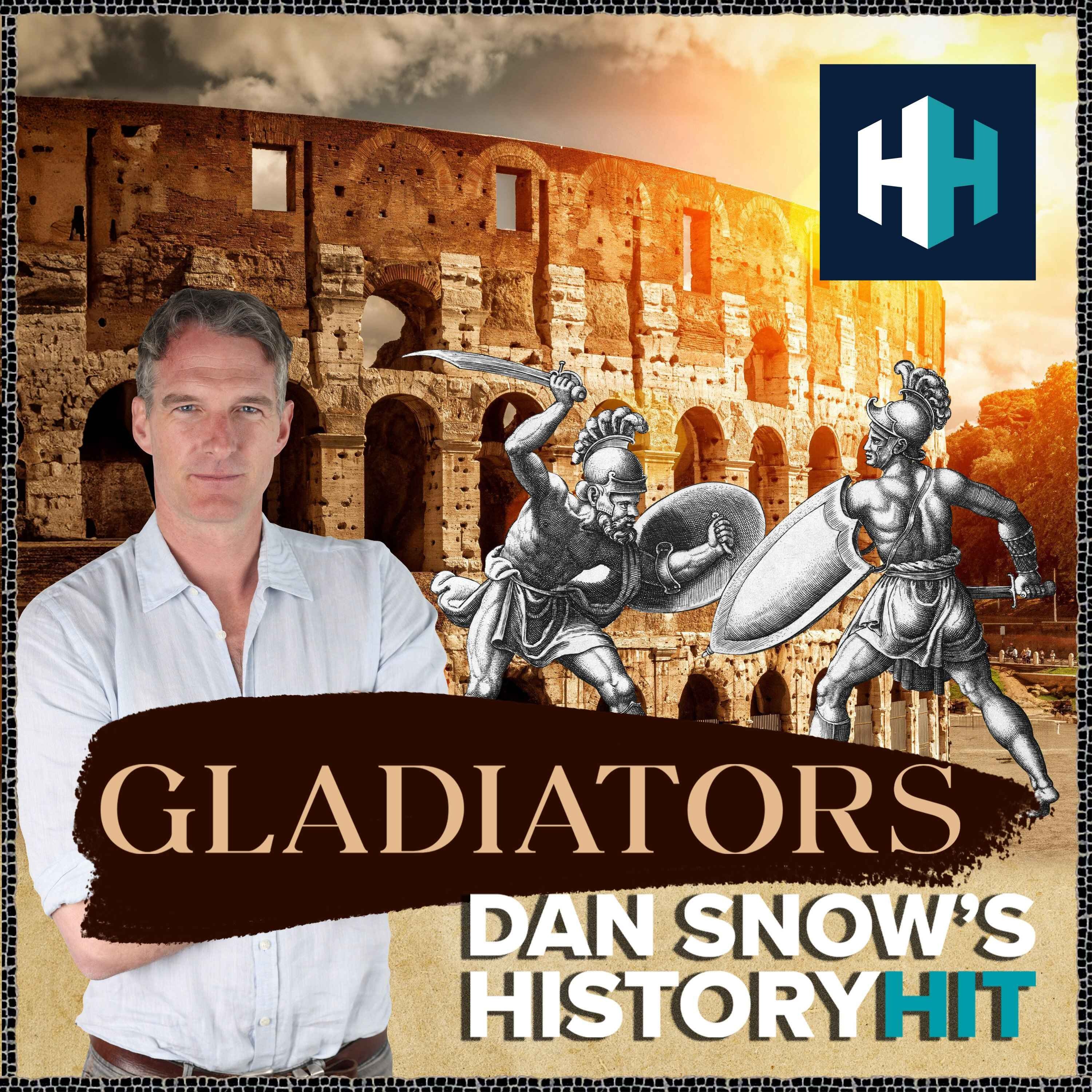
Dan Snow's History Hit
Gladiators: The Colosseum
00:48:43
Dan explores the building of the Colosseum, the biggest stage in the Roman world.
Loading summary
Transcript159 lines
- [00:00]
Ryan Reynolds
The new Boost Mobile network is offering unlimited talk, text and data for just $25 a month for life. That sounds like a threat. Then how do you think we should say it?
- [00:09]
Dan Snow
Unlimited talk, text and data for just.
- [00:10]
Ryan Reynolds
$25 a month for the rest of your life? I don't know. Until your ultimate demise. What if we just say forever?
- [00:18]
Dr. Sushma Malik
Okay.
- [00:18]
Ryan Reynolds
$25 a month.
- [00:19]
Dr. Sushma Malik
Forever.
- [00:20]
Dan Snow
Get unlimited talk, text and Data for.
- [00:21]
Ryan Reynolds
Just $25 a month. With Boost Mobile Forever, after 30 gigabytes, customers may experience slower speeds. Customers will pay $25 a month as long as they remain active on the Boost Unlimited plan. Hey, I'm Ryan Reynolds. Recently, I asked Mint Mobile's legal team if big wireless companies are allowed to raise prices due to inflation. They said yes. And then when I asked if raising prices technically violates those onerous two year contracts, they said, what the are you talking about? You insane Hollywood. So to recap, we're cutting the price of mint unlimited from $30 a month to just $15 a month. Give it a try@mintmobile.com switch. $45 upfront payment equivalent to $15 per month. New customers on first three month plan only.
- [00:59]
Dr. Simon Elliot
Taxes and fees.
- [00:59]
Ryan Reynolds
Extra speeds lower above 40 gigabytes.
- [01:00]
Dr. Simon Elliot
E. Details.
- [01:01]
Dan Snow
Decisions, decisions.
- [01:03]
Ryan Reynolds
Wait a minute. Are you still looking for cars on Carvana? Yeah. Decisions, decisions. When I use Carvana, I found the exact car I was looking for in minutes. Bought it on the spot.
- [01:14]
Dan Snow
Electric or full diesel? Decision.
- [01:18]
Ryan Reynolds
Come on, you've been at it for weeks. Just buy it already. You're right. Crossover it is. Decisions decided whether you know exactly what you want or like to. Take your time. Buy your car the convenient way with Carvana.
- [01:36]
Dan Snow
64 AD, Rome was burning. A great fire swept through the city, destroying a third of it. Scholars trawled through the ashes of the Forum, while mothers and fathers wept in the ruins of their family homes. The city was a shadow of its former self. To add insult to injury, what was going to rise from the ashes was an opulent golden palace, not for the people, but for the emperor. The Domus Aurea. Built for the Emperor Nero, with its lavish gardens and palatial halls, it would take up something like a third of the city's footprint. Rumours swirled as to whether Nero had started the fire himself as part of a land grab. It's no surprise that by the time he died four years later, he was probably the most hated emperor yet. With his suicide, Rome was thrown into further chaos and misery. Three emperors temporarily filled the position, none of them presenting a lasting solution. It looked like Rome's grip on its empire might loosen with each change of emperor. But then a new emperor emerged. Vespasian. A man of humble beginnings, whose judgment and self discipline marked him out as a potential ruler. He vowed to restore Rome to its former glory. He wanted to create something new, something extraordinary that would show the people of Rome that the Empire was as proud and indomitable as ever before. It would be an arena on a scale unlike anything seen before or since. A stadium 50 meters into the sky that could hold upward of 50,000 spectators. A place where people from the furthest reaches of the Empire would travel for days just to stand in its shadow. Where the greatest fighters would compete for adoration and freedom. Where Rome could demonstrate its dominion over its enemies and subordinates. It would sit at the heart of the city, purposefully on top of the foundations of what would have been Nero's palace. It was the Colosseum of Rome. You're listening to Dan Snow's history hit. And for this miniseries, I'm taking you with me to Rome, the Eternal City, to explore the ancient streets that whisper tales of great emperors, gladiators, poets and soldiers. I'm here to trace the true story of the gladiators, their brutal journey from the training schools to the mighty Colosseum itself. We'll delve into the ingenuity and the cruelty that defined ancient Roman entertainment. The weapons, the blood sports and the fierce power plays that unfolded from the Emperor's box. And since the new Ridley Scott movie Gladiator 2 is out this month, we thought you might need us to bust some myths on how the gladiatorial games really went down, too. This is the story of glory in the Roman Empire. Who had it and who would do anything for it. You're listening to episode one, the Colosseum. The early autumn sun is bathing the city of Rome in a golden light. There's an energy here today, and that's the same energy that's drawn people here for millennia. The city cradle between its seven legendary hills that have witnessed a lot of history. The rise and fall of an empire, the birth of legends, the shaping of the Western world. Only in Rome do you find Michelangelo Renaissance masterpieces alongside imperial sites like the Forum, the Pantheon, the Colosseum. And you get mad baroque wonders like the Trevi Fountain. All of it just a stone's throw away, really, from the HQ of the Catholic faith. Basilicas like Saint Peter's, Saint Paul's Every corner of this city is a bewitching blend of art and faith and the echoes of a Distant past. You cannot walk through the streets here without feeling the weight of that history. And I say that everywhere. But it's truer nowhere more than Rome. The people that walked these streets, inhabited these palaces and worshiped these temples, shaped the world as we know it today. Rome slowly gained in power over five centuries, from around about 500 BCE, initially as a monarchy and then a republic governed by senators, building wealth through trading wine and olive oil and doing a bit of fighting as well. By about 27 BC, it become one mighty empire ruled by a Caesar, an emperor. And it would rapidly go on to rule over an imperium, an empire which included around a third of the population of the world at the time, that had its ups and downs over two, two and a half, three centuries before. Finally, and I know I'm stepping on a lot of historical landmines here, folks, as a mixture of external enemies, internal schisms, all sorts of problems really led it into decline. And Rome, much its former empire in the west, was conquered in about the 5th century AD by people previously regarded as barbarians. For around four centuries within that story, the Colosseum stood at the heart of Roman life. It is a marvel of engineering. Completed in around eight years, it was a feat of astonishing ambition. It was designed by merging two semicircular theaters into one massive amphitheater, the largest in the Roman world. Gleaming white from limestone, it was once adorned with brightly painted details and colorful. There were statues of Roman and Greek gods, it was Zeus, there was Jupiter and Hercules, Venus, all standing proudly in their arches and middle stories, casting their gaze over the crowds below. In the Colosseum, men fought animals, they fought each other, the crowd roared them on. For the Romans, it was the straight old amphitheater. It only became the Colosseum in the medieval period because of a colossal statue of the Emperor Nero that had once stood nearby. As spectators queued to get in, clutch in their tickets, they'd have passed by the feet of the gigantic statue on the other side, the huge fountain, tumbling layers of water. I'm standing in front of it right now, looking up at it, and I'm alongside what seemed like millions of tourists. And I know that everyone that comes here is just struck by the magnificence of the Colosseum. Similar emotions, I'm sure, to how our Roman forebears would have felt. And that, of course, was just the point. The Coliseum wasn't just built as a venue for gladiatorial games. It had an important political purpose. What doesn't, folks? Vespasian, the emperor who began it in around 72 or so AD, thought this enormous building would help to cement his dynasty at the apex of the Roman world. Now I'm going to stroll over to the Forum. I'm so happy I can say that sentence. To meet Dr. Sushma Malik, an expert in Roman history, to discover more about the origins of the Colosseum and the state of the empire in which it was built. Shushma. We're sitting on the Palatine Hill. We're looking down over Rome, over the Forum. This is the view the Caesars had.
- [09:13]
Dr. Simon Elliot
Yeah, it's quite spectacular, isn't it? It's an amazing place to be to get a sense of Rome. I mean, the Forum, yeah, it's the place of the Caesars, but it's also Republican. And then there are all these layers of history that talk about sort of the different kinds of cities that Rome is and has been.
- [09:29]
Dan Snow
And up here, there's a nice little breeze. This is where Augustus chose to make his home.
- [09:33]
Dr. Simon Elliot
Yep, that's right.
- [09:34]
Dan Snow
And most of the emperors followed the tradition.
- [09:36]
Dr. Simon Elliot
Yeah, a lot of the emperors followed that. It's a good place. It's up out of the city. It's like you say, has a nice breeze.
- [09:43]
Dan Snow
So in 70 AD, what's the state of the empire? Give me a quick audit.
- [09:48]
Dr. Simon Elliot
So in 70 AD, I mean, we talk about the imperial period and we talk about emperors, but actually most of the Roman Empire was acquired before the emperors, so when Rome was still a republic. So Rome has been expanding. It went south to North Africa, it went east into Greece and modern day Turkey. It's got by this point as far as the Middle east, and then also under Claudius, it went west to Britain as well.
- [10:13]
Dan Snow
So it's the really big empire that we recognize from all the endless maps. It's near enough, its territorial peak. Not quite, but near enough.
- [10:19]
Dr. Simon Elliot
Yeah, it's getting there.
- [10:21]
Dan Snow
But the 60s have been a nightmare.
- [10:23]
Dr. Simon Elliot
Yeah, the 60s are difficult because we have at the beginning. The Budokan revolt in 62 is one of the things that the Emperor Nero has to deal with. I mean, Britain isn't necessarily the heart of the Roman Empire, but it's still something that needs to be sorted out. But actually, when we get into the mid-60s, if we're talking in Rome, there's the fire that happens in 64. There have been fires in Rome before, of course, but this was huge. This was a very big, big fire. And it was devastating for quite a lot of the city. So that was a problem again, that Nero then had to deal with afterwards. And he poured lots of money into it with a big building program that helped to rebuild the city as well as his own palace, which gets remembered very well in the histories of the period.
- [11:11]
Dan Snow
Now, Sushma, I know you're the world's leading expert on Nero. If you would just sum up Nero, does he deserve his shocking reputation?
- [11:19]
Dr. Simon Elliot
So Nero was the last of the Julio Claudian emperors. He ruled from 54 to 68 A.D. he's in our history books, as it were, sort of painted as the opposite of the emperor Augustus. He's very young. He's only 16. When he becomes emperor, he's characterized as being under the thumb of his mother and some powerful advisors. So he gets characterized as a sort of inexperienced person who politically is naive and then politically difficult when we get into his later emperorship. So he is someone who isn't necessarily the automatic choice of someone who would rule, but finds himself in this position and does things that some would say were popular with the people, was perhaps difficult for the Senate on various occasions, but ultimately he was criticized because he was far too interested in luxury. He was far too interested in his own pursuits. He was far too interested in the theater and far too interested in chariot racing for the likes of sort of Roman senators.
- [12:22]
Dan Snow
He's a showman, not a fighter, it seems.
- [12:24]
Dr. Simon Elliot
So, yes. In 68, he's declared a public enemy by the Senate and takes his own life.
- [12:30]
Dan Snow
And then there is the year of the four emperors.
- [12:33]
Dr. Simon Elliot
Yeah, so the year of the four emperors is 69 A.D. and that follows Nero's death. And what we have then is what the Senate thought was going to be quite a good succession. So when they decide to declare Nero a public enemy, they do have a plan. And the plan is supposed to be the rule of an emperor named Galva, who is the opposite to Nero in many ways. He's older, he's got a good military experience. He got, you know, the support of his own legion behind him. But unfortunately, Galva is not particularly popular with the imperial bodyguard, as we sort of call them the Praetorian Guard in Rome. Our sources say he doesn't pay them enough, he doesn't give them enough gifts. So he is deposed. And then we have the emperor's Otho Vitellius afterwards. And then eventually the general named Vespasian wins out again with the support of the army, with the support of his legions in Egypt, and he becomes the first emperor of what we call the Flavian dynasty.
- [13:30]
Dan Snow
So Vespinius is going to be a pretty important figure in Roman history. Right. Because he was a soldier. He was in my part of the world. He's famous for being the man who helped subdue what is now southern England, perhaps even conquered the Isle of Wight. But he was born outside royal circles. Was he. Was he an aristocrat?
- [13:44]
Dr. Simon Elliot
So he became a senator. He is someone who, like you say, didn't come from a traditional sort of aristocratic background, but was rising in the political elite under the reign of Nero. He fell out of favor with Nero, it seems, and that's why he was sent to Judea. So there was a war going on with Judea in the late 60s AD and he went there. But he is someone who has both military experience and some political experience as well. But he's not, perhaps, what we would imagine as a natural success, successor to found the next dynasty. But then it's not clear who a natural successor maybe would have been. We're in new territory. But then part of what Vespasian can do is sort of put his stamp on things. He can instigate a building program. He can talk about a rejuvenation. Right. So we've had the last of the Julia Claudians. We've had this horrifically traumatic period, and now we're coming into the reign of a new dynasty. And that's not easy to see as a transitional point. So part of the way that he made that transition work was through things like buildings.
- [14:48]
Dan Snow
So he launches big building projects. What's he doing there? Is it about actually trying to please the people of Rome, sort of strengthen his grip on power? Is it about his own prestige? What's going on?
- [14:58]
Dr. Simon Elliot
So part of what Vespasian is probably doing is, well, finishing some of the building projects that Nero had started. So Nero, of course, is rebuilding Rome. When he died, he needs to think about kind of what he wants Rome to look like himself, but also he has the money behind it. So that war in Judea, the spoils of that war, which includes selling prisoners of war into enslavement, that is part of what paid for. A big part, actually, of what paid for this building program that Vespasian put into place that then gave the people a different, perhaps, sense of. Of the space in Rome. So the lake of Nero's golden palace was the place where the Coliseum was built.
- [15:40]
Dan Snow
He's allowing the public back into what had been, well, a place where Nero had been planning his slightly grandiose imperial projects.
- [15:48]
Dr. Simon Elliot
Yeah. And there's probably a case to be made that Nero would have opened parts of his house to the public as well. To have sort of spectacles there. But this is giving it, I guess, symbolically back into the public hands. But we shouldn't really overlook the fact that the Coliseum or the amphitheater is also an immensely political space. So it's somewhere the emperor can be seen. It's somewhere that people can go and shout at the emperor, petitioning the emperor, where they can have visibility, but also, you know, contact with the imperial family. So it has a range of functions as a space.
- [16:22]
Dan Snow
Vespasian decides he's going to build an amphitheatre. But unlike any other amphitheatre in the world, this is a ginormous scale. What's he doing there?
- [16:31]
Dr. Simon Elliot
So he's putting his sort of stamp on that space, reappropriating that Neronian space. There's a whole set of things that go along with the idea of the opening, that of the Colosseum. Games can be thrown, spectacles can be thrown, the reenactments of battles that people haven't seen before. And it's also a place where the empire can sort of be on show as well. So there's sorts of animals that you could get, because Rome has an empire, and you can go into the center of Rome, into the Colosseum, and see them.
- [16:59]
Dan Snow
So it brings the empire to the Roman population.
- [17:01]
Dr. Simon Elliot
It does. The really big games do. I'm not saying on a daily basis, but the big games.
- [17:07]
Dan Snow
What's at stake here? Vespasian has witnessed his three predecessors meet terrible ends in a very short amount of time. Is there a sense that you need to keep Rome satisfied, happy, overawed, calm? Otherwise, well, his life, that of his dynasty, could be in danger.
- [17:24]
Dr. Simon Elliot
So one of the things that Vespasian was able to do that's really important to understanding kind of the relationship, I think, between emperors and the people in Rome, is that he could show himself to be a good benefactor. So benefaction was a huge way that the emperor interacted, not only with the people in Rome, but also with the wider provinces. So for Vespasian, it's going to be and is a very big part. He needs to show himself as worthy, if you like, of that, to found a new dynasty to be a successor of some of the judo Claudians.
- [17:54]
Dan Snow
How unusual was it? I mean, were there other amphitheaters in Rome?
- [17:57]
Dr. Simon Elliot
Not at the time. The Flavian amphitheater that we call the Coliseum was built. There had been temporary wooden structures, and then a stone one was built, but it was destroyed in the fire of 64. So also. So it's Something that Vespasian could do. It's another entertainment space. We have theaters and we have the Circus Maximus, but this is Rome's amphitheater.
- [18:16]
Dan Snow
We're sitting here on top of the Palatine. The Colosseum is so remarkable from here, such it really does dominate the landscape. It was an incredibly ambitious thing to do by Vespasian, wasn't it?
- [18:29]
Dr. Simon Elliot
So part of what emperors do is build things that are bigger and better than their place predecessors. So someone like Vespasian is thinking about making something that's spectacular, that's more beautiful than the previous dynasty had. But it is significant perhaps that no one else builds an amphitheater quite like Vespasian did.
- [18:48]
Dan Snow
So the bar was now so high it could not be heightened.
- [18:50]
Dr. Simon Elliot
Yeah, and it lasted as well. I mean, you can sit here now and yes, there's ruins, but there's also quite a considerable. When you think of what's happened in Rome in the intervening centuries, millennia, there's still quite a lot of it that has survived.
- [19:05]
Dan Snow
It's difficult to comprehend the scale of the task. It's only getting up close that you realize just how enormous and complicated the Colosseum is. But the Romans were ingenious builders. With 80 archways on that iconic external wall, the arena is made up of roughly 100,000 cubic meters of travertine stone. And over 300 tons of iron clamps to hold it all together. Its foundations plunge 40ft into the earth, into the site of a drained lake. They rely heavily on a substance of the Romans own devising, concrete. Even their method for lifting the enormous stone blocks onto the higher levels was a feat of engineering in itself. I met Dr. Simon Elliot, a leading Roman historian at the Colosseum, to find out just how they did it. Why is it such an amazing building?
- [20:01]
Dr. Sushma Malik
The Coliseum is unique in a sense, because it's twice the size, probably as any other amphitheater in the Roman world. 665, 000 people. Dan, it is immense.
- [20:13]
Dan Snow
What technological hacks that allowed them to build on this scale?
- [20:16]
Dr. Sushma Malik
Well, it's a great example, the Romans nicking ideas from other people. And one of the ideas they nicked was the voir architecture. So you have your spring line, your voussoirs, the curved sections of the arch, the keystone, locking everything together in the middle. And it's such a clever technique for building because you can stack archers on top of arches on top of arches. And so if you look at the Colosseum, the Colosseum is basically a series of arches. The really interesting thing actually is that in Terms of building techniques, they've used lots of different building designs from around the Roman world all together in one place. So you can see representations of columns between the arches, but on the bottom they're the most basic kind of column, which is the Doric column, just with the flat plinth and then the second row of bourgeois, the columns in the middle, they are Ionian columns with a beautiful scrolling at the top. But then on the third level of vousoir arches, the columns in the middle are Corinthian columns with a really fancy tops. So you go basic. All right, amazing. So it's all about showing sort of every aspect of the Roman world.
- [21:19]
Dan Snow
And presumably then those arches, as well as being very strong and light, they let the light in and the air, I mean, it doesn't get too stuffy in there.
- [21:25]
Dr. Sushma Malik
I think in actual fact, the key thing here, Dan, is actually letting the air in. Because actually, if you think about it effectively, it's a stone bowl in the middle of a country that's not cold. So for the majority of year, it's actually going to be just like it is today with the blazing sunshine. It's going to be exceptionally, exceptionally hot in there. So you want every means you can of letting air in. And of course, the archers Classic. So not only did the archers make the Coliseum, they also call the Colosseum.
- [21:52]
Dan Snow
How do they make it so high? Are we talking cranes or scaffolding or great ramps of earth?
- [21:57]
Dr. Sushma Malik
Bit of both. So the Romans used two kinds of crane when they're building, so they use an A frame crane, which is exactly what you find engineers using around the world today. But also these are tread wheel crane, the tread wheels, powered by a tread wheel, literally a tread wheel in the middle, which is powered by slaves.
- [22:15]
Dan Snow
Like a hamster wheel.
- [22:16]
Dr. Sushma Malik
Exactly right. The slaves treading on a wheel. The beauty of the tread wheel crane is scalable. So you can make it as big as you want, within reason. So for the majority of the Coliseum, you'd be able to get to the top, probably using a treadmill crane. If you had something which was too big, then what they would do is use scaffolding. So smaller a frame, medium to large tread wheel, very large scaffolding.
- [22:45]
Dan Snow
You can always mount cranes on that scaffolding, presumably as well.
- [22:48]
Dr. Sushma Malik
You can, Dan, but personally I wouldn't want to work on one of them.
- [22:51]
Dan Snow
Is it really the same in many ways in function and form as a modern stadium?
- [22:56]
Dr. Sushma Malik
Absolutely, yeah. So let's take for example, the Olympic stadium in Rome itself. So the Olympic stadium, home To Roma and Lazio. In the Olympic Stadium, you have a roof. You have.
- [23:08]
Dan Snow
And the Colosseum had a roof.
- [23:09]
Dr. Sushma Malik
Coliseum did have a roof. It had sails, Vela sails. So it has banks of seating and it has the arena where the football's played. It has exactly the same banks of seating and it has the arena in this case, where people killed each other.
- [23:23]
Dan Snow
Yeah. And getting in and out in a.
- [23:26]
Dr. Sushma Malik
Modern arena like the Olympic stadium, you have big gates, get in and out of the stadium. The Roman Coliseum is exactly the same. Of course, in the Colosseum, they were called vomitorium because you vomited people in and out. That's where our world vomit comes from today.
- [23:38]
Dan Snow
I love that. The vomitorium, the way that we get people in and out of stadium, stadium sort of through the banks of seats. That's a Roman idea. Do you know how much this would have cost? And do Roman emperors, a bit like the sort of American Congress they did, they just write their own checks. I mean, is there any way in which there's actually linked amount of gold in the imperial treasury?
- [23:56]
Dr. Sushma Malik
Well, firstly, the Roman treasure is called the Fiscus, and that's the Empress Fiscus treasury. So the emperor is in charge of the treasury. That treasury pays for every public aspect of Roman life. It could play for building public buildings. It could pay for the games themselves. It certainly pays for the military, which is usually what the emperor needs to keep him in power. So the Fiscus treasury is central to the Roman emperor's success. However, there's a double blind here for the spectators in the Coliseum because the Fiscus treasury is filled with money from tax. The people who pay the tax are the people like the people of Rome. So they're paying the taxes for the emperor to spend. The money they give the emperor to show off to them.
- [24:33]
Dan Snow
Is there a sense in which, though, if a successful military campaign or you loot an enemy's capital, does money flow into. Emperors tend to spend big money on after those kind of fiscal events, an.
- [24:44]
Dr. Sushma Malik
Emperor would spend bigger and bigger and bigger, the more he needed to secure himself in power. So often you get a series of games taking place when an emperor takes power so he can show off on the new guy. I'm the rich guy, I can actually really look after you. And also, if he has a military defeat, again, distracting the masses, or if there's a major event like a plague or an economic crash, he's distracting the masses.
- [25:12]
Dan Snow
You listen to Dan Snow's history hit the best is yet to come. Stick with us.
- [25:24]
Ryan Reynolds
To get people excited About Boost Mobile's new nationwide 5G network. We're offering unlimited talk, text and data for $25 a month. Forever.
- [25:31]
Dan Snow
Even if you have a baby.
- [25:32]
Ryan Reynolds
Even if your baby has a baby. Even if you grow old and wrinkly and you start repeating yourself. Even if you start repeating yourself, even if you're on your deathbed and you need to make one last call or text, right? Vortex, the long lost son you abandoned at birth, you'll still get unlimited talk, text and Data for just $25 a.
- [25:46]
Dr. Sushma Malik
Month with Boost Mobile Forever.
- [25:48]
Ryan Reynolds
After 30 gigabytes, customers may experience slower speeds. Customers will pay $25 a month as long as they remain active on the Boost Unlimited plan.
- [25:54]
Dr. Simon Elliot
Forever.
- [25:54]
Ryan Reynolds
The holidays are all about sharing with.
- [25:56]
Dan Snow
Family meals, couches, stories, Grandma's secret pecan pie recipe. And now you can also share a cart. With Instacart's family carts, everyone can add what they want to one group cart from wherever they are. So you don't have to go from room to room to find out who.
- [26:16]
Ryan Reynolds
Wants cranberry sauce or whether you should.
- [26:18]
Dan Snow
Get mini marshmallows for the yams or.
- [26:21]
Ryan Reynolds
Collecting votes for sugar cookies versus shortbread.
- [26:24]
Dan Snow
Just share a cart and then share the meals and the moments. Download the Instacart app and get delivery.
- [26:32]
Ryan Reynolds
In as fast as 30 minutes.
- [26:33]
Dan Snow
Plus enjoy free delivery on your first three orders.
- [26:36]
Ryan Reynolds
Service fees and terms apply.
- [26:38]
Alexander Mariotti
Deep in the ocean, an Orca pod.
- [26:40]
Dan Snow
Is on the hunt. But these aren't your average Orcas.
- [26:44]
Ryan Reynolds
These guys are organized marketing team. Did you get those social media posts.
- [26:49]
Dan Snow
Scheduled for the SEAL migration? Aye aye Captain. We even have an automated notification for all pod managers when they go live.
- [26:57]
Ryan Reynolds
They use Monday.com to keep their teamwork sharp, their communication clear and their goals in sight.
- [27:02]
Dan Snow
Monday.com or whatever you run.
- [27:05]
Ryan Reynolds
Even orcas go to Monday.com to dive deeper. Hey, I'm Ryan Reynolds. Recently I asked Mint Mobile's legal team if big wireless companies are allowed to raise prices due to inflation. They said yes. And then when I asked if raising prices technically violates those onerous two year contracts, they said what the are you talking about? You insane Hollywood. So to recap, we're cutting the price of mint unlimited from $30 a month to just $15 a month. Give it a try@mint mobile.com Switch $45 upfront payment equivalent to $15 per month New customers on first three month plan only Taxes and fees, extra speeds lower above 40 gigabytes.
- [27:38]
Dr. Simon Elliot
Details.
- [27:45]
Dan Snow
Vespasian wanted the Colosseum built in a mere 10 years. That would require an astonishing amount of manpower. But for the Romans, that wouldn't be a problem. In the first century, the Roman population was roughly 50 million spread across the empire. It's believed that 10 to 20% of that was slaves. That's 5 to 10 million individuals.
- [28:10]
Dr. Sushma Malik
Slavery was an intrinsic part of Roman society. Slaves were at the bottom of society. Then freed men who were freed slaves, and then free men who had never been slaves, and then aristocrats. So it's an absence absolutely normal part of Roman society. In the roman world, probably 1 in 10 people is a slave. Right. If it gets any more than 1 in 10, it becomes a bit problematic because the Romans were terrified of slave revolt. So everyone's heard of Spartacus, but the Spartacus slave revolt was the third servile war or revolt. So the Romans were terrified of slave revolt. So about one in ten is the norm.
- [28:41]
Dan Snow
Where are these slaves coming from?
- [28:42]
Dr. Sushma Malik
So it depends what kind of slave you're talking about, Dan. So in a Roman household, your kids could be taught by grammarian who might be a slave from the Greek speaking world. If you're talking about working in the metalla mines and quarries, there could be prisoners of war. So they're coming from the far north of Britain, what we call today Scotland, or from the far north of Germany, north of the Rhine or Danube. Or they could be coming from the eastern frontier. There could be Parthians, or they could be coming from south of the African frontier. There could be Berbers, basically. There are people who are beyond the fringes of the Roman world who are captured in conflict.
- [29:14]
Dan Snow
And would it work a little bit like the Elizabethan slave traders going under West Africa? Would you not just capture them directly with Roman arms, but would you buy them off trans Saharan networks and things like that as well?
- [29:24]
Dr. Sushma Malik
Absolutely. It's interesting that Britain in the Roman world was famous for a variety of exports before the Roman conquest, one of which was slaves.
- [29:34]
Dan Snow
So Britain's part of this Roman trading network before it's incorporated formally into the empire.
- [29:38]
Dr. Sushma Malik
Absolutely. And part of the trade, slaves. Absolutely normal. Remember when Caesar conquered Gaul, he famously killed a million and enslaved a million. So you can imagine a million enslaved Gauls suddenly start flooding the slave markets in Italy at the end of the Cimbrian wars in the 120s and 110s BC. Again, the Cimbrians were Germans. The slave markets in Rome were flooded with German slaves. So this is millions of people being captured and then sold as slaves.
- [30:07]
Dan Snow
Obviously there were loads of different kinds of slaves. Is it possible to say what slaves.
- [30:10]
Dr. Sushma Malik
Life Was like, so being a slave is not a good thing. You don't exist in terms of your own agency. You have no power over your own future. That being said, in the Roman world, a slave could earn money and a slave could be manumitted. So they could be freed and they'd get free for two reasons. One is they would buy their freedom from earning money, or 2, because their master decided that he'd free them for good service so you could be freed. And once you were manumitted, you became a freed man. Now, a freedman could do everything in Roman society. So in the Roman world, a freedman, a free slave, could become fabulously rich. So the father of the Emperor Pertinax, the son of a slave who became the Roman Emperor, his father was a multimillionaire running a logging business in the Po Valley, who had started life as a slave. Now, the interesting thing for these freed men is they were Roman citizens, they could vote, they could do most things that Roman citizens could do, but they could not stand for public office. Now, for a Roman citizen, standing for public office was a way of showing how successful you'd been. And the freedmen, that's a lot of people, by the way, couldn't do that. So what they did was monumentalize their success, success in life, through their funerary monuments. So if you go to Pompeii and you go through the Herculaneum Gate, there's row after row as the road goes towards Herculaneum of monuments, funerary monuments, mausoleums, tombstones and things. Most of them are actually from freedmen, freed slaves, to show how successful they've been in life, because they couldn't have the inscriptions around the Forum saying, oh, I've been this magistrate, all that. Because they weren't allowed to stand for.
- [31:50]
Dan Snow
Any magistrate, the slaves were unable to buy their freedom. I mean, presumably some conditions would have been horrific. Life would have been nasty, brutish and short.
- [31:56]
Dr. Sushma Malik
Certain kinds of slaves had terrible, terrible, terrible lives. So within the Roman criminal justice system, one of the punishments was to be condemned or enslaved to work in the metalla, which are mines and quarries, for the rest of your life. Which means you go in the hole and you don't come out.
- [32:19]
Dan Snow
So to what extent can we say that Roman imperial might was built on the back of this slave labor, presumably the iron ore for weapons being quarried in mines like that. So, I mean, it's. Without that slave class, Rome wouldn't have been what it was, what it became.
- [32:34]
Dr. Sushma Malik
In our world, we rely, without thinking on technology to do things for us. It's just there and it just happens. I want to make an espresso in the morning. I put the pod in and I press a button and I've got a coffee because the machine's doing the work for me. And I go in a car which is computerized, a train which is computerized, or a plane which is computerized. And I don't think about it, it just happens. It's exactly the same in the Roman world, switching out technology for slaves. It just happens. So I wake up in the morning in my fine townhouse and it's clean because the slaves have cleaned it. It just happens. I have an amazing dinner cooked in the kalina kitchen of my townhouse by the slaves. And it just happens. I don't think about it. They are the modern equivalent in a Roman context of our technology.
- [33:25]
Dan Snow
And I guess Rome can swell to a million people because fresh water can be brought in, sewage can be pumped out. All because of aqueducts and sewers built by slaves.
- [33:33]
Dr. Sushma Malik
Absolutely, yeah. So they're built by slaves. So you might ask yourself the question, what's in it for me as a slave to build an aqueduct supplying water to Rome? Well, because you have a terrible life anyway. It's because of what happens to you if you misbehave as a slave. So you could end up in the arena or you could get sent down the metalla. Interestingly, crucifixion in the Roman world was an execution specifically designed only for slaves. Only for slaves. So when Christ was crucified, it was deliberately portraying him as a slave. The Romans were showing was the bottom of society. So you could end up with the most brutal death of many kinds of brutal death, which is a crucifixion. And if you go on the far side of the Esquiline hill, outside the Serbian land walls, there's a specific area which in the early imperial period was where the bodies of crucified slaves were chosen, worked in burial pits which all had to be dug up about a century later when the city expanded and they had to dig up the burial pits for crucified slaves.
- [34:38]
Dan Snow
Would a lot of the workers on the Coliseum been slaves?
- [34:40]
Dr. Sushma Malik
I would have thought nine tenths of them.
- [34:42]
Dan Snow
And what do you think that experience like were they, would they try and look after them because they're quite skilled or were they quite disposable?
- [34:46]
Dr. Sushma Malik
Well, firstly, they are disposable and there's a never ending flow of slaves when you need them. You know, you need 10,000 men to help build the Coliseum. Well, 10,000 slaves, as many as you want. It's all scalable and it's absolutely normal. So if the buttons pressed by the emperor, I need 10,000 slaves to build the new amphitheater, then you get them.
- [35:06]
Dan Snow
Do we have any idea how many people might have died constructing the Coliseum?
- [35:10]
Dr. Sushma Malik
No, but it would be thousands and thousands and thousands. And the really poignant thing is these are people who live lives in the same way we live lives to day, and there's no record of them. So it's a really important point I always make, Dan, when I'm going around any Roman amphitheater which is glorified in modern culture through movies like Gladiator. Most people think it's fun, but it's not. It's a terrible place. It's a place of industrial scale, public murder. Effectively, that's just what happens in the arena. But the people building it are dying all the time as well, and they don't matter.
- [35:48]
Dan Snow
Slavery is central to the story of the Coliseum, from the laborers who no doubt keeled over in the heat building it, to the victims of the spectacular show deaths. But slaves also played another role in the Coliseum. They were often the gladiators owned by the gladiator schools. Most killed in battle, died of wounds, or lived a life of indentured servitude to the owner of the school. But the few who were resilient and strong enough to make it to the top, lucky and skillful enough to keep winning, well, they had an opportunity to gain their freedom, granted by the Emperor. Now I've come into central Rome standing quite literally in the shadow of the Colosseum. It is towering above me now, this spectacular building, and I'm under street level. Around me, apartment blocks, restaurants, bars that have built up over the centuries. But there's an excavated plot that I'm standing in. I'm about 3 or 4 meters below ground level now. It's the Ludus Magnus, which is the gladiator training school. Now, like modern football clubs, there's a trip training ground for these gladiators. And this one was next to the Coliseum. It would have been a compound. I've got storerooms behind me, and in the middle here, I can see a giant well, I've got half an oval shape, this the training arena. The rest of it amazingly extends under all these new buildings. So can you imagine what an archaeological site that is waiting to be excavated? So this is where the gladiators lived. It's where they trained, it's where they fought, their practice bouts and there was a tunnel connecting this place to the Colosseum itself, which is probably about 50 or 60 meters away, just on the other side of what is now modern road. I've come in to meet Alexander Mariotti, who is an expert in all things ancient Rome, but particularly gladiators. To see what my life would be like if I was a gladiator. Alex Mariotti. Good to see you, man.
- [37:49]
Alexander Mariotti
Good to see you, Dan. Thank you for being here.
- [37:51]
Dan Snow
Well, you don't have to thank me. It's a sunny day. We're looking at the Colosseum. It's wild. I have to pinch myself every time I come to this city.
- [37:57]
Alexander Mariotti
We could be back in time 2,000 years ago.
- [38:00]
Dan Snow
So these gladiators that we'd be about to go and watch today.
- [38:03]
Dr. Simon Elliot
Yes.
- [38:03]
Dan Snow
What's their journey to this arena? Say they come from Britain, so they've come from Ireland, Scotland, parts outside the Empire. They've been traded in. How are they getting here?
- [38:10]
Alexander Mariotti
Well, first of all, what a journey. I mean, you're talking about three months worth of journey to get here. We often forget just how vast the Roman world was and the lengths people traverse to actually get to Rome. First of all, I think what a culture shock to come from the huts and towns of Britannia and then see Rome. I always love that line in Gladiator when he said, I didn't think men could build such things. I think that's so true. When you look at the architecture, Rome was alien to most people, but the Roman Empire was filled with agents, with talent scouts who were looking for these people. They're going to the slave markets, they're going to the mines. They're really searching out these gladiators because they had a necessity for them. That gladiator then is sold to a school. And so your agent will come out and he'll bring the head of the gladiator school a series of possible candidates. There's an inspection, a medical, if you will, and then they'll buy the gladiator. The gladiator then has to swear an oath. Oaths are very common things in antiquity. You swear to the gods, to the Roman state, that you promised to maintain the rules of the ludus, because effectively, just like in the army, you're being trained, your freedom is nulled. And then from then you're given some very grueling training which would last about two years. That's about amount of time it'll take to make a gladiator.
- [39:26]
Dan Snow
So they've arrived in Rome, they're in a training school.
- [39:29]
Alexander Mariotti
Yeah, in the Ludus, where we've been ourselves. So in the Ludus, Magnus, there's various schools. Think of them as clubs or teams. I mean, they had their factions, they had their fans. So you had the fans of the Ludus, Dacius, you had the fans of the Ludus Magnus. They would often have a rivalry between them. They'll meet up, but that's also part of the games, you know. How exciting. Last time, our guy lost. Can't wait for the rematch. Oh, I bet this time he's gonna get him.
- [39:51]
Dan Snow
You know, and they become celebrities.
- [39:54]
Alexander Mariotti
They were celebrities. I mean, really, after the Emperor, they're not just the most desired men sexually of the Empire, but they're also the most loved and adored. And after the Emperor, who could command a crowd of 80,000 people to cheer your name. And that's why you get emperors who want to be gladiators. I mean, what does that say? That the most powerful, wealthy, pampered and lavish lifestyle person in the world wants to be the gladiator. That doesn't make sense if he's the poor slave who's thrown in the arena to die. If the gladiator was just a nobody that was thrown into the arena, you wouldn't have the wealthiest man in the world wanting to be himself. But he does want to be in. In the same way that you get people who are politicians or celebrities who wish they were sports stars. It's not that different.
- [40:37]
Dan Snow
So that Emperor being Commodus, for example, used to fight in the arena.
- [40:40]
Alexander Mariotti
Caligula, Commodus, Hadrian. Yeah, they fought in the arena. They display themselves because they want to be. I feel bad for Commodus because, one, he's very young when he becomes Emperor, but more than that, you can just kind of feel that he was born into royalty. He's a bit Prince Harry in a way. He didn't really want to be part of it. And he kind of does everything to be the opposite. He wants to be a sports star, he wants to be a gladiator, but he can't. He's the Emperor of Rome, and yet he'd rather be a gladiator than head of 60 million people.
- [41:10]
Dan Snow
And yet some of these gladiators, who are celebrities and fashion icons, sex symbols, they're still owned by somebody else.
- [41:18]
Alexander Mariotti
I always find it a little disconcerting where the freedman, slave, prisoners of war. When you were in the Ludus, whatever you were outside was irrelevant. You became the raw recruit, and it is your duty to listen to the Doctore, the trainer, and be Forged into gladiator, there's an investment being made in you that has to be recouped.
- [41:35]
Dan Snow
If they fight their way to the end of their career, can they get manumission? Can they become free?
- [41:40]
Alexander Mariotti
Indeed, yes. In fact, as a slave, what would be more motivation than to win your freedom? So you could win your freedom. So that was an incentive to get them to going as a freedman. Well, yes, there's the money. But then once your career was over, you had various options. You could become a gladiator trainer, you could retire to the provinces. I always think it's funny when you see footballers go to sort of lower leagues, right? Gladiators did the same thing. So, you know, you're known in Rome, you're the winner of the FA cup final of, you know, 82 AD, you've still got a name for yourself. You can go to the lower provinces, you go to the North Africa circuit where they know you, so you're a bit past your prime, but people are still excited because you're. You're the. The Ronaldo of the Coliseum.
- [42:20]
Dan Snow
How do we know the names of these gladiators? Do you come across them in writing or are their names preserved in stone, carved into a building somewhere?
- [42:26]
Alexander Mariotti
It's a great question. Various ways the sources mention them, like Verus and Priscus, he's mentioned in the Po of Marshall. They are the gladiators that battle for the opening of the Coliseum. But actually, what helps us a lot is epigraphic evidence, tombstones, inscriptions. So we learn a lot about them. And of course, one of the biggest treasure troves of information is Pompeii. I mean, Pompeii, it's such a hard sight because there's such a tragedy to the situation that led to the destruction and the death of so many people. But at the same time, it's been a blessing for us because all we know about the Roman world and the amount we know about gladiators comes from Pompeii. The walls literally tell stories and they tell us that gladiators don't die. This whole thing about gladiator gladiators not dying isn't a theory. The walls of Pompeii will tell you that in 36 fights, six people lost their lives. And more than likely, that came about through injury.
- [43:16]
Dan Snow
So it's not a bloodbath.
- [43:17]
Alexander Mariotti
It's not a bloodbath, no. And it wouldn't be entertaining as a bloodbath. Romans saw enough blood and guts and gore to last them a lifetime. It was pageantry. It was skill, even though death loomed because you could die from an injury. And that's true of boxing and wrestling, but someone still does it. What courage there is to watch somebody who knows death is staring over, about to cut the thread at any moment, but they don't care. They laugh at it and they keep going forward.
- [43:44]
Dan Snow
You listen to Dan Snow's history. There's more coming up.
- [43:54]
Ryan Reynolds
Are you interested in the evolution of generative AI? Hear perspectives from thought leaders like AWS Deputy CSO Vice President and and distinguished engineer Paul Vicksy.
- [44:03]
Dan Snow
We've barely seen 1% of what will be possible. So while on the one hand I despise the hype cycle and I also understand there is a real merit here.
- [44:13]
Ryan Reynolds
Uncover more insights like these on Conversations With Leaders, a podcast from Amazon Web Services. Subscribe now and stay ahead. Available on all major podcast platforms. Ryan Reynolds here from Mint Mobile. With the price of just about everything going up during inflation, we thought we'd bring our prices down. So to help us, we brought in a reverse auctioneer, which is apparently a.
- [44:35]
Dan Snow
Thing Mint Mobile Unlimited Premium Wireless 30. 30. Get 30. Better 20. 2020. Better get 20.
- [44:41]
Dr. Sushma Malik
20.
- [44:41]
Dan Snow
Better get 15. 15. 15. 15.
- [44:43]
Ryan Reynolds
Just 15 bucks a month.
- [44:44]
Dan Snow
Sold.
- [44:44]
Ryan Reynolds
Give it a try@mintmobile.com Switch $45 upfront payment equivalent to $15 per month. New customers on first three month plan only taxes and fees. Extra speed slower above 40g 78ad two.
- [45:03]
Dan Snow
Years from completion, the Colosseum already towers over the surrounding buildings. But then tragedy strikes. Emperor Vespasian dies. His vision for Rome and this monumental arena passes to his son Titus. For the first time in the empire's history, the throne is inherited from a father by a biological son. A powerful bond of blood. It was now the next era of the Flavian dynasty. Titus, determined to honor his father's dream to restore Rome's glory, vows to finish the Colosseum. He promises not just a spectacle, but a triumph of grandeur, a statement heard in every corner of the Empire. In 80 AD, he announced 100 Days of Games to celebrate the opening of the Colosseum. Thousands of executions, exotic animals, and of course, the best gladiators from all over the Roman world. In a city accustomed to just a few days of games, this was more than a festival. It was a declaration of Rome's power, ambition and resilience. A show unlike anything Rome had ever seen. The sun beat down, not unlike today, and the crowds surged through the streets of Rome. They were clutching their shards of pottery with their numbers on them. These are their tickets. The Biggest event the city had ever seen. The opening of the Coliseum, an architectural marvel unlike anything they'd ever seen. Among the spectators that day was Marshall, a poet whose writing gives us the most complete account of a gladiator fight that we have. I can imagine his sandals scraping on the cobblestones, the occasional stop to chatter with the people around him. The feeling of anticipation, the excitement. And already thinking about the words that would etch the Colosseum into the annals of history. Inside the vast arena, the vista stretched out before him. Rows upon rows of stone seats filled with tens of thousands of spectators, all eyes fixed on the sand below. It was here that Titus, Rome's new emperor, decided to inaugurate the Colosseum with the ultimate spectacle. A fight between the two most celebrated gladiators of the age. Martial would have taken his seat, perhaps with a scroll tucked under his arm, stelas at the ready. Statues of gods stood proudly in the arches, their stony eyes gazing down as if they, too, were eager for the spectacle to begin. The emperor took his seat in the imperial box, his face a mask of controlled excitement, knowing that this day, this event, could well define his reign. The day had already been filled with brutal contest. Animals fighting each other, bloodthirsty hunts through fake forests, executions of criminals and men fighting beasts. One Roman historian recorded that 5,000 animals were killed during the Hundred Day Festival. It's believed that Colosseum employees sprayed perfumes. Try and mask the smell of blood. But the big event was the gladiator match in the afternoon. And on this day, it was between two of Rome's most famous fighters, Priscus and Varus. As the sun began to sink towards the horizon, the crowd hushed as they entered the arena. Even from his seat up in the stands, Marshall would have seen their muscles taut beneath their armor, their faces set with grim determination. Men who knew this fight could be the performance of their lives. There could only be one winner. The two men took their places. Weapons at the ready, they circle each other like predators. Blow after blow, they strike. The fight dragged on, the sun dipping low, and neither man showed any willingness to surrender. They fought like men, proud of skill they'd honed over years of training and to maintain their record of victories. Exhaustion set in. Their movement slowed. They struggled to keep their weapons up. But their determination didn't waver. Every eye in the arena was now fixed on Titus. The emperor, known for pragmatism and relative benevolence, rose from his seat. The Coliseum fell silent. He would make a decision, one that would define the day. And help shape the legacy of the Colosseum itself. The crowd waited in anticipation. The two gladiators stood before the Emperor, sweating, exhausted. Then, in a gesture that could well have shocked the entire arena, Titus stood up, looked at both men and proclaimed that today there would be two winners. It was an unprecedented decision. And not only that, he ordered that they should both be given the wooden sword, the rudus, a symbol that gladiators had been released from the blood soaked sands of the arena. Titus had given them both their freedom. Marshall captured this moment as the crowd's cheers would have echoed through the vast amphitheatre. The poet immortalized the day the Colosseum opened with not one, but two champions and the Emperor's name forever linked to an act of grace that no one had expected. It's late afternoon here in Rome. The sun is setting on the Coliseum. And I love standing here on the north east side of the Coliseum because the sun's beams slice through the arches. It looks like the sun is coming from within the building. This is what it would have looked like. Those spectators who are attending the games here at this time of day, 2,000 years ago, perhaps they'd have been leaving the Colosseum. They'd have spent the day watching the games put on by some emperor. Spectacular gladiatorial contest that cemented the reputation of the Colosseum as the greatest amphitheater in the Empire. But also shored up imperial power and prestige with the all important populace of the capital. You can imagine people leaving here after an event like that with much the same feeling as when we leave a football match today or a gig that we've loved. A sense of elation, a sense of belonging and pride. The very real sense that you're just a small part of something much, much bigger. I bet they've never been so proud or so conscious of being a Roman citizen.
- [51:57]
Dr. Sushma Malik
It's all part of a confidence trick by the Roman emperors. Keep the masses happy. Because if the masses were happy, then they were less likely to revolt against the fact that they've got very little wealth. And the very small majority of people at the top of Rome society got a lot of wealth. And it's what we call today bread and circuses.
- [52:19]
Dan Snow
Well, the opening ceremony really set the bar high. And Titus, and eventually his brother and his successor Domitian, knew they had to keep up in the ante to keep the excitement growing, to keep the sensation real. The Colosseum had become the setting for the greatest show on earth. Join me for the next episode. As I go behind the scenes and discover how the Romans pulled off spectacles that would astonish us even today. From elevators and pulley systems that changed the arena from a lush African jungle to Greek temples and spat out wild animals at a moment's notice to, well, some accounts suggest anyway, to maritime extravaganzas, gallons of water pumped in, naval battles recreated in front of astonished crowds. If I could see one thing in history, friends, it would be that. Also, I'm head to gladiator school, see if I'm cut out to get into the ring. And my producer Mariana follows what it would have been like to attend the games as a fan of mine, naturally, a role she's very suited to play. You don't want to miss it. Make sure to follow on your podcast player to get it on Wednesday. See you next time. To make switching to the new Boost.
- [53:45]
Ryan Reynolds
Mobile risk free, we're offering a 30 day money back guarantee. So why wouldn't you switch from Verizon or T Mobile?
- [53:50]
Dan Snow
Because you have nothing to lose.
- [53:52]
Ryan Reynolds
Boost Mobile is offering a 30 day money back guarantee. No, I asked why wouldn't you switch from Verizon or T Mobile? Wouldn't because you love wasting money as a way to punish yourself because your mother never showed you enough love as a child.
- [54:05]
Dan Snow
Whoa, easy there, yeah.
- [54:06]
Ryan Reynolds
Applies to online activations, requires port in and autopay. Customers activating in stores may be charged non refundable activation fees. 88% of the work week is spent communicating, typing, talking and going back and forth on topics until everyone is on the same page. It's time for a change. It's time for Grammarly. Grammarly's AI ensures your team gets the point across the first time, eliminating misunderstandings and streamlining collaboration. It goes beyond basic grammar to help tailor writing to specific audiences, whether that means adding an executive summary, fine tuning tone, or cutting out jargon in just one click. Four out of five professionals say Grammarly's AI boosts, buy in and moves work forward. It integrates seamlessly with over 500,000 apps and websites, is implemented in days, and is it Approved? Join over 70,000 teams and 30 million people who trust Grammarly to elevate their communication. Visit Grammarly.comenterprise to learn more. Grammarly Enterprise Ready AI.