← Dan Snow's History Hit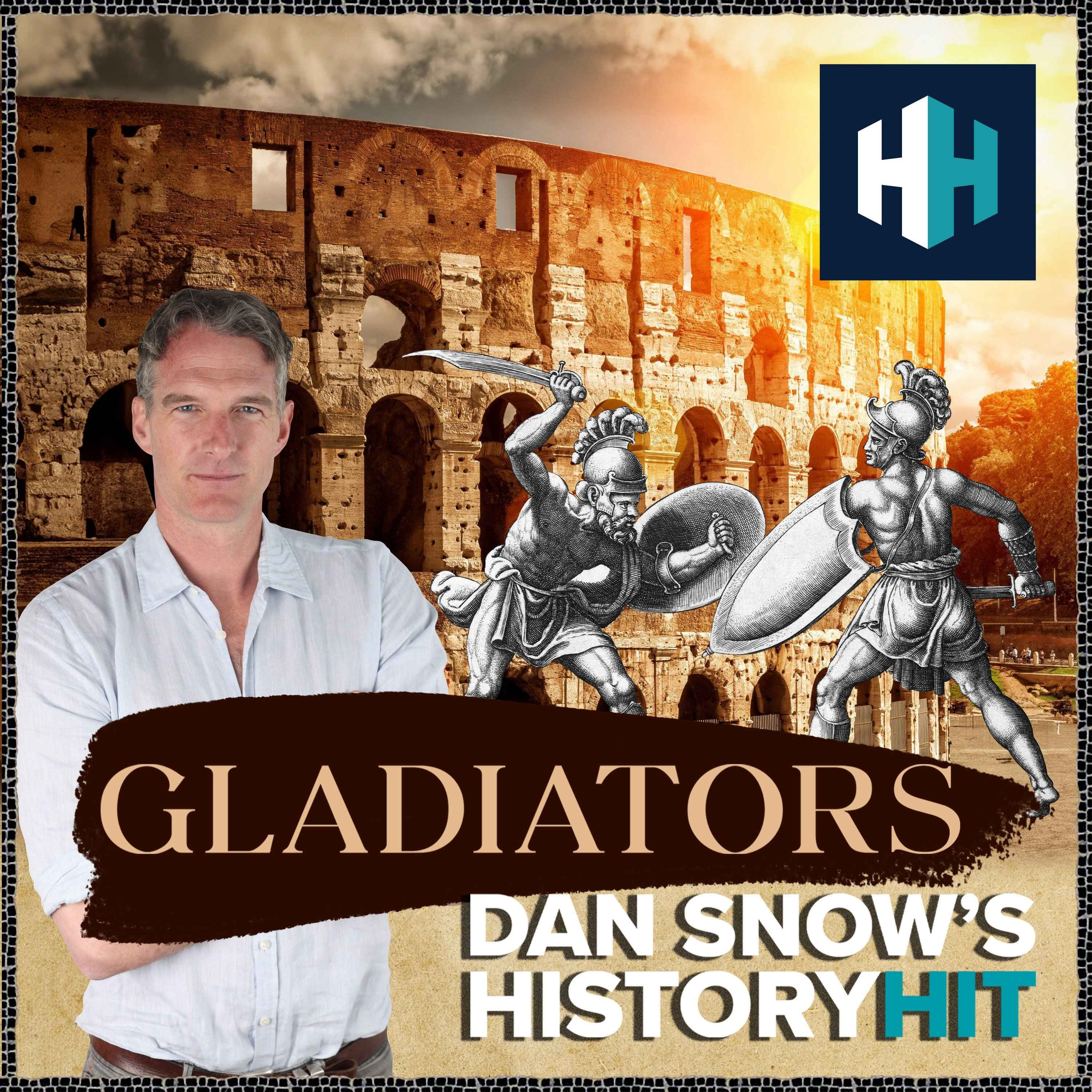
Dan Snow's History Hit
Gladiators: The Praetorian Guard
00:29:40
How Praetorian conspiracies and assassinations spilt imperial blood on the stones of the eternal city…
Loading summary
Transcript96 lines
- [00:00]
Ryan Reynolds
Hey, I'm Ryan Reynolds. Recently I asked Mint Mobile's legal team if big wireless companies are allowed to raise prices due to inflation. They said yes. And then when I asked if raising prices technically violates those onerous two year contracts, they said, what the are you talking about, you insane Hollywood So to recap, we're cutting the price of mint Unlimited from $30 a month to just $15 a month. Give it a try@mintmobile.com Switch $45 upfront.
- [00:26]
Dan Snow
Payment equivalent to $15 per month New customers on first 3 month plan only Taxes and fees Extra speeds lower above.
- [00:29]
Kate Lister
40 gigabyte C Details we all have dreams. Dream home renovations, dream vacations, or sending our kids to their dream colleges. But finding straightforward ways to turn those dreams into realistic goals? That's where things get tricky. Mayrill understands that. That's why with a dedicated Mayrill advisor, you get a personalized plan and a clear path forward. And having the bull at your back helps your whole financial so when your plans change, Merrill is with you every step of the way. Go to ML.combullish to learn more. Merrill, a Bank of America company what would you like the power to do? Investing Involves Risk Merrill Lynch, Pierce, Fenner and Smith Inc. Registered Broker Dealer Registered Investment Advisor Member.
- [01:14]
Simon Elliot
SIPC thanks for listening to Dan Snow's History. To get ad free early access and bonus episodes, head over to historyhit.com subscribe or you can sign up on Apple Podcasts with just one click we tend to say the Roman emperors, the Caesars, ruled a great swathe of the known world, and that made them some of the most powerful men alive on the planet at the time. And that was certainly sometimes true. But often it wasn't. At times the emperor was a cipher, a man who was bullied, bought, sold, and dispatched by an organization that wielded the real power on those occasions. The true locus of Roman might in Rome was not the human being sitting in the posh box at the Colosseum or relaxing up on the Palatine Hill. At times like that, power in Rome was focused on the camp of the Praetorian Guard. The Praetorians were constituted really by the Emperor Augustus, the first emperor in around 27 BC. And they were his bodyguard, they were his security escort. They take their name from the praetorium, the tent traditionally in which the commander of a legion or army slept. They had special privileges. They were allowed to bear arms in the city of Rome. Unlike other soldiers, they had access to the corridors of power and surprise, surprise, folks. They soon became a deeply Insidious force in the politics at the heart of the Empire. They became kingmakers. They were power brokers. They toppled emperors, even dynasties, at the drop of a hat. Or I should say, at the drop, a wreath. This is Dan Snow's history. You're listening to our series that delves into the world of gladiators, of emperors, bloodsports, power and conspiracy in ancient Rome. This is the rise and fall of the Praetorian Guard. In the movie Gladiator, you may remember, right at the end of the movie, the Praetorians leave Commodus to his fate at the hands of Maximus. They're ordered not to intervene by their prefect, Quintus. Now, that obviously didn't happen, but it is true that the real Commodus was in fact assassinated in a conspiracy led by a senior member of the Praetorian Guard. The Guard then installed their preferred candidate on the throne. But he didn't bribe them enough, and they killed him a few months later. On another occasion, they literally held an auction for the imperial title. While sometimes their commander cut out the middleman and simply took the job for himself. Now to trace the rise of the Praetorian Guard from the Emperor's bodyguard to something, well, far more powerful and complex. I met up with Dr. Simon Elliot and we had this conversation strolling through the streets of Rome with the heritage, the fabric of that mighty empire acting as a very appropriate backdrop. Hey, Simon. Good to see you, man.
- [04:35]
Dan Snow
Great to see you, Dan. Thanks for having me on the pod.
- [04:36]
Simon Elliot
Well, it's nice to see you in the flesh this time. We're drinking aperol spritz in the Rome. In the beating heart of Rome itself.
- [04:43]
Dan Snow
Absolutely. The imperial center, the heart of the Roman Empire.
- [04:46]
Simon Elliot
We're in a really strange cafe, lots of quite scary plaster casts of Roman rulers. I can see your eyes darting around looking to see if you recognize any of these emperors.
- [04:54]
Dan Snow
Absolutely terrifying. It actually reminds me of a really scary episode of Doctor who.
- [04:58]
Simon Elliot
It is a bit like that. There are statues all around us. What I really want to ask you about is the Praetorian Guard. On the one hand, we think of them as sort of elite force in this Roman army that people like to celebrate as one of the great fighting forces of all time. But on the other hand, they're unbelievably unreliable. They're a force for instability, for regime change, assassination. Let's start by going back to their beginnings. Where did the Praetorians come from?
- [05:21]
Dan Snow
So the Praetorian God was created by Augustus, the First emperor, or Augustus Octavian, the last man standing in the Roman civil wars in the first century BC, becomes the emperor in 27 BC. So he's got no competitors anymore. They're all dead, all gone. So in 27 BC, the Senate acknowledges him as being the first among equals, the Emperor. So the Roman Empire is born, the Republic is gone, The Roman Empire is born. Before that, Roman leaders and generals did have bodyguards. So even later, emperors had, for example, what were called German bodyguards, specific bodyguards for them. But the Praetorian Guard was created to specifically protect the new emperor. And it went through a variety of evolutions and iterations, different sizes at different periods. But largely the Praetorian Guard, as it lasted until it was abolished by Constantine, was the creation of Augustus.
- [06:16]
Simon Elliot
Presumably, he'd seen Caesar, he'd seen Pompey, he'd seen these, well, men who were almost emperors in all but name. Well, he'd seen them swept aside, assassinated, killed. He realized he needed to sort of institutionalize this force near Rome to protect him.
- [06:30]
Dan Snow
In actual fact, there's a very specific reason why he did it. And it's a classic case of Roman smoke and mirrors. So everywhere you look in the Roman world, there's conceits, and Augustus was the king of these conceits. What you see is not what you get. So in a Roman city or a town, it has a Pomerian, which is a religious boundary. And in Rome, it had been fortified with the Serbian wars, but that is the religious boundary of the city. Within those boundaries, you are not allowed to carry a weapon. Even soldiers are not allowed to carry a weapon. So the soldiers in Rome, when they gathered, they gathered in the Field of Mars, outside the walls, because in the walls, they can't carry a weapon. So very cleverly, Augustus, as you're doing various iterations, creating his new empire, created a new force which legally was allowed to carry weapons. When they were on the Palatine Hill defending him and his wife Livia, that was a Praetorian Guard. It was a creation to allow his soldiers to carry weapons when legally others weren't.
- [07:34]
Simon Elliot
And were they an elite or was it just patronage? Was it jobs for your mates?
- [07:39]
Dan Snow
It depends who the Emperor was. So the Praetorian Guard, for the warrior emperors, were called Trajan, as a great example. Septimius Severus is a brilliant example. Their Praetorian Guards were the real deal. They were the elite soldiers. Severus, when he became the emperor, disbanded the guard because they killed his mentor, Pertinax, the first emperor of the Year of the Five Emperors and then recreated it twice the size, 10,000 men with his Danubian veterans who'd got him in power and had fought the Marcomannic wars, celebrated on the column of Marx Aurelius. So his Praetorian Guard were the best soldiers in their known world, probably as good as any soldiers in the entire world at the time. But for other Emperors they reflected them. So it wasn't so for Commodus, for example, the Praetorian Guard became a laughingstock. And it's that Praetorian Guard, by the way, who then, for money, or rather not being given money, killed Pertinax at the beginning of the Year of the five Emperors. Depends who the Emperor is.
- [08:35]
Simon Elliot
And tell me why the Praetorian Guard became such enormous players and such a potential source of instability within the early Empire. Let's start with the Julia Claudians, that run of first emperors, your Caligula and Tiberius and Claudius and things. Were they good at protecting the emperor? Were they better at taking his life?
- [08:50]
Dan Snow
Probably the latter. Actually, if you think about it, very few Roman emperors died in their own beds. Most of them had very unfortunate ends. Often the unfortunate ends were at the end of usually not specifically the Praetorian Guard, but other Roman elites getting rid of them. Some of those elites are very often the Praetorian Prefect in charge of the Praetorian Guard. So part of the Troika who led the assassination of Domitian was the Praetorian Prefecture. Part of the Troika who led the assassination of Commodus was the Praetorian Prefect. The Praetorian Prefect clearly had a role in the assassination of Pertinax on the Palatine Hill. So in actual fact it's not specifically usually the Praetorian Guard itself. It might be the Praetorian Prefect.
- [09:36]
Simon Elliot
But by inventing the Praetorians, it seems that Augustus did introduce this very, very dangerous element right into the heart of.
- [09:43]
Dan Snow
The Roman state, which worked for him because he did die in his own bed. But then again, he was a very powerful emperor. If you look at the Roman world, to the Romans, the most famous Roman of all was Augustus. Now to in our world it's Caesar, Julius Caesar. To the Romans it was Augustus. Caesar was famous, but Augustus was more famous. So it depends on the Emperor for the real deal emperors exactly the same as whether they're good at fighting or not. They are the Praetorian Guard for the not real deal emperors, Domitian, Commodus, they fail because they Reflect the emperor.
- [10:19]
Simon Elliot
Okay, so they keep Augustus safe. Tiberius, he dies in his bed. Caligula does not die in his bed.
- [10:26]
Dan Snow
Assassinated.
- [10:27]
Simon Elliot
Petroleum guard didn't keep him safe.
- [10:29]
Dan Snow
Nope.
- [10:29]
Simon Elliot
But the Praetorian Guard put his successor on the throne.
- [10:32]
Dan Snow
Right. Claudius, who found him hiding behind a curtain or something. Hiding behind a curtain and then made Claudius the most unlikely of Roman emperors, actually turned out to be one of the most successful Roman emperors, in actual fact, to my mind. And of course it's Claudius who initiated the Roman invasion of Britain which created Britannia. So it plays a very great role in British history as well. Claudius in actual fact creates more Roman provinces than many other Roman emperors. So in terms of foreign policy, certainly he's a very successful emperor. Whether he died a natural death or not is debatable. You then move on though to Nero, who took his own life, may as well have been assassinated.
- [11:08]
Simon Elliot
The Nero was quite interesting because if you look back at for examples of the Praetorian actually kind of doing their job, right, a rebel general in a province is marching on Rome, right. Send up the bloody Praetorian Guard going to sort them out. It seems they don't do that very often. Like there's very few examples of the Praetorian Guard actually like going into battle to protect the Emperor and protect the regime. Right, so they do with Nero, do they?
- [11:28]
Dan Snow
The Praetorian Guard are in play from the beginning of the Empire through the Principate phase until the accession of Diocletian and then for the beginning of the dominate phase through to Constantine who then abolishes them because they're more trouble than they're worth, as it proved for three centuries. Right, so it's a good point, well made. However, in that period, sometimes they worked and sometimes they didn't work. Again, going back to my point, they really, really reflected the Emperor. And remember, we're talking about the Roman military largely here of the Principates. So the first half of the Roman Empire and at that period, the Roman military aren't based within the Empire, they're based on the edges of the Empire, on the frontiers. So it's not really normal for a Roman emperor to deploy troops in his own empire. So the Praetorian Guard usually only leave Rome with the Emperor when he's on campaign.
- [12:20]
Simon Elliot
They do spend a lot of time, again, those first Julia Claudians, Augustus De Niro, they spend a lot of time playing politics in Rome, don't they?
- [12:27]
Dan Snow
It's difficult not to though, isn't it? Because basically it is Like Game of Thrones or Lord of the Rings. You've got this council around the Emperor. One of the members of his close council is the Praetorian Prefects, actually, usually two Praetorian prefects to diffuse the power of the Praetorians, or certainly the Praetorian prefects. But you're in the center of imperial power, in, to your mind, the most powerful entity politically and economically and socially on the planet, the Roman Empire. And you're at the heart, you're in the middle. You've got the ear of the Emperor, the most powerful man in your world. So it's difficult not to, isn't it?
- [12:58]
Simon Elliot
Let's take them at their best, or what are they supposed to be doing? They're keeping public order. They're bolstering the regime.
- [13:04]
Dan Snow
The Praetorian Guard are there for one reason, literally one reason, to protect the Emperor. They're not there to keep law and order in Rome at all. The Rome that Romans would have known was vast. It's a million people, twice the size of any city, any city in the Roman world. It's enormous. The experience to a Roman will be like you and I flying over central London into Heathrow. When the scale of modern London hits you, well, that's what would happen to a Roman going into Rome. It smacks you in the face. To keep law and order within a million people, the Romans use two organizations. The first one is the urban Cohorts, the Cohort so Urbanae, who are like gendarmes, so they're like legionaries, but they don't have weapons. And they also have a second organization who are called the Vigils, who are the night watchmen. Their main job was firefighting, but they also doubled up doing law and order. Meanwhile, the Praetorians, a third of the Praetorian God any one time were on the Palatine Hill protecting the Emperor. The rest of them were in the Praetorian camp, unless the emperor was on campaign, in which case they go on campaign with him en masse.
- [14:14]
Simon Elliot
So when they're doing the job, they're keeping the Emperor safe. There are some very celebrated examples of when they go wildly off piece, don't they?
- [14:20]
Dan Snow
They go completely rogue. I mean, the reason why Constantine got rid of them is because time and again and time and again, instead of doing their job protecting the emperor, they're actually getting rid of the emperor. Or they can make an emperor and get rid of the Emperor.
- [14:34]
Simon Elliot
You're listening to Dan Snow's history. We're talking about The Praetorian More coming up.
- [14:41]
Ryan Reynolds
Hey, I'm Ryan Reynolds. Recently I asked Mint Mobile's legal team if big wireless companies are allowed to raise prices due to inflation. They said yes. And then when I asked if raising prices technically violates those onerous two year contracts, they said, what the are you talking about? You insane Hollywood. So to recap, we're cutting the price of mint unlimited from $30 a month to just $15 a month. Give it a try@mintmobile.com Switch $45 upfront.
- [15:07]
Dan Snow
Payment equivalent to $15 per month New customers on first three month plan only Taxes and fees extra speeds lower above.
- [15:11]
Kate Lister
40 gigabytes of details we all have dreams. Dream home renovations, dream vacations, or sending our kids to their dream colleges. But finding straightforward ways to turn those dreams into realistic goals, that's where things get tricky. Merrill understands that. That's why with a dedicated Mayrill advisor, you get a personalized plan and a clear path forward. And having the bull at your back helps your whole financial life move with you. So when your plans change, Merrill is with you every step of the way. Go to ML.combullish to learn more. Merrill, a Bank of America company what would you like the power to do? Investing Involves Risk Merrill Lynch, Pierce, Fenner and Smith Inc. Registered Broker Dealer Registered Investment Advisor Member SIPC.
- [15:59]
E
I'll have to keep my voice down because right now I'm between the actual bedsheets of some of history's most famous figures. Want to know more about what Hitler might have been like in the sack? Or Julius Caesar? Or our very own Billy Shakespeare? You wouldn't believe the details I'm able to uncover here on Betwixt the Sheets, a podcast by history hit because sexuality explored through a historical lens can reveal a surprising amount about the human experience, warts and all, if you'll excuse the pun. And we don't just stop at sex. Expect outrageous scandals throughout the centuries as well as probing into everyday issues. The nitty gritty of human life that really connects us to all people throughout history. Join me, Kate Lister, every Tuesday and Friday on Betwixt the Sheets to find out more. Listen wherever you get your podcasts. Right, time to slide out of here and avoid the bedpan.
- [17:04]
Simon Elliot
Now we're on the mean streets of Rome. Let's mark the Praetorian. Right, so they set up by Augustus. He dies in his bed. So the Praetorian, roughly speaking, fulfill the ambition that Augustus has for them.
- [17:15]
Dan Snow
Yes.
- [17:15]
Simon Elliot
Okay, good. Right, that's clear. Tiberius. What's going on there? They look after him.
- [17:21]
Dan Snow
The thing about Tiberius is Tiberius is a very successful general, so he's very popular with the military. And the Praetorian Guard also work for him as well.
- [17:28]
Simon Elliot
He dies in his bed.
- [17:30]
Dan Snow
Yes.
- [17:31]
Simon Elliot
Now his goodness knows the relationship. I can never remember a great nephew step twice removed. Caligula. That was when it all starts to go wrong. We start to get that kind of the Praetorian as a. A wrecking force within the empire.
- [17:44]
Dan Snow
Yeah. So with Caligula, the Roman military had been used to having a strongman. Now through two rulers with Augustus and Tiberius, Caligula was definitely not a military strongman. A very troubled Roman emperor to say the very least. And ultimately the Praetorian Guard with him don't do their job. They aren't behind his assassination, but they could have stopped him it and they didn't.
- [18:08]
Simon Elliot
And then am I right in thinking once it happens, that's the first time we see the Praetorian kind of picking emperors? I mean, so central now to the succession.
- [18:16]
Dan Snow
It is, although it's worth remembering, of course, with the Praetorians that haven't been around for a long time. So we think of the Praetorian Guard today, through modern culture etc as being intrinsically part of the Roman world. But they weren't. They were invented by Augustus. They've not been around for that long. They'd come across one bad emperor and there they chose to fail.
- [18:37]
Simon Elliot
But did they raise or Claudius up after Caligula?
- [18:40]
Dan Snow
Dan, they found him hiding behind a curtain. Yeah. And they made the most unlikely of Roman aristocrats, Claudius, Emperor, who actually, despite the fact is very ill favored if one is to believe the primary sources proved to be one of the great Roman emperors.
- [18:55]
Simon Elliot
Did he know that praetorians were very well, potentially a dangerous force within the upper echelons of the Roman Empire at this time. Or did he owe his position to them? Did he have to look after them?
- [19:05]
Dan Snow
I think for two reasons. Yes. So firstly, within the religious boundary of Rome, so within the walls of Rome, in actual fact, the Serbian walls, only the Praetorian Guards could carry weapons. So intrinsically they are dangerous because nobody else can carry weapons apart from the Praetorians, who can, and also the Praetorian Guard, secondly, are in the palace all the time. The Praetorian Prefect is one of the most important counselors of any Roman emperor. So they're armed and they're there all the time. So by definition they're going to be dangerous.
- [19:35]
Simon Elliot
Claudius, did he die of Natural causes or not, what do we think?
- [19:39]
Dan Snow
50. 50. May have done, may not have done. No evidence the Praetorian Guard were involved there at all. Actively or not, Nero succeeds him. So Nero took his own life, may as well have been assassinated. Again, the Praetorian Guard could have saved him and didn't.
- [19:54]
Simon Elliot
Yeah, they. When there was a rebel general approaching Italy, the Praetorian Guard threw their hands up, said, we're not fighting for Nero.
- [19:58]
Dan Snow
Yeah. And the thing to remember here is there's a pattern already developing still on the Julia Claudians, the first dynasty of Roman emperors. And the pattern is if the emperor is good and militaristic, the Praetorian Guard are fine. If they're not Caligula Nero, they're not.
- [20:15]
Simon Elliot
So a rubbish emperor, he won't command the loyalty of the Praetorians. Indeed, they might sniff a little vacuum and seek to move into it.
- [20:21]
Dan Snow
Absolutely. And also remember, the PR are soldiers. You know, they're carrying a gladius Hispania, you know, the chosen killing weapon of the Roman legionary. They're armed in a similar fashion to elite Roman legionaries, especially when they're on campaign with the emperor. They're armed soldiers. Soldiers respond to strong leaders. If you don't have a strong leader, they'll react to it negatively.
- [20:40]
Simon Elliot
As you're saying this, it really strikes me that Rome is a military dictatorship. Unlike some of the celebrated empires we read about through history, the Roman Emperor can really only be confident when he's a proven veteran military experience.
- [20:52]
Dan Snow
It's got to be a winner. Everybody loves a winner, and people don't like people who lose. And if you lose regularly, or if you don't rule, well, regularly, you're going to suffer.
- [21:03]
Simon Elliot
We're walking through the streets of Rome here, where there have been young Petorian officers from aristocratic families out like a guards officer in Britain and France in the 18th century.
- [21:11]
Dan Snow
Dan. All of those things. Okay, so they're paid more than other Roman soldiers, ultimately twice as much as other Roman soldiers. They have favorable positions across Roman society, especially if you're an officer. It's a great position to be. If you're a senator's son or an equestrian son, being in the Praetorian Guard. But crucially, again, going back to the fact they're soldiers, you're carrying a weapon. So you're walking as a Praetorian officer through the streets of Rome, and you're the only people who are allowed to carry. Carry a weapon, which actually gives you a huge psychological advantage.
- [21:41]
Simon Elliot
And Also probably in far less a risk of taking an ax in the back of the neck in the middle of the night in some German forest. You're not doing a stint on Adrian's Wall.
- [21:51]
Dan Snow
Well, I could tell you now there were very few Praetorians who actually did stints on Hadrian's Wall. If the Emperor is on campaign, then the Praetorian Guard en masse, go with him. The Praetorian Guards, Aquila Eagle Standard goes with him. And they're there to do the one job they have, which is to protect him.
- [22:09]
Simon Elliot
Are they a bit like Napoleon's Imperial Guard? Are they not just guarding the Emperor? They occasionally used on the battlefields as an elite force to break the will of the enemy.
- [22:17]
Dan Snow
Dan, that's a fantastic analogy. So I often think of the Praetorian Guard in battle when their good Praetorian Guard, not bad Praetorian Guard has been like Napoleon's Old Guard. So they're the ultimate, ultimate elite reserve. They're there to be deployed when a situation needs saving on the battlefield or the battle's about to be won and you need to push things over the edge. So they're there to be deployed as the elite, elite reserve. And the interesting thing with the Old Guard, with Napoleon, it will be exactly the same with the Praetorian Guard. The Roman emperors is when they failed the first time at Waterloo, the guard. Ricky, it was a big deal. Really big deal. The end. It was a really, really big deal. It's an event which still resonates culturally across Europe and in France today, the failure of Napoleon's Old Guard. So that's a great analogy. That's exactly what the Praetorian God were like.
- [23:07]
Simon Elliot
So the officers love it. Lots of social, political, sexual opportunities in Rome. No doubt they're loving life. What about the men themselves? They're getting paid more and there's a bonus, isn't there? They get bribed basically, with the new emperor.
- [23:19]
Dan Snow
So a Praetorian Guardsman gets paid more than other Rome soldiers, probably about twice as much for most of the period of their existence. They get far more perks. They're living in the Imperial center. They're on duty in the Imperial palace on the Palatine Hill. The word palace comes from Palatine Hill. Right. So they're at the center of palatial life in Rome, but also they get given effectively bribes, donatives, whenever the Emperor wants to do something. So when an emperor comes to power, he gives the Praetorian God loads of money to Keep him in power. If he thinks he's in danger, he might give them loads of money to protect him. And often you find Roman emperors who don't do that come to sticky ends.
- [23:54]
Simon Elliot
Strange, that. Speaking of sticky ends. Right, we got to Nero, Galba, Otho Vitellius, one emperor after another. The Praetorian Guard have a hand in.
- [24:03]
Dan Snow
That, sort of on and off. So again, they had favored candidates in the year of the Four Emperors, but ultimately, the thing about Vespasian was he's a highly, highly, highly successful soldier. Probably the most experienced, highly successful decorator soldier of his generation. Famously took part in many military campaigns, including the.
- [24:18]
Simon Elliot
Conquered the Isle of Wight, mate. Conquered the Isle of Wight. What a legend.
- [24:21]
Dan Snow
Absolutely. And the Southwest. And ultimately, soldiers, like successful soldiers. So ultimately, the Praetorians eventually side with Vespasian and so is born the Flavian dynasty.
- [24:33]
Simon Elliot
Right, so on to the second great dynasty of imperial Rome, Praetorians. There's calming influence or their wreckers here as well.
- [24:40]
Dan Snow
For two, yes. For one, not. And the plan's exactly the same, Dan. So for Vespasian, yes, dies a natural death. Titus, yes, allegedly dies a natural death, although, interestingly, within two years of becoming emperor. But Domitian, another real favored emperor, who, in my opinion, was a very poor emperor. The Praetorian Guard could have saved him, but he is assassinated, so they again choose not to save him.
- [25:03]
Simon Elliot
How does that then the transition work? Are they quite key in the successor?
- [25:07]
Dan Snow
Absolutely, yeah. So the Senate and the Praetorians go for Nerva, who is an elder statesman. So it's the safest pair of hands they can have, actually, after the chaos of the end of Domitian's reign. And then, of course, you end up with one of the greatest Roman soldier emperors of all, Trajan, Praetorian God, love Trajan. The pattern is exactly the same to this point, and it continues. If you're a successful military emperor or a warrior, the Praetorians love you. If you're not, you're in danger. You either brought rob your way out of difficulty or you're dead.
- [25:34]
Simon Elliot
Okay. And then we get that famous, celebrated run of emperors, including Hadrian, Antonio's Pius. Towards the end of that, though, we get Commodus, infamous old Commodus. Commodus and his successors, the Praetorians, are playing a huge role in who's who's on the throne and who's next.
- [25:50]
Dan Snow
So the interesting thing here is, look at the period of history we're talking about. We're talking about the Accession of Hadrian in 117 to the assassination of Commodus in 193. And then you get this sequence of Hadrian, successful emperor, Not a warrior emperor, really, but a successful emperor. Antoninus Pius, highly successful emperor. Not a warrior emperor, but highly successful. Maris and Lucius Varus, laterally, Marius, again, highly successful emperors. We're recording. Standing next to the column of Marx, Aurelius, who is one of the great Roman emperors throughout their reigns. The Praetorian Guard does its job because they're great emperors. But then you come to Accommodus and the pattern repeats. A poor emperor and the Praetorian Prefect, the head of the Praetorian Guard is one of the troika who lead the assassination of Commodus.
- [26:35]
Simon Elliot
Okay, how about the severance?
- [26:36]
Dan Snow
So we're going to go to the assassination on New Year's Eve 192 and 193 of Commodus, involving the Praetorian prefect. And then we have the year of the five emperors, beginning with Pertinax. And that's a great story about the assassination of an emperor by the guard itself. So Pertinax is only emperor three months. Styles himself would be Marcus Aurelius. At the end of January, the Praetorians go to him and say, can you give me some money? And he says no, because naturally the treasury's bust and I'm being a worthy emperor. I say, all right, the end of February, they go to him and say, can we have some money or we'll kill you? And he says no. So at the end of March, they kill him. Right. So he's assassinated by the Praetorian Guard. It's a very big deal which resonates all the way through Roman history from that point. Point, because 500 of them march, and the description is in Kuena. So in a formation like a bull's head, a military formation through the center of Rome from the Praetorian camp outside the Serbian walls through to the Palatine Hill. And the killing, it's a big deal. So by describing them in a boar, said they're armed, fully armed, pushing their way through the crowd who may have been trying to save the emperor. And then they kill the emperor. It's a big deal.
- [27:42]
Simon Elliot
Is that the one where they hold an auction? After that they did.
- [27:44]
Dan Snow
Absolutely. At the Praetorian camp.
- [27:45]
Simon Elliot
Right. And anyone who fights being emperor, just it goes to the highest bidder.
- [27:48]
Dan Snow
And the last two bidders were Didius Julianus, who's the leading senator who won, and Pertinax's father in law who lost. So Pertinax's own father in law was bidding to replace him. His own son in law who'd been assassinated. Very Roman, very pragmatic, the Romans. So then you go through to Severus, now Severus is mentor with Pertinex. And Severus gets to Rome with 3, 4, 5 legions, parks them in the Forum Romanum, goes into the Senate house. George Sources, I'm the Emperor, the synapses say absolutely. And then he gathers the Praetorians in the form Roman surrounded by his own legions, and he disbands them. He orders them to live 100 miles away from Rome for the rest of their lives. He cashiers them, he recreates the Praetorians to twice the strength with his own Danubian veterans. And the Praetorian Guard is rebuilt as a really properly elite Roman military formation. And finally you have this cascade of emperors in the Severin period through to the beginning of the cross rise of the third century where it all starts going wrong again. Caracalla not assassinated by the Praetorians, but he was assassinated and they didn't save him. Then you get the Praetorian prefect himself. Macronus becoming the Emperor very briefly feels.
- [28:49]
Simon Elliot
To me like the sort of logical next step, doesn't it? The PR's done everything. They've killed emperors, they've auctioned it. Finally, they literally put one of their own on the throne.
- [28:56]
Dan Snow
He puts himself on the throne. So Macronus actually had engineered the assassination of Caracalla, but not using his own guard en masse, just engineered a situation where Caracalla was stabbed while he was having a pee against a tree with his back turned and stabbed in the back. And there's so Macrinus. Macrinus doesn't meet a happy end. Then you get Ilia Gabulus, who's very confused. And finally you end with Severus Alexander, who again is assassinated by Maximinus Thrax, his successor. The Guard could have saved him, but didn't. Right. So the pattern is the same all the way through. If you're a successful warrior emperor, the Guard tend to be militaristic and support you and will keep you in power. If you're not, you need to bribe them, if you don't, you're dead.
- [29:37]
Simon Elliot
So Macron is. So finally, it's almost. It just feels like the logical end state. They've intervened in politics, they put their candidate on the throne, they finally put one of their own, they put the Praetorian boss, they cut the middleman out and just make him Emperor directly.
- [29:48]
Dan Snow
Yeah, but even he doesn't survive. So even the Praetorian Prefect, the boss of the Praetorians, doesn't get saved by his own Praetorians. Ultimately, he meets a sticky end as well. The thing with Macrons is it's a very good way of shedding light on how powerful Praetorian prefix could be. So usually there are two Praetorian Prefects to dilute their power, but both could be on the political make all the time and looking for an opportunity to make or break an emperor, or make themselves Emperor in the case of Macrinus. And remember, the Praetorian Prefect is part of the Emperor's inner circle. He's always there, he's always got the Emperor's ear, he's always got access to the Emperor. And remember, the Emperor is being told only usually what he wants to hear. Because you don't want to make a Roman Emperor cross because you could end up in the Coliseum. So this is a ruler who's living on the edge all the time, largely because he's only been told half the story, and one of the people telling him half the story is the Praetorian Prefect.
- [30:43]
Simon Elliot
Is there a big cross critique of the Praetorian? I mean, do you see this in the Roman authors? Are they regarded as a very dangerous, unstable force within Rome?
- [30:52]
Dan Snow
Absolutely. Ultimately, of course, the great Constantine becomes the Emperor in the Western Empire in 306 in York. Then by 312, he's defeated his opponents and he's now in Rome and he's the one who disbands the Praetorian gog. Scene knows he can't trust them because they supported his opposing candidates. He can't trust them. He gets rid of them from that point on, actually, the Roman emperors create their own guard units and they're fairly successful. So this big block of political power based around the Praetorian Prefects and the Praetorian Guard, because they're the only ones who can carry weapons in Rome, has gone.
- [31:24]
Simon Elliot
So Constine gets rid of the Praetorians, it turns out that didn't harm the principal, it didn't harm the. The Emperor. I mean, it was a wise thing to do.
- [31:32]
Dan Snow
So with Constantine, he made a very wise decision, but context is important here. So we've got to the end of the severance. We enter the crisis of the third century, and one of the manifestations of this period when the Roman Empire nearly implodes is successive, successive, successive usurpation. So emperor after emperor after emperor. So in that context, the Praetorians are made and broken, made and broken, made and broken, made unbroken an emperor or could have saved an emperor and didn't, or did, or didn't, or did and so on. So there's this endless cycle. It's only the great Diocletian, in actual fact, who saves the Roman Empire from disappearing completely hundreds of years before it actually did. And that's because he reformed the whole Roman state. Intriguingly, even he didn't get rid of the Praetorian Guard. It was ultimately Constantine who did so. But in the context of the fact of decades of misuse of their own power.
- [32:22]
Simon Elliot
So I'm gonna have to keep you talking for way too long. Let's find a little hostel. I'm gonna buy a drink.
- [32:26]
Dan Snow
I'm in.
- [32:31]
Simon Elliot
Well, that's it, folks. Thank you very much to Simon and all my guests over the past few episodes. I hope this Gladiator series has answered some of the questions you might have had if you've been to see the new Gladiator movie or if you've been to Rome to see the Colosseum and wondered what it was like in ancient times. So join me on Wednesday for more true history behind the movies, as I do a deep dive on the subject of Steve McQueen's new film Blitz. I'm talking to the bestselling historian Joshua Levine about the warfare and the tactics, the Luftwaffe and what really went on in London when the lights were out. A lot of stiff upper lip and camaraderie, yes, but also a lot of crime and looting in an environment where people explored new ideas and sexuality in a way they hadn't before. So make sure to look out for that. And if you want some more true history behind the movies, or even more ancient Rome, whatever you like. In fact, send us an email with your suggestions to DS.
- [33:31]
Kate Lister
We all have dreams. Dream home renovations, dream vacations, or sending our kids to their dream colleges. But finding straightforward ways to turn those dreams into realistic goals, that's where things get tricky. Merrill understands that. That's why with a dedicated mayoral advisor, you get a personalized plan and a clear path forward. And having the bull at your back helps your whole financial life move with you. So when your plans change, Merrill is with you every step of the way. Go to ML.combullish to learn more. Merrill, a Bank of America company. What would you like the power to do? Investing involves risk. Merrill Lynch, Pierce, Fenner and Smith Inc. Registered Broker Dealer Registered Investment Advisor Member sipc. You can trust podcasts to deliver results for your business. 80% of podcast listeners say they'll consider a brand recommendation by their favorite host. Even more impressive, 88% have taken action because of a podcast ad. If you're looking to connect with highly engaged audiences, now's the time to dive in. Download podcast Pulse 2024 for all the latest insights and see how podcast ads can drive real results for.