← Dan Snow's History Hit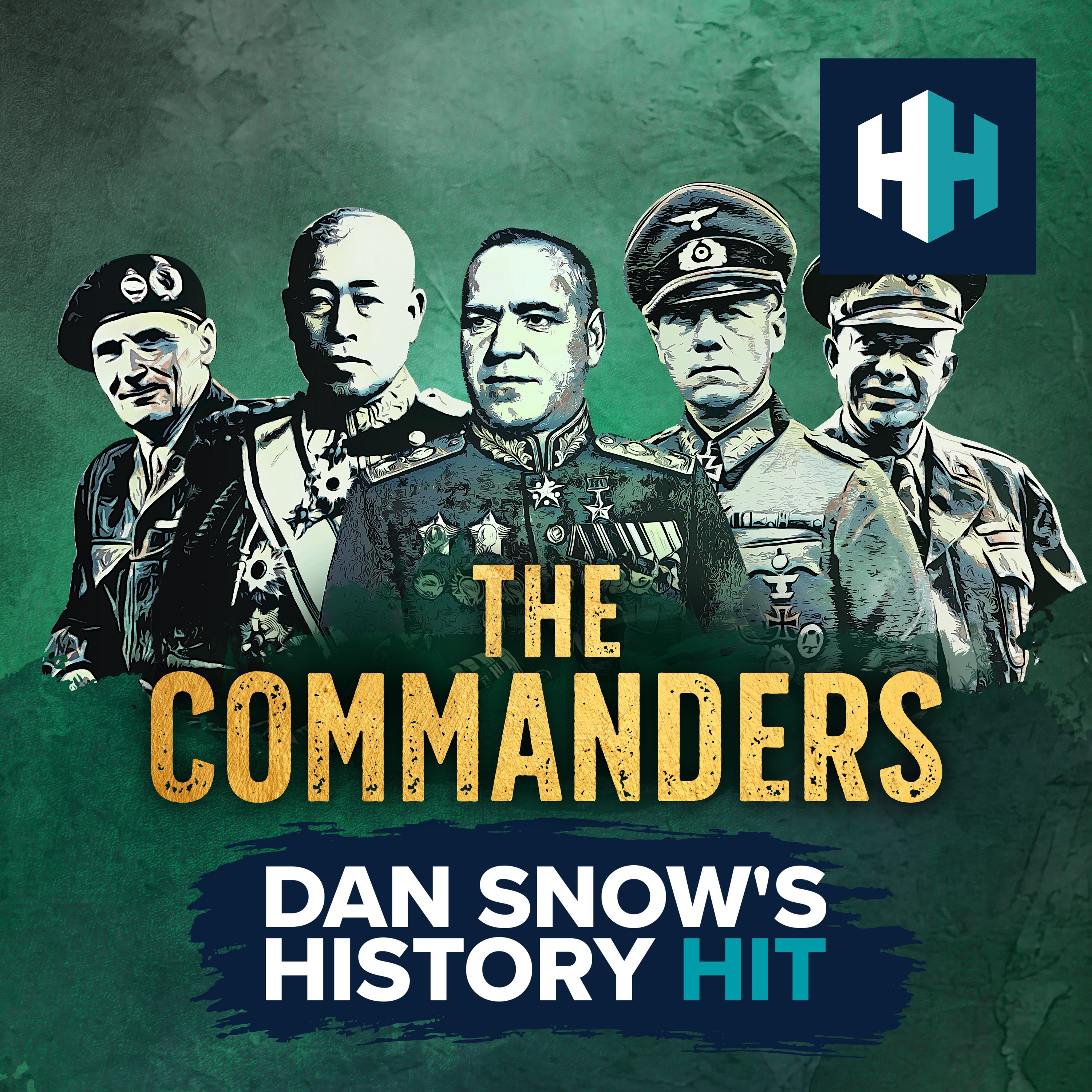
Dan Snow's History Hit
The Commanders: The Best of the Rest
00:40:54
Paying tribute to lesser known commanders who left a lasting mark on the Second World War.
Loading summary
Transcript119 lines
- [00:00]
A
Have you been enjoying my podcast and now want even more history? Sign up to History and watch the world's best history documentaries on subjects like how William conquered England, what it was like to live in the Georgian era, and you can even hear the voice of Richard iii. We've got hundreds of hours of original documentaries, plus new releases every week, and there's always something more to discover. Sign up to join us in historic locations around the world and explore the past. Just visit historyit.com subscribe.
- [00:33]
B
You're listening to this podcast, so I know you've got a curious mind. Here's a helpful fact you might not know yet. Drivers who switch and save with Progressive save over $900 on average. Pop over to progressive.com answer some questions and you'll get a quick quote with discounts that are easy to come by. In fact, 99% of their auto customers earn at least one discount. Visit progressive.com and see if you can enjoy a little cash back. Progressive Casualty Insurance Company and affiliates national average 12 month savings by $946 by new customers surveyed who saved with Progressive between June 2024 and May 2025. Potential savings will vary A Better Help
- [01:09]
C
ad Hold on one second. I just need to. What if you had a room where no one interrupts? No notifications, no expectations, just space to talk with BetterHelp Therapy happens in a space that's yours. Visit betterhelp.com randompodcast for 10% off your first month of online therapy.
- [01:40]
A
I sold my car in Carvana last night. Well, that's cool.
- [01:43]
C
No, you don't understand. It went perfectly. Real offer down to the penny. They're picking it up tomorrow. Nothing went wrong. So what's the problem? That is the problem. Nothing in my life goes as smoothly. I'm waiting for the catch.
- [01:54]
A
Maybe there's no catch.
- [01:55]
C
That's exactly what a catch would want me to think. Wow. You need to relax. I need to knock on wood. Do we have wood?
- [02:01]
A
Is this table wood?
- [02:02]
C
I think it's laminate. Okay. Yeah, that's good. That's close enough. Car selling without a catch Sell your
- [02:06]
B
car today on Carvana.
- [02:09]
C
Pick up fees may apply.
- [02:14]
A
Hey folks, welcome to Dan Snow's history here. The Great Commanders of World War II Series has come to an end. Tumblrs who got in touch to howl at me and demand explanation and why this or that person was not on the list. Why they're not included. Where is Yamashita? Hey, where's Slim, Guderian? Manstein? Where are so many others? So by popular demand, really. Here is a podcast in which we'll shout out a few other commanders. Sadly, this still won't be comprehensive, but at least it gives us a chance to get a few others out. The ones that we feel really do deserve a mention. Now, there's only one man I could think of to help me with this. That is Jonathan Bratton, longtime contributor to this podcast. You'll have heard him on here before. We talked about the great commanders of history a couple of years ago, but he's also, he's accompanied me around battlefields, the French Indian War, the Seven Years War in North America, and the American Revolutionary Wars. We were recently in Lexington and Concord together. He has written books, excellent books. He's taught the next generation of US army leaders. He thinks about this stuff while the rest of us are fast asleep. So here's our list of alternative great commanders. Some you might not have heard of, some you certainly will have done. And it's actually got rather a surprising conclusion that surprised both of us. Enjoy. Jonathan Bratton, Good to have you back on the pod, buddy.
- [03:45]
C
Oh, this is one of my favorite places to be.
- [03:48]
A
Hey, man, thanks, dude. Let's jump in. So we focused in this big series in this season on history here on some of the great commanders, of course, as we're doing. So you just think there's so many other guys who should get a mention in World War II on the Eastern Front. There's Rokossovsky and Chuikov, and we talked about Yamamoto in the Pacific, who we decided, but not a great commander. But I mean, the Americans certainly did have a surfeit of very high performing senior commanders in the Pacific theater in World War II. Which one draws your attention?
- [04:21]
C
I mean, I'm biased, you know, I love an underdog story. And that story is Walter Kruger, who's just this absolutely unknown individual in the American military experience. Two reasons. One, he's not American born, born in Prussia in 1881, and, and two, he's serving under MacArthur. And so if you want to have any type of career, you have to not be under MacArthur's thumb. And Krueger is just this great experience of one of those guys who does really basic stuff really well. And that's, I think if you look at sort of what makes a good commander, can you get stuff and people to the right point at the right time? That's really sort of what it takes. And I hate to boil it down and simplify it like that, but that's really what it is. It's very, very difficult now to do all those things. So when you see it done really well, you're like, oh, wow. And Kruger is one of these guys who's just consistently getting it done.
- [05:21]
A
Is this just a point about World War II? Modern, industrial, but perhaps it was true of the Carthaginians and the Rome as well. But in some ways not super glamorous. I mean, this is not Napoleon riding up and down his lines, night for Austerlitz leading the final charge of the Imperial Guard. This is just crushing logistics. Right. He's just, as you say, just getting a lot of stuff into the right place and then just changing the facts on the ground. You know, you've got a lot more gear than the other guy.
- [05:49]
C
Yeah. And Kruger's got this sort of. He comes up in this American army that's rapidly changing, you know, getting some French experience in the Spanish American War, which is just a logistical catastrophe, and then he serves on the divisional chief of staff level in World War I. So he's cutting his teeth doing those things a little bit like Marshall does in World War I as well. Just getting very, very good at the administrative, at the logistics. And so by the time of the Louisiana maneuvers in 1941, when the U.S. army is really just going, all right, things look very dire around the world. We should really, I don't know, test our theory text, our doctrine, test our equipment and soldiers. Kruger sort of comes to the fore as one of guys who's like, wow, yeah, he's very dependable. And he sort of becomes this workhorse in the Pacific under MacArthur, eventually rising to command of the 6th army in the Southwest Pacific campaigns. The Southwest Pacific tends to not get as much focus as the Central Pacific under Nimitz, mainly because, well, Marines. Nimitz has most of the Marines, and they are a phenomenal publicity campaign.
- [06:56]
A
So this is like the campaigns in New Guinea. This is the campaigns eventually into the Philippines.
- [07:00]
C
Yeah, yeah, yeah. And through the Solomon Islands as well, which is just really, really bloody combat. But also tiny little islands, just little island chains. And where you're having to constantly make the decision. Do you bypass? Do you try to surround cut off? One thing I love about the Pacific is you don't have a choice whether you want to be a joint commander or not. But the virtue of the terrain and the geography, you have to be thinking air, land and sea. And if you're not doing it, you're not successful. And Kruger, ultimately, he's seen sort of by some historians as sort of too plodding or too deliberate. But being deliberate is how you are successful in the Pacific is because you have to sort of build up capacity at an island chain to then move to the next one and then the next one.
- [07:50]
A
Yeah. And if you lose a bunch of landing craft, they are super hard to replace.
- [07:54]
C
And everyone's screaming for landing craft, both theaters. You can't do anything without them. I think that's one of the great lessons of World War II. What's the one thing that you can't do without? And it's landing craft. I mean, you could do without heavy bombers. And of course the Air Force would object, but.
- [08:11]
A
Well, and also as a. Listen, as a boat guy operating in shallow water, the right kind of vessel is you can't make any other boats squeeze into that role either. Right. A landing craft has to be a landing craft. Has to be a landing craft. Other types of vessel don't work. So. Yeah, it's a tricky one. Okay, so that's really interesting. And I love the fact that he was Prussian born. There's something beautifully appropriate about that. He's not glamorous, he's not even in the front. He didn't have pithy one liners. Is that one of the reasons? Or he's not remembered by the public or is it just like, you know, it's a crowded field, it's tough out there. How do you get remembered In World War II, the greatest war of all time? There's so many commanders, there's so many theaters. You know, inevitably people are gonna get squeezed out.
- [08:50]
C
Yeah, there's that. There's not being a native born American. He doesn't have the sort of star power that a MacArthur is going to have, that an Eisenhower or a Marshall or a Bradley is going to have, or a Patton. He doesn't have the pithy one liners. He just does his job. He keeps his mouth shut. He's very reliable and he is under MacArthur's thumb. And I think we really need to emphasize this. You have a bunch of incredibly competent corps and army commanders serving under MacArthur who are not getting any press whatsoever, who are getting just sort of rode hard constantly by their boss and who half of them want to go fight in Europe. They see Europe as the main theater and they keep putting in requests to transfer to Europe. And of course MacArthur quashes them, doesn't allow a single one up towards Marshall. So you've got really, really competent guys fighting in almost what is seen as a backwater of the war by 1944. You know, the real conflict, as many people see it as happening. Europe that's where all the attention grabbing headlines are. So yeah, you've got guys like Eichelberger and Kruger who are just hanging out in the Pacific doing a great job, but never getting the recognition that they truly deserve.
- [10:06]
A
Okay, we got Kruger there. It's such an interesting example of a great World War II commander. Okay. Before we leave the Pacific, there's someone who I've long admired because I made one of the first TV shows I ever made was about the Battle of Midway and the events leading up to it. Admiral Halsey, Bull Halsey. Maybe a different kind of commander dealing with a different set of problems, but deserves a mention.
- [10:30]
C
Absolutely. I mean, he's another person who's critical to the Southwest Pacific campaign, who also is often overshadowed by MacArthur as he's sort of the naval component in that joint command through the Southwest Pacific. But unlike everybody else, Halsey has no problem capturing a spotlight. He is brusque, he is profane, he's got the one liner, he's got the cigar chopping.
- [10:52]
A
He looks the part.
- [10:54]
C
He looks the part. Right. And that's absolutely critical. He is very aggressive. You know where I mentioned Kruger is sort of a little bit more conservative, wanting to take more time to be deliberate. Halsey is not. He is of the, the Stephen Decatur School of Naval Leadership, which is just sort of not quite. Nevermind maneuvers and go straight at him, but it's pretty close.
- [11:18]
A
Yeah. And he's there at the beginning. Right. He comes back into Pearl harbor within hours of the raid of the Japanese assault. And he promises right there and then there's going to be revenge. The Japanese language will only be spoken in hell.
- [11:28]
C
Yeah.
- [11:29]
A
And indeed he kind of, he's the first guy to go on the offensive, I suppose you could say, you know, he's, he's looking for opportunities straight from the off the hip back.
- [11:36]
C
Yeah. Taking the carriers out of Pearl and then coming back in with them, realizing he's also one of these individuals who sees that the future of naval warfare isn't just the battleship. He's able to think in the multidimensional way. And now we go. Yeah, obviously carriers are very important, but we have to remember there's still an era of innovation with a lot of people wondering, all right, well, how central really, you know, 1941, 1942, how Central really will carrier warfare be? And when you put together something like a carrier task force combining sort of your surface warfare and your air warfare, then all of a sudden it's a sort of a whole new ballgame. There are many Leaders who just can't grapple with that, can't bring their minds around it. Halsey's excellent at that coordination of air and sea a little bit. Almost, one could say, too good. You know, he has this faith in his own capabilities and leadership that puts himself often in difficult tactical situations and weather considerations, as well as he often puts his task forces into various typhoons throughout the war.
- [12:37]
A
Yes. I always think it's odd he sells into not one, but two, like ship destroying typhoons during the war. It always seems like a slightly. You need to listen to his met people a bit more maybe.
- [12:46]
C
Yeah. But he is one of these individuals who being aggressive allows him to always keep the Japanese Imperial Navy on the back foot. This is huge because, as we know, most of the Imperial Japanese army was busy on the Asian continent, busy mostly with China. And it's the Navy that's holding those Pacific island chains and fighting what rapidly becomes a deteriorating delaying action as they're losing island chains and also losing the ability to combat what is becoming increasingly aggressive, increasingly capable US Naval presence that's both under the water, on the surface of the water and in the air. I think we often forget about how critical the submarine warfare element in the Pacific was for destroying Japanese merchant marine.
- [13:34]
A
I just find the war in the Pacific is amazing. I mean, apart from anything else, Halsey commands the fleet at the battle of Leyte Gulf, which is pretty much, by certain criteria, and by my criteria, the largest naval battle in the history of the world. The superlatives just keep coming in World War II, don't they? It's just on just a monumental scale,
- [13:51]
C
Just almost too large of a scale, I think, for a lot of us to really take in. Leyte Gulf is a great example of what happens if you're a little bit too aggressive. You're following a decoy or a feint of the Japanese carrier force as you're trying to find your enemy's weakest point or your most. The decisive point for yourself to destroy your enemy's most important asset. That would be the carriers. And you put you up on almost disadvantage. And luckily he wins at Leyte, but it is at the cost of very high casualties.
- [14:21]
A
Yeah, so he's kind of a little bit rash. Overly aggressive. I mean, it sounds crazy, but possibly overly aggressive.
- [14:28]
C
Yes, but you also need that.
- [14:30]
A
Yeah, you need that. Right.
- [14:31]
C
You absolutely need that, especially from a naval commander and especially in that theater where if you let your guard down at one moment, I mean, the Japanese Imperial Navy is absolutely a potent force. And if you don't have the destruction of that, especially that carrier capability. Nothing's moving. There's no army action coming to reinforce you. You're not able to seize any island chains to turn into airfield for strategic bombing. You know, everything hinges on, on that. I mean, as an army person, this is very difficult for me to say, but looking at the Pacific theater, we have a very small role there. It is always going to be the sea power that guarantees everything else. Land power will become very important as you look at seizing and holding areas for logistics bases and then eventually for looking at something like an invasion of the Japanese Home islands. But nothing happens without the Navy. And that is a very difficult thing for me to say.
- [15:29]
A
Well, listen, I mean, we've been saying in Britain for a long time afterwards, you know, don't forget Edward Gray once wrote, the British army should be a projectile to be fired by the Royal Navy. So we're all ready for that. Okay, so Halsey, a different kind of commander, I think, but such a striking one, so definitely deserves a mention. Let's get over to North African European theatre. Who do you think we should be looking at beyond perhaps the obvious household names?
- [15:54]
C
Well, gosh, there's so many. I like the commanders who just do their job, who are dependable, but who never really get the praise right. You know, you've got the Jim Gavins, the jumping Jim Gavins of the world, but they get plenty of press and publicity. It's nothing about that airborne nonsense. Lucien Truscott is really the one who I look at especially.
- [16:14]
A
Wow, this is niche. This is one of the aficionados here.
- [16:18]
C
He's fascinating one. He's not a West Pointer. He comes out of the cavalry.
- [16:22]
A
So just for Brits. So he doesn't go to the military academy in the US which is where your senior leaders tend to emerge from almost always.
- [16:30]
C
We pride ourselves on not being a class based system and being very egalitarian. And yet for the majority of our military history, all of our senior commanders have been coming out of the Military Academy at West Point.
- [16:41]
A
Well, given you used to teach there, I celebrate that.
- [16:45]
C
But yeah, it's tough to break through there. So if you have someone who is recognized with, essentially, you know, he rises to the rank of. It starts out in the. The division commander level. Commander, the 3rd Infantry Division, the Marne Division, given its World War I nickname, and eventually rises through core command through fighting in Sicily and Italy, which is also. This is not maneuver territory, just like the Pacific. It's not until the Pacific forces reach the Philippines that anyone can even think about Maneuver and then with Sicily, you've got a little room for maneuver, but it's such a small island. And then Italy is just a slogging slugfest when you're serving under someone like Mark Clark. Abrasive, constantly self seeking. A little bit like Patton in that regard, but with somehow less self awareness or more self aware. It really depends on the day with Mark Clark, whether you're going to get someone who really understands what's going on. A really, really difficult situation. So Truscott works under Patton, it works under Clark. I mean, this is a guy who just has a success, difficult bosses. And then when they finally take Rome in 1944, I think it's a day or two before D Day. Mark Clark gets the headlines for about five minutes. And then all of a sudden it's D Day. After Mark Clark leaves, it's just Truscott left holding the bag to fight through the rest of Italy. And as you know, there's a lot more Italy after you hit Rome. So Truscott eventually fighting the 5th army through Italy in some very, very, very brutal campaigns.
- [18:20]
A
Yeah. And people also forget just the geography of Italy is savage. It's narrow, you can't outflank. It's the landscape, it's brutal, the climate's tough. And doing all that whilst knowing that you're probably not in the decisive theater must bring its own particular psychological challenges and command challenges.
- [18:40]
C
Yeah, that's. To say the least. There's a real humility with Truscott that's really interesting. I think it's a Memorial Day dedication at one of the cemeteries outside Rome. He's the main speaker and he's sort of giving remarks to the crowd. He turns his back on the crowd and turns to look at the cemetery, which are all his soldiers. And in this really moving moment, he apologizes to his soldiers and he says, if there is something that I did that put you here, I am sorry for it. And it's this really human moment that is kind of rare. When you look, you know, as you said earlier, it's a crowded field and a lot of these people are prima donnas. I mean, you have the Montgomerys, the Pattons, even the Bradleys, to a certain extent. You know, he's got his own ego to deal with. But this sort of humility and understanding that it is the average soldier that fights and suffers and bleeds and dies in all these moving little pieces around on a map in order to capture things like Rome, in order to do things like seize Sicily and sort of erase the Axis control off the Italian boot, which is a secondary theater that many historians have argued about whether the US or the Allies should have expended that many resources against North Africa, Sicily and Italy. And so I think that makes him a very sympathetic person. Patton rates him as a very proficient division commander, which almost comes as a dig.
- [20:17]
A
Oh, that's interesting because I've always read that Patton quote. He says he's the most efficient divisional commander I've ever met, meaning he wouldn't have done well beyond that. I never read it that way. Interesting.
- [20:26]
C
I don't know. I always look at Patton's quotes with a grain of salt. Where I'm going, all right, what else is he saying? But rising to army command, he does a phenomenal job. And I think if you put him in another location, we would hear a lot more about Lucien Truscott. Instead, we just know of him for his brief scenes in the movie Patton and that I think it was his son who did go to West Point. His son or his grandson wrote a romantic thriller based at West Point where you're just like, man, your dad was famous for not going here. And you've become so bought in that you're just imbibing the West Point Kool Aid.
- [21:09]
A
Elis to dance knows history. More great commanders of World War II coming up after this.
- [21:20]
C
AI is transforming customer service. It's real and it works. And with fin, we've built the number one AI agent for customer service. We're seeing lots of cases where it's solving up to 90% of real queries for real business businesses. This includes the real world. Complex stuff like issuing a refund or canceling an order. And we also see it when FIN goes up against competitors. It's top of all the performance benchmarks, top of the G2 leaderboard. And if you're not happy, we'll refund you up to a million dollars, which I think says it all. Check it out for yourself at fin.
- [21:50]
B
AI, you're listening to this podcast, so I know you've got a curious mind. Here's a helpful fact you might not know yet. Drivers who switch and save with Progressive save over $900 on average. Pop over to progressive.com, answer some questions, and you'll get a quick quote with discounts that are easy to come by. In fact, 99% of their auto customers earn at least one discount. Visit progressive.com and see if you can enjoy a little cash back. Progressive Casualty Insurance Company and affiliates national average 12 month savings by $946 by new customers surveyed who saved with Progressive between June 2024 and May 2025. Potential savings will vary.
- [22:27]
A
I sold my car in Carvana last night. Well, that's cool.
- [22:29]
C
No, you don't understand. It went perfectly. Real offer down to the penny. They're picking it up tomorrow. No, nothing went wrong. So what's the problem? That is the problem. Nothing in my life goes to smoothly. I'm waiting for the catch.
- [22:40]
A
Maybe there's no catch.
- [22:42]
C
That's exactly what a catch would want me to think.
- [22:44]
A
Wow.
- [22:45]
C
You need to relax. I need to knock on wood. Do we have. What is this table wood? I think it's laminate. Okay. Yeah, that's good. That's close enough car selling without a catch.
- [22:52]
B
Sell your car today on Carvana.
- [22:55]
C
Pick up. These may apply with VRBO's last minute deals. You can save over $50 on your spring getaway. So whether it's a mountain escape city break or a week at the beach, there's still time to get great discounts. Book your next day now. Average savings $72. Select homes only.
- [23:20]
A
But it's funny that the adjectives you're using, some of the words you're using to decide Truscott is a little bit like Kruger. We're getting at something here around high command in the middle of 20th century. You know, he's. It's no longer Alexander the Great, the battle of Gaugamela. Just leading a kind of frantic cavalry charge that takes out the enemy high command during the battle. You know, this is. We're talking about things like coordination. You know, his ability to make sure that infantry, tanks, artillery, aircraft in astonishing mind blowing numbers, like bigger numbers that any human military planner has ever had to conceive of before this century. Just meshing them together, making sure stuff arrives at the right time. The start line, the things, the coordination takes place. The orchestra is all playing to the right music. There's something really coming through in everything you're saying about these guys.
- [24:07]
C
It leads us almost to an interesting point where as we talk about great commanders of World War II, I think some of the most brilliant minds in World War II never commanded a single person. And the first person who jumps to mind is George Marshall. I mean he's the one who's orchestrating getting all these forces to every single point on the globe. I mean we are talking Army, Navy, Air Corps in just some of the most remote faraway conditions.
- [24:37]
A
Yeah. From the Arctic to the Antarctic. I mean it's extraordinary.
- [24:41]
C
But because he's not a commander and never commanded in Combat beyond a platoon in the Philippines in 1901 or so. He usually gets overlooked as, oh, just some staff person.
- [24:53]
A
Yeah, it's very striking. And I wonder, thinking about this as technology has changed, whether are we entering a new era and perhaps that will be around sort of almost media and communications, but. Or are we still locked in? This war is still the story of vast amounts of people, objects, supplies, not only in terms of volume of those objects, but in terms of the difference and sophistication and range of them. And that is therefore always at the moment. Still means that we put a very high premium on people's ability to kind of organize and coordinate those things.
- [25:27]
C
Definitely. You can't achieve your nation's political policy objectives against another nation or set of nations unless you're amassing all the right effects at the right place at the right time. That's incredibly difficult. What are the right effects to use? What is the best way to bring about? The Allies make this decision to call for the unconditional surrender of the Axis, which is highly controversial because there's this idea, well, if we say unconditional surrender, then they're just going to fight to the death. And so how do you get your military commanders to then bring about that effect? How do you get them to bring your enemy to their knees? I mean, you can't just go in with sort of pinpricks. It's this utterly enormous movement from the home front, from production to labor to merchant marine, shipping, aircraft, all the way over to these vast theaters of war to then deploy those in a responsible way where you're not sort of wasting equipment, wasting lives. It's so daunting when you start thinking about the scope of it. You just sort of stop and get a headache and just want to go outside and look at some grass.
- [26:40]
A
Yeah, totally. Let's come to a British name that people have been messaging me about. The fact that I missed out who. It's in Britain. If you want to sound knowledge about World War II, you always say Britain's best commander in World War II was Bill Slim, was the Viscount Slim. And you deliberately don't say Montgomery. He also was not born into the sort of military elite, and he's a little bit of an outsider, from definitely a sort of a different socioeconomic background to what you might expect a British commander this period to be. And yet he rises up to command, become a field marshal, and he commands the forgotten army, the 14th army, in Northeast India, and then into Burma and Southeast Asia. And, I mean, what do you make of Our Bill Slim, do you see why we all get very excited about him?
- [27:27]
C
Well, I mean, one, he is a character, to say the least. And he's also doing something that is very, very difficult. Commanding multinational forces and especially in the Far East. I mean, on the American side, we've got, you know, our own sort of controversial. Either you love him or hate him, you've got, you know, Vinegar Joe Stillwell in China sort of attempted to do something rather similar. Slim is dealing with a situation where you've got multiple sort of European forces, sort of colonial forces, you've got British colonial forces that you're trying to fight with. And you're doing this all in really horrific terrain. I mean, the China, India, Burma theater, it's one where logistics is everything. Because there are no roads, everything sucks, the weather's awful, you have to fly, almost fly everything in. And this idea of how you are successful in elements like that, the way Slim is, I mean, of course you're going to come out of that looking somewhat legendary, especially considering the number of people around him who were not being legendary, were sort of collapsing.
- [28:41]
A
He's got that thing that Halsey needed and Montgomery needed and he certainly needed in the east, which is turning around a unit turning around again. This is something we probably undervalue. But if you're there, I imagine feels pretty dominant, which is a sense that you've retreated, you've been driven out of Southeast Asia by the Japanese. The mighty British Empire, dominant in that part of the world for so many generations, is just reeling back. And for him to come in and just say, we're going to win and this is how we're going to do it. And he does that. He's communicating that. He famously speaks the language of many of these men, languages like Nepali. He's able to speak to the Gurkhas in their own language. That's, I guess, what you call it, charismatic leadership. That's pretty effective.
- [29:20]
C
Yeah, yeah. To be able to sort of influence the morale of a unit, to allow soldiers to understand what it is that they're actually fighting for. I think there's something with that, with Truscott as well, that you have individuals who are able to go and just speak to soldiers on a sort of one to one basis, you're not talking down, you're talking with. That's huge. Whether you're talking about training or keeping up morale in very, very difficult circumstances. It is also interesting to look at how he's using resources. There's always a temptation to throw resources at specialized units and we could look at Robert rogers through the 1760s and 1770s, and this idea of, oh, just give me. Give me more resources, give me more people, and we'll train these Ranger units, and they're going to have amazing effects when really what every commander from Gage to Washington needs in the 18th century is just more good line infantry, maybe some good artillery batteries. And you really see this across World War II is this. Some commanders have this obsession with sort of specialized units, whether it's Merrill's Marauders and the Chindits in the Pacific theater or the Army Rangers in the European theater. What you're doing, I think, a lot of people don't realize, is you're pulling some of the best, most intellectual, best trained, most physically fit soldiers from regular formations where they could be training those around them and making those around them better, grouping them into one very specialized unit, which can be used for good operational or strategic success if used correctly. But if used incorrectly, you're killing off your best and your brightest, and you're really not delivering what is needed for winning that conflict. And so Slim takes some flak for his disdain of the Chindits. But I'm of his camp of saying, no, we need to make the whole force better. Not everyone can be a Special Forces soldier. And if you're using them incorrectly, as case in point, the Rangers in Europe, I mean, where they blow up to four battalions and then you lose most of those in one single operation in Italy, you're just wasting so much of your talent in one single source. But that is a personal opinion, and many other military thinkers would. And do you disagree with me?
- [31:36]
A
I just think the challenges that he faced, the geography, the coalition, Chinese Nationalist troops, troops from across northern India, West African troops, European, British troops. I mean, it's just an astonishing collection. He manages to weld together and push through some of the toughest country on earth. So I think he does deserve his honorable mention in this context. Let me go back to Europe, because I don't know nearly enough about the sort of the elephant in the room of the Americans in Northwest Europe. We always talk about Eisenhower, we always talk about Patton. And then there's Bradley just sitting there. How should we evaluate him? General Omar Bradley, he went to West Point, as we discussed the military academy in the same year as Eisenhower, the class the stars fell on. I love that expression. And I see him as being more unassuming, I suppose, than some of the people around him.
- [32:25]
C
He definitely cultivated that air. He was noted in the press as the GI General, and so While, yes, he is sort of. He's more humble than Patton, but that doesn't take a lot. I mean, the bar is very low there. But he does cultivate definitely an image that is more of one of the troops. He dresses like an average soldier. He's not spit and polish. He's not wearing a fancy uniform. He's very focused on doing the work. And he's one of these guys who's in the European theater, the Atlantic Theater, however you want to describe it, really comes up through the North African campaign, from North Africa all the way to the end, sort of brought in to rehabilitate what is often referred to as a really series of catastrophic first battles for the U.S. army in North Africa. I think a little unfairly, everyone's got to have their first bloody nose in their first fight.
- [33:21]
A
Yeah, there's the Kasserine Pass as we're entering Tunisia.
- [33:25]
C
This is Kasserine Pass and. And other skirmishes, battles around it. And he's coming into an environment where there so many commanders are getting relieved for minor stuff that even Patton says, hey, maybe we're. Maybe we're kicking people out too fast. Maybe people should have a second chance. Everyone had their first combat. Maybe they should be allowed to have another chance. So he's coming into a very, very difficult situation to rebuild the forces in North Africa. He does very well. He's really masterful, once again, at logistics. I mean, he is a guy who can move a lot of people and stuff to the decisive point and do the simple things that also build up morale, make sure that food is good and on time, making sure that soldiers have the right equipment, making sure that they have the right uniforms for the type of terrain and weather they're fighting in. He's going to come to the fore. You know, Eisenhower picks him not because he doesn't like Patton, but because Bradley has shown the ability to do the things that sort of Eisenhower is doing, which is don't stir the pot, be a good ally, work well with others, which is vital in coalition warfare, and be a sort of master of logistics, which is going to mean that he's going to command an army group in the European theater, which is unfathomable. Maneuvering armies around. I mean, it's unfathomable for us. The Soviets, of course, have been doing it for several years in World War II, but that's the level of command that he's entrusted with, and he does a very good job with it.
- [34:58]
A
Yeah, I mean, the U.S. army in, what, 1935 was what just over 100,000. The whole of the U.S. army.
- [35:06]
C
I mean, it's probably about 180,000, 160,000 regulars.
- [35:10]
A
That's the entire fighting strength of the Republic. And 10 years later, here's Bradley commanding over a million men in an army group. I mean, it's just wild, isn't it?
- [35:20]
C
And composed of multiple different nationalities and dealing with field commanders like a Patton and dealing with partners like a Montgomery. And as an army group, I mean, you're responsible almost for half of Europe. It's absolutely unreal. And then adding to this, of course, he is the one responsible for the operational command of Overlord and D Day and then the Cobra breakout once they're in Normandy. And that drive across France where he's running into all sorts of problems like Charles de Gaulle comes to mind. And what are the Free French going to do around decisions like giving up Strasbourg after you've taken it? And how do you be that good coalition commander? And that's by rule, by consensus, for lack of a better term, being able to work across the barriers rather than exacerbate the barriers and make them worse. So he plays a major role in how the US army actually comes out of World War II as well, because he's going to go on to be Chief of Staff and oversee the army in some real phases of transition that are very familiar to the army that we see today. So one could almost say that Bradley helped build the modern US army in addition to his wartime exploits.
- [36:41]
A
What other great commanders of World War II we're gonna be talking about? Find out after this.
- [36:53]
C
We're lost. It feels like we're going round in circles. I'm gonna ask that man for directions.
- [37:00]
A
Hi there. We're trying to get to the state fairgrounds.
- [37:03]
B
Well, you're going to take a left at the old oak tree at this here road.
- [37:07]
C
Nah, I'm just kidding.
- [37:08]
B
Let me get my phone out.
- [37:09]
C
How is there signal out here?
- [37:12]
B
T Mobile and US Cellular are coming together. So the network out here is huge. We get the same great signal as the city, saving a boatload with benefits. And there's a five year price guarantee too. Okay, here's the turn.
- [37:24]
C
Actually, can you pull up the way to a T Mobile store?
- [37:27]
B
America's best net network just got bigger. Switch to T Mobile today and get built in benefits the other guys leave out. Plus our five year price guarantee. And now T Mobile is available at US Cellular stores in Hermiston. Best mobile network Based on analysis by OKLO speed test intelligence data second half of 2025 bigger network. The combination of T Mobile's and US Cellular's network footprints will enhance the T Mobile network's coverage price guarantee on talk text and data exclusions like taxes and fees apply. See t mobile.com for details. You're listening to this podcast, so I know you've got a curious mind. Here's a helpful fact you might not know yet. Drivers who switch and save with Progressive save over $900 on average. Pop over to progressive.com, answer some questions and you'll get a quick quote with discounts that are easy to come by. In fact, 99% of their auto customers earn at least one discount. Visit progressive.com and see if you can enjoy a little cash back. Progressive Casualty Insurance Company and affiliates national average 12 month savings by $946 by new customers surveyed who saved with Progressive between June 2024 and May 2025. Potential savings will vary.
- [38:37]
A
You know you mentioned de Gaulle there. I wonder if we should mention de Gaulle in this context, because actually de Gaulle, of all these guys has the most astonishing World War II and he is a nobody. At the start of World War II, he emerges having done exactly what he set out to do, which is established himself as leader of a movement that apparently that he can suggest has helped to liberate France from its eternal enemy, the German enemy, restore France's pride and pre war borders, and will go on to have an extremely long political career at the apex of French politics. You tell me, is he a good battle commander? But in terms of his, he gets his strategic outcomes almost more than anybody else.
- [39:16]
C
Oh God, yes. And coming from, as you say, almost a nobody. I don't know that there's anyone who sort of rises out from absurd obscurity to become this household name in World War II like Tikal does, simply by virtue of the fact that he gets out after the fall of France, gets the uk, establishes himself as the spokesperson for France. A really remarkable thing considering that there is another whole other French government granted Patan's Vichy regime.
- [39:47]
A
Yeah. No, he's just, it's just him going I'm the government now and it's just a guy with a radio set.
- [39:52]
C
I am France.
- [39:52]
A
It's extraordinary.
- [39:54]
C
Yeah. And he does it and he does it because one that's exactly what Roosevelt and Churchill want to hear. They need someone who's going to be the anti Vichy voice to be this figurehead. And he's very happy to be the figurehead. Probably a little bit too happy. But as loudmouth, as braggadocious as Self seeking as he is, you could almost forgive so much of it because he goes, well, I'm doing this for France. And he's not wrong. France needed that. They needed that voice, they needed that ability to have someone to be fighting for French interests as a member of the alliance, not as someone from the outside, but as someone from within. And so of course he's going to be a thorn in the side of everybody. Like I mentioned Strasbourg, you know, allies capture Strasbourg, Germans counterattack. Americans say, hey, we've got to Free French, we've got to give this back. And the Free French say, absolutely not. Now you've got just sort of a standoff amongst allies. But where de Gaulle sees this as we've lost our nation, our sense of self, our pride as who we are as French, there are some things we can't do. As a Francophile, I find him fascinating, astonishing.
- [41:09]
A
Never really got, I suppose got a chance to show off his skills in terms of being genuinely in charge of large scale independent operations like some of these other guys were talking about, but really astonishing political military leader. And then you've said on a previous podcast, we talked about the great commands of history and you said controversially at the end, you actually wanted to talk about Marshall because he's the man who is just quietly in Washington overseeing the greatest war making enterprise in the history of the world and does so extraordinarily effectively.
- [41:40]
C
That is my controversial take. I stick to those guns. And I think the efforts of the combined chiefs from the US and the UK absolutely nothing short of astonishing. Samuel Elliot Morrison put it best. He said, the second greatest accomplishment of the US and the UK in World War II was not breaking faith with each other and just turning on each other and clawing at each other like some petty children. Because it could have gone that way. There's so many personalities, there's so many different interests between the two camps. And so being able to have these combined chiefs who can sit there together and work out all those differences and work out everything from who gets landing craft this year to what's the next avenue of advance that we're taking to how do we get Roosevelt and Churchill to chill a little bit and then how do we look past victory to what the post war looks like? That's what the combined chiefs are doing. It's amazing. No one had ever done that before. No one had ever managed that level of cooperation through some very rough and stormy times with so great success. Almost too good, one might say. Making it look like ending wars are easy.
- [42:57]
A
Well, that's Right. They made it look easy. And they also have disguised really successfully to most of us that Britain and America had very divergent strategic priorities in the Second World War.
- [43:07]
C
War, wildly, yeah.
- [43:09]
A
And it's been convenient to forget about those or that they have disguised those, I think. So what are we going to go with? Who do you appoint now to lead a detached command? So like an independent command, so say Italy or Burma. You just need someone in there that can just get the job done. Are you going with a Kruger, Halsey, Slim Trust? Who are you? I mean, look, they're all good. They're all good, but who are you going to give that job to? Your marshal?
- [43:31]
C
Oh, boy. So here's the thing. If you're talking about a command that requires especially something like a China Indian, if you look at also just even modern warfare, coalition warfare. The US Likes to fight coalition warfare. Usually you have to go with Slim, hands down. I think he's someone who is able to do what everyone else does, do the logistics, do the administration, do the building morale. But do it across multinational levels. That is a skill very, very, very few people have. And it's so vital right now, especially if you talk anything with NATO, the most successful commanders have to be the ones who can look past their own, whether you want to call it biases, judgments, national lenses, to look beyond that and see the greater scope. So I'm going to go ahead and I'm going to betray my American nationalist identity, and I'm going to have to go with Slim.
- [44:27]
A
And I think there's something in Slim about the muscle memory of empire, which is that he's the last of these. He's a lifer out there. He knows South Asia, he knows Southeast Asia. And there's this. When you run a giant, disconnected global empire in the era before modern communications, you're used to figures like Slim emerging like pro consuls almost, who take charge in a theater and make coalition military, political, economic decisions on that scale. It feels like it comes reasonably naturally. I think that he's a sort of product of that stable, the last product of that stable.
- [45:01]
C
Yeah, I would definitely, definitely agree.
- [45:04]
A
But I like our little dark horse at the end there, who is the guy that emerged from World War II with every single one of his strategic priorities met from the least promising beginning. I think it's de Gaulle. This is the hot take. I'm going to say Charles de Gaulle, greatest commander of World War II. That's nuts. But I love it.
- [45:20]
C
Yeah, that is going to be controversial. I mean, what is it you Live long enough to see yourself become the villain. And de Gall just his post war antics. But again, always from this perspective of France first. So definitely not a coalition leader by any means. No, definitely someone who is able to take advantage of the moment in ways that are, you know, if you're talking about most aggressive and risk taking, de Gaulle might be up there for that person.
- [45:49]
A
Step aside, Halsey.
- [45:51]
C
Maybe it's de Gaulle simply for the ability to just say, I am France, but saying the thing that was needed in the moment. And I think that's a great capstone to this, this whole series is that dark horse of Charles de Gaulle. Yeah. Wow, that's weird.
- [46:07]
A
Okay. That's not where I thought this podcast went. Okay. Jonathan Bratton, as ever, man, thank you so much for coming. The podcast. See you soon.
- [46:12]
C
Thanks.
- [46:15]
A
So this is the finale to our season of Commanders. Thank you so much for listening as always. Thank you for subscribing and following all that kind of stuff. I owe you. See you next time. Folks.
- [46:45]
C
We're lost. It feels like we're going round in circles. I'm gonna ask that man for directions.
- [46:51]
A
Hi there. We're trying to get to the state fairgrounds.
- [46:54]
B
Well, you're going to take a left at the old oak tree at this here road N. I'm just kidding. Let me get my phone out.
- [47:01]
C
How is there signal out here?
- [47:03]
B
T Mobile and US Cellular are coming together. So the network out here is huge. We get the same great signal as the city, saving a boatload with benefits. And there's a five year price guarantee too. Okay, here's the turn.
- [47:15]
C
Actually, can you pull up the way to a T Mobile store?
- [47:19]
B
America's best network just got bigger. Switch to T Mobile today and get built in benefits the other guys leave out plus our five year price guarantee. And now T Mobile is available at US Cellular stores in Hermiston. Best mobile network based on analysis by Oklahoma Speed s intelligence data. Second half of 2025. Bigger network. The combination of T Mobile's and US Cellular's network footprints will enhance the T Mobile network's coverage price guarantee on talk, text and data exclusions like taxes and fees apply. See t mobile.com for details. You're listening to this podcast, so I know you've got a curious mind. Here's a helpful fact you might not know yet. Drivers who switch and save with Progressive save over $900 on average. Pop over to progressive.com, answer some questions and you'll get a quick quote with discounts that are easy to come by in fact, 99% of their auto customers earn at least one discount. Visit progressive.com and see if you can enjoy a little cash back. Progressive Casualty Insurance Company and affiliates national average 12 month savings by $946 by new customers surveyed who saved with Progressive between June 2024 and May 2025. Potential savings will vary.
- [48:21]
A
Have you been enjoying my podcast and now want even more history? Sign up to History and watch the world's best history documentaries on subjects like how William conquered England, what it was like to live in the Georgian era, and you can even hear the voice of Richard iii. We've got hundreds of hours of original documentaries, plus new releases every week, and there's always something more to discover. Sign up to join us in historic locations around the world and explore the past. Just visit historyit.com subscribe.