← Dan Snow's History Hit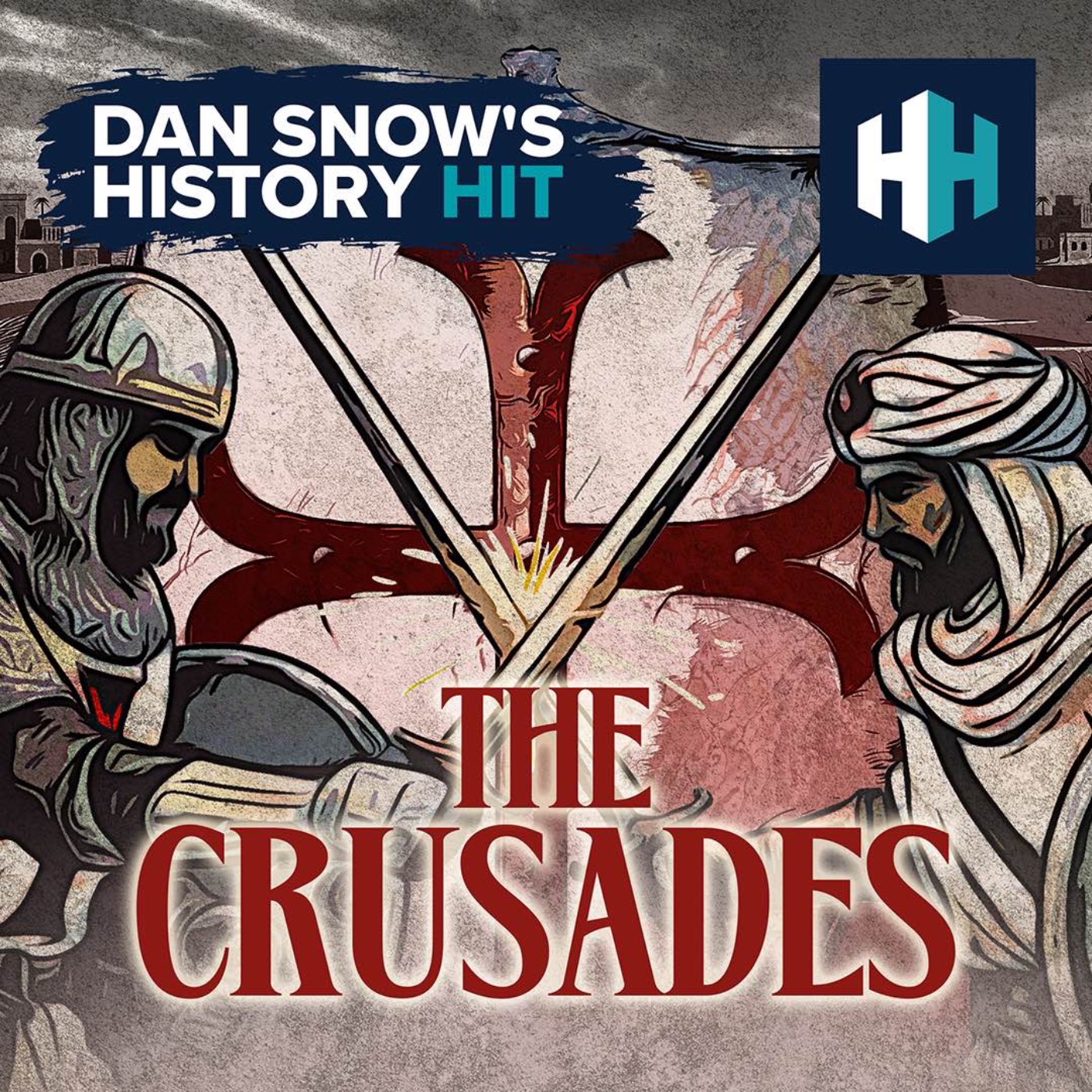
Dan Snow's History Hit
How and Why the Crusades Started
00:49:44
How the Crusades reshaped Europe, the Middle East and relations between Islam and Christianity forever.
Loading summary
Transcript191 lines
- [00:00]
A
Have you been enjoying my podcast and now want even more history? Sign up to History and watch the world's best history documentaries on subjects like how William conquered England, what it was like to live in the Georgian era, and you can even hear the voice of Richard iii. We've got hundreds of hours of original documentaries plus new releases every week, and there's always something more to discover. Sign up to join us in historic locations around the world and explore the past. Just visit historyit.com subscribe.
- [00:33]
B
You're listening to this podcast, so I know you've got a curious mind. Here's a helpful fact you might not know yet. Drivers who switch and save with Progressive save over $900 on average. Pop over to progressive.com answer some questions and you'll get a quick quote with discounts that are easy to come by. In fact, 99% of their auto customers earn at least one discount. Visit progressive.com and see if you can enjoy a little cash back. Progressive Casualty Insurance Company and affiliates national average 12 month savings by $946 by new customers surveyed who saved with Progressive between June 2024 and May 2025. Potential savings will vary Say hello to Mia hey there. Mia runs a pet grooming service in Chicago, but getting new clients was rough
- [01:14]
C
until I started using acast. I recorded my ad targeted pet owners in the area and let ACAST do the rest. Now people all over the city know about my grooming services.
- [01:23]
B
Mia's business is looking sharp. What's your secret for happy pets and happy clients?
- [01:28]
C
A fresh cut, a friendly vibe and a well placed podcast ad.
- [01:32]
B
Get the word out about your business through Acast. Visit go.acast.com advertise to get started.
- [01:42]
A
The Crusades. A series of terrible wars spanning two centuries. Holy wars. European knights. Orders of warrior monks invading what we now call the Middle east in a series of desperate attempts to reclaim the Holy Land for Christianity. The Crusaders believed that they were carrying out the work of God and they hoped to return home wealthy and cleansed of their sins. Their Muslim opponents thought very much the same thing. Kingdoms and principalities rose and fell, their fates dependent on the sword's blade. 200 years. Millions dead, massive sieges, savage battles, innumerable skirmishes, ambushes and raids. Welcome Dan to KNOWS History here, where for the next three episodes I'll be joined by historian Steve Tibble as we bring you a new miniseries, the Complete History of the Crusades. Steve is the author of several books on the Crusades, including his latest, Assassins and A Battle in Myth and Blood. He knows everything, everything that there is to know about this period of history. So we're lucky to have him with us today. From the first crash, that first rallying call in Clermont, to the last stand on the smashed, burning ramparts of Acre. This is everything you need to know about the Crusades from start to finish. Enjoy. Steve, thanks so much. Coming on.
- [03:09]
C
Oh, it's lovely to be here, Dan.
- [03:10]
A
It's a big one today. We're gonna get limbered up for this. Not gonna be easy. First of all, we've got a lot to get through. First, big question, why the Crusades? Can you just try and give me a sense of what is that impulse that's seeing those Europeans march east?
- [03:23]
C
Yeah. Wow. Wow. That's the biggie. Sorry. If. I think if we knew the answer definitively, you and I would be writing the book of it. I think what's important to understand is that there are so many bigger forces at play here. You know, it's very easy to talk about, you know, one man doing this or one man doing that. And. And in reality, it's far bigger. You almost have to look back into the 11th century where there's major climate change on the steps. So it's not even about individuals, it's almost anthropology, and it's certainly not originally religion. So you have a whole bunch of nomads, pastoralists, in the steppes. Climate change towards the middle of the 11th century forces them into activity. Their animals are dying, their water's going, they've got nowhere to go. So they have to move. They have to move. And in most cases, they moved west and pushed west into either Byzantine areas or Arab controlled areas. So they have to get into the Middle east to survive. And it's one of those things where, you know, these guys were nominally Muslim, but. But they weren't theologians. You know, these are the pretty rough guys. They still love astrology, they love hard liquor, you know, they love drugs. These, these are not orthodox Muslims, and they're not moving because of religion. They're moving because of climate change, anthropology. So. So, ironically, I think the two biggest forces that propel the Crusades are the ones that we think of as being modern, and that's climate change and migration. Okay? And the combination of those two is, you know, incredibly strong.
- [05:09]
A
And so. So these steppe peoples, they are, among other places, they're crashing into what we now call Turkey. That's the. That's the sort of area of the Byzantine Empire. They're Christians. They so put up the bat single. They're asking for help.
- [05:20]
C
Yeah, very much so. It's Gotham City. But the. It goes much further than that. They. So they attack the Byzantine Empire, Anatolia as it is, Turkey as we'd call it now, but they also moved down into Syria, Palestine, different points. They take Jerusalem. They basically give everybody a good kicking. And that happens regardless of religion. Because I think, as a lot of historians are European, we tend to take a Eurocentric perspective and we kind of think, oh, well, it's all about us. You know, it's all about a clash of cultures between, you know, Europeans in the Middle east or Christians versus Islam in reality. The. When the nomads arrived. Because it's not really driven by religion. They just pile into everybody. All the local states to the south are Arab and they get a good kicking as well. You know, these guys are not sort of. They're equal opportunity bandits. And they're attacking the Byzantine Empire. They're attacking the Egyptian, the Fatimid Empire in Egypt. They're knocking out all the local Syrian Arab states as well. And you're absolutely right. The Bat signal from Byzantium pulls in the Crusaders, but equally the Fatimids in Egypt, you know, their own equivalent of the Bat signal goes out. They're pulling in Africans, Sub Saharan Africans as slaves or as mercenaries. You get all the Arab states calling in guys to help them. It's basically a huge military and anthropological convention. And they're pulling in everybody from all over the known world. And for 200 years, that is the kind of, you know, mass mayhem that the Crusades are.
- [07:07]
A
And as you get with mass mayhems, it sort of sucks in. Yeah, it sucks in all sorts of other people. What about. So that's the pull. There is some push. I mean, there's. There's. The Pope famously stands up and let's go to the. Let's go to the Holy Land and carve out there's something going on there.
- [07:20]
C
Yeah, no, absolutely. I think, again, the old, the old tropes. There are. There are many old tropes. That's a good thing about the Crusades. Everybody loves it. So there's plenty of scope for, for overgeneralization. I think in the past there have been people who felt that it was kind of proto European imperialism. I think from a, from a. A Western perspective, we have to remember that the Middle east was not traditionally a Muslim area. It was actually a Christian area. It was part of the Roman Empire. North Africa, Egypt, Syria, the Holy Land, Turkey. These were all Christian countries with a Christian population before the Muslim invasions of the 7th century and then again, these kind of neo Muslim guys coming in from the steps. So it's not a sense of, of people invading. They would, the Crusaders would have seen what they were doing as helping to recover old Christian lands. And the call from the east, the call from Byzantium or from the Patriarch of Jerusalem, whoever you think did make the call, who pressed the button on the bat signal, the, you know, that, that would have been seen as, as our guys from Western Europe coming to protect their Christian compatriots in the East.
- [08:38]
A
So still, still big Christian communities throughout what we now, what we now call the Middle East.
- [08:43]
C
Absolutely. And there have been, until fairly recently, in fact, the, you know, we don't have census data, you don't have a lot of quantitative data, but it is pretty clear that the majority of the population of the Crusader states, the countries that the Crusaders established there were still Christian. So the majority was Christian. There was a big Muslim minority, but most of the people who lived there were Christians, either Catholic Crusaders or Greek Orthodox or Jacobites or Melkites or, you know, there's all different kinds of Christians. But it was a big melting pot and it was a very big ethnic melting pot in a way that, again, we don't appreciate. You know, we tend to think of the Crusaders, these kind of white guys invading the Middle East. But in fact, most Crusader armies on the ground, most Frankish armies would have consisted mainly of non Europeans. They would have been Arabs or Syrians or Armenians. Locally, local Christians. Yeah.
- [09:43]
A
Okay. Well, let's get the First Crusade underway. The Pope gives a stirring call to arms, doesn't he?
- [09:49]
C
He does.
- [09:50]
A
And young men flock to the colours and decide to go to the East. What taught me, just highlight the First Crusade. What's going on?
- [09:58]
C
Yeah. I mean, the trouble is it wasn't just young men. I think the, that what the Pope had in mind, in as much as we can tell, was that it would be a military expedition. And what you want for a military expedition are people with weapons, resources, skills and, you know, kind of important things like that. What you don't want is a bunch of kind of weirdos, religious fanatics, women and children. You know, these, these are a hindrance. They're taking food that, that the fighting men could have, they're a danger to themselves and so on. But part of the tragedy of the First Crusade was that so many people answered the call. Wow. And, and, and I think, although, although you can say the ultimate causes of the Crusades are not religious. You know, whatever it might be, climate change, migration, the, the Proximate causes were often religious. You know, those were the kind of the things that motivated individuals. And I think you and I, you know, however religious we are, we can never be as religious as they were. You know, for them, it's like, wow, they really did believe that their immortal soul was at danger if they broke their word, if you did, if you committed a sin, you would have another thousand years in purgatory or whatever. You know, they lived in that realm of spirituality that it's actually hard to even imagine now or take seriously.
- [11:24]
A
And so there is something really exciting going on for those people. Or certainly, you know, they're caught up in this passion.
- [11:29]
C
Yeah.
- [11:30]
A
And there's a big movement. Okay, so the First Crusade.
- [11:32]
C
Absolutely.
- [11:33]
A
Are people. Are kings and kings going on this crusade, or are they sort of second sons without any. Without any prospects here at home? They're not gonna inherit the estates.
- [11:43]
C
Yeah. It does tend to be the, you know, the second layer down.
- [11:47]
A
Okay.
- [11:47]
C
That go. It's probably not second sons looking to find their fortune. That used to be an idea, kind of a proto Marxist explanation for the Crusades. But in reality, to go on Crusade, you nearly always bankrupted yourself. You know, the chances of. Of it's not. If you wanted to get rich quick sort of project, this wouldn't be it.
- [12:08]
A
We've got William the Conqueror's oldest son, Robert. He goes, doesn't he?
- [12:11]
C
Yeah, absolutely. Yeah, yeah. And. And, you know, does well, but then come straight back, you know, so it's. Again, it comes down to piety, and that is the trigger. I mean, powerful people were pious and poor people were biased, and the, the piety lives alongside a lot of other motivations. You know, as human beings, we're very complicated. We're horrible creatures. You know, we can have all these conflicting ideas in our heads and there's simultaneously there. Right.
- [12:41]
A
Well, let's, let's. Let's chart the course of that crusade. They're marching over land, or are they taking ships?
- [12:46]
C
They're marching overland. Critically. They take off in waves. So they don't go off as. You know, you would think the obvious thing is to go one big army and then off we go. And in reality, that's never going to be possible because they don't have the logistics. You know, if you're living off the land, you cannot go in one big lump, so you have to go in dribs and drabs, but worse, which is bad, as you can imagine on some levels, because it means you're arriving piecemeal. But it's Even worse, because you get a whole bunch of guys who don't prepare. So ironically, to get. To get a proper crusade together takes time, because you need to get your guys together, you need to get your money together, you get your transport. It's all the boring stuff, logistics, but that's what makes it work. But the really enthusiastic ones, the, you know, the paupers who maybe had a few lower nights with them, but they were really religious enthusiasts. They really felt that, you know, that a new world was happening. This is like a change in the entire world. And they set off first.
- [13:52]
A
They just start walking.
- [13:53]
C
They do, and they're no good. You know, they're a menace to themselves. They're a menace to the local Jewish communities who they massacre and kill on the way. In the Rhineland. It's very unhelpful. The papacy doesn't want them to do this. In fact, there are entire parts of the crusade that are closed down by the papacy because they're killing Jews, and it's not a good thing.
- [14:15]
A
A little bit too bottom up, you know, the papacy wants to, I guess, exert some control here.
- [14:19]
C
Yeah, absolutely. The papacy is at the heart of the crusading movement. I mean, whichever way you'd cut the cake, whatever answer or cause you come up with, the papacy is a big propelling power in moving it forward, and they encourage much more organized contingents. The trouble is that you can't stop some of the guys just getting overexcited and they, they do their thing.
- [14:42]
A
What happened? I mean, it's astonishing they enjoyed any success, really, isn't it? Because they. But they do erupt into the near east, into what is now Turkey, what is now Syria, Lebanon, Israel, Palestine. And actually, what happens, though, because it doesn't. It, amazingly, it doesn't go that badly.
- [15:00]
C
Yeah, I know, I know. And to be honest, that I think is the, the bigger tragedy of the Crusades is that it all went so incredibly well, and it gave everybody a false sense of expectations and capabilities. They thought, oh, blimey, you know, God is on our side. Good Lord. Literally. And, you know, anything is possible. So they, they took the overland route. They, they fought on their way through. They had some Byzantine help. They, they had successful sieges. They discovered fabulous relics. You know, it was almost like science fiction for people who didn't get out of the village very much. You know, they were traveling thousands of miles, seeing objects that they believed had been touched by God, had been, you know, the lance that had pierced Jesus and that God was on their side and had helped them against huge odds. But what they didn't fully appreciate, I think, is that they'd arrived at an incredibly good time. Almost by coincidence, the whole of the Muslim world had had kind of fractured at that point. A whole load of the local leaders had died. There was a lot of infighting and there was no coordinated Muslim response. There was also very little Jihad. You know, we tend to think of it as being Crusaders versus jihadists now, but jihad as a movement took a long time to gain steam. I think they just saw the. The Crusaders as, you know, another bunch of Nassers coming into the region and making a nuisance of themselves. So the real tragedy is that it was so successful against all the odds.
- [16:30]
A
And they do capture Jerusalem.
- [16:32]
C
They do 1099, the, the guys get down there, they put it under a loose siege because there aren't that many of them. And Jerusalem is, you know, has decent walls and it's, you know, big, bigish city, but they take it. And again, they take it very quickly. They then get confronted by the Fatimids, who, who by this time, the Fatimids are in control of Egypt. They have an empire and they. They were in control of Jerusalem as well. So for them, they, again, they had seen the Crusaders as a bunch of, you know, weirdos from. From a far off place, and they had seen them as almost useful because they were giving the Sunni Muslims a good kicking and the Fatimids were Shiites. But then when the Crusaders were so successful, they thought, oh, my God, you know, we've just replaced one enemy with another. So. So a huge Egyptian army burst into the Holy Land, leaving with the Crusaders with. With one final big battle. And they, and they were hugely outnumbered. And in the face of such huge numbers, the Crusaders did the. The really weird but correct thing, which was they just marched straight at them, surprised them. I still don't quite understand how. How an army of whatever it was, 5000 infantry, can surprise anyone walking through a desert. But they, they did, and, and they utterly smashed the Egyptian army. Again, everybody thinks, wow, God's on our side. Yeah. And you can understand it must have felt like that.
- [18:08]
A
So at the end of that First Crusade, it looked, yeah, as you say, it's gone, it's gone swimming again. And I guess that is why we're having this discussion, because we're talking about the Crusades. There'll be many more to come. And if that had been stamped out, it would have just been a flu, I suppose, a raid. You've got the establishment of these Christian states through what we might call The Holy Land.
- [18:26]
C
Right.
- [18:26]
A
So there is, you know, there's Antioch, there's the area around Jerusalem.
- [18:32]
C
Yes. There's Odessa. There's what, what became known as the county of Tripoli, which is modern day Lebanon. The, the, the important thing to remember is that most people on the Crusade saw it as an event and a journey. So most people thought, okay, this is, wow, great. This is an armed pilgrimage, a very violent pilgrimage. We're going to go to Jerusalem, come do the holy things. And then at this point, I hadn't seen the wife and kids for three years. Most, most of them, maybe three quarters of the Crusaders just went home. And you, you can't blame them. I mean, they, you know, a lot of them had died, a lot of them, and they'd seen things they couldn't ever forget and they were, they were going home. But it did create a big problem because if you saw the Crusade as being the recovery of the Holy Land rather than, you know, just, you know, a visit, then you had to defend it.
- [19:26]
A
Someone's got to hold on to it.
- [19:27]
C
Exactly.
- [19:28]
A
And this now is the recurring problem.
- [19:30]
C
Exactly. This is the story of the next 200 years and this is the tragedy. Because having got there by, by luck, really, and, and having got a false sense of your own capabilities, you're then stuck with the much bigger problem of how do you hang on, say, for 200 years? You have relatively small crusader states, surrounded, outnumbered, capable of being overwhelmed if anybody can get their act together. And they're hanging on by their fingernails the whole time.
- [19:59]
A
You're listening to Dan Snow's History. We're going to be back after this break.
- [20:06]
B
You're listening to this podcast, so I know you've got a curious mind. Here's a helpful fact you might not know yet. Drivers who switch and save with Progressive save over $900 on average. Pop over to progressive.com, answer some questions and you'll get a quick quote with discount that are easy to come by. In fact, 99% of their auto customers earn at least one discount. Visit progressive.com and see if you can enjoy a little cash back. Progressive Casualty Insurance Company and affiliates. National average 12 month savings by $946 by new customers surveyed who saved with Progressive between June 2024 and May 2025. Potential savings will vary. Hey, listeners, meet Russell.
- [20:43]
C
Hey.
- [20:44]
B
Russell just launched a fitness app and he needed to get the word out to busy professionals looking to stay fit. So I turned to acast. I used their Smart Rec feature to easily find shows that talk about health and Fitness booking sponsorships through their platform was a breeze. And just like that, my app was in their ears during their morning run. Sounds like a smart move. Russell, how's business looking now? Sweat is pouring, and so are the installs. Spread the word about your business with podcast ads on Acast. Start today@goacast.com Advertisement
- [21:21]
A
Right.
- [21:21]
C
Well, that.
- [21:22]
A
Let's get to the second crusade. So we're moving forward almost 50 years.
- [21:25]
C
Yep.
- [21:26]
A
What. Why is there. And why is there a second Crusade?
- [21:29]
C
Yeah, well, the. Their Muslim neighbors are getting their act together, as you can imagine. And why wouldn't they? And there's one guy in particular called Zangi, who's a very, very brutal, very effective, but very, very brutalized character who leads his armies against the county of Edessa and, and in particular the. The city of Odessa.
- [21:54]
A
And Odessa. Now, where is Odessa?
- [21:56]
C
It's in Syria. That is Syria, Turkey. We actually don't know where the county was.
- [22:02]
A
Okay.
- [22:02]
C
In. In total, and this is a sure sign of a place that's in danger is that you don't know whether the Eastern front is where it was so fluid. And, and the thing about Odessa is that it. It kind of bleeds out into the steps. It's the route where these nomads are coming down from. So if you. If you want to think of a really bad place to set up a colony, that's it, you know, because you're going to be outnumbered and you're going to have these really tough guys coming down the whole time. So you would say probably that's going to be the first Crusader state to go. And that's exactly what happened. So Zengi and his huge army go through it 11:44, and that starts to chip away at the. At the eastern part of Odessa. And then over the next couple of years, he rolls up a lot of the rest of it. So you can imagine this is a shock to the guys back in Europe, because I think they'd had this impression that somehow, because God clearly was on their side and made it possible in the first place, that the Crusader states were going to last forever and they didn't need a lot of help. You know, in reality, it was quite the opposite. They needed all the help they could get. So the Second Crusade was a response to the fall of Odessa. And it was interesting. Part of the process was getting people like the Templars involved and the Templars in the hospital as the military orders were another part of that response to the manpower problem. So you get this kind of weird hybrid organizations created to create almost a standing army. So you get these. They're monks, almost technically monks. So they're celibate, they're religious, but on the other hand, they're probably Europe's most elite warriors. So it's a funny hybrid, funded from all over Europe.
- [23:55]
A
You send your donations in and it keeps the orders in business.
- [23:59]
C
Yeah, absolutely. It's like an EU rapid reaction force, except nothing's rapid.
- [24:04]
A
It's not a national force, it's a pan you're in.
- [24:06]
C
Absolutely.
- [24:07]
A
I've always liked the Second Crusade because of the extraordinary road trip that the King of France and his wife.
- [24:15]
C
Go on.
- [24:15]
A
Yeah, because the King of France takes his wife.
- [24:17]
C
Big mistake.
- [24:18]
A
He's a total loser. She's obviously quite tough. And she goes, I'm not having it. And they get divorced since they get back. But you should always travel with your partner. I think that's.
- [24:26]
C
Well, you can make. We can come on to Edward the First later. It can work out. You're absolutely right.
- [24:31]
A
It didn't, in that case and Second Crusade achieve anything.
- [24:34]
C
It. It tried to. It had good strategic conclusions at the end. Basically, most. Most of the Second Crusade couldn't fight their way through Asia Minor, so the French got cut up quite badly. But some of them, Some of them got through, including the King. The. The Germans, including the Emperor, got cut up very badly, but they did. Some of them made it through. So. So you find by the end of the 1140s, they're in the Holy Land, they're in the Latin Kingdom of Jerusalem, which was the main Crusader state. And it's clear that they can't retake Odessa. You know, it's too far away. It really is a bridge too far. So the local guys, the Franks, you know, the Crusaders, who'd settled down, married Arab women and created these kind of colonial villages, persuaded them to attack Damascus, which is, as you know, as an old, old Christian city. If, if the Crusaders can recover Damascus, they've. They've kind of broken out from the coastal literal. And then you can have a proper colonial thing. You know, you can actually have fiefs for your nights. You can get. You can bus people in, they can start farms and. And so on. So you actually have a lot more solidity to the kingdoms. So it's strategically, it's, you know, great objectives. You can't. You can't fault the objective. But as always with the Crusades, it comes down to manpower. And you get this weird thing where the guys agreed to besiege Antioch, sorry, Damascus. They head off there, they start their siege, but there are so few of them, they never actually encircle the city even. So the whole time, there are guys, reinforcements, volunteers, jihadists coming into Damascus, bolstering the defenses and so on. So, in a sense, within a few days, the Second Crusade gets to Damascus to besiege it. And they're the ones under siege. You know, they're stuck in the suburbs. They've got no real leverage militarily. And in fact, it's only the common sense of the local Franks that gets them out and persuades them that they got to go. You know, if we don't go now, we're not going at all. And the local Franks get castigated for that, you know, as in, oh, you're traitors and you condescend to all this. But in reality, they saved the day. They just saved their lives. Yeah, but there is. It's an interesting one because it's the first time you can see a real fracture between the different Christian communities. So you've got the kind of locals who are very multiethnic, very relatively tolerant, actually, because most of the population are not Catholic Christians. There are other kinds of Christians and the. And the local crusaders. And. And that is why crusaders are literally not that helpful. They're just basically tourists. You know, they come in, they don't really know how to fight. When they get out there, they make a nuisance of themselves, and then they go home. You know, it's like, what? You know, Perfect. Yeah.
- [27:34]
A
And they. Okay, so. So no fundamental decisive result from the Second Crusade. There's plenty of decisiveness that curves after that. We get Saladin, the great commander. He absolutely wipes the floor with the Christian states at the Battle of Hattin.
- [27:51]
C
Yes.
- [27:52]
A
And that. This is not. This is not during one of the Crusades. That's why I'm skipping along. But. And in response, that catastrophe and then in the aftermath, captures Jerusalem.
- [28:01]
C
I know, I know.
- [28:02]
A
That's a big moment.
- [28:03]
C
Yes. I mean, he does a huge amount. If you think the. Up to that point, there had been a whole country created. There was something like 250 to 300 Frankish Polani settlements. You know, whether the European guys with. With Arab women. And you're into third, fourth generation by then, so a very mixed Christian rural community, lots of towns, and he just wiped them out. You know, the guys ran for it or were enslaved. In the aftermath of Hatin, a lot of the guys were actually fighting at Hatin. It was a big Crusader army by their standards, but they were outnumbered and totally beaten. And then when Saladin got to Jerusalem, which we think of as, you know, this huge, easily defensible city. He took it very easily because it's a liability. And you find this. We'll talk about this more in a minute with Richard the Lion Heart. But Jerusalem is the classic kind of temptation. It's a kind of honey pot. Everybody wants it because it's holy. It's got, it's redolent, but it's landlocked. It's got almost, you know, very little water supplies and it's very, very difficult to defend. So Saladin is actually delighted that a lot of crusaders go there to defend it because he can just do all the difficult stuff, which is taking out castles and things like that, and then he can come back and effectively it's kind of like the, you know, the Germans in, in the Channel Islands during the war. It was a fabulous way of keeping, you know, five divisions of the enemy tied down. Tied down, yeah.
- [29:38]
A
So Saladin is racing across the Holy Land. He's, he's getting rid of all these sort of crusader communities, these, these local crusader communities. He takes Jerusalem and that's when we get the Third Crusade.
- [29:50]
C
Yes. Now that's where you come into rapid reaction as well. So if you think. And again, this is the other tragedy of the Crusader states, partly it's about lack of men, but it is also about time and geography. So, so one of Saladin's cavalry armies can go across the whole of the Latin Kingdom of Jerusalem in two days easily. That's not, not a problem. When the Battle of Hattin took place, you know, which takes a few hours to, to wipe out the entire army. It, it's nearly four years before a well prepared rapid reaction force that's crazy in the form of the Third Crusade can get back there. So you can be wiped out in an afternoon and, and have to wait three or four years for the response.
- [30:36]
A
Okay.
- [30:37]
C
And the response, when it happens, is surprisingly effective, actually. And again, it's sort, with hindsight, it's a bit of a tragedy because if they just let it go at that point, you could say, okay, well, there wouldn't be another century of agony there. But, but the guys, Philip of France, Richard the King.
- [30:56]
A
Philip of France and King Richard of England.
- [30:57]
C
Yeah.
- [30:58]
A
Despite constantly, well, fighting but constant opponents to each other in Europe, in France in particular, they set aside their differences and they march together or they sail together.
- [31:08]
C
They, they do. And it's not a, not a happy cruise, cruise ship kind of experience. These are, yeah, they're big personalities and they don't get on. There's. There's permanent squabbling, but they overcome that temporarily. They get together with the local forces who have been besieging Acre, which is the last big remaining city. It's. It's actually a much more important city than Jerusalem. Jerusalem sounds great, but it's, it's important as an idea. Whereas Acre is actually a big, heavily defended maritime city. Good links back to Europe. That's what you really want. And in practice, that has been the real capital of the Latin Kingdom of Jerusalem. So they managed to recover that from. From Saladin's garrison and then launch into a campaign against Saladin himself. Philip is kind of throws his toys out of the pram at this point.
- [32:02]
A
King of France goes home and proceeds to immediately attack the lands of Richard.
- [32:05]
C
I know, what can you do?
- [32:06]
A
I mean, scoundrel. I mean, absolutely terrible behavior.
- [32:09]
C
Yeah.
- [32:09]
A
And Richard the idiot stays out there, wins a famous battle.
- [32:14]
C
Yes. Yeah. He wins a very interesting battle at Arsuf. And it is one of those ones where it's a really unusual battle for a West European army to fight. And it does show how people like the Templars and the Hospitallers had been good at training European troops before they actually got into the region. Because the thing that Richard did was, which was the battle winner, was that he did an incredibly difficult maneuver, which is form his entire army into a box and move this box down the coast shadowed by a fleet that could provide logistics. And it's the most fragile, cumbersome tactic to do, but he managed to do it. I mean, I don't think any normal medieval armies would even dream of doing that, and they wouldn't be capable of putting it into practice. But, but, but Richard was a very, very good soldier and he had very, very good advisors. And Saladin, eventually his troops bounced into that, that walking box when they got down to Arsuf, which is one of the old Crusader castles on the coast, and, and was defeated quite heavily.
- [33:26]
A
And so they. And then Richard gets as far he sees Jerusalem, doesn't he? And he turns.
- [33:30]
C
He's tempted.
- [33:30]
A
He marched all the way up there, up the mountains, but he doesn't recapture some. But he has to go back because obviously the French are attacking all his lands. But it breathes a bit of life into the Crusader project in the Holy Land, isn't it?
- [33:45]
C
No, you're absolutely right. I mean, in fairness to Richard, it isn't just, you know, he's not just acting selfishly. He's not, you know, he's not just running back because of the French. It's because all his advisors, all the smart money are saying, you know, you might be able to capture Jerusalem again, but how do we hold it? You know, because you've got to go home at some point. The Crusaders are just tourists and, you know, most of the local guys are now dead or enslaved. So again, it comes back to manpower. And he took the right decision, which is the unromantic one of seeing Jerusalem but not going for it. But that was the right thing to do.
- [34:21]
A
But there are a few castles in Crusader hands. There's still a foothold in the Holy Land.
- [34:26]
C
Exactly, exactly. And that is where the Third Crusade does. Well, it recovers a lot of the coast. And the coast is vital because if you've got lines back to Europe, you've got logistics, you've got reinforcements, you've got volunteers and tourists, I mean, who bring money with them as well as weapons. So you're a going concern. As long as you've got some of
- [34:48]
A
those, you are consuming. Dan Snow's history. Hit more off to the right.
- [34:56]
B
Say hello to Mia.
- [34:57]
C
Hey there.
- [34:58]
B
Mia runs a pet grooming service in Chicago. But getting new clients was rough until
- [35:02]
C
I started using acast. I recorded my ad, targeted pet owners in the area and let ACAST do the rest. Now people all over the city know about my grooming services.
- [35:11]
B
Mia's business is looking sharp. What's your secret for happy pets and happy clients?
- [35:15]
C
A fresh cut, a friendly vibe, and a well placed podcast ad.
- [35:19]
B
Get the word out about your business through Acast. Visit go.acast.com advertise to get started.
- [35:30]
A
This is the point at which I completely lose the plot. I have no idea what comes next. But let's get why and where is the Fourth Crusade?
- [35:38]
C
Okay, Fourth Crusade. Well, you're not alone in losing the plot here. I personally find the 13th century difficult and depressing. You know, what can you do? You have a perfectly good 12th century, and then it's all. All goes to pot. The Fourth Crusade is a very sad one, actually, and one that's still very, very hotly debated. You get, you get two schools of thought. Basically, it was a Crusade that was being sent out to the Holy Land to provide help. So that was. And it's created by the papacy. Like all Crusades, it gets kind of suborned on. The way the crusaders run out of money. Did the Italians who are doing all the shipping, say, well, okay, guys, you can't pay us, but maybe, you know, I've got an idea. We can, we can pay. You can pay your way by, we'll take a detour around to these Byzantines. We've got a Byzantine prince who's on our side, he'll maybe get us in there and we can, you know, help ourselves to the, the piggy bank that is the old Byzantine Empire. And the papacy is very much against this. A lot of the Crusaders are against it as well, but they don't have any way forward. If they're going to cross Mediterranean, they're going to do it in Italian ships. And, and here it's very divergent. You know, there are some people who say, well, the Byzantines, they're Christian. This is a complete perversion of the crusading ideal. And certainly the papal legate was against it, the Pope was against it, but couldn't stop it happening. On the other hand, there is a history of bad blood, including massacres between the Italian merchants, traders and the Byzantine. So the Byzantines are not, you know, they're not Mother Teresa in this. They're not plaster.
- [37:13]
A
No good guys here.
- [37:15]
C
No.
- [37:15]
A
So extraordinarily, these Italians take this crusading army to Byzantium.
- [37:21]
C
Yeah.
- [37:21]
A
To Constantinople and end up capturing it.
- [37:26]
C
It's weird on weird, isn't it? Yeah. How on earth did they do that? Because this is, you know, a city that is impregnable, really. I mean, they've, they've been for centuries and they've got the best battle lines. To me, it does, it does show that the Crusaders were, were good soldiers. There weren't a huge number of them, but they did incredibly well. The Byzantines, you know, were. There was a lot of infighting, so that didn't help them either. But capturing Byzantium could have been, you could imagine that some of the guys might have rationalized it by saying, well, well, we're unifying the Christian forces around the Mediterranean. Once we've got Byzantium resources, then we can use that to, to help the Holy Land. So you could see there was some kind of theoretical logic. In reality, it's all nonsense. You know, in, in fact, it's actually very negative. It takes Byzantium as a military player out of contention. And if you're a knight looking for life in the, in the Middle east and, you know, in the Eastern Mediterranean, suddenly you've got lands in Byzantium where you're not going to get a Turkish arrow in your neck, you know, that kind of thing, you have much more prosperity there. So it actually sucks away a lot of the guys who would have been volunteering to go to the Holy Land and they Go to the, this new Frankish empire in Byzantium, which only lasts for a few decades anyway before the locals take over again.
- [38:50]
A
So. So the Fourth Crusade accidentally ends up attacking a Christian power.
- [38:55]
C
Yeah.
- [38:56]
A
And that's the end that peters out.
- [38:57]
C
Yeah. And as you say, it doesn't actually
- [38:59]
A
lead to a sort of rejuvenated Byzantium taking the fight to the Muslims of the Mercury.
- [39:04]
C
Quite the opposite.
- [39:05]
A
Okay, Quite the opposite. Let's get to that. Fifth Crusade still in the early 13th century.
- [39:09]
C
Yeah, absolutely. So now, now the guys, I think if you take a slightly helicopter view, you can say the first half of the 13th century, the Crusaders are still in with a chance. You know, they've still got enthusiasm, they can occasionally field a decent army. And the Fifth Crusade is one of those cases where the big set of European armies got together slightly piecemeal and decided to go into the Eastern Mediterranean. And bizarrely, to our eyes, they attack Egypt. You think, wow, what's Egypt got to do with it? And in fact, it looks stupid, but. But it is clever. It's the right thing to do. All the way through the 12th century, the, the, the guys running Jerusalem understood that Egypt was the key because although it hasn't got all these kind of high profile, you know, it hasn't got the celebrity locations, but it's got cash, it's got the Nile, it's got fertility, it's the cash cow of the entire region. So if you control Egypt, you've got enough money to build armies to defend the Holy Land. It's sort of as simple as that. So, so the, so the Fifth Crusade goes in to try and take the old European cities like Alexandria and Damietta on the coast of Egypt, to help try and bring Egypt back into Christian control.
- [40:29]
A
And it's a horror show.
- [40:30]
C
It is a horror show. Yeah. I mean, it goes on. There are some, in a way that, again, that's part of the problem. It goes well for a while until it doesn't go well. So it goes well enough to encourage them to carry on in there rather than just kind of hitting it as a raid and then going. But again, it peters out. They get given lots of opportunities and they get chances to be bought off, which they don't take because they want the big prize. And actually, with hindsight, that's maybe not such a bad thing. You know, again, if somebody offers you Jerusalem that feels like it's, you know, you've done really well in reality, what they're giving you is a poison chalice. You know, they're Giving you a city that you'll put your resources into defending and then fail.
- [41:12]
A
So if the Mercedes did manage to capture one or two of these cities on the coast, if they'd held onto those, that might have been interesting. But instead they get sucked into the interior. And this is a hellish.
- [41:21]
C
Yep.
- [41:22]
A
This starving rump of the Crusader army is sort of wiped out and surrenders.
- [41:27]
C
Yeah, yeah. Bad, not good. Yeah, absolutely.
- [41:30]
A
Okay, so that's the fifth. What about the sixth?
- [41:35]
C
So the sixth, funnily enough, is strangely successful. It's one of those ones where it's almost the opposite. Like, the fifth has got quite a good army, but it just gets kind of sucked into this morass and can't do anything. The Sixth Crusade is when Frederick, who's fighting with the Emperor Frederick, is fighting with the Pope and is actually excommunicated. So you get this bizarre thing where an excommunicated person is running a crusade and the Patriarch of Jerusalem won't talk to him, and he's not allowed to talk to him.
- [42:11]
A
Oh, my goodness.
- [42:12]
C
Hospitals and Templars, not allowed to play ball. You know, they do, but, you know, they kind of have to be very careful what they do. So you have this guy who's really at odds with the Papacy taking over. He doesn't have a great army. He's got a big job title, but he doesn't have a great army with it. But he's super clever, and he actually has very good relations with the local Muslim players. Bizarrely, he gets on better with the sultans more than he does with the Pope. And he manages to negotiate quite big gains. You know, a recovery of significant parts of Galilee gets Jerusalem back.
- [42:48]
A
That's the weird thing. He actually manages to get to Jerusalem without a battle.
- [42:52]
C
Without a battle. This is diplomacy. This is. Yeah, no, it's great. And then he gets. He gets, you know, the worst kind of mud thrown at him on the way out of town by the Christians, who. Because he's an excommunicant. So it is one of these ironic things and particularly embarrassing for the Pope because you'd think somebody excommunicated. Clearly, he doesn't have God on his side, but he delivers the goods. But the trouble is, you come back to the same problem. It's all very well to have a line on a map saying, I've got Jerusalem and I've got whatever, but if you haven't got troops on the ground, it's, you know, Again, it's just one of those holding tanks.
- [43:27]
A
So. So, again, after that, the local Muslim states chip away and, and yeah, in sort of the Crusader states shrink.
- [43:37]
C
Yeah.
- [43:38]
A
And then we are on the, we on the seventh.
- [43:40]
C
Yep, on the seventh. Right. So that, which is dear King Louis of France.
- [43:44]
A
So that is the halfway through. So we're late 1240s.
- [43:48]
C
Yep.
- [43:49]
A
Okay. And what happens in this one?
- [43:50]
C
Yeah, French, French do a really, really good, good sized crusade led by Louis ix. They again, they go into Egypt, they've got the right objectives, they understand the, you know, the strategic overview and they go in and do pretty well to start off with until they over overreach themselves and again start believing their own propaganda. And the, the army gets sucked into a battle at Mansura, which is a town and Crusader cavalry are not good in towns. And you find the kind of headstrong French knights push into the town, the Templars charge in two Templars are actually really good even in a town. They manage to ride all the way through Mansoura, do some good fighting and so on, but the secular knights get into trouble. As you can imagine, you know, a cavalryman in a, in an alleyway with
- [44:43]
A
French cavalrymen in an Egyptian alleyway.
- [44:46]
C
What could possibly go wrong? Yeah, exactly.
- [44:48]
A
Mind boggles.
- [44:49]
C
Yeah. But anyway, so they were being cut down and the whole army pretty much ran from there and then from there it just goes downhill to, until eventually, horror of horrors, you have, you know, the French king himself taken prisoner and he's soon to become a saint. You know, this is like a real disaster. And the whole army is captured, the survivors are captured, they're being murdered at a rate of 2 or 300 a day just to, you know, cut down the, the food bill. You know, it's an absolute nightmare. And eventually a huge ransom is paid and, and Louis and, and his survivors straggle back into the Holy Land, into
- [45:27]
A
Acre, which is still just about in Crusader hands.
- [45:30]
C
It is, it's still, it's still a holdout. Yeah.
- [45:34]
A
Right, so we got the eighth Crusade.
- [45:37]
C
Yes.
- [45:37]
A
They don't take no for an answer, do they?
- [45:40]
C
Well, again, this is dear Louis. I mean it really isn't, you know, on a very personal level, not taking no for an answer. So dear Louis wanders back in.
- [45:47]
A
So this is the same Louis?
- [45:49]
C
Same Louis, yeah.
- [45:50]
A
15 years later or something or.
- [45:52]
C
Yeah, this is 1270, I think he wanders into this time. It's sort of the same idea as in he goes into North Africa this time. You know, it always, always reminds me of Winston Churchill, you know, talking about the soft underbelly and the idea of attacking.
- [46:10]
A
Still looking for it. Somewhere. Exactly. There's bound to be a soft underbelly if you look hard enough.
- [46:14]
C
Exactly right. Exactly.
- [46:15]
A
That's interesting. So, again, they initially went straight for what we now know, you know, Israel, Palestine, Lebanon. Then they try Egypt, now wet. So they've gone further up the coast of.
- [46:24]
C
Yeah. So now they're going into the soft underbelly of the soft underbelly, which is great as a kind of literary flourish, but I think most strategic thinkers will say, actually, mate, it's just words. It's not actually true. I mean, there was a thought that the. That the local leadership might. Might become.
- [46:42]
A
Where are they landing? Lots of tune.
- [46:44]
C
Tuners. Carthage, actually. We're revisiting history. So they land in Carthage and they're now a lot.
- [46:50]
A
They're quite a long way now from the holy site.
- [46:52]
C
Absolutely. Okay. So it does beg the question, even if they had been successful, what does this really achieve? You know, And. And that is. I think that is part of the point. They're kind of clutching at straws, you know, they're continually trying to solve this problem that you can't solve, and not. Certainly not with the numbers of men they've got. So. So Louie and his army start a siege. Louis son dies, then Louis dies. The whole place sort of just collapses.
- [47:21]
A
Disease.
- [47:21]
C
Yeah, yeah, yeah. So. So it ends very sadly for dear Louis. Very pious guy. Not. Not everybody's cup of tea. I mean, he. You know, so he.
- [47:33]
A
He spends. He's defeated in. In the previous Crusade, he was imprisoned, he's defeated again, he dies. All on crusade in North Africa.
- [47:41]
C
Right. Yeah.
- [47:41]
A
Okay. So.
- [47:42]
C
So at least he put his money where his mouth was. He. You can't accuse him of not trying. Yeah.
- [47:46]
A
And we're on the Ninth Crusade now.
- [47:48]
C
Yeah, that's really a little offshoot, really. And again, it's. It's English. So we're back to Edward. So Edward. Prince Edward, later Longshanks Edward I.
- [47:58]
A
So the Plantagenets have spat out one of their periodic good fighting pieces.
- [48:02]
C
Yes. After Richard.
- [48:04]
A
Yeah. So we had a couple of weak ones, and now we've got Edward Henry, third son. He's a warrior.
- [48:09]
C
He's butch. Yeah. He's the real thing. Yeah. So he goes back out there, he's trying to join Louis, but before he can get there, Louis dead. And rather than turning around and saying, well, you know, job done, he, in fairness to him, carries on. And his crusade to the Holy Land, or his contingent is called the Next Crusade, in reality is just a contingent of the other one. And that is the problem you know, Edward is personally a very good leader, as we're about to find out, as, you know, as you go into English history after that. But at the time he had so few men and when his guys got out there, you know you.
- [48:48]
A
And where are they? They've gone to.
- [48:49]
C
Sorry, they've gone to Palestine.
- [48:51]
A
They've gone.
- [48:52]
C
Yeah. So the Latin Kingdom of Jerusalem, or the rump of it, which is basically a few seaside towns now. And his guys are so few in number and so ill acclimatized that they just attack a couple of villages. Half of them come down with dysentery. They literally. They say we. We've been punished with hot food. They. They blame the local. Well, local curries or whatever. And very relatable, yeah, delicate English boys.
- [49:20]
A
We can't cope with this.
- [49:22]
C
And they said they go back and. And kind of. They're just about to set off again where the. The local sultan, Baibars sets a force of assassins on them. And one of the assassins actually becomes the godson of Edward, Lord Edward as he was then. A few weeks later, he becomes King Edward and enters his household and launches a surprise attack on him. I mean, it's really fantastic. So Edward is in his bedchamber with his pregnant wife next to him. He's unarmed, unarmored. We even know what he was wearing. Kingly underwear was. He was wearing a kind of frilly shirt, a very loose shirt and a braai, which are kind of like trousers, like a zwave trousers, I guess. So he sort of wakes up a little bit sleepy to the knock on the door to see his spy, his. His godson who's a spy at the door. And instead of talking, instead of receiving intelligence from his spy, the guy just lunges at him with a poison dagger. And Edward being genuinely very butch, this is like James Bond, he sort of parries the blow down. The poison dagger hits him in the hip rather than the chest. But instead of falling over and. Or shouting for help, Edward just punches the guy straight in the face, knocks him out, grabs the dagger and stabs him under the nose straight into the brain and kills him instantly. So, yeah, I mean, you can see. I mean, to me the real tragedy of that incident is that it allows Braveheart to be made. Yes, but if. If only Crime scene is history. But it was, it was good for England, I guess, because he. He made his way back home, became king on the way. Henry, his father, Henry iii.
- [51:13]
A
Well, as my, my Welsh nine would say that it was a tragedy for all sorts of reasons. Okay, so yes. So that's the night. So the Ninth Crusade really is a very small little thing. Okay. We've now got, for all of that hard work and bloodshed and treasure, we've just got a few, as you say, seaside towns, really, these castles on the coast. And eventually they're stamped out.
- [51:30]
C
Yeah, absolutely. It's, it's kind of, you are reduced to the kind of, you know, mall gates and ramsgates of, of the, of the Levant. There, there's, there's one or two big cities that are really worth having. Tyre and Acre. Antioch still exists until, well, until the 1260s. But gradually all the Crusader cities, all the lands are being taken out and they really just exist as a set of small, fragmented entrepot, really. They're there for trade because they're at the end of the Silk Roads. They actually serve an economic purpose for both parties, really, the Muslims as well as the Christians. But over time, the trade routes gradually move. The idea of jihad grows and it's increasingly irritating having these kind of infidel sort of bits and pieces just left in the same way as, you know, Hong Kong and Maau might be irritating to a, to a mature China. So, you know, as Islam grows in confidence, why would you have these infidels hanging out there? And then so finally in 1291, they're, they're snuffed out. And as Acre is put under siege and taken and destroyed and the Crusades, although the idea of crusading carries on after that, that's pretty much the end of it. As a going concern and as we can talk about maybe another day, it's the, it's redundancy for some of the big players, particularly the Templars, who meet their match soon afterwards.
- [52:59]
A
Amazing. That was, that was impressive. Thank you very much for taking us through all those Crusades.
- [53:03]
C
Thank you.
- [53:04]
A
And you're going to come back on the podcast soon, so we'll see you then.
- [53:06]
C
Thank you, Dan. Looking forward to it.
- [53:28]
A
Have you been enjoying my podcast and now want even more history? Sign up to History and watch the world's best history documentaries on subjects like how William conquered England, what it was like to live in the Georgian era, and you can even hear the voice of Richard iii. We've got hundreds of hours of original documentaries, plus new releases every week, and there's always something more to discover. Sign up to join us in historic locations around the world and explore the past. Just visit historyit.com subscribe.