← Dan Snow's History Hit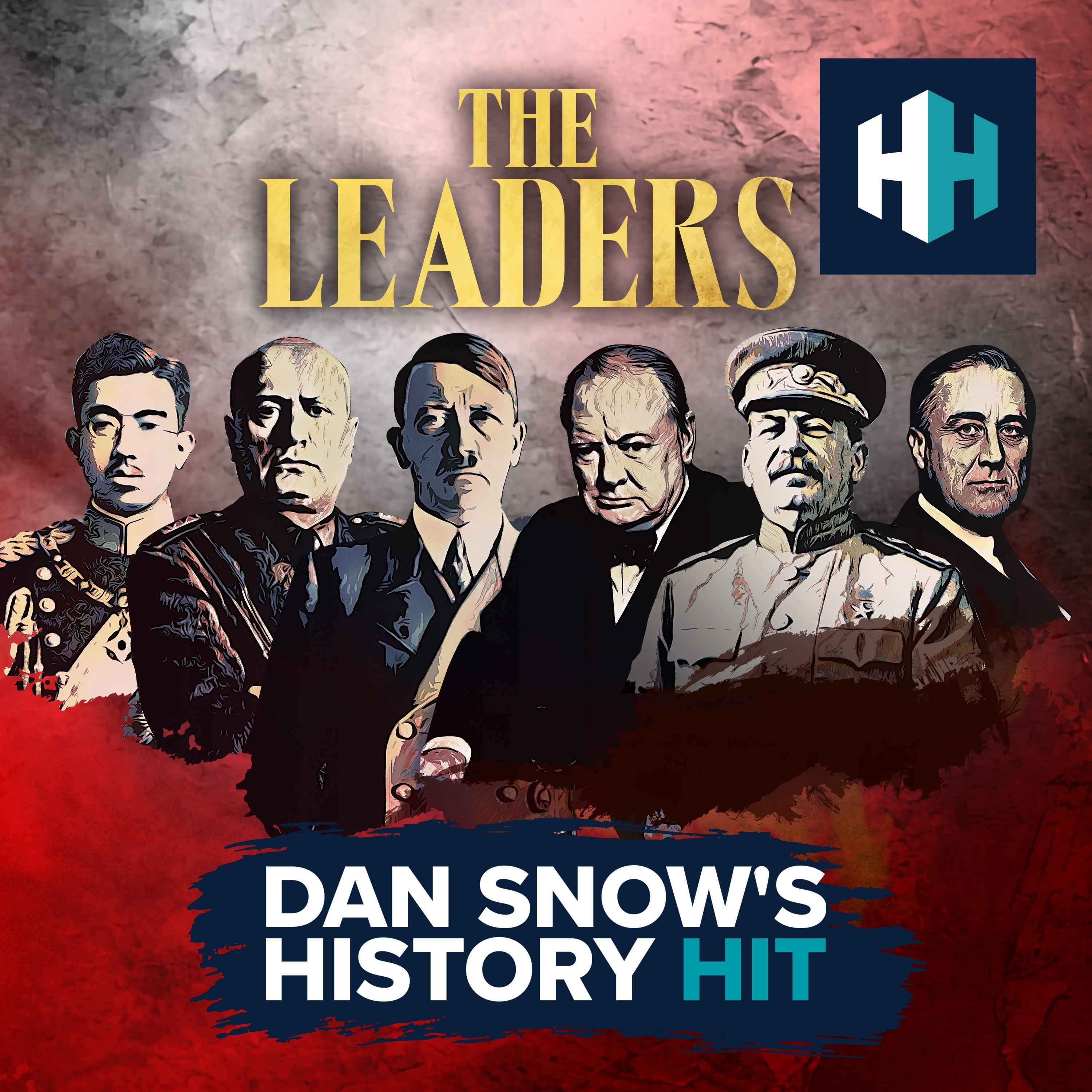
Dan Snow's History Hit
THE LEADERS: Hirohito
00:53:36
Was Hirohito really as passive as history has painted him?
Loading summary
Transcript99 lines
- [00:00]
Verizon Advertiser
Your old or broken phone can let you down when you need it most. But at Verizon, trade in any old phone from our top brands and get the most for it. Up to $2,000 in value for an amazing new iPhone 16 Pro with Apple Intelligence and a new line on my plan and iPad and Apple Watch Series 10. That's like a three for one and you can get it on any plan at Verizon. Trade in your old phone for a brand new iPhone 16 Pro, iPad and Apple Watch. The other guys won't give you that. Visit verizon.com today. Additional terms apply. Service plan required for Apple Watch and iPad up to $2,000 value based on iPhone, iPad and Apple Watch Support for.
- [00:31]
E Trade Advertiser
This podcast and the following message is brought to you by E Trade from Morgan Stanley. With E Trade you can dive into the market with easy to use tools, $0 commissions and a wide range of investments. And now there's even more to love. Get access to industry leading research and insights from Morgan Stanley to help guide your decisions. Open an account and get up to $1,000 or more with a qualifying deposit. Get started today@etrade.com terms and other fees apply. Investing involves risks. Morgan Stanley Smith Barney LLC member Sipic Etrade is a business of Morgan Stanley.
- [01:01]
BetterHelp Advertiser
BetterHelp Online Therapy bought this 30 second ad to remind you right now, wherever you are, to unclench your jaw, relax your shoulders, take a deep breath in and out. Feels better, right? That's 15 seconds of self care. Imagine what you could do with more. Visit betterhelp.com randompodcast for 10% off your first month of therapy. No pressure, just help. But for now, just relax.
- [01:51]
Dan Snow
Japanese Emperor Hirohito died in January 1989. It happened peacefully in his bed in Tokyo's Imperial Palace. He was pushing 90 years old. In his final moments. He was surrounded by members of his family and after he passed away, court doctors washed the emperor's body and purified his clothing, in keeping with centuries of tradition. His daughter described his passing as peaceful. His son succeeded to the chrysanthemum throne. The world's longest continuously running hereditary monarchy glided on and what followed his death could not have been in starker contrast the deaths and the legacies of his fellow Axis leaders, Hitler's sordid murder suicide in the bunker under Berlin and Mussolini's public hanging in a Milan town square. And that suggests that Hirohito did something quite remarkable. He outlasted his wartime counterparts. He evaded war crimes investigations. He avoided having Japan's wartime record associated with his name. And he remained ruler of Japan until his death four decades later, at which time Japan was one of the world's richest and most advanced nations. All of which is quite astonishing given the brutality with which the Japanese fought the war across Asia and the Pacific. Appalling civilian massacres in China, in Korea, Southeast Asia, violations of the Geneva Convention, human experimentation, even evidence of cannibalism. And on top of Which, Japan in 1945 was in an absolutely ruinous state, its cities razed by firebombing and even atomic strikes. In the years that followed the war, it became convenient for various constituencies that Hirohito's connection to that war should remain ambiguous, unclear. The Americans, for example, discovered that they needed him. They needed him as a symbol of continuity as they rebuilt Japanese society and pursued post war aims in Asia. So in this episode of the Leaders, we are scrutinizing Hirohito's war. What did he know about Japan's brutal militarism? How much role did he play in forging Japanese strategy? And I ask if he was passive, well, how is that different from collusion?
- [04:49]
Phillips O'Brien
He has much more power than people pretended he had after the Second World War. We have to understand there's an attempt to whitewash his influence after the war because people don't want to say he's powerful. They don't want him to carry the blame for the war.
- [05:08]
Dan Snow
You're listening to Dan Snow's HistoryIt, and in this episode, we're examining the biggest wartime decisions of the Japanese Emperor, Hirohito. Hirohito was born into a kaleidoscopic world, one of both tradition, but also transformation. He was born in April 1901. He was a sign of the Imperial House of Japan, the grandson of the Emperor Meiji, the ruler who'd restored imperial fortunes and overseen Japan's rapid modernization. As was normal for Imperial children, poor things, he was separated from his parents shortly after birth. He was given to trusted aristocratic families to care for. He had an older, ultra elite upbringing. As you can imagine, he was the sole pupil of a special school created just for him during his youth. During that education, he developed a passion for marine biology that became a lifelong interest. But like all Imperial children, he was sent down a military path. Age 11, he was commissioned into the Imperial Japanese army as a second lieutenant. And that same year, upon the death of his grandfather, his father ascended to the throne, bringing Hirohito's own reign as Emperor one step closer. At age 20, he became the first Japanese crown prince to travel abroad. He later recalled that his time in Britain had been the happiest of his life. Six years later, following the death of his father, he assumed the role that he had been destined for and prepared for since his birth. Well before his birth, he became the 124th Emperor of Japan. Now, unlike the other leaders we covered in this series, we don't have much in the way of personal accounts of Hirohito or even official accounts, frankly. He was a private man. He gave few public appearances. But particularly after the war, he retreated from public life in favor of pursuing private hobbies and solitary research into scientific interests. We know he had a monogamous marriage which produced seven children that broke from the tradition of emperors maintaining a large cohort of imperial concubines. There are some sources, but far fewer than relate to, say, Churchill or Hitler. It is difficult to penetrate Hirohito's motivation. Frankly, it's quite difficult to understand the inner workings of Japan's military decision making. So to help me work it all out, I'm joined by some really truly brilliant contributors. First up we've got Christopher Harding, lecturer in Asian History at the University of Edinburgh. He's going to try and shed some light on Japan's enigmatic imperial leader. Chris, the Japanese emperor has meant different things in different periods, hasn't it? When he was born, what was expected of him and his family? What was expected of an emperor?
- [07:59]
Christopher Harding
He's expected really to be both at the centre of government, but not to be an absolute monarch. So if you kind of draw one of those little childish pictures of the constitution, all the lines point back to the Emperor, you know, from the Cabinet, from the Diet, from various military officials. So in effect, he looks like he could be in complete control of everything, actually, including the judiciary as well. But in reality, he's expected to really sort of colour within the lines of the constitution. And I suppose you could say reign more than rule would be the ideal. And you have this funny sort of additional element with Japan where when you have these imperial conferences with the Emperor present, you get the etiquette of the ancient Imperial court sort of bumping up against modern politics. So you've got modern politicians coming in who are cut and thrust type people, whereas the Emperor deals in a much kind of quieter, almost lethargic kind of imperial culture. So if he's asked a question, he might ask a question in return as a way of implicitly sort of hinting that he disagrees, or he might even lapse into complete silence or start reading poetry again to try and hint at some elements of displeasure. But that can easily be misinterpreted, you know, whether accidentally or willfully.
- [09:11]
Dan Snow
Was he given a fitting education for the role he was going to play?
- [09:14]
Christopher Harding
So, yes, he had all sorts of tutors around him. He had a particular interest, I think, in science. Loved a bit of marine. Marine biology. Had a little laboratory built for him in the grounds of the Imperial Palace. But he was also seriously interested in his role as a constitutional monarch. I think very well educated in international affairs as well as imperial history. He seems to come across as a fairly cautious person, sort of liberal in his political instincts, an internationalist. He visited Great Britain in 1921. Big fan of Britain and the Anglo American powers. But I think he also was given in his upbringing a really powerful sense of just how far the imperial institution goes in Japan. So he's got a very strong sense of his responsibility in maintaining this institution. And I think something that weighs greatly on him during the war is how does he manage Japan's predicament, which is largely the product of kind of overambitious military officers. How does he manage that so that the imperial institution can survive in the end for him? That's what it comes down to. He's the latest person at the helm of this very ancient ship, and it cannot sink on his watch.
- [10:23]
Dan Snow
You mentioned he's rather liberal in his political leaves before the outbreak of war. Can we see his influence in Japanese domestic or foreign policy?
- [10:32]
Christopher Harding
I think it's quite difficult to read that very successfully. It's funny, because unlike someone like Churchill or Roosevelt or Truman, we don't have enough kind of personal documentation, you know, diaries or letters, et cetera, to get a real sense of the man's soul. So I think that's quite tricky. He's probably, of all the wartime leaders, he's the one to whom the idea of leader applies in the most indirect way. Only so much of the time. When we do get a sense of how he's feeling about things, I think, for example, in the early 1930s, and he's still a young man by this point, it's worth pointing out he's only in his early 30s himself. At this time, he becomes quite frustrated with the idea that there are elements in the armed forces that he can't control that may be doing things in the name of the emperor, but are actually going against his wishes. So I think an example of that would be Japan has this presence on the mainland, the Chinese mainland, already in the early 1930s, but very famously in the late part of 1930. One, the Kwantung army, on a pretext, begins to take over Manchuria. And then in early 1932, they declare Manchukuo as this independent state. You can see the Emperor saying to his advisors, these people are putting Japan in danger by doing this. They won't do what we want, and yet they're sort of using the kind of fig leaf of imperial interests to do it. So I think he has a real sense of frustration at the limitations on his power. And at the same time, people around him who are probably less concerned with Hirohito himself than with the survival of the imperial institution, are advising him not to rebuke the army too directly. Because if he starts to do that and you create a real sense of rift between the Emperor and the army, then things could get quite sticky for the imperial institution quite quickly. So I think he has a real sense of frustration at the limits of his own power in the way that he's expected to wield it as a constitutional monarch.
- [12:29]
Dan Snow
It's very weird, isn't it, being threatened by the army, which is an institution on paper devoted entirely to your well being and loyal to you, and yet you fear them.
- [12:39]
Christopher Harding
It must be hard. Although, given that he's got an appreciation of history, really the last thousand years or so of his family's history have been very much the same. To be honest, even if you go back to the heyday, you know, the time of Murasaki Shikibu, around the year 1000, the so called kind of heyday of imperial power, really, the imperial family is being pushed around by wealthy families around it told what to do, intermarriage with these families. You could argue, I think, that one of the reasons why the Japanese imperial family has survived all the way down to the 20th century is that it ends up being a really convenient source of legitimacy for whoever the latest real power play is to come along. You know, if you're a samurai who's just won a war and people haven't really heard of you, if you go along, visit the emperor, pay for some imperial palaces to be tidied up a little bit, then you can say, you know, I'm operating for the good of the country. So it's extraordinarily convenient, the imperial family for these sorts of purposes. And I think if Hirohito had any appreciation, which I'm sure he did, of his family's history, then it's plus a change really for his family.
- [13:40]
Dan Snow
Do you think that they might have made him a mere puppet?
- [13:43]
Christopher Harding
I think so. I think he could easily become a prisoner of an even more assertive militarist faction within the army. I think what's really good going on in the army, and this is where lots of the trouble I think begins in the late 20s and the early 1930s, is that you get a younger generation of army officers who aren't old enough to remember when Japan used to be on the back foot internationally. They've grown up with Japan. After the successful war with Russia 1904-1905, after the alliance with Great Britain, you know, Japan is already a great power. They don't have much of a sense of Japan's potential weakness. And so they're constantly pushing the boundaries. I think their view, particularly of what's going on in mainland China and on the Asian continent more generally, is that in the 1920s, as Chiang Kai Shek and the Nationalists are starting to consolidate their power on the mainland, as the Soviet Union is consolidating itself in its eastern portion, Japan is really going to have to assert itself if it's not to lose its role on the Asian continent completely. You know, it's worth remembering that Japan has colonized Korea by this point. It has a very lucrative railway corridor in Manchuria at this point. And I think some strategists and particularly the sort of the hotheads are thinking if we don't assert ourselves more, then either Chiang Kai Shek or the Soviets will do it for us and we will be squeezed off the continent. That way of looking at things becomes really, really dominant in the army. And the Emperor is a useful sort of figurehead in pursuing those sorts of policies. And so Hirohito finds himself having to play, I think, quite a difficult balancing act that if he asserts himself too much, he rubs the army up the wrong way. If he doesn't do enough, then the army completely run rampant. So I think he's genuinely in a very difficult position.
- [15:28]
Dan Snow
For years, Japan had been eyeing up the resources of an area known as Manchuria. That's sort of the modern day entirety of northeast China, including bits of Russia's Far East. Taking advantage of China's political upheaval, China's division and weakness, Japan steadily tightened its grip on this territory. They pushed ever further south. Then came the crisis of 1937. There was a skirmish on the outskirts of Beijing. It was used as a pretext for launching a full scale Japanese invasion of the rest of China. In the winter of that year, the Japanese captured and sacked Nanjing. They committed one of the worst atrocities of the Second World War. And that's saying something Mass murder of the city's civilians and disarmed Chinese soldiers, as well as rape and looting on an industrial scale. This is what we call the Second Sino Japanese War. Well, in some ways this marks the real beginning of World War II. What do we know about his sort of role there?
- [16:30]
Christopher Harding
So I think at this point, Japan is really in trouble at home as well as abroad. So in 1932, the Prime Minister's been assassinated. There have been other political assassinations in the years that followed. There was an attempted coup in 1936 in Tokyo. So the volatility of politics at home, I think, is quite an important part of this picture abroad. Hirohito is constantly being assured by members of the armed forces that they are not interested in a full occupation of China, that what they want to do is make sure that Japan is secure in Manchuria, and they want to stop Chinese attacks from China into Manchuria, which is causing a great deal of trouble. So Hirohito is constantly being assured that that's the limit of it, that we don't want to go any further. But then what you have in the summer of 1937, a series of incidents which really didn't need to go any further. I suppose the most famous one is at the Marco Polo Bridge in Beijing. If relationships were better at this point between the Japanese and the Chinese, you could easily have sorted that away with a little bit of diplomacy between the two sides. But I think the rhetoric building up at home in Japan, and this is not just in the armed forces, but you see it in the Japane media as well. There's a real sense that under Chiang Kai Shek, the Chinese have been taught to hate and resent the Japanese, and that if Chiang Kai Shek can be humbled, can be brought to heel, then relationships between the two sides can be improved. And I think in the same way in China, they're being taught that the Japanese have a foothold in Beijing. The Japanese are in Shanghai as well. They have an armed presence there looking after their people who are living in Shanghai. They're there in Manchuria. There's a lot of anti Japanese rhetoric on the Chinese side as well. All of which means by the time you get to the summer of 1937, neither side can really back down. And instead you have the Japanese taking control of Beijing in August, going on to Shanghai, and then by the end of the year going on to Nanjing as well. So this sort of lightning progress across really important parts of China all the time. Back home, the Emperor is constantly being assured that we aren't interested in all out war with China. What we're trying to do is get Chiang Kai Shek to come to the table, negotiate something and bring all this to an end. And I think Hirohito, whether he believes that or not is really hard to determine. There's a lot of debate about Hirohito, but I think you really cannot paint him as someone who is a warmonger and a militarist. He's never really pushing for that kind of thing.
- [18:59]
Dan Snow
So from your point of view, how can we get close to his character? How do you think he's better described? What was he like?
- [19:05]
Christopher Harding
I have never heard him described, for example, as being a canny political operator. As close as we can get to his personality, I would say cautious to the point of being indecisive. So in that sense, I think he probably was quite ill suited to the role. That said, he's got a lot of advisors around him in the imperial court and then in the political cabinet who simply want different things. When you've got the armed forces divided over what to do, whether they should prioritise the Chinese and the Russians or whether they should worry more about the Americans and the British at sea. When you've got people in the political cabinet who are worried that the militarists have too much power over the nation's affairs and that they want to try and reassert the power of civilian politicians. Japan is politically a complete mess in the 1930s and the early 1940s, and I think Hirohito is part of that. And it's hard to see, to be honest, whether even someone of a more forceful personality and perhaps of greater political intelligence could really have managed the situation that was constitutionally so fraught.
- [20:10]
Dan Snow
I think we got a sense from Chris that Hirohito as a leader, at least in those early years, he was fairly benign, fairly ineffective. It's hard to paint him as a warmonger. He doesn't seem to have any driving passion for power or for imperial aggrandizement like Hitler or Stalin. But he also doesn't do anything practically to try and stop the aggressive policy course of his nationalist expansionist military commanders. Perhaps Hirohito felt he was powerless to stop them, given the delicate balance between imperial power and the military and politicians in Japan at this time. So next I went to Phillips O'Brien. He's a professor of strategic studies at the University of St. Andrews. And fascinatingly, he takes a slightly different approach. He believes that the Emperor did have more agency than is often assumed. I find it fascinating the lack of sources, this lack of clarity allows brilliant historians to build different interpretations of Hirohito's imperial rule. Phillips how much power, how much influence does the emperor of Japan have in the 1930s?
- [21:19]
Phillips O'Brien
I think we can say now he does have, if he chooses to use it, a great deal of authority to stop. He could have stopped any invasion or almost any military operation if he had wanted to, because the military will respect his desires. It's probably the only person the military will respect in Japan. They don't respect civilian leadership a great deal. They don't even respect each other. So the army and navy don't communicate a great deal. But the emperor has a really powerful position at the top of the hierarchy. And if he does not give his assent, it is very difficult to see the military doing something like Pearl Harbor. Say, they're not gonna attack Pearl harbor unless they know the emperor is behind them.
- [22:04]
Dan Snow
So where's the strategic direction in Japan coming from?
- [22:08]
Phillips O'Brien
Well, Hirohito is not what we'd call a great grand strategist. He doesn't fit the paradigm of war leader. He doesn't give speech. He's not there making a great speech. A Churchill or a Roosevelt or a Hitler or a Mussolini. He just doesn't do that. Most Japanese had never heard his voice until 1945. He doesn't make political pronouncements. He doesn't write things that people read. So he doesn't fit the paradigm of a war leader at all. On the other hand, he is obsessed with military operations. In one way, he has one overriding goal, and that is to protect the Japanese imperial system with himself and his family at the head. He believes he is a divine ruler, divinely inspired. And under all conditions, he wants to keep the imperial system in place in Japan. And what he believes is that military success is a key part of that. So if they can seem military or if they are military successful, that reinforces the imperial system with him at the top.
- [23:13]
Dan Snow
So he was a believer in military adventurism to cement his family's position within Japan.
- [23:20]
Phillips O'Brien
Adventurism might be too strong. He certainly is a believer in the use of military operations for political purposes. The great example I should start earlier is probably 1937. And in 1937, there is an incident, the Marco Polo bridge incident in China, which begins the Japanese invasion of China. That was not a deliberate plan. The Japanese did not expect to invade all of China in 1937. But there's an incident. The army presses on, and at that point, Hirohito plays a fascinating role. He didn't start it, but he's not going to stop it. And what he actually starts arguing for is, okay, let's fight a big battle and win it. He actually says to the army, all right, if we're in this thing now, it's important that we fight a decisive battle, emerge victorious, and that will support the regime.
- [24:15]
Dan Snow
The old decisive battle myth, one big push, break the enemy.
- [24:20]
Phillips O'Brien
It's an entire Japanese concept that repeats itself endlessly. Pearl harbor is supposed to be a decisive battle, so they're always looking for a great engagement that will win a war or turn the tide of a war. I would say Hirohito has a deeply flawed view of how war is fought, but that is a consistent view even to the end. The planning was to fight in Japan, to fight such a destructive battle that the Americans will agree to some kind of peace deal.
- [24:51]
Dan Snow
What does Hirohito want? What does Japan want? An empire, economic, self determined autarky. What do they want?
- [24:58]
Phillips O'Brien
Well, what he wants is I think Japan to be as large and powerful as possible. It's a bit like Mussolini in the sense where exactly should the Japanese Empire be? Is not entirely clear. Certainly he's happy when they take parts of China. He's worried about getting involved in too much of a morass in China by trying to fight the old war. Does he actually want to go all the way down to the Dutch East Indies and what we know of now is Indonesia? So I don't think he has a fully thought about idea. This is the area of the Japanese Empire. But he believes in military force as a sign of Japanese greatness which reinforces the power of his rule.
- [25:42]
Dan Snow
Go listen to our leaders series. More after the break. To make switching to the new Boost Mobile risk free, we're offering a 30 day money back guarantee.
- [25:58]
E Trade Advertiser
So why wouldn't you switch from Verizon or T Mobile?
- [26:01]
Dan Snow
Because you have nothing to lose. Boost Mobile is offering a 30 day money back guarantee.
- [26:05]
Phillips O'Brien
No, I asked why wouldn't you switch.
- [26:07]
Verizon Advertiser
From Verizon or T Mobile?
- [26:08]
Dan Snow
Wouldn't because you love wasting money as a way to punish yourself because your mother never showed you enough love as a child.
- [26:15]
Christopher Harding
Whoa, easy there.
- [26:16]
Dan Snow
Yeah.
- [26:17]
Phillips O'Brien
Applies to online activations, requires port in.
- [26:19]
Verizon Advertiser
And auto pay customers Activating in stores may be charged non refundable activation fees.
- [26:24]
E Trade Advertiser
Support for this podcast and the following message is brought to you by E Trade from Morgan Stanley. With eTrade, you can dive into the market with easy to use tools, $0 commissions and a wide range of investments and now there's even more to love. Get access to industry leading research and insights from Morgan Stanley to help guide your decisions. Open an account and get up to $1,000 or more with a qualifying deposit. Get started today@etrade.com terms and other fees apply. Investing involves risks. Morgan Stanley Smith Barney LLC Member SIPIC etrade is a business of Morgan Stanley.
- [26:54]
Josie Santee
Josie I'm Josie Santee, Health coach, wellness Editor and host of the Every Girl podcast where we cut through the noise with realistic, expert backed advice to help you thrive in every category of life while still loving the person that you already are. And part of loving yourself is being really authentic to you, including the clothes you wear. In partnership with Nordstrom, we're helping you update your spring wardrobe so your style is fit for your best self. Nordstrom brings you the season's most wanted brands like Skims, Mango Free People and Princess polly, all under $100. From trending Sneakers to beauty must haves, we've curated the styles that you'll wear on repeat this spring. Free shipping, free returns and in store pickup make it easier than ever. Shop now in stores and@nordstrom.com worried about.
- [27:48]
Thrive Market Advertiser
What ingredients are hiding in your groceries? Let us take the guesswork out. We're Thrive Market, the online grocery store with the highest quality standards in the industry. We restrict 1000 plus ingredients so you can trust that you'll only find the best high quality, organic and sustainable brands all free of the junk. With savings up to 30% off and fast carbon neutral shipping. You get top trusted groceries at your door and you can stop worrying about what your kids get their hands on. Start shopping@thrivemarket.com podcast for 30% off your first order and a free gift left.
- [28:27]
Dan Snow
In the summer of 1940, Japan formally joined Germany and Italy in the Axis alliance by signing the Tripartite Pact. These powers bonded over their shared hatred of communism, their sense that the world order was stacked against them. In a world of rich global empires, they wanted their share. Japan's been fighting in China for years. Incredibly costly, Japan's Axis ally Germany is fighting the Soviet Union. Japan could have engaged there. Why on earth head thousands of miles east and strike the US in Hawaii?
- [29:06]
Phillips O'Brien
Because they had miscalculated and they could not admit that they had miscalculated. The Japanese regime had put itself in a terrible strategic bind in the second half of 1941. What they had done is they had calculated that Germany had won the war. That's it. Europe's gone German so they can start taking advantage of the remains of the old European empires. And what they do is, in the summer of 1941, they occupy a large part what we know now, which is Vietnam, which is part of the French empire. They sort of insert themselves into Vietnam. They had not anticipated the American reaction, and Roosevelt's reaction to this was far harsher than they expected. And what Roosevelt says is, okay, we're going to embargo oil on Japan. Now, that is. We can't understand just how dramatic that is now, because what Roosevelt is saying is, your economy will collapse in three years. That's it. Because Japan has no oil. None. They didn't have a single drop of oil in the country that they could make. They were getting all their oil from north and South America or almost all of it. And Roosevelt's saying, you're not going to get any oil. So that literally means all your power is going to go once you go through your stockpiles. And the Japanese just weren't expecting that kind of dramatic reaction. And that means they're sort of stuck. They either have to admit that they have miscalculated and pull out of Vietnam. And indeed, the Americans say, at this point, you got to pull out of China, too. Tell you what, we put this embargo on you. You got to pull out of Vietnam, and you got to start getting out of China. You've got to admit you have totally miscalculated, or your other alternative is to go to war. And what's interesting is to save face as much as anything else, not to, in their minds, immediately imperil the regime by telling the Japanese people they had screwed up, that they would rather risk going to war with the usa. It is really an extraordinary decision in many ways, because it is trying to save face. And they're unable to admit that they had made such a disastrous miscalculation. And Hirohito is part of that, without a doubt.
- [31:16]
Dan Snow
Why was the US So determined it had been trying to avoid war with Germany in Europe, in the North Atlantic space. Why the really quite aggressive mood to suspend oil exports to Japan over Southeast Asia? Because it's just an area of greater American focus and interest.
- [31:33]
Phillips O'Brien
The Roosevelt administration thought that this was a coordinated Axis move. Their nightmare in the summer of 1941, this is the summer where Hitler attacks the Soviet Union, is that actually the Axis is on the march together. And so what they see is Japan taking advantage of what's going on in Europe. And this is all part of a great plan. Roosevelt actually doesn't want war with Japan at that point. He thinks they're going to have to back down. Roosevelt is looking at it from what we call a rationalist point of view. So Roosevelt's like, well, they're not going to attack the United states. We produce 20 times what they produce. It's not a rational calculation. They will have to back down. So he thinks in many ways he's slamming the Japanese so hard it will keep them out of the war. And that means he can continue to focus on Europe. What then the Japanese do is not what he's expecting. In the summer of 1941, they start opting more and more to attack the Americans.
- [32:28]
Dan Snow
Is Hirohito present at those discussions? Is he?
- [32:32]
Phillips O'Brien
He's informed every step of the way. And indeed he changes the Prime Minister, who's a man called Konoe, who actually doesn't want war with America with his. Hirohito's chosen prime minister, Hideki Tojo, who we know of as the sort of the Japanese leader when the war starts. Tojo is chosen by Hirohito, who likes Tojo a great deal. So Hirohito knows exact what the Japanese are planning to do. He has consulted on it and he supports it. This is the kind of thing that was covered up after the war is just how positive he was about the war, how he, by the way, had been warned by people that this could go wrong, by his younger brother who was very worried about what it means and how he had changed the government to be more pro war. So he, you could argue, has the most responsibility in the Japanese system for starting the war.
- [33:30]
Dan Snow
We have a view tinged by Hollywood of sort of ultra formal silent meetings in which Hirohito sits there and eventually nods one way or another and there's no discussion. Do you think there would have been robust back and forth, would there have been debate in Hirohito's presence involving him?
- [33:46]
Phillips O'Brien
Well, debate is an interesting. I mean, there would have been difference of opinion. It would have been expressed often quite subtly. There wouldn't have been shouting or screaming in front of Hirohito, but there would have been people presenting different views. And then of course, course, often he would express himself more to intimates in the non formal setting about what he believed. So often the most interesting information isn't what we hear about was said in a meeting, which, by the way, the meeting descriptions often are very protective of Hirohito. It's what he would say afterwards to his brother or other intimates. So there was an absolute difference of an opinion. We know that because the Prime Minister was changed that they were making a war government and he would have been aware that there was a faction that did not want to do Pearl harbor and he made sure that they were out of power.
- [34:33]
Dan Snow
The attack on America at Pearl harbor, is that the beginning of a imagined process of pushing American forces right back to the West Coast? Or is it a short, sharp shock by the Japanese Empire? Time and in their fever dreams come some kind of compromise.
- [34:50]
Phillips O'Brien
The Japanese were assuming two things when they do Pearl harbor, they are assuming the Germans are going to win. They were gambling on a German victory. And a German victory means that they, in a sense, are going to get their way and the US is going to have to accept some kind of deal. On the other hand, what the Japanese don't have is any logical plan to bring the war to a conclusion. They knew how to start the war against the us, but their way, discussion of how the war might end was very vague. So it was the kind of thing where they would deal such hard blows to the Americans that eventually the Americans would have to come to some kind of deal with them. They knew they couldn't conquer the usa. They weren't detached from reality in that sense. However, what they got wrong was the idea that the US would tire of the war, somehow tire quite quickly and reach a deal. That's just a miscalculation of the Japanese. You might say it is one of the most dangerous war starting decisions because they literally had no way to end the war they were starting.
- [35:51]
Dan Snow
And the timing is so extraordinary because then the weeks before Pearl Harbor, Hitler's Wehrmacht is moving steadily towards Moscow. The decision taken at that time is so extraordinary because two weeks later, Hitler's forces were in catastrophic disarray outside Moscow. But the deed had been done.
- [36:06]
Phillips O'Brien
Yep. And the German successes in November 1941 are definitely in the Japanese mind, confirming their decision to attack Pearl Harbor. So it's going together. They really do believe that this is part of an overall Axis victory.
- [36:19]
Dan Snow
So, Phil, we're beginning in 1942. The US has been damaged at Pearl harbor, but not nearly as dramatically as Japan maybe thought at the time. Aircraft carriers escape, many of the battleships raised. Dockyard infrastructure, oil, intelligence, all untouched. The Japanese then go on this tear through. Well, actually in all different directions at once, which is probably a mistake. Well, what are they trying to do in early 1942?
- [36:43]
Phillips O'Brien
What they're doing is trying to set up up an empire with all the resources it needs to look after itself. So the Japanese are trying to set up a perimeter which will give them Oil and bauxite for aluminum and rubber in Malaya. So they're trying to set up a resource rich empire which can supply itself with all the raw materials to continue producing the war material to hold the US off. That's the overall calculation. So that's why once they attack Pearl harbor, they actually don't push west, they push south. Cause that's where all the resources are in modern day Indonesia, modern day Malaysia, places like that. And they're very successful in that. So they basically put together this resource rich empire.
- [37:27]
Dan Snow
It's so circular, isn't it? Because you start a war with the US to allow you to conquer an empire that will allow you to fight a war with the U.S. yeah, that's.
- [37:35]
Phillips O'Brien
In a sense what they're doing. Yeah, they're trying to fight a war with the US to get the resources to exhaust the US and keep the empire going. But even though with the resources they have, they don't really do the maths that with the resources they conquer, they're still not going to be able to produce anything like the US can produce. That's the odd thing, is that you would think they could have done the calculations, but they're just not there. But they do put together this empire. By the summer of 1942, it's there. And they do have quite a large defensive perimeter. But then the war starts going wrongly for them. From Midway onwards, people would say, and there Hirohito plays a more assert role often than is understood. Now again, he is not ordering troops around, he's not Hitler, he's not saying you must do this. But the really important campaign in the Pacific war in 2H42 is Guadalcanal. Guadalcanal is one of the most important attritional engagements of the war. It goes on a long time. The Americans land in September of 1942 and it goes well into 43 before the Japanese pallatt out. It's one of the longest engagements of the entire Pacific War and it eats up material far more than say any battle like Midway or Pearl Harbor. The overall losses at Guadalcanal in terms of aircraft and equipment, far larger. What Hirohito does is he constantly stresses on his military. You must try to hold Guadalcanal, you must show spirit, you must take risks to hold this. As he's trying to basically hold the Americans as far away as possible. And he creates or makes this a far more destructive battle for Japan than it has to be because he is urging his military to keep trying to.
- [39:20]
Dan Snow
Hold Guadalcanal, pouring more resource into the meat grinder rather than cleverly withdrawing and fighting elsewhere.
- [39:26]
Phillips O'Brien
Absolutely. He doesn't trade land for time. He actually tries to hold the extreme and loses a huge amount of force at the extremity.
- [39:36]
Dan Snow
You just mentioned the Battle of Midway. Let's come on to Midway. There was a very daring US Attempt to bomb Japan using aircraft carriers that escaped Pearl Harbor. To what extent did that drive Hirohito and the Navy to try and neutralize those aircraft carriers by ambushing them at the islands of Midway right in the middle of the Pacific?
- [39:58]
Phillips O'Brien
I mean, the big thing about Midway is it's part of the Japanese decisive battle idea. They had Pearl harbor, and it turns out a few months later. Well, actually, the American Navy has not been wiped out, that it's still there and still has some aircraft carry. I mean, what Pearl harbor did was sink the battleships, but by the spring of 1942, it's quite clear the battleships aren't that important. So the losses the US Navy suffered at Pearl harbor were not catastrophic losses, and that the real strength it has is in aircraft carriers. So the Japanese need to have a way to engage the American Navy and try and destroy what's left of the American Navy. And that's, I think, the genesis of the Midway campaign. That Midway itself, of course, is an island in the middle of the Pacific. I mean, it's probably one of the most isolated islands in terms of things around it are really a long way away, but it's sort of on the way to Pearl Harbor. And the Japanese view is if they attack Midway, the Americans will have to.
- [40:52]
Dan Snow
Defend them, will force the Americans to send everything into battle.
- [40:56]
Phillips O'Brien
And so therefore, the Japanese will have the initiative and they will do something that will draw the Americans out desperately. And as the Americans come out to try and hold Midway, they can sink them. What they do not know is the Americans know the Japanese are doing this, so the Americans are not gonna be drawn out. The Americans are there waiting for them, and the Japanese are actually steaming into a trap.
- [41:19]
Dan Snow
Do we think Hirohito was involved in that decision?
- [41:21]
Phillips O'Brien
Midway fits Hirohito's general conception of war. Going out, showing spirit, taking the war to the enemy, and hopefully fighting a decisive battle. So he was not opposed to Midway. I mean, in fact, Midway is almost his archetypal kind of campaign. It's one of the reasons the Japanese, I would say, lose the war. And Hirohito is a terrible war leader because they are always looking for an event to change what is actually a.
- [41:46]
Dan Snow
War of production and Midway, the Japanese carrier force ends up being obliterated. Is the end of any offensive capability really of Japan in the Pacific.
- [41:57]
Phillips O'Brien
Yeah, I mean they lose four of their six best carriers at the battle of Midway. So I mean that's a big loss.
- [42:04]
Dan Snow
And they're not churning out carriers, are they?
- [42:05]
Phillips O'Brien
They're not churning though. The Americans, by the way, lose the equivalent of Midway in 42. They just lose it on four separate days. At the end of 1942, the Americans and the Japanese have lost the same number of carriers. The difference is because the Japanese can't make the new ones. So what the Americans can do, particularly from 43 onwards, is just churn out these new class of aircraft carriers and the Japanese can't keep pace. So the Americans can make up and exceed losses, the Japanese can't. So even though the Japanese don't lose more than The Americans in 42, they can't make up the losses in nearly the same way.
- [42:40]
Dan Snow
Go listen to our leaders series. Join us at after the break.
- [42:50]
Jonathan Fields
Hey, this is Jonathan Fields, host of the Good Life Project. Today's sponsor, Boost Mobile. Reminds me of what I love when someone reimagines what's possible. They have invested billions in building America's newest 5G network, becoming the country's fourth major carrier. They are doing things differently, offering a $25 monthly unlimited plan that never increases in price and letting you try their service risk free for 30 days. With blazing fast 5G and plans for all the latest devices, they're changing the game. Visit your nearest Boost Mobile store or.
- [43:24]
BetterHelp Advertiser
Find them online@boostmobile.com BetterHelp Online Therapy bought this 30 second ad to remind you right now, wherever you are, to unclench your jaw, relax your shoulders, take a deep breath in and out. Feels better, right? That's 15 seconds of self care. Imagine what you could do with more. Visit betterhelp.com randompodcast for 10% off your first month of therapy. No pressure, just, just help. But for now, just relax.
- [44:18]
Dan Snow
And we should say the obvious, that this Japanese strategy of somehow persuading the Americans that it wasn't worth fighting, somehow making them war weary, disenchanted, giving up. That did not come to pass, did it? I mean, what was the effects of Pearl harbor on the American public and political class.
- [44:35]
Phillips O'Brien
Yes, they started the war in the one way that was gonna be sure that the Americans were gonna fight it through that if you start a war with what the Americans will, you know, is a sneak attack. So they start dropping the bombs before they declare war. You have basically created in the United States an enemy that desperately wants revenge. And the American people were always harsher on Japan in the war than they were on the German population. They were more skeptical and more anti Japanese than they were anti German. And the United States military does certain things against Japan, such as the bombing of cities, which it was somewhat more divided upon with Germany. So I think what the Japanese have done is basically destroyed their whole strategy by starting the war in that way. And it's also a great trap for dictatorial or authoritarian regimes is that you try to make your enemy what you want them to be as opposed to what they are. Hitler did the same. Oh, Americans are soft. They really won't stay with the war that long. They're far more interested in their pleasures. They're soft democrats. But that was the Japanese view. It was just wrong.
- [45:41]
Dan Snow
Let's go forward now, Phil, to the summer of 1944. You've got a catastrophic naval battle in June 44, the Battle of Philippine Sea. You've got the Americans now with unbelievable weight of aircraft carriers, of embarked marine divisions, of amphibious capability. They're taking islands, they're attacking places like Saipan and Guam. Tinian. American long range bombers are starting to strike at the Japanese homeland. Is this a decision point for Hirohito?
- [46:13]
Phillips O'Brien
Well, I mean, it certainly does lead to some important political changes and shows what kind of war leader Hirohito is. On the one hand, he is hoping the summer of 44 ends up in another one of these decisive battles, in this case for Japan, that as the Americans come for what are called the Mariana Islands. And you can't understate the strategic importance of the Mariana Islands. They are most famously Saipantinian and Guam. They are so located that they are the only islands in the Pacific that can be reached at this point from which the Americans can bomb Japan. So they are absolutely crucial actual Japanese islands. And the Americans are going for them. The Japanese know they're going to come for the Mariana Islands. And so the assumption is the Japanese will engage the Americans in a great battle, decisive battle, do a lot of damage, and this will be part of their defensive strategy.
- [47:04]
Dan Snow
And they'll sue for peace, and they'll.
- [47:05]
Phillips O'Brien
Sue for peace, or they will be so badly destroyed they'll be kept at bay. Now it ends up being utterly different. And the Japanese are overwhelmed not so much materially, but they're overwhelmed by things like pilot training and logistics. And the Americans can bring so much more to the table and full military systems so that The Japanese lose 300 pilots and they shoot down just a handful of Americans. And that's a question of pilot training, logistics as much as anything else. Japanese have a lot of force at the Battle of Philippine Sea. And what happens after that is Hirohita was forced to, on the one hand, to have Tojo go. That's the end of Tojo as Prime Minister. Because they understand what the fall of the Marianas is going to bring. That the war which had been kept from the Japanese people to that time, that there hadn't been any bombing of Japan. And by the way, they had also been lying, can I say their butts off to the Japanese people about how well the war was going. The Japanese people must have been a fascinating thing because they kept here another great victory from the Imperial Japanese Navy. We have saw 12American carriers and done this. And so they were only hearing stories of victory after victory after victory. And yet what interesting is all the victories were getting closer to Japan. So I wonder how that's translating. But they can't hide the fact that they've lost the Marianas because they're about to be bombed. And that is why they were so desperate to hold it and to make this into the decisive battle. They have a real problem when the Mariana Islands fall, that the bombing is going to start with the development of the B29. The B29, the very long range bomber, is a real technological leap in aircraft production and allows bombing from the kind of distances that were inconceivable before the war. So two things happen. Hirohito basically has to cashier Tojo, and Tojo carries the blame for it. Never Hirohito. Hirohito never carries the blame. The other thing is that Hirohito seems to be quite supportive of the move to suicide attacks. So the Japanese had been flirting with the idea of suicide attacks, the kamikaze for a while, but they hadn't really done it in large numbers, hadn't had a plan. But it is after the fall of the Mariana Islands that they really double down and think, okay, now's the time to go for the suicide operations. And Hirohito is not opposed. He's pretty supportive of the suicide operations. And that now becomes a part of Japanese war fighting strategy up until the end.
- [49:38]
Dan Snow
So Hirohito is very obviously plumping for suicidal resistance. Last man, last bullet, every inch contested. Was there any alternative? Was there a political solution on the table at this point? Was there any sense of a negotiated out? Or did he now think the Americans had their blood up and would string him up from a lamppost.
- [49:56]
Phillips O'Brien
Well, he's fighting for the preservation of the imperial system, at least within Japan. From this point, I think there is a realization that, oh, they're not going to end up with everything they had seized in 1942. That's out of the question. But they still believe a few things. One, they believe they can use the Soviet Union to help cut a deal. Hirohito, personally, again, I think a sign perhaps how detached from reality they were, because during 42, 43 and 44, the Soviets and the Japanese were not at war with each other. They were neutral. They had a neutrality treaty. The Japanese think they can use the Soviet Union in some ways to broker a deal eventually with the Americans and the British. And the hope is that they can make the war so costly for the Americans and the British that ultimately they will accept some kind of deal that will allow Japan to remain as an independent power with the Emperor, maybe with parts of Manchuria or some of the earlier empire there. So in their mind they still have of a strategy, perhaps not to win the war, but a strategy to maintain their rule. And that is what is happening after the Mariana Islands. And that's where suicide weapons are. One, they're effective. I mean, the suicide weapon is for the Japanese, probably the most effective weapon. They have to attack naval vessels. But also they're trying to say to the Americans, look, this is what we will do. You gonna have this more and more as you get closer to Japan, maybe you should make a deal with us.
- [51:28]
Dan Snow
And you mentioned getting close to Japan and learn or know that the defence of the home islands, of course we need to remember they had absolutely no idea about the atomic weapons program. The defense of the home islands, which is D Day style attacks on the beach, on the Japanese population, will be met with astonishing levels of resistance, suicidal resistance.
- [51:46]
Phillips O'Brien
That's the plan. I mean, the plan is to make it so bloody for the Americans through the use of suicide weapons. By the way, at that point, we're talking about using civilians as well. You know, civilians were being told to strap bombs to themselves. And by the way, then the amount of suicide weapons by early 45 are very different than just the planes that we know about. There were suicide boats, there were suicide cars, suicide vehicles. There were literally people who were told, swimming to strap bombs on yourself. It was supposed to engage on all levels, land, sea and air. And the plan which Hirohito, he knew this was going on. He indeed speaks very respectfully of the kamikaze. He acknowledged their sacrifice and thinks it's a very profound thing for the state. And he would have been very happy to see millions of his citizens sacrifice themselves for his rule.
- [52:37]
Dan Snow
PHILLIPS There are few strategists who've ever dealt with what the Japanese. What Hirohito deal with in just a couple of days. In August 1945, the Japanese homeland struck with not one, but two atomic weapons. Weapons of hitherto unimaginable power. Power. And the Soviet army, the biggest, most astonishing veteran filled force in Eurasia at the time, launches an overwhelming attack on Japanese possessions in northern China. How did he even go about trying to solve this?
- [53:11]
Phillips O'Brien
Well, there, Hirohito actually does understand the war's over. And they really get down to one point, is that to protect the Emperor's rule, the atomic bombers dropped August 6th. By August 10th, you've had another atomic bomb. And the Soviets enter the war on August 10th. Hirohito has decided that Japan has to get out of the war. So the hammer blows have finally got their message in. What they want, however, is any guarantee, even the flimsiest sign that they can get, that the Americans might not get rid of the imperial system system. And they believe in sort of diplomatic exchanges they're getting some assurance there's a chance that Hirohito's position will be protected or at least that he's not automatically out. And for Hirohito, that's enough. He does actually at that point want the war to end more because it's probably the only chance he has of protecting his rule. He makes that calculation.
- [54:11]
Dan Snow
And it is pretty well attested on this occasion that he is the one who decisively intervenes as it's over, boys.
- [54:16]
Phillips O'Brien
Yep. I mean, he does decide on August 10th, from what we can tell, that that's it. There had been a growing peace lobby in the government, so it's not like he creates this. Before that, he had been siding a lot with the hardliners. Hirohito's method from 41 onwards had been to side with the more aggressive the hardline faction. On August 10, he moves decisively to side for the peace faction. And that is important because once it comes out that the Emperor is opting to end the war, the extremists in the army in some ways lose heart and the hardliners realize the game is up. So that the army, which would have had a faction that would have kept fighting, atomic bomb or otherwise, they would have kept fighting until they themselves were killed, do agree that they will accept the fact the Emperor has admitted the war's over.
- [55:05]
Dan Snow
It's interesting that we talk about Irita as a poor strategist, and he obviously was, but it's a reminder that as long as you get the last call right, sometimes that might be enough to save you. He made every single wrong call during the war, but he got the last call right.
- [55:18]
Phillips O'Brien
Well, he is the most successful Axis leader because he dies in his bed in the 1980s as the emperor of one of the richest countries in the world. Japan is actually booming by the 1980s when he dies. And he ends up being a revered figure, a very popular figure in Japan. And what he does, and what the, you might say, the Japanese establishment does around him is start protecting his reputation and position with great skill from the moment the war ends. I mean, it's extraordinary that everybody who talks about the war, when they go back, they would say, oh, the emperor really didn't want war. Emperor believed. And it's not true at all, none of it is. But it was almost like everyone had a hymn sheet and they all sang from the same hymn sheet, which was to exonerate Hirohito and Hirohito's role in the war. And in many ways, the Americans go along with that. That because someone like MacArthur believes a constitutional monarch is actually important way to maintain stability in Japan. And in fact, what MacArthur believes is if the emperor shows that the emperor supports the new American rule, that will make the new American rule successful. And Hirohito's happy to go along with that. So Hirohito adjusts from being the great opponent of America to being an enabler of American rule. And from that, he ends up actually having a nice long life.
- [56:44]
Dan Snow
Philips. I've never thought about this before. It's the hottest of hot takes. You know, Hitler and Mussolini die murdered or by their own hand as their country line ruins all of their dreams up in smoke. Churchill dies feeling disappointed the British Empire no longer exists. He hasn't achieved his aim. Hirohito hot take one of the more successful strategist of World War II leaders.
- [57:04]
Phillips O'Brien
Maintains his position and, you know, ends up his life doing what he wants and studying insects and being happy as can be.
- [57:11]
Dan Snow
So Japan prosperous Japan prosperous, revered around.
- [57:14]
Phillips O'Brien
The world and his reputation intact. When he dies now, his reputation has been challenged since he has died quite aggressively, but by the time he dies, he's probably thinking, everyone loves me.
- [57:27]
Dan Snow
It's fascinating to consider how things might have looked different after the war had Hirohito been arrested, tried, perhaps even executed. Would Japan have risen up against American occupation? Would there have been a coup or have swung the other way? Would it have seen an upsurge in communist feeling? There's a really difficult moral dilemma here. Monstrous crimes were carried out in Hirohita's name. He knew about them. In a perfect world, he should have faced justice. And yet, perhaps smoothed by his continued rule, Japan became one of the world's leading democracies, an engine of prosperity, of innovation, of arts, of culture. But then, perhaps, maybe, that happened despite Hirohito's continued presence on the throne. We will never know. Thank you to both Dr. Chris Harding and Phillips O'Brien, whose new book the Strategist was the inspiration for this series. Join me next time for the last episode and I'll leave Leaders series where we'll be examining the importance of Franklin Delano Roosevelt. Could America have so decisively intervened in the war if it hadn't been for his leadership? To get the next episode hit follow on your podcast player. It'll drop into your library as if by magic. See you next time.
- [59:15]
Verizon Advertiser
Your old or broken phone can let you down when you need it most.
- [59:19]
Phillips O'Brien
Perfect.
- [59:19]
Verizon Advertiser
But at Verizon. Trade in any old phone from our top brands and get the most for it. Up to $2,000 in value for an amazing new iPhone 16 Pro with Apple Intelligence and a new line on my plan and iPad and Apple Watch Series 10. That's like a three for one. And you can get it on any plan at Verizon. Trade in your old phone for a brand new iPhone 16 Pro, iPad and Apple Watch. The other guys won't give you that. Visit verizon.com today. Additional terms apply Service plan required for Apple Watch and iPad up to $2,000 value based on iPhone, iPad and Apple Watch.
- [59:45]
Josie Santee
I'm Josie Santee, health coach, wellness editor and host of the Every Girl Podcast where we cut through the noise with realistic, expert backed advice to help you thrive in every category of life while still loving the person that you already are. And part of loving yourself is being really authentic to you, including the clothes you wear. In partnership with Nordstrom, we're helping you update your spring wardrobe so your style is fit for your best self. Nordstrom brings you the season's most wanted brands like Skims, Mango Free People and Princess polly, all under $100. From trending Sneakers to beauty must haves, we've curated the styles that you'll wear on repeat this spring. Free shipping, free returns and in store pickup make it easier than ever. Shop now in stores and at Nordstrom.
- [60:37]
Phillips O'Brien
Com.