Podcast
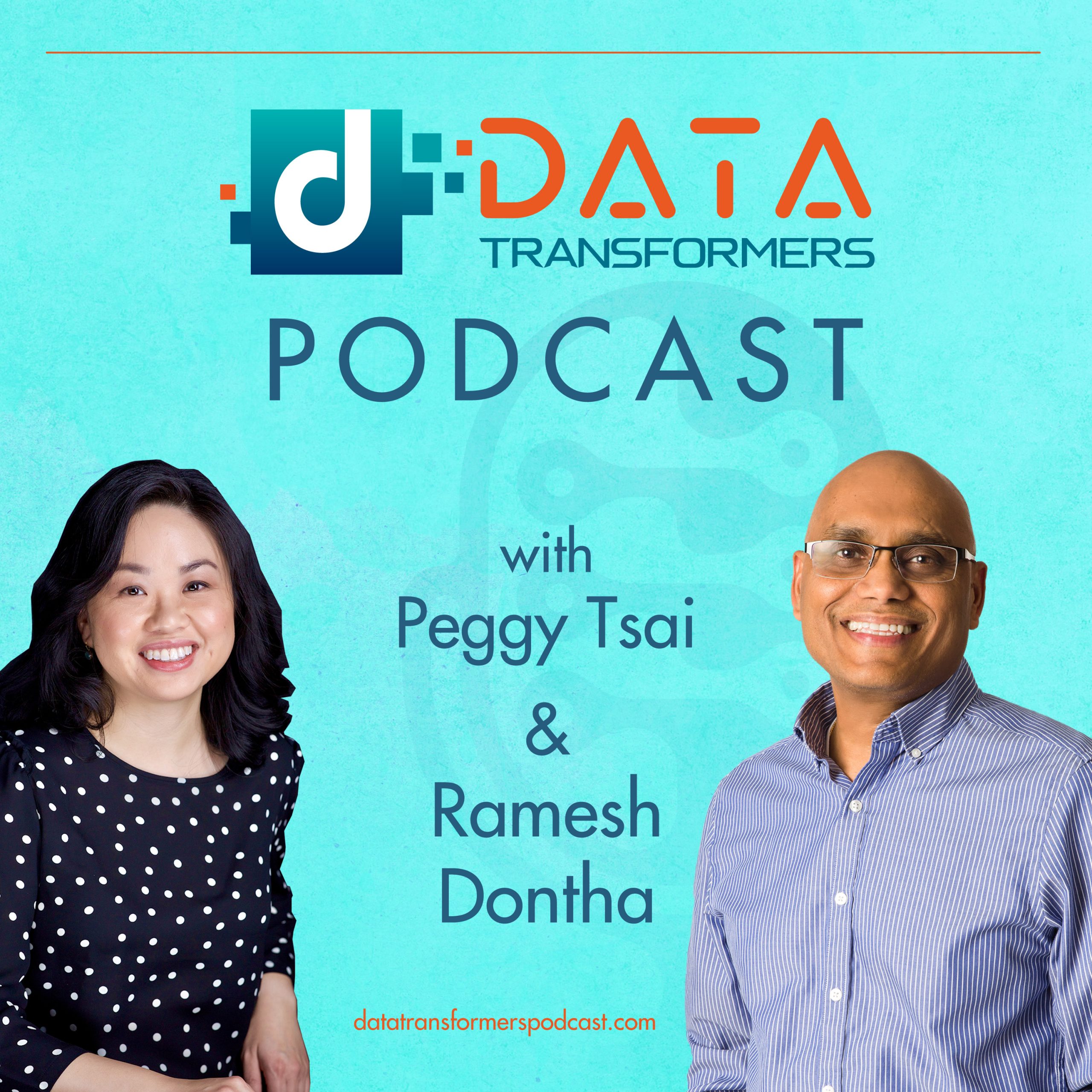
Data Transformers Podcast
Hosted by Data Transformers Podcast · EN
The primary goal of Data Transformers podcast is to accelerate digital transformation by bridging the gap between business goals and technology initiatives using Data as glue. Visit https://DataTransformersPodcast.Com for more details.
With the rapid advancement of technologies such as AI, ML, IOT, Cloud computing et al and the explosion of data that these technologies rely on, it is absolutely important to manage the data in intelligent and efficient ways. We’d like to enable that by interviewing the transformers in the industry who are leading the way in digital transformation. We also would like to bring our perspectives, latest trends and most valuable resources to you so you could be a data transformer in your organization.
10episodes
Episodes
Newest firstAll episodes
Data Analytics & Decision Making - Amaresh Tripathy
Jan 26, 202200:25:32Tap to summarizeData Transformers Podcast Data Analytics & Decision Making - Amaresh Tripathy Play Episode Pause Episode Mute/Unmute Episode Rewind 10 Seconds 1x Fast Forward 30 seconds 00:00 / 00:25:32 Subscribe Share Apple Podcasts Google Podcasts Spotify Stitcher RSS Feed Share Link Embed ' class="input-embed input-embed-3904"/> Apple Podcasts Google Podcasts Spotify Stitcher Episode Title : Data Analytics is all about Decision making – Amaresh TripathyEpisode Summary:Amaresh Tripathy, Senior VP of Genpact manages about 10,000+ data scientists, data engineers, and technologists. H preaches ‘Making Tech work for business’ with Data & Analytics. Amaresh talked about making the workforce ‘bilingual’ i.e. business and technology. As a student of decision making, Amaresh believes that Analytics will be the front and center of all decisions going forward. Amaresh is also an adjunct professor at UNC Charlotte and chair of board for data science. With a passion for teaching and learning, Amaresh focuses on making technology real for employees as well as clients.For more details: https://www.genpact.com/digital-transformation/analytics Topics discussed in this episode:<span style="font-weight:400;...
Transcribe →Inclusive Excellence for a Technology driven business - Dean Ian Williamson
Nov 3, 202100:35:12Tap to summarizeData Transformers Podcast Inclusive Excellence for a Technology driven business – Dean Ian Williamson Play Episode Pause Episode Mute/Unmute Episode Rewind 10 Seconds 1x Fast Forward 30 seconds 00:00 / 00:35:12 Subscribe Share Apple Podcasts Google Podcasts Spotify Stitcher RSS Feed Share Link Embed Inclusive Excellence for a Technology driven business – Dean Ian Williamson " /> Apple Podcasts Google Podcasts Spotify Stitcher Episode Title : Inclusive excellence for a Technology driven business – Dean Ian Williamson Episode Summary: Businesses need leaders who are skilled not just in business but entrepreneurial and technology areas with a bent to bring economic as well as social well being. That is the mission of Dean Ian Williamson of Paul Merage School of Business at University of California at Irvine. Dean Williamson is passionate about building talent pipelines that are not just confined to organizations but that extend beyond into the community. With a bent on fostering inclusive excellence, Dean Williamson wants to ensure that minorities of all races, color, and ethinic groups are reached out and also are provided with an environment to thrive at school and beyond. Topics discussed in this episode: 1:30: Two focus areas: (1) Business school built around Technology. Develop leaders to bring together business, entrepreneurial, and technology skills to bring economic and social well being to the society (2) Inclusive excellence – Greater representation of individuals from all communities in business/entrepreneurial excellence. 4:25: Talent pipeline – (1) Can’t get people to apply (2) Can’t develop the people (3) Can’t utilize them (4) Can’t retain them. Problems in any of those areas will affect the outcomes. Need to have resilient pipelines with no leaks. Biggest constraint in the talent pipeline in the community. 6:00: Talent pipelines in the company are as a reflective of talent pipelines of the community. Be strategic and visionary about talent pipeline. 8:45: Struggling talent pipeline – example of New Zealand. Specific partnership with local community. FOcus on working professionals to access IT. 12:04: Discrepancy of small & large; Resource rich / resource poor. Should not underestimate the nimbleness of small. There are other levers. Money is not the only lever. The enjoyment of social / intrinsic rewards of flexibility/variety/training etc. 17:00: 60% of the freshmen class is made up of first generation college students. Performance in any setting is also about how to behave and thrive in any environment. There is a lot of talent out there but focus needs to be on making them successful. 22:30: Digital transformation is central to Paul Merage school. Innovation is a 2 step process. One is invention & intellectual property. And the other element is harnessing the IP. Paul Merage will focus on harnessing the invention. 24:43: One example is how to attract and retain the best talent. One way to use AI/ML use use it as a tool to harness to attract and retain talent. 26:00: One pathway to get jobs and advance career. And another pathway is to be an entrepreneur. Learn about financing a venture and launching a venture. Entrepreneurship is a behavior so people need to practice to be better at it. 30:00 (HEADLINER): Diversity in organization. Research has shown that women perform better in university. But they drop out at a much faster rate in organizations. What we found is that the environment is not supportive of them performing. Not just shape the pipeline but ecosystem. Resources mentioned in this episode: Podcast website: https://datatransformerspodcast.com Data Transformers Podcast Listen Now! Join Peggy and Ramesh as they explore the exciting world of Data Management, Data Analytics, Data Governance, Data Privacy, Data Security, Artificial Intelligence, Cloud Computing, Internet Of Things. Apple Podcasts Google Podcasts Spotify Stitcher
Transcribe →Analytics need to compel action from business leaders - Elif Tutuk
Oct 27, 202100:25:16Tap to summarizeData Transformers Podcast Analytics need to compel action from business leaders – Elif Tutuk Play Episode Pause Episode Mute/Unmute Episode Rewind 10 Seconds 1x Fast Forward 30 seconds 00:00 / 00:25:16 Subscribe Share Apple Podcasts Google Podcasts Spotify Stitcher RSS Feed Share Link Embed Analytics need to compel action from business leaders – Elif Tutuk " /> Apple Podcasts Google Podcasts Spotify Stitcher Episode Title : Analytics need to compel action from business leaders – Elif Tutuk Episode Summary: The holy grail of any data project is business insights driven by analytics. According to Elif Tutuk, VP of Innovation and Design at Qlik, analytics can’t be in isolation. It has to integrate with data, data governance, data management. And also process automation that goes with it. Data is messy. Whatever be the ease of use on the analytics side, data prep is necessary. One shift is data catalog to analytics catalog. Analytics catalog could be modeled after a netflix like model where people can upload models and consumers can rate the models. Humans trust humans so reviews will be important. Topics discussed in this episode: 1:28: Elif Tutuk is the head of Innovation and Design. One part is focused on research and the other part is on the design. 3:10: Current innovation is around augmented analytics. But analytics can’t be in isolation. It has to integrate with data, data governance, data management. And also process automation that goes with it. 6:00: Providing the right insight to the right people at the right time. That pushes analytics to the edge. From a consumption viewpoint. Having the right contextual information is important because data sources are plenty and it is not just for human consumption. 10:13 (Headliner): Data is messy. Whatever be the ease of use on the analytics side, data prep is necessary. Technology is ready with integration. Tracking the changes is very important. One shift is data catalog to analytics catalog. Collective intelligence is important where data consumers and producers collaborate. 14:30: Analytics catalog could be modeled after a netflix like model where people can upload models and consumers can rate the models. Humans trust humans so reviews will be important. 18:20: Throwing terminology at the business user is no way to solve a problem. But data literacy and enabling the users to touch the data is important. 21:30: Start with what problem needs to be solved. Then creating a user journey is the next step. Supporting data integration, catalog, analytics, and automation are key. 25:00: Being agile is important to meet the user needs. Having user designers along with product designers is very important to addressing the needs. 28:00 (Headliner): Process is very important for innovation. Business feasibility is important. Resources mentioned in this episode: Podcast website: https://DataTransformersPodcast.Com Data Transformers Podcast Listen Now! Join Peggy and Ramesh as they explore the exciting world of Data Management, Data Analytics, Data Governance, Data Privacy, Data Security, Artificial Intelligence, Cloud Computing, Internet Of Things. Apple Podcasts Google Podcasts Spotify Stitcher
Transcribe →Continuous Data Quality Monitoring with Gangesh Ganesan
Sep 1, 202100:29:13Tap to summarizeData Transformers Podcast Continuous Data Quality Monitoring with Gangesh Ganesan Play Episode Pause Episode Mute/Unmute Episode Rewind 10 Seconds 1x Fast Forward 30 seconds 00:00 / 00:29:13 Subscribe Share Apple Podcasts Google Podcasts Spotify Stitcher RSS Feed Share Link Embed Continuous Data Quality Monitoring with Gangesh Ganesan " /> Apple Podcasts Google Podcasts Spotify Stitcher Episode: Continuous Data Quality Monitoring with Gangesh Ganesan Episode Summary: Is continuous data quality monitoring a myth? Not so fast. That is according to Gangesh Ganesan, Founder & CEO of PeerNova. Traditional data quality monitoring requires data to be in a repository and data quality platforms apply certain business rules to measure the data quality. And the exceptions are referred back to the data sources/owners to fix the exceptions. PeerNova’s Cuneiform solution, with its origins in data security & networking, applies a no-code approach to solving the measurement and monitoring problem. Additionally, Gangesh talked to us about measuring the business impact of the exceptions that are identified. With a technologist background, Gangesh got an opportunity to switch to the business side when the company he was working for decided to spinoff a division. After a couple of iterations, Gangesh sold his previous company to Qualcomm. And the he embarked on the data quality journey with special focus on financial institutions. Topics discussed in this episode: 1:30: PeerNova is a SaaS company focused on data quality monitoring. Focused on quantitative measurement of quality of data. Data does not have to be in a central repository for PeerNova solution to do its job. 4:00: One of the earliest use cases is monitoring the data quality in stock settlements on the wall street. Settlement use cases. Data quality plays a big factor in settling trades and financial instruments.. This involves multiple parties and data quality is important to accurately settle the trades.. 7:30: Monitoring data quality across the network i.e. within the enterprise as well as across the 3rd parties is very important. . 9:20: No-code approach is the best way to including business users in monitoring data quality. Otherwise it becomes an IT function’s problem. 13:00: Peernova journey has been going on for 7 years. With the observation that data quality problem is actually a data lineage problem across the network, a blockchain approach seemed relevant. Actually, financial institutions helped Peernova connect with other parties for much bigger impact. 18:20 (Headliner) Gangesh’s entrepreneurial journey. Started with Bosch. Had an opportunity to buy a division being sold off and sell it. Another similar opportunity and sold the next company to Qualcomm. 21:00: Where is the drive coming from? From the original goal of having an ‘exit’ and transitioning to ‘enjoy the journey’ liberated. Flow state concept drives people to be 3x to 5x when they are in a flow. 24:00: Inflection point of transitioning from a technologist to an entrepreneur. Be curious. Trying to learn and grow constantly. When you are learning, you’ll know where the opportunities are and how to take advantage of. 26:00: Worked at Cypress semi. Went to a training session on first day. Learned to be a ‘precision questioning’. Answer just the question. Resources mentioned in this episode: Podcast website: https://DataTransformersPodcast.Com Data Transformers Podcast Listen Now! Join Peggy and Ramesh as they explore the exciting world of Data Management, Data Analytics, Data Governance, Data Privacy, Data Security, Artificial Intelligence, Cloud Computing, Internet Of Things. Apple Podcasts Google Podcasts Spotify Stitcher
Transcribe →The Future of Women in AI is bright according to The Data Leader of The year, Adita Karkera
Aug 26, 202100:26:25Tap to summarizeData Transformers Podcast The Future of Women in AI is bright according to The Data Leader of The year, Adita Karkera Play Episode Pause Episode Mute/Unmute Episode Rewind 10 Seconds 1x Fast Forward 30 seconds 00:00 / 00:26:25 Subscribe Share Apple Podcasts Google Podcasts Spotify Stitcher RSS Feed Share Link Embed The Future of Women in AI is bright according to The Data Leader of The year, Adita Karkera " /> Apple Podcasts Google Podcasts Spotify Stitcher Episode Title : The Future of Women in AI is bright according to The Data Leader of The year Episode Summary: Even though women are 47% of the workforce, less than 28% of them are in tech and even less in senior data roles. Adita Karkera, CDO advisor and the data leader of the year with WIT, explains why there is that gap. With broad experience in state government and federal governments with data management, Adita discussed the nuances of leveraging data to impact public policy. With respect to AI, Adita believes that there is a tremendous opportunity to educate the professionals as well as the general public on AI and the benefits associated with AI. Adita also talked to us about her evolution from a small city in Allahabad, India to a data leader in the US. Topics discussed in this episode: 01:40: Adita’s role at Deloitte as CDO Advisor on Data Strategy. Fellow at AI Institute of Government. AI institute is 04:00 (Headliner till 07:40): CDO role at Federal level vs. state level. Federal level, 79 CDOs at federal level after a statutory mandate in 2018. Very focused on delivering the data strategy. Different states have different levels of data maturity. 25 states had identified CDO role. 08:20: Improving AI education in the public sector. There is a lot of opportunity for AI education. Organizations are still exploring the role of AI. 11:00: Reskilling & Upskilling the workforce for AI. First, there should be a recognition that upskilling is necessary. Also need to address the concerns and fears about AI as the very first question is about jobs. 15:30: Importance of data prep, data governance, and data management. Need to focus on the quality of data. 17:00: Adita’s progression into a data leader. From a small city of Allahabad, started education in Commerce and completed certifications in computer science. A certificate in Microsoft SQL DBA led to a career in data. 20:00: Career defining moment is when Adita was asked to act as a Deputy CDO in the State of Arkansas. Instead of one domain, looking at the entire state data changed her perspective. 23:00: How to address gender gap? Women represented 46% of the labor force but only 23% in data and tech. Reasons are: social/cultural influences, stereotypes well ahead of career; Lack of active mentors. Resources mentioned in this episode: Podcast website: https://DataTransformersPodcast.Com Data Transformers Podcast Listen Now! Join Peggy and Ramesh as they explore the exciting world of Data Management, Data Analytics, Data Governance, Data Privacy, Data Security, Artificial Intelligence, Cloud Computing, Internet Of Things. Apple Podcasts Google Podcasts Spotify Stitcher
Transcribe →Five Types of Thinking for High Performing Data Scientists
Aug 19, 202100:30:10Tap to summarizeData Transformers Podcast Five Types of Thinking for High Performing Data Scientists Play Episode Pause Episode Mute/Unmute Episode Rewind 10 Seconds 1x Fast Forward 30 seconds 00:00 / 00:30:10 Subscribe Share Apple Podcasts Google Podcasts Spotify Stitcher RSS Feed Share Link Embed Five Types of Thinking for High Performing Data Scientists " /> Apple Podcasts Google Podcasts Spotify Stitcher Episode Title : Five Types of thinking for high performing Data Scientists Episode Summary: Artificial Intelligence is all the rage currently. But there was a time when AI has gone through ‘AI Winter’ when there was not much interest in AI. Dr. Anand Rao has gone through those AI Winters. To avoid AI winter, we need to be cognizant of AI risks. Should be balance between AI innovation and risks. Should not reduce customer risk. In thos episode, Anand talks about five types of thinking that data scientists should focus on to be high performing data scientists. As the Global head of AI at PWC, Anand knows a lot about the customer uptake of AI and (un)surprisingly only 20% of the companies are actually deploying AI. Listen to the episode to find out which functions are adopting AI the most. Topics discussed in this episode: 01:50: Global AI lead, Partner Global Analytics Insights lead, AI Innovation partner; Both on the client-facing side as well as product side. 03:00: Trends – Confusion about data (big Data, IOT Data,); Automation; Analytics; AI; All the technology is fine but where is the value? 05:00 (Headliner): Trends (1) Convergence between Data, Models, and Software. (2) End to End lifecycle approach deployment of data, models, software (3) Governance, Risk and Controls to reap the benefit and minimize downside 08:40: To avoid AI winter, we need to be cognizant of AI risks. Should be balance between AI innovation and risks. Should not reduce customer risk. 10:45: High Tech firms are primary promoters of AI and adopters; Financial services are next; Healthcare, Retail, Manufacturing/Energy follow the leaders. Agriculture is surprisingly also an adaptor of AI. 12:54 (Headliner): 30 to 40% of companies are in exploration. 50% are in experimentation stage; Only 20% are in deployment stage. 14:47: Leading use cases are in operations. AI use cases for strategy. Example is strategizing business models for a car share of autonomous vehicles. AI being used to present scenarios in strategy. 21:15: 5 types of thinking for high performing data scientists. (1) Models Thinking (2) Systems Thinking (3) Agent-based thinking (4) Behaviorl thinking (5) COmputational thinking 25:00 (Headliner): You don’t always need data to start with. But once you have a mental model, you can always work with Data later to work with. Need to always start with a problem that needs to be solved and the mental model. Then start thinking about data that is needed. Resources mentioned in this episode: Podcast website: https://DataTransformersPodcast.Com Data Transformers Podcast Listen Now! Join Peggy and Ramesh as they explore the exciting world of Data Management, Data Analytics, Data Governance, Data Privacy, Data Security, Artificial Intelligence, Cloud Computing, Internet Of Things. Apple Podcasts Google Podcasts Spotify Stitcher
Transcribe →Data Analytics By Design with Dr. Kirk Borne
Aug 12, 202100:26:37Tap to summarizeData Transformers Podcast Data Analytics By Design with Dr. Kirk Borne Play Episode Pause Episode Mute/Unmute Episode Rewind 10 Seconds 1x Fast Forward 30 seconds 00:00 / 00:26:37 Subscribe Share Apple Podcasts Google Podcasts Spotify Stitcher RSS Feed Share Link Embed Data Analytics By Design with Dr. Kirk Borne " /> Apple Podcasts Google Podcasts Spotify Stitcher Episode Title : Data Analytics By Design with Dr. Kirk Borne Episode Summary: Managing data at the speed of business versus managing business at the speed of data. Data moves the fastest so business should be moving at the speed of data. Analytics is the main beneficiary of this data. Dr. Kirk Borne has always been a scientist with jobs in data science, Astrophysics, and data analytics. After a very successful stint with NASA, George Mason University, and Booz Allen, Kirk started a new chapter with a startup that matches job seekers with companies using ML algorithms to match. This fascinating episode traverses his journey across these organizations and functions Topics discussed in this episode: 02:00: How Kirk came to be Chief Science officer at a startup. A different setup working with 15 people after working with 27,000 people at Booz Allen and 120K people at NASA. 04:00: The startup is like a dating service for candidates related to data and companies looking for data professionals. The platform matches companies with requirements with candidates skills. 08:58: The tension between overloaded job requirements and candidate skills. Big Data revolution started in 2012. Big data initiative by Whitehouse with $300M. Article by HBR about data scientist being the sexiest job. And McKinsey report about skills shortage. 12:00: Human in the middle helps validate the requirements versus the skills along with the data science platform. 15:00 (Headliner till 18:02): Managing data at the speed of business versus managing business at the speed of data. Data moves the fastest so business should be moving at the speed of data. 18:30 (Headliner): CIOs typically spend 3 years just preparing for ML. It could be seen as wasting 3 years. Kirk says ML journey should be like preparing for Olympics where you could be seen preparing for 3 years for the final Olympics. You can’t always be warming up but you need to run the race at some time. Also, you can’t warm up too late also. Need to build muscle memory. 26:30: ADAPT-C framework; Analytics opportunities, Data, Processes, Culture. Culture is key. Culture of data democratization and culture of experimentation are needed. Analytics By Design. What do we want to accomplish and how do we get there? Resources mentioned in this episode: Podcast website: https://DataTransformersPodcast.Com Episode Title : Data Analytics By Design with Dr. Kirk Borne Episode Summary: Managing data at the speed of business versus managing business at the speed of data. Data moves the fastest so business should be moving at the speed of data. Analytics is the main beneficiary of this data. Dr. Kirk Borne has always been a scientist with jobs in data science, Astrophysics, and data analytics. After a very successful stint with NASA, George Mason University, and Booz Allen, Kirk started a new chapter with a startup that matches job seekers with companies using ML algorithms to match. This fascinating episode traverses his journey across these organizations and functions Data Transformers Podcast Listen Now! Join Peggy and Ramesh as they explore the exciting world of Data Management, Data Analytics, Data Governance, Data Privacy, Data Security, Artificial Intelligence, Cloud Computing, Internet Of Things. Apple Podcasts Google Podcasts Spotify Stitcher
Transcribe →Building a 24 hour Data Science Community with Danielle Oberdier of Dikayo Data
Jul 22, 202100:31:20Tap to summarizeData Transformers Podcast Building a 24 hour Data Science Community with Danielle Oberdier of Dikayo Data Play Episode Pause Episode Mute/Unmute Episode Rewind 10 Seconds 1x Fast Forward 30 seconds 00:00 / 00:31:20 Subscribe Share Apple Podcasts Google Podcasts Spotify Stitcher RSS Feed Share Link Embed Building a 24 hour Data Science Community with Danielle Oberdier of Dikayo Data " /> Apple Podcasts Google Podcasts Spotify Stitcher Episode Title : Building a 24 hour data science community with Danielle Oberdier of Dikayo Data Episode Summary: Data science community should be a representative community. Danielle has been facilitating that with Dikayo data, twitter communities, and Data Femme podcast. Topics discussed in this episode: 02:00 Started Data Science community for data science professionals, collection of data science podcasts, and twitter community 04:00 DataFemme podcast with different season themes for data science professionals. Second season was focused on diversity in the data science community. Podcast gives exposure to marginalised sections of the society. 08:00: Discussion about women in data science. Danielle believes that there are an adequate number of women in data science but questions remain on the exposure/recognition for women. 12:00: Discussion about elevating voices. One of the ways to encourage minority representation is to actually reach out directly instead of just posting on LinkedIn for example. 15:30 Diversity of thought is also very important 24:00 Need to genuinely connect with folks. Being genuine is very important. Resources mentioned in this episode: Podcast website: https://DataTransformersPodcast.Com Data Transformers Podcast Listen Now! Join Peggy and Ramesh as they explore the exciting world of Data Management, Data Analytics, Data Governance, Data Privacy, Data Security, Artificial Intelligence, Cloud Computing, Internet Of Things. Apple Podcasts Google Podcasts Spotify Stitcher
Transcribe →Cybersecurity and AI working together to make systems safe with Dr. Madiha Jafri
Jun 29, 202100:25:39Tap to summarizeData Transformers Podcast Cybersecurity and AI working together to make systems safe with Dr. Madiha Jafri Play Episode Pause Episode Mute/Unmute Episode Rewind 10 Seconds 1x Fast Forward 30 seconds 00:00 / 00:25:39 Subscribe Share Apple Podcasts Google Podcasts Spotify Stitcher RSS Feed Share Link Embed Cybersecurity and AI working together to make systems safe with Dr. Madiha Jafri " /> Apple Podcasts Google Podcasts Spotify Stitcher Episode Title : Cybersecurity and AI working together to make systems safe with Dr. Madiha Jafri Episode Summary: Artificial Intelligence and Cybersecurity are large and complex domains each by themselves. When you combine both of them, it could be overwhelming. Dr. Madiha Jafri, Associate Fellow at Lockheed Martin for AI & Cybersecurity navigates these domains to make systems safer. In this episode. Dr. Jafri articulates how AI can help speed up cybersecurity threat detection. She also talked about her journey starting from cryptography to nanotechnology to AI. The discussed addressed challenges such as data engineering, relevance of Ops, and navigating the plethora of technologies to find that needle in a stack. Topics discussed in this episode: 02:00: Madiha role at Lockheed Martin as an Associate Fellow. 14 years at Lockheed Martin. Started in cybersecurity and worked in it for 10 years.Lockheed is the largest defense contractor in the US. 04:42 (Headliner till 6:25): What role does AI play in cybersecurity? Madiha’s starting focus was cryptography. AI as a tool is good at making things faster. AI can speed up detection of threats. 06:30 (Headliner till 09:30)): Cybersecurity and AI work together. Some hurdles are data engineering.. Second hurdle is the availability of technologies. Finding out which is real and efficient is a challenge. 11:00: Data literacy and data culture. They are both extremely important in any organization but each organization is different. 14:00: Madiha’s passion is engineering and design. Her role recently requires strategy work. Strategy of how to get the required data and get it into the hands of people who need it in a secure way. 18:00: Role of Ops in AI in cybersecurity. Data Ops, MLOps. Madiha’s take is that we tend to overcomplicate things. Nothing unique about MLOps and Ops in general. These Ops need to happen. 21:00: Madiha career combining cryptography and nanotechnology. Original role involved cryptography. Another project came up in the nanotechnology space. Able to work together in many areas. Resources mentioned in this episode: Podcast website: https://DataTransformersPodcast.Com Data Transformers Podcast Listen Now! Join Peggy and Ramesh as they explore the exciting world of Data Management, Data Analytics, Data Governance, Data Privacy, Data Security, Artificial Intelligence, Cloud Computing, Internet Of Things. Apple Podcasts Google Podcasts Spotify Stitcher
Transcribe →To improve data quality, start at the source - Jacklyn Osborne
Jun 9, 202100:23:38Tap to summarizeData Transformers Podcast To improve data quality, start at the source – Jacklyn Osborne Play Episode Pause Episode Mute/Unmute Episode Rewind 10 Seconds 1x Fast Forward 30 seconds 00:00 / 00:23:38 Subscribe Share Apple Podcasts Google Podcasts Spotify Stitcher RSS Feed Share Link Embed To improve data quality, start at the source – Jacklyn Osborne " /> Apple Podcasts Google Podcasts Spotify Stitcher Episode Title : To improve data quality, start at the source – Jacklyn Osborne Episode Summary: Very often, organizations focus a lot on data cleansing after the data has been captured. But any incremental effort spent on focusing on data quality at the source will reap long term benefits. In this episode, Jacklyn Osborne, Data Quality Control executive at Bank of America, talks about the importance of data education to frontline employees so they can also be stakeholders of data quality. Jacklyn talked about the role of CDO, skills necessary for CDO, and how CDO can be empowered by where they sit in an organization. With deep expertise in the financial industry, Jacklyn talked about data monetization and treating data as an asset in financial industries. Topics discussed in this episode: 03:36: Top 3 data challenges; (1) Expanding scope (2) Ill defined CDO role (3) Data democratization 04:49 : Necessary skills for a CDO. Needs to be inquisitive. Ask questions. Problem solving by nature. 06:30: Value of data in financial industry. Is it only because of compliance or is there a data monetization beyond compliance? Yes, there is a value. 09:05: Where should CDO sit in an organization? CDO should sit closest to the business. 11:30 (Headliner): First hand experience of a CDO role moving closer to CEO role. Accountability and ownership will increase and as a result, business believes data work is for them. And Data will be seen as an asset. 14:51 (Headliner) – Advice to financial institutions on data aspects. (1) Start small and scale (2) Align to a use case. 16:32 (Headliner): How do you know what is the right data quality? Starts with data production. Are we producing the right data to start with. And then you set controls in place as data moves along. 19:42 – If the data producers understand the value of the data, they are more inclined to improve the quality of the data at the source. Resources mentioned in this episode: Podcast website: https://DataTransformersPodcast.Com Data Transformers Podcast Listen Now! Join Peggy and Ramesh as they explore the exciting world of Data Management, Data Analytics, Data Governance, Data Privacy, Data Security, Artificial Intelligence, Cloud Computing, Internet Of Things. Apple Podcasts Google Podcasts Spotify Stitcher
Transcribe →