← Dateline NBC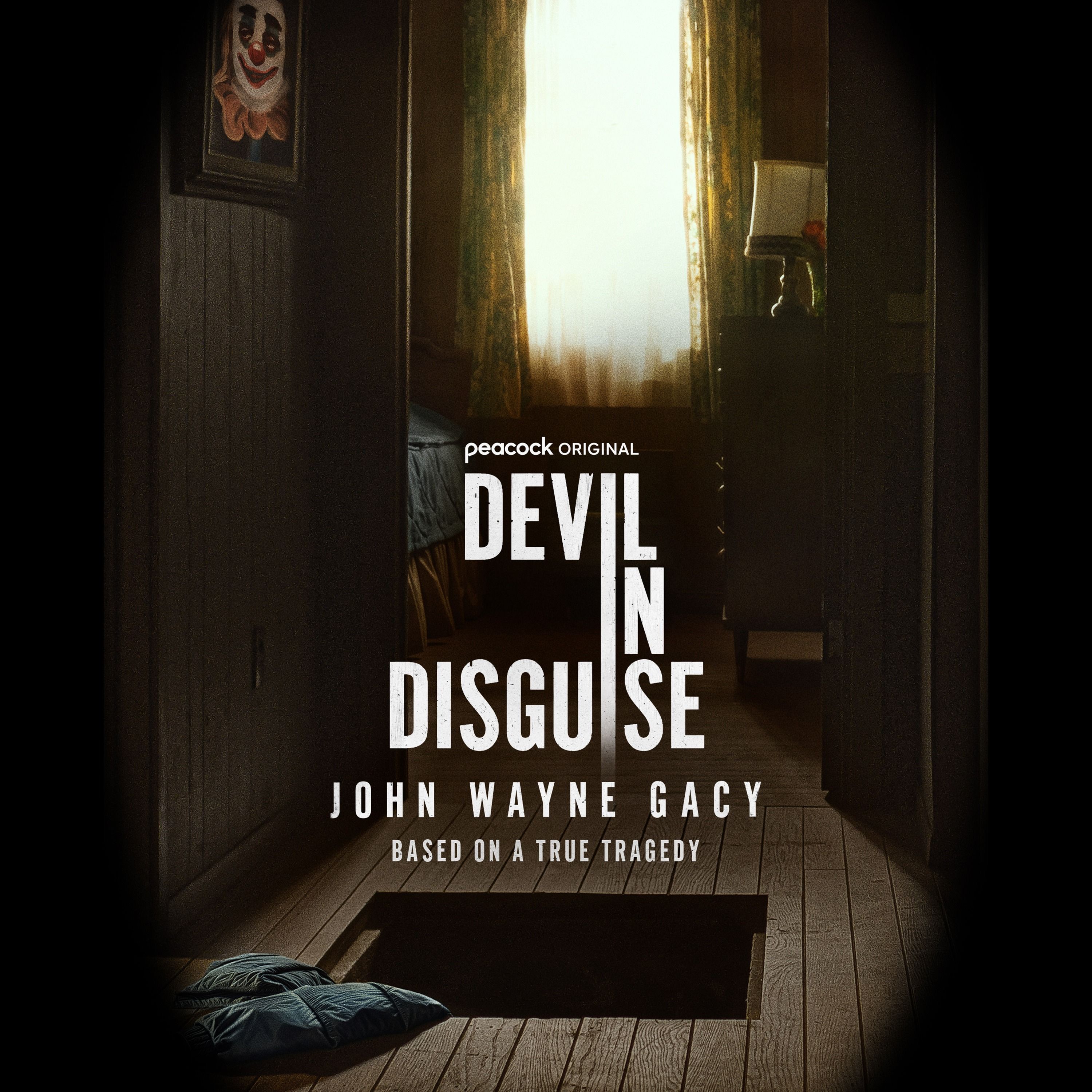
Dateline NBC
Preview: “Devil in Disguise: John Wayne Gacy”
00:23:18
Andrea Canning sits down with the creator and lead actors from Peacock's new original limited series, "Devil in Disguise: John Wayne Gacy" to talk about making a new kind of true crime drama. One that focuses on the victims, the victims' families, and the detectives who never gave up on their mission to bring the victims home.
Loading summary
Transcript119 lines
- [00:00]
Grainger Advertiser
If you're a custodial supervisor at a local high school, you know that cleanliness is key and that the best place to get cleaning supplies is from Grainger. Grainger helps you stay fully stocked on the products you trust, from paper towels and disinfectants to floor scrubbers. Plus, you can rely on Grainger for easy reordering, so you never run out of what you need. Call 1-800-GRAINGER, click grainger.com or just stop by Grainger for the ones who get it done.
- [00:31]
Volkswagen Advertiser
A massage chair might seem a bit extravagant, especially these days. Eight different settings, adjustable intensity. Plus it's heated and it just feels so good. Yes, a massage chair might seem a bit extravagant, but when it can come.
- [00:47]
Gabriel Luna
With a car.
- [00:50]
Volkswagen Advertiser
Suddenly it seems quite practical. The all new 2025 Volkswagen Tiguan, packed with premium features like available massaging front seats. It only feels extravagant.
- [01:00]
Andrea Canning
Hey, everyone, I'm Andrea Canning here with a bonus episode for Dateline followers. We're diving into a chilling new drama series now available on Peacock, the streaming channel, which is owned by our parent company, NBCUniversal. Our colleagues at NBC News Studios are producers on the project. It's called Devil in Disguise. John Wayne Gacy.
- [01:22]
Michael Chernis
I gotta set the record straight. I killed.
- [01:29]
Patrick McManus
So many.
- [01:32]
Andrea Canning
Gacy was one of America's most prolific serial killers in the 1970s. He kidnapped and murdered at least 33 young men and buried most of them in the crawl space beneath his house. But here's what's different about this new show from other documentaries and films you might have seen on the murders. Gacy isn't the main focus. Devil in Disguise is a show about Gacy's victims, who the young men were before they met Gacy, their family's heartbreak and trauma after their murders, and the systemic failures and societal prejudices that allowed Gacy's crimes to go unnoticed for so long. Recently, I sat down with the showrunner, Patrick McManus. He was also an executive producer, director, and writer on the series. We were joined by two of the stars of the series, Michael Chernis, who plays Gacy, and Gabriel Luna, who plays the detective who helped crack the case. What followed was a conversation about honoring victim stories, crafting respectful narratives in true crime, and acknowledging the everyday heroes who solve those crimes. Well, thank you all for being here.
- [02:35]
Michael Chernis
Yeah, thanks for having us.
- [02:36]
Andrea Canning
So, Patrick, let me start with you. Why did you decide to do this show and shape it the way that you did?
- [02:43]
Patrick McManus
Yeah, I mean, the story that I keep telling everyone is the just the true story, which is that I. I Turned it down twice.
- [02:50]
Andrea Canning
Really?
- [02:51]
Patrick McManus
Yeah. I did not want to do it. And Universal Content and Peacock, they came to me a third time, and they had said, will you just take. Will you just take a look at the documentary? And I. And I. And I said, okay. And I. And I watched the documentary that is on Peacock. It's brilliant. The documentary is really, really amazing. But I didn't come away from watching the documentary wanting to do it, because at the end of the day, the documentary is very, very focused on John Wayne Gacy. And so I said to them, I said, look, if you will let me do it my way. And I didn't mean it in an obnoxious way. I just meant that I want to focus it on the police. I want to focus it on the. The lawyers. I want to focus on the victims families. And at the time, I said, and I would like to focus it on the victims. And to their credit, they said, yes. And from that day, they have held true to that.
- [03:37]
Andrea Canning
As someone who. For Dateline, you know, I sit across all the time from victims families. That's what we do. And the one thing that I felt like just quickly watching it, you know, right away, I could feel how much you captured the victim's families. Like the mom and she has that conversation with her daughter about Christmas, and, you know, there's no food in the house. Gonna head out. Why? No, Just for a little bit. There's no food in the house. That's not true. Are we still having people over for Christmas dinner? We should. Right. But, like, that's what those families go through where, like, what is the point of celebrating Christmas? You know, we don't know where our son is or, you know, whatever has happened to your loved one. And I feel like that was something that was captured really, really well.
- [04:31]
Patrick McManus
Thank you. Our team of writers were extraordinary. Like, they understood the job was. It's not about John Wayne Gacy. It's about, like, the. The wake of wreckage that John Wayne Gacy left behind behind him.
- [04:44]
Andrea Canning
And that's murder, right? The ripple effect, Correct?
- [04:47]
Patrick McManus
Yeah.
- [04:48]
Gabriel Luna
At the beginning of our show, you already know that John Wayne Gacy murdered these 33 people.
- [04:51]
Andrea Canning
There's, like. It's interesting because there's no mystery here. Everyone knows. Yeah. There's no who done it.
- [04:57]
Gabriel Luna
There's no whodunit. And I keep saying it's more of.
- [04:58]
Volkswagen Advertiser
A who were, who were they?
- [05:00]
Gabriel Luna
And that's. That's. We are on the same trajectory. The goals set forth by these detectives at that time, in that time period, the responsibility they felt that they held towards these families trying to put faces and names and voices to the deceased only continues now with what the writers, our writers did in that room and piecing together these really beautiful short stories and vignettes of the experience of these very young men, young men and boys who had all the potential in the world and had it snuffed out. Another dreamless night.
- [05:36]
Michael Chernis
What can I do for you?
- [05:38]
Patrick McManus
I know too much about construction, but I'm a real fast learner.
- [05:46]
Michael Chernis
No time like the now or never dead enough.
- [05:51]
Andrea Canning
Why did you decide to play Gacy such a big role? And you played him so well. And sometimes he's creepy, sometimes he's like the guy next door. Sometimes he's funny. There's so many faces to him.
- [06:06]
Gabriel Luna
There are.
- [06:07]
Michael Chernis
And that was, in my opinion, very true of the actual man. And so I knew that the role would be a real challenge in that regard. But I had this great initial meeting with Patrick. He told me that there would be no murders on camera, that we were focusing on the victims, that there would be these short stories in every episode. Then he said to me, like, I hope you're okay with. You're not gonna be in it all the time. And I was like, thank God. That's such a relief. Cause, like, to have to embody John Gacy all the time just felt like maybe something I didn't wanna take on just for, like, personal mental health reasons.
- [06:42]
Andrea Canning
You know, you've been told that you look like him, that here and there.
- [06:46]
Michael Chernis
People would say that. And, you know, it's not the highest compliment, but, yeah, you know, people would say, like, well, you look like that killer clown. You should see if someone would write a show or a film for you. And so it was always kind of in the back of my mind. Yeah.
- [07:04]
Andrea Canning
And Gabriel, you get to play the lead detective, which was such an important, you know, role in real life for this story.
- [07:13]
Gabriel Luna
Yes, yes, I was. I was privileged to play Detective Rafael Tovar, the lead investigator on the case. We gotta talk. Kid's missing. Reported last scene with you.
- [07:24]
Michael Chernis
Yeah, I don't know who that is.
- [07:27]
Andrea Canning
What did you take away as your most interesting moment of shooting or the most interesting part of your character?
- [07:37]
Gabriel Luna
There was a lot that I. You know, there's been doing this a long time. And you're always excited when you feel that you grew. There's something in you grew. And I think for me personally, I had played a lot of invulnerable characters. I mean, maybe physically invulnerable, in that they were, you know, robotic. Killing machines or superheroes with flaming skulls or. Okay, you know, just these heroes that seemed to be. You knew they were heroes by looking at them. And what I loved about this part was just the mundanity of his heroism, and I thought that was pretty special.
- [08:23]
Andrea Canning
And you really captured the weight that the detectives carry with these cases, you know, and there's just some phenomenal detectives across this country that will not stop until, you know, their person is behind bars. And I can feel that.
- [08:39]
Patrick McManus
Well, yeah, but that's.
- [08:40]
Gabriel Luna
That's.
- [08:41]
Patrick McManus
It's an interesting aspect of the show because so much of the show is also about the systemic failure of Chicago PD to actually have stopped him, had multiple opportunities to stop him, and. And didn't his teenage male employees start.
- [08:55]
Gabriel Luna
Disappearing and nobody in your department looks into the guy?
- [09:01]
Patrick McManus
But on the flip side of that coin are a group of detectives who were in that pit every single day who had their lives upended. I mean, I think they would never say it's ptsd, but I think that we could look back and say that they came out of that experience with ptsd, and they were dedicated to ensuring that every last victim was found. And where we got. Really. The inspiration for Tovar's entire journey through the season was from a statement that he made where he said, to this day, he's still haunted by the idea that he didn't find everyone. We never wanted to make it feel like the police are the quote, unquote, bad guys. That. That is not it. It was. It was. The system failed, and then the system very much stepped to the plate to attempt to figure out how to bring every. Every young boy home.
- [09:49]
Andrea Canning
And there's so many cases that have that same trajectory.
- [09:54]
Michael Chernis
Absolutely. Yeah. Gacy's final victim, Rob Piest, fell under the jurisdiction of a suburban police department. And so in that way was one of Gacy's many mistakes at the end, where he abducted this boy from displayings, and this. This. That police department had the energy and the time to focus on this case.
- [10:15]
Andrea Canning
Yeah. And that's played. So his mother is played by Marin Ireland. You actually, like, open with this mother the whole series. Right, to set the tone for what you were going through.
- [10:29]
Gabriel Luna
And she truly set the tone. Yeah, she set the tone at the table read and just gave this incredible speech to the detectives and was already there. I mean, we could have rolled cameras on that first day.
- [10:43]
Patrick McManus
I hate to. I will just take it one step back and say that she did it in the audition.
- [10:48]
Michael Chernis
I'm sure she did.
- [10:49]
Andrea Canning
Yeah.
- [10:50]
Patrick McManus
I mean, I mean, this with the utmost of respect to these fine gentlemen and every other actor I've ever worked with. But I've never picked up a phone and called the head of casting. I picked up the head of, talked to the head of casting at Universal and Peacock, and I said, I don't want to even have a conversation about this. And I didn't say it in a mean way. I said, just watch the tape and then just say yes. And it was about 12 minutes later.
- [11:15]
Andrea Canning
Yeah. And everything's so deliberate. Like, you have scenes where the detectives are talking, but you're just looking at. I know, Mom. Right. And that's like, on purpose because that's the message of the show.
- [11:29]
Patrick McManus
It was on the page. Like, I wrote it that way very specifically. But the truth of the matter is, is that originally in the first cut, we never left her. It was, it was a slow push in for the entire scene. We never turned around.
- [11:42]
Gabriel Luna
My wife is upset. As you can imagine. He's got a job.
- [11:50]
Patrick McManus
So what's he meeting with this guy for?
- [11:52]
Gabriel Luna
He's getting his license this year, saving up for a car. All right, all right, well, listen, we have a file, but they usually show up kids. You know, I think why we are all fascinated by these true crime stories, I think what's the linchpin of all that is, is how personal it all is.
- [12:16]
Patrick McManus
Yeah.
- [12:17]
Gabriel Luna
Ye. And he's describing in cinematic vocabulary just how personal we got with Elizabeth Peace, with Marin pushing in on her face. But when you listen to your podcast or your show or any other true crime stories, I think that that is what brings people in and draws them in. And when we watch this, we see the human capacity for deviance and crime and murder and also the failures of just people, human people who are, who are doing their best or in some cases are, in some cases are neglecting it. They're human capability for neglect. You know, it's all just extremely personal. And I think that that is really what people's fascination kind of stems from.
- [13:04]
Andrea Canning
Yeah. Our Dennis Murphy at Dateline always says it's the marriage, not the murder, even though the murder is, of course, very important. But it's the relationships. Right. That there's a title for your next.
- [13:15]
Patrick McManus
Yeah.
- [13:15]
Andrea Canning
Show.
- [13:16]
Patrick McManus
No, but, but, but to be frank, I, I, I, I may put that up on the writers room board in the future because that's a very succinct, beautiful way of putting what the point of these shows should be. Right.
- [13:27]
Michael Chernis
Yeah, well, because so often it's not some boogeyman type character. And I think that relates Especially to this story is the fascination that it could be your next door neighbor or it could be someone hiding in plain sight. And just how. How sometimes how. And normal some of these killers are.
- [13:51]
Andrea Canning
Some. It's. Yeah, it's like more like 90% of them, you know, are.
- [13:56]
Michael Chernis
Yeah, it's very rare. You get like a Charlie Manson or a night stalker who just kind of looks like a killer, you know, like.
- [14:04]
Andrea Canning
Like run.
- [14:05]
Michael Chernis
Right? Yeah. But, yeah, sometimes it's just like the jolly chubby Polish neighbor next door who's like offers to shovel your driveway for you, you know, shook hands with the first lady. Yeah. Oh, yeah.
- [14:18]
Andrea Canning
And by the way, you nailed the accent.
- [14:20]
Michael Chernis
Oh, thanks. That. That. That means a lot. I grew up in Cleveland, Ohio, which it's not exactly the same as a Chicago accent, but just I know that sort of like cadence and rhythm and melody of.
- [14:31]
Gabriel Luna
Of.
- [14:31]
Michael Chernis
Of the kind of folksy Midwestern. And you know, sometimes it's, you know, there are some scenes where it's very present and some scenes where it's not. And that was very much on purpose because, like, I feel like our version of Gacy, something we were playing with, is like leaning into that kind of, shucks, folksy, kind of, you know, I'm so harmless, you know.
- [14:53]
Andrea Canning
That was good. Yeah, that was really good.
- [14:55]
Michael Chernis
I would like to cooperate with you boys, help out in any way that I can. No, you were asking earlier, like, what's something that we took away about our character or what? You know, I feel like there was some amount of, like I had to find some kind of. I certainly don't have empathy or sympathy for the man. And I feel like there's this thing amongst actors where it's like, no matter who you play, you have to find a way in to like, love your character, to understand your character and care about. If you're playing the worst person who ever lived, you have to like. And this was the first. And I always believed that, like in drama school. And now I feel like that's bs. Like, I maybe I touched like he was a human being. That's a fact. He lived and was flesh and bone. And so how do you make that final leap? And I don't know, some of it was just the imagination and creativity of an actor. And I think if we're talking about what draws people to true crime, sometimes I think it's that these things that just don't make sense, these senseless stories, these murders. And we're trying to make sense out of it, right? We're trying. We want there to Be a hero who solved it. We want there to be a reason why he did it, a motive.
- [16:12]
Andrea Canning
Yes. There was insurance money, or they wanted custody of the child, or, you know, jealousy completely.
- [16:18]
Michael Chernis
Yeah. And for me, it's like, sometimes you just get to a point where there isn't an actual explanation, and sometimes there's just not.
- [16:25]
Andrea Canning
And we do have datelines where at the end, it's like you ask, like, why. Why did they do this? And, like, I don't know. You know, it's. You don't always get it wrapped up in a bow where you have all the answers, and even if it's wrong, you know why. You know, you don't get that every time.
- [16:41]
Michael Chernis
You definitely don't.
- [16:42]
Gabriel Luna
Yeah.
- [16:42]
Andrea Canning
And the other. The other thing that you didn't, you know, go hard on was the clown theme. Like, we saw elements of the clown. We saw the. You were sitting at the table looking at the evidence with the clown costume, and we see the clown paintings. But it's not like you're going hard every second on clown, clown, clown, which is what Gacy is known for.
- [17:02]
Michael Chernis
No. Yeah.
- [17:02]
Andrea Canning
And if.
- [17:03]
Michael Chernis
I don't know if we can have a spoiler, but you never see the full clown. Like, you never see me fully full face on camera as the clown. And that was very, very intentional. I think it was one of the things I first asked you in our first meeting was like, how much of the clown are you going to show? Because I was not interested in that part of the story. And it's part of the story. I feel like that got overdone in the 70s because it sold newspapers and, you know, the killer clown, and it was something uni and obviously super creepy, but it actually is a. It was a small part of who he was.
- [17:35]
Andrea Canning
You know, you didn't need it, though. Like, you were still creepy and scary and all of it. You don't have to be in a clown costume to freak people out.
- [17:43]
Michael Chernis
Yeah, but I agree. I mean, I think that the clown is the least creepy thing about John Gacy. And if anything, I think it has done a lot of harm because it has sort of softened his image or kind of humanized him. Because even though we clowns are scary, it is also sort of childhood. There was a childlike kind of, like, innocence to it, and I think it helped with his sort of cult personality and how, like, parts of, like, the heavy metal scene embraced him. And, like, I think it was one of the many things we were hoping to do with this, is kind of rewrite the story on him. And be like, this guy's not cool. There's nothing interesting about him. Like he was, there was nothing redeeming about this man.
- [18:25]
Andrea Canning
When you researched the victims and their families, what really stood out to you the most before you started all of this?
- [18:32]
Michael Chernis
How young they all were?
- [18:34]
Gabriel Luna
Just as young as 13.
- [18:36]
Patrick McManus
Yeah.
- [18:37]
Volkswagen Advertiser
12.
- [18:38]
Patrick McManus
Wait, 14, I think it was. Yeah. The youngest was.
- [18:41]
Gabriel Luna
Yeah.
- [18:41]
Patrick McManus
Just had, just turned. Yeah.
- [18:43]
Michael Chernis
Randy Rafit.
- [18:44]
Gabriel Luna
Yeah, yeah, yeah.
- [18:46]
Patrick McManus
I mean, just to, just to piggyback on that. And it's a story that I, that I've been telling quite a bit is that I have a, a very strange ability to compartmentalize and, and not get affected by the stuff that I'm writing or the things that we're filming or.
- [19:00]
Andrea Canning
Join the club.
- [19:01]
Michael Chernis
There you go.
- [19:02]
Patrick McManus
Well, you, I think you sort of have to.
- [19:03]
Andrea Canning
Right, I hear you.
- [19:05]
Patrick McManus
Yeah. But I had, I, I was flying back and forth between Toronto and LA every weekend to be with my, I have two sons and, and my wife. And this one Sunday, it was after this particularly simple but also very powerful Friday night of shooting that I was having a football catch with my eldest son, who's 13 at the time, he's 14 now. And it just, it, like it for the first time in 18 months of working on this project, it was the very first time where it hit me and that I'm having a catch with, with my son who was the same age as the youngest victim. And I had to, I had to excuse myself and go inside, into the bathroom. And it was the first time that I actually lost it. Like I really lost it. And so I agree wholeheartedly that it's. That that is one of the primary things that affects you. I think the other one is just, is a little bit about how. And we specifically chose the stories that we chose in order to shine a light on sort of a different pocket of the system failing and the, and the prejudices within the system that allowed Gacy to get away with what he got away with. So, you know, we have a story that is about a coming out story of a story that is a straight love story. We have a story that is a sex worker story. We have a, that's a grooming story. Right. And again, we only could tell six right out of the 33, but each of them represented this just utter failing of, of, of the world to, to take care of these young boys. And, and, and again saying it, I'll just keep saying it over and over again that they had so many opportunities to stop the number at 2, to stop the number at 8 to stop the number at 14. Right. And they just failed at every. At every turn.
- [20:49]
Michael Chernis
Yeah. That's such a good point. There was such. At the time, in the 70s, there was such a judgment on the victims, and it was labeled like this. They were deviants or runaways or, you know, that there was. There was some kind of judgment on the. On these boys that allowed people to sort of distance themselves from the humanity.
- [21:09]
Andrea Canning
This is like a lot like another story I'm covering. The Gilgo beach murders.
- [21:13]
Michael Chernis
Yeah.
- [21:13]
Andrea Canning
Where, you know, a lot of sex workers were involved and, you know, just.
- [21:18]
Michael Chernis
Fell through the cracks and were dehumanized because they were sex workers. So. Yeah, yeah, yeah.
- [21:23]
Andrea Canning
And if it was. I always say this, like, if it was the soccer mom in Westchester County, New York, that, you know, if they were bringing down soccer moms, it would be 247 coverage. Right?
- [21:33]
Michael Chernis
Yeah. And that was one of the many things, you know, his last victim, Rob Piest, at the time the paper said, well, this was a good boy from a good home. And all of a sudden everybody was interested. But what Patrick was saying was that one of the things that struck me too is like his victims were from all kinds of backgrounds. Like, predominantly, they were from sort of lower class, blue collar homes from a lot from a similar neighborhood in Chicago. Some were sex workers, but some were not. And some were straight and some were gay and some were figuring out who they were. But like, I think all of his victims were sort of. There was sort of this universal stamp put on them at the time, and society just sort of like dehumanized them.
- [22:09]
Andrea Canning
Yeah, we can't do that, Gabriel. I was curious is so. I know. I realized this was such a long time ago. What, like, what happened to. To the, you know, the detective you played. And also, I don't even know, to be honest with you, what happened to Gacy, like. So if you could just. I'm just curious.
- [22:27]
Gabriel Luna
There was a. Because the approach we were taking, it being a fictionalized dramatization of this story, it was important to us not to draw specifically from the real men and women who were involved in this case. But after we wrapped, I kind of went in and did my own kind of reconnaissance and found out where our hero was. And he returned back to Texas. He is living down there with his wife.
- [22:57]
Andrea Canning
I think he's going to be pleased with your performance.
- [22:59]
Volkswagen Advertiser
I hope so.
- [23:00]
Michael Chernis
You're fantastic. Yeah. John Gacy was executed in 1994 by lethal injection. It was, I think, the only. The second lethal injection in the state of Illinois, they just changed over to lethal injection. Yeah. So he, he, he was executed.
- [23:16]
Andrea Canning
Yeah. That's a scene in the show where the lawyer's saying, you know, shut up. It's, you know, lethal injection is here now. The death penalty, you know, what are you. Stop running your mouth off.
- [23:26]
Michael Chernis
Yeah, and it was a big deal at the time. There were protesters on sort of both sides. There were people who were anti death penalty protesting outside. And then, you know, people who are very pro kill the clown. And so it was a whole media circus. Like so many things around this case at the time. You know, there are still unidentified victims. And one great hope of mine is that maybe through telling the story and just like shedding a different kind of light on it, that maybe we aid in putting a name to one or two or three of those boys that still are unknown their identities.
- [24:02]
Andrea Canning
That would be amazing if something like that could come out of this. Absolutely.
- [24:06]
Patrick McManus
Yeah.
- [24:07]
Andrea Canning
Yeah. Well, it has been a pleasure talking to all of you and congratulations on this. Really just, I can't say enough good things.
- [24:15]
Gabriel Luna
Thank you.
- [24:16]
Patrick McManus
Thank you so, so much for taking the time.
- [24:18]
Andrea Canning
Thanks.
- [24:19]
LifeLock Advertiser
It's Cybersecurity awareness month and Lifelock is here with tips to help protect your identity. Use strong passwords, set up multi factor authentication and report phishing scams. With LifeLock's comprehensive identity protection. Lifelock alerts you to suspicious uses of your personal information and fixes identity theft guaranteed or your money back. Stay smart, stay safe and stay protected. With a 30 day free trial at LifeLock. Com. Dateline terms apply.