← Dateline NBC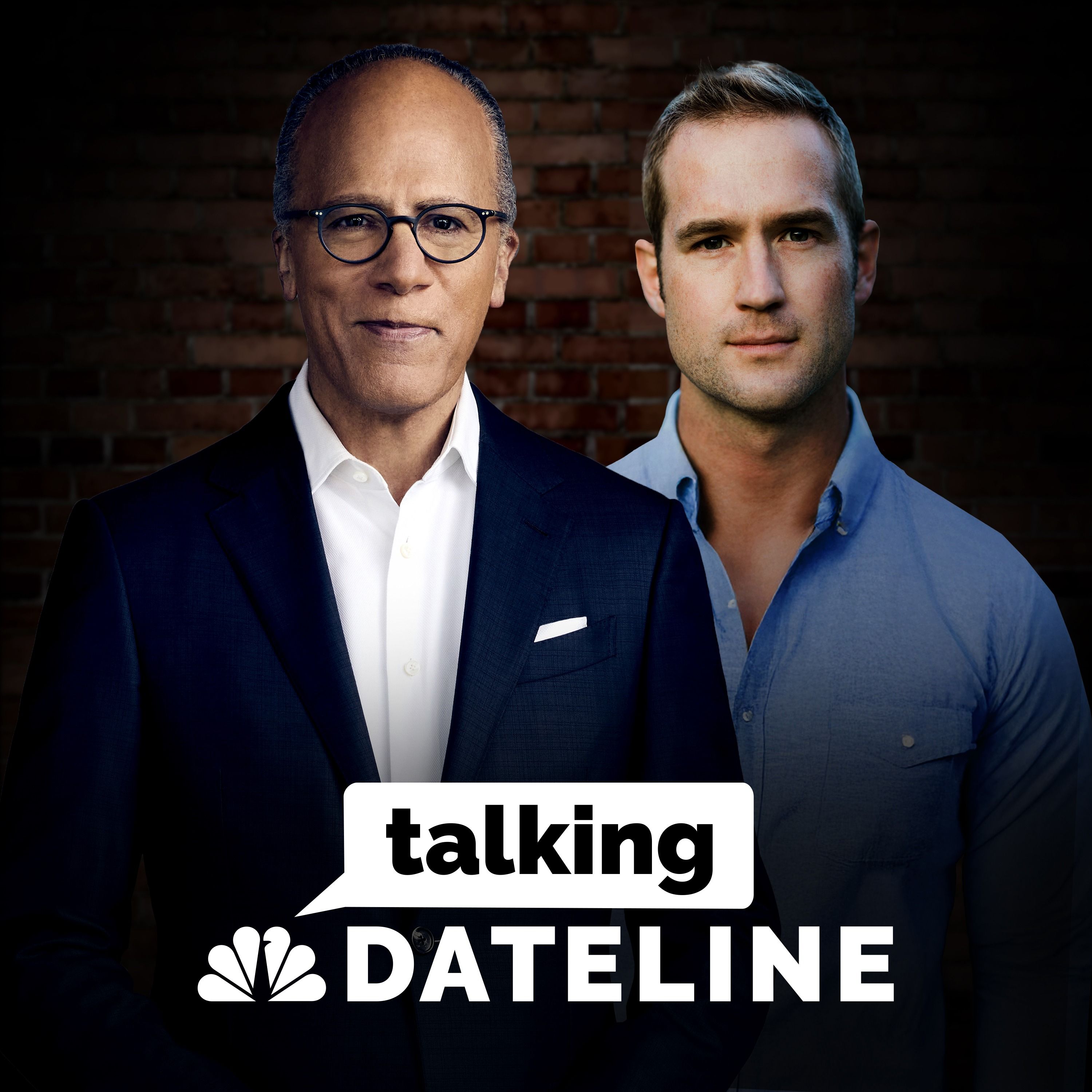
Dateline NBC
Talking Dateline: After the Flood
00:31:49
NBC News National Correspondent Morgan Chesky sits down with Lester Holt to discuss his episode “After The Flood.” On July 4, 2025, Camp Mystic, an all-girls Christian summer camp located in the Texas Hill Country along the banks of the Guadalupe River, was devastated by a catastrophic flash flood. Described as a one-in-a-thousand-year storm, water levels rose rapidly, trapping campers and counselors in their cabins, while others tried to seek higher ground. Of the 119 people who lost their lives in Kerr County, 27 were Camp Mystic campers and counselors. Morgan shares memories of growing up in the Texas Hill Country and what it was like to return home and cover the storm’s heartbreaking aftermath. Lester reflects on interviewing a young survivor and the grieving mothers who continue to seek answers about what happened and whether more could have been done. Plus, they answer your questions from social media. Have a question for Talking Dateline? DM us @DatelineNBC or leave a voice...
Loading summary
Transcript78 lines
- [00:01]
Grand Canyon University Announcer
We all want to build a future that matters. Grounded in Christian truth, Grand Canyon University empowers you to lead with integrity and serve with purpose. GCU is a private, non profit Christian university that puts education within reach. In fact, they've frozen tuition rates on their traditional campus for 17 years straight. Join a community that values faith and innovation. Find your purpose at GCU, private Christian, affordable nonprofit. Visit gcu.edu.
- [00:30]
Capital One Venture X Card Announcer
this message is brought to you by Capital One Venture X Card. Venture X offers the premium benefits you expect, like a $300 annual Capital One travel credit for less than you expect. Elevate your earn with unlimited double miles on every purchase, bringing you one step closer to your next dream destination. Plus, enjoy access to over 1000 airport lounges worldwide. The Capital One Venture X card what's in your wallet? Terms apply. Lounge access is subject to change. See capitalone.com for details.
- [01:11]
Morgan Chesky
Hi everyone. I'm NBC News national correspondent Morgan Chesky. Today on TALKING dateline, we're joined by Lester Holt on his latest episode after the Flood, which really digs into the devastating flood on July 4, 2020, that ravaged the Texas Hill country as well as Camp mystic, an all girls camp where 27 young girls lost their lives. If you haven't seen it, you can watch the episode on Peacock or on the DATELINE podcast feed and then come right back here. Later. We'll have an extra clip from Lester's interview with the former county commissioner about his efforts to get a flood warning system in the county years ago. Okay, let's talk dateline. Lester, always good to be with you, but particularly on a story that I know we've both had a chance to kind of COVID extensively.
- [02:00]
Lester Holt
Yeah, this was a tough one. This was a tough one.
- [02:02]
Morgan Chesky
I know that in your DATELINE career, this feels markedly different. You're coming off of stellar coverage of the Luigi Mangione case out of New York. But then you have this tragedy in Texas that I feel like the whole world has been watching to some degree. How did you kind of prepare for that going in?
- [02:22]
Lester Holt
Well, you know, many of the stories we cover, of course, are tragic. The story chief among them was the sense of loss, the fact that there were small children, you know, we're talking 8, 9, 10 year olds who were trapped in some cases, no way to escape the rising waters around them. We profile one of the counselors, Ainsley, who was helping to wrestle a group of kids under her charge and get them to safety. We also discovered things that went wrong there in terms of planning or lack of planning. So we unearthed A lot during our time in Texas covering this story.
- [03:01]
Morgan Chesky
Yeah, this episode, I felt like really introduced people to the hill country that I grew up in, you know, swimming in the Guadalupe river every summer As a kid, you followed this story from the moment it began. I'm curious what struck you when you arrived yourself to Texas and drove that highway that parallels the river when you arrived at Camp Mystic.
- [03:27]
Lester Holt
It's funny, you talk about that highway paralleling the river. People told us they could normally not even see the river because the vegetation was so lush. But when we drove through there after all this had happened, the trees were torn and twisted. There were belongings that were stuck in trees and bushes, and you could clearly see the river. And everyone you talked to would use their hands to show you how high the water was, and you'd be like, wait a minute, show me that again how high. And now you're imagining, you know, 8, 9, 10 year olds trying to escape in this rushing water. It was really just shock that this water could overtake this area so quickly. Now our focus, of course, is on Camp Mystic. However, there were other places that were struck by the rising waters along the Guadalupe River. In this case, it was a girls camp. There were other camps that were affected by the water, but none had the loss of life that we saw at Camp Mystic.
- [04:25]
Morgan Chesky
Right. Camp La Junta, a boys camp just downriver from mystic, had, you know, the boys clinging to rafters inside their cabins there to escape the water. But when you see these mystic cabins, it was just a ceiling. There were no rafters for them to cling to. Lester, as we kind of talk about the camps that you mention here, I think for a lot of people, you know, you say summer camp is something that, you know, many kids are a part of all across the nation. But in this particular pocket of Texas, Camp mystic has a history, a lineage that has drawn generations of young women there. What did you kind of find as you looked into the history of this particular camp and the impact that it has?
- [05:13]
Lester Holt
There is a clearly a strong tie between that camp and the community. You know it better than I do, but it's a lovely area. I was there just a few weeks ago as part of our follow up reporting, and we could look across the river and the green grass, the cabins. We were able to actually get on the property at one point and see the cabins now that have been really kind of signs of life standing still. You can still see the mud along the windows. There were crosses that have been erected around the cabins. We got a glimpse at the hill that Some of the kids were able to successfully make their way to, to get above the water. So it was, you know, it's one thing to tell the story and to hear from people, but it's another thing to get up close and really understand what these kids and their counselors were going through.
- [06:04]
Morgan Chesky
I think to really understand this story, understanding the layout of the camp is crucial. Yeah, this episode really does a great job in showing people exactly where these girls were and when, as that water started to rise. The footage that you've included over the course of that night, it's tough to watch, especially when you hear the screams there. How important was it to you to kind of marry those two elements together?
- [06:35]
Lester Holt
It was difficult. And you also want to, you know, be mindful of our viewers and you know, how much anyone can take. But that, yeah, you mentioned the video, the cell phone video of the screams of help. And you know, when I first heard that, my only thought was, what would I do? How would I, how would I as an adult, you know, how would I try to get out of there? And I think that is really the central question to all this. Was it even possible?
- [07:05]
Morgan Chesky
I think that that's the question that, you know, some people are going to live with the rest of their lives to some degree. And a question that the parents of these young girls can't help but ask. You know, every day they wake up. I know that you sat down with eight mothers who lost daughters and seeing them introduce themselves and then share the name of their, of their daughters was something that I think I'll carry with me a real long time. I'm sure you had an idea as to how that interview was going to go. But then to sit there in that space and speak to them, what struck you?
- [07:45]
Lester Holt
I so admired those women and their strength and their determination to fight on behalf of their children. You know, what they're going through, frankly, none of us can imagine. There's another story that was shared with me during this story. One of the mothers was hoping for her daughter. This would be a moment of healing. This mother had lost her husband, she lost her brother and then her daughter all within a six month period of time.
- [08:17]
Morgan Chesky
Oh my.
- [08:17]
Lester Holt
I can't imagine carrying that kind of burden around. But she did.
- [08:21]
Morgan Chesky
Yeah. I think that that mother was the mother of eight year old Blakely. And I was struck by just how incredibly composed she was with a world of grief so close at hand. Did she share anything with you at all? Just about how she's getting by day to day. I know she mentioned that she still goes into Blakely's room, even sleeps in her bed. I can't even imagine the healing process there.
- [08:51]
Lester Holt
She wants to make sure that she's talking about her daughter a lot, that she doesn't forget her. I mean, of course, there's no way she could ever forget her. But for her, her coping mechanism is to make sure that she's always talking about her daughter. And it's interesting. Each parent had a different thing. You know, the Getton family, they had letters that they'd received from their daughter shortly after camp started. They haven't brought themselves to read those letters. And I think we can all appreciate, you know, what that must be like to, you know, you want to know how she was doing, what she was doing. At the same time, you know, does that open the hole in your heart even larger? I think these are tough questions to weigh, and I think only they will know when they reach that point.
- [09:39]
Morgan Chesky
I know you spoke to those parents, and then you also spoke to young Lucy Kennedy, whom I also chatted with in the days following that flood. And there's something unique about when you interview, I think a child following some tragic event like this because they speak with a level of truth and authenticity that I don't think we always, always get. And just hearing how matter of fact she was about what she witnessed is something I'll carry with me. And I assume you as well.
- [10:15]
Lester Holt
Yeah, I think you put it really, really well. Interviewing kids during stories of tragedy, it's never easy. I always approach them as cautious as I can. And it's very important to me to be as protective as I can. And that's the journalist in me and the father, and that's enough about me. But you're right, Lissy was. She was spot on with her ability to really kind of capture the moment. You know, she, like many kids in that area, despite what had happened, was prepared to go back to camp, you know, this month. And she was very articulate about why she felt this was kind of a one off, as frankly, a lot of the adults did. This goes off into another area, but there were a lot of folks there who were very divided about the camp, about the Eastland family, about what they did or didn't do. And it's created, you know, some friction, frankly, in the community.
- [11:09]
Morgan Chesky
We had the initial tragedy, we had this incredible amount of grief, and. And then it felt like as more details came to light, that division became deeper. All right, when we come back, Lester has an extra clip from his interview with a former Kerr county commissioner. Stick around.
- [11:30]
Capital One Venture X Card Announcer
Insurance is not one size fits all. That's why drivers of trusted progressives name your price tool for years. Just tell Progressive what you want to pay and they'll show you coverage options that fit your budget. Visit progressive.com to find a car insurance rate that works for you. Progressive Casualty Insurance Company and affiliates Price and coverage match limited by state law.
- [11:55]
Grand Canyon University Announcer
Grainger knows when you're a procurement manager for an office park, you're not managing one building, you're managing all of them. And to stay ahead, you need to see through walls and around corners. Lights about to fail. Filters ready to clog H Vac on its last leg. If you wait until something breaks, you're already behind. Count on Grainger for quality products, easy reordering and 24. 7 support. Call 1-800-GRAINGER, click grainger.com or just stop by Grainger for the ones who get it done. We've all heard those scary IRS radio ads that try to frighten you into calling. But Tax Relief Advocates is different. If you owe the IRS 5,000, 50,000 or even $500,000, TRA has a solution for your tax it doesn't matter if you're in your car, at work or with your kids. No matter where you are, visit tra.com don't lose hope. TRA could reduce or even eliminate what you owe. Their passion is taxes and helping people and businesses fix IRS problems. They have over 1000 five star Google reviews and an A rating with the Better Business Bureau. You no longer need to fear the irs. Generous tax relief programs are available now to give you a fresh start. So don't wait. Simply visit tra.com that's tra.com or call 800-583-6429. Once again, that's 800-583-6429. Tax relief advocates real solutions for real people.
- [13:28]
Morgan Chesky
It took months before we finally saw kind of the beginnings of legal action in this case. And I'll never forget that first courtroom hearing. Lester seeing the camera there showing the crowd half wearing Purple for Heaven's 27, that group formed following the deaths of those young girls. And then half in in mystic green almost to a person. And I don't know if I've ever seen any court proceeding so clearly delineated or polarizing here.
- [14:00]
Lester Holt
Yeah, I think polarizing is the correct word here. We spoke to people who are, you know, dramatically and affected by what happened, but yet they're still very careful in how they describe what happened and whether they think there's any blame and if so, where it should. Where it should be. People are very, very careful, but when you talk to them, you start to hear where they stand, whether the camp should be reopened and accountability and responsibility in this. So there's clearly this polarization, but there's also this sen. Of tread carefully when we talk about it.
- [14:41]
Morgan Chesky
Yeah. Having been back to Kerrville several times since the flood, it is interesting what's shared privately as opposed to publicly, particularly with a family that has been known for generations in that area just. Just down the road on the river. I'm curious, you know, were you surprised when you spoke to parents who shared that they would be comfortable sending their. Their children, their daughters back?
- [15:11]
Lester Holt
I was, yeah. I'll be honest. And I was a little surprised. You know, I thought just given the. The fact that, you know, the changes have come slowly, I thought you'd see more people wanting to sit out, if nothing else, sit out the camp this year. But, you know, I think people also. Some people want a sense of normalcy, and they want to be able to, like, you know, recognize and grieve as they have. But, you know, a lot of people take the position that, you know, we have to find a way to move on and find some touchstone and some normalcy. So I think that accounts for some of the divide you're seeing and how people are reacting to it. Of course, we know that the Eastlands, the company has filed for bankruptcy reorganization, which suggests that reorganization, as opposed to, you know, other options that might permanently close the camp. This suggests that they plan to reopen again at some point. It also, according to lawyers for some of the families, gives them an opportunity to, in their estimation, to evade responsibility, because it essentially puts a pause on the lawsuits for an indefinite amount of time. As some lawyers had described. It could be months, it could be years. So that's creating another level of friction, if you will, about is this family taking full responsibility and are they doing the right thing in the face of this tragedy?
- [16:39]
Morgan Chesky
With that pause on the legal proceedings, I can only assume that there's a fair amount of frustration there, because, as you mentioned, an indefinite period of time for families hoping for some sort of legal closure. They don't know what to think now.
- [16:55]
Lester Holt
Yeah, because when you get. Obviously, when you have a lawsuit, you get discovery, and so, you know, you get some more answers to some of your questions. Our understanding is this. Now, all this ceases for a time. And so I'm just guessing here that it's going to be much more difficult. And that polarization we talked about is going to become deeper as people realize that things may slow to a crawl.
- [17:19]
Morgan Chesky
I know that you had a chance to sit down with Michael Watts, the attorney representing Camp mystic here in their ongoing legal proceedings, and during that interview, he mentioned the lack of a adequate warning system. Was that facet of this tragedy something that you heard repeated from others?
- [17:42]
Lester Holt
Yeah, to some extent. I mean, I think what he was making the point was he believes that the state of Texas bears a lot of responsibility for what happened. And by that, he says a long time ago, there had been approval of a system, a flood warning system that would sound off an alarm. But he says the state legislature never went forward with it, never funded it, and therefore, he was shifting a lot of the blame to the state for not moving more quickly on a system that would sound an alarm that could be heard for a long period of time and sent people into action. But he also, on the other hand, you know, was. Was a proponent of this idea of shelter in place, in which, you know, others have questioned whether that was a good thing, because we know that many of those who did evacuate were able to evacuate successfully, but the problem was there was no plan, per se.
- [18:37]
Morgan Chesky
Yeah, no. No uniform written plan. In an interview that didn't make the final episode, you. You spoke to a former Kerr county commissioner, Tom Moser, who actually addressed the conversation about potential flood warning systems that could have potentially been in place, were certainly being discussed, but never transpired, never actually came to be. What'd you learn from him?
- [19:05]
Lester Holt
He was very interesting because he had worked on this some years ago, this whole idea of a warning system. Remember, the floods aren't new to that part of Texas, the hill country there, of course, it's just. In this case, it was larger and quicker and swifter than anyone remembered, but it certainly. The conversation moved very quickly to this idea. Is there a way to warn folks and get them into higher ground in time?
- [19:29]
Morgan Chesky
Right. And I just want to play a brief clip of that interview because I think it's important for folks to understand the context of. Here, Take a listen.
- [19:36]
Tom Moser
In 2015, there was a major flood on the Blanco river south of Kerrville, and people died. You know, got washed away in homes and things like that, and they improved their flood warning system. So as a county commissioner, I thought that that was the right thing to do, to look at what somebody else had experienced and what they'd done to make it better for the future. So I went down with another one or two people and looked at what they had, brought it back, hired an engineer to do some preliminary design on improving the flood warning system, Presented it to county commissioners, city council, anybody else around an elected position. We had one huge meeting and presented, you know, here's what we can do and should do. So at that, at the result of that meeting, we said, we're going to move forward. We as a community are going to move forward on this flood. Improving the flood warning system. And to do that, see if we can get some funding from the state via grants.
- [20:39]
Lester Holt
Would a flood warning system, in your view, have saved lives on July 4th had it been in place?
- [20:44]
Tom Moser
Had it been in place? Yes. Yeah. Would it have saved everybody? No. And the reason I say yes is because what we understand about what a flood warning system can be today and what's being implemented. Okay, not there yet, but being implemented, it definitely would. Would give most people adequate warning to get above and away from the flooding area. So, you know, it's. So the answer is yes.
- [21:13]
Lester Holt
And to inverse that that question, is it. Is it shocking that something like that wasn't in place? Were there missed opportunities?
- [21:22]
Tom Moser
I'm not making excuses for anybody. When I was on commissioner's court, we looked at what the needs were, okay. And we tried to satisfy the needs with the revenue that we had. Could we have found another million bucks? The answer is yes. Did we think we could get some money from the. From the state government and from the federal government do that? Yes, we thought we could. So we applied for grants for, you know, million dollars plus. And not to throw stones at anybody in the state, but they had funds set aside to mitigate floods at that time, not to necessarily warn for floods. So we applied for flood warnings is a flood as opposed to flood mitigation. And our requests for grants were not. Not accepted.
- [22:10]
Lester Holt
So I think what's. Morgan, what's interesting here is he. He's very clear. It's like, this isn't going to save everybody. So don't, don't think that, you know, this was going to be the miracle cure to this.
- [22:21]
Capital One Venture X Card Announcer
Sure.
- [22:22]
Lester Holt
But at the same time, it could have apparently saved lives at some level.
- [22:28]
Morgan Chesky
Well, certainly when you contrast it with what had been for generations, kind of the typical procedure, which was literally a phone tree of a rancher back there in wes Kerr county, seeing the river rise, calling someone downriver, and then that person doing the same. And I think one of the things I personally struggled with following this tragedy was kind of having a veil lifted from my own eyes per se as the hometown kid on how everything had been for so long and forcing me to look at it through in modern times and realizing in real time how many more tools are at our disposal now that could have potentially saved an unknown number of lives.
- [23:18]
Lester Holt
Yeah, I think a lot of people have, in our conversations there, talked about a flood culture and that might have affected the response. And by flood culture, we're talking about, you know, the warnings. Many people say, well, we used to get them all the time. Yeah, we get heavy rains here and we get the flooding. And, you know, and they as almost as if it was an excuse for not acting, that people had fallen to a complacency. And so we heard a little bit about that. I'm sure you've seen in other disasters you cover that Sometimes there is kind of a sense of this is nothing new, it's nothing to worry about. And you kind of talk yourself down away from reacting in a more demonstrative way.
- [24:02]
Morgan Chesky
I think we all think we know until we don't. You talk to folks in Florida who refuse to evacuate ahead of hurricanes because they've seen them all. You hear from people in Buffalo who have seen blizzards their entire life until they get the big one. And I feel like that's what I heard shades of when I spoke to friends, family, and folks I met along the way in the hill country, that this one really rewrote the rules, making it all the more important to have something, anything more than what we did. You know, I remember hearing about 1978's flood, 1987's flood. You know, I was only one year old with 87, but that was the flood that everyone knew as the big one, really, up until this one. And time goes by, and for all of the grief and the shock that you feel following one of those, it is sad but true that I think human nature just tends to slowly but surely forget to some degree.
- [25:09]
Lester Holt
It's a variation on the it can't happen to me.
- [25:12]
Tom Moser
Right.
- [25:13]
Lester Holt
That I think we've. We've all heard and we've all unfortunately been a part of it. That sense of, yeah, it can happen, but it won't happen to me.
- [25:22]
Morgan Chesky
In covering this story, I want to ask you a question from some of the people that I've heard back home in kerrville, and that is 119 people died in Kerr County. And the coverage of this has been overwhelmingly and understandably surrounding those 27 young girls at Mystic. A volunteer firefighter that I've met through this tried to save people at a RV camp in Ingram, where more people actually died at that site. And yet, you know, there's Been. Not a lot of. Not many mentions of that. What would you say to folks who perhaps feel overlooked in this tragedy?
- [26:13]
Lester Holt
I think that's a. That's a fair question. I think some of it is a product of the fact that this was. That was a large number from a singular place that suffered this. But we have to go back and remember, you know, we played those 911 calls that came in, and you heard people from different parts, different areas along the Guadalupe Bay river who were in immediate danger. Those, like, nothing before. I think those 911 tapes really, really rocked me. I mean, these are people who were, you know, they weren't being hyperbolic. They weren't. And so we're going to die. And in some cases, they did. So. Yeah, your point is well taken. I think that, you know, it's important that we acknowledge that there was a large number of people in Kerr county who succumbed to this tragedy.
- [27:07]
Morgan Chesky
And I know that this is a river known for its pristine beauty, you know, untouched by man, so to speak. And yet when we see what it is capable of, I. If there was ever a time to have a time machine and put that sound, those sirens in place, I'd give anything for it.
- [27:29]
Lester Holt
But you'd have to, you know, I listen to it. But you'd also have to know what that sound meant. One thing to say, hey, you know, there's a flood coming. But where. What do I do? Where do I go? And I think that's where everything in this conversation ultimately leads. That, you know, what do we do with the information? Evacuate, you know, shelter in place, get in a car. Don't get in a car. You know, a siren can't give you all that.
- [27:55]
Morgan Chesky
We're gonna take a quick break now, but when we come back, we're gonna be fielding questions from social media on helping people understand the depth of this tragedy. Stay with us.
- [28:08]
Grand Canyon University Announcer
We've all heard those scary IRS radio ads that try to frighten you into calling. But Tax Relief Advocates is different. If you owe the IRS 5,000, 50,000 or even $500,000, TRA has a solution for your problem. It doesn't matter if you're in your car at work or with your kids, no matter where you are, visit tra.com don't lose hope. TRA could reduce or even eliminate what you owe. Their passion is taxes and helping people and businesses fix IRS problems. They have over 1000 five star Google reviews and an A rating with the Better Business Bureau. You no longer need to fear the irs. Generous tax relief programs are available now to give you a fresh start. So don't wait. Simply visit tra.com that's tra.com or call 800-583-6429. Once again, that's 800-583-6429. Tax relief advocates real solutions for real people. You know that thing where you get an amazing pair of shoes at a really great price and want to tell everyone about it? Yeah. So do we. Here at Designer Shoe Wear House. We'll give you something to brag about, like the latest styles from brands you love or the trends everyone's obsessing over or shoes that make you feel like, well, you. So go ahead, show off a little. Buying shoes that get you and prices that get your budget. Head to your DSW store or dsw.com today. DSW. Let us surprise you.
- [29:37]
Morgan Chesky
Feeling stuck with rising ad costs and flat results, realize Taboola's advertising platform for businesses unlocks growth beyond search and social media. Taboola's algorithm engages with high intent users on the open web, accelerating their path to conversion. Powered by an AI model trained on over 500 billion monthly signals, Realize delivers smarter prospecting with privacy, safe targeting. The result, higher conversion rates and scalable funnel at lower cost. To learn more, visit realize.com podcast and welcome back. We have some questions now from people that have been following this story like so many others, to learn as much as they can here. Alison Johnson on Facebook asks, this may be a stupid question, but could local helicopters not have flown in and made rescues, at least saved some of those people?
- [30:30]
Lester Holt
Timing is everything. A lot of folks talk about the rising river, but there was also remember a thunder and lightning storm, heavy lightning, heavy thunder. And those are conditions that we know from experience. You can't really fly in what they I think they did bring in life flight helicopters at some point after the the water had receded. But at the height of this thing, my understanding is there was no use of helicopters.
- [30:55]
Morgan Chesky
No use of helicopters because I think if people aren't familiar with this, we need to point out the fact that that first National Weather Service alert came in at 1:14am it was pitch black in the middle of a monster storm in a very concentrated area there. Emily Doughty Bush on Facebook asks, has mystic at any time produced a document or any evidence that they had a flood plan that was shared with councilors each anything she says, a map, a protocol that says how to get to higher ground and which cabin goes where?
- [31:29]
Lester Holt
Good question. There was we know in this manual, if you will, that counselors had there were some Basic instructions. But they also mentioned that if you're in these cabins, you are in a safe place. And that really stood out to me. When I saw that, I'm like, how could they? Because they weren't in a safe place.
- [31:46]
Morgan Chesky
Sylvia Vigil on Facebook here. I know the answer to this, but I have to ask, and it breaks my heart, was the last missing girl ever found?
- [31:54]
Lester Holt
No. Seal Stewart has not been found. There is still a search for her. And her name has come up a lot in this discussion over whether the camp should go forward. You know, some folks say we've got to move on, but a lot of folks say, hey, this is still. There's still a child that's missing here. And you, you know, it's like so many things in the story, you just can't imagine, you know, the hole in the hearts of the family of this young girl.
- [32:22]
Morgan Chesky
And I have to note that the efforts that crews are going to to locate her and bring closure to the family are nothing short of just incredible. Using high tech sonar, going through that river inch by inch, it feels like. And to their credit, they have not given up. Sharon Fraley here on Facebook says that young counselor who saved 16 girls should get a hero's medal of Honor. Amen.
- [32:54]
Lester Holt
Yeah, I think that says it all. Whether she'll get a true medal, I have no way of knowing. But she was a hero. She was a hero. Ainsley did what she could. She made some quick judgments and decisions, and she saved lives. And you can't forget that.
- [33:13]
Morgan Chesky
I want to end with Jennifer Welch. The best to hear, and this is something that I can personally attest to as well. She writes, as a Texan, I didn't want to watch this episode. It's so hard to think about what happened, but I forced myself to do it. Forgive me. We have to honor these poor families. I'm sorry.
- [33:38]
Lester Holt
Yeah, I get it.
- [33:39]
Tom Moser
I get it.
- [33:39]
Lester Holt
I've shed a few on this story.
- [33:44]
Morgan Chesky
We have to honor these families and their loss and learn from this tragedy. While water sustains life and is a beauty to admire when calm, it is also an extremely powerful force. Never, ever underestimated. Absolutely. Well said.
- [34:03]
Lester Holt
That will be the lesson of this tragedy.
- [34:05]
Morgan Chesky
It's cathartic to kind of speak to what we've both kind of witnessed at different periods on this, on this tragedy, from the initial aftermath until your multiple trips back to speak to these families here. And I know that, you know, healing is different for everyone and everyone handles grief in a different way. But if you had any parting thoughts or message to the folks who are still waking up every day kind of in the Hill country or across Texas, across the nation that have been touched by this, what would you say?
- [34:45]
Lester Holt
I come away from stories like this thinking that the most important thing is that people are allowed to grieve in the way they need to grieve. We talked about the polarization over what the future of the camp should or may be. Those decisions will be made, will include people who have lived this tragedy on some level, and they're gonna need their space, and we're gonna have to find a way to give them their space while paying honor to their loved ones and seeking the answers that they need. And I think on some level, all of us need.
- [35:20]
Morgan Chesky
Right. I'm reminded of Kerrville mayor Joe Herring Jr. I had a chance to catch up with him on a trip back home, and I, I kind of posed the question to him, you know, here you have the unthinkable in your backyard. How can you possibly move on from it? And he said, together, that's it.
- [35:41]
Lester Holt
Yep.
- [35:43]
Morgan Chesky
That's the only way. I just want to thank you for you and your teams reporting on something that's hit so close to home for me, Lester, and watching the episode, I felt, you know, taken back.
- [36:01]
Lester Holt
Thank you for having me on. And we're glad we could tell this story and hopefully only good will come from it.
- [36:09]
Morgan Chesky
That wraps up Talking DATELINE for this week, and a special thanks to each and every one of you listening. Remember, if you have any questions about any of our stories, you can always DM us your audio or video on our socials at DatelinenBC or leave us a voicemail or at 212-413-5252 for a chance to be featured right here. And you can watch the video version of Talking Dateline on Peacock or YouTube or subscribe to our NBC News app. We'll see you Fridays on DATELINE on NBC.
- [36:48]
Lester Holt
Snoring, gasping for air during sleep, Daytime sleepiness. I'm Shaquille o', Neal, and this shouldn't be anybody's experience. Ask your doctor about Zepbound Tirzepatide, the first and only FDA approved prescription medicine for moderate to severe obstructive sleep apnea in adults with obesity.
- [37:04]
Zepbound Medication Announcer
Zepbound is a prescription medicine used with a reduced calorie diet and increased physical activity to help adults with moderate to severe obstructive sleep apnea and obesity to improve their OSA. Zepbound is approved as a 2.5, 5, 7.5, 10, 12.5 or 15 milligram injection. Zepbound contains Tirzepatide and should not be used with other Tirzepatide containing products or any GLP1 receptor agonist medicines. It is not known if Zepbound is safe and effective for use in children. Don't cheer needles or pens or reuse needles. Don't take if allergic to it or if you or someone in your family had medullary thyroid cancer or if you've had multiple endocrine neoplasia syndrome type 2. Tell your doctor if you get a lump or swelling in your neck. Stop stepbound and call your doctor if you have severe stomach pain or a serious allergic reaction. Severe side effects may include inflamed pancreas or gallbladder problems. Tell your doctor if you experience vision changes before scheduled procedures with anesthesia. If you're nursing pregnant plant to be or taking birth control pills, taking Zepbound with a sulfonylurea or insulin may cause low blood sugar. Side effects include nausea, diarrhea and vomiting, which can cause dehydration and worsen kidney problems.
- [38:12]
Lester Holt
Talk to your doctor. Call 1-800-545-5979 or visit zepbound.lilly.com.