← Dateline NBC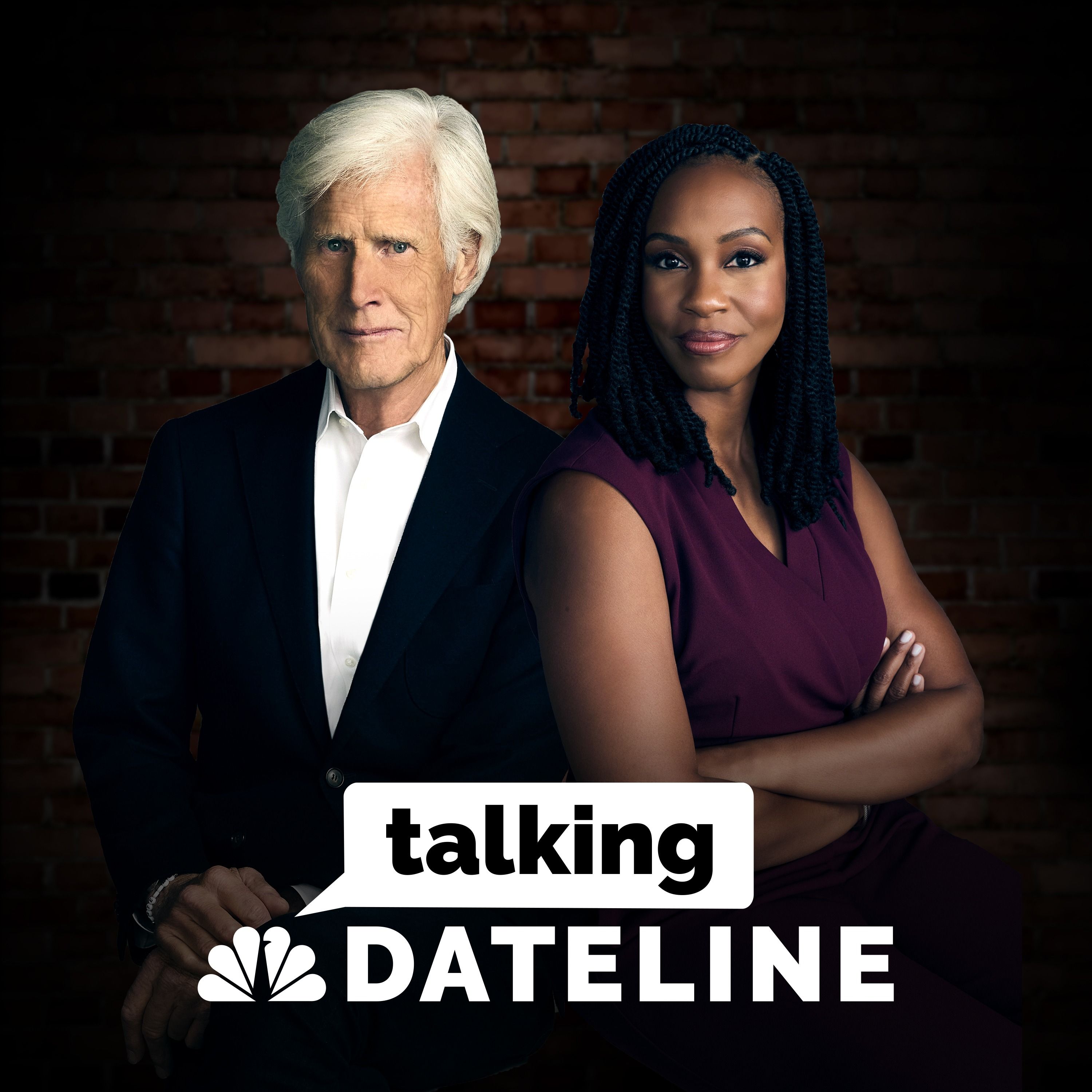
Dateline NBC
Talking Dateline: The Death of Dr. Schwartz
00:31:11
Blayne Alexander joins Keith Morrison to discuss her episode, “The Death of Dr. Schwartz.” In 2014, Dr. Steven Schwartz was found murdered in his Tarpon Springs, Florida, home. What initially looked like a burglary gone wrong turned out to be something much darker. Investigators uncovered a story of greed, betrayal, and a hidden past that stunned even those closest to the doctor. Blayne shares her experience reporting the case across Florida, Texas, New Mexico, and Albania — where she spoke to a man who was convicted in connection to the crime. She also shares her conversation with Detective Lara Scarpatti, one of the first officers on the scene, about the unusual behavior she noticed that night. Later, Blayne is joined by producer Rob Buchanan to answer viewer questions about the episode, including why so many Dateline stories seem to take place in Florida. Have a question for Talking Dateline? DM us @DatelineNBC or leave a voicemail at (212) 413-5252 — your question might be feat...
Loading summary
Transcript144 lines
- [00:00]
Keith Morrison
Looking to crack the code on your career? Well, maybe it's time to get your degree. Southern New Hampshire University offers over 200 programs you can complete online. No set class times means you can do it all on your schedule. And with some of the lowest online tuition rates in the US they make getting your degree affordable, too. Get started at snhu. Edu Dateline. That's Snhu. Edu Dateline. Dateline is sponsored by Capital One. Banking with Capital One helps you keep more money in your wallet with no fees or minimums on checking accounts and no overdraft fees. Just ask the Capital One bank guy. It's pretty much all he talks about in a good way. What's in your wallet? Terms apply. See capitalone.com bank capital1na member FDIC. Hello, I'm Keith Morrison, and I am here today with Blaine Alexander. Hi, Blaine. How are you?
- [01:02]
Blaine Alexander
Hi, Keith. I am great. How are you, my friend?
- [01:05]
Keith Morrison
Well, I'm fine. This is an amazing piece.
- [01:08]
Blaine Alexander
Well, thank you.
- [01:09]
Keith Morrison
Anyway, today's episode is the death of Dr. Schwartz. It begins at Tarpon Springs, Florida, where Dr. Stephen Schwartz was found murdered in his own home. Initially, it looked like a burglary a bit, but the detectives soon figured out that it was one of those that wasn't really a burglary. It was just meant to look like a burglary. It was a case of all kinds of suspicions about money and betrayal and family and strange goings on in the home of Dr. Schwartz. And also a past that was just hard to believe. But you should watch it. It's right below here on this podcast. Or you can go to Peacock anytime and watch it. And when you have watched it, come back because Blaine will have some things to say about it. And we'll also have an extra clip of her interview with Detective Lara Scarpati, one of the responding officers at the crime scene. And later, Rob Buchanan, who produced this story, will join Blaine and take some of your comments. So welcome to this program, and let's talk dateline. What was it like doing this story? I see you got all over the place on this one.
- [02:12]
Blaine Alexander
You know, Keith, this one was. This one was absolutely all over the place. And so in addition to. I don't think I've ever traveled this much for a story, period. A DATELINE story, any story. So we went to Albania, of course. That was the biggest trip. Took a transatlantic flight over to Albania, stayed there.
- [02:31]
Keith Morrison
I was wondering, by the way, I'm interrupting you here for a moment about Albania because.
- [02:35]
Blaine Alexander
Oh, good.
- [02:36]
Keith Morrison
Please. It's a long trip. Over there. How long were you there?
- [02:41]
Blaine Alexander
I'm really glad you asked that. So we spent more time traveling to and from Albania than we actually did on the ground in Albania. So left Atlanta Monday night, get to Albania Tuesday night, Albanian time. After flying, you know, shoot all day Wednesday, started at 8am Went all the way through the end of the day, shot the entire day Thursday, shot a few other extra elements. And then Friday we were on a 5am flight out of there. And so it was a very. It was a very, very fast trip to Albania. Got a chance to see the country though, a place that I never would have thought that I would have traveled outside of being assigned to do a story there.
- [03:18]
Keith Morrison
So this, frankly, is one of the grand things about working for Dateline or working in the business we're in is that you get to go places you would never otherwise go, you know, and.
- [03:28]
Blaine Alexander
It was so interesting because I did not know what to expect. Right. When you're preparing to shoot a story like this, you're, you know, interview questions, you're preparing for that. You're getting to know the subject matter, you're getting to know the testimony in and out. You don't really spend a lot of time like, Googling, like, what are things to see in Albania? And so I went over there very, I guess, blind, you know, in the sense of people typically preparing for an international trip. But it was so interesting. I mean, the. This was a place that was formerly under communist rule. It was a very, you know, just an interesting place. And so the feel, once I got over there, kind of. Kind of spoke to that. And I will say, in addition to Albania, we went to. And I don't that. So that was the longest trip. But we also. We spent a lot of time in Florida, which is where the crime happened. We went to Texas, we went to Hobbs, New Mexico. So there were several other places that we went in addition to the scene of the crime for this story. And so there were a lot of just different elements and different places to shoot for this story.
- [04:25]
Keith Morrison
Well, as I say, quite a story. And in Albania, you talked to Leo. Leo confessed to a role in this. What was your take on him and the degree of his participation and his believability?
- [04:39]
Blaine Alexander
Well, I'll say this. I mean, Leo certainly wanted to tell his side of the story. He was very adamant in that. He wanted to express. I mean, he. He feels that Rebecca robbed him of everything. He had a wife, he had a son here in America. You know, that marriage ended, he was deported, had a business, had a Home, all of these types of things. And so he has a lot of anger towards her. You heard what he says his role is in this, that basically he was just wrapped up in all of this. Investigators have a very different picture. Investigators believe that he actually was very much more involved in all of this. But there was a piece of this story that investigators believe that Leah was actually trying to help remove evidence from Dr. Schwartz by trying to get the bullet. And so they do believe that he played a larger role in this than he is letting on. Of course, Leo says that's absolutely not true, that he was just roped into this, that he had nothing to do with what was going on and had no idea what he would find there. But again, you saw it in the episode. I mean, he lied a number of times. He swore up and down that he had nothing to do with it, that he didn't know about it, and then came back and said, well, okay, I actually was there that day. Right. And so there is certainly investigators look at that and say, well, you've lied, you've lied, you've lied. Why should we believe you now? And Leo's telling, I mean, he was a very, he was a very strong, full throated defendant for himself, really wanting to tell his side of the story and say, you know, all these things that are being said about me are untrue. Here's, here's my truth.
- [06:16]
Keith Morrison
You know, whatever Leo did or didn't do it, it remains a kind of a fascination even now, I guess he clearly wanted to talk, listen to him tell his story. He. He told it with verve and like, you gotta believe me.
- [06:30]
Blaine Alexander
He did.
- [06:32]
Keith Morrison
But I don't know, people change. Their people have this. I'm sure you've just discovered this through your whole life, but especially in this business, people develop a way of kind of not exactly editing, but just sort of becoming comfortable with a story about something they did or didn't do that isn't maybe exactly correct. But they've kind of persuaded themselves it's correct over the years and sort of become more comfortable with the telling of it as the time passes. So that they can sit there in front of you, they can tell you a thing which is half true, a quarter true, not true at all, and look as if it's, you know, absolutely true. And they believe it with their whole heart and they probably do. It's a funny thing. Like people.
- [07:18]
Blaine Alexander
Well, the thing is, you know, I asked Leo. One of the things that I asked him is, I mean, he swore up and down he had nothing to do with this, that Rebecca roped him into all of this. He sat in jail awaiting trial for a good amount of time for several years, and then finally pleaded guilty to accessory after the fact. And I asked him, if he truly had nothing to do with this, why take a plea deal? Why say that you, you know, were, in fact, an accessory after the fact? Why plead to this? And he said, because he had been looking at. He'd been there for such a long time, and this was an option for him to finally get out of there, to avoid what would have been a much harsher sentence had he stood trial and, you know, been convicted. And so that was what, you know, ultimately led him to take the plea deal. But it was something that he really struggled with because he says that he didn't want to admit to doing something that he said he had no involvement in. I should say, too, that there was a far cry between what he was originally charged with, murder and accessory after the fact. Right. And that was something that we also took to, you know, law enforcement as well, because Leo's thing was they didn't have anything on me. Otherwise, why would they have let me plead to this? So there were certainly a lot of ways to look at, you know, the plea deal that he ultimately took.
- [08:32]
Keith Morrison
And police officers will get what, you know, will. Will take what they can get. I mean, sometimes you can't prove a thing. So you. You take whatever the best thing that is offered. You sat there and you asked him straight out, did you kill the doctor? What did you expect he was gonna say?
- [08:47]
Blaine Alexander
I knew he would say no. I didn't know how he would say it. I didn't know how it would come out.
- [08:50]
Keith Morrison
Sure.
- [08:50]
Blaine Alexander
So I did know that, yes, he was gonna. He was going to deny it. Of course. I didn't think that I was gonna get a, you know, unexpected confession from him. I wondered what it would look like. I didn't know if he was going to be angry. I didn't know if he was going to, you know, say calmly, absolutely not. I wanted to see how he would react. Honestly. I mean, I think, you know, sometimes it's more in the reaction than it is in the yes, no, or the answer of the question. Right.
- [09:13]
Keith Morrison
Yeah, that's true. That's true. So talk a bit about this hidden past. How did that come up? And what did you think when you heard about that?
- [09:23]
Blaine Alexander
Now, that was. I mean, in a story full of twists, that had to have been the biggest twist, Right? I mean, there is no way that anyone could look at this Beloved doctor would give money out of his pocket, help doctor help, help patients pay their medical bills, anything like that, and think that 50 years prior he was a murderer. And there were a number of things about that that just stood out to me. One, the fact that we still couldn't figure out, try as we did, could figure out why exactly he needed that money. What was the deal with the money? Why did he really resort to such a thing to get that type of money? We don't know why he was pardoned, why the governor gave him a full pardon, and then he was able to go about and go on and continue his life. And so I think that was just stunning in and of itself. But this was something that when we talked to all of the people who loved him, as you heard in the episode, I mean, even his own son was shocked. Right.
- [10:22]
Keith Morrison
To find out a thing like that about your, about someone you loved so much would just. I can't imagine what that would be.
- [10:28]
Blaine Alexander
Like for them while still grieving his death. Right. So you're in the middle of grieving this person that you love and then you have to kind of come to grips with this, this question. I asked him a number of things about it. He said, I really wish that I could have talked to him about that. I wish that this is something that I, that we could have discussed. He said, because he did have a number of questions, he can't square that, that type of past with the father that he knew and loved.
- [10:50]
Keith Morrison
Yeah, I mean, just, just the, the idea that that kind of redemption is not only possible, but here is a perfect example of how that happened. That a person rebuilt his life after a thing like that and was able to become a respected doctor and such a generous and kind person. And then you wonder, okay, is that the come out, does that come out of that lesson in that particular redemption, or was he gonna be like that anyway and he just got waylaid by the side of the road for a little while. You just, you wanna know these things?
- [11:20]
Blaine Alexander
You know what it made me think, Keith? It made me wonder if that sort of redemption were available across the board, like, what could someone's life look like if they were able to kind of, you know, pay their price, do their thing, and then carry on with their life and perhaps have their own chance at redemption? Right. Because that is such a stunning turnaround. If you look at just that snapshot in time, you're thinking, this is a kid, he's up to no good. He's a cold blooded killer. He walked into this dentist office in the middle of the day, demanded his money, and then shot him square in the head. Like you shouldn't be out among people anymore, right? Like people could certainly look at that and think that's the case. And then yet look what he did with his life afterward. And so I wonder, you know, if other people had the chance to do that, is that something? Could we see more redemption stories like that? Like, who knows?
- [12:12]
Keith Morrison
Who knows? So we're going to take a break and when we come back, we'll hear some of Blaine's conversation with Detective Lara Scarpati, who was the patrol officer at the time of the murder, and she was one of the first on the scene. But here's some of your interviews.
- [12:28]
Blaine Alexander
A minute.
- [12:29]
Rob Buchanan
If you could hear love, what would it sound like?
- [12:40]
Keith Morrison
Son, can we talk about your drinking?
- [12:44]
Rob Buchanan
Yeah, Dad, I think we should. Helping those closest to you think about their excessive drinking. Maybe that's what love sounds like.
- [12:54]
Keith Morrison
More@rethinkthedrink.com an OHA initiative.
- [12:59]
Grainger Announcer
If you're a custodial supervisor at a local high school, you know that cleanliness is key and that the best place to get cleaning supplies is from Grainger. Grainger helps you stay fully stocked on the products you trust, from paper towels and disinfectants to floor scrubbers. Plus, you can rely on Grainger for easy reordering. So you never run out of what you need. Call 1-800-granger. Click granger.com or just stop by Granger for the ones who get it done.
- [13:29]
Martha Moxley Podcast Narrator
On the night before Halloween in 1975, 15 year old Martha Moxley was murdered. But police failed to make an arrest until in 2000, her one time neighbor, Michael Skakel was arrested. He was also a cousin of the Kennedys. The Kennedy connection is the reason that most people know about this case. But the deeper I, I dug, the more I came to question everything I thought I knew. Search dead certain the Martha Moxley Murder on Apple podcasts to listen to the latest episodes each week.
- [14:01]
Keith Morrison
It was a story where you kind of got the sense early on, okay, I think I maybe know who's. And you know, this looks a little suspicious and, and you want to point at a certain person, but then it takes such a long time, strange trip before it gets to the final destination. I also wondered why he didn't see through his wife sooner than he did.
- [14:25]
Blaine Alexander
You know, he was somebody who worked a lot. He was somebody who spent a lot of time at the office, at the hospital. And so, you know, kind of the picture that we got of him was he was somebody who really buried himself in his work. I think the other part of that is that his past also really kind of informed how he dealt with people going forward. And so this is something that his son told me. He said he believes that his father was such a forgiving person and so willing to give other people second, third, fourth, fifth chances that he would be more forgiving of behavior. And Carter said he does believe that. That, you know, is what led to him continuing in his relationship with his wife.
- [15:08]
Keith Morrison
How soon after she married him did she begin to use him, as far as you could tell?
- [15:12]
Blaine Alexander
So I think that. And. And, you know, we should say that, of course, Rebecca declined any interview with us, but everything she has said is that theirs was loving marriage. You know, they built the practice together. They built everything together. And so she was entitled to this money as well. But from everybody that we talked to, there was a pattern of issues with them when it came to money. There was actually a bump in their relationship earlier where they'd been together, broke up for a bit because of some sort of behavior that was along those lines. And then, you know, we're told that he gave her a second chance, and they continued with their relationship thereon and ultimately got married.
- [15:54]
Keith Morrison
I was interested, too, in the relationship with the sons of her son's. His son.
- [15:59]
Blaine Alexander
There was a very big difference between how Rebecca Schwartz acted toward Carter Schwartz, Stephen Schwartz's son, and her own sons, according to Carter. And a lot of that was kind of underscored by money, right? I mean, that was the. It was very clear that there was no. I can't even say the warm and loving stepmother, stepson relationship, but it was more. I mean, there was no relationship between the two of them. But I think the biggest way to illustrate that is financially how, you know, the two sons, two biological sons versus the stepson were treated. I think the thing that struck me the most was Carter's story about how he just needed $1,000 to secure his spot in med school. This is right after his father was killed, and Rebecca refused to give it to him. Says, you need to get a job, and you need to figure it out on your own. And this is after, you know, we learn later in the story she has spent untold hundreds of thousands of dollars on cars, businesses, I mean, houses, weddings, and stuff for her own two boys. People that we spoke to who worked in the office, who kind of knew, you know, the Schwartzes, you know, Rebecca, in their telling, was motivated by money, that they saw that anything that even they gave to Carter was Taking away from what she could have is what they told us. And so that certainly contributed to that relationship, I'm sure.
- [17:16]
Keith Morrison
I suppose they probably didn't have any big, happy family dinners together, all of them.
- [17:24]
Blaine Alexander
Certainly not. Certainly not.
- [17:26]
Keith Morrison
She was never charged with murder criminally. You talked to the detective about that. What was your sense of what his. Strange question to ask about a detective, but what his. How he felt about all of that and the fact that he couldn't proceed with a criminal charge.
- [17:47]
Blaine Alexander
This is so unlike many of our DATELINE episodes, right, Keith? Because usually they end with a criminal conviction or a criminal trial that ends in an acquittal. Neither of those happened here. She has never been. And it's important to just state this plainly. She's never been charged. She's never been arrested. She's never been, you know, criminally charged in any way. However, in speaking with the detective who worked on this for a long time, he absolutely believes that she was involved in speaking with the first detective on the scene who you heard in the story. He absolutely believed that she was involved in speaking with the detective who talked to her that night at the scene. She absolutely believed that, you know, Rebecca Schwartz was involved. She was shot in silhouette because she is, you know, she works undercover now, but she, you know, certainly wanted to speak out, but that's why we only see her in shadow and her hands.
- [18:40]
Keith Morrison
And in this clip, she's describing an odd moment that happened when you get there.
- [18:46]
Blaine Alexander
Were you one of the first officers on the scene?
- [18:49]
Detective Lara Scarpati
I was one of the first to arrive, yeah. Exit my patrol vehicle and make my way over to make contact with the complainant.
- [18:57]
Blaine Alexander
Okay. And who was that?
- [18:59]
Detective Lara Scarpati
That was Rebecca Schwartz. Rebecca was very bubbly that night. So she immediately approached me, began to tell me that she had arrived home, that she had not been home since earlier that morning.
- [19:11]
Blaine Alexander
Did she seem nervous?
- [19:12]
Detective Lara Scarpati
Did she seem upset in the traditional sense, nervous? No. I mean, of course, some people can react, you know, very differently to stress. She did not seem, in the traditional sense, nervous.
- [19:27]
Blaine Alexander
At some point, there's a call that comes over the radio. What was that call?
- [19:33]
Detective Lara Scarpati
While units are searching in the home, they do advise over the main radio channel that there was a deceased person located within the home.
- [19:42]
Blaine Alexander
They found a body. Did she hear that call?
- [19:45]
Detective Lara Scarpati
No, she did not. I was wearing an earpiece that night, so that's not something that she could hear.
- [19:51]
Blaine Alexander
At some point, she calls her son Ben, and he comes to the house.
- [19:55]
Detective Lara Scarpati
Yes, Ben. Ben had some very strange behaviors. I mean, obviously, Rebecca's behaviors were not typical of what you would see. Ben's were not either, which was also quite notable. He was very, very nervous, very concerned with the amount of law enforcement presence and had, you know, had some concerns. And at one point, he, you know, was like, can I speak to you? And, you know, kind of abruptly asked her to, you know, go into private and to, you know, a few steps away from our location and speak with his mother.
- [20:34]
Keith Morrison
Okay.
- [20:35]
Blaine Alexander
And she says something at that moment.
- [20:37]
Detective Lara Scarpati
She kind of did a. Like a laugh, almost kind of like a sound that was like, you know, and says, there's probably a body in there, you know, or, there's probably a dead body in there.
- [20:51]
Blaine Alexander
She said that about her house.
- [20:54]
Detective Lara Scarpati
It is my very strong belief that it was her at that point. They were kind of taking a few steps away from me, and both of their backs were positioned like their backs were facing me.
- [21:06]
Blaine Alexander
But she says it, like, almost kind of with a giggle. Yes, yes. Saying that she thinks there's a body inside.
- [21:15]
Detective Lara Scarpati
Yes, there's something to the effect of, you know, there's probably a dead body inside.
- [21:20]
Blaine Alexander
What did you think when you heard that?
- [21:25]
Detective Lara Scarpati
Notable, for sure. Very, you know, very strange.
- [21:31]
Keith Morrison
So she had a pretty good indication right off the bat that there was something hinky going on in there.
- [21:37]
Blaine Alexander
Yeah. She said that she walked away from the scene that night thinking that Rebecca Schwartz had something to do with it.
- [21:43]
Keith Morrison
So the verdict was, what, $200 million that the jury awarded the family, which was its version, I guess, of saying, yeah, we think something happened here.
- [21:51]
Blaine Alexander
Absolutely. The attorneys for the Schwartz family now say that they're having to go through this process of trying to track down that money. Right. They say that they figure out where some of the assets are, but they're trying to figure out the LLCs, figure out these different ways that they can get it back. And for Carter, I mean, talking to him after the verdict, when we did our interview, it was shortly after that verdict, and he said, listen, the dollar amount doesn't matter. Number one. I just want my dad back. But it did feel good in some ways to have a jury at least say, even not criminally, but say that they believe that she was responsible.
- [22:20]
Keith Morrison
Does it feel like justice to him? Does it feel like he got the answer he needed to get?
- [22:25]
Blaine Alexander
I think he believes that they're partially there.
- [22:28]
Keith Morrison
Yeah. Is there a chance she could still be charged criminally?
- [22:33]
Blaine Alexander
You know, we asked Tarpon Springs. They say that the case is closed. If there is new evidence for anybody pointing to anybody's guilt, then the investigation could be reopened, depending on what new evidence may arise?
- [22:46]
Keith Morrison
Well, we shall see. Anyway, it's fascinating, and it was fascinating to watch. And then in the end, his son becomes a doctor, too. Same kind of doctor. Amazing.
- [22:55]
Blaine Alexander
He does. You know, it was fascinating to talk to Carter Schwartz, and I am grateful to him for really opening up in the way that he did, because it's very clear that he. He idolized his father. He thinks about the fact that were his father still here, they could be practicing side by side. He said that his father was the type of person who would not retire. He certainly could have retired. He was financially, you know, well off enough that he could have just hung up his white coat and been good. But he really loved what he did. And so he says, I didn't see my dad retiring. He's somebody who would have kept doing this thing for quite some time. And so he feels that if his father weren't killed, they would be practicing together. And he feels that he was robbed of that opportunity as well.
- [23:37]
Keith Morrison
That's pretty sad, isn't it? Yeah. All right, I must go, but shortly you're going to be joined by Rob Buchanan. He's going to jump in for me. And Rob and Blaine will answer some of your questions.
- [23:51]
Blaine Alexander
And social media can't wait. Keep. This was a joy.
- [23:55]
Keith Morrison
Thank you.
- [23:57]
Julio Vaqueiro
I'm Julio Vaqueiro, anchor of Noticia's Telemundo. You can watch Dateline, the hit true crime series on Telemundo. And now you can listen to Dateline as a podcast. Stories of love and betrayal, of secrets revealed of the men and women who stand between evil and justice. Every twist and turn can now be heard in Spanish with new mysteries around every week. Just search Dateline en Espanol wherever you get your podcasts and start listening.
- [24:27]
Willie Geist
Hey, guys, Willie Geist here, reminding you to check out the Sunday Sit down podcast. On this week's episode, I get together with one of the funniest people in Hollywood, Judd Apatow, the director of all those hilarious movies and the author of a new book about his life in comedy. You can get our conversation for free wherever you download your podcasts.
- [24:49]
Blaine Alexander
I turned off news altogether.
- [24:52]
Keith Morrison
I hate to say it, but I.
- [24:53]
Blaine Alexander
Don'T trust much of anything.
- [24:56]
Rob Buchanan
It's the rage bait.
- [24:58]
Blaine Alexander
It feels like it's trying to divide people.
- [25:03]
Keith Morrison
We got clear facts.
- [25:04]
Blaine Alexander
Maybe we could calm down a little.
- [25:08]
Rob Buchanan
NBC News brings you clear reporting. Let's meet at the Facts. Let's move forward from there. NBC News reporting for America.
- [25:21]
Blaine Alexander
Guys, welcome back. Keith had to jump, but I am now, of course, joined by super producer Rob Buchanan. Yes, super producer, indeed. Because by my count, how many different locations did we have for this story, Rob? Like, seven, eight.
- [25:34]
Keith Morrison
A lot.
- [25:35]
Blaine Alexander
Ten different cities, states, countries.
- [25:38]
Rob Buchanan
We did. We did. And we, yeah, we went halfway around the world for this story.
- [25:41]
Blaine Alexander
We went on a boat. I mean, there were a lot of different things, a lot of moving things happening.
- [25:46]
Rob Buchanan
Yeah.
- [25:46]
Blaine Alexander
But I, I, I think that, you know, certainly in talking to people after they watch the episode and on social media, the story itself took as many different twists and turns as we did to cover the story. Right. So let's jump into some of these social media questions.
- [25:59]
Keith Morrison
Sure.
- [26:00]
Blaine Alexander
There are a lot, and some of them are just statements. So let's just, let's just jump in at Rayford 512 says, couldn't she get in trouble for impersonating a doctor?
- [26:09]
Rob Buchanan
Okay, so I'm not an expert, but she, if she had tried to treat someone or practice, I, she would have. Yes, but she was just telling people, besides the incident on the airplane, it was just, she was telling friends and her husband's family that, that she was a doctor.
- [26:27]
Blaine Alexander
Right. You know, this is something that we heard from a lot of people. And the question of why she wasn't, why she never faced criminal charges. This is from Pat Estumas. I don't understand why Rebecca couldn't be tried in criminal court. Why?
- [26:40]
Rob Buchanan
Yeah, yeah. Well, you know, according to the police, they just never felt, and our lead detective, Detective Diebel, never felt that he had the evidence to bring to the prosecutors to say, I think we can prosecute this case. And, you know, the bar in civilization, civil cases, is lower for you're not, you're not convicted but found liable than it is in a criminal case. So it is the preponderance of evidence. If there are punitive damages, which is what the plaintiffs were requesting in this, punitive damages are to punish the defendant and certainly $200 million verdict. I think the jury was sending a message.
- [27:24]
Blaine Alexander
Rob, you actually had an encounter with her in a courtroom on a completely different matter. That was an interesting story in and of itself.
- [27:31]
Rob Buchanan
Yes. We actually covered one of the divorce hearings with Aaron Mashak, her fourth husband. And we had a camera there. Of course, we got the court's permission. We can't go in without that. And she took the stand and she asked, who are these people? Now, I cleared it with referring to.
- [27:50]
Blaine Alexander
You, by the way.
- [27:51]
Rob Buchanan
Yes, me and the cameraman. So there was a little break afterwards, and I just went out and I saw her in the hallway, and I went to just Put my hand out to introduce myself because she didn't know who we were. The judge did tell her who we were at Dateline, but I got as far as putting my hand out and she said something along the lines like, don't you dare. And I felt if she could shoot missiles out of her eyes, I would have been dead. She would have leveled you. She was not happy to meet me. Had no interest in meeting me, which was. Which was fine.
- [28:25]
Blaine Alexander
Yeah. A couple of people wanted to know about Dr. Schwartz and his money. Kim Dalton said this on Instagram. It seems weird that Dr. Schwartz left nothing to his son and everything to Rebecca many years to hopefully get what Carter deserves. And Pat Dumas made the same kind of observation. The father didn't leave his son anything in the will.
- [28:45]
Rob Buchanan
Okay, so it gets a little complicated. And a reason we didn't include it in the report. But more or less all of his assets were in a trust, so that wouldn't necessarily go through probate and a will. As I understand from Carter, the deal was that after both of them passed away, then the money would be spread among the various children from both sides. There's a whole nother story about that trust that we didn't get into. And as Blaine, you know, there is so much to this story that we were never unable to put on even with a two hour program. But there's a lot more to this story to give a shout out to my co producer, ME Jorgensen. Both of us came up with more acts, as we call them, than we could put on the program.
- [29:33]
Blaine Alexander
There's so much speaking of there being so much that we couldn't dive into. I wish we could have gone more into Dr. Cook and everything that happened in Hobbs, New Mexico. That was only one section of our story. We actually got a comment from someone who is related to Dr. Victor Cook, Anna Ratten, who said, my husband's family is related to Dr. Cook. I'm more curious about his part of the story.
- [29:55]
Rob Buchanan
Yeah, I mean, I heard actually from Suzanne Nutting after our program aired, who we interviewed who's the doctor's niece, wishing for the same. You know, the primary focus of this program was on Dr. Schwartz. So I think we brought a little bit flavor, a little nugget of who Dr. Cook was remembering that he passed away in 1961. And as I told Suzanne, I said, millions of people got to know a little bit about your uncle that didn't know about him before. Hopefully we were able to do enough to honor a man because he also seemed like a dear caring person, Rob.
- [30:32]
Blaine Alexander
To expand on that, I think that I'm just very grateful that Suzanne spoke to us and that we also heard from James Cecil because I do feel like hearing from people who were impacted by that crime and by his murder was so, so important to, you know, also hear from that grieving side. We have a couple of audio questions. Let's listen to some of those.
- [30:53]
Rob Buchanan
Sure.
- [30:54]
Stephanie
Hi, this is Stephanie calling from Colorado Springs. I'm wondering if the civil judgment against Rebecca can be used as evidence in a future criminal trial.
- [31:03]
Blaine Alexander
Thanks.
- [31:05]
Rob Buchanan
Good question.
- [31:08]
Keith Morrison
Sure.
- [31:09]
Rob Buchanan
Certainly anything that came out in court and people under oath can certainly be used in the criminal trial. And I would assume that's one reason Rebecca's defense attorney didn't want her to testify in the civil trial because it could be used against her. So, yes, the answer to that is.
- [31:27]
Blaine Alexander
Yes, when we heard her repeatedly taking the fifth in those first set of depositions. But the other piece of it too is that it's such a fine line that her attorney has to walk because, yes, he wants to mount a strong defender of her here, but also not saying anything that could possibly tip the scales or be potentially incriminating to bring charges on the, on the criminal side as well.
- [31:49]
Rob Buchanan
Right.
- [31:50]
Blaine Alexander
And we know that the police said that. Yes, the case is closed now. But if there is any new evidence that comes forward, all about anybody, they could reopen the investigation.
- [32:00]
Rob Buchanan
There is no statute limitations on murder. So.
- [32:03]
Blaine Alexander
Yeah. Yeah. We have another audio question. Let's listen. This one is from Vanessa.
- [32:07]
Rob Buchanan
Absolutely.
- [32:08]
Blaine Alexander
Hi.
- [32:09]
Stephanie
Talking dateline, I just want to know why do so many things happen in Florida? I'm watching a story about Dr. Schwartz. I watched something about the Adelson family last week with Dennis Murphy. What is in the water in Florida again? My name is Vanessa. Thank you so much. Talking dateline. I love the show. Bye.
- [32:31]
Blaine Alexander
Well, Rob, as our part time Florida man, I'm going to let you take that question.
- [32:35]
Rob Buchanan
I like that question. I happen to be in Florida at the moment, so. Interesting. Yes. There are three states. They are Our, our boss, Liz Cole at one point tasked someone to figure out where the most stories happen and then the top three. Okay, here's our quiz. The top three at that time were Florida, California and Texas. So for whatever reason, whatever's going in the water in those days, things like this happen. But also they're very large populations. So you're going to get more stories and cases where you have more people.
- [33:10]
Keith Morrison
Yeah.
- [33:11]
Blaine Alexander
Very interesting. Well, this one was certainly all over the place. And Rob, I have to we talked about so much that essentially ended up on the cutting room floor. But also a number of conversations that were had, the encounters that you had, conversations we had that never made it into the story. I do want to bring up one, though. You actually spoke with one of Rebecca's biological sons, Ben Nichols.
- [33:31]
Rob Buchanan
Yes, I had several conversations with Ben. And then Ben told me he's more or less estranged from his mom. He answered virtually every question I asked except for one, do you think your mom was involved? And, and I expected, you know, an absolute no to that. And he said, I don't know how I would answer that question, which I found quite surprising and in itself says something.
- [34:00]
Blaine Alexander
Sure. Well, Rob, this one was quite an episode. I mean, this was, this was our first DATELINE episode together, my friend. And it was certainly a memorable one.
- [34:09]
Rob Buchanan
Yes, it was. And it was great working with you. You're, you're, you're fantastic. And I appreciate it. And certainly a great addition to dateline.
- [34:17]
Blaine Alexander
You were so kind. Thank you. It was so much fun working with you. This was great. I hope we do many more.
- [34:22]
Rob Buchanan
Absolutely. See you next time.
- [34:24]
Blaine Alexander
All right. Well, that is it for talking DATELINE this week. Thanks so much to all of you for listening. If there's a case that you want us to cover or if you have a question for our team, you can always reach out anytime on Social eightmindnbc. You can also leave us a voicemail. Yes, on a real telephone, that number is 212-413-5252. Or you can send us a voice memo in a dm. And of course, we will see you every Friday for an all new DATELINE on NBC.
- [35:00]
Detective Lara Scarpati
Hey, welcome into Walgreens. Hi there.
- [35:02]
Blaine Alexander
Hey. All right, hon. I'll grab the gift wrap cards and, oh, those stuffed animals the girls want.
- [35:09]
Keith Morrison
Great. And I'll grab the string lights and some. How about I grab some cough drops?
- [35:16]
Rob Buchanan
This is not just a quick trip to Walgreens.
- [35:18]
Blaine Alexander
I'm fine, honey.
- [35:20]
Keith Morrison
Well, just in case, you know what they say, say tis the season.
- [35:24]
Blaine Alexander
This is help staying healthy through the holidays.
- [35:27]
Keith Morrison
Walgreens.