← David Senra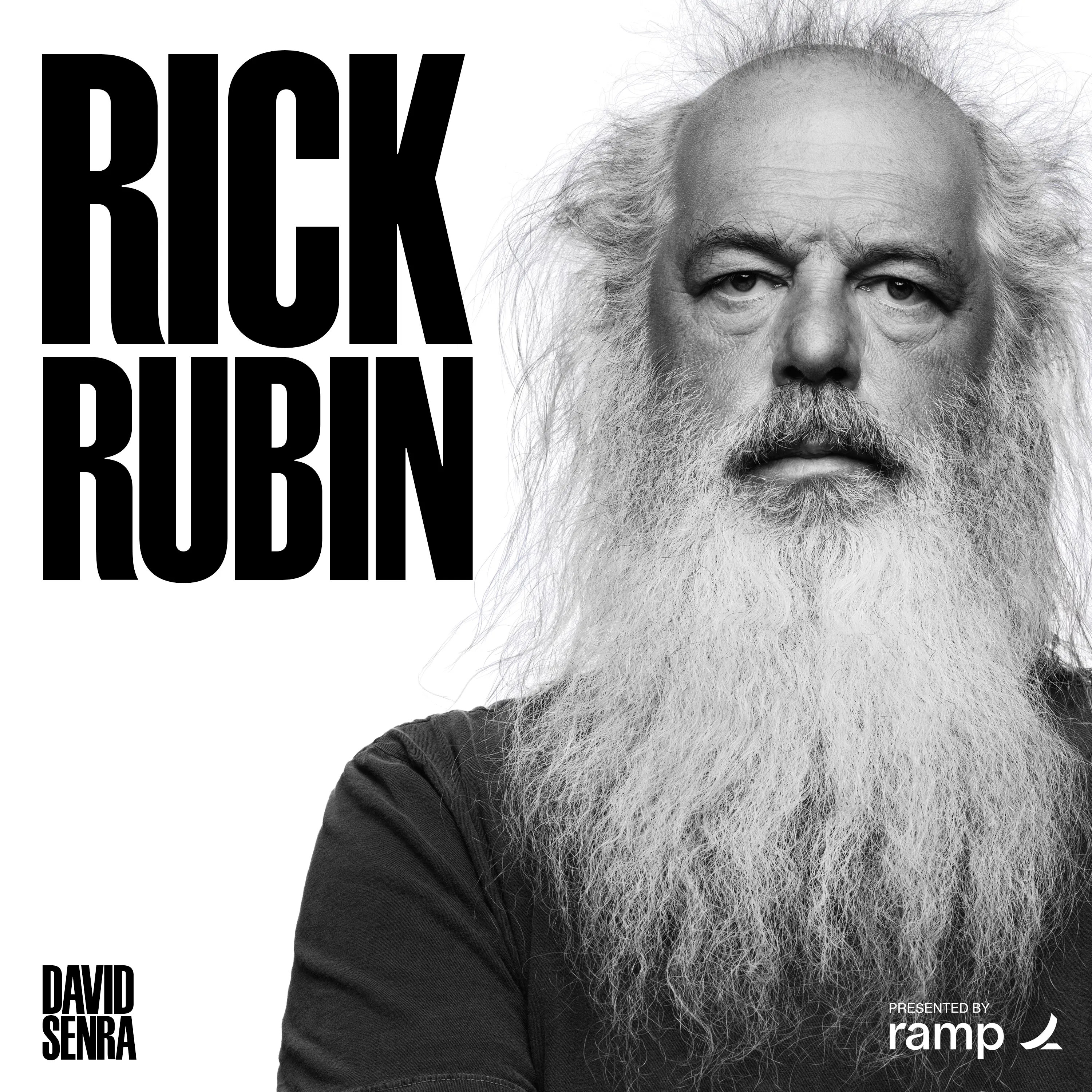
David Senra
The Simple Genius of Rick Rubin
01:23:49
Rick Rubin grew up on Long Island obsessed with music — arena rock at 13, punk by high school, then hip-hop when it was still a street movement you could only hear at one club in New York City.
Loading summary
Transcript363 lines
- [00:03]
David Senra
Five years ago, I read this biography of you. It's called in the Studio. You and I were just talking about it before we started recording. One of my favorite ideas that I took away from that book that I think about probably every week is this concept that you have that less is more, but to get less, you have to do more. Can you talk a little bit about that?
- [00:21]
Rick Rubin
Yeah. If you're stacking a lot of things on top of each other, each one of those things becomes less important. So if you have 10 things, each one of them is one tenth as important as one by itself. So if you're making something and you want the least amount involved, those things have to be really critically curated because they're doing the work of everything and nothing is hidden. It's why it's not as easy as it sounds to do less, but when you see it, you can get the personality. I'll give you an example. With guitars, a lot of recordings are made where the guitarist plays, and then they double it and triple it, and they create this wall of guitars. And when there's a wall of guitars, you hear guitar, but you don't hear sound someone playing guitar. You just hear guitar. It becomes more generic when one person plays it and you can hear their fingers on the strings. It's got more personality, it's more human. And I tend to look for those things where it's the. The singular essence shows through what I'm
- [01:41]
David Senra
always surprised about people that do great things. I think, especially from people on the outside, it's like the amount of volume that goes into it before, like, before you're presented with, like, their finished work. I know, like, you start. You know, you're obsessed with music when you're a teenager. You start Def Jam in your dorm room. You're like 18 years old. What was the first example? Was it LL Cool J? Like, who was the first example? You're like, wow, there's a lot more work that goes into making a great piece of art, great product, great album than I ever knew.
- [02:11]
Rick Rubin
I never thought about it because this was. It was like a mission and a love. And I didn't think of it even as work. It was just what I wanted to do is make these things. So the fact that it took a lot of work wasn't. It wasn't even in. It wasn't in consideration at all.
- [02:30]
David Senra
When you were 18 years old, 19 years old, it was just all music all the time.
- [02:34]
Rick Rubin
Yeah, it's just as a fan, I listen to music all the time. I fell in love with it, I wanted to be involved in whatever way that I could. Hip hop was just starting in New York City. It was still a totally underground movement. So the only place you could hear it was at one club downtown where I was going to school. There was only one club that you could hear hip hop and that was once a week. But other than that, it was only in. It was in the Bronx, it was in Brooklyn, but really just in like community centers and outdoor parties. It was underground and not well thought of kind of music. It was street music. And I would go to this club every week and hear the music. And at that time there would be a few hip hop records coming out. 12 inch singles, no albums, only 12 inch singles. And there'd be maybe one new record every two or three weeks. And that's all there was. And I would so go to the club every week, hear the music there, and then I would buy the one single that would come out every few weeks. And the singles didn't represent what the energy in the club was. And I wanted to feel that energy of the club. So I started. The first record I made was called It's Yours. And the purpose of that was I was just trying to capture the energy of the club on record. And I didn't know anything about recording. I wasn't a professional, I was a kid. The fact that I didn't know what I was doing allowed it to be true to what hip hop was. Whereas all of the records that were coming out, the few and far between 12 inch singles, every few weeks, they were made by professionals who made other kinds of music. They weren't made by hip hop people. So an outsider with experience was making what they thought hip hop was. But if you went to the club, you knew what it really was. And the club was very stripped down and it was scratching, breakbeats, drum machines and rapping. And that's what the records were.
- [04:45]
David Senra
The ones that were produced by people producing other or making other genres of music. Was it like too much polish too? Was it like fake? How would you describe the difference between what you're hearing in the club? So this is like your opportunity essentially your way into this.
- [04:57]
Rick Rubin
The records are like the documentary of this scene that was going on. And all of the other documents of that period weren't representative of the scene, they were representative of something else. The professional, like the Hollywood version of it, but that's not what it was.
- [05:17]
David Senra
Is this the first, like signal you put out? It sold like 100,000 copies or is that the same one?
- [05:23]
Rick Rubin
Yeah, Something like that. It sold a lot. I mean, for. For a record in that world, it took a long time. Probably took 18 months to sell 100,000. But over 18 months, sold about 100,000. And it was a hit as much of a hit could be in something that would never be on the radio and the kind of music that nobody listened to or liked. As a matter of fact, back then, most people who were not hip hop fans didn't even acknowledge it as music. That's how far it was.
- [05:53]
David Senra
What'd they think it was?
- [05:54]
Rick Rubin
Don't know. It was same thing though, with Elvis and rock and roll. Like the grownups didn't acknowledge that as music. It was just some other thing that they didn't know what it was. That's how foreign it was.
- [06:06]
David Senra
When you were 18, 19 years old, were you already studying older versions of music? Are you already going back?
- [06:12]
Rick Rubin
I always listened anything I liked. I wanted to hear everything that the person that I liked, everything they listened to that they liked. I always wanted to understand.
- [06:20]
David Senra
I do the same thing with biographies.
- [06:22]
Rick Rubin
Yeah.
- [06:22]
David Senra
So I want to know more about this. But I'll find somebody that you know, like Steve Jobs, for example. I find him very interesting. I'd read a biography of him. And then every single one of these books, they'll talk about like half a dozen, maybe a dozen people. And I'm like, who's that? I don't know this guy. And I'll go in the bibliography and usually find books about their. The people that inspired them.
- [06:41]
Rick Rubin
Same.
- [06:41]
David Senra
Do you remember the first time you did that? Like, who were you? Like, I'm really interested in this band or this artist. Let me find out who they were inspired by.
- [06:48]
Rick Rubin
It's always been the case. Or the other version of it is. It's like it where I would hear something for the first time. I can remember the first time I heard the MC5, which is a band from Detroit in the 1960s, kind of a proto punk rock band. They're before punk rock, but it has punk energy. And I heard that and it was really cool. And then I remember going to a used record store because the used record store had all the cool older stuff and they knew the most about music. So you spent hours in used record stores and just talking to the people who work there. Same. Like you've heard Quentin Tarantino working in a video shop. And just there's so much information around the people who really love this thing. And I remember they said, well, if you'd like the MC5, you might want to check out Iggy and the Stooges. And then I listened to the studios like, oh, I love this too. And that was another also Detroit, same time frame, same scene, and it was great music. So it would either be music like the music that I found that I liked, or music that inspired the music that I liked. Both of those were things I would always pursue.
- [08:00]
Sponsor/Host Voice
I want to tell you about the presenting sponsor of this podcast, Ramp. I have been reading a lot about SpaceX lately. SpaceX is one of the most valuable private businesses in the world. And one of the many main themes in the history of SpaceX is constantly attacking and questioning your cost. Ramp helps many of the most innovative businesses in the world do exactly that. The median company running on Ramp cuts their expenses by 5%. And one thing SpaceX has demonstrated is that a religious dedication to controlling costs can help actually increase revenue because you can pursue opportunities you couldn't otherwise. And we see that in the Ramp data too. The median company running on Ramp also grows their revenue by 16%. So when you're running your business on Ramp and your competitors are not, you have a massive competitive advantage that compounds over time. Ramp is the only platform designed to make your finance team faster and happier. Many of the top founders and CEOs I know run their business on Ramp. I run my business on Ramp and you should too. Go to ramp.com to learn how they can help your business save time, save money and grow revenue. That is ramp.com I always think, like,
- [09:05]
David Senra
the motivations, I always want to know why people are doing what they're doing. I think the motivations of what they're doing, the reason that they go into their chosen profession is really important. You thought music was going to be a hobby, like you were going to have to get a day job and then just do.
- [09:17]
Rick Rubin
I didn't know it was possible to be a job.
- [09:19]
David Senra
Yeah. Can you talk about that?
- [09:20]
Rick Rubin
Yeah. I thought I would have a regular job. I didn't know anyone who did music professionally or I couldn't imagine it. I didn't have any. And no one in my family was an artist, so it wasn't a realistic expectation. So I thought I'd love music the way I always have. I could participate and make music if I want, but I would have a job to support myself because I didn't think that that was possible for music to support my life.
- [09:45]
David Senra
You were in a band, right? You played, I think guitar.
- [09:49]
Rick Rubin
Guitar in a punk rock band. So it was very rudimentary.
- [09:52]
David Senra
Yeah. And then dj. I'm still a little confused can you, like, try to explain the path that led you to this very singular position that you. That you have now?
- [10:00]
Rick Rubin
Yeah, I just always followed what was interesting to me at the time. So when punk rock came along. Well, first before punk rock would be heavy metal. Heavy metal at that time was really more like hard rock than what we think of now as heavy metal. So it would be Aerosmith, acdc, Ted Nugent. Those are kind of the mainstays of what arena rock was like when I was 13 or 14 years old. And I loved that music. And then I got a guitar and tried to play along, and it didn't. It didn't go well. But then when punk rock came along, it was easier for me to play along because it was more basic music.
- [10:47]
David Senra
But how do you go from that to. Is D.J. the next route in.
- [10:52]
Rick Rubin
The next thing that happened was in my interest in hip hop in high school. There were some kids. No one in my high school liked punk rock except me. But there were some kids who liked hip hop. And this was, again, in the very, very, very early days of hip hop.
- [11:11]
David Senra
I think that's an understatement. I mean, the beginning of hip hop. Because I remember reading about the early founding of Def Jam.
- [11:19]
Rick Rubin
Yeah.
- [11:19]
David Senra
And then I was. I always, like, when I'm reading books, I, like, write out the year that I'm in, and then I look up what year that person was born. It's like, okay, how old is Rick at this point that's happening in his life. And what remarkable is. Like, when I was reading your book, I had read. This is after I read Jay Z's book Decoded, And Jay Z, 10 years after you're starting Def Jam is talking about the early days of hip hop, when he got into it, which is a decade after you got into it. And. And he says something that's really great. He's just like, I definitely couldn't tell you that I was going to. I could get rich from rap. I just knew that hip hop was going to get a lot bigger before it goes away. That's a decade later than where you're at.
- [11:54]
Rick Rubin
And where I was. I would not have said it'll ever get big. I was in the stage where I'm going to make this, and the few people who like this will all like it. And that's it. There was no upside. There was no thinking anybody else is going to like this. That's how underground it was.
- [12:13]
David Senra
Is LL Coolty the first person you produced?
- [12:15]
Rick Rubin
The first hip hop record I produced was Teala Rock. It's yours.
- [12:20]
David Senra
Okay.
- [12:21]
Rick Rubin
It was one single.
- [12:22]
David Senra
That's the one that sold 100,000 copies in 18 months.
- [12:24]
Rick Rubin
And then LL's first record was the first record after that.
- [12:28]
David Senra
But which is the one where you put Reduced by Rick Rubin on the sleeve and then your dorm room address.
- [12:34]
Rick Rubin
Yeah, I think all of them probably had the dorm room address because that's where I lived. And Reduced By. I probably said it for the first time on LL's record.
- [12:44]
David Senra
This is the thing that I'm fascinated with. It's like this. Less is more. But to do. To get less, you have to do more. This stripping away of everything, that's just like. Almost like religious devotion to simplicity and like timeless ideas. You were 19, 18 years old when you put that on his record.
- [13:02]
Rick Rubin
Well, I thought about the idea of produced by. And I thought the word meant to build up. Like, I think of production as building. And really what I was doing was taking apart and reducing. I thought maybe reducing would be reduced by. Is more accurate in this case. And that's. That's how it happened.
- [13:25]
David Senra
So he brings you a song and there's just too, like, what do you take?
- [13:29]
Rick Rubin
In those days, it weren't. He didn't. Weren't songs. It would be. He would just have notebooks of lyrics, and they weren't in song order. It was just rhymes. And we would look at all the lyrics together and say, is there something here that could be the basis of a song? Like I Need a Beat, for example. That could be a repeated phrase that ends up being a hook. And the reason, like many of the hip hop records before the Def Jam records were somebody would start rapping and then they would rap for a few minutes, and then they would finish rapping. It wasn't like a song. It was more like a monologue, almost
- [14:15]
David Senra
like spoken word to a beat, kind of.
- [14:17]
Rick Rubin
But it was still in a rap style, but it wasn't in a song structure. It was like Jamaican Toasting. The fact that I grew up on the Beatles and loved the Beatles, and my understanding of music is based on the Beatles. And the Beatles were the greatest songwriters ever. And the structure of their songs are really organized and tight. So based on what I knew about from listening to the Beatles, I applied that to rap music so that it would be structured more like a Beatles song instead of like a monologue or a Jamaican Toasting record.
- [14:53]
David Senra
Okay, so there is four decades separating when you're working with LL Cool J. And today, how similar or different from what? Like, if you're working with an artist Today, how different is what you're doing with that artist today compared to what you did with LL 4 decades ago?
- [15:10]
Rick Rubin
Probably not so different. It's probably pretty similar. Just it depends on the artist. Like, because LL was a solo rap artist and he didn't have a band or make music, I was responsible for making the tracks, and my version of that was a very stripped down, minimal thing. But now I get to work with bands sometimes that have a big sound, and there are a lot of players. I'm looking for the essence of each of these artists, and the essence tends to be stripped down, but it's stripped down to what they are. Just finished a new album with the Strokes, and they're a band of five people. So it sounds like a band of five people. It doesn't sound less than that. It sounds like what they are.
- [16:01]
David Senra
You have this idea of Ruthless Edit. I've heard you talk about it a few times on podcasts. Can you explain what that is?
- [16:09]
Rick Rubin
Sometimes, for the sake of the whole work, removing things about it that you really love is part of the process. And instead of. If you have. If you have 100% and you know at the end you want to have 70% of what you have, like you have 30% too much, instead of whittling down that 30 to get to the 70, I would say reduce it to 40%. Let's say force yourself to get to 40% and then add back what's. What's needed to get to the 70. And it works in a different way. You have a better understanding of the work after the Ruthless Edit, because you find out, especially with a group, because in a group, everybody votes. So with the Red Hot Chili Peppers, we'll record for an album. We might record 40 or 50 songs, and then all of us vote on A, B or C. And then if everyone picks it as an A song that's going to be on the album, if it's really divided, it might not be. You know, it'll be a democratic process until we get down to, like, what does everyone together think is the best thing that we can make? That's a ruthless editing process.
- [17:32]
David Senra
And you're just looking for the essence of what you think could be great. So, like, in that case, you're recording, let's say, 50 songs, and you say the album wants to have 10 or 12.
- [17:42]
Rick Rubin
Well, what about.
- [17:42]
David Senra
There's like, there might be three that we can't live without.
- [17:44]
Rick Rubin
Yeah.
- [17:45]
David Senra
Is that the thought process?
- [17:46]
Rick Rubin
It helps to get to that point of what are the ones you can't Live without however few it is, and build from there, build out from there.
- [17:56]
David Senra
What other interests do you have outside of music? Like, are you into, like, architecture? Or, like, is there anybody. The reason I ask you that is, like, is there anybody else in different domains that you still have a passion for that you see that use similar ideas that you do?
- [18:09]
Rick Rubin
In every domain, there are people who do make beautiful things. I like people who make beautiful things.
- [18:13]
David Senra
But, like, are you seeing that Their thought process. You find similarities between their thought process and their pushing work.
- [18:19]
Rick Rubin
It's all the same. I think most of what I do is not really about music. I happen to work in music, but it's not about the music. Does that make sense?
- [18:28]
David Senra
It does, but say more about this.
- [18:30]
Rick Rubin
You're at Shangri La and you walk through the space and you see it doesn't feel like other places you've been. Yeah, it has the same aesthetic as the records I make or the things that I work on, the things that I like, things that I buy. You know, the objects I buy would have the same aesthetic. So it's all fitting into a, I'd say, worldview.
- [18:54]
David Senra
Yeah, I feel this way too, because, like, I mean, we talked right before we started recording about, you know, podcasting. I think we're both had the same obsession with it. And I've had my first podcast for over a decade, and it started out just me reading biographies of people that build businesses. But over time, I realized, like, this same personality type. It's like the artist, the entrepreneur, the filmmaker, the musician. I've done podcasts on all these kind of people, and I'm like, I don't see any distinction between them.
- [19:22]
Rick Rubin
Yeah, it's the same. Yeah, it's all the creative spirit.
- [19:25]
David Senra
I want to. Like, they have a bunch of, like, selfish things. I told you I want to talk to you about. Because there's just some people that have made massive impacts on my life. I told you, like, I grew up listening to hip hop. It's all I listen to this day. I listen to more podcasts than listen to music now. But, like, it really gave, like, a. Put a voice, like a words to a feeling I had even maybe in my subconscious. Eminem was the first one that, like, I was. I. I heard his first album, I was like, this is how I feel. I didn't grow up in a trailer park in Michigan, but I know exactly what you're talking about with certain things with your family or certain things of, like, just becoming, you know, coming of age. I heard you say one time I'M like, obsessed with. I want to spend time with them and hopefully get him recorded. Podcast. I know this would be very difficult, but especially for. For you who've worked with, you know, the best. The best of the best people over almost half a century, and for you to say that he might be the most obsessive artist that you've ever worked for, it was like. I literally screenshotted that and saved it on my phone. I look at it all the time. Why did you say that? Can you just tell me about what it's like working with him?
- [20:23]
Rick Rubin
It feels like his entire life is centered around writing words. He's totally preoccupied with that. So he always has a notebook. He's always making little notes. He writes tiny and tiny letters, and he's always making notes. And at one point, I asked him, because he's got notebooks and notebooks and notebooks, and I said, are you working on new songs? He's like, no, I'm just, like, keeping active. Keeping active in the skill set. And I said, are you gonna put those in a song? He's probably said, 90% of it will never be in a song. He's just writing, Just writing. And that's what he does. He writes.
- [21:04]
David Senra
Does he apply that to, like, other elements of making a song, though? Just not just writing? Because he does a lot of his own production.
- [21:10]
Rick Rubin
He does, and I would say the same type of obsessive. It's what makes him great. He's obsessed.
- [21:17]
David Senra
Have you come across anybody that you consider great that hasn't. That's not obsessed?
- [21:21]
Rick Rubin
I'm sure there are. I have to think about it. But that's not the only way to do it. For some people, it happens in a more natural way. And for some people, it's more of a work ethic is always a part of. Part of it. But for some people, work ethic is the reason they are who they are. And there are other people who are just incredibly talented and have enough work ethic to get over the finish line.
- [21:46]
David Senra
What do you think it's for you?
- [21:49]
Rick Rubin
I don't like to quit. I like to see things through. When I start something, I like to see what it can be from the
- [21:55]
David Senra
outside, because, you know, you have this whole, like, very relaxed, like, Zen vibe. Yeah. I swear. I think underneath is, like, a workaholic.
- [22:04]
Rick Rubin
Oh, for sure.
- [22:05]
David Senra
Okay.
- [22:06]
Rick Rubin
For sure. I'm a lazy workaholic.
- [22:08]
David Senra
Lazy workaholic. No, you got to say more about that.
- [22:11]
Rick Rubin
That's what it is like, because it
- [22:14]
David Senra
doesn't feel like work. Explain.
- [22:15]
Rick Rubin
No, no, no. I have to force myself to do it. But I do force myself. My demeanor would be to do nothing, Rick.
- [22:22]
David Senra
I don't believe that that's true. No. You love this too much, though. What do you mean?
- [22:25]
Rick Rubin
That's the point. So I love the beautiful thing, and it takes a lot of work to get to the beautiful thing.
- [22:31]
David Senra
You like the end result?
- [22:32]
Rick Rubin
Yeah, I like to get there. I like to get to the point where it's like, okay, press the send button and share it with the world. That's a great feeling. Like, I like it enough for you to get to hear it.
- [22:46]
David Senra
Okay.
- [22:47]
Rick Rubin
But all of the work up until then, it's like, oh, my God, I have to go to the studio today.
- [22:54]
David Senra
That's surprising to me.
- [22:55]
Rick Rubin
Yeah, it's like, it's such a beautiful day. Wouldn't it be nice to just go out and have lunch with friends? But my whole life has been, you know, most of my life was in the first 25 years, was in a dark room for 16 hours a day, seven days a week in New York City, working on music.
- [23:16]
David Senra
Now you'd rather be out here barefoot, butt naked in the sun?
- [23:18]
Rick Rubin
I think now, but I not been, not then. But I'd rather, you know, I like being outside. I like having fun with friends. I like hanging out with my family.
- [23:29]
David Senra
Do you like making podcasts more than music now?
- [23:34]
Rick Rubin
I don't know if it's. I like it more. I like the people I get to meet, and I'm interested in learning about people. I like learning how people think, their vision to make something, how they follow through to make it, and learning the roller coaster ride, that journey of building things, how it worked, where it didn't work, what ideas they thought may have worked, that didn't. When they were surprised in the process. All interesting to me.
- [24:05]
David Senra
I want to pull on this for a little bit, if you don't mind. So I heard Billie Eilish's brother, who I think they have a close collaboration with, and he. So he was describing the difference between him and Billy. He said that he enjoyed the process of making music. She enjoyed having made the music.
- [24:24]
Rick Rubin
Yeah.
- [24:25]
David Senra
So are you more like Billy in that case? Like, you like that it's done?
- [24:30]
Rick Rubin
I think so. I'll say. I like the moment of revelation. So we're working on something. It's just okay. It's boring. I'd probably rather not be there. That's how it feels. But then something happens and it's like magic, like something appears, it doesn't. It's not like we made it. It's like something comes up in the process, is conjured in the process. That's like a miracle. And that's the thing that's addictive. That feeling when it's like, it's not good, it's not good, it's not good, it's not good. We try this. We try this. This doesn't work. This doesn't work. This doesn't work. And it could be a mistake. The machine could not work. We can hear something. Other machine broke. But what we're listening to is really cool. All of a sudden. That's the feeling, that moment of discovery where it goes from nothing to something really good. And then the whole rest of the process after that is protecting that because it's super delicate when it happens. It's like this miracle happened and this magic thing happened, and now we have to protect it through the rest of the process to not ruin it when it comes together. Let's say a band is playing and doing take after take after take. When it's really good, we all kind of look at each other like, as they're playing. Like, it's scary because you don't want it to end. Like, you don't want it to stop. Because we know if it stops, we can't control it. We can't do it again. It's not like that. It's this moment in time where something magical happens. So we spend a lot of time waiting for those. And I can't say that's fun. It's not fun. It's just, like. Takes a lot of patience.
- [26:27]
David Senra
Force yourself to do it.
- [26:29]
Rick Rubin
Yeah.
- [26:31]
David Senra
Have you ever just, like, gave up in that moment? Just walked away for a little bit? So you. Okay, so you do have this, like, this really good work.
- [26:38]
Rick Rubin
Work ethic.
- [26:39]
David Senra
You have work ethic and discipline.
- [26:40]
Rick Rubin
Yeah.
- [26:41]
David Senra
Okay. But it would still be if you could.
- [26:43]
Rick Rubin
It's frustrating and boring and takes a great deal of patience. It's like waiting for paint to dry. Just waiting, waiting, waiting and trying different things and nothing works until something either works or something happens and it just comes together, and I can't tell you why.
- [27:05]
David Senra
Explain, like, what people do to kill these special moments, though. You kept saying, like, we have to protect us.
- [27:12]
Rick Rubin
Once you're aware of it, it's harder to protect. Like, in the. In the process of it happening, if you realize this is it. It's like. It's like, what is it in golf? The yips? You know, like when you're playing golf, if you start thinking about it instead of just being in it, you can't do it anymore. So it's almost like you have to get out of yourself to allow it to happen. Maybe not me, but for the artist, the artist has to get to this place where it's like they don't even know they're doing it. It just happens. It's not a performance, it's something else. It's just like a real moment happens, and it's thrilling.
- [28:08]
David Senra
I think you're speaking to my soul right now. Because there's something I heard Steph Curry talk about one time where they're like, what do you think of when you're taking a shot? And he goes, absolutely nothing.
- [28:20]
Rick Rubin
Exactly.
- [28:22]
David Senra
And so, like, when I read books for a living, essentially, before I started this, and, you know, people, I've had authors reach out to me after I did their book, and they're like, how did you get to the essence of it? Like, what were you thinking? What are you thinking of when you're doing this? And I was like, nothing. I just read. And if something sticks, jumps out to me, I don't think at all. I just underline it. And then I'll go back through if I. When I reread the highlight, if it's still interesting. It was interesting the first time, now it's interesting the second time. It's probably interesting.
- [28:46]
Rick Rubin
It's interesting.
- [28:46]
David Senra
There's 10 million me's out there. I'm not unique, same. And there's no way I read this line twice. And if I read it on a podcast that somebody else is not going to think of, it's interesting. He's like, if I overthink it, or if I think of, oh, this person might hear it, or this kind of.
- [28:59]
Rick Rubin
This many people are here, it's in the way.
- [29:01]
David Senra
Nothing. I'm thinking of nothing. Yes, that's really interesting. So let me. Let me ask you this, though. So you're fucking Rick Rubin. You can do whatever you want. Why are you choosing to spend so much time podcasting then?
- [29:16]
Rick Rubin
I like meeting the people. And even before the podcast started, I would still. If someone was interesting to me, I would reach out to them, want to spend time with them, hang out with them, and just learn from them, really. I can remember the one where it became obvious to do the podcast was Dana White. Someone introduced me to Dana White.
- [29:41]
David Senra
I'm recording with him next week.
- [29:43]
Rick Rubin
Great. He's great.
- [29:44]
David Senra
He's incredible.
- [29:44]
Rick Rubin
And I said, he actually reached out to me. He's like, anytime you want to meet, I'm down. He's like, great. Let's do it. We met, we sat at my house, we sat outside, we talked for about three hours, and at some point in the conversation, I said, do you mind if I record this? Because I feel like I'm not going to remember what we're saying. And I'm really liking this story. And that was sort of a breakthrough of like, this is kind of what doing a podcast is like. I already do this in my life. I don't record them, but I meet the people that make things that are interesting to me and I spend time with them and I listen to what they do and I ask a lot of questions because I'm curious. So it really is an outgrowth of my normal lights. So I like doing that.
- [30:25]
Sponsor/Host Voice
Deal is how the best founders turn the world into their talent pool. I've been studying how history's greatest founders operate for a decade, and one thing they all have in common is they understand that recruiting and hiring the very best talent is your most important priority. A players recognize other A players, which is why top Companies like Ramp, Shopify, 11Labs, Uber and DoorDash all use Deal. Many of the top founders I know have personally invested in within Deal after using their product. And what they discovered is that Deal is the best company in the world at building infrastructure for global hiring. Deel will help your business hire, pay and manage any worker anywhere in the world so you can retain the best talent anywhere and spend the rest of your time focusing on what you do best, delivering value to your customers. The founder of eleven Labs has a great description of the value Deal can give your company. He said, we built 11 labs to break down language and communication barriers with deal, enabling us to hire and support exceptional talent anywhere. We can accelerate our innovation and bring more voices, stories and ideas to every
- [31:24]
David Senra
corner of the world.
- [31:25]
Sponsor/Host Voice
Deal is trusted by over 40,000 businesses. Learn how they can help your business today by going to deal.comsenra that is deal.comsenra.
- [31:37]
David Senra
we were talking before we started recording. Like, I may be the person that's most obsessed with podcasting in the world. I listen to thousands of episodes. I was listening to your podcast Broken Record back in the day. I was like, this is incredible. And you were heavily into, like, interviewing
- [31:50]
Rick Rubin
musicians back then was the format of that show was just talking to musicians.
- [31:54]
David Senra
And then Tetragrammaton. You took, in my opinion, to another level and you're talking to all kinds of incredible people. I listened to. I just had a conversation with Toby Luque, founder of Shopify.
- [32:02]
Rick Rubin
Yeah, amazing.
- [32:03]
David Senra
I used one of Your episodes to prep. Because he's great. Such a unique mind. One of the most interesting conversations I had, but I analyzed people like, you know, there's a handful of podcasts that are really great. There's a couple million in the directory. Only a handful are really great. Yours is really great. And I'm like, why the hell. How? It's unfair. This guy is, like, gifted at music, and now he's gifted podcasting. Why is this the case and what I came up with, and I started analyzing and thinking about what you do in your day job, what you've done for over four decades. And I was like, he's a professional listener.
- [32:36]
Rick Rubin
That's true.
- [32:36]
David Senra
I don't. He's listening to the guest. He is in the moment with the guest.
- [32:41]
Rick Rubin
Yes.
- [32:42]
David Senra
And it's like, that is why. One of the reasons why, obviously, you're. You have a lot of interesting things to say, but one of the reasons, in my opinion, that you're so great at podcasting.
- [32:50]
Rick Rubin
Well, I think in real life, people like to talk and they don't like to listen. And often in a conversation, you'll be with someone and they'll be saying something, and you'll be thinking about, okay, this is what I'm going to say in response to that. You're not really present back and forth. That's what it is like, two people waiting for their turn to say what they think. And this is different. And it really. I think it came from listening to music, because I listen to music in a very deep way. I close my eyes, I really pay attention. It's not wallpaper. It's like I go into the music. In some ways, I think my relationship with music allowed me to never drink or take drugs, because listening to music, for me, is totally psychedelic experience. I can feel the music, and I can be transported by the music. Not all music, but good music. So I close my eyes, I feel it, and then at the end of it, I open my eyes, and I'm surprised where I am because I've been gone when I'm listening. So I listen deeply and I want to know. I really want to understand things, so I'm comfortable asking questions. And I really listen to what someone's saying. And if someone says something I don't understand, I'll ask a question to clarify so that I can understand it. I also don't have any judgment. I don't think that I have a way that, like, my way is the right way. And I'm not comparing what's being said to me about What I think. What I think is not part of it. I'm just. I just want to truly understand what's being shared with me. And if someone says something that's very different than what I believe, I want to know more. It's like, how did he get to that? Why do you think that? Because maybe I'll learn something. Maybe. Maybe I have it wrong, you know? Like, I don't. I don't know anything. I want to know more. So through talking to people and really listening, you really get to meet people. And as a professional listener, I found some people. It's disarming to talk to someone who really listens because it's so rare. Most people don't listen.
- [35:10]
David Senra
When I listen to your podcast, I feel you have this combination of, like, sincere interest.
- [35:15]
Rick Rubin
Yes. True.
- [35:16]
David Senra
In the other human being.
- [35:17]
Rick Rubin
Yes.
- [35:19]
David Senra
And a desire. I think you just said this, but the way I think about it is. The way I think about you when I was in your podcast is like a desire not to form an opinion, but to understand.
- [35:28]
Rick Rubin
That's it. That's it. I just want to understand. I want to understand to broaden my scope, to see the world. I want to see the world through your eyes, you know, I want to see the world through. Someone made something that's beautiful to me. I want to understand how they see the world. Someone makes a great discovery. I want to know what was the process that allowed that to happen. I'm curious.
- [35:54]
David Senra
Yeah, there doesn't seem to be an end to your curiosity either.
- [35:57]
Rick Rubin
I'm interested. I've always been interested. I think of myself as a researcher. I've always, like, when the Internet came along, anything that I'm interested in, I'll go forever going deeper and deeper and deeper into a topic just to get any glimpse and to read, posing opinions and go deeper and deeper and deeper and just try and understand. I'm curious.
- [36:21]
David Senra
Think of yourself as a researcher.
- [36:23]
Rick Rubin
Yeah, that's what I do most of the time is research.
- [36:27]
David Senra
Okay, I don't know about this. Tell me about this.
- [36:29]
Rick Rubin
Well, not a researcher in a professional way, but anything I'm interested in, I want to know everything about it, whatever it is, and even mundane things. If I drink coffee, I want to taste a million coffee. I want to find the best coffee. I want to read what every person who knows about the best machine says about every machine, and then test every machine. And it's just a fanatical devotion to finding the best version of whatever it is.
- [36:59]
David Senra
Is it all consuming for you when you find these pockets of Interest,
- [37:05]
Rick Rubin
I'd say so there's no end. I don't get to an end to that process.
- [37:10]
David Senra
I admire people that do things for a very long period of time. And I. You can tell a lot about people by what they admire. It's like, I want to do these kind of podcasts till I die. Like, what's your strategy? What's. What's successful in five years? In 10 years? One, that I'm still doing it, and two, and I'm just making things that I'm proud of.
- [37:27]
Rick Rubin
That's it.
- [37:27]
David Senra
There's no fucking download number. There's no how many ads I sell. It's just like, that's it. And I'm terrified that one day I'm going to wake up and be like, I don't want to do this anymore.
- [37:36]
Rick Rubin
No. But the only reason that would happen is because something else would take over that you have to do. And that would be fine too. When I was nine years old, I spent a lot of time practicing magic, like card magic in front of a mirror. And that was really fun. And there's a whole community of magicians and I was just a little kid, but like grown up magicians. And if you're truly interested in magic, there are all these meetings and they get together and talk about stuff. And if you're an outsider, everything's a secret. But if you're a magician, they love sharing. So it's a really cool community to be part of. And that was my community from 9 until probably 16. Those were the people I hung out with and that were the people that we shared this interesting. And I just wanted to learn. And then music became more and more popular in, in my life. Like music became. And then at some points, like, I can't do both. They're both, these are both full time occupations. And when I say occupations, I don't mean jobs. I mean something to occupy my time. I can either devote myself to doing magic or devote myself to doing music. And I, at some point music won. But that wasn't a loss. I didn't lose anything.
- [38:57]
David Senra
That's a beautiful way to think about it.
- [38:59]
Rick Rubin
Yeah. It's like I let go of the thing that I loved for this other thing that I loved that just took on this new life. And I've done music for a long time and I like making other things too. And if it became, if my life became about making other things more than making music that be okay. It's more about the making that excites me.
- [39:25]
David Senra
This is why I kept asking, like do you think you would like making a podcast? Like, we can have a conversation. We could be doing your show right now instead of mine. And at the end of this hour or two hours, like, we have, it's done, we have something. We can do it again tomorrow. Like, the amount of time from creation to output is so much shorter than an album or even a great song.
- [39:48]
Rick Rubin
True.
- [39:48]
David Senra
And if you're what you were saying, I think you called yourself a lazy workaholic. I'm saying lazy, alcoholic, lazy workaholic. It's almost like this isn't work. This doesn't feel like work to me. I feel like I was a little surprised with the way you described working in music. That does feel like work to you, for sure.
- [40:06]
Rick Rubin
It's also work because I have to show up. If you commit to be somewhere at a certain time, that's work. Because that morning I might wake up and think, I don't really want to do that today, but it's agreed to with other people. I'm going to be at this place and we're going to do this thing. So I have to show up. But most days I don't want to do the things that I'm scheduled to do now at the time that I choose.
- [40:29]
David Senra
It's shocking to me, though.
- [40:30]
Rick Rubin
At the time that I choose to do them, I want to do them. I know I want to do them. But still, it's really nice not to have to get out of bed or it's nice to go for a walk on the beach.
- [40:43]
David Senra
So I think I might be well positioned. This is. I'm just now getting advice from you because I'm a huge fan of you and I respect the way you think. Anyways, I just did another podcast on the book you wrote, Creative act, by the way, and there's so many ideas that you put into words that are in my head that I didn't have words for in there. So if I. Right now, I feel like I don't work a day in my life, I feel like I wake up and I'm like, compelled, or I don't even know the word to use it like, then there's no doubt that I'm just on the right path. If I was sitting here and we weren't recording and I was just seeking your advice, like, I don't feel it's at work at all. The only time it feels like work is when I have to edit, which I fucking hate. But I do it anyways because I think it makes it better. Yeah, but that's the Only time.
- [41:23]
Rick Rubin
It's a good example. It's a good example. There are parts of it that are not always fun. And when you're committing time, like time is our most valuable resource, and when we're committing our time to doing something in advance, which we do, we pre schedule the day of. You don't always want to do that
- [41:41]
David Senra
thing, but I feel you have complete control over your time and your life.
- [41:48]
Rick Rubin
Yes.
- [41:48]
David Senra
How are you still?
- [41:49]
Rick Rubin
I choose it. And I have to acknowledge I made this. No one's forcing me to do this. I said I would show up. I have to show up.
- [41:58]
David Senra
But in your day to day, that still feels like work.
- [42:00]
Rick Rubin
Yeah. It's like, I'd be happy not doing anything. Well, I don't know. I don't know if that's true. There's no way. It's never been the case. I've always.
- [42:12]
David Senra
Because you could have stopped working decades ago.
- [42:14]
Rick Rubin
Yes.
- [42:14]
David Senra
And I think you're addicted to making great shit.
- [42:17]
Rick Rubin
Yes. And I'm lazy. It's a real part of it. I'm telling you, an honest piece of this, which is every day, it's not like, let's go. Every day it's like, oh, no, I gotta go work.
- [42:31]
David Senra
You're disappointing me.
- [42:33]
Rick Rubin
It's the truth.
- [42:34]
Sponsor/Host Voice
I'm sad.
- [42:36]
David Senra
But it doesn't feel like. It feels like out of almost anybody in the world that gets paid for being them.
- [42:40]
Rick Rubin
Yeah.
- [42:41]
David Senra
Is you?
- [42:41]
Rick Rubin
Yes.
- [42:42]
David Senra
And you're saying that's not the case?
- [42:44]
Rick Rubin
No, I'm me. I'm definitely me. There is a part of me that doesn't want to show up for anything. And I have to overcome that every day. That's what I'm saying.
- [42:55]
David Senra
Did you ever spend any time with Tony Bourdain when he was alive?
- [42:58]
Rick Rubin
Never have.
- [42:58]
David Senra
Were you ever a fan of any of his.
- [43:00]
Rick Rubin
Yeah.
- [43:00]
David Senra
Okay. So I read all his books, watched all his shows, and in his book I was shocked because that guy.
- [43:05]
Rick Rubin
Yeah.
- [43:06]
David Senra
First of all, like, in his book, he describes what it's like to be a heroin addict, which is insane. And the amount. What you realize when you read Kitchen Confidential is like the same work ethic. He used to score drugs as a junk, as a broke junkie. Once he broke that habit, he just applied it to writing and building TV shows. Like, his work ethic was the same, it was just directed. The worst thing possible, being a fucking heroin addict. And then he directed in a positive, generative direction and he took off. But he said something very similar to you. He's like, somewhere deep inside me is this guy that just wants to smoke weed and lay in bed all day. And he goes, I have to fight. His writing's beautiful. He's like, I have to fight that guy every single day.
- [43:40]
Rick Rubin
Yeah. Now what's also true, I do have to fight that guy to show up. And there are parts of the job that are just like watching paint dry, waiting for something good to happen. But that moment of magic when something good does happen is the thing I'm addicted to. That feeling of, it wasn't good, it's not good. Oh my God, it's good. And it's like a miracle because nobody knows how or why that happened. It's not in our control. That's the other thing about really is magic. So I'm addicted to the magic part of it, But I'm not addicted to everything leading up to those magical moments. I'm patient. I'm patient enough to wait forever for that thing to happen. But it's not fun. Like, some people really look forward to fishing. It's like fishing. It's like you can go out and spend a whole day fishing and not catch any fish. It's like that. You can work in the studio for a day or for a week and nothing good can happen. That's happens. It's out of our control. But when the good thing happens, it's like, ah, there it is. That's why we're here.
- [44:55]
David Senra
That fishing analogy is really important to me. I've heard you say this a few years ago.
- [44:59]
Rick Rubin
It's, it's, it's the best example.
- [45:01]
David Senra
I heard Akon one time describe working with Eminem. And he shows up into Detroit and he gives him a call. He's like, all right. I figure we're going to do a night session. You know, these guys are usually nocturnal. Calls him at like 7pm and em's like, yeah, I'll see you tomorrow. And Akon's like, tomorrow? Like, what are you talking about? Shows up and doesn't realize that he treats it like a job. Shows up at 9am yeah, right. He's in the studio writing. Like you're saying recording verses. I think it's like, let's say noon. He literally be in the middle of a verse like, oh, I'll be right back. Take lunch. And he's like, what goes? Comes back at one, goes back to work, five o', clock, says, all right, I see you the next day. And people like misunderstood what Akon was saying. It's like he doesn't wait around for inspiration. He shows up every day knowing that if he does the work, then it will come. Yes, it's exactly what you're saying about fishing.
- [45:49]
Rick Rubin
Yeah. And inspiration is a real thing too. But it's both. Like if you only wait for inspiration, it won't ever come. Like you have to work and be there and show up. If you're not. If you're not in the practice of allowing the thing to happen, it won't happen. Doesn't mean it will. Just because you do show up doesn't mean it will happen. But if you don't show up, it won't happen.
- [46:15]
Sponsor/Host Voice
Brian Halligan founded HubSpot 20 years ago and he has this line about AI
- [46:19]
David Senra
that I keep thinking about.
- [46:20]
Sponsor/Host Voice
He said most companies are using AI to make their teams more productive, but the companies that will thrive make the company itself the intelligence. That is exactly what HubSpot does. HubSpot gives you AI that works, AI that actually knows your customers and your business. Your AI needs to know what you know, your actual customer conversations, your sales history, what worked last quarter and what didn't. HubSpot connects AI to your real customer data. So when it writes an email, it knows this customer asked about pricing three weeks ago. It knows what campaign brought them in and it knows that they already contacted support twice this month. And that's when you start seeing actual results. Visit HubSpot.com to learn more. That's HubSpot.com youm Got Me into Johnny
- [47:03]
David Senra
Cash, who is a couple generations before me. And not only was the music great, but I loved you describing like the. What went into making it. We can talk about that. But there was something like the way I would like distill down. What you were saying is like constraints are actually your friend. Yeah. If you don't like you can't do everything. So if you. If you artificially constrain yourself, you get it forces you to be more creative. Can you talk about this? I feel like you've used this a bunch in your career.
- [47:33]
Rick Rubin
Yeah. It's like the idea of creating a palette and the albums that speak to me most are ones when you hear them, you know, if an artist has 20 albums but you hear a song, you know, oh, that has to be on that album, that seventh album. Because that's the only album that sounds like that. Even though that the band always sounds like the band. This group of songs sounds different than all the rest. And it may be that there's some. It was either recorded in a different way or all the songs were about a particular thing or they're using different instrumentation than they used to use. I like it when an album like stands alone outside of an artist's career as a defining moment in time. It's not just more of the same.
- [48:20]
David Senra
But how is that tied to these constraints that you put on the work
- [48:24]
Rick Rubin
that happens by coming up with, like, a series of rules that only apply to this project. Those are the constraints.
- [48:36]
David Senra
So that could be in the Johnny Cash.
- [48:38]
Rick Rubin
Exactly. In Johnny Cash's case, the first one was I didn't know that it was going to be an acoustic album, which it turned out to be. But that was something that, through the process of recording, I learned. The most interesting version of this, to me, is when he's singing alone, which is really the demos in my living room. Him singing me songs that sounded better than when we went into the recording studio with musicians and played them with the band. It wasn't as interesting. I didn't know that in advance. That wasn't a premeditated idea. And then in terms of the material that he would sing, I grew up with this image. What spoke to me about Johnny Cash was this image of the man in black. And the man in black is a mythical character. Yes, Johnny Cash, but it's not just Johnny Cash. It's like the mythical Johnny Cash. The Johnny Cash. Who's the man in black. And the man. Johnny Cash could sing a funny song. The man in black probably wouldn't sing a funny song. So the material that we picked was always through the eyes of what's something that man in black, the legendary mythological character. What would he sing? And those are the songs that we chose.
- [49:57]
David Senra
And so in this case, the constraints are you, Johnny, a guitar. I think he said he didn't even use a pick. It was like his fingers. Every. Every guitar. Every time he strung the guitar was his fingers.
- [50:10]
Rick Rubin
Yeah.
- [50:11]
David Senra
And you guys in a house.
- [50:13]
Rick Rubin
Yeah, But. But a big part of it too, is the choice of material. That's a big part of it for. For those albums.
- [50:20]
David Senra
And it's looked at through the viewpoint of not a funny song, but a man in black.
- [50:24]
Rick Rubin
Not even just a. Not even just a funny song. It had to have a certain amount of gravitas to fit a mythical character singing it.
- [50:33]
David Senra
When I think about everything I've read about you, and as much as I've heard you speak, it's like. I feel like you would agree with the statement that, like, great things can't be made by committee.
- [50:42]
Rick Rubin
Correct. It would be unusual for that to
- [50:45]
David Senra
be the case in many cases. It's just there could be banned.
- [50:48]
Rick Rubin
Tends to Water it down. It tends to water it down.
- [50:51]
David Senra
Is it. So this is the case in companies, since obviously my main focus on entrepreneurship. It's like, even if there is a group, there's usually like a main person. Is that the same thing in bands? Is there always like one def. Like there might be four guys in the band or five guys in the band. Is it usually the stronger personality that has more influence in a band?
- [51:10]
Rick Rubin
What makes a band great is how the different musicians hear music and play together. And it doesn't have to be a single point of view. The Beatles are a great example because John and Paul really were very different people and wrote different kinds of songs and approached music in different ways. Jagger and Richards, same. There's opposition there. That goes against exactly what you said. It's a different model. But then like in Tom Petty and the Heartbreakers, Tom Petty is really the flag bearer of the band and everyone lines up behind Tom. They're all great and they all can play great things and they all add incredible things. But Tom is sort of the final word in what happens in that band. In a band like U2, it's democratic. Everybody in the band has to like it. If three of the guys like it and one of the guys doesn't, it doesn't happen. And that's another model that works for them.
- [52:14]
David Senra
So if we go back to this designing in constraints, your work with Johnny Cash is very simple. Go back all the way 40 years before that. I'm reducing, I'm not producing. I think in 2023, I listened to, I don't know, 600 to 700 individual. Probably listen to two, three podcast episodes a day. So I don't know, 700, 900 episodes. I think the single best podcast episode that I listened to all that year was your episode in Tetragrammaton with Jimmy Iovine. There was a story that you told in there that was very fascinating because Jimmy's like, I think, 10 years older than you. Kind of like 10 years.
- [52:46]
Rick Rubin
Almost exactly 10 years older. Our birthdays are a day apart.
- [52:50]
David Senra
Yeah. And you tell this phenomenal story on the podcast of one of the first. It may have been the first time you met Jimmy Iovine. He said something that was so strange. You go to play something you're working on and he goes, I wish I could still make something that simple.
- [53:02]
Rick Rubin
Yeah.
- [53:03]
David Senra
And your response was, I'm sure you can.
- [53:05]
Rick Rubin
Yeah. What do you mean?
- [53:06]
David Senra
Explain why he said that and what's happening, what happens over time.
- [53:10]
Rick Rubin
Yeah. Because he, he was a producer and as you learn More of what you can do. You tend to do that. You tend to. They tend to get bigger. At that point in time, I hadn't done it enough. It was my first record, so it was. That was the. The Cult. Electric was my first rock record.
- [53:34]
David Senra
This is after almost a decade in hip hop, or half a decade in hip hop.
- [53:38]
Rick Rubin
No, no, no.
- [53:40]
David Senra
When was this?
- [53:42]
Rick Rubin
Same, like, same time.
- [53:43]
David Senra
Oh, okay. Okay.
- [53:44]
Rick Rubin
Yeah. This is like 19.
- [53:45]
David Senra
Is this when you moved to California?
- [53:47]
Rick Rubin
No, this is still in New York.
- [53:49]
David Senra
Oh, shit. Okay, so give me the.
- [53:50]
Rick Rubin
I'm still living in the dorm. I'm still living in the dorm at nyu.
- [53:53]
David Senra
I thought this was. Okay, so this is the very beginning. So it's as simple as it gets, because that's all you can do.
- [53:58]
Rick Rubin
Yeah, I was doing what I was very simple, but I stayed true to that as much as I can. There've probably been a couple of examples along the way where I may have. I may have not stayed true. Very few. If you look at my whole recorded discography, there may be two or three examples where it got out of control or where the artists that I'm working with just had a very different vision, which does happen sometimes. And usually we end up not working together again. And there have been one or two occasions where we end up not even finishing a work because it's just too. We just see it in a different way. I had that experience with Joe Cocker. We went into the studio to record and I had a specific vision of how I saw Joe Cocker and what I thought was great about Joe Cocker and he really had a vision of it being something different than that. And we weren't on the same page and it didn't jibe, so it never happened.
- [54:56]
David Senra
I'm curious your perspective since you've known Jimmy Ian for so long, because he has a very. Another singular career where he, like, kind of in music the whole time, but jumped around. Yeah. Different job from, you know, engineer to producer to record company owner to then building businesses with his. His artists.
- [55:14]
Rick Rubin
Yeah.
- [55:15]
David Senra
Like, what do you think special about him? Like what. What's unique about him? Why was he able to do what he's able to do?
- [55:20]
Rick Rubin
He's got good taste and he's got a great work ethic. Those are the two.
- [55:23]
David Senra
To me, in my mind, you two are very. Almost before this conversation I'm having with you, almost at the opposite ends of the spectrum, where I felt like you were just, like, drawn, you know, like a moth to flame about what you want to do, where he's like, it was always work. I never liked it. It was always a job. I like certain parts of it. But he essentially just forced himself to do it.
- [55:44]
Rick Rubin
He said something really interesting that I thought really summed it up, which was, jimmy is in the banking business. These are his words. He said, I'm in the banking business and you're in the church business. And that's the difference.
- [55:57]
David Senra
Explain that.
- [55:58]
Rick Rubin
I love this. It said, I'm doing a passion and belief, and he's doing a bottom line, what's going to work? What's going to be good for business? And it's just two different things, two different mentalities.
- [56:12]
David Senra
There's a great line in the Defiant Ones where he hears. He's producing Tom Petty and he hears a song. He goes, this is house music. And Tom goes, what do you mean? He goes. He goes, find me. You know, whatever. It's eight more albums. He goes, that song's gonna buy you a house.
- [56:28]
Rick Rubin
Yeah. So that it's. We have a different. We have a. We're different in that way.
- [56:32]
David Senra
And Tom goes, I've never heard somebody describe music that way. This is gonna buy me a house.
- [56:36]
Rick Rubin
Yeah.
- [56:37]
David Senra
There's a bunch of stories that Jimmy tells in that podcast with you about the crazy things that you see in the music business, you know, where I think he tells the story of, like, Phil Spector coming to the studio with, like, a butcher's in a butcher's outfit, and he's got, like, guns strapped to him everywhere, and David Geffen's in the studio and John Lennon's getting drunk. Do you have any, like, things that stand out from you? I've never heard you hear tell any of these, like, stories of stuff you've seen inside the studio.
- [57:07]
Rick Rubin
I can remember doing a session with odb, old Dirty Bastard, Wu Tang Clan from Wu Tang. And I remember being nervous because I'd never met him before and his reputation preceded him, so I didn't really know what I was going into. And I thought, I'm going to bring my dog. I had a puli, which is a dog that has dreadlocks. And that would be whatever's going on. If you see a dog with dreadlocks, it's interesting, it's fascinating in its own way. And I had a friend of mine also filming everything, because I thought, well, if there's a camera and if there's a dog, it's going to be okay.
- [57:50]
David Senra
What was his reputation for you to do this, though?
- [57:53]
Rick Rubin
All kinds of crazy things, like, violence could be. Violence could be a lot of things that Would not be good.
- [57:59]
David Senra
Yeah.
- [58:00]
Rick Rubin
And just things I wasn't really prepared for. But I loved him, you know, I was a fan. And I remember we walked in and he looked and he pointed at the dog and he said he's okay. And then he pointed at the camera. He's gotta go. It's like, okay. And then he went. And then the session ended up going pretty well.
- [58:24]
David Senra
We mentioned Toby Luque earlier and in the conversation I had with him that was very fascinating, he said something where he's just like, there's not like one right way to do things. There's probably a hundred, which I think you would agree with. And he's like, you just find the one that fits best for you and just do that. And you would think this like compute German computer programmer, engineer would be like very rigid. But when you talk to him, he essentially just runs his life by all intuition.
- [58:49]
Rick Rubin
Yeah.
- [58:50]
David Senra
You are all intuition.
- [58:51]
Rick Rubin
All intuition.
- [58:52]
David Senra
Like explain like why you essentially your entire life is just in my opinion, like managed or run by your intuitive feelings.
- [59:04]
Rick Rubin
Yeah. I've always been true to what I feel and it's worked out. I suppose if it didn't work out then maybe I would have to try something else. But the fact that I've stayed true to what feels right to me and luckily by the grace of God it has resonated with other people, it allows me to continue doing it. But I suppose if that didn't happen, I would just make things for myself on a small level and keep doing it and have a real job.
- [59:33]
David Senra
Is this you're guided by intuition tied to. I feel you have a skepticism of human knowledge. I think you say like I think we know very little about everything.
- [59:42]
Rick Rubin
Yeah.
- [59:43]
David Senra
Thomas Edison has this famous quote where he's like we don't know 1, 1,000th percent of anything.
- [59:47]
Rick Rubin
Yeah. I believe that. I believe we don't know anything.
- [59:50]
David Senra
Yeah. So if you believe you don't know anything, then what is the only other thing you could do is be guided by your intuition.
- [59:55]
Rick Rubin
Yeah. And to try things and see what works. And just because one thing works doesn't mean that's the way that that's the way it happens. That's a way that happened to work. In that case.
- [60:07]
Sponsor/Host Voice
I found one of my all time favorite quotes when I was reading the book.
- [60:09]
David Senra
0 to 1.
- [60:10]
Sponsor/Host Voice
The quote says the single most powerful pattern I have noticed is that successful people find value in unexpected places and they do this by thinking about business from first principles instead of formulas. That is exactly what Applovin has done with their Advertising platform Axon. Axon connects you with over a billion potential new customers inside mobile games. Axon allows you to capture undivided attention. Axon ads are full screen video ads that are watched for an average of 35 seconds. That is retention that blows other ad platforms out of the water. You can launch on Axon in minutes. You set the goal and Axon achieves it. There's no complex setup, no expertise needed, and Axon scales quickly. They can put your ads in front of over a billion potential customers. Other businesses have seen immediate results, have scaled to hundreds of thousands of dollars of spend per day and increased their revenue by millions.
- [61:08]
David Senra
So you want to get started quickly
- [61:10]
Sponsor/Host Voice
before all your competitors are on Axon. And you can do that by going to Axon AI forward slash senra. That is Axon AI forward slash senra
- [61:20]
David Senra
dot I heard you one time compare and contrast the approach of Jay Z to Eminem. Yeah, you work with both of them. Can you talk about just how different they are?
- [61:31]
Rick Rubin
Yeah, EM is much more. Well, he writes down the lyrics and he's really studious in the way that he works. And he'll also record take after take after take after it's written and try different things. Jay is much more spontaneous. It all happens in his head. And then he'll get up and say it once or twice and that's it.
- [61:59]
David Senra
What's the energy when you're in the room with both of them, though?
- [62:02]
Rick Rubin
M is totally involved in every aspect of everything. And Jay is like, play me a bunch of stuff. If I hear something I like, I'll think about it. And if not, I'll see you tomorrow. It's like Jay will only be there when he needs to be there. And if he hears something that sparks an idea, he'll sit and just say, play it over and over again. Play the music over and over again. And he sits in the back and you almost. It goes on long enough where you forget he's even there because he's just silent in the corner listening, sitting on a couch, listening over and over again. 30 minutes, 25 minutes later, I was like, I got it. Jumps up, he runs into the room, hit record, and he does the whole thing just from his head. It's amazing. He's the only person I've ever seen do that.
- [62:55]
David Senra
I think a lot of people know that he did Magna Carta, Holy Grail, essentially, in two weeks. Like he did the whole album in two weeks.
- [63:01]
Rick Rubin
Most of his albums were made very quickly.
- [63:03]
David Senra
Yeah, it was always interesting. He was like, yeah, he recorded them in two weeks. But these ideas he's been refining, it's not like when he's not in the studio, he's not thinking about these. He's like refining these ideas over a long period of time.
- [63:11]
Rick Rubin
Sometimes yes, sometimes no. Some of them, it all happens in a weekend. The whole thing.
- [63:17]
David Senra
That's crazy.
- [63:18]
Rick Rubin
Yeah.
- [63:19]
David Senra
As opposed to Em, who will work on a song forever.
- [63:22]
Rick Rubin
Yes. Very different. Just two different styles. Both amazing, but they just come at it from different. I think it's just different personality types.
- [63:32]
David Senra
What do you think M's personality type is then?
- [63:34]
Rick Rubin
I would describe him as obsessive. You know, he's really. Perfectionist, Willing to do whatever it takes for it to be great and diligent, hard working. And Jay's much more relaxed. Jay's. It just kind of happens for him. He's doing it, but it's just a different style.
- [64:04]
David Senra
Of the two, which one do you think your working style is closer to?
- [64:09]
Rick Rubin
I do different things, so it's hard to say what I do changes according to who I'm working with. Like, whatever. Whatever the artist needs is what my job is. So in some cases, it's totally hands off. And in some cases it's, well, we got to start from the beginning and try to figure this out together.
- [64:34]
David Senra
Oh, so you know what? I just. I'm thinking of, like, it's kind of tied to what you were saying about being a professional listener, that you take a sincere interest in the person, whether you're recording a podcast with them or you're working with them in the studio. And so your goal, if I'm reading this correctly, is, like, has really nothing to do with you. You feel your act of service to try to get them to be the best version of themselves. Is that the way you think about it?
- [64:57]
Rick Rubin
Yes, I'd say that's. That's accurate.
- [65:00]
David Senra
Do you have anybody that plays that role in your life for you?
- [65:03]
Rick Rubin
I don't know if I do. I don't know if anyone produces me.
- [65:10]
David Senra
Could they reduce you? I don't know if there's anything to reduce here.
- [65:13]
Rick Rubin
Yeah, I don't know. Luckily, I have friends who. Friends and family who are not particularly interested in what I do. So I have reality around me. A lot of just like, that's crazy. Don't you know? Like, a lot of that's a bad idea. And it's interesting for me because some ideas I hear that's a bad idea. And it's like, okay, maybe you're right. And so. And many ideas is like, I'll show you. I'll show you. It's a good idea. I feel I have to do this, you know.
- [65:48]
David Senra
Yeah, I could see that you take a lot of input but I think you would be resistant to.
- [65:52]
Rick Rubin
I won't change my mind, but I'm open to hearing ideas and definitely open to help if someone suggests something that makes it better and I see that it's like that's the best. I'm not close minded because someone offers information, even experienced wisdom, I might not always choose to use that information.
- [66:16]
David Senra
Do you think you have a big ego?
- [66:17]
Rick Rubin
I don't think so.
- [66:19]
David Senra
You have a lot of self confidence though.
- [66:20]
Rick Rubin
I have a lot of self confidence.
- [66:21]
David Senra
But they even said somebody met you when they were like 19 and they're like that's the most self confident 19 year old I ever met.
- [66:27]
Rick Rubin
I think that's the mix. I think I'm lucky. I learned to meditate when I was young and meditation's been a big part of my life. It's never been about ego, it's never been about me. You know, it's, it's. I'm confident in being able to share what I'm experiencing. I hear something like that's amazing and I hear something else. It's like, you know, it's not good enough and nothing anyone can say will tell me otherwise. Like I, I know, I can feel it.
- [66:59]
David Senra
So this confidence in your own judgment because you were just saying you could have. Somebody has a lot of faith, wisdom.
- [67:04]
Rick Rubin
When I say confidence in my own judgment in this is how I see it. I'm not saying I'm right. I never say I'm right or I know what's best. None of those things. This is how I see it. I see it clearly. This is how I would vote for it. If I get to vote, I vote for this. But it's not my way or the highway at all.
- [67:27]
David Senra
What is your inner monologue like when you're making something? Is it positive, negative? Are you self critical?
- [67:34]
Rick Rubin
Depends. Like it? I would say rarely critical. What it usually is is it starts apprehensive when we start because it could be anything. So at first it's scary. So I don't know what's going to happen.
- [67:47]
David Senra
Even today?
- [67:47]
Rick Rubin
Even today. And there's usually expectation because I've had success in the past, that if I'm there it's going to be great. So I feel this pressure of like there's expectation and I know I can't control anything. It's going to be the way it's going to be. I know I'm patient and I know I'll wait until it's great. And we start by experimenting and see what it could be. And as soon as there's a glimmer, as soon as I hear something that's good, then I relax. But until then, it's too open. You know, it could be too many things. But once something lands, whatever it is, I relax. It's like, okay, we have at least a direction to move in. It doesn't mean we stay in that direction forever. But having a direction is better than not having a direction. And when we start, we don't have a direction.
- [68:40]
David Senra
So you would say you don't have a self critical inner monologue constantly playing in your mind?
- [68:47]
Rick Rubin
Never.
- [68:48]
David Senra
It's interesting. The reason I asked you this question is because I was with an entrepreneur yesterday. Guy's worth $10 billion and he wakes up every morning at 5:30 just assuming he's going out of business and like essentially paranoid. He lives like a paranoid life and that's why he thinks he's good. This is very common with like a lot of people.
- [69:05]
Rick Rubin
Yeah.
- [69:06]
David Senra
And I used to have a self critical, like, kind of mean. I was pretty mean to myself. This guy named Brad Jacobs. I actually had him on the show.
- [69:15]
Rick Rubin
His.
- [69:15]
David Senra
I've talked to him a bunch and he used to have that too. And now he's in the 60s. It's like counterproductive. It's not helping anything. And I talk about this on the podcast. You can hear me mentioning it over and over again for a few years. And just something one day just fucking snapped. And I just don't do that anymore.
- [69:30]
Rick Rubin
That's great.
- [69:30]
David Senra
And I went back and I was reading my notes on you and I was just telling my partner Rob about this. This is the way I look at the work we're doing now. It's like I like Rick's framework that like, if you look at your work, it's just like an entry to a diary.
- [69:43]
Rick Rubin
Yeah.
- [69:43]
David Senra
It's like there's nothing to be critical about because like you did the best
- [69:46]
Rick Rubin
you possibly could have done in that moment.
- [69:48]
David Senra
In that moment. And then that was 10 years ago. And that was five years ago. And then what we're making today is.
- [69:54]
Rick Rubin
And I might not do the same thing I would have done 10 years ago. And that's fine. But I don't have any regrets about 10 years ago. That's what I thought. That's real. Each, each of those installments are real. So it's always true. It doesn't mean that that's who you are forever. It's who you are in that moment. It's really freeing. It's helpful for an artist to think that way because usually, especially when we're younger, we think the thing that we make is, this is my magnum opus, and this is going to define me for the rest of my life, and it's a daunting hill to climb. But when you realize it's like, this is just the one today, and we're going to make another one tomorrow, and hopefully the one tomorrow is going to be as good or better than the one today, what's true today? What's the one? I usually say that if you are excited to share it with your friend. Like, if I'm working in studio and long before a record comes out, we're making something, and if someone comes and I'm excited to play it for my friend who has good taste, who I know likes good music, it could come out then, like, if I want to play it for them, that's good enough for everybody. Do you know what I'm saying? But usually artists will feel like, well, I'll play this for my boys, but it has to be a lot better before regular people can hear it. And that's ridiculous. It's like, as soon as I liked it enough to share it with one person, chances are it's ready for everybody.
- [71:39]
David Senra
I've seen you talk to a ton of musicians and artists on camera. I just finished rereading this profile of that was in Colossus magazine on Josh Kushner, and it starts out with him coming to seek your counsel. There's a ton of people that come to seek your counsel, and I feel almost like you're hold up. Like your modus operandi is like holding up a mirror to them and just telling them to do what they know they want to do, but it's somehow more valuable if they hear it from somebody else. Does that make any sense to you? Do you resonate with that at all?
- [72:09]
Rick Rubin
It sounds right. I mean, there are occasions where someone will come to me and say, I'm thinking about doing this crazy thing. And I'll say, I wonder about that. But more often than not, when people share their hopes and dreams, that's all you need to know. It's like, these are my hopes and dreams, but I'm afraid of this, this, and this. Most often, it's go with the hopes and dreams. Don't worry about any of that stuff, because that stuff doesn't matter.
- [72:38]
David Senra
What is the stuff that they're Afraid
- [72:39]
Rick Rubin
of over here, what someone's going to say, will I be able to keep doing it? My last one was successful. What do I do now? Success is a funny thing. You know, when you're young and you get successful quickly, no one's prepared for that. And it's awkward and uncomfortable and you think that's the thing that you want, but when you get it, it's not like what you think it is. It's very different. And there are all these pressures that come with it that no one's ready for and no one learns how to do. And it's not like whoever you learn good habits from over the course of your life, they don't know how to deal with it because they never got, you know, overnight famous or successful or, like, it's a weird thing. So a lot of artists kind of implode in success.
- [73:32]
David Senra
Okay, so I want to ask you why you have not imploded over this many decades. One of the most interesting things that Jimmy Iovine told me, we talked a lot about this because, like, I'm obsessed with people that are just further down the line than I am. The wisdom they gain from experience, like, I'll re. I got the book knowledge I need, like, the stuff that's not in there that they can, like, tell you. And he was just like, most people cannot handle. You know, you guys have been around some of the most talented people, genius level talents that have completely imploded, maybe destroyed their lives, maybe died prematurely. And so he broke it down, like, four things for me. Like, there's like, people can't handle success. And these are the pitfalls, David, that you should watch out for. One was drugs, second was alcohol. Third was women, and fourth was megalomania that, you know, it's really hard to get on stage and there's 80,000 people screaming your name. And over time, they just think there's some kind of. Like they're not even human anymore, which you seem to be like, I'm not special. I have no. I know you say you have no talent, all this other shit, but, like, I'm not special.
- [74:33]
Rick Rubin
Yeah.
- [74:34]
David Senra
You know, I think that's. There's a lot of wisdom to that. It's like, man, there's 10 million me's and 10 million users all over the world or whatever is. Do you think Jimmy's perspective on that is, like, the people that you've seen that were had talent and had success and then destroyed it. Is there anything else that he's missing from there?
- [74:53]
Rick Rubin
I think those are all of Them, it's like. Because the last one takes into account a lot of, like, there's both the. The mask of overconfidence and ego, which is hiding insecurity. Or there's the insecurity, but they're really the same. You know, they're just presenting in two different ways. Two different people have the same overnight success. One of them gets really boastful, and I'm the greatest that ever lived, and the other one is like, oh, my God, they're gonna find out that I'm not. It's that I'm really a fake. But those are both the same people. It's the same. They're two sides of the same coin. The megalomania is a way of hiding the insecurity. It's a brave face. They might not know this. They rarely know it. You know, it's different sides of the same imbalance.
- [75:59]
David Senra
So that leads me to the question I hinted at or maybe even said, like, how do you sustain success over such a long period of time?
- [76:05]
Rick Rubin
Then I think the fact that I learned to meditate when I was young and always had a grounded. And the fact that I know it's not me, it's like, those two things, like, I'm grounded, and I know I'm lucky to participate in this magic that's happening. I get to be in the room when it happens. But it's not from me.
- [76:30]
David Senra
What do you mean, it's not from you? You're a conduit. Is that. What do you mean?
- [76:33]
Rick Rubin
Yeah. I would say that I'm in the service of it. I'm devoted to setting the stage to allow it to happen, and I'm patient and waiting for it to come. It's not like, when it's great. It's like, I did a great job. It's not that.
- [76:54]
David Senra
No. I think the people that sustain greatness over time, even if they do something great, they don't like wrestling the laurels. They don't go to sleep on wins. They just make something great. They're like, all right, you try to do it again the next day. And they don't really think too much. Jimmy, I mean, has. I keep bringing him up, but he has that great line where he's just like, I don't have a rearview mirror, and I don't have a trophy room. He's just like, I don't give. Even when he did the show, he's like, I don't want to talk about the past. I want to talk about what I'm working on in the Future. They're all like that. I just had lunch with Jeffrey Katzenberg. Same thing. He's just like, yeah, we do the show, but, like, I want to talk about what I'm working on now, not just what happened at Disney and everything else. It's just very, very common. Like, staying in the moment, being present. Tell me if you disagree with me, because again, like, I have this interpretation of you in my mind because I've been a fan of yours for a very long time and going back to this, like, sustained success over a long period of time. I talked to James Dyson, the guy that invented the vacuum cleaner guy, and he's a fascinating person to me. Number one person I wanted to meet because his first autobiography, I think is so great, because it's all about, like, him just enduring to struggle and refuse to quit. And something I didn't understand, even though I read his first autobiography five times. Second autobiography two or three times. And his Encyclopa, he wrote Encyclop. This. I love obsessed people. He's an inventor. He wrote an encyclopedia while he's building his company on a history of great inventions. And he's. There's like fucking 200 inventions in there. He's like, look at this little weird thing. And he's just like, completely obsessed, obsessed. But what I didn't understand what was driving him was he told me this great story on the podcast where he goes, this is his simple organizing principle. He's like, I pick up a product, right? Cup pick up product, it exists. I go, how can I make this product better? Makes it better, puts it back down, waits a little bit, picks it up, goes, how can I make it better? Makes it better, puts it down. He goes, I just do that over and over again. I've been doing it for 50 years. So if I had to guess what, what your organizing principle was, that I think also influences the sustained success that you had. Is you just making things that you yourself like.
- [78:48]
Rick Rubin
That's it. And sometimes I'll go into a friend's house and I'll think, the furniture in here isn't arranged in the best way. Maybe I'll rearrange the furniture.
- [78:57]
David Senra
No, you don't.
- [78:57]
Rick Rubin
I've done that. I've done that.
- [79:00]
David Senra
What does your friend say?
- [79:01]
Rick Rubin
Depends. Some are cool with it. Some are like, he's crazy, you know?
- [79:06]
David Senra
Okay, we could say more about this.
- [79:07]
Rick Rubin
Like, well, it's just like seeing the possibility. I've. I've worked on a lot of. A lot of living spaces and the idea of designing a house from scratch is a daunting one to me. I can't imagine doing that because too many options. But if there's a house that exists, I might be able to see, well, what's the best version of this thing that already exists and that's what Same. Same with music. It's like, I hear what's there and now, what's the best version of this? What can we do to make it better? What could we do to make it better? Same thing as James Dyson. Exactly the same.
- [79:53]
David Senra
Yeah. I feel like you did this from the very. From the jump when you're like, well, I'm in the club. I'm obsessed. Going to the club, the hip hop club is incredible, right?
- [80:01]
Rick Rubin
Yeah.
- [80:02]
David Senra
But I like this stuff that's here. I go to the record store, I'm buying this stuff that I don't like.
- [80:07]
Rick Rubin
Real.
- [80:08]
David Senra
Yeah. So I was like, why don't I just make what I actually like?
- [80:12]
Rick Rubin
Yeah.
- [80:12]
David Senra
And it wind up working out, like, fabulously.
- [80:14]
Rick Rubin
Yeah. But again, I didn't know in advance it would work out fabulously. It's just like, this is what I want to hear. I'm making it for me.
- [80:21]
David Senra
Which. These are my favorite kind of people. Because you're. Again, it goes back to like, why are you doing what you're doing? And you're doing it because you wanted to make it to the point where
- [80:28]
Rick Rubin
you want it in the world.
- [80:29]
David Senra
You were willing to just make music at night and have a normal job just because you liked doing it.
- [80:35]
Rick Rubin
Absolutely. It was never. I never thought of any of this as a job. It's never been about that. It's only a job because I'm committed to show up. That's what makes it a job. The actual craft of making things is what I like to do.
- [80:52]
David Senra
What would have to happen for you to basically disappear and to stop working with musicians, Stop making podcasts.
- [80:59]
Rick Rubin
I think I would just keep making things for myself. You know, I give the example in the book of if you were to move into a house on the top of a mountain that no one could ever come and visit, and you made that the place that you most wanted to spend your time and you really curated it to your taste. That's the job. It's not about. I'm making this to show off to someone else. I'm making this because I want to inhabit this. I make the music that I want to. I'm excited to listen to now. It's ridiculous. It doesn't work out that way because in making the music, we work on it we listen to it a thousand times, and then when it's done, I. It's fine if I never hear it again. I never put on music I worked on, which is funny because I'm making it to be the perfect version of what I want to hear. But in the process of doing that, there's so much listening involved that it's not fun to go back and listen to it. For me, I want to hear something new.
- [82:02]
David Senra
This idea of the example that you use in the book, of the house
- [82:07]
Rick Rubin
on the mountain that no one can ever see, no one will ever see,
- [82:10]
David Senra
say more about the thinking behind that, though.
- [82:12]
Rick Rubin
Well, it's true. I just know for me, if I was. I don't decorate my home to impress someone else. I decorate my home to be the best version of the house that I want to live in. And it's not typical. I'm willing to go to extremes to make the thing that I want to inhabit. And it's not for anyone else. It's just for me. Now, often other people, if they do happen to come over, like, wow, I'd love to live in a place like this. I've never been in a place like this.
- [82:46]
David Senra
I think the metaphor that you're using there, though, is like, almost like a. A map for people to find their life's work if they haven't found it yet. It's like, what are you already doing?
- [82:54]
Rick Rubin
Yeah. And what will you do no matter what? What won't you stop doing regardless?
- [83:03]
David Senra
I always say it's like people say, oh, you know, if you love what you do, you would do for free. I was like, no, there's another level to loving what you're doing. If you love. If you truly love what you do, they couldn't pay you to stop. Yeah, I think it's excellent advice for. For helping people find their life's work. Rick, this was awesome. You've been a huge inspiration to me. I've used a ton of your ideas in my work, and I hope this is the first conversation of many between me and you.
- [83:24]
Rick Rubin
Great pleasure for doing this. Thank you.
- [83:27]
David Senra
I hope you enjoyed this episode.
- [83:28]
Sponsor/Host Voice
Please remember to subscribe wherever you're listening and leave a review and make sure you listen to my other podcast founders. For almost a decade, I've obsessively read over 400 biographies of history's greatest entrepreneurs, searching for ideas that you can use in your work. Most of the guests you hear on this show first found me through founders.