Podcast
Daybreak
Hosted by The Ken · EN
Business news is complex and overwhelming. It doesn’t have to be. Every day of the week, from Monday to Friday, Daybreak tells one business story that’s significant, simple and powerful.
Hosted from The Ken’s newsroom by Snigdha Sharma and Rachel Varghese, Daybreak relies on years of original reporting and analysis by some of India’s most experienced and talented business journalists.
113episodes
Episodes
Newest firstAll episodes
Adani made his billions from ports. His new bet is far from the shore
2w ago00:09:06Tap to summarizeIn October last year, a ship owned by Adani Ports slowed to less than one knot near Malta. It held that position for over seven days, directly above the cables linking Malta to Sicily. It was no accident. India's largest private port operator has quietly built a fleet of more than a hundred vessels across 12 countries. Their job is servicing the world's offshore energy infrastructure. The business grew 134% in a single year. Ports made Adani rich. But there are only so many ports you can build. What the conglomerate does next may depend on waters far from any dock. Tune in.Daybreak is produced from the newsroom of The Ken, India’s first subscriber-only business news platform. Subscribe for more exclusive, deeply-reported, and analytical business stories.
Transcribe →Inside India’s 90-day countdown for CBSE schools to embrace AI
2w ago00:11:22Tap to summarizeIn April, India made AI education mandatory across 28,000 CBSE schools, giving them 90 days to comply. Most had already finalised their academic calendars for the year.Some schools were ready. Others scrambled. A few found that the harder problem wasn't the teachers — it was the students. At one Hyderabad school already using an AI learning tool, kids were From 2029, AI becomes a compulsory board exam subject and the government is betting that deadline will change everything.Tune in.Daybreak is produced from the newsroom of The Ken, India’s first subscriber-only business news platform. Subscribe for more exclusive, deeply-reported, and analytical business stories.
Transcribe →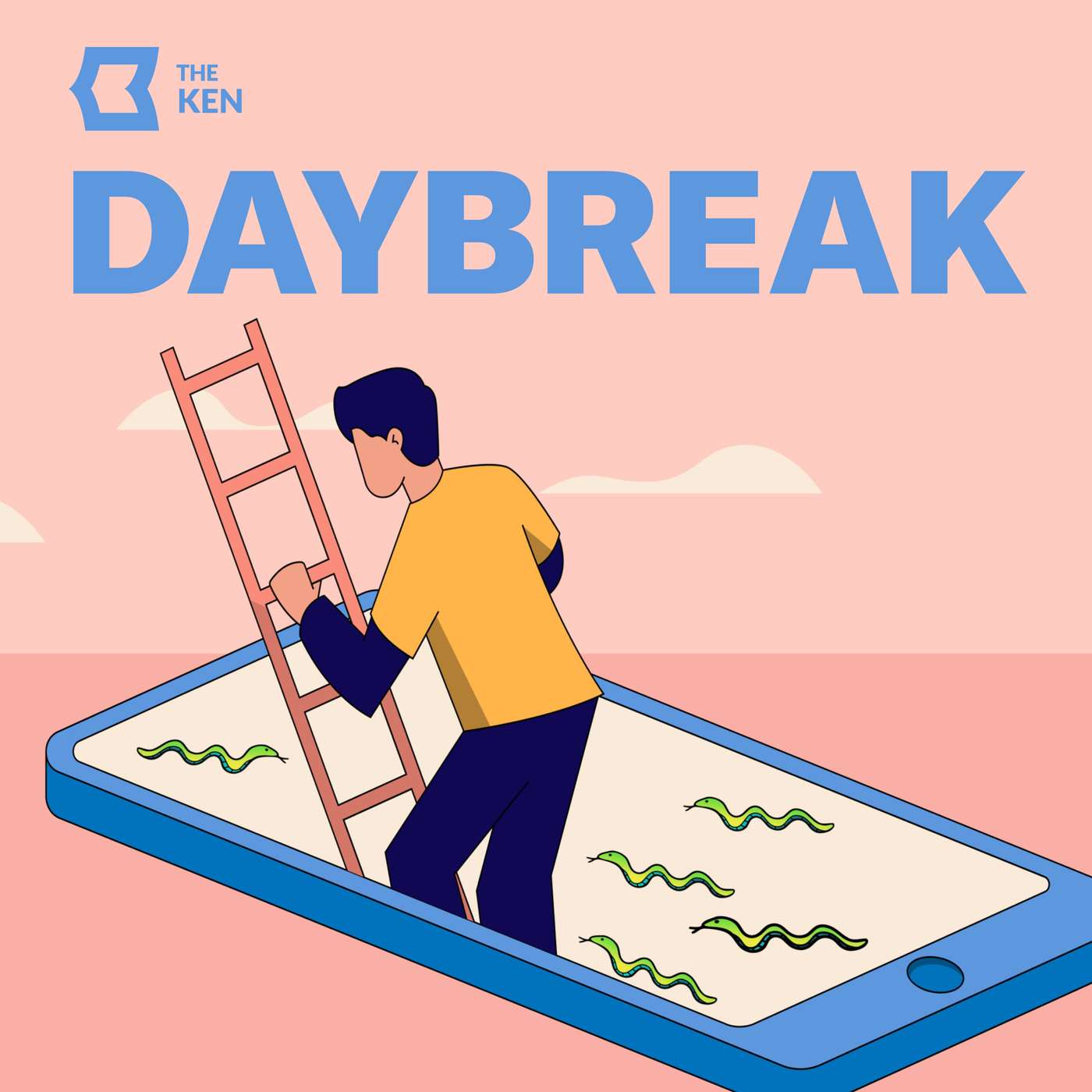
Miss a smartphone EMI, and your lender can now wirelessly strip the ‘smart’ out of it
3w ago00:24:03Tap to summarizeNaresh drives for Rapido. When his phone died, so did his income — for seven days, until he could borrow enough to replace it.Until 2024, India's biggest consumer lenders had turned that exact vulnerability into a recovery tool. Miss an EMI, lose your phone. It worked so well that smartphone lending grew from 1% to nearly 40% of consumer borrowing in three years. Then the RBI banned it. Lending collapsed by 80%. Delinquencies rose. Rejection rates hit 50%.Now the tool is coming back. This time with guardrails. The question is whether they're enough.*We want to get to know you a little better. Tell us what you think about Daybreak here.Daybreak is produced from the newsroom of The Ken, India’s first subscriber-only business news platform. Subscribe for more exclusive, deeply-reported, and analytical business stories.
Transcribe →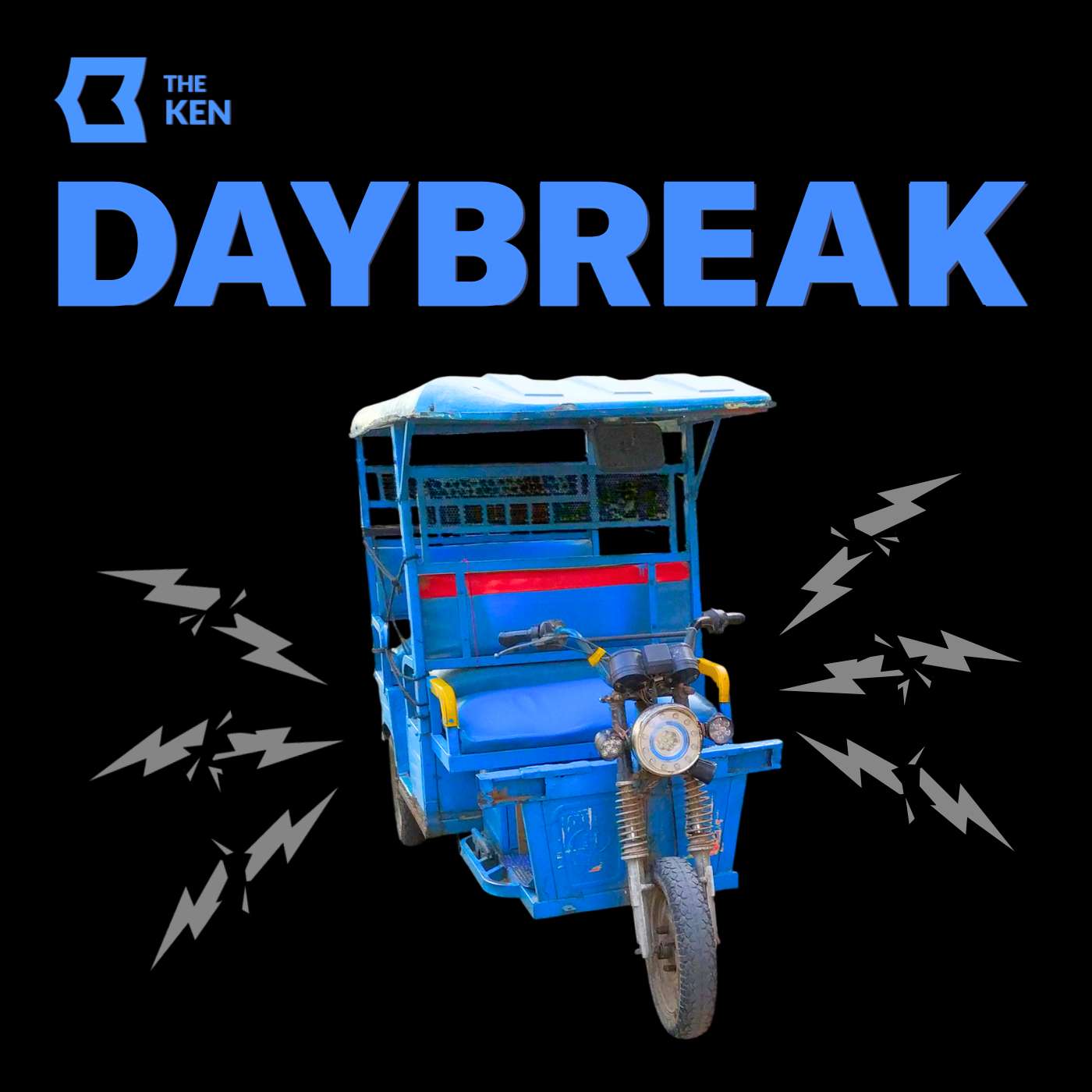
For India's e-rickshaws, price decides what's safe and virality decides if anyone cares
3w ago00:11:07Tap to summarizeLast week, the government ordered Apple and Google to pull at least three battery management system or BMS apps that were being used to switch off e-rickshaws mid-road. If you've been on Instagram, you've seen the videos. A prankster opens the app, taps a switch, and a passing e-rickshaw just dies.It works because the cheap lithium batteries these vehicles run on often ship from China with their Bluetooth wide open, no password at all. The flaw was documented publicly years ago and nothing happened until it went viral. The batteries are still exposed. In this episode, host Snigdha Sharma asks what really governs safety in India's informal economy.Tune in.*We want to get to know you a little better. Tell us what you think about Daybreak here.Daybreak is produced from the newsroom of The Ken, India’s first subscriber-only business news platform. Subscribe for more exclusive, deeply-reported, and analytical business stories.
Transcribe →
What's in a (user)name? WhatsApp wants businesses to have one. It hasn't said who's protected from fakes
3w ago00:16:54Tap to summarizeWhatsApp just announced usernames for Indian users. Two days later, the Indian government told it to stop.The privacy case for usernames is real — phone numbers are permanent, linked to everything, and once shared, impossible to take back. But India already has 43,000 WhatsApp-related cybercrimes in a single quarter. And when TechCrunch tested the feature, handles like "rbi_verify," "indiamodi," and "ambanijio" were still available for anyone who gets there first.WhatsApp has until tomorrow to explain itself to MeitY. And even if the deadline keeps getting extended, the problem isn't going away.Daybreak is produced from the newsroom of The Ken, India’s first subscriber-only business news platform. Subscribe for more exclusive, deeply-reported, and analytical business stories.
Transcribe →Optimist wants to reinvent the AC. Daikin and LG don’t need to
3w ago00:10:18Tap to summarizeYour AC is running longer this year and the machines responsible may have been designed for a different climate entirely. Optimist, a two-year-old Gurugram startup, has built what it says is India's most energy-efficient residential AC. It is recalibrated for Indian humidity, sourced almost entirely from local suppliers, and engineered with components the industry has long considered too expensive to bother with. But 70% of AC sales in India happen offline, shelf space belongs to brands with decades of dealer relationships, and Optimist is nowhere on the floor yet. How long can a better product afford to wait? Daybreak is produced from the newsroom of The Ken, India’s first subscriber-only business news platform. Subscribe for more exclusive, deeply-reported, and analytical business stories.
Transcribe →The world's largest advertising agency made $20 billion last year. You've probably never heard of Accenture Song
3w ago00:18:12Tap to summarizeIn May, L'Oréal ended a 16-year agency relationship. The reason? Simply that a competitor was better prepared with better data and AI capabilities.This incident illustrates the shift that's happening in advertising right now. The agencies that bet on technology early are pulling ahead. The ones that are built on relationships are finding out how quickly those erode.Sitting unnoticed at the top of this reshuffled industry is Accenture Song. It's the world's largest advertising agency that doesn't really call itself one. It made 20 billion dollars last year. And it's barely visible in India. And that lack of visibility? That's by design.Tune in.Daybreak is produced from the newsroom of The Ken, India’s first subscriber-only business news platform. Subscribe for more exclusive, deeply-reported, and analytical business stories.
Transcribe →
Daybreak Friday: UPI blinks, Google faces a $4.7B fine, LIC to shoulder India's oil bill, and more
4w ago00:10:44Tap to summarizeWhen a bill arrives, what do you pay it with? That's the question running underneath this week's Daybreak roundup. The government of India is answering it with slices of LIC and other PSUs, because the American war in Iran has kept oil expensive and the budget is straining. OYO's parent is answering it with money from public investors, most of which will go straight to its lenders. Google spent eight years arguing it shouldn't have to answer at all, until Europe's top court settled the matter this week. And then there's UPI, which has never sent anyone a bill in its life. Its June numbers just hinted at why that might not last forever.Tune in.*We want to get to know you a little better. Tell us what you think about Daybreak here.Daybreak is produced from the newsroom of The Ken, India’s first subscriber-only business news platform. Subscribe for more exclusive, deeply-reported, and analytical business stories.
Transcribe →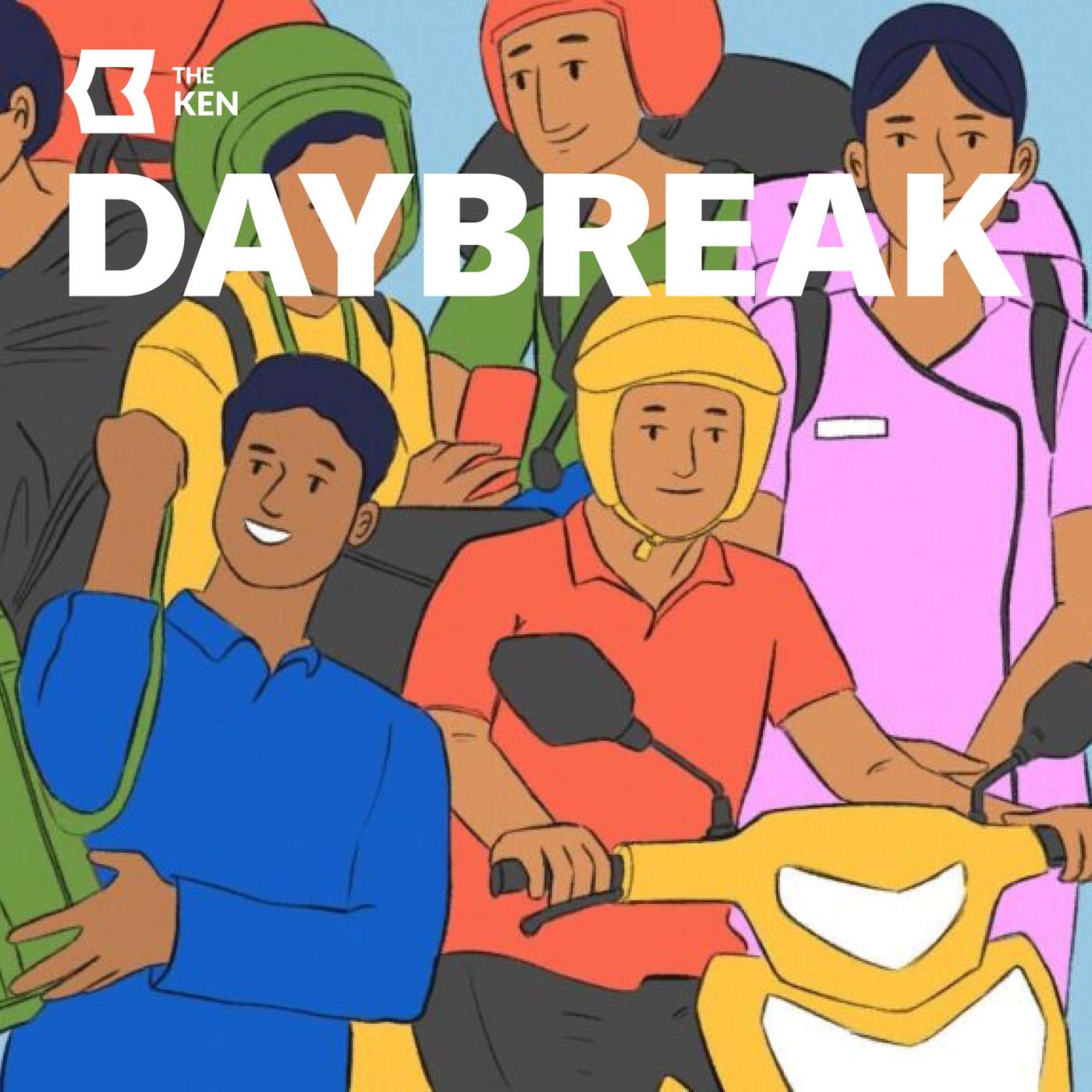
Karnataka let gig workers ask their apps a question. Swiggy, Zomato took the whole law to court
4w ago00:10:51Tap to summarizeSome of India's biggest consumer platforms, Swiggy, Zomato's parent Eternal, Zepto, Urban Company, and Meesho's logistics arm Valmo, have asked the Karnataka High Court to strike down the state's gig worker welfare law entirely.Their central argument is about money, a welfare fee they say duplicates a national contribution already required under the Code on Social Security. But the petition goes further, also targeting a clause that lets workers ask platforms how their pay and ratings get decided.A welfare fee is due July 5 regardless of how the case unfolds, and other states building similar laws are watching closely to see what survives. The platforms call the clause a threat to trade secrets. The law calls it a question a worker is allowed to ask. Which one is it?Tune in.*We want to get to know you a little better. Tell us what you think about Daybreak here.Daybreak is produced from the newsroom of The Ken, India’s first subscriber-only business news platform. Subscribe for more exclusive, deeply-reported, and analytical business stories.
Transcribe →
AI is eating your phone's memory and hiking up prices. No, festive sales can't save you either
4w ago00:15:02Tap to summarizeBefore every August, Indians who've been nursing a cracked screen or a lagging phone make the same calculation: wait for the festive season. The discounts will come. After all, they always do.This year, they might not.AI data centres are consuming more than 70% of high-end memory chip production. The same chips that go into your phone. Apple has already raised Mac and iPad prices. Budget Android phones in India are up 30 to 40% since January. And the shortage isn't expected to ease until 2027.Tune in.*We want to get to know you a little better. Tell us what you think about Daybreak here.Daybreak is produced from the newsroom of The Ken, India’s first subscriber-only business news platform. Subscribe for more exclusive, deeply-reported, and analytical business stories.
Transcribe →