← Deadline: White House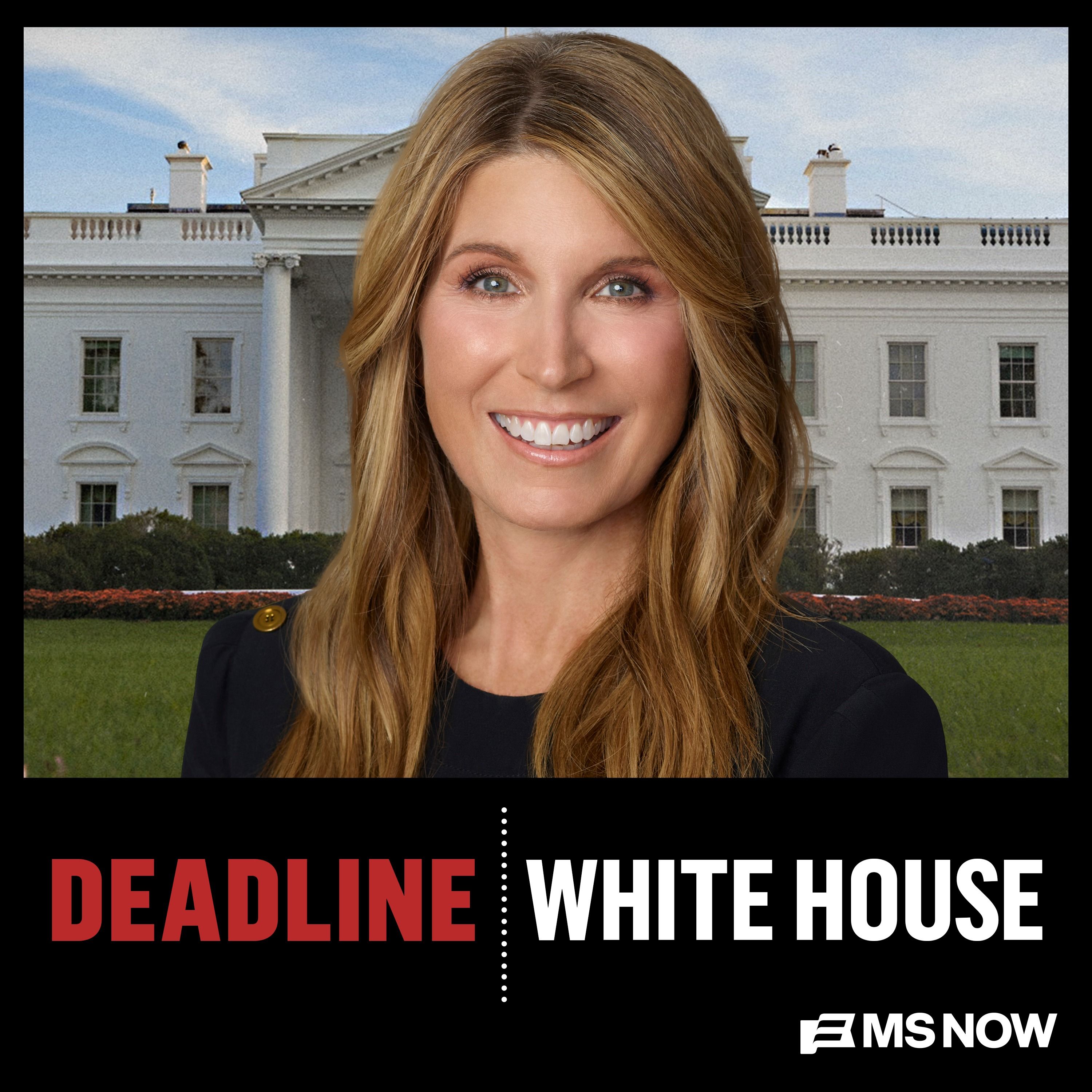
Deadline: White House
“Made to look like a fool”
01:26:04
Nicolle Wallace on Trump’s tariff troubles in court, global fallout from DOGE imposed USAID cuts, and blowback from constituents at GOP town halls. Joined by: Charlotte Howard, Robert Armstrong, Mary McCord, Charlie Sykes, Antonia Hylton, Pablo Torre, Brett Murphy, Eddie Glaude, Tyler Pager and Sam Stein.
Loading summary
Transcript1 lines
- [00:00]
Nicole Wallace
Deadline. White House is brought to you by Progressive, where drivers who save by switching save nearly $750 on average. Plus auto customers qualify for an average of 7 discounts. Quote now@progressive.com to see if you could save Progressive Casualty Insurance Company and affiliates national average 12 month savings of $744 by new customers surveyed who save with Progressive between June 2022 and May 2023. Potential savings will vary. Discounts not available in all states and situations. Avoiding your unfinished home projects because you're not sure where to start. Thumbtack knows homes so you don't have to don't know the difference between matte, paint, finish and satin or what that clunking sound from your dryer is. With thumbtack, you don't have to be a home pro, you just have to hire one. You can hire top rated pros, see price estimates and read reviews all on the app. Download Today hi there everyone. It's four o' clock in New York. After nine years of covering Donald Trump, it's difficult to say which bothers Donald Trump more, being made to look like a fool, the butt of a joke, or being told no, especially when it results in a diminished version of his own sense of his power. Unfortunately for him, today's news cycle offers both experiences. For him, that no was loud and clear. It came from the U.S. court of International Trade. That court struck down some of Trump's tariffs, like the 10% blanket rate and a 20% fentanyl tariff on China. Specifically, it was a case that came down to a violation of the separation of powers and an overreach on constitutional authority. From NBC's reporting on this quote, the ruling has the effect of lowering the US average effective tariff rate from 15% to 6.5%. That's according to Capital Economics consultancy. The ruling did not affect import duties on autos, auto parts, and steel and aluminum. Then today, in a second, far more narrow decision, a federal judge in D.C. ruled against Donald Trump, again insisting that he does not have the power to impose tariffs on an educational toy company at the moment. Right now, both court orders are currently on pause to allow the Trump administration time to appeal. Trump's adviser, Stephen Miller, used the phrase quote judicial coup to describe their current situation. The stock market, which has again and again and again recoiled at Donald Trump's tariffs, appeared to react somewhat positively this morning to the news, although there is no doubt it introduces more uncertainty into the broader economic picture and equation. So it's a rejection by the courts, a rejection by the markets, but we wonder if any of that stings Trump as much as the other development today that we alluded to, apparent mockery. Yesterday, Donald Trump was asked about a phrase that's actually been used on this program to describe him. Watch how he reacted. Mr. President, Wall street analysts have coined a new term called the taco trade. They're saying Trump always chickens out on your tariff threats and that's why markets are higher this week. What's your response to that? I kick out. Chicken out. Oh, isn't that chicken out? I've never heard that. You mean because I reduced China from 145% that I set down to 100 and then down to another number and I said you have to open up your whole country. And because I gave the European Union a 50% tax tariff, we had a dead country. We had a country people didn't think it was going to survive. And you ask a nasty question like that, it's called negotiation. She got the nasty. The nasty button pressed. Chicken out defined there by Donald Trump publicly for the first time. Trump, blocked by the courts, shocked by the markets, and mocked by Wall street analysts is where we start today with some of our favorite reporters and friends. With me at the table is executive editor and New York bureau chief for the Economist. Charlotte Howard is back. Also joining us, US Financial commentator for the Financial Times, writer of the Unhedged newsletter, Robert Armstrong is back, former acting Assistant Attorney General for National Security, the Justice Department. Now an MSNBC legal analyst, Mary McCourt is here and MSNBC columnist, author of the newsletter to the contrary. Charlie Sykes joins us as well. Robert, I think you are the first person who used that term on this program to describe or to help me understand how the markets were starting to view the Trump tariff announcements. Up, down, up again on pause, unpaused, up again while on pause, and then down again for when the pause is lifted. It surprised me that it took until yesterday for him to be confronted with a question about it. Well, no one was actually more surprised than me to see this little joke I made in my Wall street newsletter make its way to the White House. And to tell you the truth, Nicole, I'm a little horrified by it because you have to remember, Trump chickening out is a good thing. These tariff policies are terribly ill advised and will be terribly destructive to the country if they are enacted. So I worry now that Trump knows that everyone knows he chickens out, he's less likely to do so. Well, I would tell you, and I'll ask Charlie Sykes to jump in in a second too after covering him for nine years, it's like planning your picnic around where the bees are gonna buzz. I mean, Trump's gonna do what Trump's gonna do. Indeed. And I actually think that some of what you enlightened my understanding of is that because the markets felt largely as though Trump was responsive to them, they weren't as alarmed as people that maybe viewed Trump's language through the democracy versus autocracy lens. And so I think in that vein, whether he heard about it or whether it's a good thing that he chickens out or not, this is the person we're dealing with, someone for whom vanity trumps sound policy. And I wonder, now that he knows about it, where is your sort of analysis of what will happen next? On the tariff policy front, the serious idea that underlies the taco trade joke is the idea that for Trump, there actually is a very low pain threshold with these policies. There is actually not very much that he is willing to actually sacrifice economically or politically to get these tariffs through. That's why he chickens out. These policies are kind of good on tv, but they actually have painful trade offs associated with them when they become policy. And Trump just doesn't seem willing to make those trade offs. And again, while it whipsaws the market, this is kind of a good thing. If you think the tariffs are a bad idea, as I do. And, Robert, just to sort of. But in this part of the story, I mean, I think the tariffs are a bad idea as well. And if you look back to history, even if you don't know, you've forgotten more about the economy than I'll ever understand. But it is not associated. It's not associated with political or economic stability or abundance for a country's citizenry, particularly the middle and working class. I wonder what it leaves you thinking, though, about the promise of more instability. I mean, this is clearly, I think, what he revealed in calling the person asking the question in a term, I think what you're saying is coined by you. You hadn't seen it before you wrote it in your newsletter first. Is that what you're. Yeah, that's correct. Yeah. And I think you mentioned it on this show at least three, four weeks ago. Do you think that his vanity or his insecurity around the tariffs will change the actual policy moving forward? I think that he wants to be able to claim victory. And in a way, the other issue you talked about at the top of the show, with the courts throwing constitutional sand into the gear of these policies, might be almost a political gift from him. It's a good outcome if he doesn't have to actually make terrible policy that's going to hurt people. But can I just say instead, I tried to give you a wonderful policy that was going to save you from everything that was wrong with your life, but the woke courts got in my way. So I expect the rhetoric to continue and the actual policy, I think it's going to be a tough slog for him getting this stuff through. Charlotte, the point that Robert's making about Trump's low threshold for pain, this is what national security folks always thought was so thoughtless or uninformed about the tariffs, that in terms of threshold for pain, I mean, that is the Chinese brand. I mean, threshold for pain. Hold my beer, right? I mean, there was never a scenario where the United States of America and our consumer driven economy was going to prevail in a trade war against China. To Robert's point about the courts and Trump, this phenomenon of Trump always chickening out, perhaps saving him politically, it may also save the economy. Save the economy, I don't know, because there's so much uncertainty in how the tariffs will be rolled out. I mean, even as I was coming up the elevator to this studio, the news broke that the court's decision last night had been halted today and the tariffs would remain in effect. So I don't. Or that he did. You know, as the case moved forward, the lower court's position would not stand. So I think that there's enormous amount of uncertainty in the economy and the two choices that Robert laid out, I think it's worth looking at what qualifies as a victory these days. So, you know, let's say that Trump's orders are halted, that he's not able to enact the tariffs as he would like. That would be because courts had stopped him. And then you have the likes of Stephen Miller saying this is a judicial coup. I mean, the idea that that would be a victory is pretty striking, that you don't accept the balance of powers as written in the Constitution, but you brand it as a coup, and then what further action does that kind of rhetoric enable? So I think we're dealing with enormous amounts of uncertainty still in the economy, real questions about how this policy might play out in practice. But then we have come to learn over the course of Trump's two terms now that rhetoric matters. So I don't really see this as a real victory here. There are two bad options. Well, and everything I've learned from you and Robert and everyone that comes on the show every day is that the greatest nemesis of a stable and growing economy is uncertainty. Right now, the American employer or the small business owner or the importer or exporter is trapped between a decision and a White House that, as you just pointed out, will either defy the decision or attack the legitimacy of it. But also in that decision, is this inherent abdication or overstep of the role of Congress. Oh, yeah. I mean, Congress, part of the ruling that we heard from the lower court yesterday had to do with Trump dramatically overreading his executive powers to impose these tariffs not just on some goods, but really across every single good right across of countries that are importing to the United States. So I think that you see both Trump really testing the limits of executive power and Congress continuing to lie down. And I think one of the things that Robert pointed out which is worth returning to, is what are the political and economic costs of Trump's policies? So far, you have seen the economic costs and you've seen his approval rating decline, but that hasn't resulted in the Republican Party moving away from him. The Republican Party really moving to hit, restrain him in any way. So I think the politics again, is lagging the policy. No Charlie Sykes, they are Thelma and Louising the tariff policy over the cliff and into the ravine next to him. Tariffs are deeply unpopular. They are Trump's most unpopular thing in a second presidency. They have a 36% approval rating today while we are on again, off again, paused 30 days, 90 days and whatnot. And as Trump just said, lowered from 145 to whatever 50 and then paused again. So before they have hit before Walmart has raised its prices as it promised to do, before Target has raised their prices before all the stuff that was supposed to come over stops coming and being driven around the country and put on shelves. Only 35% of Americans approve of the tariff policy before it's gone into effect. That's where the politics are in anticipation of this message. Yes, but this is Donald Trump's obsession, right? This is his signature issue. He has had a fetish for tariffs for decades now. So, you know, what we're left with is not just an economy by Trump's whim, not just an economy that is held back by uncertainty. But think about where we are today. Just the absolute whiplash back and forth between these various court rulings. But I do share Robert's concern a little bit about the taco incident yesterday, because, and Nicole, as a veteran Trumpologist, I think you put your finger on it, that Trump's vanity will always Trump his policy. And the question is, if Donald Trump thinks that people are making fun of him, that they think that he is weak, that he is chickening out, will he be goaded into doubling down on something that is economically unsound, but also politically unsound? Because that's Donald Trump, huh? And so there was a non zero chance after that question was asked that mocking Donald Trump for chickening out and using the whole taco trade joke might actually goad him into pushing us into another Great recession. Now, the court has given him a lifeline. And obviously, in a rational world, Donald Trump can have his cake and eat it, too, right? He can say, I tried to impose these tariffs, I tried to save the American economy, but these judges wouldn't let me. I think it's, of course, very unlikely that Donald Trump will take that particular off ramp because he is going to appeal it. And this, of course, again, is something that he is absolutely obsessed with. But I don't think that we ought to underestimate how colossally important that ruling was yesterday. I mean, it was a massive setback to Donald Trump's economic policies, but also it was an incredibly important ruling about the constitutional limits on executive power. And this has been one of the big questions that we've had since the beginning of Trump 2.0. Would anyone draw the line and say, no in our constitutional order? The president has these limited powers. Congress is not simply a potted plant. And so this court ruling is immensely important, and I think the appeals will be immensely important because it really will answer the question, what is a Congress for? What are the powers of Congress? And can Congress simply lie down and give away all of its powers to an imperial president? So it was an extraordinary news cycle in what's been an extraordinary several months. Mary McCord. Now, I can't stop staring at Charlie's potted plants behind him. And I guess my legal question for you, I mean, take us through the ruling, which is now on pause. But if the Republicans in Congress want to remain potted, how does a court refuse them to get out of the pot? Well, at its core, this is a constitutional ruling. And the court made its ruling based on the statute as it exists, the International Emergency Economic Powers Act. President Trump purported to impose these tariffs under the authority of that act, authority delegated to him by Congress. But what the court was saying in here is, no, what you've attempted to do, President Trump, with these tariffs, regardless of the basis, your worldwide tariffs, your retaliatory tariffs, your trafficking tariffs that were supposed to be dealing with the problem of cartels and drug trafficking and human trafficking. This all exceeds the authority that Congress did delegate to you under iepo, which is the, the term used the acronym for the International Emergency Economic Powers act with respect to one set. They said, look, Congress didn't delegate, Congress did not allow you to use this authority. For the types of tariffs you've imposed worldwide, you need to use non emergency authorities. And for the trafficking tariffs, the court said the IEA there requires that tariffs that you impose for certain purposes actually be to deal with the emergency you've declared. And there's no direct relationship here between these tariffs and the problem you've identified. The emergency involving drug trafficking and human trafficking that you've identified. There's no direct correlation there. You're just trying to put pressure on companies to capitulate to you. So they actually dealt with the statute that exists on the books for decades now, where Congress did provide some authority present, but not the authority that he is exercising now. What Congress will do after this, that remains to be seen. I want to ask all of you, I want to press all of you on the idea that it's bad that he's been humiliated because it suggests an unsustainable path forward. I mean, none of us humiliated him. You didn't humiliate him with your astute analysis. That's what you are sort of trusted to do. But I want to ask where that leaves us. If avoiding the humiliation of a president who seems pretty good at humiliating himself is where we're heading, how do we steer the economy and the country to less choppy waters? That's on the other side of a break. Also on the other side, a federal judge has dealt a blow to Donald Trump's efforts to get Harvard University to bend the knee, blocking a Trump order, preventing Harvard University from enrolling thousands of international students. And later in the broadcast, its exit stage right for Elon Musk. The world's richest man is winding down his role in Washington as a deeply unpopular political figure nationally. Someone who has had his standing diminished by associating himself with Donald Trump second term. But the devastating impact of his work in the gutting of the federal government is still being unearthed and reported on. And we have that reporting for you today. All those stories and more when Deadline White House continues after a quick break. Don't go anywhere at designer shoe warehouse. We believe that shoes are an important part of, well, everything from first steps to first dates, from all nighters to all time personal bests, from building pillow forts to building a life for all the big and small moments that make up your whole world. DSW is there and we've got just the shoes. Find a shoe for every you from brands you love at brag worthy prices at your DSW store or dsw.com MSNBC's Jen Psaki, host of the Briefing We've never experienced a moment like this in our country and it leaves us all with a choice. Are we going to speak out or are we going to be pressured into silence? I've worked for presidents. I've faced the tough questions from the press and even threats from the Kremlin. And if there's one thing I've learned, it's that you can't cower to bullies. You don't need to be hopeless. We have our voices and I will continue using mine. The Briefing with Jen Psaki Tuesday through Friday at 9pm Eastern on MSNBC. MSNBC Films presents a six part documentary series, David Frost Versus on the Final Episode, the Middle East Conflict. Yes, I Arafat told me the other day that he trusts you. Do you trust him? Tomorrow at 9pm Eastern on MSNBC. We are back with Charlotte, Robert, Mary and Charlie. I mean, before the break we were talking about the downside of worrying about what it might do to Trump's ego to know that there is something called a taco trade. Trump always chickens out. It is the story of his entire political rise. I think that the risk that we were talking about before the break, which is is there a danger in trying to goad or intentionally or unintentionally goading Trump? That's a real risk and we know that because of his political career. So in 2011, Barack Obama gives this brilliant roast of Donald Trump at the White House Correspondent's Dinner after Trump had been going after him with the birther movement and so forth. And Barack Obama in his cool way, just eviscerates him. And you see Donald Trump in the moment boiling over and the reporting on it is that that was a really pivotal moment that galvanized him then to run for president. So he detests, he does detest being mocked, though he certainly likes mocking other people. So that risk is real. I think the fact that we are even having this conversation points to the bizarro world that we're in in Trump 2 and in Trump 1, but particularly in Trump 2, where we're thinking about what if we make fun of Trump and then he'll respond in this way and the chaos that will be unleashed could be really damaging for America's standing in the world. And The American economy. You know, the fact that we are having that conversation points to this weird environment in which, you know, some people seem to be treating Trump like a senile uncle who needs to be appeased. And it's, you know, in the media. That's certainly not our job. Our job is to tell the truth as we see it. You see, in Congress and the people around Trump, people continuing to try to placate him, trying to play to his worst instincts, to all of his instincts in a way that's counterproductive, I think. And the question is when they will grow a spine in Congress, when some people might stand up to him? What would be the set of events that would trigger Congress behaving like grownups and not trying to just pledge fealty to this president? Charlie, do you, on your bingo card, even play that game anymore? I mean, is there a point where they respond to their constituents instead of Donald Trump's whimsical? Not in the foreseeable future. Because, I mean, you and I have been talking about this for 10 years right now. They've. How many times have they had opportunities to do that? The political costs are simply too high for them. And frankly, look, waiting around for Republicans to show any sort of independence, I think is, Is a, Is a fool's errand now on the edges. You know, perhaps they will push back, you know, here or there. But this, the whole issue of tariffs has been so illustrative because it will have such a tremendous. On the economy, on their own constituents. They have the inherent power to block the tariffs. They are the article one body in the Constitution, and yet they have surrendered. They have ceased functioning as a legislative body in many respects. But, you know, going back to your question about the dangers of humiliating Donald Trump, you know how I feel about this. I mean, I wish, you know, we could humiliate him on a daily basis. I wish that we could mock him. But Charlotte's absolutely right. This is the bizarro world that we're living in, where everybody is walking around on eggshells, you know, afraid to anger or the senile uncle who has incredibly thin skin. And the thing about Donald Trump is he is, of course, a complete narcissist, but he is. He has a very, very thin skin, and he is. He's dangerous because he has the power and he has no restraint. And I think that's just something that kind of the reality that we have to deal with. Now. There are some people who say that, you know, that that's a council of defeatism that you know resistance is futile, that we can't do anything about it, but it is the reality that we're living in right now. And I think that to the extent that we can point out the absurdity of Donald Trump, the fact that we can in fact show that the emperor does have no clothes, and by the way, there's always a value to pointing out that the emperor is in fact buck naked when it is Donald Trump. I think we ought to take that risk. Well, Robert, I guess I would pushed back a little bit on the premise that anyone humiliated Donald Trump other than Donald Trump. I mean, the truth of the number of times that he blinked is a data point that exists in public. No investigative journalists dug up the number of times Trump balked because of the poor reception to his tariffs. And they were announced, they were paused, they were raised, they were dropped, they were put back in, they were pulled off 100 deals in 100 days. There were none. Now there's a framework for one with the UK and the beginning of talks in Switzerland with China. No framework, no deal. So that's, and I am no economist, but I could read a newspaper. So no one's humiliating Donald Trump except Donald Trump. Look, the reason the taco trade joke, which is kind of a dumb joke stuck, is because it has this huge element of truth in it. And yes, a lot of times in the last 12 or 18 hours since that conversation in the White House, people have either written me or mentioned me on social media saying this guy's dumb joke is going to cause a recession. And I don't like that at all. I meant to make a joke, not cause a recession. But there is a serious question here about, as Charlotte and Charlie have, have just argued so well, there's a serious question about a world in which you're not allowed to make fun of the president. He's the president. I am an inky fingered hack making a dumb joke. I'm the one who's supposed to behave carefully around the President of the United States. How did we get here? I mean, the situation bizarre doesn't even begin to cover it as far as I'm concerned. Well, and Robert, I would argue if we enter into a recession, it will have nothing to do with you. It will be Donald Trump's policies that tip us toward a recession. And if you look at how, you know, I mean, look, the study body of fiction around dysfunctional families, it's the same story all the time. An otherwise normal body bends and collapses around the mentally ill or addicted or most sick member of the Family country is the same. So we had the Republican Party collapse onto itself around the dysfunctional leader. And then you had all of the sort of partisan actors collapse. And now you're seeing Trump collapse the economy around his dysfunction. You know, it's not altogether unlike the inner circle of Biden collapsing around him. He was frail. He was really unqualified to be president. They knew it and they collapsed around him. And that was no good. And similarly, treating the current president with kid gloves by his advisors or by the press or by anybody else is a bad idea. It was a bad idea with the Democrats. It's a bad idea with a Republican. We shouldn't do it. I guess the only difference is Joe Biden would never tank the global economy if he found out that someone had made a joke about him. What you're all saying to me here on live TV is Trump would Joe has a sense of humor and Trump does not. And one of them is willing to destroy things for fun or out of shame. And I think the other is not. Charlotte Robert, the author of the phrase at the center of not just the economic conversation, but the world right now. Thank you for being here to talk about it. And Charlie Sykes, thank you all for starting us off. Mary sticks around a little bit longer with us after the break. Calls to stand up against Donald Trump at Harvard's commencement as that university wins a key battle against the administration. We'll bring you that story next. When a tyrannical administration tried to bully and threaten Harvard to give up their academic freedom and Destroy free speech, Dr. Alan Garber rejected the illegal and immoral pressures the way Rosa Parks defined the entire weight. After seeing so many cowering billionaires, media moguls, law firms, politicians and other universities bend their knee to an administration that is systematically strip mining the US Constitution, it is inspiring to me to see Harvard University take a stand for freedom. In case you couldn't see with your eagle eyes, the figure behind the podium is none other than NBA legend Kareem Abdul Jabbar. He's speaking at Harvard ahead of today's commencement ceremonies on the imperative of Harvard's fight for academic freedoms against what he described as tyrannical attacks. Earlier today, a federal judge issued a temporary restraining order blocking the Trump administration from enforcing its ban on international students. The New York Times reports this quote, the judge voiced concern that the government was attempting to prevent foreign students from enrolling despite her earlier order blocking the administration's planned actions. In a brief filed Wednesday, Harvard outlined the damage the government's attempt to prevent the school from enrolling international students has already done to Harvard University, noting that international universities are already seeking to capitalize on the uncertainty. Universities in Europe and Asia are already taking the revocation notice as an opportunity to recruit talented U.S. and international students who would otherwise pursue their studies at Harvard. On May 23, the Hong Kong University of Science and Technology issued a press release announcing, quote, unconditional offers, streamlined admission procedures and academic support for current and incoming international students at Harvard and said this, quote, a dedicated team has been established to assist students with admissions, credit transfers, housing and visa logistics. Let's bring into our coverage the co anchor of the Weekend PrimeTime here on MSNBC. My friend and colleague Antonia Hilton is covering the story for us and reporting live from Harvard's campus. Also joining me at the table, the host of Pablo Torre finds out. MSNBC contributor Pablo Torre. Antonia, tell me what you're reporting and what you're hearing from folks. Hey, Nicole. Well, it's been a really interesting day here on Harvard's campus because while students and families have tried to celebrate and make the day feel normal, the reality is they're all very aware of this split screen that's been happening all day, celebrations on this campus a couple miles down the road, lawyers going into a courtroom trying to fight for this institution's academic freedom. And for 27% of the students who are part of this campus, the fabric of its social life, to remain a part of the community, to come back in the fall, to have the right to stay and work in the United States after investing so much time here. And so it's been this interesting mix of celebration and defiance, I would say, because so many of the students who over the last year or so have been at odds with each other, pro Palestinian students, Israeli students, at times counter protesting each other, arguing in person and online with each other, they've in many cases kind of put those differences aside and come together now with a common enemy. They see this as an existential threat, a crisis that's not just about the school they love and they like that they go to, but really about the fact that Harvard has the resources to battle this out when so many others in higher education do not. Take a listen to a conversation I had just a few minutes ago with a student named Nouriel who lays all this out, these attacks that Trump is doing, trying to exercise full control, you know, trying to infringe on academic freedom, freedom of speech, freedom of assembly, all these kind of, you know, core values that we kind of oppose plot in the United States, right. Once the Attacks into the institutions, universities. It's just the first step. And we already see how the ICE attacks are clearly not just coming to students, they're coming to nationwide. You have so many people being deported, so many immigrants being taken under control through DHS vans, going through New York City, knocking on people's doors. And so this is not just confined to the university. I think it's really important to understand that. And so I'd say what's at stake is more broadly, you know, any, you know, shared ideal of American democracy you can think of is under threat. And, Nicole, the way you hear Nouriel there kind of connect what they're seeing happen to higher ed, to immigration and other actions this administration is taking, that's a common thread here on this campus, that students basically believe that if you kind of give this administration an inch, they'll take a mile. And so they point to Columbia University as an example. You know, even if you capitulate to their demands, if you agree to make certain changes or to remove certain professors from certain departments, that doesn't mean this university won't come, or this administration won't come back around to your university and ask for more and more. The fear here is that our president of the United States wants to be the president or the provost of these universities, and that it will start here at Harvard. Harvard, but go down the street and then around the country. And the reality, too, right now is that even with this tro, the temporary restraining order in place, you know, people are grateful for that, that their foreign friends and classmates can stay for now. It's kind of just for now. The legal landscape, it could shift again. Students could, in theory, come back from being abroad, back visiting their families this summer, and be turned away at the border later this summer or in the fall. And so what kinds of decisions are 17 and 18 year olds who don't have their own lawyers and the ability to battle this out? What might they have to do this summer to prepare for all of that? Well, as you sort of spelled out moments ago, some of them may be transferring to some other schools. There may be a brain drain. And even if Harvard is able to fight this out in the coming months or three and a half years, the reality is higher education may never quite be the same because of the lack of trust and the loss that we're going to suffer in the meantime. Nicole. Pablo. To what end? Yeah, yeah, to state the obvious, maybe there is incoherence, tremendous incoherence in motive, in execution, in process, and in result. And so the end On a macro level, I think is just an erosion further of America's credibility as a place where the best and brightest want to be. Harvard being an avatar, an emblem of our country, the crown jewel, some would argue, of the American higher education system. But then to say the real end here, as always, the Occam's razor is his ego. So Harvard, which I have great fondness for, as I see these young people leaving to, by the way, statistically take jobs in finance, consulting and tech. Right. Like people who power the engine of American capitalism. You went to Harvard? I did. I got into neither, none of those actually fields. To the. Of my parents, I became a journalist. But the ego part, you don't need to be an investigative reporter to understand this is a lot like Saturday Night Live and the NFL and every other cultural institution that Donald Trump has felt excluded from. And Nicole, really, like, if Harvard wanted to abrogate its principle and invite him to be the class day speaker instead of Kareem Abdul Jabbar a year from now, he would do that in a second. And that's the ultimate incoherence here, is that the motive and the principle is so irrelevant. It's just about him. It always is. I want to bring Marianne on the other side of a break to understand something that Antonio, I think, points out, which is that even if Harvard continues to prevail, you know, the law firms that are fighting Trump are, you know, batting a thousand. They haven't lost once. But what is the damage of the thing you talked about, the uncertainty? We'll sneak in a break. We'll have that conversation on the other side. We're back with Antonia, Pablo and mary. So, Mary McCord, take us through the law. How much damage can Trump do with what so far has been viewed as illegal and unconstitutional? But if he continues to keep Harvard in his sights, how much can he batter away at them even without the law on his side? Well, you know this lawsuit that was filed immediately after the announcement that the international students, that Harvard would lose its, its ability to participate in the student and exchange visitor program. You know, that lawsuit alleged First Amendment retaliation, First Amendment viewpoint discrimination, First Amendment withholding academic freedom or conditioning academic freedom on certain demands from the Trump administration, due process violations, arbitrary and capricious actions, a whole litany of constitutional and statutory claims. And the, and the court within hours issued a temporary injunction, a temporary restraining order, which she has now converted into a preliminary injunction because of all of the harms to Harvard. But one of the reasons that she converted that today is because even though the Administration came in really at the 11th hour yesterday with a new letter from Homeland Security Investigations saying that Harvard had 30 days to come into compliance. The court said that. And the attorneys for Harvard said the damage is happening now. Right. Students are already looking to transfer. We're hearing that students are being harassed at airports, international students, and so afraid that their visas are being pulled, that the harm is here and the harm is now. And so to your point about even when you are winning in court, there seems to be an inconsistency, I mean, a non compliance maybe across the federal government with, with the court's orders, which are resulting in this type of fear. And we've seen this in so many other areas as well. There's a significant win in the district court, but there's still the things that the president and in many cases the head of DHS and others in the administration are saying publicly that don't jive with what the court has ruled and what the lawyers in court are saying they will comply with. And I think that's why there continues to be such fear and anxiety, not just among academic institutions, as we've been discussing, but also, as you've said, law firms, certainly in the immigration context, more generally, on and on and on. And so the courts are trying to keep up and the administration is trying to constantly dive and dodge and weave and move the goalposts as they litigate these. Paolo, let me show you a little bit more from today's commencement speaker. Yeah. When legal immigrants and others who are lawfully in this country, including so many of your international students, worry about being wrongly detained and even deported, perhaps it's fitting that you hear from an immigrant like me. A part of what makes America great, if I may use that phrase, is that it allows an immigrant like me to blossom here, just as generations of other immigrants and their children have flourished and contributed in every walk of life, working to keep America great, the greatness of America, the greatness of Harvard, is reflected in the fact that someone like me could be invited to speak to you. What I love about the simplicity of that message is that it's reclaiming maga. And you see some of the stories starting to tumble out from deep red pockets of the country. There's an extraordinary reporting in the New York Times this week about a single deportation in a single town in Missouri that has rocked this pro Trump. I think it's a Trump +20 part of the state of Missouri, which is at least a Trump +10 state that has rocked and split this town. A mom who's been deported. There's a bakery in Texas that has rocked. You know, another like Trump +15 district people are not behind the things that Trump is doing to the country in the name of our country. Yeah, Nicole, there's a genre in journalism, as you well know, for that type of story, and it's called human interest. And that feels like a fitting larger theme for an administration that feels so deeply not humane. You're talking about individual people standing up and saying this is what this is really about and not this institution that, by the way, Harvard, for all the tuition we paid by family paid as a first generation American, there is lots to criticize, plenty to criticize, even on some of the subjects that are clearly tangential to the actual motive of Donald Trump. But in this case, I think about my roommate from Kazakhstan, Kunai, who was playing FIFA on a laptop my freshman dorm every night, I think about the kid from Zimbabwe, proud across the hall. Like this was also kind of the dream for certainly a bunch of people to come together at a place that can be so, again, worthy of critique, but in the sense of America was sold as something across the world. Nicole, we talk about this in sports, soft power. Right. It's not merely, ah, do I like the curriculum of whatever economics class which, by the way, tends to be taught by, you know, chief Reagan economists at Harvard. Typically, not for nothing, the most popular class at Harvard is Internet economics taught by Marty Feldstein. But really it's man, this is what America wants to be to everyone else. And they actually do have it in doses here and they're ruining that, too. Antonio, you're reporting. I've been watching it all day. It's incredible. Thank you for joining us and sharing it with us. Paavo, thank you always for being at the table. Mary, thank you for being of counsel for the hour. We're so grateful to you. We're going to sneak in one more break. We'll be right back. Attorneys for the Justice Department say they are facilitating the return of a Guatemalan man who had been deported to Mexico and was then sent to Guatemala, which means that the government is saying they will actually follow a court order from a federal district court judge in Massachusetts, a break from their defiant stance in the case of others, including Kilmar Abrego Garcia. In a court filing late last night, Justice Department officials said they were securing a flight for a man listed in court documents only as ocg. He's one of the four plaintiffs in a class action lawsuit challenging the administration's moves to deport people to countries where they are not citizens without giving them a chance to challenge their removals. His lawyers have argued that he is gay and has repeatedly fled persecution in both Guatemala and Mexico last year to seek protection in the United States. The administration's attorneys have not given a timeline on his return. So we're going to stay on top of this story for you. Coming up next for us in the next hour of Deadline, White House brand new reporting reveals that diplomats are sounding the alarm about violence, chaos and a rising threat of terrorism in the wake of Elon Musk and Doge gutting usaid. We'll bring you that incredible reporting next. Want to pull off the season's freshest trends? You just need the right shoes. That's where designer shoe warehouse comes in. Loving wide leg jeans. Pair them with sleek low profile sneakers. Obsessed with the sheer trend. Try it with mesh flats, feeling boho, comfy sandals. Nail the whole free spirited thing. Find on trend shoes from the brands you love like Birkenstock, Nike, Adidas and more at dsw. Hi everyone, it's Nicole Wallace from msnbc. I'm so excited to tell you about my new podcast called the Best People. I sit down with some of the smartest and funniest, most creative people I've encountered, people who inspire me both professionally and personally. People like Kara Swisher, Rachel Maddow, Doc Rivers, Jason Bateman and Sarah Jessica Parker. They'll often say, hey, Carrie. You know, they'll call me Carrie. And that's all right too. Join me each week as I talk with and learn from somebody new, the Best People with Nicole Wallace. First two episodes drop Monday. Follow now for early access ad free listening and bonus content. Subscribe to MSNBC Premium on Apple Podcasts. Hey everyone, it's Chris Hayes. This week on my podcast, why Is this Happening? Veteran progressive organizer, former head of MoveOn Anna Gallant on where we go from here. I just keep thinking like we're going to be digesting the results of that election for the next four, five, ten years to really fully understand it. So we should have strong opinions loosely held and make some decisions on them and also not neglect the work of standing up right now to fight back. Because that actually if we get too preoccupied and navel gazing into what we just did wrong, we might actually undermine the work of confidently, powerfully standing up and resisting the very scary stuff that's coming at us. That's this week on why is this Happening? Search for why is this Happening? Wherever you're listening right now and follow this is the chainsaw for bureaucracy. We have this unelected fourth unconstitutional branch of government, which is the bureaucracy which has in a lot of ways currently more power than any elected representative. I actually just call myself a humble tech support here. I'm going to buy because number one, it's a great product, as good as it gets. And number two, because this man has devoted his energy and his life to doing this, I think he's been treated very unfairly. Speaking of unelected with too much power. Hi again Everybody. It's now five o' clock in New York. What a whirlwind it was Elon Musk's 128 days in the federal government. Well, they were not boring, but they were destructive. Last night, Musk posted on X his departure from working in the US Government as a special government employee, acknowledging that the work of his so called Department of Government efficiency will continue. But as Politico reports in its morning playbook, Musk's time in Washington, D.C. fell short. Let's face it, this is an inglorious end to what had initially looked to be one of the most consequential White House appointments in generations. Musk obliterated USAID over a single weekend and sent a wrecking ball through numerous other agencies. But while GOP hardliners were delighted by some of his activities, others were so poorly conceived they look like sheer vandalism and the damage will be felt for years to come. The New York Times reports on a departing Musk who is disillusioned with his work in the government. From that report, quote, Musk has said in recent days that he spent too much time focused on politics and has lamented the reputational damage he and his companies have suffered because of his work in the Trump administration. The impact of the time the world's richest man spent in government felt no more powerfully than in areas like USAID, which saw an 80% drop in its work was eliminated. Stunning new reporting in ProPublica reveals a horrendous consequence and fallout to human beings from those cuts. Quote American diplomats in at least two countries have recently delivered internal reports to Washington that reflect a grim new reality taking hold abroad. The Trump administration's sudden withdrawal of foreign aid is bringing about the violence and chaos that many had warned would come. The vacuum left after the US Abandoned its humanitarian commitments has destabilized some of the most fragile locations in the world and thrown refugee camps further into unrest. That's where we start the hour with some of our favorite reporters and friends with me at the table. Pulitzer Prize winning ProPublica reporter Brett Murphy is here. He's bylined on that reporting we just read from. Also joining us, Princeton University professor MSNBC contributor Eddie Gladstone. Also joining us is New York Times White House correspondent Tyler Pager. Let me start with you, Tyler, on the actual, actual sentiments of Elon Musk's departure. Yeah, I mean this was foreshadowed for quite some time and he announced that he was going to be scaling back his government work and there was always going to be only a finite amount of time him that Elon Musk was in the administration because of the special government employee status he held. And so that status was running out. But I think the way in which he's departing Washington is quite a tremendous comedown from what it looked like when he arrived. He was next to Trump at almost every public appearance. You showed that montage of clips in the Oval Office in the Cabinet Room, Trump and Musk having basically a Tesla car show on the White House South Lawn. Musk was constantly with him at Mar a Lago on Air Force One. They have not been as close as they once were. That has been apparent just based on their public interactions. But also we're learning today that some of Musk's top lieutenants are also leaving the administration to return to his private companies with him. So it remains unclear what the future of this effort will look like. So much of Doge's his work was based on the cult of personality around Musk and the power he had because of his relationship with the President. With his absence, it'll be unclear how much power and implementation this sort of group of guys largely will have across the administration. But I think it's important to note they have already, as you outlined, Nicole, done quite a bit of work, some say damage in this administration thus far. Tyler. So the actual limit on SGE special government employees, that was the one law they were going to fire. I mean, everything Elon Musk did that's been reviewed by a judge has largely been deemed illegal. But this expiration of the time you can be an SGE is the only reason he left. I mean, I think that is a convenient cover for part for this timing. Right. Elon Musk told analysts on a Tesla call that he was going to devote more time. There are concerns within the business community, particularly Tesla stockholders, over Tesla's stock performance, people wanting Musk to take a more hands on role. He's also very interested in SpaceX. So there was always this sort of balancing act. He was trying to bridge between his public sector work and his private companies. And so I think the convergence of Tesla's struggles, particularly as you look at its stock and some of the backlash it's felt because of Musk's role in the government. And also Musk personally feeling quite burned by some of his work. My colleague Teddy Schleifer has done a lot of good reporting on this. And in the story we published last night in the Times we we read about two key events last month that were really influential for Musk. One was the Wisconsin Supreme Court race where Musk put a lot of money and his own identity into backing one of the candidates. That candidate lost and Musk sort of sensed that his role in that race was unproductive. And then two was the tariffs. Musk has been quite critical for some time about tariffs, voiced those opinions internally and was not listened to and feeling like his stature and profile and his influence was diminishing as the days and weeks went on. He also isolated himself from a lot of the cabinet members. My colleagues Maggie Haberman and Jonathan Swan broke that story about that contentious cabinet meeting between Musk and other officials inside the White House where they really pushed back on some of Doge's work. So there's a confluence of factors that have led Musk to distance himself and also as we write, grow disillusioned in Washington. And I think the timeline with this 180 day SGE window helps sort of expedite that exit from government. Yeah, I mean it's such a good point. I mean to Tyler's reporting and his colleagues reporting, you had, you didn't have to look very far to find an actual Wisconsin voter who was voting against the Musk backed candidate. Because in these voters own telling they weren't for sale. At least not for Elon Musk. I want to turn to one of the immediate targets of what Elon Musk did on day one and that was to take his chainsaw which he wielded as a prop, I think thinking it would be politically popular to usaid. This is a conservative who worked for my former conservative boss George W. Bush, Andrew Nasios on who Musk was actually hurting when he destroyed usaid. Long term beneficiaries like the American people, they don't realize that they are. It protects the United States. The reason that they target it is it has a relatively weak constituency because the beneficiaries are in the global South. You don't see the programs. If you saw the programs, there'd be no one in the Congress voting against it. The consequence for the American People is we don't have an early warning system for disease anymore. There are 90 missions, 90 countries that have early warning systems that aid installed over the last couple of decades for disease outbreaks. We're not going to have that anymore. It's going to disappear. It's already shut down now. In my view, this is an enormous risk for the United States. You know what happens when famines take place. People start moving en masse. So that was three months ago. And you report this today. In southeastern African country of Malawi, the US Funding cuts to the United Nations World Food Program have, quote, yielded a sharp increase in criminality, sexual violence and instances of human trafficking within a large refugee camp, U.S. embassy officials told the State Department in late April. In Kenya, for example, the World Food Program will cut its rations in June down to 28% or less than 600 calories a day per person, a low never seen before. The World Food Program's Kenya country director, Lauren Landis told ProPublica the World Food Program standard minimum for adults is 2,100 calories a day. It is literally, as Bill Gates said, quote, the picture of the world's richest man killing the world's poorest children. I think what was happening in these refugee camps is what a lot of these diplomats have been warning about for months, including Andronacios. They had made the point that when people get desperate, they start acting out in ways that undermine U.S. interests. Regions get destabilized. I think that's what was playing out recently in these recent weeks in Malawi and in Kenya. People are hungry. When people are hungry, bad things happen at the camps. And this is significant because previously these had just been warnings, warnings about warnings about rising terrorist threats, warnings about destabilization, about food insecurity. But now it's all coming to pass. All these things take a couple months to happen. What we're seeing now is that it's not just warnings anymore. It's actually happened. The US Embassies are writing back to Washington saying that this is very real. People are dying. Regions are getting destabilized. Terrorists may be gaining ground. And this is largely due to the USAID cuts. USAID was not an abstract presence in a lot of these countries. In Somalia, for example, when the US military would clear an area, village, a town from Al Shabaab or Al Qaeda or another terrorist threat, it would be USAID that would come in and fill that void that the terrorists had been establishing in that area. They would provide food and basic services. But if aid is not there anymore, it opens up the region again to risk. And this is what the diplomats have been warning about. So it's getting pretty ugly in these parts of the world. What is the warning about what happens now? Well, the warning is that if we don't do something to provide basic services again, things like food, malnutrition, treatments, medicine, that the camps are going to fall further and further into chaos. These countries alone won't be able to provide security at the camps while also confronting terrorist threats in those regions. They're going to have to start making very difficult choices. The World Food Program itself said that they are going to be running out of food entirely for the Zuleika refugee camp in Malawi. And when that comes to pass, there won't be any nutrition available for these people. So that those numbers you were just citing, 600 calories a day, will drop further and further and people will get increasingly desperate. And then what happens? Well, I think those are projections now, but I think it'll get extremely ugly. And the camps, the diplomats are saying that they're looking at impending humanitarian crises. In Kenya alone for 730,000 refugees and under 600 calories a day. What happens to a human? People die. People have started dying already and people will continue to die if they don't have food. So here we are at Eglan, Elon Musk wielded a chainsaw, I think it was at cpac, conservative former administrators of USAID went on television and said the long term beneficiaries of usaid, the American people, US security diplomats have been warning since then, since the cuts and here we are, they do it anyway. And now according to the reporter with the facts and the sources, because, quote, people will die. Yeah. So even when you make the argument from self interest, it doesn't work. So even if you're not trying to make an argument that the US is committed to basic humanitarian policies, that it seeks to extend its largesse to those who are the most vulnerable in the world. Even if you don't want to make that a argument, do you want to say this is an example of American soft power? They remove the benevolence. Yeah, remove that. They don't give a damn about stability. I don't think, you know, I keep, you know, the former member of your administration, of President Bush's administration, said he used this phrase, it's the Global South. The Global South. Yeah, the Global South. Donald Trump and his folk and especially Elon Musk, even though he might be from there, they don't care about those people. Those are the shithole countries. Yeah, they said it. There were no. I'm just quoting them. They don't care. And if we can't appeal to them by virtue, by way of self interest, and the only thing we have left is the humanitarian argument, well, that falls on dry land, on bare soil, arid soil, it seems to me. Is there any. I mean, Marco Rubio, prior to joining Donald Trump's administration, had been a candidate. He'd never campaigned on 80% cuts to USAID. Is there any active conversation between these diplomats and their missions in these countries and the Secretary of State, they send the cables, those cables I was describing, to Washington to the Secretary of State to let him know what is coming down the pipeline, what they're seeing. They talk every day with local organizations, with refugees themselves, with people who are worried, their counterparts in those host governments. They say, this is what they're saying is going to happen, this is what is happening right now. And those messages are delivered directly to Washington, directly to Rubio to make these exact arguments. And what was striking about some of these most recent ones was it was kind of like dispatches from the food distribution lines where there was one woman, a pregnant woman, who was stampeded to death because people were so desperate at the food distribution lines. They were directly attributing upticks in sexual violence, human trafficking, other crimes, to the US Government funding cuts to USAID programs. This is not often how diplomats speak to Washington. They are not normally that direct. These were very, very direct dispatches. And I think accounts of what has already come to pass, not just warnings about the future. Tyler, is there any sense that on his way out the door, Elon Musk had any. I mean, I don't want to ask a dumb question, but, I mean, did he have any capacity for reflecting on how disastrous any of the things he did were to anyone other than the Tesla stockholder that you referenced? It doesn't seem so. I think one of the things that he's done in sort of this mini media tour, as he tries to posture that he's returning more fully to his companies, is expressed regret that he wasn't able to get more done, and for him, getting more done was making more cuts. He initially promised $2 trillion of cuts before the election. He modulated that to $1 trillion. And he was saying in exit interviews that he still thought that was possible, but he lamented the lack of, of political willpower from Republicans on the Hill and from other Trump administration officials to carry forward with those cuts. So it seems that they are not at all concerned about some of the things that diplomats overseas are describing. But rather his concern, at least, is that he does not feel that there was enough political appetite to push forward some more, even controversial cuts that those that there was some pushback from Republicans, particularly as it relates to social spending. Domestically, Elon Musk was pushing for much more aggressive changes to Social Security and Medicaid and those sorts of things. And there was some pushback there. So I don't think, Nicole, that he is at all seeming regretful about his work in Washington in the conversation that we're having. It's so interesting to me. And Bill Gates describes him as the world's richest man, standing by and leading to the death of the world's poorest, if that. You know, I don't understand the Tesla customer enough to know if that's anything they care about. It'll be interesting to watch what happens to that brand as time marches forward. Eddie? Yeah, of course. You know, I think he's run into two things. One is that business mindset doesn't translate into Washington, D.C. like he thought it might. Right. And two, he's run into consumers who are actually mindful of the ways in which their companies operate. And so the people who would be attracted to electric vehicles. Right. See the man who owns it. Why would I buy that given the motivation to buy an electric vehicle in the first place? But I keep thinking about a phrase, a sentence that Toni Morrison used, I think at Sarah Lawrence, if you don't feed the hungry, they will eat you. And if they don't understand that, so be it. It's just I think what we had erased was getting to the point. Right. I mean, I think we had bipartisan consensus that it was our, it was an appropriate role to feed the hungry. I mean, that's why pepfar was the single lasting legacy of the George Bush administration. And now it has been gutted. I have to sneak in a break. No one's going anywhere. Much more on the part. We haven't spent as much time on the dire national security implications of all of this, as well as the impact being felt all around the world as Trump and Musk's deep cuts to humanitarian aid are already right now, resulting in violence and chaos. Also ahead, more proof that Trump's agenda is toxic with many, many, many voters. We'll show you what happened when a Republican congresswoman in Iowa faced her voters, faced her own constituents. They were not buying the Trump lines. She was selling them. Deadline White House continues after a quick break. Don't go anywhere. We're Back with Brett, Eddie and Tyler. So, Tyler, you didn't benefit from being in the studio, but the conversation we've been having off camera. Is that what seems broken in our politics, Brett, is that the national security piece doesn't move Republicans, especially someone like Marco Rubio, who'd been on the Senate Foreign Relations Committee, who had backed and even touted USAID programs directly. And this is from your reporting, quote, we're deeply concerned that suddenly discontinuing all USAID counterterrorism, focused stabilization and humanitarian programs in Somalia will immediately and negatively affect US national security interests. That's US embassy in Mogadishu, Somalia, writing in February. USAID's role in helping the military provide newly liberated territory purchased at a high cost of blood and treasure from getting back into the hands of terrorists is, quote, indisputable and irreplaceable, according to those officials. How do those officials describe the reaction and the silence from Rubio and Washington? They've been getting increasingly desperate, I think, across the government to get this message to Washington that it is, as I was saying before, AIDS work in those areas was not abstract. They were stepping in to places that did not have basic government services to provide those services. And when they're no longer there, people will get desperate and they'll turn to groups that we consider to be adversaries to terrorist organizations. And this is the big threat. And it's even more acute in places like Afghanistan when we are not paying an organization to continue doing work. They can't cover the lease. They have to maybe leave a building. And that leaves US Government assets literally, like sitting in a parking lot or something. These are the things that are concerning to the diplomats for months now, and it just hasn't seemed to move the needle in a lot of cases. But they have said repeatedly, these officials overseas that they're really concerned about the national security implications of abandoning our humanitarian commitments in these areas, where people in transitioning governments, people in Syria, other countries in the region will get increasingly desperate if the US Government is not there to provide those services. Tyler, the constant refrain from former national security officials, even some whoa, lot of former national security officials who work in Republican administrations is the US Vulnerability right now. And when you see the FBI moving assets out of law enforcement and counterterrorism terror into whatever we want to call what Kristi Noem does, rounding people up and deporting them. When you see the Pentagon move a lot of assets to the border, is there anyone inside the administration sounding the alarm internally about how exposed the US Is and how vocal a lot of national security folks in and out of Washington have been about how exposed to the threat of terrorism the US is right now under 20. Donald Trump yeah, Nicole, just another data point to add to that list that you just outlined is the idea that they want to reorganize the State Department and shrink some of the embassies and the US Presence beyond just usaid. Obviously, USAID is on the front line of the humanitarian efforts, but the State Department and the embassies across the world are a big portion of the diplomatic work. And sort of the alert system of those embassies contain other national security assets as well. And so there's a whole range of changes that the Trump administration is looking to institute that are separate from Elon Musk and Doge. I don't know that there's a lot of alarming concern within the political appointees. This is what Donald Trump promised to do as president to shrink the federal workforce and to change and transform the resources of the federal government to devote to causes that he is is more concerned about, chief among them immigration. And I think when you talk to people inside the administration, they are very thrilled about their progress to seal the southern border and reduce the flow of illegal immigrants across the border and also trying to put more resources, as you said, to removing undocumented immigrants. The legality of that is obviously in question as they face these litany of local lawsuits. But to the broader overarching point, Nicole, I think there is not that level of concern. Part of the mentality that Donald Trump views his foreign policy through is America first, as we well know, and that is seen as bringing these resources back home. And I think for a lot of his base, it is not always exactly clear why the United States is spending money abroad and the benefits that these sorts of programs, the soft power of the United States and also the national security assets that America has abroad is always transferable. Eddie Glad it's a complete collapse, right. Of our not just our projection of soft power or understanding of our role in the world or understanding of the link between programs like PEPFAR and other USAID food aid programs or our participation in the union distribution, but it's even our political and our cultural history. Black Hawk down is about what happened. I mean, it's even in formats that they could play a movie and make Trump understand it is a choice to abdicate US national security interests by making the world more unstable, you know. Yeah, absolutely. And I've been trying to figure out what could be the motivation for this, what could be the ideological motivation? Besides just simply ranked stupidity, what else is what's ideologically driving this? Is this a kind of effort to return to the isolationism Pre World War I, World War II? Is this another feature of the breakdown of the kind of post World War II consensus that America as the hegemon that kind of keeps order across the globe? What's motivating this? Right. Is it a kind of ideology that only concerns itself with the west, with no particular interest, financial or ideological, in the global South? I don't understand what motivates it, but what I do know is that in the world as it is, the US can't just simply pull out and think that it's not going to be affected by the way the world moves. Right? Right. Whether there's climate issues or whether there's humanitarian crises, when that happens, bodies move and they're gonna move with intention. And the intention is to find more stability. Right. And they're gonna look to the places where those resources are. So I don't understand the motivation that's driving this. And maybe we need to be asking that as opposed to just presuming that these folk are just cool. Well, I mean, the most telling window into that is their quote in your story, which is what they said, that it's not our job to feed every single person in the country in the world. So it's very clearly a shift, a dramatic shift in U.S. foreign policy and it's having implications everywhere. We know from your body of reporting that you'll stay on this and you as well, Tyler. Thank you so much for joining us and sharing your reporting with us. Eddie sticks around a little bit longer. When we come back, voters are increasingly rejecting all of this. I guess that counts as the good news. They're speaking up. They're making their voices heard in town hall in some of the most Republican districts in our country. We'll show you what that looks like after a very short break. Don't go anywhere. At a recent event in Cedar Rapids, I received overwhelmingly positive feedback about the work that Doge is doing. My entire philosophy. I was also proud to vote for President Trump's one big beautiful bill last week. This is a generational income investment. Can I hear that again? That is like the old fashioned movies with a laugh track or a groan track. Okay, let me hear it again. At a recent event in Cedar Rapids, I received overwhelmingly positive feedback about the work that Doge is doing, my entire philosophy. I was also proud to vote for President Trump's one big beautiful, big. Last week, this is a generational investment somewhere in Hollywood. Eddie, they're like, scrap our grown track. We have something better. That was ruby red, deep red America. Not just ruby red, deep red America. That was ruby red, deep red Iowa. And those were spontaneous groans when she said Doge and big, beautiful bill. And that was just. That was just a smidge, a roo of it. That was one little, little tiny section of a town hall held there by Iowa Republican Congresswoman Ashley Hinson, reading nervously from her notes where she was forced to defend Donald Trump's deeply unpopular policies and her own parties and her own role in capitulating to him. And Elon Musk, who's so unpopular, decides to follow the 1 rule and law in Washington, which is the amount of time a person can serve as a special government employee. So he could leave now, after Republicans spent much of the first few months of the Trump presidency dodging, doing this at all, having town halls specifically when they had to talk about or defend the Doge cuts, they're now receiving the same reception as they look to tout Trump's big, beautiful bill. That groan actually sounded a little bit louder in Iowa. Now, of course, that big, not so beautiful bill is going to leave millions of Americans, including many of her own constituents, I'm sure, without health insurance, while giving the richest people in her district or in the country tax cuts. Joining our conversation is managing editor of the Bulwark, MSNBC contributor Sam Stein. Eddie's still here, Sam. You can fool some of the people, I guess, some of the time, but not all of the people all of the time when it comes to Doge and the big, not so beautiful tax bill. Nicole, you don't think Elon Musk has deep reverence for the Special Government Employees act? It, to me, is like the funniest. I haven't found anything that Elon Musk has done particularly funny. It's so bad. But the funniest thing ever is the COVID story for why he's leaving, right? Like, oh, his ex fired. No, I think he really respects that law specifically and all the other ones. Yes, he's fine trampling over, but that one has a real import for him. No, he. He's deeply unpopular. I think that's it. And I think you see the outcomes, the byproducts of it in these town halls. I mean, Doge is a deeply unpopular initiative that the administration put forward. Members of Congress are dealing with the consequences back in their district. Now, it's kind of interesting because there's two simultaneous conversations happening. One is a D.C. conversation. And one is a back home conversation in Washington, D.C. all the members of Congress are saying, you know what we really love Doge. Send over a rescissions package where we can codify everything that they cut. We want to double down on it. We love Elon and they know Elon. They want him to spend more money on Republican politics. But back home, when they talk about the cuts, they are getting heckled. There is groans in the audience. Some of the initiatives that Elon has done, members of Congress have privately assured their constituents that they're going to try to reverse. And that's everything from cuts to VA to government services. And this is not even Doge. But in the big beautiful bill. The cuts to Medicaid are deeply unpopular among Trump's people. And we know this because people like Josh Hawley, who is a conservative conservative, is out there warning everyone that this new coalition that Trump is trying to cobble together will fracture if they go forward with these types of cuts. So I'm not surprised to see members of Congress being heckled back home. This is what happens when you reverse your promises to these people that you will not touch Medicaid. This is what's going to happen. Sam, we've spent, I think, nine years wondering why the sort of corruption in plain sight and Trump 1.0 by today's standards, it was sort of quaint. It was the Trump International Hotel. Now it's a foreign trip that's advanced not by White House advanced people exclusively, but by his sons doing business, business deals and announcing hotels and golf courses. I wonder for nine years when that corruption out in the open catches up with Trump. This scene made me wonder if perhaps it has. Watch. One of the things I'm really concerned about is the corruption in Washington. And I, I think that it undermines our faith in our government, and I think it undermines our faith in Representatives in particular. I'm thinking about the $400 million jet that was given to Mr. Trump. I'm thinking about the meme coins and the dinner at the White House. There's lots of reasons why somebody like you might be saying silent. You might be scared to say something. Could you help me understand why you are silent about this corruption? Well, it appears they have heard a lot of specifics about, again, what Trump's done in public brazenly in 2.0. Yeah, I think you're hitting an important point here, which is when you keep saying in public, this is both a shocking amount of corruption, objectively speaking, things that he is doing to profit off of the presidency have never been done before. We've never seen a scope like this. And it was scandalous. For instance, back in the Clinton era when donors to his campaigns were getting access to the Lincoln Bedroom. In this era, you get access to the president when you buy his meme coin that's going directly to his. Prof. To his own profit. So it's a different layer, but because it's happening out in the public, my suspicion is that we've almost become oddly accustomed to it or calloused, and it doesn't have the sort of shock value that comes when you unearth new levels of corruption. Now, I will say the one caveat that I have here, and my colleague JVL has written about this a lot, too, is the Qatari airline story. Because I think for some people, like crypto meme coins, those are kind of esoteric and hard to follow, and we might not understand them. But on an intrinsic level, I think people do understand. Huh. A foreign government is gifting a $400 jet to the president, and then he's gonna be able to just use it after he's in office or even put it in his library. And now it turns out that maybe they, in fact, weren't gifting it. Maybe, in fact, he was shaking down the Qataris to get the jet, or at least that's what is being surfaced from recent reports that Qatar is saying they did not initiate the transfer of this. And so I think that's a lot more relatable for people. And they can say, that doesn't seem right. That seems totally unethical. And those typ things can feed a culture of corruption type attack that, you know, worked very well for Democrats in 2006, for instance. Yeah, I mean, I, I think it's. And it was a $400 million plane. You said $400 plane. That would be the LEGO version. That would have been like a. Yeah, that would have been a very expensive toy for a kid. But no. 400 million. Let me put million. Okay. I think. And I have to sneak in a break, but I want to press both of you. I, I think it may also be that his approval rating on the economy and people's insecurities is something that Trump has never had to. If we're going to call what he does governing, he's never had to govern with so little public support behind his economic prowess. He's having to do that now while corrupting in plain view. We'll sneak in a break. We'll have that conversation on the other side. We're back with Sam and Eddie. I mean, Eddie, listen, the only way you can sell your base on indifference toward again, as Bill Gates said, better than I ever will, you know, the world's richest man killing the world's poorest is this argument that we have to take care of our own. But the problem is, if you tie Sam Stein's analysis and reporting, you're not even doing that right. You're cutting Medicaid. You're diminishing the buying power of the, you know, man in the manosphere who we all, you know, were conditioned to understand the power of their political pain in the last presidential election. And I think it comes back to something, you know, I've been fixated on for many months, which is that the price of picking musk over Bannon is you become desensitized to sort of the Bannonism. Right. Which is that cutting Medicaid hurts Trump's base. Absolutely. Raising the price of every item at Walmart hurts Trump's base. The ostentatious corruption and greed coming home, you know, not with just a suitcase of whatever they got, but with an airplane is so ostentatious in the face of austerity and cuts that will directly hurt the MAGA motor. I think that's absolutely right. And to believe that all you need to do in response to what you've just brilliantly described is just simply give them cultural war meat, red meat, that that's going to be enough. Right. You're just going to fall on your face. And so the tension of the Trump coalition, of the MAGA coalition, I think is in full view right now. And so. And so what will happen? How will he navigate this? Because it's not only the fact that folks won't be able to take care of their moms and their dads and their own, the people that they love, it's going to be that sense. How can. The analogy that jumps into my head is the anti bussing movement in Boston. Why? Why? Because there was a kind of reactionary populism at the heart of it. They're going to mess up South Boston. You're going to take Southie high from us, the cultural institution, while all of you are sitting out in the suburbs not having to bear the brunt of desegregation. Your babies don't have to be bused, but ours will. You're going to put it all on us. Right? So there was a resentment not only directed towards black folk, but towards white elites who were trying to socially engineer and equal a just society. Right. So These are the same people who are going to say, oh, I have to bear the brunt of this transfer of wealth from hardworking people to your rich cronies and friends, and you're going to be corrupt when we know that we already distrust government, now we have to distrust you. I think we're on the road to that populism becoming even more intense. It already ran musk out of town. Yeah, Donald Trump better watch out. I mean, can I just ask a dumb question about the culture wars? Didn't Trump convey to his base that they were all over? I mean, I think he's given a speech saying DEI ended that on day one, his war against war against the two trans athletes. That congressional testimony suggests there are only two at the college level. Unless that testimony has been corrected since then. I mean, he's presented himself as having vanquished all of the elite forces that were in Trump's telling. I mean, isn't that what the two speeches over the weekend were about, Sam? Yeah, but. Yes, but there's always gonna be a boogeyman, I feel like, for Trump on the culture war front, because that's what keeps his people going, right? I mean, and if it's not dei, it's elites at Harvard who are, you know, doing something around antisemitism or not enough around anti Semitism, I should say. You know, there's always going to be something that you should be focused on that kind of distracts you from the other things that are not happening in your life. And so I think that's sort of essential to Trumpism. And frankly, it comes down mostly more often to immigration and deportations and how they execute this regime. I will just go back to the thing you said about Bannonism, though, because, you know, I think there's something to it, Right? Like, Bannon understood this in ways that I don't think a lot of people with Trump currently understand, which is that Trump is really sort of. His political success was on convincing working class, predominantly white, but not only white voters that the system was rigged by the elites and that even this elite himself, Donald Trump, because he was an outsider, could fix it for him, them. And that's why Bannon was sort of pushing for Trump to embrace the idea of, yeah, hike taxes on the upper, upper, upper class in order to make sure that you're not cutting more on Medicaid. He understood that that was essential to keeping this new coalition intact, in addition to that culture war stuff. And when they got away from it, and then on top of that, when they unleashed the world's richest man to cut things like, you know, FEMA and the VA and government services that people rely on and to mess with the Social Security Administration in ways where you're now uncertain if your mom or dad, elderly, can get access to someone on the phone. Those things have profound impacts. They create an uncertainty. They create a fear among the electorate that you're trying to foster into your own coalition. And so I think when Trump stepped away from that, he made himself politically vulnerable. I love this conversation. To be continued. Sam Stein and Eddie Glad, thank you both so much. When we come back, I have news that I want to tell you about. Stay with us. Some exciting news to share with all of you today. You may have noticed a little box in the corner of your screen today. We've been working on a brand new project, my first adventure in podcasting. It's called the Best People and it launches on Monday. For the new podcast, we've spent the last several weeks with some of my favorite people having conversations that certainly do not shy away from politics and the things we cover here day in and day out. But give us some time to venture wider and include topics like NBA basketball, Sex and the City, and Just like that, Smartless, Dumb and Dumber, and the rivalry that existed at one point in time between Janet Jackson and her very famous brother, Michael Jackson. I'm dying to know what all of you think of these conversations, so if you will give them a listen and share your thoughts with me on bluesky and Instagram. I'll try to write back to as many of them as I see you can get the Best People podcast wherever you like. To listen to your podcast and to follow us, scan the QR code on your screen right now so that you never miss an episode. You can listen to the first two episodes. They're my conversations with Jason Bateman and Rachel Maddow on Monday, with new episodes dropping weekly after that. Another break for us. We'll be right back. Thank you so much for letting us into your homes. We are grateful. At Designer Shoe Warehouse, we believe that shoes are an important part of, well, everything from first steps to first dates, from all nighters to all time personal bests, from building pillow forts to building a life for all the big and small moments that make up your whole world. DM DSW is there and we've got just the shoes. Find a shoe for every you from brands you love at brag worthy prices at your DSW store or dsw.com.