Loading summary
Transcript1 lines
- [00:00]
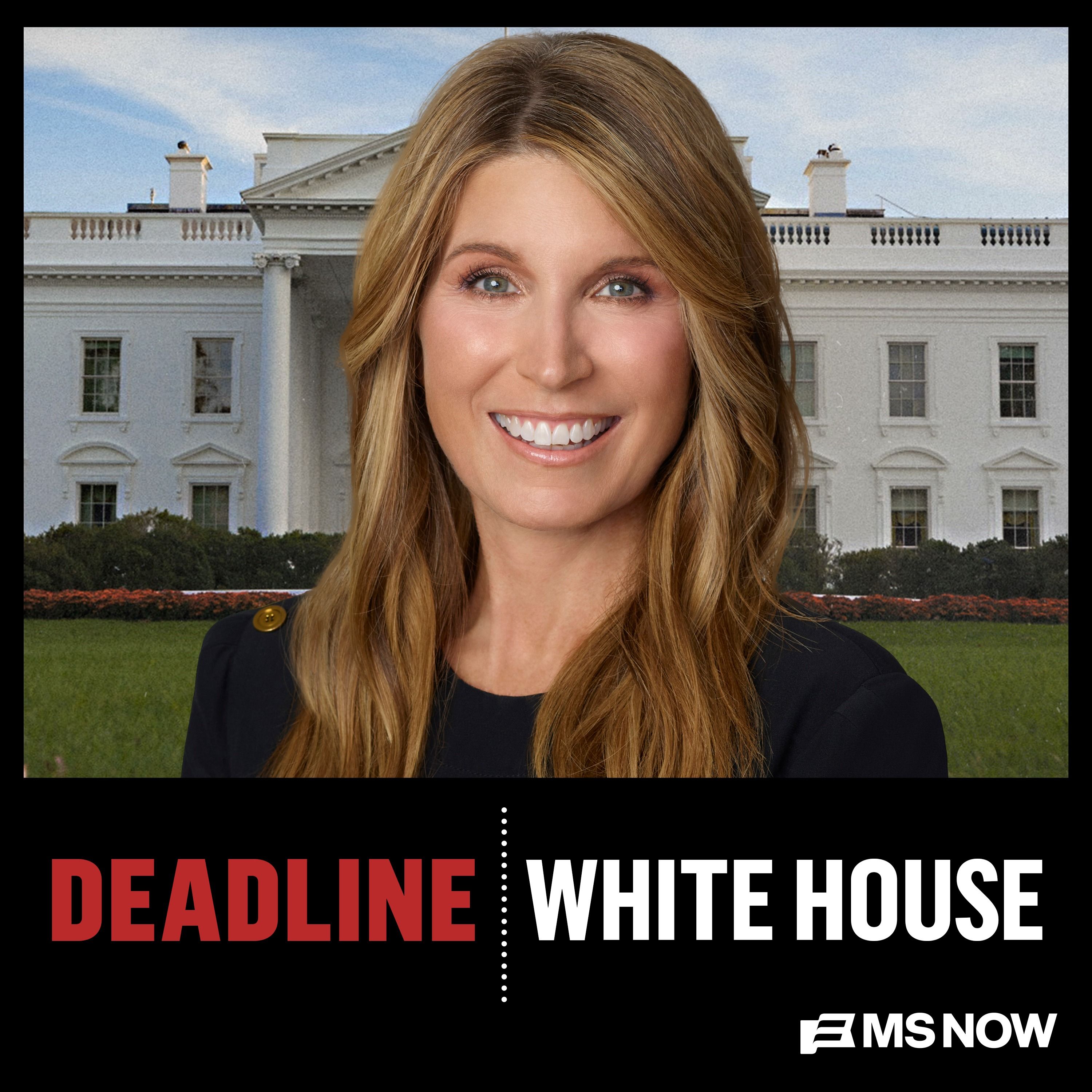
Nicole Wallace
Deadline. White House is brought to you by Progressive, where drivers who save by switching save nearly $750 on average. Plus auto customers qualify for an average of 7 discounts. Quote now@progressive.com to see if you could save Progressive Casualty Insurance Company and affiliates national average 12 month savings of $744 by new customers surveyed who save with Progressive between June 2022 and May 2023. Potential savings will vary. Discounts not available in all states and situations. Hi there everybody. It's four o'clock in New York. Don't worry about reaching for a pen and paper today. Today's show comes with all of your math homework done for you by us. Not that it's a particularly difficult bit of arithmetic either, which is the whole point. Because Today on day 54 of our 90 deals in 90 days tracker, Donald Trump isn't remotely halfway there. Be generous and give him half of one point for a framework of a deal with the UK and we'll give him a point for achieving a preliminary one with China. Although there's trouble on that front to tell you about as well today. And Trump has just passed his own 1 yard line 1 90th of the way there. To put it bluntly, this is not a game, it's a gamble and a bad bet to hear some economists talk about it, Steve staking our very livelihoods and those of our children on reforging global trade using possibly illegal tariffs. As of today, the rates for steel and aluminum imports are now officially doubled up to 50%. Now while the White House went about evaluating final offers, whatever that means from other countries on this self imposed deadline day. And who knows, maybe today's the day. Maybe by the time we're off the air there will be some real agreements and deals signed on paper and they'll announce them. Maybe we'll even see that quote cascade that Peter Navarro promised. He's the aide who coined the quote 90 deals in 90 days promise. Or maybe, maybe they'll find that it's more difficult than that. Just this morning, Donald Trump was posting on social media about just how hard it is to make a deal with China's President Xi. A notable addendum to what Treasury Secretary Scott Besant said last week the talks were a bit stalled with China Politico reporting this quote, trump thinks a call with Xi will help reset souring trade talks. But even if that conversation happens this week, as the White House said is likely, it is doubtful to be the breakthrough Trump is hoping for. The president is obsessed with having a call with Xi, said one person familiar with the trade talks, convinced he can personally hash out deep seated divisions between the world's two largest economies. Mano a mano a xi. Again, the stakes don't get much higher than this, especially when you consider what Trump's allies are preparing to do to millions of Americans right here at home with that big whatever we want to call it. Not so beautiful, Bill. That confluence is where we start today with some of our favorite reporters and friends. NPR's chief economics correspondent Scott Horsley is here. Also joining us, former senior adviser to President Joe Biden and Vice President Kamala Harris. Former New Orleans Mayor Mitch Landrieu's back and MSNBC political analyst, host of the Bulwark podcast, Tim Miller is here. I want to start with the calamitous state of no deals in 90 days or we'll give him 1.5 deals in 90 days. Scott, is there any shift in the language or any. I mean, I know that the White House feels that it has its base so completely captive on all results, but they are still on the record as of today promising 90 units of something for which they have won. Right. And they're trying to up the pressure on the trading partners. Today this was sort of the deadline for all the other countries to come in with their best offer for a trade deal. It's interesting. The Congressional Budget Office came out today with a forecast of how much money they think the tariffs are going to raise over the next decade. And they projected that the tariffs that were in place yesterday would be made permanent over the next 10 years. Well, nothing over the last couple of months suggests that these tariffs are going to be anything like permanent over the next 10 years. They've gone, you know, they've gone up and down like a yo yo. So how much bargaining pressure there really is on these other countries to come through with a deal is up in the air. I want to ask about the impact of ignorance on negotiations. This is the commerce Secretary talking to Senator Kennedy about sort of a pretty basic element of trade policy. If Vietnam, for example, came to you tomorrow and said, okay, Mr. Secretary, you win, we're going to remove all tariffs and all trade barriers, would the United States please do the same? Would you accept that deal? Absolutely not. Absolutely not. That would be the silliest thing we could do. What's the purpose of reciprocity then? Is reciprocity not one of your goals? Are you telling the president that we shouldn't seek reciprocity? If that's what you're telling him, why Are you trying to do these trade deals? What do we want? We want. We want to encourage Vietnam to produce products. They're great at producing. I want to get back to Russ and prostheti. You just, you just said you don't believe, you don't accept reciprocity as a goal. What are you negotiating in these trade. Why would we open our bank account and their bank account. Why are you negotiating trade deals? You're trying to get other countries to lower their trade, their tariffs and trade barriers in return for us lowering ours. That's true for the things that they'll take from us. That's called reciprocity, of course. So I want to be really precise here. I'm not trying to stupid shame anybody, especially not the only Secretary of Commerce that the United States of America has right now. And he might be really smart at other stuff, but he obviously doesn't know jack. You know, what about trade? This is the person in charge of the deals. Well, Senator Kennedy is advancing what has been the standard US Position for decades, which is that we have historically been a country of low trade barriers, and we have encouraged other countries to lower their trade barriers. Donald Trump and his cabinet have adopted pretty much the opposite position, which is that we're going to raise our trade barriers and almost by default, encourage other countries to raise theirs in response. And we are now sitting on the highest trade barriers in the US the highest tariff levels in the United States since the Great Depression. Yeah, I mean, and Mitch, I want to bring you in on this. I think that to pursue policies that history shows are foolish and devastating and damaging is one scandal. We've kept a close eye on that. To pursue policies that history shows are devastating and damaging are one of the factors that precede catastrophic foreign events like wars. From someone who has no idea what he's doing is an even larger scandal, it would appear. Well, first of all, John Kennedy, who has proven to be one of the most conservative senators and a huge Trump supporter, was trying to help the Secretary out. Trump himself has said many, many times, we'd love to get to zero, zero. So what should be clear now to everybody is there is no strategy. They don't know what they're doing. They're not on the same page. They're in opposite of each other, depending on what time of any day it happens to be. So Americans could conclude that there is no plan. Look, my wife and I have five kids. We often say to our kids, bad decisions equal bad consequences. The decision to get into a trade war when there wasn't one before was a bad decision. And the consequence has been that today I think the effective tariff rate is 22%. That even though we're not at 145%, Americans are paying somewhere between 10 and 22% more than they paid when Donald Trump went into office. So just think about going to the store and getting a loaf of bread, you know, or buying chips or buying food for your family, and you're paying a 10% tax or a 22% tax on that. Everything is going up. It's not going down. And Donald Trump ran for office and said that his primary mission for running was to lower costs for working folks. And all he has done since he's been in office, besides mess everything up, is, is to raise prices, cut health care, make it harder for folks to live. And I just think it's not going to end well. Besides the fact that they don't even have a deal yet other than the 1 out of the 99 that they said they were going to have. So they're not even good at being bad at this point in time. Tim, I know we're in a news cycle that blurs bias, right, and just so distort so many things, but can we just freeze frame on Mr. Lutnick for a second? Because it's just an interesting window into how Trump has no standards. Trump ran the first time. Part of the appeal was he would bring in the best people. When you saw Mattis, you were like, okay, maybe some of these people are really going to save us from whatever. Trump doesn't know, not what he did this time. Mr. Lutnick talked about he's one of the richest people to ever serve in a Cabinet, talked about his mother in law missing a Social Security check and being one of those good people who would never complain about it. Now he's making clear to, I don't know that there are many more MAGA members in the Senate than Kennedy, that he has no idea what the basic principles of trade are and he's one of the people in charge of negotiating trade deals in normal times. What sort of response should that elicit? Yeah, it's good to sit on Lutnick because he is the most incompetent member of the cabinet in what is a pretty competitive category. And he's doing it by a wide margin. It like I and even people inside the Trump administration will say that. So that's not even those of us who are Trump opponents who are saying it. They, they were pointing fingers at Lutnick all the Way back in February in blind quotes and, you know, Politico and other news outlets like that. So, you know, he does not know what he's doing. But I think it's important. That exchange is, was very revealing between him and Kennedy in another way that I just want to tease out because we're looking at two kind of different types of dumb there. Like, Lutnick doesn't know what he's talking about when it comes to tariffs. So making him the point man for it just because he was willing to suck up to Trump the hardest was a really dumb decision. And he's advancing very dumb policy, which is these tariffs, like you've mentioned, which there's plenty of historical record to show how it will damage the economy. But Kennedy there, who is trying, as I think Mitch pointed out, to nudge him the direction to a smarter policy was revealing a kind of lack of savvy himself because John Kennedy doesn't seem to understand the policies that the candidate that he supported was going to implement. Because this idea, this pretense, like he seems to have convinced himself of this lie that, that some Republicans told Wall Street Journal voters in order to get them to vote for Trump, that like Trump has a desire to lower trade barriers and to lower tariffs and that that's the point of this, to get to some great deal at the end. But that's not the plan. Anybody that listens to Donald Trump knows that's not the plan. And, and John Kennedy has been whole hog, signed up on the Donald Trump bandwagon, pushing him and promoting him and trying to get him elected so that he could implement this tariff policy that John Kennedy knows is terrible. So to me, like, that's a different, different kind of stupid, but it's, it's stupid in its own way. Well, and I think the other piece of this that's coming into focus for everybody is the. I don't even know what the excuse structure will be inside the MAGA information system, but around xi, I mean, I remember former national security officials saying there's no pressure on XI to call Trump or get on the phone with Trump and do a deal. Ours is the economy totally driven by consumer activity and behavior and sentiment. And when our consumers, you know, step back a half an inch from their confidence or good feelings, that shakes the global economy. So there's nothing that's going to drive XI to the negotiating table when that is the weakness of our economy. I want to show you the smoke signals coming out of the administration on China. Scott Trump posted this. I like President Xi of China always have and always will, but he is all caps, very tough and extremely hard to make a deal with. That was probably an intelligence product going back a decade. You know, that he's, that he's kind of just figured that out and is now using it as an excuse is revealing in a way that I'm sure doesn't aid his own goal, a trade deal with China. But this is the other piece of the picture that I know China is looking at. One, they are reportedly enraged about expelling foreign students from American universities. That's very important to them, and this is in the Times. Today under Trump, the US Is slow slashing research funding that helped establish America's reputation as the global leader in science and technology. The President is also attacking the country's premier universities, trying to limit the enrollment of international students. Scientists from China are under particular pressure as US Officials have said they may pose a national security threat by funneling valuable knowledge to China. Chinese born scientists have been investigated or even arrested. Last week the Trump administration said it would work to aggressively revoke the visas of Chinese students in critical fields. As a result, many scholars are looking elsewhere. So I'm just a reader of the New York Times and an ex White House official from forever ago and I know that there is no negotiating with China unless that is on the table. So the idea that Trump even thinks there's going to be some unit issue negotiation with China seems incorrect. Well, I can't think of a better way to sabotage the United States long term competitiveness than to slash our government funding for basic research and development and to tell the best and brightest students from around the world. World, not just China, but from around the world. We don't want you to come and study and lend your talents to the US Economy. So it's not just a bargaining tactic in the global competition with China. And I think we're competitors, not adversaries. But in the global competition with China, the strategy here seems to be to hand a competitive advantage to our opponents on a silver platter. I mean, Mitch, how much do you, how much work do you have to do to show that this is really about making China greater and more competitive, not the United States of America? Well, think about it like this. If we had gone into this and said we want to have a trade war with China, how do we beat them? The first thing you would have done is make sure you secured your relationship with your closest allies. That would be Canada and Mexico and of course the NATO countries, and that you would together kind of really Put up a united front against Canada. What's the first thing that Donald Trump did? He eviscerated our friends who could help us if in fact the point was to defeat China. The second thing to remember is in a trade war, the greatest trade deficit that is in our favor and against the rest of the world is we create really great intellectual capital in our universities. And as we were saying earlier, with the technology that we have, the research that we do, and the education of other people that we export to the rest of the world, and now we're taking that advantage away. So if the point was to fight China and to beat China, we basically have now handed them the tools that are going to make it easier for them to beat us. So it's not a way to win the fight if that's the fight that you wanted to pick. I mean, Tim, I don't even understand how another country gets on a plane and comes here to have negotiations over a policy that you've got. Former George W. Bush appointed conservative judges claims agrees with the courts in that they're illegal. Michael McConnell writes this in the New York Times today. The question is whether vague language in a 50 year statute, the International Economic Emergency Powers act of 1977, gives the President tariff setting power. The answer to this question will reverberate far beyond the issue of tariffs because the federal statute books abound with vaguely worded laws that if broadly interpreted, could empower Trump and future presidents to take upon themselves extensive powers never intentionally delegated by Congress. If the courts uphold the Trump tariffs, it will be a major step toward a presidency that does whatever the president wishes to do. Yeah, well, look, I mean, it's probably illegal and it's not surprising that Reagan and Bush era judges would be opposed it because they weren't for Donald Trump's protectionist policies that go against the free market principles of those administrations. So I think that's one thing. The other reason why they wouldn't come is just it doesn't make any sense to come strategically. You know, I had Rahm Emanuel on this podcast this morning and he was obviously ambassador to Japan under Biden. And so did, you know, I thought a lot about how we can position ourselves strategically vis a vis China, using our relationship with Japan and other countries in the region. And his point to me was twofold. One, all these countries know now that Trump is a chump. Like they have understood the taco part of this, right? He used that worse chump in a very rom way. And he's like, so why make a deal. Why sacrifice at all when you know that, hey, he might fold any second, that the courts in his country might say it's illegal, that he might change his mind? Even if you do make a deal, what's the point? So that's one side and then the other side. If you look recently, what Rom was saying was look at how Trump treated Zelensky and the president of South Africa. So if you're one of these other countries in a hostile negotiation, why would you send somebody to America to meet with Trump to try to do a deal when he might call in the press and start embarrassing you and show pictures from a totally different country and say that's your country doing a job, genocide, when it actually is in Congo. Right. So for a lot of reasons, a lot of these countries are just totally disincentivized to come here to make deals at this point. And so here we are, day 541 and we'll generously give him a half deals kind of. Scott Horsley, Mitch Landrieu, Tim Miller, thank you all so much for starting us off today on this. When we come back, Jacob Soborough, who was at one of the nation's largest ports for us today as those newly taxed imported goods made their way to our shores, is now following that cargo as it makes its way onto trucks. And he's back on land talking with the truckers, waiting and sometimes waiting and waiting some more for their next assignment or load. Jacob Sobra joins us live on how Trump's trade war is hitting the truckers bottom lines. Plus, new chaos expected and more lives at risk following a new order from this White House on how they treat pregnant women seeking life or death emergency care. Another promise made to millions of Americans has now been broken. And later in the broadcast, the Republican divide is widening today over that big budget bill. Not so beautiful as we learn just how bad it could be for the American people. All those stories and much more when Dead in the White House continues after a quick break. Don't go anywhere. MSNBC presents a new original podcast, the Best People with Nicole Wallace. This week, she sits down with Jason Bateman and Rachel Maddow. We are in a really important moment and we're an important place in it. And I'm glad that we're there together. The Best People with Nicole Wallace. Episodes one and two are available now for early access, ad free listening and bonus content. Subscribe to MSNBC Premium on Apple Podcasts. Hey everyone, it's Chris Hayes. This week on my podcast, why Is this Happening? Karen Howe, author of Empire of Dreams and nightmares in Sam Altman's OpenAI. If you make too early of a call and you try to replace all your workers with AI and then it doesn't work out, you hire back the workers. But there are lots of other things that this hype around AI is driving forward that is not reversible. That's this week on why is this Happening? Search for why is this happening wherever you're listening right now and follow Donald Trump's completely incoherent and self created global trade war has already had a huge impact on industries and people all across the supply chain. A recent report in Reuters estimates that Donald Trump's on again, off again. Tariffs have already cost companies $34 billion in lost sales and higher costs. And that number is expected to rise as economic uncertainty is paralyzing decisions at some of the world's largest companies. Among the first casualties of Trump's trade war were the ports in Southern California where last month we were able to see, thanks to our footage from our friend Jacob Soborough and his reporting, how much shipping had slowed, with shipping container imports plunging. Now the next casualty, the truck drivers responsible for transporting those goods from inside the containers onto trucks and then taking them from the ports to warehouses. They are now left to worry about their economic security and their very jobs because of that shipping slowdown. When asked about this very real anxiety among truckers a few weeks ago, here's what Donald Trump said to those truckers. But we're seeing as a result, the ports here in the US the traffic has really slowed and now thousands of dock workers and truck drivers are worried about their jobs. That means we lose less money. When I see that, that means we lose less money. So when you say it slowed down, that's a good thing, not a bad thing. Yeah. Not how it works. The truck drivers are worried about losing their jobs. The stores have the goods to sell. Not a good thing. Let's bring in NBC News correspondent, our friend Jacob Soborough out in Commerce, California for us. He's with one of those independent truck drivers waiting for cargo loads. Tell us what you're seeing and hearing, Nicole. It's a chain reaction is what's happening out here. When I last joined you from the ports, you saw those empty ports. Now there are empty, what are called intermodal facilities all across, not just the greater Los Angeles area, but across places connected to ports all across the United States. This is Luis Molina, who is one of those drivers. He's an owner, operator of this very vehicle that we're Sitting in right now. I came out here yesterday by myself and I wanted to understand what happens with all that stuff. This is the truck. You're looking at it on your screen right now that we're sitting inside. Right behind us is that facility where the cargo containers come off the ships, they get put onto trains, and they get dropped off right here behind me. Luis, first of all, do I have that right? Yes. Okay, so let me ask you, Luis, you've been sitting out here basically because you're an owner, operator, you don't work for a big company. It's almost like, and correct me if I'm wrong, it's almost like Uber, where you're waiting for a call, a dispatch to go in and pick up cargo. Is that how it works? Yes, pretty much. Tell me how it works. So what do you do on a normal day? That's how it works. We come here and then they send me an email letting me know what containers we have to move to the yard. And that's what we do all day, day and night. Today you've had one pickup. One pickup since yesterday. And so one pickup since yesterday is 125 in the afternoon. How many would you normally have in a good day? I have around 15. 15 pickups. And you're paid by pickup? By pickup, yes. By move, yeah. You have a big family. Tell me about your family. Well, I have five kids and of course, my wife. Right. And my wife is also a truck driver. She. She does this in the mornings. I work at nighttime, but since it's very slow, she's not coming to work because I sleep at the night. And then I'm taking over her shift. What does this mean for you and your family? I mean, just financially, it's really bad. You got little kids? Yes. The savings that we had, because we know that at the beginning of the year is pretty slow. So our. Let me stop you, Luis, real quick, because I want to talk about your savings. But on the left hand side of the screen, everybody's looking right now at there are nine train tracks. Normally there'd be trains on every one of those tracks. How many trains are out there right now? I have. No way. I don't know. I haven't been there. But you don't know because they're not calling you to go in. They haven't called me. Let's go outside. I want to tell people a little bit. I'm going to follow you. Let's go outside. I'm going to talk to you about your family while we walk outside. Luis, tell me about the implications and Scott Killian is going to follow me. Nicole, tell me about the implications for your family. Well, our savings is already drying. Like I said, at the beginning of the year, it's kind of slow. But this year I've been doing this for more than eight years, and this year has been the slowest one. So your savings has dried up because of. Yes. A lot of people, I think, Luis, are comparing what's happening out here right now to what was happening during COVID But for you, people like you, this is the opposite. Yes, during COVID truck drivers were very busy because we had to keep up with the demands of the product. And normally right now there'd be trucks driving up and down. I'm just doing this, Nicole, so I can see where the drone's at on the left hand side of your screen going up and down the street. Right now we're not seeing many trucks, we're not seeing many people. No. Normally this street is pretty busy. That inside is really, really busy. What are you going to do in terms of affording your life? I mean, another thing I want to make sure everybody at home knows is there are literally hundreds of thousands of people who are owner operators that have their own trucks like you, that do this job across the country. What are you gonna do? How long can you sort of sustain this before you gotta go find something else? Not too long, actually, since it's my own vehicle. I'm registered with four more companies and when I'm not doing this, I'm doing something else. And they haven't called me. Nobody's calling. It's been a while since they. I called them and they had nothing. Nicole, that's. I think that's part of the problem. I think that the dots are not being connected. And so when you look at somebody like Luis, Luis is one of the literally hundreds of thousands of people all across the United States of America that want to be on the left hand side of your screen inside this intermodal facility where the cargo is picked up off of a train, put onto the back of this truck, which he owns, by the way. You own this, but you're financing it, right? Yeah. And so are you going to be able to continue to make payments on it? I really hope so. I really hope so, yes. Because it's your livelihood. Yes. Like I said, my wife does the same thing. So if it's low for me, it's low for her. What do other people that do this tell you about, you know, how long we are? Very, very Worrying. We talk about it every minute and we're just waiting for something to happen. And so, Nicole, as I was saying, Covid was the opposite situation. Eventually the ports first had stalled, but eventually there was a backup and ships were out into the Pacific Ocean and you could not get cargo out of this facility fast enough. Were you making a lot of money back then? During COVID Yeah. Yes, during COVID there was a lot of money. There was a lot of movement. And so do you think that this is all to do with the tariffs and the policies of the administration? Yeah, definitely, yes. Anybody I talk to, they say the same thing. Yes. What would you tell President Trump if he happens to be watching right now? I know you're a businessman, but I think that you went too aggressive. Too aggressive? Yes. So you thought even if he was trying to make a deal, even if it might have been. Yeah, I mean, I know he's trying to make a change, but, you know, it should have been done slower. Nicole, the lot you're looking at on the left hand side of your screen right now, Luis, take a look at that right there. That's the lot that Luis normally sits in. That lot is filled with trucks that are waiting. Explain to Nicole what that is. Yeah, they're all standby. We're waiting for work. Those are people on standby waiting for work. And they're literally waiting for a dispatcher to call them so that when they get that call, or you said it's a text message, right. You would actually turn on your truck, pull out of that driveway and pull into the facility to pick up cards. And instead you're, you're sitting and I'm enjoying talking to you. The lot's empty. Usually that lot's empty. You're sitting out here, unfortunately, talking to me. So, Nicole, this is, I think it's a pretty good snapshot for, as I said, a person who. This is a wonderful guy, Luis. And he, unfortunately, I'm sure, doesn't want to be standing here talking to me. He wants to be picking up cargo right now and driving it to another location here so it can be picked up and go to a warehouse so that it can go out to people all across the country. Jacob, I wonder if you can ask Luis what. I mean, I think too aggressive is generous, but you keep. You referenced Covid a couple times. I mean, do Luis and his and his fellow drivers have any understanding of why this happened and how long it's going to last? Yeah. Nicole's question is, and her point is too aggressive might be a Generous statement about the Trump administration policies. Do you guys have any idea what are you guys, when you're talking about with each other, how long this is going to last, what's responsible for it specifically, and how long it's going to last? One of my supervisors said that if it's going to get okay, it will be until mid next month, the middle of next month. And how long do you have in order to. And that, by the way, what's driving by right now, Luis, that company right there, those are. Those are companies that are big companies. Right. They're not owner operators. Those guys are gonna get first dibs before you, before the owner operators. Am I right to say that, Nicole? So ultimately, I think Luis is just waiting. Oh, I was gonna say, if it's lasting to the middle of next month, I have no idea about what it means for you. Yes. Are you worried about your kids? Oh, yes, I am. Yes. I worry about the rent. I worry about everything. About the rent, too. Yes. Yes. Like I said, my savings are already drying and I'm trying to not to stress out. I'm so sorry that you're going through this. And I will say, Nicole, when you have a random guy walk up to you on the street, Luis was walking down to the food truck to get lunch, and I just said to him, hey, I'm a reporter, you know, and I'm curious about how things are going right away. What'd you say to me? Yeah, sure. But he also said it's slow. They want to share their stories. They want to share their stories, and they want people to know what's going on out here. And so I'm so grateful to you for doing that, Nicole. And this is a long way from being over. Yeah, I hope. Tell Luis, I hope he's right, that it's over the middle of next month. It's as good a guess as anything anyone else has said on this program. So I'll go with it as a hope, if not a prediction. Jacob Soboroff and Luis, if I could just say. Go ahead. Go ahead. Real quick. In the next hour. Excuse me. In Ari's show, we're actually going to be. We're going to go from here inside one of the warehouses where Luis and other people here would normally drop off their products. And you're going to get a good inside look during the beat about how this chain reaction goes from the ports here to the intermodal facilities to the warehouses that are normally waiting on guys like this. And it goes all the way down the line. So thank you again for the time. As always, Nicole, we really appreciate it. Thank you for the education. Jacob Soboroff and Luis, we appreciate you both switching gears for us. Another campaign promise broken. The latest move for the White House, threatening Americans seeking real life saving emergency health care. We'll bring you that story next. After promising American women on the campaign trail this quote, I will be your protector, end quote. It only took Donald Trump four months to give the go ahead to endanger the life and health of every woman in America. Yesterday, the Donald Trump administration revoked the Biden era guidance that required hospitals to provide women in medical crises with abortion care even when their health or lives are at risk. In a statement, the Trump administration wrote that the guidance did not, quote, reflect the policy of this administration. The Trump administration, the danger this change poses to women living in states with bans cannot be overstated. One expert telling the New York Times, quote, it basically gives a bright green light to hospitals in red states to turn away women, pregnant women who are in peril. Joining our coverage, Washington correspondent for the New York Times covering health policy, Cheryl Gay Stolberg is here. Also joining us, my friend and colleague, MSNBC senior political analyst Alex Wagner Spack. I think there's a hope or a bet from the Trump administration that we won't see these changes, we won't cover them because this is such a losing political issue for them. But the real world implications for pregnant women are massive. Yeah, they are massive. And in fact, the Trump administration kind of tried to bury this. This actually happened last week with a very obscure notice in some federal document. And then they announced it yesterday in a very mild sounding press release. But in fact, this is very, very serious for women. It means that a woman can show up at a hospital in distress pregnant and might require termination of that pregnancy to preserve her health or save her life and could be turned away. It throws into chaos these decisions that should be in the purview of just the doctor and the patient. And now suddenly you've got, you know, lawyers coming in, can we do this abortion or can we not? And just from a medical standpoint, a woman in distress who's either bleeding is what, sometimes on the road to sepsis, or I mean, just talk about what that means medically, how that presents. So what that means, for instance, in a state like Idaho, Idaho is a state where abortion is banned except when the life of the mother is at risk. And that word life is really important because it's not except where the health of the mother is at risk. So what you have Are these situations where a woman could come in, in medical distress, perhaps bleeding, and then the doctors have to make a decision? Is her life at risk or is just her health at risk? And if it's just her health, well, we really can't terminate the pregnancy. We have to wait until it gets so bad that she's on the verge of death before we can act. And that's really scary. Women die in this country in childbirth. We have a very high maternal mortality rate. And this policy is not going to help that. And again, Alex, this is something that I think the Trump administration would like us to be buried under their flurry of mayhem and never cover. This is a loser for them. They know it. Abortion rights measures ran ahead of Donald Trump in the 2024 election in some states. Maybe that made it easier for him to slip through. But just talk about how dormant this issue has been politically. But now that they're actually making policy in this vein, the risks. Yeah, I mean, so there are a couple points. One, the fact that this is sort of dribbling out in vague terms is indicative of a White House that understands the political peril. Right. I mean, Trump said repeatedly on the campaign trail, I'm going to leave this issue to the states. Well, now he's in charge of the federal government. The federal government's making a decision that the health and welfare of pregnant women is on par with the health and welfare of unborn fetuses, that they are co equal in terms of life saving or medically necessary care. That's a big deal. But I think it's kind of strategically, perhaps a mistake for Democrats to frame this as just about abortion. This is about being pregnant in a red state. This is about whether you're going to try and have a baby. I was pregnant, you were pregnant. It is a time of anxiety and peril. Things go wrong and a lot of women have to go to the emergency. I'm a woman that had to go to the emergency room because of pregnancy complications. And to think that in that moment I would have to worry about what federal policy was and whether or not the emergency room doctor was someone who is willing to risk a malpractice suit or a lawsuit or jail time to give me the care I needed is not something American women have ever had to grapple with. And this is, of course, for the right wing about abortion, but it is a statement of principles. And I think Democrats would be right to couch it as a referendum on how the Trump administration sees women and whether their lives actually matter. Because this is about basic reproductive health care. Yeah. I mean, and I guess I almost wish we hadn't already crossed. We live in post Women dying while pregnant America. Yeah. The country got to know Amanda Zyrowski and her husband. I mean, this is already happening. ProPublica went on Poland, because this is already happening. Being pregnant in America is already potentially deadly. And I think what you're saying is this is about to get more so as a federal policy. Yeah. I mean, literally, if I had friends in red states who were trying to get pregnant, I'd say, be careful. You cannot control what happens in your body in those 40 weeks. There are all kinds of unforeseen consequences. Imagine living in Idaho or West Virginia where it's like, I mean, I don't know, maybe. Maybe I'll go septic. Maybe I'll die. Maybe they won't get to me in time because of a rheumatism. Or maybe I'll get in a car crash while on vacation. I heard of people who were just being pregnant. I'm going to tell you how this actually hurts all women, because in states like Idaho, obgyns, especially those who specialize in high risk pregnancies, are leaving, and they're leaving because they're afraid to practice. Before Dobbs, there were nine high risk OBGYNs in Idaho. I went to Idaho. I think in 2023 they were down to five. And these policies are going to further encourage that exodus of medical care for all women from red states. I've just taken a break. I want to bring in some of the stories, things that are actually happening to women already. No one's going anywhere. We'll all be right back. We're back. I wanted to share some things that are actually happening. This is from wboy prosecutor warns of potential charges against women who miss miscarry in West Virginia. Quote, could women in West Virginia who miscarry at home be charged with crimes related to disposal of a body if they flush or bury fetal remains? Raleigh county prosecuting attorney Tom Truman said that a number of criminal charges under state code, including felonies, could be levied against a woman who flushes fetal remains, buries them, or otherwise disposes. I mean, miscarriage is a tragedy. It is a loss. The vast majority of women who miscarry are devastated by the loss. Most women who miscarry planned pregnancy or who know they're pregnant grieve, grieve. This loss and this whole move toward criminalizing miscarriage is another front in this. It's horrifying. But you know what? It Recalls for me, a time when Donald Trump was running for president, I think, in 2016, and said women should be prosecuted for having abortions. Chris Matthews, right. He said, well, you gotta do something. That's right. So, you know, first, in our first part, we were talking about, you know, doctors being prosecuted. Now they're talking about women being prosecuted for losing a child at the most vulnerable moment in her life. I don't know what to say. I mean, I think that's it. It sort of leaves you dumbfounded. It's of a piece, though. I mean, there was the war on IVF during election year, which Trump side tried to quickly, you know, bury under a tall stack of criminalizing miscarriage books. I mean, it's of a piece with who Trump has revealed himself to be, both in court and on the stump and in the White House, which is someone who fundamentally devalues women. I think, you know, this is someone who has, I mean, the suggestion, the explicit suggestion here is that women are naturally guilty actors in and around the child, parents, right? That, I mean, can you imagine miscarrying at home and then having to call 911 and say, just so you know, I had a miscarriage. That's what's being suggested to the women of West Virginia. Just let us know that you had one, so that if we find fetal remains, we don't come after you. This is an, this is, I mean, the fact, honestly, that we're talking about this and that this isn't the headline. This is an experience that is being sanctioned and directed by conservatives across the country, led by Donald Trump. I mean, who has proven time and time again that when it comes to women and their power, their agency, their health and maybe even their lives, he doesn't really care. Democrats had such a powerful night during their convention. My God, it wasn't even a year ago, right? Last August were all of the women who we all got to know as journalists because they shared their stories about Post Dobbs America, and Vice President Harris, I think, deserves a lot of credit for giving the men who love them sort of equal standing that this isn't just a women's issue. And I feel like. I feel like the reproductive health care access side gained so much ground. You had upwards of 70% of Americans who disagree with Dobbs. Where'd that movement go? Well, listen, I think Democrats have basically turned tail and run away from a lot of the issues that they not litigated but talked about on the 2024 campaign trail, in part because they don't understand where they went wrong. There is a sort of sense of leaderlessness within the party and there is a, I think, about how much to focus on, I would argue very urgent issues like abortion or reproductive health or just the sanctity of women's lives versus purely economic issues. Right. I mean, the other piece is there's a lot of weather on the horizon. Nicole, you started this show talking about tariffs. That's a whole election cycle right there. But I do think this is incredibly important to half of the country and it is an economic issue. Right. Like if you're. Of course. And this is, this is a pro family issue, too. Right. The framing on this is all wrong. I do think the cravenness of the administration to try and do what it's doing around EMTALA and not come out and say this is what we're doing and just hope that the uncertainty drives doctors and nurses to do the wrong thing into paralysis is a level of sick spinelessness. Right. The sickness is paramount, but the spinelessness is also like, we don't want to pay a political cost for what we're doing to people in this country. They need to. I mean, the discussion needs to happen. Well, and again, this is not a conversation or story they want us to cover. So here we are. Thank you for having it with me. Cheryl, it's so nice to see you at the table. We're so happy you're here. Alex, we need you to stick around. I'll be here for the next hour. We've got to take take another quick break. We'll be right back. The Trump administration is escalating its war on higher education again this afternoon, informing Columbia University that they no longer appear to meet accreditation standards. The Education Department said in a statement that the administration found that Columbia failed to meaningfully protect students during protests over Israel's war in Gaza, violating Title IX of the Civil Rights Act. Without being accredited from a Department of Education recognized institution, universities are ineligible for federal financial aid programs, including student loans, Pell grants and work study. This comes just days after Trump compared Columbia favorably to Harvard. Harvard has been fighting the administration's efforts to revoke student visas and federal funding. Columbia essentially capitulated to the Trump administration's demands in March, making changes in an effort to prevent their funds from being canceled. And here they are. Anyway, we'll stay on top of all of this. When we come back, the GOP backlash coming hard for Donald Trump's legislative agenda. The next hour of Deadline White House starts after a quick break. Don't go anywhere. MSNBC's Jen Psaki, host of the Briefing We've never experienced a moment like this, this in our country, and it leaves us all with a choice. Are we going to speak out or are we going to be pressured into silence? I've worked for presidents. I've faced the tough questions from the press and even threats from the Kremlin. And if there's one thing I've learned, it's that you can't cower to bullies. You don't need to be hopeless. We have our voices and I will continue using mine. The Briefing with Jen Psaki Tuesday through Friday at 9pm Eastern on MSNBC. This provision was unknown to me when I voted for the bill. Okay, next question, next question. I am not going to hide the truth. This provision was unknown to me when I voted for that bill. And when I found out that provision was in the bill, I immediately reached out to my Senate counterparts and told them of my concern. They are not buying it. I didn't know what the bill did. Hi again, Everybody. It's now five o'clock in New York. Looks like someone should have done his homework. That was Congressman Mike Flood, Republican of Nebraska, facing stiff, brutal, relentless backlash from his own constituents after admitting in front of them that he didn't read what was in that massive spending bill, Republicans himself included, passed last month by a teensy tiny margin. Democratic Congresswoman Jasmine Crockett called out her colleague's claim that he had no idea this specific provision was in it, especially with your homeboy talking about he didn't know that was in the bill. That was absolutely in the original judiciary markup that came out. So I knew about it and we fought about it. But okay, whatever. As alarming as it is to hear that one member of Congress voted on a bill that has such drastic, potentially life and death consequences for the entire country as well as the lives of the people he represents, without even reading it. Congressman Flood isn't alone. Marjorie Taylor Greene posted on X this quote, full transparency. I did not know about this section that strips states of the right to make laws or regulate AI for 10 years. I'm adamantly opposed to this and it is a violation of state rights and I would have voted no if I had known this was in there. Sure you would. Now we're all going to die act as described now by Senate Minority Leader Chuck Schumer earlier today, now heads to the United States Senate, where Republicans can only lose three votes. Senators have already said they will make edits to the bill, which then has to go back to the House for a final vote. As we mentioned in the last hour, pressure in the Senate over this bill is sure to mount. Following the score today by the nonpartisan Congressional Budget Office. That office, the CBO, says the bill will increase the debt by $2.4 trillion over 10 years and the number of people in this country that will go without health insurance will increase by 16 million by 2034, a revision from its original tally of almost 11 million. That is as a result of spending cuts as well as changes to Medicaid and the aca. Elon Musk yesterday gave a forceful denunciation of this legislation, calling it a quote, massive, outrageous, pork filled congressional spending bill. That is a disgusting abomination. He added, quote, shame on those who voted for it. You know you did wrong. You know it. This afternoon, Elon Musk has initiated a kill the bill campaign, telling his followers on social media to contact their congresspeople and senators. Responding to Elon Musk's first criticism, Congressman Scott Perry of Pennsylvania referenced the Republicans who originally took issue with the bill before it was ultimately passed. He wrote this, quote, I wish I had a nickel for every time the House Freedom Caucus sounded the alarm and nobody listened. Boo hoo. Only to find out the hard way we were right all along. Yay us. She leaves out one glaring fact, that he voted yes. He was one of the Republicans who voted yes on the bill and now wants credit for sounding the alarm. What does that even mean in MAGA world? It's where we start this hour with some of our favorite reporters and friends. NBC News chief Capitol Hill correspondent Ryan Nobles joins us. Also joining us, MSNBC columnist, author of the newsletter to the contrary, Charlie Sykes is here. Lucky for us, MSNBC senior political analyst Alex Wagner has stuck around. Ryan, let me start with you. I mean, they knew people would die because otherwise, why did Joanie Ernst say, quote, everybody's going to die and then go to a cemetery the next day? Well, I think what Senator Ernst would respond to that, Nicole, in saying that she meant that everyone's going to die eventually. In fact, that's what she said and that it wasn't in the context directly of the bill. But her response, response to that question shows a degree of flippin ness that Republicans have voted. Let me just keep the integrity of the clip because we've played it on this show twice and my viewers know what's in it. A constituent of Joni Ernst says, what about the bill? What about the cuts to Medicaid? People are going to die. And she says, quote, everybody's going to die. So she, she says, I mean, what you're saying is actually a fact about human life. But she says it in response to a question about the Medicaid cuts in this bill. Yes, that's exactly, exactly right. And I think that's been part of the messaging problem that Republicans have had in terms of what these Medicaid cuts actually mean. And when you try to pin them down on this idea that there will be no benefit cut, despite the fact that there have been multiple independent, nonpartisan forecasting groups that have demonstrated anywhere between 8 and 15 million people that could potentially lose their health insurance as a result of these Medicaid cuts, they don't have a very good explanation for it. They talk about the number of undocumented people that will lose their coverage. That is really a very, a small drop in the bucket compared to the overall spending when it comes to Medicaid. They talk about the able body being able or being kicked off the Medicaid rolls. Well, that's still going to be a coverage gap, regardless of whether or not you think that those people should be on it. And then of course, there's going to be a significant lapse in the number of people that lose their coverage coverage because of this eligibility rotation that they're going to create. Going from 6 months for eligibility re ups from the original 12 months. People are going to get lost and are going to fall through the cracks as a result of that. So they have not been able to explain why they think that those cuts are necessary in the overall scheme of the budget deficit, primarily, Nicole, because this buildup does not decrease the deficit. In fact, the CBO is saying the exact opposite, in part because of this massive tax extension, the tax cut extension that they have been resistant to, to address at all. And so it'd be one thing if they were coming to the table and arguing that they were going to increase revenues by taxing some of the more higher earners, the wealthier people in America, and then coupling that with these Medicaid cuts, saying both of these, these difficult choices are necessary and there's actual tangible evidence that this will reduce the deficit. They're not doing that. They're instead offering these cuts up, which in the grand scheme of the budget are really not that significant, and adding into it this additional tax cut, the extension of these tax cuts. And the, the net result of all of this is that the deficit is going to increase. And that's why you see people like Elon Musk crying and complaining about it, hoping that something changes. But in reality, on the course that they're headed, that seems unlikely. I just want to be clear. It's not a messaging problem. I mean, CBO just came out with a figure of 16 million people who will lose Medicaid coverage. And our polling has people who have been covered by or had family close to them covered by Medicaid. 66% of all Americans, 62% are Democrats, 62% are Republicans. So there's no partisan breakdown to who benefits from Medicaid. And it's why you've got Josh Hawley saying, quote, we just cannot do Medicaid benefit cuts. The President agrees with that. And I think that we'll hope, believe that we'll get it through the Senate without Medicaid benefit cuts. Got massive Medicaid benefit cuts. Just deepen my understanding of what happened beyond a Mac messaging problem. Yeah. So the issue here, Nicole and Josh Hawley, is a perfect example of this is the definition of a cut. What Republicans are attempting to argue is that the changes that they're making, the reforms as they call them to Medicaid, will not result in benefit cuts. They're essentially arguing that the folks that will lose their coverage deserve to lose their coverage. When we talk about, for instance, the able bodied portion, or what they describe as the able bodied portion of Americans, they deserve to lose their benefit cuts because they think that the country can no longer afford that. So that's where the disconnect here is. They are continuing to say over and over again, President Trump has said this over and over again on his social media channel that no one are going to lose their benefits. And there's simply no independent forecast that reflects that reality. They're there are going to be cuts to benefits. The difference here is that Republicans believe that those cuts are worthy. Those cuts should be made, though. People that are going to lose their benefits don't deserve those benefits to begin with. And as your polling reflects, there are so many Americans that are connected to someone who gets Medicaid benefits and it's unclear right now who among that group of people that get the Medicaid benefit cuts are going to fall through the cracks as a result of these reforms. Republicans argue if they fall through the cracks, that's okay because they didn't deserve these benefits to begin with. Obviously, Democrats feel different. Charlie Sykes, I feel like we're about six news cycles away from, yeah, damn right, everyone's going to die. Everyone who deserves it. I mean, 16 million people are going to lose their health insurance. Joni Ernst, very informed constituent, was correct in pushing back to her, which is why it elicited this callous remark, quote, everyone's going to die, that she doubles down on. What I find confounding is when the Tea Party was awoken from whatever slumber those folks were in, it was about a lie, about death panels. You now have the truth about Medicaid cuts. And I wonder what you think the public backlash will be if there is one. Well, this is a fine mess the Republicans find themselves in. Right? Because you have Elon Musk, who has gone rogue, said that there's too much of a deficit. Now, there's only two ways they can go as Republicans. They can have deeper cuts in spending. And Elon Musk showed that he was failing when he went around with his chainsaw. The cuts would be in Medicaid. The only way to reduce the deficit otherwise is to not extend the tax cuts. And I don't see any way the Republicans are going to do that. So, you know, the question is, now, what do Republicans do to make this more palatable to the electorate and to the right wing and to people like Elon Musk? And it's kind of a fiscal Rubik's Cube, because if I'm listening to what Elon Musk is talking about, he's talking about actually making deeper cuts, more draconian cuts, speeding up some of the Medicaid cuts that would kick people off faster and quicker. So in terms of how they're going to figure this out, this is kind of the nightmare scenario where you have maybe enough votes in the Senate to block this, demanding that the deficit not be increased. And by the way, the CBO numbers are credible. However. However, I think they understate how much it's going to add to the national debt because many the Republicans use a lot of fiscal gimmicks where some of the cuts, some of the cuts expire. If they were made permanent, you would have an increase in the national debt of 3, maybe even $4 trillion. So they have a huge deficit problem, but the only way out of it is either to not cut taxes or cut the spending even more deeply. So it's not impossible that Republicans might actually make this legislation worse than it is right now as a way out of dealing with the defection of Elon Musk and others. And the only reason they have to do the tax cuts is because Trump has destroyed the economy with his tariff delusion. Well, and his priority is the ultra wealthy. Can I just say, for the record, I don't think Elon Musk, maybe he's A one person that doesn't die, like he definitely is gonna put his brain in a rocket. Do you know what I mean? I'll give him a special dispensation on that. Yeah, I think you're right. I do think the idea that Republicans have found themselves in a pickle, which is putting it mildly, is like this is one of the most spectacular own goals in the last 20 years. First of all, it's like an 1100, 1000 page bill that they have eight hours to digest because they've self imposed the. This deadline of Memorial Day. Right. So nobody really knows what's in it. And there are judiciary provisions that are a disaster for the courts of the reason. There's the Medicaid piece that they have no idea how to figure out. They own both houses of Congress and the White House. This is their problem. And I do not know of another job in America, Nicole, where you can collect a paycheck after saying quite publicly, I did none of the work to earn this paycheck, which, which is why Mike Flood is having town halls and people are going up there being like, what is the point of Congress? Why do you even exist? You know, nothing. You do things that put not only the country, but your own party and your own political survival in peril. What are you doing? Yeah, I do want to say, because our friend Chris Hayes is having Bernie Sanders on, we have a little bug down there. Right? Yeah. You know, when Bernie Sanders and a lot of his supporters said we are going to have unelected billionaires dictating the terms upon which this democracy moves, it was not at all an exaggeration. Mike Johnson reportedly called Elon Musk today and couldn't get the call back. And now Elon Musk is jumping into the fray and saying kill the bill or whatever he's tweeting. An unelected billionaire is now trying to determine the course of American democracy. The levels of betrayal in this to the, you know, the health and safety of Americans and to the sanctity of our democracy and our elected government are too numerous to mention in our Arrow television. Well, we do have a lot of time. Not enough. 46 more minutes. Two more hours. I guess what I would say is the opportunity for Democrats. And they're doing this. I don't want to be aware of the Democrats on this. They are doing this. But to stand with everyone who's scared, which includes again, an equal number of Republicans as Democrats and upward of almost 70% of independents, and to be the party that is against everyone dying, the party that is against tax cuts. And I mean this again, this isn't happening in a vacuum. The New York Times writes that electricity prices are now surging to add to people's pain and anxiety and fear. Quote, in its current form, that bill that would abruptly end most of the Biden era federal tax credits for low cards sources of electricity like wind, solar, batteries and geothermal power. Repealing those credits could increase the average family's energy bill by as much as $400 per year within a decade. According to several studies published this year. Ending tax breaks for solar panels, wind turbines and batteries would make them more expensive and less plentiful, increasing demand for energy from power plants that burn natural gas. So everything is getting more expensive. Wal Mart has said their goods will be more expensive, energy is getting more expensive. The economy is paralyzed with his manufactured trade war. And now the big hideous bill that Elon Musk is trying to kill is going to give tax breaks to the rich and take 16 million people off insurance. The plan is no plan. They don't know what they're doing and they don't care about the consequences. Because I truly believe for Trump and Musk and most of the administration, they are thinking is what's good for us isn't necessarily good for you, and what's good for you doesn't really matter to us. There is an unswerving belief that if there is a sort of catastrophic net effect of these policies, they'll be able to get out of it. They'll be able to airlift their people quite literally or just metaphorically out of the situation and screw everybody else. I mean, I really, all of this is a disaster of their own making and the American people are along for the ride trying to find a little glint of light reflecting on some of the broken glass here, Charlie. But I guess the glint of light is that voters know it. I mean, JONI Ernst Constituents put it on the radar of at least this broadcast that they know that people are going to die. They know about the cuts to Medicaid. And the CBO is confirming 16 million people are going to go without health insurance. Yeah. You know, I don't want to gloss over a point that Alex made, which is that Congress used to actually pay attention to things that had passed. Congress actually used to have hearings, they used to have debates, they used to pass laws. There used to be legislation. There used to be regular order. And it was not routine for members of Congress to come out and say, yeah, these, you know, downstream effects are there. But I had no idea. I didn't read the bill. You know, one of the most extraordinary things, things of our time is watching Congress voluntarily turn itself into potted plants to go along with all of this. None of this would be happening if they had not crammed everything into one big beautiful bill that nobody read. I mean, here's the dirty secret. Nobody who voted for that knows everything that's in that bill. Nobody read the bill. And I think this does go to the question of how are we making decisions in this country if 16 million people are about to lose their healthcare? Where was the debate? Where was the due diligence? Who asked the right questions? And if your representative then goes in front of you and says, yeah, I don't know, I was busy that day. I was doing something different. We had some Navy ships to rename or something more important than actually reading legislation that's going to affect the economy for the next 10 years. That's embarrassing. And by the way, I mean, I remember back in the Tea Party era where Speaker John Boehner stood up and really went after Democrats for not reading every single thing that was in Obamacare. Remember how he just hammered them? That is almost child's play, you know, compared to the lack of due diligence by Republicans on this big beautiful bill. You call it child's play. I call it a playbook. If you're watching Ryan Nobles, Charlie Sykes, thank you for spending time with us. Alex sticks around. When we return to self described beer drinking, bible reading, basic baseball playing, prairie populist who is now taking on the aforementioned Iowa Senator Joni Ernst after her callous comments that we are, quote, all going to die. Democrat J.D. scholten will be our next guest. Also ahead, it's not just Harvey Milk's name that could be removed from the Navy support ship. Defense Secretary Pete Hegseth is now considering erasing history, honoring a number of civil rights pioneers and icons in including Harriet Tubman and Supreme Court Justices Thurgood Marshall and Ruth Bader Ginsburg. And an inspirational story. I know we need that. During the most difficult of times. How Ukraine's national baseball team continues to play the game they love most. One of their team's top players will join us live later in the hour. Deadline White House continues after a quick break. Don't go anywhere. They will be coming off. So we people are not well. We all are going to die. So for heaven's sakes, I can't stop thinking about who plays her in the movie. Those comments have reverberated all across our nation's politics. Seeping into culture, but nowhere more so than in Iowa, where they've now earned Senator Joni Ernst, a Democratic challenger for her Senate seat next November. Yesterday, Iowa state representative J.D. scholten, who also is currently a minor league baseball pitcher, announced his candidacy, which he called a spur of the moment decision after hearing Ernst's comments. Take a look. I wasn't planning on doing this right now, but I just can't sit on the sidelines after Joni's recent town hall justifying gutting Medicaid because we're all going to die. I'm a baseball playing, Monopoly, busting, beer drinking, Bible reading, working class, proud prairie populace who is 6th generation Iowan from right here in Sioux City. Ultimately, this race is not about Joni Ernst and it's not about me. It's about the people in Iowa who deserve better. Joining us now is Democratic Iowa state representative J.D. scholten. Also joining me and Alex at the table, host of the Independent Americans podcast, founder and CEO of Independent Veterans Veterans of America, Paul Rykoff is here. I want to talk to you about baseball, but I won't. Let me ask you about jumping into this race against Jenny Ernst. Yeah, you know, how do you make God laugh? Have a plan? And so on Friday, when all the comments were going social media and going viral, I was actually on my way to a funeral of a family friend and activist in Sioux City. And Senator Harkin, whose seat used to be that one, was attending that funeral. And so at that funeral, that's when I just felt that call to do more. And I was thinking about this race. But then just as the weekend progressed, that horrible and disrespectful apology, that's when I was like, game on, let's do this. I mean, Iowa used to be a little bit more of a swing state than it is now. And so I spent a good deal of time there. And what, what I wouldn't seem to value, and I want you to correct me if I'm wrong at all, is I don't have to agree with everything that you're saying to me, but don't mock me and don't make a mockery of your seat. And it seems like the first thing was callous and dumb thing to say, everyone's gonna die. But she was being confronted by an angry constituent. It seems like what might have fallen more flat in Iowa is the walk through the cemetery. Basically trolling everyone who thinks it's a joke to take people off Medicaid. That's exactly right. And you know, we've been Having town halls all across this state right now on this particular issue. And even on the ground you're hearing people call her Joanie Hurst. It just, it's not Iowa. It's pretty disrespectful. And, you know, that's. We're seeing the outcry from just the level of support has been absolutely amazing all across Iowa. And so that's why we're really excited. And I mean, I've been in the race just a couple of days and we've already see a rating change. And we've seen a poll that came out earlier today that showed a generic Democrats within two. Well, I've outperformed the top of the ticket in every single race I've been in, including in 2018 when we moved, we took a Trump +27 district and got within three points of Steve King. Okay, so you're also a baseball player. You describe yourself as a Bible reading, beer drinking, all sorts of other things that I feel are brand enhancing. Talk about your biography, what you bring. You know, I'm not, I'm definitely not a traditional politician by any means. I got into politics because my grandmother on her deathbed said, you got to take care of the farm. And within a year, I was running for Congress against Steve King. And my one goal was to get a used Winnebago RV and just go non stop. We named it Sioux City Sioux, and we hope to bring that back. Sioux city sioux 2.0 so we can really get out there to all 99 counties. You know, life's coming at me a little bit fast right now. It's a little bit different because I'm playing professional baseball. I got activated on Sunday. I threw last night for the first time in relief and first batter I faced with two outs and a guy on first and second and I got a strikeout and just felt the world just come off my shoulders. And so my teammates are supportive. My, the folks across Iowa have all been supportive. This has just been an amazing week. I mean, that's a high stakes position at any level and certainly at that high of a level. Tell me what lessons from being a reliever in that situation you can bring to your Senate run. Oh, I mean, it's clear that the Democrats have had a struggle attracting younger voters, especially younger men. And so I talk to my teammates every day. I want to know what they care about, but I also want to know how the things that I'm passionate about, how to talk about it in a way that they are interested in it. And so they've been so supportive. The whole Explorers have been so supportive. And so it's just one of those things where in order to win this race, just a Democratic wave is probably not going to do it. We have to be more than that. And how do we bring people into our coalition? I feel that's one of the strengths of my campaign and I have a track record to prove that. What is your strategy and how will you juggle the baseball season and your campaign? Well, first, the, the primary is over a year away, so like, we got a long time and campaigns are far too long. So right now, every federal race out there is trying to grab people's attention. This is just another way that we're trying to drive, draw people's attention. While I continue to do something I'm extremely passionate about, it's going to help the race because the first few months I get to focus on fundraising, play baseball at night, and then on our off days we're going to go across the state and then we're going to raise enough money to get Sioux City, Sioux 2 point our campaign Winnebago and just go nonstop. And we're going to have a massive 99 county tour in the fall. And that's what I'm most excited about. When you just get out there and talk to people, when you talk to people in either of your capacities, you know, on the field as a minor league player or as a state representative and now as a candidate, what are you hearing from people in Iowa? I mean, people are frustrated with the status quo. And that's clearly like most of the, most of Iowa has not bounced back since the 2008 economic crisis. You know, there's our pockets that are doing really well, but the majority of the state, we're losing population. We have an extractive economy. You know, we have farming and agriculture is, is top dog in Iowa. And you have these huge multinational corporations squeezing farmers both on the input side and on the market side. And, and it's really hollowing out a lot of our rural communities. And so we talk about like this Medicaid bill or the cuts that might happen that's going to devastate, I mean, not only kicking people off their health insurance, it's going to crush rural hospitals, it's going to crush rural nursing homes. And so that's one thing that's at the forefront of everybody. Paul, what are you thinking? I think that's what potential looks like for the Democrats. And I think he's touching on all the populist messages and all the right Lingo. I mean, everything from Sioux City Sioux to Joni hurts. I mean, he's wearing a baseball jersey. How about the strikeout? He's wearing a baseball jersey right now. Right. And I think, you know, the question and challenge I'm sure he's aware of is he's going to have to figure out how much the Democratic brand is a problem for him in a place like Iowa. It's the field of dreams. We'll see if it can be a winning field for Democrats where they're still getting dragged down by the brand. I wish he was running as an independent. I'd love to see how he would pull if he did did. But for Democrats, this can be what a populist, more independent, more authentic future sounds like. And looks like you want to respond to that. Yeah. I mean, at the end of the day, I'm a Democrat. And as I'm, I fight my own party as much as I fight others at the state capitol. And a lot of it comes on these economic populist messaging, like focusing on that. That's at the, like, there's no doubt that if you have a D by your name, it hurts you in Iowa right now. But when you have other things, like a baseball or like a Prairie, being a proud Perry populist, like other things other than just being a Democrat, that's how you bring people into your coalition. I can already see your episode right. On Sioux City Sue. I just was, I'm today, I was today years old when I first heard a journalist ask candidate, how are you going to balance the campaign season with baseball season? I feel like this is the beat. I mean, I want to ask you a serious policy question, JD But I kind of also want to ask you a baseball question. Am I allowed to do that? Picture to picture. Like, I'm a Mets fan. What do we think of Code I Senga, how do you like my Mets? Like, where are we? What's your team right now in terms of. Yeah, go ahead. Yeah, I'm a small market team. It fits my politics. I'm a Twins fan. But I'll tell you what, that fork ball that he has or the ghost ball, whatever it is. Yeah, it goes. Yeah, it's real. It's real. Well, we've gotten you on record about that. Yeah. I mean, yeah. Look, what do you, what do you think about the fact that not just Democrats or, I mean, people want to talk to normal people about normal stuff? I mean, how much is that, like the secret that isn't so secret about politics? Oh, my Goodness. And that's the beauty about what baseball and being around baseball teaches me is that politics is not at the forefront of my teammates mind, at a lot of these fans mind. And it's wonderful when just going down like after the game, talking to a fan, just kind of asking a question like oh, what's your stance on this or that just because they're curious. And when it comes to politics and my teammates, like I'm about to go out to batting practice here in just a second and teammates won't say in front of other people, but they're very curious on like what does it mean? And all that stuff. And it just warms my heart for them to, to just one be so embracive of this. I had a team meeting on Sunday. Tell them like, hey, something might happen tomorrow morning that might drive a lot of attention towards us and I don't want it to impact the team, but here it is and they just welcome me with open arms. So awesome. Will you come back please? Just, you can just talk to us about baseball if you don't feel like talking about politics. Iowa State Representative J.D. scholten. Thank you, Alex. Thank you. But thank you. Love hanging out with you. We'll talk about the message. You staying up for the Dodgers series? I mean, yeah, as long as we don't go to 10 innings coffee. I was at the 13 inning game two Fridays. That's because you're, you're a true, you believe as one has to. You have to believe. Especially if you brought your kids along for the ride. Oh yeah, I sure did. Yes. Support group. When we come back, from one baseball player in one country to another baseball player from a very different one. The feel good story of the Ukrainian national baseball team. They're here right now on tour in the United States as our country endures an existential crisis at the hands of Vladimir Putin. We'll be joined by one of the players from the Ukrainian national team after a very short break. There's no denying the unique and singular power of sports. Case in point, the Ukrainian National Baseball team. They're here. They're currently touring the United States to give their players a chance to practice and play games here because those opportunities are limited back home with their country at war. This past weekend they played in New York at the Brooklyn Cyclone Stadium in Coney Island. They were joined by legendary baseball player and manager Bobby Valentine. Now they're on tour in Florida. Joining our conversation from the team bus is Andrey Boyko, pitcher for the Ukrainian national baseball team. Thank you so Much for being here. Thanks for having me. I know people are so excited to have you all here, and it might be a dumb question, but how do you. How does the team practice and play in your country while the war continues to ravage your country? Yeah, we try our best to keep us in shape and to keep the baseball integrate going. So we practice when we can and we don't practice when we can't. And with the invasion, sometimes we can't. What is baseball? Has baseball taken on more meaning and your ties to your teammates and the people that come and see you play over the last couple years? Yeah, absolutely. So. Because for now, it's a big piece for keeping your mind straight and just for distracting you from all the bad stuff that is happening. And to have an ability to spend some time with your friends, play baseball, do things that you love. It's super important right now. Never been more important. I know you guys played the game. I know you also went to a Mets game. Tell me about your trip to America. It's awesome. It's really awesome. I can't thank enough to everyone that is involved in this, and not just for people that helped organize this, but also for simple Americans that tried to support us in every way possible. Just simply walking up to us on the street and saying that they care and they. They feel about us and they are with us in this mess. Well, let me just say for all of our viewers, we care and we are with you. And the American people, I think, are solidly behind your country and your baseball team. I want to ask you if you have any favorites in American baseball, Any favorite teams or players? We've been to New York Mets game, so it's been really cool to watch them play and watch them win. Me personally, I'm a Yankee fan, so it was a bit tough for me to watch Mads winning, but, yeah, it's. American baseball is the best. I mean, we love watching it. We. Everybody has their favorite team, so, yeah, we. I'm here with my colleague, Paul Rykoff. We both have kids that play baseball. What do you think of the idea of Ukrainian kids and American kids playing baseball and understanding that we're all the same and we all want the same things, like baseball diplomacy. Yeah, that's what baseball is about. It's about uniting people. And no matter who you are and what you are, how tall or big and what nationality you are, you play baseball. And it's one language for all. Paul, Andre, welcome. It's great to have you here. You're an inspiration You're a hero. Thank you for being an ambassador and helping further Ukraine's cause through baseball. I'm a Little League coach. We have playoffs this weekend. I know that baseball is so much bigger than just the game. What did baseball teach you and your teammates that have helped you survive the war? Yeah. First of all, good luck with your Little League turn up tournament. Thank you. And, and yeah, baseball right now, it's never been more important than it's always been a great, greatest honor for a baseball player to represent his country with the national team. And so right now, you're not only representing Ukrainian baseball, you're also representing Ukrainian people. So it's incredibly important. Andrei, I hope you feel the love and respect for Ukraine and for your team and your teammates that we all feel here. We're really, we're really thankful to you, you for being here, for coming. The Mets are my team, so I'm glad you got to see a good game and you're always welcome here. When you get back home, if you think about us, join us, please, anytime. Yeah, just also, if you don't mind wanting to say a big thank you to all people that were involved, especially Brooklyn Cyclones, for providing us an opportunity to play at their beautiful facility. It's been really a pleasure for Veselka and Jason, the owner of Veselka, for helping us out and for, for Jordan Baltimore, who became a close friend of mine from Empire Baseball Academy. For also Bobby Valentine and John McLaren. It's been a blast having them with us. Yeah. And local baseball authorities, they did, did really awesome job organizing this all and I couldn't be happier right now. Jordan is my son's coach too, so I know my son is in good hands. And I'm glad you got to, I'm glad you felt so embraced, really. To you and all your teammates, good luck. Thank you so much for joining us today. Thank you. When we come back, the other major civil rights leaders, Pete Hegseth is looking to dishonor by stripping their names off US Navy support ships. We'll bring you that reporting next. From the power of baseball to the impotence of pettiness, we learned yesterday that Donald Trump's Defense secretary, Pete Hegseth, without explanation, ordered the US Navy to rename a ship honoring civil rights leader Harvey Milk, a Navy veteran and one of the country country's first openly gay elected officials. And just days into pride month, no less, CBS News reports Navy documents reveal a whole list of other non commissioned unarmed vessels named after civil rights pioneers that could be next reporting in the New York Times also confirms, and according to a senior official, quote, they include Thurgood Marshall, the first black Supreme Court justice Ruth Bader Ginsburg, another Supreme Court justice who became a feminist icon Harriet Tubman, who, after being born into slavery, became an abolitionist instrumental in the Underground Railroad Lucy Stone, a prominent abolitionist and suffragist Medgar Evers, a civil rights leader who was assassinated by a member of the kkk. Cesar Chavez, a labor leader and Dolores Huerta, another labor leader. Paul is still with us. This is in the category of pettiness and erasing our history. Why? Well, brought to you by the same political extremists, culture warriors, and radicals who tried to erase Jackie Robinson. This is a part of the strategy to focus on cultural issues that feed the base, to own the libs, and to attack people who are already under attack. So it's an overt policy attack on the LGBTQ community during Pride. It's another distraction that puts our troops in the crosshairs of more political tumult. It also distracts from Hegseth's ongoing controversies, which are continuing to unfold, including the unraveling of most of his communication shop. It's totally unnecessary. Does nothing to improve our war fighting. And I think this is what happens when you overtly politicize our troops, who are, again, in the middle of this, and we're talking about this instead of combating China, instead of combating Putin. It's ridiculous. And this is what happens when you put a culture warrior in front of the Pentagon. You wage culture wars instead of rage. Real wars. But these aren't even like 2025 culture wars. They're prominent gay men inside the MAGA movement. They're prominent gay men inside the Trump cabinet. What is. What is. They want to erase all this. Who's clapping about this? The radical right base and the people who want to make this military look like the army of the Confederacy, instead of look like the modern, diverse military that we've got. They're attacking dei, they're attacking diversity. The people they're firing are disproportionately women and people of color. Color. And they're touting their recruiting numbers, which are happening in part because, you know, college graduates don't have as many options. They're putting financial incentives in place, but it's also narrowing the kind of people who join the military. So this is a path toward creating what Trump wants, which is his military. This is what his military looks like, but it's not what the American military look like. It looks like and it's very destructive because they keep putting our military in the crosshairs of the most divisive issues. And that's really why it becomes more than politics. It becomes a national security issue that has our enemies celebrating. What are you hearing from folks in and out of the military? Drama, drama, drama. Just constant chaos, constant uncertainty. Nobody knows what's next. I think there are some folks in the hard right base that love this stuff and it makes great content for Newsmax and Fox. But I think overwhelmingly the politics were supposed to be left at the door at the Pentagon. And it's never been open and on like it is now. And it's really damaging to long term recruiting, to long term retention, and to even our alliances with folks like NATO. I mean, if I'm Vladimir Putin and I see Pete Hegseth doing this kind of crap, I'm clapping my hands and celebrating when he should be worried about the next drone attack coming from Ukraine. So it's really a national security issue that I don't think folks have been tracking on. We've said everything they want to do in our culture they're doing first at the Pentagon, and this is the latest example of that. I want to be responsive to the idea that we haven't done enough. Will you come back tomorrow and we'll spend some more time on this? Anytime. Anytime. Especially we can talk baseball. Oh, my God, we just do. I mean, Mets, moms we need. And the Yankees, we got to talk about the Yanks a little bit, too. I feel like the Yankees are always. See, we can debate this. You guys complain all the time and they're always good. My Mets are having a moment. We're going to. I don't root against the Mets. I don't root against the Yankees. See, we already have unity. Paul Rykoff, thank you for being here for all of this. Another break for us. We'll be right back. A top coronavirus vaccine advisor at the CDC has resigned after HHS Secretary Robert F. Kennedy Jr. Announced health agencies would stop recommending coronavirus shots for healthy children and pregnant women. She wrote yesterday in an email obtained by the Washington Post that she made a, quote, personal decision to quit the CDC after 12 years, quote, my career in public health and vaccinology started with a deep seated desire to help the most vulnerable members of our population. And that is not something I'm able to continue doing in this role. She co led a coronavirus vaccine workgroup of CDC staff and outside experts in charge of crafting guidance for the shots. But Kennedy blindsided CDC officials last week with his announcement posted on X, unilaterally overriding their recommendations and updating the guidance himself. We'll stay on top of all of this and try to sift out their extremism and disinformation from what actual doctors and scientists are saying. For you, another break for us. We'll be right back. Thank you so much for letting us into your homes. We are grateful.