← DealBook Summit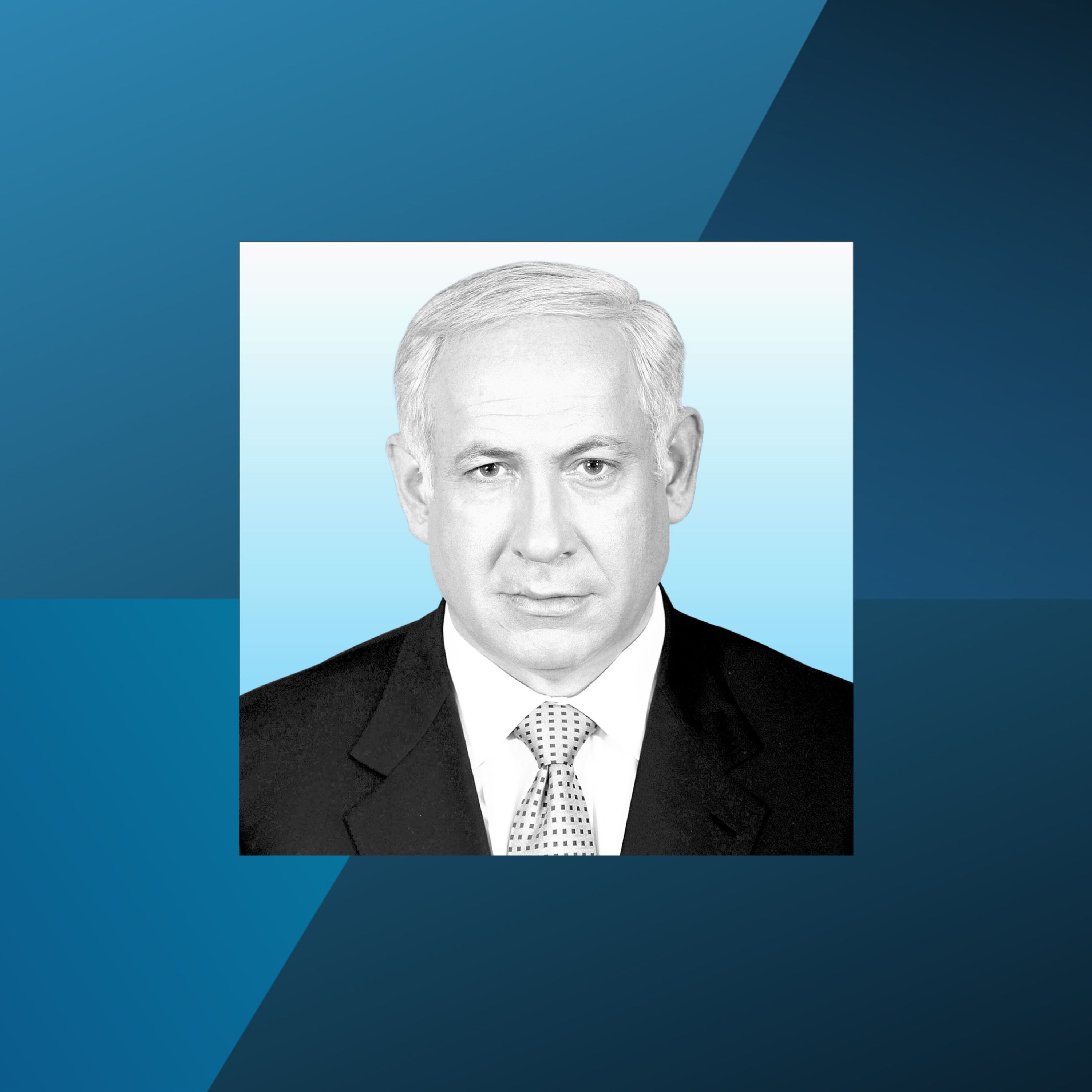
DealBook Summit
Netanyahu Is Defiant In Face Of Legal Challenges
00:26:15
Prime Minister Benjamin Netanyahu says he would still visit New York despite a pledge by the city’s mayor-elect, Zohran Mamdani, to honor an arrest warrant issued by the International Criminal Court on charges of war crimes. The prime minister also discusses the corruption charges he is facing, as well as his political future. “When history is within reach, you don’t step aside, you step forward, and that is what I am doing,” said Mr. Netanyahu.
Loading summary
Transcript51 lines
- [00:01]
A
This episode was recorded at the 2025 DealBook Summit. This year's Dealbook Summit sponsors include premier sponsor Accenture, associate sponsors U.S. bank Vanguard Invesco, QQQ, and University of Michigan supporting sponsor Capital One and contributing sponsor Invest Puerto Rico.
- [00:27]
Would you come to New York, given what the mayor has said about arresting you?
- [00:32]
B
Yes, of course I will.
- [00:33]
A
And you will test that. I mean, what is the thought about how that would work?
- [00:37]
B
Well, why don't you wait and see? Yes, I'll come to New York.
- [00:44]
A
This is Andrew Osorkin with the New York Times, and you're listening to interviews from our annual Dealbook Summit recorded on December 3rd in New York City.
- [00:58]
Please welcome Prime Minister Benjamin Netanyahu. Mr. Prime Minister.
- [01:04]
Thank you so very, very much for joining us. Here's where I want to start the conversation, if I could. Just over two weeks ago, we had a breakthrough moment when the UN Security Council voted to adopt President Trump's peace plan for Gaza. But Hamas, of course, has now rejected that plan. And even today, there are accusations about the ceasefire being broken. And I think we all want to understand if there really is an opportunity for sustained peace, and if so, how.
- [01:33]
B
I think there is. I think that the battering that the Iran axis received opens up many possibilities, but there's still some mopping up that has to be done. I think the most important thing about Gaza was first, that the first phase of the plan was achieved. And that was what people didn't believe. What happened, I believe President Trump believed. And with a combined effort, military and diplomatic, we were able to bring Hamas to give us all our hostages. We still have two left, one Israeli, one Thai citizen. We'll get them, too. They're deceased, but the live hostages are out. We got the deceased ones back. And the reason we got it is because we went into the last stronghold of Hamas in Gaza City. They didn't believe we'd do it. And at the same time, President Trump put together a very strong Islamic and Arab coalition. And the combination of those two pressures brought Hamas to its senses. They gave us all the hostages. And now we have the second phase. The second phase is to disarm Hamas and demilitarize Gaza. I think there's a third phase, which is to deradicalize the Gazan population from 60 years of incredible incitement, incredible brainwashing, which has really has to be changed. But the first phrase is, you've got to get rid of Hamas. Now, that is going to happen in one of two ways. It could happen with an international force that the United States is trying to put together. And I hope they succeed. And if not, as President Trump has said, and I've said, can be done the easy way or the hard way. The hard way is that we'll have to do it. I hope we don't, because I don't want to spend more blood and treasure, especially blood of the Israelis or for that matter, of Gazans. But if it needs to be done, Hamas can't stay there and they won't.
- [03:32]
A
Mr. Prime Minister, you spoke to President Trump, I believe, on the telephone earlier this week. He spoke to you, I believe, about what's taking place in Syria. But I also understand that there was a discussion about getting his support, if you will, or more support from him for a pardon for you. Can you tell us about that conversation?
- [03:54]
B
Not really. I don't tend to speak about private conversations. But I can tell you what, what I am talking about. President Trump spoke time and time again about the need to end this, what he calls a witch hunt. And it is, it's going on for 10 years, six years of bogus investigations and four years of an endless trial. And of course, if they had something, something would have occurred. So I was being put on trial. Are you sitting down?
- [04:21]
A
I'm sitting, all right.
- [04:24]
B
For bribery. What was the bribery? Not envelopes of cash, not any material remuneration, but supposedly positive coverage in a second rate Internet site. Well, it turned out there was negative coverage. It turned out, in fact that this was probably the most hostile Internet site that you can imagine. So two years ago, the judges call in the prosecution and they say, drop the driver charge. That's your flagship charge. There's nothing there. Well, they wouldn't agree. So they kept on going because they're, they don't want justice. They want me out of office. So they continued. Okay, so then two charges were left. I received a Bugs Bunny doll. You're not laughing. I received, my son received a bugs Bunny Doll 29 years ago. And I received some cigars and champagne bottles. That's what this trial is about.
- [05:21]
A
And you were at that trial today?
- [05:24]
B
Yeah, yeah. I spend, I'm supposed to spend three times a week, eight hours a week in that trial. And you know, I've got a few other things to do. And I think history beckons. We have opportunities for peace. We have enormous opportunities in AI and quantum. Other things already revolutionized the Israeli economy. Once into a free market economy, it's become a juggernaut. And now we have the ability to seize the future, which will not only help us but help the entire Middle east, the world, really. And so I thought that in our system, when you ask for a pardon, you're not admitting to any guilt. You don't have to, and I don't. But I am saying that the needs of Israel are such that to spend another two, three years in this nonsense where this trial has just collapsed, it's become a joke. It's a joke. I mean, taxicab drivers make jokes about it. It's so silly and so stupid. And I suppose, you know, for the fun of it, you can continue. You know, I was the champion debater in my high school. Yes, I know how to do this, but this is absurd. So I hope that it ends and that we.
- [06:31]
A
What do you think? What do you think the chances are that it will? You spoke to President, President Herzog and you've made the request?
- [06:38]
B
Yes, I did. Yes, indeed. I don't know. It's up to him, but I hope he does it because I think it's right for the country and it's right for our future. We have a lot of tasks at hand.
- [06:50]
A
Right.
- [06:50]
B
And it's, it's a lot easier to do them, Andrew, if you don't have to spend eight times, eight hours a day, three times a week in this nonsense. It is just that. It's just ridiculous.
- [07:01]
A
Let me ask you a separate question then. President Trump recently hosted NBS at the White House who said he wants to be part of the Abraham Accords, but that there needs to be a path to a two state solution. How do you square that with your view? I believe where you have said there will not be a Palestinian state.
- [07:20]
B
Well, there was a Palestinian state. It's called Gaza. That's exactly what it was. It was a de facto state and we didn't get peace. What we got was the most horrific massacre of Jews since the Holocaust. And if you ask Israelis now, and it just covers an enormous spectrum, I mean from left to right, we had a vote in the knesset. We have 120 Knesset members. 99 to 11, 10 abstain, 99 to 11 opposed.
- [07:47]
Being forced on a Palestinian state. I mean, that tells you something. And so people say, look, there has to be a solution with the Palestinians, but it's not one in which they don't recognize the Jewish state. They commit themselves over and over again to do this massacre again. They indoctrinate their children with textbooks that are calling for people, for children to become suicide bombers and they pay for slaying. I mean, the more Jews you kill, the more you're paid. I mean, this whole thing is not where it's going to go. We'll have to find a path for peace. And I think it begins in Gaza by removing Hamas and offering it a different future. But you ask, how do we square that away? Well, you know, people didn't believe that we'd get peace with four Arab states in the Abraham Accords. And I worked on that in secret with President Trump's team. I had three guys in my office who knew about it, and there were public statements that were made, and everybody said it's not going to happen, but it did. I think there's a very strong interest to advance that peace. It's got to be peace based on security. Israel will not sacrifice its security. But I think that we can, we can do great things. I think we can do. We can make out for peace accords not only with one country, I think with many countries, including Islamic countries outside the region. And that's what I hope to achieve once I can free myself of this absurdity.
- [09:15]
A
And I will let me ask you a separate question then. The Palestinian Authority, whether you like them or not, is, I think, right now the legitimate representative of the Palestinian people. And you cooperate with them in, in the west bank on security, for example. And so the question is, why wouldn't you cooperate with them on the civil administration of Gaza?
- [09:35]
B
I think the Palestinian Authority was in Gaza. We've already tried that, and they were kicked out summarily. They're very corrupt. They're. They're just. They've never had elections. You know, I go to elections every few years. I'm happy that I win them. But we have a free society, and people make up their mind, that's not what happens in the, you know, in Judea, Samaria, the West Bank. The Palestinian Authority just doesn't have elections. They have this petrified structure. And it's true. I said to my people, no, we're not, we're not going to bring them down, even though I have a lot of people who are egging me to do that. But we'll keep them at bay. And the most important thing is we'll demand genuine reforms. They cannot teach their children to become suicide bombers. They cannot pay for slave. They cannot pay terrorists to kill more Jews. They cannot call their government buildings against mass murderers of Jews. I'm sitting in our government building right now. It's not named after mass murders. In fact, when we had a case of a Jew who came into a mosque and just killed people at random, deliberately, we all condemned it. I condemned it. That's not what they do. They. They lord it over. They say it's great. So that's not a partner for peace. But I think there are other possibilities. And I think we'll get Palestinians who really want a future to take over Gaza eventually. And by the way, right now there are Palestinians in Gaza who are fighting Hamas because they say, enough of this. Enough of this tyranny of terror. And these people, they don't want the pa, they don't want the Palestinian Authority, they don't want Hamas. They want to be the masters of their own destiny. And I think we should give them a chance.
- [11:18]
A
Okay, I have a reputational question for you. It's about you. It's about the Jewish people. It's about Israel. And I'm an American Jew. Tens of thousands of Palestinians, as you know very well, have been killed during these last few years. The International Criminal Court has an arrest warrant out for you, which of course alleges that you conducted war crimes. In New York City, right here, where I am, the mayor elect, Zoran Mandami, says that he would comply with the ICC and he would arrest you. And this is sort of where I wanted to start this conversation in so many ways. There's this split screen, which is that you have accomplished so much on a military scale to the great success, I believe, of Israel and possibly the Middle east long term. But in the process, there's an argument that you have lost large swaths of the world. And how do you think about that? And how do you come back from that?
- [12:11]
B
Well, let's parse it out first. The victory of Israel is the victory of the courageous soldiers, the sons and daughters of Israel, who go to the battlefield to fight not only for ourselves, but by removing Iran, Iran's nuclear threat. You know, Iran talks about death to Israel, death to America. They just see us as a stepping stone to getting to America with ICBMs, you know, long range missiles that can be targeted on any American city with nuclear bombs. So we're fighting our battle for sure. We're fighting the free world's battle against the barbarians. The second thing is that you say we committed war crimes. I committed war crimes. Whatever. I guess if.
- [12:54]
Look, I would say that no army has done what Israel has done to try to get civilians out of harm's way. And Hamas has done everything in its power to keep civilians in harm's way. We tell them, please, get out of a combat zone, and they shoot. Hamas shoots civilians who try to leave in order to get casualties in Order to get the propaganda effect that you're talking about, which is obviously very, very bad, Debilitating, and it's bad. So the propaganda war is not easy to win as the military battle is. How do we deal? And then they accuse us of war crimes. Fine, let's deal with that quickly. The guy who accused me of war crimes is the ICC prosecutor, Karim Khan. He was about to come to Israel. He said Israel has a great judicial system, independent judicial system, and he was going to work with us to clear out all these fake charges that were against us. The day that it's supposed to come here, he cancels the meeting. And we were. We didn't know. Why did he cancel the meeting? It turns out that a few days earlier, one of his staff members accused him of sexually molesting her. Okay. She's, by the way, anti Israel. She's from a country that really hates Israel. She doesn't like Israel either. And then other charges surface. He thought the best way of getting out of this is bashing Israel and bashing me. So now he's been suspended. So much for these war crimes. So now the question, the larger question you ask is, how come it's so easy to do. How come you can bash Israel so easily when the facts are that Hamas, you know, comes into our country, invades our country, kills, murders our people, beheads men and women, rapes women, and then does horrible things that I can't even describe, takes hostages? And Israel is being blamed for fighting a war that Israel, in ways that no army has fought, I think Churchill, you know, would have been accused of stupendous war crimes. We don't carpet bomb. We don't do Dresden. We don't do any of that. We send our soldiers, some of whom die trying to clear out these booby traps that Hamas has put in. So how come Israel is getting bashed so quickly? How come.
- [15:05]
A
And that's the question. Irrespective of whether you think you have done it right or wrong, there are people, including the mayor elect of this city, who has questioned whether Israel should exist. And especially what you have done over the past two years, despite what you have done, does it almost matter what you've done? I'm saying, at this point in the situation, how do you restore that trust if you can, in Israel and in yourself?
- [15:34]
B
You know, Andrew, my father was a great historian of medieval Spain and the Inquisition, and he wrote a lot about anti Semitism. And he basically.
- [15:46]
Said, and. And I think you can verify this easily, that anti Semitism has been with Us for several millennia, okay? And it's been the story of the Jewish people. We've been maligned again and again and again. In the Middle Ages, we were accused of slaughtering Christ Christian children for their blood, to bake matzos for Passover. We were spreading vermin. We were poisoning the wells. And these defamations always led to violence, always led to expulsions, to massacres, all culminating in the greatest massacre of them all, the Holocaust. What has changed with Israel is not the disappearance of anti Semitism because the same lies that were leveled at the Jewish people are now being leveled at the Jewish state. There was a respite after the Holocaust, but it was only a. A brief interlude. So it's come back with full force. What has changed is not the vilification, but our ability to defend ourselves against the. Those would be annihilationists who want to destroy us and wipe us off the map. That we do. We. We defend ourselves on the battlefield courageously with great, just. With incredible, incredible courage and incredible innovation and brilliance. But at the same time, we recognize, and I recognize that we have a battle for the truth. We have a battle for the feuds with bot. Bots. You know, they just buy these bots, put them into these. Into the cell phones that are, by the way, produced by Israel, these cell phones, many of them, and they just brainwash entire generations of youth. And yes, we have a problem there, and we'll have to fight this battle and use all our inventiveness, all our. All our creativity to fight this battle. But one of the ways to dissipate this is to end the war quickly, which is what I'm trying to do.
- [17:38]
A
Let me ask you a separate question. We've long wanted to do one of these interviews in person right here in New York.
- [17:43]
B
By the way, I didn't answer your question, Andrew. I'll come to New York. Okay.
- [17:49]
A
And that was my question. Would you come to New York given what the mayor has said about arresting you?
- [17:55]
B
Yes, of course I will.
- [17:56]
A
And you will test that. I mean, what is the thought about how that would work?
- [18:00]
B
Well, why don't you wait and see? Yes, I'll come to New York.
- [18:04]
A
Would you want to talk to him, by the way?
- [18:07]
B
Well, you know, if he changes his mind and says that we have the right to exist, that'll be a good opening for a conversation.
- [18:16]
A
While I have you, let me ask you a separate question. Steve Witkoff and Jared Kushner, who you worked with and were instrumental in this Middle east peace resolution, they are in Moscow, I believe, as we speak working on a deal or trying to work on a deal between Russia and Ukraine. I'm curious how you think that is going and how you think it should end, given what you know, both about them, about Putin and your relationship with him and, and Zelensky.
- [18:43]
B
I hope it ends quickly and I hope it ends with peace. It's not easy. You know, I don't look at these things through rose colored glasses, but I think if anyone has a chance to do this, it's President Trump because he's shown a great capacity to move peace agreements forward. He did it with me on the Abraham Accords, he did it in a number of other places. And so if anyone can bring this piece, I think he can and I hope he does. But I won't tell you about chances.
- [19:14]
A
Well, I was going to ask you, though, what do you think, though, about the way this is playing out? In effect? There are some people who believe that the United States has actually been too helpful to Russia as opposed to Ukraine.
- [19:30]
B
Look, I think it's too early to say how this will end up. There are negotiation tactics. You know, you lean on one side and then you lean on the other and then you lean on the first side. It just goes back and forth. I don't know. You know, I have enough problems here tending with our own neighborhood. And I hope to achieve multiple peace agreements here because we fought, fought so hard. And the Jewish people pray for peace. That's how we greet each other. We say shalom. Shalom means peace. And we have hope. Our national anthem, tikvah means hope. So I have hopes for peace. But I know one thing, in our neighborhood, and I venture to say now in all the areas of the world, the way you achieve peace.
- [20:19]
Is peace through strength. You know, hard to pronounce, but easy to understand. If you're weak, you invite aggression. And nobody makes peace with the weak. You make peace with the strong. If you. Israel has become a strong country. Even though we're very small, we're only 10 million people. We live on a very small, very small piece of land. But we have gigantic talents and gigantic motivation. And to see how the people of Israel united, even though we have fractious politics, as you can imagine, it's a boisterous democracy. But at the time of testing, when our country was invaded, when we faced, you know, people thought we were, we were doomed. We were attacked by these brutes. Hamas, Hezbollah joined them in the north. And everybody thought all was lost. And then on the second day of the war, I said something to the Mayors of the places that were invaded. I said, we will change the face of the Middle East. We will win this war. Because it was clear to me that we were not only fighting Hamas, we were fighting Hezbollah. We were fighting the Assad regime, We were fighting the militias in Iraq, we were fighting the Houthis, we're fighting Iran. And we did. We won this war. We won this war, but it's never ending. It's like, you know, if you have cancer and you take it out, you know, it can still come back. It's certain types of cancer, but if you don't take it out, you die. So we took it out. We removed this threat of nuclear annihilation that could have happened within a year. Iran, within a year, within six months, could have had its first atomic bomb, and they would have no, no compunction about throwing it.
- [22:03]
A
And where do you think Iran is right now on that? I mean, there has been.
- [22:07]
B
I think we. I think we push them back a lot.
- [22:09]
A
Andrew, how far?
- [22:11]
B
Well, I think it's very hard to manufacture a bomb when you're. Your top scientists are knocked out. They had atomic scientists, and we. We knocked them out in the first two minutes of the war along with their top command. We set them back. Does that mean that they won't try again? Of course they'll try again. But our. Our focus right now is on the Iran axis, on their various proxies on Hamas. Let's finish the job there and open up a path for a different future for Gaza and for Israel. And the same thing is true of Hezbollah. I mean, we opened up the possibility of a change in Lebanon. I think it's also up to the people of Lebanon to, you know, to seize the future of their own country. But we've brought down Hezbollah a lot, and we deal with the Houthis and any other proxies that we have to deal with. I think opportunities are vast. They're vast, but I think it requires more work.
- [23:07]
A
Finally, let me ask you this. You are 76 years old now. I'm curious how much longer you want to stay in public life.
- [23:15]
B
I don't measure it by time. I measure it by missions, by tasks. I'm supported by a great majority of the people in the country. You never know that by the foreign reporting, but that's it. That's why I keep winning these elections. We're not, you know, people say to me, oh, maybe you're a king. I said, I'm not a king. I have to get elected, for God's sake. And, you know, I have, I have great support at home. My wife is incredible. She's a lioness. And my two boys, they support me. The people support me. Now what do they support me for? They want me to complete the quest for peace. They understand that. Just as I really liberated Israel's economy from stagnant semi socialism to become one of the most remarkable founts of creativity and innovation and technology in the world. Unbelievable technology, we have now an opportunity because everything we achieved, just to give you a feeling, okay, Israel was a country with $17,000 per capita. When I took over as a foreign minister, I had a little stint in that. And today it's going to cross $60,000 per capita. It's still a way to go, but that's a change that no country experienced. Because of the free market revolution that I introduced here. I see a much greater revolution coming. It's here. It's not coming. It's already here. And, and all the wondrous technologies that we have, some of them are very frightening. I've talked to the leaders of AI in the world and you, you ask yourself, there's so many blessings in this, but there could be a curse. But to challenge it or to channel it into the blessings that Israel can give itself in the world, I think there is another revolution coming. I tend to steer it along with the achievement of a broader peace. These are two enormous tasks that I'd like to take on. And you know, when history is within reach, you don't step aside, you step forward and that's what I'm doing.
- [25:15]
A
Mr. Prime Minister, we're going to leave the conversation there. We very much appreciate you being back with us and thank you very, very much for the discussion today. Thank you. Great to see you. Thank you.
- [25:31]
Dealbook summit is a production of the new york times. This episode was produced by evan roberts, mixing by kelly piclo and katie mcmurran. Original music by daniel powell. The rest of the dealbook events team includes julie zahn, hillary coon, melissa tripoli, beth weinstein, angela austin, haley hess, dana prukowski, matt kaiser, j. Chantal rainier and yen wei liu. Special thanks to sam dolnick, nita lassom, christina josa and maddie masiel.