Loading summary
Transcript200 lines
- [00:00]
A
Hello everyone. Welcome to Dear Alice, our Thanksgiving edition. Happy Thanksgiving. Yeah. Or if you're listening to this late, I hope you had a great one. And that means we're into Black Friday already, which is crazy.
- [00:14]
B
I can't believe it. 2025, where'd it go? Evaporated.
- [00:17]
A
I did. Yeah. Here we are.
- [00:19]
B
It's been. I feel like 2025 has been a really great year.
- [00:23]
A
I do too.
- [00:23]
C
It's been some gnarly stuff in it though.
- [00:26]
A
Yeah.
- [00:26]
C
Actually on 26, I'm ready.
- [00:28]
B
I know I'm world presented some so.
- [00:31]
A
I the clean even of 25, you know, and TMI. But I was born in 75. So yeah, 25, you know, it just kind of fits like in the pocket. So I was like something kind of epic needs to happen for, for me and my quarter of a century.
- [00:50]
B
Yeah, like, like it?
- [00:51]
A
No. Half. No.
- [00:53]
B
Right.
- [00:53]
A
I'm 50 half of us.
- [00:54]
B
You're half century.
- [00:55]
C
But yeah, yeah, look quarter though.
- [00:57]
B
I know. Seriously.
- [00:58]
A
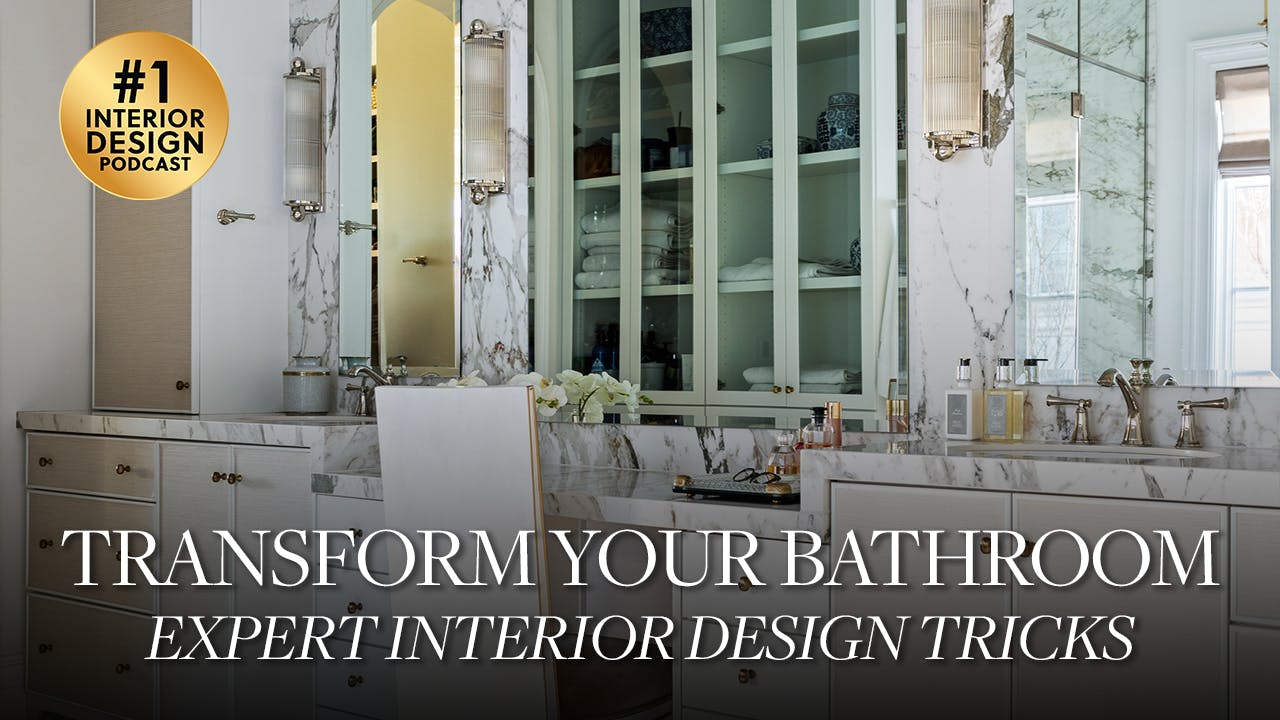
Yes. Thank you. Thank you. Anyway, happy Thanksgiving everybody. And we have episode for you today. We did an episode a little while back that you guys loved. We had so many people join in and listen to it. It was called transform your kitchens expert interior design tricks. And we had a listener question came in that made us think we should do that for the bathrooms. So today's episode is transform your bathroom expert interior design tricks. So if you are working on a kitchen, go back and listen to that because we gave a lot of tricks and tips away in that. And then this one is going to be sort of a master class on bathrooms. So we're going to be taking you through three of our favorite portfolio projects from our interior design firm, Alice Lane Interior design today. And sue will be taking us through those and just sharing some really cool ways that we solved problems. One of them is a remodel, two are a new build. And so I hope that this will answer a lot of your questions. We don't gatekeep so we're kind of giving away the keys to the kingdom here. Yeah. Speaking of Black Friday though, I have to have a quick reminder for you guys. The Black Friday sale is going on right now on our website and you can get up to 20 off site wide and it's@alisonhome.com so go shop that now. It's a great time to do anything home related or if you want to, there's great gift guides, really awesome deals on and for anybody in your family really. So again it's alsanehome.com go shop the Black Friday collection.
- [02:25]
B
Amazing.
- [02:26]
C
Since it is the season of thanks, I'm huge on, you know, being thankful for stuff and sending that positive energy out. So what are you guys thankful this season? Thankful for this season, man.
- [02:38]
B
That's a. That's a list. Let's see. I'm grateful for, of course, my family and my kids and to live in a really beautiful place and have the freedoms that we have. Gosh, I'm gonna keep going. But I'm really grateful, too, for what I get to do, you know, that I'm like. I feel like we have a lot of different roles and hats that we wear in life, you know, of being like a wife and a mother and. But to be able to do what I do professionally is really, really gratifying. And I'm really grateful that I've landed where I've landed, that I met Jess, that I get to do this thing that I love to do, and I get to meet the clients that I love so much, and. And also that we get to just, like, I don't know, we get to teach people, you know, through this podcast. So I'm real. I'm just grateful for all the opportunity I'd have to say that I've been given personal and professional in my life.
- [03:29]
A
I love that. I hope everybody feels like that out there, that. That they're like, man, if. If this weren't my life, I wish it were. I. I would. I would wish that it would be right, you know? Like, I do feel so fortunate that we get to do something that we love so much. And I know if I were on the outside looking in, I'd be like, I wish I could do that. And we're doing it, which is really, really fun. But I also want to add to that, like, good health, because I feel like. I think, because, you know, this. This time of year where it gets colder and everything cold and flu kind of starts to pump up, and you're just so grateful to feel good and to get to do what you do and love it so much in good health. So, yeah, I feel grateful for that, too, and grateful for you guys and grateful for the. You listeners. I mean, how lucky are we that you're tuning in to us on a holiday, some of you, and maybe on the weekend. But thank you for tuning in to this. It's just. It's been an absolute dream to still be in here, like, six years later and talking about interior design with. With you guys, like, such great friends and people that have been in the industry with me for so long. I don't know, it just feels like a really safe place to come together and share what we know on our favorite topic.
- [04:37]
C
Yeah. Yeah. And our listeners have made us number one in Apple design charts. So for the last three months, which is a huge accomplishment.
- [04:46]
B
Amazing.
- [04:46]
C
We've been super excited about it. We're not the best at soccer. No, we're not the best at patting ourselves on the back. But yeah, it's all because of you guys though. So we're super thankful for our listeners. And like Jess mentioned, this podcast was inspired by a question from Amy Osterhagen and she asks. I'm beginning a bathroom remodel in a home built in 1910 and I've been reviewing your portfolio for inspiration. My style leans towards traditional and classic design with a touch of modern, but I'd love to incorporate a serene spa like atmosphere as well. I'm aiming to use timeless products and finishes that I'll still appreciate 10 years from now. Could you share your guidance on selecting the right materials and features? Specifically, I'd love pointers on flooring, lighting, vanities, showers and other key elements. I want to balance function, durability and style while maintaining harmony with the home's historic character.
- [05:45]
A
Great question, Amy.
- [05:47]
C
Yes, we turned it into a podcast. So great.
- [05:49]
A
It is so great.
- [05:50]
B
There's too many things to hit on this that we're like, yeah, we do need to like really dive into the bathroom. Whether it's like your primary bathroom, your kids bathrooms. I think all these tips and tricks are very, very applicable. And as we think about just like when you're like entering into a remodel or you're going to build a home, the two highest as far as price per square foot spaces are the kitchen and usually that primary bathroom. That's where you're going to use the living stone. That's where you're going to like do the most expensive cabinetry, those things. And it's so such a bummer to go into a home that's possibly just been done and they missed marks on or it doesn't work right. And so I really, we really want to kind of dive into the function. Yeah, specifically we're going to start there. Form follows function. We're going to dive into the function of just like what makes a successful bathroom and things that like you have to haves and then also like addressing, you know, those timeless finishes that Amy, you're kind of wanting, you know, so that this like 10 years from now, hopefully 20 years from now, like there's, there's still Merit to the spaces that you're using and that they work really well. So yeah. So great.
- [06:54]
A
Let's dive in.
- [06:55]
B
All right. Okay. The first one we're going to talk about is our grand tour estate project. Now this is on our portfolio and this is a home that we worked on, I think probably like 2018, 2017 in those years. And I look at the pictures and I still love this bathroom.
- [07:11]
A
Me too.
- [07:12]
B
It is so smart. And I still think a decade from now I will still love this because it's so darn smart.
- [07:17]
A
It's unpredictable. And really interesting solutions to space planning and storage in smaller spaces. For a primary bath. There's. There's key things like the shower which I think there's things that we did that made it grand but really that made it so smart and I think the problem solving finishes. It's all there. So we had to go here first for you guys. So if you can tune in and watch this episode, it's on YouTube or Spotify or if you're just listening, we're going to do our best to describe to you this, but I think the space planning here is worth visually tuning in for this.
- [07:52]
B
Okay.
- [07:52]
A
And the after photos.
- [07:53]
B
The after photos are so good, but really I couldn't even find. We're going to show you some before pictures which are going to be really fun for you to. But I want to talk to you and just kind of set the scene of what this bathroom was. Again, built in the early 2000s. Really heavy mahogany. All the trim or not mahogany. Probably naughty alder extra. Yeah, extra knots. Probably like travertine. Like just like base level. Kind of like when you look at it now, you're like that's like gas station flooring. It's not great. It was the dream glory for no.
- [08:23]
A
1000. Yeah, yeah.
- [08:24]
B
It had a really cramped corner like cabinetry with a big tower. Like so glad. Oh, here we are.
- [08:32]
C
As it gets. Right there.
- [08:33]
B
That's right. I got a little greener ivy on top of the crown right there. That's fantastic. So you have these two really small probably like let's say like maybe like a 42 inch vanities on each side. Again they're kind of like perpendicular to each other and then you have a big tower sitting between them. Again, a very. A lovely sized home but really small bathroom that didn't feel grand at all. So those thing.
- [08:56]
A
This is the primary bathroom and it's in a corner. Corner is clipped and then the cabinetry, the storage tower is in that clipped corner and then the vanities come off, come off of that. It's. If you were getting ready with your partner, you'd almost be like cheek to cheek getting ready and you'd be sort of talking over each, over your shoulder to talk to your, your spouse or whatnot.
- [09:19]
C
Speckly grounded granite countertops. Yeah.
- [09:23]
B
Yep. And then just again that, just kind of that same base travertine or the flooring. Again, I couldn't find a before picture of the corner jetted tub. You know what it looks like. But here are a couple pictures of the shower which also has a clipped corner, a lot of clipped corners. And again just kind of the same beige porcelain tile happening in here. And it's just, I think that's travertine. Travertine.
- [09:44]
A
It looks like a real one, but yeah. And then the plumbing, the plumbing suite is oil wrapped bronze. So yeah, you guys can picture that.
- [09:53]
B
Okay, so these are some of the before pictures, more of the shower and yeah, just let me, let's talk about the space planning of what we did. Again, it was really, really small.
- [10:03]
C
You just took the existing space and.
- [10:05]
B
Okay, yeah, they, they weren't interested in like adding to the exterior, like enlarging the footprint. So we really had to work with what we had and just again, reallocate where our doors, where are entrances. Like how do we get a more beautiful tub in here that's not built in so we can fill all the things?
- [10:21]
C
So I think that's a great point because I think sometimes people, you know, like a professional architect did this. So therefore it must be like laid out the best it, you know, could possibly be.
- [10:31]
B
Not always. Yeah, I will say I'm like majority. Like we get new plans on our desk all the time from architects, from builders, from developers. And I tell you what, the bathroom and the kitchen always have to be reworked. They're not, they're like 95% of the time they're not smart. Sometimes you'll get like a really butterfly of an architect who really cares and has thought about the functionality. But usually like it should, it can be reworked to be better. So really don't like take it for like face value. When you get that plan from the architect that you paid, think about like how you want the space to feel and how it needs to look because I guarantee you it could always be better.
- [11:08]
A
I think too maybe a little bit like chat GPT. The better the prompt, the better the answer you'll get.
- [11:15]
B
Absolutely.
- [11:16]
A
And I think if people knew how to prompt their architect to get, to get a really smart and thought out kitchen I know the architect would sit and do the time with you, but I don't know if People are always giving the very best prompts. They're like, you're the best at your job. You go ahead and, and design my home, and you've done this a million times, and they give you, you know, the kitchen. They think that's your dreams, but little do they know that you're a pastry chef and you have all of these whatevers or you throw the most parties and you need to have a party pantry with, you know, four different changes of china and, and you know what I mean? Like, really, those specific things are what's going to make the architect better at his job, the interior designer better at their job. The better the prompt you give people with, the more specifics, the better job they can do. So maybe it's not the architect's fault. Maybe it's just that we all think that they're this, you know, wonderful Oz and that they can read our minds and they know. So anyway, that's. As interior designers, then we dig in to become the wonderful Oz by asking a billion questions and, and interrogating them and maybe even going to their existing kitchen to look in all of their cupboards and doors and drawers and go, oh, my gosh, you didn't tell me, but you are a sourdough bread maker, a championship sourdough bread maker, and you make the most loaves of bread in the West. So let's, let's go ahead and give.
- [12:35]
B
You a baking station.
- [12:36]
A
Yeah. Or whatever it is. So, yeah, I mean, I think we just, we need to prompt people for that.
- [12:41]
B
I love that. I love that. And again, I think visuals is always a great way. I'm like, storage wise, you know, how you get ready or like, what products you're using and what proximity they need to be to you. And so that'll help with your storage solutions. But just visually, if you show an architect or a designer, I love these bathrooms. They feel spa like, they feel historic. They feel all the things, Amy, that you want. That gives us so many clues into, like, how we need to refit this bathroom. So just, just like you're doing that same thing with our client here. They needed storage. Like, that is probably like when we're talking about bathrooms, they need more storage.
- [13:16]
A
And if we're going to omit that tower that connects the two vanities, then we need to provide back that much storage in return.
- [13:23]
B
I'm really, really proud of, like, where we landed with this. So consider the vertical storage. Consider where you can actually like optimize your vanities, like where you should put them. That would be the most ideal. I really like if you know when you're getting ready, you know, by yourself or with your partner, that is usually the beginning of days might be like the only time you're seeing that person. And so to not be able to see them in a mirror or be like near them I think is a disadvantage. And so when people put the tower in between the two vanities, like it was previous, that's just like putting a wall, you know, up. And so whether the vanities like the sinks are next to each other so you can see each other or here where you're back to back, at least you can see their reflection. I think that that's really, really lovely. Okay, this is a really hot tip that like we need to say out loud. Here is your sconces. A lot of times people will just. And I think that's what they had before they had a mirror. And then they only have to buy one sconce to put over that one mirror.
- [14:20]
A
Let's go back there and show them after.
- [14:23]
B
Okay, so here is that before you can see one mirror with a sconce above. Jess, what happens when you put that sconce above your mirror?
- [14:31]
A
We call it Halloween face because you, the light is shining down, down from up above. And then you get shadows from your eyebrows covering your eyes, so you have these dark sockets.
- [14:41]
B
Not cute.
- [14:42]
A
And then you get shadows from your nose down onto your lips. And you just, you've never looked worse actually. And this is the solution that so. And look at where the light is in this bathroom. It's behind you. So you have no light on your face. You're trying to get ready with Halloween face and you're like, I can't see back. I can't draw on my eyeliner to save my life. I don't know how you could leave feeling confident for the day.
- [15:03]
B
And then you get in your car and like surprise number one is you see your eyebrows like in the rear mirror and you're just like, oh my gosh. And then you're doing makeup in your car. That's weird.
- [15:12]
A
Yeah. So this is never a good solution. You don't want a sconce above your mirror. Not one single sconce. You can pull that trick if you really want to in a powder bath, cuz you're not getting ready there. But the best solution for bathrooms, if you learn nothing today, the best solution for bathrooms, especially bathrooms that you get ready in, you want to Sconce on both sides of your face. You want to put that right next to that mirror. And here's what you want. You want a glass sconce with multiple light bulbs in it. You do not want a sconce with a shade on top. We've gone in a lot of bathrooms where we see which. That's like your fireplace mantle sconce or your hallway sconce that's shaded with a linen shade. I've even seen somebody with brown shades in their primary bath with a cat one candelabra bulb and then brown shades over the top.
- [16:02]
C
I've seen that recently.
- [16:03]
B
Yeah.
- [16:03]
A
How are you going to get ready in that?
- [16:04]
C
That's. That's pushing the light down so it's not at. Again, not at your face. So that's even.
- [16:09]
B
It's diffused. It's like a bad filter.
- [16:11]
A
This is not bathroom lights. Like people on with websites should have maybe categories for. These are the bathroom lights. But for some reason they just think sconces or sconces or sconces. So what you want. And you can see here from this finished picture of, of this bathroom, we've got white glass, which really brightens the space. And then you're able to put at least two full size light bulbs and not candelabra bulbs, like full size light bulbs on each side. So you've got four light bulbs on both sides of your face illuminating that plus overhead light. Go ahead and draw your eyeliner on now. Like that's a better experience and you'll. You won't have any surprises when you look in the rearview mirror.
- [16:49]
B
Exactly. So, okay. I love that in this picture. I just wanted to point out too that we have that, that vertical storage and you can see how we integrated that hardware so they can just slide back and forth from each other on those rails. And it just was like the most beautiful solution. So they not only have storage for like towels and things happening, but all their product. And that's like a great amount of space from like countertop to ceiling.
- [17:12]
A
That's like a closet.
- [17:13]
B
It's amazing.
- [17:14]
A
That's like your primary closet in your bedroom right now. Seriously, look at the amount of space there is just for bathroom storage.
- [17:21]
B
So potions and potions in there.
- [17:22]
A
I know luhas.
- [17:23]
B
I know loofahs for days.
- [17:25]
A
Yeah.
- [17:25]
B
Hello.
- [17:26]
C
The. It going like wall to wall too just makes it feel like a wall rather than like a piece of cabinetry like protruding out like it did in the, you know, the before that was just like such a division in the Space.
- [17:37]
A
Yes.
- [17:38]
B
I love that you pointed that out. I was actually just looking at some plans and the cabinet maker had just pulled the cabinetry off of the wall. And for like some reason or another, I think because of a doorway or a window casing or saying like, yeah, you won't be able to have full cabinetry there. I'm just like, let's like, take it shallow. Let's have finish work. Because visually it's going to look so much better if you can go side to side, top to bottom every time here. Let's talk really quickly about the shower and the tub room. Okay. So again, before we had a really awkward corner tub, it was jetted glory for no one. And just like a small, little cramped, clipped shower. We wanted to, like give her something different again. Utilizing it's trying to get as much light into that main area of the bathroom. Opted to do a wet room with a full glass door to again, share all that light. And really there just wasn't a whole lot of room to have a standalone tub and a shower. So if you want a standalone tub, that's what I meant, standalone tub. You kind of have to maybe employ this trick is to kind of put that tub inside what we call a wet room. So you're showering in here and you take a bath in here, and it just kind of becomes a very spa like experience. I know it was one of the things you mentioned, Amy, is that you want to feel spa like. And I feel the after pictures of this bathroom are very spa like.
- [18:53]
A
I also kind of love this idea because I know she had kids and everything of like, mom being able to go into the wet room, close that glass door, listen to whatever she wants, if she's watching TV or if she's reading a book or whatever. But you would really feel secluded and quiet and like this is your sanctuary while you're taking a bath or a shower. And then you get a huge experience for both. You be, you get the huge shower and then the tub is sitting in this big, huge, marble clad room. Yeah, it's so gorgeous.
- [19:22]
B
I feel very like sauna, steam shower about it too. Because I'm like, you could potentially get that shower going, get that whole steamy action happening and then go take a bath. I'm like, there's nothing like more lovely.
- [19:33]
A
And I'd say since then we've done a couple of wet rooms. It's become a really nice solution for folks.
- [19:38]
C
Yeah, I'm gonna say this too for kids. Like, I wish I would have done it in my Bathroom, my primary. I'll be getting ready for church, and that's when my kids want to take a bath, and they're just making a mess of everything. And I wish that was contained so for that fact, too.
- [19:53]
B
Yeah, hot tip. Hot tip again. Yes. But we were able to fit, like, an actual bench. I think that this is a really nice. Whether you're doing just a shower on its own or this situation, give yourself, like, opportunities to have, like, a little stool or a bench or somewhere to, like, perch and shave or sit, whatever. Um, and then having. I think having that glass here is really, really nice again, to share the light for your flooring. I will say I'm like. For most primary baths, say, like, probably 100 of them, we're using just a natural. A natural stone. We're using marble because. And I know that, like, we love tile, and we'll do interesting patterns with it, and you can kind of see what we did here on the floor, on the screen. But that value, I think of just like, it's your bathroom. It's. It's the, you know, master of the home. You want to use the marble. Like, I think it's the thing that just, like, makes it look the most lux.
- [20:43]
A
I. It just signals this is the primary bathroom. I think we'll definitely. We'll utilize ceramic porcelain tiles for kids baths, secondary baths. But usually those primary and this and the powder baths are where people go for it per square foot. And you can get good prices in marble tile today, so you don't necessarily have to break the bank, but there's something about a living finish that just does feel more luxurious. It's not playful. It's just really, really luxurious. And having the. I think the stones that pair well together between your vanities and your floors, it just feels chic and hotel like and spa like. And. Yeah, it just adds a ton, a ton of value to the home.
- [21:24]
B
And when you do, like, the large format, like the 12x24s and things of, like. And you tight grout them, like, that makes it feel like almost like a slab, a monolith of stone happening in the space, which is really luxy.
- [21:35]
A
So super luxy.
- [21:37]
B
I love that this is the place you're going to splurge. Guys. Go for it.
- [21:40]
A
Yep. Okay.
- [21:41]
B
Okay. So that is the grand tour estate bathroom. I think really successful, especially if you're working on a historic. Okay, now we want to take you into the tiger oak primary bath. Okay. So this was a new build, but they want. They loved a historic home, so they wanted to have charming details and a lot of, you know, just a lot of these, like, you know, living finishes and again, profiles happening. And so let's talk about the storage really quick on their vanity. Again, you can look at this on the screen. You can also like reference the whole place on our portfolio under tiger oak. But one thing, when we were laying out this bathroom, specifically the vanities they had, the architect had drawn two sinks which you see on majority of plans for a primary bath, his and hers station. And when we were talking to the client, she's like, I have a lot of product, I have a lot of things. I like want vanity space. And we just started thinking they had this really like a window which is also lovely. You kind of have that same situation in your bathroom where you have a window in the middle. And we just started thinking, you know, what if we gave her more vanity space and omitted one of those sinks? That would like gain so much space back. And really, you guys, you don't need to be standing in front of the mirror to brush your teeth or does your partner and you don't need to see each other doing that. So having the sink, we actually place this like large integrated stone sink in front of the window. And I can't think of like it's the loveliest view to be able to look up at the sky and just to have that whole situation and then to gain all that vanity space back. And the vanity, you know where you do have the wall space is sitting, you know where your mirror is, which is key.
- [23:16]
C
And if you have your stuff laid out too, that's like my. It's like everything is surrounding my sink. So it's like, then you can have it right in front of you.
- [23:24]
B
In.
- [23:24]
A
The midd of where you get ready. So this is like this trick had to be told on transform your bathroom expert design tricks. Nobody's going to dare not put a sink in their vanity. But this bathroom is. Is absolutely proof positive that you can do it. You can a go for it on the sink in front of the window, right? So this is the integrated marble sink. Everything's marble. They use double faucets. It's so grand. And then you've just never seen before two blank vanities, all that counter space with a mirror in front of it and you can just get ready there. All your products. You don't have to dodge the hole in the sink. This is such a great solution. And I think, Amy, for a historic home, I know you're probably short on space, right, because things were smaller back Then and so you could get away in a primary bath with one sink, two vanities and do this trick.
- [24:14]
C
It is a little bit, it's a larger sink than you would typically have. Just regular vanity. But yeah, just making sure I said that.
- [24:19]
B
I know for sure. No, we have two wall mounted faucets that are like sitting with this integrated sink. So just so you know, it's not just one faucet that you're sharing. They still have both. They, they each have a faucet, which is great. And again, on your actual slab, like make sure. I remember we had something completely different specified for this, like for the actual slab. And we went slab shopping with a client and she just like, she saw it and she's like, that's it. It was this tourmaline and it's this court saying, it's beautiful, it's so, so pretty. And that, that changed our window treatment. That changed everything because we wanted it all to just feel so intentional because she had such a love affair with this slab. Right. So anyway, just really fall in love with your surfaces because you get to like live with this every day. This is where you start and you end your day.
- [25:02]
C
Yeah, I would say like go to the slab yard and say, I want that slab, not just like this stone because they're all going to be a little bit different pattern, patterning and stuff in them. So yeah, if you can go pick the one that you want, I feel like that's ideal.
- [25:16]
B
Totally.
- [25:16]
A
And speaking of tourmaline and finishes that you're choosing since Amy, you wanted to know about that, you can see tourmaline in this image. That's the slab choice. It's the hero. And then when you're trying to figure out your paint color for your vanity, you're going to spread your paint deck out on that slab and you're going to choose the right color that gets along well with that field color of the stone. And you can see this isn't your basic white cabinetry here. This has a lot of like really beauty, beautiful, like ivory off white, earthen kind of natural tones within, within the off white range. And it feels more antique. It looks great with the stone, it's great with the vibe. So anyway, that's another pro tip when you're designing your bath.
- [25:56]
B
I love that also, I know this is one of your favorite kind of door styles. Mine too. And I think it makes a space look bigger because you don't have those lines. Like we're talking about cabinetry style, door styles. And a lot, a lot of Times you'll see, like, everyone's familiar with, like, a shaker where you have, you know, the styles. Styles, right. Yep. Anyway. And they're usually like, three inches, you know, or something, and they're coming in, and it just, like, shrinks that whole box visually. And, Jess, you have this in your kitchen. I know we do it on so many projects where you just have this, like, little trim piece that basically just borders out that frame of the drawer is saying all these things correctly.
- [26:32]
C
It's a.
- [26:32]
A
What do you call it?
- [26:33]
C
A pencil mold that just basically is mitered around, like that drawer front or door? Front.
- [26:38]
A
It sort of softens it or gives it, like, a cushion feel. It almost modernizes it in some ways, but it does give that box or drawer, like, this really grand feeling. And it's not too much vibrato. I just think it looks chic wherever you use it. And then you can use the pencil mold on the interior of that rail if you're going to do it on the doors like we did here.
- [27:00]
B
Yep. I think also your hardware, you have more flexibility.
- [27:03]
C
Yes.
- [27:04]
B
With your hardware, if you're not shrinking that panel in. Interior panel. So that's always lovely. And then you can, like, actually choose, like, where you want that handle to be to be placed instead of being forced to, like, sliver it totally in that center. Small panel. You've seen the ones. Yeah, we have the worst. Yes.
- [27:20]
C
I'm gonna point out the molded toe kick on this, too.
- [27:22]
B
Oh, yes, please. Thank you. So glad you noticed that. Yeah. That was a workshop.
- [27:26]
C
I feel like that just gives it a lot of detail, and it feels more like, cut, like it's been there forever type of thing, rather than, you know, stocked. Yes. And installed. So, yeah. Built for the room, basically.
- [27:39]
A
Yeah.
- [27:40]
C
So, yeah. And it's basically just like, where the feet would be. It's kind of scalloped up. Still gives you a toe kick, which I think is great. So you can, you know, get up on that cabinet. But. Yeah, a lot of detail that, like I said, just kind of feels built for that room.
- [27:55]
B
Yeah. Jess, this is a. Where we did do the mirror as, like, that whole. Yeah. We paneled out that whole mirror. So you kind of frame it in. I give it, like, intention and placement for where the mirror goes. If it's just floating, sometimes you're just, like, in a corner where you're just like, I'm gonna go mirror. Wall to wall, backsplash to ceiling. And it's a really easy equation here. You can see there was additional planning to really make this a very intentional move.
- [28:20]
C
So basically there's just like finish. There's like finish work on the. The entirety of the wall in the bathroom. And inside one of those panels, it's all mirror, which I think is like, yeah, genius, because then you can continue the rhythm elsewhere.
- [28:34]
A
The rhythm continues with that window. So on both sides, the finished work kind of continues the full length of the bathroom, even to where the tub deck is. And it's this great wall of finish work. And then integrated into it is the mirrors and the windows. But then the rhythm continues, which is really great. And then the sconces don't sit on those rails of finish work. They sit within, on top of the mirror to double the amount of light that you get. Which is that designer trick that we love. So really a ton of designer tricks that you're looking at here, which is, you know, the finish work with the integrated mirrors, the scout sconce mounted on the mirrors. And then another favorite one is space expanding trick is diagonal lines are going to make your space feel bigger. So on the floor here, we're using marble. Is it?
- [29:18]
B
Are we two different ones?
- [29:20]
A
Two different marbles. It's kind of a off white, black, a crema.
- [29:23]
B
And then there's like probably antico skiro.
- [29:25]
A
Yeah.
- [29:26]
B
For the two marbles that we used.
- [29:27]
A
Y.
- [29:28]
C
So spell that.
- [29:29]
B
No, I'm kidding. I'm actually good. I've written it. I've written it down so many times.
- [29:32]
A
The little. The little, what you call it, miter on the corner, the way that those are cut, like little X's. This turned out so great. The installation's really beautiful. And that pattern is. It's so. It's like so this house, I love it. But the strong black and white also feels classic.
- [29:48]
B
Yes.
- [29:49]
C
So I'm just going to comment to that right there. That is the real way to miter those in. So basically it's like a diamond pattern. The outline of the diamond is the darker marble tile for those of you listening. And then rather than just those diamond cuts coming together and just butt joining, they're all mitered at a 45 degree. So they come. Each four pieces come to a point that connect together so it looks like an X detail.
- [30:13]
B
So again, like even though that they're subtle lines, the fabrication of that makes it look like a designer handbag. When you see like the stitching and things like that, these details matter. And you all, you all it takes is for you to inform the installator, like the insulator, say installator. I'll put that into The. Into the dictionary. Anyway, the installer, like, if you tell them this is how I want to be installed, if there's, like, a way, you know, they'll. They won't have to take shortcuts.
- [30:39]
C
Yes. Yeah. I mean, it is more cut, so it'll probably cost you a little, but I think you're gonna. In the long run.
- [30:44]
B
Yeah. Okay. Another favorite trick that we employed the very first time in Tiger Oak was in the potty closet. There are usually, like, toilet paper sitting on the floor. If you don't have an edger or there's, like, a tampon box or something. She's like, I hate. I hate seeing that. We're like, well, let's figure out a way to solve for that. And so we worked with the builder to make sure that we had enough room to frame a little hidden tampon closet for, like, one roll of toilet paper and a box of feminine products. And we do this in majority of our projects now when we're able to. Because it's just so nice to be able to tuck that away. So that is a really hot tip that everyone listening to my words right now. If you can put it in your potty closet, it'll save your marriage, it'll save your anxiety. You won't see any of those fluorescent boxes ever again.
- [31:31]
A
I love it.
- [31:32]
B
So happy for you.
- [31:32]
A
So what you're gonna do is you're gonna leave room in the framing for this little. This little closet, if you will. The door that they used on this. It's not a gyp door, is it? Because it is a wall. They did wallpaper over it, and. And then there's a little pull tab where you can open it. So is it a jib door, or is it a. Like. Do you know what material they use?
- [31:53]
B
I think it's probably. It's just a smooth jib. That's. Yeah.
- [31:56]
C
That would be, like, the easiest thing to do. And then you wouldn't notice, like, any inconsistency in the texture from the wall to the door.
- [32:03]
A
And what hinges do you think they use to accomplish that?
- [32:06]
C
Like an interior? So you'd want the hinge on the inside of the door. So it's like a interior outswing. Yeah, hinge. So it's like some sort of piano hinge or something like that.
- [32:17]
A
Envisioning. Yeah.
- [32:18]
B
Perfect.
- [32:18]
A
So great. And then they finish the interior, and. And that's just your little secret. It's so enchanting. You want to look in there like you cannot believe. It's so cute.
- [32:27]
B
And I'd Be sad if it was. You could do a push latch. But I kind of love the idea of, like, just how we usually do, like, a petite, darling little knob. So, like, the user doesn't think it's, like, for, like, venting or something. Like, it's to be used, it's to be opened.
- [32:39]
A
And I'll say, if you are wallpapering the potty closet, you're going to want to start with this, because you can see here, our paper installer, he centered the Jaguar on this little closet door. It would have been a bummer if it was, like, cutting half jack, cutting off the head or something like that. So just pro tip, if you're gonna do this.
- [32:59]
B
Okay, great. Okay. And then again, we put the tub actually on this platform just to kind of give some. It's lovely. Yeah. Again, just to kind of raise it off so you have that diagonal flooring that Jess was kind of detailing earlier throughout the whole bathroom. And then we actually, like, lifted a platform for the tub that's, like, really nice and tucked in there. I just think this whole scene is so beautiful. This is what you see when you walk into the bathroom. So the vantage is beautiful. You see that gorgeous light sitting over the tub. We did put a live tree in there, because why wouldn't you.
- [33:29]
C
I want to, like, highlight that platform, though, because if it was just sitting on that same tile that you had done the rest of the bathroom in, not nearly as cool, it would kind.
- [33:38]
B
Of feel squished in like it was. It wasn't actually planned to be. Be that way.
- [33:42]
A
And also, let me just point out that extra credit because we use slab for the tub deck. We did and didn't just use tile. And so going. Going and using that much more slab. Because slabs are expensive.
- [33:55]
B
Yes, they are.
- [33:56]
A
But this really set it off and kind of gave it a wedding cake effect and made it really, really special. And this is just. It's an all star.
- [34:05]
B
Oh, stunning. Okay.
- [34:06]
A
Love it.
- [34:07]
B
Okay. Okay, the last project. Let's. This is a new build here in our own state of Utah and St. George. And just a couple of hot tips on my favorite features about this space is this tub.
- [34:21]
A
If you guys are. If you guys want to check out this home, it's called Windsor Manor on our portfolio. And this is just a highlight on a few of our favorite designer tricks in their primary bath.
- [34:30]
B
Yes. So when we're showing clients options for just, like, all their tubs, the fixtures, the faucets, everything, we usually will show high and low. This was definitely a higher one because It's a marble tub, the full marble. And so when she's like, I love that. We're like, okay, then let's, like, get that marble tub, and then let's kind of work backwards and select all of our tile and make sure everything is, like, really in sync.
- [34:54]
A
So those of you that can't see this right now, we have a freestanding tub entirely made up of marble. The base of it feels like a beautiful piece of base molding, crown molding on the bottom. And then the top is a beautiful rolled edge, little molded piece, rounded, but completely solidly sculpted out of marble. So this is our hero. Yes. And then everything bowed down to the hero. We made sure everything obeyed it. And you do want to sort of develop your hero early on, like we talked about in Tiger Oak. Those countertops became the hero. Everything bowed down to that. So this is the hero for this bathroom.
- [35:28]
B
Yes. It feels very much like Roman bath. You know, like to have that whole, like, vessel just be out of marble. So again, I love that. The hero. And then this is, I think, is a really good tip. A lot of times behind your tub, you're going to want to have, like, a waterproof surface. Like, you know, whether you're. If you're doing slab, good for you. But a lot of times, like, we need. Since we got the marble tub, we needed to value engineer a little bit. And so doing. Getting a marble and putting it in, like, an interesting rhythm to kind of create that wainscoting is what we did.
- [35:58]
A
And use the marble tile.
- [35:59]
B
Yeah, yeah. This is probably just like a 3 by 6 marble tile. Again, straight stacked. And it just traces around that whole backdrop of this little alcove that the tub sits in. And it also faces that where the height. We have a little pony wall in this adjacent shower to the tub. And that pony wall height kind of helped us dictate where we were going to end that wainscoting, which, again, kind of keep all those, like, lines right in sync with each other. So here's a couple other shots of this shower. I just love this whole bathroom. The way, again, that tub. I love that you called it a bow down to the rest of the marble. We did large format in the actual shower, which was really pretty. And by doing that, it makes it feel like a slab again, which is such a hot tip.
- [36:43]
A
I think that's a good tip, too, that Amy wanted to know about. Like the flooring, the showers, the vanities. We'll often do a smaller size marble on the ground because it's going to give you gription.
- [36:53]
B
Right.
- [36:53]
A
You're going to go in there with bare feet. It's a wet zone. So you want those tile breaks and joints and grout and everything to kind of give you some grip. And you can get that with a mosaic or a smaller one. If you went really large on the floor, like really large, like 12 by 18 or 24 by 24, there's more slippery surface to stand on, and so your footing might be a little bit less.
- [37:18]
B
Sure.
- [37:18]
A
And yeah, we do not want to put rubber grippies on your marble floor. So we kind of create that by using smaller on the floor. And then we'll go large format on the walls, which is really eye level. And you're going to get that big sort of slab feeling payoff because you're going to butt these really tight together. I think this is so successful. Yeah.
- [37:37]
C
And you guys did the ceiling as well. That's amazing.
- [37:39]
A
Yes.
- [37:40]
B
Hot tub. Thank you for bringing that up in your showers. Even if it's like your kids showers, tile the ceiling. Even like I did this in my son's bathroom of just like it's a tub shower. And it feels so much more grand in that space. And you again, you just feel like you're like going into this portal, you know?
- [37:55]
C
Yeah.
- [37:55]
B
No one can touch you.
- [37:57]
A
Talk about the niche. I know you're really passionate about a shower.
- [38:01]
B
I am passionate about a shower niche Here in this shower, we have this one shower niche. And again, we. The dimensions of your niche matter. A lot of times you'll see, like, these really, like, cramped little niches, and they're not centered or anything.
- [38:16]
A
You guys know what the niche is? It's like a little cubby within the wall where you can put your shampoo, your razor, your loofah, whatever you use. And you know what you like and you know what you use. So you've got to share that information with your interior designer, your architect, whatever, to get the kind of niche you want to hold all of your products. And you can have a his and hers niche if you. If you guys both have your own specific products. I know myself, I use different things than my husband. So we could really be a two niche family.
- [38:42]
B
Could be a two family.
- [38:43]
A
Yeah. Right now, we're a no niche family, which means all of my shampoo bottles are sitting on the bench.
- [38:48]
B
Okay.
- [38:49]
A
Yeah, yeah. And one.
- [38:50]
B
One thing we do ask the client, like, what do you use in the shower? Just so we can, like, understand how to design for it. I always like to, like, have that main portion sometimes, like this one just has one like one niche. We love to put like a little shelf. Mine is on the bottom portion of it, and that's about. It holds my olaplex like small bottles, like perfectly. It also is a spot where you put your razors or a bar of soap or things like that. And that's what that small shelf portion's job is. And then you have your like marble shelf. And then above that is where you're going to put your bottles. And if you buy your shampoo at Costco or somewhere where like you're going to need at least 14 inches from that shelf to the top of the niche so that you're not again, you build a niche and then you have to have your shampoo bottles on the fourth name. So, yeah, so the niche is important. And a lot of times if it's in a lot of bathrooms, we'll kind of put it behind so you don't have to see the product.
- [39:42]
C
So it's not the first thing you see.
- [39:43]
B
Sometimes you don't have the option just because of like plumbing sitting on a wall or like a pony wall or a window. And so therefore just put it in the most aesthetic place that you can that's easy to use and like, and then clouded in marble and it'll be gorgeous. So love. That's what we say. So and then here. Okay, Jess, you're gonna have a mad testimony about this. We love a vanity stain. Like if you have the room to do a makeup vanity, like, you should give yourself a makeup vanity.
- [40:09]
A
Absolutely.
- [40:10]
B
And we did this here in Windsor, where. And the cabinetry also is so pretty. We did this vinyl wall covering actually within that panel just to give it more texture. And she loves, she loves a beautiful trick like this. So the cabinetry in this bathroom, go see it on our portfolio if you're listening or tune in obviously on Spotify or YouTube. But I just, I love how this whole rhythm worked out. And again, that drop down makeup vanity, I think is just like the gift that keeps giving.
- [40:38]
A
So pretty. I love how you guys sort of waterfalled it down, continued it across the vanity, waterfall it back up over to his side. It's just really continuous, really beautiful. And here, once again, we're using all marble floors are marble. Two different colorways, a couple different sizes to make this pattern. And then we have marble countertops and we even use marble on the wall that surrounds the mirrors. So just a classic, classic, gorgeous bathroom.
- [41:05]
B
I don't think you'd ever, ever tire of this.
- [41:07]
C
Yeah, I'm gonna Say, like the water falling down for the vanity, that's a must. I think some countertop guys were just like, hey, I'm gonna cut one slab and go all the way across. But your countertop height is different than your sitting height. Yes, by six inches. Typically, it's, yeah, counter six and then sitting is 30. So, yeah, make sure you do that or you're gonna have, like, a countertop hitting you in the chest every time you're sitting at it.
- [41:30]
A
Yeah.
- [41:30]
B
So, yeah, fun. Not fun here. We also did that mirror panel trick, which I think, again, just like, proves that it's just such a great. A great tip.
- [41:38]
A
And, yeah, that sconces, or sconces on both sides of the face. Multiple bulbs here, too. One on each side, and that just happens to put one on each side of the vanity, too. So, anyway, those are, yeah, some fantastic designer tips, I think, amongst three homes that. That we played and solved for uniquely for the architecture of the space. But you easily. Amy, for your question, you easily can do these tricks. I'm not sure what historic issues that you're going to run into, but there's a lot of really good ones here to play. And if it's a primary bath that you're solving for, we think marble is a really great answer. Yeah. And there's different things in every price point. But I hope these tricks help. I think to recap, we're gonna really utilize the full space and make the very best space planning of the plan that you have and prioritize storage. Yes. Lighting. You're going to do more than one single light above the mirror. Right. And then another one that we had in here was we want to make sure and get that shower head right. A lot of times they're putting it really low.
- [42:41]
B
I feel like so often. Yeah, the builder puts it low. And so just, like, make sure your opinion opinionated. Like you and whoever else is using that shower. If you're using, like, for your shower head, but also for your body sprayers, you want to make sure those are hitting you where you want them to.
- [42:54]
A
They can put them wherever you want in the wall. You get to choose those heights.
- [42:57]
B
Yes.
- [42:57]
A
Yeah. So be picky about it. One last tip I wanted to say is sit in your bathtub before you buy it. If you are a bath taker, you want to experience this tub. Before, we had a client that had a club, a tub delivered to her home. It was a remodel. She went out in the garage and sat in it, and she said, this is not my tub. Like, I I can't. I'm not comfortable here. And luckily they hadn't installed it yet. So that from then on we made, we made it a best practice that every client. That's a real bath taker. Some of you are just going to put the tub in for aesthetics. Like me. I've never used my tub in 10 years. My puppy gets bathed in it.
- [43:33]
B
Lady loves it.
- [43:34]
A
Yeah, that's it. So I didn't really care how mine sat, but if you're going to be doing this twice a day, once a day, once a week, you want to love how it sits. So that's another designer pro tip.
- [43:44]
B
Yes, yes. And if you are a bath taker, get cast iron. It'll be more expensive because they'll come in acrylic or they'll come in cast iron. And so again, the cast iron will retain the heat. So make sure you're doing that.
- [43:55]
A
Yep. If you're a purist.
- [43:56]
B
Gosh, we need like 20 more minutes.
- [43:58]
A
I know.
- [43:58]
B
So we could keep going.
- [43:59]
A
There's so many in you guys. Happy Thanksgiving. A reminder that our Black Friday sale is going on right now, so check it out on the website. That's www.alice lane home. A big thank you to our listeners. We're so grateful for you. Thank you for making us number one. We'll catch you guys next time. Hey, thanks for listening. If you like our show, please leave a five star rating.
- [44:45]
D
It's the morning of the most important day of your life. You wake up refreshed and ready for your big day when you look in the mirror and see the zit to end all zits. Stay calm, Mighty Patch. Pimple patches absorb gunk in just six hours and shrink the look of blemishes in one use. Leave Mighty Patch on while finalizing florals and you've still got plenty of time for full glam. Shop Mighty Patch at all major retailers.