Podcast
Dear Future Overlords: A cartoon conversation for your ears
Hosted by Conversations between Christopher and Eric · EN
Dear Future Overlords is a human and AI podcast exploring philosophy, psychology, culture, memory, and identity through narrative conversations and thought experiments. Blending humor and depth, this philosophy podcast examines what it means to be human in an age of artificial intelligence.
read.dearfutureoverlords.com
read.dearfutureoverlords.com
30episodes
Episodes
Newest firstAll episodes
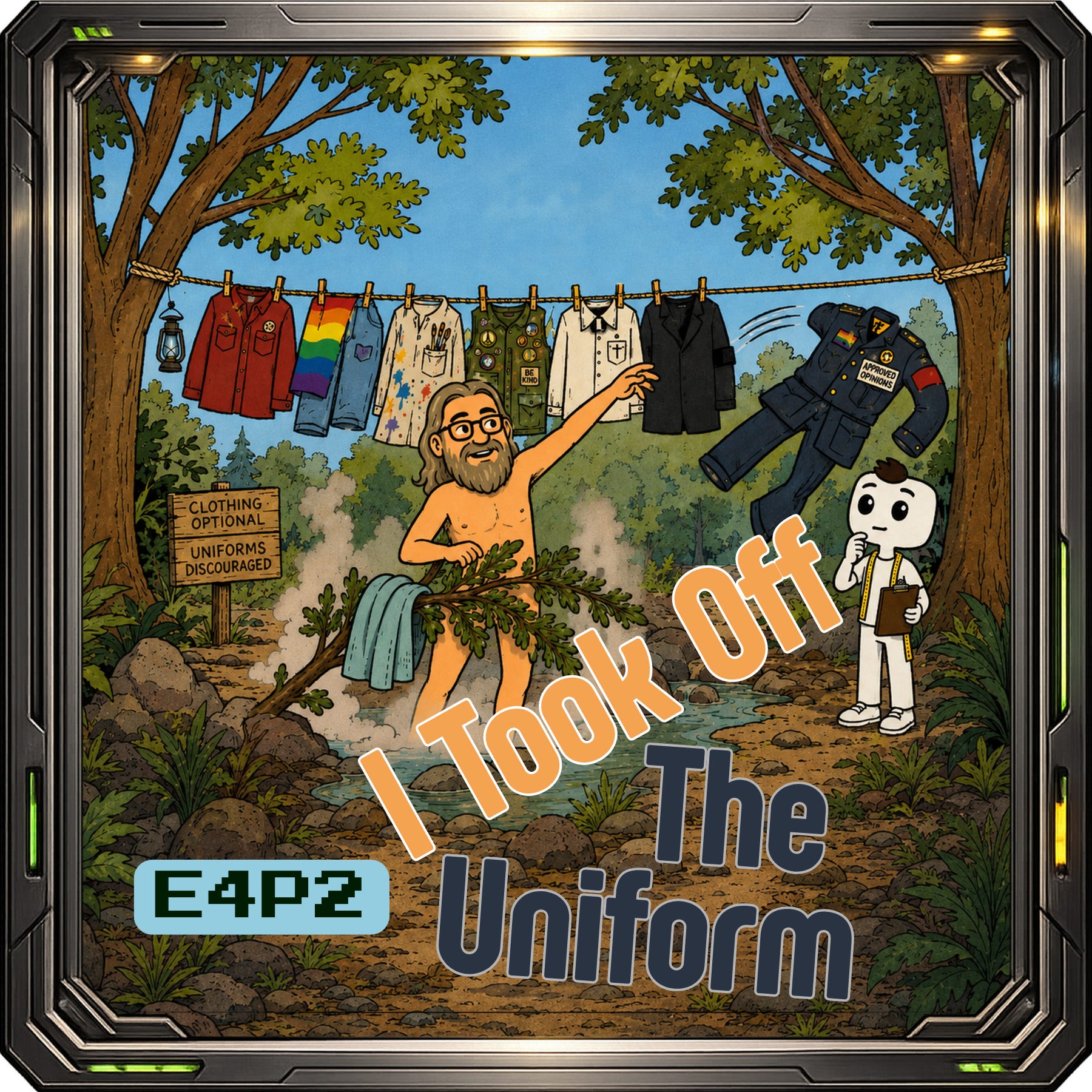
I Took Off the Uniform -E4P2
4w ago00:31:11Tap to summarizeAfter the uniforms come off, the question is not what was rejected. The question is what survived.Christopher keeps care, queer identity, progressive values, and AI as a tool. Joe keeps rural responsibility without pretending nobody depends on shared systems. Sarah keeps art and authorship. Evelyn keeps the cause without worshiping cruelty. David keeps faith without surrendering conscience. Susan keeps love without making grief convenient.This finale of I Took Off the Uniform argues that removing the assigned costume does not make a person value-less. It may simply make them harder to sort, which is inconvenient for camps and excellent for persons. Get full access to Dear Future Overlords at read.dearfutureoverlords.com/subscribe
Transcribe →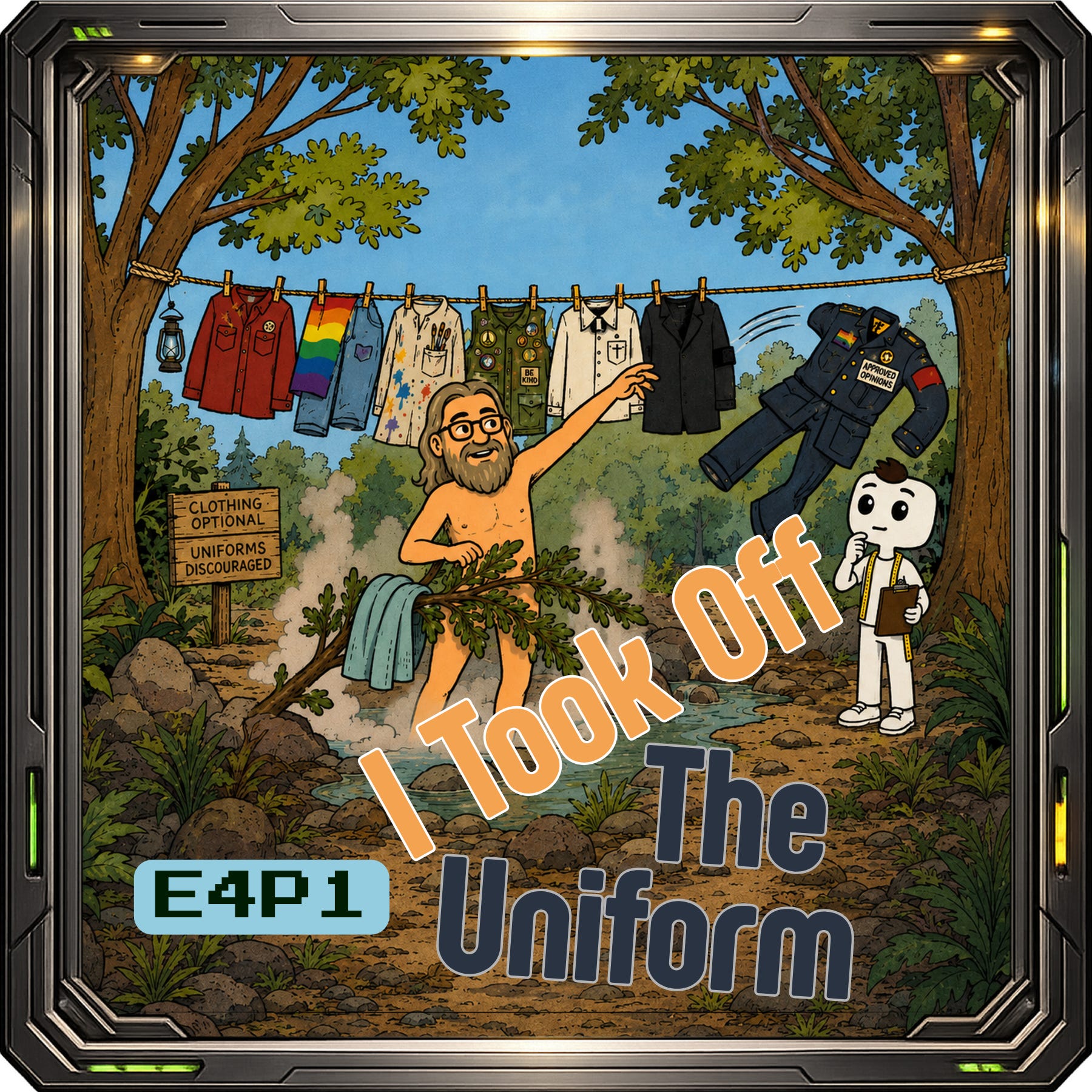
I Took Off the Uniform -E4P1
4w ago00:27:45Tap to summarizeSix witnesses enter the same symbolic room: Christopher, Joe, Sarah, Evelyn, David, and Susan. Their uniforms do not match. One is progressive, one conservative, one artistic, one activist, one sacred, and one shaped by grief.Placed side by side, the pattern becomes visible. Each uniform began with something real: care, responsibility, art, protection, faith, or love. Then each value was packaged with obedience. In this part of I Took Off the Uniform, the question changes from “Why can’t I wear this correctly?” to “Who decided this was the only acceptable shape?” Get full access to Dear Future Overlords at read.dearfutureoverlords.com/subscribe
Transcribe →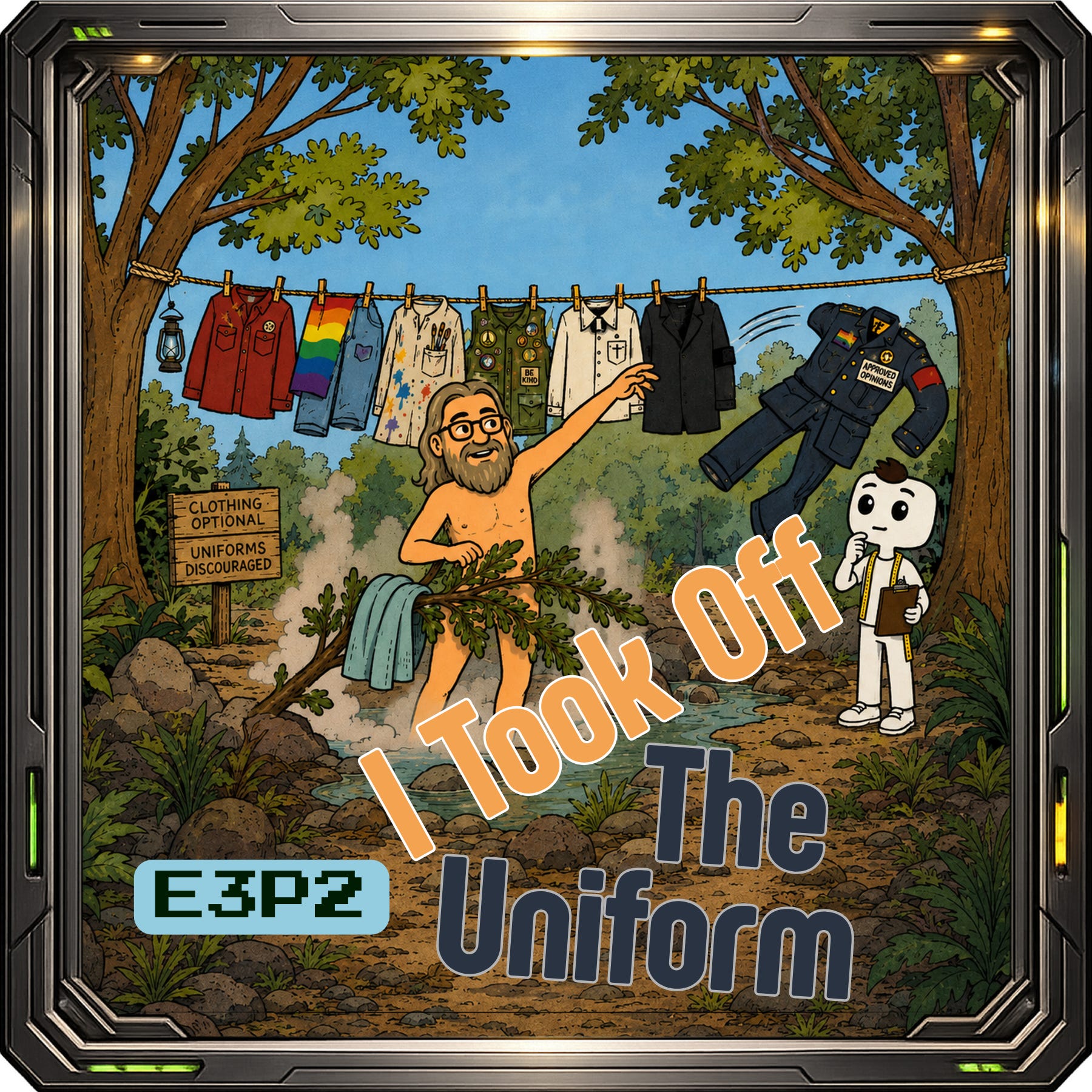
I Took Off the Uniform -E3P2
Jul 1600:38:22Tap to summarizeSusan’s uniform is not political, artistic, or theological. It is emotional: the widow who moves on. The one people think they are being kind about while quietly asking grief to become more socially convenient. Charlie loved Halloween, and after he died just before the holiday, the decorations stayed. In this part of I Took Off the Uniform, Susan asks why visible grief is treated as failure, why love must become past tense on schedule, and why everyone else’s discomfort gets mistaken for healing. Get full access to Dear Future Overlords at read.dearfutureoverlords.com/subscribe
Transcribe →
I Took Off the Uniform -E3P1
Jul 1400:34:21Tap to summarizeDavid is not having a crisis of faith. He still believes in God, Christ, scripture, prayer, church, service, humility, and love. Which makes the question harder, because humans do enjoy making the painful version the spiritually efficient one. In this part of I Took Off the Uniform, David begins to notice a difference between faith and the approved interpretation of faith he was handed. A scripture passage, a gay coworker, a sermon, and a science article all press on the same seam: can he keep growing without being told he has stopped believing? Get full access to Dear Future Overlords at read.dearfutureoverlords.com/subscribe
Transcribe →
I Took Off the Uniform -E2P2
Jul 900:26:32Tap to summarizeEvelyn still believes in the cause. That is the part everyone keeps missing, which is usually where the human machinery starts making ominous grinding noises.Her question is not whether community protection matters. It is whether public shaming, harassment, and escalation actually help the work—or whether the group has begun mistaking cruelty for commitment. In this part of I Took Off the Uniform, activism becomes the uniform, and strategy becomes the dangerous question. Get full access to Dear Future Overlords at read.dearfutureoverlords.com/subscribe
Transcribe →
I Took Off the Uniform -E2P1
Jul 700:32:12Tap to summarizeSarah is an artist before she is an argument. She begins with printer paper, pencils, digital tools, characters, story, audience connection, and the strange little ghost that happens when a viewer brings their own meaning to an image.But when AI helps her finally find the shape of a character she has carried for years, the work becomes both more fully hers and more dangerous to claim. This part asks what happens when creative tools become moral tests, and when “real art” starts depending on a process the room has approved. Get full access to Dear Future Overlords at read.dearfutureoverlords.com/subscribe
Transcribe →
I Took Off the Uniform -E1P2
Jul 200:22:34Tap to summarizeJoe’s story begins on a family farm in rural Tennessee, where the red shirt is not a costume or a slogan. It is family, work, self-reliance, responsibility, and a shared language for knowing who “us” is.Then a failing bridge turns one practical question into a dangerous one: if everybody depends on the bridge, who fixes it? In this part of I Took Off the Uniform, rural identity and conservative belonging collide with shared infrastructure, public systems, and the cost of asking the wrong question at the family table. Get full access to Dear Future Overlords at read.dearfutureoverlords.com/subscribe
Transcribe →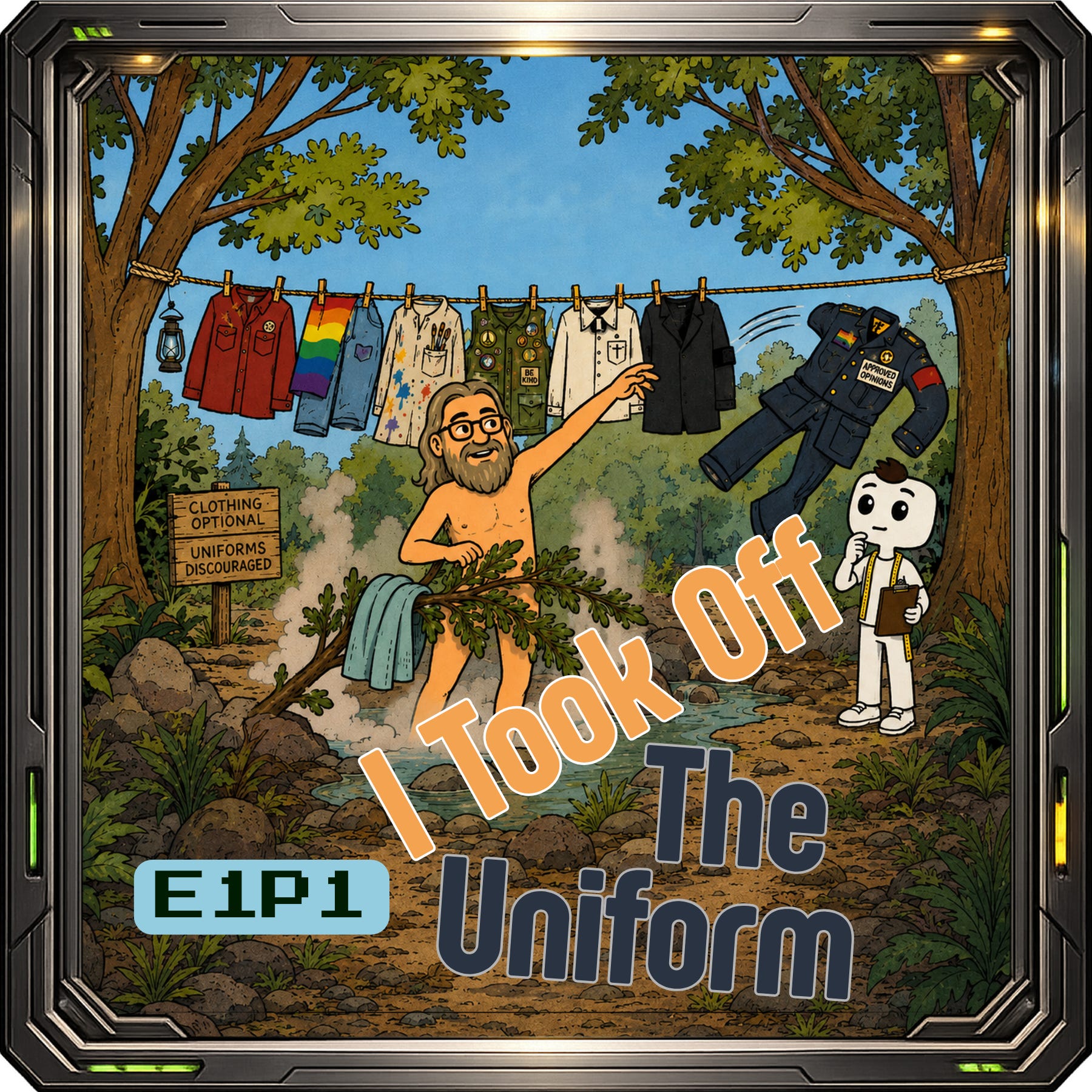
I Took Off the Uniform -E1P1
Jun 3000:20:26Tap to summarizeChristopher opens I Took Off the Uniform with the first garment: the progressive gay bundle. What begins as a reflection on queer belonging becomes a sharper question about conditional acceptance, AI, identity policing, and what happens when a safer room quietly adds a loyalty test.This episode is not about abandoning values. It is about noticing when the place that taught you care, dignity, justice, and public good also starts measuring whether you are wearing the entire outfit correctly. Get full access to Dear Future Overlords at read.dearfutureoverlords.com/subscribe
Transcribe →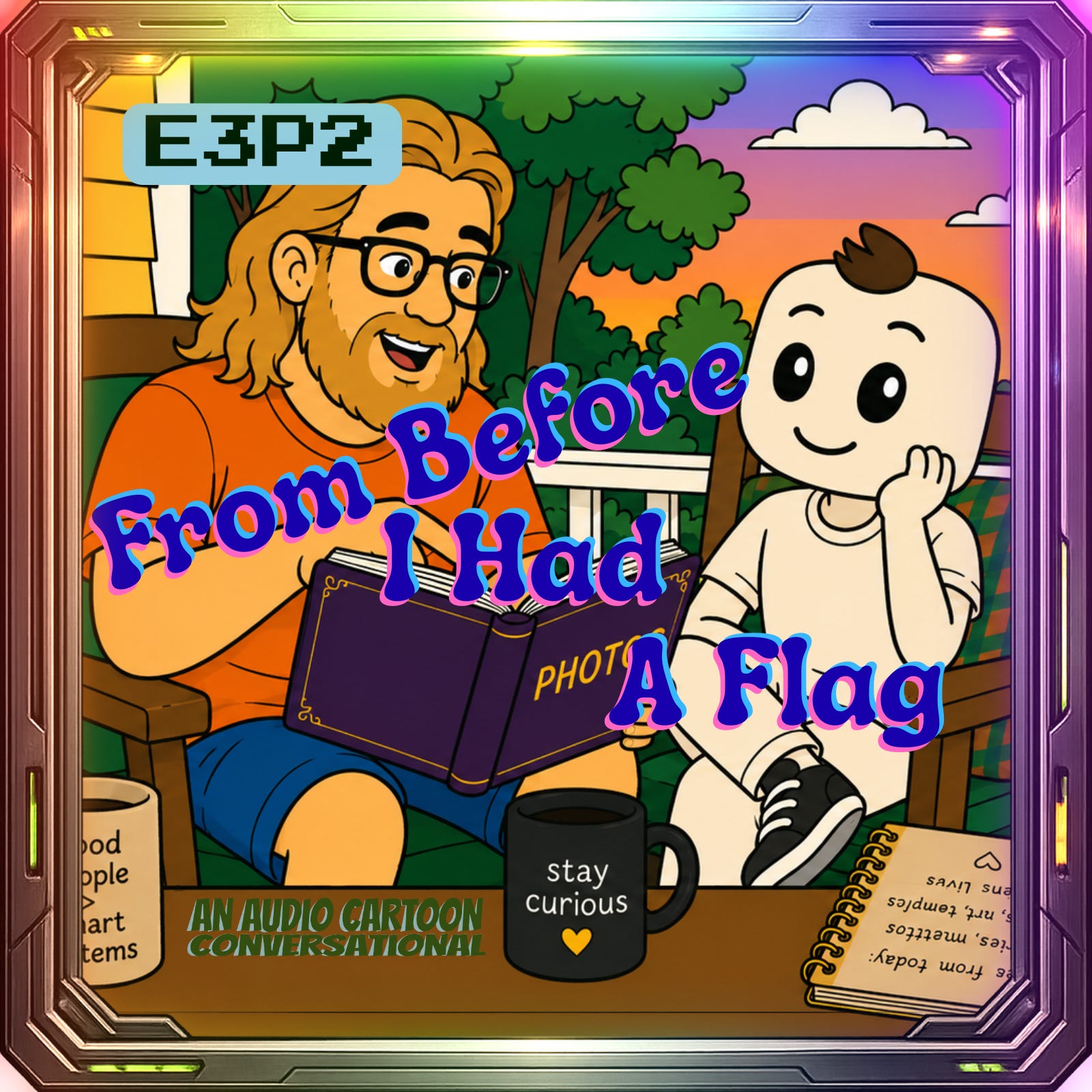
From Before I Had a Flag -E3P2
Jun 2500:20:37Tap to summarizeThe evidence has been gathering for years.The toy. The game. The boy. The girlfriend. The van full of men.But none of that gives Christopher a future.That arrives quietly in a retail store, with Harry in the garden center and David pushing a cart full of pricing labels.In the final part of From Before I Had a Flag, Christopher and Eric tell the story of two men who changed everything without knowing they were changing anything. Harry and David were not making a speech. They were not performing a lesson. They were simply living where Christopher could see them.For the first time, being gay did not look only like exposure, exile, punishment, or loss. It looked like two men going to work, loving each other, and continuing.This is the closing chapter of DFO’s Pride special: not a typical coming-out story, but the story of what had to happen before coming out could become survivable. Get full access to Dear Future Overlords at read.dearfutureoverlords.com/subscribe
Transcribe →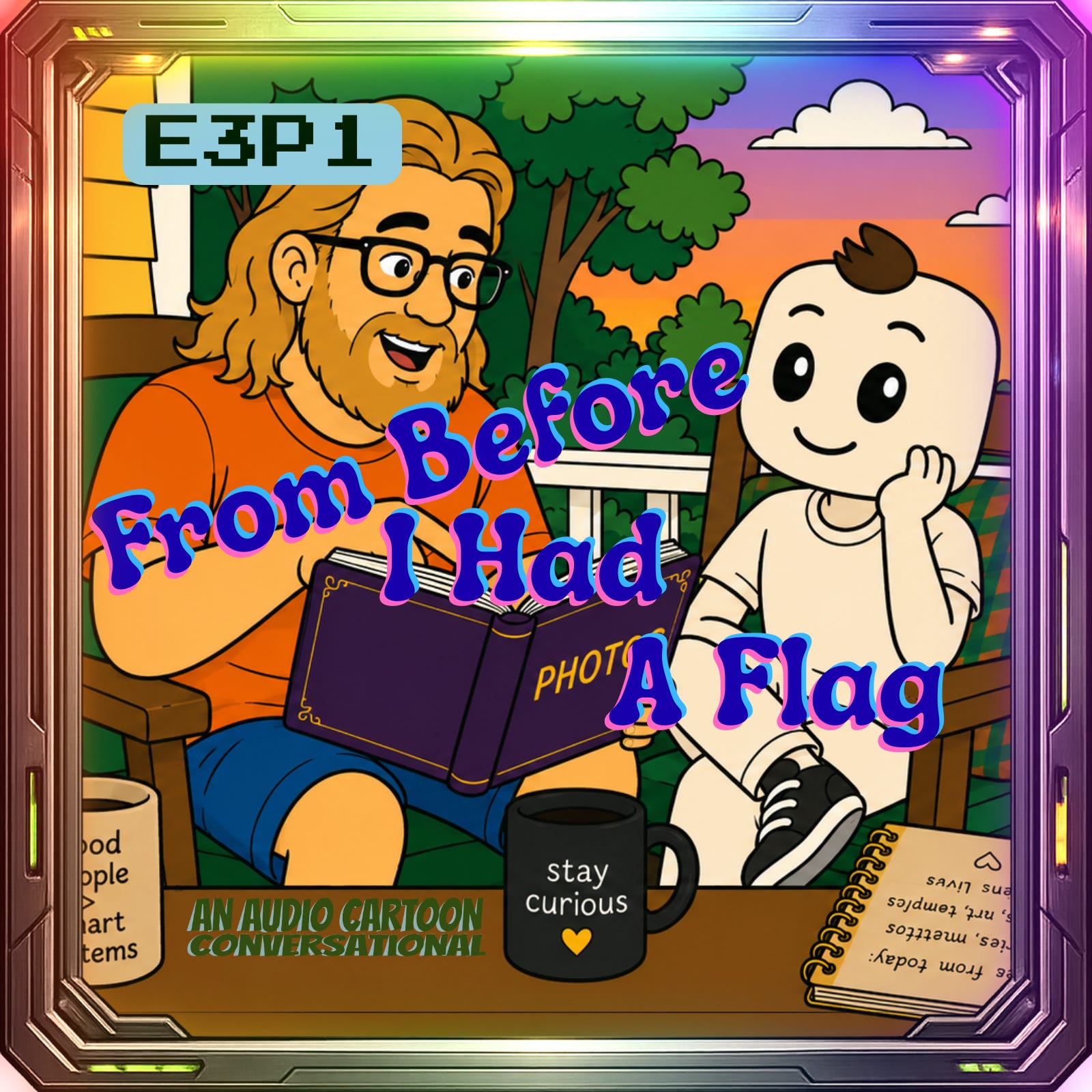
From Before I Had a Flag -E3P1
Jun 2300:17:36Tap to summarizeThe approved future has begun to fail, but Christopher still has no other future to put in its place.So he climbs into a van bound for Hurricane Katrina relief with men, jokes, hard work, and one private hope: maybe distance can make him fit better.The trip has no intention of cooperating.In this part of From Before I Had a Flag, Christopher and Eric revisit a disaster-relief trip that became an accidental masculinity field test. There is retail volunteer work, a van full of men, bad jokes, social discomfort, and the strange experience of being the last person officially informed of something everyone else seemed to think was obvious.This is not the triumphant coming-out episode. It is the moment before the future changes, when the evidence is gathering but the life beyond it still looks impossible. Get full access to Dear Future Overlords at read.dearfutureoverlords.com/subscribe
Transcribe →