
Podcast
Deborah Lebree's podcast
Hosted by Deborah Lebree · EN
No description available
171episodes
Episodes
Newest firstAll episodes

What Went Wrong on the U.S.S. Lincoln?
Yesterday00:30:35Tap to summarizeFor the past two weeks, family members of sailors have been raising alarms about the conditions aboard the U.S.S. Abraham Lincoln, which has a crew of about 5,000 and has been at sea for almost nine months straight. Today, John Ismay, a New York Times reporter who covers the Pentagon with a focus on armed conflict and the defense industry, discusses what went wrong on the ship and how it could affect the U.S. military’s ability to fight wars. Guest: John Ismay, a New York Times reporter who covers the Pentagon with a focus on armed conflict and the defense industry. Background reading: The U.S.S. Abraham Lincoln has been deployed for nearly nine months. Members of Congress are worried about the crew’s well-being.Admiral Brad Cooper, the head of U.S. Central Command, acknowledged the difficulty of the carrier’s lengthy deployment but said mental health issues were lower than on other vessels. Photo: Jason Waite/Agence France-Presse, via Navy Office of Information For more information on today’s episode, visit nytimes.com/thedaily. Transcripts of each episode will be made available by the next workday. Subscribe today at nytimes.com/podcasts or on Apple Podcasts and Spotify. You can also subscribe via your favorite podcast app here https://www.nytimes.com/activate-access/audio?source=podcatcher. For more podcasts and narrated articles, download The New York Times app at nytimes.com/app. Hosted by Simplecast, an AdsWizz company. See pcm.adswizz.com for information about our collection and use of personal data for advertising.
Transcribe →
Luigi Mangione’s High-Risk Legal Strategy
2d ago00:26:39Tap to summarizeIn the two years since a masked man shot and killed a health care executive, the national spotlight has turned to the primary suspect, Luigi Mangione. The overwhelming evidence has pointed to his guilt, and the question on most minds has been: What might the defense of one of the most famous murder suspects in America look like? At a hearing on Friday, we got our first glimpse at an answer, one that appears to include a full-throated embrace of his guilt. Today, Benjamin Weiser, a reporter covering the justice system for The New York Times, and Hurubie Meko, a criminal justice reporter for The Times, discuss the risky defense strategy and why an admission of guilt might be Mr. Mangione’s best bet. Guests: Benjamin Weiser, a reporter covering the justice system for The New York Times.Hurubie Meko, a criminal justice reporter for The New York Times. Background reading: Luigi Mangione pleaded guilty to federal charges, and still faces a state case. Photo: Pool photo by David Dee Delgado For more information on today’s episode, visit nytimes.com/thedaily. Transcripts of each episode will be made available by the next workday. Subscribe today at nytimes.com/podcasts or on Apple Podcasts and Spotify. You can also subscribe via your favorite podcast app here https://www.nytimes.com/activate-access/audio?source=podcatcher. For more podcasts and narrated articles, download The New York Times app at nytimes.com/app. Hosted by Simplecast, an AdsWizz company. See pcm.adswizz.com for information about our collection and use of personal data for advertising.
Transcribe →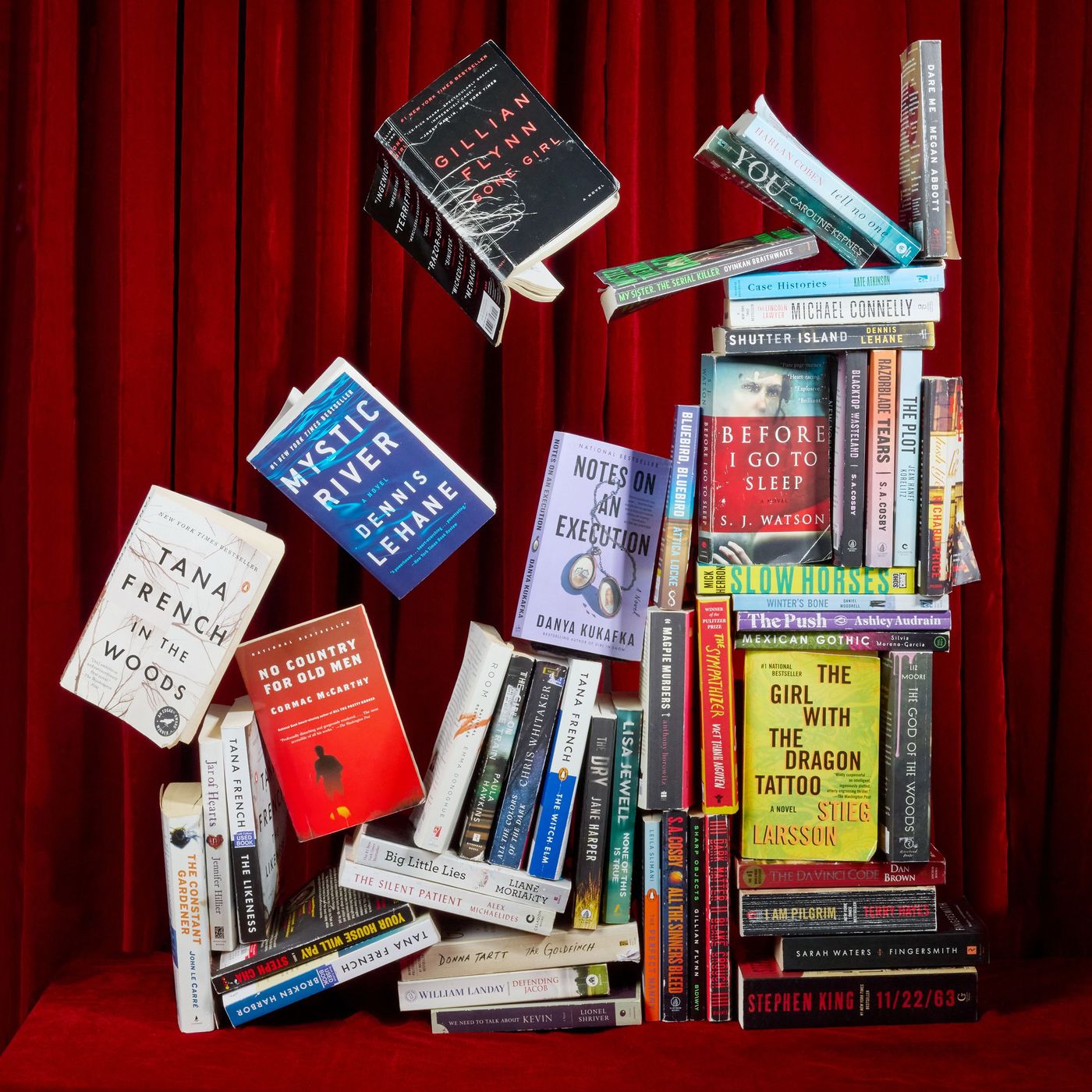
What Makes a Killer Thriller?
3d ago00:44:16Tap to summarizeThe New York Times Book Review recently released its list of the 50 best thrillers of the 21st century. To put it together, the team asked almost 300 authors and other experts to vote for the best heart-thumping, page-turning, white knuckle reads published since 2000. In this episode of “The Sunday Daily,” Natalie Kitroeff talks with the Times thrillers columnist, Sarah Lyall, about how the list came together. Then, Natalie speaks with one of the greatest thriller writers of this century — with four books featured on the list — the author Tana French. On Today’s Episode: Sarah Lyall writes a monthly thrillers column for The New York Times. Tana French is the author of many best-selling books, including “In the Woods,” “The Searcher,” “The Likeness” and “The Witch Elm.” Background Reading: The 50 Best Thrillers of the 21st Century Photo credit: Naila Ruechel Subscribe today at nytimes.com/podcasts or on Apple Podcasts and Spotify. You can also subscribe via your favorite podcast app here https://www.nytimes.com/activate-access/audio?source=podcatcher. For more podcasts and narrated articles, download The New York Times app at nytimes.com/app. Hosted by Simplecast, an AdsWizz company. See pcm.adswizz.com for information about our collection and use of personal data for advertising.
Transcribe →
The Charming, Amusing, Surprisingly Low-Confidence Matthew Rhys
4d ago00:49:23Tap to summarizeThe “Widow’s Bay” star on his two Emmy nominations, his penchant for going dark and his wobbly self-esteem. Thoughts? Email us at theinterview@nytimes.comWatch our show on YouTube: youtube.com/@TheInterviewPodcastFor transcripts and more, visit: nytimes.com/theinterview Subscribe today at nytimes.com/podcasts or on Apple Podcasts and Spotify. You can also subscribe via your favorite podcast app here https://www.nytimes.com/activate-access/audio?source=podcatcher. For more podcasts and narrated articles, download The New York Times app at nytimes.com/app. Hosted by Simplecast, an AdsWizz company. See pcm.adswizz.com for information about our collection and use of personal data for advertising.
Transcribe →
The Secret Spy Network Feeding Russia’s War Machine
5d ago00:32:56Tap to summarizeUkraine is running desperately low on interceptor missiles, leaving its cities and people nearly defenseless against Russian missile and drone attacks. How Russia has been able to sustain those attacks has been a mystery — until now. Today, Jane Bradley, a Britain-based investigative reporter for The New York Times, explains her investigation into the spy network that has allowed the Kremlin to keep this war going. Guest: Jane Bradley, a Britain-based investigative reporter for The New York Times. Background reading: A Russian spy who used the Aeroflot office in Tokyo to smuggle high-tech weapon components into Russia has left Japan after a Times report.Operating out of a Tokyo high-rise, a military intelligence unit takes advantage of Japan’s weak espionage laws to find the high-tech equipment that Russia needs to wage war. Photo: Chang W. Lee/The New York Times For more information on today’s episode, visit nytimes.com/thedaily. Transcripts of each episode will be made available by the next workday. Subscribe today at nytimes.com/podcasts or on Apple Podcasts and Spotify. You can also subscribe via your favorite podcast app here https://www.nytimes.com/activate-access/audio?source=podcatcher. For more podcasts and narrated articles, download The New York Times app at nytimes.com/app. Hosted by Simplecast, an AdsWizz company. See pcm.adswizz.com for information about our collection and use of personal data for advertising.
Transcribe →
Are The Democratic Socialists Winning or Losing?
6d ago00:31:23Tap to summarizeThis week, Francesca Hong, a democratic socialist running for governor in Wisconsin, suffered an upset after a double-digit lead in the polls. Last week, Dr. Abdul El-Sayed, a progressive, pulled off a stunning victory in Michigan against his well-funded opponent. Nate Cohn, the chief political analyst for The New York Times, makes sense of what happened in Wisconsin and Michigan, and what it might tell us about the future of the Democratic Party. Guest: Nate Cohn, the chief political analyst for The New York Times. Background reading: Dr. El-Sayed’s triumph against an establishment-backed candidate in Michigan was a big win for the left.Ms. Hong’s defeat in Wisconsin defied expectations and may have shown that the democratic socialist wave cannot reach beyond urban centers. Photo: Nick Hagen for The New York Times For more information on today’s episode, visit nytimes.com/thedaily. Transcripts of each episode will be made available by the next workday. Subscribe today at nytimes.com/podcasts or on Apple Podcasts and Spotify. You can also subscribe via your favorite podcast app here https://www.nytimes.com/activate-access/audio?source=podcatcher. For more podcasts and narrated articles, download The New York Times app at nytimes.com/app. Hosted by Simplecast, an AdsWizz company. See pcm.adswizz.com for information about our collection and use of personal data for advertising.
Transcribe →
All the President’s Planes
1w ago00:23:38Tap to summarizeWhen President Trump left Turkey, the White House said publicly that he was boarding the old Air Force One — but that plane was a decoy. In a highly elaborate escape plan prompted by a credible Iranian threat, Trump was secretly moved through a catering cart to a military aircraft, leaving passengers unknowingly flying on the decoy plane. Today, Maggie Haberman, a White House correspondent for The New York Times, details the operation’s risks and what it reveals about how seriously the administration views the danger to the president. Guest: Maggie Haberman, a White House correspondent for The New York Times. Background reading: President Trump hid in an airport catering container and was transported to a military jet for a secret flight out of country. Photo: Doug Mills/The New York Times For more information on today’s episode, visit nytimes.com/thedaily. Transcripts of each episode will be made available by the next workday. Subscribe today at nytimes.com/podcasts or on Apple Podcasts and Spotify. You can also subscribe via your favorite podcast app here https://www.nytimes.com/activate-access/audio?source=podcatcher. For more podcasts and narrated articles, download The New York Times app at nytimes.com/app. Hosted by Simplecast, an AdsWizz company. See pcm.adswizz.com for information about our collection and use of personal data for advertising.
Transcribe →
The U.S. Missile Stockpile Is Dangerously Low
1w ago00:34:02Tap to summarizeAs the fighting with Iran has dragged on, American forces have been burning through their weapons, creating a shortage of munitions that is leaving the United States and its allies in the region much more vulnerable. Today, Eric Schmitt, a national security correspondent for The New York Times, explains why Washington is running out of key missiles so quickly, and how the munitions shortage might affect the safety of U.S. troops and the Trump administration’s efforts to end the war. Guest: Eric Schmitt, a national security correspondent for The New York Times. Background reading: The war in Iran has depleted U.S. weapons stockpiles, resulting in a significant erosion of firepower. Photo: Martin Divisek/EPA, via Shutterstock For more information on today’s episode, visit nytimes.com/thedaily. Transcripts of each episode will be made available by the next workday. Subscribe today at nytimes.com/podcasts or on Apple Podcasts and Spotify. You can also subscribe via your favorite podcast app here https://www.nytimes.com/activate-access/audio?source=podcatcher. For more podcasts and narrated articles, download The New York Times app at nytimes.com/app. Hosted by Simplecast, an AdsWizz company. See pcm.adswizz.com for information about our collection and use of personal data for advertising.
Transcribe →Why Adults Are Getting Cancer at a Younger Age
1w ago00:29:42Tap to summarizeFor years, cancer has been seen as a disease people mostly get when they’re older. That seems to be changing as more young people are getting cancer than ever before. Today, Nina Agrawal, a health reporter for The New York Times, explains what scientists are learning about the factors driving the rise and what it means for a generation of young cancer survivors. Guest: Nina Agrawal, a health reporter for The New York Times. Background reading: Hundreds of New York Times readers shared their experiences with early-onset cancers. Here are seven of their stories.Research is starting to offer clues about why more than a dozen types of cancer have increased among people under 50 in the past decade. Photo: Leah Nash for The New York Times For more information on today’s episode, visit nytimes.com/thedaily. Transcripts of each episode will be made available by the next workday. Subscribe today at nytimes.com/podcasts or on Apple Podcasts and Spotify. You can also subscribe via your favorite podcast app here https://www.nytimes.com/activate-access/audio?source=podcatcher. For more podcasts and narrated articles, download The New York Times app at nytimes.com/app. Hosted by Simplecast, an AdsWizz company. See pcm.adswizz.com for information about our collection and use of personal data for advertising.
Transcribe →
Is 'Gentle Parenting' Ruining French Children?
1w ago00:39:01Tap to summarize“Traditional” French parenting is built on a foundation of firm boundaries, strictness and punishment for misbehavior. Within these rules, children are also allowed freedom and autonomy, which some say results in both well-behaved children and stress-free parents. In recent years, though, American-style “gentle” or “positive” parenting has gained a toehold in the country, unsettling decades of orthodoxy about the best way to raise a French child. It has prompted a fierce debate, with both sides accusing the other of being harmful. In today’s episode, Madeleine Schwartz, a journalist who lives in Paris, talks with Michael Barbaro about the dispute over parenting styles in France and what it says about the eternal search for the “right” way to raise children. On Today’s Episode: Madeleine Schwartz is a journalist and editor in Paris. Background Reading: Did American-Style ‘Gentle Parenting’ Spoil French Children? Art Credit: Illustration by Kimberly Elliott Subscribe today at nytimes.com/podcasts or on Apple Podcasts and Spotify. You can also subscribe via your favorite podcast app here https://www.nytimes.com/activate-access/audio?source=podcatcher. For more podcasts and narrated articles, download The New York Times app at nytimes.com/app. Hosted by Simplecast, an AdsWizz company. See pcm.adswizz.com for information about our collection and use of personal data for advertising.
Transcribe →