← Decoder with Nilay Patel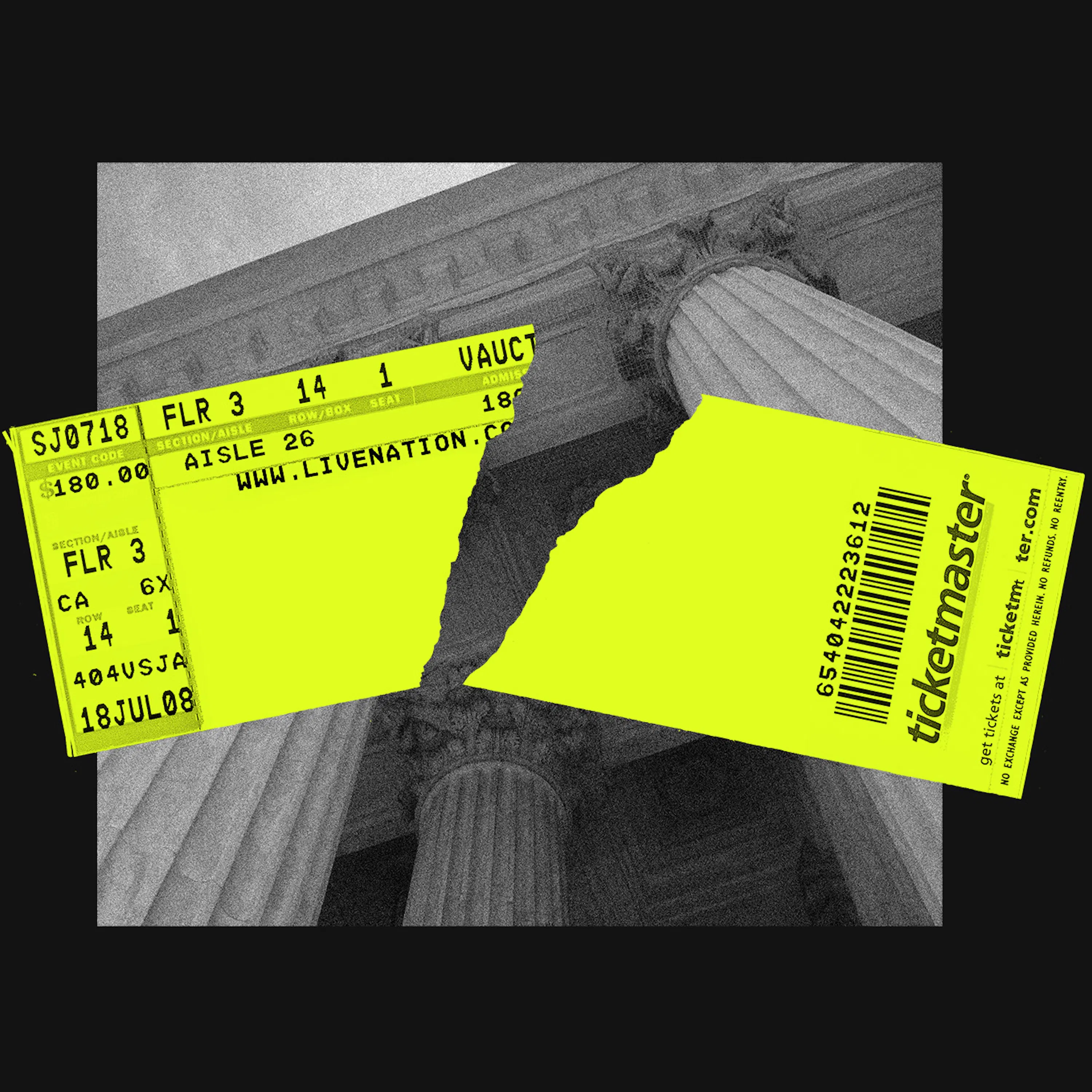
Decoder with Nilay Patel
Everyone hates Ticketmaster. Why'd Trump go easy on them?
00:37:30
The Trump DOJ settled with Live Nation. But dozens of states are keeping the Ticketmaster antitrust fight alive.
Loading summary
Transcript56 lines
- [00:01]
Podcast Host (Sponsor Reads)
Support for the show comes from Odoo. Running a business takes everything you've got, but a lot of the tools out there that promise to make your life easier aren't great at talking to each other, which means you end up having to toggle between a dozen different apps and services just to keep the lights on, odoo says. Enough of that. They're in an all in one fully integrated platform that might actually help you get it all done. Thousands of businesses have made the switch. You can too. Try Odoo for free@odoo.com that's o d o o.com support for the show comes from Anthropic, the team behind Claude. You know how sometimes a problem just grabs you like you sit down thinking it's a quick thing, then suddenly it's midnight? That's exactly the kind of mind Claude is built for. People who don't just want the answer, they want to chase the thing that's underneath it. Anthropic positions Claude as a thinking partner, not a search engine. It works through the problem with you, and it doesn't try to just wrap things up in an easy answer. Get started with Claude for free at Claude AI Decoder
- [01:16]
Spring starts at the Home Depot and we are bringing the heat to your backyard this season. Fire up the flavor with our wide variety of grills for under $300, like the next grill 4 burner gas grill that's perfect for hosting your spring cookout. Then set and turn your outdoor space into the go to spot the patio sets for every budget. Bring it this season with grills that deliver flavor and patios that set the vibe from the Home Depot. Start your spring with low prices guaranteed at the Home Depot. Exclusions apply. See homedepot.com pricematch for details.
- [01:47]
Neelai Patel
Hello and welcome to Decoder. I'm Neelai Patel, editor in chief of the Verge, and Decoder is my show about big ideas and other problems. Today we're talking about the major antitrust lawsuit against Live Nation, which owns Ticketmaster, and what it might mean for antitrust and competition law in general now that that the Trump Department of Justice has decided to settle its part of the case, even as several states, including New York, California and Texas, carry on. To break it all down, I'm joined by Verge senior policy reporter Lauren Finer. Lauren's our resident court expert, by which I mean she's been in the courtroom chronicling this trial from the beginning. If you're a longtime Decoder listener, you might recall an episode we did on Ticketmaster back in 2023 in the wake of the Taylor Swift eras tour fiasco. That's when Ticketmaster's website crashed during the first major rush for eras tour tickets. It was such a scandal, and Swifties are so politically powerful that Live Nation was dragged in front of Congress. After widespread backlash spilled over into the mainstream in 2024, the Biden department of justice followed up on that scandal by launching an antitrust lawsuit against Live Nation, seeking to break it up to split Ticketmaster off from Live Nation to try and combat predatory practices and increasing ticket fees. This case has always seemed like a slam dunk, regardless of partisan affiliation. Nobody likes Ticketmaster, and breaking up Live Nation would score political points for who, however, finally pulled the trigger. It was also supposed to be a sign of strong bipartisan antitrust support. So even though the Trump DOJ featured all new antitrust leaders, there was good reason to believe that those new folks, in particular Trump antitrust chief Gail Slater, would keep up the pressure, especially against tech companies. You might remember that J.D. vance used to go around calling for the breakup of Google and saying that he was a fan of Biden FTC chief Lina Khan. But nothing about the second Trump administration is predictable or stable. In early February, following the reports of some major tensions at the doj, Gale Slater was pushed out. And then, just one week into the Live Nation trial, the DOJ settled its portion of the case, shocking many of the industry and extracting only what many see as pretty weak concessions. Trump himself reportedly intervened in the case directly to demand that speedy settlement, which of course stirred up accusations of outright corruption. But the lawsuit isn't over yet, because the case against Live Nation included dozens of states, a bunch of attorneys general have refused to give up the fight. So Live Nation remains in court, fighting off accusations that it operates an illegal monopoly in the ticket business, which is illegally tied to its promotions business, which is illegally tied to its venue business. But the DOJ settlement raises all sorts of complicated questions about where antitrust policy stands in the United States overall, especially with regard to ongoing cases against big tech companies like Apple and Amazon. Lauren has been tracking all these cases and all these developments in detail. The trial, the settlement, and now the state's continuing the fight. So let's get into it. Before we start, a quick reminder that you can listen to this episode or any episode of Decoder completely ad free by subscribing to the Verge. Just go to theverge.com subscribe okay, Verge Senior policy reporter Lauren Finer on the Live Nation antitrust lawsuit Here we go. Lauren Feiner, your Senior policy reporter for the Verge and a resident in courtroom Experiencer. Because I think what's happening in courtrooms for you right now is just a full existential experience at all times. Welcome to Decoder.
- [05:14]
Lauren Feiner
Thank you. Spent a lot of time in courtrooms
- [05:16]
Neelai Patel
lately all over the country. There are other cases we can talk about at a later time. The one I want to talk about with you today is the Live Nation case. The United States government is suing Live Nation, which most people know of as Ticketmaster, for antitrust claims. This seemed like a winner. Like, no one is happy with Ticketmaster. This case sort of dates back to Taylor Swift and the ERAS tour. Like, it was very hard to buy an Heiress tour ticket. The sites crashed. Everyone said, well, Ticketmasters of Monopoly. And we stumbled our way into an antitrust case at a very high level. What is the Department of Justice alleging against Live Nation Ticketmaster in this case?
- [05:50]
Lauren Feiner
Basically, there's two main things we're talking about that the government initially went after Live Nation, Ticketmaster for one thing, is that they're saying this company used the fact that it owns both the promotions business, where artists go to have their tours marketed and sold around the country, and their ticketing business, Ticketmaster. It used the fact that it had both of those to kind of leverage its power with venues across the country. And the second part of this is focused specifically on amphitheaters. Live Nation owns many amphitheaters around the country, or it operates them. And because it controls all of those amphitheaters, it's really hard to book an amphitheater tour without going through Live Nation. Those things are ways that Live Nation Ticketmaster essentially is able to have this huge amount of power over the concert industry as we know it today, according to the complaint.
- [06:50]
Neelai Patel
So if you're an artist, you have to sign up with Live Nation in order to get access to the venues that it owns. If you run an independent venue and you want to get artists to come put on a show, you have to sign up to use Ticketmaster for your tickets to get access to those artists. And if you just want ticketing, you maybe have to accept Ticketmaster's offers of artisan rates in order to run their ticketing platform like they're in control of all of it. What has been the argument that that's legal? Just that it's driving up prices, that it's a bad experience when you're trying to buy a Taylor Swift ticket. What has been the. The main this is bad argument that the government has presented in the US
- [07:24]
Lauren Feiner
it's not illegal to just be a big company and have a lot of power. What is illegal is if a dominant share of the market and you use that power in a way that's anti competitive, that blocks out rivals, that, you know, just uses bad behavior basically to break the law and make it so that there's less competition in general. So in this case, you know, some of the things that the government has been talking about that Live Nation Ticketmaster allegedly engages in are things like having these long exclusive contracts with venues that make it hard for other players to get a foothold in those markets or trying to condition the use of one of its services on another. So that is really hard again, for other rivals to try to work with those other elements of the concert industry.
- [08:19]
Neelai Patel
You were in the courtroom while the DOJ legal team was presenting its case. What did you learn from the evidence that came out of trial?
- [08:26]
Lauren Feiner
Right now we're still in the government's case. So we haven't heard Live Nation's full defense yet. But during those first few weeks of trial, some of what we heard was from the CEO of SeatGeek who said that basically he decided that they needed to offer retaliation insurance to venues they were pursuing as a rival to Ticketmaster to be their primary ticketing provider. Basically, they had to guarantee that if these venues lost shows because Live Nation was refusing to give them to to them anymore because they were no longer Ticketmaster customers, that they would be able to make them whole in some way. We kind of heard a lot about how there were these implicit, or maybe not so implicit threats, depending on how you perceive them, that the company allegedly said to rivals or to venues that it was trying to keep under its control, that it was a way that it maintained its power over this whole ecosystem.
- [09:33]
Neelai Patel
There's some, like, really interesting evidence presented in this case. You actually broke this story. There was some audio of a call from the CEO of Live Nation, Michael Rapinoe, talking to the head of the Barclays center here in New York. And they're negotiating over whether or not their deal is over and what might happen if the Barclays center doesn't re up with Ticketmaster. We actually have the audio. Again, this was exclusively broken on the Verge by Lauren. Let's run that here.
- [10:00]
John Abhimandi
The question on the ticketing side is there's language in the contract that says if a certain number of games are not played, that the contract extends at the same the ticketing contract extends at the same terms for an additional year. We don't believe that that clause has been Triggered in Covid.
- [10:17]
Michael Rapinoe
You don't fucking believe it's been triggered. Really? Every other team in the entire United States has figured out that has happened. But you don't think with COVID without one ticketed event that was triggered.
- [10:27]
John Abhimandi
Well, it's not true. It's just not true what you're saying, Michael.
- [10:30]
Michael Rapinoe
But it doesn't. Doesn't deliver. It doesn't deliver us what we need. I've told you that. I've told you we got a new venue in town and the economics have changed in the marketplace. So what I told you from day one was it was going to be a tough time to deliver tickets or concerts with the new competitor in town, regardless of ticketing. Anyways, John, I'm going to go. I'm disappointed. I don't think you were ever going to renew with us. I think you've been set to do a tea cake deal, and I thought we deserved more than this. But anyways, I appreciate your time.
- [11:03]
John Abhimandi
All right, thank you, Michael.
- [11:05]
Neelai Patel
Lauren, that's quite a call. We ran it on like, our Instagram and people were like, this just sounds like a negotiation. But the government presented that as evidence of Monopoly. What were we hearing there?
- [11:15]
Lauren Feiner
What you heard there was the then CEO of the Barclays Center, John Abimandi, talking with the CEO of Live Nation, Michael Rapinoe. And basically Abhimandi was breaking the news that Barclays center was going to go with SeatGeek over Ticketmaster as its ticketing provider after their contract ended. Now, this was 2021. The Barclays center believed that their contract with Ticketmaster would expire that year. Michael Rapinoe disagreed. He felt that there was a clause in that contract triggered because of COVID that should have extended the contract. So Live Nation basically says he was. He was mad that Abhimandi was interpreting this contract differently, and he believed that they shouldn't be able to get out of their contract this early. And that's why he got so angry there. Abhimandi testified that he took this as a threat and that he took Rapinoe bringing up the threat of losing shows to a new competitor in town as a way of Rapinoe saying, well, if you don't go with Ticketmaster, then, you know, maybe we just won't send you these shows.
- [12:25]
Neelai Patel
And that feels like the tying, right? If you don't sign up for Ticketmaster, the artists that we represent at Live Nation won't come through Barclays Center. They'll go to another venue in the courtroom that. That go over as the government intended it to could you tell if that was convincing?
- [12:39]
Lauren Feiner
We actually heard Live Nation bring up this call in their opening argument, which was interesting because I think that kind of primed us to hear this F bomb that was alluded to in Live Nation's opening. So I think when we heard it, in a way it was it hits a little bit differently because it's the F bomb kind of comes at a time that's not really part of this whole UBS arena discussion. It's about this anger over this clause in the contract being triggered. But at the same time, I think you do, with the context from Abhimande, understand how he might have interpreted this as a threat, but I could definitely see the jury interpreting it either way. I think, as we've seen in those Instagram comments, some people think this is just how business goes and other people think this is an inherent threat.
- [13:27]
Neelai Patel
We need to take a quick break. We'll be right back.
- [13:39]
Podcast Host (Sponsor Reads)
Support for the Show Comes from Shipstation if you're a fast growing business, one of the fastest ways to lose momentum is getting bogged down in shipping. If you're constantly jumping between disconnected apps just to get orders at the door, you might want to check out ShipStation. ShipStation is an all in one platform that brings together order management, rate shopping and powerful analytics in a single dashboard. It helps you find competitive shipping rates and can even honor discounts you already have with other carriers. Shipstation says that by sharing tracking details, you can cut customer service inquiries by 12%. You could try ShipStation free for 60 days with full access access to all features, no credit card needed. Just go to shipstation.com and use code decoder for 60 days for free. 60 days gives you plenty of time to see exactly how much time and money you're saving on every shipment. That's shipstation.com code decoder shipstation.com code decoder support for the show comes from Anthropic, the team behind Claude. If you've spent any time lately trying to get an AI to do something useful, not just sound impressive, but generally help you think through a hard problem or task, you may have heard the name Claude. Claude is made by Anthropic and they've got a few things going on right now that are worth paying attention to. First, Claude Code. It's a command line tool for developers that understands your entire code base, run tests, iterates on solutions, and then handles complex tasks end to end. Developers have been using it for everything, not just coding, and that's exactly what led them to build something called Cowork which takes the same agentic power and brings it to everyone else. No terminal required. You pointed out your files set a task and Claude works through it autonomously in the background while you focus on other things. Less back and forth, more deep, sustained work getting done. Anthropic is committed to keeping that conversation ad free. That means no sponsored suggestions, no third party influence on what it tells you. You Claude's only job is to help you keep thinking. Try Claude for free at Claude AI Decoder and see why problem solvers choose Claude as their thinking partner. Support for the show comes from LinkedIn ads. There's no worse feeling than making a big investment, only to realize it really didn't live up to the hype. Like buying a nice piece of tech that ends up in storage, collecting dust, or taking a business workshop where your main takeaway was little more than a few motivational words. If you work in marketing, this can happen with ads. You optimize for the numbers that look great, impressions, reach and reactions. But when they don't show revenue, well, that can turn into an unfun conversation with the CFO. LinkedIn has a word for that Bull Spend Reach the right buyers with LinkedIn ads and invest in what looks good to your CFO. According to the 2026 Dream Data Benchmarks report, LinkedIn ads generate the highest ROAS of all major ad networks at 121% you could target by company, industry, job title and more. It's time to cut the bull. Spend advertise on LinkedIn, the network that works for you. Spend $250 on your first campaign on LinkedIn ads and get a $250 credit for the next one. Just go to LinkedIn.com decoder that's LinkedIn.com decoder. Terms and conditions apply. Support for this show comes from Factor. Eating healthy is a daily choice, but you got fast food delivery services and confusing nutrition guides all looking to sell you a product that will leave you empty inside. Factor isn't like that. Factor knows how busy you are. They just aren't going to let that be an excuse. They provide fully prepared meals designed by dietitians and crafted by chefs. Ready in two minutes. No planning, no cooking with 100 rotating weekly meals to keep things fresh. All Factor meals come with quality functional ingredients including lean proteins, colorful veggies, whole food ingredients and healthy fats. No refined sugars, no artificial sweeteners and no refined seed oils. Head to factor meals.com decoder 50 off and use decoder 50 off to get 50% off and free breakfast for a year offer only valid for new Factor customers with code and qualifying auto renewing subscription purchase. Make healthier eating easy with Factor.
- [18:32]
Neelai Patel
We're back with Verge senior policy reporter Loren Finer. The case is proceeding, the evidence is being presented, people are taking the stand, and then it's it settles. The DOJ settles. The states decide to keep going, but the DOJ settles. You wrote a piece about that settlement and just a straightforward headline. The Live Nation settlement has industry insiders Baffled. You talk to a whole bunch of people about that settlement in the industry, around the industry. Explain why the reaction was bafflement.
- [19:01]
Lauren Feiner
First of all, I think when the settlement came out, it was a pretty chaotic day in court. The judge didn't know what was going on. Even trial attorneys there somewhat didn't seem to know what was going on. But the doj, and I think it's about eight states decided to settle and the rest of, you know, a couple dozen or so states are continuing on. But what was reached in that settlement, when I talked to people in the industry about it, they basically said, we don't really know who asked for this. A lot of the things that were in the settlement were things that they felt were just not that helpful or wouldn't really fundamentally change the dynamics of the industry. They did say there were a few things that did seem like they would be better than the status quo, like more transparency for artists on ticket sales, on their own ticket sales, and certain caps on ticket fees. But then other things they felt like were just either so minimal that it didn't do enough or something that they didn't even really want, like, you know, access to Ticketmaster's back end for other rivals to plug into. In certain cases, which we heard at trial, that back end is something that's like out of the 1980s. One of the, one of the witnesses testified about, and the other thing was that they have to divest a certain number of exclusive booking contracts for amphitheaters. They're not actually divesting any amphitheaters. They're just saying that other promoters can book into them. Essentially.
- [20:36]
Neelai Patel
There's a lot of reporting that Donald Trump personally was involved in this settlement. Ari Emanuel, who used to be a board member at Live Nation, called Trump and personally asked him to intervene. There's reporting from the Wall Street Journal that says Trump was just walking around saying, why isn't this settled yet? How much Donald Trump is in the settlement?
- [20:55]
Lauren Feiner
If you go based off of the Wall Street Journal reporting, it sounds like Trump was ushering this along and, you know, we got the settlement about a week or trial. It sounded like there was a meeting at the White House based on the Wall Street Journal report, where some of this came together. So it sounds like there was a significant amount of involvement based on that report. It's pretty unusual to see a president involved in something like this at that level. Typically, antitrust cases are resolved whether they're brought to trial or settled based on the antitrust laws. And that's something that's done at. At the staff level and then at the political appointee level within the doj. Now, of course, like, that's not something that we've heard from the DOJ or Live Nation. I think the DOJ would say this is something we came to based off of our understanding of antitrust law and the best deal that we thought we could get. That's going to be the big question, especially as we see the judge review the settlement as part of the Tunney act review, where he has to basically determine, is this in the public interest?
- [22:01]
Neelai Patel
Until the DOJ settled, this case felt like a win. No matter what your politics were like, no one likes Ticketmaster. I feel like specifically after the ERAS tour disaster and artists starting to complain pretty widely about Ticketmaster and so many starting to complain, the idea that antitrust enforcement was bipartisan was on the rise right there. There were some conservatives who were really excited about antitrust enforcement. You have Andrew Ferguson, who's the head of the Federal Trade Commission, who makes antitrust noises all the time. He replaced Lina Khan. JD Vance was at events, at events that you've covered for us, where he said he actually liked Lina Khan. She was the only member of the Biden administration that he liked and thought was doing a good job because she was trying to preserve competition. What has changed? Because it feels like not going after the one that everyone hates is a big change.
- [22:54]
Lauren Feiner
Yeah, it does feel like a big change. I think the tides of how antitrust enforcement works in the US have changed with this administration. I think they have still talked a lot about wanting to go after big tech and go after big corporate power, but they're much more conciliatory in certain ways in terms of their tone, in terms of their willingness to pursue settlements. You know, I think we heard a lot from Lina Khan and Jonathan Kantor under the Biden administration that they weren't so into settling cases. They weren't really interested in that. They were interested in pushing the boundaries of how antitrust law is interpreted. And you do that through bringing cases. And that doesn't really seem to be the M.O. of this administration. And then we kind of have a lot of other stuff going on behind the scenes where, you know, right before this case kicked off, we saw the head of the DOJ antitrust division at the time, Gail Slater, leaving that post. And it was kind of unusual how it happened. She posted on her personal ex account that she was no longer there. And this was after we heard a lot about this behind the scenes reporting about some backroom deals that went over her head in a completely separate case between HPE and Juniper. And then, you know, in this case, there's been more recent reporting showing that some of that backroom deal making might have still been going on around this case as well.
- [24:24]
Neelai Patel
Gail Sater was pretty well respected in the antitrust enforcement community. A lot of people thought that she had actually continued to pursue the antitrust strategies that Lina Khan and Jonathan Cantor were going after under the Biden administration. Are you saying that she got pushed out because she didn't want to settle these cases, or that the backroom deals sort of frustrated her and she just left on her own?
- [24:45]
Lauren Feiner
Yeah, I mean, I think based on the reporting that's out there, it seems like there were a lot of disagreements between how Gail Slater wanted to run the antitrust division and how higher ups at the DOJ were willing to engage with lobbyists and corporate entities. And, you know, after this whole separate settlement in the HPE Juniper case happened, we saw two of her top deputies fired. And one of them has since come out and basically said there, there was a scandal here and that there was this backroom deal making happen. And, you know, that seems to be something that's raised a lot of suspicions around this case as well, and her exiting from the agency. And I should say, of course, the DOJ says that, you know, those deputies were fired because of insubordination and that they put out a pretty nice statement about Slater after she left. And they say that basically this settlement they reached with Live Nation is something that's in. In the public interest. So that's how they're positioning this deal and what's gone on here. But I think there's just a lot of flags raised based on what's been happening at the agency these past few months.
- [26:00]
Neelai Patel
Who knows what actually happened here? But it does seem like Live Nation was able to lobby their way into a settlement in a way that usually doesn't happen or should happen. What they have not been able to do is convince the states to also drop their case. So which states remain in the case. And what are they litigating? Is it the same as the federal government or is it different?
- [26:21]
Lauren Feiner
There's several states that are still involved in the case. It's. I think more than a couple dozen are still litigating this case. They've hired on a pretty high profile attorney to lead their trial, Jeffrey Kessler, who led the NCAA antitrust case on behalf of college athletes. So they're still moving forward. And, you know, this is a group that's made up of both Republican and Democrat AGs. New York, California, California, Tennessee, Texas are some of the ones that are still on this case. There's been, you know, a handful of states that did decide to settle, but a lot of these states still see reason to push forward with a trial and try to achieve more than the DOJ did.
- [27:08]
Neelai Patel
Is that just political? You know, state AGs have to run for office. They get to say, I was the one who stopped big bad Ticketmaster. Is there more political upside if you're a state attorney general trying to go after a Ticketmaster than if you're in the Trump administration?
- [27:24]
Lauren Feiner
I certainly think that there's a significant political incentive for them there. You know, this is something that, you know, if you have an issue with tickets, your state AG's office might be the place you go to complain. So, you know, it makes a lot of sense that this would be something they hear a lot about from constituents and that they feel like is worthwhile for them to keep pursuing. And the calculation might be a little bit different than it would be for the federal government in terms of what their constituents want to see and what they'll remember to vote for them for.
- [27:55]
Neelai Patel
There's a lot of history with Ticketmaster and Live Nation. This company was formed out of mergers. Some of those mergers were approved in the Obama administration. The antitrust lawsuit was obviously brought under the Biden doj. That case, the goal was to break it up, to say, we actually made a mistake in the Obama administration by allowing these companies to merge. The Biden DOJ is going to try to break these companies up and create new kinds of competition. Is that still the goal of the states? Is that something that they can achieve?
- [28:21]
Lauren Feiner
I think it's still something that is on the table in this case. If they make it all the way through trial and the jury finds in their favor, that's certainly a possibility that they end up with a breakup of this company. Now, that said, I mean, breaking up a company, having a court order, a breakup is still kind of a long shot in any case. It's not a slam dunk by any means, but it's certainly still on the table. And achieving more than what the DOJ got is certainly a possibility if, again, they win at trial.
- [28:56]
Neelai Patel
Let's talk about that for a second. So assuming the states stay in it, assuming that Live Nation and Ticketmaster are still as unsympathetic to a jury as I think everyone has always assumed they would be, and the states win, what does a realistic outcome look like? What are the states hoping to get?
- [29:11]
Lauren Feiner
What all of the rivals and the people who have been pushing for this case believe is that to really change the dynamic in the industry, you need to break up Live Nation and Ticketmaster, because that's kind of the source of the leverage that this company has over various parts of this industry. Again, that's going to be hard to get. It's not impossible. But it's difficult to ask for a breakup. There's other things that they might try to do instead. They might order an outright sale of more of the amphitheaters, or maybe put more restrictions on the kinds of contracts that Live Nation can enter with venues or how long it can enter them. So there's definitely other levers that they can pull, and perhaps they'll be in place for longer than the DOJ was able to negotiate or affect more parts of its business. So even if we don't get a breakup, there could be other things that we see happen.
- [30:07]
Neelai Patel
What happens if, I don't know, Texas decides to settle and New York and California win? Does Ticketmaster face different regulation in different states, or will there be a national outcome?
- [30:17]
Lauren Feiner
I think there would likely still be a national outcome because the case was brought under both federal antitrust laws, which the states are allowed to enforce as well. Some of the states brought them under their own statutes, which also allowed them to pursue damages in some elements.
- [30:36]
Neelai Patel
We have to take on a quick break. We'll be back in just a minute.
- [30:47]
Podcast Host (Sponsor Reads)
Support for Decoder comes from Adobe. For every big idea, your Documents folder tells a story. Let's say you've just finished pulling together a brief. So you hit export on Final version PDF, but then you open the file and you immediately notice a typo. Several versions later, you're exporting final v4 actual final draft. Adobe Acrobat can save you the digital clutter with PDF spaces. It takes your documents and turns them into a living project that you can engage with, get insights from, and collaborate with others on. You can gather all your files into one workspace and have a whole conversation with your AI assistant about IT and ask questions to get deep insights about your project. You can even invite people to your PDF space and let them add files, comments, notes and more. You could doodle in the margins or even turn your project into your own personal podcast episode. Acrobat lets you generate an audio overview of your project in just one click. Learn more at Adobe.com Dothat with Acrobat. Support for this show comes from Serval AI. A functioning IT team shouldn't be wasting almost half their day on repetitive tickets. Things like password resets, access requests and onboarding. Those tedious tasks are pulling your team away from the actual meaningful work. But with Servol, you can cut 80% of your help desk tickets. Unlike other legacy players, Servol was built for AI agents from the ground up. Servil AI writes automation in seconds. Your IT team just describes what they need in plain English and Servl generates production ready automations instantly. Plus, Servl guarantees 50% help desk automation by week four of your free pilot. But try it now because pilots are limited. Servo powers the fastest growing companies in the world like Perplexity, Merkur, Verkada and Klei. Get your team out of the help desk and back to the work they enjoy. Book your free pilot@serval.com decoder that's S E R V A L.com decoder. Support for the show comes from MongoDB. If you're tired of database limitations and architectures that break when you scale, it's time to think outside of rows and columns. Because, let's be honest, you didn't get into tech to babysit a broken database. You got into it to actually build something. MongoDB lets you do that. It's flexible developer first asset compliant enterprise ready and built for the AI era. Say goodbye to bottlenecks and legacy code. Start innovating with MongoDB. There's a reason it's trusted by so many of the Fortune 500 and that's because it's a platform built by developers for developers. MongoDB. It's a great freaking database. Start building@mongodb.com build
- [33:56]
Depop Advertiser
your little one grew three inches overnight. Adorable. Also expensive. Sell their pint sized pieces on Depop and list them in minutes with no selling fees because somewhere a dad refuses to pay full price for the clothes his kids will outgrow tomorrow and he's ready to buy your son's entire wardrobe right now. Consider your future growth bird budget secured. Start selling on Depot where taste recognizes taste. Payment processing fees and boosting fees still apply. See website for details.
- [34:31]
Neelai Patel
We're back with Verge senior policy reporter Lauren Finer. We just discussed how the states are continuing their case against Live Nation with the hopes of achieving a breakup of Live Nation and Ticketmaster. Now I want to talk about what might happen next and broadly about antitrust policy in this, the second Trump administration, which seems to have proven that it has no interest in blocking mergers, breaking up big companies, or acting as a check on corporate power. This case feels like a pretty good test of whether the states can step up in the absence of Trump federal law enforcement. You have whatever is going on with our Department of Justice and our Federal Trade Commission, and how are they going to operate their divisions? And then you have a bunch of states who are more active, who are pushing harder on a number of cases than maybe the federal government is. Are we seeing that dynamic equalize? Is that something that's going to last a long time? Can they be effective in trying to fill that gap, or is this sort of a temporary Trump blip?
- [35:25]
Lauren Feiner
I think this is not necessarily a new role for the states. States have always kind of served as this backstop for the federal government's antitrust enforcement. We saw the states move forward the case against the T Mobile Sprint merger, which obviously didn't end up going in their favor, but they were the ones to usher this forward. Now they're stepping in on the Techna nexstar deal after the federal government cleared the way. It's not necessarily a new role for the states, but it's something that I think they're increasingly stepping up to do and realizing that it might fall on them more to do. Can they fully fill the shoes of the federal government? I think the issue is that they have far fewer resources than the federal government to pursue these cases. You know, even when you have 40 states on a case, they could still have far fewer resources than, like, the DOJ to hire experts and hire outside counsel. These are all really expensive things and things that take a lot of time. And when we saw the DOJ drop out of the Live Nation case, that was kind of a big question for the states was would they be able to hire outside trial counsel in time? Would they even be able to retain the DoJ's economic expert, which can often be a lot of money. So I think it's really tough for the states to fully fill those shoes. But we're certainly seeing a lot of them step up here, and there's a lot of political incentive for them to do so.
- [36:52]
Neelai Patel
Yeah, I feel like the political incentive to Go after Ticketmaster is high. But there are other big antitrust cases that are sort of looming, brought by the Biden doj, and I don't know what's going to happen to them. The one that is particularly in my mind is there's an antitrust case against Apple in the App Store. Apple is not, not a big bad by Ticketmaster. Like, maybe some app developers think that, and I know Meta thinks that, but I don't know that the average consumer in the average state thinks that. And I'm not sure the state AGs can hold that one up. Right. There's not as much political capital to run the Apple case to trial. If Tim Cook manages to negotiate his way out of it with Donald Trump personally, we're seeing these big, sweeping changes. The doj, right? Gill Slater's out, her deputies are out. This case is settling for pennies on a dollar, and some concessions are on the margins. What do you think happens to cases that are pending like the Apple case?
- [37:43]
Lauren Feiner
That case and the Amazon case is another federal case that's on the horizon. Those are still kind of a ways away from trial. So it's a little hard to predict, like, what sort of world we'll even be living in by the time those get to trial. But I think we have just seen throughout these cases and throughout just messaging from the antitrust agencies that they're taking a very different approach. They're open to settling cases or engaging with corporate entities about how they could potentially reach a resolution outside of court than the prior administration was. So I think states are definitely aware of that dynamic, and I'm sure they're considering right now what they'd have to do to keep issues that are important to them moving forward. But they're also going to have to prioritize what's most important to their own constituents.
- [38:33]
Neelai Patel
That presence of corruption in particularly the second round of the Trump administration really colors everything. Is that having more of an effect across the board on antitrust, do you think? Or is it just the sense that you can negotiate with this guy directly and maybe you'll have to put some money in the ballroom fund, and that's fine?
- [38:52]
Lauren Feiner
I think in this administration, it feels like there's definitely a sense that, you know, there's more of an opportunity to get deals done and some of that is out in the open. Like the antitrust officials will say, like, we want to talk with businesses about how we can resolve our issues. And that's not necessarily inherently a bad thing. If you reach a resolution that resolves the Antitrust issues outside of court, that's not inherently bad. It is a very different approach than Lena Khan and Jonathan Kantor took where they would engage with business. But there was this more hostile relationship, I think, between the two. And I think you're seeing businesses respond to that. Businesses are trying to push through mergers that I don't think they would have tried under the Biden administration, or they would have had a much harder time. Even if they'd eventually potentially win in court, it would have faced a lot more resistance. So I think businesses are well aware of this dynamic, and they're acting according to.
- [39:54]
Neelai Patel
What would you make of the status of the conservative antitrust movement that we talked about at the start, Right where you did have a JD Vance at Y Combinator events saying Lina Khan had done a good job that Andreessen Horowitz was saying, we have the little tech agenda and Big Tech is stifling innovation. All of that seems to have just gone away. Is it gone forever or is it going to make a comeback as pendulums swing back and forth?
- [40:20]
Lauren Feiner
Yeah, I mean, I think it's definitely. We're not in that same place where there's this, like, really, you know, strong alignment, if not true allyship on this issue between certain factions of each of these parties. You know, it feels like things are much further apart than they were within this, like, more progressive or populist antitrust movement. That seems to be a little bit on the back burner right now, I think. That said, there's still, you know, there's real concern and even animosity from a certain set of conservatives over Big Tech. And I don't think that's fully gone away. I think there's still concerns about their power. So it's possible we see that emerge in certain cases when it feels like the political dynamics can align enough for that to move forward. And it's possible we see a return to that kind of alignment in the future. But I think, you know, what happened under the Biden administration with Lina Khan and Jonathan Kanter both in power at kind of like the peak of this populist movement is really something that I think was quite unique. And it's a big question whether we'll get back to that peak again.
- [41:34]
Neelai Patel
I'm very curious to see what happens in that broader scheme of antitrust. Back to this case, though, what happens next? What are you looking for? When do you have to go back to a court room?
- [41:43]
Lauren Feiner
Well, I think you tell me, but I think right now the live nation is. I mean, the states are finishing up their part of the case. I think that could happen this week. And then we move into Live Nation's case in chief where they'll defend themselves, they'll bring up their own witnesses to say why. You know, basically the way they do business is is fair and that they treat their rivals like anyone would and that what they do for the concert industry is to the benefit of competition. So that's what we'll hear in the next few weeks. Then we'll hear closing statements from both sides and then we see the jury deliberate and then it'll be on the jury to decide was Live Nation liable for this anti competitive behavior that the state states are saying they engaged in?
- [42:37]
Neelai Patel
We're gonna find out. I suspect the state AGs are gonna stay hot on the case of Ticketmaster because it's just such a public opinion winner for them. But I have no idea what happens in broader antitrust. Lauren, I think that means you're gonna have to come back on Decoder very soon. Thank you so much for being on.
- [42:53]
Lauren Feiner
Thanks for having me.
- [42:55]
Neelai Patel
I'd like to thank Lauren for taking the time to join Decoder and thank you for listening. I hope you enjoyed it. If you think let us know what you thought about this episode or really anything else at all. Drop us a line. You can email us atdecoder the verge.com we really do read all your emails. Or you can hit me up directly on Threads or Blue sky. We're also on YouTube. You can watch full episodes at DecoderPod. That's the same handle we have on TikTok and Instagram CoderPod. They're a lot of fun. If you like Decoder, please share it with your friends and subscribe over to your podcast Decoder's production Verge and part of the Vox Podcast Network shows. Produced by Kate Cox, Nick Statt. It's edited by Ursa Wright. Our editorial director is Kevin McShane. The Decoder Music is by Breakmaster Cylinder. We'll see you next time.