← Decoder with Nilay Patel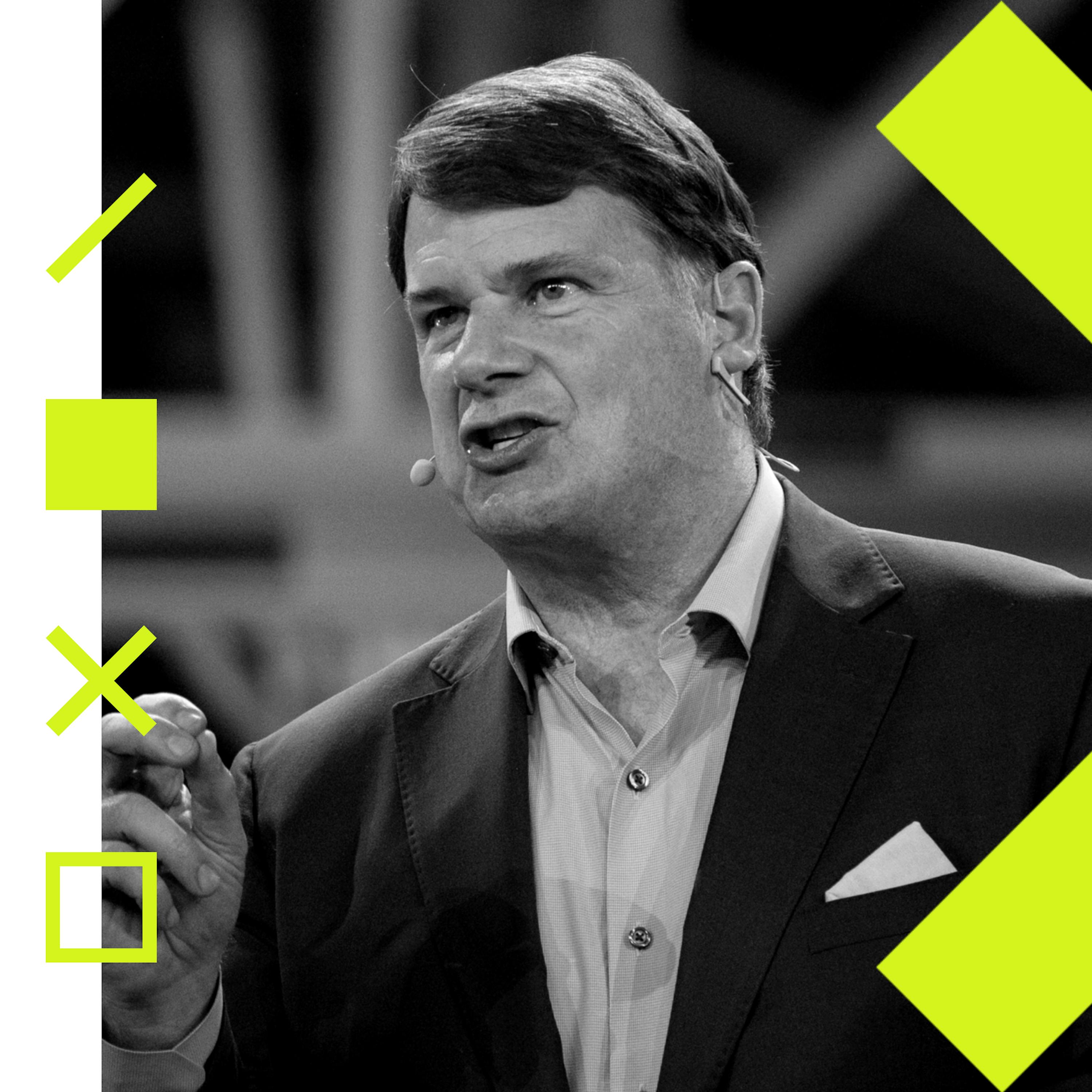
Decoder with Nilay Patel
Ford CEO Jim Farley on China, tariffs, and the quest for a $30,000 EV
01:03:22
Guest host Joanna Stern and the head of Ford discuss Apple CarPlay Ultra, competing with BYD, and what car she should lease next.
Loading summary
Transcript88 lines
- [00:01]
Anthropic Representative
Support for Decoder comes from Anthropic, the team behind Claude. When you're analyzing a complex tech strategy or trying to understand the forces behind major industry decisions, Claude can help. Claude is AI that goes beyond easy answers to help you explore the nuanced questions that drive real understanding. Whether you're dissecting platform strategies or exploring regulatory implications, Claude works through complexity alongside you. Try Claude for free at claude.AI/decoder.
- [00:33]
Jim Farley
Support.
- [00:33]
Adobe Representative
For this show comes from Adobe. The all new Adobe Acrobat Studio is reimagining how we use and interact with PDFs and the powerful impact they can have for your business and personal projects. And with their AI powered PDF spaces, you can collect files, synthesize information, and even chat with an AI assistant for fast insights. It's time to do more with PDFs than you ever thought possible and you can do that with Acrobat. Learn more@adobe.com do that with Acrobat. That's Adobe.com Dothatwith.
- [01:09]
Charles Schwab Representative
Support for the show comes from Charles Schwab At Schwab. How you invest is your choice, not theirs. That's why when it comes to managing your wealth, Schwab gives you more choices. You can invest and trade on your own, plus get advice and more comprehensive wealth solutions to help meet your unique needs. With award winning service, low costs and transparent advice, you can manage your wealth your way at Schwab. Visit schwab.com to learn more.
- [01:42]
Joanna Stern
Hello and welcome to Decoder, Neal I. Patel's show about big ideas and other problems. I am not Neelai Patel, though I have long wanted to be him. I am Joanna Stern, the senior Personal Technology columnist at the Wall Street Journal, author of the upcoming book I Am Not a Robot coming out in spring 2026 and once upon a time, a co founder of the Verge. I am the last Monday guest host, filling in for Nili here on Decoder while he's out on parental leave with his adorable new son. And I'm very excited to be talking today to Ford CEO Jim Farley. I am a longtime decoder listener and my favorite episodes are car episodes. I might not own a gas powered Mustang convertible like Nili, but not cool enough. But I did in fact lease my first ever EV, a Ford Mustang Mach E back in 2023. And I think car CEOs are currently facing some of the most fascinating and complex challenges in both tech and business. So when I got asked to guest host this show, I said that's it, car CEOs and Farley was at the top of the list. Farley was on this show once before. His first appearance was in May 2021. And well, a whole lot has changed in the past four years. Actually, a whole lot has changed in the last four months. There's the second Trump administration's barrage of tariffs, trade wars and a lot more. And for Ford, it's an especially critical moment. Last month the company announced what it calls Ford Universal EV Platform, an all new manufacturing process the company is calling the Model t moment for EVs. That's because it should in theory allow ford to cheaper EVs in a more efficient manner than it does with its current lineup, including my Mach E. You will hear Farley say last week a few times in this podcast. That's because we taped this episode in August just after that big announcement. And it's not just tariff troubles for Ford. There's the general weakening of demand for EVs in the US, the loss of the federal tax credit and rising competition from low cost Chinese competitors like BYD and Xiaomi. One thing I love about talking to Farley is that he's honest about it all. You'll hear him say in plain terms that China is in some respects miles ahead of the west when it comes to some parts of the EV industry and this major multibillion dollar gamble on the Ford Universal EV platform isn't a done deal. You'll hear him say the word risk quite a lot in the conversation and how this major manufacturing and strategy pivot could very well fail. He also had quite a lot to say about rebuilding the manufacturing base of blue collar workers here in the US to compete with China and even AI. Plus, he didn't shy away from what he'd like to see the Trump administration do on tariffs. He specifically said we're just asking for a fair fight. And don't worry, I didn't forget to do my best nilay impression with a bunch of decoder questions. Is Ford considering Apple's CarPlay Ultra? How does Jim Farley make decisions and most importantly, do I stick with my Mach E when my lease is up next summer? And I couldn't let Farley go without hitting him with a special call in question from an old friend who's technically not supposed to be working right now. I think you're going to really like that one. Okay. Hopefully you're in your car listening to this Ford CEO Jim Farley. Here we go. Jim Farley, you are the CEO of Ford Motor Company. Welcome back to Decoder.
- [05:26]
Jim Farley
Hi. Great to be here with you Joanna.
- [05:29]
Joanna Stern
So thank you for Coming on my show. Obviously this is not my show. This is Neil I's show. But I want to give you some background here. So I listen to Decoder all the time and I love his car CEO interviews, but often I find myself saying, nilay, why didn't you ask that question? So when he asked me to do this, I said, that's it. I'm going to bring on car CEOs and I'm going to ask the questions I want.
- [05:54]
Jim Farley
I see.
- [05:56]
Joanna Stern
And so you were back on the show in May 2021. Things have considerably changed in the world, in technology, in the country, at Ford. And I want to talk about all of those things. But something also changed for me in 2023. I got a Mustang Mach E. As you know, I leased one and that lease is up next summer.
- [06:21]
Jim Farley
Ah. So I'll be reading about your decision process.
- [06:26]
Joanna Stern
Well, that's going to inform a lot of this conversation because I wanted to give you the chance to be the world's best car salesman to the most annoying customer. And so I'm gonna. I think that's just gonna set a lot of the backdrop of this conversation here.
- [06:43]
Jim Farley
I love it.
- [06:44]
Joanna Stern
All right, so let's start there. Last month you said at a press conference that the Mach E is not so great, that it's not the future of Ford. Why should I stick with a Ford EV next time?
- [06:59]
Jim Farley
Well, we just won the new Revised Model Y vs Mach E drive evaluation by a pretty respected magazine. So I'm still pretty proud of the Mach E. But you know, we knew what we knew then five years ago and we now know what we know now. And those are, as you said, two different things. I would say that Ford in the second inning of product development has really understood more fully the opportunity to serve the EV market differently than we did several years ago and to execute a product with the right approach based on those lessons learned. And that's both the consumer, because we've learned kind of what consumers are willing to live with and not like charging on the fly as well as where in the market Ford should participate and put its limited resources. And I think you're going to find that the Ford EV product range will be much sharper, more specific, more valuable to customers than it was when you last shopped.
- [08:18]
Joanna Stern
Let's dig into the news you just announced, which is that you have something called Ford Universal EV Platform. What is that and when is it coming? And more specifically for me, will it be out next August and will I be able to get that kind of new Ford vs upgrade to my Mach.
- [08:38]
Jim Farley
E. You'll learn a lot more about the first product. It's a platform by next summer, will be out in 2027. So just a few months after that. You know, we learned so much from the Mach E. We've been number two to Tesla, a long way behind them, but number two in the US market. And EV sales, not that EV sales are the most important metric, but it does give you an indication that Ford has learned a lot and has served a lot of wonderful customers like you. We have all the data coming off the vehicle, so we have learned a lot about, you know, customers. The platform that we shared in Kentucky is a breakthrough approach, we believe, to develop and deliver to customers an affordable electric platform where we'll develop several vehicles off that platform and launch them over the subsequent few years and that we can have a profitable vehicle that's sustainable in terms of the company's resources and make it in the us. But in order to compete with the likes of byd, who we think are among the best in the world, we had to completely reinvent the platform for the customers. And there's a lot to that. I'm sure we'll get into it. But I would say, in short, the evolution revolution of our thinking was to develop a vehicle for manufacturability, to radically reduce the cost and the complexity of the vehicle with all new thinking that is not embedded in a traditional car company. And to do that we needed all new talent and we needed them to be separate from Ford, separate from our IT solutions that we use to develop and release parts, separate from a philosophy standpoint on how to radically simplify the vehicle and really get back to the basics of Ford and Henry Ford's idea of a universal car. Our first body style will be a pickup, but it's really not a pickup. It's a new silhouette. I would say what I mean by that. It's got more room than a RAV4, the best selling passenger car in the U.S. and that doesn't include its Frunk and its pickup truck bed. It is very fast, it's rear wheel drive, super fun to drive. And it has a digital experience that no one's seen. At least that we've seen, even in China. The digital experience is quite different for customers. I think the whole package is something that's just not been offered in the US or anywhere to date. And this first product, I think was quite revolutionary.
- [11:23]
Joanna Stern
And this first product is what you're going to have out in 2027.
- [11:27]
Jim Farley
Yes, exactly.
- [11:28]
Joanna Stern
You've mentioned BYD, which is competitor out of China that is clearly making low cost, very high tech EVs here in the US. You're up against Tesla, you're up against GM and you've mentioned that you, you are the second best selling ev. But GM has seemed to have some real luck going on with the Equinox EVs and they're quickly taking off because of price. Is all of this, this move to put this new platform out against this backdrop, is it, is it enough, is it enough to compete both here and China?
- [12:02]
Jim Farley
Well, for us that could be globally, no, it's not enough. But in North America it's absolutely the right strategy, but it's not our complete strategy. You know, I think GM has 14 nameplates, we have three. We came out with our vehicles four or five years ago and they're coming out with them now. So our product life cycle is completely different than them. What I mean by that is we're about to launch our second generation of products. They have their first 14 out now. I hope they outsell us. If I were them with 14 nameplates, they should easily scale. I actually personally didn't think that we would be number two for three years with our simple lineup, but it seems to have worked so far in the first inning. No, the competitive reality is that the Chinese are the 700 pound gorilla in our industry. For EVs, there's no real competition from Tesla or GM or Ford with what we've seen from China. They are completely dominating the EV landscape globally and more and more outside of China. They have 20 million units locally, about 11 million are EV or E revs, so half their market. I mean, we're barely at a million vehicles here in the US. That's 1/10 of the China volume. And Europe's only twice as big as us, so that's maybe only one fifth. And they're successful for good reason. They have great innovation, very low cost. For example, they've bet on LFP technology, not these expensive lithium batteries. There's hundreds of companies, they're all sponsored by their local governments. So they have huge subsidies and they're new brands. You know, it's BYD and Geely and companies like Nio and Xiaomi that have many of them never been in the car business before and that's a big advantage for them. And so in China, the brands that are winning are indigenous brands and they're not global automotive companies. They're really, you know, Chinese companies. So to beat them is, you know, we really see a completely different Approach, it's not a number of vehicles you have or the cost. It's. I mean, that the price you offer the customer, everyone's going to have affordable EVs. The question is, if you sell an affordable ev in the US for $30,000, but it costs you 50 to make it, you could say you have an affordable one, but that's not a sustainable business. So three or four years ago, we kind of saw this affordable kind of life cycle, the duty cycle of the customer changing with our sales. And it became very obvious to us, or me personally, that we have to go outside of Ford, create this maverick group, give them resources and stay out of their way, but make sure that they delivered on a completely new approach. Because the Chinese are so formidable, they have so much support from the government, their customers have such a high expectation for digital experience that, you know, an incremental approach from Mach E would never work.
- [15:15]
Joanna Stern
I love you telling it to me real straight here. It's exactly what I was sort of thinking in terms of that in some ways, I'm driving a dinosaur, which is the whole reason I leased a number of years back, which you knew you knew about.
- [15:26]
Jim Farley
Smart move.
- [15:27]
Joanna Stern
I wanna go back to price. So I was charging at an Electrify America station in Connecticut recently, and four out of the six stalls had these Chevy Equinox EVs in them. And I asked this woman, how did she like hers? And she said she liked it, but the thing she was really talking about was the price. She was really excited about the price. And she said, we like this car so much, and the price, we actually got two. And she points to her husband who's in the other stall, which, of course, I'm not thrilled that this family is taking up all these stalls, but, yeah, it's fine. I forgive them. And I'm wondering if this is one of your motivating factors right now is just getting that price down so EVs can really finally take off in this lower, more affordable area.
- [16:08]
Jim Farley
I think, Joanna, to your point, it was inevitable that the government support would wane. It was inevitable that, you know, the duty cycle of an AVV customer wound up being kind of, you know, people who use their car for commuting and, you know, shorter trips and occasionally taking a longer trip. But, you know, this happened in 19 teens. You know, in the teens in our industry over 100 years ago, steam was 30%, electric was 30%. The rest was internal combustion engine. And a few years later, it was totally different. But back then, you could not call which technology would win. It's the same. Now, the EVs came at the high end and I would even say $40,000 is expensive. Now for most people, we don't talk about in the car business because more than, you know, two thirds of the cars sold in the US are used. And those two thirds we never really talk about, but their average price is, you know, around $30,000, something like that. The average new car is obviously much higher than that. So most of the vehicles that people are driving around in the US that are, you know, five years old are going to be around $30,000. And this is the most important part of the EV market. It's not this expensive. Lucids and Teslas and, you know, that's all interesting, but what really is going to move this market is a non government subsidized, affordable EV that people can afford that's lower cost to use than a used Model Y, because there's a lot of those around. And, you know, people in America who have a tough time with all their demands and want to go on vacation and want to put their kids through college and they want to have a house or whatever it is, $30,000 is the most they want to spend. And that customer you met, I think is very typical. So this next inning, sorry to use a baseball analogy, is a completely different inning than the first inning, where the fitness of the companies, it doesn't rely on the government, that we have to innovate. And I said it last week and I'll emphasize now, there are no assurances that we can do this. No one has ever built a car in three pieces. No one's offered his own electric architecture at this price. We've never done it. We've never had two large unit castings and high quality. No one's done it. Tesla's talked about it, but they haven't done it. In fact, our manufacturing process has radically moved on beyond what Tesla's ever even shown in their unboxing. So there's a lot of risk here. This is not a guarantee at all that Ford's, you know, going to get this done.
- [19:08]
Joanna Stern
We need to take a quick break. We'll be right back.
- [19:19]
Anthropic Representative
Support for Decoder comes from Anthropic, the team behind Claude. The best tech journalism takes a seemingly straightforward announcement and reveals all the strategic layers underneath. That's exactly the kind of thinking Claude excels at. Claude is an AI thinking partner that goes beyond easy answers to help you work through the nuanced questions that drive real understanding. Whether you're trying to understand why a platform made a particular policy decision, or what a merger really means for the industry. Claude can help you explore connections you might not have considered, from analyzing corporate strategy to exploring regulatory implications to just trying to understand how these systems actually work. Claude thinks through complexity alongside you. It's not about getting quick takes, it's about developing the deeper insights that matter. Try Claude for free at Claude AI Decoder and see why the world's best problem solvers choose Claude as their thinking partner.
- [20:18]
Alnylam Pharmaceuticals Representative
Fox Creative this is Advertiser content from L nylon.
- [20:32]
Jim Farley
Hello Ms. Smith, I'm glad I reached you. We have your test results.
- [20:43]
Alnylam Pharmaceuticals Representative
We all dread the phone call that could change everything. Because living with disease can be life altering and noisy. The constant tests, staying on top of medications, the medical jargon, the mental weight of learning your new normal. Before you know it, the everyday joys of life take a backseat and your new normal becomes managing your symptoms. What if there was a way to silence disease at the source so you could get back to the best parts of life and ease the burdens of disease? Alnylam Pharmaceuticals has pioneered a class of medicines that use RNA interference to silence genes that cause or contribute to disease. This innovative approach to treating disease is already helping thousands of people around the world live amplified lives. And it's just the beginning. Learn more about RNAi therapeutics and Alnylam science@silencedisease.com Alnylam Silence Disease Amplify Life.
- [21:50]
Adobe Representative
Support for this show comes from Adobe, who are introducing the all new Adobe Acrobat Studio now with AI powered PDF spaces. Look, I'm sure when I say PDF you have a very specific thing in mind, and I'm guessing it's an email attachment. Certainly not a dynamic asset that could help elevate your business. But Adobe Acrobat is changing that. It's time to do more with PDFs than you ever thought possible. Need AI to turn 100 pages of market research into 5 insights with a click. Do that with Acrobat. Need templates for a sales proposal that'll close that deal. Do that with Acrobat. Need an AI specialist to tailor the tone of your market report to sound real smart in real time. Do that with the all new Adobe Acrobat Studio. It's time to reimagine and rethink what a PDF can actually do. Learn more at adobe.com Dothatwith Acrobat. That's adobe.com DothatWithAcrobat.
- [22:48]
Joanna Stern
We'Re back with Ford CEO Jim Farley. Before the break, we were discussing Ford's New EV platform competing with China and why price play such an important role in the electric car market. But now it was time to ask Farley the decoder questions and in particular how he thought about the structure of the team now responsible for overhauling Ford's EV strategy. Well, you, you've segued really nicely into some of my next set of questions, which are the decoder questions. You've set out to build something and now you've got to figure out the structure to build it. You said you had to create a maverick group. It was separate from Ford, it was separate from in, in terms of. And now you've gotta take this Skunk Works engineering team, which I believe is in California, and you've gotta bring that into the big castle that is Ford.
- [23:39]
Jim Farley
Yes, yes.
- [23:41]
Joanna Stern
How do you think about integrating these new Skunk Works ideas to this bigger system? I mean, do you have a map of how that's gonna happen?
- [23:53]
Jim Farley
Yes, we've been working on that for a couple years now. And you know, one of the things that really helped us in that reg was that Alan, the leader of this team, Universal Platform, he was free to have Ford people on his team, but he had the rights to say no to anyone. And so he went through a very rigorous process. So we have in manufacturing engineering the team that kind of is the scouts for the manufacturing process for all this new stuff. He's had them on the team for three, four years and of course we've been kind of listening to them. And of course we have a lot of good experience at Ford too, that knows how to handle risk in supply chain and risk in manufacturing and new processes like the process we used with aluminum F150. Different problem, but same process of risk elimination. And it's a plan that's come together. But like any plan, it's important to have a plan. But pretty quickly you get out of the plan because you get surprised the supplier isn't as good as you thought, or they're running late, or the software for this module's running late and you know, then you have to really de risk. And so the de risking is often or the way we're thinking about is let's make a really simple one first. Let's not try to add all the complexity. Why don't we just make one color, one version, one spec at the beginning and massively simplify the task for everyone. So what is that basic level of software capability for the vehicle? We don't have to have all the singing and dancing hands free automation from launch. Maybe we, you know, really focus only BlueCruise on a simple operating domain like high speed safety, hands off highway operations, hands off for, for the autonomy solution. Then gradually, as you verify the delivery of that base capability, whether it's the vehicle structure or the manufacturing process or the suppliers, or even automation, we then start to introduce more complexity and more capability over time when we feel comfortable. And that makes it stressful for the go to market team because they frankly aren't sure what they're gonna be selling in a year and a half. But that's really the only way to do this. I think we found.
- [26:32]
Joanna Stern
I wanna stay on some more decoder questions and kind of call you out. Cause in your first decoder interview in 2021, you dodged the question how do you make decisions? You answered the strategy of the company, but you didn't answer how you specifically make decisions. And I feel like you've had to make some big decisions here with this new platform.
- [26:50]
Jim Farley
How do you do it in this case? Let's just be specific. In this case. I looked at the wiring loom and the Mach E. It's a beautiful wiring loom, but it's 70 pounds heavier than the Model Y wiring loom. And it's $200 a battery to carry that wiring loom around. That's 70 pounds. And I just had to ask myself the question, can my team do it? Take the wiring loom as a metaphor. Can my team beat byd? And the answer I got personally that I went to Bill Ford and the board and my team, I said, I love you guys, but I don't think we can do this. So the decision I got to, which was highly informed by meeting Doug Fields, was I think we had to do it separately, completely separately. And then when I started to really ask Doug, you know, who's, who's a Model 3 chief engineer, worked on the car project at Apple. He was one of the first generation software designers in aos. He also designed the Segway early in his career. I mean, he's been at the forefront of a lot of technology revolutions time and time again. I asked him, why can't Fordo it? He's like, Jim, your part release system, your IT, your CAD design systems, they're 25 years uncompetitive. There's no way you can beat BYD with that. You need real expertise. BYD has vertical integration. The batteries, their batteries are 30% cheaper than what we can buy from CATL. For us to beat that battery to be even in the neighborhood of cost, we have to Radically redesign the efficiency of the motors, gearboxes and inverters on the EV side so it uses 30% less batteries. Because we can't beat BYD's vertical integration on the cost of battery. The only way we can beat them was with the innovation on the draw of the battery. And when I got the whole list of inventory from Doug about what we have to do to beat byd even three, four years ago, it just became very obvious to me that I had to look my team in the eyes and say, eventually we're going to come back to you for the industrialization of this product, but for now, leave these people alone, trust that they don't have any prejudice to come up with something better. And if you want to get mad at me, you can come in my office and shout at me, but don't waste their time. I talk to Bill and I also do Gemba. So I make every big decision I ever make. I go in person. And so I went to that teardown and I went to look at every piece. I looked at the number of fasteners in a Model Y. It was literally a third of the fasteners that go into a Mach E. And you know, from a customer standpoint, you won't tell the difference, but from a manufacturability standpoint and a cost standpoint, you know, fasteners are kind of like it's an output metric for how elegant the simplicity of your engineering solution is. When I looked at those fasteners, when I looked at the wiring loom, I knew I had no choice because I Gembaed it and I really talked to people that knew. And I can't put the company's future at risk by making people happy. I have to do the right thing in that particular decision. That's how I approached it. Wrong or right?
- [30:28]
Joanna Stern
Can I interrupt you real quick to tell me what Gemba is?
- [30:31]
Jim Farley
Gemba is something that I fell in love with. The Toyota Gemba is Genji genbutsu, which is a Japanese word for go and see with your own eyes, learn with your own eyes. And it really is actually the five senses. And the idea is before you make a big decision or before you want to understand a problem, even it's a tool in problem solving. You have to go and see the real problem where the waste is. So in my case, the waste was that wiring harness, those fasteners, you know, all the welded together front and rear structures that eventually unicasting displaced. You see the waste, you look at it, you talk to the people, the engineers why do we have this waste? Why do we use a 25 year old parts release system? And you as a leader, you get down on the floor and you ask them the basic questions so you can visualize your decision. That's what Gemba is.
- [31:34]
Joanna Stern
Love that. Didn't know that before. I need to practice Gemba. Clearly. I want to talk about how you have to sort of restructure your company now. But it also seems like you've been talking about restructuring the economy. You've been talking about a refocus on the essential economy, blue collar jobs that are the backbone of this country. You wrote a LinkedIn essay in June about the focus of AI on white collar productivity, but that we need to do the same for blue collar work. So how are you thinking about this at Ford?
- [32:04]
Jim Farley
We have a complete crisis in the country that's not talked about. People like Mike Rowe will talk about it, but we have a crisis that's kind of not in the public debate. We have half a million shortfall of construction workers. We have a half a million shortfall in factory workers, our emergency services. We don't have enough people to support our society when things go wrong. Firemen, ambulance, medical, the frontline people that make our society run, that we all take, many of us take for granted. Plumbers, electricians, we call the essential economy. And we see that at Ford because we're in the edge of this software defined vehicle, but we're also a heavy manufacturing industrial company. And whether it's a technician shortage in our dealerships to work on these vehicles or the shortage of our factory workers, I really learned as a leader during the UAW strike, you know what a crisis we have as a country. And I see it with our customers. Our plumbers and electricians are constantly trying to get young people into those vocations and there's no training. The trade schools and the apprentice programs are not there anymore. That our grandparents all made this country so great. And we're very vulnerable as a country. The productivity, as you said, of those essential is way behind. White collar automation, AI deployment, you know, everything has happened for all the tools and white collar, there's not the same and there's no very little training. Companies like Ford thankfully have enough resources that we can put our backs behind this problem with trade schools and scholarships and stuff. But our society isn't doing it. In fact, we're going to have a conference here in Detroit in the fall in about a month where we're gonna gather other companies that have the same problem, that really see it solution. Providers and academia and creative people in government where we're gonna try to start to work this problem. Is it a farm aid or a medical crisis like Covid? No, it's more in a way, it's just as threatening to our society. And the way we're thinking about it is we're gonna walk the walk ourselves, invest heavily. We have been. We spend about a billion dollars on, you know, the dignity of workplace and safety in our plants. We've modernized our buildings. We're investing in trade schools and scholarships to recruit technicians for our vehicle repair as well as our factory workers. But this is a society problem. And the one that bothers me the most is cultural, where we kind of as a culture think that everyone has to go to an Ivy League school to be valuable in our society. And yet we all know that our parents and grandparents kind of made our country wonderful because of these kinds of jobs. And there's incredible dignity, you know, in emergency services. And, you know, people can have wonderful careers, but our society doesn't celebrate those people like they do. The latest engineer for AI.
- [35:21]
Joanna Stern
That's exactly where I wanted to ask you. I mean, this seems like such a reversal of decades of messaging in America, which is get out of manufacturing, go to the office. Is your advice to this next generation with AI Actually get a job in manufacturing.
- [35:38]
Jim Farley
I think it would help all of us as a society. Look, my son is 17, he's a senior in high school. And look, he's got every opportunity that you could ever imagine. He doesn't have to worry like most people. And I made sure that he had a summer job where he learned how to weld, he learned how to fabricate, he learned how to really work with his hands and relate to people. And he can make a choice. And I have no prejudice for Jameson. If he turns out to be the greatest welder or a mechanic working on our super duty diesel engines, I will be so thrilled as parent. And I think we all need to kind of look at ourselves and decide what kind of society we want to build in America. It's not, you know, and look, let's say our national defense, we're getting into war somewhere. Google's not going to make the boots, but Ford will. And to defend our own country, we need these people. And now we're in critical, critical issues. You know, the average ambulance is 15 years old. We do not have enough emergency care. People. Look at what the firemen are having to go through in California now with the smoke and their own health. I mean, these are very dangerous jobs and we have a shortage and it's going to affect all of us in a lot of annoying ways. And if we don't really get serious about the kind of readjusting our expectations for our kids and the younger people in our country to give them opportunities to grow. And these are great jobs. A factory job at Ford's, you know, could be way over $100,000 a year and you can bridge into a lot of other things. My grandfather was a factory worker at Ford and he became a Ford dealer late in his life, in his 60s. You know, think about the possibility. He was an orphan, he had nothing, he never went to college, it didn't matter to him. So, yeah, I'm really excited and energized about this. It's a much bigger problem than fixing Ford and making Ford a world class company. It's important for our country and we need to focus on this just as much as how exciting the new AI is and the new social media dance on Instagram. Let's get busy on these important problems.
- [38:03]
Joanna Stern
We need to take another break. We'll be right back.
- [38:14]
Anthropic Representative
Support for this show comes from Zapier. These days there's plenty of talk about AI. And while it can be exciting, it can sometimes feel like you have to learn an entirely new lexicon. Especially when we're talking about how to integrate AI AI into your business. Zapier says they're here to help. Zapier wants to empower businesses everywhere with the tools they need to create processes and systems that let computers do what they do best, which in turn frees up the humans to do what they do best. Zapier helps you automate the most tedious parts of your day to day job. With over 7,000 integrations and service offerings with Zapier's AI orchestration platform, you can bring the power of AI to your work. You can connect top AI models like ChatGPT and Claude to the apps your team already uses so you can add AI exactly where you need it. Whether that's automatically enriching leads, coaching your sales rep, resolving it tickets, or something else entirely where automation is the name of the game. Join the 3.4 million companies already automating with Zapier and transform how you work with Zapier and AI. Get started for free by visiting zapier.com decoder that's Z A P A I E R.com decoder.
- [39:29]
eBay Representative
This episode is brought to you by ebay. Buying parts for your car. You'll know that will it work? Feeling but on ebay buying parts is different. EBay's free returns means if it doesn't fit or if it isn't what you expected, you just print a label, drop it off and get your refund fast. No haggling, no stress, and at least 3030 days to return any eligible item. Millions of parts free returns eBay things people love Eligible items only Exclusions apply.
- [40:00]
Lowe's Representative
Lowe's knows how to help make your home holiday ready for less. Get select style selections vinyl flooring for just $1.99 per square foot and have it installed before the festivities begin. Our team can help you every step of the way. See you Love Lowe's Red Vest associate or visit Lowes.comholidayinstall to get started. Lowe's we help you save basic Install only Date restrictions apply. Subject to availability. Install by independent contractors. See Associate for details. Contiguous us only.
- [40:32]
Joanna Stern
And we're back with Ford CEO Jim Farley. Before the break, Farley was really diving deep into his personal philosophy around blue collar work in America and how he thinks, especially with the backdrop of AI, we need to be training the next generation of Americans to consider jobs in Ford's factories, in emergency services and in trade work. But now I wanted to change gears and ask Jim a very specific question from a very special guest on my show. I do have a call in question from a guest caller.
- [41:09]
Nilay Patel
Hey Jim, it's Nilai. I'm very excited to be calling in with this question. So as you know, I am a Mustang guy. I have a 2021 Mustang GT convert. It's one of my favorite cars ever. People love this car because it's so easily moddable and tunable. You can just reprogram the ECU to make the car go faster. The new version of the gas Mustang one with all the screens running on your new platform. The ECUs are locked. People can't just reprogram them. And a lot of enthusiasts attribute the recent drop in sales of gas powered Mustangs to the locked ecus. So my questions are, do you agree with that, that the locked ECUs are behind the recent drop in gas powered Mustang sales? And do you have a plan to let people unlock the ECUs and tune the car more easily? Thanks for answering the question Joanna. I'm sure you're doing a great job.
- [41:55]
Joanna Stern
I have no idea what that question means, so I'm going to give you.
- [41:58]
Jim Farley
I do. I'm going to give you.
- [41:59]
Joanna Stern
I'm going to set a timer. You get a minute to answer that.
- [42:03]
Jim Farley
Well, I have this debate with my son actually because he has an Older Mustang and he didn't buy the new one for some reasons like that. So I would say the drop in sales, absolutely not due to that. Actually, we're doing really well with Mustang and I think we're kind of the only one left, really, which we're quite proud of. And we're investing a lot in Mustang. And I think the thing that people don't get about Mustang, it's a global car, it's the best selling sports coupe in the world. And we actually way outsell Mustang outside of the U.S. than inside the U.S. so when I look at sales for Mustang, I look at globally and some of our biggest countries like Australia and Sweden, other areas. The Mustang continues to grow because people want a little slice of that America, everyone wants to do a burnout. And as far as the tunability of the vehicle, you know, I think the call in question is an outstanding question. This is a real dilemma for us and there's no real easy answer. We want people to modify their cars, but we also have to take quality really seriously. And of course, privacy as well. I think he was talking more about the performance of the vehicle. And so our approach would be to give people over time an option to digitally adjust their vehicle from Ford so that we can maintain the quality but still have the user have their own kind of idea of, of performance. And that's different for everyone. And I think that vision will come to life in the coming years. The aftermarket is a real kind of opportunity, but it's also a big challenge for us because a lot of people like to write software in the control module that controls the powertrain that gets better performance. But what they don't know and what the user may not be aware of is all the reliability and the quality issues that they may be bringing up that are very expensive. My daughter's boyfriend is one of these people. He bought a brand new F150. He's got a supercharger on it. And he recently had a bunch of error codes because he updated the ECU against Ford's standards. And now he has thousands and thousands of dollars of expensive repairs because the vehicle has started chewing its camshaft. And you know, it was great that he could get 650 horsepower out of his EcoBoost F150. He didn't think about what he was doing to the reliability of the vehicle, but we have to at Ford. So all I would say is it's a tough problem to solve. We always want to give customers a chance to tune their vehicles, but we actually know a lot about the reliability of the vehicle. And are we as a brand going to suffer our quality reputation to give that person the ability to modify the vehicle? I think that's a, that's a hard compromise for us to make.
- [45:11]
Joanna Stern
I actually understood most of it. I want to move on to the big T, the tariffs in the room. Last quarter you operated at a loss despite record revenues because you took 800 million in tariff charges in Q2 when tariffs were actually lower than they were now. What are your conversations like right now with the administration?
- [45:32]
Jim Farley
Well, they're very important. Ford is the most American company in terms of the quantity of vehicles we make in the US over 80% of our vehicles sold here are made here. But we also are the largest importer of parts. And the discussion we're having with the administration today really covers three policy areas. Tailpipe emissions tax policy, and especially tariffs on tariffs. The biggest issue is the bill, the $2 billion bill that we have for our imported parts. And because we make the most in the US we import the most parts. And we have a lot of stackable tariffs. There's fentanyl tariffs, 301s from China. We have steel and aluminum tariffs that are now over 50%. So there's a lot of tariffs that a company like Ford gets because there are auto specific tariff. They're not auto specific tariffs. They all stack up. And so we have this layering of all these imported parts. And to make an F150 affordable, you know, there are a lot of parts that we can't make locally. Wiring, looms, fasteners, thousands and thousands of parts that we have to import because we actually can't even buy them locally in the U.S. and if we did, the vehicle would be $100, $200 a month, too expensive for customers. And our discussions with Washington are really clear. Look, we both agree, let's strengthen US Companies like Ford that have bet on America. We have more UAW jobs than anyone, but don't penalize us for trying to make the vehicle affordable. And so we've had very productive discussions with Commerce and the president himself and the whole administration. But how can we come up with a way to minimize this $2 billion so that it actually we are advantaged as a company. And you know, originally they were thinking that there would be high tariffs for finished automotive vehicles. 50% of all vehicles bought in the US are imported through a port or through a rail across a border. And now the standard tariff, it looks like it's going to be about 15%, 12 and a half from Japan. And that's not a fair fight. We're just asking for a fair fight. So look, if you're going to allow people to import with 15% tariffs, that includes their parts in the vehicle or 15% tariffs. But you put a 50 or 60%, 70% tariff on our aluminum or steel that goes into our US made vehicle. Hey, let's work on something, a process for tariff relief that would allow us to do that and still make the vehicles affordable. And that's what we're talking to the administration. They're extremely open, they're extremely supportive of us. They're also making a lot of policy changes on tailpipe emissions and tax as well. Look at the EV credits as an example. We can get to that if you want. But the tariffs are the most critical for our profitability. About 20% of our profit is evaporated now because of these parts tariff. And we're highly engaged with the administration. We remain, I remain personally very optimistic that we will find a solution, but it is very expensive.
- [48:47]
Joanna Stern
I wanted to ask about the EV credits because between the tariffs, the EV credits going away, it feels like, is this administration on your side yet? You also are adding more jobs than ever to manufacturing here in the US you're doing the things the President wants.
- [49:03]
Jim Farley
Yes, well, I do believe that, you know, generally those three areas of policy are very important, I guess. Joanna, we didn't really feel like we should get a $7,500 check on an EV to make the transition successful. We do need support for the production tax credit on batteries so that we could be competitive with China on batteries because they have such a huge advantage. And we do need to onshore that IP and start to really scale battery manufacturing because you can't ship a battery overseas. It's very heavy and it's not a good shipper, what we say as a shipper. So we have gotten a lot of support from them for making batteries here in the US The PTC credit is very important. We have changed our investment on EVs to not depend on the consumer tax credit from the government and we're fine with that. Other countries do support in Europe and China. Their EV consumers we didn't ever really expect out of four, we'll kind of lift ourselves up by the bootstraps kind of company anyway. So you know that that was something we did anyways. But I'd say the relief of the fuel economy standards is, you know, very important topic that the administration clearly has a point of view on. And we want one national standard, and we want to be able to sell what customers really want. And hybrids are really popular now and so are EVs. So I think we'll find a tailpipe emissions that is more, you know, reasonable and sustainable and not have a bunch of states have unique standards. That makes logistics for the cars a nightmare to send different states, different emission standard cars. And that's really expensive for customers, too. I think the real area that is super critical for Ford and for companies like Ford, as you said, that are committed to the US is its tariffs, working through and making adjustments as the tariffs get announced and deals, trade, bilateral trade deals get announced. You know, we need to find a landing spot that works for companies like Ford where it's a level playing field from a tariff standpoint and the administration accomplishes what it wants to accomplish. And we're not there yet. And that's why we're working really hard. I spent a lot of time on D.C. and there's a good reason for it. This is really important for our factory workers, for the future of our country and for the shareholders of Ford.
- [51:31]
Joanna Stern
I want to come back to me, really. This whole podcast is about me.
- [51:35]
Jim Farley
Good.
- [51:35]
Joanna Stern
Obviously. And you know that one of the main reasons I decided to get them out, other than it had good range and I love the way it drives, was the fact that it had CarPlay. Some of your competitors have abandoned CarPlay. A lot of the newer upstart car companies have their own software, like Rivian, like Tesla. I want to talk about this new digital experience you guys are working on, but I want to just cut to the chase about CarPlay. What about CarPlay Ultra? Are you considering that we are?
- [52:06]
Jim Farley
We don't like the execution in round one of Ultra, but we're very committed to Apple. I've talked to Tim many times about this. You know, Ford does not have the rights, in our opinion, of disrupting someone's digital life when they get in their car. We want you, Joanna, and all the customers to bring, whether it's, you know, whatever phone, whatever digital life you bring in. We wanted to make it as easy as possible. We don't think we should restrict that to make money off the customers. We don't want it to be a hassle. We don't think we can design an experience that's going to displace your phone. And yet, at the same time, whether it's automated systems or the way a trip gets planned, there are things that Ford is working on to add on top of that digital experience of Google and CarPlay that will make it even better. And we're highly informed by what's going on in China right now. The customer experience part of China, let's say an AI assistant in the car. Very important for Ford. We think that every customer should have an AI assistant in the car. Not just a voice to move to your, you know, phone based AI system, but something specific and that you can talk to almost like a companion. And so we really believe it's a more complicated journey for us to execute, to allow everyone to bring their digital life into the car and have it seamlessly integrated and then also put on top of that, whether it's a productivity software, we're now up to a million subscriptions now for our pro customers, or whether it's Blue Cruise or whether it's how you plan a trip, the auto specific things like how your ADAS system works and how it integrates into your entertainment system. We believe we have to design something that works with your digital life as well. It's a more complicated choice, especially when you look at back casting it into all of our past vehicles. But I believe it's a more customer centric approach. And you will see that Joanna, in your next shopping you'll make that choice. We'll all read about it. But I think that's our philosophy now. Other companies have different philosophies, but we believe that our philosophy is the most customer centric.
- [54:31]
Joanna Stern
But it seems like with the Ford digital experience, which you have rolled out to some cars, it's based on Android Automotive that you're going to have to choose. Are you going to do this Android automotive experience with the things you're talking about building on top of or are you going to pick a CarPlay Ultra experience which is really going all in on Apple?
- [54:48]
Jim Farley
I see what you mean. Yeah, it's a really good question. I don't know where Apple's going to go. I think Apple has to make a big decision. It's not a Ford decision actually. And then based on their decision, we will decide.
- [55:03]
Joanna Stern
You mean Apple has to make a decision. Are you going to allow this to also run in combination with other software, Other infotainment software?
- [55:09]
Jim Farley
Yes. Not only that, but are you going to allow OEMs with the control of the vehicles? Like how far do you want the Apple brand to go? Do you want the Apple brand to start the car? Do you want the Apple brand to limit the speed? Do you want the Apple brand to limit the access? We're doing that now for our pro customers. If you're a pro customer, you can Limit access to the vehicle on the weekend because many of our plumbers and electricians, they have a company vehicle and they're not really allowed to use it on the weekend. Or we allow speed control now, can't go above the speed limit. You know, is Apple going to want to do that? If Apple wants to do that, I think we're going to have a tough time with that because then the digital experience gets really messy and we'll have to decide between Google and Apple. To your point. Now Google has two different layers. They have the Google Automotive services, which is kind of a curated services digital experience in the car, but they also have Android Auto which is actually an operating system that we can build our own experience on top of. And so Google as a platform company gives us both. Apple's had totally different approach and again I've talked to the Apple team and our team is in constant contact with them. I think Apple has to decide do they want control of the entire experience inside a vehicle. If they do, they want to follow ultra and the Ultra 2 or whatever it's going to be next, then I think Ford will, we'll have to make a big decision and I kind of know where we would go. We just believe ADAS integration with your entertainment system is so critical. When you're flying down the highway with your eyes off the road, you know, in three or four years at 80 miles an hour on the i5 and you know, you're watching a movie or whatever, we're going to be all doing or having a chatgpt moment or having a wearable on. You know, we just don't think that a system from tech company who's not integrated the car is going to save your life.
- [57:14]
Joanna Stern
But it sounds to me then that you're really forced with the reality that you've got to build your own.
- [57:19]
Jim Farley
Yes, yes. But the good thing is now versus five years ago or a couple years ago when you and I talked, Android Auto is really advancing nicely and we've learned a lot about how to build the experience on that. So for us, a lot of OEMs, I hear a lot of OEMs say, well, it's about control the customer. I don't want Apple to be able to, you know, that's not a big deal for us. Like we just want it to be easy for customers. But if those companies want to control the vehicle, like I just, I think that's a bridge too far. In that case, we do have to invest a lot more in a Ford experience. I hope that doesn't happen by the way. I look at what has happened with Huawei and Xiaomi in China it's amazing. Those companies are totally all in on auto. You know when you're a Huawei or Xiaomi customer, you know, you either buy Huawei system in someone else's brand or you buy a Xiaomi car and it's completely seamless. And I wish our car, wish our tech companies had approached the auto industry that way but they haven't. So now we gotta do what we gotta do.
- [58:29]
Joanna Stern
You said something really interesting about how you want to have an AI companion in the car. And I am actually spending a lot of time in the car now talking to ChatGPT when I'm not listening to decoder. It's coming through CarPlay, it's Bluetooth paired and I've got my ChatGPT app. I'm not looking at it, it's safe, right. And I just have it in voice mode and I'm driving to a meeting. Driving a meeting to meet you. I say tell me a little bit about what I should know about Jim Farley where he's been in the news and it's a very interactive convers like I'm on the phone. How do you think about this? Does that, does Ford have to be a part of that relationship?
- [59:03]
Jim Farley
It's a good question. I think yes. Especially for the transportation related. I want to go somewhere, I want to know about my car and the condition of the car. I think we either have to be part of the conversation or we have to supply that. We actually think not to be arrogant because of safety control and the vehicle control. We think that we can provide a chat experience that is added value beyond your non vehicle experience. But to your point, we don't want to burden the customer with two different experiences that would be really arrogant and really bad for the company. And I think just in general what you're bringing up Joanna, and you've been on this for many years but I think people are starting to realize why you've been on this is that the difference between car companies when you have a software defined vehicles is not going to be what your sheet metal looks like. It won't be how powerful your EV motor is. That's all math. All the cars look nice. It's going to be this digital experience why someone buys this or that. And so we have to sort this out really thoughtfully now in China. I think China NIO has an AI companion in the car. It's like a physical thing. It's like a little person that's your companion and it works really well and customers love it. So I think if you look at China being ahead of the west in terms of integrating AI as a companion in your vehicle, the early indications are that a companion like functionality from the OEM done really well can add a lot of value to people's lives. And that's a direction we're going. Similar to not investing in level four autonomy and Robotaxi, but putting our effort in the AI space for automation driving into level three high speed eyes off. It's a similar kind of bet. Just pick a few places where Ford can add value, but don't make the customer go backwards. That's kind of our philosophy.
- [61:11]
Joanna Stern
To be clear there though, you're more focused on that highway driving experience right now with Blue Cruise.
- [61:17]
Jim Farley
Yes. Oh, for sure. Our number one priority is to have to not be the first one to do eyes off level three highway driving, but be the best and the most reliable and the safest and the one that you want to use for you and your loved ones. We took all the Argo people and we gave them a choice. You know, do you want to do highway high speed, eyes off, push a button, you know, watch a movie, whatever people want to do. We could do this podcast in your car, you know, whatever. That's where all of our AI deployment for autonomous driving, because we think that's a cooler problem to solve for most average Americans than a robotaxi. Even though Robotaxi is a really cool problem. I love being in a waymo. You know, we think that highway miles are a bigger society opportunity.
- [62:10]
Joanna Stern
My last question here, you get to play car salesman. It's next August. I gotta get rid of this Mach E. What do I do?
- [62:19]
Jim Farley
Oh, you need to buy another Mach E. We've improved it a lot since your last one. It's a lot more affordable. We have some wonderful new experiences and I'm going to give you a run for your money in terms of value. It's a really incredible product that we've refined over four years now. And the Mach Es we're making now are pretty radically different than the ones we have OTA'd your car and I know the improvements in that. But the new vehicle, the compute power on board, the efficiency, the quality, the improvements to the fit and finish are all material enough that I think you should absolutely test drive and see what we have. There's a reason why we just beat the revised Model Y, which is the best selling alternative. Not that you would just use that as your benchmark, but I think you're going to have a lot of fun shopping, and I think I'm going to learn a lot like the rest of America as you go shopping. Really, what I would love for you to do is wait six months because I want to show you this new universal car, and you're going to go, jim, I'm so glad you told me to wait.
- [63:29]
Joanna Stern
See, that's what you can really do for me. You can give me an extension on the lease.
- [63:32]
Jim Farley
This is what should have been doing for me.
- [63:34]
Joanna Stern
This is where I would have sold me. I would have said extension on the lease, six months. We're going to give you a good deal and give you a good deal, Joanna.
- [63:42]
Jim Farley
Bridge you and bridge you to something that no one will be able to offer you. Literally, you'll go, oh, my God, this is so much better than anything I could buy, including the Mach E. And I'm really glad I waited. Yeah, that's the right approach.
- [63:59]
Joanna Stern
See, I should be working in your dealerships. That's how I would have sold it.
- [64:04]
Jim Farley
Yes. Yes.
- [64:05]
Joanna Stern
Well, Jim Farley, thank you so much for spending so much time. Obviously, I've got a ton more questions, but we'll do this again sometime and have you back on the show.
- [64:13]
Jim Farley
I don't think you're driving a dinosaur either. I think you're driving a fantastic automobile. I love my Mach E and frankly, we're really proud to have you as owner. And thank you for being on the podcast. I really always enjoy our interaction and I can't wait to learn more about your ChatGPT experience inside your car. So I hope you don't mind if a few of our software engineers call you.
- [64:38]
Joanna Stern
Yeah, they should call me. And again, not sponsored. I have been very happy Mach E driver. I've been in it a lot this summer, and I can't believe we didn't get to it. But the charging infrastructure has improved so much since. And charge for 30 minutes at electrify America. Electrify America has gotten better.
- [64:57]
Jim Farley
Is that amazing?
- [64:58]
Joanna Stern
I have that CEO on here. I charge. I'm on my way. I drove 350 miles up to New Hampshire last week.
- [65:04]
Jim Farley
Oh, good.
- [65:06]
Joanna Stern
So, like, I've been happy. I just. We got some software things to deal with. We didn't really get into that, but it sounds like you're working on it for me.
- [65:12]
Jim Farley
We are. Well, thank you for the time, Joanna. All the best to you.
- [65:16]
Joanna Stern
You, too. I'd like to thank Jim Farley for taking the time to speak with me and thank all of you for tuning in and letting me cosplay Neelai Patel. I hope you enjoyed it. I know I did. If you'd like to let us know what you thought of the show, or of me, I guess, or what else you'd like to see us cover, drop us a line. You can email us at Decoderge. The team really does read every email or hit me up directly. I'm joannastern on all platforms. And don't forget I've got a book called I Am Not a Robot coming out in 2026. It's all about the year I let AI take over my life. You can subscribe to my newsletter all about that too@joannastern.com the show also has a TikTok and Instagram. Check those out at DecoderPod. They're a lot of fun. If you like Decoder, please share it with your friends, your family, your AI Chatbot, and subscribe wherever you get your podcasts. Decoder is a production of the Verge and it's part of the Vox Media Podcast Network. The show is produced by Kate Cox and Nick Staat. It's edited by Ursa Wright. The Decoder music is by Breakmaster Cylinder. See you next time. Rock and roll.
- [66:28]
Jim Farley
Your sausage McMuffin with egg didn't change your receipt did the sausage McMuffin with egg extra value meal includes a hash brown and a small coffee for just $5 only at McDonald's for a limited time. Prices and participation may vary.