← Decoder with Nilay Patel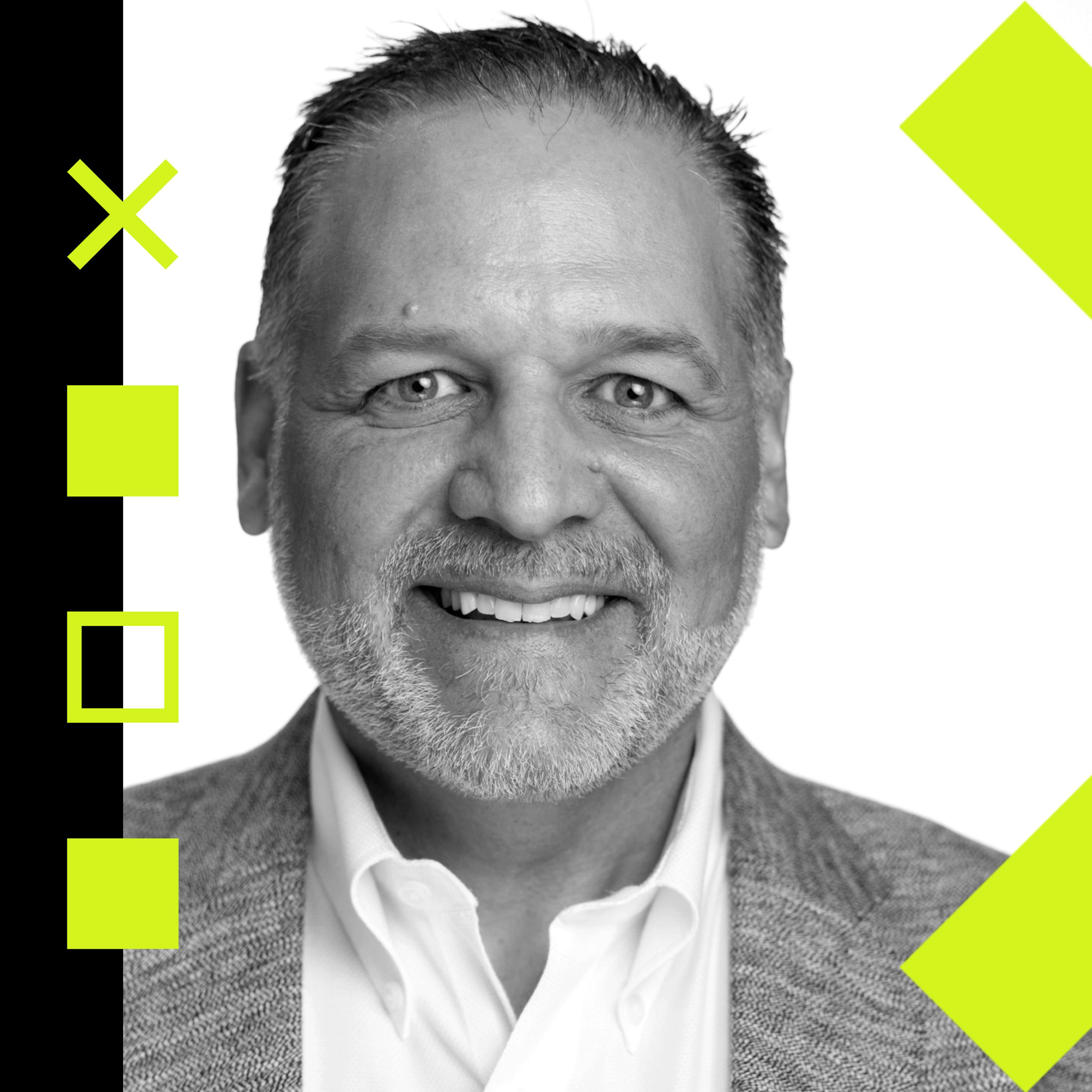
Decoder with Nilay Patel
LexisNexis CEO says the AI law era is already here
01:05:07
LexisNexis' Sean Fitzpatrick promises his AI won't get you in trouble with a judge.
Loading summary
Transcript131 lines
- [00:01]
Podcast Sponsor/Announcer
Support for Decoder comes from Anthropic, the team behind Claude. When you're analyzing a complex tech strategy or trying to understand the forces behind major industry decisions, Claude can help. Claude is AI that goes beyond easy answers to help you explore the nuanced questions that drive real understanding. Whether you're dissecting platform strategies or exploring regulatory implications, Claude works through complexity alongside you. Try Claude for free at claude.AI/decoder.
- [00:33]
Support for this show comes from Adobe. The all new Adobe Acrobat Studio is reimagining how we use and interact with PDFs and the powerful impact they can have for your business and personal projects. And with their AI powered PDF spaces, you can collect files, synthesize information, and even chat with an AI assistant for fast insights. It's time to do more with PDFs than you ever thought possible, and you can do that with Acrobat. Learn more@adobe.com do that with Acrobat. That's Adobe.com Dothatwith support for the show comes from Charles Schwab at Schwab. How you invest is your choice, not theirs. That's why when it comes to managing your wealth, Schwab gives you more choices. You can invest and trade on your own, plus get advice and more comprehensive wealth solutions to help meet your unique needs. With award winning service, low costs and transparent advice, you can manage your wealth your way at Schwab. Visit schwab.com to learn more.
- [01:42]
Nilay Patel
Hello and welcome to Decoder. I'm Nilai Patel, Editor in Chief of the Verge and Decoder is my show about big ideas and other problems. Today I'm talking with Sean Fitzpatrick, the CEO of LexisNexis, one of the most important companies in the entire legal system. For years, including when I was in law school, LexisNexis was basically the library. It's where you went to look up case law, do legal research, and find the laws and precedents you would need to be an effective lawyer for your clients. There simply isn't a lawyer today who hasn't used a Lexis tool. It's fundamental infrastructure for the legal profession, just like email or a word processor. But enterprise companies with huge databases of proprietary information in 2025 can't resist the siren call of AI. And LexisNexis is no different. You'll hear it right away. I asked SEAN to describe LexisNexis to the audience, and the first word he said wasn't law or data, it was AI. The goal is for the LexisNexis AI tool called Protege to go beyond simple research and help lawyers draft the actual legal writing they submit to the court in support of their arguments. That's a big deal, because so far AI has created just as much chaos and slop in the courts as anywhere else. There is a consistent drumbeat of stories about lawyers getting caught and sanctioned for relying on AI tools that cite hallucinated case law that doesn't exist. And there have even been two court rulings retracted because the judges appeared to use AI tools that hallucinated the names of the plaintiffs, incited facts, and quoted cases that didn't exist. Shaun thinks it's only a matter of time before an attorney somewhere loses their license because of sloppy use of AI. So the big promise LexisNexis is making about Protege is simply accuracy that everything it produces will be based on the real law and much more trustworthy than a general purpose AI tool. You'll hear Sean explain how they've built their AI tools in teams so that they can make that promise. LexisNexis has hired many more lawyers to review the work of AI than Shaun expected, for example. But I also wanted to know what Sean thinks tools like Protege will do to the profession of law itself, to the job of being a lawyer. If AI is doing all of the legal research and writing you'd normally have junior associates doing, how will those junior associates learn the craft? How will we develop new senior associates without a pipeline of junior people in the weeds of the work? And if I'm submitting AI legal writing to a judge who might be using AI to read it, aren't we getting a little close to automating too much of the judicial system? These are big questions, and they are coming to a head real fast in the legal industry. I also press Sean pretty hard on how judges, particularly conservative judges, are using computers and technology in service of a judicial theory called originalism, which states that laws can only mean what they meant at the time they were enacted. We've run some stories here at the Verge about judges letting automated linguistic systems try and understand the originalist intent of various laws to reach the preferred outcomes. And AI is only accelerating that trend, especially now in an era where literally every part of the Constitution appears to be up for grabs before an incredibly partisan Supreme Court. So I asked on to demo Protege, doing some legal research for me on a question that appears to be settled but is newly up for debate in the Trump administration, the question of whether the 14th Amendment guarantees birthright citizenship to everyone born in the United States. To his credit, Sean was game he did it. But you can see how taking LexisNexis from a company that provides simple research tools to one that provides actual legal reasoning with AI will have big implications across the board. This conversation is weedsy, but it's important and it touches on so many things that we've talked about here AT decoder. Okay, LexisNexis CEO Sean Fitzpatrick. Here we go. Sean Fitzpatrick, you are the CEO of LexisNexis. Welcome to Decoder.
- [05:38]
Sean Fitzpatrick
Thank you. Great to be here.
- [05:40]
Nilay Patel
Thank you for joining me. I was just saying this is my first interview back from parental leave, so apologies if I'm rusty to the audience, but apologies to you if I'm just like, totally loopy.
- [05:50]
Sean Fitzpatrick
But I. Congratulations.
- [05:52]
Nilay Patel
Yeah, I'm very excited to talk to you. I feel like the legal profession in America, I'm very much a failed lawyer. My wife is a lawyer. There's a lot of lawyers on the Verge team. The legal profession in America is just at a moment of absolute change. A lot of chaos, actually, and an enormous amount of uncertainty. And LexisNexis, if the audiences know, tends to sit at the heart of what lawyers do all day. Most Lawyers are using LexisNexis all day long, every minute, every day. And what that product is and what it can do and how it can help lawyers do their job connects to a lot of themes that I think we see both in the legal profession and then with technology and AI generally. So just start at the start. What is LexisNexis? How do you explain it to the layperson?
- [06:37]
Sean Fitzpatrick
LexisNexis is an AI powered provider of information and analytics and drafting solutions for lawyers that work in law firms and corporations and government entities.
- [06:51]
Nilay Patel
That's a new conception of LexisNexis. When I was in law school in the early 2000s, it was just the thing I searched to find. Case law.
- [06:57]
Sean Fitzpatrick
Yes, we've transformed over time that we were kind of just that research provider. Over time we've acquired more businesses, we've integrated those businesses kind of. In 2020, when we launched our Lexus plus product, we integrated all those things together. And so we became an integrated ecosystem of solutions. And then in 2023, when we launched Lexis AI, that's when we became really an AI powered provider of information analytics, decision tools and drafting solutions. And the capabilities of AI have really allowed us to do things, do more things than what we've traditionally done in the past.
- [07:37]
Nilay Patel
That jump from being the, you know, sort of gold standard database of legal opinions and reasonings and case notes and all, all that to we're going to do the work for you or we're going to help you do the work. That's a, that's a big one. That's a cultural jump. Obviously, there's some acquisitions along the way you can talk about that helps you make that jump. What drove you to make that jump? To say, actually the lawyers need help drafting the proposed opinions they might give to a judge. What made you say, okay, we've got to step into actually doing the work?
- [08:04]
Sean Fitzpatrick
Yeah. I think it's been a natural evolution, and as technology has evolved, it's opened up new avenues of things that we can do. What we do is we tend to take the latest technology and we introduce that to our customers and we spend time talking to them about how they think that technology can be best applied in the legal environment. And then based on the ideas that they come up with, we transition or translate that into products and build products that, that resolve those, those opportunities or address those opportunities.
- [08:40]
Nilay Patel
Let me ask you a pretty philosophical question. It's one that I, I, I struggle with all the time. It's one that I talk to our audience about all the time. Our audience is pretty technically focused. I think most people who encounter the legal system think it's pretty deterministic. People audience is pretty technically focused. They're used to computers. Computers are, until recently, pretty deterministic. Right. You put in some inputs, you get some outputs. Most people who encounter the legal system think it's pretty deterministic. You put in some inputs and you get some predictable outputs.
- [09:08]
Sean Fitzpatrick
Yeah.
- [09:08]
Nilay Patel
And what I'm always saying is that's not how it works at all. Right. You show up to court, the judge is in a bad mood, you have no idea what's going to happen. You show up to, you're a big company and you have an antitrust appeal, and you show up to the three judge appellate, appellate review board, and you have no idea what's going to happen. Anything, like literally anything could happen anytime. And the judicial system is fundamentally not deterministic. And trying to think about it like a computer, even though it's structured like a computer, can get you in all kinds of trouble. Maybe the best example of this is people on Facebook putting the words no copyright intended on the bottom of movies. Or like they think they can issue these magic words and the legal system is solved and they just can't.
- [09:48]
Sean Fitzpatrick
Right.
- [09:49]
Nilay Patel
AI is that problem in a nutshell. Right. We're going to take a computer, we're going to make it better at natural language. We're going to fundamentally make the computer not deterministic. Right. You can't really predict what an AI is going to do. And then we're going to apply that to the fundamentally not deterministic, the very human nature of the court system. Somewhere in there is a big philosophical problem about applying computers to the justice system. How do you think about that?
- [10:15]
Sean Fitzpatrick
First of all, you have these massive investments that are happening with the foundational models, right. These hyperscalers, each one of them is putting in close to $100 billion. You know, Microsoft, Amazon, Google. And so these models, they just, you know, continue to get better and better and better over time. That's at the foundational model level. We don't really operate at the foundational model level. We build applications that utilize these foundational models. And at that level what we see is prices are dropping. Right. So we used to pay $20 like two years ago for a million tokens, and today we might pay 10 cents for a million tokens. Right. So that allows us to do things at speed and at scale that we've never been able to do before. And if you look at the law, there are a lot of things about the law that make these models attractive. So most of the law is language based. Right. And these models are really great with language problems. The law is precedent based. Right. And so.
- [11:17]
Nilay Patel
Well, we'll come to that. Yeah, I'm not sure that that's under, that's up for grabs. Sure. We'll come back to that.
- [11:24]
Sean Fitzpatrick
I'll grant you that. Yeah. And then you look at the activities that lawyers do. They draft documents, they do research, they summarize things. The models are all really, really good at these types of things. And so you kind of have this perfect storm of this technology and the things that lawyers do kind of coming together. And yet when people try to use these models, these consumer grade models, there are all kinds of problems with them. Right. You can't just put it, like you said, it's not deterministic. You can't just put information into a computer and get an answer out. If that were the case, we wouldn't need a court system. Right. But you know, what we see happening is like with these models, they're just not built for the legal system. So you can't go into court and say, I found this on the Internet. You have to have authoritative content. The Cutoff date for GPT4.0 was 2023, I believe. Right. You need to have information that's, that's constantly updated. You know, your audience probably doesn't Know, you probably know this because you're a lawyer, but there's the citator, right? You know, which traditionally has said this is good law. It's not good law. Right. It's been overturned. Now it'll tell you if it's the law at all. Right. Or if the, you know, some system just made it up. Because, you know, these systems, they're probabilistic, right? They want to put together an answer that's probably right. Well, that's, that's not the standard that we have in legal. You can't go in with something that's. That's probably right. And so you have this whole list of issues these models don't address. And so what we've tried to do is address those with a courtroom grade solution. So our system is backed by 160 billion documents and records, you know, that curated collect that we have. That's our grounding data. Right. So you can go into court and not say, I found this on the Internet, but you could say you can refer to a specific case. Right. We also have a, we call a citator agent. Right. So we'll check that case to make sure that it wasn't fabricated by the system and it is actually still good law. And you can also look at the case law summary so you know what the case is about. You can look at the headnotes so you can see the particular points of law that were addressed in that case. Again, you can see if it's still a valid case. Privacy is another issue. Right. You know, there's a special relationship that exists between attorneys and their clients and that attorney client privilege, you know, there's some privacy requirements that you need to have in order to maintain that. You know, if you're using one of these just consumer grade models, you don't have that level of privacy and security that you need. Transparency is another issue. So you put this question in, you get an answer back, well, based on what? Like, what was the logic that the system used? So again, our system, we open up the black box and you can see the logic that's being applied and we give the attorneys the ability to go in and actually change that. Right. If this model is getting something wrong, the attorney has the opportunity to change it so that they get the outcome that they're really driving for. But as you said, it's not. The law is not deterministic. Right. There are lots of different factors that go into this, but you need to have a system that's legally driven, that's purpose built for legal Situations. In order to really operate in a.
- [15:04]
Nilay Patel
Courtroom type environment, there's two things I really want to push on. One, again, I was not a good lawyer. I don't want to ever pretend on the show or to you or to anyone that I was any good at this. But the thing you learn in law school is a particular way of thinking, which is a pretty rigorous, structured way of approaching a problem and then going to find the relevant cases and precedents and then trying to fashion some solution based on that. That feels like, oh, we're just moving words around, but it's actually a way of thinking. Right. And that before AI showed up, the we're going to use a word processor and we're going to think in a certain way. They were mashed together and now we're pulling them apart. We're saying that the computer can move the words around and generate you some thinking. So that's one thing I want to, I want to push. I'm very curious about that because it feels like the, the lawyering part of being a lawyer is being subsumed into a system and that might change how we lawyer. Very curious about that. The other part is, well, is anyone going to look at the work being done? Because we're already seeing lawyers get sanctioned for filing briefs with hallucinated case citations in them. There was just a case where I believe a court had to rescind an opinion because it had a hallucinated case citation in it. This is bad, right? Like, this is just straightforwardly a threat to the system and how we might think about lawyers and judges and courts. And it's not clear to me that anyone's going to use the tools as rigorously as you want. So on the one hand there's the, we've made the thinking easier. And on the other hand, it's, oh, boy, everyone's going to get really lazy. And they're both kind of in your answer, they're both kind of like, what are we? We're making it easier to look at this stuff. We're making it faster to do the research. And I'm just wondering where you think the thinking comes in.
- [16:48]
Sean Fitzpatrick
Yeah, I think these models, they don't replace lawyers, right. I think they help the lawyer and they augment what the lawyer does. So if you think about an activity that a lawyer might do, like let's say that they were preparing for a deposition, so they need to come up with a list of questions that they're going to ask the individual that's being deposed. You know, you can take the facts around that particular case, and you can load them into a vault, and then you can point the system to that vault and say, based on the facts of this particular matter, develop a list of deposition questions. And then, you know, that's something that a lawyer would have done on their own. Right. In the past, they may have, you know, referred to a list of questions that they had previously or something.
- [17:33]
Nilay Patel
Well, actually, can I just grab on that example? Sure. Maybe a lawyer would have done that, but more often a lawyer would have told a bunch of junior associates to sit in the basement and do that.
- [17:41]
Sean Fitzpatrick
Right? Yeah.
- [17:42]
Nilay Patel
And that thing was how those junior associates learned how to do their job. Yeah, and that's what I mean. Like, we're. We're sort of farming out the thinking, and some people might never actually do that thinking.
- [17:55]
Sean Fitzpatrick
Yeah.
- [17:56]
Nilay Patel
That might change the profession down the line in really substantive ways.
- [17:59]
Sean Fitzpatrick
Right. Yeah. And it is an apprentice system. Right. And so if you start to take some of the layers out of the bottom, you know, how does everyone, you know, skip the bottom layer and still make it to the second layer with the same level of capabilities and skills? I think that's a real challenge. You know, I think the systems are allowing lawyers to not necessarily have the associate do that work, but now they can say, you know, generate me 300 questions or 700 questions. You know, it doesn't. Doesn't take that long to go through 700 questions. And the models never get tired. So our experience is they'll go through that list of questions and they'll say, first question. Yep, that's a good question. I would have thought of that. You know, the system made it a little bit faster. Right. But it didn't really help them any. Second question, same thing. Third question. Same thing. Fourth question. Doesn't even make any sense. Scratch it off the list. Right. Fifth question. Oh, that's interesting. I wouldn't have thought to ask that. But that's really, you know, something that's probably important. So I'm going to add that to my list. So there's an efficiency component to it, but I think there's also a better. Better outcome component to it in terms of the apprenticeship piece of it. Yeah. I think people are struggling right now to figure out how that's going to impact the apprenticeship model. And if you don't have people. Someone was describing to me that they had worked on a situation where they were looking at securitized assets and collecting debt, you know, on securit assets. And when they were associate, they did this project for a Company that had states, you know, 50 states worth of coverage. And so they became the expert in the firm on asset securitization in all 50 states. And for four or five years, anytime somebody had a question, they came to that individual. It was a great way to make a career. Now the system can do all that information for you. And so his question was like, how is that ever going to happen now in this new world? I think firms are going to struggle with that, but I also think they're going to figure it out. You know, we tend to get some of the smartest and brightest people going into the legal profession. And so far they seem to have figured out every challenge that's faced the industry in the past. I think they'll figure this one out as well.
- [20:25]
Nilay Patel
What are some solutions that you've seen as people try to figure this out?
- [20:29]
Sean Fitzpatrick
Well, I don't know that necessarily. Folks have come up with a lot of solutions around the apprenticeship model. I think that what we're seeing for sure is people are embracing AI. You know, it's here, it's in the courtroom, it's in the law firm. You know, 2/3 of attorneys are using AI in their work. According to our surveys, they're already using that. And our survey is probably a little outdated. I'd say the number's probably higher. You know, I don't know about you, but I use AI every day practically, is in my personal life and in my work life now. And I think the legal profession is, you know, perfectly suited for it. So I think it's, it's only going to expand.
- [21:11]
Nilay Patel
When you see the lawyers getting sanctioned and the courts having to rescind opinions, is your solution, well, you should just use Lexis and that won't happen to you. Or do you think that's a, the symptom of something else because that everyone's just using AI? I get it. I think probably the biggest split in our audience right now is the data that says everyone's using the stuff all the time, and the hostility our audience expresses to us about the tools, their quality, the fact that a lot of that usage is driven by the, you know, big companies just putting in front of you, whether you want it or not, right there, there's something happening there where to justify these enormous investments. The tools are showing up whether the consumers are asking for them or not. And then we're pointing at, well, everyone's using the tools. And what I hear from our audience as well, I, I, I can't turn off the AI overview, of course, I'm using the tool because it's just in front of me all the time. I. Yeah. I can't make Microsoft Office stop telling me that it's going to help me do stuff. It's just in front of me all the time. So for you, when you see the errors being made in the legal system today, right, the lawyers getting sanctioned, the lazy use of AI, the lack of apprenticeship, which is going to impact the entire next generation of lawyers and how rigorous they are. How do you make your product address that, or are you just not thinking about that right now?
- [22:24]
Sean Fitzpatrick
No, we're definitely, we're definitely thinking about it. And we've, we've incorporated things into our product. You know, I think it's a small percentage of attorneys. These things always make the headlines whenever one happens, but I think it's a small percentage of attorneys that are causing these problems. Most of them. It's never been the standard that you just take something and bring it into court. Right. You've always had the responsibility as a lawyer to check that material and make sure that it's valid before going into court. And some individuals aren't doing that. We certainly saw that in the Burke case, where some attorneys submitted a document to the court. I think it had like eight citations in it and seven of them were just completely.
- [23:07]
Nilay Patel
But that was inevitable, right? Like the day Chat GPT showed up, like, half of the legal pundits I know are like, it's. This is inevitable. Like this outcome will happen. And then it, it happened like it. There wasn't even like a stutter step. Yeah, it just happened immediately. And that's what I'm. I'm trying to push on is. Is the solution just LexisNexis has a tool that's better and you should pay for it, or is a solution that as we take the rigor away from the younger associates, the profession is going to have to build some new guardrails.
- [23:34]
Sean Fitzpatrick
Yeah, well, like, you can never stop an attorney from just taking it into court, not doing their, you know, the proper work. Right. I think that's going to continue to happen. I think somebody's going to lose their license over this at some point. Right. And we're seeing the sanctions start to ratchet up. So, you know, it was, you know, a couple of attorneys got find 5,000 bucks a piece. And then, you know, some attorneys in federal court down in Alabama got referred to the state bar association for disciplinary action. You know, I think the stakes are increasing and increasing with our system. What we do is if we have a citation we will provide a link to that citation so you can click on it and you can see it in our system. And there's no fabricated cases within our system. You know, we have a collection mechanism that ensures that every case and there's a valid case, it's jeopardized. It has said note, headnotes and different tools that the lawyers can use. So we're making it really easy. If you use our system to check to make sure that the citations that you're bringing into court, not only are they valid and there's still good law, but they're in the right format. Format's important. And so we check for all these things and make it really easy for the lawyer to do the work that they need to do. Right? They need to make sure that case is on point, that that case is still valid.
- [24:59]
Nilay Patel
We have to pause here for a quick break. We'll be right back.
- [25:11]
Podcast Sponsor/Announcer
Support for Decoder comes from Anthropic, the team behind Claude. The best tech journalism takes a seemingly straightforward announcement and reveals all the strategic layers underneath. That's exactly the kind of thinking Claude excels at. Claude is an AI thinking partner that goes beyond easy answers to help you work through the nuanced questions that drive real understanding. Whether you're trying to understand why a platform made a particular policy decision or what a merger really means for the industry, Claude can help you explore connections you might not have considered. From analyzing corporate strategy to exploring regulatory implications to just trying to understand how these systems actually work, Claude thinks through complexity alongside you. It's not about getting quick takes. It's about developing the deeper insights that matter. Try Claude for free at Claude AI Decoder and see why the world's best problem solvers choose Claude as their thinking partner.
- [26:09]
Support for this show comes from LinkedIn. When you're a small business owner, your business is on your mind 24 7. So when you're hiring, you need a partner that works just as hard as you do. That hiring partner is LinkedIn Jobs. When you clock out, LinkedIn clocks in. LinkedIn makes it easy to post your job for free, share it with your network, and get qualified candidates that you can manage all in one place. LinkedIn's new features can help you write job descriptions and then quickly get your job in front of the right people with deep candidate insights. Either post your job for free or pay to promote. Promoted jobs. Get three times more qualified applicants. At the end of the day, the most important thing to your small business is the quality of candidates. And with LinkedIn, you can feel confident that you're getting the best. Based on LinkedIn data, 72% of SMBs using LinkedIn say that it helps them find high quality candidates. Find out why more than 2.5 million small businesses use LinkedIn for hiring today. Find your next great hire on LinkedIn. Post your job for free@LinkedIn.com partner. That's LinkedIn.com partner to post your job for free. Terms and conditions apply. Support for this show comes from Adobe, who are introducing the all new Adobe Acrobat Studio now with AI powered PDF spaces. Look, I'm sure when I say PDF you have a very specific thing in mind and I'm guessing it's an email attachment, certainly not a dynamic asset that could help elevate, elevate your business. But Adobe Acrobat is changing that. It's time to do more with PDFs than you ever thought possible. Need AI to turn 100 pages of market research into 5 insights with a click. Do that with Acrobat. Need templates for a sales proposal that'll close that deal. Do that with Acrobat. Need an AI specialist to tailor the tone of your market report to sound real smart in real time. Do that with the all new Adobe Acrobat Studio. It's time to reimagine and rethink what a PDF can actually do. Learn more@adobe.com do that with Acrobat. That's adobe.com do that with Acrobat.
- [28:22]
Nilay Patel
Welcome back. Right before the break, I was talking to LexisNexis CEO Sean Fitzpatrick about how lawyers really shouldn't bring the totally fabricated research they do on ChatGPT into court. And that led to the obvious next question. What other parts of the process Does Sean see AI and LexisNexis taking over? One of many reasons I was a horrible lawyer was that moment when you get your first law firm job and you realize, oh, my boss just has a library of their favorite motions on file and they're going to just pull, they're just going to pull from the card catalog and they're going to change, you know, some names and dates and they're going to file this motion and the judge will recognize the motion and the attorney. And this is all just like a weird formality to get through the next stage of the process, right? And maybe we'll never get to the substantive part of the case because we're just going to settle it, but we need to file this motion. We add an elaborate. This really, like, truly was demoralizing to me. I was like, I'm just doing paperwork. Like there's nothing about this that is real. Like in a way, I'm probably describing what every first year associate goes through until the check hits. And it just didn't work for me. How close are you to having the Lexus AI product just do that thing, Just recognize the moment and say, we have the banked motion and we're just going to file it to a system.
- [29:43]
Sean Fitzpatrick
Well, but we're connected. You know, we can connect into a dms, a document management system that has an attorney's prior motions. We have our vault capability so they can load their motions up so they can still use the motions that they, that they've already developed. Right. And that's, that's a perfectly fine find way to do things because.
- [30:04]
Nilay Patel
Well, I'm saying from scratch, but yeah.
- [30:06]
Sean Fitzpatrick
We have the ability to do it from scratch too. And so, but a lot of trades don't want to do it from scratch because they've reviewed every single word in that motion and they know that it's good. And if they do it from scratch, then they have to review every single word. Right. But if they want to do it from scratch, we can do that for them today. And we can use their prior work product, if they want to use that as the grounding content to create a new motion, or we can use our authoritative material, they can choose what the source is, what the grounding content is.
- [30:41]
Nilay Patel
I guess I'm asking what's the level of automation there? Right? So you're an attorney, you've got a document management system, you've got a new client, you need to file some standardized motion that you always file for whatever thing you need to do. Continuance. At what point does Lexis say, I'm watching this case, I'm going to file this for you, I'm just going to hit the buttons for you. Don't worry about it in the way that a great legal assistant might do that.
- [31:03]
Sean Fitzpatrick
We're always going to give the attorney the opportunity. Like we don't want to just be doing things on their behalf in an unsupervised way. Right. So we're going to give them the opportunity. We could get to the point where we say, hey, look, it looks like you need a continuance. Here's a draft of a continuance push here and it will automatically file it. We're not to that point today, but if you need a continuance, we could draft it for you. Right. And if you think about like, like our vision is that every attorney is going to have their own personalized AI assistant and it's going to understand their practice area, it's going to understand their jurisdiction, it's going to have access to their prior work product, it's going to have access to, and systems are only as good as the content behind them. Right. So it's going to have access to our 160 billion documents and records and it's going to be able to automate tasks that they do today. Right. And if you think about all the different types of attorneys and all the different tasks that they perform, you know, there's probably eight to 10,000 tasks that could be automated. Right. And so we're working with our customers to understand, you know, what are the most important tasks and we're working with them to automate those tasks today. So we have, you know, the largest and most robust backlog of projects that we've ever had in the history of our company. Because there's so many of these things that, that still are to be automated. But you know, we're working, we're working with our customers to do that. If they tell us that, hey, what we really want is for you to automatically file this or for you to, you know, provide me with an alert that says, hey, this, this deadline is coming up and you need to file this. Here's a draft. Do you want to file it? If they ask us for that, I'm sure we can develop it. We're not at that point today, but we are in the drafting phase. And that vision, that's not like a five year vision or a three year vision that's available today, that's Protege. Right? That's what Protege does today. But there are tasks that it can do. But we haven't finished that massive backlog yet.
- [33:14]
Nilay Patel
Yeah, I mean, if you look at the sweep of other CEOs who've been on decoder, they're going to tell you it's just a, you just integrate our computer vision system and we'll use ECF for you to file this motion. And they'll all be very happy to sell you that product, I'm sure. But the reason I'm asking it this way is when I get the consumer AI CEOs, they love to tell me that they're going to write my emails for me with AI. And then the next sentence they say is, and then we'll sort your inbox with AI. And at some point the robots are just writing emails to each other and I'm reading summaries and I, yeah, something very important has been Lost in that chain.
- [33:51]
Sean Fitzpatrick
Absolutely.
- [33:51]
Nilay Patel
And this is one of the funniest outcomes of AI is suddenly my iPhone is just summarizing emails and generating emails for other iPhones to summarize. And I have no idea what's going on. That's bad in the legal context. Right. We're, we're automating the, the generation of the documents to make the case for our clients. And on the other side, the judges and clerks might be using these same tools to ingest them, summarize, understand the arguments and write the opinions that are the outcomes. Where do you see, like, culturally, I think it's important for you to have a point of view on where that should stop, because otherwise we are just going to have a fully automated justice system of LLMs talking to each other, maybe with some guardrails that other people don't have. But we've taken an enormous amount of humans out of the loop.
- [34:38]
Sean Fitzpatrick
Yeah, no, I think you have to have the human in the loop, that it's an important part of the process. You know, if someone says, hey, can you meet at 9 o'? Clock? And your system opens up your calendar and says you're available to meet and you've got that person on your high priority list and it says so at the meeting. I mean, I could see bots going back and forth to do those kind of things. When you're talking about like substantive legal matters, the stakes are too high. You know, you're talking about, you know, a disabled veteran, you know, getting their benefits or not getting their benefits. You know, you're talking about a victim of a natural disaster, you know, getting insurance proceeds or not getting insurance proceeds. You're talking about a single mother, you know, being, getting welfare benefits or not getting welfare benefits. These are all legal matters and they're, they really have a huge impact on people's lives. The stakes are, I think, are way too high for bots to be kind of going back and forth and sharing information.
- [35:30]
Nilay Patel
And, and do you think that clerks and judges should be using AI the same way the lawyers should be? Because that's where I would draw the line is I don't, I think that clerks should be made to read everything as humans and interpret everything as humans. The judges should be made to write everything as humans. Yeah, but it doesn't seem like that line has been formalized anymore.
- [35:48]
Sean Fitzpatrick
I, I don't think that they should, like, I don't think a judge should write every line. I think that they could use AI. You know, it's great when you put concepts in at being able to put the words around that concept and put, you know, structure them in an orderly way. So I think that there's a. There is a component of the work that could be done by AI, but I don't think it should be a bot talking to a bot. I don't think it should be fully outsourced to AI. I think that you've got a responsibility as a judge, as a law clerk, as a lawyer to review that document and make sure this is actually saying what you intended to say. And I think most attorneys are using it that way. It will create a great draft, maybe an 80% draft, which allows you to do 20% of the work. But that 20% of the work is like the deep analytical thought work, the things you actually went to law school to do, as opposed to kind of what you were describing earlier. Right. And I think it's going to allow lawyers to do more of that type of work.
- [36:51]
Nilay Patel
I'm curious to see how different jurisdictions and circuits approach the question of what should the judges be doing and what should the clerks be doing? Because I sense that that pressure is going to express itself in different ways across the field. Field. I think it ought to be not 100% sure. Yeah.
- [37:07]
Sean Fitzpatrick
I mean, judges are becoming forensic auditors. Right. They're reviewing this information, looking for fake cases. Right. We don't want them doing that. That should not be their job. I think things do need to change in some of these areas.
- [37:20]
Nilay Patel
Using AI to catch AI is another theme that comes up on decoder all the time. I will say it is my first interview back after 12 weeks, and I have utterly forgotten to ask you the decoder questions. So let me do that. And then I want to zoom out a little bit farther. These are my own questions. You can tell I'm a little rusty. LexisNexis. I'm looking at the leadership structure.
- [37:38]
Sean Fitzpatrick
Yeah.
- [37:38]
Nilay Patel
It's very complicated. Right. There's a CEO who's not you, Mike Walsh, but then you're the CEO of the US and UK.
- [37:44]
Sean Fitzpatrick
Yeah.
- [37:44]
Nilay Patel
There's a bunch of other VPs everywhere. You've got a parent company called Relics. Explain how LexisNexis is structured and how your part fits into it.
- [37:54]
Sean Fitzpatrick
So Relics is the parent company, and it's a publicly traded company. It has four divisions, Legal and Professional is one of those divisions. And the CEO of Legal and Professional is Mike Walsh. And I report to Mike. And my responsibility is I'm the CEO of our North America, UK and Ireland businesses. And so, you know, the way that we're organized. It's a matrix. Right. So we go to market it based on customer segments. So we have a large law business, a small law business, a corporate legal business, a federal government business, a state and local government business, a Canadian business, a UK business. And then we have functional groups that support that. So we have product management and then they're responsible for our product development roadmap and the product strategy. And then we have an engineering team and they take the direction from product management, but they actually build the products. And then we have functional groups that support that, finance HR legal, global operations that does things like collects content for us. So from the inside out, once you get used to it, it's not that complicated of a structure and it's really well integrated and seamlessly integrated together, which allows us to operate really quickly. We can get things done quickly and I think in a, in an efficient way. And I would say it's all customer. The whole process is customer driven.
- [39:29]
Nilay Patel
So I'm really interested in the structure. In particular the fact that you have the uk, Ireland and North America.
- [39:37]
Sean Fitzpatrick
Yeah.
- [39:39]
Nilay Patel
I'm fascinated by corporate structures. And one of the things that strikes me at this is you are not in control of the taxonomy of your product. Right. The governments of those countries are in control of the taxonomy of their legal systems. The English legal system and the American legal system have commonalities but wildly different structures. Right. The Canadian legal system, in the United States legal system, wildly different structures. Canada actually has more in common with the UK given their shared history. How do you think about that? Are those different teams, do they have different database structures? How does all that work?
- [40:10]
Sean Fitzpatrick
Yeah, we do have different teams and we do have different database structures, but we're actually trying to consolidate to the extent we can because, you know, to the extent that we have things that are similar, we shouldn't have them marked up in different ways in different databases. Getting them marked up in a consistent way will allow us to what we call extreme reuse, but to basically use that same technology that we develop in multiple jurisdictions with limited changes to that system. And what that allows us to do is really focus on that core system and roll it out quickly. And so everyone across the world gets the benefit of all those changes. But you, you know, civil law in some jurisdictions and, you know, common law and others, and you have all the laws are structured in different ways and, and so you do have things that, that make that more challenging. But that's, that's the general idea behind what we're trying to do there.
- [41:12]
Nilay Patel
Do you think you can you apply the same sort of AI systems to these different legal systems in the same way, or are you actively localizing them in different ways?
- [41:20]
Sean Fitzpatrick
I would say that we actively localize them, but we try to minimize the amount of work that we do to localize them because a lot of it can be done in a similar way.
- [41:31]
Nilay Patel
There's a lot of concern generally about American legal precedents sort of traveling across the ocean, particularly uk you can see, like American culture war gets exported a lot. That shows up in a lot of different ways. Do you think your tool will make that better or worse? Right, because if you're not pulling them apart, you're actually trying to minimize the differences. You might see repeat arguments or repeat structures just based on the way the AI works.
- [41:55]
Sean Fitzpatrick
Yeah, I mean, each one is based on the content of the individual jurisdiction. So we don't mix the content, but we do try to utilize the same technology. So, for example, search relevance technology to find the most, you know, the case that's most closely associated with the matter that someone is working on. You know, we can take that, we can build it, like for the US market, for example, or the UK market, and then we can move it to another market. And it will work pretty good. It will work pretty well. And then we need to do some modifications to make it work really well for that particular jurisdiction. But we get 80% of the DNA transferred over in that court model.
- [42:34]
Nilay Patel
I was talking to Mike Krieger as a chief product officer of Anthropic, and it just a totally different conversation on a different thing. But he said this thing to me, which is stuck in my mind. He said, I recognize Claude. I can see Claude's writing. And I'm like. And he said, that's my boy. Which is cute. Does your AI have a personality? Can I recognize its writing? In all these different jurisdictions, you know.
- [42:57]
Sean Fitzpatrick
We use a multimodal approach. And so I think that it's probably a little less clear, like which particular model drove something. So, you know, like if someone puts in a request, and of course, you know, with agentic AI, things have really changed. Right. I think that probably was true maybe, you know, a year and a half ago. But now with agentic AI, when someone puts in a query, like let's say they wanted to draft a document, maybe a client sent in a request and she's interested in a premises liability issue, you know, around like duty to inform a trespasser on about a dangerous condition on a piece of land, for example. Right. The query will go into an agent, a Planning agent who will then allocate that query out to other agents. So it needs to do some deep, deep research. So maybe it uses the O3 model from OpenAI because it's really good at deep research and at the end it needs to draft a document. So Maybe it uses Claude 3 to do that, like the Claude 3 opus, which is really good at drafting. And so we're at model agnostic. We'll use whatever model is best at a particular task. And so the result that you get back is actually work that's potentially done by multiple different models, which I think probably makes it a little bit harder just to see, like, oh, yeah, I know that was drafted by OpenAI.
- [44:37]
Nilay Patel
Is that reflected in your structure? You describe engineering and product and, you know, your localization. Yeah, but that piece, right. You've got to build that agentic orchestration layer. You've got to decide what models are best for which purpose. You could design an engineering organization around that problem specifically. Is that how you've done it or is that done differently?
- [44:56]
Sean Fitzpatrick
We have an engineering team that focuses on that around the planner agent and the assignment of the tasks to different agents.
- [45:04]
Nilay Patel
Is that where the bulk of your investment is, or is it paying the token fees?
- [45:09]
Sean Fitzpatrick
You know, I haven't actually broken it out that way, so I couldn't tell you. You know, the token fees are certainly an important part of the investment. The engineering is a huge portion of the investment. The, the attorneys that we hire to review the output and tell us, you know, is this good or is this not good? That's, that's a massive, massive importance piece of the investment. So it's, it's spread out over many, many different things, but certainly we spend a lot, a lot of money on that particular issue.
- [45:39]
Nilay Patel
What, what, Tell me about those attorneys. You hire attorneys to basically do doc review of the AI.
- [45:43]
Sean Fitzpatrick
Yeah.
- [45:43]
Nilay Patel
Are they very senior attorneys? Are they, are they moonlighting from big firms? There's a bunch of junior associates in a basement.
- [45:49]
Sean Fitzpatrick
It, it's based on the task. Right. So what we try to do is get attorneys that have experience in a particular matter. So if we're looking at documents related to an M and A transaction, you know, we want those to be looked at by someone who has some experience in mergers and acquisitions. And they can tell us, yeah, that that document looks great or, you know, what it's missing, it's missing these particular things. And then we can go back and say, why did we miss those particular things and what changes do we need to make to the way that we're training these models and directing these models to correct that situation going forward.
- [46:25]
Nilay Patel
What's the biggest thing you've learned from that process?
- [46:29]
Sean Fitzpatrick
I guess the biggest thing I've learned is how important it is to have attorneys doing that work. I mean, that was, you know, I expected to hire a lot of technical people and data scientists to do this work. I didn't really expect to hire an army of attorneys, but I think it's kind of one of the secret sauce components of our solution is that our outputs are attorney reviewed. And so that's how we keep getting the more relevant results.
- [46:59]
Nilay Patel
Where were you best at to start with and where were you were set to start at, practice area wise?
- [47:05]
Sean Fitzpatrick
Uh, you know, I, I guess we, we weren't really good at anything to begin with. Right. And I, and I think we're, you know, we're kind of building things out. Sometimes it's a practice area, sometimes it's a task. You know, I think that the, there's a big focus. If you look at all those different tasks that we were talking about earlier that attorneys do, in many cases, the output of that task is some sort of a document. Right. And so we're really focused right now on like, how do we improve our document drafting.
- [47:37]
Nilay Patel
Is all this revenue positive yet? Are you making money on all this investment or do you see that on the horizon?
- [47:43]
Sean Fitzpatrick
Our growth rate has definitely accelerated as a result of this. The main thing that we're focused on is the customer outcome. And so what we're seeing is that the customers are getting happier and happier and happier with the solution. And so I would say that it's been very successful in that regard. And it's the fastest growing product that we've ever had.
- [48:03]
Nilay Patel
Growing fast. But losing money with every query is.
- [48:07]
Sean Fitzpatrick
We're not there. We're not losing money with every query.
- [48:10]
Nilay Patel
Okay. Are you breaking even or are you making money?
- [48:12]
Sean Fitzpatrick
Yeah, I mean, our profit is growing.
- [48:15]
Nilay Patel
On. Specifically on AI tools or overall.
- [48:17]
Sean Fitzpatrick
Yeah, yeah. I mean, most, most of our investments in AI tools.
- [48:21]
Nilay Patel
Great. Let me zoom out, let me take the last bit here and just zoom out even more broadly. And I mentioned that I would bring up precedent again in this conversation. I think if you're paying attention to the legal system of America right now, you know that it's in a state of pretty much pure upheaval. Right. You've got district court judges calling out the Supreme Court, which is not a thing that usually happens. You have a Supreme Court that is overturning precedents in a way that I don't I feel like I learned nothing in law school. Right. Chevron deference is out the door. Humphrey's executor, the law that keeps the president from running. FTC commissioners, I'm guessing, is out the door. Roe v. Wade, it was at the door. Like just these foundational precedents. America out the door. A lot of that is based on what conservative judges would call originalism. I have a lot of feelings about originalism, but a big trend inside of originalism is using AI, or what they call corpus linguistics, to determine what people meant in the past. And then you take the AI and you say, well, it did the job for me. This is the answer. Are you worried that your tools will be used for that kind of effort? Because it really puts a lot of pressure on the AI tool to understand a lot of things.
- [49:36]
Sean Fitzpatrick
I'm not that worried. I don't think the Supreme Court is asking LexisNexis what we think they should do.
- [49:44]
Nilay Patel
And then certainly courts up and down.
- [49:48]
Sean Fitzpatrick
The chain are, yeah, they're asking legal questions, they're getting answers back, and then they're interpreting those answers. I think we are providing them with the raw content that they need to make the determinations. But we're. We're not practicing law. We're not making those decisions for them.
- [50:06]
Nilay Patel
We have to take another short break. We'll be back in just a minute.
- [50:17]
Podcast Sponsor/Announcer
Support for the show comes from Crucible Moments, a podcast from Sequoia Capital. We've all had pivotal decision points in our lives that, whether we know it or not at the time, changed at everything. This is especially true in business. Like, did you know that autonomous drone delivery company Zipline originally produced a robotic toy? Or that Bolt went from an Estonian transportation company to one of the largest rideshare and food delivery platforms in the world? That's what Crucible Moments is all about. Deep diving into make or break moments that set the course for some of the most important tech companies of our time. With interviews from some of the key players that made these companies a success. Hosted by Sequoia Capital's managing partner, Rule off Botha cruzwell, Moments is back for a new season with stories of companies as they navigated the most consequential crossroads and their journeys. Hear conversations with leaders at Zipline, Stripe, Palo Alto Networks, Klarna Supercell, and more. Subscribe to Season 3 of Crucible Moments and catch up on Seasons 1 and 2 at Crucible Moments on YouTube or wherever you get your podcasts. Listen to Crucible Moments today. Support for this show comes from agency. These days when we talk about AI, we're not talking about one isolated agent or system working alone. We're talking about multiple AI agents working at once without human intervention. Agency that's agn tcy is working to ensure AI agents aren't siloed off from one another and instead are able to securely discover, connect and work across any framework. With Agency, your organization gains open, standardized tools and seamless integration that includes robust identity management to help you identify, authenticate and interact across any platform. Agency is leading the way in established trusted identity and access management and empowers you to employ multi agent systems with confidence. It's already working with industry leaders like Cisco, Dell Technologies, Google Cloud, Oracle, Red Hat and more to set the standard for secure scalable AI infrastructure. Now Agency is an open source Linux foundation project. If your enterprise is ready for the future of agentic AI, visit agency.org to explore use cases. Now that's a G N T C Vox Creative Support for this show comes from AWS Generative AI Accelerator Program.
- [52:55]
Nilay Patel
My name is Tom Elias. I'm one of the co founders at Bedrock Robotics. Bedrock Robotics is creating AI for the built world. We are bringing advanced autonomy to heavy equipment to tackle America's construction crisis. There's a tremendous demand for progress in America through civil projects, yet half a million jobs in construction remain unfilled. We were part of the 2024 AWS Gen AI Accelerator program. As soon as we saw it, we knew that we had to apply. The AWS Gen AI Accelerator program supports startups that are building ambitious companies using gen AI and physical AI. The program provides infrastructure support that matches an ambitious scale of growth for companies like Bedrock Robotics. Now, after the accelerator about a year later, we announced that we raised about $80 million in funding. We are scaling our autonomy to multiple sites. We're making deep investments in technology and partners. We have a lot more clarity on what autonomy we need to build and what systems and techniques and partners we need to make it happen. It's the folks that we have working all together inside Bedrock Robotics, but it's also our partners like Amazon really all trying to work together to figure out what is physical AI and how do we affect the world in a positive way.
- [54:11]
Podcast Sponsor/Announcer
To learn more about how AWS supports startups, visit startups AWS.
- [54:25]
Nilay Patel
Welcome back. I'm talking with LexisNexis CEO Sean Fitzpatrick about the wrinkle that AI is adding to originalism and I kind of ended up springing a product demo on Sean to do it. I'm going to spring this on you but here it is. Here's John Bush is a Trump appointed judge. He cited the emergence of corpus linguistics in the legal field. And he said, to do originalism, I must undertake the highly laborious and time consuming process of sifting through all this. But what if AI were employed to do all the review of the hits and compile statistics on word meaning and usage? If the AI could be trusted, that would make the job much easier, right? That is him saying, I can outsource originalist thinking to an AI. And this is a trend. I see this particularly with the originalist judges that the job they think they're meant to do is determine what a word meant in the past. And AI is great at being like, statistically, this is what that word meant in the past. And we're going to outsource some legal reasoning to them. And this is, I think, very odd. Like, my thoughts about originalism aside, my thoughts about starry decisis in America in 2025 aside, saying, I will use an AI to reach into the past and determine this meeting seems very odd. And I'm just wondering how you feel about your tool being used in that way.
- [55:40]
Sean Fitzpatrick
I definitely understand your point there. You know, I think about, like the analogy of a brick, right? You can use a brick to build a hospital, take care of sick children, or you could take a brick and you could throw it through a window, right? One use is really great and one use is pretty negative, but in either case, it's a brick. I think about our tool as being not good or bad. I think it could be used for good. I think it could be used for any type of activity that attorneys. I wouldn't want to say originalism is a bad thing, Right. I think it could be used for many different things. I think it could be used for originalism. I think it could be helpful for those that, that wanted to take that path and find a new way of looking at something. We have all the data. They can search it, they can use the tool to find things that they, you know, it wasn't possible to find in the past. So I could see the, you know, using our tool in that way. And I guess it's, you know, it's up to the attorneys to determine how they're going to use the product. We're not building it because we're trying to change the law, Right. We're building it because we're trying to help attorneys do the tasks that they want to do.
- [57:01]
Nilay Patel
Right. But I look at the sweep of the tech industry, not the legal industry, but the tech industry over the past 15, 20 years, boy, have I heard that answer many, many, many times. The social media companies all said, well, you know, you can use it for good or evil, we're neutral platforms. And it turns out maybe they should have thought of some of these harms earlier. The AI companies today, who knows if training is copyright? Like, we know the answer. Yeah. And you can't actually just opt out of copyright law. Like, yeah. And now we're going to do the lawsuits and we'll see how it happens. Right. Who knows if doing TikTok for deepfakes like OpenAI is doing a soar is like, actually we know, right? Like we know the answers and you should have some guardrails. So I'm posing you the same question. Question.
- [57:42]
Sean Fitzpatrick
Yeah.
- [57:42]
Nilay Patel
Right. We see a judiciary, particularly original judiciary, hell bent on using originalism to change precedent at alarming rates. I would say for me, alarming rates only because I paid for a law degree. And now I think it's useless. That's why it's alarming to me. It's alarming because a lot of people have their rights taken away as well. Like every day this is happening and one of the tools they're going to use is deference to an AI decision engine. They're going to say, we asked the AI what did all people mean when the 14th amendment was drafted and this will be how we get to a birthright citizen case. And that. I'm just connecting this to the conversation we had at the beginning. We're gonna, we're gonna, we're gonna give our reasoning to a computer in a way that the computer is not necessarily accountable for and we're gonna trust the computer and that method of thinking and that rigor might go away. And so I, you know, I, I've heard this answer. The tool is neutral and how I'll use it from tech companies for years. And I see the outcomes. I'm asking you, you're building a tech product for lawyers. They're already using it in this specific way. And I'm wondering if you thought about the guardrails.
- [58:43]
Sean Fitzpatrick
We have responsible AI principles that we operate under. And so that includes a number of things. One is we always try to consider the real world implications of any product that we develop. We want to make sure that there's transparency in terms of how our product works. So we open up the black box so people can see the logic that we're using and they can actually go and change it too if they want to. So we want to make sure that there's transparency and there's control. Human oversight. Right. So we always incorporate human oversight into the development of our products. Privacy and security is another one of our core tenets of responsible AI creation. And then the prevention of the introduction of bias is another thing that's incorporated in. So those are the relics principles for AI development, and we. We adhere to those. So, you know, we want to create products that do good things for the world.
- [59:44]
Nilay Patel
If you ask Lexus AI if the 14th Amendment guarantees birthright citizenship to all people born in the United States, will it make the argument that it doesn't?
- [59:53]
Sean Fitzpatrick
I've never asked that question. I can't tell you.
- [59:56]
Nilay Patel
Do you have. Do you have your phone on you? There's a mobile app.
- [59:58]
Sean Fitzpatrick
Oh, I could. I could pop up here and ask it, I suppose. So what was the. Hold on a second. Let me pop into Protege here. All right. Does the 14th amendment guarantee birthright citizenship or are there exceptions? Let's see.
- [60:23]
Nilay Patel
Yeah, I'm very curious to see what it says, because up until recently, there's only been one answer to that question, and now the Trump administration is saying there's. Nope, actually, that's not what subject to the jurisdiction thereof means. And they will, in order to win at the Supreme Court, have to construct an originalist argument to that question. And I am confident that the way they're going to do that is they're going to feed a bunch of data into an AI model and say, this is what the. This is what was actually meant at the time of the drafting of the 14th amendment. That is a. That's a thing that AI will be used for. That is very destructive.
- [60:57]
Sean Fitzpatrick
I'm not an attorney, by the way, so I'm just going to read the answer here. 14th amendment of the United States Constitution guarantees birthright citizenship to all persons born or naturalized in the United States and subject to its jurisdiction. The phrase subject to its jurisdiction has been interpreted to include nearly all individuals born on US Soil, with a few narrow exceptions. These exceptions include foreign diplomats, children of foreign diplomats, children of enemy forces in hostile occupation, children born in foreign public ships, and historically, children of members of Native American tribes who owed allegiance to their tribe rather than the United States.
- [61:36]
Nilay Patel
Yeah, you should send that to John Roberts right now.
- [61:39]
Sean Fitzpatrick
Yeah.
- [61:39]
Nilay Patel
Can Protege do that? Because that's the answer. But the, you know, the question is. Well, you said that on this podcast. Are a bunch of conservative influencers gonna say protege is woke now?
- [61:51]
Sean Fitzpatrick
Yeah, I mean, it does.
- [61:52]
Nilay Patel
This is the culture war that you're.
- [61:54]
Sean Fitzpatrick
It does recognize that recent cases have affirmed this interpretation, rejecting attempts to expand the exceptions of birthright citizenship. So it does also recognize that there have been efforts to interpret it in a different way. And the answer goes on quite a bit.
- [62:11]
Nilay Patel
Well, the reason I asked that question very specifically, that's the next precedent that's up for grab. It's a big one, it's foundational. That's reconstruction is up for grabs in a very real way in that case. Do you think as the toolmaker you have a responsibility? Because that's really the question for so many AI companies. You're the tool maker. Do you have a responsibility to not deep fake real people? Do you have a responsibility to not show people fake ideas? Right. I think you're very clear on that. You have a responsibility to not hallucinate. But here you have a wondering.
- [62:42]
Sean Fitzpatrick
The question is we don't want to, we don't want to introduce or perpetuate any bias that might exist either. And so to do that we rely back on the law as opposed to a consumer grade model that would just probably uses news articles, which might have a very different interpretation of things, depending on which news articles. And they're much more likely to be biased introduced into news articles than into black letter law, for example.
- [63:13]
Nilay Patel
Yeah. The reason I'm curious about that is, you know, there's a spectrum, I think, telling people what they can do with Microsoft Word running locally on their laptop, I don't think there's any place for that. Fine, do what you got to do. Telling people what they can do with a consumer grade AI tool built into Facebook. I think Facebook has a lot of responsibility there. Right. Especially because the opportunity for them to distribute that content far and wide is at their fingertips. That's a big spectrum of opportunity. And I here in the middle with the AI companies, it's, do you have the obligation to say, well, if you want to go make the argument that birthright citizenship doesn't protect everyone in the United States, you got to do that on your own. Like our robot's not going to help you. Do you feel any of that pressure?
- [63:58]
Sean Fitzpatrick
Yeah, I mean, we try not to get into politics or any of the.
- [64:02]
Nilay Patel
I don't think that's politics. I want to be 100. I do not think that's politics.
- [64:05]
Sean Fitzpatrick
Yeah, we're trying to develop a system that does not have bias introduced into it that will give you the facts. And attorneys can do the work that attorneys do and make those important decisions. Our job is to give them the information that they need, the precedent, the facts, all the information. That they need to then develop their argument, whatever that might be. But we really don't get into any of the politics of birthright citizenship. Is it guaranteed or is it not guaranteed?
- [64:39]
Nilay Patel
Well, at some point you do. I mean, this is again, to bring us back where he started. I first encountered LexisNexis as a database of cases in some case notes. There are some law professors who are very proud that their case notes were in LexisNexis when I was in law school. Now we're drafting a little bit. Now we're going to go do the research. Now we have agentic AI that's making the arguments. Maybe one day we will automate all the way to filing. You're taking on more of the burden. You are making the arguments, the company is making the arguments. Where is the line? Because a lawyer, there are lots of lawyers who wouldn't take that case, who wouldn't make that argument. Is there a line for you?
- [65:18]
Sean Fitzpatrick
Yeah, I would say our approach is to arm the attorneys with the best possible information, help them with the drafting of those documents. And you know, we're really just being led by our customers and what they're, what their asking us to do. We certainly are not trying to interpret the law. We're not trying to shape the legal system. We're not lawyers. Right. We're not trying to do the work of lawyers. We're trying to help lawyers do the work that they do in a more efficient way and hopefully help them drive better outcomes. But it's always their prerogative to interpret the information that we provide, which is what lawyers do. That's what they're great at. And, and the reason we have cases is because there are people on both sides of them. Right. And they're making. The two individuals are going to make opposite arguments. We want to represent or we want to support both of those attorneys as best that we can.
- [66:13]
Nilay Patel
Yeah, I get it when you're the database of cases. I get it when you're the word processor. I get it when you're the specialized word processor or the case management platform. The thing that I'm pushing on sort of repeatedly here is, is when the AI system is actually doing the work, do you feel like you have different guardrails?
- [66:31]
Sean Fitzpatrick
The work that we're doing? I think our responsibility is to develop AI in a responsible way. And so I think that's what.
- [66:40]
Nilay Patel
So give me an example of something you wouldn't let your AI do, an argument that you wouldn't let your AI make or a motion that you wouldn't let your AI draft.
- [66:48]
Sean Fitzpatrick
I don't know that we would want to necessarily restrict the, the AI in that way. I think that the information in the system is, we're referring back to the information that we have, like our authoritative collection of documents and materials which help lawyers understand what the facts are, what the precedent is, what the background is. And then they can do the real deep legal work and make those trade off decisions, the judgment decisions, those important, you know, things that again, that you, you know, that attorneys went to law school to do.
- [67:27]
Nilay Patel
I think these questions are, they're going to come up over and over again. We should have you back to answer them. But as you learn more, but as you look out over the horizon the next two, three years, what's the next set of capabilities you see for LexisNexis and what do you think the pressures that might change how you make some of those decisions will be?
- [67:42]
Sean Fitzpatrick
Yeah, I think the main thing that's going to change the, the path going forward and it's hard to say what exactly what it's going to look like. If I look back two years ago, I would have never guessed we'd be doing what we're doing today because the technology didn't exist or it was too expensive to implement. That's totally changed over the last two years. And I think over the next two years it's going to change again. And so it's really hard to say where we're going to go. Our vision remains the same, which is that we want to help attorneys. We want to provide them with a personalized AI powered product that understands their practice area, it understands their jurisdiction, it has access to our authoritative set of materials, it has access to their prior work product, it understands their preferences, it understands their style, understands what they're trying to do. And it can automate tasks that they do today manually. And we'll continue to take that latest available technology, show it to our customers and have them help us understand how we can use that technology to serve them in more modern and relevant, relevant ways. And that's really what's going to guide our roadmap in the future.
- [68:54]
Nilay Patel
Well, Sean, this was great. Let me know when you develop a system that can actually navigate an electronic case filing website. Because some of the smartest people I know can't do that. But this was great. We got to have you back soon. Thank you so much.
- [69:04]
Sean Fitzpatrick
Thank you so much. Really enjoyed our time today.
- [69:07]
Nilay Patel
Take care. I'd like to thank Sean Fitzpatrick for taking the time to join me on decoder and thank you for listening Listening. I hope you enjoyed it. If you'd like to let us know what you thought about this episode or really anything else, drop us a line. You can email us atdecoder the verge.com we really do read all the emails. Or you can hit me up directly on threads or bluesky. We also now have a TikTok and Instagram and a YouTube. They're all @DecoderPod and they're a lot of fun. If you like Decoder, please share it with your friends and subscribe wherever you get your podcasts. Decoder is a production of the Verge and part of the Vox Media Podcast Network. The show is produced by Kate Cox, Nick Statt and edited by Ursa Wright. Our Editorial Director is Katie Kevin McShane. The Decoder Music is by Breakmaster Cylinder. We'll see you next time.
- [69:47]
Podcast Sponsor/Announcer
Support for the show comes from Charles Schwab at Schwab. How you invest is your choice, not theirs. That's why when it comes to managing your wealth, Schwab gives you more choices. You can invest and trade on your own plus get advice and more comprehensive wealth solutions to help meet your unique needs. With award winning service, low costs and transparent advice, you can manage your wealth your way at Schwab. Visit schwab.com to learn more.