← Decoder with Nilay Patel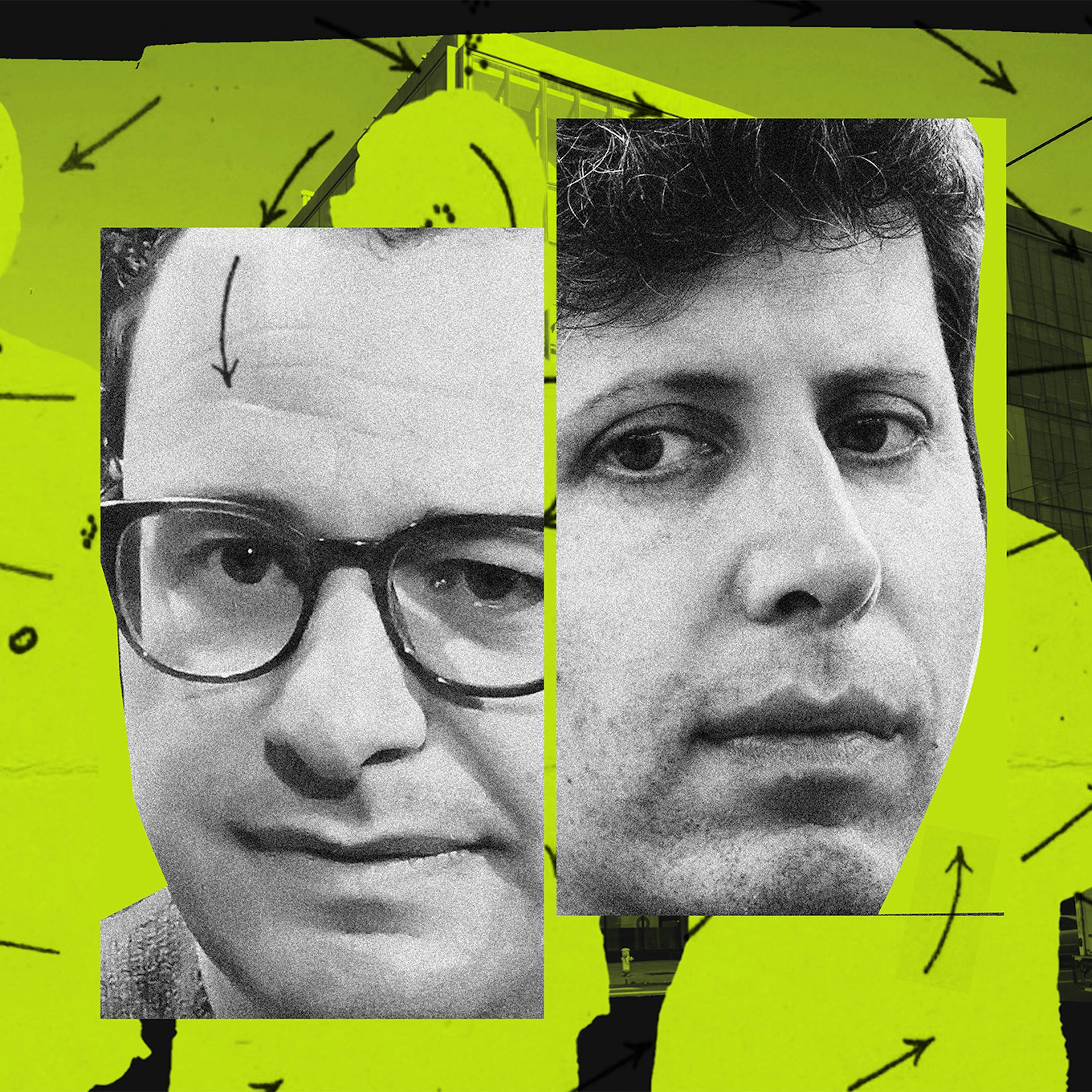
Decoder with Nilay Patel
Money no longer matters to AI's top talent
00:41:22
The AI industry is rife with defections, FOMO, and radical mission statements. It’s about to get supercharged.
Loading summary
Transcript108 lines
- [00:01]
Sponsor/Ad Reader
Support for Decoder comes from Adobe. Life is unpredictable, and that means you need your projects to adapt with whatever gets thrown at you. That means mastering the ability to pivot and collaborate with others to reach your goals. Adobe gets that, which is why they made a tool that's just as flexible as you are. PDF Spaces In Acrobat Studio, your PDF files are no longer static. Instead, they're living documents that flex with you and your project's needs. Learn more@adobe.com do that with Acrobat ready.
- [00:34]
To relax in your dream bath retreat without the stress of figuring out every detail yourself? At the Home Depot, your bath upgrade is covered shop fully designed rooms and curated bath collections to go from inspiration to transformation. Fast savings of up to 40% will make it easier on your budget and find everything you need from tubs to toilets and haul the tile in between to bring your vision to life. The Home Depot Dream Baths built here.
- [01:06]
Explainer/Reporter
What does it really mean to be a neighbor? It's just everyday people. You know, it's just people who are retired. They have a couple hours in the afternoon, so they're gonna do patrols. And it's people who are, you know, real estate agents, you know, driving around like trying to track how ICE is moving and alert neighbors when things are not saf.
- [01:28]
Hayden Field
Rise of mutual aid in times of crisis that's this week on Explain It To Me New episodes Sundays, wherever you get your podcasts.
- [01:41]
Neil I. Patel
Hello and welcome to Decoder. I'm Neil I. Patel, editor in chief.
- [01:43]
Co-host/Interviewer
Of the Verge, and Decoder is my show about big ideas and other problems. Today we're going to talk about the war for AI talent. Right now, the hottest job market on the planet is for AI researchers. And the vast majority of these people are concentrated into a small number of hugely valuable, extremely fast growing companies in the San Francisco Bay areas. And these companies are paying some of the highest salaries in the history of the tech industry to poach researchers from one another. And it feels like every time one of these AI researchers leaves one company for another, they tell us exactly why. Sometimes they're simply resigning to go be a poet. Sometimes they're chasing a mission. Sometimes they're worried that AI is going to imperil humanity, destroy all jobs, and plunge the world into chaos. They're really saying these things. They're publishing these notes on X in blog posts, or in the case of one former OpenAI safety researcher, by writing a full New York Times op ed.
- [02:37]
Neil I. Patel
I've been dying to really dig in.
- [02:38]
Co-host/Interviewer
And try to unpack what's going on with all these talent moves in AI. So my guest today is Verge senior AI reporter Hayden Field, who's been covering the revolving door of the AI industry really closely. And also the broader culture that's motivating the AI workers to jump ship and the companies that are ruthlessly trying to hire them. Those motivations vary. Sure, all these people are paid extravagant salaries, but as you'll hear Hayden say, a more stronger motivating force is ideology and mission. The people working on AI, by and large believe that what they're doing is going to radically change the world, and they're not really in desperate need of more money. So that really changes the incentive structures that might push people to leave, say, OpenAI for Anthropic or to quit Elon Musk's XAI, now that it's been acquired by SpaceX. At the same time, the incentives of the AI companies themselves are going from raising money to making money. Reporting suggests that OpenAI and maybe even Anthropic could go public this year, and doing so would create a historic amount of wealth. It would also put new kinds of pressure on these companies to be more transparent about how they spend money and to be much more accountable for returning on the huge investments that they've raised so far. There's a lot in this conversation. The AI industry right now is full of drama. There's big characters, bitter rivalries, lots of money, and really, really long blog posts about the end of the world. Okay, here's Verge senior AI reporter Hayden Field. Here we. I wanted to check in on the state of the tech labor market and how big of a distorting effect AI is having on it. Not from the automation perspective, but rather how the behavior of the AI labs and the people who work there is having a major impact on everything around them. People are leaving OpenAI for anthropic or vice versa, or going to some other lab or quitting to go live in the woods. Basically every week right now. Usually it's someone high profile leaving the safety team or some other division of a big AI lab and then joining another one a few days later.
- [04:41]
Neil I. Patel
Sometimes they quit only to announce they've.
- [04:43]
Co-host/Interviewer
Been poached a couple weeks later. Sometimes they quit and say we're all going to die and that they're going to retire to Europe to write poetry, which we just saw with an anthropic researcher who left the company this month saying the world is in peril. That's just a little worrisome. You follow this industry every day. How would you characterize what's happening in.
- [05:01]
Neil I. Patel
The AI industry right now just in terms of people getting new jobs and quitting their old jobs.
- [05:06]
Hayden Field
So it is crazy right now. You're absolutely right. It's the most competitive it's ever been right now. The AI industry and the amount of defections, resignations and other moves is only intensifying. I feel like every week someone's doing a really high profile departure. Sometimes it's every day in a week they always do a really dramatic announcement online, whether it's a resignation letter or just a thank you to like 20 different people that they worked with. And then there's all the pay packages at stake here. There's a lot of money at play. Like, you know, reported billion dollar pay packages for Meta. Who knows how much is being offered to people at Anthropic XAI right now? Everyone just probably got rich from the SpaceX merger. And also they're all constantly being courted in the craziest ways too. Like Mark Zuckerberg making home cooked soup personally for like engineers he was trying to recruit. And you know, Sam Altman personally calling potential recruits. There's just a lot going on and there's a lot of money changing hands. But I think it's important to remember that at some point money doesn't really mean as much to a lot of these people as personal mission. So that's what we're seeing like a lot of people that are moving around right now from one job to another are doing it because a company no longer aligns with their personal mission or they no longer have faith in the leadership at that company. So that's usually a lot of the motivation. Yes, some people are leaving for like eye popping pay packages. But I would say the majority of different job moves we're seeing right now in AI have to do with more interpersonal drama or personal like belief statements and people trying to, you know, kind of go where their values align.
- [06:45]
Co-host/Interviewer
Can I ask a really rude question?
- [06:47]
Hayden Field
Yes.
- [06:48]
Neil I. Patel
How much does any single AI researcher make or break any single AI company at this point?
- [06:54]
Hayden Field
You know, you would think not that much. But I will say I think that certain people have really outsized influence and that's why certain people are seeing pay packages that reflect that. Like there are people that individually drove GPT 5 GPT 4 people that individually drove a ton of Grok stuff like Grok imagine. And everyone at the company knows who those people are. It's not like any employee at OpenAI or XAI or Anthropic or Google is going to be just, you know, worth this much money in terms of paying from a CEO's perspective, I guess. But there are a handful of people that have outsized influence and that are really good at, like, marshaling all the other people on their team at the company. They're really good at ideating and solving these intense problems. You know, that's why some of these people's moves make headlines.
- [07:50]
Neil I. Patel
When you say that people are leaving because of their personal mission, there's a part of me that just buys it. Right. You've made so much money that someone offering you even more money will have maybe no impact on your life. But you think the leader of one company has the wrong values, so you're going to want to go work for another company that has the right values, or you think one company is closer to AGI and you want to be nearer to that idea.
- [08:13]
Co-host/Interviewer
How often does that come up publicly.
- [08:15]
Neil I. Patel
Where the people leaving jobs or switching between these companies are actually saying, the place I was was misaligned with my personal mission and I'm going to another place that's more closely aligned?
- [08:27]
Hayden Field
I would say almost every time. There are a lot of people that won't say that in so many words, but they will imply it. Like the anthropic researcher that left last week that went viral online for his resignation letter. Yeah, he went to go be a poet, so it's not like he was going to another AI company in that case. But he did say that throughout his time at Anthropic, he repeatedly saw how hard it is to let his values govern his actions, both within himself and within the organization. Because he said, they constantly face pressures to set aside what matters most. So I think, you know, most people that depart these companies, I mean, some of them will just say, thanks so much, off to my next chapter. But a lot of them will say, hey, my next chapter is going to be about X, Y and Z. Because this is what I care a lot about. Whether they're leaving for a nonprofit, maybe they're starting their own AI lab or their own, you know, foundation or organization that's like more of a watchdog. Maybe they're leaving for another AI lab that they specifically want to work under this person because they admire X, Y and Z about them. Sometimes they say outright that the other company didn't align. Like, you know, we saw New York Times op ed from an ex OpenAI employee who said, you know, the ad stuff was really her. Her reason for. For leaving. And then sometimes we see them just imply it by saying, hey, I'm really excited to work at this place because of these specific three reasons.
- [09:51]
Neil I. Patel
Is this just like writing a why I'm Leaving New York essay?
- [09:53]
Hayden Field
Yep.
- [09:54]
Neil I. Patel
Like you're starting a substack and you've got to trash the New York Times anyway at the door to get attention to your subs.
- [09:59]
Co-host/Interviewer
Is it the same vibe?
- [10:00]
Hayden Field
It is the same vibe, but I think there's a lot more meaning behind it for a lot of these people. They all really are true believers most of the time. They really believe that what they are doing is directly impacting the world, for better or worse, really believe that where they work is going to matter hugely in terms of the societal impacts.
- [10:20]
Co-host/Interviewer
Just last week, OpenAI snapped up OpenClaw founder Peter Steinberger. That's the open source AI agent framework that gave birth to multiple books. Peter released OpenClaw in November of 2025. It got popular last month and now he has a job at OpenAI, probably with a hefty compensation package. Sam Altman announced this news on X, calling Steinberger a genius with a lot of amazing ideas about the future of very smart agents interacting with each other to do very useful things for people. And that quote, we expect this will quickly become core to our product offerings.
- [10:54]
Neil I. Patel
Is this the pace we're at now where you can just create a project like OpenClaw and then a couple months later, Sam Altman is saying you're a genius and paying you huge sums of money to not even acquire your project to just hire you and put openclaw on a foundation.
- [11:09]
Hayden Field
Peter's story is a really good example of the type of entrepreneur success story that a lot of tech industry people are hoping for. Because, you know, there's a pretty constant hustle of pro AI build quick as an independent person culture online. So it's also a pretty good indication of how fast the AI labs are moving and how much pressure there is for them to iterate and constantly like one up each other on all these different features, especially when it comes to agents. So that's why I think Peter was such a representative success story here, because he built for himself, just like independently, a tool that a lot of people thought was way better than any of the other agent tools out there for multiple reasons. And so of course OpenAI anthropic, everyone else are sitting up and taking notice and saying, oh wait, what have we been doing wrong? We had a ton of people on this and this one guy beat us. So it's not like, you know, everyone was adopting it, but a lot of people did and it was, it went viral. Everyone was talking about it was, it was a big deal. And I think that even though it had a lot of security risks, people were just going for it left and right. And he didn't really have to answer to any of those because he just made it as one guy. Now he's going to have to abide by different rules. Working at OpenAI. It's just a lot of FOMO and a lot of like breakneck speed right now all throughout the industry. Whether you're one person making something or you're an AI lab.
- [12:28]
Neil I. Patel
I do think it was fascinating that a huge part of the openclaw story was people buying Mac Minis to run openclaw on because they recognized the security risks and they needed to literally put this thing on a different computer. And then on that computer they would log into all their accounts too.
- [12:43]
Hayden Field
Yep.
- [12:43]
Neil I. Patel
So they would undo their own air gap that they had created by buying a Mac Mini. That feels like a big part of the overall AI story, right?
- [12:51]
Hayden Field
Definitely.
- [12:52]
Neil I. Patel
Google invented Transformers and didn't release them because of safety concerns. OpenAI just put out ChatGPT and it got huge adoption because they were, they didn't think anybody would use it, so they were less worried about safety concerns. Everybody knew agents were a thing, but the security concerns were a big deal. One guy was like, screw it. Openclaw, security concerns abound. But the product went viral because it's really useful. He got hired for a bunch of money. Like that's the dynamic here, right? Is the people who ignore the obvious security and trust and safety concerns get out to a big lead and then everyone feels like they're catching up. Is that the dynamic in sort of the labor market as a whole as well? Or is it just company by company?
- [13:33]
Hayden Field
Yeah, I mean, I think that's the dynamic in the whole AI industry right now. It's just everyone's moving quickly. The ideas are money. And when one guy can kind of usurp the big labs in terms of the usefulness of actually consumer facing AI agents, which is a problem they've been trying to solve for years, they're going to pay anything to hire him.
- [13:56]
Neil I. Patel
We need to take a quick break. We'll be right back.
- [14:07]
Sponsor/Ad Reader
Support for Decoder comes from Adobe. For every big idea, your Documents folder tells a story. Let's say you've just finished pulling together a brief. So you hit export on FinalVersion PDF, but then you open the file and you immediately notice a typo. Several versions later you're exporting final v4 actual final draft PDF. Adobe Acrobat Studio can save you the digital clutter with PDF spaces. It takes your documents and turns them into a living project that you can engage with, get insights from, and collaborate with others on. You can gather all your files into one workspace and have a whole conversation with your AI assistant about IT and ask questions to get deep insights about your project. You can even invite people to your PDF space and let them add files, comments, notes and more. You could doodle in the margins or even turn your project into your own personal podcast episode. Acrobat Studio lets you generate an audio overview of your project in just one click. Learn more at Adobe.com do that with Acrobat Support for this show comes from Serval AI. Your IT team can waste almost half their day on repetitive tickets and the more your business grows, the more requests pile up. Things like password resets, access requests, and onboarding. Every single one of them can pull your team away from the actual meaningful work. But with Serval, you can cut 80% of your help desk tickets. Unlike other legacy players, Servl was built for AI agents from the ground up. Servo AI writes automation in seconds, Your IT team just describes what they need in plain English and Servo generates production ready automations instantly. Plus Servil guarantees 50% help desk automation by week four of your free pilot. But try it now because pilots are limited. Servo powers the fastest growing companies in the world like Perplexity, Merkur, Verkada and Klay. Get your team out of the help desk and back to the work they enjoy. Book your free pilot@cerval.com decoder that's S E R V A L.com decoder support for this show comes from Vanta. If you're a business owner, you know that risk and regulation are rising and customers now expect proof of security from the get go. That's why Vanta says they can be a game changer for you and your business. Vanta automates compliance by bringing risk, trust and security into one AI powered platform. They support over 35 security and privacy frameworks including SoC2, ISO 27001 and HIPAA, helping companies get compliant faster, stay compliant, and unlock new growth opportunities while saving valuable time. Vanta says that companies like Ramp and RYTR spend 82% less time on audits with Vanta. That's not just faster compliance, it's more time for growth. You can get started@vanta.com decoder that's V A N T A.com decoder vanta.com decoder Support for today's show comes From Select Quote it's time to talk about life insurance. Look, it's a scary thing to think about, but to make matters worse, you also have to think of things like how much does it cost and how much are you being covered? Odds are you pay too much for too little, but it's simple to get it right by finding a policy with Selectquote for over 40 years, Selectquote has been one of the most trusted brokers and insurance, helping More than 2 million Americans secure over $700 billion in coverage. Their mission is simple to find you the right insurance policy for your unique needs. They shop you, save no medical exam, no problem. They partner with providers offering same day coverage up to $2 million without needing to visit your doctor, get the right life insurance for you for less, and save more than 50%@SelectQuote.com decoder save more than 50% on term life insurance@SelectQuote.com decoder today to get started. That's SelectQuote.com decoder.
- [18:43]
Co-host/Interviewer
We're back with Verge senior AI reporter Hayden Field talking about the wild state of the AI talent war.
- [18:48]
Neil I. Patel
Let me connect this to xai, which has no trust and safety concerns whatsoever, as we have covered in great detail on the Verge and on Decoder. At a high level, what's happening with Xai, Grok and Elon? Like he's merged Xai and with it the X platform into SpaceX. I think it's very important for us to all take a beat and note that SpaceX now operates Twitter, which is weird, but a lot of people got paid, a bunch of people left, there's some chaos and drama with them leaving.
- [19:18]
Co-host/Interviewer
What's going on there?
- [19:20]
Hayden Field
Yeah, that's so true. I mean, it feels like we went through a wormhole yet again. It's just crazy that SpaceX is operating Twitter. But yes, Xai has pretty much earned a reputation for being a place that doesn't abide by industry standard safety guidelines, which are already like arguably maybe lower than they should be to begin with, and doesn't even abide by those. And it's also earned a reputation as a place where people mostly do whatever Elon wants in order to be successful. Sources have told me that that that's kind of the way you survive at XAI is do what Elon wants and just kind of like keep your mouth shut and go quickly. So that's led to some really disastrous consequences that have left a chunk of its workforce pretty dissatisfied with working there and ready and willing to jump ship. Or if they do get Fired via restructuring or laid off. They're not that upset about it and they're kind of like, yeah, this is kind of a. A shit show. Pardon my French. So I think that the restructuring was also related to some of these things. I was hearing that Elon was pretty frustrated with the pace the company was moving at, even though a lot of people said it was going too fast in a lot of areas like safety, and too slow in other areas. Like, they were always playing catch up and trying to just do exactly what OpenAI and Anthropic were doing instead of charting its own course, according to some sources I spoke with. So, yeah, I think that Elon wants to be the premier frontier lab company doing exactly what OpenAI and Anthropic are doing, working with the government, enterprises and consumers. But he wants to do it in an edgier way while still being brand safe, which is a recent focus for him, it seems like.
- [20:56]
Neil I. Patel
Let me push on that just a little bit. There's the trust and safety part, which, you know, Grok, I think, should not have been undressing people all over the.
- [21:03]
Co-host/Interviewer
X platform or really on any platform.
- [21:04]
Neil I. Patel
But they allowed it to do that. And it feels like most image generators could do that. And the safety guardrails were just built in at the beginning. And grok's innovation was not having the safety guard rails at all. So you could do bad things with it. But the innovation that's driving all the money and the employee movement is, hey, look at this thing that an AI model can do. Look at what Claude Code can do. Look at what OpenClaw can do. If we use the models in different ways or we orchestrate them in different ways, these things can go be more agentic, they can accomplish more tasks. And I don't see any of that from xai. It doesn't. It doesn't seem like Elon has a particular thesis of what XAI should be doing or what Grok should be doing. Besides being like your sexy girlfriend, is.
- [21:55]
Co-host/Interviewer
There any thesis that anybody has identified?
- [21:58]
Hayden Field
No. I mean, that's exactly what sources were telling me. They were like, yeah, basically his thesis is, oh, I see that OpenAI or Anthropic did this. Okay, let's do it too. But it's hard to get better at something that someone else is already really good at, especially if you're not doing anything differently. You're just trying to chart the exact same course and catch up. So that's what a lot of sources were telling me. That led to frustrations within the company that it Was like a lot of catch up, a lot of, like, pressure to work at breakneck speed. But even then they weren't catching up. And then the only things they were like, known for as being different were like, embarrassing porn stuff.
- [22:33]
Neil I. Patel
So, yeah, you know, Elon and Xai get a lot of credit for just standing up a frontier AI company and catching up as much as they did. Like, very few other companies have been able to do that.
- [22:46]
Hayden Field
Right.
- [22:47]
Neil I. Patel
I always attributed that to, well, what you needed was a lot of compute and Elon has a lot of money, so he just bought a lot of GPUs and then he stole the Internet like everybody else did. And he trained a model using the technology everyone else trained. And now he has croc, which is about as good as GPT5, which is about as good as Gemini, and that's the state of the art. It sounds like you're saying there's actually a lot more differentiation at that frontier model level now, and just having a whole bunch of GPUs trading away is not enough.
- [23:15]
Hayden Field
Basically all of these companies are like leapfrogging each other every week when it comes to which is better at what. So, you know, Claude Code was having a moment for months now. Some people are saying OpenAI's new model is actually better at coding. I mean, obviously engineers love to do and work with whatever model is the best that week. They can easily switch around. That's something they've always done and probably will always do. But what I'm seeing for the first time now is that some people are going off of like loyalty more when they stay with the model or like just knowing kind of the tone or like liking the, what they've built up with that model, the rapport, the instructions that they've like laid into it via, you know, special docs and stuff. I saw that even when OpenAI was like beating Anthropic on some coding benchmarks, a lot of people were like, oh, well, I still like working with cloud code, so I'm just going to keep doing that. And same with vice versa. Some people, when Anthropic seemed to be winning it, the coding wars, some people wanted to stick with OpenAI because they were like, I just, I just like this model better. And I'm sure a lot of people feel that way about, you know, some aspects of GROK too. Like maybe they just like the tone, they just like this or that. So they're just sticking with it. So I think it's like I'm seeing more loyalty with the users in a way I hadn't really seen before. I think every company, including xai, is trying to create, like, a moat that'll, like, keep people in their ecosystem, because, I mean, that's the only way to really eventually make money.
- [24:41]
Neil I. Patel
The idea that the models themselves are kind of all interchangeable and you've got to build other kinds of motes, whether it's the personality of the model or specific feature sets or in the case of Grok porn, that to me connects very directly to. Well, a bunch of researchers can just leave, right? If. If the underlying models are as similar as you're saying, and it's the other moats on top. Well, that to me is why you would say, well, I have enough money. I want to go someplace where the. The mission matters. And there's a lot of reasons why the missions at XAI might be different than your perceived mission at OpenAI versus your perceived mission at Anthropic.
- [25:21]
Co-host/Interviewer
If you've been paying attention, you've seen a huge wave of coverage about Anthropic in various publications lately. The Wall Street Journal, the New Yorker, the New York Times, the Verge.
- [25:31]
Neil I. Patel
And there's a theme in all of those stories.
- [25:33]
Co-host/Interviewer
It really feels like Anthropic thinks Claude might be alive and that it needs to take AI ethics and morality very seriously. A number of those pieces, including our own featured interviews with Amanda Askel, the resident philosopher at Anthropic, who's working on safety, it seems like Anthropic is pushing very hard to maintain its reputation as the AI Safety first lab. Do you think hinting that Claude is.
- [25:56]
Neil I. Patel
Alive is like a competitive advantage for Anthropic? Are they just doing it to hype themselves up and in court talent?
- [26:04]
Hayden Field
Well, they are really on a tear right now. Like, I recently wrote that story about how big of a moment Claude is having. Between the success of Claude code and Anthropic's like, safety reputation, but and also their super bowl ads, which were throwing shade at OpenAI for having ads, and in the chatbot. But I asked Amanda Askel about this, actually, when I last spoke with her, about what responsibility Anthropic has to feed into or not feed into that narrative about Claude's potential consciousness. Because I thought it was interesting that Anthropic didn't just outright deny it. They've been toeing the line of, oh, we don't know. It depends on how you define consciousness. It may not be the same as human consciousness, but that doesn't mean it's not conscious at all. Basically, they're giving the Vibe of, like, Claude is a secret third thing. Like, it's not. It's not human. So, yeah, it's interesting. They're being very vague. And I asked her about this. I said, like, you know, do you not think you have a responsibility to people to, you know, really give an answer one way or the other, or to say, you know, it's not sentient? And she told me that people wouldn't really take Anthropic's stance seriously if they did just outright deny it, that it wouldn't really, you know, inspire a lot of confidence in them being thorough. They're still riding on this reputation of being safety first and transparent and forthcoming about, like, you know, what Claude is and the risks of AI and the work they're doing to try and mitigate that. But I think the main reason they're doing all that, or a main reason, is because it's good for business. Like, whenever I talk to CEOs and tech leaders, a lot of them say they're less worried about brand safety and fallout from Anthropic because of its reputation. And, you know, they're using that to recruit people. They're using that to work with a lot of big enterprises that are worried about data privacy and, you know, brand risk and advertising. And they're also using it to work with the US Government. They have a lot riding in terms of money on their reputation for being safe.
- [27:59]
Neil I. Patel
I feel like Sam Altman spent weeks, months saying AGI was imminent, and he stopped doing that because he has to run a consumer business that is going to make money in ads now. And he can't run around saying that he's invented digital God the way that he was. Like earlier last year, maybe Anthropic was way quieter about it. I know Dario won't even say AGI, but they are much louder about, hey, we think it's alive. Like, he literally is in the Times. Dario's in the Times saying, I don't know what kind of consciousness it is. I can't quite describe it. Like, he's. They're right up on that line. You know, the AI field is full of true believers.
- [28:32]
Co-host/Interviewer
It's.
- [28:33]
Neil I. Patel
It's full of people who, who think they can really push the boundaries of consciousness with computers. Is it like having an impact on this market that companies like OpenAI and Google are so nakedly commercial in the. In the way that, like, consumer product companies have to be commercial? Like, they're just doing ads, they're trying to get you to buy shoes. Anthropic is an enterprise company. So you don't see the commercial side of their business quite as much. And so they can kind of hint that they think they're on the verge of the next stage of evolution.
- [29:00]
Hayden Field
Yeah, I mean, I think that it's definitely feeding into the hype. I also think it's probably going to have some adverse effects on the population that believes Claude is conscious like a human. I think that it's not helping to, you know, kind of vaguely answer these questions and not really give a lot of detail. We just saw a lot of people that were very upset about OpenAI shutting down 4O, a model that a lot of people are really emotionally attached to. We're in this strange era where AI companies are the authority on what their models are and anthropics over here saying we don't really know what Claude is. And I don't know if that's an example of transparency or if it is something that they'll come to regret. It just reminds me of the times that tech CEOs have said, oh, like I'm so worried about what I'm building, it's too powerful. Hold me back. It's another example of the move fast and break things approach, I think, in a way, because if you're not quite sure what you're building, should you be building it? We'll see.
- [30:14]
Co-host/Interviewer
We have to take another quick break.
- [30:15]
Neil I. Patel
We'll be back in just a minute.
- [30:19]
Explainer/Reporter
Foreign.
- [30:25]
Sponsor/Ad Reader
Support for this show comes from Framer. If updates to your site are feeling harder than they should, Framer is the shortcut you've been looking for. Framer is a website builder that can transform your.com from a formality into a tool for growth. They've helped thousands of businesses from early stage Startups to Fortune 500s build better websites faster. Framer is an enterprise grade no code website builder used by teams at companies like Perplexity and Miro to move faster. With real time collaboration, a robust CMS and everything you need for great SEO and advanced analytics that include integrated A B testing, your designers and marketers are empowered to Build and maximize your.com from day one.
- [31:09]
Neil I. Patel
Learn how you can get more out.
- [31:10]
Sponsor/Ad Reader
Of your.com from a framer specialist or get started building for free today@framer.com decoder for 30% off our Framer Pro annual plan. That's framer.com decoder for 30 percent off framer.com decoder rules and restrictions may apply. Support for this show comes from quo. One phone call is all it takes to bring new opportunities. So if you're missing calls to your business, you could be missing out. Quo spelled Q U O can help you make sure you stay on top of things and help you never miss a call again. More than 90,000 businesses rely on Quo to stay connected, professional, and consistently reachable. Your entire team can handle calls and texts from one shared number. No more missed messages or disconnected conversations. Everyone sees the full thread, making replies faster and customers feel genuinely cared for. Quo isn't just the phone system. It's a smart system. Its AI automatically logs calls, generates summaries, and highlights next steps so nothing gets lost. It can even respond after hours so your business stays responsive even when you're not around. Quo can help you deliver a more personal experience and stay connected to your customers. Make this the year where no opportunity and no customer slips away. Try quo for free plus get 20% off your first six months when you go to quo. That's Q U O.com decoder quo no missed calls, no missed customers.
- [32:47]
Guest/Reporter
Before Minnesota, Illinois basically wrote a playbook on how to fight back against Trump's ICE crackdown. Governor J.B. pritzker told everyone in the state to take action when ICE came to town. Pull out your phones, film everything.
- [33:01]
Neil I. Patel
They're shooting moms in the face.
- [33:03]
Co-host/Interviewer
Yeah.
- [33:03]
Neil I. Patel
So peaceful protest seems like the least you could do and what we should be encouraging people to do. You know, they've shot somebody here in Chicago five times for just observing from her car.
- [33:17]
Guest/Reporter
Illinois created an accountability commission, took ICE agents to court, and when Trump sent in the National Guard, they blocked them from the streets and they won. A model for Trump resistance on the state level today, explained. Drops every weekday and now Saturdays, too.
- [33:40]
Co-host/Interviewer
We're back with Verge senior reporter Hayden Field. There's a bigger picture here as well. These companies have grown so big with valuations so extraordinary on top of plans to go public that we're about to see a historic level of wealth generation for people in AI industry. That's not to say that any of these big AI firms are suddenly on the cusp of generating so much revenue that investors are getting an actual return on their investment. Big Tech is set to spend almost a trillion dollars in capex this year, with nowhere near the revenue levels that would make a return on that anytime soon.
- [34:12]
Neil I. Patel
This goes beyond, say, you know, the last explosion of companies going public. Facebook went public in the early 2010s. Lots of millionaires were made. Generationally important companies went public. But this is like a different level. Like, it's a different category of numbers, even in terms of investment in and expected return out in these IPOs. What are the timelines for OpenAI and Anthropic to go public? Because they're raising a lot of money. They're talking about a lot of money, but at some point they're gonna have to go public and return all that money, right?
- [34:42]
Hayden Field
Exactly. This is going to be a really big year for them, kind of having to meet the pressure that's been rising on how they're going to make money. And it's going to be interesting to kind of see them sweat, because we know OpenAI wants to go public this year, and some reporting suggests it could be Q4. Anthropic could also IPO this year. So going public would obviously supercharge their funding and, you know, change the AI industry a lot. But they really, really, really need money right now. You know, they're going to be beholden to shareholders in a new way. They're going to have to be. Be transparent about certain things for the first time. But the other interesting part of all this to me is just the fact that the CEOs and like the executives at these companies have been acting so differently in the past year than they have in the past. I remember Sam Allman used to often say, oh, I'm not really worried about how OpenAI is going to make money. It's going to. He would really make it a point to highlight that he was not worried about generating a profit. Now, that is completely flipped. Last time I saw him in October, he was visibly worried about how the company was going to make money. He seemed nervous. He mentioned multiple times, oh, we've got to make money, we've got to turn a profit. You know, it could look like X, Y or Z, but we've got to do it. So I've never seen him so nervous about money. And I think that we're going to see that reflected in this year when they IPO and when they're going to have to answer to shareholders in a new way.
- [36:08]
Neil I. Patel
Is that push for commercialization to make money and be a actual business instead of a research lab? Is that what's pushing people to quit?
- [36:17]
Hayden Field
I think so, for sure.
- [36:18]
Neil I. Patel
I mean, you've gotta. You've gotta work for a bunch of meta executives who work at OpenAI now to push ads on people?
- [36:24]
Hayden Field
Yeah, I mean, a lot of engineers and researchers get really, you know, disillusioned when they think they're gonna be doing one thing and they're doing another. You know, we saw someone quit at OpenAI because of the ad stuff. We saw someone else Quit because of the, you know, potential nsfw, like sexting stuff. We saw people leave Xai over the grok NSFW stuff. When you are tasked with building something that doesn't align with your values, maybe you went to a company because you thought you were going to help achieve AGI, or maybe you thought that you were going to be like, you know, curing cancer, making the world a better place. Pick your reason out of a hat here. And then you're tasked with like creating something like super commercial, short term and kind of like in your eyes, dumb. Yeah, you're going to be pretty upset and you're probably going to leave because again, even if your pay package is tied to like a lot of long term stuff that you're going to do at the company or like, you know, it's tied to the number of years they're going to stay there in terms of vesting, sometimes you don't care. Again, a lot of these people are post money so they, they have enough money. It's just about whether they believe in what they're doing day to day. And if you're doing something you don't, don't agree with or that you think is stupid, yeah, you're gonna leave.
- [37:39]
Neil I. Patel
You know, when companies go public, they have to start delivering quarterly earnings, their CEOs have to do investor calls. Things get very regular and standardized and quite honestly much more boring. That is not a great environment to like suddenly start writing huge checks to random researchers because you want to lure them from meta to make AGI. Like do you think, think the process of going public or becoming more responsible.
- [38:05]
Co-host/Interviewer
Companies or even just having to make.
- [38:06]
Neil I. Patel
Money will bring some of the froth in this market down?
- [38:10]
Hayden Field
Definitely, yes, because there's going to be more transparency. So they're going to have to answer for more of their decisions. I think they can still write a few huge checks, but they're going to have to really back it up. So you know, they're like we talked about earlier, there's a handful of people at each of these companies that are really driving a ton of change and they have a lot of influence and they're doing a lot more ideation than anyone else. So people like that that they can really back up that check for. Yeah, but they can't just be doing it left and right willy nilly. Like some people think that they have been just out of fomo. So I think the FOMO is going to drop down a little bit as they have to answer for almost every action they take as public companies.
- [38:54]
Co-host/Interviewer
But going public could make these companies themselves worth close to a trillion dollars each, even as investors pour more money back into them. On the back of AI hype, one question looming over all of this is where the tech talent pipeline goes and what happens when you start automating the very junior programmers and beyond that, junior roles of all kinds in white collar work. If you don't have any junior people, where are you going to get the mid career people? And if you don't have any mid career people, where are you going to get the senior folks? We're already seeing layoffs across the board at tech companies. They're all trying to do more with less and then saying the cuts are because of AI or that they're all just trying to be leaner and more cost conscious. After the explosion of spending that we saw in the pandemic, it occurs to.
- [39:37]
Neil I. Patel
Me that if these companies develop AGI or even if they continue down the road they're on, which is very capable models that can basically automate software development. They will automate away a bunch of the jobs these engineers are doing that are getting paid all this money for. Does this market realize that is it contended with the idea that paying billions of dollars for a software engineer to develop the product that will automate the software engineer away is kind of a doom loop or is that just not on anyone's radar?
- [40:06]
Hayden Field
No, it's definitely on their radar. I think it's a bubble that's going to burst in. AI people are already asking questions about what Meta's engineers are doing with their eye popping pay packages that they received. And, and a lot of software engineering work is already Getting automated and OpenAI and anthropic are being pretty open about that. Like they'll regularly release results about, hey, this is how good our coding models are. They're now at the level of an entry level engineer at our company. They're now at X level, they're now Y level. So you know, seeing those results change over time. A lot of engineers, I've personally talked to a lot of developers and engineers who are potentially worried that they're automating themselves out of a job and that they're also like losing part of their identity because AI so good at coding and they're like, oh like what does it need me for? I thought this, I felt like this was an art form and something that required a lot of institutional knowledge and like a certain prowess and finesse. And now all of my knowledge seems like it's like just going to waste. But in terms of what is going to stay around, I think senior engineers are the main ones that are feeling a little bit less worried. They're still feeling weird about how good coding models are, but they're feeling a little less worried in terms of job security because there's always going to have to be someone directing, or at least as of right now, directing AI agents and like, you know, delegating and directing the project. Whereas lower level software engineers seem a lot more worried about automating themselves out of a job, because that seems to be a lot closer on the horizon.
- [41:38]
Neil I. Patel
The thing about senior engineers being less at risk is you got to get them from somewhere. Right?
- [41:43]
Co-host/Interviewer
Right.
- [41:43]
Neil I. Patel
You got to hire junior engineers and train them and develop them into senior engineers. But if we're hiring agents and AI to do all that work, where do the young tech workers come from?
- [41:54]
Co-host/Interviewer
Where do the junior engineers come from?
- [41:56]
Neil I. Patel
Like, does is this town pool shrinking? It seems like a set number of people are going to make all the money forever because you don't need to hire any young people anymore.
- [42:04]
Hayden Field
Yeah, I think it's partly that. I mean, the talent pool of senior engineers is definitely shrinking. But I also think that they're going to be teaching different skills. The skills that people were learning to be an entry level software engineer. Maybe some of those will be defunct. Kind of like us having to learn cursive in school. You know what I mean? Like, when have I used cursive recently?
- [42:28]
Neil I. Patel
You know, they're teaching the kids cursive again. This is a real.
- [42:30]
Hayden Field
They are. Oh, I'm kind of happy.
- [42:32]
Neil I. Patel
That's a real thing. The kids couldn't sign their name, so they started teaching cursive again.
- [42:35]
Hayden Field
Good. I'm actually. I was really depressed about the cursive thing. That's good to know. But yeah, I think that, like, the skills that are taught will be different. You know, I think the senior engineers will come from a different pipeline. Maybe in terms of, like, colleges will be teaching different skill sets because you'll be tasked with more like delegating and directing AI agents instead of just like doing everything from the ground up. That's what I think will happen. We'll see. The skills required for the jobs that won't be automated will definitely be a little bit different. And a lot of engineers I've spoken with are already telling me that.
- [43:08]
Neil I. Patel
Can I ask you another rude question?
- [43:10]
Hayden Field
Sure.
- [43:11]
Neil I. Patel
Are all these people just trying to get their bag before the bubble pops? That if I was being the most cynical, that's what I would say is all these People realize that what they're building is unsustainable. It can't actually do all the things that everyone says it can. Claude is not actually alive. I might as well collect my $500 million from Mark Zuckerberg, and then the bubble will pop, and I'll live on a ranch and be free country.
- [43:32]
Hayden Field
It's not what I'm seeing because a lot of people are true believers. Like, a lot of people really, really do want to have a hand in this. And they would be doing it no matter how much money they're making, because they want to be involved. And, like, sometimes even if they retire, they, like, come back and they're like, no, I want to be involved in this. I really believe in it. But, I mean, of course some people are doing what you just said. Like, some people burn out. They're like, yeah, I'm gonna go be a goat farmer. You know, it's like, I had a hand in building this stuff. Now I'm disillusioned. I gotta get out. But I think even that is more about their values. Like, maybe their values changed or maybe the company so didn't align with their values anymore that they wanted to just get out of the industry entirely. And a lot of them honestly are now in the, like, privileged position of they've made so much money that now they can make decisions based on just their beliefs, you know?
- [44:20]
Neil I. Patel
Yeah, this is the best argument for UBI I've ever heard. Where do you get.
- [44:24]
Co-host/Interviewer
Where do you get the values back? You just give everybody money.
- [44:25]
Neil I. Patel
What should we be looking for in the next 6 to 12 months? Is it. It just more movement?
- [44:30]
Co-host/Interviewer
Has it settled down? What's happening?
- [44:32]
Hayden Field
I think that we're going to see a lot of AI companies finally have to answer to new people in terms of profit, and it's going to be really interesting to see what they do. Is Anthropic going to stick to its mission? Is it going to, you know, change its mission statement? Wording a bunch over the next year before it ipos is OpenAI going to stay silent about, like, military work. You know, we're going to see a lot of, like, potential changes, and I think we're also going to see a lot of movement as a result of that within these companies. You know, as they get ready to ipo, what changes are they going to make to their mission and what they're building and what they're prioritizing and who's leaving as a result of that? So I would watch that. Another thing. Is that something that I'm hearing from some of the most realistic people in the industry is that enterprise AI is the future, like the non glamorous B2B stuff, and that consumer facing AI is going to shrink with M and A. So I think that a lot of the smaller firms, the ones that are mostly consumer facing, we're going to see them acquired. So I think that's something to watch. Also consumer focused AI companies that are pivoting into enterprise to turn a profit. So I think we're going to see a lot of scrambling around money in the industry this year and I think we're also going to see a lot of personnel moves because of that scramble around money. And maybe people will get disillusioned about what their company has become.
- [45:44]
Neil I. Patel
Well, it sounds like we're going to have to have you back very soon. Hayden, thank you so much for being on Decoder.
- [45:48]
Hayden Field
Thanks so much.
- [45:51]
Co-host/Interviewer
I'd like to thank Hayden for taking the time to join Decoder and thank you for listening. I hope you enjoyed it. If you'd like to let us know what you thought about this episode or really anything else at all, drop us a line. You can email us@decoder verge.com we really do read all the emails. Or you can hit me up directly on Threads or Blue sky. We're also on YouTube. You can watch full episodes at Decoder Pod. That's the same handle we have on TikTok on Instagram, which are a lot of fun. If you like Dakota Coder, please share it with your friends and subscribe wherever you get your podcasts. Decoder is a production of the Verge.
- [46:15]
Neil I. Patel
And part of the Vox Media Podcast Network.
- [46:16]
Co-host/Interviewer
The show is produced by Kate Cox and Nick Statt. It's edited by Ursa Wright. Our editorial director is Kevin McShane. The Decoder Music is by Breakmaster Cylinder. We'll see you next time.