← Decoder with Nilay Patel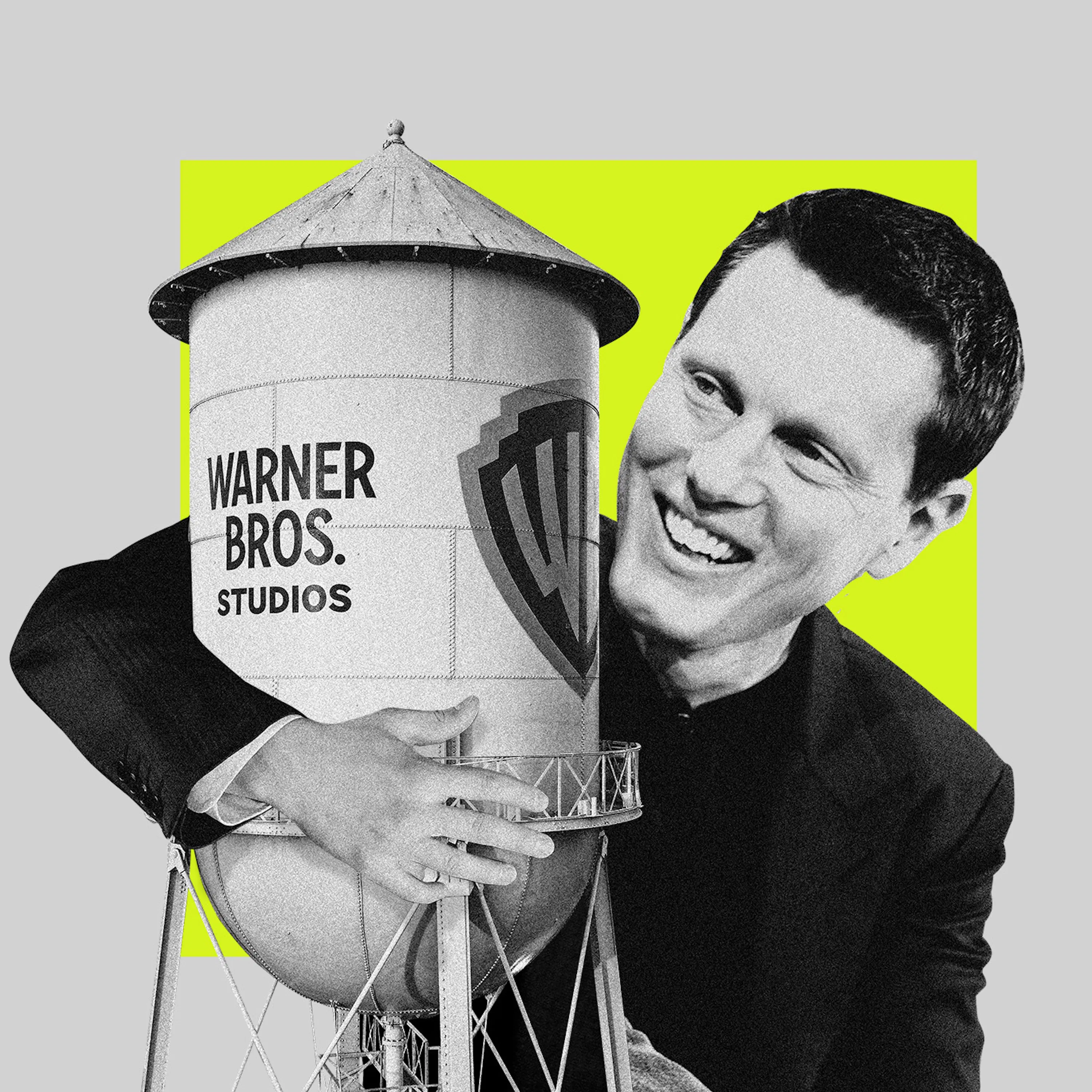
Decoder with Nilay Patel
Paramount's $110 billion Warner Bros. gamble
00:48:08
To take on Netflix and YouTube, Paramount has to break the Warner Bros. curse.
Loading summary
Transcript106 lines
- [00:01]
A
Support for the show comes from l' Oreal Group, the global beauty leader defining the future of beauty through science and technology. L' Oreal Group create the beauty that moves the world.
- [00:16]
B
Hello and welcome to Decoder.
- [00:17]
C
I'm Nilai Patel, editor in chief of the Verge, and Decoder is my show about big ideas and other problems.
- [00:22]
B
Today, let's talk about the big Paramount, Warner Bros.
- [00:24]
C
Discovery merger. This deal could reshape all of media and entertainment if and when it closes. That's still an if, which we're going to cover. Come back to right now. Paramount head David Ellison is very much acting like he's over the finish line after outbidding Netflix, which walked away after what seemed like a done deal.
- [00:42]
B
There's a lot going on here, including
- [00:43]
C
the biggest question I've had throughout this entire why would anyone want to buy Warner, which has basically killed every acquirer it's had for the last quarter century? I'm serious. First AOL, then AT&T, then Discovery. A lot of people have tried to change their fortunes by acquiring Warner Bros. Yet while the individuals may have walked away richer and their companies usually ended up saddled with a brutal combination of debt and regret.
- [01:08]
B
So why?
- [01:09]
C
Why do this and why now? Back in January, I asked Puck's Julia Alexander to walk me through Netflix's reasoning, and today I'm digging into Paramount's with Rich Greenfield, a media and entertainment analyst and co founder of research firm LightShed Partners. You'll hear me ask Rich a lot about the structure of this deal and the strategy that's supposed to help David Ellison pay for it.
- [01:29]
B
But there's no getting around the numbers.
- [01:31]
C
Paramount is roughly 40 times smaller than Netflix by yet it offered to pay 30% more for Warner Brothers. You don't need a fancy finance background to see the bigger picture here. At its core, this deal is about debt. A lot of debt. Paramount is borrowing tens of billions of dollars to make this deal happen. It has nowhere close the amount of money needed to buy Warner for the price it had to offer to scare away Netflix. A vast majority of that money is coming from David Ellison's billionaire dad, Larry Ellison, the founder of Oracle. His personal fortune depends almost entirely on his Oracle stock, the same stock that's tied up, for better or worse, with AI hype. So why is Larry Ellison willing to trade his lucrative Oracle shares for shares in a media company? And what exactly is David Ellison's plan here, besides slashing huge amounts of jobs when that debt bill comes due? Certainly the Ellisons think they can succeed where many Many others have failed with Warner Brothers, and surely they think AI has something to do with their plans. But Paramount won't be the first company killed by a Warner deal, and it really might not be the last. Before we start, a quick reminder that you can listen to this episode or any episode of Decoder completely ad free by subscribing to the Verge. Just go to theverge.com subscribe okay. Rich Greenfield of LightShed Partners on Paramount Steel to buy Warner Bros.
- [02:47]
B
Here we go. Rich Greenfield, you are a co founder and analyst at LightShed Partners. Welcome to the Coder.
- [03:04]
D
Thanks for having me.
- [03:05]
B
I'm excited to talk to you. We have not podcasted together.
- [03:07]
D
We have spent a lot of time listener, longtime listener.
- [03:10]
B
I appreciate that. I feel like you and I have spent a lot of time writing and posting around each other. So it's really exciting to talk to you, especially about Warner Brothers Paramount, where I think you have a depth of knowledge and expertise. Here's my first question for you. My thesis, it might be the core thesis I have for the entire media industry, maybe the entire telecom industry, is that if you buy Warner, you kill yourself. And yet everyone always wants to buy Warner. Why doesn't the industry understand that buying Warner is what leads to a quick and speedy demise?
- [03:41]
D
I mean, because you're going back to aol, which, you know.
- [03:43]
B
Yeah, I worked at AOL when they were spinning off Time Warner. I remember this very clearly.
- [03:48]
D
I mean, to be fair, AOL was the thing that died, not Time Warner.
- [03:53]
B
But, but, but no, Time Warner persists like a zombie that will kill again. It will. It will do it again. Even after this.
- [03:59]
D
I'm sure it is crazy how many times this asset has been traded around and sort of, I do think it is fair that sort of merging with this company has been historically the kiss of death. Obviously, the Ellison family is out to prove that isn't true. And, you know, look, I think the reality is this industry is undergoing massive transformation and, you know, the pace of change in media is moving at a pretty incredible rate for a business that, you know, if you went back to the mid-90s, like cable networks were a good, solid business, the movie studio business was growing and international was exploding for, you know, think about where we are now. Like, linear TV is dying. Like, yes, sports news, you know, still doing very, very well. The NFL is an incredible property. Sports and news are fine, but like traditional linear television, the people that are listening to us on this podcast are not going home and watching, you know, their favorite show on NBC Thursday nights. The Way we did, you and I did, when we were growing up. They wouldn't even come across that. You wouldn't even think of doing that. Right? Like there is so much in terms of streaming, let alone this, you know, small little company called YouTube, right, that dominates TV. Time spent. You think about going to the movies. I mean, think about the movie business. Neely. Attendance is down 27% from pre pandemic levels. And that's box office ticket prices are up over 25%. So literally butts in seats are over 50% lower than just six years ago. That's mind bogglingly. Like think about how much this business is under, under distress right now.
- [05:43]
B
So why buy it? I mean, this is my core question. Like there's the history of it, which is buying Warner will kill you. And you better have a good thesis about why it won't. But historically, everyone's idea is we're going to take Warner's assets and come up with some new distribution. And Warner's assets will make our distribution powerful. That was AOL's thesis. That was AT&T's thesis down the line. That was even to some extent Discovery's thesis, right? That we're going to build a new streaming platform and that distribution powered by Warner's assets will be successful. That never works. That might still be the Ellison thesis. It's unclear. I want to come to that. So there's the history there of these assets aren't good enough to overcome the distribution challenges. And then there's what you're talking about. And then there's AI in the corner and I, why, why take this gamble?
- [06:31]
D
You know, Netflix launched streaming in 2007. You know, I'm sure you remember the early days of Netflix streaming. I can't even tell you how many people would come up to us and say, Netflix has to buy a studio. There's no way they can do this. Like, this is crazy. Like if they want to be real in this business, they've got to go buy. You know, like, and I remember even Amazon people were like, oh, Amazon. And look, they ended up, they did buy MGM to be fair, you know, but there was this long held view that there was no way that you could build a robust studio all on your own. And Netflix did it. Like they proved like overpaying for talent, you know, really like outbidding. I mean, they remember they outbid famously HBO for House of Cards. And the rest is history, right? In terms of building it, there's no doubt in my mind David Ellison went out at Skydance and bought Paramount. That's sort of his stake in the ground. Had a big Hollywood studio, had a streaming service. There was certainly the ability to just build, right? Like they did not need to buy another studio and. And a whole bunch of other linear TV assets for over $100 billion. I think in their minds, building it was going to take time. Like replicating that Netflix model of ramping the technology, ramping the content, raising the price, having more money from the subscription to invest in more content. Like that whole flywheel. That is why Netflix is the size company that it is today. The Ellison family was not willing to be patient. They didn't want to wait and build it slowly. They wanted to do it quickly. And the quickest way to do it was to leverage their family fortune to go out and buy Warner Brothers. They believe this is an accelerant to their plan of having a versus just going out and building it brick by brick. And we'll see whether that ends up being successful. There is incredible IP sitting inside of Warner Brothers. Now. The flip side is you paid a lot for it. You levered up to seven times, you know, seven times, you know, debt to EBITDA leverage. That's a lot of debt that you've got to work off over the course of the next, you know, five years. Plus, you got a lot of linear tv. And we were just talking about earlier on the podcast, nobody's watching linear tv. And so you spent a lot of money to get assets that are in secular decline. And so, look, I'm not David Ellison. I would not have done this transaction. I would have just invested and built. They did not want to. They did not agree with our view, and they went out and did this transaction. They ended up paying a lot more than they hoped to pay. Not as much as I actually thought it was going to go even higher. But Netflix obviously bailed out and they got it for $31 a share. Still sort of a crazy price. But you know what? They believe they can make the math work on this. And look, time will tell.
- [09:20]
B
Let's talk about the math for a second. And then I want to come back to the strategy of it. It's not all Ellison money, right? There's some amount of syndication going on.
- [09:28]
D
They could syndicate all of it. Like, it could literally be zero Ellison money, and it could be all syndicated. Now. We have no idea. We presume that Middle east money will still be part of this in a substantial way. They've, you know, talked about several different sovereign wealth funds being involved. Whether that ultimately happens or not or whether they syndicate this to US investors. Again, you know, I think the challenge of syndicating this right now is, you know, with the stock trading, you know, I know this is coming out in a few days after we record, but it's significantly below the $16 price of where the Ellisons or their syndicated investors are investing. It's obviously trading at a meaningful discount to that. And so, you know, most people could go into the public markets and build a position at a far lower price than where this transaction is occurring at. I like, I think that's sort of the challenge on the syndication side, but we'll see. I'm actually really interest to see what the ultimate investor base looks like.
- [10:25]
B
The key part of the puzzle, for at least in the Ellison deal, as it got bigger and more lucrative, was the guarantee from Larry Ellison, 100%.
- [10:34]
D
The only reason this transaction went to Paramount is that Larry stepped up and said two things. One, I am personally on the hook for all of the equity of this transaction. And then two, if for any reason the leverage is too high and the banks that are committing to the debt don't want to fund the debt, I will put more cash in to fix the leverage issue myself. So Larry effectively made this transaction switch from Netflix to Paramount.
- [11:07]
B
Okay, here's my question about that. And this is the first brush at AI that I think is going to come up several times in this conversation. If you're Larry Ellison, your wealth is Oracle. And Oracle has been an unsexy but lucrative company for a long time. And suddenly it's sexy again because you run a bunch of data centers.
- [11:25]
D
And maybe a little less sexy than six months ago, but go ahead, sure.
- [11:29]
B
But they just had earnings like this week. They did Okay. I think a lot of people thought the catastrophe was coming and they overperformed estimates. Right? So Oracle's doing fine. The AI multiple is real for Oracle on some timeline. Why on earth would you trade trade out of the AI multiple of your Oracle stock, which is your legacy and your wealth for a media multiple with this much debt? Because that unless you just love your son that much, I cannot think of another reason to make that trade.
- [11:57]
D
Look, I think it really depends on how is AI going to transform these industries. You know, I don't think AI is going to mean a whole lot to the linear television business. So let's just leave that to the side. But you know, there's a big open question. Does AI make Studio IP the content? You know, does it make it far more valuable? Like, I don't the funny Thing is, is like, I love White Lotus. I think, you know, that show is such an original idea and the storylines are so crazy. It's hard to imagine AI coming up with that Walter Goggins scene, you know, in the restaurant. Like, I don't think AI is going to come up with an original idea like that. Can it replicate things that it sees? For sure. The question becomes, is like, will AI lead to the creation of great content on its own? Like, do you need to go out and buy this much in the way of studio assets? Does it just make studio production cheaper? Like, you know, if the average movie, big movie, costs a couple hundred million dollars, can you take 30, 40, 50, 60% of the cost out of the production? Because so much of it can be achieved through AI I think we don't know those answers yet. What worries me, I'll tell you, is I do believe that the world of user generated content, we spend a lot of time thinking about YouTube. YouTube content is going to get dramatically better with AI there is no doubt about it. Everyone on planet Earth is going to be able to make far better content than they can today. Play around with any of the models today, you're getting an early look and sure, it's only a few seconds of video, but like, within three years, right, everyone's going to be able to make something truly meaningful. What does that do? What is that competitive dynamic? How does that change? Like, will we have somebody sitting in their basement that can literally make a movie without the cost of using a movie studio? I mean, those are things that are sort of hard to comprehend but don't seem unreasonable as you think about the pace of change. And so the real question to me is, sure, AI can make everything that sits inside of Paramount and Warner Brothers combined cheaper to create. They can make a lot more with AI but the flip side of this that no one's talking about is how does the competitive landscape change over the next three to four years? And are all of these companies, I'm not even just saying Paramount, but is everybody under the threat of a sea of content that you can't even comprehend? Like, we think there's a lot of content on YouTube, but if that content is multiple times better in quality and there's even more of it being created because it's so much easier and faster, what does that do to the value of any of this existing content? That's the real worry, the thing that keeps me up at night.
- [14:53]
B
All right, I'm going to ask you a question again because I think you've actually raised the stakes on this question. If you are Larry Ellison and you are in the business of AI infrastructure, and that is your wealth and your legacy at Oracle, why would you trade one share of Oracle stock for Warner Brothers Discovery, which might be dead because of AI?
- [15:13]
D
Dead is a strong word. I don't like using dead from the standpoint of any of these companies. Maybe there'll be smaller companies, certainly there's more competition would point to that. But I think the answer honestly is we've seen a list, we don't have enough time on this podcast of people that want to be in the media business, that want to be in the entertainment business, want to be in the sports business. Like, you know, do you own sports teams because they're incredible businesses, or do you own sports teams because they're trophy assets? There is, without a doubt, there is a trophy asset aspect to this. But then, you know, and again, I don't know, I can't prove to you that this is Larry Ellison's thinking, but I do think that there is sort of a bet on David, right? He's 43 years old, and there's a bet that someone can do Hollywood different. You know, time will tell whether this is, you know, successful or not, but there's a belief that, that through the use of technology, they can achieve what nobody else has done. That's a, you know, that's a very, very aggressive, you know, view. But, but that's where they're sitting. They think their technology will be better than Netflix, better than YouTube's. Like, they're going to move off of Google. They're dumping Google cloud, they're dumping aws, they're moving everything to Oracle Cloud. So maybe that's also part of the answer here. Is there an element of training and, and sort of leveraging what Oracle can do by having all of this content and user information?
- [16:47]
B
We need to take a quick break. We'll be right back.
- [16:59]
A
Support for the show comes from l' Oreal Group. Using the latest advancements in science and tech to create personalized beauty solutions for all. The global beauty leader recently introduced two breakthrough technologies that bring the power of light to hair care and skincare. Light, straight and multistyler and the new LED face mask, both of which were recognized as CES 2026 Innovation Award honorees. Learn more about both technologies on L'Oreal.com L' Oreal group create the beauty that moves the.
- [17:37]
C
We're back with Rich Greenfield, co founder and analyst at LightShed Partners. Before the break, we're discussing the structure of the Paramount deal to acquire Warner Brothers and how. So much of it depends on some really risky financing and some major gambles on unproven technology, like using generative AI to produce large volumes of cheaper film and tv. Now, I want to really dig deeper into the strategy here because it involves a lot more than just David Ellison placing all of his hopes and dreams on AI. As you'll hear Rich get into this is really about figuring out how to do three things in make more stuff, build a better platform to distribute that stuff, and then market all of it better to bring in new subscribers and keep them around. Paramount wants whatever super app it's going to bundle all this content into to rival the platforms. We default to opening on our smart TVs and phones every day, Netflix and YouTube. But getting someone to open an app every single day is no easy feat.
- [18:30]
B
I would say there's a conventional wisdom thesis, right, that all of this technology will be used together in a way that maybe Hollywood was not smart enough to do or smart enough to invest in. And that's why Netflix cleaned their clock and that's why YouTube is starting to eat them alive, right? And I know you've made that point many times. I've talked to people who have built the streamers. I know you have, too. And they're kind of like, this problem is more solved than you think. Like, there's not more to get out of the core technology of video streaming. There might be more to get out of recommendations, but you need all the people opening the app and then taking the recommendations and spending more time in the app for that to actually work. And we haven't solved the problem of getting more people to open the app. And I don't know. I haven't heard that from any of the Ellison pitches around Warner.
- [19:15]
D
I wish I could bottle what you just said, because it is singularly the most important thing that everyone in this business needs to understand. This is all about time spent, right? Like daily use activities. You open up Instagram every day, you open up TikTok multiple times every day. You open. Like, the goal is, can you. You know, the reason Netflix is as successful, the reason YouTube are as successful, is that when you come home from work, you. You're not even going to find an existing show. You're turning it on because you know you're going to be entertained. You open up Paramount plus because there's an episode of Yellowstone you want to watch. Or you open up HBO Max because the new episode of the Pit hit last night at 9 o' clock and you want to watch that new episode and then you turn it off until next week when that next episode comes out. They are not places where you just go to be entertained. The question is, and here is like the multibillion dollar, like, success or failure of this transaction is even if you throw far more content, far better technology and a ton of marketing, which is what the plan of Paramount is, right? Like that is the plan is to do all three of those things over the course of the next two years as they integrate Paramount with Warner Brothers. Even if you do that, can you meaningfully move the needle on daily engagement? Because the Internet is historically winner take most. Pick your category, you know it better than I do. The question is, honestly, even if you do all of those things, have we already. Has the world already picked their winners? Like Disney tried, right? Like, Disney really went at this. They ramped up content to an incredible level. There was like a new series on Disney every few weeks. Like, there was lots of content and it didn't really move the needle enough. And so the question is, can Paramount do what Disney couldn't? Can they actually break into a daily use application? I mean, Prime Video, even with all the sports that they've spent on, hasn't really achieved that. I'll be honest with you, Neely, I'm not sure it's possible. Like, I. Because people have chosen their. They have sort of their behavior is they open up Netflix or they open up YouTube. Can you get them to open up Paramount every single day? Can you do that? I don't know.
- [21:39]
B
So this is. You mentioned that the three phases, right? They're going to. They're going to invest in production. Maybe they'll have more content because production will cost less because of AI. Then there's technology, which you talked about. They're going to invest a lot in technology. And then you talked about marketing. I do want to come to marketing because the marketing piece seems really important to me. The technology piece. You know, this is my universe. I'm looking at David Ellson talking about migrating everything to one platform and then building on that platform. And I think, well, Warner tied itself in knots trying to do this.
- [22:11]
D
Sure.
- [22:12]
B
And it accomplished effectively nothing. Have you heard a good argument for why you would immediately incur this cost other than all of the content will be on one app?
- [22:21]
D
Look, if you look at Disney plus as just a starting place, you know, they brought on Adam Smith, who came from Google. Adam, you know, he's CTO and cpo, chief Product officer. The new Disney plus does look Far better. Like there's actually a recommendation algorithm now. It actually has trending. It's personalized to you. It's still early days, but I do think it's helping with engagement. Again, I don't think it's helping enough because I think they need a lot more content. Like it's not just tech in and of itself is not the answer. You need the content to be with it. But I do think that if you have any hopes of driving engagement, you need a great platform. And the Paramount and Warner Brothers platforms are both not good. Like they are not competitive with where Netflix was three or four years ago. The dirty little secret that no one's talking about is if you look at Netflix's, you know, platform now, it's completely dynamic there. There isn't a set platform. It completely changes based on time of day and how you're using it. Like it is a constantly morphing platform. All of these companies, including Paramount, are trying to build what Netflix was like three or four or five years ago. Yeah, I mean open up any of these apps. They can't even make the COVID art play video. It is so outdated in terms of like what the technology stacks of these companies are. And so like I think the recognition at Paramount is we need to first unify this all they believe. And again, I think one of the big tells on this whole transaction. Right. Is can the Oracle cloud actually handle this? Because I don't believe, and you check me if I'm wrong on this, I don't believe there's anybody in the streaming media space that uses the oracle cloud like TikTok does. But that's short form vertical video and
- [24:10]
B
TikTok goes down a lot.
- [24:12]
D
Okay. Nobody in the streaming, the per, you know, streaming sports, streaming, you know, live events, news, live tv, nobody is using Oracle's cloud. This is going to be the first company ever to use Oracle's cloud for this purpose. And they're doing it this summer for Paramount and then obviously I would assume next summer for Warner Brothers. They say it's going to be 50% faster at half the cost than Google and Amazon's cloud. I'm. Everyone should have all eyes are going to be on Oracle and can they actually, I mean, you know, I'm sure you could have guests on. Can Oracle actually do. This is going to be a great question and great thing to watch.
- [24:55]
B
Yeah. And again, I think the experience we're seeing as Oracle tries to become a big hyperscaler player in AI and as Oracle tries to run the TikTok platform that it's trying to run. You can see the seams. It is just obvious where the seams are. It is obvious how their architecture is. You mentioned Netflix is ahead. Like Oracle's architecture is older than everyone's architecture in specific ways. I'm very curious, right? I think these are big questions too.
- [25:20]
D
They are confident that Oracle can do it, but maybe this also speaks to why this transaction is occurring, right? Like, hey, if Oracle can do this and prove that they can actually achieve this, even if there's growing pains, can they start to attract other players onto their platform? I have no idea. But like, I guess that's maybe an open question, right?
- [25:38]
B
But the other two players at scale that would meaningfully move the needle for Oracle are Netflix, which is deeply tied with AWS, and I don't think ever leaving AWS, and YouTube, which for very obvious reasons is not going to leave Google. Like, who cares?
- [25:52]
D
There are a lot of smaller platforms. There are a lot of smaller players,
- [25:56]
B
sure, but I'm just saying, like needle moving compared to Sam Altman is right. Like you can collect every smaller streamer in the world and your AI workload is still going to be a huge part of your your profit there. So I again, the arguments here for Oracle, they all seem to land on, well, David is Larry's son and maybe that's fine, like you said, maybe it's just a trophy asset. But when you talk about content, production will go up at higher efficiency because of AI, that's an efficiency argument, right? We're going to lower cost. When you talk about technology, it's still an efficiency argument. And then you get to marketing. And marketing just feels like pure cost because breaking through in a world where there's ever increasing supply of content and saying watch this show and not that one through marketing alone seems impossible. Like, I'm not sure how you do it, the amount that you might have to spend to get people to open this new app and spend more time there to watch new IP or a new issue in some existing IP seems so high that it will necessarily dwarf whatever efficiencies you get from content production and technology. I can't make that math work either.
- [27:05]
D
Well, look, the single biggest way, both of these companies, Warner Brothers and Paramount, they're actually not very good at marketing their own service themselves. Both of them actually rely on another company to do most of their legwork. Both of them rely on Amazon channels heavily. Yeah, Paramount even more so than Warner's, but a huge portion of their subscriber bases reside on Amazon channels. Remember when you're on Amazon channels, Amazon handles the marketing. You don't use your app. I mean, you could log into your app, but most people just use the Amazon prime video app and watch their hbo. They're watching the Pit on prime channels, or they're watching, you know, 1883 on prime channels. Like, they're never using their app. I think one of the huge, huge issues that is not getting enough attention in, in technology circles and media circles right now is, is David Ellison and team going to pull off of these channel stores? Whether it's Amazon's channel store or Roku's channel store. Like, you know, even, Even Google has YouTube prime channel. Primetime channels. Like, these channel stores have sort of been solving the issue that you just raised. Like, it is really hard to get subscribers. It is very expensive and difficult, and they've relied on these channel stores, and Amazon's built a monstrous business. You know, I give them a lot of credit. I mean, the fact that Apple TV plus is a prime channel shows you how much has changed over the last five or six years and how hard it is to grow the streaming video business. But if you're Ellison who doesn't use channel stores, there's two companies, right, that don't use channel stores, Netflix and Disney. If you're Ellison and you want to be sort of considered in that top echelon, that top tier, do you have the guts to go it alone? I think that's going to be a huge signal to how big his ambitions are. Is he really willing to go out? As you just said, it's very expensive to go out and market, retain. And again, it's not just getting the subscribers. You have to have enough content and a good enough underlying technology to keep people coming back every single day. Otherwise, they churn, right? Like the enemy of this business is Churn. I think one of the things that Netflix was most excited about when they were looking at HBO or at the Warner Brothers acquisition is they were stunned by how high Churn was in every single market around the world for hbo.
- [29:38]
B
Right? Because people sign up for one show and then they leave, right? Game of Thrones is over. I'm gone.
- [29:42]
D
Correct. That's the problem. They don't have enough. This keeps coming back to one core problem. Sure, the algorithm, sure, the technology, but not enough content. Not enough content that, you know, keeps you there. You don't look at. You don't get immersed in the world of HBO Max. You don't get immersed in the world of Paramount Plus. These are lightly used applications and and look, their time spent figures show that.
- [30:08]
B
Let's talk about the. You mentioned in the context of cable news and sports. News and sports are also incredibly sticky. People just stick around for those things. They will literally tune in on time for those things. A big piece of the Paramount deal that Netflix didn't want. And CNN is still sticky. There's a war in Iran going on. It. This is when CNN proves its value to everyone. Right?
- [30:29]
D
They're just going to disagree, Neelie. Like, I mean, viewership wise. No.
- [30:35]
B
Well, this is when you are no war.
- [30:36]
D
There's nobody watching cnn. The numbers are, are. The numbers are a ghost of their former selves. I mean the business literally, the business of CNN is literally evaporating in front of your eyes.
- [30:47]
B
Like, let me make, let me make the argument about CNN's value. And I look, I run a newsroom. I have a lot of feelings about the business of making news. If you want to distribute content to the biggest number of people, you're. You would just go to YouTube. You just put the stuff on YouTube. We put our stuff on YouTube. YouTube pays you nothing. Right? The, the. Effectively you cannot run a business on YouTube.
- [31:07]
D
They pay you a few shekels. You get a few, you get a few off of it.
- [31:10]
B
But not like, no, I don't know a single YouTube creator who's like, I can live and die on YouTube alone like everybody else.
- [31:16]
D
Probably Mr.
- [31:16]
C
Beast.
- [31:17]
B
No, Mr. Beast loses money on YouTube alone. All of his money is market is chocolate bars. Yep. It's. He's. He has figured it out. And his rates are so high that no one else can afford to pay his brand deals. Right. So he had to move into physical products so that he could market his own products at a high enough margin because no one could afford the rates he wanted to charge for at. This is incredible. This is another. This is like a PhD thesis episode. No one can make money on YouTube alone. If you want to run a newsroom at CNN, scale of which there are vanishingly few in the world right now and they're getting smaller, you need some other money to do it. Right. You cannot just distribute everything on YouTube. And maybe if CNN did distribute everything on YouTube, they would have way more audience. So they're stuck in a distribution puzzle that maybe no one will ever solve. Right. Unless you own lucrative enough distribution, you cannot afford to run a thing the size of cnn. This is why their business is shrinking. Because to go get cnn, you have pretty much have to watch linear cable and no one's going to do that anymore. And that thing is under a lot of pressure. Ellison wanted this business, right? He was like, I'm going to buy the whole thing. I'm going to buy the linear business. The only linear asset of any value is cnn. He made some promise that sweeping changes would come to cnn, to the White House. But there is a war in Iran. His investors are going to be Middle Eastern. It seems like that all seems like a puzzle that is such a big distraction from the problems you've already laid out in the core streaming business. Why pick that up, too?
- [32:46]
D
I think you're missing the core reason for why they bought the linear TV assets. There's two reasons. One, they really believed, and I think ultimately it proved correct, they were the only ones willing to buy these terrible assets. These are such shitty assets. I think I can say shitty, right? These are such shitty assets. Nobody else on planet earth wanted to buy these assets. So, you know, when Comcast and Netflix were looking at this, because you remember you had effectively three bidders, they only wanted to buy the studio and streaming business. They had no interest in the global linear networks business. So Ellison thought he would advantage himself by buying assets that nobody else wanted. But then the other piece of this is, you know, go back to where we started. Much earlier on this podcast. We were talking about the leverage in this transaction, that this is a. This is effectively a very hot, highly leveraged buyout. You're levering up seven times. Like, there is a ton, ton of debt in this transaction. These linear cable networks, while not good businesses, they do throw off a lot of cash. So. So they're in secular decline. Ellison and team don't deny that, like, these are secular declining assets. They need that cash flow. The math on this transaction actually wouldn't work without those assets. Like, you couldn't lever up to this leverage without buying those assets. And so I think it is very much solving a math equation and knowing you had to have those assets, plus the view that, hey, you'd be in a better position to buy this company because Netflix didn't want them. And so they actually, and I think in the end, I think their willingness to buy it all helped them relative to Netflix's bit, even though they didn't
- [34:30]
B
have the approval, I mean, it seems like it didn't help them because Netflix had won until the Trump administration got involved.
- [34:37]
D
That's the narrative that certainly I've seen people talk about. I don't think that was the reason why this deal fell apart. I think Netflix would have ultimately, I mean, look, the Trump administration could have sued them. Remember, just go back a little bit in time, the Trump administration tried to stop AT and T from buying Time Warner and actually it went to court and thankfully we're still a nation of laws, as my partner Walt Pysic likes to say. And ultimately who won Time Warner and AT&T and the transaction went through against the government and actually against the DOJ's obviously lawsuit. And so I think Netflix would have won and ultimately could have gotten this transaction because there was no monopoly at Netflix. But you know what? It doesn't matter. Netflix walked away. And I do think that Ellison being willing to buy all of it was an advantage and ultimately was deterministic for the board.
- [35:32]
B
We have to take another quick break.
- [35:33]
C
We'll be back in just a minute,
- [35:44]
B
Everyone. This segment of decoder sessions features my
- [35:46]
C
boss, Helen Havlak, the Verdict publisher and l' Oreal Group's global vice president of tech and open innovation.
- [35:51]
B
I think you're going to enjoy this conversation.
- [35:54]
A
We're going to see start with a decoder. Classic question, G. What does tech and open innovation mean at l'? Oreal? Who is on your team? What kind of projects do you work on?
- [36:03]
E
Open innovation is all the partnerships that we have in l', Oreal, working with startups outside. And it's really a great time right now to be doing open innovation because we're doing things in vertical farming and sustainable cultivation and biotech. So we do all those partnerships and our team is responsible for them. And the augmented beauty team is all the tech that started 15 years ago when we kind of had a blank page. And now how can we bring beauty and tech together?
- [36:28]
A
How do you decide which projects to invest in?
- [36:31]
E
At the beginning I was trying to push as much as I could to get people to think that beauty was relevant for tech. So we were really tech centric. And then over time we started thinking about how to look more at beauty products that we can upgrade thanks to tech. And so we have a little bit more kind of process behind how we choose projects. Now we try and kind of do things like upgrading the hairdryer to be able to do three out of four people have a hairdryer at home. So how can we make it better? Or this year, like the flat irons that we're using and LED masks and stuff like that. So we do have a little bit of that kind of process, but we leave some space for serendipity and some creativity. So we have scientists all the way to engineers and we let the scientists kind of think of some new clever Ideas too.
- [37:25]
C
We're back with LightShed partners Rich Greenfield discussing the Paramount deal to acquire Warner Brothers. Now I want to turn to what might happen next with this deal because getting the regulatory approval of the Trump administration is just one hurdle of many. And getting all of this wrapped up by the end of summer is starting to look increasingly unlikely.
- [37:42]
B
Let me ask you some tactical questions about what happens next in the steel. And then I want to zoom out to one big idea to wrap up because we've touched on it several times now and I'm curious for your take on it, but tactically, you know, Allison made an appearance on the Warner lot and he said this has been a turbulent process, but it's over now. And I thought to myself, it's not over like the Trump administration might rubber stamp this. But, you know, some of the states are going to sue. I think, you know, the European Union has a point of view on mergers is very different than the Trump administration's. What is actually next? Is it, is it over? Are we going to have some fights?
- [38:14]
D
I'd be surprised if this transaction didn't close again. I don't think there's monopoly issues here. Is there a lot of scary aspects to Hollywood, you know, combining two studios and, you know, is there going to be mass bloodshed on the cable network?
- [38:27]
B
How many layoffs are there going to be?
- [38:29]
D
Cable network side? I mean, look, actually let me ask you a question. How many people do you think work at CNN today, globally?
- [38:35]
B
Tens of thousands is my favorite.
- [38:36]
D
No, that's too many. 3,000 people. Okay, 3,000. My guess is in two years after this transaction is closed, that number is less than half. Yeah, they're going to just gut cnn. It's going to be a much, much smaller business than it is.
- [38:50]
B
Do you think they're going to roll it into CBS News?
- [38:52]
D
You know, it's hard. There's union issues that no one's. I mean, Les Moonves used to talk about merging CBS and cnn. People thought that was going to happen for years. Union labor is a huge issue, one being in union and one not. So how that works out and how you combine those, I honestly don't know. I do think this transaction closes. I don't think there's way to stop this transaction. But the main question answering your question is how soon does it close? Paramount thinks this closes before the end of September. I think the way the stock is trading with a, you know, sort of a, you know, double digit spread to where the $31 is would tell you investors are worried. This is a Q4 or even a Q1 2027 event. And so, you know, how long this actually takes to close is still an issue of major debate.
- [39:39]
B
Again, I don't. And I do think the states are going to make a lot of noise and extract some concessions, particularly California. Right. Where.
- [39:45]
D
What's the concession? What concession would you give here?
- [39:48]
B
I can think of a bunch. I think particularly California wants to make sure a bunch of labor stays in California and not turn into AI labor. I think they will find some way to extract that concession. I think there's a lot of questions about whether they're going to close the lots, which they keep talking about, but never quite confirming that they're not going to close one or two of the Paramount or Warner. Lots of. A lot of people work at those lots. There's like, a lot of. There's a lot there that you can
- [40:10]
D
close a lot if you. If you didn't want to own two lots. I mean, yes, I've heard the stories of building a theme park on one of them. But. But leave that aside. There are plenty of companies that are in this space that would love to mean Netflix would love to own a studio lot. Yeah, like, there's no doubt about it. So, like, you know, if there was a studio lot for sale, I have no doubt that. That a player on the up and coming would love to own a studio lot because they're scarce resources. So I think the real question is just if they don't sell the lot, they keep it. Do they actually keep making as many movies as they say? Now, look, the right answer should be whether or not you're making movies for movie theaters. You need to make a lot more content than Paramount and Warner Brothers collectively make. If you want to be a player in streaming, they need to be creating double the content. And maybe not all of that in California. Like. Right. Like, Netflix is all about global content. They're building a huge studio in New Jersey, Georgia. Like, you know, this is less about keeping specific jobs in California than is there going to be a massive ramp in content. Paramount says there will be. Like, they need to make a lot more content than they're making today. Now they have to put their money where their mouth is.
- [41:19]
B
Here's my other very tactical question about all this. Tom Cruise makes Mission Impossible movies, makes Top Gun movies. He's done it with Skydance for years. I'm confident he's very excited about having a big studio partner in David Ellison. He's not allowed to shoot anyone who appears to be Chinese in those Movies, because that's a big market for those movies. And this has been a culture war issue for years, Right. Is that we make the big blockbusters and maybe we're sanding off the edges to avoid offending the Chinese audience. These investors are going to be Middle Eastern. Who's Tom Cruise going to shoot in these movies? Because that seems like another hot button culture war issue that the Ellison family is running right into.
- [41:54]
D
The reality is one they won't even comment on who the investors are actually going to be. So we don't know the answer to that. So let's see who the investors are. Supposedly these investors have no governance or no ability to vote on anything or have any influence. Whether they're soft influence is obviously an issue of much debate that I'm sure regulators will have a field day with. But look, at the end of the day, there is a lot of content that needs to get created. Yeah, there's plenty of content that doesn't have any of the issues that you're talking about.
- [42:32]
B
I'm just saying in Top Gun Maverick he finds a disused F14 on a base. There's only one country with disused F14 base. F14 sitting on base. I literally see that you can point this problem at cnn and I think a lot of people have pointed this problem at cnn. But if you want the blockbusters that Ellison seems to want, you actually are wading into geopolitics in another very specific way. And you might have an investor base that does not want you to wade into it in that way.
- [42:57]
D
Look, I don't think investors care about the geopolitical as much as they care about one thing which is actually growing this business. Right. The debate from investors is really one thing. We all know these companies are fat and they can cut tons of costs. Like everyone has proven that. What no one's proved is that you can actually grow, sustainably grow these businesses. Yeah, that's what investors want. Like can you make great content that people want to see that drive subscribers that leads to a good long term streaming business that can overcome the collapse of the legacy businesses that you own that you can't do anything about. Right. Like you can't.
- [43:38]
B
Yeah, I don't think you're going to
- [43:39]
D
get more people to go to movie theaters. You're not going to get more people to subscribe to linear tv. You can't fix the endemic problems to this industry right now. The question is, can you build the new business big enough and have it grow fast enough to outrun the melting ice cube?
- [43:54]
B
This is Where I want to end this is the big idea that we've been coming around this whole time. When you talk about the big businesses collapsing, my thesis is their distribution collapsed. Right? And it all ended up on distribution platforms that basically don't pay you money. Right. Netflix is the last great distribution platform that pays high rates for content. Everything else pays you nothing. Like YouTube might pay you a couple dollars because they have. They started with a creator program and they can't turn it off. But like YouTube shorts pays at a rate that is effectively nothing. And that's.
- [44:22]
D
They meta pays you literally zero. Yeah.
- [44:24]
B
Instagram pays you literally zero. TikTok.
- [44:27]
D
And you still upload the content. That's the best part about it.
- [44:29]
B
And everyone's still doing. There's an army of teenagers who are going to work for free and you're. That's what you're up against, no matter what. And a lot of people have figured out ways to build different kinds of businesses in that environment. Some which are scaling, some which are. The production quality is increasing. Right. There's a universe of talk shows on YouTube now that have figured out how to make a thing that looks like a late night talk show with that cost structure and those economics when the distribution is not paying you money. How does anyone solve this? How do we get movies when I can open up TikTok and see most of a Few Good Men for free in a way that it just doesn't seem to matter? When I can open up Instagram and the IP theft is so rampant that creators are making AI videos of celebrities left and right and it doesn't seem to matter and no one's shutting it down. Like the distribution problem is so big.
- [45:20]
D
You're right. On the other hand, it's actually a relatively simple answer. Make content people want to see. I mean, look at K Pop Demon Hunters, right? Like, probably not the artistically most amazing movie you've ever seen, but you create content that has good music, interesting storytelling, something fresh and new that, you know, sort of look different than what they've seen before. And you had a hit that is, I mean, the biggest movie of last year by a wide margin. Never played in movie theaters. I mean, yes, I know it was in movie theaters for a couple of weekends, but by far the biggest movie of 2025 was a Netflix movie. Like, that's something that Hollywood really hasn't adjusted to. And look, the reason it was as big as it was, I believe. Sure, the movie was good and all of that, but I actually think YouTube's and social media had a huge and Spotify had a huge impact on blowing the content up and making it far more really accelerating the reach. I mean, I think that's one of the things you're seeing. The hits are getting bigger than ever before.
- [46:35]
B
Yeah.
- [46:36]
D
The problem is they're fewer and farther between. The reason Netflix has been successful more so than everyone else is they take a lot more shots on goal. And so this all comes back to if Ellison wants to be successful, he's got to take a lot more shots on goal because this is a much harder business. But you can still have success. Yeah, you just got to take a lot of shots on goal and create a ton of content that keeps people engaged every single day.
- [47:03]
B
Well, Rich, I have a feeling you and I are going to be talking about this deal as it winds through approvals and then execution many, many times in the years to come. Thank you so much for being under coder.
- [47:11]
D
Thank you for having me.
- [47:14]
B
I'd like to thank Rich Greenfield for
- [47:15]
C
taking time to speak with me and thank you for listening. I hope you enjoyed it. So let us know what you thought about this episode or really anything else at all. Drop us a line. You can email us atdecoder the verge.com we really do read all the emails. Or hit me up directly on Threads or Blue sky. We're also on YouTube. You can watch full episodes at Decoder Pod. That's the same handle of our TikTok and our Instagram there at Decoder Pod 2. If you like Decoder, please share it with your friends and subscribe wherever you get your podcast. Decoder is a production of the Verge and part of the Boxing Podcast Network show is produced by Kate Cox. Nick Stat. It's edited by Ursa Wright. Our editorial director is Kevin McShane. The Decoder Music is by Breakmaster Cylinder. We'll see you next time.
- [47:50]
A
Support for the show comes from l' Oreal Group, the global beauty leader defining the future of beauty through science and technology. L' Oreal Group create the beauty that moves the world.