← Decoder with Nilay Patel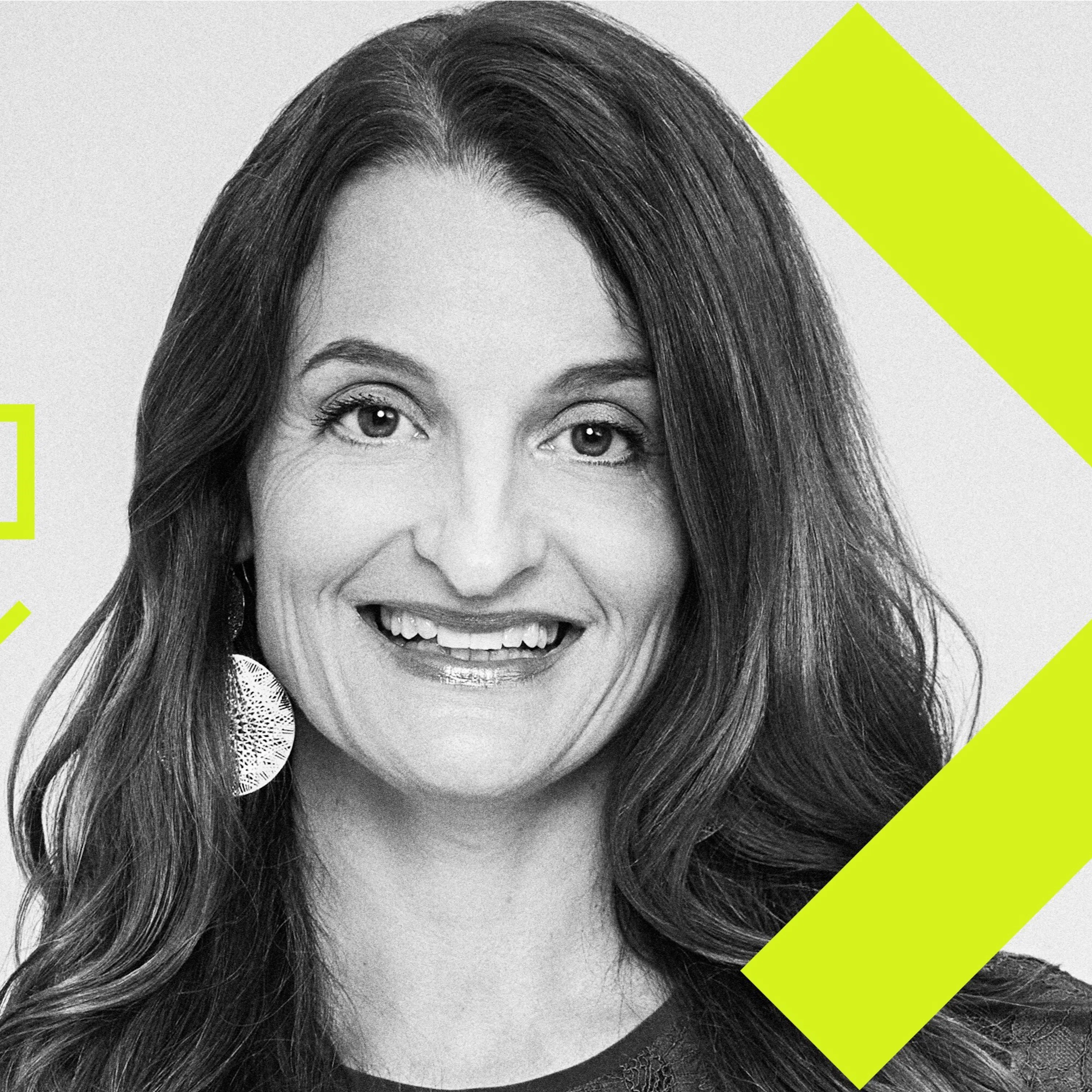
Decoder with Nilay Patel
The CMO is a dying role, says Digitas' Amy Lanzi
00:56:06
Digitas CEO Amy Lanzi on why AI hype is dangerous for the marketing and ad industries.
Loading summary
Transcript175 lines
- [00:01]
A
Support for Decoder comes from Uber Advertising. Whether it's ordering dinner, booking a ride, or shopping for groceries, we live in a world where we make decisions the moment a need arises. But these moments aren't just when people choose Uber, they're when people choose brands. Uber Advertising helps brands understand the context behind those decisions, the moment, the need, and the mindset across mobility, delivery and commerce so brands can show up with greater relevance when people are ready to act. Uber Advertising, where life's movement becomes your brand's momentum. Learn more@uber.com advertising
- [00:44]
B
hello and welcome to Decoder.
- [00:45]
C
I'm Neil Apitel, Editor in Chief of the Verge and Decoder is my show about big ideas and other problems. We've got a special Decoder Today I had the chance to talk with Amy Lanzi, the CEO of Digitas North America, in front of a live audience at the Uber Uber Villa at the Cannes Lion Advertising Festival in the south of France. I know it's a hard gig, but I do it for you. Amy's been on Decoder three times now and she's one of my very favorite people to chat with. She is clear eyed about what the advertising industry really is and does for brands and what all that money sloshing around the ad supported Internet really accomplishes. In fact, you'll hear her say directly that she thinks the traditional chief Marketing officer role is done for, that her job is driving business results using data and analytics. That might sound straightforward, but it was a shocking statement at Cannes, which is where the entire advertising industry gathers every year, drinks and convinces itself of outrageous nonsense. This year, the big trends everyone were talking about were creators and of course AI and Amy and Digitas parent company Publicis weren't holding back when it came to calling out the AI nonsense for what it is. Publicis actually put out an ad before can, listing all of the false promises being made about AI when it comes to advertising. So I asked Amy about that and what AI might actually be good for beyond just generating slop and slop headlines. After all, Meta and the rest of the big platforms were all at Cannes talking about generating more and more ads with AI, something that threatens almost every other company in the industry. Of course, we also talked about the creator economy and how all of the creators at CAN were openly calling themselves marketers, essentially turning themselves into small ad agencies of their own. On top of that, the biggest creators in the world almost always end up launching their own products, something Amy and Digitas see as an opportunity because those companies will need operational scale if they're going to be successful over time. There's a lot in this one. Like I said, Amy is as sharp as they come, and I really enjoy talking to her about how the money really works. Okay, Amy Lanzi, CEO of Digitas North America Live at Cannes.
- [02:41]
B
Here we go. Hello, everybody. I'm Jan Patel, the editor in chief of Origin, the host of Decoder.
- [02:57]
D
Hi.
- [02:57]
E
Amy Lanzi, CEO of Digitas, part of Publicist Group.
- [03:01]
B
I'm very excited to be here with Amy. Amy, we have to stop meeting like this. We only talk during Decoder Podcasts.
- [03:06]
E
I know we do. We have to do this more. We both live in New York. We should get together more like irl.
- [03:11]
B
Yeah. We only travel a long ways to talk to each other in front of live audiences, which is wonderful. Thank you all for being here. Thanks to Uber for having us. I have a lot to talk to you about. It seems like every year we hang out and the entire advertising industry is in a new form of chaos. And that chaos doesn't really get resolved. We just kind of move on to the next form of chaos. This year, it's AI. I don't think that's a surprise to anyone in this room everywhere. Here at can, the conversation is about AI. Let's just get started. Publix has put out what you would call a fake ad, a documentary ad. It's called the Wrong Promises, and it is basically just a series of vignettes of promises people are making in pitches, including, you don't have to pay us until you win a lion, which is incredible. And it says this is real at the bottom.
- [03:55]
E
Yes.
- [03:55]
B
Tell me about what you are hearing in these rooms that are leading to these crazy AI promises getting made.
- [04:02]
E
Thank you for bringing up our fun video. And it was really designed to stimulate conversations like this. And in the business right now, it's kind of crazy. I've been in this business for a long time, and we are seeing all kinds of partners offer wild things in the pitch process different than it's been before. Whether it's all the things that were, of course, hyped in that video, but also just insane commercial deals that are just generally bad for people and the business. And they're coming in all different types. Whether it's about free AI, free platform free, whatever that is creating a dynamic that is not good for all of us in this industry because we all need to work together. It is a people business, and that all of those things really, long term, create a people problem.
- [04:50]
B
Not to get all Toy Story 5 here, but the conversation that you And I are constantly having is about the pressure of the tech platforms on the media ecosystem, whether that's publishers, whether that's agencies, whether that's creators. At some point we'll come to that. But the idea that the platforms have enough scale to promise you business results and then deliver them, whether or not that happens, but they certainly can make those promises, is leading to, I think, some of these outcomes, some of these promises about AI and what it might
- [05:17]
C
be able to do.
- [05:17]
B
Is there any reality to that or is that just a reaction to the pressure the platforms?
- [05:22]
E
Whenever this conversation comes about the promise of AI, I always go back to the promise of Programmatic. How many of you remember when Programmatic was a thing? No more people, it was all going to matter.
- [05:33]
B
No one in this room admitted that
- [05:34]
E
they remembered the Programmatic advertising, right? So. And that was a time when it was all just going to magically happen. And it magically still needs people, still has the nuance of brands and the marketplace and all of the things that we do to define our partnerships and what are going to be game changers. So I go back to that because I feel like the AI story is the new programmatic story with the promise of everything just being absolutely automated. And that absolutely did not happen. And so again, when Programmatic was rising, there were all those promises at that time as well. And now we are living that. But what is different here is it's coming from either agency partners or tech and platform partners. So it creates a different kind of chaos to where you started.
- [06:22]
B
Publicis Digitas. You also have huge investments here. You were early, right? You bought influential in 2024, right? To do analysis of how the creator ecosystem was doing. You have digitas AI, which is two years now, you're into it. How do you, how do you think about those products and those platforms in an ecosystem that is full of these promises?
- [06:42]
E
So for me, and I'll talk about digitasai in particular, we started to make our people better unicorns as we talked about the last time we met. So it was really to say, okay, everyone, look at what's on your desk, like what's in your day, and think about what you absolutely could build an agent to do. And that way we free up our time to do this. So that's where we started. And then what was fascinating is the magical things that were able to be built by the young talent in the industry. That is solving a working problem, but eventually a business problem that still holds. Because every day I always say, as a Gen Xer, I'm like hackers wanted. If you have a hacking mentality and you're curious, you can actually do better things than I did when I was a hacker in that age. So it enables us to use our agents, use our data to get to better ideas, better workflows that are more of a surprise and delight to clients than what you might have brought in the first round. Because you can do many rounds before you actually get to the final product. And that's how you get to the unique outcome.
- [07:46]
B
You can tell that Amy is a decoder pro because she is led directly to the decoder questions. I'm very curious if AI, at least in the enterprise, is a top down or bottom up change agent, but you just restructured digitas, right? You, you put in a bunch of new roles. You have a new Chief Intelligence Officer, a new Chief Systems officer. My favorite, a Chief Transformation officer, he turns into a robot. What are these roles?
- [08:12]
E
When he hears this? Because that's going to make him laugh anyway.
- [08:15]
B
It's very exciting. The toy line is going to be great. What are these roles for? How are you changing the structure of digitas?
- [08:21]
E
You've always inspired me with how do you structure yourself and how do you make decisions? So the first time we talked about it, I had been in this role for just a little bit of time and we had set our culture, which is we're fearless, inventive and generous. That still holds on how we make decisions org structure wise. We needed to figure out exactly what you just said is how do we do things in the the underpinning of the agency that will enable all of our different practices to be able to scale faster, leveraging intelligence. And of course, intelligence is code for AI in this story. So that's why we have our Chief Intelligence officer, which was a pickup from data and analytics into like liberating that into an intelligent platform that all of our agents are built on and then also all of our employees use. The second is systems thinking. So we took the traditional COO role and turned that into a chief Systems officer rule or really redefine both of those roles because all of our client conversations are really about marketing systems. And so you need to have someone that can come in and understand that and meet them where they are. And then we then think about the marketing flows that will marry to the system that works within some of their tech choices, et cetera, as two examples. The third Chief Transformation officer is, and this is a big conversation here is around clients wanting to transform, particularly CMOs transforming into CGOS. What is a CGO Chief Growth Officer.
- [09:45]
B
Okay.
- [09:46]
E
Did you not know that or was
- [09:47]
B
that a. I just, you know, I'm a journalist. My job is not to innovate.
- [09:52]
E
It's unfortunate.
- [09:53]
B
I just ask the questions.
- [09:54]
E
That's why we're good friends. I make up a lot of things. I was just coming from the Forbes CMO Council thing and there was a whole conversation on the rise of the CGO. What that means is CGO's CMOs formerly were really responsible for making marketing magic campaigns, media investment. Now they're responsible for building capabilities and. And they need a partner to help transform their solutions. So it's a people problem as well as a tech problem. So that's why we have that discrete Chief Transformation Officer role.
- [10:23]
B
So you are a data person. You've always been a data person. I'm really curious about that. The idea that the marketing function is so directly tied to business results and I see it on the tech platforms all the time. You and I have talked about this before. Mark Zuckerberg will just look every single one of you in the eyes and say, I'm going to kill you. And he does it without remorse. Right. His vision is that you will just pay Meta and it will make creative for you. It will find the audience for you and they will deliver you business results. And almost everything in the middle, from money in to money out, gets automated away by Meta's intelligence stack. The idea of the Chief Growth Officer feels of a piece with that, right? That the marketing function is now a business function. It needs a data layer. It needs all these things. Where do you see the creative fitting into it? Where do you see the classic form of brand building?
- [11:10]
E
It's a fundamental part of that capability that needs to live like the marketing capability now as a system. So brand building and the fundamentals matter more than anything. What you stand for and how you show up, what you're the answer for, especially with LLMs, is really important and it has to be authentic for the brands to grow. That's still the case. You just can't stop there. It needs to be attached to a system and ideally you have some sort of data intelligence layer. So I'm learning more and more about you so that I can then redefine my marketing stories to then reshape how I'm showing up. If it's not working, if it's not selling more candy, if it's not selling more cars, how do we change faster versus A CMO was responsible for building these campaigns and then moving on. And that is not going to Be that that role is, is a dying role. And it should be. It should be. Marketing drives commercial value, marketing drives shareholder value.
- [12:05]
B
What you heard here for CMO is a dying role.
- [12:08]
E
The previous version of the cmo. Sure. Because if they're not just like the whole, we are in a chaotic world and the rise of the. We're in an area of convergence. So if you are a CMO and you're not thinking about your data layer, you're not thinking about your full stacks, you can get closer to consumer and get to better creative, better use of creators. You are not going to be doing well in the future. So I think whether it's CMO 2.0 or you're moving into that CGO role, that's really the future of that type of function in an organization.
- [12:41]
B
I feel like the audience here, Ken knows this, but for the decoder audience in their car listening to this, the conventional wisdom was that CMOs only ever had two years on the job. Maybe less. Like you were dead the moment you showed up. You got to execute one big campaign. You found the bathroom and then you were out.
- [12:56]
E
Yes.
- [12:56]
B
I hope you heard everyone in this room laugh. That was, that was like the most knowing laugh in the world. This seems like a much longer term role. Like if you show up as the new CMO and your job is to transform the entire business from the bottom up over and over again, it's a lot of instability. Do you think these are longer term roles?
- [13:13]
E
If you do this right and you create a system, a marketing system, you will, you will be able to live beyond the two years path because you're creating a growth engine. If you are only wanting to do two tentpole marketing campaigns, that's probably not going to go well. After two years,
- [13:33]
C
we need to take a quick break.
- [13:34]
B
We'll be right back.
- [13:47]
C
Hi everyone. This segment of Decoder sessions features Helen Havlik, the publisher of the Verge, and Christy Argilon, Uber's global head of advertising. I think you're going to enjoy this conversation, Christy.
- [13:56]
E
Just to start, when did Uber launch advertising and how is it going?
- [14:00]
D
It's been a really interesting journey for Uber. Most people came to know Uber as we alternative to a ride hailing service. But the other side of the platform is Uber Eats. And the Uber Eats side was where we first got into advertising with simple sponsored listings so that any restaurant on our platform could actually run ads. We started to realize we have this platform that is full of people going places and getting things and there's no better way to show brand relevancy than to insert your brand into decision making in the moment that it's happening and to help facilitate and provide offers information services at the moment people are making decisions.
- [14:46]
E
What makes Uber advertising unique as a product?
- [14:49]
D
Well, one of the things that we keep seeing in our research with consumers is that there is this enormous trend to use digital as quickly as possible to make decisions so that they can get back into the physical world. And we see that over and over again on the Uber platform. People are looking to quickly find a ride to get to a bar where they can meet friends and watch their favorite football team together. And so this pivot from the digital world, enhancing what people really want to do in the physical world, is a role that Uber plays that's incredibly powerful.
- [15:34]
C
We're back with Digitas CEO Amy Lanzi live at can discussing the ways AI is changing the marketing industry.
- [15:42]
B
I basically have two themes that I want to talk about. One is data and scale and one is creators. This kind of sits right in the middle of them. And I just keep thinking about this phrase that I've heard Meta used the most, but the other platforms use it a lot too, and it's creative is the new targeting. And I hear that. And I don't make ads. We make two podcasts a week. We don't do scale at that, at that level. But I hear creative is the new targeting and I think that is a demand for output like no one has ever heard before. Right. We're going to find your customer for you. You just feed the machine with as much as you can. And it seems obvious to me that your two choices in that world of creative is new targeting. I think Meta's Andromeda system is kind of the. The biggest example of this is either you're going to feed it with AI creative, you're going to let them do it, or you're going to have your own AI creative system, or you're going to let a million creators and influencers
- [16:31]
C
do it for you.
- [16:33]
B
How do you plug a growth engine into a world where that's what the platforms are all saying, the more you
- [16:37]
E
are closer to your consumers and all the places they're spending time from a data identity, how you're doing your. However you're systematically doing that is the most important thing. So you can see how they are reacting to said. What did you say?
- [16:51]
B
Creative is new targeting.
- [16:52]
E
I've never heard this phrase. I don't like it.
- [16:53]
B
Yeah, I figured.
- [16:54]
E
It's terrible, right? It's terrible for our business. Creative is targeting only because it sounds horrible. Creative is emotional and lovely and magical. How can it be emotional and magical if it's targeting you? Those are two words that don't go together. So, to me, the brands that I think are doing really well are deciding not to do that or to do it in a way that feels so contextually relevant because they know so much about Gen Z on Meta that they've decided that they need to do this to be able to drive velocity for a certain type of brand, and that feels fit for that brand. But I think we are not in a world where we need more content. No. Does anyone want more content? We are not in a world where we need more content. So that idea, creative targeting, assumes that we have endless amounts of content and impressions as a concept. And I think those are two worlds that still need to be decoupled, but when they're put together, it needs to be in a way that you are constantly learning. How did that do? Did I gain more attention from a certain type of growth audience I'm trying to get to?
- [17:56]
B
Can I push not to support Matt's ideas here? I'm gonna do it. Let me just make the argument, because you and I have talked about it before. The way in particular Mark Zuckerberg talks about it is at some point they know more about the viewer of Instagram than anybody, or they want to know more about the viewer of Instagram than anybody, and they will just deliver the right creative to that person at the right moment. This is the same argument as Programmatic, only now they have acres of GPUs with which to do it. And the argument there is, yes, the army of unpaid teenagers will make the fun stuff that you watch, and the advertising will just show up magically on the platform and find the right person
- [18:39]
C
at the right time.
- [18:40]
B
Again, I read that as you should just let Meta make the creative for you. You just give them a picture of the shampoo bottle and they will put it in the right place on the right background. For me, it will be pictures of trucks jumping over things and exploding, and then shampoo will appear at the end, like, that's the shampoo for me. It would work. If any of you need an idea to target me specifically, that would work. That is like no agency is ever going to make something that niche.
- [19:05]
E
Right.
- [19:05]
B
But you, for example, publisher spot Liveramp to take all that data out.
- [19:10]
E
Still in the situation. Yeah. I mean, it's out there, but it's not. The deal is not done.
- [19:15]
B
So presumably the goal of buying Liveramp, which is a giant Data platform is to lever up against Meta and say, actually, we know as much about these customers as you do. Right. We can distill information across all the platforms and we will actually do a better job for our clients of placing the creative in the right place, the right time. This sort of implies that Meta will participate. Why would they do that?
- [19:36]
E
Because people are complicated.
- [19:38]
B
Yeah.
- [19:38]
E
And today, you know, look at how often on this beach there are different players on the beach. Everyone doesn't stay in this position forever. And people are complicated. I would offer that. I think if I started seeing your wonderful ad 50 times, I would say, I don't want to see this anymore. And I actually don't like that shampoo. That's what happens when it's just left to go on its own without someone thinking about suppressing messaging, without understanding consumers better. Because you actually win hearts and minds when you're doing something that's not as expected. Because people are complicated. So I think that there is a moment in time where to us, it's like we say to our clients, you need to work with all of them because all of us spend time in all these different places for different reasons. Why you choose to spend time on Pinterest vs. Meta vs. Amazon vs. Walmart Connect. All of them are different roles in terms of how the platforms work for you and your life. So why would you put all of your dollars in one place? And so for me, those players are shifting in and out depending on what we think that growth audience is doing and how they're thinking about intersecting with that category.
- [20:47]
B
Are they good at participating in an ecosystem in that way? This is something that strikes me every time.
- [20:52]
E
Some of them are and some of them are not. And the more they start to see headwinds, they are more leaned into participating in a way that we, you know, ideally we want to do data collaboration with these partners because it's better for our clients that we can say we knew more about this growth audience on platform. And I'm not going to say X because that's not, I'm not saying X on platform Y. We know more about them.
- [21:18]
B
No one knows anything about us.
- [21:20]
E
Right. And this is how we're going to grow your brand. And that's a good joint story for a platform and an agency partner to come in to talk about because we've been able to actually share data and look at that in a way that's, that's beneficial for the consumer.
- [21:34]
B
In the end, I see a lot of, I mean, there's only two business models right? Bundling and unbundling in agency world. There's a lot of bundling going on right now. Right?
- [21:43]
E
There's a lot of bundling.
- [21:44]
B
Obviously. Publicist is huge. Omnicomp ipg, CAA is out here. They've invented creators this year. I don't know if anyone heard. They're very proud of themselves, but you know, they have 250 million doll fund to take stakes indirectly in creator businesses. There's a lot of scale, there's a lot of bundling going on. What do you think is driving that?
- [22:03]
E
It's the desired state of a system. So for me, hence why we have a chief systems officer, there are capabilities that we built. The last time we met or two times ago, I talked about building the commerce capability and the acquisition of Profitero that I led. That was really to get to a unique set of data so we could build a better commerce capability, so we could advise our clients on how they should be investing in some of these retail media partner spaces at the time. How do you win? The digital shelf was really the business problem to solve when we made that acquisition. That holds true for the acquisition of Influential. How do we create creator as a channel? How do we harness the creator in a way that's also easier for clients? If you don't bring those things into a bundled offer, it's actually really hard for clients because there's seven different versions of Profiteer are calling on them. There's seven different influential partners that are those types of partners that are calling on them. And then you're now looking at a distracted set of technology or decentralized and it's again not tied into a single, ideally data identity spine. So the more you have them connected, the more you can actually say, did this really work? Did it really drive someone to buy more things?
- [23:16]
D
Yeah.
- [23:17]
E
So that's the reason why the capabilities are now being so think about them as capabilities versus assets. In this, this conversation, I talked more about influential.
- [23:25]
B
That was a big acquisition two years ago. I'm assuming it's been integrated.
- [23:28]
E
Yes.
- [23:29]
B
That was the creator play for you. I know you were instrumental in that acquisition. It feels like the creator economy has taken on a new shape this year. Right. We are just hearing more and more about the biggest creators in the world and the biggest platforms. Influential was much more of a scale play. Right. It had an idea that you could go and do a lot of analysis of what was happening on these platforms at like massive scale. How's that working out?
- [23:52]
E
It's working out very well because we have taken their technology and connected it to our identity so that I can now see you, I can see who you follow and then I can understand how to get closer to you or have the type of either the right creator choice or the right creative decisions that can enable me to get you to feel an emotional connection to my brand. Creator as a channel is also super efficient. You can also have creators talk in a way that is a little more authentic to the audiences that a brand maybe can't go out with that message. But it's very complicated. So before we had influential it was very hard. Every different brand partner had a different creator solution and we use, we still are interoperable. We work with other ones that are out there like creator iq. But it is easier for us if it's connected into our system because then we can get to see if it actually worked faster.
- [24:48]
B
What's the step after the creator interaction? Right. You open one of these platforms, you scroll some videos, you see some creator telling you to buy some product. Is it then to go search, is it then to go open a retail app directly?
- [25:04]
E
You mean for the consumer or. I mean it depends. We're getting. One of the hottest topics we're getting right now is TikTok shops which is an interesting. Another topic we can have another day. And that's because creators are saying don't you want to buy this thing? And it's. They it's a one click opportunity to go get it for us. When some brands that are more used to selling through traditional retail channels, it's a pretty big lift to build that out. It still is. But the desired state is I want to buy your kit of parts, whatever you're talking to me about in your creator video and I want to be able to buy it and do it then. So that's a move we're starting to see. We also just see follow me and learn more about me as a creator. It's actually a cheat for CRM because if I now know if I'm a brand and you're one of my power influencers and I want to really have an owned relationship with you, this is a way for us to get closer to you as a brand.
- [25:56]
B
The reason I asked that question is I've run around the past two or three years asking every web host, web company, why should anyone make a website? Now if I was a new creative, I was starting the verge over again in 2026, I would not make a giant fancy desktop website. I would probably be a tiktoker. Yeah, my dancing is pretty good. It's not great, but I would probably start there. And the answer from all the web companies I've gotten is, oh, because you want to do retail and you want to escape fees on platforms, right? You want a different fee structure. And the best answer I ever got was from the CEO of Squarespace who said, a lot of people start websites with us just for the appearance of legitimacy.
- [26:34]
E
Yes, right.
- [26:35]
B
Having the dot com or I guess the AI now gives you an appearance of legitimacy that a customer will go and transact against versus just dropping a TikTok shop and who knows what sort of TEMU product you're going to get. I look at that and I say, okay, you're going to go to the web, right? That's a move everybody wants you to do. And the web is fundamentally under threat by agentic search, by AI overviews, everything everyone knows about. Do you see that changing in your funnels?
- [27:00]
E
Interestingly, we are seeing more and more briefs for revising websites to do like geo. Yes and no. It's actually pretty interesting. I mean, this is something that, you know, the market talks to you, clients come in, they look for new things. I mean, who would have thought if you asked me at the end of last year, are you going to do a lot of website work, I would have said no. But we've seen a lot of it because two reasons. One, the future of websites are knowledge sites. Websites were built to contain a bunch of random information that didn't really enable you to show up well in a single response to a prompt. So part of it is that, but also it's like if you're going to be a real brand and it's literally your legitimacy point, you really need to have your own assets. You want to own that. And eventually you don't always want to have to funnel everything through and package goods through retail partner. You want to be able to have your own relationship. That doesn't mean everyone's going to buy from that site, but the idea that that is a site, that one does its job of feeding the LLMs but also builds your brand and gives information. Old websites pretty much weren't really built in a way that makes sense for modern consumers.
- [28:09]
B
Who are you giving information to? Is it consumers? Is it AI agents? Is it just Google?
- [28:15]
D
No.
- [28:16]
E
I mean, I mean, yes, if you have to build. We build for a machine and humans.
- [28:20]
B
Every time I go to Google, I o I sit down with Sundar Pichai and I ask him. Every single demo of search for years now has ended in a transaction. I don't know if you have noticed this, every Apple demo ends with trip planning. Every Google demo ends with trip planning that ends in buying shoes. And you realize like, okay, like the audience is partially Verge readers who just love tech. Partially, it's other developers. And then a huge part of it is industry analysts and their investors. And they want to see the revenue return on every single feature that Google announces. And so they all end in transactions. And over time those transactions have taken place closer and closer to Google's core platform. This year they announced what intelligent shopping carts that are just going to track prices and execute a purchase for you. You're talking about rebuilding websites. There's a world in which the website is just the backend database for a very complicated Google system that is doing all of the things that you're talking about. Is there a hedge against that or is that train just on the tracks?
- [29:17]
E
I think it's a little bit of a hedge against that. I would say that for many of our packaged goods friends, one of their biggest threats is Amazon. That is the Google on the story. Because if you are so dependent on a partner like Amazon that also can, and we like our partners partnership with Amazon, but they also are a place where you're. Because of the size of their marketplace. If you've, you've built a brand that has a, you know, a storied is a known brand. Some of these marketplace brands can immediately win because of how you've invested and built the category. So you need to have your owned assets to be able to think about what is your next story, what is your next move so that you don't get commoditized. So I think that applies to both Amazon and Google to a degree.
- [30:01]
B
Do you think they're competitors in the space in that way?
- [30:03]
E
I don't see. I don't know. I don't do a lot of any shopping on Google, so I don't know if I would compare them to.
- [30:10]
B
Have you ever planned a hiking trip on Google? They're great at it.
- [30:12]
E
Actually, no. I use this thing called mindtrip. It's my favorite that I learned in the New York Times. Do it. You go to mine trip and it'll magically plan your trip. It's pretty good. It can do most things and then it breaks in certain areas. Yeah, yeah.
- [30:24]
B
But this idea that you're going to have a bunch of agents just planning the trips for you, buying all of the gear that you might want or tracking prices for you, which is another big promise that everyone has, and then the brands might pay for preferred results in all of those spaces. That does seem like a more direct competitor to Amazon than not, right?
- [30:43]
E
Absolutely it does. I just think there's the planning part and the transaction part. Those are two different things. I think on planning you're competing. Amazon's trying to get up, they're going to get added transaction into that planning component. Really, when you think about all the things that they're doing with their own creators and even just their move on full funnel and content, that's really to make Amazon your total destination. But I think the agent to agent buying space is still. The concept of trust is still very important here in what you're willing to do and not to do. I think is as a consumer is still tbd.
- [31:17]
B
Here's my wonkiest tech question for you. Google is very, very proud.
- [31:21]
E
Oh Lord. Okay.
- [31:23]
B
Because this is again, is AI top down or bottom up? I sort of understand how it's bottom up. Right. We're going to empower all of our smartest people to do agentic things in our workplaces. And then there's top down, which is Google is very proud of its universal cart standard. Right. Where agents are going to be able to access carts across domains and compare prices and do all that stuff. That's a corporate decision, that's a strategy decision. And they're pretty proud that everyone's on board. And their argument to me is, well, we just needed something. So this is the something. And I hear the tech industry say we just needed something. And I think, well, of course, but it's the something that you control and everyone might need something, but no one is thinking through at the end of this, one player will control it. When your clients and partners think about, okay, we're going to adopt these standards for agentic workflows, for how commerce will be done in the future. Is there any pause to say, okay, Google's going to control all the standards?
- [32:14]
E
Again, yes and no. I don't think the clients I speak with today are not as worried about Google as a commerce partner as they are about the transformation of their more traditional partners, like an Amazon or other retailer that have transformed from being a retail partner to being media partners.
- [32:32]
B
When that transformation is occurring over there, the media partners who want to Amazon,
- [32:36]
E
it's changed this dynamic of what a retailer does and what a supplier manufactured, brand does. So that dynamic has changed and that makes the negotiation between they need both each other to grow. So when they've transformed to media partners, this changes that equation significantly. This is a whole retail media conversation that is still because. So are they a media partner or are they our retail partner? Yeah, that's much more still of the conversation. I would say that changed the dynamic
- [33:03]
B
of that at all.
- [33:05]
E
Yes, because the more AI oriented products they have, it puts more focus on more media investments with them because of these magical products. It's not necessarily solving a core shopping problem.
- [33:24]
C
We need to take another quick break.
- [33:25]
B
We'll be right back.
- [33:35]
A
Support for decoder comes from Uber advertising. Whether it's ordering dinner, booking a ride or shopping for groceries, we live in a world where we make decisions the moment a need arises. But these moments aren't just when people choose Uber, they're when people choose brands. Uber advertising helps marketers understand the context behind those decisions, the moment, the need and the mindset across mobility, delivery and commerce. So brands can show up with greater relevance when people are ready to act. Uber is the largest mobility and delivery platform in the world with billions of insights from millions of people taking real life actions when they ride and when they order. And because people are constantly making everyday decisions with Uber, brands have the opportunity to connect in ways that feel timely instead of disruptive. Whether someone's heading to the airport, ordering late night food or or planning their weekend, Uber advertising drives brand impact through actions instantly, intuitively and in sync with people's lives. Uber advertising, where life's movement becomes your brand's momentum. Learn more@uber.com advertising.
- [34:54]
C
We're back with Digitas CEO Amy Lanzi. Before the break we're talking about how the advertising and marketing industries are contending with AI and fundamental changes to the web. Now I wanted to dive deeper on the creator side of the equation and specifically what Amy thinks about the growth of creator led businesses.
- [35:11]
B
Let me flip to the other side of this because so far we've talked about tech and data and scale and I think that is the promise of AI, right? We're going to automate everything. It is going to be magic. We're going to do programmatic again. All you need is data and they need your money. The other side of this, and I'm just walking around can is creators everywhere, right? Something vastly more human, vastly more bespoke my theory and I was just wrong on this. I caught to it. I thought creator rates would fall drastically this year, right as there was more AI content, as the platforms got more and more punishing about what would work on their algorithms as they started doing their own content. Instead I look around and everyone here at Cannes is just so proud about how cost per minute a video is. Skyrocketing again. Yeah.
- [35:58]
E
What's going on Again, I think it's all about supply and demand. And so when you get to certain. Once creators start moving into a more famous space, then they're suddenly it's. They're worth more. And the last time we talked about this, we talked about the difference between a creator, an influencer and a celebrity. And I still think that holds true. And there is more. Unilever went probably this time last year saying that they were going to spend 50% of their dollars in the. With all creators versus creative. To me, what is an interesting conversation is what is creative now? If you're putting it all in the hands of a creator, what does, what does it mean to. To be a brand that delivers creative? And how do you make those things work together? Yeah, because we, we can't have another thing that is also prices is out of the market. And there you get to a point where you're. You're ceding so much control to the voice of the creator that that's probably not going to build your brand over time.
- [36:52]
B
The creators see themselves as marketers, at least the very best ones here. Then they're here at Cannes.
- [36:56]
E
Small business.
- [36:57]
B
They are. They're all small media businesses of their own. Some of them are very large media businesses of their own. And they are very open that what they do is marketing for brands. That comes right up against agencies. It comes right up against your creatives. All the creators I know, they want more control. Right. They want the brief from the brand. They want business results, say leave me alone to do it. I'm just going to do whatever I want to do it. What's that dynamic like as you start working with the bigger and bigger creators?
- [37:20]
E
We still hold true to brand fundamentals. Strategy matters. What your. The consumer insight is for that brand. That has to be something that's an exchange between a brand and a creator in order for the creator work to really build what's unique about that brand. And so it's still the idea of freedom in a framework that that creator is briefed on. They control how they're going to do it. But there are some sort of tone and voice and things that if a creator is actually going to buy into this, they need to buy into that. That still is really the exchange. That's always been the exchange. Especially like when. Do you remember when UGC started in tongle? Do you remember that whole thing? It was the same thing where we. I was working on Johnson's Baby and we were trying to figure out how to really create authentic, first time expectant mom stories. And we had this great debate about how we're going to get the new creators. Like mom bloggers was the language to get them to tell these. Right, to tell these stories. And so we had this, like, this is what the brand stands for. Here are some things, but you need to buy into this and believe in it. That exchange still exists. We just call them creators now. And then you can do it in a more scaled way through a system like influential.
- [38:27]
B
I guess maybe my new prediction is that we'll see a more barbell shaped creator economy where the biggest creators are making more and more money than ever. And kind of the middle gets squeezed. Either you got to get big, you got to be able to command rates because you're a celebrity, or you end up towards those UGC rates, right? Where you're just doing infomercials on TikTok. And that's, that's the business. What's left of the middle?
- [38:49]
E
It's a really good question. I don't know the answer to that. I do think there's so much demand for this space that that middle. There's a lot of demand for the middle. So you could use it as a way to eventually launch yourself into this, you know, upper echelon of creators. Someone said to me, I heard this, that creators are daytime stars from soap operas. Which I was like, this is pretty interesting because they're in your house, because they're just on. It's not noise, but they keep you company, they keep you busy. And then all of a sud. One of those people becomes a movie star. Which to me is a little bit of that middle of what you just articulated where we know the creators. I think I've watched my daughter over our years, I've watched my daughter and all of her creators that are now. Emma Chamberlain was a creator on YouTube that's now a star that's doing Estee Lauder ads or whatever she's doing. She's really a celebrity now, but she started as a tiny creator making adorable shows on YouTube.
- [39:48]
B
One of the things that you and I were briefly talking about before I came on was at some point the creators hit scale where their businesses need to be businesses, right? And that's where you might need a new. An agency to come in and actually operate your business. That scale is still pretty huge, right? Like it might just be. Mr. Beast is that scale and he operate a full business. But we see, I see lots of creators. I think it's fascinating that the creative economy is the only one where people routinely transition from selling bits to selling atoms. And Right. Like it's crazy to me that the Paul brothers are like bottled water is a good business to be in historically, not a great business to be in. Like shipping water around the world is, is vastly more expensive than just making one more video. Yeah, but there's no business in making one more video that scales. You have to make physical products and sell them to people. And that scales, is that becoming a bigger and bigger line for you? We're going to go find the biggest creators and make them products and scale that, that we.
- [40:43]
E
I. The last time we met or two times ago, I had predicted that there at some point there are going to be these creators that become enterprises, let's say a Mr. Beast that actually needs an agency. And it has happened. We are now starting to see briefs from these scaled started as a creator that have now turned into enterprise businesses where they need an agency partner and they also need someone to help them to figure out how to invest their media so they can grow.
- [41:08]
B
Is that just.
- [41:08]
E
They're like real brands.
- [41:09]
B
MrBeast himself cannot flip over the bars at Walmart like he was doing at the last time.
- [41:14]
E
I think it's you need. Just like people need consultants, you need someone to help you.
- [41:18]
B
No one has ever looked me in the eye and said people need consultants before.
- [41:22]
E
I call myself a consultant. Look me in the eye. Yes, I have.
- [41:26]
B
Your Accenture just bought Whaler. Which is like an all time nonsense decoder phrase, but okay.
- [41:31]
E
Yes, yes. Okay. So for me, at some point you as an enterprise owner or as a, as an owner of a company, you need help to figure out how you're going to get to your next growth path. And this is what's happening with some of these businesses, these creators that have turned into an enterprise that are wondering what is next. Gee, it's expensive to ship water all over the world. What do I do? How do I do this? What types of partners do I go to? How do I figure out ways to grow my brand in unowned ecosystems? Because that's the quickest way to grow your brand.
- [42:04]
B
Yeah.
- [42:04]
E
Not just in your own channels.
- [42:05]
B
There's this term that I've been hearing called the influencer Cliff. I want to give credit. The Tiktoker came over there is Carmen Vicente. I'm only giving her credit because no one gives me credit for Google Zero. And I'm trying to just reinitiate karma into this world. But it's her term. It's great if you're Listening to this. We'll put the video in the show notes. But her thesis is that creators, they can do the branded content because the audiences are there for the real content and they will tolerate the ads in support of the work that they're there to see. And that when the creator transitions to selling their own product, this misaligns the audience from the creator. And when the brand integrations get too overpowering, it misaligns everybody. And then the creators have to issue apologies and they've fallen off the cliff. I see this all over the place. I see this with tech creators, I see this with fashion creators. Once you start shilling the product directly, your relationship changes. Something goes horribly wrong. Maybe you backtrack all the way. There's some class of creators that's able to do it right that makes the transition to selling a product directly. You've seen a lot of these. Now you're seeing the briefs. What qualities let you take that next step?
- [43:08]
E
I think a unique product is really important versus a me too product that a creator has decided they wanted to sell. So that's important. So I think, you know, you've seen some creators that if they're sports or they're an athlete and they're moving into a space that they feel like this is. This is something that made them a better athlete and is a unique part of the market. If someone's falling for that, then that makes sense that you would buy into that. When it feels like someone woke up and wanted to just put their brand, their Persona on a certain brand and it doesn't feel like it's their. That it's been their talk track to you as your sort of friend, then it doesn't work.
- [43:48]
B
Do you see any. Any particular products that are going to change categories?
- [43:51]
E
I think some of the, you know, one of the things that I think has been really interesting that is not talked about. It's actually. It's a unique example. It's more of a celebrity example. Is brands like Fabletics, Kate Hudson's brand, super interesting. It's right in her, you know, lifestyle play and in her desire to be healthy and all of that. And that is. And it was really her launching Fabletics, not her endorsing Fabletics. That's not really a good creator example. I have to think more about that one.
- [44:17]
B
I'm very curious because I think that's coming particular rates at the top end of the curve go up. The idea that you can just launch your own brand and collect those margins directly. I get it. It makes rational Economic sense. But I'm wondering if the audiences are going to take that at scale.
- [44:31]
E
I think it's very. Even if you just look at traditional brands that are trying to scale DTC like brands, it is very hard to do because it's very hard to be found. And the distribution part is very expensive. So there is a reason why Walmart is incredibly successful because they've solved the route to consumers.
- [44:50]
B
Yeah.
- [44:51]
E
And that is a. That is very challenging and expensive to try to build that out, even if the product is incredible.
- [44:56]
B
You mean distribution of product?
- [44:58]
E
A product? Yes.
- [45:00]
B
Because I was going to ask you, you talked a lot to the web. I feel like I have to ask you because I brought up Google zero. Is that true in your world as well? It's definitely true. On the publisher side that traffic from Google is going down. Is discovery traffic to all those websites
- [45:12]
E
going down as well to publisher websites? Yes.
- [45:15]
A
Yes.
- [45:15]
E
We are definitely seeing a change in partnerships from our publishers that are trying to understand how they can create custom content that is not as dependent on search, but is definitely something that is a big conversation that's happening here. And I would say in this case, if you are a publisher and you really have an authentic, true voice, people will follow you, they'll come find you, versus if you're trying to fight it out in search, that's going to be very difficult.
- [45:41]
C
Difficult.
- [45:41]
B
All right, well, I'll be in the bar at the Carlton later. If you want to find me, I have a lightning round for you. Okay. This is.
- [45:46]
E
This is a lightning round.
- [45:47]
B
This hasn't. No, this is the depth. All right. I have talked to a lot of tech CEOs, AI CEOs over the past year. Furious debate over whether AI has a marketing problem or not. Sam Altman will say, we gotta do better marketing. We gotta buy a podcast for $200 million. Great haircuts in those guys. Like, I think about them every single day. I don't mean this as an insult. Those are some of the best haircuts in the world. I'm working on it. I don't know if $200 million of podcast haircuts is going to fix it for OpenAI. Sunar Pichai will tell you it's not a marketing problem. Satya Nadal will say we have to earn social permission. Do you think AI has a marketing problem?
- [46:21]
E
I think AI is misunderstood. So it's a marketing problem and the problem it's solving, meaning AI is. And I'll say that this is one of my favorite people to follow that talks about AI my friends here are going to know, I'm going to say is Shelly Palmer, we follow Shelley Palmer and he talks about, he issued something out about AI being electricity and how electricity is really what fundamentally changed the industrial revolution and how the companies that were fast, he referenced Ford in this to really reshape how they work and we're able to get to more efficient production as well as speed to market will win. And I think that's the lost conversation on AI which is for me, if you are able to all of us have too much to do in our computer, in our desktops. Think about it. So if you can use AI to do those things and you don't call me because you're like hey, did you clean out your email box? Like things like that are not necessarily game changers that are advancing all of us. And they also it's a lot, we have a lot of busy work because of all of the work is distributed everywhere. So the more we can use AI to connect those things and get those things done enables us to do more things like this. So I think that once we use AI to transform the way we work and to be more efficient in how we're getting to the outcomes, it'll then make time in all of our lives to do the things that are going to be game changers. So I think it's a marketing problem and a misunderstood problem.
- [47:48]
B
Is that going to stop the kids from booing at college graduation ceremonies?
- [47:52]
E
I think so. Because right now if I my daughter's a third year they're worried about their jobs because all they hear so to your point on it, press problem or PR problem versus marketing problem is that AI is going to be the thing that replaces all of them. I would say we want new young talent because if I watch my 12 year old, he's a million times he's been doing Google Slides since he was 8 so he can make because of COVID they got all of them got right into Google classroom and they all learned how to cowork and use many different apps at once and produce presentations easily. So to me, anyone that's coming out of school, we want, we want bright curious hackers. We're not, not hiring them because we need them. We need people is the lifeblood of our business. Yeah.
- [48:38]
B
Do you think AI creative is going to get good enough?
- [48:41]
E
I do not. I think minds and complexity of humans makes great stories that you are attracted to. I'm not using the word creative, I'm using stories. I think AI enables you to be able to get to those concepts faster or to get to higher production more efficiently. I went to an event at the Palais team that was speaking and it was fantastic. It was a case for Virgin Cruises and they were talking about building these beautiful long form content stories. And the creatives were talking about how they used AI to be able to get to the concepts faster, curate from static art to digital art, to really make these beautiful multimodal boards to bring this to life faster. But it wasn't the core of the idea. They had thought they had used their brains to come up with the idea.
- [49:27]
B
You know, it's interesting in Arne's room we do a lot of first drafts now with AI of art not writing because it lowers the stakes on saying things are good ideas or bad ideas and just that has empowered people to have more ideas. I see a lot of that. I would challenge you. I think at some point the bottom end of the creative, the UGC world, that stuff gets taken over.
- [49:49]
E
I would say so for me, everyday creative. I'll give you an example. Product display pages that are. When you search on Walmart or Amazon and that page that it gives you all this information that if it's not done with robots, you're not doing it right. Because that is a. That's like looking at the back of a packaging and if you really do it right, you are, you can make it dynamic so it knows what you bought the last time and it can be magical. But that's like everyday creative that we need in order to get to personalization. We should be using those tools to be able to do that versus someone making those in an analog world, which is where we all started on that. So for some things. But I think when I think about big creative and storytelling, it still needs humans.
- [50:30]
B
Yeah. I've asked you a GEO several times. I'm asking you in lightning round format, is this just another wild goose chase geo?
- [50:37]
E
Yeah, no, I think it's. Well, I think it's a. For certain platforms, it's a recast of search. We're seeing the. This happening where we, you know, you need to be able to be. Instead of being found, you need to be known for. So that's the GEO response. But I also think it's a better curation of information. I think it's harder work on marketers because you need to be figuring out how you are leveraging Reddit or all these other different places so that you are showing up in a positive way with the LLMs. But I do think if we've, we've all been talking about the concept of personalization at scale. We should be delivering on that so GEO allows us to do that.
- [51:15]
B
Have you had to change your SEO practice to account for that?
- [51:17]
E
We've had talk about a practice that you thought was not going to be. You know, when you look at the capabilities you have and what you don't think is going to be continued is going to be a high growth engine. Our SEO team has exploded into. It's one of the number. In addition to new websites. This is a big one and that is really a conversation around influence. So it's how you're showing up and how you're also influencing LLMs when you actually get into that.
- [51:42]
B
Is that something you can measure? I worry that LLMs are inherently sort of non deterministic. Every result is different. Do you have a system measuring this?
- [51:50]
E
We do. We do have an audit format to see what is your share of voice within that. So you can sort of identify where you are in the moment. But it's a movable feast in comparison to share a voice for search. Yeah, but it is something that we have an audit so we can start to see like what are the different levers we need to be pulling. And by the way, the LLMs are also fed by different things. Recently one of the new ones is long form YouTube content. That kind of makes sense.
- [52:16]
B
That tracks. Why do you think we all make podcasts now? Everyone's just trying to get to three hours of YouTube content. I don't know if you can have it like a lightning round question that starts from a place of existential dread, but here we go. I feel like we're all here in the do you all see Adam serious post about customizing the Instagram algorithm two weeks ago? This is maybe one of the most important posts in the history of media. I'm not kidding. And of course he issued it as like an Instagram carousel, one of the least consumable forms of media that you can possibly have. It's also on threads. If your brain is broken and you use threads, you can go look at it there. It's very long. And it's about how offering the ability to customize the algorithm was previously impossible because no one could describe the series of matrix multiplication equations that led to your algorithm showing you a piece of content. Except LLMs chem now. Right. So it can tell you why you're seeing content in a very direct way. And then you can talk to the LLM and it can customize the algorithm for you. And he said this is great. And we think this will give people a sense of agency. And then he went on and he was like, soon I will customize all of Instagram for you. And the app will be different for every single person. Some of the experiences will be interactive, some of the literally UI controls will be different. How we organize, everything will be different. And you can see how this is the obvious future for us. And then he went on again and he said, this might be bad. This might ruin the shared fabric of truth that we all rely on every single day. Which for a meta executive, remarkably prescient. But he didn't say he was going to do anything about it. He was just like, here's what I'm going to do to you. I look at all of Cam and I look at all of our talk about the creator economy of measuring the data and I say, Adam Mosseri is going to make Instagram different for every single person. That is his stated goal. He said it two weeks ago. And he knows that this might distort literally our shared sense of reality, like the media experiences we all have. This is the Lightning round question. It was a big build up to Lightning round question. Is that good?
- [54:06]
E
It's terrible.
- [54:07]
B
Okay, is there anything we can do about that?
- [54:10]
E
Not engage in it.
- [54:12]
B
How do you not engage in Instagram?
- [54:13]
E
If I told you about my, you know, my oldest stepson who is an absolute, it absolutely analog. That's why I think we are seeing more and more consumers. The more you see that, the more you're like, think about it. If you sat down in front of your TV and it was like, we've made all these decisions about you and you're only allowed to do this based on what it feels like. Black mirror. And if that happens to you, you would say, I'm not going to engage in this anymore. I'm going to go read a book. And I think and it's also counter to the value prop of, you know, a social platform around community. It was designed to make this connected world. So that's the most disconnected world. People are lonely and isolated. So the more you're just in your doom scroll, it will be terrible. So like we need shared community. I think one of the things that's really interesting and a bright spot about creators is creators show up and they have a community. They listen to their communities. They're not influencing, they're creating. They're talking to their communities in a way. And brands that do this right are really bringing community along. So we're seeing the rise of irl. People want to get together and talk about things.
- [55:21]
B
Is it just going to be that sort of competitive pressure that keeps them honest, that keeps them from like I look at the creator economy and I'm like, Instagram is a load bearing part of the creator economy.
- [55:30]
E
Yes.
- [55:30]
C
Right.
- [55:30]
B
Like disrupting that. Maybe you break the whole thing. What keeps them honest? What keeps them from going down this path that they very clearly said they want to go down? Is it just people switching away?
- [55:39]
E
I think people switching away. I think the, you know, when brands stop putting media dollars there, all of those things together, you might realize like, wow, they're not buying what I'm selling and this is not going to work for me. I mean, there's plenty of platforms that are no longer, if you think about
- [55:58]
B
it, yeah, big blue Facebook. It's there for my parents even on their own platform. This one's really easy. What's next for digitas? What should we be looking for?
- [56:06]
E
This year we are very much focused on marketing systems and how we are helping brands build out their growth engines so that it's not just about your media needs, your, your creative needs, your CRM needs. It's how we can really make all of those different capabilities work together so that it's easier for our brands to grow. Okay, great.
- [56:27]
C
Thank you all so much. We're on.
- [56:28]
E
Thank you.
- [56:31]
C
I'd like to thank Amy Lanzi for taking the time to join Decoder and thank you for listening. I hope you enjoyed it. Let us know what you thought about this episode or really anything else at all. Send us an email. We're atdecoder the verge.com we really do read all the emails. You can also hit me up directly on Threads or Blue sky. And we're on YouTube. You can watch full episodes at Decoder Pod. We also have a TikTok and an Instagram. They're at Decoder Pod as well and they're a lot of fun. If you like Dakota, please share it with your friends and subscribe wherever you get your podcast. Decoder's approach on the Verge I'm part of the Vox Media Podcast Network show is produced by Kate Cox, Nick Statt and edited by Ursa Wright. Our editorial director is Kevin McShane. The Decoder Music is by Breakmaster Cylinder. We'll see you next time.
- [57:05]
A
Support for Decoder comes from Uber advertising. Uber was built from and helped shape the instant access economy. That's why people turn to Uber for everyday moments. From rides and meals to groceries to the biggest moments of the year. And those moments aren't just when people choose Uber, they're when people make decisions about brands, too. Uber advertising helps brands connect with people to figure out their needs, their mindset, and what someone is trying to do across rides, delivery, and commerce. Uber advertising helps brands show up with greater relevance when people are ready to act. Uber advertising advertising where life's movement becomes your brand's momentum. Learn more@uber.com advertising.