← Decoder with Nilay Patel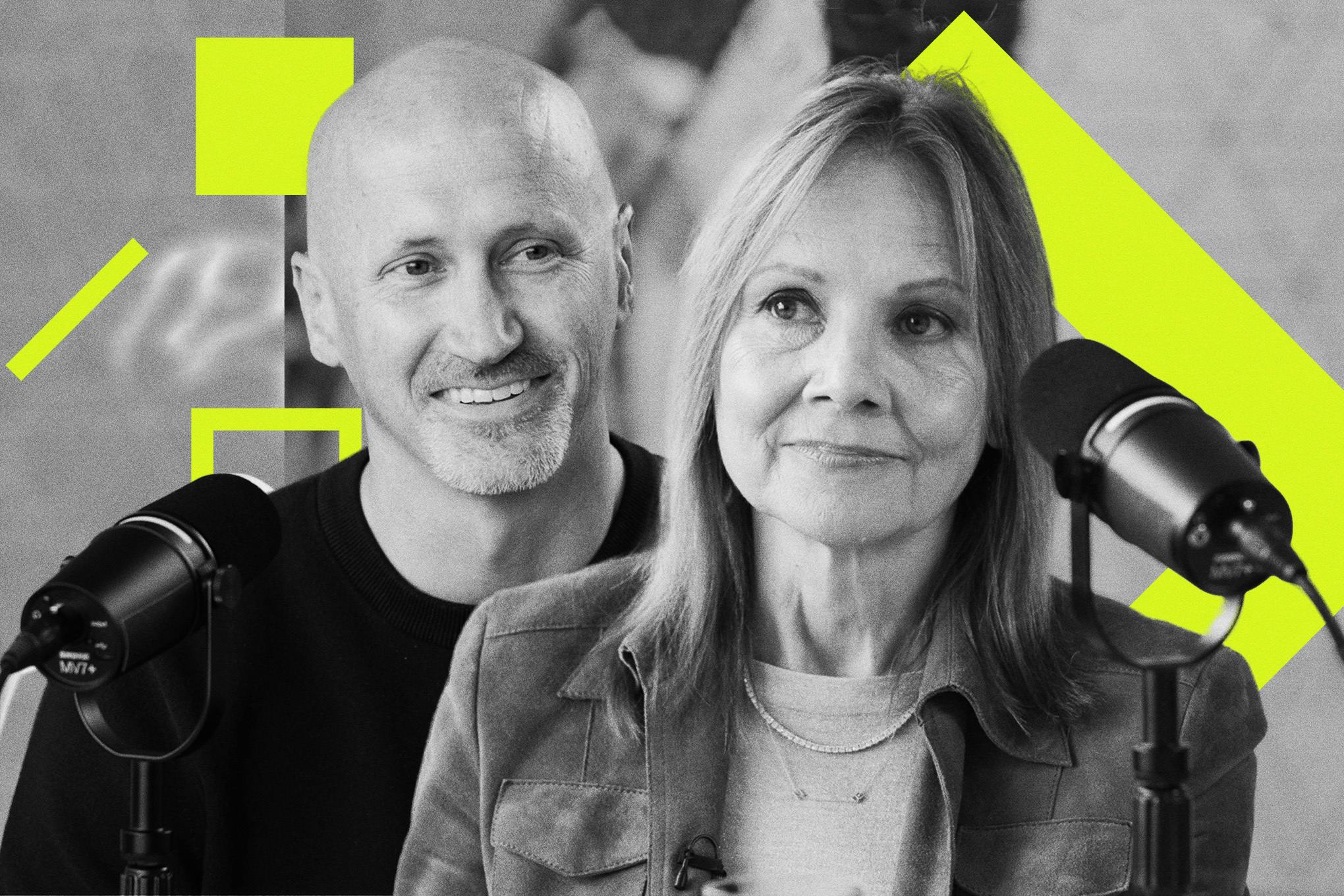
Decoder with Nilay Patel
Why GM will give you Gemini — but not CarPlay
01:18:03
CEO Mary Barry and new chief product officer Sterling Anderson on the company's plans for AI, autonomy, and EVs.
Loading summary
Transcript119 lines
- [00:01]
Podcast Sponsor/Announcer
Support for Decoder comes from Anthropic, the team behind Claude. When you're analyzing a complex tech strategy or trying to understand the forces behind major industry decisions, Claude can help. Claude is AI that goes beyond easy answers to help you explore the nuanced questions that drive real understanding. Whether you're dissecting platform strategies or exploring regulatory implications, Claude works through complexity alongside you. Try Claude for free at claude.AI/decoder.
- [00:33]
Support for this show comes from Adobe. The all new Adobe Acrobat Studio is reimagining how we use and interact with PDFs and the powerful impact they can have for your business and personal projects. And with their AI powered PDF spaces, you can collect files, synthesize information, and even chat with an AI assistant for fast insights. It's time to do more with PDFs than you ever thought possible, and you can do that with Acrobat. Learn more@adobe.com do that with Acrobat. That's Adobe.com Dothatwith.
- [01:08]
Support for the show comes from Crucible Moments, a podcast from Sequoia Capital. Every exceptional company story is defined by those high stake moments that risk the business but can lead to greatness. That's what Crucible Moments is all about. Hosted by Sequoia Capital's Managing partner, Rule Auf Botha, Crucible Moments is returning for a brand new season and they're kicking things off with episodes on Zipline and Bolt, two companies with surprising paths to success. Crucible Moments is out now and available everywhere. You get your podcasts and@Crucible Moments.com Listen to Crucible Moments today.
- [01:48]
Nilay Patel
Hello and welcome to Decoder. I'm Nilai Patel, Editor in Chief of the Verge and Decoder is my show about big ideas and other problems. We've got a special episode today. I'm talking to General Motors CEO Mary Barra and new GM Chief Product Officer Sterling Anderson about a lot of big news the company just announced, including a Google Gemini powered AI assistant that's coming to new cars, an entirely new hardware and software platform coming to the Escalade IQ in 2028, along with True Level 3 autonomous driving, a new home battery business, and a new robotics division. It's a lot. And it all comes against the backdrop of President Trump's trade wars, tariffs and the expiring EV tax credits here in the United that have really upended the car business. Just last week, the day before I talked to Mary and Sterling, GM took a $1.6 billion write down on its EV business against falling demand. A lot of long term plans about The EV transition are falling by the wayside like this, and I wanted to know how Mary was thinking about it all, especially since she made some of the most aggressive EV platform bets among the legacy automakers several years ago. And in one important way, that bet really paid off. GM has a full lineup of EVs running on a mature platform now. I myself just leased a Cadillac Vistic SUV to take advantage of those tax credits before they expired. But the market has changed dramatically and consumers are becoming far more price sensitive. The average cost of a new car in the United states just broke $50,000 for the first time. And we've heard from a lot of car CEOs lately who say that's a big problem. Most consumers don't want to pay much more than $30,000 for a new car, and that means all of these costs need to come down. So I asked Mary about all of that and how she's navigating the current moment, her company's relationship with the Trump administration, and why she's confident that EVs autonomy and AI are going to continue to help GM sell more cars instead of just selling more expensive ones to a smaller group of wealthier consumers. I also obviously took the opportunity to get deep into the details of the platform with Sterling, who spent several years at Tesla and and was the co founder of Aurora, the autonomous trucking startup. GM poached him back in May of this year and now it's his job to oversee the entire end to end experience of both gas and electric GM vehicles. That means he has to answer for the hardware, the software, the interface decisions, and all of the trade offs that come with that across more than a dozen GM brands. I had a lot of very specific feature requests for Sterling, as well as some big picture questions about what it means to think of these cars as platforms. Of course, that means we spent some real time on GM's big decision to ditch Apple CarPlay and Android Auto. Whether that decision is paying off and what all of this looks like in the future as AI, voice assistants and more capable autonomy come into the mix. That's a whole lot of big decoder themes in this conversation. And Mary and Sterling and I really got into it. I think you're gonna like this one. Okay, GM CEO Mary Barra and Chief Product Officer Sterling Anderson. Here we go. Mary Barra, you are the Chair and CEO of gm, and Sterling Anderson, you're the Chief Product Officer at gm. Welcome to Decoder.
- [05:03]
Sterling Anderson
Thanks.
- [05:04]
Mary Barra
Yeah, it's great to be here.
- [05:05]
Nilay Patel
I am very excited to talk to you. Both today there is a lot of news to discuss. I'm going to just go through the list and see if I get it all. You have the introduction of Google Gemini powered assistant in the cars in 2026, a next generation hardware and software platform that will come first on the Escalade IQ in 2028. That will enable the next generation of Super Cruise, which will let you have eyes off driving, additional hands off driving in the Escalade iq. There's a new robotics division which big bet. And then new batteries and new home energy solutions. All of that is coming in the context of what I would call huge changes in the car market. The end of the EV tax credits tariffs that are upending the global supply chain. What appears to be a brew trade war with China over rare earth metals, which are essential to all of these plans. Did I miss anything?
- [05:51]
Mary Barra
Well, we've been pretty busy, so I think you captured most of it. But I would say in the midst of all of that, we have a great product portfolio of both internal combustion engine vehicles and electric vehicles and the customers are responding very well to it. So one of the things our team has developed over the last handful of years is the ability to be very resilient and agile to respond to all these challenges. I'm really proud of the team, proud of the vehicles and the services we have today. And what we're going to talk about is where we're headed. So it's an exciting time at General Motors.
- [06:26]
Nilay Patel
I want to come to all that news and you know what you're describing there is what I call decoder bait. Right. This is how are we running a company of this size to make all these bets and be flexible? And then Sterling, I don't know if they warned you. I have some very nerdy questions for you.
- [06:37]
Sterling Anderson
That's great.
- [06:38]
Nilay Patel
And like very specific features.
- [06:40]
Sterling Anderson
Nerdier the better.
- [06:41]
Nilay Patel
My Cadillac Vistic in particular.
- [06:43]
Sterling Anderson
Yeah, I love it.
- [06:44]
Nilay Patel
So we'll come to that as well. But Mary, I want to start with GM and some of these bets that you've been making for a while now. I would say that it's been almost five years that you've been aggressively positioning GM for an electric and autonomous future. Just today though, GM announced a $1.6 billion charge in the third quarter against changes in the market, falling EV sales. So I'm curious, just big picture, how would you describe where you want GM to be and how far you are along in that journey and how things have changed in ways you were expecting and not expecting?
- [07:17]
Mary Barra
I would say first of all, it's being very customer focused and making sure we have great products with the right design, the right quality, the right features, performance, the right software and services that we can put on top of that that customers want to buy. So we start there and that's where we want to head from an EV perspective. We still believe in EVs and I consider them to be our North Star. But clearly when you have a dramatic sh that we're seeing in the regulatory environment in the United States and potentially other places, as well as a very substantial change in the consumer tax credit, that's going to change buyer behavior. When you think about vehicles, they're either the most important or the second most important purchase that a customer makes. I mean, it's very significant and we get to be a part of that with our consumer. So as we look at these changes, we need to make adjustments, but we're going to meet the customer where they are, whether they want a great ICE vehicle or they want an ev. The adjustment that we made today from the, from the charge was really reflecting what we believe now will be a slower EV adoption. But we still have a great portfolio of award winning EVs that we're going to be offering and so we're going to meet the customer where they are. But when you have that dramatic a change that happens in that short a period of time, you have to make adjustments to run the business.
- [08:40]
Nilay Patel
Well, let me ask you about that specifically. Obviously, the tax credit going away, it drove a lot of EV adoption. I am one of those people. I rushed and made sure that I bought this car before that tax credit went away. I'll tell you, the dealer I bought my car from, he gave me a great deal and he told me I will move as many EVs as I can because that's how I get allocations on gas powered Escalades. And in particular I think the CTSV blackwing. The thing he wanted is I got to move this many EVs to get allocations on that car where I'm going to make a lot of money. That's all changing, right? That that table has been flipped. The tax credit's gone away. We don't know what the market's going to do. Are you taking the $1.6 billion charge preemptively or have you already seen the change such that you're taking that charge?
- [09:22]
Mary Barra
One of the things that we made an adjustment already was the fact that we were planning to have one of our factories in Lake Orion, Michigan be an electric plant. And when we looked at the shift and what's happening with tariffs, we decided that we were going to exp. Because right now in some, for instance, full size utilities, we can't build enough. The demand is so strong. And so we're going to use that plant. So once you make a change like that, that's something that already has happened. I don't think we're going to know for sure what true EV demand is until next year because like you and many others, there was definitely a pull ahead for people who wanted to be able to have access to the $7,500 tax credit. So we'll see potentially a little bit lower in the fourth quarter. We don't know yet. And as we get into next year, we're going to. Again, when you talk about $7,500 on a vehicle, that's pretty substantial. We do expect, and I think the industry expects and the external forecasters believe that we're going to see slower EV growth. But I think the important thing is we think we'll still see growth.
- [10:27]
Nilay Patel
Can I put that in the context of new versus used cars? I see what's going on with new cars. Most new EVs are leased and every company, including GM, played games with residuals on leases to bring those prices down on top of the tax credit. And then I look at the used market and I see EV depreciation is out of control. And there's just, honestly, financially buying a used TV might be the only smart car purchase you should make today. That's not growth in new sales, but it's obviously more people coming into EVs as owners as having the experience. Do you think that will have any effect on how you market and sell your, your new EVs?
- [11:02]
Mary Barra
Well, first I would say I don't think we played games with residuals. I mean, General Motors has been very disciplined for more than a decade about understanding what PRIC does and when you make dramatic changes in pricing, what that does to the residuals. And then it takes almost a new generation of that vehicle to get the residuals to be where they're at. So we manage that very, very carefully because we want to make sure the people who buy our vehicles keep that value. Now, when someone leases that then becomes the leaser, or in our case, many of our vehicles are bought through GM Financial. But we look at that as well because it's still something very important. But again, I think it's too soon to. I mean, generally what we see, there's a new car buyer and then there's people who buy used vehicles. And so we're just going to have to see what the equation is. But I think one of the things you're getting at is the consumer is very rational. So I think they're going to be looking across the board, if I can.
- [12:01]
Sterling Anderson
Add one thought there. And Nilay, you're now in Evistic. So getting a little more of this experience with some of these cars, for many, getting over the hump of that kind of initial activation energy of being comfortable with an evolution, being comfortable with the range, getting comfortable with setting up level two charging in their home and these other things, I think there is incremental value to, as you say, kind of the penetration that we get in the secondhand market. For people that get comfortable with these vehicles, they are better cars, they're better on a number of dimensions. And as that comfort grows, I do hope that it's value accretive to kind of future purchases.
- [12:38]
Mary Barra
Well, and to your point, Sterling, we have already seen with our consumer feedback or customer feedback that once they own an ev, because of those benefits, they very much are likely to buy another ev. But we're still in early days and again, I think we're going to see as charging infrastructure gets more broadly or more widespread across the country, I think we're going to continue to see EV adoption grow. But the great thing or the beautiful thing from a General Motors perspective is we've got a vehicle whatever they choose. And I think that puts us in a very unique position as we move.
- [13:14]
Nilay Patel
Forward in one way, and don't take this wrong way, but in one way what you're saying here is what I've heard about EVs for a long time. They are better cars. You don't have to do the maintenance, they have instant torque, right? Like you charge them at home and you never have to think about going to a gas station again in your life. Those have been the arguments for some time. I think in the pandemic, a lot of companies reacted to what seemed like infinite demand for the Tesla Model 3. They could not sell as many as they were making. And you made a lot of bets, right? And those bets right now are paying off. I, I would say my car feels like the payoff of a big bet you all made some time ago. It is a mature platform, it's a great car. I, I, I have no complaints with it, really. I mean, I do, but we'll come to this, Sterling, just, just you wait. But like it's, it's very hard to nitpick that car. But then the whole market changed around you, right? That infinite demand for Tesla products is no longer infinite even for Tesla. They're. They're doing sales, they're doing pricing changes, and we're seeing the tax credits go away. Do you think it's your gas vehicles that are going to carry you through this period of uncertainty, or do you think the EV sales are actually going to hold their own?
- [14:23]
Mary Barra
Well, again, I think it's too soon to tell and I've been in this job too long to make predictions like that. We'll see. We're well positioned either way. But I think an important point is even in this period, over the last two years, General Motors was taking share, we were growing share and continue to have vehicles that were highly rated year after year and model after model. So, again, we're well positioned. We'll meet the customer where they are. But I don't think that it's dramatically going to change. I think our internal combustion engine vehicle business has been important. We're still on a journey to get to, like, profitability from an EV perspective. So we're going to continue on that journey and we're investing in the technology that takes cost out of the vehicle while taking nothing away from the customer. So we're going to be in a good position there as well.
- [15:17]
Nilay Patel
California Governor Gavin Newsom says GM sold out to the Trump administration over this tax credit. I'm just going to read you the quote. Mary Barra sold this out. Eliminating Ronald Reagan's work, eliminating the progress we made under the California Air resources board in 1967. The Republicans rolled that back this year under Donald Trump's leadership. But the American automobile manufactured allowed that to happen. GM led that effort. Your response to that?
- [15:39]
Mary Barra
Well, I would say we worked tirelessly for more than a year trying to make sure that the states that were following carb, we have worked with CARB for decades. But we got to a point where when you looked at what was required for model year 26, then, as you know, those sales start in calendar year 25. Those states following CARB needed to get to a 35% EV penetration. The consumer wasn't there. We worked with the different states, we worked with carb, but it got to a point where we were weeks away from not being able to sell customers the cars they wanted because the penalties were so strict in some cases. So we have always consistently, and I think for my entire term here as CEO, been really working hard to get one national standard because we have really strict regulations across the board. And to have Varying by state makes it even more complicated. So we've always said we needed harmonized standards, and that's what we've always worked toward in this situation. There were other automakers who equally supported getting the CRA passed. I think, though apparently I was the one singled out there. But I think I still stand by what we did because we worked for a long time. And I think there were a lot of governors and other lawmakers who were relieved that CRA passed because we were approaching a situation that could have an impact on jobs, on plants not being able to produce, because literally, we would have been limited in what we could sell.
- [17:16]
Nilay Patel
On the one hand, the Trump administration made it easier for you to sell the cars you have and the cars you're making today without what you're describing as the regulations that would have prevented you from doing that. On the other hand, we're talking about the tax credits going away, and we're talking about costs rising for the automotive industry because of Trump's tariff policies. Does that feel like a holistic conversation with the Trump administration about the automotive industry in America, or is it all things happening at once because that from the outside, it feels like no one's talking to each other.
- [17:46]
Mary Barra
We are talking a lot to the administration on many aspects, on making sure that we have a strong manufacturing base in this country, making sure that we have strong automotive, American automotive companies getting a level playing field. When you look at the tariff, what's happening in tariffs, I've long said, let us have a level playing field and we'll compete. But we have not had a level playing field with many countries for many, many years. And so as you make those changes, yes, it can be disruptive, and we're making adjustments so we can compete in that market. When you look at the change from a regulatory environment, again, we don't set those changes. We just try to help people understand. It was very clear the Trump administration felt strongly about wanting consumers to choose versus being regulated into having to buy a certain vehicle. I'm a big believer in consumer choice. And even for years, I've been saying I want to get enough EVs out there that are great EVs, that a consumer chooses it because they love it and it's the car they want to drive. Once you get into regulations, driving consumer behavior, you're already in a difficult place. So, yes, has a lot happened this year? Absolutely. But I think it's what we do and respond. We responded to Covid, we responded to the semiconductor shortage, and I'm really proud of the team yet. This has been some change, but we were going to need change regardless because the regulatory environment was getting in front of the consumer and largely the charging infrastructure had built up as much as I think people thought it would be or where it would advance by the time some of these regulations kicked in. To me, I look at tariffs is one about a level playing field and having a strong manufacturing capability in this country. I think the regulatory change was about consumer choice. We want to just do great vehicles that people choose. And that's why I still say EVs are a North Star. And I've had many conversations with the administration and with the president talking about that. I fundamentally believe EVs will continue to grow over time, albeit a little bit more slowly because we don't have the consumer tax credit anymore, but because they're great vehicles.
- [20:03]
Nilay Patel
Do you think that consumers are going to feel the impacts of the tariff policies on GM or other carmakers the way that it feels like we're, you know, if you we just ordered clothes for a wedding and we got hit with tariff charges by DHL at jfk, like, is that going to come to consumers in a real way in the auto industry? Are you managing against that? Because we're already talking about prices going up in other ways.
- [20:22]
Mary Barra
I mean, we're looking at how do we maintain our focus on affordability, how do we continue to drive efficiency, how do we comply with tariffs to make sure that we aren't paying a big tariff bill. And then we're also continuing to communicate with the administration and members of the Cabinet so they understand some of the unintended consequences of some of the policies. And I have to say they've been incredibly receptive to and really have become students of the industry to make sure they understand the ramifications. And they've made adjustments to make sure we're working toward having strong manufacturing in this country and having a level playing field.
- [21:05]
Nilay Patel
Can I just ask you one more question about the broader car market? And then I want to do the decoder questions, which I think will lead into all of the news here. You're talking about affordability, we're talking about your costs rising with tariffs, consumer costs rising as credits go away, all these sorts of things. Broadly, the car market is as k shaped as the rest of the economy. I think I saw a report today that said average car prices are headed north of $50,000 while defaults on financing are at an all time high. That's not a good split, right? The cars are getting more expensive than ever and People are not able to pay their bills. A lot of people can't afford these ever more expensive cars. And when I hear from our readers, whenever we publish about a new ev, the first thing that people say in our comments is, well, that's too expensive. How are you thinking about that?
- [21:48]
Mary Barra
Well, that's why I'm extremely proud of what we have from a Chevrolet perspective, whether you're looking at the, the Chevrolet Trax and Trailblazer that are internal combustion engine vehicles and start at around $20,000 and then go up, or you're looking at now the bolt we are bringing back that we just announced will be at that 30,000 level. The equinox is mid-30s. I think we're offering great choice for the consumer in a very affordable price range with great vehicles that have beautiful design, incredible safety. If you look at the screen on the Equinox ev, it's a large screen with great safety features. And so I look at it and say I understand what the broad industry trends are, but when I look at it from a General Motors perspective, we're doing extremely well in these entry level segments in both ICE and EV as well as we're doing, I think, really strong work at the top end. And we keep seeing some consumers are saying they want a more premium truck, they want a more premium suv. And so we're meeting, meeting that demand. When you think about a Denali on the Yukon or the Cadillac Escalade and Escalade iq, but then we also have great vehicles that are very affordable. So we're a full portfolio manufacturer and I'm very proud that we can meet the customers where they are.
- [23:17]
Nilay Patel
We need to take a quick break. We'll be right back.
- [23:28]
Podcast Sponsor/Announcer
Support for this show comes from Vanta. Starting or running a business comes with a lot of responsibilities beyond just having a great product. Making sure you're compliant with security protocols, especially those designed to keep customer data safe, is one of them. Vanta helps companies of all sizes get compliant fast and stay compliant with industry leading AI automation and continuous model monitoring. And Vanta saves you time by helping you complete security questionnaires up to five times faster. A recent IDC white paper found that Vanta customers achieve $535,000 per year in benefits. No wonder more than 10,000 global companies trust Vanta, including Atlassian Cora, Chili Piper and Factory. So whether you're a startup tackling your first SoC2 or ISO 27001 or an enterprise managing vendor risk, Vanta's trust management platform makes it quicker, easier and more scalable Establishing trust isn't optional. Vanta makes it automatic. Visit vanta.comdecoder to sign up for a free demo today. That's V A N T a dot com DECODER Support for this show comes from Selectquote if you're new to life.
- [24:41]
Nilay Patel
Insurance, you're not alone.
- [24:43]
Podcast Sponsor/Announcer
You might want to consider checking out Selectquote for over 40 years, Selectquote has been one of the most trusted brokers in insurance, helping More than 2 million Americans secure over $700 billion in coverage. Their mission is simple to find you the right insurance policy for your unique needs. Selectquote takes the guesswork out of finding the right life insurance policy. You don't have to sort through dozens of confusing options on your own. Instead, one of their licensed agents will find the right policy at the right price for you. Comparing plans from trusted top rated insurance companies to find a policy that fits your health, your lifestyle and your budget. They partner with providers offering same day coverage up to $2 million without needing to visit your doctor. Life insurance is never cheaper than it is today. Get the right life insurance for you for less and save more than 50%@SelectQuote.com decoder save more than 50% on term life insurance@Select SelectQuote.com decoder today to get started. That's SelectQuote.com decoder support for decoder comes from Anthropic, the team behind Claude. The best tech journalism takes a seemingly straightforward announcement and reveals all the strategic layers underneath. That's exactly the kind of thinking Claude excels at. Claude is an AI thinking partner that goes beyond easy answers to help you work through the nuanced questions that drive real understanding. Whether you're trying to understand why a platform made a particular policy decision, or what a merger really means for the industry, Claude can help you explore connections you might not have considered. From analyzing corporate strategy to exploring regulatory implications to just trying to understand how these systems actually work, Claude thinks through complexity alongside you. It's not about getting quick takes, it's about developing the deeper insights that matter. Try Claude for free at Claude AI Decoder and see why the world's best problem solvers choose Claude as their thinking partner.
- [26:54]
Nilay Patel
We're back with GM CEO Mary Barra and Head of Product Sterling Anderson. Before the break, I was asking Mary about some of the big bets GM has been making these past five years on electrification and autonomous car cars, and how she's navigating the current economic and political climate here in the United States. But now it's time for the decoder questions. Let me ask you the decoder questions. Gm, I think people understand it as nameplates, right? There's GM and GMC and Chevy and Cadillac and Buick and all the rest. How is GM structured as a company, as an operating company, how is it structured? Is it just the divisions and the brands or are you more functional?
- [27:31]
Mary Barra
I think we're more functionally and you know, Sterling is responsible for our products globally as the chief product officer because we leverage that to get the scale. But then we also understand for the different brands what we need to do to make sure we're delivering on that brand promise, whether it's true luxury with a Cadillac value, but you know, the unique American heritage that Chevrolet has. Buick is premium and has been doing very well in growing. And then gmc, which is a very premium truck. So each of our four brands are very specific for what they mean to the customer. So we make sure when we do a portfolio of vehicles or when we're doing, for instance, full size trucks that we understand what it means to be a Chevy, means to be a GMC or a Cadillac. We look at all of that and so it's really a cross functional team working together to make sure we deliver on that. And then we do have regional sales and marketing team that really understand the customer, each of our markets. So at a broad brush, at the most senior level, that's, I would say, the way the company is organized.
- [28:42]
Nilay Patel
So walk me through that in a little more specificity. What you're describing, it sounds complex. So you have centralized product development. We're going to make a pickup truck. And then you have brand expressions of but one pickup truck. How do they decide what goes where? Is that the brands themselves have teams that get to do it? Do they have their own designers? How does that work?
- [29:01]
Mary Barra
Well, I would say first of all, Sterling and I just came from design and we were looking at a platform that's going to have both a Cadillac and a Chevrolet. And you know, so there's the brands in the studio, they have people dedicated to Chevrolet and then a different team that's dedicated to Cadillac. But then we also have product planning people that are looking at what is the technology roadmap, what again, what features and functionality needs to be on that vehicle. How are we going to make sure that we achieve how we want to go to market from a price perspective, getting back to that affordability or that true luxury. But it's done with people. For instance, the brand is managed for the globe as well. So it's not like a Chevy in South America has a total different team managing it than a Chevrolet in the United States or in another part of the world. So it's not really complex. It actually simplified it. And we get. What is so important in the auto industry is scale. Because once you have scale, that's how you get to give the customer more than they think they would get for a price point. Because we're leveraging General Motors scale. And I'm very proud that we sell more vehicles in this country than anyone else. We're extremely strong in South America. We have a great business in the Middle East. We still have a significant business in China. And leveraging that scale is one of the things that allows us to keep vehicles affordable or give people more functionality than they expect.
- [30:32]
Nilay Patel
That's actually one of the things I'm most interested in, is there's the US Market and sort of the markets that are related to the US Market or have similar tastes and desires, similar brands competing. And then there's the Chinese market. And, you know, I watch a lot of car YouTube for better or worse, and car YouTubers are increasingly saying, look at these Chinese EVs, they're better than the cars that we can get here. United States protectionism is keeping us from having these cars. And then they go through all the quirks and features of the cars. And I think that's great because I really enjoyed watching car YouTube. If I was in your seat, I'd say, oh, boy. The stuff we have to do to compete in China is radically different than the things we have to do to compete in the United States. How do you manage that split across this portfolio of brands?
- [31:13]
Mary Barra
So our business for China, already, you have to use technology in China for China, because that's the requirement in China. So already there's a little bit of a fence around that there. Also right now is an incredible price war going on. There needs to be a sorting. You can't have over 100 different OEMs in a country trying to compete, especially now as they're competing on price. I think if you read what's happening in country right now, there's a lot of change happening. I would also say there's overcapacity in China, which is causing, I think, from a business perspective, exporting to other markets. But they're also doing it, in many cases, highly subsidized. So we are regularly benchmarking our Chinese competitors like we do global competitors, understanding where they're putting features, where they're not what they're adding. But I would also say we've got to meet the regulations in this country. The safety standards are different, there's different emission standards and there's also standards and requirements around connectivity. Like I mentioned, for instance, autonomy in China, you need to use a chance, a system that's Chinese based because the country actually controls the maps. So there's also regulations or executive orders, I can't remember exactly, but there's rules we have to follow of what we're able to use in country. So there's already differences. So just to look from what the offering is and not understanding what the rules of the different markets are going either way, I think is a very big simplification and I don't know. So Sterling, if you have anything to add with what you saw at your time at Tesla or just even when you were at Aurora and understanding what markets you could compete.
- [33:01]
Sterling Anderson
Yeah. A couple of quick things. As Mary said, as we benchmark across these vehicles, if we strip away the subsidies and the other support that the Chinese government is providing to many of these players, we compare favorably on most dimensions with our EVs. In particular, we've got some work that we're doing around a next generation electric vehicle and electric vehicle architecture that compares very favorably to what we see. So I'm impressed by what they've done. I'll start with that. I think we don't want to be resting on our laurels that way. I think there's more that we can be doing, but we're on it. We recognize very acutely the speed at which an industry that is so heavily subsidized tends to move and we don't intend to wait for it.
- [33:51]
Mary Barra
I think Sterling makes a really great point. We are regularly looking at how do we make every part of our business more efficient. We don't control what the government policies are, as evident by what's changed this year. So we just need to have the best product that we have as efficiently as possible. And that's what we're focused on every day.
- [34:11]
Nilay Patel
We just had Ford CEO Jim Farley on the show. My friend Joanna Stern interviewed him as a. I was on leave so she filled in for me. That was very nice of her to do. He is very clear that BYD makes a better car than Ford. Right. He drove around in BYD for a while and publicly announced like, this is better than our car on our show. He said to Joanna, we're going to have a better car for you when your Mach E lease is done. It's going to be a better car. Don't lease it on A Mach E. To do that, Ford had to set up an entire Skunk Works. That was the payoff of that structural change inside of Ford. Ford, we're going to take a bunch of people, we're going to put them aside, we're going to take them out of the Ford ecosystem, let them rethink the car from the ground up. They also announced a new architecture, they announced a new manufacturing process that was notably led by a Tesla veteran at Ford. Sterling. You worked at Tesla as well. You're at GM now. Did you need to do anything similar inside of GM's culture to get to your new platform, your new ideas?
- [35:05]
Sterling Anderson
A couple of quick comments. I like Doug a lot. We work together. I worked with Alan Clark, who's been leading the skunkswork program for four years.
- [35:12]
Nilay Patel
Board.
- [35:12]
Sterling Anderson
Both great people. So nothing about that. What I will say is I've seen a fairly oscillatory behavior from some OEMs when it comes to EVs. In one moment, it's a we'll force an electric powertrain into an ICE platform and we'll end up with a fairly compromised product as a result. That turns people off to certain segments, right? Electric battery, electric trucks. There's some things that just weren't great about the way that that started in some of this space. And then I see a pendulum swing all the way to a it's got to be skunkworks project. It's going to be done fully independently from a clean sheet, and then we're going to somehow try to ingest it into the broader organization. That ingestion is where the risk lies. I think what I've seen that General Motors has been doing since before I only got here four months ago. So there's only so much that you can attribute at all to me at this point. But what I'll say is General Motors has taken a much more steady approach to this development. Electric vehicles designed and developed and manufactured on electric vehicle architectures which are not nearly as compromised. A focus on the cost basis for these vehicles, on what are the value added components that we can put in them and what are the things that just don't add that value that we can strip out and kind of refine. Whether it's reduction in menial stuff like spot welds, some of our next generation platforms, dramatic reduction in those, you'll never see those, you'll never hear about them, but they drive an enormous cost. I think at one point the estimate was $40,000 per spot weld. If you advertise all the costs of the robots and everything else across it. But to the battery chemistry and some of the battery innovations, I think you may be aware that, that we've been pioneering, we are today the largest manufacturer of cells in North America. This is larger than Tesla. Today we have been pioneering work in lithium manganese rich or lmr, battery chemistry that has something closer to the energy density of high nickel batteries that you're familiar with at closer to the cost of lithium iron phosphate or lfp. So a lot of the and those will come to market first in GM vehicles, in some of our larger vehicles in 2028. So what we've done is oriented the company and some of this kind of the functional strength that Mary references in Common Design, Common Engineering to innovate on many of the foundational enablers of compelling battery electric platforms done through the streamlined kind of process that we have for our global product development across the company. So my expectation is, is when this hits, as it hits, as LMR hits, as our architectures hit, as our manufacturing improvements hit, as some of our robotics work that we can talk about hits, what you'll see is those immediately kick in and what's done initially in one model, in one plant, in one brand, rapidly scales across a massive portfolio of vehicles. So I think that the leverage that we realize by doing this much, much higher than what we could do if it were an isolated effort. Nothing against isolated efforts. That's sometimes the thing that you do you have to do to really move the needle on something. But I'm really impressed by what the company's been doing since well before I joined. But we're certainly moving that forward and we can talk about some of the ways in some of our electric architecture. Mary referenced a little bit about what we're doing there around software defined vehicles. But there's a lot of work to come. But yeah, I guess the core story is I think we leverage our scale and we leverage our people best when we do this through a streamlined process that's part of the company.
- [39:01]
Mary Barra
Our goal was let's get the right people in the right functions. And so we've brought in from a software perspective, we've brought in a tremendous amount of talent from Silicon Valley, big and small companies, the Mag 7, et cetera. When we started to look at it and we said, okay, from a battery perspective, bringing in someone with Kurt Kelty who has worked his whole career in batteries. And then he came and went, oh my gosh, you've got the capability to do not only core R and D so when you have a promising startup, you can take that into one of our RD centers and really see if it's going to scale. And it's manufacturable to, to actually being able to work on process improvements because you need all of that to get the cost out of the battery, to get EVs profitable. And then there's a lot of learnings that flows back in from a software perspective. It doesn't matter what the propulsion system is. And so our strategy has been to get the right and the best talent in and make them part of the team. And so like you said, it's across the board.
- [40:03]
Nilay Patel
You're kind of describing really long term bets, right? I mean, battery chemistry is one of those things where you start on the battery chemistry journey and hopefully it pays off. And that's a step change in the car autonomy is one of those things. I'm actually very curious, Mary. You described bringing in startups and seeing if they'll scale, right? That was Cruise. It didn't work out. But we're here to talk about Eyes Free Super Cruise and that bet paid off. So as you think about all of.
- [40:28]
Mary Barra
That, what I would say about Cruise is there's a tremendous amount of Cruise talent that's still here. As we looked at what it was going to take, I mean, I think everyone, I Remember back in 2016, I made the prediction we would have an autonomous vehicle by 19. It really was a couple years later that we had that. I think you've seen the whole industry, whether you're a tech company or an oem, realize it's a pretty significant challenge. I think we're closer today. But as we made that change and as we continue to see progress, we looked at it and said, as we want to deploy capital, where do we want to do that? Do we really want to put all that capital into all the vehicles for rideshare, when our business today isn't rideshare 1.0, it's not taxis, it's not rental cars. And so we made a strategic decision to focus that talent and to have them work closely with engineer and technical talent within General Motors to be able to focus and be in a leading position from personal autonomy. And that's what we're focused on now. And Sterling coming in, who's got great experience from knowing the car industry from his time at Tesla, and then most recently the only trucking company that has autonomous trucks on the road, again, I think that represents somebody who brings in that expertise that I think is going to help us continue to be on the forefront and lead with these technologies. So from a cruise perspective, we did pivot away from Robo Taxi, but I would say there's a lot of core assets that we're attributing to our personal autonomy journey from an overall autonomy perspective.
- [42:11]
Nilay Patel
Let me ask you the other decoder question, and I want to put all this into practice against the announcements that you guys are making, because it all ties together. So this is another Dakota question I ask everybody, how do you make decisions? What's your framework for making decisions? You've obviously made a lot at gm. How do you organize that process?
- [42:27]
Mary Barra
Well, I mean, a lot of the decisions we make are complex. And so one of the things I like to leverage is the senior leadership team. There's nine people that are core to the company that lead all the functions. Sterling is on that team as our chief Product officer, along with a few others. We look at trends both inside and outside our industry. We look at what's happening with technology. We're very focused on where the consumer is. Of course, we benchmark where the competition is. But then we also look and try to say, where is the consumer going? I think there's been many times we have found white space in even vehicle segments. When we first put the Buick Encore out, no one thought they were like, no one's going to buy it. That segment now has grown for us to four vehicles and is profitable and growing. We can't build enough of those vehicles. That's just one example. But it's really getting the team together and understanding where is the consumer going? Where is technology going? And then what is the roadmap we're going to put forward? I would also tell you, though it used to be, I would say, five, seven years ago, we would put the portfolio together, and usually it was an annual event. I would say it's a more frequent event now as we continue to take new learnings and make adjustments. Because the minute you have new information, you just don't want momentum to put a program forward. You want to pivot and make the change to make sure you're going to be relevant going forward. But I would say my decision making is largely based. Let's look at it as a team. Different experiences, different skills, and I think together we get to better, better solutions and a better strategy.
- [44:11]
Nilay Patel
We need to take a quick break. We'll be right back.
- [44:22]
Podcast Sponsor/Announcer
Support for this show comes from LinkedIn. When you're a small business owner, your business is on your mind 24 7. So when you're hiring, you need a partner that works just as hard as you do. That hiring partner is LinkedIn Jobs. When you clock out, LinkedIn clocks in. LinkedIn makes it easy to post your job for free, share it with your network and get qualified candidates that you can manage all in one place. LinkedIn's new features can help you write job descriptions and then quickly get your job in front of the right people with deep candidate insights. Either post your job for free free or pay to promote promoted jobs. Get three times more qualified applicants. At the end of the day, the most important thing to your small business is the quality of candidates. And with LinkedIn you can feel confident that you're getting the best. Based on LinkedIn data, 72% of SMBs using LinkedIn say that it helps them find high quality candidates. Find out why more than 2.5 million small businesses use LinkedIn for hiring techniques today. Find your next great hire on LinkedIn. Post your job for free@LinkedIn.com partner. That's LinkedIn.com partner to post your job for free. Terms and conditions apply. Support for this show comes from Adobe, who are introducing the all new Adobe Acrobat Studio now with AI powered PDF spaces. Look, I'm sure when I say PDF you have a very specific thing in mind and I'm guessing it's an email attachment, certainly not a dynamic asset that could help elevate your business, but Adobe Acrobat is changing that. It's time to do more with PDFs than you ever thought possible. Need AI to turn 100 pages of market research into 5 insights with a click. Do that with Acrobat. Need templates for a sales proposal that'll close that deal. Do that with Acrobat. Need an AI specialist to tailor the tone of your market report to sound real, smart and real time time. Do that with the all new Adobe Acrobat Studio. It's time to reimagine and rethink what a PDF can actually do. Learn more@adobe.com do that with Acrobat. That's adobe.com Dothatwithrobat.
- [46:33]
Sterling Anderson
There'S nothing better in the world than when you hear the words simple and affordable. But for some, simple and affordable is an oxymoron. Sure, your phone is pretty simple to.
- [46:42]
Nilay Patel
Use use, but it's anything but affordable. But they can live in harmony and.
- [46:47]
Sterling Anderson
Spaceship is making that happen.
- [46:49]
Nilay Patel
That's the idea behind Spaceship, a platform.
- [46:51]
Sterling Anderson
That simplifies buying, connecting and managing domain names. With over 4 million domains registered already. That's alongside offering web hosting, business, email and more advanced Business products like virtual machines and Hyperlift, which lets you create.
- [47:04]
Nilay Patel
Apps, APIs, websites and more without touching infrastructure structure.
- [47:08]
Sterling Anderson
You're ready to launch new ventures in seconds. Plus Spaceship comes with extra highlights including Unbox, making it super easy to connect your products to your domain or Alph, your AI buddy that can handle domain transfers, DNS updates and all the tedious tasks. And Roadmap, a community driven way to suggest and vote on features. So the platform evolves around what professionals actually need. So for exclusive deals, visit spaceship.comdecoder and use the promo code decoder. That's spaceship.comdecoder promo code decoder.
- [47:50]
Nilay Patel
We're back with GM CEO Mary Barup and Head of Product Sterling Anderson. So far we've spent a lot of time asking Mary about the car industry's biggest problems and how she's reorienting the company, trying to solve solve them. But if you go look at the day to day conversations about GM EVs on the forums and subreddits, you'll see that they're dominated by one very important decision. The choice to ditch Apple CarPlay and Android Auto. GM has been very adamant about the decision to move on from phone projection in its EVs and now as Chief Products Officer, that's Sterling's decision to justify. So I wanted to hear it from him. Does he still feel good about Moving on from CarPlay and Android Auto and what's he building in the future that will make this entire debate a real relevant? The big announcement that I'm, I'm really curious about is Gemini powered Assistant in the car that's coming obviously in 2026. That's I would say an expansion of the idea that GM should have a software platform in its cars. Right, that we're running Android Automotive in the cars. There's an app platform, there's a data platform, there's Google Assistant in my car. My daughter loves asking it to play Taylor Swift. That's basically all we use that platform for today because she won't let us do anything else. But it works, it's there. The big decision there, and I know you know this question is coming, is that you bet against putting smartphone projection in your EVs. There's no Apple CarPlay or Android Auto in the EVs, but the gas cars still have it. How did you make that decision?
- [49:13]
Mary Barra
Well, I think it's really a question of timing as we look at that, because really, and I want to make sure that we get Sterling's input on this as well. But as we looked at it and as we made that decision, we were getting a lot of feedback from customers that it was very clunky moving back. It wasn't seamless and frankly in some cases could be distracting to move back and forth between if you were doing something that you could do on a phone projection type of system versus if you needed to do something in the vehicle. And we also know that's only going to increase when you look at some of the things we're going to talk about, of how we can just make your life better and assist you as we move forward. I think we're at the very, very early stages of services we can have on a vehic to improve the overall customer experience and make the journey smoother. We looked at that and we decided that we needed to have a great system in the vehicle that allowed people to have one system. And we're going to continue to make that better and add new features. Sterling.
- [50:17]
Sterling Anderson
I agree with that. Nilay. One thing that I'd say here is what we're talking about about is the inevitable performance degradation when jumping between S curves and what I'll describe as those S curves is the first one was for some time I think you and others got attached to phone projection applications largely because the in vehicle HMI was pretty bad. Your opportunity for doing some of these things was better when you were using that. We've now gotten to a point where, I mean, you're driving a vistic, I understand. I mean you've got Dolby Surround audio audio, you've got giant screens, you've got giant displays. The analog I would use here is we're on this new S curve. There is inevitably a jump that has to happen for you to get over to it. That's uncomfortable for many. Right? But frankly, it's a very Jobsian kind of approach to things. Right? And the removal of the disk drive, nobody liked that. Everybody on the forums and Facebook was complaining about it, but it was really a look, guys, Flash storage really is the future. Get on board. You'll see that that's kind of what we're saying here. That's exactly what we're saying, in fact. And the analog that I use for folks is, look, if you're talking to me about CarPlay, it's very likely. You've certainly got an iPhone, you've probably got a MacBook. You have the opportunity to use phone projection on your MacBook, right? A phone mirroring application. How many of you are accessing online services like email, social media and otherwise through the phone projection app in your Laptop. Almost none of them do. Why? Because you've got a much larger screen on your laptop. You've got a much more convenient HMI via the keyboard. You've got better speakers. Now take that same analog to the car and ask the same question. Is it in a car that has not only just laptop speakers, not only a laptop screen, but something better and that can move you and that can integrate with charging infrastructure, with super cruise availability on your maps, all of these other things. You are in a much more immersive environment that can do so many more things. Why would you use the equivalent of a phone mirroring application on a laptop in your car? And so for us, it's a look, we're taking out the disk drive, guys get on board with flash storage. That's where the future is. It's kind of the analog.
- [52:36]
Nilay Patel
Okay, I have a number of responses for you. I spent a lot of time hearing from our readers about this. Specifically, the first thing I will say is most people don't use the phone mirroring app on their laptops because it's not illegal to also use your phone while you're using your laptop and it is very illegal to use your phone while you're driving your car. So this is the first difference that most of our readers would point to, right? That this, this thing where I need to see my phone, I need access to all of the applications and data on my phone without re logging in or having multiple user profiles. It's fine with my laptop, it's fine with my iPad. It's not fine in the car. Because what I actually, and I've. The one specific one that sticks in my brain about the library of applications is I'm actually not a huge CarPlay fan. And I complained about it on our other show and I got this long note from a reader and he said, look, I use between six and eight audio applications on my three hour commute and one of them is just this like very, I believe it was a very niche like Bible app. And he's like, they're never going to support this on these other platforms. It's on my phone and it has a CarPlay extension. And so that's one thing, right? I just want the library of content. Then there's consumers being unable to affect what feels like business dealings at a much higher level. And the example I'll give you there is yes, my car has Dolby Atmos in it. The number one provider of Atmos tracks in this industry is Apple Music. And Apple Music will not have an app on your phone because I'm confident that Apple wants you to have CarPlay and that is a business dealing that the consumer demand cannot effect and that's kind of the shape of the puzzle. Right.
- [54:10]
Mary Barra
But Nilay, I would say we have a good relationship with Apple. I meet at the most senior level with both with Apple, with Google, with all of the tech companies. We're bringing the Wallet, we will be announcing that shortly that we'll have that and have the ability to do some of the vehicle functions through that. So we're having continual conversations with Apple and I would say we're talking about the opportunity and looking for win win. We also have a very good relationship with Google and we don't enable Android Auto either. So I would say you're talking about a moment in time versus where the industry is heading from Adobe Atmos and the relationship that we have with Apple. So I wouldn't make some of the broad based assumptions you're making.
- [55:00]
Nilay Patel
Do you think I'm going to get the Apple Music app in my Cadillac?
- [55:04]
Sterling Anderson
We don't have anything to share on that right now. But what I will say is there are. So your first comment really struck at the hmi, the ease of use and do you have to log into each of these different services and applications in your car? Because if you do, you get some breakage. Some people just will never do that. It's a pain. We're looking at that as well. What can we do about federated IDs? What can we do to eliminate that friction of, of you engaging with your, with your car? I'm not sure I quite follow the whole like it's illegal to use your phone when you're driving and not when you're on your laptop. I think that cuts against your argument a little bit because if you're sitting with your laptop and your phone.
- [55:45]
Nilay Patel
Well, I mean like if you don't pick up your phone looking at your phone while you're driving, you get pulled over cops. You're looking at your phone while you're using a laptop. I don't think they're gonna.
- [55:52]
Sterling Anderson
My point being if you've got your phone in your laptop or you've got your phone in your car. If you're sitting next to your laptop, you don't typically pick up your phone to answer an email. You'll answer on your laptop. If you're sitting in your car, you wouldn't pick up your phone to use a map application. If it's sitting there on a bigger screen in front of you in the Car. Right. And if you have a convenient HMI by which to wait.
- [56:14]
Nilay Patel
No, hold on. Not to get too weedsy. I know we have a lot of readers who have Windows laptops, for example, and they are constantly picking up their phone to use imessage on their iPhones because that is not an experience that you can project Correct. In a meaningful way.
- [56:27]
Sterling Anderson
And that kind of gets to Mary's point. Right. Which is don't count out the expectation. Don't expect that we won't have a growing list. I mean, today we use Google Automotive services in these cars that's got access to the Play Store. Quite a few apps available through that that will only grow in time, as will availability of apps from other places.
- [56:46]
Mary Barra
And I think overarching. We want to get the consumer a great experience in the car that's not clunky, that allows them to getting to this point of safety that one of your viewers talked about, that you can be the least distracted and pull even more information from the vehicle to improve the way your whole experience overall. So we're at, I'd say the early phase of making that shift and now continuing to add more to it, continuing to make it more intuitive. How do we make access to more apps and more things you want to leverage? So we're excited about the future that we have coming for what's going to be available in the system we put into the vehicle.
- [57:34]
Nilay Patel
So let me ask you the second part of that question again, because I think it's again, we're talking so much about the future and I understand the argument about the future you're making, but you still have the smartphone projection in the gas cars. Why is it still in the gas car cars?
- [57:47]
Mary Barra
Well, if you look at it, a lot of it depends is when do you do an update to that vehicle? When you look at the fact that we have over 40 models that we, you know, across, across our portfolio, you don't just do this and they all update. So I think you'll see as we move forward with each new vehicle and major, you know, major new vehicle launch, I think you're going to see us consistent on that. We made a decision to prioritize our EV vehicles during this time for frame and as we go forward, we'll continue across the portfolio.
- [58:19]
Nilay Patel
So we should expect new gas cars will not have smartphone production as we.
- [58:23]
Mary Barra
Get to a major rollout. I think that's the right expectation. Yes.
- [58:27]
Nilay Patel
Let's talk about that next rollout. I'm very interested in the fact that you're putting Gemini in The cars. We obviously use Google Assistant on our car today. AI has often been described to me as a platform shift. In particular, like natural language interface has been described as a major kind of platform shift. Shift. And then maybe the way we write applications will change with MCP and these other technologies. But the platform shift is you're going to talk to the computer, it's going to understand it, it's going to take some action for you. Are you feeling that way about the car that AI and particularly these assistants will let you have a platform shift inside the car?
- [58:58]
Sterling Anderson
Yeah, yeah, we are. So we're thinking about AI across the business, right? Not just in kind of what it does to the product experience, but what it does to our development of the product. What it does to kind of what we can do to bring to bear the massive data that this company has in our production systems, in our CAD and development systems, to leverage in development of AI for production, for the product. As it relates to the product though, what I'll say is, is this is one of the really important enablers of speed in a company with a portfolio this broad is development of a common platform or undergirding infrastructure on which we can deploy, including over the air software updates. As Mary mentioned, there are some legacy platforms that will kind of work their way out of the portfolio. But one of the things we're working on, on in the software defined vehicle space is a new electrical architecture that centralizes all compute in the vehicle. It doesn't just move the compute to zonal aggregators, it centralizes all of it in the upper trims. It leads to about a 35 times increase in the computational power of these vehicles.
- [60:18]
Nilay Patel
It allows for this announcement. This is the 2028 Escalade IQ, right?
- [60:22]
Sterling Anderson
It's going to have, it will arrive first on the 28 IQ. That's right, that's right. And what it does is from a networking perspective, it moves to Ethernet based networking which allows us to move to sub millisecond response times. Take magnetic suspension systems dampers as your example. From accelerometer through controller back to actuator. We're talking sub 1 millisecond, you're talking 1000 Hz. That's a 10x improvement over previous electrical architectures. This is a massive, massive opportunity not only for the dynamics which I found General Motors is extraordinarily good at, but for the software that we can deploy on this. Because now we've got a centralized architecture, now we've got a central compute on which we can run a variety of applications to which we can deploy updates to those applications at a much higher pace than what we do today. And so that flexibility that comes via abstraction of hardware and software, software with this new electric architecture is really going to be a powerful enabler for us going forward and something that I'm excited about. So going forward, your questions about why can I get some things on one car and not another? You're going to have far fewer of those because you're going to have a lot more commonality throughout the portfolio based on this platform that separates hardware from software.
- [61:45]
Nilay Patel
You keep calling it hmi. It's Human Machine Interface for people who are not total nerds like us. The idea though, that you will be able to just speak, right? You'll be able to say, hey, Gemini, and you'll just have some natural language conversation with the car. There's a lot of things you could do with that. There's also a lot of questions about how well that might work even today, as expressed in ChatGPT and Gemini itself. A lot of questions about how those things might fundamentally operate. What kinds of applications might we build, how reliable will they be, how much hallucinate, how many hallucinations might we have? Is that going to be enabled by your new architecture too, or are you going to send all of that to the cloud?
- [62:21]
Sterling Anderson
There are a number of things that we're going to infer directly on the vehicle and we've got quite a bit of, as I mentioned, the computational power is there for us to do a lot of on vehicle inference. What I'll say though is step one, what you're referencing is in the Gemini based conversational AI work that we're going to release next year, that's really about kind of vocal interaction, voice based interaction with your car. It's about asking about your destination, it's about asking about a number of other things where it can give you kind of contextual responses I think you're hitting at the heart of. But many elements of the car, if you're going to directly control them, are safety critical. And how can you deal with the kind of accuracy that you get out of an untailored LLM them if you're giving it direct access to those things? The short answer is we're not. We are developing, in addition to the contextual AI that comes out next year, a more powerful, specifically tailored AI that will learn from not just your preferences and not just the data that you have available via a variety of other mechanisms, but it will be specifically tailored, customized, and learned from the vehicle. Itself its functions. It will have specific access to specific functions. It will have other controls in place that a generic LLM doesn't have. So I think that the value of these large models oftentimes can be realized in much greater effect through tailoring and fine tuning for specific application areas. And that's what we're going into post the Gemini conversational AI work.
- [64:01]
Mary Barra
And the only thing I would add at General Motors we always end prioritize safety. We were the first to have a driver assistance technology out with Super Cruise, but we very much prioritized the safety of that and enabled different features as we saw it demonstrate that it could meet the safety standards that we have. I think that's what Sterling's talking about now is as we do this, we won't just go wide open, but we'll make sure that the integrity of the safety systems are there.
- [64:30]
Sterling Anderson
If it's controlling a temporally sensitive or safety relevant function, it will happen locally.
- [64:38]
Nilay Patel
One of the reasons I'm asking about that very specifically is I'm watching your partner Google, I'm watching Amazon, I'm watching Apple, they control a lot of that stack, right? They control the LLMs, they control the inference, they control the smart home platforms and they have not been able to connect those assistants in the way that you're describing. Right. Alexa plus exists and it has to fall back on some complicated deterministic system to flip lights up and down and they have to do some orchestration. Google Home, they're doing the same thing over there. Gemini is rolling out and it has to fall back and it's working however it works. Apple has not been able to ship this product which they have promised people. I say hey Google, turn off the lights. By the way, my Google's going to turn off the lights. So I shouldn't say that, but I asked my assistant here to turn off the lights and it doesn't happen. And maybe the worst outcome is my wife is once again annoyed at me for trying to voice activate our home. Right. If I get that wrong in the car, like many other things can go wrong.
- [65:32]
Sterling Anderson
That's right. That's right. 100%. This is something that we are very keen on, whether it's the development of our self driving system where we are acutely familiar with and aware of the challenges that arise when you have a kind of monolithic end to end system system about which you can't make any strong guarantees to other controls across the car that are safety relevant. So as I said, we are. I mean that's probably a Much longer conversation than we have time for here. But this becomes architecturally relevant in the design of our self driving system. It's architecturally relevant in the design of the rest of our AI and how it interfaces with vehicle controls. And we are taking that very carefully.
- [66:17]
Mary Barra
And we have a safety group within the company that really looks at that and is looking at all those decisions are made because they can think through second order, third order down the road, really thinking through to make sure that we've interrogated it to make sure we're making good decisions and we're not going to put the driver or the passengers into a situation that no one wants to be in.
- [66:39]
Nilay Patel
I actually have a call in question from Joanna Stern. She let me do a call in question on her episode and it tracks here. So I'm gonna, I'm gonna play this for you from Joanna.
- [66:47]
Mary Barra
Hi Mary, it's Joanna Stern here. As you may have heard, my lease on my Ford Mach E is up in August 2026. If I buy a Chevy Equinox when the lease is up, will I be able to chat with Gemini in the car?
- [67:01]
Nilay Patel
So what she's asking is if she buys one with Google Assistant in it today, will that get upgraded to Gemini?
- [67:09]
Mary Barra
I don't, I personally don't know the exact rollout plan. So I say let me, me, let me get, email me and I'll, we can talk to you about that. Of what? I don't know what our rollout is and I don't know what we've released yet. This isn't one of those situations. So I don't know Sterling, if you know but I know we haven't made it public yet. So we'll get back to you.
- [67:27]
Nilay Patel
Yeah, I'm very curious. I mean I obviously want the upgrade in my car as well. So when I was, when we were discussing the call in I was like you should ask that because she is very much in the market for a new car. So if you can sell her one because she likes talking to chat GPT in the car. This is my other question question, why pick Gemini when you evaluate all the Universal partners? Obviously ChatGPT OpenAI huge consumer market share. Google obviously is very capable. You already have the partnership. Was it as simple as we already have the partnership or did you do the full evaluation?
- [67:52]
Mary Barra
I think the team, I know the team did the full evaluation and as we looked at what, what we needed to do, clearly they've been a good partner to us. But it was a full evaluation.
- [68:03]
Nilay Patel
When you think about the long term future Right. You're also announcing a robotics division. You're announcing batteries in the hydrogen home, you're announcing eyes free driving. What Level 3 autonomy in the 28 Escalade. That's a big shape of how we will interact with cars. Right. You're going to get to the house, your car will be part of your energy system. In your house you'll have robotics that will let you take the technologies you're building for autonomy and AI in the car and put them in your house. That's a pretty tight integration of how people feel about their cars today and how people feel about the things in their home. And somewhere in there is what is the next generation of devices? Right. This is like the big question that's animating the tech industry around me. How are we going to graduate from our phones? You've obviously made a big bet, right? We're going to graduate from our phones in a car and the car is going to be a big part of that platform. But then you got to go in the house and there's going to be a GM robot, there's going to be a GM power supply. How are you thinking about that extension as the rest of the industry grapples with what happens after?
- [69:03]
Mary Barra
Well, we already have quite an extensive offering from a GM energy perspective and then the ability that your vehicle can actually power your home and power outages. So that's something we're continuing to work to make that vehicle work even harder for the owner. Beyond when we talk about robotics, there's a lot that, that's a broad term and I'm sitting here speaking to someone who has his PhD in robotics, so I probably should turn it over to him. But when we look at what we're doing on the factory floo with a cobot that is able to take over and do things that create safety issues for our team members, or create ergonomics issues, or get rid of non value added activities that makes everyone more efficient. But that learning and what we're doing I think is something that we can look at for broader application. But I would say start when we look at it from that perspective and we already look at what we're doing from a GM energy perspective for the home. I think there's a lot of, lot of potential as we move forward. And Sterling, what would you like to add?
- [70:09]
Sterling Anderson
Yeah, the only thing I'll add is we are focused on growth areas that are both tangential to and kind of synergistic with our core business. When you say batteries and energy storage, we've recently announced a partnership with Redwood Materials, for instance, where our second life batteries are currently powering the largest second use energy storage system in the world. The largest microgrid in North America in Sparks, Nevada. 63 megawatt hours. I think I remember that being so. There's tremendous opportunity there. When we talk about kind of grid rebalancing, particularly as we move into lmr, which has much higher cycle life, we get into a world where by taking plugging your car in when it's at home or your place of work, your car can be an active participant in the rebalancing of the grid, pulling power from in lulls and pushing power to at peak times. This is an enormous opportunity for the industry. It's an enormous opportunity for kind of, I mean, energy is going to be a very constrained resource. If the last several months of discussion in the AI space has taught us nothing, I mean, we're talking about triple kind of the capacity needed online, we can play a pretty big role in that. As the largest cell manufacturer in the United States, there's a lot we can be doing there in robotics. I'll just kind of paint the picture for a moment. Particularly in a world of learned models, right? Which is effectively where AI is taking us. Data is really important, right? And the quantity of data, the cleanliness of that data, the availability of that data in training systems that can take on more tasks than what they've ever done before. Look at a business like General Motors and you see a product, each of whose parts is known in detail. It's sitting in cad. We know the mass, we know the materials, we know the response to manipulation. We know the flows of that material through a production system. We know what happens at each step of the production system. Every single step is meticulously outlined in work instructions. That is an enormous kind of database from which to develop really competent physical AI systems, embodied AI systems that can be powerful enablers both of our own production and the safety of our employees. So today we got, I think, 30,000 robots operating alongside on the order of 97,000 production associates in 11 facilities. These, you think of automotive robots and you're probably thinking of giant arms that sit in cages with estops on the outside that can't operate in and around humans because they're simply not designed for it. We're developing autonomous mobile robots that move materials through our factory factories. We've started deploying those. We're developing cobots or collaborative robotic systems that can operate alongside associates that are currently in our factories and are scaling up that can for instance, manipulate and bring a part to the line to hand it to a kind of worker, hold it in place for that worker to shoot the bolts. So there's tremendous opportunity for us to build that not only for our own use. It improves the safety, the efficiency, the throughput of our own business business, but to expand that to our supply base, to increase our competitive moat and then ultimately to productize it and commercialize it for others in the kind of industrial automation space.
- [73:50]
Nilay Patel
At least in my head it is a small jump from we have an AI enabled robot that can bring a factory worker bolts to I have a robot at my house that can bring me a beer. Right. Like the kind of manipulation you're describing actually has a pretty massive general purpose application. Are you thinking that far ahead?
- [74:08]
Mary Barra
Well, I would say we think of a lot of things. I mean one of the things that General Motors, we're constantly innovating, as I mentioned, we were just in design and looking at what the future holds of what we can bring forward. I think we continue to imagine what the applications can be, but not making any commitments or announcements today, but we do, we recognize, as Sterling said, the amount of information that we have and the very complex work that is done today in our factories and what we can do to better support our team members. So I think there's a whole new world that is in front of us, an opportunity for us as we move forward.
- [74:49]
Nilay Patel
You described a lot of things that a lot of other companies are doing. Obviously Tesla does a lot of these same things. They've pushed really far ahead with what they refer to as full self driving. They're demoing Optimus, however. Well, Optimus works or does not work. Work unknown. The difference in culture is stark. Right. I can just identify the difference in culture. They are less worried about safety. Elon Musk is less worried about the safety of full self driving than gm than Mary is about Super Cruise on the highways. Right. It's just obvious they're less worried about making promises that they might not be able to keep with Optimus. In many ways this is to GM's credit. I think you should hope more car companies are worried about safety, but in many ways it has contributed to the perception that Tesla is vastly ahead. Do you think about that balance? Because that is. If I had to just identify the cultural difference and Sterling, I'm curious, since you've worked at both places, if I had to just identify the cultural difference, that would be it?
- [75:45]
Mary Barra
Well, I would say I've been at this company for over 40 years and it's existed for well over 100. And I would say safety is an overriding priority safety of our workforce, you know, not just for injury, but also preventative from an ergonomic perspective. We are committed to and we're very proud that we have an industry leading record and it translates into safety of our vehicles. And I probably get three or four letters a week from someone sending me a picture of them and they'll send me a picture of the vehicle that is somewhat unrecognizable. And I can tell you, many of them, they walked away with just a scratch. I've had letters sent to me from people in a hospital bed thanking me and say, I will be buying a General Motors vehicle for the rest of my life because I know what you do and design into safety. And we have the highest loyalty scores from a manufacturer perspective or from a car company perspective for our consumers. So I think safety is not just a kind of a cultural perspective. It is a commitment to our customer. Now, as we look and we go forward, how do we deliver that safety and how do we do it more efficiently? We're always looking for ways that we can be better. But I think it's a very important of the promise. And if you read half of the letters that I get from our consumers and you look and see what they walked away from, I think it would be something that motivates you every day to continue to deliver on that promise. Promise.
- [77:19]
Nilay Patel
Do you ever perceive that it's holding you back?
- [77:22]
Mary Barra
No, I perceive it as serving the customer. And so we'll look at decisions we're making. But also we have a very. We all have a regulator with nhtsa, but we look at that and we are very forthright and transparent because we want them to know what we're working on, what we're looking at. And again, they're our regulator. But I think having that so they understand how we look at safety for the long term is going to pay dividends. And I think it's going to pay dividends for the consumer. So I don't think it holds us back. I think it keeps us focused on what's really important. Time will tell. But again, I'm proud of our safety record and I'm proud of what our customers say. And you see it from a different perspective. So please.
- [78:12]
Sterling Anderson
Yeah, yeah, Nilay.
- [78:14]
Nilay Patel
If.
- [78:14]
Sterling Anderson
If the stereotypical view that I think has been expressed of, you know, a traditional automaker super focused on safety might suggest we are sitting still and just putting out vehicles with great airbags, seat Belts and crumple zones. Right. Like, and we're good with that. I think the reality is far different for Jeep. Our customers have driven over 700 million hands free miles with Super Cruise without a single accident attributed to the technology.
- [78:46]
Nilay Patel
Right.
- [78:47]
Sterling Anderson
I LED Autopilot. You can't say that for Autopilot. I think this is a long term play. Right. We build trust with customers by delivering safe products. Look at, in the Autonomy space. Look at every company that's had a major incident that could be attributed to that company. How to go for them afterwards. They might have gotten there quicker, but it didn't go well. Once the public lost trust, we have earned that, we'll retain it and we're going to build on it. And so the work that we're doing in, be it Autonomy, be it robotics, be it a number of other areas, I think this caricature of a traditional OEM doesn't fit. This caricature of bubble wrapped vehicles that aren't innovating. It just doesn't work. The number of bets that we're making that Mary's made, I mean Mary, years ago when I was in the Autonomy space, I watched her make the investment in Cruise. I watched her kind of lead that to a place where Cruise was the first to deploy commercially in a densely urban setting. There's, I think the, the, the reality of what GM has done simply doesn't match the caricature.
- [80:06]
Nilay Patel
All right. I have one very, very small feature request, but it's very important to me.
- [80:11]
Sterling Anderson
All right.
- [80:11]
Nilay Patel
The buttons that control the seat memory on the door in my Cadillac vistick do not also switch the user profiles on the infotainment system. So when I get in the car I need to push the button to move my seat to my seat memory and switch the profile from my wife's profile to my profile. And I have no idea why I have to do both. I just want to be able to push the seat memory button and have that switch the profile as well. Can you fix that for me?
- [80:36]
Sterling Anderson
I'm going to take a quick look. That can't be hard. Let me take a quick look.
- [80:42]
Nilay Patel
If you read the forums, I will tell you that is the basic shape of the response to this problem is that can't be. I'm going to take that one.
- [80:49]
Sterling Anderson
Let me take a look. These are different systems and also what.
- [80:54]
Mary Barra
It would take to do it. We'll look at both. We are open to customer feedback and we love the fact that you're driving Avistec.
- [81:02]
Nilay Patel
Oh, you will come to regret it. As I have more and more feature requests the next time you're back on the show. Mary Sterling, thank you much for being on Decoder. I'm excited to have you back again soon.
- [81:10]
Sterling Anderson
All right, thanks.
- [81:14]
Nilay Patel
I'd like to thank Mary Barra and Sterling and Anderson for taking the time to join me on Decoder. And thank you for listening. I hope you enjoyed it. If you'd like to let us know what you thought about this episode, or really anything else at all, you can drop us a line. Email us atdecoder the verge.com we really do read all the emails or hit me up directly on threads or bluesky. We also have a TikTok and Instagram and now a YouTube channel for all these interviews. Check them all out at Decoder Pod. They're a lot of fun. If you like Decoder, please share it with your friends and subscribe over your podcast. Also, good news, paid subscribers to the Verge can now listen to Decoder version history and the Vergecast completely ad free. Just head to your account settings page to opt in to start listing without ads. If you're not a member of the Verge yet, you can sign up@theverge.com subscribe to get ad free podcasts plus other perks like exclusive newsletters and unlimited access to everything we publish. On that note, we're coming up on a year since we launched the Verge subscription, and we want to hear from you about how it's going. If you enjoy what we do, subscribing directly supports our journalism and helps us keep doing the work that matters, so your feedback means a lot to us. Take our quick survey@theverge.com survey and tell us what you think. Decoder is a production of the Verge and part of the Vox Media Podcast Network. We'll see you next week.