← Decoder with Nilay Patel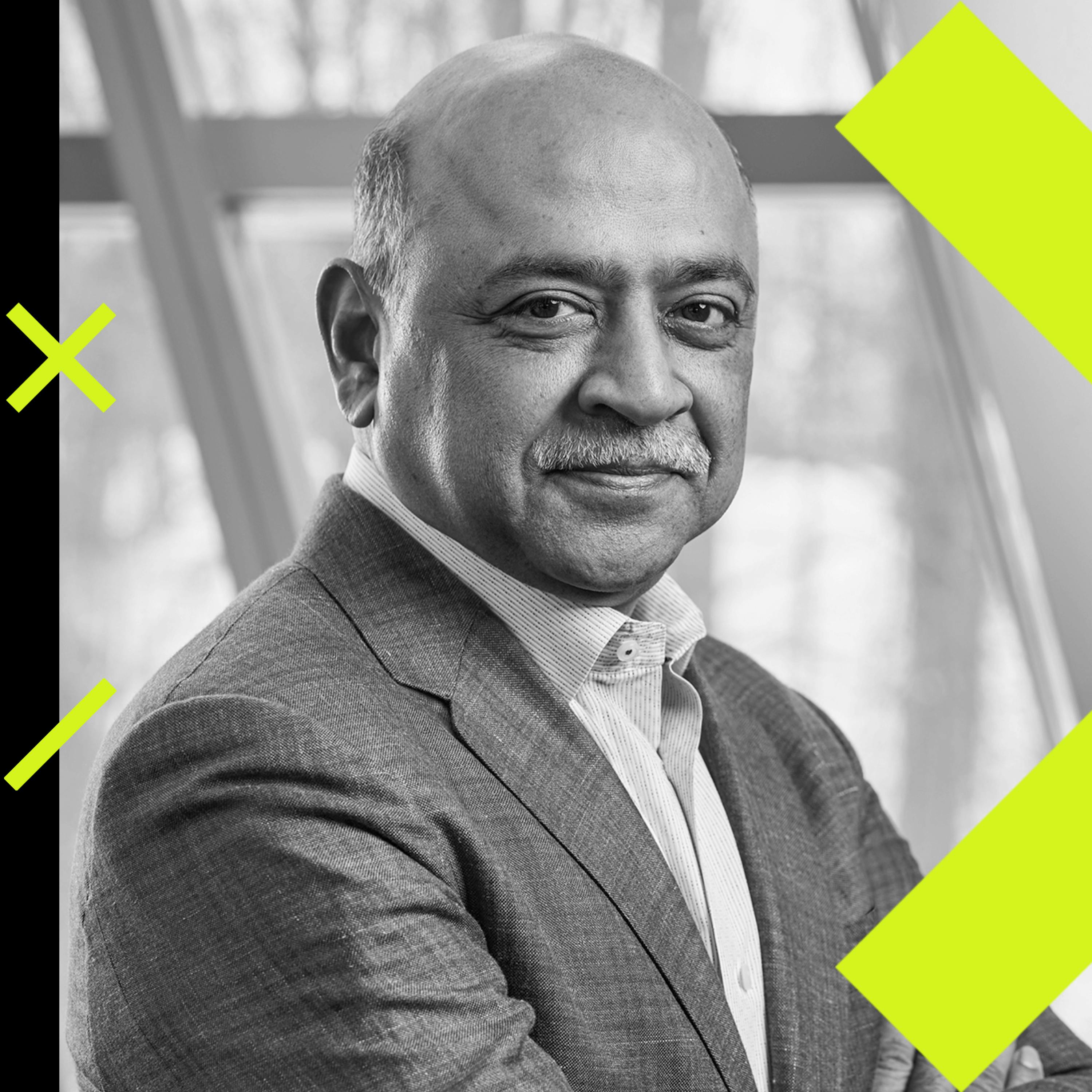
Decoder with Nilay Patel
Why IBM CEO Arvind Krishna is still hiring humans in the AI era
01:09:34
IBM was early to AI and quantum, but Arvind still thinks the bets will pay off
Loading summary
Transcript139 lines
- [00:00]
Sponsor/Ad Voice
Support for Decoder comes from Indeed. There's a talented person out there right now who could help take your business to the next level, but finding that person doesn't need to be a grind. Just use Indeed Sponsored Jobs. It boosts your job posting to reach quality candidates so you can connect with the exact people you want faster and it makes a big difference. According to Indeed data, Sponsored Jobs post directly on indeed are 90% more likely to report a hire than than non sponsored Jobs because you reach a bigger pool of quality candidates. Join the 1.6 million companies that sponsor their jobs with Indeed so you can spend more time interviewing candidates who check all your boxes. Less stress, less time, and more results. Now with Indeed Sponsored Jobs and listeners of this show will get a $75 sponsored job credit to help your job get the premium status it deserves@ Indeed.com decoder go to Indeed.com decoder right now and support our show by saying you heard about Indeed on this podcast. Indeed.com decoder terms and conditions apply. Hiring do it the Right Way with Indeed.
- [01:16]
Support for this show comes from SC Johnson. We've all been there. Choosing not to wear your new white shoes because there's a 10% chance of rain. Bending awkwardly over the tiny coffee table to enjoy a sip of your latte, not ordering the red sauce. Those feelings of dread are what we call stainxiety. But now you can break free from your stainxiety with Shout's Triple Acting Spray that has stain fighting ingredients to remove a huge variety of stains so you can live in the moment and clean up later. Just breathe and Shout with Shout Triple Acting Spray. Learn more@shoutitout.com.
- [01:59]
Success is never a given, especially in tech, where everything is evolving at breakneck speed. And if you're trying something that's never been done before, chances of success are even smaller. The difference between victory and catastrophe can all come down to following a counterintuitive instinct or ignoring conventional wisdom to make a bold decision. That's what Crucible Moments, the podcast from Sequoia Capital, is all about. Crucible Moments is back with a new season telling the unlikely triumphs at tech giants like supercell and Palo Alto Networks. New episodes are out now and available everywhere you get your podcasts and@cruiseablemoments.com Listen to Crucible Moments today.
- [02:47]
Neil C. (Host, likely Nilay Patel)
Hello and welcome to Decoder. I'm Neil I. Patel, editor in chief.
- [02:49]
Neil D. (Co-host or secondary host, likely Nilay Patel or Nick Statt)
Of the Verge, and Decoder is my show about big ideas and other problems. Today I'm talking with Arvind Krishna, the CEO of IBM. IBM is A fascinating company. It's still a household name, and it's among the oldest tech firms in the United States.
- [03:02]
Neil C. (Host, likely Nilay Patel)
Without IBM, we simply would not have.
- [03:04]
Neil D. (Co-host or secondary host, likely Nilay Patel or Nick Statt)
The modern era of computing. The company was instrumental to the development of a whole stack of foundational technologies in the 20th century, and it still has a lot of patents to show for it. But it's a lot harder for most of us to see what IBM has been up to in this century. Watson, the company's famous AI supercomputer, won Jeopardy. In 2011, but since then, as far as most of us are concerned, it's been mostly ads during football games and not a lot else. IBM has been busy, though, just not in a way most of us can see. It's fully an enterprise company now, as Arvin explains, and that business is booming. But there's huge change coming to the enterprise world as well. The AI technology that Watson pioneered, all that natural language processing and the beginning of what we now call deep learning, well, that's given way to generative AI and with it, a new way of thinking about how all the systems that run a company should be built and interact with each other.
- [03:53]
Neil C. (Host, likely Nilay Patel)
So I really wanted to ask Arvind.
- [03:54]
Neil D. (Co-host or secondary host, likely Nilay Patel or Nick Statt)
How he felt about IBM investing in all of that Watson technology and showing it off a decade before everyone else, only to have maybe made the wrong technology bet and maybe now miss out on the modern AI boom. Clearly, Arvin be pretty candid that the way IBM approached AI back then was off the mark. He says outright that pushing Watson so early into healthcare was, quote, inappropriate. But his take, as you'll hear him discuss, is that the infrastructure and research from that era weren't wasted because developers and companies can still build on top of that foundation. So, sure, Arvin says IBM got there a little too early, but he doesn't seem too concerned that IBM will be stuck on the sidelines. Of course, I did have to ask him. The AI industry has all of the hallmarks of a bubble. Even OpenAI's Sam Altman is saying it's a bubble. Arvin's more optimistic than I am, or maybe less cynical. He's pretty confident and is in a bubble.
- [04:41]
Neil C. (Host, likely Nilay Patel)
But you'll hear us compare the current.
- [04:42]
Neil D. (Co-host or secondary host, likely Nilay Patel or Nick Statt)
Moment to the dot com boom and bust of the early 2000s, before the smartphone came along, to realize the promise of ubiquitous online computing and how ultimately disruptive all that was in some negative ways for a lot of people, even though all of the bets from the early.com era eventually proved to be correct.
- [05:00]
Neil C. (Host, likely Nilay Patel)
The other thing I wanted to ask.
- [05:01]
Neil D. (Co-host or secondary host, likely Nilay Patel or Nick Statt)
Arvin about was if it isn't a bubble, who will win and what will that look like? Because it feels like Apple and Google managed to keep a huge amount of the profits from the transition to the online economy thanks to their hugely successful ecosystems and app stores that effectively collect rent from the labor and transactions of almost every other player that has an app. If the AI economy goes that way, will there be room for IBM or anyone else to get really big from it? Arvin's answer seems to be that he's playing a different long term game, which is where the company's big bet on quantum computing comes in. That bet still isn't making useful products for most people. But you'll hear Arvind explain why he has so much faith. This is a good one. We went all places and Arvind was remarkably candid. Okay, Arvind Krishna, CEO of IBM, here we go.
- [05:59]
Neil C. (Host, likely Nilay Patel)
Arvind Krishna, you are the CEO of IBM. Welcome to Decoder.
- [06:01]
Arvind Krishna (CEO of IBM)
Neeli, great to be here with you.
- [06:03]
Neil C. (Host, likely Nilay Patel)
I'm excited to talk to you. IBM is one of the most famous companies in the world. Candidly, I think most consumers, I don't know why anymore. It's very much an enterprise company. You have a lot of businesses. You have been there for 35 years. What has IBM been and what are you trying to make it today?
- [06:20]
Arvind Krishna (CEO of IBM)
You're right, IBM is an Enterprise. It's a B2B company, to use a more common parlance, as opposed to a B2C. Historically, IBM did do a lot of consumer products. We did the typewriter that people kind of knew, it was iconic. We did the IBM PC even though that's not been here for more than 20 years, and a few other consumer things along the way. But I would say candidly, for the last 30 years we really had no consumer products. So what does IBM do? Our role is to help our clients deploy technology that makes their business better. And so as you think about that, whether they're on multiple public clouds, whether they want to take advantage of the data, they want to get to their customers faster, that's kind of what we are really about today.
- [07:05]
Neil C. (Host, likely Nilay Patel)
I think a lot of people know the Watson brand, which IBM has talked about for years. Famously Watson competed on Jeopardy. Now that I think the brand has turned into Watson X, there's, there's a lot of what I would call like airport and football advertising around Watson aimed I think directly at CIOs of companies and not at consumers. But we saw was still all experience at advertising. How does Watson fit into the IBM brand? Because I think that's what people really hook onto.
- [07:30]
Arvind Krishna (CEO of IBM)
Yeah, if we think about the Watson brand, it did really well initially in putting air on the map. The Watson computer won Jeopardy. And that shocked people. Oh my God. First time really, that a computer could understand human language, think about sort of open ended questions and was more right than wrong. I don't say perfectly right, but more right than wrong. That woke people up, I think, to the possibilities of AI. And I will take credit, I think it got us going on the current AI journey. Where it fell off was that we did things that were a little bit wrong for the market at the time. We were trying to be too monolithic and we picked maybe one of the toughest areas, health care to go into, which I think was inappropriate. The world is ready to take these things as building blocks. Engineers want to open it up, they want to see what's inside there, they want to build their own applications. I want to use it for this, but not that. And so when LLMs came along, we got a chance to say let's rebrand things, let's really rebuild the stack and let's give people both the P spots, but also a lot easier capability. And so that's what Watson X is. So it builds on the brand that Watson is associated with, artificial intelligence. And I'm convinced that AI is a really big unlock for people. I kind of call it, it's the eighth technology, but that's a later conversation. And so it's, that's what the Watson X brand is all about.
- [09:00]
Neil C. (Host, likely Nilay Patel)
So let me push on that a little bit. You described Watson as a computer and it was a single computer that could go play Jeopardy. And then you describe the introduction of LLM technology and now this sort of ecosystem of building blocks where people can build stuff. What was the AI technology bet in the initial Watson computer? And do you think that that was the wrong bet as a technology? Because I have a lot of questions about LLMs as a technology and a bet we're making. But I'm curious, now that you've had that experience, what was the technology in the initial Watson computer and was it the right bet or the wrong bet?
- [09:32]
Arvind Krishna (CEO of IBM)
It's literally the same technologies that we talk about. So LLMs were not known at that time, but sort of, I'll call it various other neural network models were, you know, neural network models all scan span all the way from what we would call machine learning to what was beginning to be called deep learning. And so what was inside the Watson at that time was a mixture of machine Learning, a lot of statistical learning, which became the core of what became deep learning. Let me just note. The first big deep learning algorithm was a year after Watson won Jeopardy. Watson won Jeopardy. In 2011. 2012 was sort of the term came to be, but I will call it that. The early incarnations of those things were in there. Unfortunately, they were not there in a way that you could tune them, take one out, make it modular, and take another one. We were trying to give it to you. Monolith. That's what I meant by monolith. And that was the wrong approach, just to be straightforward. Right technology, wrong go to market approach.
- [10:38]
Neil C. (Host, likely Nilay Patel)
Can you draw the connection between that set of technologies and LLMs today? That the counterargument that I would give to you is, you know, I'll just pick on Google. Google has had a number of bets across machine learning and deep research and LLMs for a long time. They shut off LLMs early. Early. Like I remember Sundar demoing, like, I can talk to Pluto and no one knew what he was talking about. And then three years later, ChatGPT happened and Google was like, wait, we invented all of that? And that was their, you know, that was their technology bet that was their paper. Attention is all you need. You're saying you had it, but it feels to me like there was actually an inflection point where the industry picked a different technology. They picked LLMs. So can you just draw the connection for me?
- [11:21]
Arvind Krishna (CEO of IBM)
For sure. So in the deep learning era, let's call that 2010 through 2022, that 12 years deep learning made incredible progress. No question about it. Here was the catch. Deep learning to me was incredibly bespoke. You could take a lot of data, you applied a lot of people to label the data. It could do one task incredibly well. It really could. But tasks don't stay static. The data changes, the tasks change. If I have to redo all that work of the human labeling, the relearning, the retraining, I'm calling that bespoke and fragile. So the return was always a little bit out there. If you have a massive singular B2C task, maybe suggesting which photograph you may love or maybe picking which ad you may love, that applies, it's worth it because in a month or two months, I can use that model. I can get a lot of return. In an enterprise context, that's a little harder because it takes a lot more time to make up for all the costs that you put. So when LLMs came along. So to go back to the original work, you referred to it was sort of intent. And massive amounts of data labeling goes away. Wow, that drops the cost per half. You do a brute force approach using lots more compute and lots less people. Wow. The cost comes even down because tech always gets cheaper over time. So now half a dozen people, but using a ton of computer could do what previously may have been 30 or 40 PhDs, another 40 or 50 engineers over six months. You can now do the task that much shorter. Okay, that's a huge unlock. So in the short, it looked like a 2x advantage, a 4x. But if I compare from the beginning to the end, this is 100x advantage in terms of speed and tuning and deployability. That now looks industrial scale. So that means I can now take AI plus. These models can be tuned for many tasks, not just one, not all tasks, I'm not saying that, but many. That means that the applicability is massive. Also, when I want to ingest new data, I don't have to restart at the beginning. I can kind of add some. At some stage it makes sense to restart, but I can do a bit more there. All of these are massive unlocks, which is why I think it's the right technology to help AI scale massively, by the way. I don't think it's the end all, but we'll come back to that. But it is 100 times better than the prior.
- [14:03]
Neil C. (Host, likely Nilay Patel)
That's the turn that I'm really interested in.
- [14:05]
Arvind Krishna (CEO of IBM)
Right.
- [14:05]
Neil C. (Host, likely Nilay Patel)
There were all these shots at AI before deep research being one of them. There were machine learning algorithms deployed broadly across the industry. Apple was talking about the, you know, the neural accelerators in the iPhone years ago, but they didn't add up to what LLMs have added up to in the industry. I'm curious though. You said cost and you said the cost can come down. But you know, you and I are talking at the end of an earnings cycle and everyone's costs are skyrocketing, right? Their CapEx is skyrocketing. There's some layoffs associated with the increased CapEx. I do want to ask you about, but just purely on cost, it doesn't seem like it's that much cheaper. It seems like to win, you have to spend vastly more money. And that money does not at the moment have a defined roi. There's a lot of bets. Can you reconcile the idea that it's less cost in this industrial scale versus the actual expenditures we're seeing?
- [15:02]
Arvind Krishna (CEO of IBM)
I can, but I'm also going to, if you'll allow me to say there's a difference in the B2C world and the B2B world also. So first let's just talk about the cost. Are there huge amounts of capital, and not just capital, but also operating expense being spent on populating data centers with GPUs building out those infrastructures and the amounts of capital being committed are now up in the trillions? It's absolutely true. And that's what you just mentioned, that, hey, that doesn't sound cheap. That doesn't sound a lot cheaper than before.
- [15:38]
Neil C. (Host, likely Nilay Patel)
It doesn't even sound safe. Just to be clear. Like I don't even think that sounds safe. Based on the potential returns.
- [15:43]
Arvind Krishna (CEO of IBM)
Maybe we'll come back to that. What I meant by is going to get a lot cheaper. I mean, if I take a five year arc, what has the semiconductor industry shown? Time over time, over time. Go back to the beginning of the PC. You have half a dozen competing technologies, some begin to win. That was the beginning of Moore's Law, really. Right. Every two years you get a 2x advantage in what you can do. So I look at the semiconductor side and I say over five years we'll probably get a 10x advantage in the pure semiconductor capability. Amount of compute for a dollar you can spend.
- [16:21]
Neil C. (Host, likely Nilay Patel)
Got it.
- [16:22]
Arvind Krishna (CEO of IBM)
That's one second. Nobody has said that a GPU is the only architecture that is great for doing and deploying these large language models. There's certainly one. There are other companies coming up. We have a partnership with grok. They have a different kind. You have Cerebras, they have a different kind.
- [16:42]
Neil C. (Host, likely Nilay Patel)
That's Grok the processor company, not Grok. Elon's right.
- [16:47]
Arvind Krishna (CEO of IBM)
Grok the processor company. Yes. The word comes from computer science. A lot of people use the word. But yes, sorry, yes. Grok, the inferencing chip company. And GROK is. Looks like, at least at our first steps, looks like it's 10x cheaper. But that again, is not going to be the only design possible. So I think you get a 10x advantage on the pure silicon side. You're going to get a 10x from the design side. And then the third piece, I think there's a lot of work to be done around memory caching. How you deploy these models. Do I quantize them? Do I compress them? Do I always need the biggest? So there's a 10x from the software side. You put those three tens together, that's 1000 times cheaper. So I'm simply saying, hey, maybe you won't get all of it in the next five years. But even if you get the square Root of that, that's 30 times cheaper for the same dollar to be spent, if that. That's kind of why I believe this is going to play out. It is going to get a lot cheaper, but it'll take five years to play through.
- [17:49]
Neil C. (Host, likely Nilay Patel)
Five years right now, I think, feels like forever to most people living through this disruption. It feels like forever when you can see the hundreds of billions of dollars being deployed today in data centers that are running mostly Nvidia GPUs. I look at all of that and, you know, you talked about Moore's Law. I actually see a massive disincentive for Nvidia to come out with the next generation of its GPUs.
- [18:14]
Arvind Krishna (CEO of IBM)
Right.
- [18:15]
Neil C. (Host, likely Nilay Patel)
There's a lot of equity tied up in the H100 being the literal unit of currency that these deals are taking place upon. That's a weird dynamic. Right? But it sounds like you say there's going to be competitors that upend that dynamic.
- [18:29]
Arvind Krishna (CEO of IBM)
For sure. Not necessarily upend, but provide a lot more competition. And that's the nature of it.
- [18:34]
Neil C. (Host, likely Nilay Patel)
You kind of nodded in agreement when I said there was a disincentive for Nvidia to release the next generation of GPUs. Do you think that's true?
- [18:40]
Arvind Krishna (CEO of IBM)
I think that always when you have an incredibly valuable company who's making its profit stream from a few products, there's an inherent or organic disincentive to try to modify that. That said, I would never bet against Jensen's ability to even disrupt himself and go towards the next plateau if there is one. So you have both. So I think certain companies are able to disrupt themselves, others hesitate to do it. And that is actually what causes the up and down of companies in the tech.
- [19:14]
Neil C. (Host, likely Nilay Patel)
In the tech world, I'm obviously leading towards the big question, which is this feels like a bubble. A lot of people think it's a bubble. You have a markedly different view of how this industry will play out. You are investing. I want to talk about the fact that you're hiring while some of your competitors are doing layoffs at huge scale. But let me just ask the question directly and then we can go into everything else. Do you think we're in an AI bubble right now?
- [19:35]
Arvind Krishna (CEO of IBM)
No. Do I believe that there will be some displacement and some of the capital being spent, especially the debt capital, will not get its payback? Yes, but let's just sort of look at it. So this is a place. There is a B2C and there is a B2B world. There is a lot of common tech in both but let's just look at the B2C. If in the B2C you build a set of models that are very attractive and half a billion billion people become consumers of that, which is kind of the current numbers roughly right. If you build a slightly better model by spending another $50 billion and that can attract another 200 million users, seems to make economic sense. And if you can then spend another 50 and get another 200 million into yours. So this is a race towards who can get more and more of the world's seven and a half billion people to become subscribers on a given model. Because then the next bet becomes, well, that network scale and those economies of scale will allow you to go succeed. And we've seen that movie play out. That was social media in the last generation, going back 25 years. So I react with it makes sense for them now. If 10 of them are going to go compete, then we also know that maybe two or three of them will be the eventual winners, not all 10 in that massive scale world. So to me, it makes economic sense that they're chasing that now. But my point being, not all of that will see a return. By the way, if I go back to the fiber world, I would look at you and say, if I look at fiber optics in the ground back in the year 2000, not all of those people got a return. However, this is the beauty of capitalism, and I'm calling it a beauty. We spend the money, it gets corrected back to 30 cents in the dollar. At that point, it makes an incredible amount of sense for somebody else to get that asset and turn it into a profit stream. But it wasn't all got lost. As I said, two or three are going to make a ton of money and the others not. And so I think the equity being put in will actually get a return. Some of the debt will not.
- [21:40]
Neil C. (Host, likely Nilay Patel)
I love the fiber comparison. And if you'll indulge me, I want to sit in it for just a minute. I was very young when the fiber rollouts were happening. I was very excited to get faster Internet access. And I remember that bubble well. And part of that bubble was we're going to build infrastructure for the Internet. And the thing that really drove the bubble was we'll move the entire economy onto the Internet. And that didn't work right. There's like the pets.com IPO, and that was the sign that we hadn't quite moved the economy, but we built the infrastructure. And the important thing, and I think the important difference is the fiber in the ground didn't go bad, right? We just had Gary Smith, who's the CEO of Sienna. They do fiber multiplexing. They can get infinite returns on that fiber that was deployed 30, 40 years ago to this day. And their technology helps them build data centers, which is really why he was on the show because he really wanted to tell everyone that his technology could build data centers. The GPUs go bad, right? They're failing at a rate between 3 and 9% already in the data centers. And there might be an H200 or the chip you're investing in with Grok might displace the H100. So all of this capex is not going to be here 30 years from now for the next generation of entrepreneurs like Gary to build upon and create more capacity width. We're just going to throw it away.
- [22:50]
Arvind Krishna (CEO of IBM)
No, no, no, no. So let's decompose it. So you're building a physical data center that's a lot larger. I think concrete and steel survive. Next to it is a power plant. We need the electricity. Actually over time I believe those power plants will even get hooked up to the grid, which is even better than for the national infrastructure that's useful now. The fiber coming out of them, the networking inside these places, the storage inside these places, the the CPUs inside these places are all useful. I'll acknowledge right now there is a very high failure rate. But being a bit of a semiconductor geek though, I'm not anywhere near as deep as some of my friends and competitors in those spaces. If you can run something at 3 GHz, if you try to run it at 4, it will actually run has a higher failure rate. If you try to run it at 300 watts of power, maybe it's great. If you run it at 400, maybe it has a higher failure rate. So if today you just need the performance so you can train a model that much faster, it actually is worth it to tune it that I'm okay to have that failure rate. I got software that worries about moving stuff around, but you can detune it slightly and get to higher resilience. So I think that is actually a design point that's not really a bug, so to speak. Now, over time do I acknowledge that these will move up? I began by saying I think in five years our semiconductors will be 100 times better. So you're right, there's a five year depreciation to the GPU or the sort of the compute infrastructure. But the other half is useful. But in five years you don't throw away all the capex, you throw away a little piece and you replace that with something that is better at that point.
- [24:36]
Neil C. (Host, likely Nilay Patel)
I think the specific comparison to fiber are making and maybe it's too pedantic, but the fiber was in the ground and then it was there. Right? It did not incur a recurring cost to the people who wanted to use it. Outside of can you create more capacity by multiplexing the fiber?
- [24:51]
Arvind Krishna (CEO of IBM)
You're right. The fiber in the ground is endurable. Maybe not forever, but at least for 100 years. At some point, even glass actually begins to occlude and do all kinds of weird things. But it's good for 100 years. But people also built a lot of end stuff on top of all of which had to be thrown away. I mean like you're now forgetting all the failures. People were building atm. People thought that they would have built really intelligent video streaming and put the guts of that inside. People were talking about doing wavelength division multiplexing. Since you talked about CNN and the end, it became simpler. Here's dark fiber. It's a dumb pipe. Go throw your bits in it at a terabyte. The intelligence belongs at the cloud end. That took 10 years to unfold. So there was actually a change in how it transpired. I mean, I'm sorry to be that geeky about it.
- [25:41]
Neil C. (Host, likely Nilay Patel)
No, I'm here. This is why we're here. This is why I asked the questions. We have to take a quick break. We'll be right back.
- [25:56]
Sponsor/Ad Voice
Support for today's show comes from Wondery and their podcast Business Wars. In just a few years, Ozempic has gone from diving diabetes drug to a global phenomenon. But behind the miracle claims, another battle is raging. The demand is exploding. Supply can't keep up. And as drug maker Novo Nordisk scrambles up to produce more, its rival Eli Lilly is racing to take the crown. Meanwhile, a darker market is emerging. Shady online sellers are offering cheap, unregulated knockoffs. And now millions are injecting mystery vials with no FDA oversight. In their latest season, Business wars is diving into Ozempic and the billion dollar showdown between Big Pharma's biggest players. Can they close the supply gap before one bad vial destroys everything? Follow Business wars on the Wondery app or wherever you get your podcasts. You can binge all episodes of Business wars early and ad free right now on Wondery plus. Zoe, the mall's about to close.
- [26:56]
Neil C. (Host, likely Nilay Patel)
It's impossible to do anything in 15 minutes.
- [26:58]
Arvind Krishna (CEO of IBM)
Oh, it's possible, Harvey. I mean, you can switch to T mobile in just 15min. So you think you can find your auntie a sweater?
- [27:03]
Sponsor/Ad Voice
Come on, you spent an hour buying jelly beans.
- [27:05]
I know.
- [27:06]
Arvind Krishna (CEO of IBM)
I do love jelly beans.
- [27:07]
Neil C. (Host, likely Nilay Patel)
Trust me.
- [27:08]
Arvind Krishna (CEO of IBM)
Now you can switch to T mobile.
- [27:09]
Sponsor/Ad Voice
In just 15 minutes.
- [27:10]
Arvind Krishna (CEO of IBM)
Plus you'll get America's best network. No, no.
- [27:13]
Sponsor/Ad Voice
Maybe I should switch to T Mobile right now.
- [27:15]
Arvind Krishna (CEO of IBM)
This holiday.
- [27:16]
Sponsor/Ad Voice
Switch to T mobile in just 15 minutes from your phone. Check out in 15 minutes or less per line. T Mobile is the best mobile Network in the US based on analysis by Ooklo Speed Test Intelligence data 1H 2025.
- [27:25]
Every day millions of customers engage with AI agents like me. We resolve queries fast, we work 247 and we're helpful, knowledgeable and empathetic. We're built to be the voice of the brands we serve. Sierra is the platform for building better, more human customer experiences with AI. No hold music, no generic answers, no frustration. Visit Sierra AI to learn more.
- [27:55]
Neil C. (Host, likely Nilay Patel)
Support for the show comes from Odoo. Running a business is hard enough, so why make it harder? With a dozen different apps that don't talk to each other? Introducing Odoo. It's the only business software you'll ever need. It's an all in one fully integrated platform that makes your work easier. CRM, accounting, inventory, E commerce, and more. And the best part, Odoo replaces multiple expensive platforms for a fraction of the cost. That's why over thousands of businesses have made the switch. So why not you try Odoo for free@odoo.com that's o d o o.com. Welcome back.
- [28:40]
Neil D. (Co-host or secondary host, likely Nilay Patel or Nick Statt)
I'm talking with IBM CEO Arvind Krishna about the infrastructure of it all and whether all the stuff IBM is building is really as bubbleproof as he's betting.
- [28:48]
Neil C. (Host, likely Nilay Patel)
I would actually argue that was one of the most exciting periods in tech when no one knew how it would work and there were many, many more shots being taken. It all did pop in. A catastrophic bucket did go down, but it was very exciting.
- [28:59]
Arvind Krishna (CEO of IBM)
It did go down. And then today you would turn around and say, but all the companies that got built on the back of that clearly proved that that investment was worthwhile. If I look at it at a national or an aggregate investor level, while some people did lose a lot of money, by the way, some people made a lot of money.
- [29:15]
Neil C. (Host, likely Nilay Patel)
I want to take the other part of that bubble comparison, which is we're going to move the entire economy to the Internet. You brought up social media. I would broadly characterize that as someone who covered it very, very deeply from the beginning of the iPhone to now as we're going to move the entire economy onto your phone. Right. There was first we're going to put it all online and maybe we don't have the distribution because we're not all going to look at CRT monitors on our desktop. And that didn't happen. But then we all got phones and the idea that we could move an enormous amount of the economy, the consumer economy, at least, onto our phones, it happened.
- [29:45]
Arvind Krishna (CEO of IBM)
Right.
- [29:45]
Neil C. (Host, likely Nilay Patel)
I mean, that occurred. We're all living with the results of that today. Do you feel like the argument, at least in the consumer space as you've described it, is we're going to move that app economy to AI because that's how I see it, is a bunch of people who got rich moving the economy onto smartphones. It's that same class of investors who now think they can run the playbook again with AI and maybe we'll re architect the applications with mcp and maybe there'll be agents using the websites instead of people. But the argument from the same set of characters feels broadly the same to me.
- [30:16]
Arvind Krishna (CEO of IBM)
If you don't mind, maybe I'll go a little bit deeper onto your first part.
- [30:20]
Neil C. (Host, likely Nilay Patel)
Sure.
- [30:21]
Arvind Krishna (CEO of IBM)
You're absolutely correct. At the front end of the economy kind of moved on to the phone the moment the phone gave you access so that it could be with you everywhere. You were not just anchored to a desk with a laptop or a desktop. It definitely was a massive unlock. Let's acknowledge that. Right. But there is a physical economy still. I mean, I always talk about 60% of the workers, even the United States, are still frontline people who do construction, people who have warehouses. If you're buying a tangible good, it's still coming from a warehouse. Maybe not from a retail store near you because they had a front end, but in the back there's a warehouse and a truck driver and maybe multiple routes of distribution. We still go to restaurants, there's still food, there's still groceries, there's physical health care, there's all of that. It becomes more efficient, easier, more convenient. So if I now say I don't have to spend that much time, I'm going to have an agent or an AI front end that helps unlock even more and puts together four or five things that I have to put together in my head. I completely agree with you. Why wouldn't we want that to go happen? That is going to go happen. You can see the early instances of that already happening. And now why it's so appealing is because it gives a chance to people without me taking any Names to reform who are the biggest players and it gives a chance that there will be some disruption. And then the other side, I actually think it goes beyond consumer into the enterprise. I actually believe there's going to be a billion new applications written. Now if you think about the smartphone ecosystem you talked about, people talked about half a million, a few million. I think this could be a billion because there may be a few million that sit on the consumer side. And then if every enterprise has, let's call it 1000, you go across the number of enterprises times 1000, then that unlocks a lot more, if that makes sense.
- [32:20]
Neil C. (Host, likely Nilay Patel)
It does. Let me ask you one question there and then I do want to ask you the decoder questions and I want to talk about IBM specifically a little bit that move. We're going to put all the economic activity onto the smartphone. In many ways that that economy of applications. The biggest winner were Apple and Google because they collected an enormous amount of rent on the back of that transition, right? The App Store taxes and the fees. And maybe that's going to get unwound now with whatever antitrust litigation or whatever's happening in Europe. But it happened, right? They collected a huge amount of fees. They are some of the richest companies in the world. On the back of that, Apple just reported its quarterly earnings that their services revenue is higher than ever. On the back of App Store fees. That's what that line really is. I think they run the TV business just to pretend the reality is not the reality. Do you see that playing out in AI? Because I look at OpenAI announcing what looks like an App Store. I look at Google announcing that Google search will have inbuilt custom developed applications as you search. It's very cool. But I see, oh, we have these points of centralization emerging again that don't look like Apple and Google and maybe there's competition for that. There might be competition for that in the enterprise. Do you see those point those same points of centralization?
- [33:31]
Arvind Krishna (CEO of IBM)
I wouldn't jump to that. We know who's the winners today because we are kind of in the first innings of the game, there will be some winners. How about if I agree with you.
- [33:43]
Neil C. (Host, likely Nilay Patel)
On that, but do you think those winners look like those central points of control that we saw in the smartphone?
- [33:47]
Arvind Krishna (CEO of IBM)
There will be a few different. So if you go back to the smartphone analogy, you had one who built a vertically integrated stack. It was an easier, more convenient device. And then to get access to that device, people had to come into the App Store. And so that was that model the other model said, we're completely open, it's an Android was the operating system. However, to get access to everything else now you come into the App Store or you come into the search. And that was a second. It wasn't identical, but it was similar. And so those became the two entry points, so to speak, to get access to the end individual. And that's why they could charge their appropriate, you're calling it rent, which is from an economics term. Let's say they could charge an appropriate margin. Maybe from a business sense, yeah, I.
- [34:39]
Neil C. (Host, likely Nilay Patel)
Think Tim Cook would call it a margin. But the developers I know feel very differently about that margin.
- [34:44]
Arvind Krishna (CEO of IBM)
The reason I'm asking, but those who build out that massive infrastructure, there is also a massive amount of cost that goes into. It's not like they can maintain it forever. I mean, as the Chinese have shown, you can build competing products. If you can keep running ahead, then people will prefer these devices. But if at the end of the day, the value is in the apps today, as you're saying, then if that app is available on something else, if the friction and if the innovation in the main platform slows down, people will switch. It'll take maybe three to five years. So it's not like it's a guaranteed return forever. It will switch. And as many other companies have seen, that switch takes a few years. It doesn't take decades. When it happens though, it's disastrous to the original company. Some manage to recover because they wake up and say, hey, wait a moment, I gotta change. Some don't.
- [35:36]
Neil C. (Host, likely Nilay Patel)
I think this brings me to IBM, right? This is the process you're in with IBM and IBM has been in for many years now. You took over as CEO in 2020. You'd been at the company for almost 30 years when that happened. I asked everybody these questions. You have a unique perspective here. You'd been at the company for a very long time. You took over as CEO. How is IBM structured when you took over and how have you changed that structure now?
- [35:59]
Arvind Krishna (CEO of IBM)
It's much more about culture, focus and what we do and how we do it than sort of the formal organization structure. So if you say that you got to be focused on innovation and you got to be focused then on where you can provide a unique value back to your clients. So that's kind of the first question. And I am clear. Our sweet spot is helping our B2B clients succeed. So you say, okay, well, that's a very big remit. What in there? So I held two points of view that were somewhat unique. One I don't believe that the majority of our customers are going to go to a singular public cloud. Some will, but the majority will not. First of all, people outside the US tend to want to be somewhat split between maybe an American cloud and something more sovereign. Okay, then there are people who use plenty of SaaS properties. There's a huge amount of economic value in what they've already written in their pre existing applications. I'll use the word hybrid to describe that. Is there a place for a vendor to have absolutely leading edge tech to help our clients in that journey? So that's the hybrid approach that we took and that clearly over time has shown to be of incredible value. About 60% of the total spend is outside the U.S. even inside the U.S. anyone in a regulated industry is going to be hybrid in some sense. So that's kind of the first. The second was let's focus on where AI can be deployed in the enterprise. Let's not go try to go compete. I will not try to compete with Google and building a chatbot that goes, what's the current number? I think they Talked about yesterday, 650 million active subscribers. That's not where we have brand permission and brand credibility. But can I walk in to a health insurance company and say I'll make sure that your clients, in this case patients health data is protected but let's help AI unlock to make those people feel even happier, get quicker answers, easier answers. And we tend to have the trust with those people that we've never in 114 years misused that data, not even once. So you get that and then you can go give them the tech and get that deployed. So we picked those two and then I said, what are we really good at? We're really good at building systems. And so the third bet that I decided early on is we're going to make a bet on Quantum. Now let's see whether we can get it from being a science to being an engineering challenge. And then once it's an engineering challenge, then how do we scale it to really get deployed? That was really the big inflection we made. So as opposed to trying to do lots of things. So that meant, I use the word innovation. So that meant commodity services have to leave the company because you can't do both. It meant if we are going to be hybrid, I got to partner with everybody else that I talked about. So you begin with a clear view of what should be done and then you say, then it doesn't matter, I'll make all the hard decisions of Changing the way the sales teams are paid of changing the incentives of all the executives to align with what's then needed to make those things succeed. Sorry for a really long answer.
- [39:24]
Neil C. (Host, likely Nilay Patel)
No, it's great. One of the things that I think about all the time, a trope on the show, is that if you tell me your company structure, I can predict like 80% of your problems. Right. You might say culture and structure are divorced, but I see the connection and they feed off each other. So you were at IBM for a long time. Vanishingly few people will ever interview to be the CEO of IBM. What was that process like? Did you come in saying, this company is focused all wrong, we got to let go of the commodity stuff. I'm going to make these changes. And then once you had decided to do that, how did you actually change the structure of the company to focus on those things?
- [40:00]
Arvind Krishna (CEO of IBM)
I probably didn't spend 30 years aspiring to this job just to be upfront. I think it was more of a process of discovery, even for myself, in the last couple of years before that. So I made the hybrid observation deeply in 2017, as I was making that, I said, okay, how do I test this? So I actually had a partnership with Red Hat. And I said, is this why you.
- [40:28]
Neil C. (Host, likely Nilay Patel)
Have a red hat? I noticed you have the red hat behind you.
- [40:30]
Arvind Krishna (CEO of IBM)
I have a red hat there because, remember when we made that decision, that was 2018, that we announced, it took a year to get through regulators to close was 30% of our market cap. Very few companies spend 30% of their market cap on a conviction and a belief. So I keep the red hat there because to me, it was clear if that conviction turned out to be wrong, I should be fired. I actually don't. People hesitate to say those things. And I say, if I'm that wrong, I should not be working here. And that is why I keep the red hat as a reminder to myself that not only must you have the conviction, then you must do the really hard actions it takes. So that's the culture part of making that conviction succeed. Because otherwise people will just fall back into the lanes they were in. There's comfort in doing things the way they've always done them.
- [41:22]
Neil C. (Host, likely Nilay Patel)
But just put me in the room. It's 2020. You're going through the interview process with the board. Did you have a deck that says, we're doing too much commodity stuff? I'm going to cut it down and we're going to focus on these areas. And the big bet step change that.
- [41:34]
Arvind Krishna (CEO of IBM)
Quantum would be my deck was three pages of prose. It was not like 100 pages of analysis. I actually believe that you should talk about what you want. I said we have to grow. And my view is very simple. You got to grow well above GDP growth, otherwise you're not going to be that relevant into the future. Okay, if you're going to grow, where are you going to grow? We are. If you look at us, our brand permission is fundamentally being a technology company. Okay, that was code for high innovation. So that means now this is where people, I think many companies fall short. If you're clear about that, then things that don't belong in that should not be in the company. So that is why the spin outs that we did, which did take a couple of years to get done, then I said we have to grow in software because that is where value is perceived by our clients. So if you're going to grow in software. So you talk about structure, but that becomes a big fundamental change. That's where capital allocation, that's where resource allocation goes and that's where you got to put way more investment than you historically have. Then if you're going to go with partners, how do you fundamentally line up with partners? So that is organizational change because you got to say, how do the sales teams get paid? How do you have the right incentives? So those are sort of maybe the three first really big decisions for me in the first two years. As you do that, you also realize people tend to be very risk averse. How do you unlock them into taking risk? To me, there's no risk free path to success. If you want to be risk free, you're going to be slammed against the bottom end of performance almost always. So how do you unlock risk taking in people in a way that they feel motivated to do it more often than not?
- [43:22]
Neil C. (Host, likely Nilay Patel)
This leads me into the second decoder question I ask everybody. I have a sense of it. I'm curious how you will describe it. How do you make decisions? What's your framework for making decisions?
- [43:30]
Arvind Krishna (CEO of IBM)
You've always start with, is there a value? If it's a decision that's going to impact what we do and how we do it, does a client benefit from this new way of doing it? If you're pretty convinced of that, and I'll come back to how you kind of get your conviction around it. I always believe that one should triangulate. So I always will talk to a number of people on the inside, on the outside. Not maybe with a full description, because sometimes you don't want to give, but enough to validate my assumptions or my what could the possible victory be if we made that big decision? You arrive at a conviction you triangulated with a few people and then you ask yourself the question what needs to change inside if we really want this to go all the way? And once you arrive at conviction and all those you then are able to go execute. I build on my own strengths, so I think I'm a reasonably deep technologist. I think I generally can understand where the tech can go, but I may not always fully understand what a client can do with the tech. That's why the first piece is really important. Then I triangulate because hey, I don't know, like talk to people, talk to somebody inside. I don't mind at all reaching like 10 levels down in the arc to talk to somebody who I think has an opinion on that topic or knows about it, talk to possible clients about it, talk to partners about those things. It just informs your opinion. And maybe even more than that, when you're out talking to them. In any case, keep your ears open for what they say that could actually inform some of those things later.
- [45:08]
Neil D. (Co-host or secondary host, likely Nilay Patel or Nick Statt)
We have to take another short break here. We'll be back in just a minute.
- [45:20]
Sponsor/Ad Voice
Support for the show comes from Charles Schwab. At Schwab, how you invest is your choice, not theirs. That's why when it comes to managing your wealth, Schwab gives you more choices. You can invest and trade on your own, plus get advice and more comprehensive wealth solutions to help meet your unique needs. With award winning service, low costs and transparent advice, you can manage your wealth your way at Schwab. Visit schwab.com to learn more. Mercury knows that to an entrepreneur, every financial move means more. An international wire means working with the best contractors on any continent. A credit card on day one means credit creating an ad campaign on day two, and a business loan means loading up on inventory for Black Friday. That's why Mercury offers banking that does more all in one place, so that doing just about anything with your money feels effortless. Visit mercury.com to learn more. Mercury is a financial technology company, not a bank. Banking services provided through Choice Financial Group column NA and Evolve bank and Trust members. FDIC.
- [46:30]
Black Friday Savings are here at the Home Depot, which means it's time to add new cordless power to your collection. Right now, when you buy a select battery kit from one of our top brands like Ryobi or Milwaukee, you'll get a select tool from that same brand for free. Click into one of our best deals of the season and stock up on tools for all your upcoming projects. Get Black Friday savings happening now at the Home Depot. Limit 1 per transaction exclusions apply. Full eligible tool list in store and online.
- [47:01]
Running a business comes with a lot of what ifs, but luckily there's a simple answer to Shopify. It's the commerce platform behind millions of businesses, including Thrive Cosmetics and Momofuku. And it'll help you with everything you need, from website design and marketing to boosting sales and expanding operations. Shopify can get the job done and make your dream a reality. Turn those what ifs into Sign up for your $1 per month trial at shopify.com specialoffer.
- [47:33]
Neil C. (Host, likely Nilay Patel)
Welcome back.
- [47:34]
Neil D. (Co-host or secondary host, likely Nilay Patel or Nick Statt)
I'm talking with IBM CEO Arvind Krishna about IBM's biggest, weirdest and maybe most interesting bet of all, Quantum computing.
- [47:42]
Neil C. (Host, likely Nilay Patel)
Let's put that into practice on kind of the farthest bet you're making, which is Quantum. All the big tech companies have Quantum divisions. I've had Jerry Chow, who runs part of your Quantum team, on the show before. That was a great conversation. I've looked at a lot of rooms where someone tells me that this is the coldest place on earth to run their quantum. Whatever qubit they're trying to generate on that day. None of that has paid off yet. Right? We're not at close to what they call utility scale computing in Quantum. That's not something your customers are asking for yet, right? That's outside of the purview of the structure and the culture. You're deciding that's a big bet that there will be a massive step change in how we build computers that unlocks vastly more value for everybody. And you have to keep that investment even through all the turmoil and all the data center investment that everyone else is doing. And you know, Amazon saying we're laying off 14,000 people because of AI, while you're saying we're going to hire more college graduates than anybody else. What is the decision to stay focused on Quantum in that way? How do you, how do you maintain that decision?
- [48:41]
Arvind Krishna (CEO of IBM)
You are right that you can't go check it with a customer because they don't know what to do with it today. But that's not fully true. So the first five years, 2015 through 2020, you got to have a belief of what it could do. And maybe because of some of my graduate school math background, it was like, wow, if we can do that, I can immediately see what kind of problems could get unlocked. But trying to explain that to anybody but the people excited in the field is impossible. So let me Completely acknowledge those five years is about an internal bet on a set of people and a possibility. Okay, but 2020 onwards, we began to say, got it. These are not utility scale. Let me acknowledge it. They're full of errors. They are small clients still get excited by it. So I did do a full check. We have 300 clients, not commercial. There are 300 people working with us in a, let's call it a research mode. 100 that are pure in the end, commercial, 100 who are in the world of materials or medicine, and 100 who are pure academics. Right? Rough buckets. That's why HSBC proved to itself we could do bond trading, pricing on it. Vanguard proved to itself that if they get big enough, we could do a portfolio that better appeals to your needs. You have Daimler working on EV batteries, I have Boeing looking at corrosion on material. So there is a proof point. They're not saying they'll buy it the way it is today. All they're saying is, hey, if you get to that point, this is really interesting to us. So there is a validation even from clients. And then I said, how do I know there's enough interest? So I asked the team, put the software out open source. Now I'll say for many people, including some of the current AI, that's not a common, this thing that you do. Early on I said, why open source? How will developers and universities use this stuff and get any excitement if you put a price to it? So we put out all our software open source. The fact of the 650,000 people globally who use it, hey, it tells me that there is excitement and there is a movement and people are hungry for a new approach to do other kinds of problems. Those were the two validations on my framework that were useful. If that 650,000 had been 100,000, I might still be okay. The fact that it's 650 tells me there is real, real traction. But if 650,000 had been 1,000, I would have told my people, guys, this is your physics friends. This is not a market.
- [51:34]
Neil C. (Host, likely Nilay Patel)
So I'm curious about that, right? That is the kind of long term bet and the sort of early interest from people who think, okay, this type of computing will let us do many more things. And you know, it's funny, on the consumer side I hear about it in terms of, well, when there's quantum computing, we'll need quantum proof encryption. And it's like there's a secondary market now based on whether or not you will succeed in quantum computing that almost has Nothing to do with the quantum computing succeeding. It's a bet, right? It's a strange hedge against your success or Microsoft's success or whoever else is doing quantum. What does the actual success look like? Is it a step change in computing that is as big as we're going to re architect all the computers around AI that we're experiencing today? Is it bigger than that? What does that feel like to you?
- [52:21]
Arvind Krishna (CEO of IBM)
I actually think that it's an and. So if I call it, there is CPUs. GPUs did not replace CPUs. It was an and. Now GPUs are priced much higher than CPUs. So the market is bigger for GPUs than CPUs. But it was a complete and it didn't displace what AMD and Intel and ARM do just to be straightforward.
- [52:45]
Neil C. (Host, likely Nilay Patel)
I feel like intel feels differently about that right now.
- [52:47]
Arvind Krishna (CEO of IBM)
Sure, I agree. Many other issues. The number of x86 chips being sold per year is as high as it has ever been. How about if I phrase it that way? Fair enough. Yeah. Okay, so it's an and. But the next one, if it has more immediate value, you can price at a different price point. Does that make sense? Yeah, I think G is quantum. So let's just use the word QPUs just to keep it simple when they come are going to have an incredible value because they can solve problems that you actually cannot solve on GPUs and CPUs in any economic terms in the near term, the same way. Look, everything you can do on a GPU you could do on a CPU just to be straightforward, but it's going to be a thousand times slower and not be maybe economically feasible. So GPUs opened up a whole class of new problems. GPUs are similarly going to open up. It's an and. It's not a displacement. But given this finite dollars in the world, if there's an and and, we have a first mover advantage like one of the companies you named did in GPUs. That opens up a possibility that the market is that big. So we did work because I don't want to my point of triangulation. So we asked a couple of our friends in the consulting world, BCG McKinsey, hey, tell us if we can arrive at some utility point, what do you think the value is? They both came back and gave us a pretty consistent answer very slightly. But think of it being we think there's 4, 5, 6, 700 billion of value in the early years per year. Great. How much do you think the tech world could get out of that? Probably 20 to 30% seems reasonable. Always. I said, okay, that's the size of the prize that we're going to chase now. How much of that share will we get versus others is sort of the question. And that's the journey we are on for the next five years.
- [54:47]
Neil C. (Host, likely Nilay Patel)
So five years, you think you'll be able to pay off the quantum investment in five years?
- [54:50]
Arvind Krishna (CEO of IBM)
It's really hard on hard engineering to put like a dot and say, you know, this is not like building the next mainframe there. I really know what I'm doing. I know exactly how many months it'll take. And I could put here, I kind of gave it a spectrum. Will we get to something remarkable in three, maybe three and a half years? I'm going to give it low odds. It's possible, but it's maybe 20, 30%. Can we get there in four years? My odds go way up. Can I get there in five years? My odds go really high. So that's why I say five. Not not to say it's really, is there? Yeah, I think it'll be a bit of a spectrum. You'll see some really early adopters come in. I'm hoping in three to four, then there'll be more at the end of four maybe and then the risk decreases for people after that.
- [55:34]
Neil C. (Host, likely Nilay Patel)
That's a lot of action in 24 months. That'll be a very exciting two year period if you hit it. This is really interesting to talk about in comparison to AI, right? You're talking about how you estimated the market size for a nascent technology that you have to develop actual capabilities for. You estimated how much of that market share you could take. And then you're obviously making some investments based on the potential return.
- [55:59]
Arvind Krishna (CEO of IBM)
And the last part, why us? I assume all of this, which I talked about, others could do. So then why would we succeed? Because I think it's much more. There's so much talk and you mentioned the various qubit technologies and cold rooms and alternate technologies and I actually love the fact that there is that much. But that's not building a computer. And I always tell people you need a great QPU and a great qubit. Absolutely. You also need a way for them all to talk to each other. You also need a way to go control all of them. You also need a way that it functions by itself without six quantum physicists standing in the room tuning it.
- [56:42]
Neil C. (Host, likely Nilay Patel)
Now this is a great employment plan for quantum physicists.
- [56:47]
Arvind Krishna (CEO of IBM)
So you need all those things And I think we are one of the unique players who have a lot of those skills in house. So it unlocks people to go do that and really, really motivates them and excites them. And I think that that is an advantage I think we have today. In terms of the underlying skills.
- [57:06]
Neil C. (Host, likely Nilay Patel)
I would call that a very sober, very thoughtful, conservative, almost approach to deploying billions of dollars in capex against a technology that has not yet proven itself in the market. Right. You've made some estimates, you have an idea of what your company can do to add value. You're going to do the hard research and then you're going to get there. I would just compare that to OpenAI. Right. In the AI market that we see today, just this week, you know, OpenAI, they converted to a for profit. There's reportedly a trillion dollar IPO coming. There's everything we've talked about in the enterprise space where you can see maybe how AI and enterprise can help accelerate use of data and all this unstructured data that companies have fun. But the bet is in the consumer space, we're just going to build a full fledged agent that's going to run around and do stuff for you and that will replace your smartphone. And none of that seems sober or conservative or based on a real market estimate or even whether consumers want that product. Right. It's, it's just a pipe dream. How do you reconcile those two things really? The bet is there will be AGI. At the end of the day, the whole market is someone's going to figure out AGI and then all this will have been worth it. The press release from Microsoft announcing the restructured deal with OpenAI several times mentions in bullets that the terms expire when OpenAI declares AGI. I read that and I thought that this is the most remarkable press release I've ever read in my entire life. No one can even define this term. And now two of the richest companies in the world are issuing press releases saying their deal will restructure itself. When that happens, that's very different than your bet on Quantum. How do you read that discrepancy of.
- [58:48]
Arvind Krishna (CEO of IBM)
The ones you mentioned? One has a huge amount of cash flow and ability to invest, so for them it's non existent. That's something that could be incredibly profitable. The other one is a classic Silicon Valley startup, I'll put it that way. Some will succeed, some will not. I'll offer you an opinion. First. I don't think deeply about the whole consumer side and how much money they'll spend. It's interesting to observe, but I'm not going to pretend that I deeply.
- [59:15]
Neil C. (Host, likely Nilay Patel)
Well, let me ask you this question. Do you think there's an enterprise ROI that would justify the spend we have today? Because I look at it and I say absent AGI, this spend might not be worth it.
- [59:25]
Arvind Krishna (CEO of IBM)
You said I'm a little numerical, I'm a little geeky, I'm a little like.
- [59:30]
Neil C. (Host, likely Nilay Patel)
I'm having the time of my life.
- [59:31]
Arvind Krishna (CEO of IBM)
Navigation, by the way, I love it. So at today's costs. So let's just ground in that because anything in the future is speculative. It takes about $80 billion to fill up a 1 gigawatt data center. Okay. That's today's number. So if you are going to commit 20 to 30 gigawatts, that's one company, that's 1.5 trillion of CapEx. And to the point we just made, you got to use it all in five years because at that point you got to throw it away and refill it right then. If I look at the total these things, the total commits in the world on this space of the chasing AGI seem to be like 100 gigawatts at these announcements. That's 8 trillion of capex. There's no way you're going to get a return on that is my view. Because $8 trillion of capex means you need roughly 800 billion of profit just to pay for the interest.
- [60:23]
Neil C. (Host, likely Nilay Patel)
Have you told Sam? Because he seems to think he can get both the Capex and the return.
- [60:29]
Arvind Krishna (CEO of IBM)
It's a belief that one company is going to be the only company that gets the entire market. Yep, I got it. That's a belief. That's what some people like to chase and I understand that from their perspective that's different than agree with understand is different than agree. And so I think it's fine. I mean like they're chasing it. Some people will make money, some people will lose money and all the infra being built will be useful if it goes away. But if they make it, then they are the sole surviving company. I am not convinced, or rather I give it really low odds, like we're talking 0 to 1% that the current set of known technologies gets us to AGI. That's my bigger gap. Yeah, I think that this current set is great. I think it's incredibly useful for the enterprise. I think it's going to unlock trillions of dollars of productivity in the enterprise, just to be absolutely clear. That said, I think AGI will require more technologies than the current LLM path. I think it'll require fusing knowledge with, with LLMs and we have words. I'm not sure that's the only way to create knowledge. People talk about neuro, symbolic AI, but I think if I just say knowledge in a broader sense, hard knowledge that people have spent thousands of years discovering. If we figure out a way to fuse knowledge with LLMs, maybe even then I'm a, maybe I'm not like 100% but that's just sort of a, a geeky.
- [62:02]
Neil C. (Host, likely Nilay Patel)
Actually that was my question and you started answering before I asked it. I'm on the same path as you. I think I look at what LLMs can do today. I look at how people talk about the scaling laws they might hit, the need for more data that doesn't necessarily exist at the scale that might be needed. And I say I don't think LLMs can do it. Like I don't see a, you know, here to their path for this technology to get to what everybody says it can do. And I would just connect that to what we started with, which IBM developed Watson and it was very good at its tasks and it wasn't the right set of bets at that moment. And you had to pivot it. Do you see a next technology that LLMs would have to pivot to or that the AI industry would have to pivot to?
- [62:44]
Arvind Krishna (CEO of IBM)
So let's look at three. Maybe machine learning was not actually replaced. Machine learning is incredibly useful for lots of simple tasks. Your little thermostat thing in your house, using machine learning, not LLMs. People who look at like golf ball trajectories, baseball, tennis ball, that's all machine learning. It's not being replaced. Really useful, but it's not going to answer questions. Deep learning will be replaced with LLMs. I actually think LLMs are here to stay. I don't think they'll go away. But what I'm on is. But that's not the end technology in AI. Which is the next one and which is the next one will be an add to. There's machine learning, I think that's robust. I think there's LLMs, I think that's robust, but it's statistical in nature. And so where's the deterministic piece? Where's the knowledge piece? And is there something beyond LLMs? Look, this stuff is 8 years old at this point. The first paper I think was 2017 when intention and this approach came to be intention and transformers, the two together. Is there another one? Don't know. I suspect there is, but we don't know the Same way as in 2016. You couldn't predict the current LLM technology.
- [64:02]
Neil C. (Host, likely Nilay Patel)
A comparison I would make is there is now a core technology that everyone feels very invested in. When I go to San Francisco, I live in New York. And when I go to San Francisco, I joke that it's just a different planet. Everyone is much more optimistic about AI than I am, maybe. And I look at the companies that are springing up, right? The. The people that have left OpenAI to start super intelligence companies or AGI labs, they are all still betting on LLMs, right? The core of their work is still LLMs. The idea that you can feel the AGI is a lot of people using Claude to write code and saying they can feel the AGI. Do you. Are you worried that there's not enough investment in the stuff around the edges that might supplant or augment LLMs?
- [64:41]
Arvind Krishna (CEO of IBM)
No, because I think that that is when it is so, so unknown. It should not be really companies that chase it. I think that academia should chase it. And I do think that there is enough AI researchers in academia who are going to be working around these topics. But when you don't make enough progress, there isn't going to be any media coverage or any other coverage. But from me talking to my friends, whether at MIT or at Illinois or at Chicago, there is work going on. I mean, like, it's just not occupying attention because the complete airways is LLMs only.
- [65:18]
Neil C. (Host, likely Nilay Patel)
That's why I'm asking, do you think that there's enough work happening? It sounds like you do. Even in an environment where In America in 2025, the pressure on universities to not bring in foreign graduates and have other kinds of academics going on, it seems tenuous at best. But you think that investment is still happening there?
- [65:39]
Arvind Krishna (CEO of IBM)
I'm more optimistic than pessimistic. Is this some of what you described happening? Absolutely. But when I look at the number of top faculty, at least in the top, let's call it 20 engineering schools, it's not really decreasing. Is there some funding cuts, but we're talking like under 10%. It's not like it's massive other areas that are not the hard sciences. By hard sciences, I mean physics, chemistry, math and engineering. Yes, there are much larger numbers than some of the others, but that's not where I spend my energy thinking. So if I think about sort of physics and hard engineering, I'd say there is some cuts, but it's not that extreme. I also look at the national labs. No cuts. Yeah. So, hey, it looks pretty good. Yeah.
- [66:25]
Neil C. (Host, likely Nilay Patel)
I'M happy that Frontier is good. Let me just end by sort of talking about the near term. Right? We spend a lot of time talking about how things might go, how the core technology bets you're making might play out over time, whether or not the GPUs are like dark fiber, which is my favorite. I don't know if you could tell. One of my favorite arguments to have in the short to medium term, what we are seeing is a bunch of companies saying, okay, we have AI, we can just do it. We're going to make the job cuts. Accenture had a bunch of job cuts. Amazon had a bunch of job cuts. UPS had a bunch of job cuts. Just in the week that we're talking, if I was to be as harsh as possible about the work of your average big consulting firm, I would look at it and say, boy, a lot of that can go. You can just let the AI make those decks all day long. Because the point of this contract is to let the CEO restructure the company.
- [67:12]
Arvind Krishna (CEO of IBM)
Right?
- [67:12]
Neil C. (Host, likely Nilay Patel)
We just need the gloss of external validation to make the changes that they were already going to make or make the layoffs that were already happen. And that is McKinsey's function in the world. And boy, that's a lot cheaper and faster to do by just letting the AI make the deck that no one ever reads. In the end, I feel like I see that playing out. How do you think people should react to that? Inside of the timeframes that you are talking about, where the real change comes.
- [67:35]
Arvind Krishna (CEO of IBM)
Could there be up to 10% job displacement? I'll use that phrase. I actually believe that's going to be likely over the next couple of years. It's not 30, 40, but it is up to 10 in the total US employment pool. It is very concentrated in certain areas. Now as you get more productive, companies are going to then hire more people, but in different places. So that was the point I was making. We are hiring more because people say, oh, I don't need the entry level task. An AI agent can do it. Looking at them really like, think strategically for a moment. Wouldn't I rather take an entry level person and the AI makes them more like a 10 year expert? Isn't that more useful for me than the other way around? Because then where is my talent? Who's going to come up with the next great product? Where is the person who's going to be able to convince a client to deploy technology the way it should be deployed? So I think that's why I think maybe some are being short Sighted. But I also think that some of this is right now because if you look at the total employment numbers through some of what you talked about, I think people gouged on employment. I've used that phrase during the pandemic and the year after. So some of that is just a. I don't need so many people because I went up 30, 40, 50, 100% from 2020 to 2023. So there is going to be some natural correction. Business is never completely optimized. I think in engineering terms it's an underdamped system. So when there's a need to, it goes above now it's got to correct. It probably is going to go below what's needed and then it'll kind of come to the correct equilibrium depending upon both market demand and growth.
- [69:12]
Neil C. (Host, likely Nilay Patel)
Do you feel like the broader market is stable enough or predictable enough at this moment in time for that natural sort of business cycle of correction to play out in a healthy way?
- [69:22]
Arvind Krishna (CEO of IBM)
Look, I've held the view for many years. People talked about, look, with all the wars, with all of the cyber attacks, with all these things, with interest rates, oh my God, doom is coming, GDP is going to fall. I kind of held the view. Look, if I look at the demand, I think that global GDP growth near 3% looks likely, but that ignores inflation. So in real terms we are like 5%. I think that those two together are probably going to hold for quite some time.
- [69:52]
Neil C. (Host, likely Nilay Patel)
I'm just curious because I hear from our readers who are consumers. They work at tech companies, they build the products and the split between how they feel about AI and what AI is doing to the economy and what is claimed that AI will do to the economy is as vast as any split as I've ever experienced in covering technology.
- [70:14]
Arvind Krishna (CEO of IBM)
I think because people got trained on a certain set of technologies and people who are experts hold their expertise, they don't acknowledge it, but deeply is their identity. Now suddenly they go into work and the person who's been coding a product for 10 years finds that a kid coming in from college using some gen AI tools is three times faster than them and they didn't know the code. But the AI knows the code, but they know how to use the AI.
- [70:39]
Neil C. (Host, likely Nilay Patel)
Well, you're the CEO of IBM. Is that your experience at IBM? Because what I hear from our readers is that would be great, but it's not true. It's not happening.
- [70:47]
Arvind Krishna (CEO of IBM)
We took a tool we built ourselves. We didn't use one of the industry tools on code to help our people do software development within four months. The team who embraced it, which is 6,000 people, so not a tiny number was 45% more productive. Just to compare, because we have 30,000 others who don't yet use that tool compared to them. So those are real numbers. We are going to grow those teams. We are not trying to cut any of them. Because if I can be that much more productive at software development, that means that we can build a lot more products, which means we can go get more market share. It doesn't mean that it's a fixed amount of work. I think the amount of work is infinite so we can be more productive. The calculus always is. If it's that expensive to build it, is there enough margin in what I get built that it's a viable business? So the answer is it's cheaper to build it. Hey, I can sell it cheaper and still have great margin. Does that make sense?
- [71:43]
Neil C. (Host, likely Nilay Patel)
Oh, it does.
- [71:43]
Arvind Krishna (CEO of IBM)
So that is our lived experience insight, which is why I'm leaning into hiring more programmers and more tech people.
- [71:51]
Neil C. (Host, likely Nilay Patel)
Arvind, this is great. Tell people what's next for IBM. What should they be looking for?
- [71:55]
Arvind Krishna (CEO of IBM)
I think watch what we're going to do on Quantum. I think that in about two to three years you'll see some surprising results.
- [72:01]
Neil C. (Host, likely Nilay Patel)
Well, we're going to have to have you back on Decoder very soon as this market shakes out and then when the Quantum like That's an exciting 24 months that I want to make sure you're back for. Thank you so much for being on Decoder.
- [72:10]
Arvind Krishna (CEO of IBM)
Pleasure being with you foreign.
- [72:15]
Neil D. (Co-host or secondary host, likely Nilay Patel or Nick Statt)
For taking time to join Decoder and thank you for listening. I hope you enjoyed it. If you'd like to let us know what you thought about this episode or really anything else, drop us a line. You can email us at decoder@the verge.com we really do read all the emails. You can also hit me up directly on Threads or bluesky and now is an especially great time to reach out as we're gathering your questions for our end of year special. Send them in, we'll get them answered. We're also on YouTube now you can watch full episodes at Decoder podcast pod. The same handle is on TikTok and Instagram. It's a lot of fun over there.
- [72:40]
Neil C. (Host, likely Nilay Patel)
If you like Decoder, please share it.
- [72:42]
Neil D. (Co-host or secondary host, likely Nilay Patel or Nick Statt)
With your friends and subscribe over your podcast. Decoder is a production on the Verge and part of the Vox Media Podcast Network.
- [72:46]
Neil C. (Host, likely Nilay Patel)
The show is produced by Kate Cox.
- [72:48]
Neil D. (Co-host or secondary host, likely Nilay Patel or Nick Statt)
And Nick Statt and edited by Ursa Wright. Our Editorial director is Kevin McShane. The Decoder Music is by Breakmaster Cylinder. We'll see you next time.