Loading summary
Transcript233 lines
- [00:00]
Cal Newport
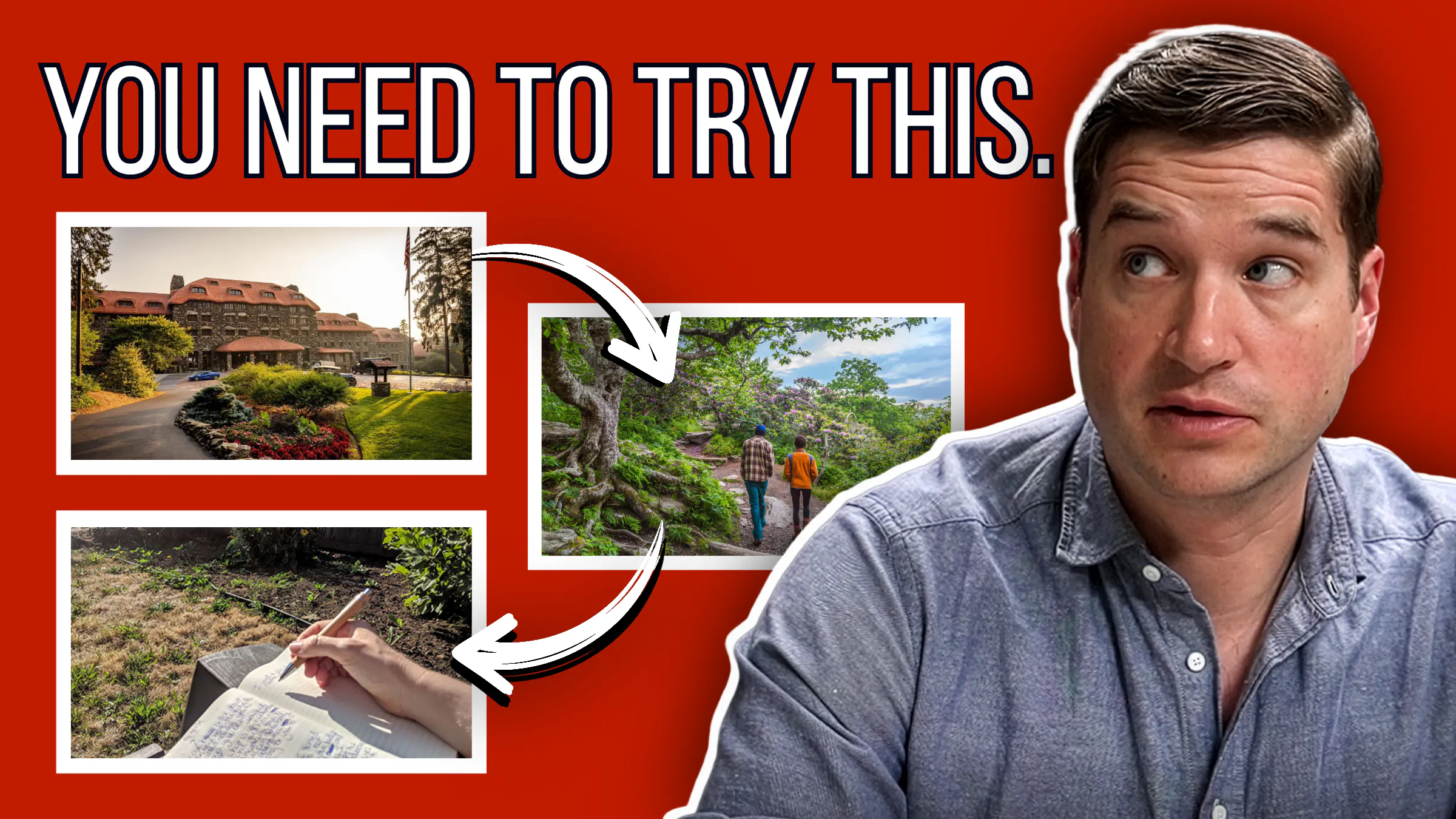
I'm not recording this from my normal studio in Washington D.C. i'm actually in Asheville, North Carolina. I'm staying here in a mountain lodge where F. Scott Fitzgerald supposedly wrote part
- [00:12]
Sponsor/Advertisement Voice
of the Great Gatsby.
- [00:13]
Cal Newport
Now, for those who are interested, here's
- [00:15]
Co-host or Guest
what it looks like.
- [00:17]
Cal Newport
I'm here to finish edits on my next book and to visit with some writer friends to help figure out our future in the publishing industry. Now there's a name for this strategy. I pressed pause on the busyness of my normal life to find space to think deeply about what comes next. I actually do this on a regular basis. It's something that has been immensely important in my life. So here's the key questions you might be asking. Is this something that you should be thinking about doing? And if so, how is it possible to press pause if you don't actually have the ability at the moment to just drop everything and escape to the mountains? Well, it's Monday, which means it's time for an advice episode of this show, which makes this the perfect opportunity to
- [01:05]
Co-host or Guest
go seek some answers.
- [01:06]
Cal Newport
So here's the plan. I'll argue why pressing pause has become so necessary in our current moment of digital distraction. Then I'll explore some ideas for how to achieve the benefits of this general strategy even if you're not able to
- [01:20]
Co-host or Guest
go on an epic trip.
- [01:23]
Cal Newport
So if you feel like you're stuck, always busy, always distracted, but not really making progress towards a deeper life, then
- [01:30]
Co-host or Guest
this episode is for you, as always.
- [01:34]
Cal Newport
I'm Cal Newport and this is Deep Questions, the show for people seeking depth
- [01:40]
Co-host or Guest
in a distracted world.
- [01:48]
Cal Newport
All right, so I'm recording this in the evening. Let me tell you what I did
- [01:51]
Co-host or Guest
today up in Asheville.
- [01:53]
Sponsor/Advertisement Voice
I woke up early.
- [01:55]
Cal Newport
The entire mountaintop at the lodge where I was staying was shrouded in fog. So I brewed some coffee and I went for a walk to do some thinking. There's a nice little footpath at my resort that winds up on a nearby hillside. I then did some work on my book in a I don't know how else to explain this. It's like a rock hued atrium overlooking the mountainside with an artificial waterfall falling. So it's an interesting place to get something done. After that, I met up with some of my writer friends at a local gym where a trainer that some of us know shout out to Zach of strength ratio put us through a workout
- [02:31]
Co-host or Guest
that, I'll be honest with you, still
- [02:33]
Sponsor/Advertisement Voice
has left me sore.
- [02:35]
Co-host or Guest
Don't even talk to me about pendulum squats. It's Too soon for me to go there again.
- [02:40]
Cal Newport
Then we relocated as a group to an office to brainstorm and chat about what's going on in our careers, the things that worry us about publishing, our plans for continuing to thrive in this industry. In some sense, let's step back. In some sense, this day was remarkably unproductive in the sense that I didn't actually finish a lot of work or answer a lot of messages or otherwise,
- [03:01]
Co-host or Guest
as they say, get after it.
- [03:03]
Cal Newport
But in another sense, today was remarkably productive. I've had a demanding semester, and it really wore me down. I was wearing a lot of hats. I was really busy. I felt stuck on a lot of the bigger things I cared about. This trip is helping me get unstuck. The three days I spend down here will yield benefits for many months to follow. These are the types of rewards you
- [03:26]
Co-host or Guest
get from pressing pause.
- [03:29]
Cal Newport
The big issue here, of course, is that most people don't have the ability, as we said, to simply drop everything and step away from their jobs and their responsibilities to regroup. So to figure out if it's possible. This is our challenge here, to figure out if it's possible for you to achieve most of the benefits of pressing pause without major disruptions in your life. We should start by trying to identify more precisely exactly what it is we're trying to achieve. And then we can step back and say, what are some alternative ways, some alternative strategies for getting these same benefits? All right, I got three benefits of pressing pause that I want to identify here. Number one, your brain struggles to think when it must be constantly context shifting, right? So when you are in a busy, normal day, you constantly have to shift your cognitive context from one target to another because we're busy. Especially, especially in the age of digital. There's text messages, there's emails, there's slack
- [04:23]
Co-host or Guest
messages, there's social media, there's news streams, there's podcasts.
- [04:28]
Cal Newport
All of this is pulling out our attention all the time. We're jumping back and forth. A brain that is constantly switching its context has a hard time thinking. Well, there's terminology I use in my books where I say context shifting leads
- [04:40]
Co-host or Guest
to reduced cognitive capacity.
- [04:42]
Cal Newport
It's a way of saying when your mind is busy, it gets dumber. When you press pause and you get away from this busyness, you, in a quite literal sense, get smarter. Your IQ goes up because you are not reducing your cognitive context with all
- [04:57]
Co-host or Guest
capacity with all that context shifting.
- [04:59]
Cal Newport
All right, the second specific benefit from pressing pause, new physical context can support
- [05:06]
Co-host or Guest
new ideas and insights when you're Surrounded
- [05:10]
Cal Newport
by the familiar, your brain is firing familiar circuits. When you're in a novel situation, other parts of your brains turn on and more importantly, networks that are associated, semantic networks that are associated with normal things in your everyday life don't fire up, which leaves you more capacity for original thought. I actually talked about this a little
- [05:30]
Co-host or Guest
bit in my book Slow Productivity, where
- [05:33]
Cal Newport
I talked about the unusual locations that professional writers sometimes go to to help do their writing. One of the examples was Maya Angelou
- [05:41]
Co-host or Guest
would go to a motel, take the pictures off the wall and write on the bed.
- [05:46]
Cal Newport
Why would they do this? Well, in the book I made the neuroscientific argument that when you're not seeing things that you're used to that cue thoughts that you're used to, you have
- [05:57]
Co-host or Guest
more clarity on the new, you have more clarity on the novel.
- [05:59]
Cal Newport
If you're just at home going through your day, you could be trying to have big thoughts, but you're going to see the laundry pile and you're going
- [06:04]
Co-host or Guest
to think about laundry and you are
- [06:06]
Cal Newport
going to see your baseball hat and think about the baseball game you're coaching
- [06:09]
Co-host or Guest
the next day and you're going to
- [06:10]
Cal Newport
see whatever your, your dog walk by
- [06:13]
Co-host or Guest
and you're going to be like, oh yeah, I got to take the dog to the vet.
- [06:15]
Cal Newport
Suddenly a lot of your brain is
- [06:17]
Co-host or Guest
caught up with the familiar.
- [06:18]
Cal Newport
So you go to the unfamiliar. You have more of your brain open
- [06:21]
Co-host or Guest
for thinking with in more original ways.
- [06:25]
Cal Newport
All right, the third benefit from pressing pause, you need to distance yourself from
- [06:29]
Co-host or Guest
your present to better see your future.
- [06:33]
Cal Newport
All right, when you are in the normal things you do, it is hard to think about different futures because your brain says we've, we need to do this is what we care about right now. So try to squeeze out original thoughts about what do I want in my
- [06:50]
Co-host or Guest
life, what could happen, where am I trying to go?
- [06:53]
Cal Newport
Is really hard when the things you need to do are all around you right now.
- [06:57]
Co-host or Guest
Our brains do not like to do future forecasting when there's present challenges that we face. When you press pause, you're hoping to get some distance from this present so that you can look outwards towards more interesting futures that you would otherwise not have noticed. Now I'm clearly enjoying all these benefits down on my current pause. I'm taking in Asheville. If you go off on an epic trip, all three of those benefits will clearly be delivered right.
- [07:21]
Cal Newport
I've tried to distilled what it was
- [07:22]
Co-host or Guest
about my trip that's giving me the rewards that I was seeking.
- [07:27]
Cal Newport
But now that we Know that this
- [07:28]
Co-host or Guest
is what we're going for.
- [07:29]
Cal Newport
These three things, we can actually come up with alternative strategies to get these
- [07:35]
Co-host or Guest
benefits that will be less disruptive. We can think of these almost as like mini pauses.
- [07:42]
Cal Newport
So what I want to do here is I want to go through four
- [07:46]
Co-host or Guest
different levels of pauses that you can implement four different ideas.
- [07:50]
Cal Newport
And I'm going to order these from least disruptive.
- [07:52]
Co-host or Guest
The most disruptive. Okay.
- [07:54]
Cal Newport
The least disruptive will barely change your day. The Level 4 most disruptive pause type will be what I'm doing now.
- [08:02]
Co-host or Guest
So I want to give you a
- [08:03]
Cal Newport
spectrum of different ways of pressing pause that, as we'll see afterwards, all of which to some degree will give you
- [08:10]
Co-host or Guest
the benefits of pausing, but with varied levels of disruption.
- [08:14]
Sponsor/Advertisement Voice
We're gonna take a real quick break to hear from some of the sponsors that make this show possible. Now, here's a common scene. Tell me if this sounds familiar. You've time blocked your day. You're locked in. You just finished a long, deep work block. There's a complicated admin block that follows. And then you realize you're hungry. Now, it's tempted in this situation to just grab a slice of pizza or crush a bag of chips because it's fast and it's easy. But this is where factor enters the scene. Factor's premade meals are delivered fresh, never frozen.
- [08:47]
Cal Newport
You can heat them in just two
- [08:48]
Sponsor/Advertisement Voice
minutes and right away have a meal that will fuel you while meeting your nutritional goals. Whether that's weight loss or protein or GLP1 support or even workout recovery or muscle building, every meal is made with the best stuff. No artificial colors, no high fructose corn syrup, no refined seed oil. So you can trust them. And with 100 rotating weekly options, you'll never get bored. Now, I've had success automating healthy eating with factor, and I think you will, too. So head to FactorMeals.com deep50off and use code DEEP50OFF. The word DEEP the number 50, the
- [09:27]
Cal Newport
word OFF to get 50% off and
- [09:30]
Sponsor/Advertisement Voice
free daily greens per box with new subscription only while supplies last until September 27, 2026. See website for more details. As long as we're talking about getting in better shape, are you struggling to follow through on your health goals? I have the solution for you. Mybody tutor T u t o r an online coaching program that actually delivers results. How does it do this? Because when you sign up, you are assigned a coach. And the coach will help devise a nutrition and exercise plan custom fit to your specific goals and circumstances. And then and this is the key part. You will quickly check in each day on the MyBody Tutor app to let your coach know how things went. And this accountability really helps you follow through. It also puts an advocate in your corner who can help you adjust your plan when life throws unexpected in your way. They can also notice patterns or trends where things are going difficult for you and they can help you react to them. So if you want to get healthier, go to mybodytutor.com today. And if you do, mention that I sent you from the Deep Questions podcast and they will give you $50 off your first month. That's mybodytutor.com all right, let's get back to the episode.
- [10:45]
Co-host or Guest
All right, let's get into this Level one, make a morning coffee shop loop. All right, here's how this strategy works.
- [10:54]
Cal Newport
First thing in the morning, you might
- [10:56]
Co-host or Guest
even want to wake up 20 minutes earlier than you normally would to make this work. First thing in the morning, early in the morning, go to a coffee shop, okay? Once there, get whatever coffee, tea, whatever it is you normally drink.
- [11:08]
Cal Newport
Go for a walk in that walk
- [11:13]
Co-host or Guest
back at the coffee shop, okay? So you go for a walk with your coffee, with your tea, and then take out your journal to write down whatever thoughts you had on that walk, right? So you're there early and then you start your day. This is before you do anything else in your day. You get out of bed, throw on a hat, water, boom, right out to the coffee shop. That's level one from a disruption scale.
- [11:33]
Cal Newport
Level two on the disruption scale for
- [11:35]
Co-host or Guest
pressing pause, schedule a doctor's appointment. For those who are listening instead of watching, I am doing furious air quotes. As I say doctor's appointment. So what I'm talking about here is you just, you're going to leave work early. People say I can never leave work early. Well, you do leave work early. You leave work early when you have a doctor's appointment.
- [11:51]
Cal Newport
So you're able to do it.
- [11:54]
Co-host or Guest
Most people at least.
- [11:55]
Cal Newport
So you choose a day in the future and like, I'm going to have
- [11:57]
Co-host or Guest
to leave it to this day or whatever. Like, people don't care. You're taking a few hours off. All right, this will be your doctor's appointment.
- [12:03]
Cal Newport
Do a full shutdown before you go.
- [12:05]
Co-host or Guest
Do not leave any open loops like, oh my God, there's emails I have to answer. People are waiting for things. Go through, have a plan for the next day. Shut down any open loops. Check out your inbox.
- [12:15]
Cal Newport
Look, your calendar.
- [12:15]
Co-host or Guest
You want to make sure that you've got that off Your mind. Then during your quote unquote doctor's appointment,
- [12:21]
Cal Newport
go somewhere that nearby but that you've never been before. A little museum people have been talking
- [12:27]
Co-host or Guest
about that you never got around. The visiting. There's a lake 20 minutes out of town with like a walking path around that you've heard about but never been there. Go somewhere you've never been before. If possible, leave your phone in your car once you're there and then go wherever this place is. Walking around the lake, going through this museum, go to this novel place. Spend an hour or two. Bring your journal, write down your thoughts. All right, let's ratchet up the disruption level to be a little higher.
- [12:52]
Cal Newport
Level three of disruption.
- [12:54]
Co-host or Guest
Book a 24 hour escape.
- [12:58]
Cal Newport
Now, what I mean by this is I actually want you to book an Airbnb or hotel room, someplace that's nearish
- [13:05]
Co-host or Guest
by within a few hours. Okay?
- [13:08]
Cal Newport
You're going to leave after work.
- [13:10]
Co-host or Guest
You're going to drive out to wherever this place is. You'll stay in that Airbnb or hotel room that night.
- [13:14]
Cal Newport
You will then spend the whole next
- [13:16]
Co-host or Guest
day into the afternoon just being in this place.
- [13:20]
Cal Newport
It's a new city, or maybe you
- [13:21]
Co-host or Guest
got an Airbnb that's in the countryside somewhere on the shore, whatever. Spend time in that place.
- [13:28]
Cal Newport
You can keep coming back to the
- [13:29]
Co-host or Guest
Airbnb throughout the day to do some journaling and then come home like you would at like the end of a workday. So you have to like take a one full personal day to make this particular strategy happen. And you have like a night where you're staying somewhere. Right. Level four, disruption. Fly to Asheville. You don't have to literally come to Asheville, but you do something like that. You fly somewhere that is notably novel or beautiful or aesthetic or interesting and you spend a few days there and you really get into what's going on. What do I want to do with my life? All right, four levels of disruption. These are all different options for pressing pause. Now, if we go back and address the three benefits that we identified before,
- [14:12]
Cal Newport
you'll see that all of these pausing
- [14:15]
Co-host or Guest
strategies touch on these benefits one way or the other, just to different degrees. Like, our first benefit was the idea that a less distracted brain thinks better. Well, all of these pause strategies are going to help you reduce context shifting. Right in the morning coffee shop loop. You haven't done anything yet in the day if the day hasn't begun. So you don't have any thoughts on your mind yet to distract you. You haven't encountered anything. You have a Clear mind. So you're taking advantage of that. When you book a doctor's appointment, you
- [14:45]
Cal Newport
do a shutdown of your work so
- [14:46]
Co-host or Guest
you don't have open loops and you leave the phone in the car. And your brain has less to context shift for, so you're going to get more of the benefits of not having to do that. And then obviously, if you're driving to a new place and you're staying in a new hotel or Airbnb, you're really wiping the brain. I'm in a completely new place. You're in a place where you don't have your normal responsibilities or the second benefit we talked about was the idea that new physical environments invite new insights. All three of these has you do something novel. The least obvious novelty here is the coffee shop loop. But what's novel here is not the coffee shop. You may have been there before. In fact, you're going there maybe like every day for a week. Maybe you've done the walk route around the coffee shop before. What's novel is being there so early. What's novel is before, like, my kids are even up. I'm in the coffee shop with like the old person crowd early in the morning, writing a journal. I've never done that before. That's where the novelty comes from, that one. The final benefit was distance from the present helps you reveal the future. All of these knock you out of your normal routine. Whether you're in the early morning sun, walking with your coffee, which is what you don't normally do, or you've taken the afternoon off, or you're in the novel city, or you're in Asheville, you've stepped out of things you normally do, which gives you a better chance of actually seeing the future.
- [16:00]
Cal Newport
All right, so depending on how much time you have available, there is some
- [16:03]
Co-host or Guest
variation of pressing pause that you can actually do.
- [16:08]
Cal Newport
Now, there's a final question here that we have to address. Every one of those scenarios I just
- [16:12]
Co-host or Guest
said pretty cursively, like, write in your journal. What are you actually doing during these various pauses? What questions are you answering? What are you actually writing in your journal? Well, let me tell you my suggestions what I'm doing here in Asheville.
- [16:27]
Cal Newport
Number one, you ask yourself what parts of my life are going well? Write those down. Why? You want gratitude. It's a great foundation for all of this, you know, that really is going well. I have some time to reflect away from the busyness, and I can just sit with a little bit of gratitude about parts of my life that I actually like. Once You've laid that foundation. The second thing you're going to address in your journal, what parts of my life are not going well? Where do I feel stuck? Like, professionally?
- [16:52]
Co-host or Guest
Do I feel trapped?
- [16:54]
Cal Newport
Do I have these certain ambitions that
- [16:56]
Co-host or Guest
I had as a young person that aren't coming true?
- [16:58]
Cal Newport
Like, wherever it is, this is where some of the more serious work happens. Now, here's what I want you to do. Take each of these items where you feel stuck, and maybe you're just going
- [17:07]
Co-host or Guest
to look at one in your. In your pause.
- [17:08]
Cal Newport
That's fine.
- [17:09]
Co-host or Guest
Take one of these items.
- [17:11]
Cal Newport
You're going to start with the most radical blue sky solutions to this possible.
- [17:15]
Co-host or Guest
The real drastic, like, you know, going to quit and join the circus type of solutions, right?
- [17:21]
Cal Newport
And then start systematically as you brainstorm
- [17:25]
Co-host or Guest
solutions, reducing the level of radicalness or disruption of your ideas.
- [17:34]
Cal Newport
And you're going to start kind of like marching from very blue sky radical ideas to increasingly simple and practical ideas. Okay, now what you're looking for is where is it on this march from like, the radical ideas down to the very simple and pragmatic? Where along the way did I feel like my suggestions are no longer working?
- [17:57]
Co-host or Guest
Like, that's not really going to fix it.
- [17:58]
Cal Newport
What you've identified then is like the exact level of radicalness or extremeness that you probably need to try to get unstuck. You don't have to solve these problems completely, but this is just like an
- [18:07]
Co-host or Guest
exercise you're going to do.
- [18:08]
Cal Newport
So you've kind of discovered for places you feel stuck, how radical or extreme do I really need to get to
- [18:15]
Co-host or Guest
try to find a solution?
- [18:16]
Cal Newport
And sometimes it might be like, man,
- [18:17]
Co-host or Guest
the only solution here is to quit
- [18:18]
Cal Newport
and join the circus. And other times, there'll be a man. This real little fix is going make a huge difference. These are great exercise, but it takes. You need time.
- [18:26]
Co-host or Guest
You need a new context.
- [18:28]
Cal Newport
You need to get your normal stuff off your mind. The final thing you want to write in your journal is for each of these, you've identified these solutions. Write down what's next. So if these are the things you think you might have to do for where you're stuck, what would be the things you have to do next? You have to talk to this person. You have to have discussion with your spouse. You have to gather some more information. Are there something you want to sign up for? Write those all down. Put a big circle many times around those. That is the outcome of this pause, and it's what you're going to bring back with you into your normal life. Put into whatever system you use for scheduling and tasks. And that then becomes an action that
- [19:01]
Co-host or Guest
helps you move forward.
- [19:01]
Cal Newport
That's what helps you take your insights
- [19:03]
Co-host or Guest
from the pause and turn them into positive action.
- [19:08]
Cal Newport
All right, make sense. So you need a pause. Doesn't have to be dramatic, but it can be.
- [19:14]
Co-host or Guest
If possible, you need to be a little bit systematic with what you do during the pause.
- [19:18]
Cal Newport
This is very important.
- [19:20]
Co-host or Guest
All right.
- [19:21]
Cal Newport
Now, you may have heard that dog
- [19:22]
Co-host or Guest
barking in the background.
- [19:22]
Cal Newport
Well, I'm actually recording this. More specifically, I'm in Asheville, but not at my resort. I'm actually in the garage studio of my writer friend Brad stolberg, who's been
- [19:33]
Co-host or Guest
on this show many times.
- [19:34]
Cal Newport
Now, a client gave Brad a bottle
- [19:36]
Co-host or Guest
of wine that Brad claims cost $1,000.
- [19:39]
Cal Newport
Now, I think he's exaggerating. We've been pushing him on this, but he claims it cost $1,000. So what we're going to do is right after I finish recording this, here is we have a PIZ waiting. We're going to open up that bottle, we're going to try out this vintage, and we're going to think some big thoughts about our lives as the chris
- [19:53]
Co-host or Guest
nighttime mountain air rolls in.
- [19:56]
Cal Newport
Now, I return home tomorrow from Asheville
- [19:58]
Co-host or Guest
and I will press play once again. But for now, I feel very lucky to be able to have this moment of introspective pause. You deserve that feeling, too.
- [20:09]
Sponsor/Advertisement Voice
We're going to take another quick break to hear from some of the sponsors that makes this show possible. Now, look, I'm never someone who thought a lot about my skin, but as I've gotten older, I discovered something that basically 99% of all women already knew about, but no one ever told me. You actually have to take care of your skin. This is why I'm a fan of caldera lab, which offers a line of skin care products engineered specifically for men's skin, which is 25% thicker, oiler, oilier, and ages differently from women. Now, here are the three products you should know about the great, which is a clinically proven anti aging serum that leaves your skin looking firmer and healthier. The hydrolayer, a moisturizer that just won the men's health grooming award for best anti aging moisturizer. And the eye serum, which targets the most visible signs of aging, which is the puffiness or fine lines that surround your eye. Now, I've tried all three of these products. They really do make a difference. I don't even think I knew what moisturized skin felt like until I tried the hydro layer. So men. If you haven't thought about your skin, Caldera Lab is the right way to get into the game. So here's the thing. Using Caldera Lab products is a small habit that will deliver big results. Go to calderalab.com deep and use the code DEEP to get 20% off your first order. This episode is also sponsored by BetterHelp. For some, summer is their favorite season. Travel picks up, kids are out of school, adventure is on hand, but for others, juggling everything is very disruptive and can be really tough for them. If you fall into the latter category, you need to remember to put aside some time for caring for yourself. And if you're struggling with your thoughts, then therapy could be part of this self care. If you're thinking about therapy, you should think about better Help. With over 30,000 therapists, BetterHelp is the world's largest online therapy platform, having served over 6 million people globally. BetterHelp will match you automatically to a therapist who's a good fit. You will meet with this therapist online and you can switch at any time if you're not happy. The good thing about BetterHelp is that it lowers the barrier to entry to getting the care you need to thrive in every season. And that's what I'm interested in is getting started on the path to making things better. So you don't have to say yes to everything this summer, but you can find support in therapy. Sign up and get 10% off at betterhelp.com deepquestions that's betterhelp.com deepquestions all right, let's get back to the episode.
- [22:48]
Cal Newport
All right, well that's enough about me talking to you. Let's hear what you have to say.
- [22:52]
Co-host or Guest
On Mondays, we'd like to open up our inbox and see what our listeners want to share.
- [22:57]
Cal Newport
Remember, if you have a question, feedback or an idea you want to share,
- [23:02]
Co-host or Guest
sent the podcast Cal Newport.com and we
- [23:04]
Cal Newport
will take a look. All right, well there's no Jesse here in Asheville, so I'll have to set up these questions myself. The first question is from Enrique. Let me read it here. You mentioned you'll be on sabbatical this upcoming year. What email protocols or rules do you plan to use? Will you set up an out of office auto response and if so, what will it say?
- [23:24]
Co-host or Guest
How often will you check your Georgetown
- [23:26]
Cal Newport
account and from where? Well, Enrique is right.
- [23:29]
Co-host or Guest
I am on sabbatical for the upcoming academic year.
- [23:31]
Cal Newport
2026, 2027. This starts. It's a little bit fuzzy, but basically
- [23:35]
Co-host or Guest
the academic Year starts at some point in the summer. I'm still doing a bunch of stuff related to my administrative roles, like now
- [23:40]
Cal Newport
in the month of June.
- [23:41]
Co-host or Guest
But this will. Eventually, I'll sort of enter sabbatical mode as I roll out of those administrative roles over the summer and new people come in and so on.
- [23:52]
Cal Newport
So what am I going to do with email? Well, first of all, the obvious thing
- [23:55]
Co-host or Guest
is I wear many hats, and only some of them are associated with Georgetown roles affected by the sabbatical. So I don't have service obligations or
- [24:03]
Cal Newport
teaching obligations, and that is a lot of email.
- [24:05]
Co-host or Guest
I have all my other hats. I have my books, I'm on my podcast, got my newsletter. You know, I got the articles I write. So there'll be.
- [24:12]
Cal Newport
There's. I'll be working very hard, but that
- [24:15]
Co-host or Guest
part will be out of my life. All right, so I still have a lot of email. What will I do with Georgetown email?
- [24:19]
Cal Newport
I'm not gonna do an autoresponder. I'm not a big believer in them. I know they make sense in certain contexts where you're in a work environment
- [24:27]
Co-host or Guest
where fast response is required and so, like, you need to, I guess, communicate
- [24:32]
Cal Newport
to people if you're not going to respond. But I find in a lot of contexts, autoresponders are more about the anxiety
- [24:38]
Co-host or Guest
of the person who's away from their inbox.
- [24:39]
Cal Newport
They imagine in their mind this is very natural, but they imagine in their mind that there's basically a back room somewhere where their peers and their boss
- [24:48]
Co-host or Guest
come in and they have a big bulletin board where there's all these, like,
- [24:52]
Cal Newport
statistics and observations and messages from you
- [24:55]
Co-host or Guest
where they're trying to track, like, how long were they. What's their average delay time and response responses?
- [25:00]
Cal Newport
This has gone up. What is going on here? There's a big question mark. Where is she? What's going on?
- [25:04]
Co-host or Guest
And, like, everyone's, like, tracking and caring, and if you don't get out in front of it, they're about to, like,
- [25:08]
Cal Newport
burst out of that back room with
- [25:10]
Co-host or Guest
torches and come find you.
- [25:11]
Cal Newport
The reality is people actually don't care.
- [25:13]
Co-host or Guest
The biggest benefit they often get by sending the email is that something got off their plate. They don't often aren't going to recognize that it took a while for you to respond.
- [25:22]
Cal Newport
So I'm not a big believer in
- [25:24]
Co-host or Guest
autoresponders unless your office absolutely demands it. I'll get back to people when I
- [25:28]
Cal Newport
get back to them. I also don't preemptively apologize, right.
- [25:30]
Co-host or Guest
If they're like, hey, you, I'll be like, oh, I'm away, I'm on sabbatical. I mean, maybe if, like it's been a week or two, I'll be like, hey, sorry for the delay, I'm on sabbatical. And then I'll answer and no one cares. Like, they're probably happy that it took a week or two because that's a week or two they didn't have to deal with whatever the thing was they were emailing you about. I'll check my email once a week for sure. My Georgetown email, maybe twice. That's it. No autoresponder. But it will be nice to have a little bit of reduced message volume.
- [25:56]
Cal Newport
All right.
- [25:56]
Co-host or Guest
Second message is from Bram.
- [25:57]
Cal Newport
Bram says in some of your recent
- [25:59]
Co-host or Guest
episodes you talked about a pattern of read, think, write. I was wondering if you could elaborate on the think part. Well, read think write is a sort of this is like a classic mode of information intake that scholars have been using since the Codex was first invented.
- [26:20]
Cal Newport
But we're not used to it today
- [26:22]
Co-host or Guest
in our current world of algorithmic digital information, we are consuming information more and more in a different mode that I call dopamine surfing. And the way I think about it is our brain has been trained to
- [26:34]
Cal Newport
be getting this like really positive stimulus
- [26:38]
Co-host or Guest
from whatever we're engaging with, content wise.
- [26:40]
Cal Newport
And as soon as that positive stimulus starts to go down a little bit,
- [26:45]
Co-host or Guest
we have to make drastic changes to get it back up again. We skim, we swipe, we jump around
- [26:49]
Cal Newport
to try to find something that gets
- [26:51]
Co-host or Guest
us back up again. We got to keep that level of that sort of like stimulation level high. And so reading becomes incredibly erratic and very little information is actually stored. And we've been trained to do that with our devices. And I think this carries over to almost any of the content consumption we do. It's why like I'm trying to watch a documentary and you're going to see people having to jump on their phone because a, there's like a slightly boring part of the documentary. They have to keep that stimuli high. That's like a very distracted way of engaging with information. And you don't actually pull nearly as
- [27:20]
Cal Newport
much insight out of text or other
- [27:22]
Co-host or Guest
types of media when you're dopamine surfing. But it's what we've been trained to do. Read, think, write is a different way of consuming an older way that's different than dopamine surfing. I think it's useful to point out
- [27:33]
Cal Newport
exactly how it works so that people know what used to be be just second nature.
- [27:39]
Co-host or Guest
We can remember and practice A better way to consume it. So the read, think, write loop goes like this. You read something that's hard in a book, in an article. This is like you're consuming hard information to get smarter. You then stop and you think about
- [27:55]
Cal Newport
what you just read.
- [27:56]
Co-host or Guest
Like, what does this mean? You move it around in your head, right? Like, okay, what does this remind me of? What's going on here? And then you write down your thoughts. That thinking and writing part is what forces your brain to actually take the information out of much more of the cursory processing where you're hearing the sounds in your head and have basic images and actually move the information into symbolic information stores in your brain. That's where insight is gained. So that thinking and writing is where it's gained. Brahm is asking about, what is the difference between thinking and writing Here
- [28:28]
Cal Newport
it's
- [28:28]
Co-host or Guest
a fuzzy line that when you're trying to write out your thoughts, a lot of thinking happens. They're kind of interleaved a little bit, but I think of those kind of together. You step back, reflect, write. The writing makes you reflect, reflect as well. When you've done that, think right, however that's interleaved, now you understand. Now you've gained understanding. Without it, you're just sort of like skimming past concepts. They're moving like images across the back of your eyes and not really sticking.
- [28:55]
Cal Newport
Let's do one more question here.
- [28:57]
Co-host or Guest
I got that thousand dollar bottle of wine waiting. I think it's like a $20 bottle of wine, but we'll see. I'll report back. All right, Ginny Wright, she says, do you read books for work at bedtime, or do you stick to reading for pleasure? For example, would you ever be using your COR method on a bedtime book?
- [29:13]
Cal Newport
All right, Jenny, that's a good question.
- [29:17]
Co-host or Guest
Yeah, let me.
- [29:18]
Cal Newport
It is a good question. No, I don't.
- [29:22]
Co-host or Guest
The reason why I'm hesitating is that the line I draw is not work or non work. It's cognitive stimulation versus non cognitive stimulation. So I don't want to read embed something that's highly cognitive stimulating, which for me is often like really original ideas that I'm thinking about and I'm processing and I get excited. That fires up all of my brain. We're in cal idea mode. When my brain gets fully revved up to do idea stuff, it's what I do for a living. It's hard to calm it back down to sleep.
- [29:52]
Cal Newport
But I could also be reading a book that has a professional reason why
- [29:56]
Co-host or Guest
I'm reading it and is not super cognitively stimulating, and I'm going to be fine. So that's really the dividing line. So probably, no, I would not be reading a book that requires quarter marking. That's my method for taking notes in books, because that typically means it's a book where I'm trying to. Trying to pull ideas out of it that's going to be too cognitively stimulating. I'm trying to think of an example here. I recently reread, we talked about on the show, Michael Pollan's In Defense of Food. Because I had a book idea and I wanted to be like, oh, let me remember how he wrote this manifesto style. But it's kind of a calming book
- [30:28]
Cal Newport
and I don't do any work myself
- [30:30]
Co-host or Guest
on food or nutrition, so the ideas in that book are not super important to me. They're not not bumping up against other ideas. I'm working on giving me new ideas about things I should write about so I could read that book in bed. And just like Michael Pollan is calming and I'm fine with it. Right. Like, that was. That was completely fine. But if I'm reading a book on, you know, some big new idea about tech theory or, like, what's going on with AI or something like that, it's going to be far away from bed. So that's a good question, Jenny. I do care about it. Sleep is not always my friend. So I try to be as careful as I possible about, like, what I let into my mind and what I do don't. All right, we should probably. We're going to wrap this one up pretty soon. Yeah, this is a short one. Sure.
- [31:12]
Cal Newport
But that's because I'm on the road. Right.
- [31:13]
Co-host or Guest
And I'm pressing pause. I actually press play dip ail here to record this podcast and then I want to get right back in to what I'm up to. So I would normally, at the end
- [31:23]
Cal Newport
of the show, give you a big
- [31:24]
Co-host or Guest
update on what I'm up to.
- [31:26]
Cal Newport
But I already have. I've talked, I've told you all about
- [31:29]
Co-host or Guest
what I'm doing here in Asheville and the thinking I'm doing. The book I brought with me here, which I'm enjoying, is Derek Thompson's Hitmakers, because I thought it'd be relevant when thinking about, like, writing and podcasting. Hey, what makes these type of things successful? I have that book with me. I basically finished. I. I still have a couple chapters left. I'll finish it when I get home. I don't want to bring it with me. Because it's a signed copy and it's big. But Chuck Klosterman's book on football, which I'm I really enjoyed. It's a very. He has a very specific style that I really like. I'll talk more about that, I guess after I finish the final chapter.
- [31:59]
Cal Newport
So I have some good books with me. Me.
- [32:00]
Co-host or Guest
But I'm mainly thinking, walking, exercising. I press pause anyways.
- [32:08]
Cal Newport
I will press play again.
- [32:09]
Co-host or Guest
I know a lot of you missed the AI Reality Check last Thursday. That's because I was up here and I didn't want to write and recorded AI Reality Check. I was trying to think big thoughts. But I will have one for Thursday as well and we'll be back next Monday with another one of these episodes. This is a short one, but a good one. Hopefully you enjoyed it.
- [32:26]
Cal Newport
I look forward to getting home, but it's been good.
- [32:28]
Co-host or Guest
So I will you'll hear from me soon. And until then, as always, stay deep.
- [32:32]
Sponsor/Advertisement Voice
Hey, if you've made it this far, you must be ready to join my fight for depth in a distracted world.
- [32:38]
Cal Newport
Now, the best way to do this is to join over 125,000 people who receive my email newsletter each Monday. You can sign up@calnewport.com ideas and when you do, I will send you a free guide to my seven best ideas
- [32:56]
Sponsor/Advertisement Voice
about cultivating a deep life.
- [32:58]
Cal Newport
Sign up today.
- [32:59]
Co-host or Guest
Calnewper.com ideas.