Loading summary
Transcript203 lines
- [00:01]
Pastor Joby Martin
Welcome to Deepen with Pastor Joby Martin. The Church of 1122 is a movement for all people to discover and deepen a relationship with Jesus Christ. And we're praying this message helps you deepen your relationship with him. Now let's dive in.
- [00:19]
Host/Interviewer
Man. We are family. The church is a family. And so I want to start by asking about intergenerational relationships in the local church. Pastor Britt, why do you think, since Pastor Joby's chewing something right now.
- [00:36]
Pastor Britt
How.
- [00:36]
Host/Interviewer
Important is it that you intentionally create environments for intergenerational relationships in the church?
- [00:44]
Pastor Britt
It's a vital importance. And I don't think there was ever there's ever been any stage in the church, at least in any version of a healthy church, that that doesn't have intentionality across at least three generations, Right? And so whether it's kids ministry, student ministry, young adults, you know, that'd be kind of one. And then a lot of churches, it's marriage ministry or, you know, and then senior adult ministry. But being intentional across three generations is. And I don't mean that in the sense of, like, have departments dedicated to that, but I mean intentional in regards to unleashing the kingdom power that in the kingdom wealth that is across three generations. By wealth, I mean wealth of wisdom, wealth of experience. You know what I mean? And so, man, I think a few years ago in our church when we were very focused, the language we were using back then were still as equally focused, but the language we were using back then was raise up one more generation in the gospel. We were doing the one discipleship journey. Something just uniquely came alive in me, seeing all of the grandparents that got more involved and more involved and more involved in raising up one more generation in the gospel. And that's just such a beautiful picture of it, you know, of the intergenerational ministry. And so there's just an exchange of wisdom. There's an exchange of. I guess the two things that I see constantly going back and forth are wisdom going one direction and energy going the other. And there's a dignity in that, in that exchange.
- [02:25]
Host/Interviewer
That's a good way to describe it.
- [02:26]
Pastor Jovi
So I don't know if this is a good way to do ministry or not. This is the way I've done ministry since the beginning. Things that I have found very valuable in my own life. Personally. I try to export it corporately to our church, see every encounter thing we offer. Personally, I found time alone in the woods with God was beneficial to me. Why don't we have as many people experience this As I can camp to me. Very, very beneficial. Let's do saturated for the whole church. People like Lars Peterson and Dan Buckles and Rusty PRITCHETT, you know, Dr. Paul's involvement in my own personal life. Why don't we just export that to everybody? So we have been very intentional not to do age group affinity style for adults groups. Yeah, we've totally tried to just do like zip code or time of day because we need to mix up all the generations. Pastor Britt, that's a great way to say it. There is a beautiful exchange that happens, like who's the beneficiary? I would say primarily the younger people get the most benefit out of the relationships, but the older people get injected with a whole bunch of energy and purpose and empathy and love. If all you know about a generation 30 years younger than you is what you hear about on Fox News, you're not going to have a realistic view of these brothers and sisters in the faith or sons and daughters in the faith that you go to church with. You need to know some first and last names and some families and be praying for them to have a little bit of empathy for them. And if you think you got it all figured out and you're 26 is because you've never met a 60 year old and you need that kind of wisdom. Yeah, I mean, I'm surrounded by it in my world.
- [04:18]
Host/Interviewer
I mean, I grew up going to youth group, but one of the things my dad did, my brother and I were 18 months apart and he would always take us to whatever men's event was happening at the church. You know, like if it usually was a breakfast and there'd be some boys back there just like with, you know, with all, you know, you cook the eggs in all the bacon grease. Oh, yeah, you know me hungry and, and so from a, from a young age, I've been around older, older men. Have you ever heard, have you ever heard critics, though, of like, like having kids, ministry or whatever because of this issue? Like, how do we, how do we balance it out? Because I thought about this when we did our family worship night recently, because you have your kids around you and they get to see. So if they never got to see that, that would be a, that'd be missing something. Right. So how do we balance that with age appropriate, like it's necessary, but how do you balance that out where you get the right kind of exposure and also the right kind of attention? Does that make sense?
- [05:15]
Pastor Jovi
Yeah, you don't balance it. You, you're the parents, man. You're the boss of your family first and foremost. Don't primarily depend on the church to be the primary discipler of your kids. Your kids. Secondly, whenever you want to, if you're the parents, bring them to big church. Except when I say don't do that.
- [05:31]
Host/Interviewer
Right.
- [05:33]
Pastor Jovi
Because if you. My pushback against though you shouldn't have kids ministry one, you can't. There's big chunks of the Bible you can't talk about because your kids are there, man. And that's your responsibility to be teaching your kids about this stuff. And it leads off primarily the things about sexual immorality, the words that Paul writes. The Bible calls people whores. That's probably not words I want to use in a family worship experience. What's a whore? You know? Right. Well, if you're going to teach the Bible, it is not always safe. The temple wouldn't allow children to read the Song of Solomon until they're a certain age. Okay. So with that in mind, age graded instruction in the scriptures is biblically historical since God himself dictated how the temple would go and who could go where. All right, so what they're doing though is they're just taking a thing and making it the most important thing. And anytime you're in those extremes, you're in trouble, bro. So it's rhythms. So anytime. Well, not anytime. Most many times it's great. Bring your kids, Bring your kids to big church. If you want them to worship with all of us, great. You should. But that's up to the parents. I this group, we're not going to dictate when that happens. You get to dictate. And then occasionally we'll do some events that are where we for sure understand that you are bringing your kids.
- [06:57]
Pastor Britt
I just think it requires a great deal of intentional parenting because you can't. He used a word about extremes. That there's. There's one extreme to your question, Vinky, about age graded ministries. There's one extreme that's like we're doing everything together, only and always. And we'll start calling things that are clearly not sin. Sin. You know, like church practices.
- [07:17]
Pastor Jovi
Yeah.
- [07:18]
Pastor Britt
And then there's another extreme that's like, you got to watch your words. A little bit of like children's church.
- [07:24]
Pastor Jovi
Yeah.
- [07:25]
Pastor Britt
It's like, no, we just have church.
- [07:26]
Pastor Jovi
We just have church.
- [07:27]
Pastor Britt
And there's a, there's, there's a part of it where children are discipled effectively in environments and. But we don't have different churches. We don't have a church for children. Church.
- [07:36]
Pastor Jovi
Yeah. My kids have a room in our house. But they're not in a different family.
- [07:39]
Pastor Britt
Right.
- [07:40]
Pastor Jovi
They don't have kids. Family.
- [07:41]
Pastor Britt
Yeah. So some of it is. So those are the two extremes. But I think in the middle is, is a, a large latitude for the parent. And so I think some, even though you are the parent and you do and should make the decision that you think is best for the discipleship of your kids, One, don't ever overreact to any one instance that you found was negative in a kid's ministry or youth ministry and then just pull your kids out. Like you can't do that anywhere else. You're not going to do that anywhere else. You're a part of a family and families work through things together. Right. And so whoever, whatever your local church is, if it's us, then talk to somebody and let's see if we can work out whatever happened. That happens a lot. People overreact and they. But also I think kids are different. Every kid is different. And so you have to parent that child. Not parent the philosophy. Not parent according to the philosophy of parenting. Like I have one of my kids that if I was like, hey, look, I just think it's best for your discipleship that you come and sit next to me in service every week. She would be like, I mean, she'd probably do it, but the whole time she's doing all she would be thinking about is serving in the kids area.
- [08:53]
Pastor Jovi
Yeah.
- [08:54]
Pastor Britt
Because it's where she feels most alive and it's where she feels closest to God.
- [08:58]
Pastor Jovi
Statistically, as a former youth pastor, the primary indicator if whether your kid sticks in a church locally after age 18 is did they serve? It's the number one indicator that's good. They attended whatever big church kids would. Whatever has very little impact on whether they a significant part of a church as an adult. The number one indicator is if you can get them serving like in high school, the likelihood of them plugging into a church in college in their young adult years is exponentially higher. You know, you read that stat, about 80% of kids drop out of church after youth group. That is not the case if they're serving, not just serving in the youth group, serving the church. So whether you knew that or not, if you want your kid to stick, don't bring him to big church. Have them serve.
- [09:49]
Pastor Britt
Yeah, yeah. In, in the appropriate environments at the right time. And the ones that like I was last night I was bringing home, I picked my daughter up from student ministry, the Wednesday night student ministry, and we picked up another kid of A family friend, and we're bringing him home. They live in our neighborhood. And as soon as they got in the car, the friend, he. I was like, how was church tonight? And he's like, man, he's like, I got to run lyrics tonight. He's like, first time I ever actually got to run the words. And I was like, that's cool, bro. Did you like it? And he's like, yeah. And I actually know his dad really well, and I know the, like, his dad works here and he serves in video and does it works in video. And that's cool. But you could just like knowing a little bit more of the story. You can just see God starting to light up some of the things in the kid's mind. And. And every other time I brought him home, it's like, how was church tonight? And it was like, yeah, it was good. It's like, what stood out to you other game? But the first thing he said was, I gotta run with lyrics tonight. You know, what's the difference? Ownership.
- [10:52]
Host/Interviewer
It's like you were talking about.
- [10:54]
Pastor Britt
The difference is he now feels like an owner in stewarding and stewarding an experience.
- [11:00]
Pastor Jovi
He didn't say, I've got to. He said, I got to. These are not the same thing.
- [11:04]
Pastor Britt
Right.
- [11:04]
Pastor Jovi
This is like, get to versus have to. That's really cool.
- [11:08]
Pastor Britt
It's really awesome.
- [11:09]
Pastor Jovi
Good.
- [11:09]
Pastor Britt
I wasn't even aware of how awesome was in that moment until we're just sitting here talking about it right now.
- [11:13]
Pastor Jovi
Now, I can't brag enough about our student and kids ministry here. Can't brag enough about it. And I have nothing to do with it. I mean, we hired them, but I. I mean, those. Yeah, I love it.
- [11:25]
Host/Interviewer
They're doing great.
- [11:26]
Pastor Britt
That's not even true anymore. We kind of hired the people that hired the people.
- [11:29]
Pastor Jovi
I don't even know the bills.
- [11:30]
Pastor Britt
And they're awesome, man.
- [11:31]
Pastor Jovi
We love them. I love to meet you.
- [11:32]
Pastor Britt
Here's what's awesome about it. We were talking about this this morning in a different meeting about how much. And you said some of this tonight in your sermon about how much greetings matter when you encounter our children's ministry team. And we don't call it children's ministry, but when you encounter our kids team and our student team, everybody gets to have a bad day. I'm not saying overwhelmingly. They're. They have a smile on their face, and they're pleasant people who are excited about being a part of what God's doing. And it just creates a culture around them. It's a really Beautiful thing. And I'm so thankful for them.
- [12:09]
Pastor Jovi
Think about it. If you're an elementary age kid, a middle school kid or a high school kid, where else do you get to go? And the approval comes before the performance, not school. Right. They hand you a grade with marks like this is what you do. Or you're in this part of the class or that part of class, not on a sports team. And I am pro sports teams. I mean, a coach led me to Christ, but yeah, it gets graded out. There's a hierarchy real quick of the havens and have nots. And here we love you because God loves you and God loves us, period. Welcome. It's a very different environment and very needed.
- [12:45]
Host/Interviewer
We all at one point in our lives went to a college service in the Atlanta area called 722.
- [12:52]
Pastor Jovi
Yeah.
- [12:52]
Pastor Britt
And it was actually for young adults and they would discourage college and high school kids, but yet it ended up being half the room.
- [12:57]
Host/Interviewer
That's exactly right. And.
- [12:58]
Pastor Jovi
And me and Gretchen were married and would drive. I mean, it was, it was everybody that wanted good Bible teaching and passionate worship.
- [13:04]
Host/Interviewer
Right.
- [13:04]
Pastor Jovi
Oh, man, that's a good idea for a church.
- [13:08]
Host/Interviewer
Well, you've talked, you've talked to Pastor Jovi about.
- [13:11]
Pastor Jovi
I have thanked Louis personally many times when we were together.
- [13:15]
Host/Interviewer
And you. But you've also taught. You did tonight as well. Like you've thanked the older folks for not liking, like just letting it be just a young adults church. Right.
- [13:23]
Pastor Jovi
So when it started, when 11:22 the service started, the idea from the leaders at beach were we need young adult service to fill in the gap. We had a ton of kids in the student ministry that I got to serve. And we had all of their parents doing Willow Creek songs with hand motions. And it was awesome skits.
- [13:42]
Host/Interviewer
Lots of skits.
- [13:42]
Pastor Jovi
Oh yeah. Drama. And, and they were like, all right, we, we want you to reach the gap. And so. And I was like, timeout. I don't want a room full of tw year olds. You know, the concentration of that much ignorance terrifies me. So I went, we had a traditional service and I went to the traditional service and asked them to be missionaries at their own campuses. And we loaded up the doors and stuff. Our greeters and ushers were the, were the grandparents from the traditional service. And they were valued. And one of the things, I probably read it in some little article. One of the greatest desires of like college age students was grandparents. Because, you know, especially in our mobile society now, very few, there's very few multi generational families that live in one Place, especially in Jacksonville, you hardly ever meet people that, like, lived and grew up here. And so we did that intentionally from the beginning. Something that I thought was really awesome is when we. When we launched the church of 1122, the amount of people in that grandparent generation that showed up, I was astonished by. And I would ask them. I just walk to them and say, I'm so glad you're here, but why are you here? And I remember there were some couples, some really older couples, and they said, we've been praying for this our whole lives. We've been begging God for a. A move of the spirit, a revival, and there's no way we're missing it. And then they'd put their earplugs in the singing, and they love the songs. It was too loud, you know, but they didn't want to miss it. That's the spirit of the older generation that I wanted. That is our older generation. You know, one. One of the things. Somebody corrected me in a very. In the way you're supposed to. This older guy comes up to me right afterwards and says, hey, we don't have 11 services meeting in nursing homes and assisted living. We have 18 now. And he's the guy that started it. And what I love about that is that did not come from a strategic meeting, from us going, you know what we need? We need to start these. You know, you mentioned that your grandma was, you know, was doing it and that kind of thing. But we just had some vol. Some older volunteers that are in that, like, JV level of senior adult ministry. They're retired from their vocations, but they're not retired from the gospel, and they just decided to take it upon themselves to just start doing it and expanding it. Don't you love that? I. I mean, I love. That is the heartbeat of the majority of the senior adults that we have at this church. Like. Like. Dr. Paul sends me a text. We're getting land in Malawi to start another medical clinic. I'm like, bro, you're the man. You're the man. Dr.
- [16:13]
Host/Interviewer
Probably is the man.
- [16:14]
Pastor Jovi
I want to be that old guy. Yeah, I want to be that kind of old guy. That's just the biggest cheerleader for the next generation that's running this place. And I also want to run interference for all the whiners. You know, they're like, how come we're not singing how great is our God anymore? Like, shut up, dude. We're going to sing this rap song or whatever we're singing then. Yeah, you know, because it's Great.
- [16:36]
Host/Interviewer
Yeah.
- [16:37]
Pastor Jovi
Actually, we'll probably be back to, like, chance and organs by then or something.
- [16:41]
Pastor Britt
Who knows it's gonna swing.
- [16:43]
Pastor Jovi
Whatever. I don't. Yeah, whatever. The spirit leads us to sing, we're singing.
- [16:47]
Host/Interviewer
We've been calling this series a field guide for the Family of God. This is a very family of God sermon. And we. You talked a lot about how the church takes care of each other. We're going to get into that. But he starts with saying, do not rebuke an older man. And can you. Can you explain why this is particular to who he's talking about? Because we do need to be rebuked sometimes. Right.
- [17:11]
Pastor Jovi
All right. So multiple times. Again, we've talked about this several times. So there's kind of parallel tracks. In First Timothy, in its original context, the Apostle Paul is writing to Pastor Timothy, instructions on Timothy how to lead the church. However, many of these things that are descriptive to First Timothy and Ephesus are also guidelines for us today. So it's not either or, it's both him. So multiple times you have pointed out that Paul has says, charge them. That is an aggressive. Like, hey, dude, you cannot just imply these things. You got to tell them in that context. Paul is like, all right, but when you're talking to the old people, the old men, you gotta. You don't. Sharp correction is what rebuke means. And he's like, back off there. You gotta talk to him like you're talking to your dad. Great honor and respect. Now, young Timothy, don't let anybody look down on you because of your age, but set for them an example in life. Life, speech and purity. So you don't abdicate your responsibility as the pastor. You still are responsible to disciple the old people, but you're going to do it with honor and respect. You're not just going to tell them all the ways they're wrong. I do think we live in an age where there is great rebuke from younger people towards older people.
- [18:32]
Host/Interviewer
Do you mean that positively or negatively?
- [18:34]
Pastor Jovi
Very negatively. Okay, here's how all you previous generations have screwed everything up. But guess what? We're here to save the day. Well, isn't that adorable?
- [18:43]
Host/Interviewer
Right?
- [18:44]
Pastor Jovi
We only live in the world they all built.
- [18:46]
Host/Interviewer
Yeah.
- [18:47]
Pastor Jovi
And you want to complain about it, but you don't complain about the air conditioning, the ice cream, or the freedom. So you might want to say thank you.
- [18:54]
Host/Interviewer
Right, Right.
- [18:55]
Pastor Jovi
You know, I do. And if you hang out with some old people, like I get to in my elder meetings and other places, then you'll have a Lot more respect because it gets personal. It's not ideological, you know?
- [19:07]
Host/Interviewer
Yeah, yeah.
- [19:08]
Pastor Jovi
And so C.S. lewis calls this chronological snobbery. Oh, that's not just a 200 year old thing. That's like a generation thing too. You can be like, I can't believe you people did this. Settle down there, Scooter.
- [19:22]
Host/Interviewer
You ever watch, like, you can go on YouTube and you can pull up like old church services from like the 90s, and you can have that same reaction just like, this is terrible. You know, like, that's the music or the production or the.
- [19:34]
Pastor Jovi
We're gonna say about.
- [19:35]
Host/Interviewer
Exactly, exactly.
- [19:37]
Pastor Jovi
From, you know, just, I mean, not love six years ago and just be like, and I know I'm gonna do it again in six years. Oh, yeah, six months. But whatever, you know, it's. It's hard.
- [19:50]
Host/Interviewer
So think about myself two years ago. I'm like, what a freaking idiot. You know, And I'm gonna think the same thing about my. This version of me right now. Pastor Joey, when you launched 1122, you probably had to sit across for. From some older men, right? And so have you. How have you seen that play out this charge to him about how you treat an older man? And as a pastor, was that ever intimidating or what have you learned along the way in. In dealing with people who are older than you?
- [20:21]
Pastor Jovi
I. There's lights and shadows, but intimidation. I don't. I don't. It's not something I struggle with. I'm. I'm on the other end of it. So if you've noticed. So here's. Here's what needs to happen too. Not just generally with older people, but in particular to our elders. In the right environment, buddy, we can have some knockdown drag outs because I love these men and they love me, and we have robust dialogue and we're passionate because we love Jesus and we love his church and we want it to be right. And so we will scrap it out in the right meeting and always mad or even if you get emotional. We're not sinning against each other. We're just. We're grown people and this is very important, you know, But. But there's nothing but honor and respect publicly. And the way you talk about people and the way you talk to people, it matters so much. This doesn't mean that you have to whitewash all of your words and just use like politically correct language. And you know that that is not what this means, right? I mean, they were peers. But Paul. Paul addresses Peter, who was in sin, in a very straightforward way. That's A part of it, right, Dude. Our elders have addressed some things in my life in a very straightforward way, but they're not up on stage saying, I know he's an idiot, but don't worry about it, we got him. That's not what they do. They do nothing but speak highly of me. And so I think that you outdo one another with honor. And when you have the right kind of relationship and when you've deputized people to say, this is the kind of relationship where we're going to hold each other accountable and iron sharpens iron, then you know, those aren't like, mean rebukes. Those are. You told me to point this out in your life if. If I saw it. And so that's what I'm doing. So I. I am forever grateful to our elders and honestly and all the seniors that a part of our church. And I hope they feel loved and respected. And honestly, in the widows and the widowers, I hope they feel loved and respected. Yeah.
- [22:31]
Pastor Britt
I think one of the challenges between a rebuke and an encouragement, whether you put that in the context of the local church elders to pastors, you know, pastors to congregants or staff or whatever, you put it in the context of your own family. I think one of the challenges of the things that's necessary is emotional maturity, because you could easily get into the situation where you feel like you're offering a justified rebuke, and really what you're doing is just making that person subject to your preferences.
- [23:04]
Pastor Jovi
So big.
- [23:04]
Pastor Britt
Yeah. And so having a qualified category of things that we agree upon, whereby I could offer pointed feedback or rebuke. So let's just, for example, put in the context of elders. One of the things that our elders do, one of their responsibilities is to protect the teaching ministry of the church.
- [23:27]
Pastor Jovi
Correct.
- [23:28]
Pastor Britt
We've agreed. Everybody agrees.
- [23:30]
Pastor Jovi
Correct.
- [23:31]
Pastor Britt
And it doesn't matter if I agree. But you've agreed and they agree. Okay. And that's what it means to be an elder here is that part of what you do is to. Is to protect the teaching ministry of the church. Therefore, if Pastor Joby taught something that was inaccurate or inerrant, whether by. On per. Like just in ignorance, just said something wrong or maliciously, the elders, we've already agreed they could. They have the space to rebuke you there.
- [24:00]
Pastor Jovi
Y.
- [24:00]
Pastor Britt
They also can walk into any teaching environment here, anywhere and listen and go, that's not right. And they can either. Then probably the way they would do it is that they would offer that feedback to Pastor Joby. Hey, I was in this room. This person was teaching. This was off. So we need to do something about that. And so that would be a very qualified, agreed upon area of rebuke that is objective.
- [24:31]
Pastor Jovi
Correct.
- [24:32]
Pastor Britt
You see what I'm saying?
- [24:32]
Pastor Jovi
Which has happened here.
- [24:34]
Pastor Britt
Oh, totally.
- [24:34]
Pastor Jovi
And we have a pastoral team, and I stick them on it, and then we.
- [24:37]
Pastor Britt
Yes, it's happened to me.
- [24:38]
Pastor Jovi
And I get it.
- [24:39]
Pastor Britt
And it's totally. Like, there's been to many things. Who knows what I've said that you've been like, I got a question. You know what I mean?
- [24:45]
Host/Interviewer
But see previous comment about the idiots we all were two years.
- [24:49]
Pastor Britt
Yeah.
- [24:49]
Host/Interviewer
Five years ago.
- [24:50]
Pastor Britt
Well, yeah, and it should.
- [24:51]
Pastor Jovi
It should. Correct.
- [24:53]
Pastor Britt
And I welcome it because I.
- [24:55]
Host/Interviewer
The.
- [24:55]
Pastor Britt
I agree to this.
- [24:57]
Pastor Jovi
Correct.
- [24:57]
Pastor Britt
You know, so there's a laundry list. But you put that in the context of normal relationships, like, in the relationship of my family, like. Like, I could easily get into the game of, like, rebuking or trying to encourage or trying to direct my kids, but ultimately, I'm playing a game of references. Does that make sense? And that's not a game that they signed up to play. So it takes a decent amount of emotional maturity and life maturity in order to actually be effective in being a person who offers rebuke and offers encouragement.
- [25:30]
Pastor Jovi
There's also a way to do it, man. All right, testimony time. I'm gonna confess my sins. So last weekend, it's Valentine's weekend, and JP's been dating Hannah for three and a half years or various years, whatever. And obviously me and Grass are going to spend the weekend together. And they decide what they want to do is spend the weekend with us. This is crazy. Reagan's going with some kids on some student thing, and they want to spend the weekend with us. Okay. And so we're meeting them somewhere. And I mean, it was just at the retreat center. And when I pull in the way, JP is parked. I can't park anywhere because he's just right in the middle. Like, he's the only human that lives on the planet, and other people aren't going to have to ever park. And I'm just. I get out of the car, ticked. I'm like, dude, what are you doing, man? Why do you park in the middle? You know, that's how I come out of the car. I was like, what are you even doing? And he turns around, he's like, I'm cutting some flowers for your wife. That's what he does, right? And he's just. And I'm like, oh, dang it. Because he went out and bought flowers for Gretchen. And he was dumb to part where he. But then he's just like, is this really how we're going to start the weekend? And he just drops the flowers on my truck. And I was like, hey, dude, come here, man. I'm sorry. Here's what's going to happen. You're going to move your car and I'm going to move my truck, and we're going to start over, and I'm not going to be the a hole. I just was. I'm sorry. Because he. To me, it was like the right thing. Like, I was wrong and he was offended because I was offensive. You know what I mean? And he didn't like, cuss me. He didn't be like, fine, I'm leaving. It wasn't that. He just literally, first of all, I'm cutting flowers for your wife. So that was a sting. And then secondly, is this really how we're going to start the weekend? Is what he said. And obviously he was mad because I was being so mean to him. But I do think he responded rightly, like, it was just respectful enough. And also pointing out, like, hey, man, I'm a human too. Can you talk to me? Is this the tone by which you're gonna set this weekend? And so what I did is, I mean, just apologize. Like, dude, I don't know what's wrong with me. I am very sorry. Can I get another shot at this? And I'm gonna act you cool with it. It's like, I'm cool with it. So I literally move his car. I parked my truck. I'm like, hey, buddy, how's school? And he's like, you're a nerd. But that's it. You know what I mean? There is a way, if some is in authority over you or older that you can point out like, whoa, whoa, whoa, whoa, whoa. But in a way that it allows them to repent and get it right, you know? Yeah.
- [28:05]
Pastor Britt
And I think. I think rebuking is a reserved responsibility, while encouragement is a shared command for everyone.
- [28:14]
Pastor Jovi
One of my favorite things that you've said. Wait, say that one more time.
- [28:17]
Pastor Britt
Rebuking others is a reserved responsibility. Not everybody gets to rebuke everybody. And rebuking is a reserved responsibility. But encouraging is a command that we all share.
- [28:29]
Pastor Jovi
I love that. You should write it down. Start saying that in sermons. One of my favorite things that you've said lately is when people are complaining about something with the church and you've told me that you say to people of all the things that God has given you responsibility for, the thing you're talking about isn't one of them. You know that's true, man. You get that right in your head. And the amount of freedom you can have in your life when you're like, I will never stand before the Lord accountable for this thing I'm complaining about. What I am accountable for is my family or my business or the people that work for me or my disciple group. You get real serious about the thing that God has given you responsibility for and make sure that thing gets right. This is a little bit of what Jordan Peterson talks about. You want to change the world? How about clean up your room? Like, it's real easy to like whine about the Paris Accords and you're a sophomore in college. How about keep your dorm room clean first before you clean up all of the environment, you know?
- [29:29]
Pastor Britt
Yeah, I mean, this is going to be a. This is a bit of a lightning rod issue. But it's like having been there many times and not having any, still having been there many times on both sides of the line and still not having a fat clue as to what I'm talking about. When people start weighing in on Israel and Palestine and Gaza and let me just explain how little you know about what you're talking about. It is so multi thousand years worth of complicated. So what should we do? Pray to a sovereign God? Pray to a sovereign God. My opinion is not helpful. My prayers are powerful because God has decided that they would be. You know what I mean? That's funny.
- [30:16]
Pastor Jovi
Bring it up. Old Andy Stanley quote. The further you are from the situation, the simpler the solution seems.
- [30:23]
Host/Interviewer
That's right.
- [30:24]
Pastor Jovi
And from Jacksonville, Florida, I could figure out all of the Middle east tensions, you dummy.
- [30:35]
Pastor Britt
Right. But somewhere in the last, really with the social media world since the iPhone, maybe it was this way forever. Maybe somehow the newspaper brought this in. But somehow we created and live in this context and culture where we're no longer in a position where it's like everybody thinks that their opinion is fact and that it should be shared. We're way past that now.
- [31:04]
Pastor Jovi
Here's the problem. People think opinions are equally valuable.
- [31:07]
Pastor Britt
Yep. Yeah. Yes. We share opinions as though they're fact, as though they're equally valuable, as though they have any bearing whatsoever on future decisions. What it's actually moved to now is to where you will feel ashamed if you don't do it. Where used to, you would feel ashamed if you did it. If you shared an opinion and that opinion was not received well in the Community. That would create shame. Now the aim is to share opinions that people don't receive well. Oh yeah, you see what I'm saying? Like, this is how far we've come. And it's a totally different.
- [31:47]
Pastor Jovi
And then there's also this new standard. And whatever the popular opinion is, if you don't share it, then you are also a part of the victimizing class. If you stay silent, they'll be like, hey, you didn't do the thing. Why didn't you do the thing? Everybody put at the black square. Where's your black square? Like, I don't. What does that mean? I'm not sure about this. I don't think I'm gonna play this game. I don't play those games. And then people come at you again, you know what I mean? Anytime, whatever social thing is happening, especially social media, and there's some kind of thing and our team's like, what should we do? I was like, bible verses, if there's ever a thing and you see us just rolling Bible verses, because what am I going to do? I am going to defer to the word of God. I'm just going to say what this says and you can take it up with him, you know what I mean? I'm not playing anybody's, you got to do this thing or it doesn't. You know what I mean? Whatever it is, whether it's right or left or pro this or anti that, whatever, I'm not playing those games.
- [32:41]
Pastor Britt
Well, it's interesting. I'm reading this, I'm reading this book right now and I don't think she's a Christian. I don't know, I don't know anything about her. But the philosophy of it was fascinating to me. And the book is called the let them Theory. And the idea of it is, and it's totally like a kind of, it's not self helpy. It is a bit self helpy. Okay, okay. But there was just something about it that caught me. So I just started reading it. And the idea is, hey, look man, I'm even reading my own mail here a little bit. It's like people want to be out there sharing their opinions, let them.
- [33:17]
Pastor Jovi
That's great.
- [33:19]
Pastor Britt
People want to. People want to talk about you behind your back, let them. People want to complain about this, that or the other, let them. And then she takes it a bit, a bit further and she's like, she's like, you should let them. But there's. In order to let them, you also have to let me. Let me now be Responsible for my own actions. Let, like, you don't have power over my wife. And I talk about this all the time. Like, actually, my wife can't hurt me. All she can do is behave in a way that I don't prefer, and then it's up to me what I do with that.
- [33:51]
Pastor Jovi
Yeah. The way I try to say it or learn to say it was, you can't make me feel anything. I have feelings in here, and there are things that you do. And my feelings may come out of me, but only thing that can come out of me is what's in me. In a good, healthy relationship. It's not, you make me mad. It's like, I need your help because I. It's either ego or insecurity or some mixture of those two things. And when this happens, these are the feelings I have. Now, you can do with this whatever you want to do with this spouse. I love you, and we're supposed to be in this thing together. So I'm just sharing it with you. But you do not have responsibility over my feelings. And then you. You get it out of the, you owe me and you just say, I'm just sharing desires with you, and you do with it whatever you want to. You know? Now, that's a complicated conversation, but that's it. Yeah, that's. It's not like you make me mad. It's like I got anger issues and here's some of the things that I'm struggling with and I need help. Yeah.
- [34:55]
Pastor Britt
And the whole thing is that almost there's really nothing in your life that you have control over other than your reactions. And if you can let people. All the things that you don't have control over, if you can just let them.
- [35:09]
Pastor Jovi
It's funny.
- [35:10]
Pastor Britt
It's a really interesting. It's really interesting concept.
- [35:13]
Pastor Jovi
It was funny. I had a conversation with the cameras pastor this week, and he's like, oh, I think we've got a problem. Do you know this couple? And I was like, yeah, I know. And they're like, oh, well, they've left the church. I'm like, I know. He's like, well, I go, so what's the problem? And they're like, well. Well, they didn't get what they wanted. That's what happened. I had a couple email exchanges with them, and they don't like the way I preach. And so they had lots of advice on how I should preach. And so I have decided I'm not going to change the way I preach to get these two people to come to our church. You know what I mean? And so tell me what the problem is. But kind of the knee jerk modern reaction is somebody's not getting what they want. What do we need to do? Well, if it's unbiblical, for sure, man. But we've got to, just like you said, this couple who loves Jesus and God has given them responsibility over many things. The teaching ministry of 1122 is not one of them. So they have opinions about it and they don't like it. Great, great. Now it is the fourth church in four years, so I bet good luck to the place that go next. You know what I mean? So. But that. Is that an issue for me to solve? It's not an issue for me to solve, you know? Yeah. Now if, if people, if you guys, if the elders, like, if you have brothers came to me and was like, hey man, we've, we've noticed this and we don't think it's helpful. Okay, cool. I have deputized you to have an opinion. We have review preview processes around here. I've got elders that have a responsibility for the teaching ministry of 1122. You know what I mean? But some people that I met a few times that are wonderful human beings that love Jesus so much and are probably much better humans than me. There's no doubt about any of those things. They still have responsibility for teaching ministry around here. So if, no problem. If you don't like it, you don't have to be here.
- [37:06]
Host/Interviewer
That's all. We spend a good amount of time on rebuke. I want to get into some of the.
- [37:12]
Pastor Britt
That, that, that there is much of the posture in which Paul is.
- [37:15]
Pastor Jovi
Yeah.
- [37:15]
Pastor Britt
Encouraging Timothy to operate humbly and then.
- [37:19]
Pastor Jovi
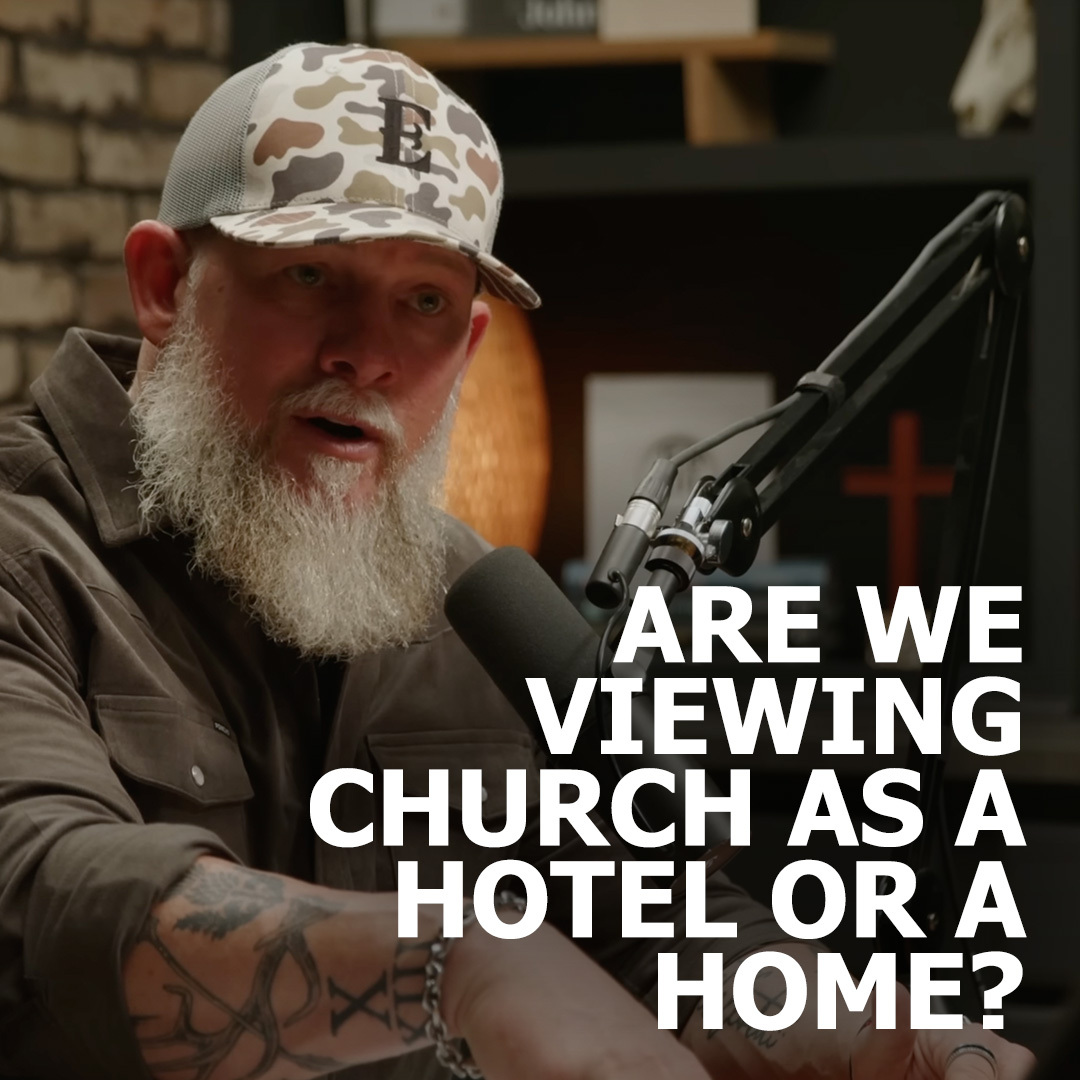
He'S getting it specifically. So you got to carry that. That's why I did all the family stuff to start with. Like, do you see this place as a hotel or a home?
- [37:25]
Host/Interviewer
Right.
- [37:26]
Pastor Jovi
Before you get into the details of how are you. We're going to take care of people at the church. There's some people trying to use the system. They're treating this place like a hotel, not a home. That's not. No.
- [37:36]
Host/Interviewer
Yeah.
- [37:38]
Pastor Jovi
So you got to get that, you got to get the context right in order to. Because what will happen is you could get people that are two. I don't want to use the word literal because I would say I'm a literalist when it comes to the Bible. But literally, he doesn't mean in 2025, if you're not 60 years old, you don't get taken care of by the church. It's not what he means. Contextually, what he's trying to do is paint a picture of who they're going to help.
- [38:01]
Host/Interviewer
It's almost like he's telling them you have to have discernment. Like, yeah, like. Like you've said before, like, it's not. Everybody doesn't have the same weight in what they say.
- [38:09]
Pastor Jovi
Right.
- [38:10]
Host/Interviewer
You know, you have some discernment about who you're dealing with, the posture with. With which you deal with things. And you mentioned. You referenced this pastor Joby, but when he starts talking about widows, that's a very specific thing. That started. And I thought of Acts, chapter 6, when the apostles were like, hey, listen, we got to appoint some people to basically be our care team because we have to keep preaching and praying. And so what's the context? Unpack a little bit of the context of the benevolence program that they would have had at the Ephesian Church.
- [38:42]
Pastor Jovi
So there were. There were widows, which means literally in Greek, it just means to be left alone. Okay, so there are women who've lost their husbands, particularly in the first century. They are. They're completely dependent on a man to take care of them. Based on the first century hierarchy of the day. Part of what I talked about at the beginning of the sermon is that we don't have words to express the major shift in the lived experience of the early church believer. Right. In the culture change, whether they were Roman or Jewish, it went from hierarchy and title to now we're brothers and sisters. So then what happens is you get this pendulum swing, overreaction, and freedom goes to chaos. And Paul's like, whoa, we gotta have some household rules here. I'm writing this so you know how to act in the household of God. And then there's a group of people in the first century as now, and they are trying to classify themselves into a group of people to get assistance from the church. And they're not deserving. That is what they're trying to use the system and milk the system. And ultimately what Paul says, dude, this is like, shocker to people today, hey, man, the church shouldn't be paying your bills. You got family. And if we pay your bills, that's ministry we can't do. And by ministry, I mean gospel ministry. I think this is a shock to people. The primary role of the church is not to help people. The primary role of the church is the Great Commission. We want to relieve all suffering, primarily eternal, secondarily, as a result of the gospel. Do we help people of Course we help people. Read Matthew chapter 25. Of course Christians, because Jesus loves us, we love people as a means to an eternal end. Like ultimately it's a gospel issue.
- [40:33]
Pastor Britt
And so well it gets into man. Look, it gets into very quickly. What does it mean to help someone.
- [40:42]
Pastor Jovi
Ultimately the gospel is without the gospel. It is only a temporary mandate.
- [40:48]
Pastor Britt
See your point previously, like most people's working definition of help is that I temporarily relieve your negative feelings.
- [40:57]
Pastor Jovi
Correct.
- [40:58]
Pastor Britt
And that that's what I mean by help is that I temporarily relieve your negative feelings. Your previous comments was there are people who had negative feelings about the teaching ministry. And so somebody wants to temporarily relieve that negative feeling. And it creates all this anxiety because I got to do something, you know, I want you to feel better. And when sometimes the most helpful thing to do is to let people set sit in the negative emotions and in the negative feelings and realize that ultimately they're the only ones that are responsible for that. Look, I've been doing, I've been in this for a minute church ministry. I've been in this space very specifically, both on a global context and a local context. Poverty alleviation, benevolence, the.
- [41:45]
Pastor Jovi
When helping Hurts.
- [41:46]
Pastor Britt
When helping hurts for sure. I was one read one of the first ever read the book. Huge champion of it for anybody who wants to be effective in disciple making in any context, but specifically in regards to economic diversity. Right. If you want to be effective in regards to helping people who are facing financial hardships or life hardships that result in financial hardships, When Helping Hurts is the best book you can possibly. It's one of the best discipleship books you'll ever read. It's certainly one of the best books for this. That said, long story short, church I served at before this one or we had a benevolence program and the way it worked was if you had bills that you needed to get paid or you had you. You were in a spot where you needed somebody to help you. You come in one night, one night of the week and you would meet with what our equivalent there was of what our care team is here. Someone would sit with you, hear you, listen to you, pray for you. We washed every person's feet that would let us that came in and they would fill out an application, tell us your story, tell us what happened, tell us what the need is and give us three references to call. And we'd be happy to call to learn more about your Sunday because we really want to help you.
- [43:17]
Pastor Jovi
Yep.
- [43:18]
Pastor Britt
And so in order to help you, we. We're going to need to get some other people involved. And we'll even go so far as to call some of these other people on your behalf to see if they'll get involved in helping. Okay? Nine times out of ten, once you got on the phone and started calling, you began to really understand the situation here. And I learned that often the most helpful thing to do is to sit in a home with the powers cut off. As bad as it breaks my heart for you to have to sit in a house because your power got cut off because you didn't pay the power bill, it would not be helpful for me because what I've learned from your references is now, for a decade, you've been in this pattern of borrowing money from people and blowing it, someone helping you, and you ended up right back in the same situation. You know what I'm saying?
- [44:14]
Pastor Jovi
Yep.
- [44:15]
Pastor Britt
And then sometimes children are involved and like, it's nuance. And you've got to figure out. It takes a great discernment. To Paul's point here, here's what's wild. And I'm not going to say any numbers here, because if I actually said the number, you wouldn't believe it. You actually wouldn't believe it.
- [44:31]
Pastor Jovi
Well, then you got to say it.
- [44:31]
Pastor Britt
I can't. I can't. I just can't bring myself to do it. More than a thousand. More than a thousand benevolence applications were filled out in a year, okay? This was a big church. More than a thousand, one person. So let's call it probably more than 100 filled out. The applications and the references checked out, okay? The next step was we want to get you connected with a financial health coach, and we want to get you connected with a life skills coach, and we're willing to help you, but you're going to have to also take these steps. Whether it's a personal counselor, a financial help, there's two or three steps that you're going to have to take if you want the help. More than a thousand, maybe 100 got to the point of taking the next steps. One. One person actually did it. One person of more than a thousand actually would then take the step to show up to meet with a financial coach or to meet with a personal counselor, or to meet with staggering, staggering, staggering.
- [45:42]
Pastor Jovi
And the amount of gospel money that could have been wasted.
- [45:46]
Pastor Britt
Unbelievable. And here's the thing, is that in the middle of it, all, right, sitting across from you, the question you have to ask this is not how do I temporarily relieve the negative emotion. The question is, how do I partner with the Holy Spirit of God to restore and repair dignity. Yeah, these are totally different things. What's at stake here is dignity.
- [46:09]
Pastor Jovi
So what's happening in what Paul's telling Timothy is that's what we're going to do. So the true widows, here's what you're going to do. Are they godly women with good reputations and they lost their husband and they're over 60. 60 was like the, that's when you were old in the Jewish community and your chances you weren't going to get married after 60. Okay. And so what they're going to do is these. Because it lists all these things. You've been washing saints feet and taking care of visitors and feeding, you know, okay, they're still going to do that now they're going to do that for us at the church and we're going to cover their bills and everything. We're going to create a partnership and they're going to be married to the church and where their husband used to take care of them. Now the church is going to play the role of the husband in that provision and protection is coming from us. But if you're younger, he warns them, we've tried this a bunch of times and a bunch of girls said, I'll take that deal. And then what they started doing is they didn't need a job anymore, so they just started going house to house and being, you know, and chatty and gossiping. That's what, that's what that list is about. And they actually were more concerned about being married than being married to Jesus. And so because there's no problem getting remarried to a believer because he commands that younger widows get married, make babies, serve the Lord. That's what he says. But what these girls were doing is they were marrying pagans from the temple, Artemis and they had this gig with the church and they're getting that benevolence check and then they run off with some guy that's sacrificing babies down at the temple. And Paul's like, don't do that anymore. That's what's going on. It was the first century version of what you're talking about.
- [47:41]
Pastor Britt
Listen, man, I'm down in Haiti. This is after the massive earthquake, 2010. I'm down there, I'm working in Port au Prince with a, a couple of different ministry organizations. The, I don't even know the, the PC word anymore. But, but hearing and hearing impaired dead. The deaf community. Deafness in the majority world is a real issue. It's a Real issue. Your kid gets an ear infection, you don't get to put tubes in. If you live in Haiti, Okay? Yeah, that's just how it works. You go deaf. Okay? So one of the things that we were working on was building a community that this population of people could come and live in and they could be gainfully employed. They would have schools specific to meet their needs, that there would be some technology invested in the community to help them have more functional life, more functional access. You know what I'm saying? And so there's a whole bunch of ministry organizations wrapped up in this, and hundreds of thousands of millions, millions of dollars went into building this. And it was like tiny houses. And the idea was, let's help as many people as we can get out of the streets and out of the violence and out of the. The wreck of it all and live in this community and start to make goods, teach them skills, all this kind of stuff. Okay, long story short, it actually came time to go and start recruiting people to come and live here to cast the vision. And the question that you would run into regularly, when we were going from shantytown to shantytown, from tent city to tent city, you'd run into this regular. The question would be, well, how much money am I going to make? And you would say, you know, at start, our best guess is probably three to four hundred dollars a month. And not everyone, but some people would respond with the respond in the communication would be, Well, I make $250 a month and don't do anything because some organization, some ngo, somebody out there is just showing up and just giving them money. Yeah, because they're trying to keep the. They're trying to keep their fundraising wheels spinning back in owners back home. So they've got to give out a certain number of money and it looks good for them in order to give that money. But what you're doing is generationally trapping people in a lack of dignity and in a poverty mindset. And it's really, really dangerous. And it's really, really. That said, every Christian on the planet inspired by the Holy Spirit, wants to help people.
- [50:21]
Pastor Jovi
They should. Yeah.
- [50:22]
Pastor Britt
But we also all have the responsibility to ask the question, what is actually help?
- [50:28]
Pastor Jovi
Correct. And can you just be humble enough to say, not you, you, because you do. Y', all. You don't know. So the reason I listed the hundred plus organizations that we partner with is because our church is not an expert in every single. We don't.
- [50:46]
Pastor Britt
We can't be.
- [50:47]
Pastor Jovi
We're not an expert in the fight for the right to life. So what do we do? We find an incredible partner, Jesus loving partner, First Coast Women's Services. And we say, why don't y' all be the experts in that? And so we give them money and volunteers and run fundraisers for them and pray for them and give them all the church cover we can to help save babies lives. I met two guys on Sunday and they're. This is our first time here. I'm like, great. And they're like, we're homeless. I'm like, okay. And Pastor Walker's right there. Come here, Walker. These are your guys. And I just looked at him, felt nudged by the spirit to say. I say, listen, in Jacksonville, if you can not do drugs and go to work, you don't have to be homeless. I'm just telling you, there's enough organization now. What do I know about alleviating homelessness? I don't know anything. But we partner with organizations in town that are experts on this. And they know because they work with all the other organizations if this is the seventh stop on the train, because they know you can bounce around and get like a bed and a meal here and a bed and a meal there and just use the system. And so it would be throwing gospel money away for me to just go, here's a voucher to Hope's closet and stuff. Paul said, you're going to develop a system. And again, this is descriptive of the system for Ephesus, we have systems with our partners here so that we're actually doing good gospel helpful work, not just making us feel better because we got extra fold and change. These are, that's very different things.
- [52:22]
Host/Interviewer
I was going to point that out that something about what you're saying about really thinking through it is like if, if you're honest with yourself, how often are you just trying to feel better about you for sure by going through, by being able to do that, it's easier.
- [52:39]
Pastor Jovi
Let me tell you something.
- [52:39]
Pastor Britt
It's way easier to tip somebody than it is to live incarnationally.
- [52:42]
Pastor Jovi
But here's the thing too. If you're actually generous at church and bringing your first and best, and you go to somewhere like the church of 1122 that supports all of these organizations, these gospel centered organizations around town, and you see the guy on the corner with the like, God bless, please, anything helps. The best thing you could do is say, go to and tell them the place the Beaches Emergency assistance Ministry go. We support them. If you want my church supports there. I know if you actually need help, they'll help you what you hear nine times out of 10 is I've been there. And they, okay, there was a reason it didn't work out for you there or Salvation army or, or. You know what I mean?
- [53:18]
Pastor Britt
Yeah. What we all need.
- [53:20]
Pastor Jovi
But when you're generous, when you actually are like, I don't feel the guilt, you know, if the spirit of God tells me to give money away, I'll give it to whoever, no problem. No problem.
- [53:28]
Pastor Britt
You carry money around just to do.
- [53:29]
Pastor Jovi
That, looking for it. Yeah, Right. And the most least likely person is that because I already invest in a church that invests in places that help all those people. So it'll take the guilt away because then you can actually live in freedom. God, I feel like I'm being obedient to you with not just my first and best, but all of it. And so I'm not going to be guilted by some kind of emotion. Because also the song on the radio and whether you think you're supposed to give or not, it's a one to one correlation. You know what I mean? If it's a rock and roll song, you don't feel it. But if it's some like, sappy country song, you know, Larry Fleet talking about, that's where I find God. You're like, oh, my God, is this a sign? No, it's not a sign. Yeah.
- [54:08]
Pastor Britt
What we all need, homeless or very wealthy. What we all need is what Timothy has here in Paul. We need someone to look us in the eyeballs, to see us as a human and to believe more for us than we believe in ourselves. Yeah, that's what we all need. And I've found in my experiences, especially with people that are living in poverty, what's more meaningful is to look them in the eyeballs and say, you got what it takes. You have what it takes. And I'm willing to go there with you. I'm willing to help you realize your potential. But here's the thing. I can't do that for everybody. I can't. I'm a limited human being, but I can do it for somebody. And I think that's the call of the Christian, is to have the eyes. One. The willingness not. Not just to feel bad for a person, because I can't. I'm going to. Y' all could get me on this all night. We literally could be here all night. But feeling bad or feeling sympathy is not. It just can't terminate on itself. You know what I mean? But looking somebody in the eyes and saying, I'm willing to walk this Road with you. You look at what some of our folks are doing with cup of job and life work leadership and what they're doing with, you know, even with the, the hotel down at the, at the beaches and people all over town, there are people, good godly people who honestly, they don't need to do this even for a sense of like a pat on the back, but they're just trying to get in there and help people realize all that God has for them. And we all need that man. We need people to look us in the face. One of the interesting things on the text you brought up Acts chapter six and you talked about this tonight. And widows are a recurring opportunity of ministry inside of the church all through the New Testament, namely because the world that they lived in, people were at war all the time and the men were dying young.
- [56:17]
Pastor Jovi
Y.
- [56:17]
Pastor Britt
You know what I mean? And the life expectancy was pretty low, especially for males. So there were a lot of, there were a lot of widows. But one of the interesting progressions you see is how widows are taken care of or how people are taken care of. You go from Acts 2 church where everybody's sharing everything. You go to an Acts 4 church where they're like, okay, this thing's growing, we got to get organized. And so now everybody's not taking care of everything anymore. They're combining their resources and bringing them to the apostles. And the apostles are now figuring out how these things are best organized and prayerfully and discerning how the resources are stewarded. And then you get to the Act 6 church and it's growing even more. And they're like, okay, we've got to bring more clarity to the role that we are here to preach and to pray.
- [57:10]
Pastor Jovi
Yep.
- [57:11]
Pastor Britt
And we need other people to meet these needs. And we need other people to meet these needs. And we need other people to meet these needs. And so it's really fascinating how you see the church growing up as it's growing in size.
- [57:24]
Pastor Jovi
Let me tell you what I bet happened in Paul's life. Paul said, hey guys, I've. I'm going to take some of the money that has been laid at the apostles feet here in Jerusalem. And after the church council in Acts 15, and I'm going to go on a mission trip to Ephesus and I'm going to plant a church there. And I bet you people were like, what? Why are you going to spend all that money trying to build a church in Ephesus when there are starving people right here? Why? You know what I mean, dude, I Heard it. When we planted this church, there was an article written in some little crappy tabloid around town. I don't know if it still exists. Probably not. And there's a whole article on what could be done with $4 million instead of US renovating a Walmart for a church. And the short first of all, those people don't know Jesus, so they don't even know what they're talking about. I have a different marching order. But in their mind, the greatest thing I could have done in 2012, now I'd have gone to jail because I raised the money to plant a church, not to give away to people, is to stand on the street and give away $4 million to people to eat. And we could have done it once. Instead we started a movement, a church of disciples. And we continuously give a portion of that to feed and care for people. At this point, it exceeds the 4 million that we give away every year. So we could have given it away one time, but the world is so shortsighted. There's multiple websites out there right now, and that's what they do. They'll find some worship oriented expense or discipleship oriented expense. And what they'll say is, that's a waste of money because it could have been used for this, you dummy. Worship and discipleship are two of the primary roles of the church. And people who actually worship Jesus and are discipled to be like Jesus as an outflow of that will take care of people. And over time, you'll take care of a lot more people to the glory of God because you'll make a lot more disciples than if you give it all away to the thing at one time. I'm telling you, man, there were some. Naysay, listen, there was a time and there was this church meeting and somebody came in and they made an extravagant financial offering in worship to the glory of God. And one person said, what a waste of money that could have been spent on the poor. His name was Judas. So when you do that thing, be very careful, man. That game has been played before. Woman with an alabaster jar, which was probably the most valuable thing that she had, probably worth a year's salary, comes in and just cracks it open and pours it on the feet of Jesus for the sake of glorifying Jesus. And there was a guy that said, you know how many poor people you could have helped with that? And what was actually going on there is he was critical of the worship of Jesus and he was actually filled with the devil of hell and he was skimming off as the treasure he was taking a little for himself. And he sold Jesus out for 30 pieces of silver. So that's. That spirit still lives. And I don't think that one has a name, you know, like some people have had names for other spirits. But that spirit of criticism about the church still lives today. And be very, very careful. That spirit lived in Judas. Now, I don't think you should waste money in the church either. You should be very, very, very mindful of the stewardship of every dollar that comes through the church. And we do all of those things to the best of our ability and even beyond our ability because we have outsiders come in and do audits of what we do. And we have other organizations that are Christian organizations audit what we do, you know, with all those kinds of things. But the primary role of the church is not to get money together to give away to people. It's not even good, like good ministry done the right way. The primary role of the church is to the glory of God. We make disciples to the ends of the earth and then disciples made for sure. Care for the poor and feed the hungry and visit those in prison and care for those who are sick for sure. But the moment you get those things inverted, look at any church that inverse it and makes the alleviation of physical suffering primary. It is not very long that the gospel becomes secondary. And then one more generation that's not a church anymore.
- [62:00]
Host/Interviewer
Well, we are running out of time and I wanted to ask about.
- [62:04]
Pastor Jovi
We'll do it.
- [62:04]
Host/Interviewer
Taking care of family.
- [62:06]
Pastor Jovi
Take care of your family.
- [62:08]
Host/Interviewer
Because I have, I have some friends. We all, we have some mutual friends and they're at the stage of life where they're making the decision, hey, mom or dad or somebody's got to move in with us for a season, you know, so you're, you know, until you can't.
- [62:21]
Pastor Jovi
Also, don't beat yourself up. At some point if you can move your mom and dad in, which I'm pro. I mean, I've told Gretchen already a bunch of stuff. If your parents need to move in, they're moving in. Part of the reason we bought the house we bought is because we knew Jay would move out and Reagan will move out. And I think they design houses today where you can move the mother in law and father in law in. I really do. You know, you make one little adjustment in your home and they can have that side of the house and be fine. So whether it happens or not, I've. In my house, we've pre decided if that's what anybody needs, that's what we're doing. But then one of the hardest things, man, when my daddy had to take Mert, My grandma, to the nursing home, he. It's only the second time I've ever seen him cry this whole. Or. I didn't see him. Heard him on the phone, and I had to be like, dude, it is beyond your capability now. Your pride is actually getting in the way of helping your mom in the way that she actually needs help, man. You ain't. You can't help her like that. You need a real nurse. You ain't a nurse. You know what I mean? So there's like this. I don't know, there's kind of a bell curve here. One side is. I'm just going to ignore them. Terrible, man. You owe it to your parents to take care of them, whatever that means. And then the other side of the bell curve is something like, my pride will not allow me to let somebody else help them. But they actually need is help, not me. And you got to let that happen, too.
- [63:40]
Host/Interviewer
Yeah, usually if they're getting, like, they need some health. Health help. Right.
- [63:45]
Pastor Jovi
But yeah, and it could also be brain health. Like, you move somebody in with dimension, bro, you're. You're. You don't have the skills. You don't have the skills to ha. To do what they need. And you could. Your own pride could get in the way of them getting the help they need. You know, Then the thing is, I think you just got to work extra hard to not forget them. You know, a big part of the reason we do the 18 services in the assisted living places is because those poor people get forgotten, you know, And. And it's part of the. It's a shadow of our mobile society, you know?
- [64:20]
Host/Interviewer
Yeah.
- [64:21]
Pastor Jovi
It's not like everybody lives on the same piece of ground anymore. It's, you know, nobody lives near their grandma and that kind of thing. And so we want to. The church will go and visit.
- [64:32]
Pastor Britt
Yeah, I think I would. A yes and amen. And every situation is so unique, you know, whether it's caring for an aging parent or an ailing parent, or even if you have a child who's trapped in habitual behaviors. And you're listening and we're talking about poverty alleviation, but a lot of the same principles apply. It's like, what actually is helpful here? And usually the most helpful thing is the thing that's hardest. And I think that applies in both directions.
- [65:08]
Pastor Jovi
If you're married, I would say this.
- [65:10]
Pastor Britt
Having godly wisdom and medical counsel. Lots of opinions to help formulate the best plan as well as anywhere that they're like. A lot of times the parents have an opinion. Your parents are going to have an opinion on this for sure. You know, I think like my in laws are very clear in regards to what they have said that they want.
- [65:29]
Pastor Jovi
Correct.
- [65:30]
Pastor Britt
And they've been smart with their money. We're being smart with our money so that we can all like, we have the freedom to make the best decision for them. That puts them in the best position to flourish in the season of life that they were in.
- [65:40]
Pastor Jovi
So it'd be a really good idea. If you're listening to this right now and you're. There's no immediate need and you're married, is to begin to have the conversation with your spouse. Hey, what, what do you. Let's talk about what happens when my parents. Your parents get old. Hey, if we've got a niece, nephew, cousin out there somewhere and they really needed help, what would we do? Because it's hard in a crisis to make a good plan. You use the word plan. It's easier to talk about these ideas when they're ideas before as opposed to something get thrust upon you and then you feel trapped or a little off balance and you're trying to make a good decision for your family.
- [66:23]
Host/Interviewer
Yeah, that's really good. Decide before you have to decide.
- [66:27]
Pastor Jovi
Yeah.
- [66:28]
Host/Interviewer
Well, thank you so much, Pastor Joby, for this amazing sermon tonight. And I loved how it was so clear about what the church really is about, you know, because there are a lot of churches out there that get confused on this issue. Right. And there's a lot of noise.
- [66:44]
Pastor Britt
It's easy to do.
- [66:45]
Host/Interviewer
So there's a lot of noise in the culture and there's that we talked about it, that personal compulsion sometimes to try to alleviate something inside of you and we can, we can end up down the wrong road. And so thank you for the reminder that the church is about disciple making and the glory of God.
- [67:01]
Pastor Jovi
Something I was reminded of in teaching this. If I just picked subjects and topics that I was going to preach of based on my own preference, there's no chance in the world, like I would have lifted the verse about if you don't take care of your family, it's worse than the unbeliever. I would have lifted that one out there because that's fun to preach for me, but there's no chance. I walk through this whole text on this and so it's just, you know, you could. I mean, God's word not only is it true. But it's so trustworthy and timely, and you can never go wrong just by teaching, verse by verse through God's word.
- [67:40]
Host/Interviewer
I think it really resonated. I mean, what an incredible response from our church. And I saw so many people. Even after we said be free, people were still huddled up, praying for each other.
- [67:49]
Pastor Jovi
Yeah.
- [67:49]
Host/Interviewer
And so that was awesome. So, any closing thoughts and a closing prayer?
- [67:53]
Pastor Jovi
Pastor, I would just pray. Let's do it. Father in heaven. Lord, we thank you so much for your household, your family, this movement, the church, God. We do pray for those people in need, God. The widows and the widowers, the. Oh, the heartbreak. So sad. It's so sad. And, God, you put us together as a family, that we're not supposed to do this thing alone. And so, Lord, I pray that you would give us eyes to see, God, you would give us hearts to feel. Lord, you give us minds to discern, but ultimately, you've given us your spirit to direct us. And may we as a church, just do whatever it is that you tell us to do. We pray in Jesus name. Amen. Thank you for listening to the podcast the End. You nailed it.
- [68:44]
Pastor Joby Martin
The reality is everything already belongs to God. And when we give financially, we're acknowledging that we trust him. If you just watch this and feel led. To make a donation, text the word donate to 441-122 or visit coe22.com donate. Your generosity is not only an act of worship, but an investment so all people can discover and deepen a relationship with Jesus Christ.