← Deepen with Pastor Joby Martin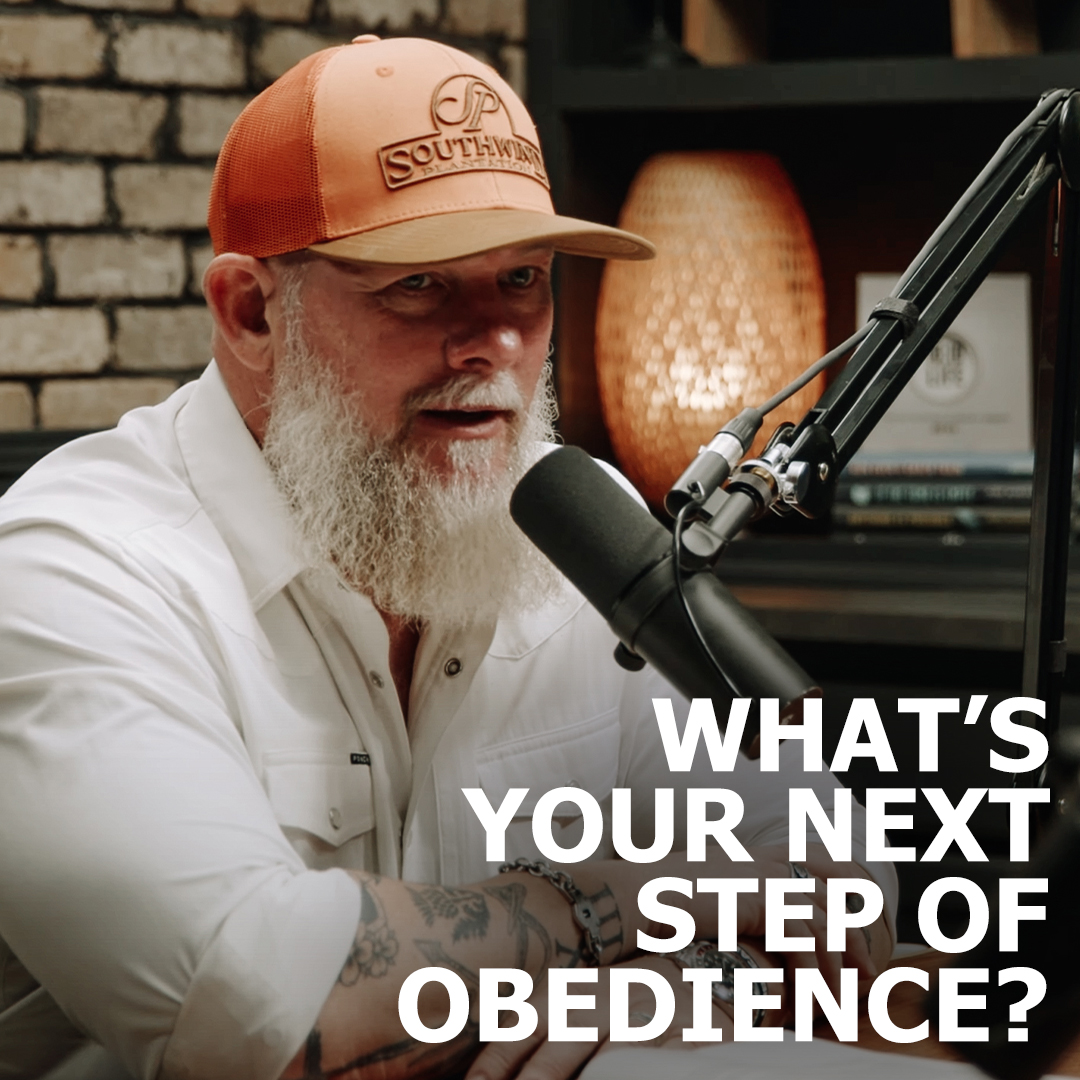
Loading summary
Transcript167 lines
- [00:01]
A
Welcome to Deepen with Pastor Joby Martin. The Church of 1122 is a movement for all people to discover and deepen a relationship with Jesus Christ. And we're praying this message helps you deepen your relationship with him. Now let's dive in.
- [00:18]
B
All right.
- [00:18]
C
Happy New Year, gentlemen.
- [00:19]
B
My man.
- [00:20]
C
Welcome to 2025. Boy, it's going to be a great year. I can feel it.
- [00:24]
B
Let's do it.
- [00:26]
C
Pastor Joby, we are Envision Weekend, and I would love for you to just talk for a little bit about. I mean, maybe not the events and stuff like that, but be a godly man. I have the journal. The entire year in a journal. Let's talk a little bit about. About what we're getting ready to go into here this year.
- [00:45]
A
So part of the reason we do Vision Weekend, the first weekend of every year is. Man, I've been on church staffs a lot and learned so many things from so many great churches. But one of the things that I found a bit wanting is I never, like, really knew what we were doing other than just redoing what we did last week.
- [01:03]
C
Right.
- [01:04]
A
With a little. Little different vision. Oh, I don't know. Anyway, I just always thought it'd be a really good idea to paint the target on the wall at the beginning of each year.
- [01:11]
C
Yep.
- [01:13]
A
As opposed to kind of flinging the arrow and trying to draw the target around it. And so just through a lot of prayer and where I know we're going in 26, 7, and 8, this is a preparation year, very similar to when we did the year of Deepen and studied the book of Romans. And so the calling men to stand firm and act like men is to really position ourselves as a church, to be ready for where we're going in 26, 27, and 28. Because if our men don't do what they're supposed to do, our church won't be able to go where I think God is leading us in the future with the next initiative that we're putting together. So that's the impetus behind it. And so the reason that we're going to study Timothy and Titus up to Easter is because essentially what Paul is doing with these young men is he's helping instruct them on what it means for them to take their next steps of discipleship as they play the role God's called them to play.
- [02:08]
C
You mentioned a little bit of this. Do you have anything else to say about how somebody who's not a man would hear that? And. And, like, remember when we did the Song of Solomon series. And you had like one week on the men and one week for women. You know, it's like you said something in those sermons, like, hey, this is not for you just to like, you don't just tap out or listen to this one. So how do you hear that? You know, if you're a woman, you're hearing that. What, what message would you.
- [02:33]
A
Well, we're still just going to teach all the verses in First Timothy, so obviously all scripture is useful for all of us.
- [02:39]
C
Yeah.
- [02:40]
A
The reason we pick Timothy is because we're leading towards a series in the fall called Stand Firm and Act Like Men. We will do some other things. Like I mentioned, there will be devotionals for women during that series. But I mean, one of the things men and women need is to be supportive to each other, you know, or if, like, if we, if we do a marriage series, we need the unmarried people to like lean in because one is just going to be what the Bible says about relationships in general, that will help us all. Anytime we're talking about men, there's not a woman in the church that's not some way related. If you're at this church, you have a bunch of brothers and I'm sure you would are praying for and hoping that your brothers in Christ will stand firm and act like men. I'm sure you were hoping and helping your dad, husband, boyfriend, you know, blood brother do these things.
- [03:31]
C
Do you think that reaction says something about how we're kind of consumeristic sometimes about church? Like, oh, this one's not for me. So I'll just like we pick and choose something.
- [03:40]
A
Yeah. The worst way to think about church is what do I get out of this?
- [03:43]
C
That's right.
- [03:44]
A
Yeah.
- [03:44]
C
Right. So you started a new podcast with Kyle Thompson called the Daily Blade.
- [03:48]
A
Yeah.
- [03:49]
C
Devotional or.
- [03:50]
A
Well, the idea is to equip men, you know, to deepen their relationship with Jesus would be our language. His language would be to equip me to push back darkness.
- [03:58]
C
Y.
- [03:59]
A
And again, I hesitate to use the word devotional because I think either John Calvin or butterflies. And this, this is neither of those. Think more like locker room talk. Five minutes. Here's a few verses, here's what they say, here's what they mean, here's what you should do. Ready? Break. See you tomorrow.
- [04:15]
C
Yeah.
- [04:16]
A
And you know, whether you're a long time Bible study, I've gotten a lot of emails from guys that would be, you know, Bible intense men and they're saying thanks and a lot of guys that are like, man, I'm kind of brand new to this. So to get that kind of bite size because, you know, there's never been to my knowledge in my life, I can't think of a particular quiet time that changed everything. It's been more of just kind of the constant ingesting of the word of God over time. So that's it?
- [04:45]
C
Yeah, it's thought provoking. It's got a challenge to it.
- [04:47]
A
That's it. Five minutes long.
- [04:49]
C
You can take, take it with you through the rest of your day. So. Well, we're kicking off this, this series in First Timothy, which is going to be great. So let's dive into these just two verses that introduce this chapter. And I want to start by asking this question that would also be helpful in reading Paul's other letters.
- [05:09]
A
Okay.
- [05:10]
C
He often does this little greeting, which I think we've talked about maybe another other series before, but he does this greeting and oftentimes will say a title for himself. So in here he says, paul, an apostle of Christ Jesus by command of God our Savior. So why does he need to legitim. Legitimize his ministry? Or why would it be crazy potentially that he says he's an apostle?
- [05:37]
A
So there's a lot there. I think about it like if I called you, I wouldn't be like, hi, Brit, this is Joby, graduate of vcu, master's degree from wherever Leap, you know. But so there's a couple of things. One, I think a part of the reason he's telling Timothy who he is commanded as an apostle by Jesus is so that Timothy will know who Timothy is, that these words are not merely Paul's words. This is not a casual letter. There is a contingency of people. This is kind of reading between the lines through Paul's letters that were disputing his apostleship because one, probably because of his past, because he was a Pharisee that terrorized the church, and two, because the other apostles saw the resurrected Jesus during his earthly ministry. And Paul has to constantly remind them that he too came to face to face with the post resurrected Jesus. So that's it.
- [06:36]
C
Isn't it also true that during this time there would be like copycat people who would try to write letters and imitate. Like if Paul became popular as an author sending all these letters, they would try to imitate him. So he's also like, hey, just this is really, this is really me.
- [06:57]
A
Well, a lot of the false gospels that are not original but pretty old, they did attribute like the Gospel of Barnabas, the Gospel of Timothy, the Gospel of Judas. You know, these things where people claim things like Jesus was married or, you know, all this kind of stuff. Yeah, that's what they did. They made stuff up in the 3rd or 4th century, but they would attach some 1st century famous name to it.
- [07:22]
C
Yeah.
- [07:23]
B
And sometimes, don't you think a signatory, you know, it's like if I send you an email and if it's a formal email at the end, it would be, you know, best regards or Sincerely, comma, Ryan Britt.
- [07:33]
A
Yes.
- [07:33]
B
Executive ministries, power pastor, the church of 1122. Cell phone, whatever.
- [07:38]
A
Yes.
- [07:38]
B
I wouldn't put my cell phone in there because I don't want you to have myself. You have my cell phone number, but generally I don't want you to have it. But I think a lot of it's signatory in that way because you don't go to the end of the letter and then he doesn't like it. Doesn't say best regards.
- [07:52]
C
Right.
- [07:52]
B
Your buddy Paul. So it's, it's. It's as much that contextually.
- [07:57]
A
Yeah. First century form for sure.
- [08:00]
C
Isn't there. So when Paul was in his period of obscurity, isn't there also, like. So he saw Jesus on the road to Damascus.
- [08:13]
A
Correct.
- [08:14]
C
And.
- [08:14]
B
Or this is hilarious. He says, apostle of Christ Jesus by command of God our Savior. That's one way to say it for sure.
- [08:24]
C
Doesn't he. I can't remember where it is. Doesn't he allude that, like, he had more experiences with Christ, like being taught by him, like, by. By direct revelation, Galatians. Yeah. He's saying, I received this with the. Through a direct revelation from Jesus.
- [08:37]
B
It's like you went to seminary with Jesus.
- [08:38]
A
Yeah, for three years. Yeah.
- [08:39]
B
Yeah.
- [08:41]
C
That's pretty great.
- [08:42]
A
Wow.
- [08:43]
C
You too can sign up for that class. Timothy is addressed as my true child in the faith. And we talked quite a bit about that tonight. So that tells us something about their relationship and the nature of discipleship. So let's open up that a little bit. Why is it so much. We tend to think of discipleship as like a learning and a class, like, master these things. But this has. Has all these different connotations. So Pastor Joby, talk a little bit about. Flesh that out some more, you know.
- [09:15]
A
Well, the family language is pervasive in the New Testament. You know, they call each other brothers and sisters and fathers and mothers and those kind of things. And it's, it's very different than our Western idea. Our Western idea of discipleship is. Let me teach you what I know this Middle Eastern Idea is you become who I am. I mean, this is with the whole like, be covered in the dust of your rabbi stuff. Paul says in 1 Corinthians 11, 1, Follow me as I follow Christ. You see Paul pick Timothy up in Lystra or lystra in Acts 16, and he just. He's about 15 years old there, and he just takes him under his wing. John, Mark had kind of went home because he. What, for whatever reason, the Bible doesn't really say. But so then on round two, Paul needs another ministry companion, and he's not going to take a quitter. They eventually reconcile, but. But he picks up Timothy and Timothy just goes where he goes and he learns on the fly. Then eventually, by the time you get to Acts 20, Paul lays his hands on Timothy and commissions him as essentially the lead overseer, lead pastor at the church of Ephesus. And so while Timothy, when he receives this letter in first Timothy, it's known as the pastoral epistles. This is how the church in the first century ought to conduct itself. So Paul is telling Timothy, as you talk to the people at Ephesus, tell them this is how you conduct yourself. And so he's going to talk about all kind of things that the church would deal with in the first century and today. But yeah, it was very intimate. I mentioned a few people in my life that have played this role. Coach Bulley is the first one. He did not have a discipleship strategy. He had a boy get in the truck. That was it, you know. And so I just saw him live life and preach and do stuff. Bill Ross was my first pastor out of seminary. He did teach me things like when you do a wedding, here's a good template. Now go make it your own. Come with me and watch three weddings. And like, he gave me a. He gave me a script and then he was like, put in personal stuff here. He taught me how to do a funeral. He taught me how to do hospital visits. Like, it was very. And when Gretchen and I first got married and didn't have kids and he had teenage kids, we were at their house like almost every weekend, you know. And so it was very much invite us into his life. Same thing with Pastor Jerry and Denise when we moved here. We have kids then and we just were at the sweats house with a whole bunch of people all the time, you know. So I've had a bunch of people like this in my life that have. And I don't think. It's not like I'm just blessed. I positioned myself.
- [11:49]
C
Yeah.
- [11:49]
A
In such A way that these older men could pour into me.
- [11:52]
C
Yeah. Was Bill Ross your boss?
- [11:54]
A
Yes. So, yeah, he was a senior pastor and I was a youth pastor.
- [11:57]
C
Was he doing that like a. Along. Like you along with someone else, or was you most of the time just you?
- [12:03]
A
N. It was me more. I mean, he was a great boss and mentor. It was. It was. There was like four pastors on staff, so he definitely had a mentor relationship with all of us. But. But yeah, I mean, it was. We were really blessed to have him and Penny just pour into us the way they did.
- [12:19]
C
Yeah, we didn't talk about this as much, but when he. When he says my true child in the faith, it just makes me think of being a parent, you know, so we're all parents. And so what has being a parent taught you about discipleship? Like what. What truths about parenting also apply to discipling others?
- [12:42]
A
Questions and self discovery are more important than information transmission.
- [12:50]
B
That's good. Yeah. I think these words I've been thinking a lot about in the year transition and like, I don't use these words with my kids, but I've been reading this book called how to be Known or How to really Know a Person by a guy named David Brooks.
- [13:07]
C
Well, it's a great book.
- [13:08]
B
Oh, it's great. But he talks about. It's great. He's a great writer.
- [13:11]
C
He really is.
- [13:14]
B
But he talks about the difference in being an illuminator versus a diminisher. And it really got me thinking a lot about parenting and discipleship and church and just relationships, you know, to be a disciple. The word disciple means learner.
- [13:28]
A
They.
- [13:29]
B
And to be a disciple of someone is that I am committed to learning from you. That's the best of the rabbi stuff you're talking about. And so there's more to discipleship than, like, just being nice and being around people. It is an intentional effort on your part to be nice, to be loving, to be godly. But I'm intentionally doing that in front of someone and with someone in my life for their learning benefit so that they can become more like Christ. Well, the lowest hanging fruit are the people that God chose to place in your bloodline, in your home, your children. And so my children. And so I've been thinking a lot about how being an illuminator is so much more empowering and equipping of any saint. But specifically those two little saints in my house, they're not so little anymore, but the two saints that are in my house, they're young versus diminisher. You know what I Mean, like illuminating what God's doing in their life and helping them see, make the connections between their experience and how God's involved in that experience and illuminating the good things about their personality as a reality of God's grace at work in their life. And not just. And I'm certainly not perfect at this, but not being a diminisher, that's always pointing at the do better and do better and do better and do better and do better. And being very, very reserved in my critical feedback, that's where I want to be, and that's something I want to focus on for 25, is I want to be very quiet with my constructive. I say in quotation marks, because constructive feedback is pretty much critical feedback to the hearer. And with my children specifically, I want to be an illuminator. And I think that is a gospel intention, because I think that's much of what Paul does with Timothy, is that he's illuminating some truths in Timothy's life. But he also illuminates all these things that God put in Timothy that Timothy brings to the table that make him uniquely equipped for the anointing and appointing that God's given him. And so I'm using a lot of big words here, but I think being an illuminator versus a diminisher, I just pray that God would give me that grace with my children and that would, you know, because I think that is how discipleship flourishes. I think that's a lot of how, Pastor Joby, you do it. I was actually talking to one of our pastors tonight, and he was asking me about preaching here. And you've been always super gracious with me to give me the opportunities to preach here and there. And happy to do it. I was telling them the question more or less was like, what does Pastor Joby like when he critiques your sermons? And I'm like, he doesn't. He actually has not ever really critiqued anything. He's given me direct, loving feedback on, like, leadership stuff and very strong, like, theological training and that kind of discipleship. But in regards to, like, my personality quirks, or in regards to, like, if you said this sentence that way, or he's just never done any of that. But also, all you've ever done is illuminate the good things. Because I think you fundamentally believe that if you can make strength so strong that they will overshadow weaknesses. And I think that that's a. Or that weaknesses or whatever you want to call them, you understand? But you can strengthen muscles to a certain point to where they're the dominant thing at work in somebody's life. And I think that's a lot of what discipleship is, is helping strong things grow stronger versus just always trying to, like, eradicate weak things or make much of weak things.
- [17:03]
A
Well, let's. Specifically preaching. The worst thing you can do is have somebody up there thinking about somebody else's feedback versus just being who God created you to be. Now, if there was a glaring, debilitating weakness or you just said something wrong, then I gotta love you enough to say, whoa, whoa, don't say that. Or, you know, of course, this word, not that word. But the last thing I want people to think is like, they're trying to nuance it to just, you know, to my own personal preferences. The best preachers are the ones that are just slinging. It's like a good defense man in football. When they complicate that thing too much and the linebackers are thinking they can't play, you just got to be just. They just got to go to the ball. And if you can't go to the ball, you can't play linebacker. And if you can't preach, you won't get. You won't get to keep preaching here. So. And I'm also thinking the long term. So I would always just try to, like, fan the flame of where you were the best. And sometimes it wasn't when you were preaching on stage. It was when you were leading a staff meeting, and I was trying to get you to do more of what you would do in staff meeting on stage for the weekend, and you have done more of that. And. Yeah, man, I mean, so much of it is subjective. Also, like what you're saying about your kids. I mean, obviously, you. You discipline your kids and you point out when they're wrong and all that kind of stuff. But, you know, it's hard to learn a lot from people that you don't like a lot, because you don't want to be around them. And you don't want to be around people that every time they call your name, it has a negative tone to it. You're right. So who wants to be around that? I don't want to be around that. You know, so that's a good word on illuminating. Yeah.
- [18:44]
B
I'll just bring up the preaching thing one. Because I think you're really great at illuminating versus diminishing. I really.
- [18:49]
A
Well, Petey helped me more than anybody, man, before we planted the church and I was the, like, the executive pastor at Beach. I wasn't an executive pastor. At all. But that's the title I have. And I was complaining to Petey that everybody wanted me to solve all their problems. And he was like, it's because you love it. I was like, no, I don't. It's. You know, I don't love it. He goes, then why do you. You. Yes, you do. Because they come in, they're like, what do I do about this? You give them the answer, and you love it. So if you really want to equip people, just start asking more questions than you give answers, and then they will be forced to grow up. And then two, you'll still have the opportunity to step in. If they come back with an idea and it's totally wrong, you say, no, good try. We're not going to do that. If they come back and it's 80%, right? Well, they get all the credit for the 80%. And you can say, way to go. And then you can help them with the 20. And eventually they will learn how to come with solutions and not just problems. Well, that wasn't just a leadership lesson that he taught. That really is discipleship. So when I'm. When people ask me Bible questions, most of the time my answer is, what do you think? Or, what do you think that means? Or, why don't you go and look up these three of the verses? I rarely give the answer unless it's Ask a pastor podcast, you know, but with a human being, I almost always just send, like, give people homework because I'm just trying to help them. You need to teach people not just what the Bible says. You need to teach people how to read the Bible.
- [20:16]
C
So, yeah, I also think about. You've used the illustration before where, like, you know, your kids take their first steps, or the equivalent of, like, they just try something new for the first time and they screw up, obviously. And as a parent, you're not like, what's wrong with you? You can't freaking take more than two steps. Like, and so if you think about my true child in the faith, like, you're thinking about discipling somebody else. It's patient. Like, it's. You celebrate the little wins, you celebrate those little steps.
- [20:44]
A
How about this word that Paul uses? I don't know if we'll talk about it, but one of the things that he prayed that he's. That he wants for Timothy is mercy. We don't use that word very much. It's almost impossible to. To offer, like, to, like, be defensive and merciful. You know what I mean? Like, when you realize how merciful God is like, we are children of wrath, dead in our trespasses, but God being rich in mercy, loves us. Okay? You've got to have like a merciful posture towards people to allow them to like, figure this thing out. I think one of the worst things that you could do, whether it's like adult to adult, especially with kids, but is, man, when you get into motive questioning, like, not only did I see you do this thing, but I think I know the motive of your heart towards that thing. Bro, that is on the opposite end of the spectrum of what mercy is. Mercy is looking at somebody, even if they did something wrong and kind of going, I bet if I got to talk to you for a little while, I could understand why you would do that. But man, when you begin to. When you began to distrust somebody's motives, that's a really, really bad place to be. It. It'll. There's no way you could disciple a person that way. Well, the reason you sinned again is because you don't even love the Lord. You know what I mean? You're like, what do you know about the motives of the heart? Does that make sense? And.
- [22:13]
B
It'S funny, man, you know, especially in regards to parenting and raising kids and discipling kids and that the things that I'm. There are times where I'm quick to, you know, raise my tone or I'm quick to. To. To be, you know, aggressive in the, in parenting, you know, and I'm. By aggressive, I mean like with my tone and, and the, the places I'm most apt to do that is areas where one of my kids is actually their motive. They're actually trying to help, but by helping, they're getting in the way. Or they think they're helping, but our experience is you're not listening. It's like mom said or I said, don't do this or don't do that. And you in your mind thought, well, I can help. And you're trying to do a thing. And by doing. You see what I'm saying? And in my brain, all you're trying to do is to disobey. I'm assuming on. On your motive. Motive, which is your motive is just to disobey whatever I'm saying. But in her little brain or in their little brain a lot of times, not little brain, but in their brain, it's. They're trying to actually be helpful and then I'm coming down as aggressive on them. Does that. You know what I mean? And versus Just like keeping my calm or just keeping it normal. And be like, hey, did you just hear what was said? Or hey, why are you doing this? Versus my immediate, like knee jerk reaction is just to be. Just to intervene with corrective.
- [23:55]
A
Yeah. And something else will free you up as a parent is when you realize that it is God's job to conform your child into the image and likeness of Jesus, not you to conform them into what you want. Something blew me away. We did that Christmas thing with my family with Ally was asking questions, you know, and you know, two of them want to do it or one of them wants to do it, two of them and my family don't love it, you know, whatever. And Ali asked a question of me and Gretchen, how we raised such kind kids. And I was really blown away because honestly, they really are. They are. They really treat people well. And I don't know that we've done anything to do that. I, you know, we don't do kindness classes. In fact, I don't think me and Gretchen are very kind people at all. Like, honestly, man, we're not. And then I began to think about, like, I was really thinking about this. We get on them about like, lack of motivation, grades aren't good enough. And they, they're, they do good. You know, they're mostly AB kind of kids, but if you get a C somewhere, I mean, I lose it. Or could you not turn in homework, you know what I mean? All these kind of things. And in the grand scheme of thing, to raise kids that demonstrate the fruit of the spirit, which is kindness, or demonstrate love acted out, which. It's one of the first definitions. Love is patient and kind. That seems way more important than most of the things we get all wrapped around the axel on don't, you know some straight A kids that are very, very motivated and they're the furthest thing from kind of, which means in that area of their life, they're not being molded into the image of Christ. So you just got to know that you're just a significant piece in what God is doing in your kid's life. You're not the ultimate piece. God is.
- [25:50]
B
You put that in the context of discipleship in the local church. Right. And I think one of the most dangerous places that we can live as believers is when we stand in judgment or in criticism over the process. God has somebody in.
- [26:04]
A
Yeah.
- [26:05]
B
And you hear this a lot, especially if larger churches, or maybe not even larger, but churches that are intentionally evangelistic, where people are, for whatever reason, God's saving people in that church. And quickly there will be a Demographic of people, usually small, not. Not a lot, but some who are like, well, what's the evidence of that salvation and what's the proof and what's the. And we're like two months into that person raising their hand or sending their life to Jesus and they're like, how do we really know? You're like, hold on, man. Like, we got to keep what belongs to God in God's camp and what belongs to us in our camp. You know what I mean? And it's like, how do you measure kind? So a lot of times Christians don't want to create categories of measurement.
- [26:53]
A
Yeah.
- [26:54]
B
In regards to discipleship, but it's really hard to measure. How do you measure kind? You can't measure it, but over time you can't deny it either.
- [27:01]
A
Yeah, that's it.
- [27:02]
B
And that's the realities of the Spirit of God at work in somebody's life is that the fruit of the Spirit is growing. But it's hard to quantify in. In any specific measurable season by season.
- [27:14]
A
You have not truly discipled a person until you have been thoroughly frustrated. Don't use this word with your kids. But disappointed. Because you expected something different. I mean, man, the number of times I've been walking with folks discipling, especially young men, and they just absolutely train wreck a thing. But over time, though, you do that long enough and you go, yeah, man, they're not perfect. Right. And if you really want to. That's where true discipleship happens is, is not to just teach people new information, but walk with people through life. And a huge part of discipleship is how to confess and repent after sin and then how to take steps of wisdom so as to avoid the slippery places next time.
- [28:02]
B
Is it a burden to be my child? I think about that sometimes.
- [28:07]
A
I know it is.
- [28:08]
C
So can it's so be mine.
- [28:10]
A
I ask people when every person that says, how can I pray for you? I always pray for my family. It costs them a lot for me to be their dad.
- [28:17]
C
Isn't it so convicting to think about if you were on the other side of you and could just do a playback reel of all the things you've said to your kids, like in a day or two and how often it's just. It's negative or it's not illuminating like you're saying. But to go back to the discipleship thing, doesn't it expose a lot of the weakness of how we're thinking about it by so often our measurements? Not. And I'm not. I'm not downplaying the knowledge side of it. But so often we're measuring discipleship by how much do you know?
- [28:46]
A
It's very Western.
- [28:47]
C
Yeah. It's very much like, oh, we want to teach you this new stuff and we'll gauge how mature you are, but how much you know. And it kind of goes against the thing you're saying. Not goes against it, but it's.
- [28:57]
A
Yeah. The Middle Eastern idea would be, I'm going to do what you do. Yeah.
- [29:02]
B
Knowledge for the sake of knowledge puffs up.
- [29:04]
A
Right.
- [29:05]
B
So we care about knowledge, I. E. Pastor Joby says today we're rolling out a new course this year called Growth Track, which is a three week. The only way to become a member of the church of 1122 moving forward will be to go through Growth Track. It is a lot of clarity in regards to what has historically been considered doctrine. When we talk about things from the Trinity to how God saves, why God saves, like this is very. It is informative. And so it matters because thinking rightly about God leads to living rightly in relationship with God. But there's a lot of times where knowledge based activity becomes box checking. And there are a lot of really unhealthy Christians, if they're Christians at all, who have been through seminary classes, who have taken all kinds of courses and checked all kinds of boxes. But inside is just bitterness and anger and resentment and judgment. And it's not the fruit of the Spirit growing. You know what I mean? And I don't want to overstate that, you know, but there's. You don't have to go super far. At least I don't have to. Haven't had to go super far in my life to find pretty grumpy, pretty discontented Christians.
- [30:25]
A
Yeah.
- [30:26]
B
But they know a ton. They know a ton of Bible verses.
- [30:28]
A
Grace, mercy and peace. Yeah. How many Christians do you know? And those three words aren't close to describe who they are at all. Grace, mercy and peace.
- [30:38]
C
Well, you said it tonight. It's. It's about loving God, you know, like love is, is the key ingredient. And if you read Deuteronomy, which I've been reading lately, it's crazy if you're watching for that word, how much he's just like, this is the point that you would love God.
- [30:53]
A
Yeah.
- [30:53]
C
With everything and not go after these other idols, not do all this stuff. And if you're not looking for it, you're thinking it's about behavior, but it's about behavior motivated by love. Because to your point, I was with my. My in laws Over Christmas, my mother in law's telling me about this friend of hers who doesn't really want to go to church because her, I guess her husband was on staff at a church and had this like multi year affair with this other staff member or something like that.
- [31:21]
B
Yeah, that'll do it.
- [31:23]
C
And I was just like, I started thinking about how that's like, well, I don't. I wasn't surprised. I was like, oh yeah, you know, that happens a lot. And I was like, that's kind of a terrible thing to think. But it's true. There's a lot of people who know a lot about God and they know a lot of stuff about church, but when you do stuff that like that, you're demonstrating you don't have a love for God.
- [31:47]
B
Well, that's why he says heart, soul, mind and strength and that those are all actually one thing. Those aren't separate categories of your life. Those are all the, the components of one life. You can, it falls apart. It falls apart on a certain level. But you can like have your mind full of ideas and philosophies about God that are from the Bible, but that is different than your heart being in love with God. You know what I mean? And so when you begin to, at least the churches we grew up around, or I grew up around, the idea of your emotions like being emotive toward God was just not something that was taught. It was be informed about God and agree with these statements of fact in regards to information. But like to, to weep over the Lord and to be moved emotionally toward by the Lord, you know, like these were not things that, these were not things that we had categories for, at least not that I can remember. And so, because I think that it's also supposed to be so integrated, you know, and I would far rather spend my time and hopefully help people spend their time thinking about how good God is, about how delicious he is, about how sweet his presence is, versus thinking about all the things that they shouldn't be doing because God might not approve of that. You know what I mean? Like it's mortification and vivification.
- [33:23]
C
Well, you said it earlier, Pastor Joby, about like, it's about learning to repent. And you said something. I don't remember the first time you said it. It's kind of recent. A difference between understanding the love of God or the gospel is when you mess up, it's like, oh no, don't tell dad. Or it's, I'm in trouble, I need to tell, I need help. I need to Ask dad for help. And I think I grew up with a lot of like, okay, if I can get it right, yeah, then I'll be mature. But actually, lately it's more if I run back really, really fast.
- [33:56]
A
Yeah.
- [33:57]
C
When I realize I've messed up, then I think I'm starting to understand, you know, because I mess up all the time.
- [34:02]
A
And what you see with Paul, though, is that it's not like his. His love of God does not just terminate there. It fuels his relationship with those that he's discipling. Like, he loves Timothy and he loves a bunch of people. You know, he loves the Romans, he loves the Corinthians, he gets aggravated with the Galatians because he loves them. And sometimes what can happen is people think it's like an either or. I can tell you a real danger of the holiness movement and we're supposed to be holy, but if you think people are the enemy, then you've missed the whole point. We're supposed a part of the holiness of the people of God is to be the light of the world and a city on a hill so that people can see your good works and love the Father. But anytime you begin to make it just a head thing and. And you make it an us versus them. God never did the us versus them. He said, they are against me and I'm going to die for them. And so we're supposed to love the people that we're discipling and the lost and our enemies. So that love of God because he first loved us, should fuel us then to love people like Paul loves Timothy. And like. Like Paul wants Timothy to love his church. I mean, a big thing you'll see in First Timothy is Paul wants to make sure Timothy doesn't see his people as a project, but as family members that he is supposed to say, follow me as I follow Christ.
- [35:25]
C
He does talk a lot about guarding against. You know, he guarding the doctrine, guarding the integrity of the church. But he says the aim of our charge is love that issues from a pure heart, you know, and so it's important where you start.
- [35:40]
A
Well, sometimes, you know, the shepherd language gets used a lot in the New Testament. And a love for sheep does give you. In order to love the sheep, you do have to kill the wolves. Yeah, you don't pet them. Now, if a wolf becomes a sheep, only. Only God can do that. You can't do that.
- [35:58]
C
Dude. Speaking of wolves, have you seen these videos of these wolves that they're like, introducing into the wild? They're ginormous.
- [36:04]
A
Yeah. They're not even. Yeah, don't get started on that. Spend millions of dollars to introduce a type of wolf that was only, like, in northern Canada, Montana. And it's killing all the elk and stuff. They're so dumb.
- [36:14]
C
Okay, sorry. You talked about life on life. Get in the truck.
- [36:20]
A
Yeah.
- [36:20]
C
That makes me think also of, like, with your family so much. How much of your family life is so ordinary. It's like, let's clean the bathroom or whatever, you know, And I had a. A mentor that I learned probably the most from. And it was just like, want to go get lunch or help me with this project? And I think he just knew. He was older than me, a lot older. He just knew that if he sat there, I'd be like, I just start talking. I just start asking him stuff, you know, and that would be the opportunity to. To really share some. Some deep connection.
- [36:51]
B
I think that that's a. I don't want to say it's a flaw or whatever, but I think it's. It's something to pay attention to in our. In modern Western busy. If you think that it would be easy to think that. Here's what we're going to do. Here's what I'm going to do as a dad or as a family. We're going to plan our vacations together. We're going to plan the six hours together on Saturday. We're going to plan. You know what I mean? And those that I think is good to plan and go on vacations and to have activities that you do together that hopefully make memories. I think all that's really, really good. But the best and the sweetest moments are in the organic, informal times that aren't built on the top of a schedule or a plan. And I think it's all great to go on vacations, but the best moments on vacation are going to happen chilling, chilling around the condo or. You know what I'm saying?
- [37:47]
A
And.
- [37:47]
B
And so you just can't make magic happen. Relation, Lee. The only way that happens is through presence. So you just have to be around each other and hopefully with your family. We look at it as a. We get to be around each other, but that's when the best moments are with my kids or when we're not. Life's just happening and we're just in it. That's when the biggest laughs are. That's when the most meaningful conversations are. Is just the fact that we've chosen to intentionally put ourselves around each other.
- [38:18]
A
We just got home from one of the best. So JP Got Sick. So he couldn't go, which totally bummed me out. But we grew up doing the majority of our, like, vacations with other friends and family, which has a great benefit. And we, we love all that. But I wanted to do something just to us, and I didn't want to be overly entertained. And there's this sweet, sweet 1120 tour online that I know through some ministries. And he's got a ranch in Texas. And me and Gretchen and Reagan just went out there for a few days, and he's got a wonderful place. And we hunted, but we all did it together. There's like not. There's not a lot of entertainment. So it was Raiden I in the stand for the first day she got one. We had, you know, mom shows up, we take pictures. We did these little game drives where he'd get in his Land Cruiser thing and ride around the property and just like, look at stuff there, you know, Gretchen, I sat in a blind one night. She didn't even. The biggest deer she's ever seen walk down. She didn't want to do it, but it didn't matter. That wasn't the point. It was like there wasn't a lot to be distracted by. It was just us and all I was trying to do. And you'll. If you're a parent as your kids get older, you will be like, my job is to make memories, do whatever I have to do to make memories. And we do some things where we go to a thing where the entertainment is so incredible. That's fine. This was better. You know, in fact, one of the things we do, we do a staycation every year and it's just us. And we just. We don't even leave Jacksonville, but we do live at the beach. So instead of visiting the beach, we just stay at the beach like people from Ohio. And we sit out there all day with just us. And friends and family may come and go, but there's no entertainment, there's no show, there's no thing. It's just us. And a lot of that discipleship happens in the boredom. You know, when JP's in town, I try to work out with him. I will. I will go work out when he can work out. Because there's no planned conversation. But for whatever reason, he tends to talk more in between sets there than if I were to sit down and say we need to have a talk about college, you know?
- [40:20]
C
Yeah, can you just speak really quickly, Pastor Joby, about the balance? I mean, you don't want to over compartmentalize, but you can go too far in one direction of like, let us sit down and have a class together, son. Or you can hang out a lot with people and call that discipleship, you know, so where, how do you weave those things together? Is it all organic or.
- [40:44]
B
I think it's, I think it's making the most of the time that you have when you are together. Right. And so I think parenting and discipleship are certainly interconnected, but I do think it falls apart in regards to non family based discipleship relationships. I think some of the practices are good, but like my kids, I have the like 70, 80 year long play in my ear. There's often times where I've had short runs with people in regards to a discipleship relationship. And I think the scripture that helps me the most is that there are some whose plant. There's some who plant, some who water, but it's God that makes it grow. And I usually am trying to figure out where am I in the process? You know, where does God have me in the process? Are we on the front end here where we're, we're planting seed? Is this an evangelism type thing or is this like a very early Christian? And how do I help them? How do I just help water seeds that have been planted? So I think that's a good, the, the plant grow, harvest model is a really, really good side of it. Because there's a lot of times where, you know, we'll meet people, they've been walking with the Lord and they're, they're bringing a lot of spiritual intensity to the table and they're ready to like, go. And it's like, all right, I got like six months with this person to help them get to the nations, wherever God's sending them. It's like, that's a different watering strategy than somebody that, you know, just render their life to Jesus for the very first time. And so I think identifying where you are in the process and knowing that everybody is in and no matter where they are in the process, you're just being as intentional as you can with the time that you have. I don't think it's a bad strategy to have two or three go to books that you just are like, hey, read this book and let's talk about it. You know, and whether that's, you know, mere Christianity on the front end or, you know, just based on the season that they're, they're in. You can go to our website. We have all kinds of book recommendations on the resources side. But to have two or three Kind of go to's or even podcasts, like two or three podcasts that you're like, listen to this and then let's talk about it. And that just gives you an anchor point in the conversation to, you know, to launch healthy, healthy growth.
- [42:54]
A
From every person I disciple, there are 1, 2, 3, like formal relationships I have right now where we basically meet monthly for discipleship. There are some that God has given me, like my children. There are some that this church has given me, like staff members. I have a formal conversation around the Shema on a regular basis. So the number one commandment is to love God while they're heart, soul, mind and strength. So how's that going? Let's talk about your life relationally, physically, mentally and spiritually. And then my job as they. And you guys have been through it with me before. So as you kind of self grade, here's where I am, then I just respond to that. And then that would lead me to, well, then we need to dive in on your marriage because you can't love the Lord you got with all your heart if your relationships are whacked. And so I might go there if that doesn't need as much attention. It could be like your physical life. I mean, there are some guys that I mentor or did I disciple, and they know the Bible better than me and they pray more than me, and they're not a good steward of their physical self, so they're not going to be able to love the Lord, their God with all their strength. And so it doesn't seem like biblical discipleship whatsoever because I've got them listening to like health podcasts and changing their diet and trying to get them on some form of physical activity. Does that make sense? So that has been my go to and I, I don't know, I made it up when I was a sophomore in college, I wrote those four categories down on the side of a notebook and would evaluate myself. So, like, before JP went off to school, formal conversation in my backyard on those things. What do you hope to accomplish? Where do you think you are when he got home for Christmas break? Formal conversation on those things. How do you think he did? Where did you miss? Where did you hit? How can I help? And again, I'm not, I'm just asking a ton of questions because you get to evaluate you right on that. That has been helpful. Any kind of framework of discipleship, in my opinion, is helpful.
- [44:59]
C
And in those relationships, has that person always, or does that person always ask you to have that conversation with you, or do you I mean, maybe with your son, you're like, no, you don't have to ask me. You're just going to have that conversation.
- [45:11]
A
But there's a few relationships where it was a formal, like, will you disciple me? Or I offered, I will disciple you. And this is what we're always going to start with. Heart, soul, mind, and strength. So be ready to talk about that. And you're only going to grow as honest as you're willing to be. So if you can lie to me, then why waste my time? And it's great, you know, So, I mean, that's. That's how you're supposed to love God with your whole life. Those four areas describe the one and only life that you have.
- [45:41]
C
Yeah.
- [45:42]
A
And so from there, you know, I know enough Bible to know what direction to go, and I've lived enough life to know what direction to go. And then in my own life, as. As I kind of grade myself, I know what areas I need to lean into.
- [45:56]
C
You know, I think it's easier to ask somebody, like to say, hey, will you help me? You know, to go to somebody that you. You admire and just ask them to disciple you, you know, and you talked about this in, in your sermon about, do you have somebody who. That. Who you would say, they're your true child in the faith. So how do you do that without making it weird? Like, let's just say somebody out there's listening. They're like, hey, I've got some stuff to say, and I could disciple somebody. Like, how do they go find that person without being like, just start. I should teach you.
- [46:29]
A
It's easy. Start a disciple group.
- [46:31]
C
Yeah.
- [46:31]
B
The first thing, I think you're just posturing it in a certain way. But if your first thought is, I've got some things to say, I'm not exactly sure you're ready to be a disciple maker. I think if it's the I've got love to give or I want to seize every opportunity, but if the goal of your discipleship is for people to hear the things that you have to say, then you're going to miss the mark every single time. That said, you do have the commission to be a disciple maker, which is to teach people what Jesus has said, you know, and looking for those opportunities. Look, Pastor Joby says all the time, if you want to see if you want to lead somebody, the Lord just look around at the landscape of your life and ask God, bring somebody to me so that I can share the gospel with them, and he will answer that prayer. Yeah, same Thing with discipleship. Lord, who have you put in my life that you would want me to have conversations around the Shema with? Or who have you put in my life that you would like? You want me to intentionally and then just look around and there's oftentimes that, you know, you just don't know what God's up to. There's. There are certain people in my life that, you know, we were in a camp environment 20 years ago where we had a handful of weeks where we were going to be working together. And I just was like, for them these weeks, we're going to make the most of this. We're. I'm going to ask very pointed questions. We're going to have very specific conversations. And now 20 years later, by God's grace, I'm still beginning to have those same conversations with some of these folks. You just don't know what God's got up in mind. There's other folks that for seasons they've come into my life where I've been able to come into their life, and then that season starts and that season stops and then it's over. But not ever has. In my opinion, a healthy discipleship relationship started with somebody thinking, you know, somebody thinking, I need to go find some people to learn from me. You get what I'm saying?
- [48:29]
A
Yeah, I'm trying to think through that. The way to. The way to find people. If you feel like God's calling you to be a discipler. There's a lot of things in the Bible that start organic to turn formal in the church. So everybody's like, we gotta get back to Acts 2 Church. The Acts 2 Church did not stay the Acts 2 Church. It became the Acts 4 Church. So they took some everybody's just going to meet each other needs. And then two chapters later they had to formalize that. And everybody brought their tithes and offerings, laid them at the apostles feet. And the apostles had set up a system to take care of people. We have a discipleship system here. 11:22, the primary thing is disciple groups. So being a disciple group and then launch out of there and be a disciple group leader. And if after, over time nobody ever those relationships don't form, then you're not good at it. So there are a few formal discipleship relationships that I have. Like they're scheduled on my calendar with some men. Three of them asked me, would you mentor or disciple me? One of the guys I met and he watched online and I had this sense. So I just, I said, if you want. I think Gretchen And I could help you and your wife. We don't want anything from you if you think that would be something you would be interested in. So I did offer it that way. But again, man, he's. He's in his 20s, you know, it was that kind of thing. And the Lord really got his hand, his hand on that guy. So that, that would be it. There's a couple of youth pastors here at 11:22 and they will ask me, can we take you to lunch? Because we want to learn. And of course, man, you better say yes to that stuff, you know, for sure. So I do. I have some formal times with our campus pastors where I'm just trying to do that kind of stuff. But I. I mean, the way I met Lars Peterson is I was in a meeting at beach, and he was in the meeting and when he talked, I thought, that's the smartest guy in this room, man. It's not even close. And I just said, will you take me to breakfast? And he goes, what do you mean? I go, well, I don't have any money for breakfast because I'm a youth pastor. And I know you have money because I saw your Porsche that you drove up in, so will you buy my breakfast? And he said, I'll be happy to. And I just was like, teach me the ways. I had no idea. A couple years later we'd be launching a church and he'd be the chairman of the board of elders. So I have always tried to find that person and just be around and be near and be under him. At this point, I have a bunch of those persons. Like, I have a kind of a. You'll probably get to the point in your life as you get older. You don't really have a mentor or a discipler. You've got like seven, and they're. And they get more segmented. Like, this guy can help me be a better preacher, and that guy can help me be a better husband. And don't neglect dead disciplers. Like, let some, let some people that have. Were really good at discipling and wrote a bunch of their stuff down in books disciple you that way. Now that's not the life on life stuff, but you can get a lot of the information that way.
- [51:30]
C
And all that stuff would fall underneath this umbrella of cycling for sure.
- [51:35]
A
I think the key question for discipleship is just, what's my next step of obedience? Which means the key role of the discipler is to help you discover what your next step of obedience is and then take that step. So there's some illumination. Have you considered this? Have you asked yourself these questions? There's some encouragement. Come on, you can do it. There's some accountability. You didn't take the step. That's what real discipleship is. Yeah.
- [52:03]
B
Yeah. How's that different than, like, personal coaching? Because. And the difference is, is this fundamentally between what we're talking about in regards to asking good questions and being intentional with people is that I'm not trying to help you be a better version of you. I'm trying to help you become more like Christ.
- [52:21]
A
Right.
- [52:22]
B
And I'm not trying to give you information that I think is good advice for me. I'm trying to teach you what Jesus Christ has said and what we know from Jesus Christ's life. That is the difference between coaching somebody or being a life mentor and being a discipler is that I'm not trying to disciple you in the ways of me. I want you to know the ways of Jesus, and I don't know all the ways of Jesus. And so I want to be committed to learning all the ways. But that's the fundamental difference between coaching, life coaching, personal mentoring, and biblical discipleship is that I'm not just trying to help you do life better. I'm trying to help you do life Jesus way.
- [53:02]
A
Yeah. So when we do the Shema, When I do the Shema with God and I. And I go, all right, so love the Lord your God with all your heart. That, you know relationally, how. How are you doing in these areas? And the guy will be like, man, my marriage is busted up. I'm not just. We're not just going to marriage books. We're going to Ephesians 5. First and foremost, we're going to say, this is God's standard for how a godly man loves his wife, as Christ loved the church. You know, that kind of thing. Because you coach a lot of XPs.
- [53:28]
B
Totally.
- [53:28]
A
But that doesn't mean. And there's some element of discipleship there just because you got more experience. And obviously, you're always going to point things to Jesus, but that's a different conversation. You're coaching towards a skill. Coaching like a, you know, a baseball coach teaches you baseball. Obviously they'll teach us more stuff, but coaching and discipling are different. Disciple is totally holistic towards being a follower of Jesus.
- [53:51]
C
Yeah, you're. You're on the right track. If there's scripture involved, usually should be a lot.
- [53:59]
A
A lot of foundation to all the things. If you're.
- [54:02]
C
If you're regularly pointing to the Bible like you mentioned that example. That's a pretty good start.
- [54:05]
A
And nothing will disciple you like discipling somebody.
- [54:09]
B
Totally.
- [54:10]
C
Yeah. Increases your dependence a lot.
- [54:13]
A
And you have to read to understand, not just read for your own glorification.
- [54:19]
C
Yeah. Well, you mentioned these. I was thinking three words, but then you corrected me. Hope for. And this is also something that's common to Paul's greetings in his letters, is that he'll often say some statements, and I've read a few different things that the order matters or the. The thing he ends on or those things tell you something about how he's laying a foundation for what he's about to say. So I know you shared that as a prayer for us, Pastor Joby, which was great. Anything else you'd say about those words that he ends this little greeting section with?
- [55:03]
A
Well, first of all, I would say, be really careful when you're doing Bible study. There are no throwaway verses there. No. I was telling a pastor buddy of mine is a very dynamic, gifted speaker. Was like, so what are you preaching on? I was like, first Timothy, chapter one, verses one and two. That. He's like, it's not a sermon. It's just a greeting. I'm like, dude, like, I. What I want for our people for this year is what Paul wants for Timothy 2000 years ago.
- [55:34]
C
Yeah.
- [55:35]
A
Hope, grace, mercy, peace. I mean, think about it. In this world right now, I mean, you. There's some people find themselves in hopeless situations, man. Or one of the biggest things that hit me, I didn't have a ton of time, but golly, I wish people would just, like, give themselves some grace. You know what I mean? Just let yourself off the mat, dude. You know, like, your marriage did not go the way you thought it was going to go, and half of it was your fault. Okay. Okay. I'm not saying that's okay. It's not okay. But God loves you. He's for you. Like, he called all to himself that he wanted. He wants you. Like, can you show yourself some mercy? Because God lavishes his mercy on us. And ultimately we're all on this peace quest and we're. We're just looking for it in all the wrong places. And so what we're going to be studying for 12 weeks is what Paul was, in the right kind of way, hoping that Timothy would experience.
- [56:26]
C
Yeah, there's these monks back in the day that would, like, whip themselves, you know, and like, try to make. Make themselves hurt because it's like, I. I need to do some kind of penance because I'M not worthy. And we look at that and be like, I got so weird. Like, how weird is that? But don't we do that same thing, like psychologically, like when you say we don't let ourselves off the mat. We're trying to like, make ourselves pay some kind of correct penance. Like, like God can't possibly. His grace can't possibly be for me. Like, I got to make sure I. Yeah.
- [56:57]
A
Those monks had a complete misunderstanding not only of the gospel, but also of the Great Commission. You are supposed to endure hardship, but not self inflicted hardship to somehow mentally, you know, make you feel better. The hardship that you are supposed to endure is taking that gospel of peace into places that don't have it so that those people know they don't have to pay the price, because the price has been paid. And I'm willing to pay whatever price for you to get the free gift. So whipping yourself was a big old fat waste of time.
- [57:27]
C
Right. Even psychologically.
- [57:29]
A
Oh my gosh.
- [57:31]
C
I also thought, then we're out of time. But you remember when Jacob tricks his father into the blessing and he says, and Esau comes in and says, can't you just bless me too? And he says, no, I can't. It's like it's what's. Basically what's been said has already been said.
- [57:50]
A
Yep.
- [57:51]
C
And when I think about pronouncements like this at the beginning of a letter when he says grace, mercy and peace to you and then hope from Jesus Christ, like you can kind of just pass over it and be like, yeah, whatever. But like those words actually have a lot of power. Like they just whoosh out there. And, and, and I, I knew this guy who used to always say things like, I just bless you. I'm like, that's a weird thing to say. But I think he believed in stuff like this where he would say these words to try to impart this thing. So I loved how you handled that, Pastor Joby, with praying that for us, because I certainly want to experience that life. Like you said.
- [58:28]
A
Well, like I said, I. I don't understand. To say no to this. You just must not understand the offer that Christ has for you. So what he's offering, this is, I mean, this is like Morpheus offering Neo the red pill or the blue pill, man, you can go back down that road. You've been on it before. But all this world has to offer is temporary happy people gonna let you down. The dog's gonna let us down. Your job's gonna let us down. You're gonna get sick. I mean, you know, whatever it is, man. And then what Jesus wants to give you is hope, grace, mercy, and a peace not rooted in circumstances. Yeah, but that transcends understanding and overcomes your circumstances. Who doesn't want that? Well, let's study one Timothy to see how we. How those things are made available to us. And the answer is there in Christ Jesus, our hope.
- [59:22]
C
That's right. And what an appropriate way to start off a year.
- [59:25]
A
Let's go.
- [59:26]
C
So would you close us in prayer?
- [59:28]
A
Yeah. Let's pray. Our good and gracious heavenly Father, God, we thank you that you are the hope of the world and that. That our hope is a living hope is what Peter tells us. And God, we thank you for grace, your unmerited favor lavished upon us. And God, we thank you that you are rich in mercy. You don't give us barely enough mercy, but every morning we get new mercies. And God, we thank you that you are the Prince of peace. And Lord, we pray. We pray that through the blood of Jesus, we would experience that peace that transcends all understanding. We pray in Jesus name.
- [60:01]
C
Amen.
- [60:03]
A
Thank you for listening to the podcast the End.