Podcast
DejaVue
Hosted by Alexander Lichter & Michael Thiessen · EN
Welcome to DejaVue, the Vue podcast you didn't know you needed until now! Join Michael Thiessen and Alexander Lichter on a thrilling journey through the world of Vue and Nuxt.
Get ready for weekly episodes packed with insights, updates, and deep dives into everything Vue-related. From component libraries to best practices, and beyond, they've got you covered.
11episodes
Episodes
Newest firstAll episodes
Yet Another Episode?
Jan 2300:03:36Tap to summarizeIt was silent for a while on the DejaVue front. Now, Alex and Michael get back to it for.. yet another episode?Hear more about why it took so long and what the future plans of the podcast are.Enjoy the Episode!ChaptersYour HostsAlexander LichterBlueskyTwitterYouTubeWebsiteMichael ThiessenTwitterYouTubeWebsite
Transcribe →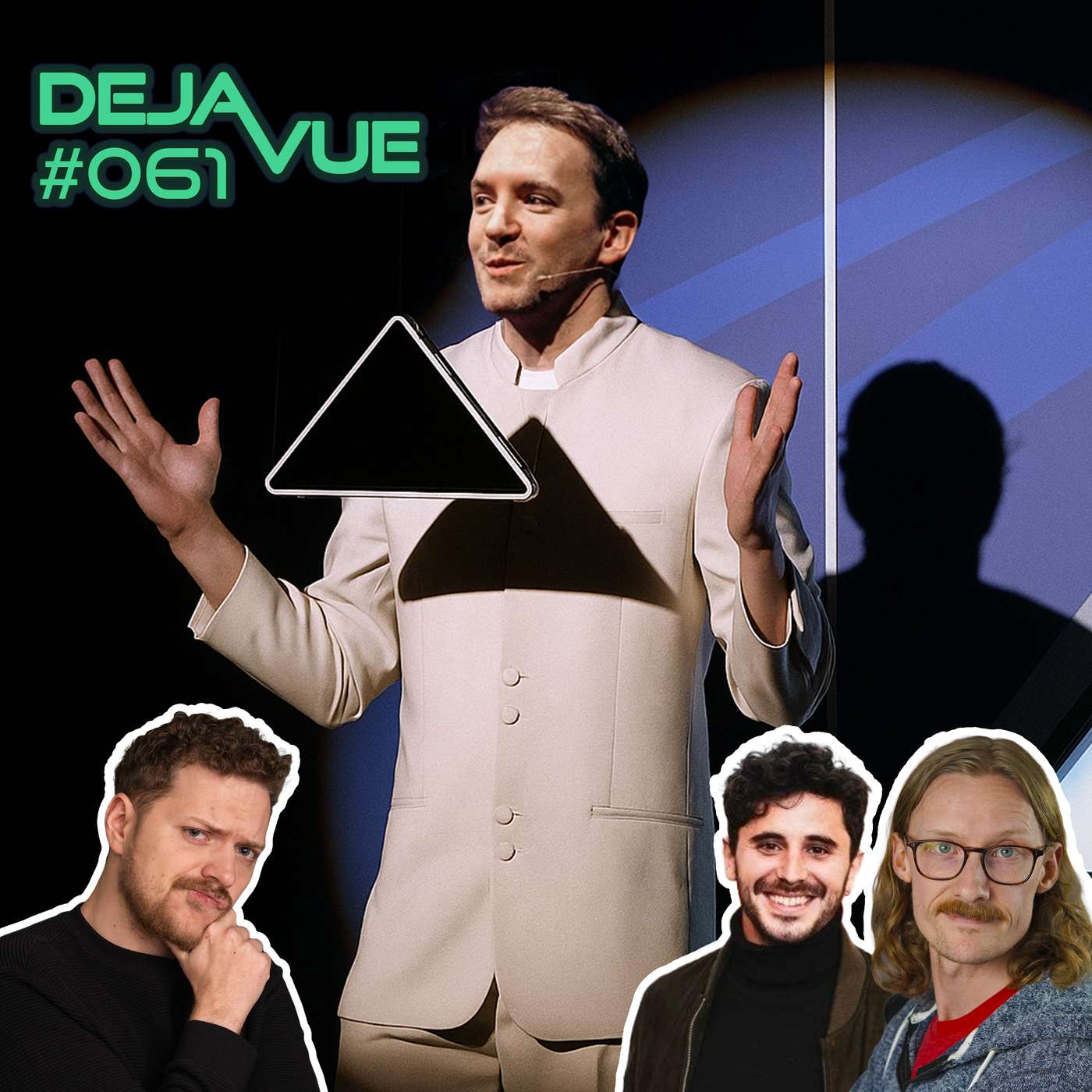
Was Nuxt just sold?! (with Daniel Roe and Sébastien Chopin)
Jul 10, 202500:30:46Tap to summarizeIn this special episode of DejaVue, Alexander and Michael are joined by Daniel Roe and Sébastien Chopin to discuss the recent acquisition of NuxtLabs by Vercel. Questions like "Was Nuxt just sold", "How much influence has Vercel", and "What is Vercel excepting from the deal" are answered.If you wonder what impact the deal has on Nuxt, you as a user and developer, as well as the open-source community, you should tune in! Enjoy the Episode!Our GuestsDaniel RoeBlueskyWebYouTubeTwitchSébastien ChopinNuxtLabsNuxtPersonal WebsiteBlueskyChaptersLinks and ResourcesAnnouncement on NuxtLabs.comSkew Protection Nitro IssueDaniel Roe's Reddit AMAThe Future of Nuxt GitHub DiscussionPooya's Nitro AnnouncementYour HostsAlexander LichterBlueskyYouTubeWebsiteMichael ThiessenTwitterYouTubeWebsite---Links marked with * are affiliate links. We get a small commission when you register for the service through our link. This helps us to keep the podcast running. We only include affiliate links for services mentioned in the episode or that we use ourselves.
Transcribe →
Vite 7 is out
Jul 8, 202500:25:50Tap to summarize👉 Don't forget to join ViteConf on October 9-10 in AmsterdamIn this episode of DejaVue, Michael and Alexander look into the major release of Vite 7, including the move to ESM-only, dropping Node 18 support, and adopting the Baseline browser target.They also discuss the evolving Environment API, upcoming changes in Rolldown-Vite, new Vite dev tools, and more.Enjoy the Episode!Chapters(00:00) - Welcome to DejaVue (00:48) - Vite 7 without breaking changes (01:53) - Node Version dropped (03:13) - ESM-only and Module Formats (09:04) - What does ECMA and GIF mean? (10:51) - Browser target to Baseline Wide Available (14:31) - Environment API (16:14) - Rolldown-Vite (17:39) - Cleaning up APIs (18:11) - Vite Dev Tools (21:41) - ViteConf (22:57) - Vite Plugin Vue Beta (25:04) - Wrapping Up Links and ResourcesVite Announcement postrequire(esm) in Nodetsdownobuildfdir PRDejaVue #E058 - The History of Nuxt and NuxtLabs (with Sébastien Chopin)DejaVue #E051 - Vite Inside Out (with Matias "Patak" Capeletto)Vite DevTools Preview (screenshot)Vite Plugin Vue 6.0 (not beta anymore)Your HostsAlexander LichterBlueskyYouTubeWebsiteMichael ThiessenTwitterYouTubeWebsite---Links marked with * are affiliate links. We get a small commission when you register for the service through our link. This helps us to keep the podcast running. We only include affiliate links for services mentioned in the episode or that we use ourselves.
Transcribe →
Double Trouble: The Nuxt Surprise (with Daniel Roe)
Jun 15, 202500:41:07Tap to summarizeBig news in the Nuxt ecosystem. While you out there already know what has been announced - some of us didn't. Luckily, Daniel Roe, Head of the Nuxt team joins this DejaVue episode and discusses the highly anticipated "double trouble": Not one, but two major versions for Nuxt are on the horizon.After over a year of delays, Daniel reveals the strategic decision to release Nuxt 4 in less than a month from now, followed by Nuxt 5 which will include the long-awaited Nitro 3 integration and significant Vite improvements.The episode covers the smooth migration experience early adopters reported already, the philosophy behind careful breaking changes, and how the team plans to maintain a yearly major release cycle moving forward.Enjoy the Episode!Our GuestDaniel RoeBlueskyWebYouTubeTwitchChapters(00:00) - Welcome to DejaVue (01:19) - The big topic (02:41) - What are the release plans? (06:47) - Two major versions soon? (09:28) - Early adopters of compatibilityVersion 4 (11:56) - Depending on other dependencies and versions bumps (13:45) - Is bumping the minimum Node version a breaking change? (16:33) - A Quick Nitro TL;DR (20:46) - Nitro in other frameworks (25:20) - Why Nuxt 4 now? (28:41) - LTS support Plans (29:53) - Nuxt Bridge (31:46) - Release Dates and skipping Nuxt 4 altogether (33:14) - We need Release names! (35:53) - Release Dates for Nuxt 4 and 5 (40:00) - Wrapping Up Links and ResourcesRoadmap to v4 blog postDejaVue #E043 - The Year in ReVue (with Daniel Roe)DejaVue #E044 - Our Predictions for Vue and Nuxt in 2025 (with Daniel Roe)DejaVue #E013 - The Road to Nuxt 4 (with Daniel Roe)Daniel's PR migrating ElkNuxt 4 Migration GuideDejaVue #E003 - Nitro: The Next Generation Server ToolkitSrvxMichael's Nuxt Release Date ComicAlex' Nuxt 4/5 videoYour HostsAlexander LichterBlueskyYouTubeWebsiteMichael ThiessenTwitterYouTubeWebsite---Links marked with * are affiliate links. We get a small commission when you register for the service through our link. This helps us to keep the podcast running. We only include affiliate links for services mentioned in the episode or that we use ourselves.
Transcribe →
The History of Nuxt and NuxtLabs (with Sébastien Chopin)
Jun 5, 202501:01:07Tap to summarizeJoin Alex and Michael with special guest Sébastien Chopin, creator of Nuxt.js and CEO of NuxtLabs, to learn more about the origins and evolution of the Vue-based meta framework. Sébastien shares valuable lessons from open source, how he came to create Nuxt.js in the first place and which challenges came with it.In the second part of the episode, they cover Sébastien's company NuxtLabs - from its inception over to taking Venture Capital and products, such as NuxtHub or Nuxt UI Pro.Eventually, the NuxtLabs CEO also outlines how they handle sponsorships of maintainers, and what the future holds for Nuxt and NuxtLabs.Enjoy the Episode!Our GuestSébastien ChopinNuxtLabsNuxtPersonal WebsiteBlueskyChapters(00:00) - Welcome to DejaVue (01:16) - How did you get into programming? (04:45) - The birth of Nuxt.js (07:43) - The Elevator Pitch for Nuxt (10:16) - When not to use Nuxt (11:20) - Nuxt as Multi Bundler Framework (12:37) - How does Nuxt scale (in Enterprise)? (16:04) - Lessons Learned from building Nuxt (19:47) - How to compare frameworks fairly? (23:20) - Frameworks converging (24:22) - Nuxt.js supporting React? (29:06) - The creation of NuxtLabs (33:50) - Products of NuxtLabs (37:11) - Why going all in on Cloudflare for NuxtHub (41:50) - Vite Environment API (45:34) - The difference between Nuxt and NuxtLabs (51:56) - Is Nuxt a VC-backed framework? (53:51) - Sponsoring Core Maintainers (56:07) - Freemium in Nuxt (57:06) - Sneak Peek of the NuxtLabs Roadmap (59:51) - Where can people find you? Links and ResourcesNuxtIntro to Nuxt LayersNitroReactivueinclusion-vaporDejaVue #E044 - Our Predictions for Vue and Nuxt in 2025 (with Daniel Roe)VoltaNuxt UI *Nuxt GovernanceNuxt StudioNuxtHubLaravel VaporCloudflareDejaVue #E051 - Vite Inside Out (with Matias "Patak" Capeletto)StrapiYour HostsMichael ThiessenTwitterYouTubeWebsiteAlexander LichterBlueskyYouTubeWebsite---Links marked with * are affiliate links. We get a small commission when you register for the service through our link. This helps us to keep the podcast running. We only include affiliate links for services mentioned in the episode or that we use ourselves.
Transcribe →
Motion for Vue (with Matt Perry)
May 15, 202501:03:21Tap to summarizeIn this episode of DejaVue, Michael and Alex chat with Matt Perry, the creator of Motion (formerly Framer Motion), about animations in web development.Matt talks about his journey from designing gaming magazines as a kid to becoming a full-time developer, sharing his experiences with ActionScript, jQuery, and how Motion was born. They discuss how simple and powerful Motion's API is, its ability to work with different frameworks, and how it stacks up against other animation libraries like GSAP and AnimeJS.But the episode also covers a lot of open source aspects, such as the challenges of keeping Motion going! Matt explains how Motion+ funds the development of Motion with one-time payments and time-gated (then publicly available) content, to support the project.Enjoy the episode!Our GuestMatt PerryMotionPersonal WebsiteBlueskyTwitterChapters(00:00) - Welcome to DejaVue (01:20) - How did you get into programming? (05:18) - Adobe ActionScript (08:33) - What is Motion (fka. Framer Motion)? (12:21) - APIs and Limitations (16:54) - Prerequisites for using Tools (24:26) - The jQuery of web animations (26:37) - The birth of Motion (31:02) - Motion for Vue (32:40) - Other "Motion for ..." adaptations? (34:36) - Funding the project - Motion+ (40:00) - One-time Payment and Time-gating (50:39) - Thoughts on other ways of monetizing Motion (52:43) - Can AI replace animation libraries? (57:41) - The difference between Motion and other libraries (01:01:04) - Closing Thoughts Links and ResourcesActionScriptECMAScriptPopmotionMotionMotion VueRick (Motion Vue maintainer)FramerDejaVue #054 - Open Source Sustainability (with Daniel Roe, Chad Whitacre & Rijk van Zanten)GSAPAnimeJSYour HostsMichael ThiessenTwitterYouTubeWebsiteAlexander LichterBlueskyYouTubeWebsite---Links marked with * are affiliate links. We get a small commission when you register for the service through our link. This helps us to keep the podcast running. We only include affiliate links for services mentioned in the episode or that we use ourselves.
Transcribe →
Snapshot Testing and Beyond (with The Jared Wilcurt)
Apr 22, 202501:06:40Tap to summarizeIn this episode of DejaVue, Alex and Michael are joined by Jared Wilcurt, UI architect and open source contributor, to get knee-deep into the world of testing in Vue.js, especially Snapshot Testing.Jared shares his journey from React frustration to Vue enthusiasm, and explains how he identified gaps in Vue's testing ecosystem that led to the creation of his Vue 3 Snapshot Serializer library.No matter if you are a testing novice, wondering why you should bother with tests at all, or an experienced developer looking to improve your snapshot testing workflow, this episode got something for you - from reducing test noise, improving readability, and gaining confidence in your Vue applications and components.Discover how snapshot testing complements traditional assertion-based tests and why it might be the missing piece in your testing strategy.Enjoy the episode!Our GuestThe Jared WilcurtVue 3 Snapshot SerializerWebsiteBlueskyTwitterChapters(00:00) - Welcome to DejaVue (00:20) - How did you get into Programming? (05:20) - Learning Vue (09:46) - Finding gaps in the ecosystem (12:40) - What is unit testing? (21:40) - Testing in the frontend (25:31) - Snapshot Testing (29:45) - Snapshot Updating Fatigue (36:09) - Responsibilities & ROI of a Snapshot Test (42:46) - Using the Snapshot Serializer (46:40) - Snapshot vs. Visual Regression Testing (52:57) - A good tip from Daniel Roe (53:50) - Further Noise Reduction (01:01:22) - A tighter integration? (01:05:11) - Wrapping up Links and ResourcesRiot JSVue Indy MeetupVue DoxenOld Jest Snapshot SerializerVue Test UtilsTesting Library VuePlaywrightVue 3 Snapshot SerializerDejaVue #E043 - The Year in ReVue (with Daniel Roe)Your HostsMichael ThiessenTwitterYouTubeWebsiteAlexander LichterBlueskyYouTubeWebsite---Links marked with * are affiliate links. We get a small commission when you register for the service through our link. This helps us to keep the podcast running. We only include affiliate links for services mentioned in the episode or that we use ourselves.
Transcribe →
e18e: Ecosystem Performance (with James Garbutt)
Apr 13, 202501:02:51Tap to summarizeIn this episode of DejaVue, Alex sits down with James Garbutt, open source maintainer and lead of the e18e initiative. James shares his journey from writing web scrapers as a teenager to maintaining critical JavaScript libraries like parse5 or Chokidar and eventually co-creating the ecosystem performance initiative.The conversation is then all around e18e, which aims to improve performance across the JavaScript ecosystem through three pillars:Cleaning up dependency treesSpeeding up popular packagesCreating lighter alternatives to bloated librariesJames explains how the community-driven approach has produced impressive results all across the web development landscape.Learn about real-world examples of performance improvements, including replacement packages like tinyglobby and nano-staged, and discover how to contribute to e18e even if you're new to open source. James shares also insights on balancing between backward compatibility and performance, bundling dependencies, and also shares future plans for e18e in 2025.Enjoy the episode!Our GuestJames "43081j" Garbutte18eWebsiteBlueskyChapters(00:00) - Welcome to DejaVue (00:34) - Which libraries do you maintain? (02:10) - How did you get into programming? (04:57) - What lead you to Vue.js (06:40) - Not ending up in a framework bubble (09:41) - Meta frameworks converging (11:28) - What is e18e? (15:40) - The purpose of e18e (18:27) - How to participate? (20:38) - Are there prerequisites? (23:59) - Ripple effects from e18e improving the ecosystem (26:36) - Helping other projects migrate (30:27) - Considering backwards compatibility (35:50) - Example for replacement packages (37:56) - tinyglobby (40:40) - Edge cases and modular architecture (43:49) - Performance pattern and anti pattern (45:32) - Bundling dependencies (50:48) - What is planned for e18e in 2025? (56:39) - How do you lead and structure the e18e initiative? (01:01:42) - Anything else we didn't cover? (01:02:21) - Wrapping up Links and ResourcesParse5Doom in TypeScriptFlappy Bird in TSLitElementSpeeding up the ecosystem blog post series by Marvin Hagemeistere18e issue overviewe18e Discordminizlib install size improvementsStorybook dependency tree reductione18e module replacement repositoryAnthony Fu's node_modules inspectorPublint by Bjorn LuUmbrella CLInano-staged (instead of lint-staged)npm-run-all2eslint-import-plugin-x (instead of eslint-plugin-import)tinyglobby (instead of any other glob lib like globby/fast-glob)fdirVite Devtools announcementBundling dependencies (and when not to do it)A lighter Nuxt CLIYour HostsAlexander LichterBlueskyYouTubeWebsite---Links marked with * are affiliate links. We get a small commission when you register for the service through our link. This helps us to keep the podcast running. We only include affiliate links for services mentioned in the episode or that we use ourselves.
Transcribe →
Open Source Sustainability (with Daniel Roe, Chad Whitacre & Rijk van Zanten)
Apr 6, 202501:00:24Tap to summarizeJoin hosts Michael Thiessen and Alexander Lichter for a special episode of DejaVue - a fascinating panel discussion on open source sustainability with three open source enthusiasts: Daniel Roe (Nuxt Team Lead),Chad Whitacre (Head of Open Source at Sentry), and Rijk van Zanten (CTO and co-founder of Directus).The panelists dive deep into what sustainability truly means in open source and get deep into the weeds of different licensing models, debating whether open source functions as a gift economy, and discuss the challenges of project governance.The panel also discusses important questions about leadership structures in open source projects, the role of companies in funding development, and practical ways everyone can contribute to making the ecosystem more sustainable - whether financially or through other meaningful contributions.Enjoy the episode!Our GuestsDaniel Roe - Nuxt Team Lead BlueskyWeb Chad Whitacre - Head of Open Source at Sentry BlueskyTwitterWebRijk van Zanten - CTO and co-founder of Directus BlueskyTwitterWebChapters(00:00) - Welcome to DejaVue (04:06) - What is Open Source Sustainability (12:51) - Open Source as a gift economy (19:20) - The Projects and their Licenses (29:50) - Sentry is not Open Source (34:53) - Open Source Definition and OSI (37:09) - Why people adopt open source software? (39:44) - Open Source Governance (47:50) - Stewarding an open source team (52:22) - Open Source Leadership (55:40) - What can YOU do to help open source? Links and ResourcesMastering Nuxt*xkcd on standardsJacob Kaplan-Moss: Paying Maintainers is GoodSentryDirectusNuxtBSLFair Source MITAGPLOSIBDFLNuxt GovernanceOpen Source Steward in the CRADaniel Roe: Contributing to NuxtOpen Source PledgeYour HostsAlexander LichterBlueskyYouTubeWebsiteMichael ThiessenTwitterYouTubeWebsite---Links marked with * are affiliate links. We get a small commission when you register for the service through our link. This helps us to keep the podcast running. We only include affiliate links for services mentioned in the episode or that we use ourselves.
Transcribe →
New Releases: Nuxt 3.16 and Nuxt UI 3
Mar 28, 202500:42:15Tap to summarizeNuxt 3.16 dropped and it's packed with goodies! In this episode, Alex and Michael break down all the cool stuff in this release that'll make your Nuxt development smoother.They dive into the new command to initialize a Nuxt application, the performance-game-changing lazy hydration support that'll boost your app's performance, and named layer aliases (that you've been waiting for). Plus, huge performance improvements, better error messages with Nitro 2.11 and debugging improvements that'll save you hours of head-scratching.But wait, there's more! The duo also geeks out over Nuxt UI v3, which (surprise!) now works with plain Vue.js too - not just Nuxt. Learn how it leverages Tailwind v4, introduces a sweet CSS variables-based design system, and builds on Reka UI primitives for better accessibility. And somehow, a discount code for Nuxt UI Pro* *cough DEJAVUE cough* gets snuck in there too!Enjoy the episode!Chapters(00:00) - Intro (00:54) - Nuxt 3.16 Feature Overview (01:27) - A new way to initialize Nuxt projects (07:06) - Lazy Hydration in Nuxt (16:05) - Named Layer Aliases (17:45) - Lines of Code vs. Complexity (20:16) - What a new Nitro minor brings to the table (21:33) - Fine-grained debugging options (23:25) - Nuxt Devtools v2 (25:47) - Faster module resolution (and faster boot up time) (27:39) - Using OXC to speed up component parsing (28:58) - Benchmark performance improvements (31:43) - Nuxt UI v3 (40:58) - Sneak peek at next weeks episode 👀 (41:17) - Suggest a new slogan! Links and ResourcesMastering Nuxt is out now!*Nuxt UI* Get 20% OFF Nuxt UI PRO* with discount code DEJAVUENuxt 3.16 blog postVue implementing Lazy HydrationNuxt Lazy Hydration PRLazy Hydration in-depthMore about Nuxt LayersRevamping data fetching in Nuxt PRNitro 2.11YouchHarlan's PR to speed up module resolutionOXC PRRolldown-viteCodSpeedTailwind VariantsYour HostsAlexander LichterBlueskyYouTubeWebsiteMichael ThiessenTwitterYouTubeWebsite---Links marked with * are affiliate links. We get a small commission when you register for the service through our link. This helps us to keep the podcast running. We only include affiliate links for services mentioned in the episode or that we use ourselves.
Transcribe →