
Podcast
Denizen
Hosted by Jenny Stefanotti · EN
How might we envision a society that is more equitable, caring, and regenerative? And if we could envision such a future, how might we transition from where we are today?
The Denizen podcast explores these big questions. Our conversations span six themes: economics, politics, technology, culture, justice, and consciousness.
10episodes
Episodes
Newest firstAll episodes
Deliberative Democracy and AI with Claudia Chwalisz
Jul 17, 202501:08:49Tap to summarizeDemocracyNext founder and CEO Claudia Chwalisz returns to the Denizen podcast to explore the intersection of deliberative democracy and artificial intelligence. Here we are particularly interested in how we might crease democratic resilience by leveraging AI to scale deliberative processes. Governance innovation is the AI application we're most enthusiastic about so we're excited to bring this conversation to the Denizen audience.Claudia and Jenny discuss broader trends of rising autocracy, weakening civil societies, and attacks on basic rights, while situating deliberative democracy as a counterforce to these issues. They explore what aspects of the deliberative process are fundamentally human, giving rise to the limitations and risks of certain applications of AI. They also break down five different ways we can think about scaling deliberative democracy, which enables a more nuanced conversation about the opportunities AI presents. Claudia stresses that technology is not a silver bullet, but must be integrated with the human elements of social and political change. 00:00 Introduction to the Episode00:32 Meet Claudia Swi: Expert on Deliberative Democracy00:43 Exploring Deliberative Democracy and AI00:55 The Importance of Democratic Resilience03:03 Understanding Populism and Authoritarianism04:49 Challenges and Limitations of Representative Democracy08:26 Defining Deliberative Democracy09:49 The Role of Sortition in Deliberative Processes13:54 In-Person vs. Virtual Deliberative Processes23:13 The Human Element in Deliberative Democracy31:23 How AI Can Support Deliberative Structures35:18 Exploring Tech-Enabled Trackers and Feedback Loops35:56 Understanding the Lifecycle of Deliberative Processes36:27 Defining and Breaking Down 'Scale' in AI and Democracy37:08 The Five Dimensions of Scaling in Deliberative Democracy37:19 Scaling Out: Increasing Participation in Deliberative Processes40:29 AI's Role in Scaling Out and Up46:24 Scaling Across: Spreading Deliberative Processes49:37 Scaling Deep: Institutionalizing Deliberative Processes52:45 Scaling In: Enhancing Quality and Impact59:56 The Broader Implications of AI and Deliberative Democracy01:06:03 Concluding Thoughts and Future Directions Resources:DemocracyNext: https://www.demnext.org/Five Dimensions of Scaling Democratic Deliberation: With and Beyond AIThe Populist Signal: Why Politics and Democracy Need to Change, Claudia ChwaliszThe People's Verdict: Adding Informed Citizen Voices to Public Decision Making, Claudia ChwaliszDenizen podcast Citizen's Assemblies episodeDenizen Citizen's Assemblies overview To stay connected to all things Denizen, you can sign up for our newsletter at www.becomingdenizen.com. There we share our latest content alongside community events, educational opportunities, and announcements from our many partner organizations.
Transcribe →
Collaboration with Robert Gilman
Jun 18, 202500:50:02Tap to summarizeIn this final episode of a three-part series on essential capabilities for a regenerative future with Robert Gilman, founder and president of The Context Institute. Robert and Jenny tie the first two episodes of the series together to bring you this conversation on collaboration. We’ve all heard the term “omni-win” and talked about needed paradigms from zero sum to win for all. I don’t know about you, but we are tired of hearing that high level language without real tactics to bring that to life. This is what this conversation brings to you. Jenny and Robert discuss the “dominator hierarchy” mindset that leads to zero sum problem solving, where the strategy for success is to seek power over others. Rewriting this dominator narrative is essential for win for all outcomes, where all includes all life on Earth.They also highlight the need to redefine success as win-win-win, and the new patterns of working together that are required to get there. This includes the concept of leadership as service, which I’m sure is music to most of your ears. As always it’s an honor to host Robert and share his 80 years of wisdom with you! 00:00 Introduction to the Series and Guest01:23 Exploring Collaboration and Omni-Win Solutions03:09 The Obsolescence of Dominator Models05:39 Redefining Success and Systemic Thinking08:18 The Role of Stewardship and Hierarchies11:40 AI and Governance12:09 The Importance of Design Processes13:36 Addressing Dominator Behaviors and Adversarial Paradigms19:10 Systems Consciousness and Collaborative Design25:07 The Importance of Feedback Culture26:37 Building Trust in Organizations27:37 From Transactional to Relational Paradigms28:49 Optimal Zones and Collaborative Outcomes31:00 Design Thinking and Sociocracy33:41 Consent vs. Consensus in Decision Making36:25 Integrating Nature into Decision Processes38:38 The Role of AI and Information Flows42:50 Leadership in Collaborative Groups47:25 Conclusion and Call to Action To stay connected to all things Denizen, you can sign up for our newsletter at www.becomingdenizen.com. There we share our latest content alongside community events, educational opportunities, and announcements from our many partner organizations.
Transcribe →
Modes of Cognition with Robert Gilman
Jun 11, 202500:50:06Tap to summarizeThis episode explores the importance of understanding and integrating various modes of cognition. It is the second in a three-part series with Robert Gilman, founder and president of The Context Institute, covering essential competencies for the regenerative era. Jenny and Robert discusses the limitations of object perception and categorical thinking, the roles of visual and kinesthetic thinking, and the value of intuition. The episode also explores the concept of systems consciousness and its implications for living in harmony with life on Earth. Additional discussions include the impact of the Age of Enlightenment on modern thinking, the limitations of language, and the importance of cultural and contextual awareness in decision-making. 00:00 Introduction to Modes of Cognition00:27 Meet Robert Gilman and Series Overview01:03 Exploring Various Modes of Cognition02:14 Understanding Cognition and Its Importance03:43 Historical and Cultural Analysis of Cognition05:50 Dominant Modes of Cognition15:25 Visual Thinking and Its Richness18:37 Kinesthetic Thinking and Somatic Awareness24:51 The Importance of Intuition25:07 Exploring the Concept of Intuition26:32 The Role of Subconscious in Creativity27:34 Interconnection of Consciousness29:16 Balancing Different Modes of Cognition34:02 Understanding Systems Consciousness37:56 The Impact of Communication on Understanding41:47 Developing a FUD Immune System47:16 Sustainable Motivation and Future Pull48:31 Conclusion and Resources To stay connected to all things Denizen, you can sign up for our newsletter at www.becomingdenizen.com. There we share our latest content alongside community events, educational opportunities, and announcements from our many partner organizations.
Transcribe →
Psychodynamics with Robert Gilman
Jun 5, 202500:59:10Tap to summarizeThis episode on psychodynamics is part one of a three part series on essential skills for a regenerative future, in honor of Rober Gilman's 80th birthday. Robert is the founder and president of The Context Institute and a pioneer in the sustainability movement.The conversation dives deep into psychodynamics and the importance of understanding our cognitive biases, nervous systems, and underlying motivations to foster cultural change. Robert explains how personal change is integral to cultural evolution, highlighting the interconnectedness of individual behaviors and societal transformation. Jenny and Robert discuss cultivating personal resilience, recognizing cognitive biases, healing past traumas, and fostering compassionate, curious, and creative interactions.00:00 Introduction to Psychodynamics and Cultural Change00:24 Meet Robert Gilman: A Pioneer in Sustainability02:04 The Importance of Personal Change for Cultural Transformation05:45 Historical Context: From Agrarian Empires to the Age of Enlightenment10:53 The Limitations of Modern Culture and Proposed Changes24:08 Understanding and Partnering with Our Nervous System32:18 Exploring Cognitive Biases33:31 Understanding Motivated Reasoning35:30 The Role of Cognitive Biases in Media and Relationships37:31 Layers of Motivation40:20 The Importance of Relationships48:58 Embracing Internal Complexity54:51 The Future of Human Evolution56:48 Conclusion and Next Steps To stay connected to all things Denizen, you can sign up for our newsletter at www.becomingdenizen.com. There we share our latest content alongside community events, educational opportunities, and announcements from our many partner organizations.
Transcribe →
White Work with Julia Rhodes Davis
Apr 29, 202501:02:49Tap to summarizeIn this episode of the Denizen podcast, host Jenny Stefanotti and activist Julia Rhodes Davis delve into the concept of 'white work,' which goes beyond confronting and dismantling racialized identities. They discuss the importance of understanding personal legacy, taking accountability for ancestors' actions, and taking actions individually to repair past harms. They also discuss the inner, interpersonal, and cultural aspects of this work. Julia emphasizes the importance of ongoing practice within a community setting. 00:00 Introduction to Solidarity and Whiteness01:22 Meet Julia Rhodes Davis01:34 Exploring White Work02:13 Putting White Work within the Denizen Inquiry02:32 Julia's Background and Evolution05:25 Understanding Racialized Capitalism07:51 Personal Stories and Ancestral Context11:30 The Inner Work of Racial Justice25:42 Misguided White Work and Diversity32:17 White Work as a Lifelong Practice33:17 Understanding Shame and Discomfort in Anti-Racism Work34:57 Circles of Practice: Community and Storytelling38:36 Depersonalizing and Understanding Racial Conditioning46:41 The Role of Inner Work in Anti-Racism48:28 Exploring Power Dynamics in Relationships51:18 Rupture and Repair in Relationships57:12 Building Solidarity Against Fascism59:40 Closing Remarks and Community Engagement Resources:Julia's website and writings: https://www.jrdavis.me/White Supremacy Culture - Still Here, Tema Okun To stay connected to all things Denizen, you can sign up for our newsletter at www.becomingdenizen.com. There we share our latest content alongside community events, educational opportunities, and announcements from our many partner organizations.
Transcribe →
White Supremacy Culture with Tema Okun
Apr 9, 202500:55:48Tap to summarizeWe are incredibly fortunate to welcome Tema Okun to the Denizen podcast for this important conversation. Tema is the author of the influential 1999 paper "White Supremacy Culture" and has been a leader in the racial justice movement for over 35 years. In this insightful episode, Jenny and Tema explore the pervasive influence of white supremacy culture in society. They discuss the concept's historical context, its impact on both personal and systemic levels, and the importance of recognizing internalized racist conditioning. Tema shares the journey of her original paper, detailing its attributes and their societal implications. She also outlines into the interconnectedness of colonialism, capitalism, and white supremacy. Tema and Jenny reflect on the necessity of self-awareness, emotional intelligence, and a culture of appreciation as antidotes to these ingrained systems. The dialogue also highlights the significance of love, belonging, and making conscious choices in combating fear-based energies, ultimately advocating for a collective effort towards systemic change and personal transformation. Outline for the episode:00:00 Introduction to Racist Conditioning00:35 Meet Tema Okun: Activist and Educator00:47 White Supremacy Culture and Denizen Community01:54 Personal Reflections on White Supremacy03:09 Understanding White Supremacy Culture05:46 The Role of Fear in White Supremacy09:26 Intersectionality and Systemic Context12:27 The Origins of the 1999 Paper24:55 Perfectionism and White Supremacy29:04 Transforming Defensiveness into Curiosity30:19 Qualified Paternalism and the Hero Complex34:41 The Flaws of Capitalism and the Growth Imperative36:35 The Importance of Process and Connection38:32 Urgency and the Right to Comfort45:33 Cultural Antidotes and Emotional Intelligence53:14 Closing Thoughts and Gratitude Resources:White Supremacy Culture website"White Supremacy Culture" original 1999 paper"White Supremacy Culture - Still Here" 2021 updateRacial Equity PrinciplesTema's website: https://www.fiercelove.info/15 Commitments of Conscious LeadershipThe New Rules of Marriage, Terrance Real To stay connected to all things Denizen, you can sign up for our newsletter at www.becomingdenizen.com. There we share our latest content alongside community events, educational opportunities, and announcements from our many partner organizations.
Transcribe →
Yarn with Tyson Yunkaporta
Apr 2, 202501:05:48Tap to summarizeThis conversation features Tyson Yunkaporta, academic, arts critic, researcher, and member of the Apalech Clan in far north Queensland. Tyson is the author of Sand Talk: How Indigenous Thinking Can Save the World; Right Story, Wrong Story: How to Have Fearless Conversations in Hell; and Snake Talk: How the World’s Ancient Serpent Stories Can Guide Us.Unlike our typical episodes which focus on a topic, here Jenny embraces Tyson's generative cultural practice of yarning. Tyson describes a yarn as "like a conversation but taking a traditional form his people have always used to create and transmit knowledge." Thus here we capture a raw conversation between Jenny and Tyson, touching on topics of whiteness, identity, modes of cognition, justice, and the hero complex. Tyson shares the story behind each of the three books in his trilogy, touching on their relevance for the modern technologically driven era. To stay connected to all things Denizen, you can sign up for our newsletter at www.becomingdenizen.com. There we share our latest content alongside community events, educational opportunities, and announcements from our many partner organizations.
Transcribe →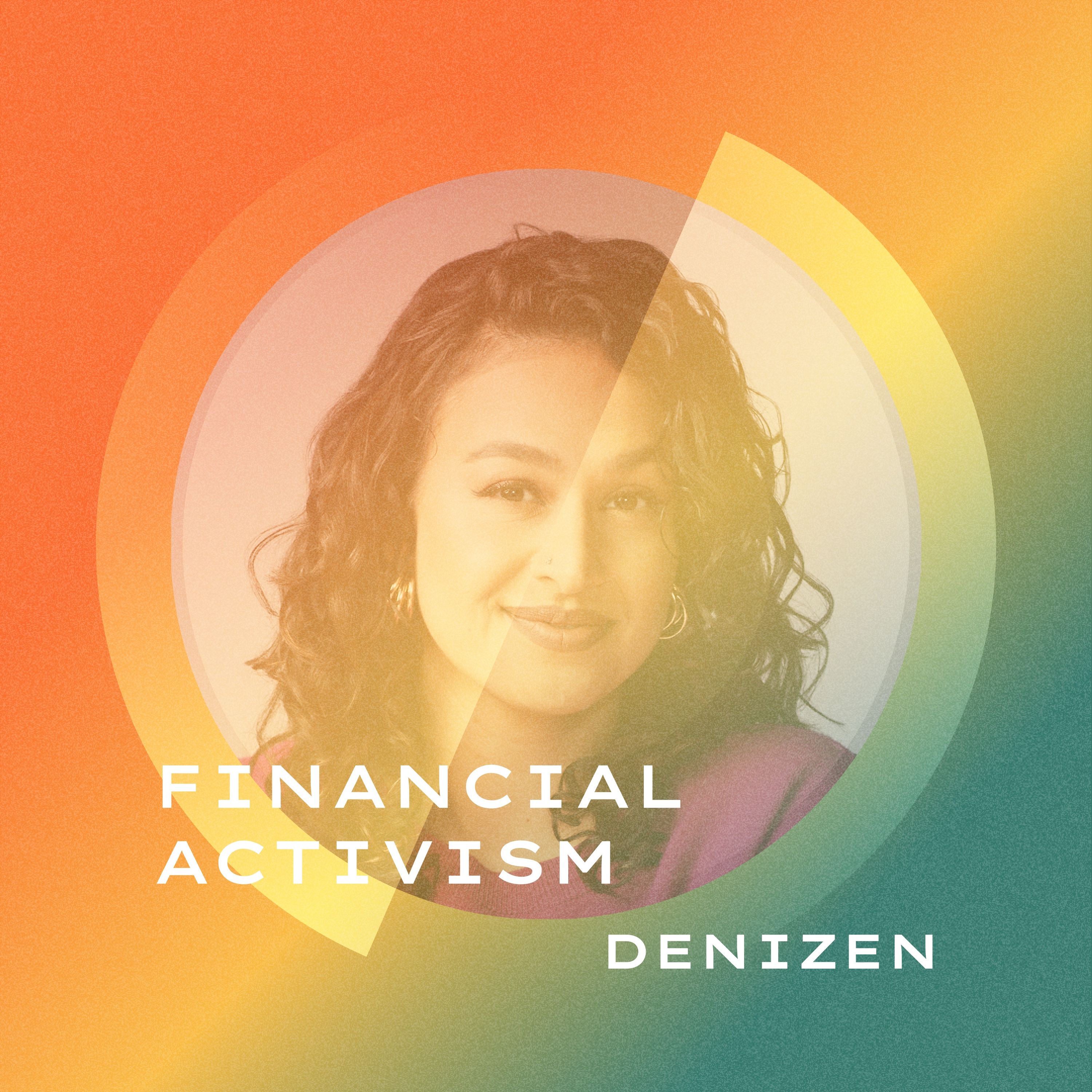
Financial Activism with Jasmine Rashid
Mar 12, 202501:05:14Tap to summarizeIn this conversation Jenny and Jasmine discuss:Four common internalized stories we have about moneyMoney traumaThe importance of talking about moneyJasmine's analogy of a water supplyPhilosophical questions of enough and fairnessBanking: extractive vs. sustainable and community-oriented optionsPublic bankingConsumption decisions and Jasmine's no Amazon policyThe irony of conscious consumptionThe role of third party certifications Investment decisions and investing in placeStructural economic implications of conscious investment and consumptionGiving and receiving money through philanthropyBeyond personal finances: influencing financial flowsParticipatory budgetingBeyond financial flows: influencing corporate culture and decision makingEmployee activismShowing up for each other beyond moneyAcknowledging non financial capitalRethinking income: guaranteed income and UBIResources:Jasmine's website: https://www.jasminerashid.com/Trauma of Money programFriends of public banking pledgeJust Economy Institute To stay connected to all things Denizen, you can sign up for our newsletter at www.becomingdenizen.com. There we share our latest content alongside community events, educational opportunities, and announcements from our many partner organizations.
Transcribe →
Decolonization and Consciousness with Ashanti Kunene
Feb 26, 202501:00:26Tap to summarizeThis powerful conversation explores the relationship between decolonization and consciousness. Ashanti is a systems change agent focused on helping organizations deconstruct dominant narratives of colonization and replace them with life affirming narratives that support a regenerative future. She believes that true transformation must begin within, guiding leaders to embrace spiritual coherence and walk their talk.Jenny and Ashanti discuss:How to define what is right and goodWhy the inner work is imperativeThe consequences of the narratives we have internalizedRethinking our understanding of leadership and powerTaking responsibility for ourselves and what inhibits us from doing soThe relationship between deconstructing our stories and spiritualityThe importance of walking the talk and the harm caused by misalignmentLove as praxis: moving from fear to loveThe role of fear in white supremacyThe Zulu concept of UbuntuLoving each other through our uglyLove and spiritual growthLove, consideration, and diversity in systems change workOpen and honest communicationThe importance of expressing emotions and creating emotionally safe spacesCalling out vs. calling inSpiritual accountability, personal integrity, and coherent leadershipSpiritual discernmentPaying attention to our thoughts and languageSelf-love ResourcesLearning 2 Unlearn, Ashanti's website"White supremacy lives in the mundane" Ashanti on Social TransformationPedagogy of the Oppressed, Paul FreireWe Will Not Cancel Us: And Other Dreams of Transformative Justice, adrienne maree brown To stay connected to all things Denizen, you can sign up for our newsletter at www.becomingdenizen.com. There we share our latest content alongside community events, educational opportunities, and announcements from our many partner organizations.
Transcribe →
Conscious Leadership with Diana Chapman
Feb 12, 202501:08:38Tap to summarizeThis episode builds on many prior conversations exploring work that we can do on ourselves, including living authentically, trauma and the nervous system, nonviolent communication, transforming relational conflict, and optimal zone resilience. It demonstrates how the work on ourselves extends upwards into the organization context, and further amplifies our impact at a systemic level.In this conversation Jenny and Diana discuss:What Diana means by conscious when she refers to conscious leadershipBeing above or below the line: reacting from fear vs. responding from trustThe four different types of consciousness from which we might lead: to me, by me, through me, and as meTaking radical responsibilityStaying curious and growing in self-awarenessThe problem with wanting to be rightOur relationship with our stories and willingness to consider the opposite is equally trueThe importance of feeling our feelings and seeing their valueWhy candor and safe emotional spaces are essentialWhy gossip is pernicious and the how judgement reveals our shadowsIntegrity, both with ourselves and with othersMaking clear agreements using a whole body yesHow to handle broken agreementsRegarding all circumstances of life as an opportunity to learn and growMoving from scarcity to abundance with a commitment to experiencing having enough of everythingCommitting to win for all solutionsOperating from our zones of genius and realizing our full potentialBeing the resolution rather than assigning blame to othersThe importance of rest and playSubconscious commitments Resources:The 15 Commitments of Conscious LeadershipThe 15 Commitments of Conscious Leadership: A New Paradigm for Sustainable Success, Jim Dethmer, Diana Chapman, and Kaley Warner KlempThe Conscious Leadership GroupWholeBodyYes.comConscious Loving: The Journey To Co-Commitment, Gay Hendricks, Ph.D. and Kathlyn Hendricks, Ph.D.Terrance Real: https://terryreal.com/Man's Search For Meaning, Viktor FranklExistential Kink: Unmask Your Shadow and Embrace Your Power, Carolyn Elliott, Ph.D. To stay connected to all things Denizen, you can sign up for our newsletter at www.becomingdenizen.com. There we share our latest content alongside community events, educational opportunities, and announcements from our many partner organizations.
Transcribe →