← Der Große Neustart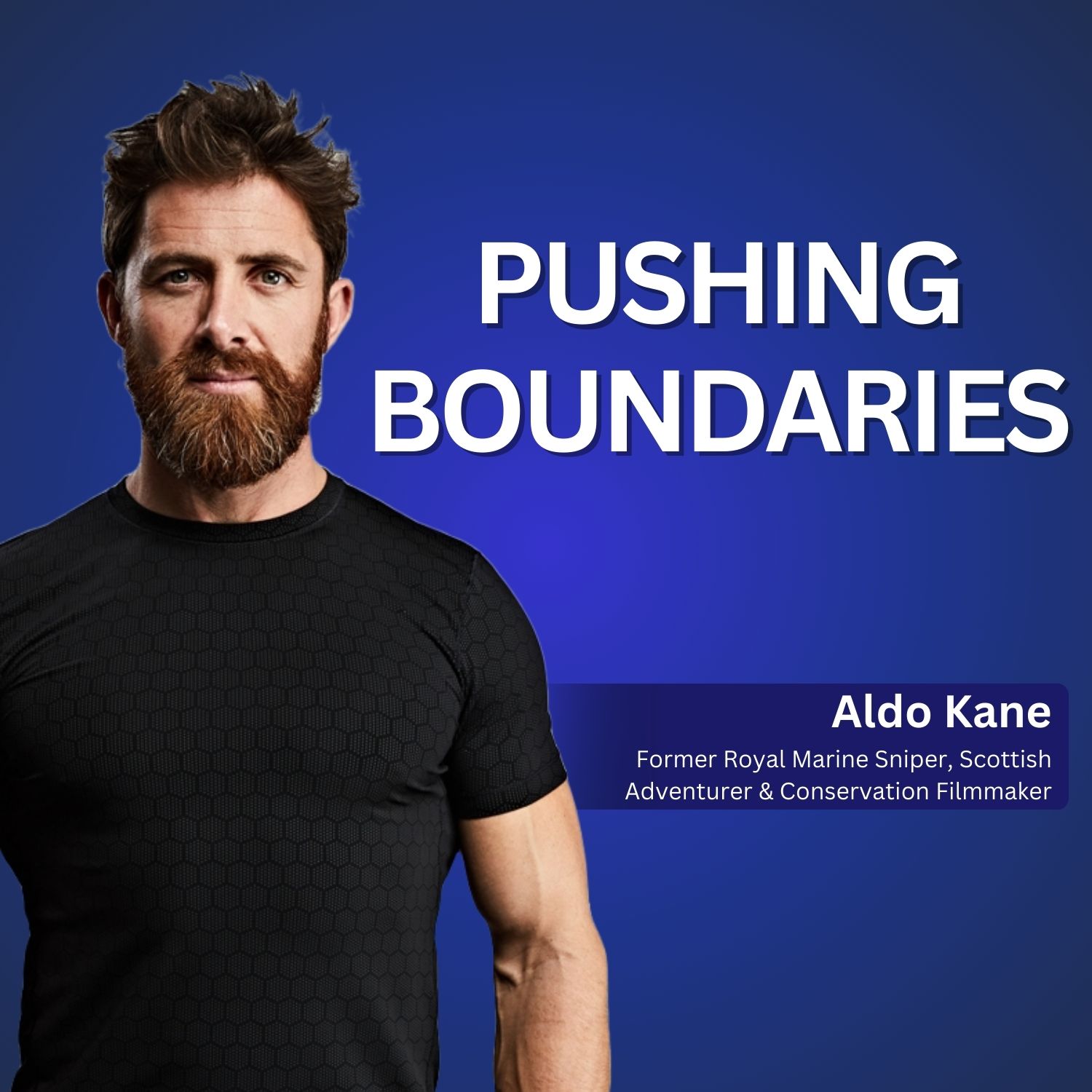
Loading summary
Transcript63 lines
- [00:03]
Aldo Kane
But you know, the, the situation, you know, not to be around the bush. The situation is dire for tigers, wild tigers. There are something like 12 or 13 historical tiger range countries in the world and, and now there are more tigers in captivity than there are in the wild. Welcome to the English edition of Der Grosse Neustadt, the German English podcast series by Sibylla Baden, in which she talks to pioneering leaders who, inspired by the World Economic Forum's Great Reset initiative, create revolutionary projects that actually do make our world better, greener and fairer.
- [00:50]
Sibylla Baden
In a world where 1 million species face extinction and protected areas are under increasing threats, a new form of leadership has emerged. Not in boardrooms or parliaments, but in the wild. Today's guest, Aldo Kane, is a former Royal Marine sniper turned explorer and conservationist. And he is leading a revolutionary shift in wildlife filmmaking. As the driving force behind the Wild Ones, the new Apple TV series filmed across six continents, Aldo and his team are not just observing nature, they are fighting for its survival. Armed with drones, camera data and deep courage, Aldo's team exposes poacher roots in Malaysia, tracks the world's rarest bears in Mongolia, and films endangered gorillas in Gabon. But their mission doesn't stop with a camera. The footage they capture becomes evidence, which Aldo's team personally present to policymakers and leaders. Evidence that moves governments, changes policies and gives threatened species a second chance. This is the next level of conservation, cinematic, scientific and strategic. Please join me in welcoming Aldo Kane. Aldo, how are you today?
- [02:09]
Aldo Kane
Thank you very much. Yeah, I'm good, thank you. But, yeah, thank you for having us on. And to chat about the Wild Ones means a lot.
- [02:17]
Sibylla Baden
Yeah. And congratulations. It was really an eye opener. And so the series called the Wild Ones, tell us about the original idea.
- [02:27]
Aldo Kane
So the original idea, it actually changed quite a lot. So the series is sitting on Apple tv. And before you start to make a series like this, there's quite a lot of time in the. The build up to it, which is involved in and sort of like, what is the series? What are we trying to do? Who are the people? And how do we actually technically go about making it? So by the time I was brought on to the project to lead the expeditions, the team had been working on it for about a year. And those iterations were all very similar, but it was, you know, how do we find, how do we tell the stories of the rarest, most endangered animals on the planet? You know, do we want to go in and find and film those animals before it's too late and tell the Story of the people who are in some cases risking their lives or spending their lives in the conservation of an area or in some cases a very small amount of a single species. So it just landed on Apple TV plus two weeks ago and that's probably about four years in the making from initial conception through to finishing the edit.
- [03:48]
Sibylla Baden
So you focus on endangered species.
- [03:53]
Aldo Kane
Well, the planet loses a huge amount of animals, species, insects, birds, reptiles, every single day, every single year due to increasing temperatures, habitat loss, you could be pesticides. The wild world is under threat like never before, mainly through human centric issues. And so we wanted to tell the story of these animals that are affected, but so that it gave inspiration to people, it needed to actually tell the full story. We didn't want to go to these places and film animals looking, you know, sort of all pristine and, you know, and having a good life. Like all nature documentaries pretty much up till now have shown, it was imperative from the start with offspring films that we wanted to tell the real story of these animals and the people working to try and protect them and just how dire they were. But essentially due to lots of different pressures, these animals are all facing extinction from one threat or another.
- [05:06]
Sibylla Baden
And while I was watching this, I thought finally somebody got it. You moved for the first time that I certainly saw it. You moved from filming to protecting.
- [05:19]
Aldo Kane
We, you know, certainly Declan and Va myself don't take credit for, you know, for being a three man band protecting the world's wildlife. But what we're doing is shining a light on it because, you know, it's very easy in Bristol or London or Berlin or wherever you are in the world to not really know or understand what is actually at threat. And oftentimes if you can't see the thing like the ocean, it becomes very difficult to protect it. So the point was, was to go and film these animals in their wild habitats and show people just how beautiful they are, but also how threatened they are. And it was a, you know, from filming point of view, it was risky because, you know, let's be honest, people don't necessarily want to sit down and watch television that gives them no hope. People don't want to sit down and watch television which makes them feel like they can't do anything to make a difference or that it's already too late to help. So by Apple TV plus and offspring going down this route, they're standing firmly in the belief that it's not too late to help. But what we need to do is educate and inspire people to take action. Yes, policy change at the top, but also on a personal level, at the bottom of the chain, everyone can make a difference. But oftentimes a lot of people don't know what they can do or how they can help. And I guess with the wild ones, what we're trying to do is to show people that anyone with an interest in a species and environment country can go there and they can help. They can join an organization, they can study at university and come up with maybe a novel way of protecting these animals that we haven't already got. So really that was the main mission.
- [07:15]
Sibylla Baden
When I watched the first episode. And we will go later much deeper into your episodes. You went to Malaysia to look for endangered tigers. And I just thought, is that now another Attenborough? And then it turned out after 10, 15, 20 minutes, you basically do risk your life for this mission. But you do something much more important because you take what you've learned and all the proof to the next level. You go to the policymakers.
- [07:50]
Aldo Kane
A huge part of this series was not to just parachute into an area, film the animals, come out, show people pretty pictures of tigers or bears or whales. We wanted to, first of all, we had to build trust with the organizations on the ground that takes years, who are already working to protect these animals. And in some cases, you know, there's maybe only 40 of these animals left, so their locations need to be protected and secret. So, you know, we have to build trust first of all with them. And also it was very important from the start. We realized that we needed to have a legacy for each one of these animals, whether it was highlighting organizations that people could join and help or whether it was presenting all of our data and findings to the un, you know, to then protect an area. So really everything we did had to feed into a bigger picture. And in Malaysia, we went to the very top. We were working with the Crown Prince of Pahang who is setting up a tiger reserve and hopefully trying to extend the area of Tamanagara into his tiger reserve. But you know, the situation, you know, not to be around the bush. The situation is dire for tigers. Wild tigers. There are something like 12 or 13 historical tiger range countries in the world and, and now there are more tigers in captivity than there are in the wild. A staggering statistic. And you know, these wild tigers are being poached for luxury products. They're being snared, killed, trafficked and put into wine or made into glue, which is then consumed as a luxury product. And that has a devastating effect on tigers worldwide. But the Malayan peninsula, the Malayan tiger. There's Official numbers are 150, but, you know, the. The speaking to people on the ground, there could be as little as 100 or even less of them. And so really, our story became very evident very early on that we needed to get this out into the wider world, because people don't know that tigers are killed and boiled down in pots, turn into glue to scrape into drinks like tequila and mezcal. People don't generally know that that's what happens to them, but that's why they're being poached. That's why there's such a huge price on a tiger carcass. And it's not even. It's not even that people want the rug to put on their wall or in their office floor, that that skin is now just a byproduct to the bones, to the meat, to the. I guess, you know, to the wine that's made from it. So ultimately, all of our stories had to have legacy and we had to make a difference while we were there filming. And the filming on the ground was, you know, we spent probably two years on and off in all of the locations. So we got to know the area and the people extremely well, looking at.
- [11:06]
Sibylla Baden
What is really at stake at the moment. And I looked, as you know, into the United nations and WWF numbers, and immediately I get this number of 73% average decline in wildlife populations in the last 50 years.
- [11:26]
Aldo Kane
Yeah, it's staggering. In fact, it's almost hard to believe. But when you go to these areas, you can see why. And certainly I'm not sat here, as you know, in an ivory tower. You know, I come from the UK and we have decimated our wild populations of predators many hundred years ago. And so, you know, what we have done here is exactly what people are doing elsewhere. But ultimately, this is a human problem. Humans have caused the problem and are causing the problem, and humans have the answers and, and should be able to fix it. It's just an awareness and education really, around it. And then there's a very, you know, I'm not an expert in this by any stretch, but there is a great area, a really great area in, in what conservation is. And when you look at human security and, you know, we go to Armenia and we're looking for, you know, one of ten Caucasian leopards there. And you're trying to get people in Armenia to care about this leopard, which there are not very many of them, but Armenia and Azerbaijan have been, I suppose, having. Having a, you know, on and off war for the last 20 odd years. And then when human security is brought into it, you know, it's. I would be in the same situation where, where I would have no, not very much capacity to care about an animal when, you know, when my family is at risk or poaching, for example, often the people who are doing the poaching on the ground have very little or no other choice. So it's a socio economic problem as well as it is everything else. And it's a real great area. But ultimately it's about education, it's about inspiring people to take care of the what we have left.
- [13:24]
Sibylla Baden
How do you create a relationship in that short time? If you want, you're there.
- [13:31]
Aldo Kane
Yeah. So I mean ultimately everything in life is people buying and trusting other people. Regardless of industry and the conservation is the same and especially with television. We have to build relationships quickly. We have to build them on solid foundations of trust and character and we have to be trustworthy and we have to deliver what we say that we're going to deliver. Because these organizations are sitting on locations of animals that are incredibly valuable and there is hardly any of them left. For them to give up those locations and to give up in some cases 20, 30, 40 years of their hard work. For us to tell that story requires trust. Trust in us on the ground, trust in the production company and trust in Apple TV plus's commitment to what's happening with the environment and with wildlife in that environment. So really it's about building trust, delivering on what we say we are going to do. And yeah, I guess that's kind of it.
- [14:45]
Sibylla Baden
Was there in one stage an animal or a moment actually maybe a moment that symbolized the broader extinction crisis for you?
- [14:54]
Aldo Kane
Yeah, I think, I suppose when we were filming the North Atlantic right whales off the coast of Nova Scotia, I think there's around 300 or less of these whales on the planet. They were obviously heavily, heavily persecuted. In fact, that's where their name comes from, the right whale means it was the right whale kill back in the whaling days. And you know, there are hardly any of them left. And their two main threats are very human problems. One is being hit by ships, so ship strikes. And the second is being entangled in fishing gear. So lobster pots, crab pots and the lines during a storm will get washed out to sea. And they sit down near the seabed, that's where these whales feed and, and they get wrapped up in all of this line and lobster pots and it, you know, event eventually starves them and, and they die. And when we were up there filming that, we actually found a whale, a female whale within breeding age that was fatally entangled in, in fishing nets. And we ended up, you know, without sort of spoiling the, the show, but we, we were quite, quite actively involved in trying to get her free. And, and I suppose that, you know, just symbolizes, you know, the whole series really is, is about shining a light on these animals and, and the threats to them because a lot of people want to help but don't know how to help or feel too insignificant to help. But, you know, the people that we were filming who dedicate their lives to this have just found something they believe in and they're passionate about and they want to help. So, yeah, you know, that, that, that one specifically, because we saved the whale's life, specifically highlighted that we can make a difference. But this is time critical. We are running out of time for lots of species on Earth right now. And it requires everyone that can, that has the wherewithal, has the interest, has the passion to even help in a small way.
- [17:09]
Sibylla Baden
And that's exactly where you make a difference. Your documentary takes me through the whole cycle of horror, of beauty, adventure. And then for the first time, you, as a filmmaker, do not leave the viewer in sadness. What you do is you take it to the next level. You make sure that I understand that you help protecting all those rare animals. Right. And in one episode that was particularly uplifting when you have the chance of changing the behavior of the entire shipping industry. So, yes, you give me, certainly hope. And hope is all we need.
- [17:58]
Aldo Kane
Yeah. And, you know, we really hope that the series sort of does that. You know, here's the problem. This is what these animals are facing, and here's quite a few ideas or solutions. And, you know, we're entering one of the most interesting and probably exponential ages on the planet with AI, quantum computing, robotics, etc. All it takes is for one person to be motivated by it, to then go and study something. And using AI, for example, like we did on the shipping episode with the whales, to identify whale blow to then, you know, novel ideas of conservation that we didn't even have the wherewithal to do, never mind 10 years ago or five years ago, but last year. So we have all this amazing tech. There's some very bright people out there who can use this tech and get out there and help with the conservation and protection of entire ecosystems.
- [19:03]
Sibylla Baden
I was just looking at these other two numbers and would like to pick your brain what you think about it. When we said that the average decline in wildlife is 73%. In Latin America it's 95%. So we go in Africa, 76%. That looks like another cycle of. We create a loss of biodiversity, of poverty, of an endless circle of poverty and death. What's your experience there?
- [19:41]
Aldo Kane
Basically I traveled the world a lot, doing quite a lot of filming in different genres, mainly adventure, outdoors. And, and you definitely see this. I mean you, you know, we've been talking about areas of the size of football fields being chopped down in the Amazon for as long as I can remember from the 80s. And obviously in, in Africa you, you know, you have hunting, you have all sorts of poaching going on there and then it's the stuff that we can't see that's like pesticides. You know, anecdotally driving the car around in the UK now you hardly have any insects on the windshield or on your lights, whereas 20 years ago you did so across the board from all sides. Whether it's deforestation, whether it's temperature increasing, whether it's the sea water temperature increasing, pesticides, habitation loss, poaching. There are so many threats to these wild places and it's not surprising that actually the biodiversity is being decimated. And if you imagine one huge tree in the jungle can be home to not just tens but thousands of different species, insects like some of these trees, the insects will be, or the animals endemic to that one tree. And we chop it down and we turn it into wood. And so we, you know, we're losing species that we don't even know exist yet, which is terrifying. But again, it comes down to education. And this is, this is well above my pay grade when it, when it comes to this. It's easy to see when you're on the ground, but it's also easy to see economically how this happens, whether it's, you know, we need to, you know, we need to build, we need to ensure human security for the humans that are on the planet. And you know, the, the, the other side of conservation is, is that when we declare an area protected, then, then sometimes it's humans that are displaced and moved, that have been there for generations, if not hundreds of years, thousands of years, that are then moved out of these places. So really, you know, from what I can see, it's about an awareness that we are part of this system and not separate to the system and everything that we do and take it's checks and balances and we are heavily overdrawn at the minute.
- [22:12]
Sibylla Baden
And there's also the weakest pay the highest price again and Again, whether it's an animal or the indigenous people or whoever lives at the endangered zones, what would you think is the most important skill set you need in the field for the work you do?
- [22:36]
Aldo Kane
I think I lead the expedition specifically for this, but there are people all over the world that are doing this and that's their full time job. But ultimately you need to be passionate. It's the same as anything in life. If, if you're not curious and passionate and have a big enough why about the subject, why you're doing it, then motivation dwindles. The tiger episode, for example. We spent multiple weeks at any one time in the jungle, in rainy season, up to our knees in mud. And it's hard, it's hard physical graft. So you need to be motivated and you need to be motivated intrinsically, not for likes and follows and for doing something for external validation, but you need to really care and be passionate. And that gets you through a lot of the hard times.
- [23:32]
Sibylla Baden
And when you collaborate there with a scientist and in the national parks, and I've seen military officials and government, when you form those partnerships, what keeps it.
- [23:46]
Aldo Kane
Together, it's the same as any sort of elite high performing team. It's relationships. Relationships are everything on the ground. And when we are working with scientists or rangers or government or military officials, the biggest things are trust and character. That's what allows collaboration and a shared goal of trying to protect these animals or these environments. So really it's about people and trust. And that's really the same in any line of work. It's people in trust with a shared goal and building that community around it. And oftentimes the scientists that we're working with, they've spent their entire life trying to protect these animals. So what we're trying to do is showcase them and the work that they're doing as well, shine a light on them. Because all of these organizations, especially not for profits or NGOs, they require heavily on funding from external sources. You go to somewhere, in fact, all of the places that we went to, the people who are doing the hard work, 21 day foot patrols in the jungle, or the WWF guys down in Armenia know they have the very basic, basic kits. You know, it just takes one person, you know, a philanthropist or a business that could inject a few grand in there and give them boots and the GPSs they need to combat, you know, the navigation issues or, you know, the right waterproof clothing. It's not rocket science, but the people on the ground require this constant stream of funding because the Threats that are encroaching on these animals in wild places are always one step ahead of the people who are trying to protect them.
- [25:42]
Sibylla Baden
Because you talk about funding, how do you finance your mission?
- [25:48]
Aldo Kane
So when it comes to television and getting things commissioned, there's budgets from the broadcaster and from the production company, but essentially we're going into film, these people and these animals doing their thing. So a lot of that is taken care of by whoever the broadcaster is or the production company. But we're seeing a change now where people that have a good idea and that have finance can then choose an animal, an area that's of passion to them, and they can make their own productions and highlight these things. That's why, you know, it doesn't take a lot. If you have a motivated person that can get a little bit of cash behind them and go and make a film about an animal, an area, and get that out onto any of these channels. You know, that's, that's the key. We now have, you know, we have such a, you know, Apple TV plus, for example, has reach across the entire world. You know, there's no point in us making a film about tiger poaching and putting it on the TV in the uk because I would venture to suggest that the majority of people here are not involved in tiger poaching, whereas that education needs to happen across the globe. You know, people, anyone that can get access to the Internet should be able to find these, these films on whatever channel they're on and be inspired to take action.
- [27:16]
Sibylla Baden
Because you mentioned now multiple times, education. What's missing in the education, I think.
- [27:22]
Aldo Kane
From what I've seen, in my point of view, is that it's, you know, that we are part of this ecosystem, we are not separate to it. And the education might come from. If I was sat in Southeast Asia consuming a tiger product, I may not necessarily know where that's come from or that the process of doing that is, is causing extinction of a species. So I think it's an education around the consumers potentially. And also, you know, the people living in these countries to, you know, to these places are much more valuable to them if, for example, they can protect it and look after it and champion conservation. And there's lots of places around the world that are doing it very, very well. You know, in Gabon, for example, when we were there, we were working with the local community who were trying to habituate wild gorillas for guerrilla tourism. Now, on the surface, we all felt that was slightly uncomfortable because we're trying to protect animals. We're trying to keep humans away from them. But in that village in Dusala in Gabon, if they don't have revenue coming from guerrilla tourism, then they're going to take revenue from the resources they have, which is wood. They'll chop down the forests because that's how their security is taken care of. Logging and anything to do with that side of it. So really it's about trying to find things that work in these communities that allow human security, conservation and protection all at the same time. And I think that really does come down to education. It's different across the board. And you know, Southeast Asia might be different to central western Africa, might be different to South America, but really it's about understanding, you know, a lot of these places are under threat because we're plundering the resources there. And it seems to be quite a myopic way to deal with it. And when it's gone, it's gone. You know, we're not bringing animals back yet, at least from extinction. So it's better to save, protect and conserve what we already have. And we know we can do it. We just need more people to do it and more funding.
- [29:51]
Sibylla Baden
And if we look at the method you use, do you think it will help to meet the global conservation goal, which basically says we want to protect 30% of land and sea by 2030. And to put it in perspective, we are right now we cover 16% of the planet, 1, 6 and or of the land and 8% of the oceans, which is of course almost nothing.
- [30:21]
Aldo Kane
So yeah, I mean it's well known if you look at marine protected areas that when you protect an area there's a thing called overspill. So when you protect an area of ocean that flourishes and then the stock spills out into nearby seas. So by protecting and conserving areas, we increase the populations of the species that are living there. And then that requires management. But yeah, we're woefully behind on both counts on land and land an sea with regards to protecting them. But ultimately it's very difficult to protect and conserve something that you don't know exists. And that's ultimately what our point with the wild ones is, to show people these beautiful animals, but also how endangered they are and how people can help.
- [31:16]
Sibylla Baden
Maybe we should talk a bit about positive outcomes. And I thought it was quite a surprising outcome when you went to Java to do the rhinos, particularly what happened when you were there, but also they continued was your method.
- [31:34]
Aldo Kane
Yeah, in Java. So the Javan rhino, its problem is it occupies A tiny little area of forest in the Ujon Coulon National Park. Threats really are inbreeding. Because there are so few of them living in one area, there's a lot of interbreeding there. And so to find viable male and females to come together to breed healthy offspring actually requires human intervention. And on the surface, you know, a lot of, you know, in the conservation world, it's remove humans from the problem and then they flourish. But if nothing is done by humans themselves, getting the people who are working down there to get the right male and female together, then that population will become functionally extinct within not many years. And so we sort of developed. Declan sort of developed a sort of clustering method of using remote cameras and the technology that's pretty much throughout the whole series. But what that did was allow the national park to identify better, in a more clear way, the actual individuals that they have there. And when we were there, we, you know, you can tell a Javan rhino that is inbred because they have a defect in their ear, so their ear flops down. So one ear will be up and one ear will be bent down. And for years they thought they had this. This one, I think her name was Dennoch One Rhino, but actually it was two rhinos, two twins, basically. And so the cluster method that DEC used, and because we had so many cameras and we laced the entire area, we were able to input our small, in a small way to help them sort of tighten up their protocols with regards to how they find and identify the rhino. And in the time that we were there, we managed to identify two separate bloodlines from collecting DNA samples. So they've identified both of the rhino now that they want to take forward into the breeding program to then breed a healthy line of Javan rhino.
- [33:54]
Sibylla Baden
When you take the material and the proof and the data later than to policymakers, how would you describe their reaction and are they willing to act on it?
- [34:10]
Aldo Kane
I think it. It's tricky. In some places, yes, and some places, no. I think what we did in a small way was highlight what was in people's backyards. The people working with them already know that they are there. But when you take hard evidence to policymakers or to royal families or to the government, and you say, look, these are the last remaining of these animals and they are in your backyard, they require protection, then it makes a difference. Because, you know, in Armenia, the place we were working in Irania, I think it was called, you know, they're so rare, the leopards there, that no one's Ever seen them. So it's kind of like these mythical ghost animals. But when you show them proof that these animals exist, you can see that they're proud, you know, that these are emblematic animals, are, you know, are part of their heritage. It's the old adage that a picture paints a thousand worlds. When you can show someone something that's real and hard evidence, then there is a lot more impetus to try and protect that species or that environment. But again, like I said earlier, it's not just that simple. You know, the threat to the Gobi bear in Mongolia is coal mining and roads. And, you know, it's. There are huge industries that are. Know, have a huge stake in this. So really that education piece is about. Is about policy change at the top. You know, realizing what we have in a backyard and then trying to protect it and find a way that we can live and work in balance with them.
- [35:51]
Sibylla Baden
And you really took it to the next level. Taking the initiative to take the proof to the people the normal way. And I worked in television before is you film it, you broadcast and you hope the best. Hope for the best. Right. This is no longer working. And even with all your effort, it is still very difficult, isn't it?
- [36:15]
Aldo Kane
Yeah, I mean, it's. It's incredibly difficult. And, you know, it's very difficult to measure how. You know, we've made a series, we've covered six animals. It's out there around the world at the minute, but it's difficult to sort of measure how much impact that has and how much measurable impact that has. But ultimately, you know, we need to be taking action. We need to be making more films like this that show people not just the problem, but also some potential solutions or how people can get involved. But again, it's. It's, you know, the world is a very busy and hectic place and. And if policy isn't changed at the top a lot of the time, then there's not very much people can do. But it's harder for people to actually take action.
- [37:08]
Sibylla Baden
Is there a chance that, for example, when you go to this region and you do the filming and they see you, that you can scale the idea that you set up places there?
- [37:20]
Aldo Kane
Yeah, all of the places that we went to, we worked very closely with the people on the ground, and we could not have done it without the scientists, the NGOs, the conservationists. And so in a small way, we sort of were showing them best practice with regards to. I mean, really what we were trying to do was find and film them in a way that then motivated people to take action. You know, the tiger, the very first tiger that we caught on any remote camera had had three paws and. And we were blown away. But you literally couldn't have written that in a script. And we were blown away by, you know, that that was the first tiger that we'd seen. So it highlighted the problem immediately. And when I took that evidence to show the. The Crown Prince of Pahang, he was. He was not very happy about it. You know, it's happening in his backyard and seems like, you know, even with all the foot patrols on the ground, they can't actually, you know, stop it. So, yeah, I think what we did in a small way was sort of try and highlight best practices with regards to how Declan and V were finding and filming them. Because ultimately the first thing you need to do is people need to know what's there and see what's there before they can protect and conserve it.
- [38:38]
Sibylla Baden
You are now mentioning your teammates a couple of times. Can you tell us a couple of things about your teammates? Because it's the three of you on camera.
- [38:46]
Aldo Kane
Yeah, there's three of us on camera. Myself, Declan and V. Declan is a wildlife long lens camera operator and remote cameras, a camera trap operator. And it's his job, when we go to an area to get in there and set up as many camera traps as possible in a sort of blanket cluster formation so that we can film over the period of a year. These camera traps are left in location for a year. So it's his job to set up and manage that. And it's V's job, which is even harder. He's a long lens wildlife camera operator and it's his job to try and film the animals, actually film them in real life. And that is an incredibly difficult task because these are some of the most elusive, rare, endangered animals on the planet. So his job is tricky. So there's the three of us, but then behind off camera, the production team from Offspring Films were some of the best in the industry for expeditions, for hard to reach places and wildlife. So, you know, the idea is we go to a location and we keep the footprint really small on the ground. There's three of us and then there's a small team. One sound operator, two camera operators, a director and a producer. That's it. And then the local teams. So really it's like they're some of the best in the industry. And we're, you know, over the period of two years filming in these locations, we become like a family. We're all good mates. And, you know, it's, you know, the definition of a highly performing team where, you know, we're operating in extreme remote, sometimes hostile locations with, you know, a shared goal and purpose in mind. Yeah.
- [40:33]
Sibylla Baden
And I think that comes across quite, quite well. And of course, it brings me now very naturally, to you and the questions of all questions. A Royal Marine sniper turned conservationist. What story is that?
- [40:51]
Aldo Kane
I actually joined. So the Royal Marine Commandos are Britain's elite fighting force. We're sea and land soldiers. And I joined at 16 straight from school. I think it's the longest, hardest infantry training in the world. It's pretty hard. But from a very young age, I wanted to join the Marines. Not to be a soldier, not to go to war, not to fight, but to become an expert at operating in extreme environments around the world. And so in my time in the Marines, you know, I became an expert at not just surviving, but thriving in jungles, desert, mountains. I became a specialist in tracking. And obviously, being a sniper is very little to do with pulling your trigger. It's about, you know, it's about being part of your environment and understanding the environment. So for me, you know, on the outside, it may seem like quite a long stretch, but from being a sniper in the Marines to working conservation. But actually, it's very similar. Many of the skills that I learned in the Marines have. I mean, it's the reason why I do this, right? I'm an expedition leader. I can survive and thrive in the world's most extreme environments, but to then have a shared purpose of using those skills to essentially give a voice, protect and conserve the animals that. That don't have that. So there are many transferable skills. I'm just sort of glad that I found a way into using them in a way that's for good.
- [42:28]
Sibylla Baden
And when you are in one of your expeditions and you sit there all by yourself and look about what you do now and how you worked before, does it trigger anything?
- [42:42]
Aldo Kane
I guess it sort of feels like this is what, you know, what I was meant to be doing. Lots of people get into conservation from lots of different ways, but, you know, I have a skill set from the military that, you know, that I'm still using now. I'm 47 now, and I'm still using things that I learned in the jungle when I was. When I was 18 and 19. So I guess in a way, I'm, you know, I'm super proud about what I do and that I'm still able to work in these beautiful places, in remote places. And help, you know, ultimately all of the work that I've done in expeditions over the last 15 years have been helping other people do things. So getting scientists inside moorlands and glaciers or, you know, getting scientists up big walls in the, you know, in the tepuis in South America, or, you know, helping astrobiologists get samples from underground lakes. So I feel like I'm sort of living the dream that I sort of didn't really know existed when I was in the scouts and when I joined the Marines.
- [43:49]
Sibylla Baden
And I also saw that you now coach leaders and teach resilience.
- [43:56]
Aldo Kane
Yeah, so I've spent the last 30 years working in extreme remote and hostile locations, leading teams and high risk, high consequence situations. And although that may seem a far stretch from working in corporate sort of leadership roles, there are many, many lessons that come from when you're working at the front lines of whether it's war fighting, of conservation or extreme expeditions. There are so many transferable skills into the real world that can help people in real life. I mean, we just need to look at how volatile, uncertain, complex and ambiguous vuca the world is at the minute and how exponentially the world is growing with tech, with everything that I mentioned before. And yet we still have the same biology that we had hundreds of thousands of years ago. And so leadership and resilience and performance are things that I've been lucky enough to become very well versed in. And so I spent the last three or four years getting more formally into that. So basically running leadership development and resilience, I guess, and performance in executive situations. And, you know, there's so much transferable, so many transferable skills from my world into everyday life. You know, it doesn't have to be abseiling into a live volcano or being, you know, tracking down wildlife traffickers. All of these skills are directly transferable into, into industry.
- [45:38]
Sibylla Baden
So do you recommend them? I don't know when there's a team to, to get a sniper or to.
- [45:46]
Aldo Kane
Do you know what the majority of what I see in industry at the minute is, is burned out. You know, people are. People have so many jobs to do now and information coming from all angles and people are working harder than they ever have before. Not taking care of the basics, you know, sleep, exercise, nutrition, making sure they're spending time in their social circles, not on screens for 10 hours a day, getting outside. All of these things are really basics, but have a huge impact on people's performance and, you know, bum. Now, now is, is officially recognized as a, as a, you know, as a real A real thing, a real medical condition sort of highlighted by, I guess, cynicism in what they're doing, a lack of empathy, you know, all of the things that are destructive to, to leadership teams.
- [46:40]
Sibylla Baden
Then I found just now very interesting lack of empathy. Can we stay there a moment with it? Because from my experience that has increased on a massive scale. The lack of empathy. Yeah. What's the cure?
- [46:56]
Aldo Kane
I mean, for me it's about understanding the people that you're working with outside of you getting into a job is easy, you just pass the test and you have IQ that gets you in the door. But I guess what gets you kept there is an empathy and an understanding and compassion for other people and outside of yourself. And you know, we, and it's pro. We are probably all suffering from a lack of it due to the connectivity from what I can understand of, of, you know, Internet zooms. You know, we, we very rarely meet people and spend, you know, when you filming this series, we get to spend time with communities that are living in rural, remote areas and they still have that sense of community. They still have that coming together and common shared purpose. And I think we definitely lose a lot of that. We're interacting with our phones and screens for the majority of the time and it's very difficult to understand how someone else is feeling if all you ever do is see them on the screen. But these are all things that can be changed with really simple exercises, a compassion exercise, finding in your head just wishing people well instead of immediately jumping to judge them. You know, everyone is struggling, everyone is finding life difficult and everyone is important to someone else. And just, just having that in your head gives you a bit of breathing space before you see someone and judge them immediately. But I'm not an expert on that myself, but, you know, that's, that's one way that I can see that, you know, people can start to be a bit more empathetic to other people and obviously wildlife.
- [48:44]
Sibylla Baden
I'm listening and talking to global leaders now for five years, Aldo. And yes, of course it is about rebuilding trust, truth and resilience. But I also learned that all of them have a bigger goal. They want to do better. And one of the most important characteristics was collaboration is a major instrument. So do you agree with that?
- [49:14]
Aldo Kane
Yeah, I think, you know, we, I think, you know, the, the people at the top of the chain, the political leaders and, and people that have influence can make a difference. And, and ultimately that's about first of all understanding what the problem is, but then also taking action. It's all very well and good talking about stuff, but we need, you know, we are now in a very critical period of. Of time, and that requires people to take action at any level. That, that's the one parting shot of advice I would say to anyone listening to this, is that everyone can make a difference and everyone can and should take action for what they believe in, what they're passionate in. But, yeah, it's, it's. It seems like an uphill battle sometimes, but really it's about, you know, it's like what we did going to the Crown Prince. And, you know, if enough people present enough evidence and take enough action, then, then we can start a paradigm shift. What we don't want to do is get to a point where we have lost the majority of species on Earth and then we cannot take action. But we're still in a point. Now, this is the hope, this is the call to action, is that we are still in a time now where people can take action and it will make a difference.
- [50:33]
Sibylla Baden
What would be your message to them? Because there's also a lot of people who want to make a difference. They want to act. They don't know on what, they don't know how. They lack the whole line on what to do. So what about them? And this is not a small number of people. That's a lot of people.
- [50:54]
Aldo Kane
This, this is something that, that's not just in conservation. It's. It's that I see it when I'm. When I'm running the, the leadership workshops, is that a lot of people don't actually know what it is that they want to do, and they don't know what's out there, and they don't. And, and first of all, you know, anecdotally for me is that you need to find something that you're passionate about and that you care deeply about and that you're intrinsically motivated to make a difference. Because life is hard. Everything is stacked against us generally. And if you're not fully motivated internally and then having the discipline to follow through with it, then it becomes very easy not to do anything. But like I say, the motivation piece and the discipline piece is critical. And I think there's a huge, especially with the young ones, want to make a difference. They want to do something that is more meaningful, is more purposeful, but they might not necessarily know what that is. But I can, I can certainly say, from what we've seen in the filming of this, is that it doesn't take a lot. Like, you could literally raise some funds by Doing car washing or, you know, whatever and you know, get on a plane, take that money over to a place and buy the local ranger team their new boots, rations, rucksacks. Like it doesn't require multi million pound donations from people. You know, you can start grassroots and really, really make a big impact. In fact, you know, my own personal opinion is that that makes more of an impact to the people on the ground doing the work than it does, you know, sponsoring an animal. And, you know, with a huge organization. And that money doesn't filter down to the people on the ground who need new GPSs or they need the latest boots or rucksacks or stuff to just protect them from the weather.
- [52:49]
Sibylla Baden
It brings me back because we have to now end the program. Is there anything we have not covered, Aldo, today, which you would like to address?
- [53:01]
Aldo Kane
Not at all. Like I say, I'm not an expert in any of this by any stretch of the imagination, but what I have been doing for the last probably eight to 10 years now is working with experts in their field of climate, of environment, of wildlife protection. And what all of them need is people to care and to take action. And that's as little as you can do or as much as you can do. And there are people out there that have so much money they don't know what to do with it. They could literally take on an entire protection system and be solely responsible for protection of a species if they took action and put their, put their mind to it. So there is huge opportunity out there for people to be inspired and motivated and to make a real, real difference.
- [53:56]
Sibylla Baden
Well, yeah, absolutely, I agree with you. Who knows, maybe there is a multi billionaire totally bored at the moment listening to the program and who says yes, although you're my guy here, take it and do something worse.
- [54:08]
Aldo Kane
Why was it exactly?
- [54:10]
Sibylla Baden
Yeah, well, which actually brings me back to the beginning. You are not just filming animals, right? You are filming our last chance to live in harmony with a natural world. And I thought it was a very, very good hour and it definitely broadened my mind. And if people want to contribute to your work, how do they find you?
- [54:35]
Aldo Kane
So I'm Aldocane on all sort of social media stuff, LinkedIn, etc. But, but ultimately, you know, this is about, you know, getting people to take action. And, and you know, there are so many organizations out there that are short on volunteers, they're short on money, they're short on kit, and really they're the ones doing the hard work. We would not have been able to make this series had it not been for the trust that those organizations, those people, those scientists put in us to tell those stories. You know, really what we hope is that we get another run at this and we get to do this again, because I think it's so important. And, you know, we are really in the middle of a very, very critical period, and it requires everyone to take as much action as they physically can.
- [55:26]
Sibylla Baden
Thank you very much, Aldo. Thank you. It was really great to have you, and I wish you all the best. And whoever has not seen the program, it's called the Wild Ones and is on Apple TV right now, thanks a lot.
- [55:41]
Aldo Kane
Thank you for having me. I really appreciate it. This has been another episode of De Grosse Neustadt from Sibylla Baden. For more information, please visit zabillabaden.com or the official site of the World Economic Forum.