← Der Große Neustart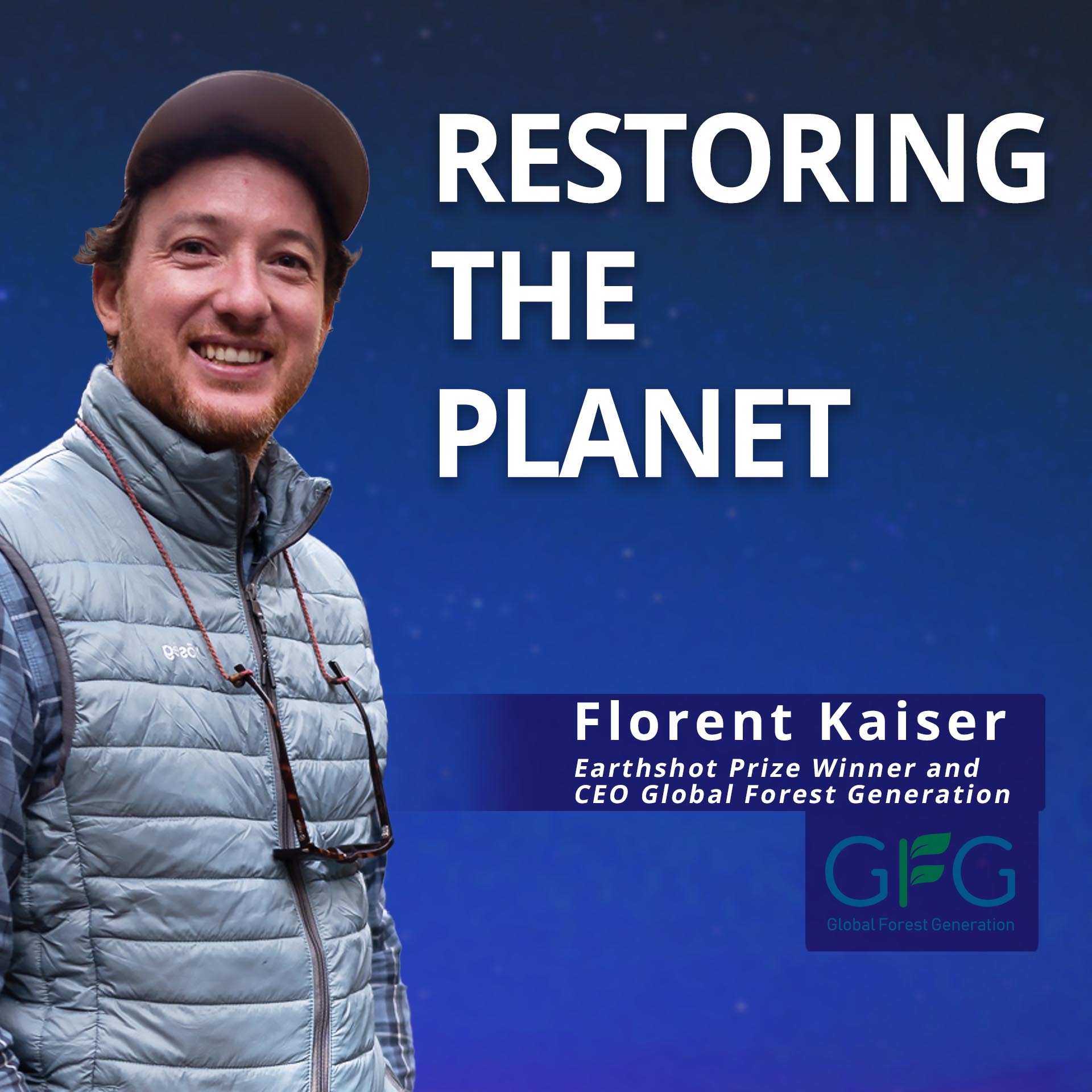
Loading summary
Transcript33 lines
- [00:00]
A
But I wake up every single time in the morning profoundly inspired by doing the work that we do and that I wish everybody on Earth to feel that and have that. And that is a journey that as you move forward and as you find your mission and you deliver on it, that gives you such incredible strength and energy. Welcome to the special English edition of Der Gorse Neustadt, a German podcast series by Sibyla Barton in which she talks to pioneering leaders who, inspired by the the World Economic Forum's Great Reset Initiative, create revolutionary projects that actually do make our world smarter, greener and fairer.
- [00:45]
B
With us today is Florent Kaiser, the CEO of Global Forest Generation. A visionary leader honored with the prestigious Earthshot Prize. Florent is at the forefront of transformative environmental initiatives, notably through the groundbreaking work of Aksion Andina. Aksion Andina has emerged as a beacon of Hope, planting almost 10 million native trees since 2018, revitalizing over 4,000 hectares of Andean forests, and safeguarding more than 11,000 hectares of native forest across five countries. Florence Environmental leadership extends to being a member of the advisory board of the World Economic Forum's one Trillion Tree Campaign and the board of the Global Partnership for Landscape Restoration. With a wealth of experience in over 200 forest and land use projects worldwide, Florent is not just a seasoned conservationist, but a passionate advocate for large scale ecosystem restoration. Good morning, Florent in Peru. Congratulations on winning the Shot Prize. Can you tell us more about it and what winning this award means for Axion Andina?
- [02:09]
A
Thank you so much, Sibile. Of course. Well, first of all, we are absolutely thrilled to be in that position now. We've just won the Earthshot Prize, which was a big important moment in our lifetime. We started this massive project five years ago really as a dream, as a hope. And it grew from a dream to a project across two countries. Then it grew over the last five years into a program. It is now becoming a movement. And winning the Earthshot Prize shows that we're doing some things right. And it especially opens up tremendous potential, not only in the Andes, but to replicate our work globally. Global Force Generation. Axion and Dina. I'll come back to Global Forest Generation, but Axion and Dina is one of these initiatives or efforts worldwide where we and all the co founders included, we're just thinking we need to do grant work. It is time now on the planet to really get down to action and we need to do so with a profound working model for communities and the local people and culture. But at the same time, Reach scale. And Vaccina and Dina are now spreading five countries, soon seven countries. Crossing an entire continent of South America is our first initiative that really gets up to the scale we need in the world. So that's, that's, that's our big work.
- [03:41]
B
Wonderful, wonderful. Can you just, for our listeners who may not be familiar with the earthshot Prize, could you provide just a brief overview of what it is and its broader goals in addressing all the environmental.
- [03:56]
A
Challenges globally instead of just going into the institutional aspect of the earthshot Prize, I'll tell you my, my, my opinion on what it is and why this is so important at this time in the world. So Prince William has a record of ecological care and leadership and he thought that we really need to recognize extraordinary efforts, as I said before, beacon of hope, the types of initiatives that can bring back hope to humanity. That with all the doom and gloom that is happening worldwide around climate change and the planet is ending and it's a lot of despair and I'm not saying at all this is not real, but we need to showcase that there's also the other side happening. Humans are mostly driven by hope and dreams and potential, not only by despair and being sort of at the end of the journey. And the earthshot Prize recognizes that it seeks to find amazing leaders, amazing projects, amazing efforts around the world that have that component of showing, proving to the world both a working model, but at the same time that there is a huge potential and this is the type of initiatives that are recognized globally.
- [05:26]
B
Yeah, yeah, and I'm glad you mentioned the community. So how do I have to imagine the community, support and contribution of that whole earthshot Prize community?
- [05:41]
A
So my read, maybe I don't want to compare too much to others, but what stood out in this community for me a, is the commitment is the commitment to real action. It's a community of powerful people, experts and organization out there that really hone in into immediate action and big, big potential. We have all sorts of other forums where there's a lot of talk, talk, talk. And you know, this is now the time where we really need action. And I think that every organization in this community is really deeply committed to that. And the second aspect I think through, through the earthshot magic, which is an intent to really prove to the world that we do, that we have a collective challenge and we need to resolve this together. So it's bringing together a community of this amazing people and organization that are dedicated to that. And what stood out for me is that not only are you winning the earthshot of being a finalist. But you're accessing a huge network of amazing change makers and you have financers, you have strategic partners, you have amazing people, you have mentors, you have all sorts of really specialized organization in that. And to us, I always use the term supercharging. They're there, this community is there to supercharge the solutions that we are bringing forward. So it's really becoming a sort of a club of amazing potential that we're part of. And this is really, really important.
- [07:21]
B
Yeah, yeah, really fascinating. Which makes me think actually about all the others. I mean, there are millions of projects in the world and you manage to walk through the door, which is really fantastic. Clearly you work very hard and it opened a lot of doors. But yeah, we should have more of that. We should have more of those superchargers. We now need to dive into your organization, the Global Forest Generation, and of course your action. Andina, let's start with the Global Forest Generation, the organization where you are CEO. Can you tell me about your mission and your role in a large scale ecosystem restoration?
- [08:08]
A
Global Forest Generation's mission is really make a different and immediate and scalable difference in large scale ecosystem restoration. We are at a state on the planet where we not only need to drastically and immediately conserve every forest and every ecosystem that is left, but we also are in a place where we need to actually restore a lot of the natural ecological capital that there is in the world, along with all the social benefits that come with it in a lot of the regions of the Earth. This is really the way to make our planet future safe for humanity and biodiversity and many more. And so Global Forest Generation, seeing everything that is going on in the world, was saying, okay, we need to find a model that allows us to not only do the really right thing with the right people on the ground, with the right leaders, with the communities that are already showing potential and action, but we need to do so at scale and just quickly. On the birth history of Global Forest Generation, an extraordinary. So first of all, it started with our extraordinary leader, Constantino Auka, who was recognized last year as a champion of the Earth by the un. He is an indigenous leader from the high Andes of Peru. And he had recognized two crucial things in life. One, we need to bring forests back mainly for water security. And all the communities that he's a part of are motivated to do that. They see glaciers vanishing. Water security is becoming a huge problem in the Andes and in South America, the only natural substitute to the glaciers holding the water are natural forest and Ecosystems, native must add to that native forest and ecosystem. There's many other trees, exotic trees that are planted, that are disastrous for water and so on. So I'm really talking about native ecosystems. And the second thing he recognized is his culture. His culture has a unique ancestral set of principles called ayni and minka, indigenous principles that allowed the Inca Empire, for example, to bring hundreds of thousands of people together to conduct great work, whether it's building fortresses, holding the empire together, and so on. And Tino recognized the potential of that for nature restoration. So what he did is really starting to revive his ancestral culture and be able to mobilize thousands and thousands of people to conduct reforestation, forest protection work, and many more things. So in 2018, when he, Tino invites myself and the co founders of Global Forest Generation to see one of his projects live in Peru, it really changed our life. We had a thousand people coming together and I think over the course of a weekend we planted over 100,000 trees, native trees with the communities. And I remember asking him, at the end of the day, tino, you've done amazing work over the last 20, 30 years, but the potential that we see here is enormous. What is next for you, Tino? And Tino opened up. I would like to replicate what I have done here in the Andes and here in Peru and spread it across the entire Andean mountain range. That is a seven country, 7,000 kilometer long stretch of mountains. And roughly with similar challenges. And both the co founders and I, we were blown away by the grand vision, by the commitment, but also knew two things. The model was unique, but we knew Tino couldn't do it alone. He needed a support system, a support system that helps him plan this out, design this house, seed, finance and grow the initiative in a sustainable way. Communicate the impact, track the impact, build all the systems that you need to really make such a movement stable and scalable. And so the mission of Global Forest Generation is exactly that. We are co founder of Axion Andina, which is a program together with his organization, Ecoan. And while Tino's organization takes care of all the implementation on reforestation, he finds the amazing local partners, local leaders with the communities and his partners across the Andes. Global Forest Generation's role is really that main strategic partners, we are helping build the infrastructure, we are helping, we're not the donor of Axinandina, but we are helping the strategic partner to mobilize sustainable finance for the initiative. So there is a lot of fundraising, there's a lot of partnership building, there's a lot of helping local groups to fundraise themselves with the idea to really have access to the type of funding that we need to have in place. And there is a big part also from us to strategically position the work that we do internationally and in the region. Working with governments, working with amazing international forums, spreading and sharing the voices of our local leaders. And just ending on that thought, Global forest generation really 100% recognize that's one of our most important values. The local leadership of amazing leaders like Tino and many others that have been doing work for 20, 30 years, but would never be able to grow beyond their own realm. And so Global Force Generation seeks out to identify those partners, unite them across an entire ecosystem, range or region or continent, and helps kickstarting a massive initiative. And so we started in the Andes, but our ultimate goal is really to replicate this in other areas of the world as well.
- [14:27]
B
Sounds really incredible. And I find the way you describe it that he is focusing on the implementation and your organization. Sure that the whole strategy works, but when you set up this company, how did you know where and how to access finances for this kind of project?
- [14:55]
A
So that's where that's actually quite a nice story. The co founders of Vaccine Andina and myself as CEO I was hired as executive director. And we're quite a multi generational group. So we had two or three co founders that are really at the end of, let's say they're very successful conservation careers and they brought a lot of wisdom, big networks and also a lot of knowledge on how to access funding specifically for conservation. I, as a young person, as an ecopreneur, I brought myself a huge global network in different areas, mostly at the un, the multilateral sector, the forest sectors. But really the MAD and the stuff we started hiring are bringing a lot of this youthful, passionate entrepreneurial energy that was really a mix of that. And I can say that some of the co founders has put personal money because we believed in that mission. I'm not talking huge sums here. I think we started with a 50 or 100 thousand dollar grant personally from some of the co founders. But that allows us to get going. And I think one of the reasons we have been successful is that from day one the story has been absolutely authentic with Aksinandina. We've shared very transparently the work that we're doing, the challenges that we are facing. A vision that is not one, two years we're not planting trees. It's really a long term vision of potential and action that will and that captured A lot of people's immediate people in organizations, immediate support, but also allowed us to early on set off major partnerships. For example, with Salesforce being a tech company that was absolutely inspired by the long term vision and the type of work we're doing in a very remote place in the Andes. And they have stuck with us from day one and have really helped us to grow. And I can name a few other ones we planned was tremendous. We started with a $50,000 grant and really rapidly grew to several million dollars that could come in because we were really showing that the model works on the ground. Trees are getting planted, survival rate is high, we have the right set of leaders. And so people believed in our model and wanted to support us.
- [17:28]
B
And, and on the more practical side, Florent, when you reforest the land, to whom does the land belong? Who do you, who do you have to deal with?
- [17:43]
A
Oh, who do we have to deal with? A lot of people. When we started Akcin Andina, we had a few hundred people involved in the communities. Nowadays I think we're reaching 30,000 people actively involved. We're not talking about benefits, you know, people benefited. This number is much higher. But actively involves 30,000 people from the community. So it's really growing. But most in most countries, especially Ecuador, Bolivia and Peru, where the Inca empire was such an important role. And the Inca empire will reach down to almost to Patagonia and Argentina and Chile and to Venezuela up in the north of the continent. But in those three countries, Ecuador, Bolivia and Peru, still today, most of the land in the high Andes is owned by local and indigenous communities. It's community land. So it's private land, but it's community lands. It's managed collectively by the local communities. And the important aspect here is that the communities are the ones seeking to restore the land. So more often than not, the communities are reaching out to us. Can you help me reforest my land or protect the forest? Can you help me bring back these forests that have been deforested over the last 500 years? And I can talk more about that a bit later. And what that gives you is a fundamentally different starting point. Acciona and Dina is not going out, okay. And trying to convince people of doing the work. Most of the communities are coming to us and saying, can you help us? And so there is already a commitment from their side. And the other aspect I want to mention is particularly indigenous communities have such a strong governance structure when they decide at the commute. So decisions in the community are taken quite often as a Community as a whole. Right. Even more often by group and women that are sort of representing the communities. And when there is a decision made, for example, to bring back those forests or set aside certain pieces of land, then all the communities, literally every person in the community is following through and is participating in those efforts. That is very, very different in other parts of the world where you don't have that indigenous magical power of a central community with a strong identity and governance system. In Argentina, Chile, unfortunately, and really sadly, a lot of the community land had. A lot of the communities have been displaced or even worse over the last few hundred years. And today there's a lot of private lands. So part of the efforts that we're doing is helping communities title their lands to really make sure they're in control of their lands. But also in, in Argentina and Chile, some areas are either led by the government or private landholders. So in the future we'll also need to look at do we need to buy back land to bring to, to set it aside for conservation, restoration purposes. But that's a future story.
- [21:04]
B
Very encouraging, Florent, that you say that the indigenous community owns their own land, because earlier this year I spoke to the Sami who live in the north of Europe and they face pretty much the same problems as, let's say, the Argentinians because they don't own their land. Anyway, that's a topic for another time. So let's come back to your Inca principles, which I find very moving. How do they guide the initiative?
- [21:44]
A
Yes. So obviously I would rather have my co founder Tino explaining that, but because that is his life's work and he was the one recognizing the potential of these principles. So ayni and minka, two words in, in the local Quechua language, aini means as much as we would call it maybe reciprocity. So whatever is good is done to me, I will bring back to you. Right. And minka is what comes down to communal service, collective communal service. These two things together have quite a magic and that is that when communities. So you need a lot of people to, to reforest large areas in massive amounts of trees. To plant a hundred thousand trees in a day, you need roughly, you know, seven hundred to a thousand people, because it's just hard work. It's remote areas and it's done by hand. And when. And community doesn't necessarily have a thousand people in their community. So the Ayni principle allows the communities to say, okay guys, in a, in a specific landscape, I choose to reforest this area. This year. Can you come with your Ayni commitment? Can you come to help us to reforest their land? And what happens is that all nearby communities are bringing in the minka, which is then a huge communal service, all their people, but also all their saplings in a single day or on a couple of days. And really you have then large amounts of people doing that collective minka work together. And then the Ayni principle tells you, hey, the next year or the next few months, we're gonna come and bring our people and, you know, our saplings and everything else to help you reforest your land. So it's really crafting out that community aspect and that collectiveness aspect. And to me, that is the number one engine of the success of Axion and Dina in really uniting large amounts of people. As I said, we are now at roughly 30,000 people involved. If we look at the goal of restoring and conserving a million hectares, this will need to grow substantially, right? We have right now 15 local. We started with two partners in 2018 with now roughly 15, 16 partners, with over 25 landscapes level projects in five countries. In order to reach the goal, we'll need to go to hundreds of partners. We'll need to go from currently, I think, 150 local communities to thousands of communities. And that means a lot, a lot of people. We'll need hundreds of thousands of people involved in the initiative to really make a difference on water security, biodiversity conservation. We're speaking really a continental effort with seven countries and Ayni and Minka allows you to get the amount of people and the commitment to it. It's really that non economic fueling power. We're not paying the people to show up and so on. There is a working system economically that helps build the nurseries, produce the saplings, and that has economic incentives for the communities. But most important, it's the Aini and Minka commitment, where it allows them to really bring their communities as a whole, the neighboring communities, but also forge an identity of Aksin and Nina from all the Andean countries in the region. And each and every project feels their brothers and sisters of similar projects and communities in the other countries. And that is really something magical.
- [25:48]
B
And you were briefly going into the benefits of all the new trees being planted. We are not just talking, oh, now we have more trees. How lovely. What are the benefits having a proper forest again?
- [26:08]
A
So, as I said at the beginning, water security is a huge issue. And sadly, with all the projections, the glaciers will melt right in the next few decades and I think Peru holds 70% of the world's tropical glaciers and most of them will disappear in the next 30, 40 years. And what that does is it will really put a big toll on water security for the continent. These are the headwaters not only of the Amazon rainforest, right, Providing a lot of water for that, but also for every major city and community on the coast, on the mostly arid coast of South America, right? And so we're speaking about hundreds of millions of people being affected potentially by the lack and of water. Lima being a desert, you know, one of the driest desert cities in the world, will be one of the first ones heavily affected. And so at first there's an ecological benefit. The communities recognize that they need. They, they see community A without forest, has three to, you know, has, has a long draft period. Community B, where there is a, a forest still up there, they have three, four months longer water for agriculture and thus food security and just makes life easier, let's say. And the other ecological benefits, obviously biodiversity, soil and so on. But the really crucial aspects of why the communities, beyond the central aspect for water, is the social benefits. So by bringing everybody together with Annie and Minka and the reforestation activities, the community as a whole has a renewed commitment to their future. And that allows them to do so many things as part of the income generated from building nurseries and producing the saplings. So the projects buy at the end of the production period, symbolically the saplings, which brings income to the communities, which is then also that the income from the community to the communities is put in a community fund and communal fund. And they use for whatever their biggest priority is a community level. It could be the local school, it could be the local access road, it could be solar panels for communities that are really remote, anything that they prioritize more and more, they invest in more nurseries, so they can actually double the production every year. And that's something quite magic. So that that is a central aspect. Let me remind you or inform you that we're speaking about areas that are very remote. And a lot of those communities have, according to international standards, are in the extreme poverty, poverty range. We have done our local partners, Equan, did I think eight years ago, study that looked at the access to finance, let's say, or the access to, to economic means of communities. And the average community in remote High Endean Peru has the average family in a community has access to 70 to 100, 70 to 100 US dollar per family per year. Right? And I always say, remember when you're going for dinner the next time or when you take your phone out. Right. We're speaking of a one year 70 to 80 for a family. And so every financial additional benefit that comes from it is really transformative for the communities.
- [30:08]
B
So yeah, in the time you have been there, how much change did you observe? How much change did you see?
- [30:19]
A
So we've planned it. We're just in the process of finishing the 10 million native trees as, as you know, in across this, the five countries. We're operating honestly. It sounds great and it sounds big, but it's a drop in the ocean. We're speaking of potentially millions of hectares and billions and billions of trees that need to go in there to make a huge difference. However, from the communities that have been involved the longest, their lands have seen several hundred thousands of trees coming back. And that does two things. One, we're seeing after five years really starting to have microhabitats forming, soil being stabilized. And I'll share two anecdotes with you. In Peru, just in August I was happy I could bring my family to see some of the projects. And we went, were filming for the offshore price actually because they wanted to put a video. And all of a sudden we stop on the hillside and a local partner said, well this area we reforested 12 years ago and it was like three and a half, four meters. We're really speaking about I think four and a half thousand meters in altitude. It's a really high lines, it's slow growth. So the trees were like three and a half, four meters high. And we were walking the forest, seeing how it was really beautifully regenerated, the soil was healthy, a lot of moss. And as we were walking back to the cars, being really happy at what we saw. We saw in the midst of the dry season, we saw a little waterfall coming out of that forest and the communities that were present there were like positively shocked and saying, wow, water is coming back. So that was a small area of just a few hectares, right. With we calculated roughly 200,000 trees. But that made a huge difference. And what it provided to the community is the conviction we can do it, we are doing the right thing. And to us it said if that works here and there and there and there, we can really tackle a large scale effort and show critical results across the continent. And needless to say we need to go for a few, from a few areas to thousands and thousands of areas and replicate that. You don't do great works all at once, right? It is really a step wise and incremental approach. But we're conceptualizing Axiom Andina on purpose as a hundred year project. It is not a few years effort. It has to be essentially long effort. And we believe that as we are learning and as we are growing, we really will reach impact that will have a profound positive impact on the continent.
- [33:17]
B
When you say replicating the model worldwide, you said early on you are already in five countries. What are the challenges in the other countries?
- [33:31]
A
So there's two really visions there. One, I just said 100 year vision for the Andes only. And we're in five countries now and you know, there's Colombia and Venezuela that have those forests, the same ecosystems and will replicate to that. Let's not get caught up too much on the countries. A country is a huge area of land. What matters is the millions of hectares within those countries and the thousands and thousands of watersheds and communities that need to conduct that kind of work within their countries and regions. And so the journey of Axion and Dina and continuing to scale it within the continent is, you know, almost an endless one. If global force generation wanted to stay just in the Andes, we, we would be busy for the next 100 years without any doub and problem. Right. However, our vision as I said at the beginning, is a strategic one. We are helping local leaders achieve their dreams and really conduct the work that we find is profoundly relevant and impactful. But we also learning in the last five years in building excellent denom we've learned so much from techniques, governance, the right types of relationships. How do we not over bureaucratize the work that we do and really, really have a strongest commitment to, to, to impact while still being having the teams in place and the systems in place to run, you know, to coordinate. Today almost 30000 people. So it's really a step wise all, all, all these, all this experience is what we want to bring and offer where there is equally threatened ecosystems, where there's a big restoration and conservation potential, and most fundamentally where there are leaders and communities readily motivated and available to do these kinds of great work. I want to be really, really make a really important point because a lot of that is going wrong in the world. I find especially in the conservation world. Global Forest generation will never try to copy and paste an approach that worked in the Andes somewhere else. Right? You have to build your projects by deeply understanding and deeply building from within the culture with the right, with the local people of that specific area, with the local culture of that specific area, with the specific mindsets and sets own set of challenges. That's where you need to take the time to understand and slowly craft out your. Your project and let's say your identity there there is no use to say Aksin and Dina will work in the Himalayan mountain range as just like that. We really need to take the time to fight the right leaders. And Tina was extraordinary in the Andes. Right? Who is the Tina we will find and help get going or the many Tinos that we will find and help get going in the Himalayan mountain range, in the central dry corridors in Central America or the African continent. We really need to find a the local groups that have that potential and motivation and want to embark on the long long term story. And global forest generation's role again is a strategic one. We've learned not only from the culture but all the aspect that I mentioned before. The strategic angles that we can support those leaders. This is what we aim to export, not necessarily how things are done on an implementation basis in the Andes. All right. We were really exporting our knowledge to bring people together and build a support system that helps them grow and replicate and make sustainable their local efforts.
- [37:28]
B
Florent, if I look at your personal journey where does the deep understanding and the love for the forest and the organizing and the openness come from?
- [37:44]
A
A very good question. I think for me forests have always have even as a kid had a magic. It felt right, it felt beautiful. It felt. This is the areas where my mother grandmother took us to recharge and feel connected to nature. That is one very strong aspect. I always had a profound love for forest and nature and that I will never lose. And that drives my work and how I choose to study. Back in the time over was it 16, 17 years ago forestry engineering is because I happened to be sent for civil service for then the German government to Honduras and I was involved in a reforestation project and I wanted to continue get going. I was 19 by that time and I wanted to continue get going with that studied forest engineering and it took me on a path. The other aspect that I want to really mention it was not just the love, the profound love and appreciation for trees and forests. It is a profound admiration and. And respect for cultures and. And. And people. Right. I profoundly believe and live in my everyday that we are one collective force on earth Humanity in each and every country and culture and religion. Whatever one else. We're all the same. Right? On. On a collective challenge. And that allows you aided by. By heavy traveling and an incredible openness that I got through. Especially my mother. I'll talk about my mother for a second an incredible openness to cultures and people and a profound ability to understand them, learn their languages, learn their ways of interacting and being fundamentally respectful of their ways of, of, of, of, of living, of, of life. My mother had a big role in that. She has been dedicating her life. She was first a school teacher in France and then we switched to Germany. She lost kind of her, her career. It was really difficult in the 90s to take a, a French professor career into, into Germany. And she started to make her hobby, which was storytelling as a profession. And what she's done is since I was, you know, we were born with my brothers and sisters, we were exposed to every sort of culture. We had storytellers from Africa, from Asia, from, from, you know, Eastern Europe coming and entering our houses. We were taken on spectacles and performances. And my mother is not a performing storyteller in a sense that she's a good storyteller. She is, right. But more than that, she was always working with the culture and the people via the tool of storytelling to bring those cultures together. And she's done a lot of integration work with immigrants, for example. And that I think has really shaped my own curiosity, my own ability to really want to understand and people and live with them. I'm, I'm here a lot of my friends here in, in Peru where I live, I live for the last 10 years almost. They said, well, you're more Peruvian than many of us. And I think it has to do a lot with, yeah, with my ability to, to just be in the place, understand the people and, and make them feel comfortable. Then I'm a part of that society while not losing my own essence and my own global outlook.
- [41:45]
B
I would say, Florent, I have a few numbers which I wanted to discuss with you, which we mentioned at the beginning, basically that the Andes mountain range, constituting just 1% of Earth's land surface, harbors 15% of all plant and wildlife species. Yet less than 10% of its native forests remain due to deforestation, animal grazing and mining. All of that happens parallel to your work and the life of the indigenous people around you. How do you deal with that?
- [42:32]
A
So let me get some the numbers that they're correct, right? But they refer as the Andes as a whole. So most of the unique biodiversity that you have in the Andes, especially on the slopes going into the Amazon, So most of the unique biodiversity, some of the most biodiverse areas are the ones that are still on the slope of the Andes, going slowly into the Amazon Basin. And Peru, Colombia, Ecuador, have Amazing, amazing biodiversity heritage here in the high Andes. So we are focusing mostly on the very top of the Andes from heights from 3,500 to 5,500. And obviously it goes even beyond those glaciers that you have six to almost 7,000 meter high at times these areas while having unique and threatened biodiversity and wildlife, especially birds. You have the condors and you have, you know, the pumas and, and spectacle bears and a lot of unique, amazing birds in the region. They, you know, be largely also because of their deforestation and the altitudes. The biodiversity is in terms of numbers is limited nowadays. And most scientists agree that deforestation has happened mostly over the last 500 years in the Andes. And the two factors that have most contributed to it are one, the Spanish colonization because it basically was very effective at destroying or degrading the local governance system of the Inca empire. They really were masters. The Inca were masters at managing their natural resources. Then they built aqueduct, understood the role of forests. And you still have a lot of remains that proves that today when this, the, the Spanish came and destroyed, let's say the, the Inca empire, a lot of the communities went back to do, you know, to take sort of everything that was around and there was no central rule and governance system. That's a big part of it. The second in parallel, the second factor to that is the introduction of European cattle and sheep for example, that are totally unadapted to the native ecosystems of the Andes and have been basically eating and grazing away a lot of the, the natural regeneration of forest. And also if you look at the hooves for example of cows and sheep, where the llamas and alpacas in the Andes really help bring air in the high ending ecosystem and promotes for example water retention, the wetlands creation and protect the local plants. The hooves of, of sheep and cows in the altitudes are really compacting their soils and grounds which then loses its ability to hold water. And so that's a big, big part. And it has to be a big strategy for axial and Dina to look at that and help also manage in the future. We're not doing that yet. Our local partners are starting to but look at more holistic ways of managing grazing habits of cattle and sheep that are now already a part of the, you know, income sources and livelihoods.
- [46:20]
B
Lauren, you also lived in, in actually various parts of the world and I think you speak quite a few languages as well. I noticed that you spent a lot of time in Asia. How, how did Asia form your knowledge and experience and moving forward?
- [46:40]
A
Very good question. I think with what I said before, it helped me contribute to open up my own mindset and heart to a global sort of outlook and a global profound respect for culture and communities and people. Right. And yes, people in Asia speak different languages than here. And I would say, particularly in Asia, let's face it, here in Peru, yes, it's a very different culture from the European culture, but the colonization was very strong. And a lot of the life live in Lima have at least some patterns from language to behaviors. That has a lot to do that is very similar. Some elements are very similar to European approaches. In Asia, that was very different, starting with language. It's a totally different way of conceptualizing language and culture. There's different things they care about. There's different ways of expressing emotions, emotions and thoughts and, and of building community. And that was very, very forming for me to get rid of my. Of your own often imperceived prejudices of approaching how you understand people and how you approach people. And so your communication, your, Your respect, your. Your way of. Of engaging, your way of making business and. And building projects together is something that. That in Asia for me was really putting you in a whole. You're discovering an entire different world. And what it does with you is. It shapes your openness and questions your status quo and your, Your abilities that you were born and raised with. That. That has been a profound part. And then separately to that which is the other side, it's more the professional career I started. So I got elected in my studies, ironically as the global president of the International Forestry Students association by that time representing all forestry students worldwide in a huge university networks and student network with almost 80,000 students participating. And much of that work happened to be focused on Asia and things led to, you know, to others. And I was hired at the UN and folk was based in. In. In Bangkok by that time and spent the next, let's say five, six years in the region. I was in Vietnam, I was in Thailand, and then later in Indonesia as well. And how did Asia shape me through the work? I got. I would say the good news is I got a huge understanding of how global and multilateralism is functioning at the UN Networks and big organization, international organization, what fabulous role and responsibility they. They have. However, and that is really important. As a young person with incredible drive and entrepreneurship, I got so incredibly frustrated and bored by the big international bureaucracy. And I saw a lot of inaction and talk and I saw a lot of slow processes you wouldn't believe in order to get one proposal out of a great idea. You had to wait six months and then it's through legal and all of that and that you don't kill a 25 year old's energy with those things. And so I happened to, in one of the students conferences that I was coming back as an alumni already in Madrid I met my today wife back pretty much 10 years ago and she's Peruvian and I was living in Vietnam by that time. And you know, long story short, six months later I said, she said, I'm, I'm in Peru, I'm working in Peru and I'm forestry engineer and I'm in the Amazon. And that was enough for me like her and, and, and, and the, and the, the dream as a forester and a forest lover to come to work to the Amazon was just too big to reject and I moved.
- [51:07]
B
Laurent, can you share a few key points? What it takes to build large scale ecosystems.
- [51:20]
A
First of all, it takes a lot of dedication, patient entrepreneurship and a lot of energy. And I want life. I've over the last five years we have at times gotten to our limit of energies and in, in building all those things and I think the results speak for themselves and it's incredible to be where we are right. But it's not, you know, it's, it's not necessarily easy work working with local communities and the cultures, you know, finding the right balance between local leadership and modern, let's say business and organizational approaches. And that's a big part of the challenges that we're facing and in building that. But I think we're doing pretty well despite those challenges because we're really committed to the mission. I think the second point is really that taking, I can't tell you how incredibly energized, lucky and, and gratifying that feels to have met a person like Tino and many other leaders and our co founders that are profoundly dedicating to a mission that they, that we live all together on a day to day basis. I wake up in the morning, of course I'm stressed about the day to come and all the things I need to get done. But I wake up, up every single time in the morning profoundly inspired by doing the work that we do and that I wish everybody on earth to, to feel that and have that. And that is a journey that as you move forward and as you find your mission and you deliver on it, that gives you such incredible strength and energy. Honestly, I don't feel, of course I feel I'm working because we're doing a lot of things, but I don't feel we're working because it just feels like the mission and there's no alternative to it. Right? That's that. And then what I would call especially young people so a finding deep down in themselves what is what they really want to do. And then, and, and, and, and where is that now that happens through inward looking, you can call it meditation or whatever else your tool is, but really understanding what drives you in life and then becoming. I like to promote the entrepreneurial mindset. Never accepting status quo, never accepting, okay, I need to just apply for a job and enter the job market. No, I need to find what I love in life and build what, whatever I can see in order to deliver on this mission. And so that has been, you know, being your own entrepreneur is a mindset, is a, is a, is a starting point, is really something where you never accept the existing boundaries, but you're building and finding the people who will help you build that. And then the last point I wanted to really make. Axion Andina is not only a tree planting project, A it is a holistic effort to conserve and restore forests. But my point being it is not just a tree planting project that has ecological benefits and so on. That is every tree has ecological benefits and every person involved has social benefits and so on. But a huge part that I especially with my global outlook find profoundly important is what I said, the beginning, the symbol of hope by feeling and living action and by showing action and results and potential. People that are coming together in the tens of thousands have this magic power of it is doable. And that to me that spirit is what we need to take globally. And that can happen doing reforestation, restoration, conservation, but it can happen in any field. The crucial part here is that the hope and potential that we as a collective human story, we can now I profoundly believe we can fix this crisis. Because if we really come together and believe we can do that and start acting and bringing all the people magically together to start acting, then we have a huge chance to not only fix the problem, but build a beautiful world that would be much closer together.
- [56:12]
B
Yeah, yeah, I absolutely agree with you. I agree with you. Before we coming slowly to the end, I saw that you also included in the one trillion tree campaign of the World Economic Forum. What is it you are doing there?
- [56:32]
A
The World Economic Forum, I say, is a big, you know, network of world influencers. And a lot of it's a lot linked, let's say to corporates and the private sector. Right. And we are currently in. The UN has designated this decade as the Decade of Ecosystem Restoration and the World Economic Forum's Trillion 3 campaign right at the start of the decade was born to help mobilize the private sector mostly to help deliver and play their role into this decade of restoration. And so what it comes down to is a group of committed, both, you know, corporate leaders and entrepreneurs as well as corporations as such that are looking at, you know, sustaining and scaling restoration, committing whatever their business model in their sector is to helping. And one example of that is one of our main partners is Salesforce. This tech company, Silicon Valley tech company, has become in quite a big force. And Mark Benioff, their leader, has been one of the really driving force of bringing the restoration world to the World Economic Forum and helping mobilize and motivate other companies to really create meaningful actions, contribution. And so one of the things that, yes, of course there's funding that can be generated, which is a hugely important role of corporates that have financial means to support that. But for example, with Salesforce, a big part of what we're doing now is how can we apply technology because that's what they excel at in the Andes in, you know, tracking and managing and reporting and everything else that we need to coordinate, need this many amounts of people. So there is, we need to not we need to stop thinking in sectors and silos. Right? There is a role for every company in global restoration and in this quest to heal the planet and the amazing innovations that companies and the financial possibilities and mechanisms and the networks that they have access to, we better put them all to use. And I want to end that part with a call, you know, if you understand, if you come to the Andes and understand what Aini and Minka is as and how it mobilizes people. Part of my personal mission is to take this Aini and Minka and bring it to the corporate world and engage with corporates, governance, business leaders in practicing Ayni and Minka and being able to collectively approach these huge challenges. Because that's what I believe we can do to save the planet.
- [59:36]
B
And on this wonderful note, Florin, I just can say thank you that you took us through your wonderful journey. Not only a personal one, but also the establishing of the global forest generation and your great project action, Andina. So thank you very much. All the best, lots of energies and a few more Earth Forest to come.
- [60:00]
A
Thank you so much for the opportunity to share our message and anybody that is listening still. Hopefully it was, you know, it was engaging over the last hour and something please feel free to reach out LinkedIn Instagram. I hope we can share my email somehow. If you're struggling to get going, I would happily jump on the call and help with a few thoughts. You've been listening to a special English edition of De Gorse Neustadt, a German podcast series by Sibylla Barton in which she talks to pioneering leaders who are committed to making our world smarter, greener and fairer. For more information, please visit www.sibyllabaden.com and official site of the World Economic Forum.