Loading summary
Transcript56 lines
- [00:01]
Olivier Venden
We can also play a role in the international negotiations alongside the government and alongside the governments on the planet. Prince Albert was extremely, extremely involved in defining SDG 14 so the Sustainable Development goal entirely dedicated to the ocean.
- [00:19]
Sibylla Bart
Welcome to the special English edition of Der Grosse Neustadt, a German podcast series by Sibylla Bart in which she talks to pioneering leaders who, inspired by the World Economic Forum's Reset initiative, create revolutionary projects that actually do make our world smarter, greener and fairer.
- [00:43]
Prince Albert II
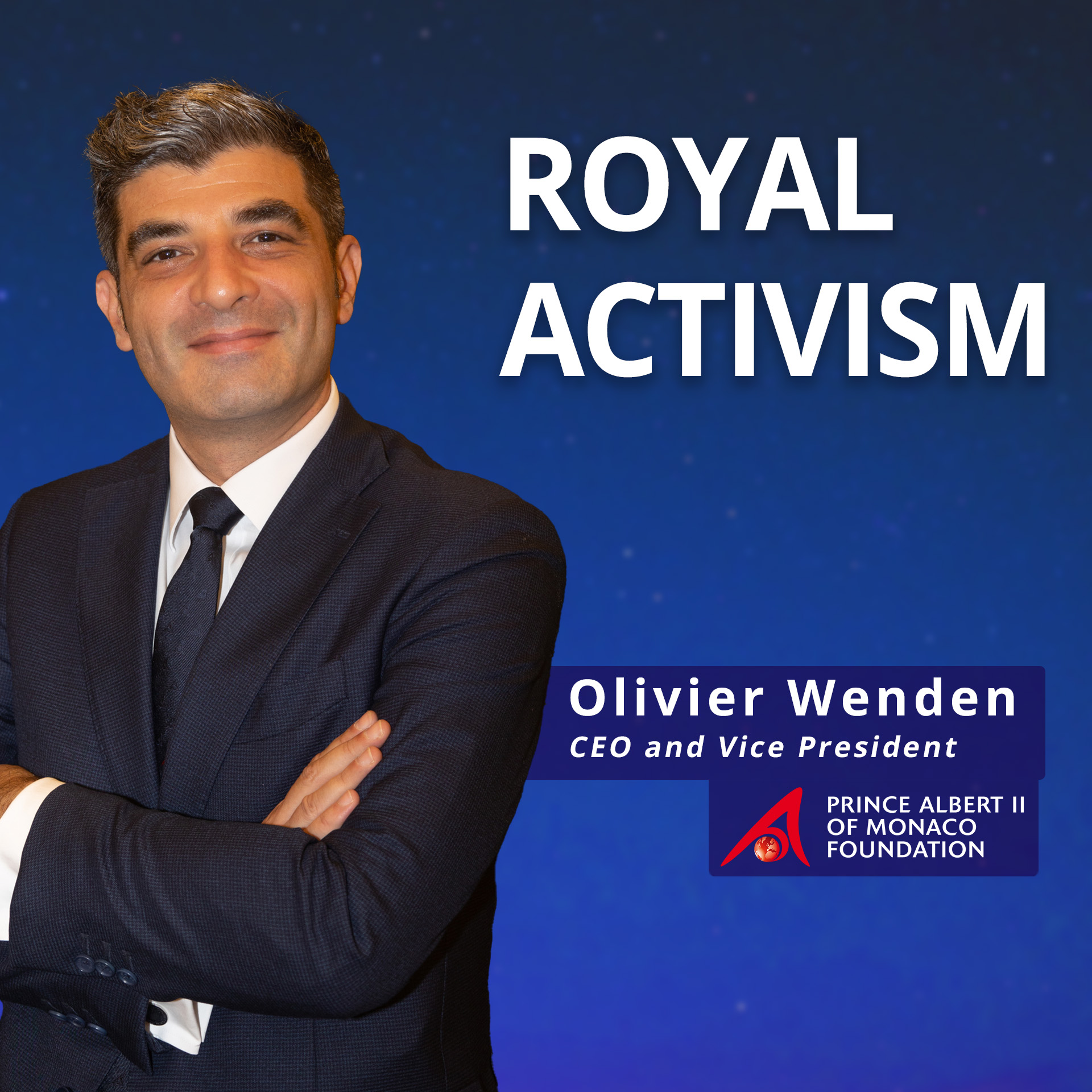
Today I have the privilege of welcoming Olivier Venden, Vice President and CEO of the Prince Albert II of Monaco Foundation. Monaco, the most densely populated sovereign state in the world, smaller than New York Central park, has emerged as a powerful advocate for ocean and marine life conservation. Prince Albert, as head of State and president of the foundation, played a significant role in shaping SDG 14, the United nations sustainability development goal entirely dedicated to the ocean. He also spearheaded a campaign to ban global fishing over the endangered Atlantic bluefin tuna. And when the world turned a blind eye, he went local. The Foundation's commitment to environmental stewardship is showcased through 750 projects focusing on biodiversity, climate, the ocean and water resources. In my conversation with Olivier Venten, we explore the remarkable but underreported impact of Monaco's what he calls collaborative activism and delve into the celebration of its first Green Shift Festival. Olivier, thanks for joining us. It's day two of the festival. How is it going?
- [02:06]
Olivier Venden
Well, thank you very much indeed for the invitation and thank you for asking. The festival is on the second day, I must say. It's premiere, it's the first edition, but great turnout, great success so far, probably because we managed to bring together people that usually don't talk to each other. You know, this world is working a bit too often in silos. And also when addressing the issues of climate change and biodiversity loss or environmental challenges or threats, we tend to be very gloomy and all about the figures, the data, the wall that we might face if we don't act. And it's pretty rare that we have an open conversations with bringing together scientists, writers, talents, singers, songwriters, philosophers, all together to bring optimism and a message of hope. Not a naive one, but just to dream together of the future we want. So that's probably the key of success of that first Green Shift Festival based here in Monaco.
- [03:19]
Prince Albert II
The idea for the Green Festival was born how?
- [03:24]
Olivier Venden
Well, the genesis of the foundation is back to 2006. So we have already 17 years of track record. But that being said, we have to face one big thing. Science is key. To understand how the world works where we are heading to if we don't ask, that's clear. But the message has always been very gloomy. It's been decades that we were hearing, well, if we don't act now, the world would not be sustainable for our children and grandchildren. The problem is this message didn't work, it didn't change, we didn't steer the wheel. We were thinking, well that's not great, what can we do? What is missing? Why governments, companies, customers, even our own households and individual level, why can't we make this change happen? We are all rational individuals, so we, we can understand the problem. If we want to find this, the information, we can find it. It's everywhere. The IPCC reports very regularly give or give you a very clear overview of the challenges, the problems, but also the solutions. There's a roadmap of solutions to be implemented to solve the problem. Yet it didn't work. So what are we missing? And that's how the idea of the festival is born. Because through conversations and I would tell you with philosophers and activists, French activists, back at the end of last year, we were thinking, well, maybe, and it's a very strong maybe. Maybe is to be able to dream of the world we want. And that really resonated. And I remember my time, you know, graduating from uni. I was dreaming and I think I'm not the only one. I was dreaming of my professional life, I was dreaming of my family life, how I wanted to achieve that goals. And then, and then you find your own way to achieve your target when it comes to environment and the ecological transition. So clean mobility, stopping the green gas, greenhouse gas emissions, killing the plastic, pollution. We always see the tragic consequences and the data and the pollution level increasing and the killing of the bio, but we never talk about the success and I think is to dream about the success. We need to dream of the world we want before being able to find the right solutions and take the right action. So it's probably not the only lack, but it's clearly something linked to the emotions and maybe stopping for a while about being in our heads, changing the software and thinking more with the heart than with the brain. At some points we need to feel more, we need to be rooted again. And that's probably what we have been losing over the past two, three decades with of course the increase of technology and the streams and access to information. It feels that. And, and again, from the conversation with scientists and psychologists, well, it seems to be a fact, a very serious fact that we, we are embarked into A perpetual movement of information that prevents us from feeling. We don't really need feeling anymore as human beings. We always need to be occupied, you know, having a screen or reading something, but just wandering around thinking, reflecting. This is no longer the case on a general average basis, and that's the purpose of the festival, is to think with the heart, less with the head.
- [07:30]
Prince Albert II
I absolutely agree with you. We need to think more with the heart and less was a brain. And that we are also in desperate need of some positivity, good examples that show us the way through the transformation. And that was certainly my motivation when I set up this platform in 2020. And since then there were many, many global leaders that I talked to who all say exactly the same, we need to have more positivity, encouraging examples. And perhaps we could talk about your approach, which is quite special. You said in an interview, we think, and I quote you, we think of ourselves and the global community as collaborative activists.
- [08:27]
Olivier Venden
Well, absolutely. The thing is, and this interview was just made after Covid because we had time, like many of us around the globe, we had time to think. And that was great to start with because we need to bend it. Well, we thought that it would be very, very good to take advantage of this forced pause to redefine on a positive way what could be the world after Covid. The post Covid world, we truly believed and we launched a Green Shift campaign at that time on the web is still visible on our website with many, many interviews of a very holistic cohort of close friends of the foundation, from Nico Rosberg to Paul Pullman to Tim Flannery from Australia, et cetera, et cetera, and of course around Prince Albert. But it was their vision for the post Covid world. And there was a lot of optimism at that time because, you know, marine life was back on the COVID there was no activity, so the air pollution completely dropped, etc. Etc. So of course we were not naive and we didn't call for a world without human activities. This is impossible. We took advantage of the no flights in the air, but that was not sustainable. We stopped the production. That's not sustainable. So it was impossible to continue living like that. However, we were able to reflect on a future we wanted.
- [10:12]
Prince Albert II
What's your personal motivation to run the foundation?
- [10:19]
Olivier Venden
I would say that first and foremost as CEO. So I have a beautiful, a great, great team, fully dedicated. We were talking about, you know, the committed generation. I have every day, the feeling that I'm working with this kind of generation. We are doers. So us, the foundation because it's unique, because it's the only NGO in the world that is chaired by a running head of state. We have concrete example on the ground in terms of conservation, saving species, implementing technology or innovative ways. But we also have an important role, a leading role, when it comes to lobbying, raising awareness, launching campaigns to raise awareness amongst the heads of states, heads of government, economic leaders or other NGOs on very specific issues. Challenges being. Yeah, challenges or opportunities, actually. So this is extremely rewarding in terms of impact. So my motivation is all about impact. And as I said earlier on, we can, even at our level, because we are, I would say, let's face it, we are a small foundation compared to other international organizations, but we can find our own way and we can have significant impact using traditional philanthropy. So we fund projects on the ground, defining political campaigns at the international level, to try to curb international regulation when needed. And it's very often needed, I have to say, and also to favor, to promote, to channel the stakeholders into the raising opportunities, I would say, from technology, blue finance, blue economy and technology, because.
- [12:21]
Prince Albert II
You mentioned that before, that you must be the only foundation in the world that has an acting head of state as president. So how do we imagine your work process there? And for anybody who listens and doesn't know, it's Prince Albert II who is actually the president of your foundation. So how do we imagine the work process? Are there more advantages than disadvantages?
- [12:51]
Olivier Venden
To be honest with you, there are only advantages. Only advantages in the way that, and I will repeat myself, but first and foremost, we are a philanthropy working for the Prince of Monaco. So with the meetings that His Highness has, with the trips that he has on the ground, or meeting, you know, other heads of state or in the multilateral arena like the un, he's got the opportunity to identify partners, stakeholders, challenges, problems on the ground. He discusses a lot with local communities. He's got a very strong focus on local communities and the role that human beings can play in solving their own issues. So that's a fantastic way to have a global view of the challenges and being able to support with our own means, of course, which are important but not outstanding, I would say, given the level of impact. But we can benefit these communities with very concrete support on the ground, on research grounds as well, to make a change at a local level. Then we can also play a role in the international negotiations alongside the government of Monaco and alongside the governments on the planet. Prince Albert was extremely, extremely involved in defining SDG 14, so the sustainable development goal, entirely dedicated to the ocean, that was that obvious at the time of the definition of the Sustainable Development Goals. So he was not the only one, but he played pivotal role in defining SDG 14. So having the ocean being part of the discussions then he was one of the head of state to really make sure that the ocean was part of the Paris Agreement as well. Remember COP15 climate. Yet the ocean were not that obviously include. And yes, now they are in the preamble of this historical agreement. We played a key role in the high seas as well, defining the High Seas Treaty. Prince Albert was extremely pivotal in enabling the creation of the Ross Sea, which as you probably know, is today the largest marine protected areas in entire. So that's to give you also an example of what we can do on top of traditional philanthropy. And I would say the level is probably the liberty that we have to test ideas like the Green Shift Festival, but also to federate very broadly, breaking the silos of corporations and federating all these stakeholders around very specific matters. And I come back to this example of Monaco Ocean Week. The Monaco Ocean Week is one week of event in Monaco. So roughly 60 different events hosted with a thousand people. And in each event you bring together scientists, CEOs, decision makers, so mayors, ministers, to discuss about the various, various issues linked to the ocean conservation. And this is not the only place on the planet we'll be discussing a holistic way. But it's a very active role that we play in bringing together these different forces to bring the best solutions possible once again to scale up and accelerate the implementation of the solutions that do exist, that do exist for the ocean, for the biodiversity and climate. But it's working together, as you all know, that we can succeed, and it's good to say it, but it's even better to do it.
- [17:07]
Prince Albert II
Your ideas and your work certainly have a huge impact. Bringing all the relevant stakeholders of society to the table is of course key to any sustainable success. And your 750 projects and initiatives that the foundation has realized since 2006 are definitely proof that you do. Right? So, Olivier, but I have to ask you that, how come your work for the oceans and biodiversity is so underreported?
- [17:46]
Olivier Venden
That's a key question, but I would say it comes back to answer I just made. We are doers. His Highness is in favor of impact. He's looking for doing things for his foundation to achieve its goals. We are not seeking recognition, but I must say in a certain way, and that's the dedication of my team at the communication level. We are trying to Spread the word about what we say. It's, it's hard, it's true. But the motivation is really what we achieve on the ground. So facts, I share it with you and we're working on it. I can guarantee you and I'm sure beautiful podcast will probably help raise awareness of the great achievements and successes that the Prince of Monaco has been experiencing throughout his reign.
- [18:40]
Prince Albert II
Yeah, yeah. Olivier, let's delve into a few projects and initiatives that are close to your heart. Can you choose two or three which you want to go into more detail?
- [18:57]
Olivier Venden
Well, thank you for asking. So there is one massive success link to our traditional philanthropy approach is the bluefin tuna. So in the meds we saved the species. That's thanks to the role that Prince Albert played and the fact that he's ahead of state because the, the bluefin tuna had only two years of left of existence in the meds when in 2009 scientists came to to alarm his finest about the situation. So two years left of stock and then it was over. Game over for one species. One emblematic species. Yeah. So Prince Albert asked at that time that the bluefin tuna was listed on the red list of the iucn, which would have meant no fishing, no trading. That was a hard to take. And we lost it. Certain. Well, one specific country which I will not mention, but you will very well find it. So one country lobbied very strong to make sure that this didn't happen because as you could guess, the price of a ton of lufin tuna was extremely high. It's roughly the price of a Ferrari car, to give you an example. So the market is super, super important. So we lost the case. Yet being Prince Albert, the media attention was caught and the quotas had to be raised by the European Union and we had to work a lot to raise awareness of the fishermen community. It was hard, it was very hard at the beginning because they didn't understand why we wanted to kill their source of their main source of income. However, it was a long journey. So it took more than a year to be successful in making them understand that there was the very short term, but there was also the long term vision. And they understood and they understood. And a very important decision that was taken not by law, by the restaurants themselves. They removed the species from the menu just because they're of this awareness. Yeah. And that was brilliant. And to make a long story short, within five years, only with the quotes being raised, more monitoring and more awareness with the communities, the species has been saved. We can start fishing it again now under very strict conditions, but it was saved. So that's the best proof ever that if slightly regulate and limit the human impact on the ecosystems. Yeah, Nature blossom again.
- [21:40]
Prince Albert II
Yeah, that's a really great story.
- [21:43]
Olivier Venden
It's a very positive story. So that was the beginning of a great determination at the foundation to do things right and have more impact. So that was my example for traditional philanthropy and I insist on that because we understood as well already in 2016. So after 10 years of existence that philanthropy will never be enough. It's crucial, but it's never been enough to solve the complex, complex problems of the environment. So 2016, His Highness gave us the blessing to launch our own projects. So we call them the Foundation. So projects are operated by third parties and we fund them, whereas initiatives are a concept born at the foundation and a concept for which we look for operating partners and financial partners. At the moment we are running 13 so 13 initiatives around the globe, mainly focusing on ocean matters. Even though. Even though this year we are developing, and this is a very important theme, an initiative called Forests and Communities. So a global initiative totally focusing on the voice and the rights of indigenous communities and local communities. You were asking me if I had three, three foreigners then I do so local communities, I would say, and maybe two more if you allow me to. My third one will be innovation and the private sector to save the ocean. So I've already mentioned you the platform that we have designed called Ocean Innovators to bring together the CEOs and founders of. Of companies that have positive impact on the marine ecosystems, yet making profits and creating jobs. And in. In parallel, we have developed the Reocean Fund, which is a fund that will ultimately invest in the companies that we have sourced to have a this kind of triple win on jobs, profits and environment. And the last initiative I would like to stress is our significant efforts on making sure a new generation of talents can emerge. So we have just launched the regeneration program is targeting the under 35, but again in a holistic way. So we're looking for under 35 that have already achieved something significant, having success when it comes to sustainability or environmental conservation. We source globally these talents from science to artists, including sportsmen, businessmen, finance guys and politicians. We will offer them a campus like a summer camp in Monaco two weeks in July with leadership skills and communication skills program led by INSEAD and the University of Edinburgh. And. And then we also have the great pleasure of having VIP master classes with great such as Paul Pullman, who will give a master class on courageous leadership. His Highness will be the godfather of the, of the first cohort, we also have the pleasure of partnering with Mwait Hennessy and having a one day on the ground site visit with the 11 members of this first call. So they will go to discover a new vineyard that the Moet Hennessy has developed in Davar in France, which is now truly sustainable. So we have a master class on biodiversity, but also in the afternoon with Philippe Schost, CEO of Mount Hennessy, about the luxury industry facing sustainability, sustainability challenges. So Alejandro Agad will also give a masterclass. He's the founder of Formula E, so the electric championship about mobility, et cetera, et cetera. And after cap, all the members of the cohort will benefit from a 12 month tailormade program in public relations. They will come with us to copy to Davos and to other international events that the foundation organize or co organize, but not to repeat the silos that we know. So we won't have this side event about the young generation. No, we will take members of our cohort and they will represent us. They will be part of the senior level panels that we are hosting or focusing. So the entire objective of Regeneration is to go the extra mile to leverage the emerging talents, to make sure they will create a strong, solid community of talents in the years to come around Prince Albert, of course, but also to. To make sure that we can definitely break these silos and achieve greater impacts, faster, stronger.
- [27:04]
Prince Albert II
And breaking the silos is I think one of the major points. And this cohort you got already, the cohort or can people still apply?
- [27:14]
Olivier Venden
No, the. The first cohort is now clearly defined. It will be announced and revealed on July 2, the first day of, of the campus. People can still apply to join the community. So we're working with a network of partners of course to source globally. But feel free to contact me if you feel you have the profile and would like to join the international community of people. When it comes to selecting amongst the community the talents that would join campus, there's a stricter selection process that starts in January, so feel free to contact us.
- [27:54]
Prince Albert II
I think that's a great, great opportunity. The other two projects I saw, which I really liked and would like to know more about it is one is called the Mediterranean Fresh Water Ecosystem.
- [28:10]
Olivier Venden
Right.
- [28:12]
Prince Albert II
Can you, can you just talk a little bit about that?
- [28:17]
Olivier Venden
Well, absolutely. You know, and even in France, Monaco at the moment, we have a, a very dry winter. So the problem at, well, the challenge of fresh water is growing in many parts of the world, but also also in the med region. And we decided it was well, to be honest with you, it was extremely hard in the first years of the foundation to identify solid projects that would tackle freshwater issues. But the difficulty was also linked to our own mission statement. We are a foundation focusing on environment. And usually when we received great projects, usually they were very humanitarian. They were tackling, you know, urgent needs, so bringing we're building pipes in schools, hospitals and villages. And yes, there was the access to freshwater, but it was not clearly centered on environmental conservation. So we, we struggle a bit to find a lot of projects in that category. We had very great successes though, in Latin America and in Amazonia in particular, working with photographer Sebastiao Salgado. And that's one of our flagship program because it was working with the local communities to train them to restore freshwater ecosystems like marshes and forests. So there was also the fight against deforestation, links to the sustainable access to freshwater. That worked pretty well. And with experience and time it was back in 2020. We have identified with our historic partners like MAVA and the A.G. jensen foundation in need in the Med and in particular in the Balkan region, to address. To address this challenge of access to sustainable fresh water and to make sure we can also restore these freshwater ecosystems as a doorstep and not going where the. Where. The situation is extremely worrying and it was not, not enough address in the past. And usually these ecosystems are along the coastline or by the river. So it really makes a good complementary connection between biodiversity on land, biodiversity at sea, and the efforts that historically the foundation has made in favor of the mud and the ocean. So it was a good way also to. To come back to the land and once again fulfilling one of our mission statement to keep human beings at the core of all the projects we. We tackle. So that's the fresh ecosystem.
- [31:17]
Prince Albert II
Because you talk in ecosystems here, did you work with, or do you work in this particular project together with your neighbors, Italy and France, or. Or just with donors and your own money?
- [31:31]
Olivier Venden
Just with donors, usually, and I would say the majority of the time the foundation works with private partners, always operating the project with entities that work very closely with the local official authorities. But the foundation very rarely has developed projects or initiatives directly connected with states. The good example, or on the contrary I could give, is the MED Fund, so the Mediterranean Fund for Marine Protected Areas, which born in Monaco and the foundation played an instrumental role in making it happen. But it's a fund that has been launched by Monaco, France and Tunisia, so it's totally backbone by states. In that case, the other programs, no, they're more with the private entities and NGOs.
- [32:27]
Prince Albert II
And you may I ask this question, is work with donors alone, does it have a different impact than working with states?
- [32:44]
Olivier Venden
Clearly we need to work at all levels. It's not the same thing with the, with states you have to work. So it's a larger scale to start with. It's more a question of regulation and laws and enforcing or defining new frameworks. NGOs is fundamental when you want to address the local level and regional level. So we need both. And we don't choose, we don't need to choose. And we certainly want to continue working with all the stakeholders involved and including the private sector. We need the finance, we need the companies, we need the industries to change, adapt and invest in that field.
- [33:31]
Prince Albert II
Did you see from 2020 on with COVID a stronger drive for alliance building in the world? Like let's say you have a project, is it easier for you to bring stakeholders to the table like United nations and let's say a big company? Or did it have no impact?
- [34:00]
Olivier Venden
So that's a very interesting and bold question. I would say by intuition, I would say that no, Covid has more of a negative impact on all topics linked to environment. And I will explain myself there. There was definitely, definitely a tenure set back when coming to for instance, plastic pollution. With COVID we went back big time and globally to single use plastic everywhere. Yeah, everything was wrapped in plastic and it was disposable and you couldn't reuse it. So that was a massive, massive step back on that specific matter. And that being said, and I would add also to that fact that the very tragic war in Ukraine that, that had to force European countries at least to reflect on energy question. So that can be a good outcome. But the main, main, main achievements that have to be really noticed because they were not that so expected, were at the political level with a High Seas Treaty and the Kunming Agreement for, you know, defining the biodiversity framework. So the 30 by 30, that was pretty unexpected. And now we are in the process of discussing it. A plastic treaty as well. The two first ones, the High Seas Treaty and the 30 by 30. In each case we are talking about decades of negotiations, decades. And we finally seem to be there to reach this political agreement which is not the end of the road, it's only the beginning because then you need to implement it. But at least there was a move which was not that obvious to reach. So no, I think Covid had very significant step back on various aspects. You saw that the public funding did go in other directions, which was very Important as well health insecurity and avoiding the environmental funding. People felt more concerned about other all the very sound topics obviously and inflation now. But however, on other aspects there was no quite interesting success to underline okay.
- [36:35]
Prince Albert II
To the project number two which I found it called Pelago or Pelagos I don't know. Yeah, can you talk about that?
- [36:46]
Olivier Venden
Pelagos is a fantastic example of transboundary marine protected areas. So Pelagos is a marine sanctuary in France, Monaco and Italy. It's the largest area protected in the Med. You would maybe remember the Aishi targets which used to set a target of 10% of marine protected areas by 20. Obviously we didn't reach that and in the Med we are barely around 8% now of marine protected areas. But amongst width 1.6 to 7% is the Pelagos centric. So this is quite a large area. And again trends boundary. This is very important to underline because it's so rare at the international level and it's working fine. So everybody, even in Mercury is extremely surprised that taking your boat going out at sea and making a 45 minute, you know, journey at sea you would meet. And from June to, to October it's the case. A lot of sea mammals, dolphins, whales, there are also turtles, manta, rays as well. So the diversity of species is highly important, significant there. There are two main harbors of the Med also in that perimeter, Marseille and Genova in Italy. So there is all the questions about shipping regulation and the speed of boats and the pollution. So it's a very good lab that can benefit a lot of other MPAs in the around the world. And decided that the foundation that. And it comes back to what you just said in previous questions. But as it's trans boundary it's a century that is run by a consensus between the three states that share the waters of this Pelago century. But the foundation decided to support, help and accelerate the cooperation of the civil society within the pedagog century by launching specific calls of action. And thanks to the fantastic partnership we have established with UBS and UBS foundation called the Optimus foundation, we have been able to launch a partnership of €1 million specific program to identify projects in the Pelagos century that will also have an impact on climate. I will give you a very quick example there because it's going very popular now all the studies about the importance of the whale for instance in the regulation of climate. And we have, we have a very important community of whales in the Pelagos century. So you see we can also, by conserving these species, have a tangible and measurable impact on the climate and the reduction of CO2 emissions, for instance.
- [39:58]
Prince Albert II
But Olivier, I have to ask you that. There are many calls of actions in the world all the time. A lot of them die of old age. How do you made it happen?
- [40:11]
Olivier Venden
My answer is, is very clear. So every year now we have a call for projects so NGOs between France, Italy and Monaco can submit a project in the region that can be and have an impact. And then we ask thanks to the governing bodies of the foundation and the help of our financial partners when it comes to that specific initiative. In our governing bodies, we have well established international scientists and experts that can help us decide which projects could have the most impact. So once again I get to your point. Like calls are not enough. Calls for never really work. So that's why we have a very strong focus on our, on our region, which is our doorstep, the Meds. The Med is the most polluted sea. We have a problem of overfishing, of pollutions. We need to develop more marine protected areas. And obviously for geographical and historical reasons, Monaco and the volition, we have quite good networks in the region. So that's where we want to test, try innovation, try to lead by the example and have greater impact to then work with sister NGOs, I would say, or entities to duplicate and replicate what works in the Med for. In other Cs, for instance. So instead of having calls, we want to be rather smaller, more specific to measure the success, but and also be totally transparent on the failure and the mistakes that could have been made.
- [41:58]
Prince Albert II
Yeah, I'm glad that it works that way. If we look at the current situation here in Monaco and the whole Riviera, there is a lot of talk about water and droughts and how to use the water resources properly. And I heard the other day in the radio that the your government has implemented a water management plan and activated an alert system. So that aimed at guaranteeing the rational use of water resources. What does it mean for the citizens?
- [42:43]
Olivier Venden
So I'm very happy to comment that decision, even though, and I should state that very transparently, it's not linked to the foundation activities. This is clearly the state of Monaco and the government of Monaco decisions. But first and foremost it's an important step forward to make sure we are aligned with the neighboring cities of the French cities that are around Monaco. Water is coming from the Alps, so we all share the same sources when it comes to water resources. So that was one good thing to make sure. We all have the same system of alert and procedure in when drought will ultimately come. So that was the regulation framework that was important to mention. Secondly, what is going on at the moment with the alert. So it's just a very strict warning about the fact that the level of the risk of resources is very low, let's face it. And we're not, we are already not in summer, so it might be worsening in the coming weeks and months. So we have to be extremely careful with the use of water when it comes to washing your car, washing the pavement and prevention is central in that case. So to, to make sure you can collect water when it's there and develop containers would be central not only in Monaco, but also in many a lot of cities that were not used to having or to being exposed to such long period of, of droughts. And the projections of experts are quite alarming for the decade to come. So we have to be ready, we have to, to go with, I think you can say that in English, sobriety. So to make, use it very carefully. It's, it's like it's the blue gold. Be very careful and a lot of common sense should be used there. Do we really need to wash our car with every week with a drinkable water? That's clearly questionable. And then we are also promoting the debate around the gray water to make sure that this gray water is not wasted, but can be easily reused for non drinkable activities like as we said, cleaning, washing cars, boats, pavements, roads and gardening.
- [45:15]
Prince Albert II
What May, may I ask, what is gray water? Is that wastewater?
- [45:20]
Olivier Venden
Yeah, the water from your shower, for instance.
- [45:23]
Prince Albert II
Okay, okay, okay. Just one more additional question because I find it very interesting. You are such a small country with short of 40,000 residents and yet you're. So sorry, 40,000. Oh, okay, 40, 40. And you're the most densely populated sovereign state in the world. So we don't have to mention the level of wells, but we need to mention how in that small space, limited space of land, how do you manage water and energy and the land.
- [46:11]
Olivier Venden
So the land, that's the key question for Monaco because it's small, it's smaller than Central park in the uk. So yes, let's face it, it's super dense urbanism. We didn't have the choice, you know, for, to accommodate the development in terms of demography, population, economic growth, we had to, to have a lot of town planning in the city, in the, you know, state city of Monaco. So yes, it is an urban space. Prince Rainier iii, so the father of Prince Albert II had defined, you know, a framework in construction that 40% of the construction has to be green. So what happened was the, the. The. A lot of our roofs are actually. And we have also beautiful gardens in town like the majority of neighboring cities. So that's one thing. The second thing is in construction Prince Albert has implemented the highest standards of environmental. Sorry of the highest environmental standards in the construction are implemented in new construction everywhere. To make sure we energy efficiency which is central for all the cities now we can cut very easily at least by 30% our emissions if we have better isolation windows roof. So this is exactly what has been implemented for decades in Monaco with new construction. We are also adamant and again we can address that question as well about the cedar reclamation project or Maritera. So an extension over the sea which has been designed thoughtful for almost 10 years before it was built to make sure that it would limit as much as possible the impact on the marine ecosystems and all the materials that have been sourced. And the design of the extension will be able to enhance the biodiversity when it's over. I give you a quick example of the company that has been testing very positively its technology. It's called econcrete. It's an Israeli company that we use in Monaco. So they build concrete but environmental friendly concrete that pattern help biodiversity grow on the wall that you can build undersea. But also the concrete has neutral PH level.
- [48:56]
Prince Albert II
Yeah.
- [48:56]
Olivier Venden
Which limit the impact on the marine ecosystem when it's emerged underwater. To have like walls underwater to. To protect your coast for instance. And that water. Well, first, first of all and before the alert it has been the case for many years in Monaco. The. The water that is used to to water the gardens and clean up the streets is gray water. And it's also recycled. Well yeah, recycled water. So we're not our resource. Plus we are blessed to have the Alps behind us and brings lead to monitoring.
- [49:41]
Prince Albert II
I have to mention that because I read probably kind of 10 years ago about the extension of the land into the sea and I wrote a novel where I put it all in and ended up with you getting praised and awarded for the whole thing because it's eco friendly. But I all made it up. So I'm glad that you're saying it's eco friendly. Thank you.
- [50:02]
Olivier Venden
It will be finished by next year and I will invite you to. To come and visit and see by yourselves.
- [50:08]
Prince Albert II
Yes, happily. Thank you. But Olivier, before you go back now to your day two of the Green Festival, we have to talk about the Arctic briefly because the Arctic plays A special role in the Foundation's work. And from what I understood, it was the tipping point for Prince Albert, actually.
- [50:33]
Olivier Venden
So it was not the main or unique reason. But yes, Prince Albert visited the two poles, he went to the North Pole, he went to the South Poles on existence, on expeditions. And to now he's the only heads of state to have experienced the reality of the polar regions. The only head of states till now. Yeah. So it is because the polar regions are fantastic collaboratories of what is happening at the global level. But every way and every time faster. So the, the ice melt goes faster, the loss of biodiversity goes faster, sea level rise goes faster. So you can very easily study what will happen on the rest of the world in these regions, very pristine regions as well. So. But far and away, and we always thought, I think in the public opinion that they would remain pristine forever because we don't see them, because we don't know them, because in our collective imagination it will never change. And it's full of iceberg whales, orcas, et cetera. It's clearly not the case, I'm afraid. And that's why in 2022 we launched our Polar Initiative. And we had an intuition that even the scientists from the Arctic and the Antarctic regions didn't have the chance to often discuss, exchange, converse about the challenges and opportunities that they had. And we were right. So we offered them. It was the first time ever that the scientists from the two polar region would gather all together on a two symposium in Monaco. So that was the launch of the initiative. I would say that the motivation was clearly and easily put in a motto. What is happening in the poles or the polar regions doesn't stay in the pole. And it's true that what is going on in Arctic, in the Arctic or the Antarctic regions is affecting on a daily basis our forests, our deserts, our coastlines, you know, in. To put it simple, our daily life depends on these two important regions. Yeah. So what did we do? First, listen to the science and only science. So it was a two day symposium, reserve closed doors to scientists to make a sum of, of knowledge and a state of the art. Second, we want to support new talents. So we support grants with SCAR and IAS, which are the two leading organizations with the polar regions to support PhD studies from students from the least developed countries to make sure they will also have the possibility to work on these topics. Third, we've launched campaigns such as. We supported a campaign against heavy fuel in the Arctic, which is a success. By 2024, heavy fuel will be banned from The Arctic. And then we continue as a traditional philanthropy to support projects on the ground and mainly and namely with local communities in the Arctic region.
- [53:56]
Prince Albert II
Wow, that's really fantastic. That I didn't know. That's. That's really good. Really good. Which also then connects it better because I saw Prince Albert in Davos introducing the president of the zami, the indigenous people of the Arctic region, and I wondered, what is the connection with the foundation or with him and indigenous groups?
- [54:20]
Olivier Venden
Well, the connection is central. As I said, when Prince Albert launched the foundation, he made it clear that all the projects that we would support, launch, or create would always have to be centered around human beings. And obviously, when he meant that, he meant the local communities, because they're the one, and especially in that region, in these regions that are suffering the most from the impact of climate change, but they are also the one that have this traditional ancestral knowledge that should be wisely listened to because they know how to be more resilient. And we're talking about their lands as well. So that's why we felt the urgency to help them leverage their voice and their rights.
- [55:10]
Prince Albert II
Well, it was.
- [55:12]
Olivier Venden
Final question.
- [55:14]
Prince Albert II
Okay, okay, final question. What's next for the foundation and what do you need most?
- [55:20]
Olivier Venden
At the moment, we need to convince more people to go faster and to accelerate the change. Hence the Green Ship Festival, to make sure that we can dream of the world we want to have in the next decades and give our children. So, first of all, the dream. So we need holistic discussion with scientists, artists, businessmen. Then we need to channel the right investments. So to convince the companies, industries, and the states to invest wisely into the renewables, into ways, technologies, and innovations to change the way we produce, we consume, and we travel. This is compulsory. And then we have to accompany new talents because they're the, The. The upcoming leaders that always have to keep in mind in every decision they will make. Sustainability, it has to be key. We have to reconcile ecology and economy. We can't talk about ecology if it's not linked to the real world and the economics. So to really have these decision makers understand that we can't talk about the GDP and the, and the production if you don't include the environment, the natural resources. If there's no water, if there's no forest, if there's no natural resources, there would be no economy, bottom line. So we have to also make sure that at every level, in the real world or the economic world, you have these notions of sustainability that is deeply rooted. That's why we, we focus a lot on the emergence of new talents.
- [57:05]
Prince Albert II
Wonderful. On this happy note, I mean, I could talk to you for another hour at least, and I have a million ideas anyway, so I, I'm really grateful that you were talking to me and to us. And we have listeners in 77 countries, and hopefully they all now say, wow, Monaco is the place to be. And they do something for the planet. Great. Olivier, Ben, thank you very much. And good luck now today with your Greenshift Festival.
- [57:36]
Olivier Venden
Thank you so much, Sibyl, and see you soon in Monaco.
- [57:38]
Prince Albert II
Thank you.
- [57:39]
Sibylla Bart
You've been listening to a special English edition of Der Grosse Neustadt, a German podcast situation series by Zabilla Barton, in which she talks to pioneering leaders who are committed to making our world smarter, greener and fairer. For more information, please visit www.sibyllabaden.com and the official site of the World Economic Forum.