Loading summary
Transcript94 lines
- [00:00]
Andy Brown
It's going to be essential that we create a sustainable energy system and everyone thinks in decades and I think we should think in centuries about what this looks like. We will ultimately have to retool the energy system of the world. We have the ingredients, we have renewable energy and abundance that can power the world.
- [00:25]
Zibilla Barden
Welcome to another episode of the Gorser Neustart with Zibilla Barden. Thoughtful conversations with pioneers across the world who turn their vision into reality and transform their industries, their companies and their institutions to help rebuild a greener, fairer and more resilient world.
- [00:50]
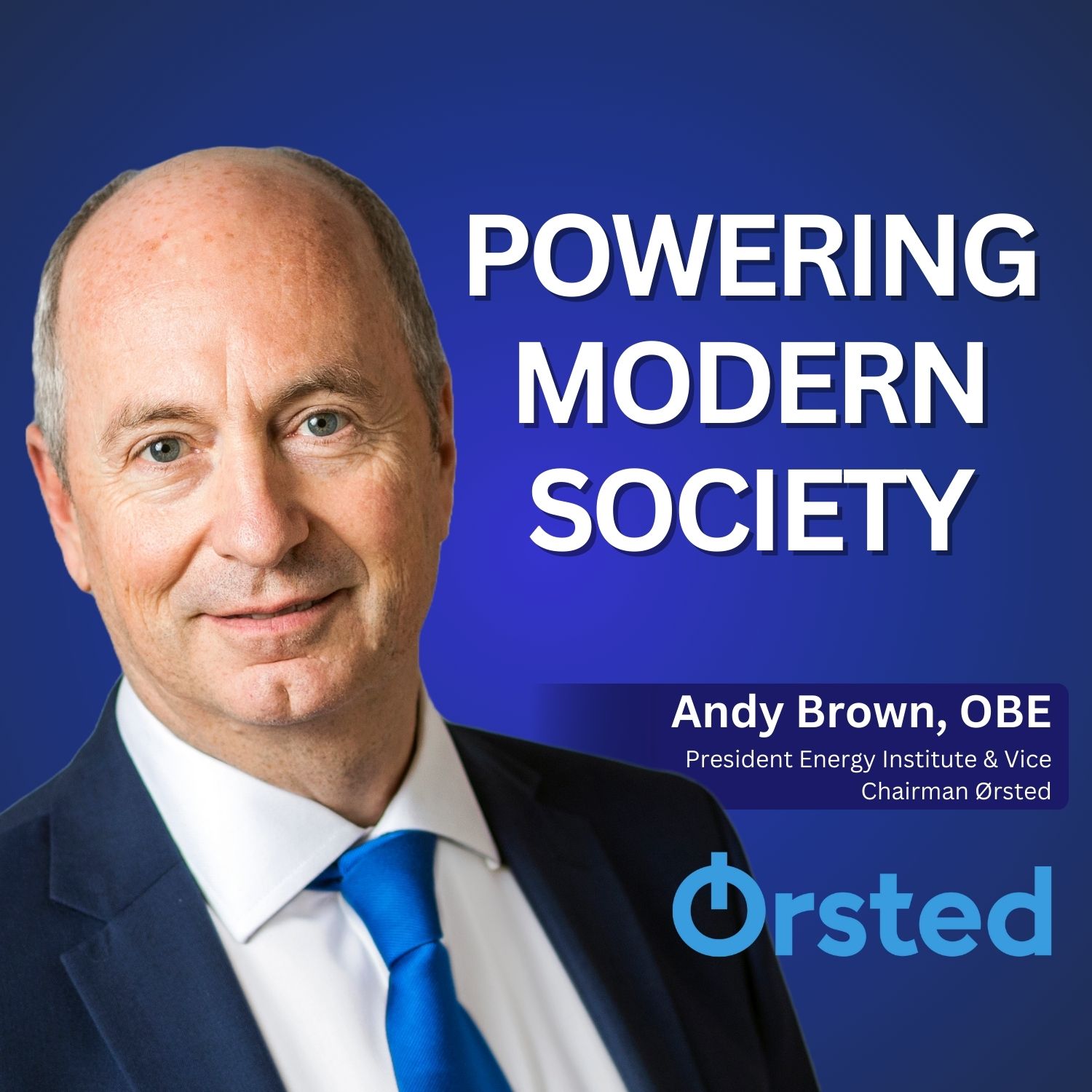
My guest today is Andy Brown, president of the Energy Institute and Vice Chairman of Oersted, one of the world's leading forces in offshore wind and a defining example of green transformation. At the Energy Institute. He oversees the statistical review of world energy, the benchmark that shows with unmatched clarity how the world is progressing toward net zero. At RSTED. He helps guide a company that transformed from one of Europe's most fossil fuel intensive utilities into a global renewable pioneer before RSTED. Andy spent thirty five years at Shell, leading major global operations and later serving as CEO of GALP Across these worlds. He became known for three transforming organizations, driving world class safety and developing talent, including Shelt's current CEO. And behind this global career is a human story and a guiding question at the heart of his How do we power modern society in the future? This is the conversation we enter today. Good morning, Andy.
- [02:02]
Andy Brown
Good morning.
- [02:04]
Zibilla Barden
Let's begin at the macro level. What story does the latest statistical review tell us about the state of the global energy system?
- [02:13]
Andy Brown
Well, what it says is that we have a thirst for energy. The global energy demand went up almost two percent, but every source of energy went up that hasn't happened since two thousand six. So we haven't tackled efficiency improvements. We are seeing fossil fuel growth and as a result we see co two growth, almost a percent increase in co two emissions. But there are underlying stories in the data set. Firstly, I think what we can say is, the key is to decarbonize electricity, electrify all you can, and then tackle the hard to abate sector. And I think the good news is that renewables grew by sixteen percent. That's nine times faster actually than energy growth in Europe. Nuclear hydra and wind are now the three largest sources of electricity. Gas comes forth. And secondly, the electrification is really starting to happen. Four point, two percent increase in electrification. I'm concerned that's about air conditioners and data centers and not so much on EV's and heat pumps, but it's the right trend. And the last thing is China. China's electricity grew six point, four percent. That's the equivalent of the whole Germany's electricity system growth in one year fifty-seven percent of the renewables. Installed in the world were in China and about two thirds of all the ev sales and of that. Electricity growth only ten percent was coal. So almost all of that growth was met by low carbon electricity. So I think those are for me the key themes. We haven't made a transition yet, we're in addition. But there are some really strong signs.
- [04:00]
An acceleration of renewables, electrification and particularly the role of China, that I think is quite exciting.
- [04:08]
Zibilla Barden
There were so many numbers now and so many things. You said, can we start with. You said very early on decarbonize electricity?
- [04:17]
Andy Brown
Yes.
- [04:18]
Zibilla Barden
Why is that of such importance?
- [04:21]
Andy Brown
Well, you know, I think, if you are going to imagine a zero carbon world, it's a it's a world that is very electrified and so in order to get to a zero carbon world, we need electricity, but we need green electricity. We need electricity that is generated by renewable sources. So that's why Decarbonizing electricity is so important. Electricity is only twenty percent of final. Energy use today. So it's you know, if we decarbonize all electricity that we have today, it only gets to so far we we've then got to electrify everything.
- [04:56]
Zibilla Barden
And you also mentioned briefly AI and quantum technologies that they take up a lot of electricity and China.
- [05:06]
So can I just briefly say China is certainly a place with one billion people and we keep on comparing it to tiny places like Germany. Isn't that a little unfair?
- [05:20]
Andy Brown
Well, it is a bit unfair. They have the scale, but I'll just give you another comparator. The electricity generation in China is the equivalent of America and Europe put together, but their GDP is not nearly as much as Europe and America put together, so in a GDP context, forget people, GDP context, it extraordinarily electrified versus America and Europe. So China itself is the highest co two emitter. China is burning more coal than the rest of the world put together. So China in itself is the problem, but it also could be the solution if these rates of change continue. So I see China not only as the place where predominantly green energy is being manufactured. You know, in terms of solar panels, in terms of winter batteries, they are by far in the way the largest producer, but also eighty percent of the rare Earths are processed in China and so they're such an important exporter to the world. But I think what's kind of interesting, they're now actually really picking up on the deployment. They've got a long, long way to go, they have a lot of issues to tackle. But for me that transition, because the Developed World transition a decade ago started to reduce its co two footprint. China is just on the verge now of peaking and then starting to decline on its co two emissions. That is really big news. As far as I'm concerned, coming back.
- [06:59]
Zibilla Barden
To the global energy trends, where do you see real progress?
- [07:03]
Andy Brown
Yeah, I mean so as I say, so I see real progress, Solar is the standout kind of star of the show. I think twenty eight increase in solar generation, twenty three and twenty four, so solar power rather than wind now is really picking up pace and that you know, that is very exciting and that's a lot of distributed solar and even in the developing world now being deployed, so I see solar clearly as as the one source of renewable energy that will take over from wind and will be the largest source of renewable energy. So for me, that's kind of really exciting.
- [07:46]
Zibilla Barden
If we look at the influence and the growth of AI and quantum technology, how do we power modern society now and in the future.
- [07:56]
Andy Brown
Yeah, a lot. There's been a lot of talk about data centers, the statistics on data centers. I mean, it's important because this emerged almost nowhere and by twenty thirty five it could be ten percent of the US electricity demand. But it's quite a US European specific story, so in terms of globally it will be three or four percent or something of global electricity in twenty thirty five. So it's important but not game changing actually the growth of air conditioners could well be taking more electricity from the system than data centers. So data centers are a new issue that need to be tackled that concentrated demand for electricity that requires major investments. There's as much being spent on data centers today as the whole oil and gas industry. So that's quite an interesting kind of thought, but data center important and knowledge and information handling is energy intensive and we just need to acknowledge that. But it'll have to be clean energy if we grow fossil fuels to satisfy that demand as a problem you gave.
- [09:07]
Zibilla Barden
A very interesting example you said, air conditioning will perhaps use up more energies and data centers in the future. So just looking at you and me, you said you are in Portugal right now, I'm in France, we both use air conditioning. I assume in summer we have to so.
- [09:31]
What does it mean for the citizens, for the individual.
- [09:35]
Andy Brown
Yeah, look so one of the consequences of global warming is that. And obviously, as people get wealthier, is that people will look to install air conditioners in the house. I mean, I think some of the projections that IA in Indonesia, I think fifteen percent of the houses have air conditioners today. They think by twenty thirty five it will be fifty percent. And so that's a massive increase in electricity demand in order. To cool people. So the whole issue of very hot cities of fatalities due to excessive heat becomes a bigger and bigger problem. And the one solution unfortunately is to put a machine on it, which is an air conditioner. And I think that is well, it's a reflection of people getting wealthier, but it's also a reflection of the world getting warmer. And I think that's a concern.
- [10:26]
Zibilla Barden
It's definitely in concern talking about concerns where do you see the political and economic headwinds not only just at the moment, but altogether.
- [10:39]
Andy Brown
I mean obviously, as I said there's some unstoppable trends we see in renewable metric, but I'm concerned is obviously, there are two things that happened. There's been a political wavering particularly led obviously by the US. But there's also been a change in the investment market in the capital markets. So in the capital markets companies are being less held to account for their energy transition plans than they were in twenty twenty one. So Shell and BP have all kind of almost abandoned their renewable portfolio. That's not because the leaders are just not thinking forward enough. It's because the capital market's telling them I just want returns go back to what you're good at. Whereas in twenty twenty one they're saying I'm not going to invest in you unless you transition. So that capital market has had a big impact the political, and particularly the rise of the right-wing policies that says. Either it's a hoax or it's not your problem, it's China's problem. I'll look after your way of life is quite concerning. And whereas I think us, because it's quite a progressive kind of economic culture, will transition, it's countries that look to the US leadership that may. Say US isn't doing it. We don't need to do it. And I think that For me is the concern so is it a bit.
- [12:11]
Zibilla Barden
Of a chain reaction?
- [12:13]
Andy Brown
Yeah, I mean, no, I think it is unfortunately something. And for me and we can talk about generation of electricity and the cheapest way to generate electricity is renewables. So I think most people kind of agree with that. But my concern is actually to do this transition. We need to go through a major infrastructure change and that infrastructure change requires one off significant costs, including the grid investment. Grid investments should be almost as high as generation investments and they're nowhere near at the moment. Otherwise you just won't be able to dispatch the renewables. But secondly, we have a whole infrastructure, whether it's ev charging, steel, manufacturer, cement, manufacture, shipping, aviation, all of these industrial sectors will have to transition and they will trans. Their transition will require extensive rebuilding of infrastructure which will cost the world. I mean, the estimator let's say four to five trillion a year instead of today on green energy. We spend two trillion a year. And that's politically expedient to say that's not our problem. We've delayed all that. We're not going to do all this, because it's too expensive and we have a cost of flipping crisis. So that for me is the big concern how you can you get through this one off infrastructure, transition change and still keep that political will to transition the economy to a new energy system.
- [13:54]
Zibilla Barden
From where I'm sitting. I think it's very much up to political will and rules and regulations and law. So my question would be, which stakeholders have not made the journey here?
- [14:11]
Andy Brown
Well, I think so you know we are in a global economic system and in a global economic system for your economies to thrive. They need to be competitive. So if you're competing against China and America and Europe and you still need to have competitive industries in order to compete in a global world, you have to make sure that you manage those costs and so it can be political will. But it's how do you do this and stay competitive because you can have all the political will and say we're going to spend all this money on our economy. But if it doesn't remain globally competitive, then that's going to be a problem. So it's how you manage that transition pace in order. Not to become uncompetitive. And it's not about the core cost of renewables, it's about the transition infrastructure cost and I. Do see a lot of politicians today are getting concerned about that issue and whether it's political will or it's just the reality of staying globally competitive that I think is really bothering them.
- [15:25]
Zibilla Barden
Yeah, however, you are the Vice Chairman of a Company. Who actually shows the world how to do better.
- [15:34]
Andy Brown
Yeah, so I'm not saying they shouldn't. I'm just saying this is the dilemma.
- [15:37]
Zibilla Barden
They face, yeah, but you, you and we need to talk now about ersted the company where you are wise chair and you came. In as a CEO briefly. So earthsted, for our listeners, is often held up as a textbook case actually from one of Europe's most coal-intensive utilities to a company where ninety-nine percent of energy. Generation is from renewables and emissions are down about ninety-eight percent versus the old baseline. So what do you do better?
- [16:11]
Andy Brown
I think so Orsted was a real pioneer. So in two thousand eight they decided to move to renewables in twenty seventeen they made the big step of selling their oil and gas production and change their name to Orsted from DONG. And what they did really really well is that they were able to lead the offshore wind industry. So offshore wind costs came down three quarters from twenty thirteen and twenty twenty three. So they kind of caught this declining costs the projects that they bid, the projects they built got cheaper. So when they delivered them, they were delivering a better return. Interest rates were low, they leveraged up their position, they borrowed and they sold down part of their asset to investors and pension funds and they got really good returns. So they had a business model which was on declining costs was on low interest rates that really really was very effective. It was quite extraordinary what they achieved. And you know at one point they were market cap in the end of twenty twenty was higher than. BTP. So you know, they've really kind of demonstrated what you can achieve. Economic conditions were very strong for them, but they were also extraordinarily capable in what they did. And they got a lot of support from the Danish government. And so you know it has been an amazing story now the world changed a bit since twenty twenty three. We'll perhaps talk. About that in a minute. So it was about catching that wave at the right moment and really doubling down on it. And everyone, all the oil companies tried to follow them because they saw this. And they, just none of them were able to match the performance that HORSE has created. And today our offshore wind project in Europe is more or less the same cost to build as the wholesale price electricity. So it's not subsidized, it was subsidized between twenty thirteen and let's say twenty twenty it was quite heavily subsidized to get the industry moving. It's now not subsidized to large extent, it's not subsidized. So I think it's a great story of a company taking the right choice for the environment, but also picking up an investment cycle that was extraordinarily strong.
- [18:39]
Zibilla Barden
We will go later a bit deeper into what leadership means, but The Leadership at Ersted at the Time. To take this massive risk to say we will change from one way to the other was a radical step. So what kind of leadership does it take to do that?
- [19:02]
Andy Brown
Yeah.
- [19:05]
It takes leaders that are bold, it takes leaders. I think the leaders still need to manage risks. So you know I think it's not just you know just go for it and hope it will be fine. It's understanding the environment you work in understanding your core capabilities, making sure that you are clearly the number one in this particular technology or industrial sector in the world. And so it's that I think part of the problem for other companies, particularly offshore wind sector is, they've dabbled in it. They've kind of done a bit, but it's not their core. So for Austin, what was so powerful is that made it their core and they became really good at it. So that's it's you know that is. That's kind of leadership that you know, you go both both feet first into something, but I don't think it's. And I, you know we might touch on that. It's not reckless you have to I see a lot of people that are trying to unlock some very big, particularly renewable fuel projects without really understanding the complexity of what they want to build. And I don't think that's helpful, because when that project fails, then everyone says well Hydrogen is no good anymore. That's the example. And I think there's there's something about going in with your eyes open but making sure you're better than anyone else and if the world wants a commodity like offshore wind and you're better than anyone else, you will make a good return because you will lead that industry.
- [20:41]
Zibilla Barden
Andy you mentioned which I think is probably one of the most important topics. Complexity.
- [20:49]
How do you manage the complexity today?
- [20:54]
Andy Brown
I'm going to give a bit of a longer answer. So what happened when I joined the board is in twenty twenty three We started to see problems in our US projects. Supply chain had tightened, inflation started hitting and we had a situation with the regulatory complexity of the US that the projects became more expensive, incredible instead are less expensive and as a result not executable. And we had to terminate this project called oceanwid one it led to a four billion dollars write off because everything had. Been getting cheaper. They were committing early, they were going ahead because it was always successful to do that before when costs were coming down. But at this moment costs were going up and they committed too early the project wasn't executable, they had to terminate it. So what it taught us and I was drafted in at that point from the board to be the COO because of understanding that industries go through cycles, understanding, commitment, control, risk management. So this is a little bit to what I said about. Go in with your eyes open, understand the risks, understand the world can change and so that an ability to manage your risk and to make decisions in a very kind of staged way is so important for these enormous infrastructure projects. And I think also learned that lesson that moment and I did something to change the operating model, how they deliver projects to actually make it more resilient.
- [22:28]
Zibilla Barden
How did you?
- [22:28]
Andy Brown
But these are really big projects. How do I do that? I was the COO and I had a mandate to change the project operating model. So I put a team together of some very young high potential individuals and worked. With them on quite clearly defining.
- [22:45]
A better accountability and how they were delivering projects, stronger focus on the supply chain and dealing with our suppliers. But most importantly this stage gate commitment, control and risk management to make sure that when they took decisions and said we're going to start to invest now and award our big contracts, everything all lights were green, because if you don't do that and the project becomes non executable, it's very very expensive to extract yourself. So we put that in place now. Also it's much more resilient. It still has a massive US portfolio issue in terms of finishing the projects being built there, but but we might talk about that because that's the latest issue that Allsted has really navigated well, but has been actually has tarnished its impeccable story after twenty twenty three in how the US has become very difficult for them to execute their offshore wind projects.
- [23:50]
Zibilla Barden
You said at the beginning that RSTED enjoyed when they changed the support of the Danish government. Is that still the case?
- [23:58]
Andy Brown
Yeah, so The Allstad is fifty point one percent owned by the. Danish government and the Danish government is one of the most enlightened governments in Europe. And actually it's one of the best societies I've seen in Europe. So there's something very special about how the Danes manage their country and their industries and they have supported Orsted through this journey. And I alluded to the fact that we know the US projects had become an. Issue, but we had particularly two projects, Sunrise and Revolution, that we are building. Revolution is kind of eighty-five percent finished now. And Sunrise is about forty percent. But because of the US project, because of the stop work order that went on Equinox project Sunrise, we couldn't sell down and we couldn't project finance. And so the Credit Agency said you need to reduce your debt. We had one hundred percent stake in Sunrise and we were continuing to build this project. And as I say, it's very hard to stop and then pay off all the all the vendors. So we had to raise capital. We had to raise nine billion dollars in an equity raise that meant the Danish government had to come up with four and a half billion dollars and they did, they supported us and you know, we're now in a much stronger credit position or steady's delivering all these projects. We have to get through a stop work order. We have on. Our Revolution project in the US, but generally it's in a much stronger place. And thanks to the Danish government supporting us through what has been a difficult few months for Orsted.
- [25:33]
Zibilla Barden
Because we talk now about the Danish government. Do you think it needs a multi stakeholder approach to get sinks? Really done?
- [25:43]
Andy Brown
Yeah, no, I think particularly these new industries, particularly offshore wind is extraordinarily capitally intensive and the timelines for the revenue stream are.
- [25:57]
Thirty five years and more. So to invest in these things, you need a very strong regulatory support and I said, electricity can be delivered at competitive prices, But in order to invest, let's say, haunty three in the UK, it's eight billion pounds to build, it's three gigawatts. When it's actually fully wind's blowing, it's the same as the very large nuclear plants being built in the UK, but eight billion pounds is a lot for a company, even of all state size to invest in. And the only way you can invest in that in that way is to have a line of sight to your revenue stream. You can't go on a kind of merchant basis and say I hope it will be okay, that's too high a risk to take. And so you know the CFD frameworks that the UK. Offers, this is contract for difference where they offer a fifteen year fixed amount for the electricity is the kind of incentive that creates a bankable project. And Continental Europe has kind of woken up to the fact that actually getting people asking people to build offshore wind farms and just expose them to the merchant market is not enough. They have to provide some stability. So Denmark's changing Netherlands are changing Germany's looking to address it as well, because the merchant market for electricity is not yet in a mature place where you can get long-term PPAs of the size. That you'll need to build these very large projects.
- [27:36]
Zibilla Barden
Yeah, that was very insightful. Still, we have to if we talk about the transformation, we also have to talk about carbon capture, because it becomes more and more important. And I read that the IPCC suggests we may need to remove up to ten billion tons of co-two annually by twenty-fifty to reach net. Zero from your point of view. How likely is that to happen?
- [28:10]
Andy Brown
Well, unfortunately, it's unlikely, I've been quite heavily involved in CCS projects, particularly in my time in Shell, but also in Orsted. So Allstead is doing, I think something remarkable at the moment. They have two gigawatts of biofuel energy in Denmark. In nine plants on two of those plants they're installing carbon capture projects and the co-two will then be. Liquefied and injected in Norway in the Northern Lights project. It's an amazing chain and it means that this biofuel project will be actually negative CO two. So the Biofuel grows capture the power fuel, make electricity, but then sequester all the CO two. So yeah, that's that's I think kind of groundbreaking in its concept. It's a negative CO two. And we, you know, we get really good CO two credits from both from the Danish government and from Microsoft, who are buying those credits, so you can make an economic project under that. But it needed Danish government support and it needed a company like Microsoft that was looking for this kind of quality of credit in order to make it work. And without a global CO two price, it's going to be hard to see the amount of ccs that we need. In my kind of experience you need probably one hundred fifty to two hundred euros per tonne kind of co-two price to make carbon. Capture and storage more ubiquitous. Which is the kind of economic signal you need for meeting the ambitions that the ten gigatons you talked about. But I don't see any global intent to introduce a global CO two price in Europe. You've got reasonable CO two prices. They need to probably double in order to make CCS more ubiquitous. But we're starting on that journey and there are more projects now than there were, but not nearly enough.
- [30:21]
Zibilla Barden
Andy okay, I wanted to go actually with you into the global CO two price, but before you said at the beginning you liquidize the co-two and you ship. It with the Northern lights, can you just go a little deeper into that?
- [30:41]
Andy Brown
All right. So and I was I was involved when I was in Shaolin in the Northern Lights project. So it's a project the norwegian government with the support of Equinor has put together, which essentially takes an old platform and reservoir offshore in Norway and so allows you then to dispose of the co-two back in the reservoirs offshore, but to get it there, you either need a gas pipeline or you need. To get it. And the choice they've taken is to you can actually liquefy CO two quite easily, but you liquefy the CO two and then and then inject it offshore into the reservoir and it will stay there. You can obviously transport CO two in a liquid CO two ship under chilled condition and some pressure, CO two becomes a liquid. So that's the way of transporting. It's quite an expensive route. Most other CCS projects use compressed CO two which you then inject back into the reservoirs. But it's finding the right reservoirs that have the capacity to take the co-two and linking them up to the sources of co-two that is one. Of the big challenges.
- [31:56]
Zibilla Barden
And you found one two point six kilometers below. The seabed in Norway. Is that right?
- [32:03]
Andy Brown
Yeah, I don't know exactly, it's dead, but it's yeah. But I mean, look, I think the North Sea is an amazing sink for CO two. There are some a lot of a lot of opportunities, You know, we were, I wouldn't show we were just about to start building a CCS project when I was. In shell in Peter Head in northern Scotland, which would capture the CO two from gas power plant and inject it into the the abandoned Goldeneye project just offshore. The pipeline was in place, everything was in place. The government officers had offered us a subsidy and suddenly, just before we started building, the government said no, there's no subsidy view. And so we had to abandon it. And you know that for me that type of flip flopping of government support is so damaging, because it cost us a lot of money and we didn't obviously do the project, so it was wasted effort, so those are the kind of things that need to be put in place. It's a bit like offshore wind. How do you get the cost curve? How do we get the acceleration of that? You will need regulatory support. But if you look at the I know the UK quite well, because I'm obviously a UK citizen, but the issue in the UK now is, you have a government that's promising lower electricity prices and it is doing some CCS pro the track one CCS projects are going ahead, but it will increase electricity prices and then they get accused of not meeting their electoral mandate and so they kind of have their hands tied a bit on the pace that they can go because of the general public and political willingness to pay what it will take to accelerate some of these technologies.
- [33:44]
Zibilla Barden
And listening to your Shell and ersted example. How do you maintain purpose under such a pressure.
- [33:53]
Andy Brown
Yeah, so I, you know, I think I've been amazed by the people of Austere. They are so dedicated their mission in a mission to make a world entirely run on green energy and I think that drives and it drives the attraction of great talent. So I think. It's a deep-rooted conviction and purpose. And there's a lot of evidence the purpose drum companies do better than ones that are just purely there for economic gain. But all companies have cultures and I find this whole issue of company culture a fascinating area. So this very strong culture of doing something to save the climate is very deeply rooted in Northstead. Shell had a deep culture of community and care and people development, which was also quite strong I found so it's about understanding and developing culture. Changing culture in a company is much more difficult, changing strategy and so it's how do you consistently build the purpose and culture that you're looking for, Particularly if you have an ambition to bring on green energy to have an impact in the world that you can be really proud of.
- [35:11]
Zibilla Barden
Well, we do know that you have led some of the world's largest and most complex energy projects. So the Pearl GTL project involving no less than fifty four thousand workers tell us about it.
- [35:30]
Andy Brown
Well, yeah, I mean, that was the most. We had. Probably one hundred fifty thousand people came through the project one stage, but the most we had working at one point is fifty four. It was a project. You know, I was given the task of bringing Shell into GATA and applying some specific technology called gas liquid technology. It's actually based on a German Fisher Shops process. So it was a way of taking natural gas, which gatteries have abundant natural gas and turning into very high quality lubricants and clean. Liquid fuels. So this project was extraordinarily complex and we negotiated our entry to the country. And the Gafferies basically said no, we want you to build a really big one. So we ended up building project that cost us eighteen billion dollars to. Build. It was one hundred percent shell investment. So at that point Shell was actually kind of risking its existence on this project being a success. You know, even the company size of Shell actually needed this to work and there were three and a half thousand patents on this project. Unique shell patent. So you know setting about how we going to deliver this highly complex project requiring enormous amount of.
- [36:53]
Manpower of materials from right around the world, from a kind of global supply chain right around the world was was quite an interesting challenge, but we fundamentally did it by building strong teamwork, strong teamwork obviously in the Shell team, but also with all the companies that worked with us, all the contractors. And we unified those teams around the concept of care and safety for people. So no one actually would say I don't want to care for people, I don't want them to be safe. So it actually really bound us how we were going to put welfare systems in place, put safety management systems in place, that actually meant that we really valued every person that came onto our side and we broke safety records, global safety records. We had much higher quality than any other project that was being built at the time and much higher productivity, because actually we became quite people centric, care centric and it was an amazing experience. So I kind of I really took a lot out of that into terms of what you can get back if you really care for people.
- [37:57]
Zibilla Barden
And I think it was only fair then that you have been awarded an OBE for your contributions. Is that right?
- [38:05]
Andy Brown
Well, me and the team. So yes.
- [38:08]
I played a role in that, but yeah, it was, it was just great thing.
- [38:13]
Zibilla Barden
So when you look at those massive projects.
- [38:18]
I read that you have a degree in engineering, how did that shape your approach?
- [38:24]
Andy Brown
Well, you know, I think as an engineer, I think as an engineer, always an engineer.
- [38:31]
So being fascinated in what will it take to build something and applying your kind of engineering insights to it, making decision engineering decisions on what couldn't shouldn't work. I think is very rewarding. So as you might imagine, you know, two thousand, this is between two thousand four and two thousand six, we started building twenty eleven, we finished going on site and seeing this enormous engineering marvel take shape. Yeah, was probably the most amazing experience in my life.
- [39:10]
Zibilla Barden
You did this massive, massive project you got awarded and yet you move to another company and you move to Portugal to do the energy transition at GALP.
- [39:24]
Andy Brown
Yeah, well, look, I retired from Shell. Twenty nineteen, I was fifty seven, so I still quite young, but I had some medical issues and I decided to take it easier. And then you know some of rings said, look we have a position as a CEO in a European country and you say I'm not really interested in that and then they say it's in Portugal. You say, okay, I'm really interested in that. So I had been retired from Shell for about a year and I came to GALP. And one of the reasons I was attracted to come to GALP, which is basically, it's an oil and gas company with some renewables. But the mandate was, it was the end of twenty twenty, the mandate was to transition this company to become a green energy new energy, renewable energy company and so that was kind of exciting following in the sort of allstate footsteps and I think Portugal obviously the biggest energy company is EDP, I mean GALPIS, the third largest company in Portugal. So it's quite a big company still. But you know, we then charted out how we were building renewable portfolio, how we would get some Greenfield project, Green fuel projects and hydrogen projects. We also got a joint venture with Northville Northwelt, the battery manufacturer, which unfortunately failed to do a lithium conversion facility. So we did a whole number of things to start building this renewable portfolio and it was very exciting. The people in Portugal were amazing, they are such such good leaders engineers, very hardworking and today I mean GALP is building almost finished one hundred megawatt electrolyzer and you know. A very large kind of renewable aviation fuel project, HVA project. So you know we made some progress. Unfortunately the company has shifted a bit back to Orland gas since I've left. There, but it was amazing. How again back to your point about purpose, how you could align people around this vision to work on new projects that will really have an impact to save the climate that really motivated people to actually do extraordinary things. So it was a great experience, yeah.
- [41:50]
Zibilla Barden
So how do you align people behind the vision?
- [41:54]
Andy Brown
Well, I mean we came over purpose, it was let's regenerate the future together.
- [41:59]
You know, I think aligning, I think people buy into the mission what you've got to do is get the most out of people. And so it was a lot about unlocking the potential of the of the Portuguese talent which means empowering people, giving them a purpose, delegating authorities, allowing them to take on accountability. And I think people thrive in that environment. And I, you know, I, i think Northern Europe probably companies have better empowerment processes. I mean you see it in Austria, you see it in other companies, but bringing that into Galp, which was kind of new to Galp to empower people to make decisions, was kind of unleashed this latent potential that was in the people of Galp. It was it was a great experience.
- [42:47]
Zibilla Barden
I said at the beginning that you have become known for three things and one of them is developing talent. Is that something that just happened? Something you cultivated what happened because we do know that one of the talents is now Shell's current CEO. So talk us through that a bit.
- [43:14]
Andy Brown
You know my theory of when you're leader in a company, you can make the company financially stronger, you can build, you know good high return assets and all that stuff. But the most important thing you leave behind is people are developing the talent, either recruiting the right talent or developing the right talent with the company, in order for that company to be stronger when you leave it than when you arrive in. And so that for me is one of the most crucial roles of leaders. And so you know the story of Wild Siwan. I was in it was nineteen ninety nine, he was twenty five, I was thirty seven and I was his boss. Well, I had, I was running quite a big team and he came and he offered his resignation. I said, well, why are you resigned? He said, I'm going to go to an NBA in Harvard. I said what I didn't know how good this guy was at that point and I soon found out how good he was and convinced him to say. And over the next twenty years I worked. With him in many locations and then I was very delighted for him to take over from me. When I left Charlotte in twenty nineteen, one of the reasons I left then was to give him an opportunity to shine further. And when he became CEO, that was a very proud moment. But you know, I kind of that probably is one of the proudest things I've ever done is is is to you know to be part of his development. And but you know, I, I always think you've got to look for talent in their mid thirties in any company, because they can be hidden And once you discover them, you expose them, you broaden them, you accelerate them so that by the time they're fifty, they can take on. You know, senior leadership roles too often companies sit on their talent and don't unlock the potential that they have within. And I'm a great believer in those processes, really identifying the people that can make a difference and you know also giving them the sense of their role to do something special and to have an impact. I mean, while actually you had an interview from the Times, he said, he said, oh, i antibarise my mentor, he saw more in me than I saw in myself. So that's something I think I always kind of think about that. You know, you can sometimes see talented people they don't recognize they've got and so you just have to provide the opportunity for them to unlock that potential.
- [45:52]
Zibilla Barden
Yeah, And when that happens to you, this is a great moment for the mentor and for the mentee isn't it.
- [45:58]
Andy Brown
Yeah, yeah, yeah, yeah.
- [46:00]
Zibilla Barden
If you look at today's uncertainty and in the middle of transformation and even we want to go from short term thinking to long term thinking, but then we kind of don't do. We need different kind of leaders now do we need the same leaders. What are the core qualities?
- [46:24]
Andy Brown
Skills are transferable, so you know, I was put on a fossil fuel and I put only new energies sometimes. There's a belief that somehow you know if someone works in fossil fuel, they're tainted and that therefore they can't be a benefit in the new energy system and that's wrong. I think the skill sets are extraordinarily transferable. And actually essential that we learn the lessons that we've learned in fossil fuels and apply them to new energies. You know, I think leadership. I think leadership in any sector is all about how do you get the most out of the organizations you're working for? How do you create that inspiring vision of a future? You know, I think undoubtedly it's easier to create a compelling purpose around saving the climate than is necessarily just to get a good return. And it's actually interesting talking a bit about Shell. Shell under Ben Van Burden and it was what the capital markets wanted was very focused on transitioning the company to be a lot lower co two company. Now the capital markets changed. We also saw Shell move away from that mandate to transition past and you saw a lot of people. I mean, it was, it was kind of easy for the company to change the strategy, but it's much more difficult to explain to the people what they had been personally convinced about in their role in helping chill. Transition wasn't today the focus and I, you know, I think that's so it's about how do you so when you want a company to change, convincing everyone, aligning them, empowering them to make a difference is crucial. Changing cause is really tricky. Particularly if you're going from a transition kind of strategy to. One that is more back to the fossil fuels and I think Shell has struggled in the last few years to actually capture that and convince everyone. I think they probably are there now and we see BP go through that same storyline now I think with the new chair and the new CEO actually obviously focusing more on returns. So it's a lot about. It's a lot about you know, obviously creating that vision, unlocking the talent, empowering people to make a difference and letting them. There's something about giving people a mandate to think out of the box. So often I say to young people. It's not what you're asked to do that will define you, you have to do that excellently. Anyway, it's what you do you're not asked to do in order to deliver something extra. You know, take on a new opportunity, perhaps a green opportunity to make a difference. So it's empowering people to take that risk I think is so important in those environments.
- [49:26]
Zibilla Barden
I agree with you. And when you, when you take that risk, how do you find support? We talk a lot about obstacles, but how do you find support at that moment?
- [49:38]
Andy Brown
Yeah, I think when you're delivering anything large and it was a bit kind of going back to my own memories of getting into Qatar and designing and building the project. It's so much about broadening your team. It's about communicating, it's about being open. It's it's about keeping everyone. You know a lot of people think information is power. No, it's about allowing everyone to understand what mission they're on. And I think there's something about being very open about what isn't working well. So one of the things on that pearl. GTL Project was all of the CEO's of all the contractors building this project. Global CEO's I'd bring in six times and I. Explained to them exactly what was happening to the project, what was going well, what wasn't going so well. And they became a team. So if it went from a transactional relationship where you know I was the client. There was a contraction I paid them to. They were part of the team that were going to do this amazing thing. So it's how do you create that sense of belonging to a team in as wide a group of people as you can in order to achieve your target. So I think that's such an important part of delivering extraordinary things.
- [50:57]
Zibilla Barden
Andy from what I hear you seem to inspire a lot of people, but what about yourself? What's your compass? What inspires you?
- [51:07]
Andy Brown
Well, you know, so I'm more driven by. Can I have an impact than am I going to create X multiples for some kind. Of business? Can I help talent? That's you know? And my impact in the moment is, how can I help drive an energy transition? How can I, you know, I'm kind of long time retired from a kind of full time job, but still, yeah, I've got a lot of energy to have some kind of impact. And so you know, I think we all, we all have different things to bring to the table. I lived in eight countries. So I kind of have a global kind of sense of the different cultures, global perspective. And I think obviously having time in fossil fuels, having time now in renewable energy, I kind of get also a sense of that spectrum of different ways to deliver energy. I think energy is the lifeblood of the world, right? So energy and you look in history, it's only when energy became more accessible, did the global economies grow. So it is such an important part of our world to make sure that energy is affordable accessible, most important, sustainable is one of the most crucial challenges world faces. So can I have an impact on that. Can I provide my experience which I've been so lucky to develop over the decades to bring it to bear on how we could better create a better energy system for future generations. That's what drives me?
- [52:44]
Zibilla Barden
You just mentioned in your answer to just on person saying that you lived in eight different countries.
- [52:55]
Andy Brown
Yes.
- [52:55]
Zibilla Barden
So from what I understood you are married and you got four children. How? Yes, how does that work? How do you bring it all together?
- [53:07]
Andy Brown
Well, it only works because I've got an amazing partner, really?
- [53:12]
Who's carried the family through all this journey? And I've lived in eight countries. Yeah, for three years or more in each month. And we had four children, each born in a different country. We have four grandchildren now. So you know, it's been a very rich and rewarding experience in terms of the family, but it's been one where we have moved a lot and which means I have an extraordinary wife that has just done such an amazing job in supporting me through that journey forty years I've been married, Sir, congratulations.
- [53:45]
Zibilla Barden
Also of course we have to mention that you had a heart problem, which is probably a given with your lifestyle. How did you do well?
- [53:57]
Andy Brown
Interesting. Yeah, I mean, I, yeah, I had five heart bypasses in two thousand.
- [54:03]
Twenty fourteen, so it's now almost sixteen years ago and I, you know, I have to say anyone that has had heart surgery, or? And I didn't suffer after tank. I was lucky enough to spot that I was not feeling great. And you know, girls checked up and they said that week they they operated and it wasn't because I smoked or it wasn't because of high cholesterol. It was because of stress. So I, you know, I've told all sorts of wonderful things about what I've done, but I just don't manage stress very well. Perhaps I take things too personally. So as a result you know, I had to have this major heart surgery surgery, which is one of the reasons I stayed on for five years in Shell before I retired, but I knew I couldn't do it forever. It was, it was quite intense, but it really grounds you gosh, you know when you have something like that and you almost die, you realize actually what's important at that point. Certainly family and friends are much much more important than work and it I think it grounds you. It makes you much more humble. And I, you know, I got enormous support. I've got enormous support from my boss who was Ben Van Burden, CEO of Shell at the time, who I just competed. He had competed me to become the CEO of Shell. So in some ways I was kind of going through a bit of a disappointment, not getting that job, but he supported me through it. And within eight weeks I was fully back to work. So you know, it's quite a It's an amazing bit of medical technology to be able to do that and to be back to work relatively quickly.
- [55:41]
Zibilla Barden
Andy, we started with the macro level and I would. Like to close it also on the macro level, where do we go from here?
- [55:50]
Andy Brown
Yeah, I mentioned something earlier about energy being the lifeblood of the world and I think if you look at history, look at last two hundred years global economy has grown one hundred times, energy demand has gone up three hundred times and for the eighteen hundred years before that almost nothing happened so energy is so important for the world and as we did mention data centers there you know. Knowledge is also energy. So it's going to be essential that we create a sustainable energy system and everyone thinks in decades. And I think we should think in centuries about what this looks like. We will ultimately have to retool the energy system of the world. We have the ingredients, we have renewable energy and abundance that can power the world. We do need electrifying, we need EV's, we need heat pumps and we need to decarbonize the hard to abay sectors. I think we'll get there, I don't think we'll get there fast enough to limit global warming to let's say anything below two c. It's going to be, I guess at best in the low two point something and that. Will require a globe joined up global drive. It'll be a reskilling. You know, I talked about thirty million additional people. And needed a new energies. We're going to have to rebuild a global consensus.
- [57:21]
I awarded the Presence award to Secretary John Kerry last year as President. That's just such a great moment. I mean, he with Obama brought a global consensus together on what needs to be done in Paris in twenty fifteen. We need somehow to get back on trip and create a global consensus because we don't. We're not going to move fast enough and we're going to see significant climate change and weather effects. A lot of people will suffer so we can't afford that. So yeah, we all need to do what we can to drive the individual technologies. But also I think to create that consequences all over again. COP in Brazil I have to say was disappointing its output. And I think that process was one of our big hopes for a global consensus and we're struggling so we can all do our part. But I think we do need to see change happen. I'm concerned that change will only happen when it becomes so desperate for people. There are no other alternatives.
- [58:29]
Is possibly going to be too late for a lot of people. So you know what can I do? What can you do? What can we all do? You do a great job in your podcast and getting the message across in trying to spread.
- [58:44]
What has been successful? Things that have been done. But we just need to accelerate all those things.
- [58:50]
Zibilla Barden
I'm so happy. You said something really rarely Hear from a leader. You said we should think in centuries. It was wonderful, it was a great hour and I wish you absolutely all the best for whatever comes Next, or where are you now and what it takes And I hope our listeners can take a lot away with them. Thank you very much.
- [59:20]
Andy Brown
Thank you. Thank you for the conversation.
- [59:23]
Zibilla Barden
Thank you for listening to De Gorser Neustadt with Zabilla Barton. Join us again when we next explore the people and the ideas reshaping our world. For more information please visit zabilabarden dot com.