Loading summary
Transcript71 lines
- [00:00]
Runa Ray
I think we need an entire revolution when it comes to fashion. I think we need a lot of transparency within the fashion industry and supply chain and also getting the message across, not just to designers, but also the consumers.
- [00:16]
Sibylla Barton
Welcome to the special English edition of Der Grosse Neustadt, a German podcast series by Sibylla Barton in which she talks to pioneering leaders who, inspired by the World Economic Forum's Great Reset initiative, create revolutionary projects that actually do make our world smarter, greener and fairer.
- [00:40]
Narrator
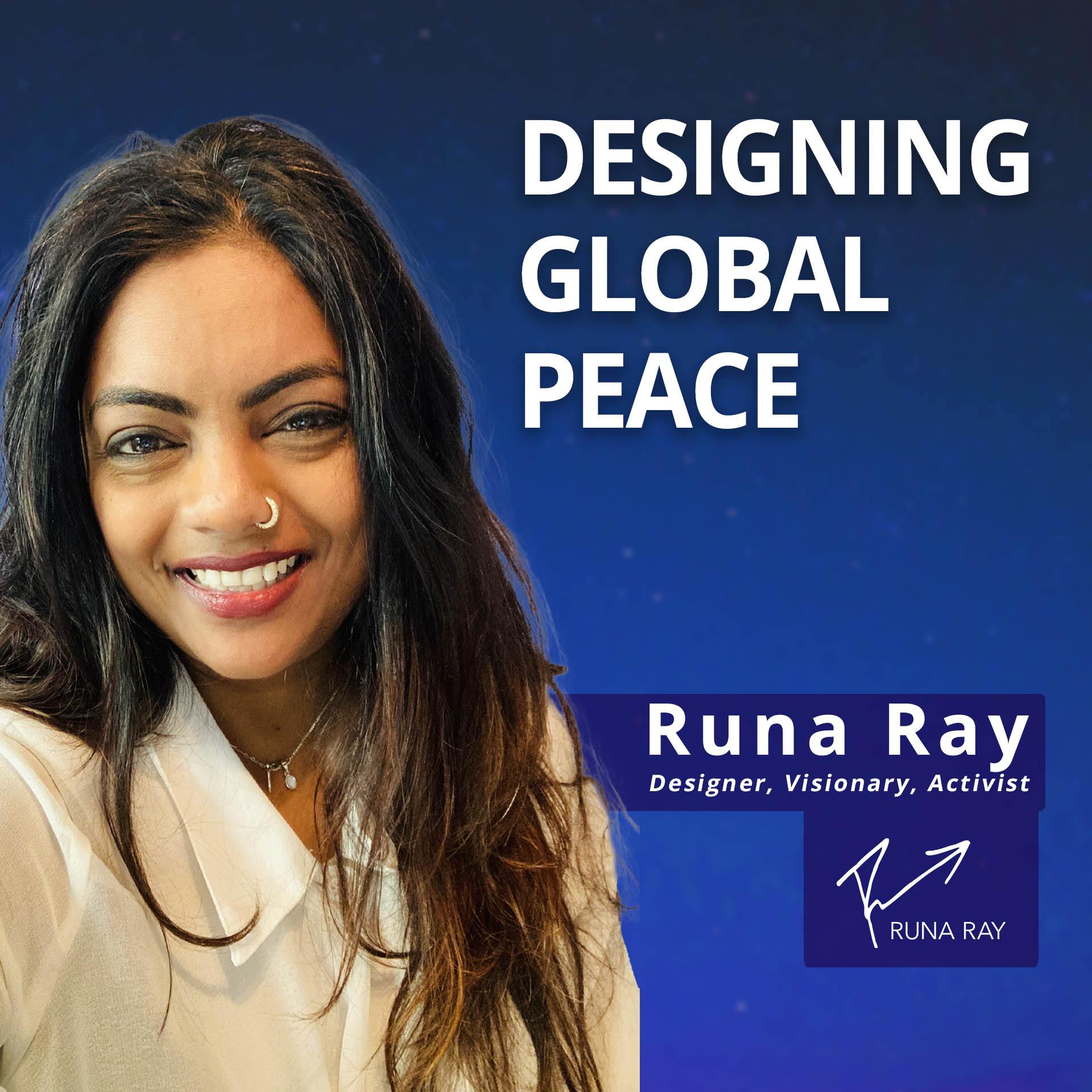
What if fashion could stitch together peace, sustainability and global transformation? Today we meet Runa Ray, a designer, visionary and environmentalist who has turned couture into a powerful tool for change. From the Global Peace Flag initiative endorsed by the United nations and described as the world's largest movement for peace and climate action, to the catwalk of the Monte Carlo Fashion Week, the Met Gala and the Grammy Awards, Runa has redefined the very purpose of fashion. Born in Bangalore, India, and shaped by a journey that spans the creative halls of Dior and Galliano in Paris to sustainable innovation on a world stage, Runa's work is a testament to the belief that luxury and responsibility can coexist. She is pioneering algae based textiles, zero stitch techniques and plant based dyes while inspiring communities to embrace peace and climate action. A very warm welcome to you, Runa. So much success. I would like to start with your Global Peace Flag initiative.
- [01:57]
Runa Ray
Thank you so much, Sibel, for having me on your podcast and discussing these really important issues that are pertinent at this moment and for the world. And thank you for mentioning the Global Peace Flag, which is an initiative that is really close to my heart. I am a fashion designer who turned environmentalist and I come from an industry where fashion's waste is something which is not very uncommon. So if you look at fashion's waste, every garment that we wear at one point was prototyped and it was prototyped in muslin. And muslin comes from cotton. And we've always heard about how cotton can be a thirsty crop, how much of pesticide went to, you know, the making of the cotton crop, the dying of the fabric and then processing it and creating it into textile and then finally into garments. But what happens to these prototypes? They all end up in the landfill because you can't make a garment out of a half prototype. So what I did was I decided that fashion had to have a voice. I mean, fashion has a huge outreach anyways. People love fashion. People love to go to shows. There's something about the fashion industry which has the glamour and the pull towards It. So fashion can also have a purpose. So I decided that I was going to use these prototypes and give fashion a voice, not just when it came to sustainability, but also for peace. Now, if you ask me as to how I started the Global Peace Flag, this started off during COVID So during COVID when we were all at home and, you know, the wars seized and people, unfortunately, all over the world were dying, we saw that humanity stepped up. People across borders were helping each other. There were vaccines that were flying across. People were manufacturing vaccines. It didn't matter which color, ethnicity, religion you came from. The hospitals were full. The doctors were helping people. So where did this beauty of humanity come from which we didn't see? That was when I decided that the world was actually a lovely place to live in. And I decided to come up with the concept of the Global Peace Flag. So using Passions Waste, which were the prototypes, I had them made into canvases, and I had schools and the youth write and draw upon it as to what they would like to see in the world in the face of peace and in terms of unity and harmony. So this project grew. It started connecting 194 countries. It was endorsed by the United Nations. We had countries which were in war with each other contributing towards the peace flag, where, for example, you had students from India, you had students from Pakistan coming together and writing about peace. Now, the beauty about this peace flag is that it doesn't matter which social standing you come from, which color, ethnicity, religion, which country you're from. It's all about being sewn together on this one fabric. And this fabric extends as a flag. And we are looking at wrapping the world with peace. So your canvas could probably be with somebody who you would, you know, like somebody in prison, for example, but that person is reformed, and that person wants to contribute towards peace. So it's the great equalizer. It connects everybody together. And that was when I started the Global Peace Flag, and that's what inspired the project.
- [05:52]
Narrator
Yeah. So you started in 2020, and how much progress did you make?
- [05:59]
Runa Ray
So now we have over 100,000 canvases that have been submitted. We had the recent exhibition at the United nations, which was. Which was to be for a month, but got extended for two months. The project basically took over the entire facade on the inside of the UN which has the portraits of the Secretary General. And now we are looking at taking it to the White House next year during the Memorial Day weekend. The reason we are doing it during the Memorial Day weekend is because we're trying to turn the flip the Coin about war and create something which is peaceful about it. And going forward, working with religions around the world, the faiths around the world who are coming together for peace and for climate justice, we're going to be working with them and take the flag basically to various religious spots. And looking at the Vatican also.
- [06:59]
Narrator
Wow, that's fantastic. If we look at all these platforms you work on to amplify your message. What we said at the introduction, you've been at the Met gala in Monaco and so on. So you brought the sustainability into the spotlight, combining it with peace. How come you run into so many open doors?
- [07:32]
Runa Ray
Hibel, you know, there is something very interesting in the garments that we wear. We don't know who's made it, we don't know the faces behind it. The industry is vast, but we still like to wear the clothes that we purchase. I'll give you an example. When I had my store in India, I have. And India has people of different faiths, right, Working together and in harmony. I would probably have a man who is from Islam who would have done the embroidery on this wedding gown. I would have a tailor who comes from the Hindu religion who would have, you know, put it together and probably the person who cut the entire fabric would have been a Christian. So you have three different religions coming together on this one wedding garment that is going to be by worn by this woman on her most special day. Now, this is something which really stuck with me and I was like, when we wear clothes, we love what we wear. Why don't we love the people who also make it? That is when I decided to infuse the concept of humanity, peace and sustainability. When we talk about the Prince Albert Foundation, I absolutely love the foundation for what they do. It is not just what they're doing now, but it is intergenerational. We are talking about the prince's father, his father, the family coming together, taking in artifacts from the ocean, deciding to put them together, showing them to the scientists and telling them what the creatures of the deep were educating people. And now what the foundation is doing is immense. The projects that they fund, the restoration projects that they take care of, and also educating the people about what it is when it comes to not just the oceans, but also indigenous communities bringing people together through the Greenshift Festival, using art, using philosophy. I think it's fantastic. So for me, as a fashion environmentalist, to partner with these organizations is not just trying to get my work across, but it's also trying to support them in their work and hopefully that we can collectively Make a difference. And the similar thing with the Met Gala. The Met Gala is renowned for the celebrities stopping by at the red carpet. But like I said, fashion needs to have a voice and a reason behind it. So for me to use these platforms was not just for the celebrity to look good, but also for people to question why she was wearing this particular garment. In this case, it was a him. It was Stephen Cole from the Council of Fashion Designers of America, where I designed his entire tuxedo and used the waist crystals from Swarovski, where we did the entire jacket in Braille. And that spoke about the concept of giving from Khalil Gibran. So when people looked at him, people said, wow, that's a beautiful dinner jacket. And it had all these crystals that were running down in stripes. But it gave him an opportunity to speak about how his old tuxedo was repurposed, how Swarovski donated the crystals that they didn't want to use, and how it was made into a garment that was taken at the metal. And that I was hoping would probably inspire future designers to know how to be innovative when it comes to existing garments that are there in our wardrobe and at the same time, working with industries and also their waist and not something that is just produced. So in those ways, I think these platforms have definitely opened up not just avenues for me, but also for our future thinkers.
- [11:36]
Narrator
And are you received at all those places with the same positivity?
- [11:44]
Runa Ray
The positivity, yes. With the peace flag, there was a bit of a flack, because going back to using fashion's waste for a social cause, now I believe that everybody has to have a voice. It is across the world. And, you know, when people are driven by the media that they consume, so they are going to write their opinion, and it's all to do with peace. So. But when we had the exhibition at the United nations, we had a bit of a problem with the Israeli delegation who came by and said that there was nobody who wrote about Israel, but everyone spoke about freeing Palestine. We had to explain and tell them that it wasn't a flag that was speaking about freeing a particular country. It was a flag that was giving a voice to anybody and everybody. Similarly, when we had the Ukraine delegation that came by, there was a bit of a problem where they were like, if we have the flag that is exhibited by Russia, we will not want to be a part of the exhibition. This is something that was a bit of a struggle because it's a unifying platform, and it's all about creating tensions between countries. It's about giving the people in the countries to speak about what peace means to them. So that was probably one of the most difficult oppositions that was actually met by the global peace flag. But in terms of sustainability, I think it's been very, very clear that this is the way to go ahead. And we need to educate the new generation of designers and consumers and let them know what they are buying. And it's only through art and fashion and discussions of this sort that we can actually create a purpose that can go further.
- [13:39]
Narrator
Can I quickly go back to the. Because I was focusing a bit on sustainability. When your models walk the catwalk, let's say, like in. In. In Monte Carlo, what is the first expression? What. What do you. What do you see when you look into people's reaction?
- [14:05]
Runa Ray
The garments are very beautiful. So people love it. They. They definitely. There's some pieces that people do not understand which needs to be explained. Like at Monte Carlo, I decided to work with the Monaco Scientific Center. It was with the scientists that I wanted to create a garment that spoke about their work, which normally is done in closed forums. Right. So when I worked with these scientists, we decided to work on coral restoration. And I said, I want to understand more about what is happening under the water and what is it that actually destroys corals and keeps fish away from these coral reserves? So they said it was noise pollution. And I thought it was something that we really needed to look into, because noise pollution under the water is something that we don't see. And when we don't see, we don't know what's happening. So I worked with them and found out that there were certain graphs that they already had of a healthy coral reef, of an unhealthy coral reef. And it was through sound of the fish inhabiting those reefs that they knew that the reef was getting healthy, because it's only a healthy reef that will have fish around it. So I worked with the graph. I decided to create a print and took it and made a. Made a dress which was done out of caulk. And it looked like it was completely scalloped. The reason I used caulk was because, you know, caulk is one of those materials that they've been using in the fishing, in the fishing industry for like thousands of years, whether it's for floaters or whether it's for your hook and line. Another. It was a great sustainable material to kind of work on which ties the entire concept of the oceans, plus also what the Monaco Scientific center was doing. So when the model came out with this really pretty dress. People thought it was really pretty, but they didn't know what it was. So I had to kind of explain it to them and say, you're looking at a graph of a healthy coral reef that is hand painted on this scalloped cork dress. And then they understood what the concept was. And it is interesting because Monaco also hosts the F1, but there's a lot of sound pollution, but at the same time, it's not happening where they are taking care of the coral reef. So you have a certain part which is more, you know, commercial, where you have the yachts and everything. So that's fine. But I wanted people to understand that even when it comes to tourism and it comes to taking care of the places that you would probably would like to visit, when it came to beach resorts, how important sound was when it came to these really delicate marine ecosystems. So, yeah, so that was. That was pretty interesting when that dress came out. And the other one was when I used burlap to speak about another sustainable material. So garment had actual mustard seeds that were sprouting out of it. So I had this garment with me that I took from the US and I kept spray. And I got into Monaco 10 days earlier before the show, and I had it in the cupboard and I had the seeds embedded and I kept spraying it every day till the 10th day when they started blooming and. And the model had to wear it, but then it was, you know, her back was wet and the, you know, she was actually wearing a living dress. And I was like, don't worry, it's just going to be just one minute and you're going to finish it. But. But we had to kind of get the message across. And the rest of the garments were done with this indigenous printing technique where I used seaweed to print. And everything was unique and organic. So I wanted to show that sustainability need not look boring, but at the same time can look really beautiful and carry a message.
- [18:10]
Narrator
And all these methods and the materials you talk about, how did you find all that?
- [18:17]
Runa Ray
So there's this one particular material that I'm working on, and that is to do with seaweed and algae. And I have a patent that is in progress right now. So this material is basically a combination of invasive algae and seaweed. The reason I'm using seaweed is because it gets to be a byproduct of the food industry, of the fertilizer industry, and at the same time, you have invasive algae that is taking over the oceans and not letting seaweed grow. So you need to work towards marine restoration. So we are cleaning up the oceans, trying to get the invasive algae, and at the same time, it provides an alternative livelihood when it comes to people who are working, say, in the global South. And if you look at the north, where you also have the invasive algae, it's about, how do you clean this up? Because it interferes with your recreational sports, and people do not want to go into those places because it just takes up. Takes over the lakes and takes over the oceans. And most of it is because of human activities, because of the pesticides that are leaching into the waterways. It's because of the high nitrogen content that is causing this algae to grow rapidly. Every year when I started noticing this algae growth, it was in 2020, and now I see this growth in 2024, and now it's massive. Now you can see the ducks walking over it, not just wading through it. And it's six months during summer and takes over the entire place.
- [20:03]
Narrator
My God. Okay, and if we talk about the cost of producing all those clothes, how does it differ from industrial production?
- [20:16]
Runa Ray
So for me, the concept is mostly waste to wealth. And that's what I like to work with, especially when it comes to my industry. I like to analyze what is it that we could mitigate in the industry to make your process better. So when I speak to students and I, When I teach them about sustainability, for example, I always tell them, if your design is going to be print heavy, what could you do to make your print sustainable where you could be like, okay, maybe my garment, maybe I do not know the source of my material. I do not know what has gone into growing it, but I can control the process when this fabric comes in my hand because I know exactly how to print it in a very sustainable way that doesn't waste water, that doesn't cause water pollution. And at the same time, I know how, when it comes back to me that I can probably, you know, recycle it, or I know what has gone into making off the print when it comes to the dyes. Similarly, when it comes to designers who want to start their garment from scratch, like, what I would. What I normally do is working with your local farmers or wherever you're sourcing your fabric from. Say, for example, if it's from the U.S. you have flax, which is very, very easily available. You even have cotton. Go there, see if you can get the raw material. Work with your local weavers, make your own fabric. You're a designer. You don't need yards. And Yards of fabric, because you're not looking into mass. Now. Mass production is something else which I will speak about. But when you're creating prototypes and a small batch, work locally with these people, get the yarn, find out if you could have, if you could, for example, grow indigo, that would, you know, create the nitrogen fixing in the soil, which means that you can also harvest the indigo where you have your own blue, you're creating your own dyes, and at the same time you're owning the entire circular process. So while it looks like it's exposed expensive, I think if we don't follow this in the beginning of our process, the entire end is going to be very, very costly. Not just for you, but for me and everybody around us. And that is exactly the waste that we are seeing. So what is it that we could do to mitigate our waste lies in our hands.
- [22:48]
Narrator
And you mentioned that you work with the local farmers and also on the other hand, with scientists and artists and policymakers and people from different religions. Do you think this approach is crucial to the success of your endeavor?
- [23:10]
Runa Ray
I think it's more than crucial. It's imperative for success of any endeavor. Because right now nobody can work in isolation. It is important to understand what is happening behind the product that you're making. You cannot just go and create a garment, for example, and put it out there in the market and wash your hands off it. Because the world is changing. You have so many policies that are coming into place. I mean, the Californian governor just signed, Gavin Newsom just signed this law which is called producer owned responsibility, which means that if you produce or you manufacture, you have to be responsible for taking that garment back and doing whatever you want to do with it, whether it is recycling it, whether it's upcycling it, whether it's making another product out of it. But you need to own that. I mean, the EU also has its own very stringent laws when it comes to waste. I mean, they've come up with a law. This was, I think, around two to three years ago where you, I mean, which is again in progress right now, where around 30% of the new yarn that is going to be used in fibers has to be recycled. So the only way we can do that is working with scientists. The only way we can do that is working with policymakers. Because then we need to understand what the future is. And at the same time, when you work with, when you start educating the consumers, it's going to be through your retail units. So you could have, you need to have your supply chain also in place where you can tell the person at the retail store where this garment actually came from and why the consumer shouldn't carry that guilt of buying because they need confident that what they are purchasing is not contributing to the negative side of the environment but towards the positive growth of it. But that doesn't stop us from looking at greenwashing. That happens where it has happened several times where you have companies who speak about recycling a T shirt and put the boards out there. So the consumers come and they're like, oh, I don't mind buying probably, you know, five, six T shirts for my family because I know if I give it back it's going to be recycled. So what happens is that when you have a statement like this put out and you meet those people at like, you know, at conferences like the, like cop 26, cop 27, 28, 29 and you ask them do you have these recycling facilities actually in place? And they're like well we have it in development but we are looking for investment. That is something that really upsets you because you're like why would you put this message out to consumers who don't attend COP and don't know the discussions that are happening internally? So when you question them and you ask them so is your recycling as fast as your sell throughs and they don't have that in place, then what.
- [26:29]
Narrator
Are they selling and who is checking on it?
- [26:35]
Runa Ray
It's very difficult to check on this because it to be very closed and talking about conglomerates, big money here supporting a lot of sustainable fashion initiatives which gets to be another eyewash and another green wash without truly speaking about what is happening within their own industry.
- [27:01]
Narrator
I was just thinking because I had in my program the chairman who set up the International Sustainability Standards Board who set the standards for sustainability. My understanding is if companies sign up for that and they soon I think legally will have to is that, do you think this is a guarantee for greener production?
- [27:35]
Runa Ray
I hope it's a guarantee. I mean we all hope guarantee. But you might, you need to also you need to understand that the fashion industry is very fragmented. So you might have the headquarters of the big manufacturing house say in Europe or in the U.S. but the manufacturing happens say in the global south or. And you would send your managers for compliance checks. You can't send them to go and see whether the factory is operating as per compliance. But you don't know what the factory does after closing hours. Now the reason I say this is because I have been privy to this and I have Seen this happen where you would have factories who would take in orders from probably five different organizations. Too much to handle. The organization thinking that they're handling only their production. Right. So you have company A that has given, say, 5,000 genes, and this factory is like, great, we can do it. But the factory goes and approaches company B takes another 5,000 genes, and C, another 5,000. So they have 15,000 genes that they need to manufacture, but the capacity is probably 2,000 to 5,000 only. But they've taken the order for 15,000. So what they do is that they subcontract. And how do they subcontract it? They send it out to other factories that have absolutely no compliance. Or they take migrant tailor workers who come in at night, sit there, finish the work, and they go. The car factories have no compliance. We saw the Rana Plaza tragedy that took place, which, you know, where they have it on foundations that are not built to support something that. That is industrial.
- [29:22]
Narrator
Yeah.
- [29:23]
Runa Ray
Or you have the migrant workers who sleep at night on the factory floors, wake up, hide themselves during the day, and you have the compliance officer who comes in, because, you know when the person's coming in and everything is pick and span, you don't have the other orders that are seen.
- [29:37]
Narrator
Yeah.
- [29:38]
Runa Ray
So you can't blame. I'm not trying to be very dark in this, but I hope that there would be more stringent ways to actually look at how garments are manufactured. And deep delve. It's almost like being an undercover agent. You know what I mean? But sometimes it's very important, because otherwise, uncovering the truth is not exactly the truth.
- [30:05]
Narrator
Yeah, it's com. Yeah, it's complex.
- [30:07]
Runa Ray
Very complex. And especially when there's so much money involved. And you're talking about really, really poor people who are living for less than a dollar or two a day who need this kind of money.
- [30:22]
Narrator
Yeah. Which brings me to the core question. Is it then that we need a systemic change? Yeah, systemic change.
- [30:31]
Runa Ray
We do need a systemic change. I think we need an entire revolution when it comes to fashion. I think we need a lot of transparency within the fashion industry and supply chain and also getting the message across, not just to designers, but also the consumers. Not just having it within closed walls, but getting people. How do you get this? How do you get people to understand what they're buying? I mean, we heard about the blood diamonds at one point when the movie came out, but we never knew about it otherwise. And then we started questioning diamonds otherwise. We still. We didn't have any idea about it. I had no idea about it. Even now, when my grandmother would buy corals at that time. And we look at it now, it's now when I tell my family, you've got to be careful, you know, if you want to invest in corals, because this is exactly what's happening. And when we look at it, that's when they realize, because India is all about jewelry. They love jewelry. It's, you know, it's. It's something that. Yes. And, you know, it's. It's handed down from one generation to another. It's like saris. You know, you keep them and you want your children to have it, their children to have. So it's a heritage piece.
- [31:43]
Narrator
Yeah.
- [31:43]
Runa Ray
But what do you buy now? And how do you source. How do you know that you are buying it sustainably? So when you have stores that take your gold and melt it and you can get a new piece made from it, I think that's a much better ideal because you know where your new piece is coming from. So the same thing. If we could do that in the fashion industry and educate the consumers, I think it's going to be huge. But we need to get a lot of creative industries involved in this to show the true side of fashion and also give solutions. Because right now we're just showing what the industry is about. And people are like, so what can I do? And then there's this big chasm of.
- [32:31]
Narrator
Darkness, which also means it has to be also affordable. And because you focus a lot on the consumer, I think, let's think of me right now as a consumer. There's a lot to think about. I don't know when to stop. I go to an organic food shop and I think I'm pretty safe there. Only to find out later that maybe it was not that organic. Or I buy clothes or I buy a car. If I buy a car, or I go for a swim in the ocean and I put suntan cream on or whatever. And there is so much to think and to leave it all up to the individual. I think this is a lot. So how would.
- [33:24]
Runa Ray
It is a lot. Yeah, it is a lot. And that's why I believe that it has to start from the industry itself.
- [33:33]
Narrator
Yeah.
- [33:34]
Runa Ray
And if we educate the new age designers who are looking really deeply into sustainability, I'm talking about the students, design students. They would be the ones who would go to the corporates and point out the mistakes that they're making. And if the do not adhere to what this new group or this new age of designers want them to do, they're going to be called out. And if it gets out into the press, everything that they sign, whether it's your sustainability report or anything that you are affiliated to, is going to come crashing down. And that is something which lots of big companies do not want. So you're right. We cannot just put it on the consumer. I believe we need to educate the consumer. But that can only happen if changes are also made internally in the fashion industry. And it can be done with the new age students who will be coming out and looking for sustainable methods. I'll give you an example. Like, I went to the National Institute of Fashion Technology in Delhi, which is funded by the Ministry of Textiles, and I'm also an alumni of it. And when I was speaking to the students, the students who were working with leather, they were working with rexene to make prototypes. So I was like, why using rexene? And why would you. I mean, they were like, no, it's much cheaper. And, you know, the same thing about being sustainable is very expensive. So I kind of deep, deep, deep dived into trying to understand why they wanted to stick to rexene and leather. And the most important thing they came up with was, like, cost number one. And they said that sustainable fabrics that they were facing or getting in terms of, you know, the cactus leather or everything that was provided, they said, it's exactly like rexine. And when I looked at it, I was astounded because it was true. The backing was synthetic. And even if you use it on cotton, it's just a cotton backing on which the pulp is sprayed and pressed and the top coating is synthetic, because there's no other way that they could probably make it waterproof unless and until you're using something natural. But if you want to mass produce it or you want to even get it to a point where people want to start using it, whether it's a bag or accessory, there is going to be some sort of polymer that is used. Now, why wouldn't a designer want to communicate that or why wouldn't that company want to communicate that? They could be saying that, okay, 80%, for example, of this fabric that I have manufactured is made of this, whereas 10% is. Has, you know, some sort of plastic polymer. But I can break it down and recycle it. Now, that would be something where people would be like, oh, okay, maybe, you know, it costs probably a little more, but it's worthwhile the buy. I'm not investing in something that is cheap, which is going to be broken down in a year or two. But I know that this is going to stay with me for probably 10 years. And that's good because then I can send it back to the company and they can do something with it.
- [37:00]
Narrator
And how far is the process that you can sell it back to the company yet?
- [37:05]
Runa Ray
I think the sending back to the company is still very, very nascent. Like I said, it's kind of starting now where you have to have the responsibility of taking back the garments that you sold. But it's a very huge industry. We need to have some sort of digital footprint when it comes to manufacturing. So you would know where your fabric's coming from, where your seed comes from, where it was dyed, what was the dye that was used. And then it would probably go into a more legal issue as to who owns the major responsibility of that piece. Is it the person who made that bag, or is it the person who produced that fabric, or is it that person who grew that crop? So these are very, very, very nascent. And it's something which I think is very interesting and that to be worked upon. And I am trying to kind of, kind of get this streamlined and seeing how we could get governments to start employing this, not maybe on a large scale, but probably on a small scale. With the new advent of sustainable textiles.
- [38:15]
Narrator
Absolutely. It needs strong governments to, to be on site here. I'm. I'm just thinking if I send back my clothes to company A, and they have signed up to the whole ESG process, Right. And the SDG and so on, they committed to recycle it properly and bring it back to the market. So maybe, yes, this is the longer term key. Do.
- [38:57]
Runa Ray
Yes.
- [38:57]
Narrator
Yeah, yes.
- [39:00]
Runa Ray
And it also kind of builds trust. And at the same time, it could also be beneficial for the company in a long way and for the environment in the long way and for people. Because then you are making a product that can be actually biodegradable if you want it to be that way, or recycled or upcycled. And you start with the end in mind. So you don't just go ahead and say, oh, you know what? I'm gonna make this product, because I think it looks good. Because, you know, the fashion industry at one point was just about having a muse, having someone you thought was really attractive, who had a attractive lifestyle and a kind of lifestyle that you would like your client to have, or the kind of person you were catering to. And then you would put that person in front of you and you would design an entire wardrobe for that person. If that person was somebody who was attending events or, you know, galas. You would design an entire different wardrobe for that person. And that's how the fashion industry was, that's how it still is. But infusing it with something which makes it more practical, where you can take back the gown after it's worn once for the Met Gala, for example, and then you repurpose it and you either give it back to the same customer or you can have it, you could give it to somebody else. Now that makes it more appealing because then you start with the end in mind and then if that person wants to give it back, then you know how to repurpose again. And that's, that's the beauty of fashion, because we are fashioning something, we are creating something, and that is where creativity lies. And that is where we need to infuse creativity with science and practicality.
- [40:49]
Narrator
Effy and you were talking a bit about how to educate the consumers or going into the fashion industry and educate the new designers. How do you use your success on different platforms?
- [41:08]
Runa Ray
So for that I started a non profit called Fashioning for Social Environmental justice, where I educate students across universities in different parts of the world and create events where they could basically think deeper into their product design and make pieces that could be more sustainable for the future. This also gives them a chance to collaborate with other designers who are working in other global markets and seeing how they could be a cross pollination when it came to design, when it came to techniques, when it came to dyes, when it came to indigenous processes that were only relevant to that country. So what happens is that you create a hybrid which is really beautiful and purely sustainable with these young minds. And at the same time, these people wanting to either take it forward into the industry that they would like to join, whether it is leather, whether it is just garmenting, or even simple as graphics. Because we are talking about communication. How do you communicate sustainably? Even a very important point, we don't get to see that because we only looking at. Right now we're just talking about the product. But communication, what kind of communication would you like your consumer to imbibe or understand? So this is. And then getting them to understand how the United nations works, the Prince Albert foundation, if they want to do something which is with the oceans, but also on a larger scale when it comes to, you know, restoration in general, and basically collaborations with scientists and getting their pieces out that people can understand and question and want to be a part of the movement.
- [43:03]
Narrator
Yeah, you also do documentaries, right. And you live in different countries. So how have you experienced in the last decade, the Progress of awareness of sustainability in the society and also in the media.
- [43:20]
Runa Ray
When I work with creating these short documentaries, I basically live with these people. The reason I do this, like I, I want to infuse the lifestyle of people who are probably not connected to the fashion industry, but how the fashion industry influences their lifestyle. Let you an example. So we have a lot of natural pearls, right, which we get from the oceans. And then you also have cultured pearls or freshwater pearls. Unfortunately, because of overfishing, we do not have place for oysters to grow. And I'm talking about a city in the south of the southern peninsula of India and it's so polluted because of the bottom trawling, overfishing and of course this algae growth that at one point oysters were huge. It was one of the largest industries. This is in tutor coating. But they don't have the oysters anymore. So when I went to the Central Marine Research Institute and spoke with the scientists, I said I'm going to stay here and see what you guys are doing and how are you restoring pearls? Because pearls we use in the fashion industry is accessories. So when I stayed there, I found out that the scientists were doing quite a bit to educate the fisher people about not using nets. As you know, they were using nets like the size of a mosquito net. The reason being was they said, oh, but if we don't catch the fish, then the bottom trawlers are going to catch the fish. And when I spoke to the bottom trawlers, they were blaming the artisanal fishermen. So now when you're using nets such of such a small size, you catching all the juvenile fish. Yeah, you're trapping everything and anything. Now if you need corals to grow, you need fish. Everything is interdependent and you need, if you need oysters to grow, the ocean has to be free of pollution. This is not happening because. And then because of the over overfishing of the pearls, there's no pearl industry. So what they're doing now is they're kind of introducing the nuclei into the oysters and putting them back in the oceans and having seaweed cultivation happen with it. So everything kind of grows together. And one thing that I noticed was because you had the cotton industry, where they were growing cotton, the pesticides that were getting into the oceans, which is also causing pollution. The, because of the algae, people were kind of clearing up only certain parts of the ocean and having a kind of an integrated ocean system where you would have the bottom feeders, you would have the crabs in one net. Above the crabs, you would have. And then above the fish, you would probably have seaweed. So each and every family had this kind of integrated system where they were taking care of what they were doing for their own livelihoods, because they were not. They. They were scared of the open ocean, and they were worried that the fish would swim away and never come back. So when I did that, I also found out that the shell industry that we use so many shells to make buttons from were basically harvested by boys who were 14, 15, 16, you know, up to 21 years of age. They would dive off these boats. They would. And they had. The air was pumped through bicycle pumps, and they just had, like, this long tube, and they would dive five times a day for 70 meters. They had these big brass plates. I mean, steel plates that they would kind of have on their feet. And dig the ocean floor. They would dig the ocean floor, dig up all the shells, pull up the entire hall, and then send it for processing where you make. You know, some of the shells were used for religious purposes, but most of them were also used for the accessory industry. So these are the deeper aspects when it comes to the fashion industry and small things like buttons, when it. You know, pearl, which we don't think about. But there's so much of human labor that is behind it, and the fight behind it is because no more food. And I just got back from the Maldives, and the Maldives is teeming with fish right now. I have not spoken to the scientists there, so I do not know what challenges that they face when it comes to the fish. But I can tell you one thing. When I was swimming with the turtles, there's absolutely no coral life that I saw. And I was also told that tourism is one of the largest factors when it comes to breaking of the corals. 80% of the corals are broken because of tourism. And you cannot have any of the tourism people say anything to the tourists, because Maldives depends on tourism. So this is the sad fact of what is happening around the world and how everything is interconnected.
- [48:26]
Narrator
And coming back to the Molodovs and the corals, there we are exactly back at the problem everybody faces. Vicious cycle. You cannot. You. You have focused your economic idea on tourism. Let's just stay with the maladies now. Right? So the model says tourism or upmarket tourism. This is my model, and we implement it. So they do implement it, and they realize it destroys the very source of their profit. Yeah, it destroys their ocean. It destroys the water. It will. So. And yet nobody can find a way to break out of that cycle and A, create a new model.
- [49:25]
Runa Ray
Right.
- [49:25]
Narrator
There must be other economic models, and B, be truthful or educate the tourists. So when you. When you were there, what was, or did you have an idea of how to do better?
- [49:42]
Runa Ray
So when I was there, the first thing that struck me was I did not see any coral garden around which was conducive to marine life in the way of what it was probably 15, 20 years ago. So what's happening is that we do have. You do have the local fisher people who take you the tour, you know, the. From the tourism industry, but they take you to a place where it is already coral graveyard. So when you have coral restoration that's taking place, I hope that you don't have tourists going over there. But the coral graveyard, you have a lot of novice people who can't swim. So you're definitely going to step onto corals, you're going to break them off. And even if you have something budding there, it's not going to grow. So it gets to be very difficult even trying to explain it to them, because, like I said, they do not want to be filmed and they do not want this to reach the wider audience in the world because they're like, we will be troubled if we get this message across.
- [50:49]
Narrator
But the very source of the income is also ending it.
- [50:56]
Runa Ray
It's also ending it. I think they're also working towards trying to find out ways, like in the resorts, lots of resorts that are funding these coral restoration projects, which are really, really good. But the time has come. I mean, it's too late now. You have to do something also with the, you know, the warming waters. There's a lot of coral bleaching. I saw a lot of bleach corals. I mean, it's not just here. I saw it also in the Andamans, and even when I was in Sharm El Sheikh in Egypt, when we went snorkeling, I saw a lot of people stepping on the corals in Egypt. So it's unfortunate. It happens, but I think stringent laws have to be taken now by the government and by people who are doing the coral restoration. What I think is a great thing, that they're doing it, but to put that in place and not let people or tourists go there anymore till we revive it.
- [51:55]
Narrator
Yeah. Runa, how far have you moved on or away from your time when you worked in Paris for Dior and Jean Galliano?
- [52:13]
Runa Ray
Wow. It's been. It's been quite. Quite a. Quite a journey. It's been quite a journey. I mean, I wouldn't know where to start, but I think it was probably the fact that I always believed that fashion had to have a purpose. I loved working with John Galliano and Dior, but again, I saw a lot of waste that was generated because of the fur industry. So the skins came in in different colors of fuchsia and pink and turquoise at that time, and they were not used by the designers because the animal was not skinned in the right way. I think that was something that really struck me really deeply because I thought that we were making the lives of those who couldn't speak ugly because of us to look good. And that's. That's when I said that fashion needs to be used as activism which can advocate and educate for policy change. So taking that banner forward, I think I have navigated not just through the. Not just through couture, but also through Ready to Wear and Pret a Porter and seeing what changes I could make within the industry till the time I broke off and started my own company, which started using over, you know, surplus fabrics and made jackets into it. And at that time, I had a lot of companies that were rejecting the lots because they said that they wanted the size sets to be of a particular color, whereas mine was mixed. And that was something I couldn't negotiate with because they said, no, I want a black in small, medium large with the ratio of two to one. And if you don't have that, I'm sorry, we can't keep that. And that was how companies were basically rejecting orders. And I decided to work against the flow and did not work with those companies, but put everything online so people had a choice to buy. And it didn't matter whether you had just one black large jacket or two, because you were not at the mercy of the retailer who wanted all the size sets. And if it didn't sell, they will send it back. So stock was a huge issue, and that is something which I think a lot of companies deal with, not just in the fashion industry, but any industry. So how do you calculate stock and how do you know exactly how much to manufacture that it doesn't go to waste? And in an industry that is so trend focused, where we have created the fact that, oh, we're going to get red, which is the color for the next season, how do we change that? Because then the consumer will not wear the blue that they bought the previous season because it'll be like, oh, it's so out of fashion. And that's primarily the mistake that we started. So Navigating through that, creating something which is timeless and which. Where you don't have to feel guilty. When you go through the streets of a city called Tirupur, where the dogs come out looking blue because they've all been. All the garments are dyed blue, and you're like, oh, the color of the next season is blue. That's when you know you're trying to make some sort of change happen.
- [55:36]
Narrator
Yeah. But when you said, I'm sure. Let's hope a few designers listening to you right now, you said, opening an online shop. Okay, opening an online shop. And then how did it go for you? How was it?
- [55:51]
Runa Ray
So I did not open. So I do not open an online shop. So at that time, you had the online boom that started. People started. They were online companies that started taking off. You had Amazon. You had other. You had Falora. So I signed up with these companies, and I had the stock with me, and I would put in the number of pieces that were available. If the pieces sold, they sold, and that's it. I would not replenish it. I would not come back with the same blue that I made, because I don't have that fabric anymore. And this is something that I. And this was in 2011, and it worked perfectly because I did not have the issue of stock, and I did not program fabric. I did not go to the mill and say, you know What? I have 100 yards of this fabric because I want to make 80. 80 jackets or 70 jackets. And I was not. I was not forced to make those number of jackets in that one color and then be stuck with just one color, whereas I went sourcing. I went to a lot of these companies who I primarily basically worked with, like Levi's and Aditya Birla, which is one of the largest retailers also in India. And I would go through their stock room and say, what are you doing with this? This is just 5 meters. Can I have it? Oh, yeah, you can have it. Because if it's. If it sticks around in the stockroom for more than a couple of years, it ends up in the landfill. Because at that time, the concept of repurposing fabric was never there. People were still programming it, and it had to be new and fresh. So it was a very. I mean, I was going and buying the stock lots and making pieces. It was still a relatively very, very new concept in 2011.
- [57:38]
Narrator
Yeah, no, it's. Yeah, it's very, very interesting. And it seems as if one is in need and looks around. There's always a way out. There's always a new technology or something new that helps to fulfill your idea on how to produce differently or how to trade differently.
- [58:02]
Runa Ray
Absolutely.
- [58:03]
Narrator
So I'm sure that many people are now quite taken by your courage and your personal journey. Can we go back where. Maybe to your early life on where your drive comes from? Because it is one thing to have an idea and create a brand, but there is another of making it, turning it into your life on the. On the long term. So you are from India. Can we go back to. Back to your roots? How. How did you grow up? And. Yeah, let's start with that.
- [58:47]
Runa Ray
I like that question because I come from a family which is very modest. My father worked very hard. He started his own paper mill and he dedicated most of his life to it, like all our parents have. And as children, we were always told to be careful with our food. And we would. I remember my grandparents would, you know, reprimand me or scold me if I wasted food because my grandmother would always tell me, do not waste food. Don't you see the number of people starving on the streets? And that's where I think the first start of being responsible came from. And then my mother was very, very instrumental. It came to discipline. It was about. About being very disciplined with everything that you do. And even when it came to buying clothes, you know, as a teenager, you always want to buy what's in fashion. And she'd be like, don't buy what's in fashion because that's going to go buy something that's going to stick with you for a longer period of time. So as a teenager, you would get really angry because you'd have your peers wearing, you know, these lovely shorts, but you were not allowed to buy them because you, you know, your mom would be like, just buy the same shots, but probably in a simple color that you can wear for like a longer period of time. So it started off with being conscious about your consumption. And when it comes to drive, I think we were always made to understand how hard people worked around us and that we needed to do something with our lives. Not just with our lives, but also to see what we could do. That creates an effect around people in general. My father started his company, his. He started a handmade paper company and then that moved into industrial paper. But he was very proud of what he did. I'm talking about 40 years ago, and he said that my organization employs women. My paper is ash free, it's wood free, it's chemical free, and it's completely recycled. This was something which we Never understood. But we grew up with it. You know, we grew up with it. And I would be like, how is it ash free, chemical free, you know, wood free? And he'd be like, yes, because I'm buying all the cuttings from the textile industry, which are waste and pulping it and making it into paper. And so we grew up with that, and we understood the concept of waste to wealth. And that's something which has kind of, you know, stuck with me. And that's why I always look around me and see that, number one, do not waste food, because food and fashion compete with each other. What you're eating and what you're wearing is probably growing on the same piece of land. It needs same amount of resources, same amount of water, and we need to take care of it. And understanding this entire entirety together was also the fact that I come from a family where my father is Hindu and my mother is Christian. So there was also a lot of tolerance between the two of them. And at that time, the concept of. In India, we're talking about the concept of a love marriage never existed. It was always an arranged marriage. So for people from different religions to come together and fall in love and actually make a life together was. And, you know, and so I grew up, like, celebrating both religions, all the festivals, and just having a great time. And that's when I. When I worked with the global peace flag. These are the things that get to be a very, very important part of the degree, because I know what tolerance, not just tolerance, but acceptance is when it comes to people from completely different backgrounds.
- [62:47]
Narrator
That makes me also now understand better why you are in the age of five, I think I read, won the UNICEF art competition. What happened there?
- [63:00]
Runa Ray
So at the age of five, I had my mother who got me to do this one, one painting. And when we went to this, went to the unit, and it was UNICEF that had its event. And she. I remember her taking me over there and she said. And I said, what do I draw? And she said, think about me and think about you. And what is it that I always tell you? And I looked at it and I said, you always tell me to be careful. So I drew this. I drew this mother duck speaking to its child duck. And I had all the trees and everything around it. And I kind of wrote a little thing at the back that said, be careful, the fox is looking. And that was something which I think kind of intrigued them quite a bit because there was a purpose behind the whole drawing. And, you know, as children, we are always told to be Cautious where you go. Be careful of who you meet. You know, don't take this sweet from somebody. Or don't look around. Look left and right when you cross the street. So, you know, parents always looking out for their children. So that was something which I translated onto my canvas and what got me to win the first prize. And it came out also on the postcards. And I never knew at that age that I would actually be associated in some way with the United nations in the future.
- [64:28]
Narrator
But it's. It's a lovely cycle, isn't it?
- [64:30]
Runa Ray
It's beautiful. It's absolutely circular. And to tell you something, even the ducks that I drew were circles.
- [64:38]
Narrator
Yeah, I was thinking. I was. We were talking here before I asked you for an interview. I said, I find that fascinating because she started when she was five, unconsciously, clearly, on what the UNICEF is and so on. And then what did you later do to with the peace flag? Did you knock on the door and said, look, I did that at the time and I want to do something new or how did it work?
- [65:02]
Runa Ray
So with the United nations as a peace flag, they were looking to see what they could do with the fashion industry and create an intersection between climate change and peace. And it was a concept that I already started harboring in 2020. And in 2021, I had the schools in California who started contributing towards the concept of it. So I approached the city hall and I said, I have all the schools that speak about peace, and during this time of COVID and I'd like to cover your facade. So we entire facade of the city hall that was covered and press went crazy because it was all artworks from all the schools around. And people would stand, stop, look, you know, take photographs. And then I said, we need to do this with the United Nations. So we had one of the students go and I got the United nations to interview one of the students on the Day of Peace. And this was in 2023, I think. And the UN said, we love the concept, so we would like. So there's this one initiative called the SDG Action Campaign that I've been involved in. And they said they would like to endorse the project and see how it could be taken across, not just in the US but globally. And that was a concept anyways to do it globally. So I started working with people who were in prisons where going there and teaching them about sustainability. So I went to San Quentin State Prison and I asked them, and it took me a year to volunteer with the inmates who were there. And I got to Repurpose their old shirts that would have been ended up in the landfill into canvases. So they spoke about peace within the system that they belong to. I went to several schools. The International Campaign to Abolish Nuclear Weapons. So we even have countries who haven't ratified the treaty. You have people within those countries who do not want the country to have nuclear weapons because we know it's devastating. I started collaborating with a lot of other peace organizations like World Beyond War, the International Campaign. Sorry, the International Peace Bureau. And the next thing that's happening at the White House in 2025 is going to be an intersection with fashion and peace. So we are peace people who actually have studied peace and who know the science behind creating peace, like the, you know, International Physicians Against Nuclear Weapons, for example, and also bringing the creative side of the fashion industry that can meld together. And the reason I bring this up is because the current war that's happening now with, you know, unfortunate thinking that's happening with Russia and Ukraine, you have a lot of pesticides that are being used in the cotton industry, which was stopped because of the war, and that affects also the passion industry, but also everything, you know, like crops and everything on a large scale, but people don't get to see that. So how do you create that intersection where you have something which is very, very strong and scientific and very policy driven, and also something which is soft and beautiful and nurturing, which humanity look at and say, ah, that's beautiful, but also creating that melding of the heart and soft. And that's what I'm looking for.
- [68:41]
Narrator
Well, Runa, I think that was a very, very fascinating hour and a deep dive in the fashion industry. And I think before we end it, I just would like to know from you, what legacy do you hope to leave?
- [69:00]
Runa Ray
Wow, that's a very deep question. I think my journey has just begun. But what I would like to see is people realizing that we are all one. We are woven from a common thread that creates this tapestry of humanity. And that's what makes this beautiful world. And that we are all interconnected and that we need to understand that we are very nice people. We don't need to. We don't need to be influenced by politics. We need to use our own minds and understand that if you're in trouble, I'm going to help you. And I having the trust. If I'm in trouble, I know you will come and help me. So if I could leave behind something, it would probably be that of trust.
- [69:56]
Narrator
Yeah, I think this is a wonderful, wonderful thing to leave that we can trust. Right? Una, thank you very, very much. That was really wonderful. And yeah, I wish you all the energy you need, all the necessary stakeholders coming to support and great success. And I hope this show will help to spread the message a bit and yeah. So that we can all have a bigger impact together.
- [70:34]
Runa Ray
Thank you so much, Sibel. Thank you for everything.
- [70:37]
Sibylla Barton
You've been listening to a special English edition of Der Grosse Neustadt, a German podcast series by Sibylla Barton in which she talks to pioneering leaders who are committed to making our world smarter, greener and fairer. For more information, please visit www.sibyllabaden.com. and the official site of the World Economic.