← Design Better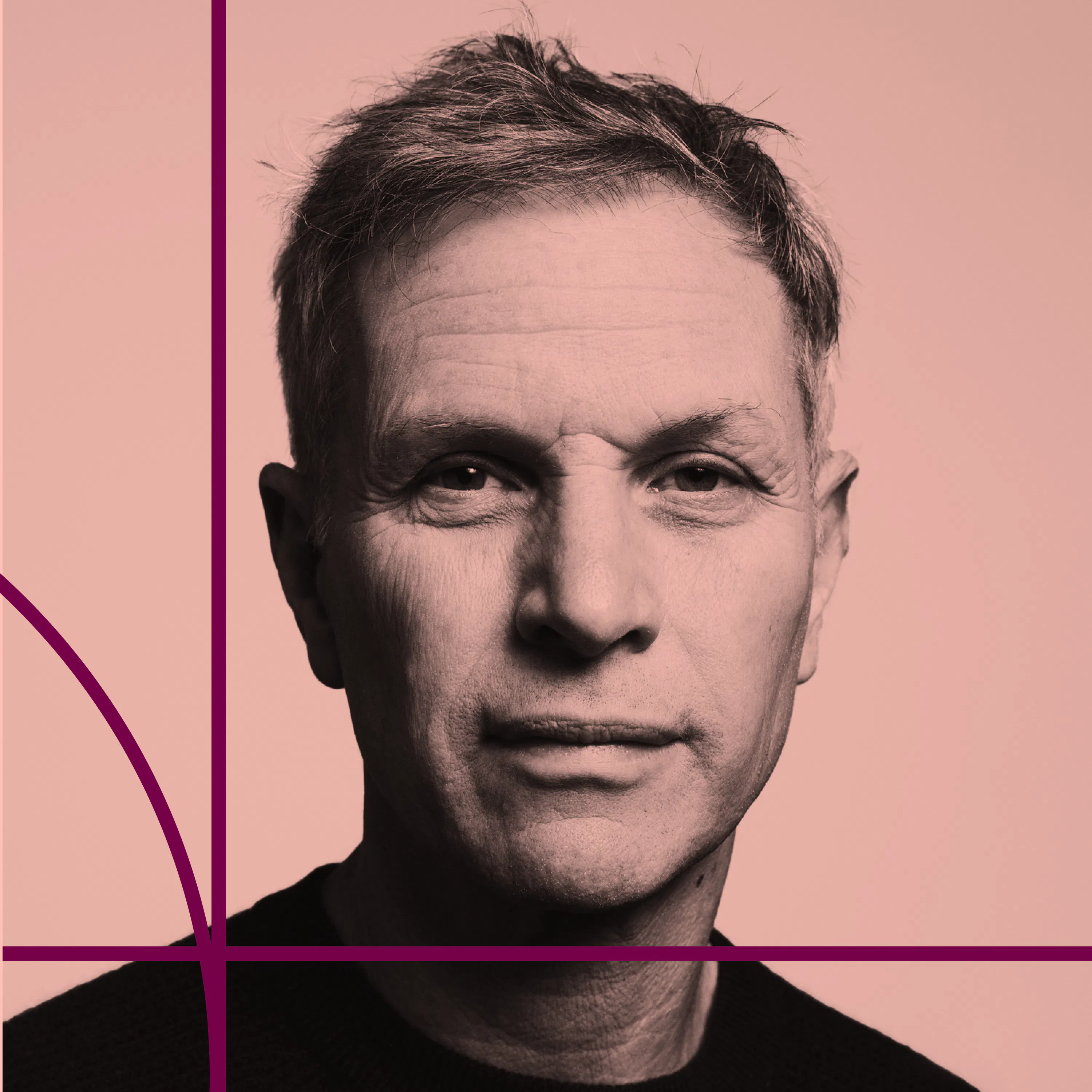
Design Better
Adam Moss: The Work of Art
00:48:13
We talk with Adam Moss about finding the right creative partners, how to feed creativity, and how his own work has been influenced by his investigation into how creativity unfolds.
Loading summary
Transcript56 lines
- [00:03]
Adam Moss
That is the moment that most people give up. They have a dream. They don't yet have the skills to execute that dream that is so frustrating that most people, I think, abandon it. And for the people in this book, it was the perseverance through that frustration that enabled them eventually to be so accomplished.
- [00:27]
Eli Woolery
Eli and I are students of the creative process, and so is Adam Moss, author of the Work of Art How Something Comes From Nothing, formerly the editor in chief of New York magazine. These days, Moss is on a quest in his studio to understand painting and through it, the mysteries of the act of creation. We talk with Adam about the red threads that run through such varied creative expressions, finding the right creative partners, how to feed creativity, and how his own work has been influenced by his investigation into how creativity unfolds.
- [01:01]
Aaron Walter
Questions about why people create and the diversity of process across mediums led Adam to write his book, which features interviews with a host of inspiring folks. Kara Walker, Tony Kushner, Sophia Coppola, Stephen Sondheim, Barbara Kruger, Ivara Glass, Samin Nosrat, Marc Jacobs, David Simon, and many more share their approach to the work they do in the book this is Design Better, where we explore creativity at the intersection of design and technology. I'm Eli Woolery.
- [01:27]
Eli Woolery
And I'm Aaron Walter. You can get ad free episodes, bonus content, discounted workshops, and access to our monthly AMAs with big names in design and tech by becoming a Design Better premium subscriber. It's also the best way to support the show. Visit designbetterpodcast.com subscribe to learn more. We'll return to the conversation after this quick break.
- [02:00]
N/A
Design Better is supported by Masterclass. It's usually around the holidays, as the year draws to an end, that I start to really reflect on my goals and how I want to grow in the coming year. I've often turned to Masterclass to help me expand my knowledge and satiate my seemingly unending curiosities about disciplines that I've yet to explore. Masterclass is the only streaming platform where you can learn and grow with over 200 of the world's best best thinkers. I'm talking about people like Steph Curry, Paul Krugman, Malcolm Gladwell, Diane von Furstenberg, Margaret Atwood, Levar Burton, and so many more inspiring thinkers who share their wisdom in a format that's easy to follow and can be streamed anywhere on a smartphone, on your computer, your smart tv, even in audio mode. Former Design Better guest David Sedaris teaches a class on storytelling and humor and I loved Bob Iger's class on business strategy and Anna Wintour's class on creativity and leadership. Oh, and Sarah Blakely, she's the founder of Spanx, has an amazing class on entrepreneurship that taught me so much. I've been through so many classes and I just learned so much each time. The wirecutter calls Masterclass an invaluable gift and I can attest to the truth of that claim. I gave my wife a Masterclass subscription last year for her birthday and and she got so much value from it all year long. With Masterclass, your loved ones can learn from the best to become their best. Masterclass always has great offers during the holidays, sometimes up to as much as 50% off. You should definitely head over to MasterClass.com DesignBetter for their current offer. That's MasterClass.com DesignBetter I'm so excited for you to try it. MasterClass.com Design Better Want to shop Walmart?
- [03:53]
Adam Moss
Black Friday deals first. Walmart plus members get early access to our hottest deals. Join now and get 50% off a one year annual membership. Shop Black Friday deals first with Walmart plus see terms@walmartplus.com.
- [04:10]
Eli Woolery
And now back to the show. Adam Moss, welcome to Design Better.
- [04:20]
Adam Moss
Thanks very much. Happy to be here.
- [04:21]
Eli Woolery
Eli and I have been enjoying your book, the Work of Art, How Something Comes from Nothing. And we were just saying before we hit the record button that it's kind of a sweet spot of our own curiosity of what is creativity? Where does it come from? What's that process like? And it's particularly interesting because your book covers so much ground. There are artists that we might see in the Whitney or Guggenheim, and there are chefs like Samin Nosrat, directors, all sorts of different types of disciplines represented. Before we dive into what you learned, maybe you could just start us off, like in the spirit of your book. Where did this book come from? How did you find the kernel of this idea?
- [05:03]
Adam Moss
So I was a magazine editor for all of my life. My last magazine jaunt was New York magazine, where I was for 15 years. And that was both the print aspect of the magazine and then starting a whole constellation of digital publications. And then I quit because I wanted to see what else I could do. And I really had a kind of secret hope that I could be a painter, which is something that I had started to dabble in and during my last years at the magazine and really enjoyed. And as soon as I quit and started to do it with a certain amount of purpose, it all started to go south for me very quickly. And I just Was very frustrated by my own mediocrity. I began to wonder why and also to wonder how it is that artists who are successful at this pursuit did it. How they thought, particularly what their mind went through as they made a work. And I also had a kind of theory from my life as a journalist was that, you know, perhaps all creative enterprises had certain things in common. So I began to think of a whole range of people that I would talk to to answer the question how they think. So I would talk to visual artists. I would talk to novelists and poets and architects and television makers and joke makers and sandcastle makers, all of which are in the book. And basically, I just went on this kind of search. Kind of likened it to the children's book Are youe My Mother? Where I wanted to talk to artists about how they made something, what went through their mind as they made something. And so I started to have these conversations and then match the conversations. This was an important part of my own thought process. Match the conversations with artifacts of their making. So doodles and outlines and sketches, because I love them principally, and we can talk about why later if you want. But also because they were kind of authentic blueprints of their minds as they went about making the work. So that was what I did. I started to talk to people. I started to collect artifacts. My basic theory was that I would get an answer to this question most authentically and most also dramatically, vividly, if we concentrated on one work and we took the one work from its inception, through all of its stumbles and failures, through to the triumphant finish. And that's what the book is. It's kind of one happy ending after another. But it's a story of struggle.
- [07:45]
Eli Woolery
Do you see creativity as a spiritual act?
- [07:48]
Adam Moss
Well, it depends on how you define spiritual. I see it as a mystical act, in a sense, and I think there's a lot of unknown in it. Even after writing the book, where I tried as desperately hard as I could to purge the whole thing of the unknown, I wanted to know, you know. Nevertheless, I was humbled by the fact that there is something you just can't understand about where something comes from. My own feeling about it is that it comes more from the subconscious and from the mind and. And all that. But there are several people I talked to for the book that thought of it in conventional spiritual terms, which is that it came from some otherworldly or godly aspect. I think basically it's the same thing. It's this unknowable place. Wherever you decide it comes from. That provides the raw material for the work you're making. My book was very much centered on what came after that. That is, okay, you have this thing that the imagination has spewed out. But then what do you do with it? And how do you judge it? And then how do you shape it? How do you create a strategy toward making it something? It's kind of what the book was about.
- [09:01]
Aaron Walter
Maybe we could dive a little deeper into that. So there's the subconscious aspect. And from the folks that you talk to. It seems like many people have a very difficult time articulating what's happening there. Not surprisingly, because it's happening in your subconscious. How did you take that leap from that part of the creative act to things that are more concrete? The beginnings of inspiration, the sketches, things like that?
- [09:22]
Adam Moss
I mean, I sort of thought of it. What I was doing is not unlike conducting creative shrink sessions. So it's kind of the same thing where you put them on the couch and you talk to them for long enough that they begin to piece together this thing that has emerged. And then I would show them the artifacts that they themselves showed me and use it as a prompt to help them remember. And then I was extremely rigorous. I mean, almost tedious. The extent to which I kept going back to people and saying, and then what? And then what? And then what? So that they could recall the stages. And not just the practical stages, but also in many ways the psychological stages. So how are you feeling? That I was really trying to understand how one gets through failure. Because failure was such a big part of what everyone was talking about. They tried something and it didn't work. I found that incredibly reassuring, honestly. But it was also clear that what made them successful is that they had found a way to work their way through failure.
- [10:34]
Eli Woolery
There's a number of spots in the book, a few examples about feeling like the creative process and the output of that work. That it's, like, channeled through the person. And the person almost feels like a conduit, a vessel. Like they were the instrument. But they look at it objectively, separately. I've heard Bob Dylan say the same thing. There's a great interview with them where he's, like, asked, well, why don't you write those great songs anymore? And he's like, I don't know how to do it. You know, back then in the 50s, like, they just came through me, and I don't know how to do it. I find that fascinating. To be a participant and also a spectator simultaneously.
- [11:16]
Adam Moss
Yeah. You know, one of the things to Me. It was so interesting and startling in the book, which is many of these artists were like, basically two people. There was a kind of split personality. There's a chapter on Tony Kushner in which he talks about the act of making is picking up breadcrumbs, almost like a fairy tale. And, yeah, there was the person who laid down the breadcrumbs and then the other person who picked them up. They were kind of split that way. The interesting thing to me was, you know, not just that they were unable to recall it, but that they really felt that they had blacked out. There was a kind of almost anesthesia aspect when they got hit with whatever you call the creative turnkey. But then the interesting and the difficult part is what you do with it and why. Bob Dylan was able to write songs. And he wrote songs very, very fast. I have a page of Blowing in the Wind in the book, you know, which he says he wrote in a half an hour. But he's able to do that, of course, because of a lifetime of accumulating knowledge and experience and habits and structure. The sort of acquisition of skill is a, in my view, very underappreciated part of creativity. People don't really want to talk about it because it seems undemocratic. But all that which prepares you becomes essential. And it's very difficult to make art without it. That's why all. A lot of these people that I talked to just, you know, started early. They started early. They had encouragement. They had teachers and mentors. They got stuff in their bones, just like an athlete.
- [12:52]
Aaron Walter
That's a good segue to. One of the subjects in your book is Sophia Coppola. Obviously, her father was probably a huge influence and mentor to her. One of the stories I thought that was interesting as far as an example of having a creative challenge and working through it and kind of these happy accidents that happen sometimes was that towards the end of her film Lost in Translation, there's a very touching scene that stood out to me even before I read it back again in your book was where Bill Murray whispers something to her. And it's inaudible to us in the audience. And it turned out that she actually had planned to go back and dub over that later with something she just hadn't figured out what. But she just decided, let's move forward. Let's make the scene happen, and then we'll figure it out. And then it turned out that not hearing it was actually much better than anything they could have written. And so, yeah, maybe talk about any other. That Example or other examples of these kind of happy accidents that just happened through the process.
- [13:47]
Adam Moss
Well, I mean, happy accidents, you know, happens really kind of everywhere. The key seemed to be you created a means by which an accident could happen. And then you had the ability to recognize what worked in that accident. And then in particular, the Silvia Coppola story. It's one of the things that apparently Italian directors. That's the thing she said do, is that they put something down to get through it. It was the last scene in the movie when Bill Murray was saying goodbye to Sophia Coppola. And she couldn't figure out how to render that goodbye in a way that didn't sound saccharine or corny. She just couldn't solve the problem. And as I understand it, she had every intention of going back and dubbing that thing in. And then when she saw the dailies, I guess, and saw how effective it was to allow the audience to make their own assumption, guess to participate, that she kept withholding. I mean, withholding is actually a fantastic tool in art, is when you pull back and you allow the viewer or the reader or the listener to participate in the work by filling it in. So that's what she did there. The book is just full of accidents. I mean, at one fantastic example for me is the artist Amy Sillman, who was painting this painting, which she eventually called Ms. Gleason. And she gave me, in the book, she gave me 32 iterations of what this painting was on its way to being. And they're crazy. They're, like, wildly different from one another. And several of them are beautiful, but they were not satisfying enough to her. And also, the process of making is so central to what she's doing that she allows herself to press forward, waiting for the accident to strike. It's just an example of accident, save, accident, save, save this part. Accident, save, save that part. Stumbling her way toward what turned out to be a beautiful painting.
- [15:52]
Eli Woolery
I think that touches on. One of the most important parts of the creative process is being open to the unknown. Which we talked to John Cleese, and he said, you know, so many people want certainty in the world. In reality, it's just an illusion. We don't really have certainty about almost anything. Can you talk a little bit about that, how artists think about certainty or have an openness that they can cultivate, or maybe they're just kind of born seeing that openness differently.
- [16:22]
Adam Moss
Well, I do think that there is a kind of character, logical aspect to artists, and they do tend to be people who are More comfortable with uncertainty, ambiguity, exploration. Some people are like that, and other people are a little bit more controlled in their thinking. And those who are going to be successful allow themselves to do it. But it's very weird because, you know, on the one hand, you have to be uncontrolled in allowing whatever it is we're talking about to burble up. On the other hand, you have to be very controlled in some ways to execute the work. That there is a kind of rigor that is crucial to the making of art. And the weird thing about successful artists is the way that they can just bop back and forth between these two states, this open state and this closed state. It is remarkable and impressive.
- [17:13]
Aaron Walter
A minute ago, we were talking about mentors. And on your chapter with Sami Nosrat, the chef and author, sounds like she found both a good mentor and Michael Pollan, the writer who helped her with her writing, but also the right creative partner, her illustrator, Wendy McNaughton. Cause it seems like things kind of turned around when she had the proposal and pitched it together with the illustration. So maybe talk a little bit about either that mentor or partner side of things.
- [17:38]
Adam Moss
Well, I think both things happen, and they both happen, both by accident and also by Samin's ingenuity in knowing what would work for her, which is somewhat unconscious. I mean, Samin has a very open personality. She admired Michael Pollan. We'll just start with that one. She admired Michael Pollan, and he had come into a restaurant where she was working, and she saw his name on the reservation list. She knew that he was teaching a class. She wanted to be a journalist, sort of. She also wanted to be a chef. She wanted to be a writer. She wanted to be a poet, but she was interested in writing. And she knew that Michael Pollan was teaching a course at Berkeley, and she wasn't enrolled in the class. And she basically talked her way in to this class with a kind of supernatural drive. I mean, she was determined to get into this class. And she kind of prodded and talked her way into the class, recognizing, I guess, somewhat that somehow that Michael would be a mentor for her. And then, of course, when she was in the class, he was. And then when she heard that Michael's next book was going to be about cooking, she recognized that Michael would need himself a mentor. So she put herself in a position to be his mentor, helping him through this book. And then he helped her again as she was looking to sell the book out in the world. And it was that kind of back and forth and back and Forth and back and forth. That enabled Samin to feel confident that she had an idea worth doing in her magnificent book. Michael recognized immediately and said, you know, you have a book in you. This is your book. When she talked to him about it. Yeah, so that's what happened with that. And then Wendy McNaughton, she loved the illustrations that Wendy was doing for, I guess, some alternative newspaper, I think, or something like that. She went after her. There's a great email in the. That I published in the book of her to Wendy's kind of trying to not beg so much as seducer into being a partner for the book. And, you know, Samin recognized that the way that Wendy was expressing herself visually in her work was a kissing cousin to the way that Samin thought and at that point was writing. So, yeah, I think it's a. That's a really perfect illustration of the way that partnership, mentorship can work.
- [20:02]
Eli Woolery
You talk a lot in the book about inspiration, or you asked that question. It seems that that was a frequent question in each of the interviews, and it's one that we hear a lot. Like, what inspires you? It seems sort of nebulous, but I think what we're searching for is, like, what's the seed? How does this thing germinate and where does it get started? Because we want to go find those seeds for ourselves and discover how to grow this stuff. What did you learn about inspiration and, like, what it is, what we mean by inspiration and then how people use it differently?
- [20:36]
Adam Moss
Well, I think, for one thing, it's just a thing that occurs to you, just a thing that flies into your head. And the truth is that we all have that. You know, we all are inspired all the time. You know, we see a leaf and it provokes an idea, but the idea just, you know, we throw it away or we don't recognize it for what it is. We're all inspired. We all dream, we all imagine. The difference with these people is that they recognize an inspiration for its utility as well as everything else. They're able to choose it and then to burrow into it, I think. I mean, if we're talking about inspirations as really ideas, I mean, in almost all of these, the works that I talk about in the book, there were a lot of stumbles, missteps. The inspiration came from a dream, and, you know, then they maybe went down a different path, and that brought them to a different path. And inspiration was constantly. Maybe I'm not using the word inspiration in the way that you're thinking about it. But I'm thinking about it just in terms of the word idea. The things that occurred to them are constantly there's a kind of firing thing happening and some of them pan out and some of them don't. And there's just a fusillade almost of things firing at them. It's almost like a video game and they are dodging them or they're seizing them. So much of art making is about recognizing what is going to work for you and it's also about following rabbit holes and it's also about dead ends. The miracle of all of this is how these people can find their way to the end through all of that.
- [22:17]
Eli Woolery
We'll return to the conversation after this quick break.
- [22:24]
N/A
All right, let's be real. If you're a content creator, blogger, or an entrepreneur just getting started, the last thing you want to do is spend hours building a website.
- [22:34]
Eli Woolery
But you know you gotta do it.
- [22:36]
N/A
You've got things to do. And that's where Bluehost comes in. Their AI powered design tool gives you pro level WordPress sites in a snap. No coding, no stress, just type in what kind of vibe you're going for and then boom, you got it. And you also get added features like marketing and e commerce tools to help you build, grow and scale your online business. Like a boss. And upgrading to Bluehost Cloud keeps your site running 24. 7 with ultra fast hosting, 99.9% uptime and enhanced security. Always fast, never slow so you can keep making that dough. It's seriously never been easier to build your website with bluehost. You've got ideas. All you need now is the platform. All you need is Bluehost. Head over to Bluehost.com and start building your dream website today. I love wine, but I often feel overwhelmed by the options out there. But I recently joined Wine Access and I'm learning a lot. Wine Access not only shipped to your door some of the world's most inspiring wines, they also educate subscribers with full color information cards that accompany each bottle. I love these cards. They provide details on flavor profile, what food your wine pairs well with, how long to decant, the ideal drinking temperature, and plenty of fascinating information about the producers. This month I got a four bottle shipment from Wine Access new club called the Wait List which is curated by culinary icons. The box I received is from Atomics, a two Michelin star restaurant and the top US restaurant on the World's 50 Best list. Other curators include Emeril, yes, that Emeril of New Orleans and Daniel Boulud and his flagship restaurant Danielle in New York City, which is also a two Michelin star restaurant. It's such a fun way to learn about wine and everything you receive will be a winner. I've been super impressed by how thoughtfully Wine Access curates and educates. You should totally join the Waitlist wine Club. Just visit wineaccess.com waitlist and use promo code designbetter all one word for 25 bucks off your first shipment. That's wineaccess.com waitlist and Use the code designbetter to save 25 dollars. The holidays in snuggly weather are upon us. It's a great time to enjoy great wine with the people that you love. Wineaccess.com waitlist.
- [25:07]
Eli Woolery
And now back to the.
- [25:09]
Adam Moss
Show.
- [25:15]
Aaron Walter
On the subject of ideas. Some of your subjects I'm thinking of Roz Chast here, are very deliberate about the way they collect ideas. So Roz has like a shoebox full of idea germs, which are just little things, you know, scribbled on a scrap of paper. And then she also has idea scraps which are maybe longer things. So maybe talk a little bit about her collections and other ones that you ran into across this project.
- [25:37]
Adam Moss
Yeah, I mean, there's a whole bunch of notebooks which I loved in this collection. RA's were particularly funny because they're just kind of notions that she gets as she's looking at a subway sign or walking down the street, or she has some weird two word juxtaposition that she thinks are funny and then she throws them in a box and then she doesn't even understand them necessarily when she comes back to the box. But sometimes she does and sometimes it sparks something later. And there's a drag artist, really a performance artist named Dina Martina that's also in the book that also has this kind of notebook of crazy associations. The artist's name is Grady West. He just accumulates, without knowing, having any idea about whether it's going to be of use to him, and goes back to it. And if it reignites, then it becomes a useful thing. But there's a kind of like, you know, free associative aspect to almost everybody's process here. There is a moment in which they just simply allow themselves to let stuff in, even if it is illogical or even if it does not yet make sense to them. And then a later part of the process, they begin to create a strategy around it.
- [27:00]
Eli Woolery
There's a great line to that point in the book. It was Jody Williams and Rita Sodhi. There's, like, all these principles that they're listing. And number three, which is the best of them all, said, allow yourself not to know what you're doing.
- [27:15]
Adam Moss
Yeah. And really so many. I could have ended every single chapter. I mean, the first chapter, which is Carol Walker, the artist she ends her chapter with. Every time I start, I realize I don't know what I'm doing, which of course, is not exactly true. It's a feeling that they all have. And I could have ended every single chapter that way because they all feel that way. And I think that's what makes them good, is that they are in a state of wanting to learn that openness to. Learning that openness to trying new things, to, in essence, starting over is what gives their work so much freshness. But of course, it's not really starting over because there's this accumulation over a lifetime of knowledge and experience and information and craft that helps them in their pursuit.
- [28:05]
Eli Woolery
So there's some artists who are discovering, like Kara Walker, but then there are some who have, like, a very specific direction, and they have an argument to make, like David Simon. I love that you included David Simon in this because he's such an interesting thinker. Listeners who don't know David Simon, he is the magic behind the Wire, which is, you know, many call the best TV ever created. That first season, they spent all this time and energy building characters and stories and kind of an infrastructure of what this was going to be. You get to the second season, you're like, wait a second, am I tuned into the right program here? Or is this something totally different? So that's a different type of creativity where there's. We've got some specific goal that we're trying to convey here. Can you talk about how that creative process is different?
- [28:58]
Adam Moss
Yeah, I'm not sure, really. It. It is that different because it's an instinct. I mean, he started the Wire, basically, which was about. It was a sort of cops and robbers show. And he had drug dealers on the one side, and he had the sort of cops and the police establishment on the other side. And he felt that what he'd created was too limited. And so what he really wanted to do was something much broader, bigger, an evaluation of systems where the sort of pathology of the drug trade and its prosecution comes from has to do with systems about civic government and about class. And so he was in a group that disagreed with him violently, and he said, no, we're going to wrench this show away from the location where this drug ring was operating. And we're going to go and talk about work. And so we're going to go to the ports because the ports no longer had a kind of functioning employment model. And we're going to kind of blow it up. And they were all pissed off, all his colleagues. But he persevered and he made the show he wanted to do. But, you know, I think that the key point is that all of the artists, they kind of get an idea. That idea is very important. They kind of get the thing and they think they know what they want to do. And for the most part, that trips them up over and over and over again because they learn the limits of their initial idea. And it's their openness to changing and shifting that makes the thing work. I mean, you know. Yeah, some of these things, the essence of it happened on First Try. There's a painter in there named Gerald Lavelle who's doing a self portrait. And the core to the portrait is his depiction of his own eyes. And that happened within the first five minutes of him making the painting. But then creating the painting around it and struggling through what the rest of the painting would be was the work. And almost everyone, they have an instinct. They have a kind of idea. They have a hypothesis, let's call it that. And the process is testing the hypothesis over and over and over again.
- [30:53]
Aaron Walter
One of the subjects that you talk a bit about with Ira Glass's interview is this idea of taste and the gap between your capabilities and your taste. So at a younger point in your career, you may have developed a good aesthetic, a good sense of taste, but there's a gap between what you can execute on and what your vision is. And Aaron wrote about this recently. Give a quick plug for our newsletter. But we're curious, is there other examples of that that you encountered where folks either earlier in their career didn't quite yet have the developed talent or the resources to execute on their vision and the taste that they had?
- [31:28]
Adam Moss
Yeah, I mean, I think it's kind of everywhere. Although it's kind of the prequel to the book, because by the time I'm talking to them and the case studies of the making of these accomplished works, their capabilities have caught up to their dreams. But I did love it when Ira Glass said that to me. It was such a valuable insight for me, which is that that is the moment that most people give up. They have a dream. They don't yet have the skills to execute that dream. That is so frustrating that most people, I think, abandon it. And for the people in this book, it was the perseverance through that frustration that enabled them eventually to be so accomplished.
- [32:12]
Eli Woolery
Are there common threads or maybe even, like, stark differences between all these different disciplines? Writers, filmmakers, painters. I mean, there's just so many different types of disciplines represented in your book in particular.
- [32:26]
Adam Moss
They're all different, and not just between and among genres, but between and among projects. Every project has its own path. However, there are enough commonalities to make my book have some coherence, I hope, which is to say that there is this, what I think of as a report process, imagination, which we've talked about, and then ending with shaping. But there's this vast arena in between which I call judging. It's also editing. It's also strategy. It's also like making sense. It's the. It's in some ways, the intellectual side, the planning side of making the thing. And that's true whether you're working on a novel or a poem or a painting or a hamburger. To go back to Jody Williams and Rita Sodi, they don't call it a hamburger, but in any case, it's a piece of chopped meat, you know, and that's kind of all the same. It's like you get an idea, the idea catches fire or it doesn't. Then you have a sort of beautiful mess, and then you judge what's in the mess, and you begin to work out a plan, a blueprint. That's really what all of these artifacts in the book were. They were blueprints. And then comes the craft side, the shaping, where you actually, if you're good at this, if you're Judge Saunders and you can write sentences that have the power that his do, or Sophia Coppola or, you know, any of the artists in the book who have genuine capabilities, skills that they've honed over a long period of time or maybe were born with. But in between this thing, this strategy aspect of it, this figuring out how to make it the thing that they want to make, and that process is long. It's not like one minute. It's really the essence of the work that's common through all of them. Also, there's a certain kind of person, whether they're a novelist or a painter or a poet, who tends to be good at this. And there are people who have an enormous amount of patience. They have a kind of superhuman persistence and drive to create, no matter how frustrating or thwarting the experience seems to be. Ultimately, they have faith. They think they can do it. The path is such that there's so many reasons to Give up. There's so many reasons to stop making the thing. You know, it's just full of landmines. And it's that person who can somehow get to the end because of these things, because of their faith, because of their tolerance for tedium, because of their will and drive. Those are the artists in my book, no matter what they're making.
- [35:03]
Aaron Walter
Let's talk about artifacts a little bit more. And your book is filled with wonderful artifacts, Sketches and doodles and notebooks. And one that stood out to me from the very beginning of the book was a sketch by Frank Gehry which precluded his work on the Guggenheim Museum in Bilbao. It was very much this very loose doodle, but it somehow did capture some of the essence of what eventually became the building. So maybe talk to us about why you're drawn to these artifacts and what you. Through the different disciplines and working with them.
- [35:32]
Adam Moss
That's a crazy one, isn't it? I mean, it's just. It starts the book because I was looking at it. I was in Bilbao itself. I was in the Guggenheim Museum in Bilbao itself. And, you know, as you do, you go to a gift shop and you're just, like, decompressing from the art you've seen in the thing, and your mind is kind of in a sort of goofy, open and distracted state. And I opened the book, and I love them because I love squiggles and I love drawings, and I love the unmediated aspect of them. I love to draw myself. And so I'm just kind of drawn, no pun intended, drawn to that. And I'm flipping the book and I get to that sketch, and then the sketch looks so much like the building that I am now in. And the building, which is famous for its sort of startling originality, I mean, we're now used to what a Geary Building looks like, but we weren't at the time that that building was built. It was a completely new idea. And to see it and then to look at the walls around me, I say in the book, it was like almost like a Pixar short where the thing just took life of its own and it became this little cartoon where the drawing sprung to life and became the building that I'm looking at. It was like, well, huh, so this is how it can happen. And the book begins with the squiggle and then the picture of the museum at that same angle. And it's just shocking. This thing would just enter into his head without a plan, really. It's just how his mind worked. It was Just his imagination at work. And it would have such a strong relationship to the thing that he eventually built. I've always loved these artifacts. I love them because I'm interested in narrative, and they're often forensic. And you can see in it the path that someone took to making the thing, which I love. You can see their kind of emotional state as they. I mean, the book's cover is these two giant X's off a page that Marcel Proust was writing. The emotion, the vigor, the erasure, in that case, really appealed to me. I feel these artifacts are kind of nosy. They're like where you're not supposed to have seen. They're kind of like journals or letters. They're private, that I find really appealing. But also, I just, you know, in the end, they feel animate with anticipation. They feel like you're seeing the artist mid thought. And that just feels very powerful to me.
- [38:00]
Eli Woolery
What were the surprises or revelations as you talk to all these different artists? Possibly about their process, possibly just about the way they see the world? Were you ever taken off guard, like, wow, I totally didn't see that one coming?
- [38:14]
Adam Moss
You know, the more I talked to people, the less I was startled by it. I'm very romantic about art making, and I did come to the thing with a kind of naive idea that artists were kind of thunderstruck geniuses. And it began as a project of envy and awe, really. And then as I began to talk to people and realized that their stumbles and struggles were just the same as mine was, shocking to me. But then there, you know, there are little shocks all over the place. Kara Walker, who made this great work called A Subtlety or the Marvelous Sugar Baby, which was a giant sphinx made of sugar that was built in an abandoned sugar factory. It's such a powerful work of art, and she figured out how to do it with the use of a PowerPoint. It was so logical and in some ways runs so counter to all the ideas I have about how an artist works. I talked to this documentary filmmaker named Andrew Jarecki, and he made this movie I think is remarkable, called Capturing the Freedmans, which began as a movie about party clowns and turned into a movie about child abuse. And it's a remarkable path how it got from one thing to another. He had no experience or very little experience as a movie maker. And it was a process of simply discovering that the clown he was talking to had a dark secret in his family. That his father and his brother had been charged with raping a bunch of boys in the basement of their family home, which Andrew Jarecki just intuitively felt didn't seem true, but it seemed interesting enough. And in fact, it wasn't true. And that's what the movie demonstrates beautifully. But also what Andrew saw, even with his lack of experience, was that there was an incredible film to be made about a family torn apart by this kind of tragedy. And that was a shock. You know, Louise Gluck, the poet, Nobel Prize winning poet who died last year, she made this beautiful poem called Song because she had a dream in which a line came to her and she woke up and she wrote down the line. And for me, the line was relatively ordinary, but for her, the line just unlocked an entire poem. Eventually. That kind of thing was absolutely riveting to me, however kind of small, in a sense, that revelation was. Tony Kushner, Angels in America, which has one of the most iconic theatrical moments, which is when an angel crashes through the ceiling and Angels in America and crashes through the ceiling to reveal herself to the lead character, who has AIDS and is having hallucinations. It's such an incredible moment in American theater. And it came to him in a dream, too. He saw this thing. So all the ways in which these things happened were surprising to me. But in the end, what I guess I realized is that surprise is actually part of the process, that strange things happen. And knowing how to harness those strange things is kind of the key to the whole thing.
- [41:22]
Aaron Walter
There's a kind of a truism in art and creativity that to make good work, you have to make a lot of work and you have to create a lot of things. And I think in a previous episode we talked about Picasso, and he's created something in his career like 150,000 different pieces of various mediums.
- [41:38]
Adam Moss
But a lot of them are great.
- [41:40]
Aaron Walter
Well, yeah, he had a pretty good ratio working for him. But maybe talk to a little bit about. Did you make any discoveries about the volume of work that people created in a career?
- [41:50]
Adam Moss
It's not the same from artist to artists. Some artists create a lot of stuff that they throw away and other artists kind of save up. There's not any one particular path in that regard. But I do think it's just simply true that a lot of the act of making art is practiced, and a lot of the act is, as I've been saying, is failing. You have to make mistakes, you have to risk. If you don't risk, you don't gain. And so in order to do that, people make stuff over and over and over and over again. I'VE been as a kind of frustrated painter. I've been spending the summer in order to kind of practice. I just kind of make a painting a day. I do portraits and figures. And I just, like every day I have a new kind of task for myself, a new assignment. All right, let me try this today. Let me try that today. And then as they go along, it's like, well, this work kind of over here in this corner, and can I steal that and put it in here? And the volume, for me, is extremely helpful. I mean, there's this recurring sort of cliche in creativity, but it's also true that this reference to vomiting that you have to vomit in order to eventually make something. There's a great. Amy Silman has a great little illustration or drawing of a vomiter, which I gave prominence to because it just seemed so crucial to the whole business. And so, yeah, the vomit is voluminous. So in that sense, you know. Yeah, crucial.
- [43:37]
Eli Woolery
How did the process of making this book change your work, your painting, your own creative endeavors?
- [43:45]
Adam Moss
And my frustration was always that I, as a painter, let's just say I couldn't stand the things I was making. I was just so infuriated, almost disgusted by the work I was making. But I really did enjoy the making of it. I was kind of bored with the outcome, but never bored with the making. And I began to ask all these artists. I'm a writer also, so that I'm trying to create stories, and I'm trying to create a kind of dramatic finish to each of these stories in which they make this wonderful work and they're thrilled, and they have the sense of catharsis and breakthrough and euphoria. Nobody gave me that. Nobody. Now, obviously, they were being humble about the thing that they made, et cetera. But I came to appreciate that that was not the point, that they didn't feel that. They felt, yeah, good, that's nice. Things get recognized. They felt, yeah, good, that's nice. But the next day, they were at work doing it again, and that what they were in it for was the making. What they were in it for was all the stuff that I was dismissing that I enjoyed. So I guess the answer to your question really is that I began to embrace the making. And I won't pretend that I don't care what the thing looks like in the end, but I began to take more seriously the interest and absorption and pleasure I had in the making, and that maybe that was enough.
- [45:10]
Aaron Walter
Adam. What? Right now. And there's a lot of inspiring stuff throughout your book. But we're also curious. Is there anything that's either in the book or outside of it that's particularly inspiring you right now? And that could be TV show, novel, painting, podcast, anything.
- [45:25]
Adam Moss
Yeah, I mean, I'm just. I'm hyper alert to anything that gives me some crazy little idea. I'm kind of in this visual art thing. So there's a used bookstore around here in Provincetown called Tim's Used Books, and they have like this just pile of art books that they don't organize in any way. And it's just a giant mound of stuff. And I go in there maybe every two or three weeks, and I just kind of make my way through the pile and I'll always find some artist I never heard of. And the books are, you know, eight bucks, and I bring it home and I will gain so much excitement. I mean, I look at it. I look at something. It's kind of a bad thing for me because I look at a work I love and I kind of want to imitate it. I want to do it. My fantasy life is such that if I look at it hard enough, I'll make it so it's not necessarily healthy, but it is also thrilling. And for that moment, I have made it. Just in particular, there's just this Egon Schiele book that I got two days ago that I find myself a little obsessed over at the moment. One of the gazillion. I mean, there's just. It's, you know, I don't even pay attention to what book it is because it all has the same work in it, but it re excites me every time.
- [46:41]
Eli Woolery
Egon Schiele is haunting. It's hard to escape the gravity of him. Yeah, Adam Moss is great conversations. Great book. The book is the work of art. How something comes from nothing. Presumably listeners can find this wherever they get books.
- [46:58]
Adam Moss
Such a pleasure to talk to you guys. Thank you.
- [47:05]
Eli Woolery
This episode was produced by Eli Woolery and me, Aaron Walter, with engineering and production support from Brian Paik of Pacific Audio. If you found this episode useful, we hope that you'll leave us a review on Apple Podcasts, Spotify or wherever you listen to finer shows or simply drop a link to the show in your team slack channel designbetterpodcast.com it'll really help others discover the show. Until next time.
- [47:35]
Adam Moss
It.