← Design Better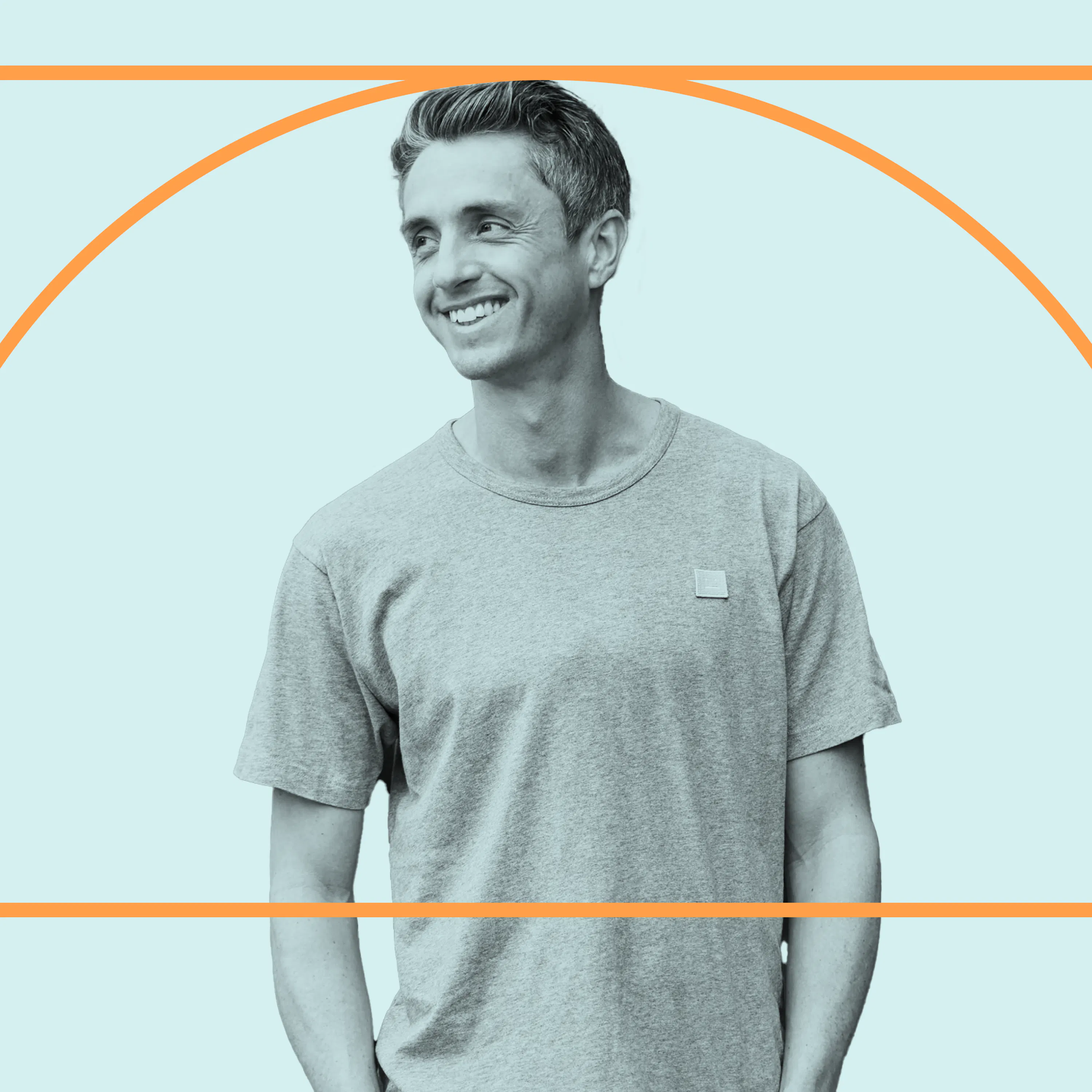
Design Better
Alastair Simpson: From professional soccer to leading design at DropBox
00:26:17
We spoke with Alastair Simpson, VP of Design at DropBox, about how he applies design principles to parenting, the role craft plays in making great products, and creating a work environment that supports the creative process.
Loading summary
Transcript41 lines
- [00:00]
Aaron Walter
Hi there, Aaron Walter here. If you're hearing this, you're not currently on our premium subscriber feed. Design Better Premium subscribers Enjoy weekly episodes, four episodes per month in total rather than two, all ad free and invitations to our monthly AMAs with the smartest folks in design and tech. You'll hear a preview of this episode, but if you'd like to hear the full conversation, please consider becoming a premium subscriber@designbetterpodcast.com subscribe. It's just $7 a month and it supports not only your personal growth, it also makes our work at Design Better possible. The podcast is available to everyone through our scholarship program. If you can't afford a subscription, email us@subscriptionsecuriositydepartment.com and we'll help you out.
- [00:50]
Alistair Simpson
As I think about designing with intention, it's in my work and my personal life. It's my point of view that staying focused on those intentions really means having the stamina and great fundamental design habits to really rinse and repeat the things that, you know, work. And so that's really how I'm approaching my work. As a design leader at Dropbox and also just as a human being in the world.
- [01:18]
Eli Woolery
Alistair Simpson is accustomed to adaptation. The first half of his life was spent in the pursuit of a professional football career, or soccer as we call it here in the States. But things didn't go as expected and he found himself searching for a new path in life. Football taught him discipline and a focus on excellence, traits that transferred very well into a career in design. He's led design teams at Atlassian and today he's VP of Design at Dropbox.
- [01:47]
We spoke with Alistair about how he applies design principles to parenting, the role craft plays in making great products, and how to create a work environment that supports the creative process. This is Design Better, where we explore creativity at the intersection of design and technology. I'm Eli Woolery.
- [02:03]
Aaron Walter
And I'm Aaron Walter.
- [02:04]
Eli Woolery
You can get ad free episodes, discounts on our workshops, access to documentaries like Design Disruptors and our growing library of books, as well as our monthly AMA's with big names in design and tech by becoming a DesignBetter Premium subscriber. It's also the best way to support the show. Visit designbetterpodcast.com subscribe to learn more.
- [02:34]
Aaron Walter
We'll return to the conversation after this quick break.
- [02:41]
Eli Woolery
Design Better is supported by masterclass. It's usually around the holidays, as the year draws to an end, that I start to really reflect on my goals and how I want to grow in the coming year. I've often turned a Masterclass to help me expand my knowledge and satiate my seemingly unending curiosities about disciplines that I've yet to explore. Masterclass is the only streaming platform where you can learn and grow with over 200 of the world's best thinkers. I'm talking about people like Steph Curry, Paul Krugman, Malcolm Gladwell, Diane von Furstenberg, Margaret Atwood, Levar Burton, and so many more inspiring thinkers who share their wisdom in a format that's easy to follow and can be streamed anywhere. On a smartphone, on your computer, your smart tv, even in audio mode. Former Design Better guest David Sedaris teaches a class on storytelling and humor. And I loved Bob Iger's class on business strategy and Anna Wintour's class on creativity and leadership. Oh, and Sarah Blakely, she's the founder of Spanx, has an amazing class on entrepreneurship that taught me so much. I've been through so many classes, and I just learned so much each time. The wirecutter calls Masterclass an invaluable gift, and I can attest to the truth of that claim. I gave my wife a Masterclass subscription last year for her birthday, and. And she got so much value from it all year long. With Masterclass, your loved ones can learn from the best to become their best. Masterclass always has great offers during the holidays, sometimes up to as much as 50% off. You should definitely head over to masterclass.com designbetter for their current offer. That's masterclass.com designbetter I'm so excited for.
- [04:29]
Alistair Simpson
You to try it.
- [04:30]
Eli Woolery
Masterclass.com/design better.
- [04:36]
Aaron Walter
And now back to the show. Alistair Simpson, welcome to Design Better.
- [04:46]
Alistair Simpson
Thank you so much for having me, Eli and Aaron. It's a pleasure to be here. Alistair.
- [04:50]
Aaron Walter
We've known you for a long time now. I think we first crossed paths at a fun design leadership event back in the day, and we've just kept in touch. And these days, you're leading Design VP of Design at Drop Box, and your team's doing a lot of interesting stuff, and we want to explore that and the intentionality of how you're running that team. But maybe we could start with your origin story. Every good hero has an origin story, and you have an interesting one.
- [05:17]
Alistair Simpson
Yeah, I mean, I never wanted to be a designer, Aaron. That's the truth. I wanted to be a professional football player or soccer player for everyone in America who's listening in. I did play professional until 16, but didn't make the cut at 16, didn't quite make it.
- [05:31]
Aaron Walter
What was that moment like for you?
- [05:33]
Alistair Simpson
Honestly, I was devastated, like genuinely, because it's something that I'd been working towards since I was five. And then in England at 16, you get your first professional contract. Right. You Basically get a two year deal between 16 and 18 before you can sign your first adult contract in kind of 17, 18. And yeah, I didn't make it. I was at a club called AFC Bournemouth in England that many will know are now in the Premier League. And it was a really hard moment because something that I'd worked really hard for for over a decade didn't come to reality. And you know, we will actually talk about this as we talk about intentions, because that working hard was training every day, the same things over and over every day. And this is something that has bled into my kind of design career where, you know, people often ask me, what was it like to train and play at a professional football club? And honestly, the answer is really quite boring because you're doing the same drill over and over again. Because if you can learn how to pass a ball 5 yards consistently, then when you're in the pressure moment of a game, you don't need to think about that. You can actually like focus your mind elsewhere and have enough awareness to like, you know, pick a great pass or like do something wonderful for your teammate. You're not thinking about the core foundational skill of just passing the ball. Yeah. But it was a devastating moment at 16. I went on to play semi professional until I was 37. So I did keep up with kind of elite level sport. And you know, semi professional is I was training two or three times a week with a big game on the weekend and getting paid a little bit of money for that. But I had a day job as well. But it was still kind of elite level training like two or three times a week and then a big game on the weekend. And again, that taught me a lot about what it takes to succeed in large companies and in high pressure situations.
- [07:21]
Eli Woolery
Just as a quick aside, did you watch Ted Lasso and if so, what were your thoughts?
- [07:26]
Alistair Simpson
So, fun fact, I actually don't own a tv. That's a genuine thing. I do not watch much tv. However, I did watch Ted Lasso because. And it was genius. I was watching it with my wife and she had never really known about. She's American, she'd never really known about soccer or football. And I was just chuckling to some of the small in jokes. She was like, why are you laughing? I'M like, that is like such a cliche, like, football thing from back in the day. I can totally relate to, like, the locker room antics and things that were going on. And it was great. It was like a wonderful story. And also interestingly, because hopefully we'll get to this. It's like Ted's son lives overseas from him. Right. And as we'll probably talk about, my kids actually live overseas from me right now. So there was some interesting parallels with Ted Lasso in some aspects of my life.
- [08:12]
Eli Woolery
So given that, just since we're in the era of your childhood, where'd you grow up? Because I think maybe we even covered this last time we talked to you, but for some reason, I think Aaron and I thought you grew up in Australia, but you grew up in the UK.
- [08:23]
Alistair Simpson
Yeah, that's right. I don't know. I'd say 50% of people pick my accent and 50% of people that just super confused. That's totally fine. So I grew up in England. I grew up on the south coast of England in a tiny village called Sway in the middle of a large area called the New Forest. And it was literally like the village was a few hundred people back when I grew up. And you went outside of the village and there were cattle grids to stop the wild roaming horses come into the village. And there was just wild roaming horses on the single track roads that we used to drive around. So I moved to London when I was 18 to go to college and then promptly left when I was 22, post college, and I traveled around the world for two years. South America, Central America, New Zealand, Australia, Southeast Asia. And then went back and lived in Australia for a year. And I did then have to leave after a year because my visa ran out and went back to England, but then essentially found a way to get back to Australia because it was a way of life that I really enjoyed. And then spent 12 years in Australia, and that was where my kids were born. I'm a citizen of Australia now. And then moved to California. California seven years ago. Now it's kind of wild to think that seven, eight years have gone by, but yeah, so English, Australian now Californian. And yeah, lots of travel still to England.
- [09:36]
Aaron Walter
So tell us how you made that transition from soccer enthusiast to design. Like, what's the transition there?
- [09:44]
Alistair Simpson
The transition really going to college. Candidly, I was a little bit lost about what to do because when you have a big disturbance like that, it can take a while to. To figure out, okay, well, what's the new path? I think everybody in Their life has experienced at least one of these moments in their life. And as I've already said, I was working towards being a football player for 10, 11 years. And then that dream kind of died. And so I was probably a little bit lost. I went to college, didn't study pure design. I did a lot of consumer behavior and psychology. So why people do things in general. And then, as I said, when I left college, I actually went traveling for two years. I essentially traveled around the world for two years.
- [10:22]
Aaron Walter
Was that part of a search? Like, for what is it that I want to do?
- [10:26]
Alistair Simpson
Exactly right. Like, it was part of a search. And because I'd actually got turned down for some graduate jobs in design and in different fields in London when I finished college. And my best friend Adam, who I actually saw a couple of nights ago, my best friend Adam, said, hey, I'm going to go traveling to South America. Do you want to come? And usually I would say no to something like that. I've never really left England. Why don't I just say yes? And so six months later, I was on a plane to Rio de Janeiro in Brazil. And that was the start of, as you said, like, a search, really, like seeing what else was out there. And honestly, those two years were pivotal years for me because you get dropped into Brazil, Argentina, Bolivia, Colombia, all these countries where you don't speak the language, where there's a great community, this great culture, and you have to learn to adapt and you have to learn to integrate really thoughtfully into people's ways of life. And I really loved that kind of year or two experience that I had, and I learned so much from it. And I broadened my exposure and what I was surrounded by and something that I know you and I have talked a little bit about around craft and taste. It's like, what are you surrounding yourself with really elevates your taste. And I was really able to broaden my exposure to things on that trip, and that's something that stuck with me. And then I eventually landed in a job in Australia, where I was a design team of one. I was not working in a particularly kind of hot industry. I was working at a company called Reed Business Information, which some people may know at the time. It was the largest B2B publisher in the world at the time. But they did magazines in areas like manufacturing, agriculture, architecture, so quite niche, but they were worth a lot of money. But it was at a time when print publishing was really tanking, like, going down. And a lot of the work that I was doing with the company I was at was transitioning that print revenue online and actually designing experiences online. There were directories at the time to actually generate leads for customers and deliver news via the Internet, which was newish at the time. That was where I honed my craft. As I said, I was a design team of one. I made so many mistakes. I was doing visual design, interaction design research. I built my own usability testing lab using the Moray software. If you remember Moray, like at the time it felt offensively expensive. It was like two or three thousand dollars. And I commandeered a room and built a lab and people were like, what are you doing? I'm like, we're building a lab. You'll be able to watch people use our products. It'll be really interesting. So yeah, just did that and made load of mistakes. But what was super fascinating about that was that I was one of ten people in this online division inside of Reed. Ten people was tiny. Obviously it was like. But looking back, it was really like a startup. It was just a total startup. And then we grew from 10 to 200 people in like two years. We went from zero revenue to double digit million in revenue in like a few years. And so it was this crazy scaling journey in like the mid 2000s. And again I didn't really realize it at the time, but I learned so much in how do you do rapid usability testing, rapid prototyping. I was fortunate that the engineers there had actually built their own A B testing platform and we could go from something that I had tested in my made up lab as a prototype, to coding it, to taking it live and actually getting these statistically significant results in about a week because we had such scale and that now more popularized as Lean ux. Right. And so that was like a really great learning experience for me and just an introduction to the world of design and how to build products and making loads of mistakes. I look back at some of the mistakes I made and it's yeah, probably not some of my proudest moments.
- [14:19]
Eli Woolery
So folks from our era at least might remember the company that you worked for at the time was called LexisNexis. Right?
- [14:25]
Alistair Simpson
Yeah, correct. That was the big re business was a very big part of LexisNexis. That's right.
- [14:31]
Eli Woolery
And so I remember going to the Library, this is mid-90s and the Internet was just sort of nascent, so you weren't doing a lot of searches on the Internet. But There was a LexisNexis database that you could access if you wanted to access articles from like you know, name your niche publication so you could go in and search those.
- [14:46]
Alistair Simpson
That's exactly right. And some of those niche publications in LexisNexis would have been from read business if they were in those particular verticals. And then they were part of like these databases, magazines, whatever, that we were then transitioning to fully fledged websites in a manufacturing vertical and delivering news and content, but also delivering the ability for companies to advertise online in the particular vertical. So it was a, it was a very interesting time. But yeah, it's fascinating that you remember the LexisNexis databases. That's a time ago.
- [15:17]
Eli Woolery
Yeah, it was one thing that stood out. And then this was from another conversation with Irene, now actually our very first podcast. But I still remember logging into Pine, the kind of Unix terminal to access email and she had had the story about how like, I think it was Larry Page was like, she asked him what the ideal user experience was and he was like, Pine, like, what, are you kidding me? Yeah, UNIX terminal. That's the best way to access your email.
- [15:41]
Alistair Simpson
Yeah.
- [15:41]
Eli Woolery
So things have changed over the years.
- [15:44]
Alistair Simpson
Things have changed, Things have changed. Some not, but you know, you know.
- [15:48]
Eli Woolery
You spent a large amount of time of your career at Atlassian and scaled that team. Maybe you could talk us through a few of the lessons you learned through that experience.
- [15:56]
Alistair Simpson
Yeah, Atlassian was into set context. I was there for six years. I loved my time there, genuinely had such a great time. I joined, I think There was about 900 people in the company who were in Australia at the time. And I was designer number 20. Roughly there was about 20 designers in the team of a company of about 900, a thousand people. And I spent six years there. And when I left, the company was about 6,000 people. The design. Org was roughly 250, 300 people. I worked for the entire time for the chief design officer, the chief experience officer. I worked for him for the entire time. And I worked on every single product that Atlassian had at some point because we were double digit growth every year. My job changed pretty much every year because the company was growing and scaling so much. So I ran design for Jira, for Confluence, for Trello, for BitBucket, for Source Tree. I also helped found what was called the Atlassian platform, which was a lot of common user experience, components and infrastructure that a lot of the Atlassian products kind of consume. I look back on that experience with great fondness because I learned so much. Like I learned what it was like to launch new products, how hard that is because I also helped, was Part of the leadership team, which really sadly had to sunset Hipchat. For those that remember Hipchat, it was a product that came before Slack had existed. So I learned a lot about, okay, we had a great product that we'd acquired, but then we didn't scale it fast enough and find enough product market fit. And then Slack came out and that was, you know, the trajectory of Slack was just crazy. And so I learned a lot about hard lessons in focus being really intentional. Again, we'll talk about and, you know, just what it takes to actually design a great product. That can be enough, but sometimes it's not, right? Like when you've got really hot competition, that's a very difficult nut to crack. And so doubling the team size every year. I remember when I was joined, it was like 20, and then within less than a year it had gone to 40 in design, and then it was like 80 and then it was like 160. It was just a crazy time because you would put in a process, you would put in your design critique practices or whatever it may be in your team, and then literally three to six months later, it was like, oh, it's broken, it doesn't work anymore because the team's not nine, it's now 25, and we're dealing with three locations, not one. This doesn't really work. You've got some people in an office, some people on bc. It's hard for people to give feedback. So learning how to scale different practices and processes was one of the key lessons. And we made a lot of mistakes, honestly. Like, I look back on that time where we tried to do specific things, which honestly, some of them didn't necessarily work. But I think that's how you learn and then how you iterate and then how you make things better for the next time. And so, as I said, I look back on that experience with great fondness and I learned a lot. And I'm still good friends with many of the people there and that are still there. And some people have to move on.
- [18:55]
Aaron Walter
There's a bit of a trap when you're in that situation of scaling is you have to take action so quickly and taking action, you know, if you don't, you get scenarios like, hey, Hipchat didn't quite take purchase as we had hoped, or you can get a scenario like, we took a lot of action and all of a sudden that wasn't the right decision. And you alluded to how intentionality is an important part of what you're focused on right now with your team at Dropbox and the conversation that you're having with your colleagues there. Walk us through that. What does that look like in a product organization to be more intentional about the way that you work and how you collaborate?
- [19:36]
Alistair Simpson
I will answer that. I want to touch on something you just said though, Aaron, because it's a lesson that I learned because in my time there at Atlassian, I think I have a strength and a weakness that is I have a bias to action. Like that's just who I am or I have a bias direction. And I think though at times that Atlassian and even some of my times at Dropbox, I was biased to action and just moving and okay, we've got a problem. We know what the fix is. Let's move, right? And there's a concept in meditation. I'm doing a lot of meditation practice at the moment around you get stuck in attention and attention is like, you know, to make it simple is like, okay, there's 10 things I've got to do, I'm just going to do them and I'm going to do them really fast. Whereas there's also this concept of awareness where you can step out of attention. And yes, there are 10 things to do. But how do you recognize what the most important thing is to do and actually what the bigger picture is that you're trying to solve for? And I think that's very important because something that I learned from that time is when I look back and reflect, which I do pretty much every year, is like, I probably got stuck too much in attention and too much in this action oriented bias that I have and wasn't thoughtful enough in. Like, okay, how do we actually scale the team? The part of the team that I run, how to actually scale that team more thoughtfully? And that then comes to something that you just talked about, about this notion of intentionality. And the last kind of five or six years, my life, so kind of the latter part of my lasting career. And then I've been at Dropbox just over four years. I've really been leaning into this notion of being hyper intentional with everything that I choose to do and spend my time on. And now if you think about that though, and if people are really thoughtful, I like to think about polarities. And people who are thoughtful might think, well, Alistair, nobody starts out trying to be unintentional. Like nobody is just thoughtlessly trying to do things with anything that they do in life or work. But the reality is that life happens and we lose focus on our intentions. Or as I just talked about, we get stuck in this kind of attention. And like, I've got 10 things to do, and I need to do them faster and quicker. And there's just so much going on. And so, again, something we can all relate to, a common scenario. It's December 31st. The ball is dropping. The seconds tick down. You're filled with hope and excitement, the best intentions for the year ahead. And you make a promise to yourself, or maybe your team, a New Year's resolution, that this year will be different. And you're determined to take that on. So everybody can picture that, I'm sure. But as we all know, the reality looks really different. And Studies show that 88% of people who set New Year's resolutions failed. And within the first two weeks. Two weeks. And Strava, the fitness app, which I use, they found that By January of 12th, which is under two weeks, most people's fitness kick has started to wane. And so. That's. Right.
- [22:30]
Aaron Walter
It's brutal.
- [22:32]
Alistair Simpson
Yeah, it's brutal, but it's true. But I don't think anybody sets out with bad intentions or trying to be unintentional or thoughtless. It's just, life happens. We get busy, we get caught up. We don't have enough awareness to kind of step out and look at a bigger picture. And so how that, you know, you asked about how that relates to my role as a design leader. I'm sure every designer and design leader listening to this, we all start out with the best intentions. It's like a New Year's resolution. Everybody wants to start or they have the intention to craft experiences with excellence, to simplify and make really thoughtful, like, user experiences, to be really customer centric, to talk to customers every day, every week, or to deliver only the best user experiences. But as we all know, somewhere along the way, things can start to slip. And again, these scenarios are probably common. We end up not speaking to customers every week. Like, it just kind of slips. Design critiques shift from critique giving feedback to just seeking consensus. And again, design critique. Maybe it doesn't happen. Oh, we'll cancel it this week. Okay. We're not doing it this week. So it's not a ritual anymore because we're busy. This other thing takes priority, or hiring and onboarding, which are the most important things you can do as a leader, like getting the right people in and then making sure their first 90 days are set up for success. That often takes a backseat to all the things that you're cramming in into your workday. Right. And so why do they unravel. And as I think about designing with intention in my work and my personal life, it's my point of view that staying focused on those intentions really means having the stamina and great fundamental design habits to really rinse and repeat the things that, you know, work. And then also when things go wrong or they get off track, which they will, stuff will happen, things will go wrong. To have the fortitude to just refocus on the fundamentals of our craft and not be distracted by some new or novel idea or by something that is grabbing our attention, but is not really that important. Right? I like this quote by James Clear. I read a lot of his work. Atomic Habits is just a great book. He says, you don't need more intensity, you need more consistency. Intensity impresses, consistency transforms. And intensity is like running a marathon. You do it once and then you give up your fitness Kick or intensity could just be working harder. Okay. Instead of being able to do five things, we're going to do 10 things today. But that's not sustainable, right? When what you really need to do is just be consistent on the fundamentals, do fewer things better. And coming back to where we started the conversation around my early life as a football player, that was really what we were doing. It was just the fundamentals. Passing a ball, heading a ball. We weren't doing any real magic in training. It was just the fundamentals of our craft. And so that's really how I'm approaching my work as a design leader at Dropbox and also just as a human.
- [25:25]
Aaron Walter
Being in the world, I think that's great. Especially in our world, the software world, where attention is often divided and everything is, you know, speed is like the number one thing that we optimize for. But I want to poke on this a little bit because there's discipline, which is another way to describe what you're talking about. There's intentionality of these are the things I want to do and the discipline to carry that through. But when you're in an executive leadership position at a company, your time is constantly sliced, diced and julienned by everybody else, which makes it really hard to have attention and to have energy for the most salient, necessary things. How do you deal with that?
- [26:14]
Alistair Simpson
Discipline? One word. No. And also, it's a great question and a great poke, Aaron. And the first thing I think you need to do, and I feel very fortunate at Dropbox, where I sit on our executive leadership team, called S Team, I report directly, directly to Drew Houston, who's our co founder and CEO. So I feel very fortunate in that respect, right? But the first thing you then need to do is align on.
- [26:38]
Aaron Walter
If you'd like to continue listening to this conversation, you'll need to subscribe@designbetterpodcast.com subscribe Once you do, you'll get access to every full length episode, all ad free monthly AMAs with inspiring people in design and tech and recordings of all our past AMAs. The podcast is available to everyone through our scholarship program. If you can't afford a subscription, just email us@subscriptions.com and we'll help you out. Your support makes design better possible. Invest in yourself and the design community by subscribing@designbetterpodcast.com.