← Design Better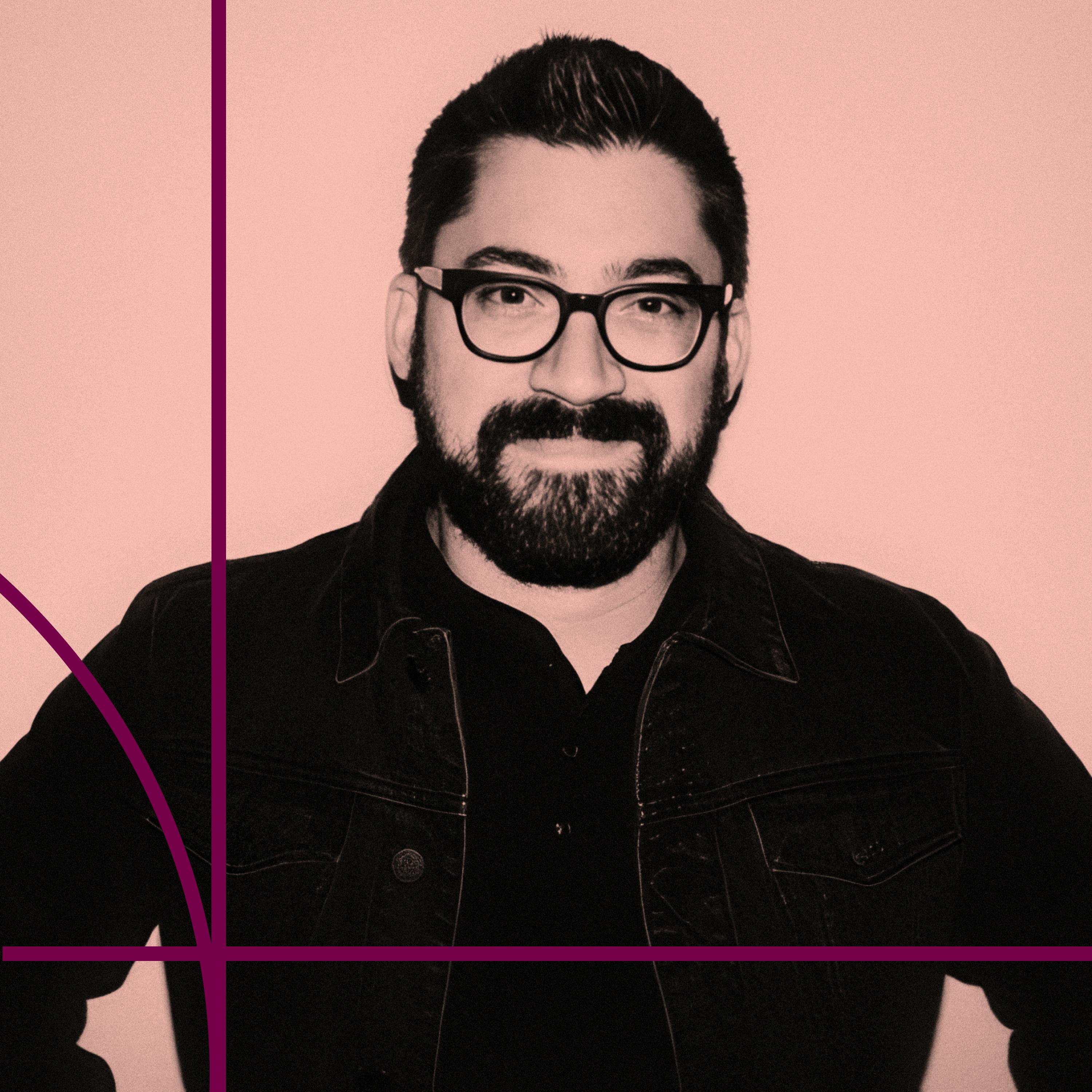
Design Better
Austin Kleon: Author of "Steal Like an Artist" on building a sustainable creative practice
00:28:35
In our conversation, Austin Kleon shares why he starts every day writing in his diary before he picks up the phone, how constraints (time, space and materials) actually unlock creativity rather than limiting it, and why the path to doing your best digital work might start with picking up a pen.
Loading summary
Transcript29 lines
- [00:00]
A
One of the great misunderstandings about creative work is this idea that you have an idea and then you go to the page and you write it down. And so much of the time I think it's actually the opposite is you go to the page and you start moving your brush or your pen or your pencil or whatever you have in your hand and the idea appears, the idea comes through the action.
- [00:30]
B
To make good creative work, you'll inevitably do a lot of bad work along the way. So building a thriving creative practice relies on showing up and doing work consistently, whether you feel inspired or not. And we could get trapped into thinking that if only we had the perfect space or the best pen or the right notebook, it would all be easier.
- [00:48]
C
But our guest today, Austin Kleon, has built a remarkable creative practice around a deceptively simple toolkit, index cards, newspapers, scissors and glue. And no, not AI. He's the best selling author of Steal like an Artist. Show your work and keep going. What makes Austin's approach so valuable is how he's translated these ideas into a sustainable daily practice that's lasted over a decade. In our conversation, Austin shares why he starts every morning with a newspaper and scissors, how how constraints actually unlock creativity rather than limit it, and why the path to doing your best digital work might start with putting down your phone and picking up a pen.
- [01:31]
B
If you've ever struggled to maintain a creative practice, or felt overwhelmed by tools and options, or wondered how to keep going when the work feels hard, this episode is for you. This Is Design Better, where we explore creativity at the intersection of design and technology. I'm Eli Woolery.
- [01:47]
C
And I'm Aaron Walter. If you're hearing this, you're not currently on our Premium subscriber feed. DesignBetter Premium subscribers enjoy weekly episodes. That's four episodes per month rather than just two, and all of them are ad free. Plus you'll get an invitation to our monthly AMAs with the smartest folks in design and tech. And if you subscribe at the annual level, you'll also get our Toolkit, a collection of our favorite design and productivity tools like Professional Plexity, Miro, Read AI and more. You'll hear a preview of this episode, but if you'd like to hear the full conversation, please consider becoming a premium subscriber@designbetterpodcast.com subscribe. The podcast is available to everyone through our scholarship program, so if you can't afford a subscription, just shoot us an email at. Subscriptions will help you out. We'll return to the conversation after this quick break designbetter is brought to you by WIX Studio, the platform built for all web creators to design, develop and manage exceptional web projects at scale. Learn more@wix.com studio. And now back to the show. Austin Kleon. Welcome to Design Better.
- [03:24]
A
Hey, thanks for having me.
- [03:25]
C
Yeah. So happy to have you here. Before we hit the record button, we were just comparing stories about mailchimp days. I used to work at mailchimp and know that you were kind of in the mailchimp orbit, coming to visit semi regularly and. And these days you actually visit a lot of companies. As somebody who thinks a lot about creativity and collaboration, I'm curious what you've learned by getting a sneak peek inside of some teams and companies about the creative process. Things that work and then things that just lead to utter failure and destruction.
- [04:02]
A
I don't know. I mean like, I get to blow in and blow. I'm like Bruce Springsteen, you know, it's like I blow in, I blow out. I tell everyone, keep going and blow out, like. But I will say I think the happiest people I find at any company are people who either have reasonable working hours, the working conditions are reasonable enough that they can have the kind of life that they want to have off time, maybe that looks like they're able to go home and be with their kids and have dinner, or maybe that means that they're given some time every week to work on whatever weird passion it is. My answer is really boring, which is it's just run like a good worker friendly company. That's usually where I see the most happiest, most creative people is just where the place is a decent place to work and the people are decent. And there's none of the romanticized shenanigans of the tech world. The long hours, the people are treated fairly, and they're given lots of time and space and autonomy to do their things. I don't think there's any real secret to it. And I think you see that in schools too. Anything throughout life is like, where do you see people being their most creative? And it's like, well, do they get enough rest? Do they have enough to eat? Do they have a space that they could go and dream? And do they have a place where they can gather? And it's pretty standard across the board. You know, there are things that are good for humans and it's good for human flourishing and it's good for creative work.
- [05:31]
B
So the whole push to this 9, 96 schedule might be a mistake in.
- [05:34]
A
The tech world, I think a lot of the tech world is a mistake, but, you know. Yeah, I think the. The older I get, the more I'm just interested in all the old stuff. It just turns out that all the old stuff, it remains true. It's just the really simple, hard things that really make the difference, I think.
- [05:51]
B
Austin, you wrote this book, Steal like an Artist. And like many of the best books I've read out there, that was suggested by my mom that I pick it up and read it.
- [05:59]
A
Thank you, Mom.
- [06:00]
B
Thank you, Mom.
- [06:01]
A
Yeah.
- [06:01]
B
So, you know, many people might be familiar with it, but the thesis is a lot of the great artists are probably everybody here on the planet is building upon the work of other people, and you can study it, you can remix it, and still find your own voice. And I think that message still remains true. But maybe what's changed since the book is written a little bit is this sort of influx of generative AI, which in itself, you could think of it as stealing because it's basing its own output on the work of everybody out there that's ever put anything onto the Internet. So how does this new technology reframe how you think about stealing like an artist? If it does at all.
- [06:39]
A
It's interesting. I mean, a book is like a mirror. You know, you kind of look in and you see whatever you want to see people find in a book, whatever they're looking for. So there are plenty of anti AI people who look at steel like an artist and, like, see, this is a book about using your hands and, like, being a person in the world and, like, making sure you're putting your own personal stamp on your creative work and not just copying. And then there's people who are super into AI. They're like, look, it's about stealing. It's what you know. So it's like, kind of an interesting thing to have a book that's reached that many people. For me, what makes human creative work so interesting is, you know, I think it was Basquiat. He said, like, an influence is something going through my mind. You know, it's really that I'm taking it in and it's going through my unique mind, and it's coming out of my body. When Basquiat was taking things and lifting stuff out of his little symbol source books and looking at other paintings and stuff, the work was still coming out of him. It was still a matter of how his hand moved on the page and that kind of thing. And I always think it's the limitations of humans that make the work really Interesting. For me personally, I always feel that what is really interesting about a work of art is a human being kind of working against their limitations. I'm really not impressed with AI in any way. What's least impressive to me about AI is just that it's owned by people who already have so much wealth and power that it's only going to benefit billionaires. It's still going to be the people on top that are getting the biggest benefit from people using it. So I'm skeptical of it for that reason. But really what I'm skeptical of it for is just that it takes away everything I kind of like about creative work. Everything that I really, really enjoy, down to the very like people like, oh, well, you can use AI to do all the grunt work that you don't want to do. And I'm like, but I like that that's what makes the work in a lot of ways. Like I'll give you a really concrete example. Like they're like, well, A.I. you could just have A.I. flip through your notebooks and it would scan everything. It would tell you what's in there. And I'm like, yeah, except I like turning the pages of my notebook. I like seeing random things and when I'm looking through, I find stuff that I didn't know I was looking for. And it makes me think about different things. And there's multiple times throughout the day that I do something that people are like, well, you could do that with a computer or you could do that with AI or whatever. And I'm like, to what result? I don't want the machine to do this stuff. There's a great meme online where this woman is like, I don't want AI to like make my work. I want AI to do the dishes so I can work on my art. But I think the other thing that's kind of interesting about Steal like an Artist for me is that it's a book where the fourth chapter tells people to use their hands. It's like right after I give you the kind of high level stuff that people remember in the book, like, still like an artist and write the book you want to read. Start out copying and then you end up with your own thing. Pretty early in the book, I'm like, hey, look, you need to like use your body. The more you can put your body into the work, the better you are. I was pretty anti screen like 13 years ago and I'm only more so now. I'm completely skeptical about it. And I really don't find much value at all. To me, in my own personal life, I find it, like, a really unethical thing, too, just on multiple levels. So, yeah, it offends me esthetically, it offends me ethically. It offends me from an ecological perspective. The data centers, you know, so it's just all that stuff. But I'm not the smartest person on the subject at all. I'm not the smartest person on any subject, really. It just, like, hasn't really changed much of what I think, other than I still think it's the human being that's doing the stealing that is the most important part. The other thing that I think is really interesting about AI is just that the way AI steals things is it takes everything. It's like, the average of everything. And so much of what I've learned about artists is that what you're missing in your education, like, what you haven't seen, what you haven't done, who you're not, is really, really important to kind of honing into something unique and original. So, for example, like, Herman Melville had never read Shakespeare, and he just, like, had written these kind of crazy adventure books about his whaling days and stuff like that. Stuff like, typey. And, you know, Melville meets Hawthorne, and he starts reading Shakespeare at 30, and all of a sudden it's like, whoa, this guy. And that's where Moby Dick comes from. It's that kind of like something being new to a human being. Like a human being experienced something for the first time, experiencing this influence that so many other people had already experienced. He's getting it for the first time, and he's, like, rising to the challenge of this text that he's wrestling with, you know, and that's, like, where Moby Dick comes from. So that's just like, one example. If I have any kind of style or personality to my work, it really comes out of all the things I'm not and all the things I haven't seen and all the things I haven't taken in. I think that's why AI work is just so average, because it is mathematically. Now, I do think that AI like that you train. Like, if you could train on your own stuff, I think that could sort of be interesting, too. But it was really funny. I saw Matt McConaughey the other day. You know, Matt McConaughey, he's one of those dangerous people that kind of. It's like, I'm smart, and you're like, you're okay, Matt, you know, but, like, smartish. You're a Good actor. You know, Everybody needs to know their lane. But I saw this clip of Matt McConaughey. He was like, man, if I could just take all my thoughts and my ideas and just, like, put it in one place and, like, just. And I was just thinking, it's called a fucking notebook, dude. That's, like what a notebook is. You just write your stuff down, you know, just like, you know. So for me, I'm just. I'm unimpressed. I'm unimpressed about this stuff. I'll say one other thing. Matt McConaughey's always saying stuff like, well, you know, my wife and I, we got rid of our king bed. And I'm thinking, that's your advice to people, get rid of your king bed. I've been married a lot longer than him, actually, and if I was going to rank a list of things that has helped my marriage, I'd say the king bed would be, like, high up there, you know? So I always have, like, a bone to Pick with Matt McConaughey for some reason, I don't know why. He'll probably see me in town, beat me up. Yeah, right. Like he cares. He just doesn't care at all.
- [13:26]
C
I want to go deeper into the idea of using your body more in your creative practice. And one thing that we have seen over the years is there's so many people. And of course, a lot of the folks that we've talked to through the years, they're in some sort of ephemeral creative space, like in software design, where you make a thing and it's almost like creating one of those Buddhist sand mandalas. Like, it's beautiful and it's perfect, and then the wind blows just so and it gets blurrier and blurrier until it's just off the side of the mountain and gone. That's the way software works, you know, death by many GitHub commits. We see a lot of folks who turn to something physical. Jonathan Heffler, who's a typographer, he's built this elaborate woodworking shop. We've seen people turn to knitting and other things. What's the value in a creative practice, in doing something physical?
- [14:20]
A
Just being a creature, kind of being in your creatureliness. You know, a lot of civilization is pushing us to not be the creatures that we are. And that's good in some ways. So I watch birds a lot. I'm not a bird, er, necessarily, but I have some owls in my backyard, or I did for a while. And one of the things that I really loved about looking at my little screech owls that we get out back here is that I check all these webcams of other owls, like bigger, more impressive owls. And it's really funny because if you look at owls, they all do the same thing. Like even the little ones, the little owls and the big owls, they all act the same, they do owl things. And I think there's something about being an owl that whenever I look at it, I'm like, that owl isn't thinking, how do I be an owl? You know? And so I think, like with humans, it's like we want to do things with our bodies. Like we're evolved to do things with our bodies. And so I think when you give yourself over to physical things, whether it's swimming or running, or knitting or drawing or riding a bicycle, which is one of my favorites, or surfing, you're really getting the full use of your creatureliness. When we're sitting at a desk at work, like a lot of us, they're just asking us for our frontal lobe, basically. But when we're doing these other things, it's like we're fully activated as a creature. And so I think it's just a matter of feeling like a whole person, like a whole human being. You know, you're just experiencing all your extremities and all your systems kind of working at once. And I think anyone that does physical stuff knows that it's really when your body is fully activated and you're kind of in another world and you're doing stuff. I mean, that's kind of when your frontal lobe lights up and stuff, you know, and you start getting those ideas. And I think that one of the great misunderstandings about creative work is this idea that you have an idea and then you go to the page and you write it down. And so much of the time I think it's actually the opposite is you go, go to the page and you start moving your brush or your pen or your pencil or whatever you have in your hand and the idea appears. You know, the idea comes through the action. Now obviously it can happen both ways. I will say in my own work, it's a two way street that the body tells the brain as much as the brain tells the body. And you know, you could get into lots of deep stuff about the cardian mind, body split and stuff like that. But I do think that it's really just about we like to feel like whole people out in the world. And I think that we're creatures, you know, and it's cool to kind of lean into your creatureliness and feel like a full human being.
- [17:05]
C
What you're saying about taking action and then ideas following that. There's a ton of research on this, that writing is thinking, drawing is thinking, playing music is thinking. When we kind of conjure this or we were to define it, we think it's like sensory deprivation. Or we're like isolated and just inventing some idea in our minds. But some sort of stimulus is required for a response, for some sort of interaction. And the more that we do that, the more ideas sort of follow.
- [17:42]
A
Yeah, there's a great book about this called the extended Mind. It's by a woman named Annie Murphy Paul, and she calls it brain bound thinking. That we have this idea, like my brain box, brain bound thinking that, like, thinking all happens in the head. That whole book is really great. A good subtitle with that book would be thinking outside your head. She does this great thing of showing how actually we don't think just in our heads. We actually think with our full bodies. So we'll think with gesture, we'll think with motion, we'll think with our guts. You know, your guts have as many nerves in it as anywhere else. And then there's thinking with your environment. There's like, what kind of space you're in. There's what's, you know, are you in nature? Are you in your office? Are you, you know, wherever? It's. So it's like physical space. And then she talks about other people thinking with others. I actually have this thing that I made based on her book. It's called a volvelle. And it's these spinny wheels. And these are her, like, kind of concentric circles for that book. So she has sensations, movement and gestures that's like inside the body and then outside in the environment. There's nature, there's buildings that we work in, and then there's ideas. She actually thinks that ideas are kind of a space that we engage with. And then there's the relationships we have. So there's experts, groups and peers. She has this whole, like, kind of concentric way of thinking. And I love that is the idea that thinking doesn't just happen in your brain box is that you're thinking with all these different things. You're thinking with other people. And those people can be dead, you know, they could be alive, they could be in other places. And then you're thinking with spaces and ideas and that kind of thing. And then you're thinking with your limbs and your whole body and stuff. And I just really love the way that she kind of explained that in that book. Kids do this naturally. I mean, when you watch kids, when they're thinking, one of the worst things we do with young kids is stick them in a desk in a classroom and say, sit still and learn something. A preschool is great because you go into preschool and it's like everybody's got a marker and they're playing with play. D'oh. And they're fidgeting and singing and all that stuff. And if you watch a kid learn something, I mean, we're all parents. We know what it looks like to watch a kid learn. They're learning with their full body, and babies are sticking everything in their mouths. Toddlers are touching everything. It's a really natural thing to do, is to use your full body to learn. But there's just something along the way. We get told that learning happens in the head.
- [20:27]
B
On the topic of kids, you've got an upcoming book called don't call it 10 Ways to Create Like a Kid, which you talk about the things that you learned from your kids. You say, being a studio assistant to your own creative kids. And I've certainly learned a lot from my own kids. I'm sure Aaron has, too. And we talked a while back. Actually, our second podcast episode was with David Kelly, who I teach with up at Stanford, and he had wrote a whole book about creative confidence.
- [20:51]
A
Yeah, I know. His brother Tom.
- [20:53]
B
Yeah, yeah, they wrote that together. And, yeah, it was exactly what you're saying, where essentially, we are teaching kids to unlearn their creativity as they go through school. So they have that very creative preschool phase. And then sit at a desk. Don't fidget. Some of you are creative, some of you are not creative. You get categorized as you go through school. So, yeah, maybe talk a little bit about some of the things that you learned or give us a teaser about the book that's upcoming.
- [21:20]
A
Yeah, so I was in this weird position where it's like the books kind of came at time, the same. Same time as the kids did. So I was home a lot with the kids, and I got to really watch them. And of course, they had, like, a supportive environment. I mean, their parents are creative, so it's just kind of like a natural thing in our house. But I was just struck by immediately just how good they were right out of the bat. I mean, I just remember, like, my son Jules, drawing when he was 4, and he just drew in a way that, like, anyone would be jealous of. He just had this, like, incredible line and energy and would just bash out like 40 drawings in a row. And it never mattered if the drawing was any good or not. You know, it's just that magical thing that you just wish you could do in the studio. I just kind of had this moment where I was like, I don't have anything to teach them right now. I need to just sit back and watch. Anytime I tried to insert myself into any of these processes, things got gunked up. And so I just kind of learned to be the facilitator, you know, And I would share the stuff that they were doing and they were making with my audience, you know, and people would be like, when are you going to write a book for kids? And I'd just be like, kids don't need a book, we need the book. We need the book to be more like them. And the thing I kind of like learned with the kids though is I was like, there's no way to really act like a four year old. Like, you can't really do that, but you can give yourself the conditions of doing that kind of work. You can give yourself kind of those parameters and conditions. And that was what I was really interested in. I was like, oh, how can you kind of parent yourself in a way to bring some of that stuff back, you know, how can you like remove some of these things that you've built up in your mind or in your space or whatever? How can you take some of that stuff away and give yourself the free rein that you'd give like a creative four year old, you know, and that's kind of what the book is about. You know, right at the top of my list is just time, space and materials. I just think that that's kind of the magic that you need time, you need dedicated time to play, you need play time. You need time where nothing is expected of you. There are no results that are needed of you. No one's going to interrupt you for the next 90 minutes. You're going to play. And then you need a space. You need a space to make a mess. You need a space that's your own. You need a space to spread out and have fun and whatever. And then you need things to play with. You know, you need your materials at hand. And they aren't necessarily the most fancy materials. You know, they're the materials that you can really play with and mess around with and make stuff that's wrong and start over again and that kind of thing. So that was just my mantra over and over with the kids is, do they have the time, space and materials and am I providing that. But I guess big picture, the title, Don't Call It Art is something that I heard John Baldessari say he taught fourth grade and he said, I learned so much from watching a kid draw. Kids don't call it art when they're doing stuff. And I thought, bingo, right? Cause like a lot of the hang ups that I kind of detect in the people that come to me, it's just this idea that they have to be making art, you know, they have to be doing something really important and something that's gonna make an impact and. And you know, they just like bring all this baggage and all this stuff to it and it's like, no, what you really need to do is play and see what happens. That was like the big thing for me. I think four is really the magic age. There's something about four year old that's just, they're just plugged into this kind of psychedelic way. Most of them are like pre language in a sense, so they're not like necessarily reading yet. My boys read really early, but I don't know, a four year old, there's just like this kind of magical thing to it. I really liked 4 year olds before they get to school. But yeah, it was just like the joy of my life watching these little, I call them like cavemen, Picassos. They're just like so on, just ripping it. I just felt so jealous, you know, I was like, I want to be like that. So I just felt like I'm just going to apprentice myself to these people, these little people, you know, I'm gonna make them the teachers. That was my whole job with them. Like early on, it's just like I'm gonna bring them in the studio and see if I can learn something.
- [25:44]
C
When we spoke with John Cleese, he told us the best thing about his childhood was boredom. And boredom was the space and the time. It's sort of the space, the time and the materials in one shooting match there. A lot of interesting new things came to him from that. And before we hit record, you also mentioned this idea of boredom and how that's so important. Say more about why you feel boredom is essential.
- [26:12]
A
Gosh, John Cleese was a big influence on the time, space and materials because he says, like boundaries of space and boundaries of time, that's what you need. I like his little book on creativity a lot actually, and I like his work.
- [26:24]
C
It's a great book.
- [26:25]
A
It is a great book. And I think boredom is just something that's.
- [26:32]
C
If you'd like to continue listening to this conversation, you'll need to subscribe@designbetterpodcast.com subscribe. Once you do, you'll get access to every full length episode, all ad free monthly AMAs with inspiring people in design and tech and recordings of all our past AMAs. The podcast is available to everyone through our scholarship program. If you can't afford a subscription, just email us at Subscriptions and we'll help you out. Your support makes design better possible. Invest in yourself and the design community by subscribing@designbetterpodcast.com. DesignBetter is brought to you by our pals at WIX Studio. If you want to grow your agency or your independent work that you're doing for clients, you need more than just a website builder. You need wix Studio. It's the all in one platform that's built to help you scale. You can design smarter and a hyper flexible responsive editor, cherry picking whatever your clients need from pre built UI elements and templates. You can deliver robust backends with built in e commerce solutions for every industry, letting self maintaining infrastructure just run itself and stop reinventing the wheel for every project. You can create shareable design systems with reusable assets, apps and components. And if your clients are growing really fast, no sweat. Wix Studio's AI powered CMS lets you turn a single layout into hundreds of dynamic pages. It's true more clients no longer has to mean more chaos. Wix Studio gives you one centralized view of every project and it makes real time collaboration just seamless. Do your agency's best work at scale. Build your next project on WIX Studio. It's an incredible platform. That's wixstudio. Com. Learn more at wixstudio. Com wixstudio. Com.