← Design Better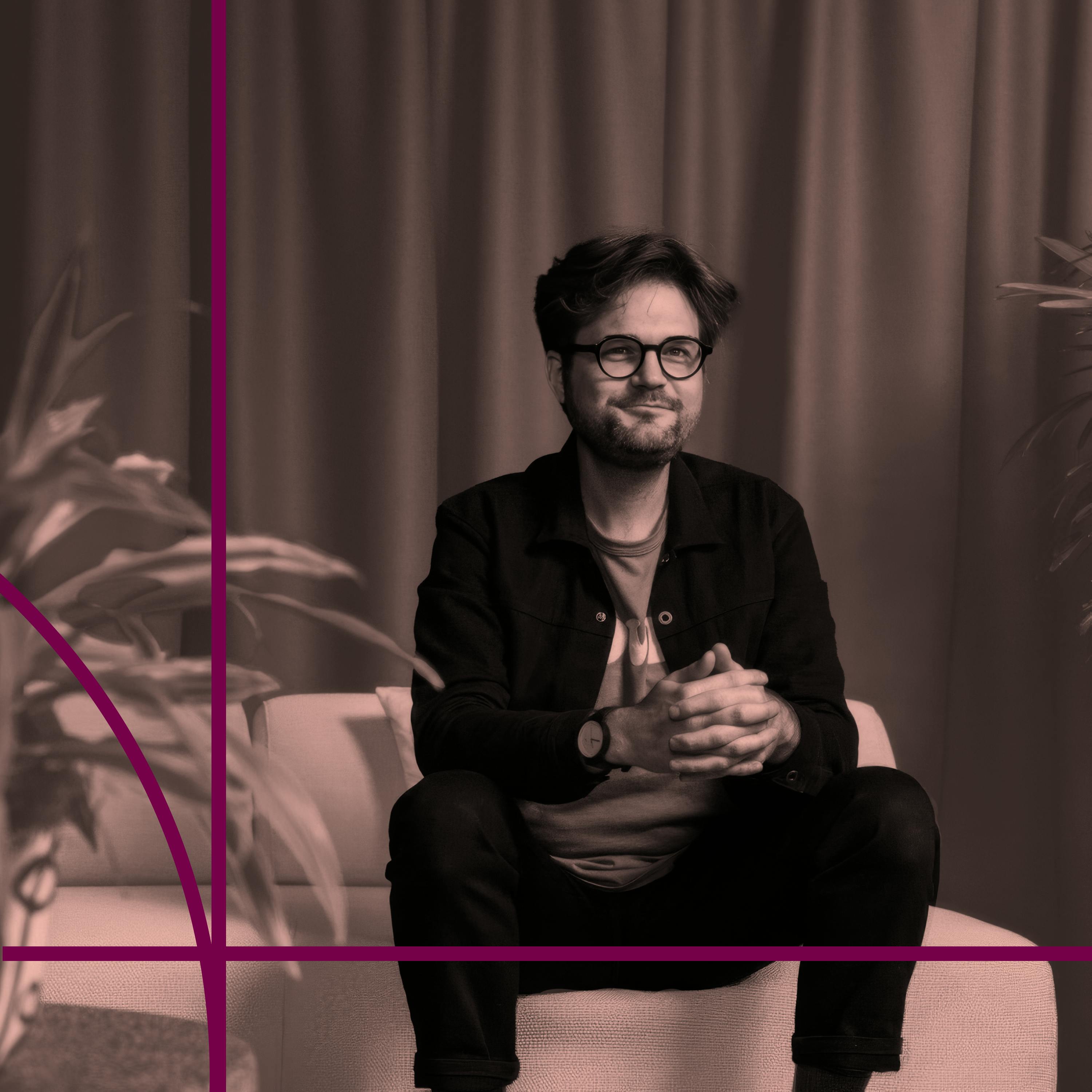
Design Better
Henry Modisett: Perplexity’s VP of Design on embracing ambiguity and leading with curiosity
00:47:27
We chat with Henry Modisett about his team approaches the design of AI-native products, and why traditional UX patterns often fall short in this new landscape. We explore the role of curiosity in AI interaction, how transparency and trust are earned (not assumed), and why embracing ambiguity might just be the most human-centered design move of all.
Loading summary
Transcript74 lines
- [00:02]
Henry Modiset
The very optimistic perspective is that with more time we do greater things than we do more things. I don't believe that people will become lazier. I think we'll just accomplish more through that empowerment. And I'd like to believe that there will be people from different backgrounds that will surprise you, that if you make it easier to code, maybe the next big software company comes out of somewhere other than Silicon Valley.
- [00:26]
Eli Woolery
AI isn't just another layer in our digital toolkit, it's it's reshaping the tools themselves and in the process transforming how we work, how we think and how we solve problems. Henry Modiset, VP of Design at Perplexity, is in a unique position to challenge many of the norms that have shaped tech for some time now. Perplexity just released a beautiful new browser called Comet that puts AI, not search, at the heart of the user experience. We've been thoroughly impressed with it already. As a designer with a computer science background, Henry takes a unique approach to his work. Rather than designing in Figma, like most of us mortals, he and his team design in React, building working versions of interfaces so they can use it while they shape it.
- [01:15]
Henry shares how his team approaches the design of AI native products and why traditional UX patterns often fall short. In this new landscape, we explore the role of curiosity in AI interaction, how transparency and trust are earned and not assumed, and why embracing ambiguity might just be the most human centered design move of all. By the way, you may have heard that we just launched the Design Better Toolkit, a collection of resources we love and use regularly. Toolkit gets you major discounts and free access to tools and courses that will help you unlock new skills, make your workflow more efficient, and take your creativity further.
- [01:49]
And Perplexity just happens to be part of our Bundle. You'll get six months free of Perplexity Pro. That's a $180 value, as well as credits and discounts on tools like Airtable, Read AI and other tools and courses like Prototyping with Cursor and more. To get access, you'll need to be a DesignBetter Premium member at the annual subscription level. Visit DBTR co Toolkit to learn more.
- [02:18]
This is Design Better, where we explore creativity at the intersection of design and technology. I'm Eli Woolery.
- [02:24]
Aaron Walter
And I'm Aaron Walter.
- [02:25]
Eli Woolery
At DesignBetter, our primary mission is to produce work that helps people like you refine your craft, improve your collaboration skills.
- [02:34]
Aaron Walter
And get inspired by the creative process of others.
- [02:37]
Eli Woolery
If you enjoy what we do here, the best way to support us is to become a premium subscriber at designbetterpodcast.com subscribe.
- [02:54]
Aaron Walter
We'll return to the conversation after this quick break.
- [03:01]
Sponsor/Announcer
DesignBetter is brought to you by WIX Studio, the platform built for all web creators to design, develop, and manage exceptional web projects at scale. Learn more@wix.com studio.
- [03:17]
Aaron Walter
And now back to the show. Henry Modiset, welcome to Design Better.
- [03:26]
Henry Modiset
Thanks for having me.
- [03:27]
Aaron Walter
Henry, you're doing some interesting work, you and your team over at Perplexity, which is a fascinating AI tool for deep research. Some new stuff that you've recently released, a browser. I have to say, I didn't see that one coming. Although when I saw the announcement, I thought, okay, that makes a lot of sense. So we want to jump into all of that stuff, but we always like to start from the beginning. In your origin story, you're sort of a unique designer in that you're a person who understands design, but you also understand computer science. In fact, you got a degree in computer science, is that right?
- [04:04]
Henry Modiset
Yeah, in high school, I was very much an artsy kid, mostly doing music as my outlet, certainly as my identity, my chosen teenager identity. But I liked tinkering with computers. And when I was applying to university, I got into art school, music school, and engineering school. And my mom, in her infinite wisdom, told me to go to engineering school. And I listened to her. And so, yeah, then I went into that world and certainly surrounded myself with a lot of different types of people than I was used to. It definitely opened up a lot of new skills for me and a lot of new ways of thinking. So it was good for me.
- [04:41]
Aaron Walter
Why do you think that was good? I mean, you could have gone into music and art and gotten a lot of different perspectives as well. Why was engineering the right path?
- [04:49]
Henry Modiset
There's a worldview that you get from engineering and I think architecture, that you kind of realize that, like, everything was made by somebody, everything around you. You know, like somebody had to figure out how to do it, make a decision how it should work, and figure out what materials are required. And, you know, there's like a million problems that were solved to build the thing that we're in right now. That's a worldview that I find so empowering because that also means that, like, you can change anything. You know, you can dream it up and make it happen or work with people to make it happen. That is a wonderful perspective to gain. And then actually learning how to make things is empowering in a very individualistic way. I obviously spent a lot of time making art, graphic design and music in high school, but you're making these artifacts for yourself. It's very much a practice of expression and art and all the wonderful ways that art is. But I find that learning how to make something for other people and being exposed to design and architecture as a gift of utility to the world, it really opened up a lot of things for me. I definitely think that's the right thing for me. I don't think I should have been an artist or something. I should be a designer. Getting to bring in some artistic sensibilities into the practice of engineering is a good outcome, I think a good combination of perspectives.
- [06:07]
Eli Woolery
So you spent a big chunk of your early career at Quora, and I used the product early on and I think one of the things that stood out was you getting answers from these very well known people. And I think that was part of the early kind of product stickiness and interest and virality was somebody that you wouldn't expect was on there answering a question. So there was sort of a inherent trust built in there. What did you learn from your experience there at Quora that you've sort of translated over to perplexity, where it also feels like trust and verifying sources is a core part of the product experience.
- [06:38]
Henry Modiset
There's a very kind of like high level, maybe like mission perspective. This is why I fell in love with Quora wanting to work there. The point of Quora was, you know, there's a lot of information on the Internet, but there's more information still in people's heads and their lived experiences and their opinions and their perspectives. And a lot of cases still just facts. Wikipedia was at the time the only repository for information meant for the long term. The goal was to build a mechanism for extracting all that other information and putting it in a place in a construct that would be organized and discoverable for both humans and machines. I loved that as like a problem because it felt important. And honestly, I think it still is. Because if you think about like, where is new information coming from right now on the Internet? There's new Wikipedia articles every day, but not that many. Then there's news websites and social networks where people are like mostly making stuff that's ephemeral. So I liked that and I love thinking about that. So I naturally thought a lot about knowledge and information and the history of epistemology. Out of all the things we could work on in tech, I liked that and I still do. And so there's the spiritual connection there. I learned a lot about what it means to be a designer. What was wonderful about Quora is that the practice of design was definitely, like, challenging whatever everyone else was doing. All of the designers were coding, they were thinking about product and product mechanics. We were like, maybe we're closer to game designers than other software designers. And what we talked about every day. And a lot of this all comes from Facebook. The coaching tree of early, early Facebook. Building a social network. How do you do that? Well, you need to run a lot of AB tests, you need to tweak the mechanics of how it works, trying to optimize the machine. There's a lot of system Y design thinking there. And the head of design at Quora was Rebecca Cox, and she just reinvented the role as they were building the company. So I learned a lot about, hey, there's a very different way to work also. You can design a company from scratch with a lot of intentionality with the roles. You can say, this is the role that we need to make the company successful. And then I would say the third major thing I learned from Quora is just building a social network. How to do it actually is incredibly hard. How you think about it, how you operate internally, how do you use data at the time, I mean, one of the kind of secrets of Quora was we had the highest concentration of machine learning engineers in the Bay Area for a couple years. And you look at all those people now and they're all doing wonderful things in AI, so just kind of got exposed to so many things in that environment just by being surrounded by a lot of really brilliant people.
- [09:18]
Aaron Walter
Common theme between Quora and what you're doing now at Perplexity is learning how people learn. What have you learned about that and how does it change the way you learn?
- [09:28]
Henry Modiset
I love teaching myself things and I think building products that accelerate that for other people is wonderful because there are people who naturally are like that and they do it. But it's also fun to challenge when people say, oh, I'm not good at a thing, and give them a new way to become good at a thing. My favorite example is a lot of people will say, like, well, I'm not very good at math. And I don't really think that's true. I bet you just haven't had it explained to you in a way that resonates because I have, like, a personal experience with that. Like, I never was good at math until I had tutors. I was never good at computer science until I started writing ActionScript and made it visual. I didn't understand object oriented programming at all until I rendered a circle on the screen and, like, made it red. I think that everybody learns in different ways. They need different metaphors, they need different perspectives, they need one on one. They need to talk to an AI, they need a group setting. It doesn't matter. So getting to bring tools like that to the world, and especially with perplexity being this ultimate bridge between you and any information because it can translate it into whatever you need it to do, that's very fun to work on. And I think there's just a greater appetite. And it's almost like I want to make that part of our culture. The hunger for knowledge and the sort of empowerment you get from learning and democratization of whatever you want to learn, you can just go learn how to do that. Because I think people kind of get stuck in the systems that they're in and they beat themselves up when they don't succeed in those systems. That's like a fun thing to get.
- [10:57]
Eli Woolery
To contribute to from a design perspective. Obviously, these tools do offer this vast array of learning opportunities for people. And Aaron and I have talked to someone on the show about how we're using it with our kids and trying to guide them in ways to use it in a productive way. But you could also imagine, at a rough level, two futures. One where it just accelerates our learning and makes us more creative and more intellectually capable, and then another one where we just become lazier and lazier and eventually rely on the machine to do everything for us. So, yeah, how do you strike that balance and help guide the experience?
- [11:30]
Henry Modiset
We're definitely building everything in a way that takes away the tedium. There are things that we all have to do every day that we could probably delegate. It's sort of an interesting question around, like, knowledge and what's important knowledge or what are important skills for people to have. My grandfather is a chemical engineer, and I saw a photo of his PhD project, and it's this thing with lots of tubes, and I don't even know what it is or how it works, but I know he did all the calculations to make it work on paper. Is it important to know how he did that? Actually, I'm not really sure. I bet if he had a calculator, he maybe would have done more. If he had AI, maybe he would have done even something more powerful or impressive. And so it's sort of hard to honestly judge all of that. The very optimistic perspective is that with more time, we do greater things than we do more things. I don't believe that people will become lazier. I think we'll just accomplish more through that empowerment. And I'd like to believe that there will be people from different backgrounds that will surprise you that could do a thing that you wouldn't expect. If you make it easier to code, maybe the next big software company comes out of somewhere other than Silicon Valley because you're not relying on so many of the networks that are required to get funding to build a team. Whatever. I do think it's probably going to be fine.
- [12:50]
Aaron Walter
A common theme that Eli and I have seen across a lot of different companies. People who are working in the tech space, sort of ironic, they don't have time to experiment with AI tools. They know about the amazing stuff that's happening, but they don't always know what kind of sets tools apart. Could you give people the quick nickel tour of what makes Perplexity different and how it solves problems for people?
- [13:17]
Henry Modiset
Yeah. One part of it is it's a moving target. There's a lot of consolidation in the market. But fundamentally, when we started the company, we were only thinking about answers and information and the sort of robustness of that information. And we saw, like, a huge opportunity. Because if you just use an AI model, interacting with it directly, you have to remember that it's just trained on the data that it's trained on. It only knows so much. And that paired with the most wonderful property of LLMs, is they always say something. The outcome is that they make up a lot of things because they don't know everything, and they're always going to say something. LLMs are out of the box, made to pretend to be humans, which I always found really unnecessary and sort of strange. And it opens up all kinds of other problems. And so from the beginning, we've always had, I think, a very different strong opinion on, like, okay, we need to do everything we can to make the answers be full of robust information. Like, it should feel like it's giving you the right answer. I mean, we should do everything we can to give you the right answer. And we should also strip out all the silly personality. You're asking a question, you want to read the answer. You don't want to have a conversation with a fake human. That being, like, a foundational ideal has led us to build a lot of things. But most notably, we combined search with the LLM at the beginning. That's, like, why we exist. That's how we got to this point, because it makes the answers accurate, and not only because it reaches the depth of information that may be on the Internet or through other API accesses that we've set up. It's kind of always up to date. You can say, like, what's going on today in Athens? And it'll tell you, because if the information is there, we'll find it and tell you. So that is a very different mission. We're trying to build a AI powered answer engine that everyone should be able to use every day as part of their daily life, as part of their work. AI is not the product. AI is what makes the product work. If you find yourself like, wanting to know stuff all the time and you want to believe that what you're getting is accurate or at least comes from some good sources, and you want to believe that every single time you ask a question, then that's the product. And that's why people become hooked. Because eventually, as you habitualize the usage of any AI product, you kind of want to make sure that it's reliable, because you don't want to think about it. You have a question, you want an answer, you want to move on with your day. You don't want to question in the back of your head, is that actually right or do I need to follow up on that? So that's always been our major difference. There's a million other things I could say, but that's how we got to this point.
- [15:49]
Eli Woolery
So I was listening to a show this week. The hosts were making the argument that the browsers are going away, everybody's going to just use this voice interface in the future, and you won't need browsers. And I kind of called BS on it because I think as humans, we need to interact in a multimodal way with information and applications we have. You don't want everything delivered by voice chat. So that's a little bit of segue into a new product you all are working on called Comet, which is a new browser. How did you make that decision to build a browser and what drove the decision to focus on that as one of your new offerings?
- [16:21]
Henry Modiset
I think most people in the world, they couldn't tell you the difference between a search engine and a browser. A browser is the most commonly used pieces of software in the world. If you're using any kind of computer or phone, you're probably using a browser at some point in your day. And most people just, they open it up, they type in something and they get to a website. They don't really think about the tool that much. They're not thinking about the interface. They just want the outcome to get to own as a designer, both the browser itself and the search engine experience, that lets us blend everything in a much more seamless way. It lets us do more powerful things and more useful things for the user. It also opens us up to being able to do all the agentic stuff that we've built. We have a very kind of clear design philosophy of the agent thing. It just happens again. Most people in the world, they don't think about any of this. They don't want to think about AI. They just want to type something in and get the outcome. But we can give you new outcomes that you didn't even think were possible. There's a duality to it. We want to meet people where they are every day. I mean, I'm trying to design software for everyone in the world. And so I think it's important to not build a facade that feels so new that it's scary that people don't want to try it. It's important to find the patterns that are the most common and bringing people to that. But as you get a little bit further in, it starts to do stuff that is surprising in a good way. It's both been a way for us to go to everyone in the world, bring something familiar, and also been a place for us to do actual innovation on. Sort of like how you might interact with the Internet. In an old browser, you're manually looking for links and clicking on them and scrolling. And if you're trying to find information or maybe even get an action done, if you really add up the seconds, it becomes a long time for things you don't really want to do yourself or you don't need to. With our browser, you now can either delegate it, you can do it collaboratively with an AI, or you can still do it yourself because it still works like a normal browser. I can say that in the abstract, you're probably like, I don't really know what that means. But when you try it and you find those queries that do something magical for you, everyone's getting these aha moments. And it's fun to have brought in something actually quite novel to one of the most common pieces of software that everyone's used to.
- [18:35]
Aaron Walter
Can you give us any examples of what those magical moments look like?
- [18:39]
Henry Modiset
The fundamental thing is whatever thing you're doing on the web, any kind of workflow, you can ask it to do that workflow for you. Maybe you're in a spreadsheet and you're confronted with something tedious like, I gotta go through each one of these columns and Annotate something. You can open the sidebar and say, like, can you do that for me? And then it'll light up and it'll start doing that for you. You can also just completely delegate it away. And so my funny query that I do with people in real life is I'll say, order me green juice to the office and it'll go and open up doordash and find a restaurant that sells green juices and buy it for me and send it to the office, and it will show up. And all I did was, like, type in a sentence. The way to think about it is like, anything you do on the web, you can just give it kind of a vague instruction. It's not like writing a SQL query. It does, like, infer what you mean, and it'll take it from there. And so our goal is just to make it work for more powerful things and make it work consistently and quickly. And I think it's cool to see what people do with it, because we don't really build this sort of stuff coming from like a here's 10 use cases. Let's nail them. We're more like building a network density of abilities. And then people show us what they're doing with it. Everyone has workflows on the Internet that you can't imagine, whether it's shopping, personalized stuff, doing their finances, or paying parking tickets or going shopping. And then there's all this work stuff that I don't even know. I don't know what an enterprise marketing person does on their browser every day. I don't need to think about that when I'm designing it. People are showing us things that we didn't plan for. One video that went viral the other day on Twitter, where some guy was using a web interface to control his smart house. You would log in and change the light, color, and stuff. And so he just told Comet to change the vibe in my room to be more relaxing. And so then Comet goes and opened up that and started tweaking everything. It's sort of like an interface for anything. And if you think about all the abilities that people have of what they do on the Internet, it's quite infinite.
- [20:38]
Aaron Walter
How do you think about designing for trust? I think the core premise where you started, which is we want to give you this deep knowledge, and we want you to trust the validity of this information, which becomes more and more critical these days. But now the tools are doing things on your behalf. How do you make sure that that green juice is not mystery liquid? That is harmful to me.
- [21:02]
Henry Modiset
It's a lot of details. You want people to feel like they're in control. It's just a lot of little UI details. I think naturally, with any agentic thing, the agent is always talking to you and saying what it's doing. It's like, okay, I'm gonna go to doordash and I'm gonna go scroll here and things like that. And when it's on a website, you see little screenshots of what it's doing to prove that it's actually doing that. We very intentionally display it in this sort of abstracted view where it's this timeline. It's meant to be really easy for you to read. If you want to stare at it, you can. It's almost like this extreme loading experience where you're watching it work and it's talking to you and it's sharing its notes, but you can always intervene and take over if you want to. So it's a lot of showing the. The work, if that makes sense. And I mean, to be honest, the most important thing we can do is not fuck it up. It has to actually work. It can't go off the rails. We only have a few chances to prove ourselves. And if it starts doing the wrong thing, then you're probably gonna be scared to try it again. The most important way to create trust is just for it to actually work. But beyond that. Yeah, we just try to show the notes and let people take over. And it's a moving target as well. I think we're still learning. There's obviously like an early adopter type of person is gonna be more comfortable trying riskier things. And so we wanna make sure that it works for everybody too.
- [22:26]
Aaron Walter
We'll return to the conversation after this quick break.
- [22:32]
Sponsor/Announcer
Design Better is supported by Masterclass.
- [22:35]
Aaron Walter
My wife gives me a hard time.
- [22:37]
Sponsor/Announcer
Because I fall into rabbit holes often. I'm curious about the world and I'm in a perpetual pursuit of knowledge. What can I say? I could spend hours doom scrolling or getting lost in Instagram, but I know that won't make me a better person. Instead, what I do is I pop open Masterclass on my phone and I dive into an enriching topic like how to eat better, which is taught by Michael Pollan. He's one of my favorite authors. And Nobel laureate Paul Krugman has a masterclass on economics that I can jump into. Or I can learn about writing from Margaret Atwood, graphic design from David Carson, photography from Annie Leibowitz, or documentary filmmaking from Ken Burns. Now that's a great use of my time and attention. And I think it's a great use of your attention too. Whether you want to learn to write better, improve your public speaking, enhance your creativity, or become a better cook. Hey, masterclass has in depth expertise that you can tap into anytime and any place. You can access masterclass on your phone, your computer, your tablet, smart tv, or even in audio mode.
- [23:43]
Aaron Walter
You can listen to these classes and.
- [23:45]
Sponsor/Announcer
Right now, Design Better listeners Get an additional 15% off an annual membership@masterclass.com DesignBetter that's 15% off@masterclass.com DesignBetter DesignBetter is supported by Saoli I love to travel, but what I don't like is the hassle of figuring out my cell phone situation when I'm abroad. In the past, I've gone to a kiosk at my destination airport to get a sim, but who wants to wait in a line after an international flight? Plus, those things always seem a little sketch to me. How much is this going to cost me? Saily makes all this super easy. You can download their app on your phone and you can buy an ESIM before you fly, so you're connected the minute that you land. And if you're traveling between countries, you only need one esim.
- [24:37]
Aaron Walter
You can get a global or a.
- [24:39]
Sponsor/Announcer
Regional plan and travel with the same ESIM plan. You'll save money significantly with an ESIM over your carrier's roaming plans, which gets super pricey quickly. Activate Saily's security features and browse more confidently. You can change your virtual location, block ads, and stay safer with web protection. All Saily ESIM plans are compatible for iOS and Android devices. If you travel internationally, this is what you'll need to stay connected without spending a fortune. Download the Saily app in your App Store. Search for Saily S A I L Y. Use Code Design Better at checkout and you'll save 15% off your first purchase. Or go to saily.com/designbetter. That's S A I L Y.com/designbetter. Design Better is supported by Miro. I've been in more meetings than I can count where I walked away feeling like we didn't solve the problem that we needed to. And guess what that means? More meetings. There should be a better way for people to collaborate and work through ideas together. Turns out there is. Miro's Innovation Workspace is an intelligent platform that brings people into a shared space to do their best work. I've used Miro to run workshops and design sprints with product designers around the world. And I've watched design and marketing teams work together to turn rough ideas into concrete plans and short meetings. Miro AI can turn unstructured data like sticky notes or screenshots into usable diagrams, product briefs, data tables and prototypes in minutes. It just accelerates everything. And you can also generate roadmaps and diagrams, tables, content and more with Miro AI dropping it all into a collaborative canvas. People who are afraid to draw feel comfortable in mural because they can write notes, they can give feedback and communicate their ideas with the easy to use tools built in. Help your teams get great work done with miro. Check out miro.com to find out how. That's M I R O.com miro.com and.
- [26:58]
Aaron Walter
Now back to the show.
- [27:05]
Eli Woolery
Given all the capabilities of these tools as far as actually designing products for AI, how has that changed your workflow for you and your team? I know you mentioned that you were already part of teams that used code a lot within the design process, but now that that door is open even further for, let's say, designers like me who don't have a background. And being a developer makes it very easy to go out and build a prototype. So how is that changing for your team and what kinds of tools are you taking advantage of?
- [27:33]
Henry Modiset
The brand and the product team are kind of embracing things in different ways. You know, what I learned working at Quora and working on early machine learning powered product experiences like user feeds and notification systems and automatic emailing things, is that it's really hard to mock all this stuff up because there are infinite states. You know, every user is getting a different experience, both in terms of what's being delivered, but also what the UI looks like. And so there's a lot of designing these stencils. I don't know what text is going to be in here, but some kind of text block will be there. So there's a lot of system design, like UI system design thinking required to do any kind of non deterministic product experience. And I find that that type of work, it can be done using a static tool like a figma, but it's a lot easier to do it in code even if you're in some kind of prototype environment, because either you're using real data, like the way that I design Perplexity is I would just ask questions and then change the UI and just keep asking more and more questions because I just wasn't sure whether the way that I was rendering everything was going to work. And so it helps so much to just be able to Test it with real outcomes to test the efficacy of your decisions. There's kind of like a natural requirement. But I found that everybody that dabbles in an environment where they're able to code as designers, they suddenly feel much more empowered. There's this feeling you get where you see something that can be better and you can just go change it. And that is addicting because if you're a designer that loves the most pedantic details, there's nothing in your way to just go make it better for the right people. It's incredibly empowering and gets you that last 10% of quality very quickly. Given that we really benefit from working with live data streamed through our designs, I think there's like a fundamental empowerment to designer's coding. And the sort of world has changed. Like React exists now. React's pretty easy to write and easy to understand. SwiftUI sort of equally so. The abstractions that we're working with are easier than they used to be. I think HTML and css, that era, a lot of designers were coding because it's not that hard to understand. And then the MVC framework era got really messy and designers were having to think a lot more than they should have. And now we're kind of back to a place where I think things are easier and you can use AI to generate a lot of your code. So there's this kind of explosion in output happening. I have designers that are fantastic engineers that are teaching designers who've never coded before how to get in there and do it. And it's a really kind of wonderful environment, both because it's empowering for them, but also it's kind of the right way to work for a lot of our problems. It's not the only way we work. I mean, if we're trying to solve like some hard interaction design problem, and when we're figuring out like our color system, there's better tools for that. But just having it available to us, it does change everything for how the product designers are working.
- [30:31]
Aaron Walter
And does that go both ways where engineers are also sort of bleeding into design as well?
- [30:36]
Henry Modiset
You know, it's funny, I found the opposite to be true. They're like, thank God we don't have to write CSS anymore, because CSS is not programming. It's like you're learning this layout language and you're learning the best practices on how to use it. And it's a thing that seems easy to write, but that's a trap because it is easy to put stuff on the screen, but it's hard to do it right. It's hard to do in a way that scales well, that is bug free, that considers mobile, web, whatever. And most of the tweaks you're making, I would call design decisions. For the most part, it's almost like let the engineers focus on bigger engineering problems, thinking about performance and speed and how to get the data on the screen. Whereas we're then kind of handling that UI layer. You know, it's a spectrum and I'm happy to embrace, like there's a lot of gray areas. We don't have this super clean delineation of designers do this and engineers do that. But I think that's good. It's solved easily every day by just being like, okay, here's 10 things we all have to do. Who's going to do what? Then projects go just fine.
- [31:34]
Aaron Walter
Do you have product people in the mix as well?
- [31:37]
Henry Modiset
We have a few. We're kind of in that later stage startup outcome where we've hired a lot of people. Most of the people in the company are ICs. We don't have that many managers, we don't have that many people in what I'd call meta roles, like people leadership or product leadership. It's a lot of ICs shipping stuff every day. And so there's certainly a coordination challenge there. And the few PMs that we have, the majority of their work is like, how do we get everybody on the same page and ship things in the right order and things like that. But I would say we're definitely a IC oriented company where people are just solving problems and shipping them themselves.
- [32:13]
Eli Woolery
I was listening to an interview on Rick Rubin's show with Arvind, one of your co founders. It was a great interview and it was clear that he really cares a lot about design and the product experience. And you were the founding designer at Perplexity. Is that true?
- [32:26]
Henry Modiset
Yeah.
- [32:26]
Eli Woolery
Yeah. What was that experience like and how did you get to know the founding team and what was their vision that excited you to work there?
- [32:33]
Henry Modiset
Yeah, so I worked with two of the other founders before at Quora, we worked together on the feed team. After Quora, they all went to do more stuff in machine learning or AI. And they started the company with like, hey, LLMs are interesting. Let's start a company. There's something to this stuff. And this was before ChatGPT had come out. And then they were toying around with ideas and building prototypes. And at some point they hit me up because they're like, we should have someone to do the ui and I'm the only designer that they probably ever met. And so I got lucky, so I started working with them. And I had been doing another startup, so I was very much in startup mode, writing code every day, building stuff, throwing ideas out the window. You know, I was certainly in this rapid iterative headspace. So I just jumped in, we started building stuff. We built like a completely different product before. And then eventually we kind of landed on this basic version of Perplexity. You know, a lot of the energy that I brought to the team, there's maybe like two things. One, I just built all the UI and so they didn't have to think about it. And naturally, whether they realized it or not, I was shaping a lot of the product because of that. It was like a way for me to very freely kind of first principles put together. Okay, what would an answer engine actually? How would that work? We weren't really thinking about Google, we weren't thinking about any other product. Just like, okay, you need to ask questions, you need to see the answer and follow up questions. Just felt like such a natural engagement loop. Then this sort of the construct of this linear thread came about, but one where it's just like question, answer, question, answer into an infinity. We were kind of just shaping it and building it. And by just kind of building what was in my head and not really having to explain it that much and showing them, I think they realized a designer can kind of open a new world that nobody else had imagined, if that makes sense. I do think that's the largest value that a product designer can bring is, hey, there's way more outcomes than you can imagine if you just let somebody run with an idea fast forward. We ended up with something that basically nobody else had. And because everyone else was copying each other, meanwhile, I was dead set on pushing what felt novel and different and just so much more thoughtful. So they got on board with that. Just I think naturally they started to see like, oh, there's a lot of value in this way of thinking through that product shaping. Once that felt good, then all the details came together, you know, and suddenly people were, hey, this product looks pretty good too. And there was just like a natural kind of building of design culture through shaping something that felt good, making it actually look good. And then I do think it really clicked when they allowed us to go all in on brand through just sort of like a pitch of like, hey, this is like gonna be good for our company strategy. We're in this market that's messy. There's a lot of different startups. There's Google. If we show up and act big and look serious and sophisticated, people are gonna take us seriously, act like we've always been here. That really worked for us. There's sort of this, like, snowball effect, I think, of the value of product design. Product designers that code, brand, brand strategy, like Ervin, I know, had not really thought about any of this before, but he pretty quickly got it and supported us and let us really cook, as he likes to say. I think we're really lucky to have a leader who really does support us in that way without getting in the weeds and changing it. You know what I mean? How often do you have, like, a leadership that understands design and respects it, but lets it happen? So I think that's a unique thing going on here.
- [36:05]
Aaron Walter
I think it's fascinating that there are so many founders, engineers, people out there that still don't understand what value design offers a company. And not abstract value, but real, concrete, tangible value that can be created. There's a reason why people pay lots and lots of money for luxury cars, luxury goods, et cetera, because it makes you feel something different. And there's real value in that. I wonder if you could say more. You said they probably didn't know any other designers and they didn't realize that there was something else that a designer could bring to the table. When I think of design and engineering, engineering brings a really great focused understanding of detail, of how something will work. But design is the telescope. This broad view of being able to see the big picture of how all of this stuff fits together. So you've got this microscope and telescope symbiosis there. How do you think about design and engineering and how they plug in?
- [37:11]
Henry Modiset
I found that I can be an engineer on any day, and I can be a designer on any day. And it's so easy to get too zoomed in as an engineer. One example to forget that, like, hey, this interface, this whole product could actually be completely reorganized to be a different way. And if you reorganize it slightly, it'll all work differently, even if the code's the same. There's this sort of composition part of product design that I think designers just are more comfortable imagining. In my head, I could look at Riverside and rethink how it could work. That seems to be harder to do for people that aren't designers. So there's that part of it. Because what happens most companies is without strong design as part of the product development process is you just see people copying each other straight up. The Exact same pattern, the exact same ui. There becomes a lack of original thinking because it's scary. And also maybe we don't have any other ideas. Obviously sometimes things become common patterns and they should be used everywhere. I think software typically could be more different from each other than it is if you just sort of play that out a little bit. The big thing that happened I think for us was we had been building our prototypes, ChatGPT launched and I was like, hey guys, this is not a consumer product, obviously. And they're like, what do you mean? Like, what does that even mean? The hardest part about being an intuitive person is like having to explain your intuition. Like, I think I'm maybe slightly better at that than I was 10 years ago. But it was like, look, you have to log in to use it. It's confusing. It's called ChatGPT. The interface is confusing. What is an AI model? I broke it down for them and I was like, we have an opportunity to build something for everybody if we just think differently and we approach things differently and make different trade offs. When you really kind of meld strategic company strategy with design, that really opened it all up in our conversations because then it's not that hard to slap brand on there too, because I don't really think of these as separate. It's like, how's it going to work differently? How are we going to build it differently? How are we going to tell the story of how it fits into your life in a way that creates contrast in the market? That's all one thing. And especially when you're doing a consumer product and it's like a free consumer product, you really need to have some conviction in how you do all those things because otherwise people are just going to be like, I don't know, it looks the same and then leave. You've got like 300 milliseconds of someone's attention span. It's a game that I think unless you've had to play it and make all those trade offs that you don't really think about. So that was like a lot of the early value that I think I brought. It's just sort of opening up that type of thinking to everybody. And very quickly I think we were rewarded for that. People were telling us back what we had been talking about internally. People would say like, oh, it's the best tool for answers. I'm like, okay, well we just put that in the ui. And so now people are saying that's what it does. That means we're winning.
- [39:52]
Eli Woolery
Aaron and I talk and have written in our newsletter before about the power of writing for designing good products. And most famous example is probably Jony I've who starts every project with writing and curious if you use writing as part of your design process and if so, why it's important to you.
- [40:09]
Henry Modiset
I sometimes do. I mean, I try to be very concise. There are a few questions that always need to be answered, like, why are we doing this? Who's going to use it, and how's it going to work? And I find that without writing those down, you get problems. At the very least, lack of efficiency. But it does create a consolidation of how people think. Because the alternative is if you don't do writing, then you have to do mockups. And that's a waste of time to go and have to do a lot of mockups just to get everyone to get on the same page about what you're building. You don't want to have to block everything on mockups. And so I think writing really gets you to a nice anchor as long as people read it. So certainly I like to start with just something at least like a vision that is clear.
- [40:55]
Aaron Walter
Do you find your colleagues are receptive to that? I have done some writing in the past, and I find that sometimes people will read it, sometimes they won't.
- [41:03]
Henry Modiset
It's funny. So Quora was like an essay culture. It was fun, but I think it ended up making us slower because we were thinking too much and debating through intellectualism. What I like about our culture at perplexity is you need to write something down. But it's like the most concise, clearest. Framing is what actually wins. As far as, like, a thing that galvanizes everybody. I kind of find that to be a nice challenge. There's like, enough that you can say, okay, just read these few sentences. If you don't, then you're not doing the right thing. But I think a longer essay doesn't fit into our culture. Or like, certainly not like a long prd or there's like the whole corporate PM thing.
- [41:42]
Aaron Walter
Thinking about how your team operates, I know there's some things that you focus on. Speed is a really important value for you. You're developing and spending less time on static mockups. You're building real time. What if you had a magic wand? Would you export from the way that your design team operates to other software companies out there?
- [42:06]
Henry Modiset
It works so differently in every company. The one that maybe bothers me the most is when design as an organization is used as a visualizer for leadership, particularly like the Anxiety of leadership. We don't know what to do. Let's ask the design team to explore 10 options. Build prototypes, go off and not actually solve real problems. I think when design gets sort of disconnected from the practice of problem solving, then it's kind of wasted because the only way to actually solve problems is build something that you have conviction about and then share it with somebody and see if they use it. When the whole product development cycle gets where design ends up on this, like, side path of making fake things, then you end up with a lot of nice fake things. And, you know, whether it's a nice fancy design system or like a prototype in like a origami or some sandbox tool, I just think all that's wasted energy because then in the end, did the product get better actually? And is anyone even learning anything? I mean, if I make a bunch of mockups and share with another designer, am I really learning anything compared to like, launching it and seeing if people click on the button or use the thing? And so I think some things happened where that seems to be a common thing. So if I could export anything, it's like, hey, what if designers actually solved problems? And we built a conviction that somebody needs to do that. Because what's happening is it's so much easier every day to make new things. The amount of code generated by a human is like 10xing. And so what's going to happen is you're going to have to make a lot more decisions on a higher cadence. There's no reason to do quarterly planning anymore. You should do bi weekly planning. And you got to reorganize how you make decisions and how frequently you do, because you can make stuff really fast. And if you can make anything and you can make it really fast, someone has to decide what you're making. How's it going to work, how's it going to look, how's it going to feel? And who better to do that than designers? Who's most comfortable making those decisions when there's infinite choices, the people that are used to it, that are used to navigating that kind of creative process or the problem solving process. So I do think that that's what I'd like to export. It's just a little bit of a reset of what does the designer even do.
- [44:25]
Aaron Walter
Yeah, I like that. You worked at Google for a long time and you worked on Gmail for mobile, is that right?
- [44:32]
Henry Modiset
Yes, I worked on the first Gmail iPhone app. I wasn't there for very long, but I did get to work on A pretty special project. It was at the time when Google was not really sure whether they should build anything on iOS, which is kind of funny to imagine now. But, yeah, it was this sort of side, small team that there was not much oversight and we built a really nice iPhone app, which ended up being really special. It's kind of like before anyone was thinking about design systems or we made every decision. And I worked with Champouri Rith, who's now on my team at Perplexity, so it's fun to work with him again.
- [45:12]
Aaron Walter
Yeah, I ask about that because it's such a contrast to working in a startup like this, where a lot of the ideas of I want our team to be quick, I want to write short, pithy descriptions. A lot of those things are possible in a small company versus if you're in a Google where there's just a lot of overhead for just any momentum, any movement whatsoever. I'm curious if you see yourself and the way that you think, the way that you want to operate, as you always need to be within this kind of sweet spot of company size.
- [45:47]
Henry Modiset
You know, there's a lot of reasons why big companies operate the way they do, and they certainly have more constraints. The reason why I didn't want to stay at Google, I mean, we had built Inbox, if you all remember Inbox, the new Gmail, and we got it, like, working internally. And then I remember the conversation was like, okay, we think we can launch this in two years. And I just remember feeling like, so miserable about that, like, having to wait that long and I don't know, like, what are we doing? And so I just wanted to go back and working in startups because there's just nothing more satisfying than actually making a thing and giving it to people and seeing them use it and getting value out of it. To, like, lose sight of that and to lose the iterative process, I think it's, like, boring for me. But I also think it's wrong as, like, a product development strategy.
- [46:34]
Aaron Walter
I hear you. It is hard. Yeah.
- [46:38]
Eli Woolery
Henry, we often close up with a question about what's inspiring you right now. But specifically, I'm interested just given that you're deep in this realm, what's inspiring you as far as AI tools and how are you personally using AI in your life? Right now?
- [46:53]
Henry Modiset
I'm kind of the worst person to ask because I put myself in a scenario where I only use Perplexity because it's the ultimate dogfooding experience. I'm going to use this, try to use this thing until it breaks and then try to make it better. I don't use anything else, really. We play with a lot of stuff on the brand design side. We use midjourney and crea and whatever new thing helps us be expressive on brand. But I'm trying to use Perplexity and I'm trying to break it. I'm trying to make it better. So that is dominating my life. I don't really know what anything else is like. It's how I choose to think about it. I am inspired, though, by. I do think we can change anything about how people interact with software. I feel very excited to try to take a crack at everything. I feel empowered to do that. We've had a lot of momentum, challenging how things operate, and the most commonly used pieces of software, categories of software. It's very inspiring to just be like, okay, what if it worked differently? And then we try to build it and then some people like it, and then that's a beachhead, and then we go forth from there. And so I think that's already happening with Comet. So I'm very inspired by that because I also lead the brand team. I'm just inspired by the fact that it doesn't seem like most tech companies think about brand at all. And so that's just a huge opportunity for us because there's whole industries where they only compete on brand. So there's like so many playbooks and so many ideas to be inspired by and borrow from. I mean, you said it earlier. It's like you look at cars and watches and alcohol and cereal, like, whatever. There's just like so many stories being told and so many people fighting on the edge of just their brand. And so just to kind of get to absorb all of that and pick and choose what's interesting to us and then bring that in is just like another extra thing that we get to throw into our strategy.
- [48:39]
Aaron Walter
Such an interesting job that you have, Henry, and such a fun way that you're approaching it. Where can people learn more about Perplexity and more about you?
- [48:48]
Henry Modiset
You can go to perplexity.com or you can go to perplexity.com comet and I'm on Twitter as Henry Mata said.
- [48:57]
Aaron Walter
Fantastic. Henry, thanks so much for being on Design Better.
- [49:00]
Eli Woolery
Cool.
- [49:00]
Henry Modiset
Thank you for having me.
- [49:06]
Eli Woolery
This episode was produced by Eli Woolery.
- [49:08]
Aaron Walter
And me, Aaron Walter, with engineering and production support from Brian Paik of Pacific Audio. If you found this episode useful or we hope that you'll leave us a review on Apple Podcasts, Spotify or wherever you listen to finer shows, or simply drop a link to the show in.
- [49:26]
Eli Woolery
Your team's Slack channel designbetterpodcast.com It'll really.
- [49:30]
Aaron Walter
Help others discover the show. Until next time.