← Design Better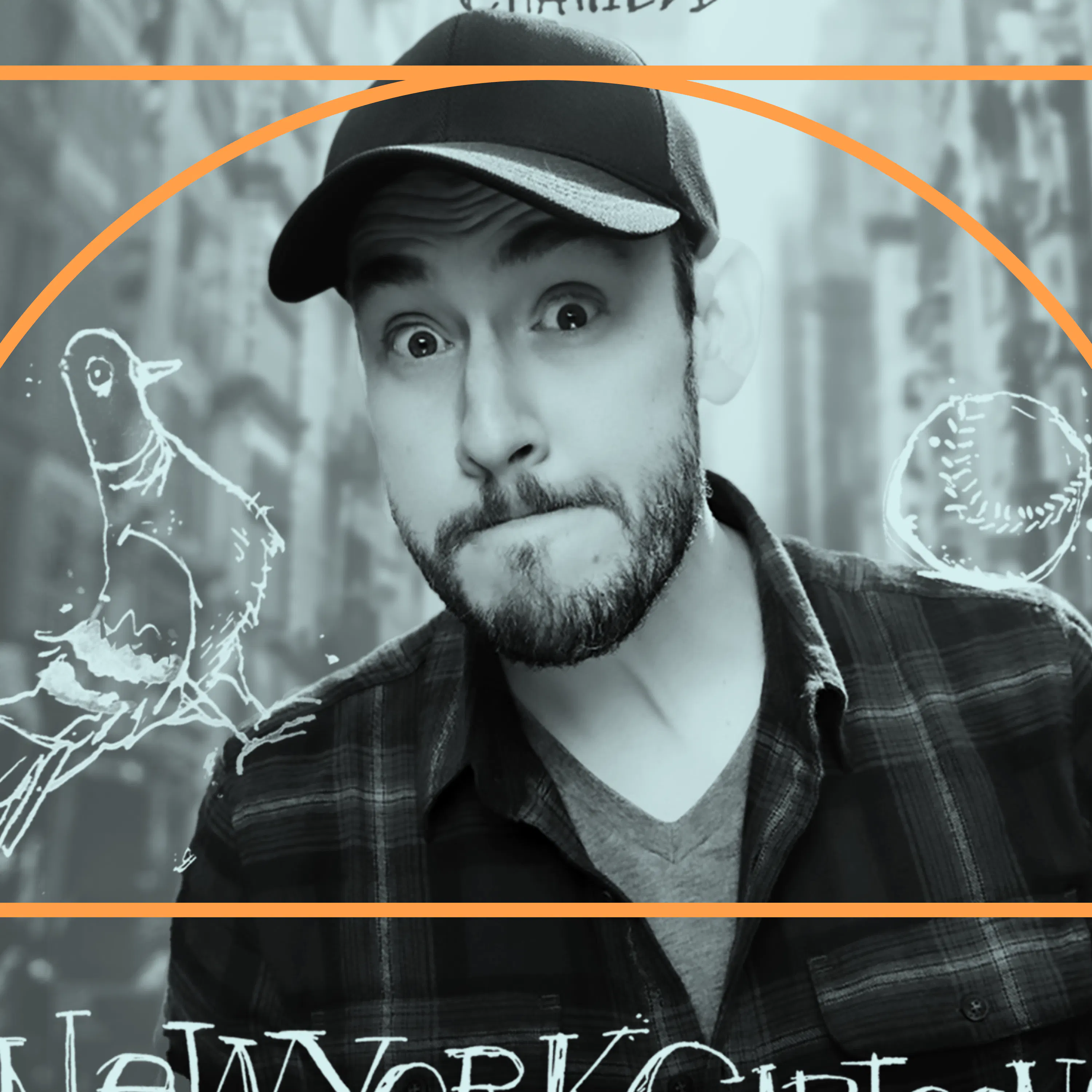
Design Better
Jason Chatfield: New Yorker cartoonist on his creative process
00:13:43
We talk to Jason Chatfield about the importance of embracing mistakes, how he collaborates with writers, the cartoon selection process at the New Yorker, and why creating a large volume of work is critical to creative success.
Loading summary
Transcript15 lines
- [00:00]
Aaron Walter
Hi there, Aaron Walter here. If you're hearing this, you're not currently on our premium subscriber feed. Design Better Premium subscribers Enjoy weekly episodes, four episodes per month in total rather than two, all ad free and invitations to our monthly AMAs with the smartest folks in design and tech. You'll hear a preview of this episode, but if you'd like to hear the full conversation, please consider becoming a premium subscriber@designbetterpodcast.com subscribe. It's just $7 a month and it supports not only your personal growth, it also makes our work at Design Better possible. The podcast is available to everyone through our scholarship program. If you can't afford a subscription, email us@subscriptionshuriositydepartment.com and we'll help you out.
- [00:50]
Jason Chatfield
I guess it's a natural thing to want to avoid making mistakes. You want to just kind of get everything right the first time, but it's a bad way to do things, really. Ultimately, the way you get better is doing a thing and then kind of screwing it up and then learning the lesson and then moving on.
- [01:10]
Eli Woolery
The New Yorker has great writing, but Aaron and I are pretty sure we're not the only ones who flipped through the magazine before reading any articles to find all the great cartoons from legends like Roz Chast or Saul Steinberg. So you can imagine how thrilled we were to get a chance to speak with Jason Chatfield, a New Yorker cartoonist who also happens to be a very talented illustrator and is inspiring standup comedian.
- [01:30]
Aaron Walter
Jason's also got a new substack that we love about his creative process. It's called Process Junkie. We talked to him about the importance of embracing mistakes, how he collaborates with writers, the cartoon selection process at the New Yorker, which is brutal, and why creating a large volume of work is critical to creative success. This is Design Better, where we explore creativity at the intersection of design and technology. I'm Aaron Walter.
- [01:59]
Eli Woolery
And I'm Eli Woolery. You can get ad free episodes, bonus content, discounted workshops, and access to our monthly AMAs with big names at Design and Tech. By becoming a Design Better premium subscriber. It's also the best way to support the show. Visit designbetterpodcast.com subscribe to learn more.
- [02:16]
Aaron Walter
And before we jump into the show, we want to give a quick shout out to a few listeners who have helped us reach a broader audience by recommending Design Better to friends, family and colleagues. Our sincere thanks to Jason Beard, Enrique Timotillo, Anna Kowalik, Festus, Andrew and Atikan Bajaxis Our sincere thanks. Thanks so much. We'll return to the conversation after this quick break. Hey Web Designers, let's talk about creative burnout. You're working on a site for a really big client, but between resourcing, feedback, tight budgets and even tighter deadlines, it just doesn't make the cut. Wix Studio helps close that gap so you can deliver your vision with less friction. Built for agencies and enterprises, you get total creative control over every last pixel. With no code, animations, AI powered tools, reusable design assets, advanced intuitive layout tools, and a figma to WIX Studio integration which is very cool. You can design the way that you want to and deliver when you need to. And if you're worried about the learning curve eating into time you don't have, don't be. Wix Studio is intuitive by design so your entire team can hit the ground running for your next project. Check out Wix Studio.com that's Wix Studio.com W I X S T U D I O I love wine, but I often feel overwhelmed by the options out there. But I recently joined Wine Access and I'm learning a lot. Wine Access not only ship to your door some of the world's most inspiring wines, they also educate subscribers with full color information cards that accompany each bottle. I love these cards. They provide details on flavor profile, what food your wine pairs well with, how long to decant, the ideal drinking temperature, and plenty of fascinating information about the producers. This month I got a four bottle shipment from Wine Access's new club called the Waitlist, which is curated by culinary icons. The box I received is from Atomics, a two Michelin star restaurant and the top US restaurant on the World's 50 Best list. Other curators include Emeril yes, that Emeril of New Orleans and Daniel Boulud and his flagship restaurant Danielle in New York City, which is also a two Michelin star restaurant. It's such a fun way to learn about wine and everything you receive will be a winner. I've been super impressed by how thoughtfully Wine Access curates and educates. You should totally join the Waitlist wine club. Just visit wine access.com waitlist and use promo code designbetter all one word for 25 bucks off your first shipment. That's wine access.com waitlist and Use the code designbetter to save 25 dollars. The holidays and snuggly weather are upon us. It's a great time to enjoy great wine with the people that you love. Wineaccess.com waitlist. And now back to the show.
- [05:38]
Eli Woolery
Jason Chatfield, welcome to the Design Better podcast.
- [05:41]
Jason Chatfield
Thank you for having me. It's great to be here.
- [05:43]
Eli Woolery
We are really excited to have you here and we happen to just kind of run into each other at the substack event. And I've learned more about your work and both an air and I love what you do. So we would love to just dive into, you know, your process and the different types of work you do. And maybe we can just start with some the kind of foundational principles that you have. And we're kind of curious about the different approaches you have. And being a cartoonist versus, you know, more of an illustrator illustrating a portrait. We could talk us through that a little bit.
- [06:13]
Jason Chatfield
Yeah, sure. I mean, I'm a cartoonist, an illustrator and comedian and that's all I've been doing for 20 years. That's my full time gig. And the thing about being a cartoonist is that you have to adapt all the time and change your process based around new tools and new markets. I guess unlike some artistic areas where you can kind of just double down on one thing and then just do that your whole career, I've sort of changed my process like maybe 100 times and my style and all kinds of things. So I've always lived with a sort of philosophy of like a very adaptive kind of creative process. So it's a combination of that freelance mantra of say yes and figure it out later and really become obsessed with the process of doing the thing instead of finishing the thing. So, yeah, I mean, I do cartoons for the New Yorker, which are gag cartoons. I did a syndicated comic strip, like a newspaper comic strip that was running in 34 countries around the world. So that in itself was its own process of like writing and drawing. And because it was a legacy strip, I was drawing it in someone else's style. So it was like speaking in someone else's voice for a long time. And the process of those two kinds of cartooning, like gag cartooning versus sequential art, comics trips, it's as different like as stand up comedy is from improv. It's a totally different craft or sort of set of expertise. So those things, they're my main work and my philosophy around them really is to only ever measure that style or that work against whatever I was doing last week instead of getting sort of stuck in the trap of comparing myself to way better artists on Instagram and Pinterest and Behance and all that sort of stuff.
- [07:58]
Aaron Walter
The channel approach, I think is super interesting because so We've worked with a lot of illustrators in the past, and that's a little bit more straightforward, that there's a client who wants to represent some ideas, and then there's sort of a back and forth. I think most of our listeners will have some notion, even if they're not illustrators or haven't worked with illustrators, some notion of how that works. Whereas cartooning and the medium. And you talked about adapting as things change, that one is a lot more, you know, speaking for myself, it's mysterious finding these opportunities with, let's say, the New Yorker or syndicating a cartoon. There's also just like this added dimension of. It's not just the craft of how compelling your art is, but it's also how funny, how salient, how relevant is that? Can you talk to us about. I guess there's two pieces here. How you think about the channels and how those have evolved in the past 10, 15 years or so, and then how you think about developing humor and bringing that into your work.
- [09:09]
Jason Chatfield
Yeah, it's a really interesting question because it has changed, especially in the past five to 10 years. It's had a really big pivot point where we've gone from this kind of monoculture where everyone is kind of absorbing the same things and having the same points of reference to these infinite slivers, these narrow slivers of niche audiences and people really playing to their own crowd, where everything from. As far as writing humor, you end up having to find some kind of common reference that you hope everyone understands. And because cartoons for a large part are based on tropes and cliches as like a benchmark of, hey, you get that there's a desert island and there's two guys on the desert island who are stranded. Okay. Hopefully you understand this premise. And then here comes the joke. I think the very difficult craft of making jokes that land with the audience that you intend them to land with, it's one of the most elusive and difficult things that I don't think anyone ever quite masters. But they certainly get much better at it with practice. I actually work sometimes with a writing partner of mine. He's a comedian. His name is Scott Dooley. We actually have a podcast called Is there Something in this? Where we literally just come together and do, like a writer's meeting and ask each other, is there something in this? These jokes, and we just noodle with the visual idea, show, don't tell. The order of the words, the syllables, the vernacular, the references. You can really get into the weeds on I guess, dissecting the frog on humor and comedy. But it really feels like the kind of thing that once it becomes a part of your process, that you are understanding all of these central tenets and these concepts of, like, all right, these are the mechanics of a joke. This is why this is funny, then you start to build this corpus of, I guess, expertise in that one thing, and you can replicate it across channels. So when I'm doing a cartoon for the New Yorker, I'm using the same elements and principles of writing jokes and showing, drawing jokes, illustrating and composing an image so that I'm drawing the eye around the image in a very deliberate way. I'm directing the reader's attention, but I'm also doing that when I'm telling a joke on stage. I'm building a picture in their head with words and maybe gesture and expression. And then again, when I'm doing a comic strip or an illustration, like a humorous illustration for a magazine, like, I did a bunch of work with Mad magazine for a long time, and you apply those same elements of principles of humor and those fundamentals to that and kind of map it onto that channel so it's like a skin. You're kind of skinning onto these different channels, going, all right, I understand that this is the facility that I have, you know, for understanding the joke and in my voice for this audience. And then you just kind of map it onto that platform or that channel or audience. And as I mentioned, you know, it's changed a lot very recently, especially with the Internet becoming so algorithmically driven and, you know, probably more outrageous and offensive things getting more traction than happy, funny, silly, interesting things. It's become a very interesting dynamic to try and navigate in these very exponentially changing times.
- [12:34]
Eli Woolery
I'm curious how to some degree it feels like humor. You can have a sort of an objective benchmark. It's funny. It's not funny. And there's subjectivity, too. Some people find things more funnier than others. I'm just sort of curious about the process, say, at the New Yorker, where, from what I've heard, it's something of a meritocracy whether you're a newer cartoonist like yourself, not that you haven't been doing it for a long time, but versus somebody like a Roz Chast, who's been there for 40 plus years, you all submit your cartoons. Nobody really gets preference over the other ones. It's really down to the editor's sense for whether this is funny or not. Is that true? Could you talk through that kind of.
- [13:06]
Jason Chatfield
Submission process that has also changed in recent years, so there was an interesting shift in 2017. The longtime cartoon editor Bob Mankoff.
- [13:20]
Aaron Walter
If you'd like to continue listening to this conversation, you'll need to subscribe@designbetterpodcast.com subscribe Once you do, you'll get access to every full length episode, all ad free monthly AMAs with inspiring people in design and tech and recordings of all our past AMAs. The podcast is available to everyone through our scholarship program. If you can't afford a subscription, just email us@subscriptionshecuriositydepartment.com and we'll help you out. Your support makes design better possible. Invest in yourself and the design community by subscribing@designbetterpodcast.com.