Loading summary
Transcript140 lines
- [00:01]
Debbie Millman
Hi TED Podcast listeners. It's Elise Hu here from TED Talks Daily. Thanks for making our podcast part of your routine. We really appreciate it and we want to make your favorite TED podcasts even better. We put together a quick survey and we'd love to hear from you. It only takes a few minutes, but it helps us shape our shows and get to know you, our listeners, way better. Head to the episode description to find the link. Thank you again for listening and for taking the time to help our shows. This episode of Design Matters originally came out in October of 2024. I think probably whether we know it or not, we all are a little drawn to illustration because it's our first introduction to visual art. Most of us as kids, you know, we're seeing our first art, we're reading our first prose and poetry in the form of picture books from the TED Audio Collective. This is Design Matters with Debbie Milma for 19 years, Debbie Millman has been talking with designers and other creative people about what they do, how they got to be who they are, and what they're thinking about and working on. On this episode, Carson Ellis talks about her career as an illustrator and picture book author and teaches us to speak insect do is talk and another one says ma ebadow onk plunk. And then the third one says do kimmeplunk. Does it ever feel like you're a marketing professional just speaking into the void? Well, with LinkedIn ads, you can know you're reaching the right decision makers.
- [01:38]
Carson Ellis
You can even target buyers by job title, industry, company seniority skills. Wait, did I say job title yet?
- [01:46]
Debbie Millman
Get started today and see how you can avoid the void and reach the right buyers with LinkedIn ads. We'll even give you a $100 credit.
- [01:53]
Carson Ellis
On your next campaign.
- [01:54]
Debbie Millman
Get started at LinkedIn.com results terms and conditions apply. Trust isn't just earned, it's demanded. Whether you're a startup founder navigating your first audit or a seasoned security professional scaling your GRC program, proving your commitment to security has never been more critical or more complex. That's where Vanta comes in. Businesses use Vanta to establish trust by automating compliance needs across over 35. Frameworks like SoC2 and ISO20 centralize security workflows, complete questionnaires up to five times faster, and proactively manage vendor risk. Vanta not only saves you time, it can also save you money. A new IDC white paper found that Vanta customers achieve $535,000 per year in benefits, and the platform pays for itself in just three months. Join over 9,000 global companies like Atlassian, Quora and Factory who use Vanta to manage risk and prove security in real time. For a limited time, get $1,000 off vanta@vanta.com tedaudio that's V A N T A.com tedaudio for $1,000 off imagine a.
- [03:01]
Carson Ellis
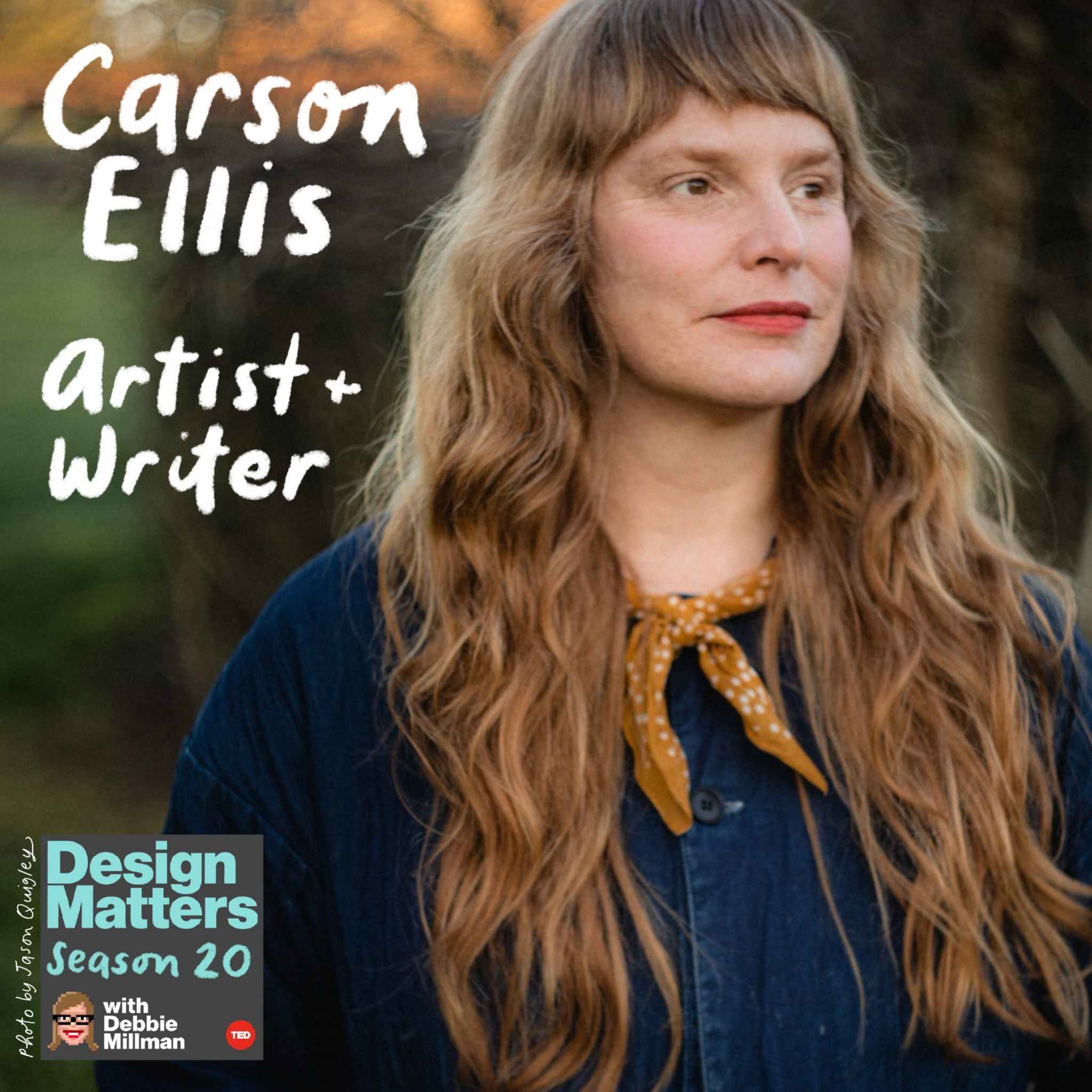
Toilet so striking it inspired a couture dress. That's right, Kohler's Vale Smart Toilet in Honed Black actually inspired fashion designer Laura Kim to create a stunning black chiffon dress that debuted on the Runway at New York Fashion Week. The Vail Smart Toilet, with its curved design, deep, rich textural color, touchscreen controls and customizable cleansing features, can transform your routine into something extraordinary. That's the power of design. Design changes everything. Vail's Smart Toilet in Honed Black only from Kohler Discover the Vail Smart Toilet and go behind the scenes of Kohler's partnership with Creative Director Laura Kim@kohler.com hi, this is Debbie Millman from Design Matters. Work today moves fast, but Monday.com is here to help with their work management product. It's built for more than just marketing teams. It connects entire organizations to bridge the gap between strategy and execution. Plus, with built in AI capabilities, your team can work smarter, not harder. Maximize your marketing impact with the first work product you and your team will love to use. Visit us@Monday.com to learn more. Part of the point of keeping a journal is so you'll have a record of everything that's happening to you and that you don't forget. In many ways it is evidence of living. But what if years later you forget you even wrote that journal? That is what happened to Carson Ellis. A few years ago she found eight typed pages documenting the week she moved to Portland. As a young artist with no money and few prospects, Carson Ellis says she's now a little embarrassed by some of what she refers to as the twee phrases and intellectual name dropping of her younger self. But maybe because she's now the successful author and illustrator of best selling books like Like Home and Do Is Talk, she did not run from that younger self. Instead, she took that journal as is and illustrated it. Her brand new book, One Week in New Paintings for an Old Diary, evokes the alternative art and music scene in Portland at the turn of the century and the heart of a young woman living through it all. Carson Ellis, welcome to Design Matters.
- [05:33]
Debbie Millman
Thank you Debbie. Thanks so much for having me.
- [05:36]
Carson Ellis
Oh, absolutely. Carson, I understand that you would love to be a fly on the wall during medieval Europe. Why is that?
- [05:47]
Debbie Millman
Wow. Gosh. I don't have an answer for that question. I often say I think I would maybe rather be a fly on the wall in medieval Europe than a woman living in medieval Europe. I think fair enough to see just kind of day to day life during that period because I love the art and the fashion and the architecture and just the simplicity of a medieval life is really appealing to me, but, you know, it's not appealing to me in a practical way. I don't think I would want to be living then. I'd rather be a fly on the wall, observing.
- [06:28]
Carson Ellis
You know, the funny thing about being a flower fly on a wall. Flies are just generally not very popular insects. You know, I'd rather be a butterfly on a wall or even a ladybug, which I know some people love and some people don't, but they're so much prettier.
- [06:44]
Debbie Millman
Yeah, that's true. I might amend it because flies are like my least favorite animal. A butterfly on a wall. Maybe a praying mantis.
- [06:51]
Carson Ellis
Ooh, yeah, definitely. Carson, you were born in Vancouver to parents you have described as hippies who were living in a van with a. They were also then in an apartment that they were evicted from. Where. Where did you all go during this very sort of time of upheaval as you were a baby?
- [07:15]
Debbie Millman
Well, first of all, my parents don't totally agree with this description of them as hippies, but on paper they feel like they were hippies to me. They. They did have this sort of like wonderful sounding, tricked out hippie bakery van that they lived in. I can't remember if they were evicted, but they weren't. They didn't have a place to live when I was born. They were staying at a friend's house. They were in Vancouver, bc. My grandmother, my maternal grandmother lived in New York and came out to Canada and sort of convinced them to move back to New York with her. So they did. My Canadian dad and my New Yorker mom moved to Brooklyn where my dad went to work for my grandpa, his father in law at a printing company.
- [08:02]
Carson Ellis
And then you moved to Mount Kisco up in Westchester. And I believe you lived in a rented carriage house of a former country home of a Vanderbilt until you were about seven. What was that like?
- [08:14]
Debbie Millman
Gosh, Debbie, you did so much good research. It's so cool. It was amazing. It was. Yeah. So what it was was sort of like the country estate of a wealthy New York family. It was a Vanderbilt and a Hammond and their kid or one of their kids was Actually, John Hammond, the famous music producer. And I think that was probably their country home or something. But by the time we lived there in the 70s, the big estate house had gone to ruin. It was sort of decrepit. And there was, like, an old caretaker who looked after it. And we lived in the carriage house. So it was sort of like a big loft on the second floor where we lived. And the downstairs would have been, I guess, where there would have been carriages and maybe horses. And it was on a dirt road. There was a pony that lived across the street that I was quite attached to. And there was just acres and acres of wood and pasture, and I was sort of allowed to roam. And so I led kind of a wild childhood, or wild as in very outdoors childhood. And I did a lot of drawing and a lot of exploring in the woods and stuff.
- [09:31]
Carson Ellis
I understand that you started drawing comics very young, with cats and leg warmers singing and dancing to Pat Benatar. Yes, and stories about a girl who got a horse for her 10th birthday. I'm wondering if that was inspired by the horse next door.
- [09:49]
Debbie Millman
Yeah, it was just aspirational. It was inspired by my desperate desire to have a pony when I was a little girl. The horse across the street was sort of a wild horse. I mean, it was domesticated, but I don't think anyone had ridden it. So me and my friend who lived across the street were always trying to climb on its back and it would sort of race across the field. And I was a wild horse, but I always was like a horse kid who was sort of desperately wanting to have a horse as a kid. And so I wrote stories about it and drew comics about it and stuff.
- [10:25]
Carson Ellis
It seems that by the time you were in elementary school, you were already drawing your own stories and also writing them. So you were drawing and writing. You're doing basically what you do now in elementary school.
- [10:41]
Debbie Millman
Yeah, I think that's true. I don't know how often I was actually finishing anything. I have sketchbooks with lots of starts and not lots of finishes. You know, like the first couple pages of a story. A story that maybe would have chapter one lettered in very elaborate typography. Like, I would have spent more time lettering the words Chapter one than actually writing Chapter one, that kind of thing.
- [11:05]
Carson Ellis
Do you still have these journals and these books that you were making back from back then?
- [11:10]
Debbie Millman
I do. I still have a lot of my childhood sketchbooks. My mom saved them.
- [11:16]
Carson Ellis
You've said that you were a loner as a kid and preferred to hang out in the woods. Hunting for bugs and salamanders, catching crayfish in the stream behind your house, and climbing trees. And I was wondering, were you shy or just introverted?
- [11:32]
Debbie Millman
I think I was both and sensitive. But I think I really appreciated time by myself as a kid in a way that, looking back, I feel like maybe was a bit misunderstood. I think I was often alone by choice just because it was comfortable and I really liked my own company. But I also think I was shy. I remember not being that comfortable, sort of befriending other kids or spending time with especially, like, big groups of kids when I was little.
- [12:02]
Carson Ellis
When you were in high school, you took a weekly art class for teenagers interested in creating a portfolio for college applications. What kind of art making in that class, and what did you think of what you were making?
- [12:16]
Debbie Millman
I didn't like that class very much. It was taught by this woman who I think my grandmother knew. She was an abstract expressionist, and she was probably my grandma's age. So, you know, she was probably in her 70s back then. She taught a class for kids that wanted to beef up their college applications with extracurricular kind of activities. So she. She would have you create a portfolio, and then she would sort of reach out to her various connections at universities around the country and try to help you get into one. And I was, like, a bit resentful of the experience because everybody sort of made the same portfolio. It was like, we're all going to copy this Leger collage, and then we're all going to make a woodcut print from a photo in a magazine. You know, it was like none of it was my thing, and it sort of felt like it was steering me away from my art practice, which was actually a thing when I was a teenager. You know, I had kept a sketchbook, and I was drawing all the time. So I felt sort of misunderstood in this class. And there was one other kid. It was all girls in the class. And there was one other kid who I felt like I felt kindred to because she also was just someone who loved to draw. And I remember feeling like the other kids, no offense to them if they're out there, but that they were just kind of doing this thing along with their French club and their chess club and their lacrosse, you know, to, like, get into a good school. And I didn't appreciate it. I don't think, as you were going.
- [13:50]
Carson Ellis
Through high school, I read in another interview that you did, that you described yourself at that time as an unhappy stoner with abysmal grades and slim prospects for graduating. And the art class was actually the low point of your always very low week. Carson, why were you so bummed out at that time? And how did you sort of make sense of the world and your art?
- [14:20]
Debbie Millman
Oh, man, Debbie, that is such a deep question. Why was I bummed out? I was just an unhappy teenager. I think I grew up in Westchester County, New York, and I feel like it was a pretty conservative environment. I went to a really big public school, you know, kind of like a sports centric public school, where the focus was really good grades and moving on to an Ivy League college after graduation. And none of that really made sense to me. It didn't seem like who I was. I don't know. I think I was just a sensitive kid who didn't quite feel like she fit in. And I think I. I had been teased a lot in middle school, and while that wasn't really something that was happening to me as a teenager, I think I still had, like, a lot of kind of baggage, you know, like childhood baggage that didn't really go away until I left high school and moved far away from the town I grew up in.
- [15:19]
Carson Ellis
I really think that anybody that doesn't get teased in middle school or junior high school peaks at that point in their life, and that's the best it ever gets. I think everybody else that gets teased goes on to bigger and better things.
- [15:34]
Debbie Millman
Well, that's wonderful to hear.
- [15:37]
Carson Ellis
At least that's how I want to make sense of the world.
- [15:39]
Debbie Millman
I'd like to make sense of it it that way, too. I do. Those were definitely, you know, my middle school years. It's true for so many people. But they were definitely the sort of Nader of my existence. And it was sort of all uphill from there. But high school was. Was rough, too. I think I was just unhappy. I was just kind of like a depressed, hormonal teenager. And I think art, at the time, I loved making art. I drew all the time. It was this super important, central thing in my life. But I don't think it was necessarily something that was connecting me to the people around me. Certainly not in the way that it does now that I'm an adult.
- [16:17]
Carson Ellis
Was it difficult for you to get into a college that you wanted to go to?
- [16:20]
Debbie Millman
Well, I had very bad grades, but I did, like, how bad?
- [16:24]
Carson Ellis
Like, D's and F's, or like B's.
- [16:27]
Debbie Millman
And C's, C's and F's. I had to the. To graduate from high school. I had to go to summer school for chemistry and also gym because I Missed so much school that I didn't pass. Jim. I hated gym so much.
- [16:43]
Carson Ellis
Did you have to wear a uniform?
- [16:45]
Debbie Millman
I didn't have to wear a uniform.
- [16:46]
Carson Ellis
Oh. We had to wear these blue and white stripes, horizontal striped uniforms. It was just hell.
- [16:53]
Debbie Millman
That actually sounds kind of cute, but I just wore my gross, like, sweaty gym clothes and I hated it. And I think I didn't really. I really didn't care in high school. I was just kind of didn't care about much. And so it didn't occur to me to try to pass gym, you know, and it didn't occur to me that it would be a big deal if I didn't graduate from high school. I was just kind of in that place as a teenager. And then I did graduate. My grades weren't good. I did get into one really good college, and that was Bennington College in Vermont. But it was super expensive. I think at the time it was like one of the most expensive private colleges in the country. And I didn't get into a couple places I applied, but I did get into the University of Montana, which was the only place I really wanted to go to anyway.
- [17:43]
Carson Ellis
It feels having sort of lived in your life for the last couple of weeks as I was preparing for the interview. It seems that there's a lot of serendipity to you ending up at the University of Montana. You said this at the time. I chose, um, because I had seen beautiful photos of Montana in magazines and felt powerfully drawn there. Also, it was a relatively cheap school that I could get into to. With my abysmal GPA and perfect lack of extracurricular activities, I had nothing to recommend me but a portfolio of goofy high school art and an earnest college essay framed around the promise of starting anew. But despite being bad on paper, the University of Montana accepted me. Carson, you go on to say that you were mysteriously, powerfully drawn to Missoula and that you felt happier there in a way you don't think you've ever you ever did in New York. What do you think that was about? What was this pull that was bringing you there?
- [18:48]
Debbie Millman
I think it's a constellation of things. I think for the biggest part of it probably was just being able to start somewhere new where I didn't know anyone and where nobody knew me. You know, it's so hard to start fresh in life. And I think just going somewhere so far away to the Rocky Mountains, I could just sort of be the person that I felt like I truly was. I don't know. It's Sort of hard to explain in a way that's. Doesn't sound kind of silly or hokey, but I think being able to start fresh. And also, Montana is so beautiful, and I moved there and that landscape and just being in that wide open place, you know, coming from the suburbs of New York where every town abuts another town, I didn't even realize there were places in America where you could drive for a half hour and not even drive through a town. You know, it seemed, like, amazing to me just how much space there was and how much natural beauty there was and how big that sky truly is. And so it. It just felt good on all fronts to me there.
- [19:55]
Carson Ellis
At this point in your life, you knew you loved illustration and that was what you wanted to do, but there was no illustration program at the University of Montana. What did you end up majoring in? And what do you think you might do professional at that time?
- [20:09]
Debbie Millman
I do think when I went to the University of Montana, that I. I wanted to be an illustrator. I wanted to be an illustrator when I was in high school, but I don't think in. I was thinking in practical terms. So I knew there was no illustration program there. I studied fine art, and I got a painting degree, and I guess I thought that would be sort of like the same thing. So I graduated with a painting degree and had no idea how to be an illustrator. I had no plan. But I also didn't really know what. I didn't know anything about illustration. So I didn't know the difference between book illustration and editorial illustration and all the different areas that you could potentially be working in as an illustrator. And I definitely did not know how to put together a portfolio or who art director was or. I just didn't know anything when I graduated. So it was harder than I thought it would be to be an illustrator without having studied it in school.
- [21:05]
Carson Ellis
I think I had absolutely no idea that there was even something called an illustrator when I was in college and thought that printers did everything that had to do with design. And look how my life turned out. It's so funny how we don't even know about these things. And now especially, you know, there's no way that when I was a little girl, I could have said, gee, when I grow up, I want to be a podcaster.
- [21:31]
Debbie Millman
Yeah, I know. I think so. In some ways, it's a boon to be so blissfully ignorant. At least looking back, I feel that way.
- [21:41]
Carson Ellis
Yeah. No, I agree. Now, is it true that when you were in college, your college roommate was Colin Malloy?
- [21:50]
Debbie Millman
Yeah, yeah. You had co ed.
- [21:53]
Carson Ellis
Co ed roommates in college?
- [21:54]
Debbie Millman
No, he wasn't my roommate in the dorms. He was my roommate in like a big party house with a bunch of people.
- [22:00]
Carson Ellis
Ah, okay.
- [22:02]
Debbie Millman
Yeah, So I, I lived in the dorms for the first year at the University of Montana and then, you know, I lived wherever I lived in a one bedroom apartment for a while with a boyfriend. And then I moved into this big house and I think there were like four or five people that lived there and a couple people had moved out and Colin and I were moving in at the same time.
- [22:20]
Carson Ellis
Was it a memorable first meeting?
- [22:23]
Debbie Millman
I think so. I remember seeing him and thinking like, whoa, my new roommate's really cute. And then he remembers seeing me moving in and how I had only a plastic bag full of clothes, like a garbage bag full of clothes and a skateboard and one of those invisible man dolls. I don't know if you can picture that. It's like a plastic model of a human with all of the internal organs on the inside. It's like a educational tool. And I had one of those for some reason and he was like, intriguing. So we both made some kind of weird but positive impression on each other.
- [23:01]
Carson Ellis
And would you say looking back on it now that there was a spark or was it just like, cool dude, cute?
- [23:08]
Debbie Millman
I was like, cool dude, cute. But I had kind of a serious boyfriend and he had a string of girlfriends. He was sort of dating a lot of people. And so we were very fast and close friends and remained fast and close friends for a lot of years. We have the same birthday and you know, we would have moved into that house at the end of the summer in August or September. And our birthday is in the beginning of October. So by the time October rolled around we were already good friends and had throwing like a joint birthday party. The first of many.
- [23:42]
Carson Ellis
Colin is a musician. He ultimately went on to become the founder, guitarist and singer for the band the Decemberists. At the time he was already making music and you started to collaborate with him to make a lot of art for his band. At that time, what kinds of things were you making for him?
- [24:00]
Debbie Millman
Mostly posters, like flyers. Flyers I would make with Sharpie and then we would Xerox at Kinko's and hang up around town. I think I did make one CD cover design, but it was for like a live cd. And I remember, I think, pretty sure I drew it on like a scrap of paper in a bar with ballpoint pen. So it was a pretty low key affair.
- [24:26]
Carson Ellis
After college you moved to Vermont and Minneapolis and San Francisco. And you worked as a cocktail waitress and a bartender. Were you making art at the same time?
- [24:37]
Debbie Millman
I was, yeah. I was always making art. In fact, I was making a lot of art back then. I think by the time I had graduated from college, I had a pretty dedicated art practice. And because I had graduated with a painting degree, I was trying to be an illustrator, but I really didn't know how to do it. So I was mostly being a painter. And I was making these big oil paintings and trying to have shows and sell them.
- [25:00]
Carson Ellis
What kind of subject matter?
- [25:03]
Debbie Millman
Sort of fantastic subject matter, like ghostly people flying up into the sky. And there's one painting I made that was like a giant dog as big as a mountain, sort of walking over a small village of houses and, I don't know, dreamy stuff, strange stuff.
- [25:20]
Carson Ellis
What made you decide to move to Portland?
- [25:23]
Debbie Millman
I was living in San Francisco, and it was so expensive there as it still is. It just gets more and more expensive. But this would have been, like, in 2000, and I had friends there that I really loved, but maybe I hadn't really found my creative community there, per se. And I worked as a cocktail waitress, and I lived in this very, very cold, unheated warehouse, this big, metal, like, airplane hangar warehouse. And so many of my friends from Missoula, from college had moved to Portland. So I would go up and visit a lot. And Colin was there, and he was my favorite of all my friends there. And I would go up there and it just seemed like everybody was living such a life. It was so much cheaper and they had heat and. And it was very, very welcoming. I just felt like I met people so much easier there and people in. In San Francisco. I felt like I couldn't really figure out where I fit in as an artist. And I didn't really feel welcomed, per se. But when I went to Portland, people were like, I'm having an art show. Be in my art show. Make a comic for my zine. Make a flyer for my band. And it felt so easy, so much easier, so I just moved there.
- [26:38]
Carson Ellis
By your late 20s, you began to get editorial work for some local weekly papers. What kinds of creative briefs were you getting from those papers? And what kind of work, aside from the comics and the zines, were you doing for the newspapers?
- [26:55]
Debbie Millman
I was doing editorial illustrations. And I really was sort of like faking it till I make it kind of thing. I didn't know how to use Photoshop or scanners. I sort of. I remember my very first color illustration job was for the COVID of the Willamette Week, which is a weekly in Portland. And I. I think I had sort of pretended that I knew how to color something in digitally and. And I ended up having to act. Ask the art director to talk me through it over the phone. So there was a lot of sort of demoralizing moments in the beginning where people were very, very kind to me and sort of helped me figure out how to do all this stuff. And I don't know, I. I just kind of did whatever editorial stuff came my way at the time. I feel like a lot of the art I was doing had sort of like a Russian or Slavic influence to it. And so I know one of the first editorial jobs I got was an illustration of a. A Yugoslavian band or something. And so I think people were seeing my work and. I don't know, just kind of figuring out where it. Where it fit in, what would jive with this kind of stuff I was doing.
- [28:10]
Carson Ellis
When did you and Colin get serious and decide you were going to make a life together?
- [28:16]
Debbie Millman
Well, shortly after I moved to Portland in 2001. And at that point we were friends for three years or something and collaborating on various stuff. And we were very close, close friends by that time. And then I think we hooked up sometime that spring and then had a kind of confusing on and off relationship for maybe a year. And then ever since then we've been together. So I think since 2002 or something, we've been a pretty steady couple. I don't remember when we decided to have kids, but we, we did make a conscious decision to have our first kid, and he was born in 2006. So, you know, a few years later we were like, let's have a family. We didn't really. We didn't waste much time, we. To try to do it.
- [29:09]
Carson Ellis
Talk about how you met Steve Malk and how that has impacted your career.
- [29:16]
Debbie Millman
Oh, that is such a lucky stroke for me. So Steve Malk is my literary agent and he's incredible at what he does, and he's also a wonderful dude. And this would have been, I guess, probably around 2005. So at this point I'd made a bunch of Decemberist record covers and I had done a bunch of editorial work. And I was starting to do more stuff like posters for other bands, but also the COVID of a literary magazine, that kind of stuff. Just doing more illustration work generally. And I. I think I was just on his radar. And so he contacted me out of the blue. And my, my goal all along, since I was a kid, really was to illustrate kids books and perhaps to write them too. And so he contacted me to ask me if I wanted to do this work. And I did, very much. But I was skeptical because I thought I maybe didn't need an agent. I didn't know how the whole system worked. In fact, that's kind of like a theme in my life, is not quite understanding the system I'm trying to work within. So I. I was kind of working on a picture book pro bono with Colin for editor. An editor had approached me and said, like, do you have any ideas for books for kids? And I said, well, yeah. And my husband and I kind of wanted to. Or my boyfriend and I kind of wanted to collaborate on something. So we pitched it to her, and she said, oh, that's great. Can you make a dummy? And of course, I didn't know what a dummy was, but I worked on this thing anyway. And eventually I was at a place where I sort of needed to check in with her and get some feedback. And I couldn't really get her. She was very busy, and I couldn't get her to respond to me. And I was like, I've done all this work and I can't get this editor to, like, get back to me and give me any feedback. And that's about the moment Steve contacted me out of the blue. And I was like, well, I don't really need an agent because I've already got this illustration gig with this editor. And he was like, well, I know that editor. Would you like to have a book deal? You know, actually get some money for the work you're doing? And I was like, actually, I would. And so I was skeptical at first, but thank God I hired on with him because he has been so wonderful to work with. And he. I don't know. I don't know where I'd be without him. But he did get me a book deal for this first book that Colin and I were working on together. And then it sort of fell through because the editor went on to another publisher. Kind of a long, boring story. But I've worked with him ever since.
- [31:46]
Carson Ellis
What was it about children's books that appealed to you so deeply?
- [31:51]
Debbie Millman
I think I've always been drawn to illustration from the time I was little. I think probably, whether we know it or not, we all are a little drawn to illustration because it's our first introduction to visual art. Most of us, as kids, you know, we're seeing our first art. We're reading our first prose and poetry in the form picture books. So that's a big part of it as, as a grownup now who's been doing this work for 20 years, I think a big part of it for me is just how important that work seems to be. You know, making books for tiny people who are going to interact with art and literature for the first time is like a honor and a privilege. I think as a kid, when I first, and it was really when I was a teenager when I started thinking that that was what I would want to do with my life, because I found the book outside over there by Maurice Sendak. And it was such a weird, ambiguous, beautiful, dreamy book that it kind of made me realize that a picture book could be anything and that it had this like giant, amorphous audience. And that's kind of an incredible opportunity, you know, to make weird, incredible art because kids are really open minded readers, way more open minded than we are as adults. And this opportunity to combine text and imagery, both things interest me and especially did as a teenager. I liked writing poetry and I liked drawing and I was like, where do these things combine? Well, how do they, how do they work together in a meaningful way? And it felt like picture books was the answer.
- [33:28]
Carson Ellis
This episode is sponsored by Quince. While the world may feel chaotic, I've been focused on creating a calm space at my home. And Quince makes it feel possible to do this. From ultra lush duvets to premium silk pillowcases to stainless steel cookware, Quince has everything you need to upgrade your home. The best part is that by partnering with top artisans, Quince cuts out the middleman and offers their home goods. And at 50 to 80% less than similar brands, I just received their lovely Parisian inspired tumbler. Uniquely designed with beaded detailing. I can't wait to use it for entertaining guests or enjoying a quiet evening at home. Plus, it's pink. Refresh your space with elevated home essentials from quince. Go to quince.com designmatters for free shipping on your order and 365 day returns. That's Q U I N C E.com designmatters to get free shipping and 365 day returns. Quince.com designmatters.
- [34:45]
Debbie Millman
Hey, this is Paige Desorbo from Giggly Squad and this episode is brought to you by Nordstrom Summer's here. And with weekend getaways, celebrations and more on your calendar, Nordstrom has everything you need for your best dress season ever. From playful prints and breezy fabrics to 70s inspired looks and bright handbags, discover new arrivals from your favorite brands like Reformation, Veronica Beard, Farm, Rio, Levi's and more. It's easy too, with free shipping and free returns in store, order pickup and more. Plus, NordicLub members enjoy free two day shipping on thousands of items in select areas. Shop today in stores and@nordstrom.com if you.
- [35:27]
Carson Ellis
Know anything about skincare, chances are you have heard how collagen peptides are a game changer for enhancing skin elasticity and hydration while reducing wrinkles and fine lines. With over 6 million bags sold and more than 58,000 5 star reviews, live Conscious collagen peptides have delivered revitalized and younger looking skin for millions of women. Live Conscious has also received tons of love from top health editors at Elle Magazine, Glamour and Marie Claire, which named it Best Collagen for Anti Aging exclusively for TED Talks listeners, visit weliveconscious.com and use code TEDHEALTH at checkout for 15% off your first purchase. Again, that's code TEDHEALTH for 15% off your order results in 90 days or it's free does it ever feel like.
- [36:11]
Debbie Millman
You'Re a marketing professional just speaking into the void? Well, with LinkedIn ads you can know you're reaching the right decision makers.
- [36:20]
Carson Ellis
You can even target buyers by job.
- [36:21]
Debbie Millman
Title, industry company seniority skills.
- [36:25]
Carson Ellis
Wait, did I say job title yet?
- [36:27]
Debbie Millman
Get started today and see how you can avoid the void and reach the right buyers with LinkedIn ads. We'll even give you a $100 credit.
- [36:34]
Carson Ellis
On your next campaign.
- [36:35]
Debbie Millman
Get started at LinkedIn.com results terms and conditions apply.
- [36:42]
Carson Ellis
I spent many years in my 20s and into my early 30s trying to rebuild my childhood and even into my sort of middle school years library because those books saved me and I wanted them around me again. But there are a couple of books that I don't remember the names of. I just remember the color palette and the illustrations, and in many ways I feel like those are the ones that got away. I'm sort of wistful for them and I probably will be for the rest of my life. And there's not a. I would say not a month or so that goes by that. I don't wish that I knew what those books were titled so I could have them again.
- [37:28]
Debbie Millman
I think that's so relatable. Like, I don't people always ask me what the picture books were that I loved when I was a kid, and I don't really remember most of them, but I remember them the way you do. Almost like you remember a dream where you have this sort of like glimmering peripheral memory of something that's more sensory than it is memory. And yet I know those books were probably so formative and they're up in my brain informing everything that I do and everything that I make and all of my kind of interests and obsessions as an artist. But I don't know what the actual books are.
- [38:04]
Carson Ellis
Now this book, actually, it's really interesting. The book had a sort of Carson Ellis esque in my mind, in my memory that I've constructed about this, you know, very ethereal, very beautiful. It had blues. And it was about, or at least there was a part of it that this little girl was going to sleep. And on her night table next to her was a couple of trinkets and a glass of water. And some people have been like, oh, is that Goodnight Moon? I'm like, no, it was not Goodnight Moon. You're like, duh, that would be easy to find. And I remember being so enthralled by this book that I actually want. I set up my night table to look exactly like hers because I loved it so much. And I just. The memory of that, I could reach out and touch it. That's how powerful it is.
- [38:59]
Debbie Millman
Yeah, books are really powerful for all of us, but I think especially for kids, they just live in them in a way that we don't really remember how to do as adults, which is a really just. It's such a profound relationship to have with art.
- [39:14]
Carson Ellis
Your early experiences illustrating children's books were for other people. You illustrated Trenton Lee Stewart's book the Mysterious Benedict Society. I believe that was your first illustration commission for a book. You worked with Lemony Snicket, who is also known as Daniel Handler. Maybe I should have said that the other way around at a party. And he asked you to collaborate on a project. What was that experience like working with Daniel?
- [39:41]
Debbie Millman
That was an interesting one because there was also a composer in the mix. That book is called the Composer is Dead. So it came with a CD with an original score. And it's sort of the format of it is a little bit like Peter and the Wolf, where you can read through the book and listen to the music that accompanies it. And it's a murder mystery set in an orchestra. I don't think I talked to Daniel that much while I was working on it, nor Nathaniel Stookey, who is the composer. I think we all kind of did our separate jobs, which is typically the way things go with illustrating picture books.
- [40:16]
Carson Ellis
I was really surprised to read how little interaction you had in those early books with the authors that sometimes the authors would see your work and they'd be like, this is great. And then that was it.
- [40:30]
Debbie Millman
Yeah.
- [40:31]
Carson Ellis
So there wasn't a lot of back and forth collaboration the way you worked with say Colin on the Wildwood Chronicles.
- [40:39]
Debbie Millman
Yeah, that's true. I think now for the most part, I think I'm mostly working with people I know pretty well at this point. Those are my favorite projects. Right now I'm working on a book with Mac Barnett, who is like a very close friend of mine. So I'm able to kind of go back and forth with him a lot and it's part of the fun. But yeah, that's typically the way it works is authors and illustrators are kind of like, the author does their job and they pass the book on to the editor and the editor then works with the illustrator and the two don't really interact very much.
- [41:11]
Carson Ellis
You illustrated books for other people for a decade before you began working on writing and illustrating a book of your own. Your first book was titled Home. It came out in 2015. What inspired that book? It's a beautiful, beautiful book. It's absolutely gorgeous book.
- [41:28]
Debbie Millman
Thank you, Debbie. I had aspired to write my own book for a long time, since I was a kid, basically. I think I always wanted to do it and it just was hard to come up with an idea that I liked enough to kind of move forward with. I think at that point I was such a student and enthusiast of picture books that I was like, I don't want to make a mediocre one. And all my ideas feel mediocre. And not even in like a self doubting way, just in sort of like the way that I was like, I don't think I've hit upon something yet that's really working worth my time. Sometimes I would have ideas that would be sort of half formed and I would mention them to Steve, my agent and he would be like, yeah, maybe I think you need to kind of like flesh that out more. And so I. I had a lot of false starts and then I realized that maybe I'm not naturally like a narrative storyteller and that that's not the way I want to tell stories. So Home was a book, so basically just a poem about homes. But I came at it more from an illustration angle. I thought like, well, if I don't feel like I know how to write a book, but I do know how to illustrate a book, what do I want to illustrate? What do I love to draw? And what would I love to draw? For 32 pages, like, what would keep me really excited and inspired throughout the whole book, if I could draw anything. And I do really love drawing homes and environments, interior spaces. I love books that feel interactive and dynamic. Because a lot of the time, picture books are read over and over and over again. And I think if you can kind of ask questions and have a different conversation each time and imbue a story with your own imagination or the imagination of the kid reading, it becomes this sort of changing, dynamic experience, which is really a beautiful thing that picture books can do that a lot of other books can't. So those were my premises that I wanted to write a book that would be fun to illustrate. And I wanted to write a book that would ask questions of the readers and kind of ask them to tell the story of the book.
- [43:44]
Carson Ellis
Do you plant Easter eggs in the book so that people reading it over and over and over again could begin to see sort of secondary things or tertiary things to help advance their imagination in some way?
- [44:02]
Debbie Millman
Yeah, I do. I especially did that with Home, because Home is a book about homes. It's a book about mythological homes and homes around the world and homes under the sea and homes in outer space and all kinds of homes. But it's also a book about being an artist and the interests and obsessions that we are constantly coming back to that make us kind of the singular creative people that we are. And a lot of the time, those interests, you know, develop in childhood. So there are these long threads that run through our creative lives. So it's a book about all these places, really. Environments, obsessions, interests. And then at the end, you see the artist in her studio, and she's surrounded by kind of souvenirs from all these places that you've visited as a reader throughout the book. So you can go back through the book book and find where all the little things in the artist's studio at the end are. There's also a bird, a mourning dove that's on every spread of the book that you can look forward to. And then I'm in the book. So, yeah, I do tend to kind of chock them full of Easter eggs or things to search for. I think as a person who maybe is not super comfortable with narrative storytelling, I think a lot about the picture books that I love that also seem to be written by people that love to draw and for whom the storytelling or the narrative aspect of it is maybe kind of secondary. And I think of people like Richard Scarry and a book like cars and trucks and things that go. And there is this vague story that runs through it. These pigs are on their way to the beach. But really that's not what that book is about. It's about picking out all these tiny little details and imagining the backstories of, you know, like this hitchhiking fox or whatever, like this chimpanzee driving a banana car. That's the fun of that book. And I think there's so many ways to make a book that's engaging for kids, and one of them is just to fill it with details so they can be pointing things out and wondering about them.
- [46:04]
Carson Ellis
Tell me about why you have a resistance to narrative storytelling. What is it about that that sort of makes you bristle?
- [46:14]
Debbie Millman
It doesn't make me bristle. And I love and have so much respect for it and wish I felt more comfortable with it and better at it, but I just don't. Like, for example, I think some parents are really good at sitting down with their kids before bed and telling them a story. My husband's really good at it. He can just make up a story. He's great at storytelling. And I just don't. I'm kind of like freeze faced with the challenge of making up a story, even if it could be about anything. You know, like it's. You're telling a story to a three year old with no expectations. The bar is very low and I still feel kind of frozen by it. So it's not that I bristle, it's not what I'm good at. I think I'm good at combining text and imagery in ways that feel novel and kind of maybe explore the form a little bit and find new ways to combine those things into the shape of a book without telling a narrative story. Someday I'm going to do it, but I just haven't thought of a good one yet.
- [47:08]
Carson Ellis
Well, Your next book do is Talk, came out in 2016, and the book is one of the most unusual picture books I have ever encountered. You wrote it using a language that you invented. Can you talk about how you did that and also how you approached the marketing folks at your publishing house to sort of let you do this?
- [47:35]
Debbie Millman
Yeah, that book, the germ of the idea for that book was very simple. I had just planted some seeds and they were sprouting and I was excited that they were sprouting because I'm a gardener and there's always sort of a thrill when those first initial leaves push up through the soil and you're like, it worked. They're growing. And so I was like lying in bed with My kid thinking about that. And I was thinking about a plant's life cycle, but I was also thinking about the cycle of enthusiasm. How when the plant first grows, you're so excited and you're paying so much attention and each leaf that grows is exciting and you notice it, but then the days get longer and warmer and it grows faster and faster and you stop paying attention to it. And then the next thing you know it's this big tangly plant. And then the next thing you know it's like wilting and falling over and, you know, returning to the soil. And so I was thinking a lot about that and how I would love to make a picture book about it. But I was aware that the concept would be boring to most kids. I think kids also why I think a lot of kids really love planting things and watching them grow. I think that is a thing that interests kids. But I don't know if the. It seemed like it needed another element to it to make it be a fun thing to read a book about. You know, it's very fun to play plant some seeds and watch them grow. But does that excitement translate to a picture book on its own? And so I was thinking about when I was a kid and how much I loved these kind of like microcosmic worlds of creatures I would find if I flipped over a log. And I think that was like probably of all the activities I partook in as a kid, my very favorite activity was flipping over logs and seeing what I could find underneath them. So I took that idea of the plant growing and dying and I added this community of little creatures around it. And I thought that that could just be a wordless picture book. But it felt kind of static and it felt like it needed something else to make it be more immersive and also funnier. And I actually was working in my studio on this book or thinking about it anyway, and I had my kids with me. My husband was out of town and I was trying to work and entertain a one year old and an eight year old. And so I put on this show called Pingu, which is like a claymation cartoon about a penguin. And he speaks an invented language and he's so funny and everybody loves him. And despite this big seven year age gap between my kids, they were both watching Pingu yammer on in his like ridiculous gibberish language. And they were like on the floor laughing. And I thought that is what this world of bugs needs. It needs its own language. So that was the idea for the language. And then like writing the Manuscript for it was hard because the only text in it is dialogue, and all the dialogue is in an invented language. So I wrote it kind of of like as screenplay or something with a lot of artist notes, author notes, like, you know, these two damselflies enter, and one of them says to the other, do his talk. And the other says, manazut. So I wrote the whole book out that way, and I showed it to my editor at the time, Liz Bicknell, who is just a very trusting, wonderful editor, or was. She retired. And I didn't give her a glossary or even tell her what the words meant or anything. Even though they do have a translation, they do all mean something. And she just kind of didn't totally understand it, but was like, I trust you. Like, go forth. And I need to see what these characters will look like, and I need to a little more information. But it seems like an okay idea.
- [51:33]
Carson Ellis
Did you write it first in English and then translate it, or did you write it and then translate it?
- [51:40]
Debbie Millman
I did. It ever translated, weirdly, like, I just gave her a manuscript that was all gibberish dialogue and the notes that would describe the action on the page. They knock on the log and the door, and the log opens and there's a pill bug inside, and they say this. So I didn't ever tell her the translation, and I don't even think we talked about it, and that she realized necessarily that it was translatable until the book was, like, done, you know, until I had finished making it. And I think that's fine because I was. I felt really strongly. So the. The book is. The dialogue is all in an invented language. I was really conscientious about creating a language and using it contextually in a way that if you're the kind of brain that really wants to translate it or decode it, decipher it that you could. But it felt really important that it also work as a book if you have no idea what they're saying. You know, if it's just noise. I think that's part of the reason why I didn't give her a translation, because I wanted to make sure that it worked, whether or not you knew what they were saying.
- [52:48]
Carson Ellis
There are some sites where people have tried to write it in English. I discovered as I was doing my research, which I loved. But you've said that do is talk means. What is that? Do you find that kids reading the book are easily able to comprehend the plot and what is happening?
- [53:08]
Debbie Millman
Yes.
- [53:09]
Carson Ellis
Even though they don't know the language. So to Speak.
- [53:12]
Debbie Millman
I think it's pretty easy to figure out what's going on in the story just through the pictures. When I read the book aloud to kids, I don't translate everything as I read it, but I'll translate a few things here and there, sort of strategically, so that when I get to the last page, when there's, like, a little cricket that wanders out into this field of little growing plants, and the cricket says, do his talk. And then I say to a group of kids, which means. And they all know, and they all yell out, what is that? Because I think by that time you've heard it repeated in the. In the context of people, like, pointing at a thing and wondering about it so many times. And kids are just so intuitive when it comes to language. And I think kids understand that book in general a lot better than adults do.
- [53:57]
Carson Ellis
Can you share a couple of lines from the book with us?
- [53:59]
Debbie Millman
Oh, sure. Yeah. So there is a page where these three Beatles wander out, and they're meant to be children, though I'm never sure if it's clear. And there's this green shape in the middle, and it does appear to be a plant that's unfurling. And one of them says, do his talk. And another one says, ma e dao unk plunk. And then the third one says, do kimme plunk? And the second one says, manazut. Do you want the translation?
- [54:33]
Carson Ellis
Yes, please. How'd you know what I was thinking?
- [54:37]
Debbie Millman
So dewistalk means, what is that? And she's pointing at the plant. And the second one says, ma ebadau ankh plunk, which means, I think it's a plant. And then the third one says, du kimmeplank, which means, what kind of plant. And then the second one says, manazut, which means, I don't know, which is another phrase that gets repeated a few times.
- [55:01]
Carson Ellis
One of the things that I love about all three of your children's books is perspective. The perspective that you bring to the book, the perspective that a reader can bring to the book. And there's so much nuance that overlaps that they could be read in so many different ways at any number of different times. And. And that felt very much apparent in your most current book, One Week in January. New Paintings for an Old Diary. But this is the first adult book that you've both written and illustrated. And the book relays the story of one week of your life in 2001, the monumental week you first moved to Portland, Oregon. And that week you decided to keep a Journal documenting every single thing you did each day, Everything you ate, every book you read, every time you checked your email. Why that week at that time and why so much detail?
- [56:02]
Debbie Millman
I don't remember why that week. And I didn't remember anything about this journal when I found it. I just found it in a box of like ephemera a few years ago and I couldn't remember why it even existed. I hadn't seen it in 20 years or something. I was like, why would I have kept not only this journal for one week but. But a journal that was so meticulous, such a detailed, meticulous chronicle of everything I did. But then I spoke to my friend about it who is in the book a lot, my really old friend Emily. And I asked her if she remembered anything about it and she was like, I do. You kept that journal cause you were worried that you were losing your memory and it was some kind of memory exercise. Cause you always were feeling like you were too forgetful and you were somehow trying to boost her your memory by writing down everything that you did. So I think every morning when I woke up, I wrote down every single thing that I could remember from the day before. And I. It was the week I moved to Portland. And I think I. I don't know why. I don't know if there's significance to that. I'm not sure if that was intentional. I'm not sure if it was something that was sort of helping me get my bearings in a new city. My sense is that at the time I was 25 years old and I had just a million like half formed art ideas in my head. And this was just one of them, you know, like a bunch of just ways of being creative that I was sort of exploring and trying to find some purpose for in my creative practice. You know, you said that the text.
- [57:38]
Carson Ellis
Doesn'T read so much like a journal that you feel that it reads more like a stoic catalog and that you don't reveal much emotionally. And I have to say, Carson, I don't agree at all. That to me doesn't even feel like we're talking about the same book.
- [57:55]
Debbie Millman
Interesting.
- [57:55]
Carson Ellis
It feels so. There's so much emotion in it. And what's so interesting about it is that there's a lot of emotion because of the things that you don't say that give a sense of there being deep emotionality in it.
- [58:09]
Debbie Millman
Yeah, I mean, I think my favorite books are books where we're not hearing from a narrative voice what the characters are going through. We're Witnessing it. And we're discerning it from context and dialogue and stuff. And so I guess in that way, this book is similar where I don't really ever say how I'm feeling. But because you see everything I'm doing and are privy to so many of my conversations, you can see that I am broke. I'm probably in love with my best friend, who I'm hanging out with all the time. But he's dating all of my friends.
- [58:44]
Carson Ellis
And sleeping with in the same bed, but nothing is happening.
- [58:47]
Debbie Millman
Yeah, we're sleeping in the same bed, but we're, quote, unquote, just friends. Like, there's so much sort of like, longing and unfulfilled stuff in it that it is. I agree with you. I do think there's a lot of feeling in it. But I think I really go out of my way to not actually express anything, which does seem counter to a diary. Because I feel like other diaries I have kept, I've kept them because I was in some kind of moment of emotional tumult. And I wanted to be like, dear Diary, you know, I'm. I'm so unhappy because of this reason and this reason. And there's none of that in this book.
- [59:24]
Carson Ellis
Well, it's certainly very unselfconscious. But that's also what I love about it. You kind of know that this young woman is in love with this man. And he's bringing her pizza every night. Cause she's so broke she doesn't have money for dinner. And I don't know, there's so much unsaid beauty in it. What made you decide, once you found it again, that you wanted to make it into a book and make all of these, I think, 20 or 30 illustrations, paintings for the book.
- [59:58]
Debbie Millman
I was moved when I read it. I read it and I thought it was very funny how boring it was. It's just sort of like I woke up, up, and I put on this song. And then I ate this bagel. And then I checked my email and no one had written me. And then I took a shower. You know, it's like just page after page of that. And I realize I'm not really selling it. But I think there is something to that. For one thing, it's such a time capsule both of my life, which was so different then because I was broke and I wasn't a working artist. And I was also kind of transient and in, like, constant transition when I was 25 years old. But also because we were in the middle of this radical cultural shift into A digital age. So it was like my email was novel, the Internet was novel. And I had no sense of how profound this shift was or the magnitude of it, or the fact that it was irreversible and that we were all like moving headlong into a era of digital everything that we would live in whether we wanted to or not. So there was something kind of moving about that. And I do pine for a time before my iPhone and my social media. And so it was very, very sweet and moving to be taken back to that period and also to that period in my own life. And then also I. I feel like, because it is, I do think of it as a pretty stoic account of that week. And so it felt like it was. It just felt like a thing that would serve from illustration. Like I was like, oh, the other side of the story is all the sort of like emotional poignancy and resonance of that week. And maybe that could be something that would be in the art if it's not in the text. Or maybe those two things would kind of communicate with each other to tell a more interesting story or something. I guess. As an illustrator, I think I'm always trying to find places where art helps text be more interesting or sophisticated or tell a story that is a little deeper because you've combined it with some visual element. And this occurred to me as a good candidate for that.
- [62:12]
Carson Ellis
Yeah, I mean, what I find so remarkable is that the paintings are so vivid. They really do help sort of expand the text in a lot of ways. And because it is so matter of fact, you never really tell your reader how they should feel. It almost feels very objective in a lot of ways. There's nothing purpley about it, it's all very clear. And then you see these beautiful paintings that seem to perfectly articulate the memory. And so I think there's such a nice sort of duality to that. Without sounding really sort of eye rollingly ridiculous, there's such a nice kind of play between the very sort of ethereal, very beautiful memories as paintings or paintings as memories, and then this very matter of fact way of going about your life.
- [63:07]
Debbie Millman
Thanks, Debbie. I was sort of hoping for that and I was hoping that the two things would feel like these separate voices sort of working together to tell a story. You know, like the voice of the 48 year old painter and the voice of the 25 year old writer who are the same person, but kind of not really, you know, so much time has passed.
- [63:27]
Carson Ellis
Do you see this 25 year old version of yourself as part of who you are as integrated into who you are. How do you feel about these two women, one at 25, one at 48, that share the same soul?
- [63:43]
Debbie Millman
They feel like they're the same person, but they also feel really, really different. It did feel certainly more like, you know, I'm, like, collaborating with an author than it felt like I was writing and illustrating my own book.
- [63:56]
Carson Ellis
As you were rereading what you had written so long ago, did certain memories that you had about that time get changed by what you had written? Did you remember things differently than you wrote them? Part of what I love about reading some of my very, very old journals is that this somehow feels evidence of an accurate memory.
- [64:20]
Debbie Millman
Yeah, I know what you mean. Because memory memories change so much over time through the retelling and through the remembering of them. They're like a game of telephone happening in your head over decades, I guess so. Colin, my husband, who's in this book so much, he feels like that week in our lives, there are so many things that happened that he remembered even before we found that journal and read it. And he thinks it's uncanny because he was like, that was our first December show. And I remember that trip to the racetrack, and we climbed on the building and made that movie. Like, we remembered all these things. And so it happens to have been a week full of memories that we held onto regardless. And maybe it was because it was my first week there. So it was. Everything felt important and kind of big, and there was a big transition happening in my life. I don't know, but I'm not sure. There wasn't anything that I came across in the journal that I was like, oh, that's not how I remembered that. It was all basically how I remember. Maybe because I had written it down 20 something years before, and that had somehow cemented it in my head in a way that it wouldn't normally have.
- [65:33]
Carson Ellis
That climactic scene on the top of the roof felt so cinematic. I understand that your friend Nathan, you asked your friend Nathan to find an old video which included an image you were hoping to find for the book. How difficult was that?
- [65:51]
Debbie Millman
It was amazing that Nathan found it, because I think he's had to dig through a bunch of old hard drives and he dug it up for me. It's a video that he took at the very end of the book. We climb up on this building and we're, like, climbing on some ladders, on some scaffolding and just running around being naughty, trespassing people. And so it's kind of like weirdly meta. Like, I talk about how we did this thing and he filmed it and then we go back to the warehouse and we all watch it together and how eerie and beautiful it is climbing on the roof and it's in black and white and just the sound of the highway in the background. Then he sent me the thing after I had, you know, read this scene over and over again and I got to see it in real life, what it actually looked like. And it was so strange. It was very, very moving. I definitely cried. And now when I read the book, I've done a reading and I'm going to be doing a few more in October. I actually show that video while I'm reading that part of the book and it just feels like so many different ways of, like, experiencing it coming together. Oh, I don't know how to describe it. It was a funny thing to watch that video and very moving.
- [67:09]
Carson Ellis
Carson, before we finish the show, I'm wondering if you could read a little bit from one week in January. New paintings for an old Diane.
- [67:19]
Debbie Millman
I would love to. I'm going to read the end.
- [67:22]
Carson Ellis
Oh, good.
- [67:23]
Debbie Millman
Which is Friday. It's one week. And so this is the last day and I'm going to start. About halfway through the day, Colin called Emmy and asked her if she wanted to come to the track with us. She did, so we picked her up and went to Portland Meadows to bet on horses. It was rainy and we drove down to MLK instead of i5 and got sort of lost. Colin was being a real brat to everything that Emmy and I asked. He would say no and when I patted him on the shoulder, he said, don't touch me. I said, you're never coming to the track with me again, are you? He said, no. I said, that's mean. He said, good. And I said in my head, I hate Colin Malloy. We got to the track in time for the third race and I told Colin that I was so mad and went to get a hot dog, a program and a beer. Year I placed my first bet, $2 across on the number six and went to the paddock to look at my horse. Then I saw Colin and was still angry, so he half heartedly apologized and we made up. The only good bet either of us made was the same bet. Three bucks across on a long shot and we both won $24. Emmy made one bet on a horse named the Cisco Kid in the fifth race and lost. I was wearing Emmy's grandma's ring rings, my red dress and red high heels for luck. Our luck Was never very good though, and we left after the sixth race. We dropped Emmy at home and came back to the Warehouse where I fell asleep on Colin and Stiv's couch for about an hour. Nathan woke up at 10 to 10 and the three of us walked downtown to see Marjorie, Lucia and Heidi in a dance performance at an art school. I kept slipping and falling all the way there because of my lucky shoes. Shoes. When we got there, it had just ended. We all felt dumb for missing it. I walked around and looked at the art, which was bad except for a painting of a rooster on a pane of glass. Heidi then drove Colin, Nathan and me to a bar called fifteen where we got so drunk. Colin drank screwdrivers, Nathan drank beer and I drank scotch. I started talking to a boy named Donald and Colin pretended to be my jealous boyfriend. Then I slipped and fell on a ramp going down to the bathroom because of drunkenness. And again the lucky red shoes. I broke two glasses, one with scotch and the other with water. And two men rushed over to help me and brush me off. I was sad because my scotch was now on my dress. But one of the men offered to buy me another, so I didn't care. Then Marjorie came and introduced me to a guy named Shantos in Elvis sunglasses who was some sort of promoter or something. We talked about me making some posters for him and exchanged numbers. And the owner of the bar brought me another scotch because I had fallen down and broken mine. I went back to talk to Donald, but he told me he was looking for his one true love and tucked my hair behind my ear. So I left and sat down with Lucia, Jebediah, Colin, Marjorie, Nathan and some of Jebediah's friends. Nathan was sad because the hot girl that he hadn't worked up the herd to talk to had left. Left. Colin and I started singing Pogue songs as loud as we could and slamming our fists on the table. The bouncer came by and told us to shut up, but we didn't. Another guy collecting glasses said to us snidely, is that really necessary? But still we sang. I vowed never to return. Then we got up to go home and Nathan tried to solicit a ride from Marjorie, who was in the midst of a conversation. And I said we ought to walk anyway because we were so drunk. Drunk. A couple of blocks from home we spotted some scaffolding on the roof of a building with 30 foot ladders tied to either side. Nathan somehow got on the fire escape and busted the chain that was securing the lowest part of the Ladder and keeping it from touching the ground. It was one of those seesaw type ladders. It was raining now and I ran to get Nathan's bag and slipped and fell on my ass. We climbed the fire escape to the roof and Nathan got out his video camera. Camera. Colin and I each climbed a ladder on either side of the scaffolding. I was still wearing high heels and climbed so carefully. When we got to the top, we were dozens of feet up with about 30ft between us. After some time, Colin put a cigarette in his mouth and yelled to me, do you have a light? I yelled back, yes, come down and we'll have a cigarette. So we climbed down and ran around on the roof, going up some more ladders and looking into a creepy brick room room. Nathan had filmed the whole thing so we went home to watch it. When we got back on the ground, we started running and I yelled, wait, you guys. And fell on my ass once more. I had left my red candle that I stole from the bar on the ground next to the building, but I couldn't find it and decided to come back for it the next day. We walked home in the rain and went straight up to Nathan's. First we watched the rap video that we made in San Francisco for Vava Amonia, which was so fun. Then we watched the video of the roof, which was beautiful and eerie with only the noise of cars on the highway and some yelling in the background. We shared the last two cigarettes and the last two beers between the three of us. Nathan rewound the tape and we watched the whole thing again with outtakes from Vavaavonia. Scenes of Colin and Nathan driving out to San Francisco and some video shot at the Shanghai. Colin went to sleep and Nathan and I talked about lost love. Now I'm sad, I said. Now I'm really sad, said Nathan. I kissed him good night on the cheek and went to bed.
- [72:47]
Carson Ellis
Carson Ellis, thank you for making so much work that matters. Thank you for this gorgeous, gorgeous book. One week in January. New paintings for an old diary, and thank you for for joining me today on Design Matters.
- [73:05]
Debbie Millman
Thank you so much for having me, Debbie. It's been a pleasure and an honor.
- [73:10]
Carson Ellis
You can read more about everything Carson is up to on her website, carson ellis.com. this is the 19th year we've been podcasting this show and I'd like to thank you for listening. And remember, we can talk about making a difference. We can make a difference or we can do both. I'm Debbie Millman and I look forward to talking with you again soon.
- [73:34]
Debbie Millman
Design Matters is produced for the TED Audio Collective by Curtis Fox Productions. The interviews are usually recorded at the Masters in Branding program at the School.
- [73:43]
Carson Ellis
Of Visual Arts in New York City.
- [73:45]
Debbie Millman
The first and longest running branding program in the world. The editor in Chief of Design Matters Media is Emily Wylett. Hi guys, it's Hannah from Giggly Squad with some around the corner. I wanted to tell you guys how I'm staying comfy and stylish. Lululemon is my secret weapon. There are plenty of copycats out there, but nothing compares to the Lululemon fabrics and fit. I've literally had my pair of Lululemon leggings since college and I'm out of college. I know I don't look it, but I am. The quality is next level. I especially love the Lululemon Align collection. It's made with this weightless, buttery, soft nulu fabric that feels like next to nothing. It's so soft. Whether you're in aligned pants, shorts, a bra, tank, skirt, a dress, you get non stop flexibility in every direction so you can stretch the summer limits align. Even wick sweat and as a sweaty girl. I love this. You know it's going to be my best friend when I play tennis this summer. Shop the Aligned collection online@lululemon.com or your nearest Lululem store. Hey, this is Paige Desorbo from Giggly Squad and this episode is brought to you by Nordstrom Summer's here and with weekend getaways, celebrations and more on your calendar, Nordstrom has everything you need for your best dress season ever. From playful prints and breezy fabrics to 70s inspired looks and bright handbags. Discover new arrivals from your favorite brands like Reformation, Veronica Beard, Farm, Rio, Levi's and more. It's easy too, with free shipping and free returns in store order, pickup and more. Plus NordicLub members enjoy free two day shipping on thousands of items in select areas. Shop today in stores and@nordstrom.com hey, it's.
- [75:37]
Carson Ellis
Mark Marin from WTF here to let you know that this podcast is brought to you by Progressive Insurance. And I'm sure the reason you're listening to this podcast right now is because you chose it well. Choose Progressives Name your price tool and you could find insurance options that fit your budget budget so you can pick the best one for your situation. Who doesn't like choice? Try it@progressive.com and now some legal info. Progressive Casualty Insurance Company and affiliates price and coverage match limited by state law not available in all states.
- [76:10]
Debbie Millman
You were made for taking care of.
- [76:12]
Carson Ellis
Your dog's every need. And Farah Pets was made for taking care of their digestive needs. Farah's probiotic supplement is made with innovative ingredients, herbs and botanicals specifically formulated to help your dog thrive. Because when it comes to your dog's gut health, we were made for going above and beyond, just like you. Visit farapets.comdog to get 20% off today. That's F E R-A pets.com dog Farah Pets we were made for this.