Loading summary
Transcript126 lines
- [00:01]
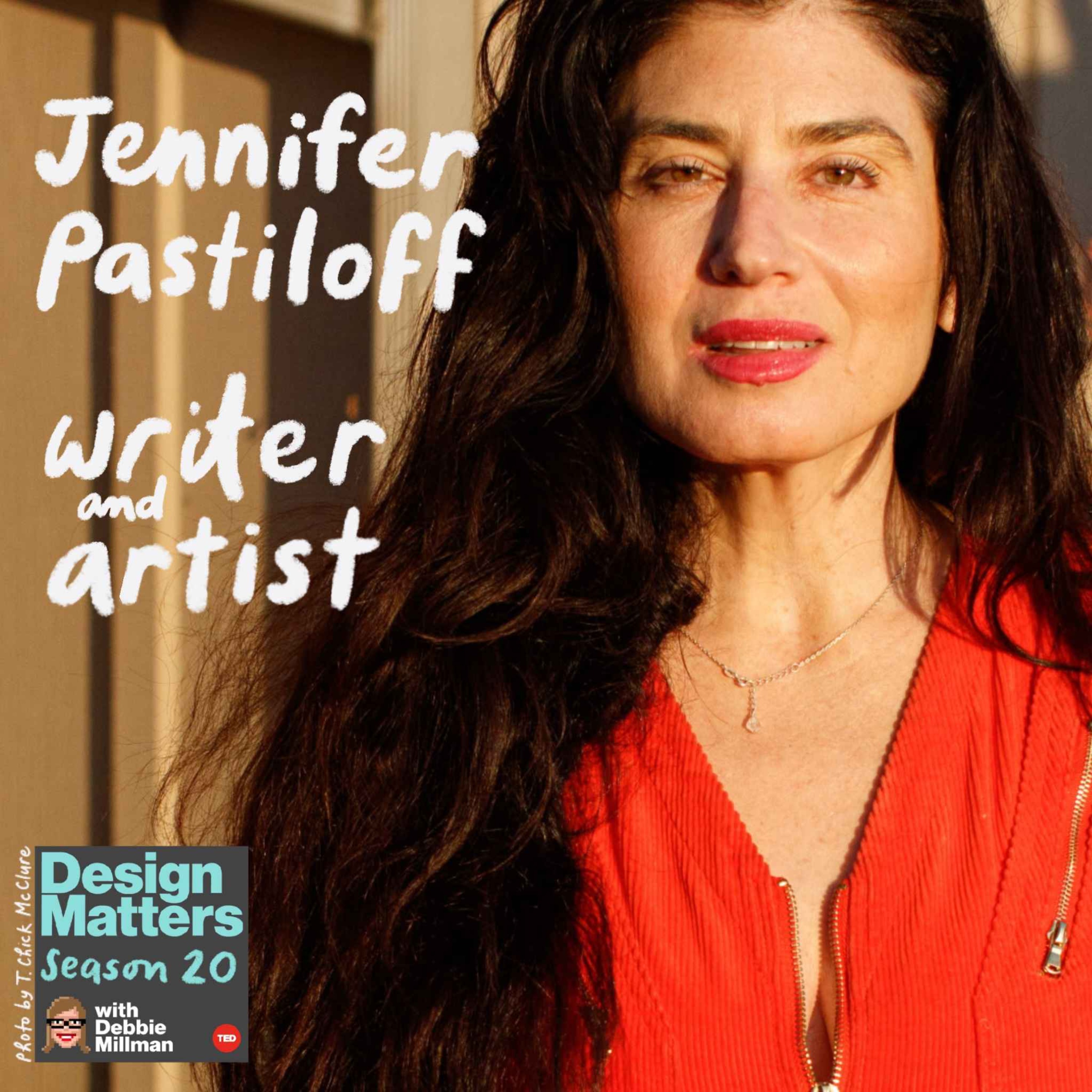
Jennifer Pasteloff
All the things that I hid about myself, all the years that I hid my depression, grief, hearing loss. I realized when I started talking about them, people showed up in droves to thank me and to say I feel seen.
- [00:17]
Debbie Millman
From the TED Audio Collective this is Design Matters with Debbie Millman. On Design Matters, Debbie talks with some of the most creative people in the world about what they do, how they got to be who they are, and what they're thinking about. And working on this episode, Jennifer Pasteloff talks about the power of finally being honest with oneself.
- [00:39]
Jennifer Pasteloff
Most of the things that we hide about ourselves are the most magical, wonderful, beautiful things.
- [00:52]
Cheryl Strayed
Beat the heat and say that Whole Foods Market ice cream and frozen desserts are on sale for 50% off with Prime. That's 50% off brands like Jenny's Good Pop, so Delicious and more. Scoop some now, pack your freezer for later and check out summertime sweets from the experts in the Whole Foods Market bakery. Like their sweet and fluffy angel food cake and limited time peach Marionberry pie, summer is sweeter at Whole Foods Market. Shop in store and online Now Imagine.
- [01:21]
Laura Kim
A toilet so striking it inspired a couture dress. That's right, Kohler's Veil Smart Toilet in Honed Black actually inspired fashion designer Laura Kim to create a stunning black chiffon dress that debuted on the Runway at New York Fashion Week. The Vail Smart Toilet with its curved design, deep rich textural color, touchscreen controls, and customizable cleansing features, can transform your routine into something extraordinary. That's the power of design. Design changes everything. Vale Smart Toilet in Honed Black Hole only from Kohler Discover the Vail Smart Toilet and go behind the scenes of Kohler's partnership with Creative director Laura Kim@kohler.com.
- [02:02]
LinkedIn Ads
Does it ever feel like you're a marketing professional just speaking into the void? Well, with LinkedIn ads, you can know you're reaching the right decision makers. You can even target buyers by job title, industry company seniority skills. Wait, did I say job title yet? Get started today and see how you can avoid the void and reach the right buyers with LinkedIn ads. We'll even give you a $100 credit on your next campaign. Get started at LinkedIn.com results. Terms and conditions apply.
- [02:33]
Darina
Hi, I'm Darina, co founder of OpenPhone. My dad is a business owner and growing up, I'll never forget his old ringtone. He made it as loud as it could go because he could not afford to miss a single customer call. That stuck with me. When we started OpenPhone, our mission was to help businesses not just stay in touch, but but make every customer feel valued, no matter when they might call. OpenPhone gives your team business phone numbers to call and text customers, all through an app on your phone or computer. Your calls, messages and contacts live in one workspace so your team can stay fully aligned and reply faster. And with our AI agent answering 24. 7, you'll really never miss a customer. Over 60,000 businesses use OpenPhone. Try it now and get 20% off your first six months@openphone.com business and we can port your existing numbers over for free. OpenPhone. No missed calls, no missed customers.
- [03:35]
Cheryl Strayed
My guest today believes that the only permission slip we really need is the one we write for ourselves. Jennifer Pasteloff is a writer, a teacher, a creator of workshops, and a powerful mix of of movement, storytelling and truth telling. Cheryl Strayed has called her a conduit of awakenings, and her best selling memoir On Being Human has helped thousands of people find their voice. Her new book, Proof of Life, is a luminous and radical collection of essays, prompts, poems, and practices designed to help us find wonder in even the most bruised corners of life. Jennifer Pasteloff, welcome to Design Matters.
- [04:18]
Jennifer Pasteloff
Hi, Debbie Melman.
- [04:22]
Cheryl Strayed
Jen, is it true that back in 1988 you were a guest star on the television show Punky Brewster?
- [04:29]
Jennifer Pasteloff
Wow. I've never had a podcast star with that. And how awesome that you brought that up. Yeah. And in the weirdness that is our our life, it was before my hearing loss got really bad and before I was in deep denial about it and I played like a Girl Scout kind of girl and we were making fun of a deaf girl for the way she spoke. Now, if that ain't foreshadowing, what is? Wow.
- [04:57]
Cheryl Strayed
Back in those days, you could just about get away with anything on television. It's crazy.
- [05:01]
Jennifer Pasteloff
Yeah.
- [05:02]
Cheryl Strayed
On July 15, 1983, your father died suddenly. You were only 8 years old, and the last words you said to him were I hate you. Which wasn't, of course, in any way true, but you were angry at him for continuing to smoke when he was sick and you didn't want him to smoke anymore. How did that moment shape the narrative of your early life.
- [05:33]
Jennifer Pasteloff
In a lot of ways? Well, one of the things I said, you know, he said, you're being bad and making me not feel good. And I said, you always break your promises. I hate you. So, I mean, count the ways, but one is you always break your promises. That's like something I have to put down every day that I'm going to be disappointed that you're going to break your promise to me, you, whoever you are, that everything is my fault. He died right after I said that. And in my 8 year old, you know, mind it was because I was bad, so everything's my fault. And then began my excessive need to control, I guess, my surroundings so that nothing would change in that drastic way again.
- [06:22]
Cheryl Strayed
As if, right? Don't you wish?
- [06:25]
Jennifer Pasteloff
Of course. And like the problem was I was always the problem. I was always self. Aware, which is why I'm making T shirts that say being self aware is overrated. Because I knew that and yet, and still, I knew that and yet and still like anorexia. All the things like, I know it not really going to control it, but it's like a, I don't know, we, we trick ourselves to get through the day, whatever.
- [06:50]
Cheryl Strayed
Yeah. You described your mom as a single mother, a teacher, and a kind of fierce, unsentimental presence in your life. But you also stated that she was a placeholder for your self loathing. How has your relationship with your mother evolved since you wrote those words?
- [07:12]
Jennifer Pasteloff
You know, my mom right now has early Alzheimer's. And I feel that finally. And there's part of me that's like, oh my God, it's so late. And then I have to remember that I'm right on time. There's no such thing as too late. But finally I have so much compassion. And it wasn't so much that she was unsentimental. My mom was severely abused as a child, sexually, verbally, you name it. Never once was she told I love you. My grandmother was like, imagine mommy dearest. But times. So as, as time's gone on, I've really developed compassion and, and of course having my own child help with that. And now that she's has early Alzheimer's, it's like all bets are off, you know?
- [08:00]
Cheryl Strayed
Yeah.
- [08:01]
Jennifer Pasteloff
And, and I have to be careful not to ruminate and beat myself up for how tough I was on her.
- [08:08]
Cheryl Strayed
Well, I don't think you were as tough on anyone as you were on yourself, Jen. And in reading your first book and understanding how emotionally abused she was, even at five years old, she tried to get run over by a car so she could escape her life.
- [08:30]
Jennifer Pasteloff
Yeah.
- [08:32]
Cheryl Strayed
And then that she recovered from that.
- [08:35]
Jennifer Pasteloff
Yeah, that was my mom. She tried to, you know, you know, run out and she got run over. And so she has a scar that she loves to show people. But yeah, super abused. It's a miracle that my sister and I are who we are and that my mom, despite never Being shown love, was able to do so, even though she wasn't affectionate, which I did not even clock until I had a child. Like, she breastfed. She was a wonderful mom. But when I think about hugs and those kind of things, there's. No, not really.
- [09:08]
Cheryl Strayed
You know, while you were growing up, were you able at any point to metabolize the guilt that you had over feeling like you were responsible for your dad's death?
- [09:20]
Jennifer Pasteloff
No. No, it did not literally did not happen until maybe even a few years ago. Even when I wrote On Being Human. I mean, like, really, really. Again, I have to be careful not to feel so much shame around that, you know, like, how am I this old and still, you know, but, oh.
- [09:39]
Cheryl Strayed
Honey, I've got you on that one. I'm way older than you and I'm still working through my shame. I think it's lifelong. I don't know that there's an expiration date.
- [09:47]
Jennifer Pasteloff
There isn't. I do know there isn't. And yet that's why the thing is, like, we can know a thing, but it's about embodying it. We can know we're smart, but no, as a child. No, I mean, that's one of the reasons now I'm very childlike. I stopped being a kid at 8. I just went in my son's class and I taught them poetry and we made this anthology. And when I went in on Monday to do the book launch party with them, they presented me with a little plaque with my name and they said, you're in our third grade class now. And I started to cry because my dad died right before I started third grade. So a. It's all blackout, but, like, I stopped being a kid and it was like, what a gift, right?
- [10:28]
Cheryl Strayed
I think it's. It's wonderful to be able to reconnect in those ways. And I feel after having read both of your beautiful, beautiful memoirs, that there's so much joy that you are also bringing into the world with your candor and honesty. And just want to share that before we even go any further in the interview. As you were growing up, Jen, you also pretended not to notice that your inability to hear was getting progressively worse. When did you first realize you actually had profound hearing loss?
- [11:12]
Jennifer Pasteloff
When I first noticed it was when I was in acting school. And I always say I pretended to be an actor, and that's just because I never actively did anything. But I did do a two year Meisner training, and I would always sit in the front, which I did at nyu too, but I thought that was just because I didn't even clockwise. But I did start to notice in acting school, but I denied it. So it wasn't until 2008, when I was in yoga teacher training and my teacher, Annie Carpenter, was teaching meditation. And she had us close our eyes. And it's the first time I ever said this out loud. I said, I can't close my eyes because then I won't be able to know what you're saying. And she looked at me, it was so funny. And she goes, oh, that's why you always look at me like that. And of course, I got in my head. It never dawned on me because I look, you know, I'm looking at someone's mouth, which most people. Or now I'm able to just look at the face. But. And then from then on, she was always like, jen, you're in the front. But it was the first time I said it out loud and. And everything changed. It's like, you know, it's that thing. I thought if I don't name it, it's not real.
- [12:25]
Cheryl Strayed
Many years ago you said that there's a difference between deaf culture with a capital D and small D. Deaf like you are.
- [12:33]
Jennifer Pasteloff
Without my hearing aids, I don't hear anything. So it's.
- [12:36]
Cheryl Strayed
Your hearing is completely gone.
- [12:38]
Jennifer Pasteloff
Yes, but the difference is. So I was educated on this. I thought it meant capital D. Deaf meant you can't hear at all. And small D deaf is like me with hearing aids. And I still struggle. This doesn't make me like a typical hearing person. No, it's. If you operate, as far as I know, in deaf culture, with ASL and with the culture, which I don't. I wasn't raised with it. I don't. I don't know asl.
- [13:06]
Cheryl Strayed
Nobody knew you were deaf?
- [13:08]
Jennifer Pasteloff
Well, yeah. I mean, the thing is now I still. They want me to get a cochlear implant. I wear hearing aids, I lip ready. None of my friends know asl. I mean, it's so interesting. Even if I did, I mean, who am I doing sign language with? I wish we all knew it, but. But I feel often like I'm between worlds and it's lonely a lot.
- [13:32]
Cheryl Strayed
What has your journey of listening hard looked like? And how has your deafness shaped the way you listen to people?
- [13:40]
Jennifer Pasteloff
It's been a gift. And I roll my eyes as I say it because it's not bypassing, you know, I can't stand when something like, let's say, shitty happens and people go, it's a gift. I can't Say that's all hindsight. It's not hindsight. It's actively happening still. But for example, in my workshops I'll literally a lot of them are on the floor yoga mats. I'll crawl around and almost like sit in your lap. If I was a typical hearing person, I would not do that. People would be like, you are in my space, get out. But because of my hearing loss I'm able to like get in close. And that conversely makes people feel terrified. But also it's incredible because they feel so heard. But the other thing is I didn't even realize is that I learned all these other ways to listen just, just intuitively by survival. You know, people call me a witch and there is a, I mean we all have intuition whether we listen to it or not. But there are ways that I'm able to hear that I'm positive have developed because my ears don't operate exactly properly. And I hear with a level of compassion that I can't say if other people have. I have no idea because I'm only me. But I don't. I know that it's become one of my greatest gifts. And I always think it's ironic, you know, because I'm, that I can't hear and yet I'm a great listener except when I'm not.
- [15:06]
Cheryl Strayed
Yeah, I actually read a bit about how as you've gotten older you are less concerned about saying I don't want to hear what you have to say.
- [15:17]
Jennifer Pasteloff
Yeah, and also I love that also it's like, no, I interrupt. I'm still me. I'm not like now I'm just this like zen amazing listener. I'm still, you know, like sometimes I don't listen even there's nothing to do with my hearing. But overall, yeah, I'm able to really listen to what isn't said to non verbal stuff. And the more I tap into it, the deeper it gets.
- [15:47]
Cheryl Strayed
You started writing stories at a very young age. You loved performing. You applied early decision to NYU's General Studies program and got in. What did you envision you were going to do professionally at that point?
- [16:03]
Jennifer Pasteloff
It's kind of depressing, but I was never able to envision a future. And it's not because necessarily I thought I was going to be dead. I just, even now I get, my heart starts racing and I have no choice because I'll, I have to plan Italy retreat a year out. But I, I, I didn't when you asked that, I didn't and by the way my mother did that for me. I Didn't. It's like I. I never dealt with my father's death and all of these things, and that was one of them. I could not think past, like, a week. It was just nothingness. So I don't know. But then I fell in love with poetry when I got there, but to answer a question, I had no idea. But once I fell in love with poetry, I envisioned academia. I don't know, a life maybe like you and Roxanne, you know, but, like, I was probably gonna live in Iowa. It was always Iowa, because back then, and still I was gonna get an MFA and, you know, have a life of that. And that is not my life.
- [17:06]
Cheryl Strayed
You stayed at NYU for three years, but left.
- [17:10]
Jennifer Pasteloff
Yep.
- [17:11]
Cheryl Strayed
Ostensibly at the time for a semester off. But you'd. You ultimately decided not to go back. You went back to LA for that semester break, but stayed there for another 13 years, working at a restaurant called the Newsroom. What made you decide to stay in LA rather than come back to New York?
- [17:36]
Jennifer Pasteloff
Wow, you are. You're giving me so many confront. You really are a master interviewer. Because you're confronting me in so many ways.
- [17:44]
Cheryl Strayed
Oh, I don't mean to be confronted.
- [17:45]
Jennifer Pasteloff
No, no, no, no. But it's good. It's good. Oh, maybe I used the wrong word. It's good. I didn't. One of the things I talk about in this proof of life is how I'm so bad at decision making. Unless it is like pre deciding it ain't gonna work out or the shoe's gonna drop, the other one. But I didn't decide. And that's the thing. It was complacency. I didn't decide anything. I just kept on. And the thing about LA that I always find fascinating is there's no seasons, so there's no markers of time. It's so bizarre. So it was like all of a sudden, 14 years passed. It was like a long weekend. But I just kept existing like I was. That's. It was like I was a walking dead person. I didn't decide, you know, nothing. I didn't decide anything. I didn't take action on anything. I just hated myself. But I didn't do anything about it until antidepressants. But in the very beginning, I was so deep in my eating disorder that I never also actively dealt with. I just gained some weight back. So everyone was like, she's all right, but I would work out for like four hours a day. And I thought, oh, you know, if I go back to nyu, I won't be. I mean, Just everything was, like, about the now, because I could never foresee a future.
- [19:11]
Cheryl Strayed
You write very poignantly about the moment that you. That you can actually pinpoint the moment that your self hate to solidify into an eating disorder. You told a doctor that you wanted a breast reduction, and he said, you're crazy. You want smaller breasts? Lose five pounds.
- [19:29]
Jennifer Pasteloff
Yeah. I was 17.
- [19:31]
Cheryl Strayed
Do you remember when control over your body became your primary form of control?
- [19:38]
Jennifer Pasteloff
Yep. That night I went home. My mom was getting her, I guess, implants, taken something, and I went with her. And I want to go back in time and, like, shake him now, you know, But I came home, and I'll never forget. I made a list like, no wheat. You know, gluten. We didn't say that back then. It was like, you know, wheat. And it became a way to not be on my body. And also, I didn't ever want to feel. And when I felt like when I was empty, it was easier somehow I thought I could deal easier. None of it was true, of course, or that I could control, but it is. It's the great cliche, but that was a thing I could control. I can't control someone else dropping dead. I can't control another catastrophe. I could control this. And then I couldn't. It became out of control.
- [20:30]
Cheryl Strayed
It feels to me, looking back at your life at that time, that it must have been rather punishing as well to be serving other people food for a living. And what did being a waitress at that time teach you most about people and how you relate to people?
- [20:53]
Jennifer Pasteloff
It confirmed what I always knew, which is I am good with people. You know, I was a terrible waitress, but I was great with people. Like, I don't know how I wasn't fired all the time. So it confirmed what I knew and that ultimately I love people, except when I don't. But, you know, I think it also. It taught me a lot about. The first thing that's coming to my mind is the restaurant was right next to Cedar Sinai, the hospital where my son was born. It taught me so much about not making up stories about people. You know, like, someone would come in and they'd be an asshole, let's say. And then they'd come in the next day and the next day, and I realized, oh, like, their kid is dying next door at Cedars Sinai, you know, that I would come to learn that. And I remember it would shake me. And then over the years, I just. I really got clear on. You just never know. And so really, how easy it was for me to make a difference in people's lives, like with kindness or a smile or looking in their eye, whatever it was. We're all human. And, yeah, some were so entitled, and I learned about that. But we're all human. And that really, really taught me a lot, as did my hearing loss. But about compassion and humanity and not taking things personally, although I have never mastered that, and I don't know I ever will.
- [22:21]
Cheryl Strayed
You've said that your bottom wasn't a crash. It was a long, slow erosion. When did you know that you were at your limit?
- [22:32]
Jennifer Pasteloff
It's interesting because, you know, we're talking about the newsroom days, and my mind immediately just went to about six and a half months ago when I got sober. I think if we go back in time, it's when I finally said yes to going on antidepressants. It was like I knew if I didn't, I was probably gonna die. And so I did, and they changed my life. And I say, they saved my life. And people will say, well, you saved your life. Yes. And they definitely allowed me to see a glimmer, a glimmer of possibility. And that's all you need. I didn't see any of that before. And then, you know, six and a half months ago, when I got sober, well, My son turned 8. I was 8 when my dad died. And I saw myself doing the same bullshit. Not drugs, alcohol, but same, same.
- [23:31]
Cheryl Strayed
So, Jen, you worked at the newsroom for over 13 years. At the same time, towards the end of your tenure there, you were creating your workshops. You were writing more and more. What gave you the courage to finally take that step into essentially working for yourself?
- [23:54]
Jennifer Pasteloff
Well, you know, first when I went on the antidepressants, it's like I said, this little glimmer of light. And I did the training, even though I didn't want to be a yoga teacher. And I did make my way out, but I made. I can't believe I did this, actually, but I made these little business cards. A friend of mine had taken this yoga photo of me, and I literally. It was like me in a yoga pose, and I would drop them off with the customer's checks. Now, mind you, I had worked there 14 years, so I had a lot of regulars. Not strangers, but people I knew. And I started getting clients, privates, and I started making. You know, for me, at the time, it was good money. And then my mom, bless her, my mom was just sort of like, I'll figure it out. Which is very hard to be with now since she's an Early Alzheimer's. But she's like, I'll build you a website. Don't know how she did it. She made it so, like, if you typed in private yoga instructor, Los Angeles, I was the first that came up. So I started getting all these clients and then. But the reason I started dropping off the. The business cards and everything, I'd been at the news in 14 years, but I got this very clear knowing that was I thought, this is sink or swim. Ain't nobody going to do it for me. All the years I was pretending to be an actress, I got to do this. And so I hustled. In a way, I gave it my all in a way I never had with any, anything. And I started working and, you know, I became a successful yoga teacher. But my fear of change, I could not let go of the restaurant, even though it was only one shift, until essentially I finally got fired.
- [25:31]
Cheryl Strayed
I read that.
- [25:32]
Jennifer Pasteloff
I hate. I know, I hate change that much. I will stay if I'm miserable. I don't care as long as I don't have to change. And most every change, except leaving my marriage has been because I had to.
- [25:46]
Cheryl Strayed
How did you first become exposed to yoga?
- [25:49]
Jennifer Pasteloff
Interestingly enough, you know, I was. I was an exercise aholic. I was an exercise bulimic. I was never a throw up bulimic because I couldn't. And I had so many injuries. So I started doing yoga to heal my injuries. And then I noticed the side effect was like, I would have an hour or what have you where it wasn't in my head. And I was like, wait a minute. And it started helping with depression and it didn't make it go away. You know, that in conjunction with antidepressants was really the thing. But I kept going back because I'd have an hour where I didn't hate myself or I wasn't body checking or I wasn't depressed. You know, it was. It felt like a miracle. So I kept going and going and going. Yeah.
- [26:36]
Cheryl Strayed
How did the act of physically unclenching your body via yoga allow your grief to surface?
- [26:45]
Jennifer Pasteloff
I don't know that it did, if I'm honest. I want to say it was only not even three years ago. And I remember even when I wrote On Being Human, I had the same editor, Maya Zeve, and she was talking about, you know, metabolizing grief. And I was like, what? Like, because I hadn't. I couldn't cry that. I mean, I was emotionally constipated. I could only cry if I'd watched like, this is us or Terms of Endearment. And that sounds hilarious, but I would do that because it feels good to cry. I wish that yoga did that. I mean, it definitely helped me soften, but it didn't. It was so locked up. It was so many years of just buried in me. I suppose it paved the way, but really only three summers ago. And I think it was a culmination of a lot of things. But that's the honest answer.
- [27:39]
Cheryl Strayed
How did your yoga practice and your writing practice begin to become intertwined and result in your being able to lead workshops with both of these components embedded in them?
- [27:55]
Jennifer Pasteloff
Yeah, well, I didn't. I never wanted to be a yoga teacher. My friends. I went, you know, I wanted to go to the restaurant, and my friends said, you should become a yoga teacher because you do it all the. And I would say, I'd rather fall on a knife. And then. I'm not kidding. Like, I. And I still don't want to be a yoga teacher. I. Once in a while, will. It brings me joy. But I. You know, but when I took the antidepressants, that's when I saw the glimmer of possibility. And I went, huh. Maybe it will be an escape route. Lo and behold, it was. My friend Holt McAlleny gave me $3,000, which was so much money at the time. It still is to me, So I could take a month off work and do this intensive training. And. And Annie Carpenter, my teacher. I remember it was really wonderful because I taught my sample class and I read a poem at the end by Mary Oliver or Stanley Kunitz, and she looked at me and then I did it again. And she goes, that's going to be your thing. And it was like she. I was brand new. I didn't know you could. She gave. It was like she gave me permission. So I started doing that. And then I, you know, as I started teaching and I realized I was really good at. I'm a great teacher. I'm not great at yoga. Like, it. I walk around with a coffee cup. But I was a great. Just the same thing. I'm good with people. I'm not kidding. I was the worst. I like, walk around with coffee. I like. I mean, I couldn't do half the. But. But, like, I'm really good with people and good with teaching. And so as time went on, I got more confident and I'd read more poems. Then I read my poem and then I started doing stuff with like, here's a sticky note. Write something on it. And then I got more courageous. And it was like more writing. And then eventually the yoga part started falling away, but not completely, because I found the most amazing thing, which I knew and had forgotten. But the more we are in our body and not in our head, the more vulnerable we are, the more open. And so I just.
- [29:45]
Cheryl Strayed
Why is that? Why is that?
- [29:47]
Jennifer Pasteloff
Oh, we're less guarded. I mean, the way I liken it is like, you ever have those days where you're so tired and you're emotional, you're like, I don't even know why I'm crying. It's like, oh, I'm so tired. Right? It's that. Or when. When I was like, really in the throes of anorexia, I would eat in my sleep. You know, there's a poem in my book about shame. And I would. And. And that is because our inhibitions are lowered. Or. Or I would. I would always have to drink first to eat or to have sex. And it was like, because our inhibitions are lowered. So the way I would describe it to my people, I would say that. I would say, but this way, we're doing it in a healthy way. We're getting to that. That same sort of open and vulnerable place. I think it's just our defenses are down, you know, at least a little bit. That's my hope. And in yoga, shmoga people, as long as they're not hurting themselves, I don't care. Maybe they're just sitting and breathing. It's about just being less in our head, less guarded, less all about the thought and what we think.
- [30:54]
Cheryl Strayed
And then how did your writing and then writing hybrid yoga workshops ultimately result in your first book? And then how did that turn into a career as a writer and a speaker?
- [31:14]
Jennifer Pasteloff
Yeah, among other things. Who can say what my career, I love, that I can't say. So ultimately, I didn't want to be a yoga teacher. I was a writer. And it was a way to come home. My friend one time put it like this. She said yoga was your way out of the restaurant and writing was your way in. Ultimately, I ultimately let go. I don't call my retreats yoga retreats anymore. Oh, hell no. But I would. Ultimately, I let go of that aspect. Although they do contain, you know, body movement. But I guess I got brave enough to give myself permission. Is like, I'm a writer. I knew I always was going to write a book. I just thought it was in my 20s, which is why I love the imaginary time. Gods are bullshit. It's like, fine, this book now, I thought it was me. A poetry book. But, well, guess what? I don't want to. I don't want to read a memoir by anyone. I mean, maybe, but I'm. I'm right on time. But I came back to what I wanted and who I was. And I didn't let go of the yoga part because that was part of it. And I saw the magic that was able to get created by people getting out of their heads. Because, look, I'm not. I'm not teaching. I'm not like. And I'm going to. This is all in the craft of. It's really for anyone. And sometimes people end up publishing essays in the New York Times or writing books. Sometimes it's just for themselves matter, but the idea is to be less in your head, so the editor is not there as much. But really, I just. I started giving myself permission little by little. And all the things that I hid about myself, all the years that I hid, my depression, grief, hearing loss. I realized when I started talking about them, people showed up in droves to thank me and to say, I feel seen. And not that we need external validation, but I'll be damned if it isn't helpful. Sometimes it's when we solely rely on it. But I was like, whoa, whoa, whoa, whoa, wait a minute. All the things that I've been hiding are the things that actually are the thing. And that. That was a huge epiphany. And that's true for everyone. Most of the things that we hide about ourselves are the most magical, wonderful, beautiful things. So I really. I really just allow myself to be who I was and do what I wanted and come back to my writing and put it all together, like I said, in a weird stew. And we all get to do that. I mean, all the things you do inform the other things, right?
- [33:51]
Cheryl Strayed
You've said that you didn't want your workshops to be labeled self help. When people come to your workshops, what are they hoping for? What do you think that they come for? And what do you think they leave with?
- [34:02]
Jennifer Pasteloff
Ooh, great question. Well, you know, it's changed. It's morphed over the years, just as I'm sure all your stuff has. But it's funny, I think a lot of times they don't know what they're coming for, which I love. I love. They just see. They see either me and the way I live my life, which. Which occurs, I think, to them, or what the feedback I get is. Is kind of free or like with my art, you know, I don't know what I'm doing. It's Free. And then they see people who've been and they see the joy and these connections. And they don't know exactly, but they go, I want and I do believe it's become a lot about connection and feeling, belonging. People sense that, and it's true. You know, that's why people come back and come back. There's no bullshit, there's no clicks. It's like it's magic. And people want that. We're desperate for connection. So there's that. And I think there's a sense of knowing that I do get to have this. Whatever they're. This at. This is, you know, whatever they've been denying themselves. And there's a sense like, maybe I will gather courage by attending this. And, you know, I beat people over the head, not literally, but with a quote I love by Freud, which is how bold one gets when one is sure of being loved. And I believe that's the crux of it. You know, there's something that happens with connection and with when people believe in you. And, you know, it's like, oh, anything's possible.
- [35:38]
Cheryl Strayed
Can you talk about your where all Poets Workshop?
- [35:42]
Jennifer Pasteloff
My friend Kristen McGinnis and I, who started Rise Books, it was back when that song was popular. Wap. And she just thought, you know, we're all poets. Whop. It's so clever. It is. But it's where it's either just us two, or we ask a poet to join us and be the guest teacher. You know, Naomi Shehab Nye, who's a dear sister friend of mine, and Ross Gay, who I worship, and Brad Aaron Maudlin, and I. I can't remember the other people, but so we do these. These workshops and. And then I do a lot on my own called Allow. And they all have the same component. You know, I found that if I. The reason I have a line around the block, people to come is because there's no elitism. It's very much like, if you think you suck, this is for you. P.S. you don't suck. If you feel awkward, this is for you. If you feel like you're not gonna fit in, this is for you. You know, if I ask people, are you afraid you're not gonna fit in unless everyone always raises their hand? And so it's like, this is for you. This is for you. And so it's like, okay, I'll go. So it's not like, only come if you're a celebrated poet or you have an and if you're a weirdo, show up. And so it's like, this very welcoming space. And you can share. You don't have to. And. And so people feel very, very. For lack of a better word, safe. And it's fun and it's generative. So it's not just the guest poet or me lecturing. It's like, I'll. You know, we'll give them time, and they write and they share, and people end up becoming friends. And it is that same thing where there's a boldness that happens because it feels like such a supportive space, and we get to share space with these beautiful poets.
- [37:39]
Cheryl Strayed
What's one prompt from any of your workshops that never fails to open people up?
- [37:46]
Jennifer Pasteloff
Well, I decided to flip my. You know, the thing I walked around with in my body, in my marrow, my whole life, since my dad was. Was. Is I am bad. I'm a bad person. I am bad. So I decided, well, screw it. I'm gonna. I'm gonna alchemize. I'm gonna flip it. So I open often with a are you willing to be bad? Are you willing to suck? And I just love that because it's like you're letting yourself off the hook before you begin. And nine out of 10 people get really excited. Yes, yes. And there's always someone who's like. Because it's like, it's so hard for them to let go of the perfectionist. Right? So once they say they're willing to be bad, willing to suck, I go right about a time when you were bad. And boy, oh, boy, does that open everything. Because either they write about a time where they really were bad, which. Who's the arbiter of bad? Unless, I mean, look, they murdered someone, but. Or they flip it on. They flip it like, maybe someone told you you were bad, or they play with what bad means or whatever. But it's endless. The possibility. And I also think it's just such an opportunity to alchemize and then to redefine for ourself what these things mean. So that's the one I love.
- [39:04]
Cheryl Strayed
This episode is sponsored by Quince. When it comes to home design, investing in the details makes your space feel intentional. And Quince is my go to for the essentials. From crisp 100% linen bedding to premium stainless steel cookware, Quince has everything you need to elevate your space. The best part is that, like Quince's clothing, their home goods are half the cost of similar brands. By partnering with top artisans, Quince cuts out the middleman and passes the savings onto us. I just received their lovely Parisian inspired tumbler uniquely designed with beaded detailing. I can't wait to use it for entertaining guests or enjoying a quiet evening at home. Elevate your space with home essentials from quince. Go to quince.com designmatters for free shipping on your order and 365 day returns. That's Q-U-I-N-C-E.com designmatters to get free shipping and 365 day returns. Quince.com designmatters.
- [40:23]
Debbie Millman
Now at Verizon we have some big news for your peace of mind for all our customers, existing and new, we're locking in low prices for three years guaranteed on my plan and my home. That's future. You peace of mind and everyone can save on a brand new face phone on my plan. When you trade in any phone from one of our top brands, that's new phone peace of mind. Because at Verizon, whether you're already a customer or you're just joining us, we got you. Visit Verizon today. Price guarantee applies to then current base monthly rate. Additional terms and conditions apply for all offers.
- [40:53]
Laura Kim
The old adage goes it isn't what you say, it's how you say it. Because to truly make an impact, you need to set an example. You need to take the lead. You need to adapt to whatever comes your way. And when you're that driven, you drive an equally determined vehicle, the Range Rover Sport. Blending power, poise and performance, it was designed to make an impact with a dynamic drive, refined comfort and innovations like cabin air purification and active noise cancellation. The Range Rover Sport is built to be as uncompromising as you. Explore Range rover sport@range rover.com ussport banking.
- [41:31]
LinkedIn Ads
With capital One helps you keep more money in your wallet with no fees or minimums on checking accounts and no overdraft fees. Just ask the Capital One bank guy. It's pretty much all he talks about in a good way. He'd also tell you that this podcast is his favorite podcast too. Ah, really? Thanks. Capital One Bank Guy what's in your wallet? Terms apply. See capitalone.com bank capital1na member FDIC.
- [42:00]
Cheryl Strayed
Your first book on being human was full of clarity and fire and it was kind of an emotional toolkit for survival. I recently reread it in prep for our interview today and forgot how funny it also is. And it's one of the things I like most about your work.
- [42:22]
Jennifer Pasteloff
Oh my ego. My ego. Just loved that.
- [42:28]
Cheryl Strayed
Your new book Proof of Life feels different. It's still funny. It's still beautifully written but it's a more mature writer. What changed in you as a writer and as a person that allowed this book to emerge the way that it did?
- [42:44]
Jennifer Pasteloff
Holy shit. What didn't? Let's see. Well, I will tell you one thing. I reclaimed myself as a poet. And I hang out with a lot of really successful writers, fancy writers and all. I'm not one. I always. I'm, like, on the outskirts, you know, I don't have an mfa, all these things, so I didn't think I got to write poems. I reclaimed myself as a writer also. I was very confident in keeping my voice as exactly as it is without. What would they want? What do you think they would like? I stayed very true to my voice. And that confidence when we do that, I think allows for so much of what's true. And, you know, I don't mean what's true in terms of factual, but, like, what's true for us. Also, I left my marriage. I did the thing that I believed, bar none, without any question, would kill me, which is change. I believed in my marrow, change equals death. And I did. I allowed for that. And then I thought, well, my gosh, I didn't die. And I got sober. I mean, so. So that was a lot. A lot that transpired to allow me to go where I didn't think I could go. And the poetry thing is so huge for me.
- [44:09]
Cheryl Strayed
The phrase proof of life is often used in hostage situations to confirm somebody is still alive. Why did you choose it as your title?
- [44:19]
Jennifer Pasteloff
Thank you for asking that. I used to have this friend who. I have a lot of childless friends, but this particular one really felt defined by that and felt like, you know, I have nothing to show for my life. And I felt regret. I remember when I was at the newsroom after, like, 14 years, I had a panic attack one day, like, what have I done? What have I done? I was going to be this poet. What have I done? And I. I realized, you know what I've done, love. And yet I caught myself. About a year after I sold this book, I looked around and I literally. I hadn't written it. Not only had I written it, I hadn't written one word. I didn't have any money. I looked around and I was like, oh, my God, I have nothing to show for this year. And I caught myself saying that, which is a beautiful thing to be able to catch ourselves, right? And I was. And I went, oh, holy shit, Jen, you're back on your bullshit. What have you done? You've done love. Look around at all this art and you've nurtured friendships, you know, and I thought, ok, proof of life. So you don't have to show any proof. You don't have to, oh, here, look. Look how relevant I am. Look how worthy I am. Look what I've made. Look how much money I have. Look at my book. You know, all of that wonderful, yay. But none of it matter. We are worthy simply by virtue of being born fact, all of us. And I think it's easy to get caught up in, well, what do I have to show for myself? And so proof of life is the antithesis of that. You are your own proof of life. You don't have to show shit.
- [45:54]
Cheryl Strayed
Yeah, we live in a culture now which is so overwrought with productivity as badge that it becomes very hard to feel that there's anything valuable other than achievement and making. And I think it's become increasingly more destructive for our psyches to be living in an environment that actually encourages that. And it's very, very hard to. At least it is for me to try to find balance. And that for me has been a real lifelong journey.
- [46:32]
Jennifer Pasteloff
I mean, we've even texted about this before. I mean, that is why I call. That's why I called it. And I want to model that. And so when I catch myself, I'm grateful. When I catch myself associating my worth or, I mean, some of the ways I talk to myself, still, I catch myself. It's just terrible. But it is destructive and it's insidious and it's all we see around us. So I want to be who I say I am and model that. And. And I want to remind us all that we don't have. There's no, like, thing we can carry around that goes, look, I'm worthy. See?
- [47:08]
Cheryl Strayed
See, that lasts for about a second if somebody says yes. One of the things that I found most compelling about proof of life was that you're not just writing about grief and trauma. You're writing about the way we metabolize these feelings and experiences over time. As you've lived through time and grief and trauma, what have you learned about how we metabolize emotions?
- [47:36]
Jennifer Pasteloff
One of the greatest things I've learned is that energy doesn't die. So when I was 8, and it breaks my heart still when I think about, I wanted to die, you know, and instead I just said, I don't, I don't care, and I locked my doll and that was that. And you're not fooling anyone. Like, I wasn't like, you know, shoving it all back down, it doesn't go anywhere. And so even when I said to you earlier, like, and you said, there's no expiration date, it's, like, coming up now. Well, of course it is. It didn't go anywhere. And so one of the greatest things is, like, I love to work. I work with a ton of grieving people all the time. I give scholarships predominantly to women who've lost a child. That started by accident by grieving people. And it's just bearing witness. Like, I'm not there. I'm not gonna, like, fix or if they ask me advice, sure. But bear witness is to give people space, to process and to feel, because that's what I didn't do, you know? So the greatest thing I learned, I think, is that it's of the utmost importance to feel it, to allow ourselves to feel it. And that is a thing I wouldn't and I still struggle with. It's like a physiological response that gets like. Like a hardening, Like, I'm not gonna. And I have to really soften. I have Allow, you know, next to my paint, I have allow tattoo. And that, like you said, there's no expiration date. Grief is a. It ebbs and it flows, and there is no such thing as getting over anything. That's a crock of shit. Like, you don't one day, like, I'm over it. But I do believe we can alchemize things, and I'm doing it all the time, into art, into what I do for a living, into beauty, softness, tenderness. I never knew that was possible until recently.
- [49:37]
Cheryl Strayed
I talked a little bit about the humor that you infuse in your writing. Another thing that I really admire and enjoy is how you pair the sacred with the humorous and the profane. So an entry might begin in reverence and then end in fuck it. How do you strike that tonal balance?
- [50:05]
Jennifer Pasteloff
Well, that's life, Deb, isn't it? I mean, that's the thing. I mean, I don't buy what I'm selling if there's no humor. Like, I just don't. And look, my father was, to this day, the funniest human being ever. Philadelphia shut down when my dad died, so that I believe he gifted me and my son. But, like, life is so shitty right now. If you dare look at your social media feeds, listeners, and I dare you not to weep. So we might as well hunt actively for the beauty and for the funny. And I'm not saying everything's funny, but, like, find the levity, because shit's hard and ugly and like I also, for me it's been survival. Like with my hearing, I mishear everything. If I didn't have a sense of humor, this is not an exaggeration, I would not get out of bed because it's so depressing. I always felt lost and stupid and alone. So it's like I'm most days able to laugh. But I really find, and my favorite writing really does that. My friend Courtney Hammeister Roxanne does it. I mean, you're able to, within the same breath, take someone's breath away with something that is so painful and, and beautiful and filled. Filled with grief and then like you snot laughter, you know, within the same breath. Because that's life. It's never just one thing.
- [51:33]
Cheryl Strayed
Speaking of multiplicities and the ways in which we tell ourselves things, I want to talk to you about some pretty major changes you made between book one and book two in On Being Human. You share how deeply the need to feel that you would never be left was debilitating to you. And you write how you cringe when you think of the things you used to do for love. But you do learn how to live with that and through that fear. And you share how you met and then married Robert by the end of On Being. You also have a child together. But in Proof of Life, you share how the marriage disintegrated over time, how you ended up falling in love with a lovely man named Henry. You write this about the situation in Proof of Life and listeners, you will immediately understand the humor and the profane and the reverence all in one long sentence. I distrusted my feelings when I first left. So I made this game for myself called Am I really unhappy or am I just saying that now because I am deeply in love with someone else? A game otherwise known as gaslighting myself. And then you go on to write this. Before you write me off as some navel gazing memoirist who just got bored with her marriage and decided to upend her life so she could whine about it in a book. I ask that you take a breath. May we all always take the breaths until we can no longer. Jen, that's. That's just really.
- [53:10]
Jennifer Pasteloff
I mean, I am a date.
- [53:12]
Cheryl Strayed
But anyways, so. So what did you finally decide about falling in love at the time that you did and upending your life when you did? What's the verdict for you?
- [53:25]
Jennifer Pasteloff
I was right on time, you know, and especially for women. Doesn't matter what age, but let's say 40 on you know, whenever we start getting these messages of like, you're too late or you're behind, or this panic or this fear that is so infiltrated in our society, our culture, I was right on time. And that change didn't kill me. It might hurt, but it's not going to kill you. Nor would intimacy. And it's embarrassing in a way, but I live by shame loss rather than weight loss. So I won't hide in shame. To admit things like I just, as long as I wouldn't be left, you know, feel so pathetic. And also, I have compassion for that quote, unquote pathetic, me. And now I don't. I actually realize recently I don't have that anymore. There is a certain, like, I'm okay with me, no matter what. I'll be okay.
- [54:27]
Cheryl Strayed
So you can rely on yourself. You feel like you can rely on yourself?
- [54:30]
Jennifer Pasteloff
Yes. I never. This is why it's so important that we don't believe everything we think. I never thought I would ever feel that. I never thought I'd be able to stop drinking. I mean, I never thought I would, you know.
- [54:42]
Cheryl Strayed
How were you able to do that? Because it does seem that you do have a lot of love and intimacy in your life. You said before that you couldn't have intimacy without drinking. How were you able to heal yourself in that way?
- [54:55]
Jennifer Pasteloff
Well, really, because I had a partner who I met my person, you know, And I read. Was it. Oh, my God, now I can't remember. It must have been Roxanne. It was in the. Someone printed it out for me. It was at the New York Times. It was either you or Roxanne, but writing about each other. I believe it was her. But it's like finding a person. And I, you know, I never could look in anyone's eyes. I never had my eyes open, ever, during sex, ever, ever. And like. And that, I mean, I just couldn't. And so I found someone that I just felt utterly safe with. And even though it was still scary over, now it's not. And I let go. And that's part of the subtitle of. Of Proof of Life. Let go, let love and stop looking for permission to live your life. I let go. I let go of all the things that I was clinging to for that sense of false security. Right. Or that were keeping me safe, quote, unquote. That weren't really.
- [56:00]
Cheryl Strayed
One of the things that I thought was so astute was something a rabbi said to you about ending your marriage. He told you or she. I wasn't sure if it was he or she said that you urged you to end the marriage more carefully even than how you entered it. How are you able to do that?
- [56:23]
Jennifer Pasteloff
I don't know that I was. I mean, I don't know that I was. And it's interesting because I think a lot of the times when we ask ourselves how and we look back, I go, fuck if I know. But, I mean, the truth is, I'm really glad that I didn't write. And I was gonna write the man I divorced, because by the time the book comes out, we will be. And I'm glad that I didn't, because we're not. And in fact, we cohabitate any, you know, every other week. And it's actually quite beautiful. We're like roommates now, which is how we were before. So I don't know. All I know is one thing. We both put our son first. So there was never, and there still is never, never anything disparaging said. And my son feels nothing but love. Like, he sees us. He thinks we're best friends. And I was very careful, even when he was angry with me, to stay as loving as I could, to stay me. To stay true to who I was throughout. And so now, finally, we're like functioning roommates. But I tried to stay grounded and rooted in love and kindness. And what was true. And what was true was not that I left because I met someone else. What was true was that I was long and happy. We weren't connected. So I really. I don't know. But it's beautiful. I'm very, very proud. My son loves Henry. He loves his daddy. There's no sense of lack. There's no sense of not enoughness.
- [58:02]
Cheryl Strayed
You describe marriage now not as a fairy tale, but as proof of life. In what way?
- [58:09]
Jennifer Pasteloff
I don't know. I know that I. I didn't really care about being married before, ever. Ever. And I was never someone that cared about the whole wedding thing. And Robert and I kind of got married like he wasn't a citizen. I'm like, yeah, let's get married. And Henry, it was like, wow, I really want to wake up with this person every day. And so the idea for me with now is more about having a true partner and this connection and friendship. Not that your person necessarily has to be everything, but all the things that I deny myself, I didn't even acknowledge that I needed or wanted. But it's all part of it. And no, nothing's ever perfect that's such a. That is a fairy tale. There's the mundane, there's boring. I love boring. I love just sitting on the couch. You know, I want that. I want to be comfortable in doing nothing with someone. It's communication. It's all of it. But it sure as shit is not a fairy tale.
- [59:13]
Cheryl Strayed
In proof of life, you're also very honest about aging, chronic pain, the betrayal of the body. What's your relationship to your body now? How has it shifted from enemy to more of an ally?
- [59:31]
Jennifer Pasteloff
Yeah, yeah. Depends on the day, baby. I mean, I jokingly say that, but I also am not, I think, when we're out of alignment. When I'm out of alignment, and that can be because anxiety or someone rejected me or I didn't sleep or whatever, my inner apps will allow it. And my default, a very easy synapse if I'm not careful, is to immediately, instead of what's really going on, is to go like, oh, my God, I'm disgusting. You know? So, like, right now, I'm aligned. It's a lot softer. You know, I haven't exercised in two years, which, like, coming out of my mouth doesn't even. I mean, when I say exercise, aholic, like, I can't even explain. So coming out of my mouth, that doesn't even. Is that me? So it's a lot soft.
- [60:18]
Cheryl Strayed
How did you make that transition from being so hard on your body with exercise being so restrictive with food?
- [60:30]
Jennifer Pasteloff
I mean, with Henry and I, I. And. And I became a lot softer. Then with the painting, I switched it. You know, I mean, I'm an. I'm an addict through and through. So even with art, I'll stay up all night. So it's like, okay, fine, I switched addictions, except this one is healthy. I'm like, all right, I could do better doing a little more of my work and reading a little more. But I'm not mad at it. Where. So I. I kind of switched. So now it's like, where I'd be exercising. I'm making art. But really, at first, it was because I fell in love. And it was just the first time I was like, I didn't care to be so rigid with that and punishing, you know? So everything became less punishing.
- [61:14]
Cheryl Strayed
You have a lot of Jainisms or pastelovisms, I think, as you refer to them. And they're your shorthand for a variety of emotions or experiences. Some of them are really beautiful, like beauty hunting, which is something that you call a spiritual practice, but it's also known as may I get my head out of my ass practice. You talked about the imaginary time gods or the Itg this not real group of people, tell me about what those entities do and what we should be watching out for in our encounters with them.
- [61:52]
Jennifer Pasteloff
If I am leading a workshop with, with 100 women and I go, how many of you feel behind? Deb, I swear, 90% raise their hand. Also, they can't say, behind in what? It's amazing. It's amazing. Wait, what do you. They don't know, but they're behind. And the few that don't are women, like in their 60s. Usually they're like, the ones that have less fucks to give. Finally they're like, but you're not behind. There's no such thing. And yet there's this sort of, like, pressure. And then if we buy into it, and it's all the same with the productivity stuff, you're not too old, you're not too late. I mean, you might be too old to have a biological kid. All right, there's certain things, but we buy into a lot of bullshit. And, and I mean, frankly, imagine if we stopped, like, billion dollar businesses would go belly up. But the imaginary time gods, I think it's, it's like tattooed in your heart, your, your mind, your. Your, your cells. Imaginary time gods. It's not too late. And you're not cooked. You're not a fixed object in space. You know, I just discovered a painting three years ago, and I can't draw a stick figure. And I make all this art, I sell it, and people are fascinated by that. Most of the people are like, I could never do that well, I wouldn't know what to do or how to do it. It's too late. Like, wow, I catch myself. That's the key. I catch myself when I say things like that. So it's really about catching ourselves and remembering they're not real.
- [63:24]
Cheryl Strayed
Jen, I have one last question for you and a request. So this is my question. One of the most poignant and heartbreaking lines in your book is this. What if I looked back on my life and saw that what I had spent the most time doing was hating myself? What advice would you give to our listeners and maybe the host who might be grappling with that question?
- [63:56]
Jennifer Pasteloff
Yeah. Okay. Believe the person in front of you. So let's say I'm talking to you, Debbie moment. So I'd say, you know, when Roxanne is sitting in front of you and you look in her eyes, she is not lying to you. Believe the person in front of you. And actually, it's such a disservice when we don't you know, it's like saying, I don't trust you. So you believe the person in front of you. And that doesn't mean any Joe Schmo I'm talking about. That's why I do an exercise called in the Voice of Someone who Loves you, where you write a letter to yourself, whether they're living or dead or, you know, your wife or Jesus or your dog. And you believe the person in front of you. And then. And that's huge, first of all, that's real. That is trust with a capital T. It's like, why when my son, he gave me the title of my TED Talk, when he said, mommy, nothing you do is wrong. It's what I've been waiting my whole life to hear. And if I said that to myself, I'd be like, you fucking liar. But I would never say that to an 8 year old. So if you trust the person, if you trust Roxanne, then how dare you doubt anything, how magical and beautiful and wonderful you are. Then, like, if you actually write a letter in the voice of her and you carry that around in your wallet or something like a talisman, then you begin to bridge the gap. How do you do that? Well, you find. You find ways, whatever works, barring you're not hurting yourself or anyone intentionally, to bridge the gap between how she sees you and what she's saying and what you're saying to yourself so that it's closer to that. Because that's the work, if you want to call it, of our lives, right? So the people who truly love us and see us, they see us. So it's trust in that. And that means we got to find our people. And for anyone listening, that's like, I don't have my people. They are there. Stay open. They are there. Look around. Stay open. Yeah.
- [66:01]
Cheryl Strayed
Finally, my request. Proof of Life contains poetry in every chapter. Really, really beautiful poetry. Waiting for the poetry book next. And I'm wondering if you could read the poem and the book titled Because We Forget. Not only do I think it's a really beautiful poem, and not only do I think it's a sort of heartfelt bookend to this interview in general with you, but I think it's proof of growth in so many ways to have this poem as part of your experience with your father.
- [66:44]
Jennifer Pasteloff
Yeah, it's so funny. Cause when you said last night when you read it, it's not actually a poem. It's. It's just. I threw it in there. But what I love is I do that a lot, you know? Like. Like the lyrical and what have you. That's why I had to look it up. And yeah, so because we forget.
- [67:02]
Cheryl Strayed
It feels like a poem to me, Jen, just saying, which I love.
- [67:06]
Jennifer Pasteloff
I love. I mean, Lydia Yukonovich, she's such a poo. Poo is on genre. But I love, like, it's like, who can say, right? Like all of it, right? Because we forget. I had a dream once in which I had a conversation with my father. I was an adult in this dream. I asked him, were you afraid? I was at first. Why? Because I knew I was dying and I wasn't finished. A sigh issued from his dream body. Did it hurt? I asked. Not in a way you will understand. What did it feel like then? In the dream, I had a desperate ache to understand what it felt like. It felt like forgetting. It was that fast. The undoing. And just like that, gone. I saw you at 38, he continued. My age. I understood your own forgetting and how difficult it is to keep a life going when there's no body anymore. What did you understand, I asked as I reached out to touch him. That you might forget small details, but that you'd carry my legacy and that you and Mommy and Rachel would know I loved you and did the best I could, he explained. Did you do the best you could? I couldn't touch him, no matter how hard I tried. And I tried. I don't know. Yes, maybe no. Why is it so hard to do our best? Because we forget the dream set. Because we forget.
- [68:55]
Cheryl Strayed
Jennifer Pasloff, thank you so much for making so much work that matters. And thank you for joining me today on Design Matters.
- [69:04]
Jennifer Pasteloff
Thank you. You're a gift.
- [69:07]
Cheryl Strayed
Jen's new book is titled Proof of Life. Let Go, Let Love and stop looking for permission to live your life. To learn more about Jen, you can go to her website, jenniferpastaloff.com this is the 20th year we've been podcasting Design Matters and I'd like to thank you for listening. And remember, we can talk about making a difference. We can make a difference. Difference or we can do both. I'm Debbie Melman and I look forward to talking with you again soon.
- [69:35]
Debbie Millman
Design Matters is produced for the TED Audio Collective by Curtis Fox Productions. The interviews are usually recorded at the Masters in Branding program at the School.
- [69:43]
Jennifer Pasteloff
Of Visual Arts in New York City.
- [69:45]
Debbie Millman
The first and longest running branding program in the world. The editor in chief of Design Matters Media is Emily Wyman, now at Verizon. We have some big news for your peace of mind for all our customers existing and new we're locking in low prices for three years guaranteed on MyPlan and my home that's future you peace of mind and everyone can save on a brand new phone on MyPlan. When you trade in any phone from one of our top brands that that's new phone peace of mind. Because at Verizon whether you're already a customer or you're just joining us, we got you Visit Verizon today. Price guarantee applies to then current base monthly rate. Additional terms and conditions apply for all offers.
- [70:31]
Paige
This is Paige, the co host of Giggly Squad. I use Uber Eats for everything and I feel like people forget that you can truly order anything, especially living in New York City. It's why I love it. You can get Chinese food at any time of night, but it's not just for food. I order from CVS all the time. I'm always ordering from the grocery store. If a friend stops over I have to order champagne. I also have this thing that whenever I travel, if I'm ever in a hotel room, I never feel like I'm missing something because I'll just Uber Eats it. The amount of times I've had to Uber eats hair items like hairspray, deodorant, you name it, I've ordered it. On UberEats. You can get grocery alcohol everyday essentials in addition to restaurants and food you love. So in other words, get almost anything with Uber Eats. Order now for alcohol. You must be legal drinking age. Please enjoy responsibly. Product availability varies by region. See app for details.
- [71:31]
Laura Kim
Who says luxury has to come with a steep price tag? Quint's brings you hotel quality sheets and linens without the markup. From breathable bamboo bedding to spa worthy bath towels, Quince makes every corner of your home look and feel luxurious. And by partnering directly with top artisans and ethical factories, Quint delivers premium quality at half the cost of similar brands. Upgrade your home for less at quints. Go to quint.com homeupgrade for free shipping and 365 day returns. Quince.com homeupgrade hey, it's Paige from Giggly Squad.
- [72:06]
Paige
Real talk. If there's one store that I absolutely love walking around, it's Sephora. It's my total guilty pleasure. They have amazing brands that other people don't have and I find something great every time I walk and there's literally one down the street from me, so I do that a lot. It's so fun to shop in the store and online and the products are just too good. No regrets ever for example, one of my favorite beauty brands is makeup by Mario, who just launched his new lip gloss that I absolutely love. So the next time you're in the market for great beauty, shop all the hottest products and brands only at Sephora.