Podcast
Dev to Dev
Hosted by Alex Sulman · EN
Dev to Dev is the podcast about everyday Videogame Developers and why they do what they do every day - the many folks whose work shapes the games we play.
Hosted by Alex Sulman, a veteran of nearly three decades in the industry, the show highlights the passion, challenges, and personal journeys of those often overlooked in gaming’s spotlight.
Inspired by Greg Miller’s 2015 Game Awards speech recognizing a developer in the credits of a game he'd just finished, Dev to Dev continues that spirit of appreciation, giving voice to the people behind the craft.
Each week, the podcast aims to offer thoughtful, positive conversations about connection, creativity, and the human side of game development, providing insight into both the rewards and personal challenges of making video games a livelihood.
Find the Podcast at:
- Patreon: DevToDevPodcast
- Instagram: @devto.devpodcast
- Bluesky: @devtodevpodcast.bsky.social
- YouTube: @DevToDevPodcast
…and please drop me an email if you have any questions, thoughts, comments, guest suggestions, or ideas to:
- DevToDevPodcast@Gmail.com
27episodes
Episodes
Newest firstAll episodes
Dev to Dev S02 Theme - Family
2d ago00:15:47Tap to summarizeIn the interim between seasons I thought it would be fun to explore some of the themes that snuck up on me a bit while I was editing Season 2. For this week, I kept noticing how many conversations circled back to family — not as a footnote, but as the actual reason a lot of these folks are doing this job at all. So here's a short collection of some of my favorite moments on that theme, look out for more soon!Highlights:Leyla Lacombe on how her dad's love of tech became her love of games — and how the teaching has since reversedBrandon Van Haren on the brother who started it all, the arcade dad, and the levels he used to draw for his mumNathan Kellman on parents who said yes to everything, and the moment he finally showed them the Diablo IV creditsLuke Shingleton on a grandfather who never quite mastered a controller, and what living away from home in Ireland taught him about familyGive it a listen and let me know whose story hit closest to home for you.Find the Podcast at:SpotifyPatreonRSSInstagramBlueskyYouTubeBlogEmail: DevToDevPodcast@Gmail.comFind My Guests At: Leyla Lacombehttps://www.linkedin.com/in/leyla-lacombe/Brandon Van Harenhttps://www.linkedin.com/in/brandon-van-haren-5ba62544/Nathan Kellmanhttps://www.linkedin.com/in/nathankellman/Luke Shingletonwww.linkedin.com/in/luke-shingleton-542580225Find Me At: https://www.linkedin.com/in/alexsulman/ https://www.instagram.com/pelicanpeculiar/https://www.alexsulmanportfolio.net/https://bsky.app/profile/peculiarpelican.bsky.social
Transcribe →
Dev to Dev S02 Wrap Up
1w ago00:13:42Tap to summarizeSeason Two's Done — Here's What Stuck With MeTwenty episodes down, and before season three kicks off I wanted to properly reflect on this one — not just recap it.Highlights from how the season came together:Leaned hard into talking with people I didn't know well — harder to prep for, even more alive to recordA clear pattern emerged: most guests didn't plan their way into games, they backed into it — a factory floor, a VFX career, a mistaken belief that you had to code to belong, etc.Empathy turned out to be the quiet thread through almost every conversation, whether it was about players, teammates, or the person a tool was built forProduction got fast — one episode went from record to published in about ninety minutes — though a scheduling hiccup with no backup plan was a real lessonSeason 3 starts soon, and I've already got a few episodes banked and ready!Season 2 will archive behind Patreon once Season 3 begins, so if you want the full run of conversations (audio and video), now's a good time to catch up. Go give it a listen — I think you'll hear the thread too.Find the Podcast at:SpotifyPatreonRSSInstagramBlueskyYouTubeBlogEmail: DevToDevPodcast@Gmail.comFind Me At: https://www.linkedin.com/in/alexsulman/ https://www.instagram.com/pelicanpeculiar/https://www.alexsulmanportfolio.net/https://bsky.app/profile/peculiarpelican.bsky.social
Transcribe →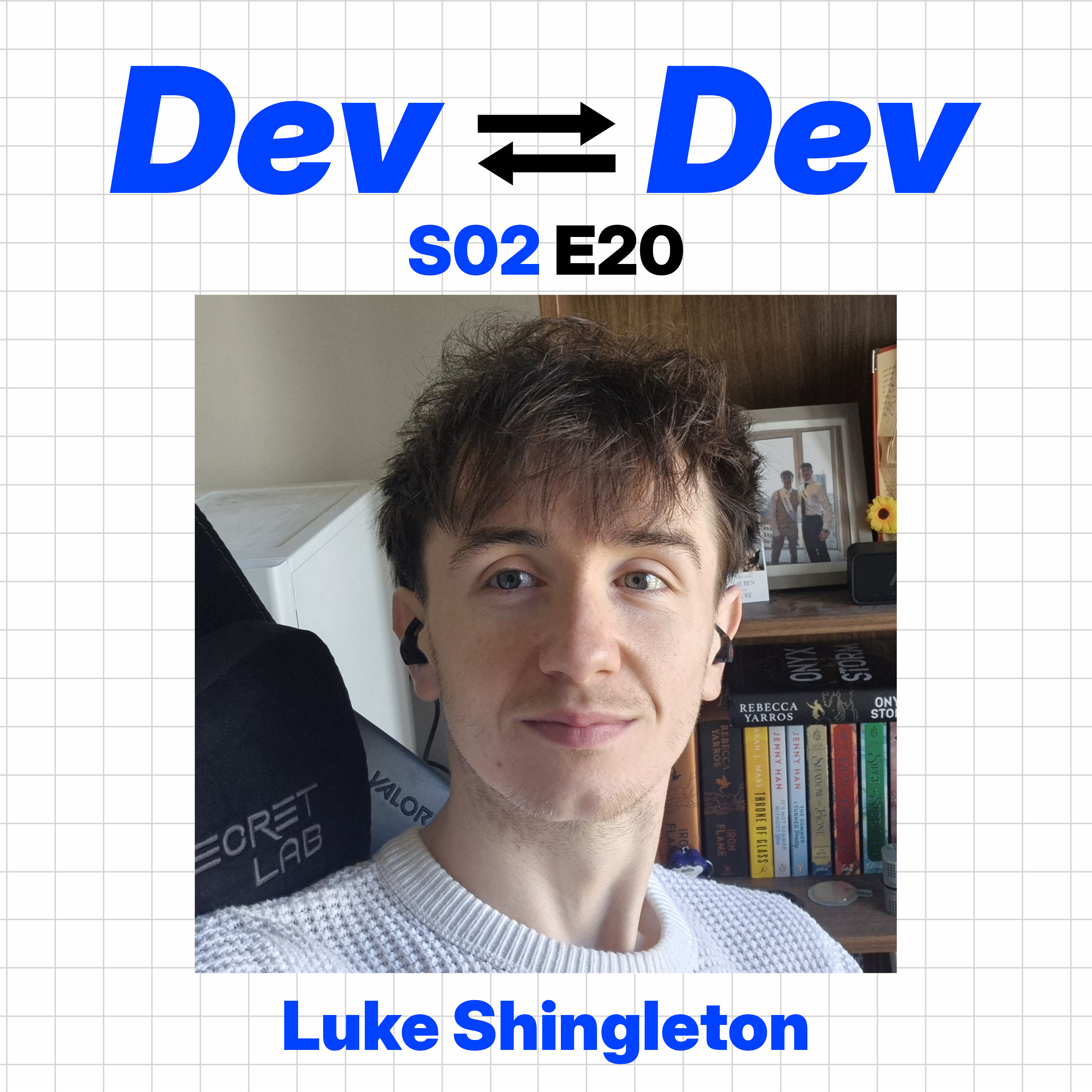
Dev to Dev S02 E20 - Luke Shingleton
2w ago00:55:18Tap to summarizeAPOLOGIES FOR THE DELAY!! Had some scheduling and technical snafu's!!! But we are back!!Some days, life just decides to throw two enormous things at you at once — and this episode is proof of that.Luke Shingleton is a Quest Designer at Double Eleven, and when we sat down together it turned out we had more in common than either of us expected: only children, small towns, and lives that kept nudging us toward this weird, wonderful industry.But the story that got me was this — Luke had a job interview lined up for the same afternoon he'd planned to propose to his now-wife. In the middle of Paris. He didn't push either back. He did both, on the same day, and came out the other side with a job and a fiancée.We also got into:Growing up an only child in a tiny Northern Ireland village where gaming was basically the entire social sceneThe marketing course — and six years as a casino host — that nearly pulled him away from game design altogetherWhat it actually felt like to be handed a quest design role with zero quest design experience, and the mentor who got him through itThe "symbiote" metaphor he uses for the impossible task of separating developer-Luke from just-a-person-LukeThis is one of those conversations that reminds you how much of a career comes down to just... deciding, and then dealing with it. Go give it a listen — you'll want to hear how the proposal actually went.Find the Podcast at:SpotifyPatreonRSSInstagramBlueskyYouTubeBlogEmail: DevToDevPodcast@Gmail.comFind Luke At: www.linkedin.com/in/luke-shingleton-542580225https://x.com/proxy_dev
Transcribe →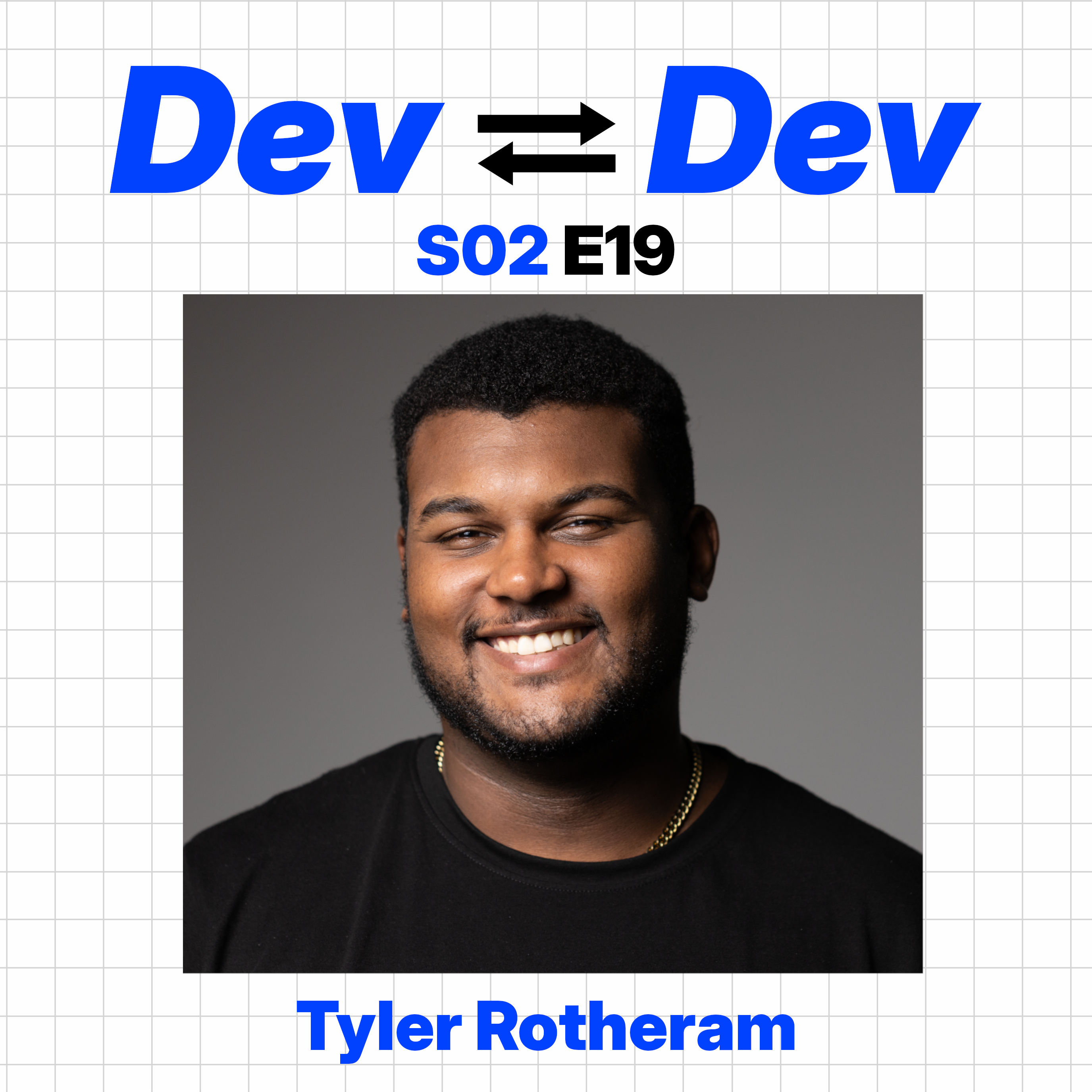
Dev to Dev S02 E19 - Tyler Rotheram
3w ago01:00:14Tap to summarizeI love episodes like this one. Tyler Rotheram's story isn't about talent discovered — it's about someone who kept putting himself in rooms he wasn't initially invited to, and made his talent impossible to ignore once he was there.We talked about growing up surrounded by a gamer family, running an accidentally-massive Just Dance club at sixth form, and the sheer nerve of a 17-year-old walking up to Lucid Games and asking to come in and help. That same nerve got him a QA job at PlayStation on his 18th birthday, and later got Sumo Newcastle to invent a job that didn't exist just to keep him around one day a week while he studied.HighlightsLearning root motion under pressure while designing the final boss of Tales of Kenzera: ZauWhy technical design is the “safe harbor” between programming's brick walls and level design's blank canvasThe BAFTA Young Game Designer nomination that started as a scrolled-past Instagram adHis granddad's allotment, where PlayStation devs used to volunteer — and where a young Tyler learned his most important lesson without even realizing itThere's a real thread here about making your own luck, and Tyler pulls it off without ever sounding like he's bragging about it. Go give it a listen — you'll come away wanting to send that cold email you've been sitting on.Find the Podcast at:SpotifyPatreonRSSInstagramBlueskyYouTubeBlogEmail: DevToDevPodcast@Gmail.comFind Tyler At: https://www.linkedin.com/in/ty-rotheram/
Transcribe →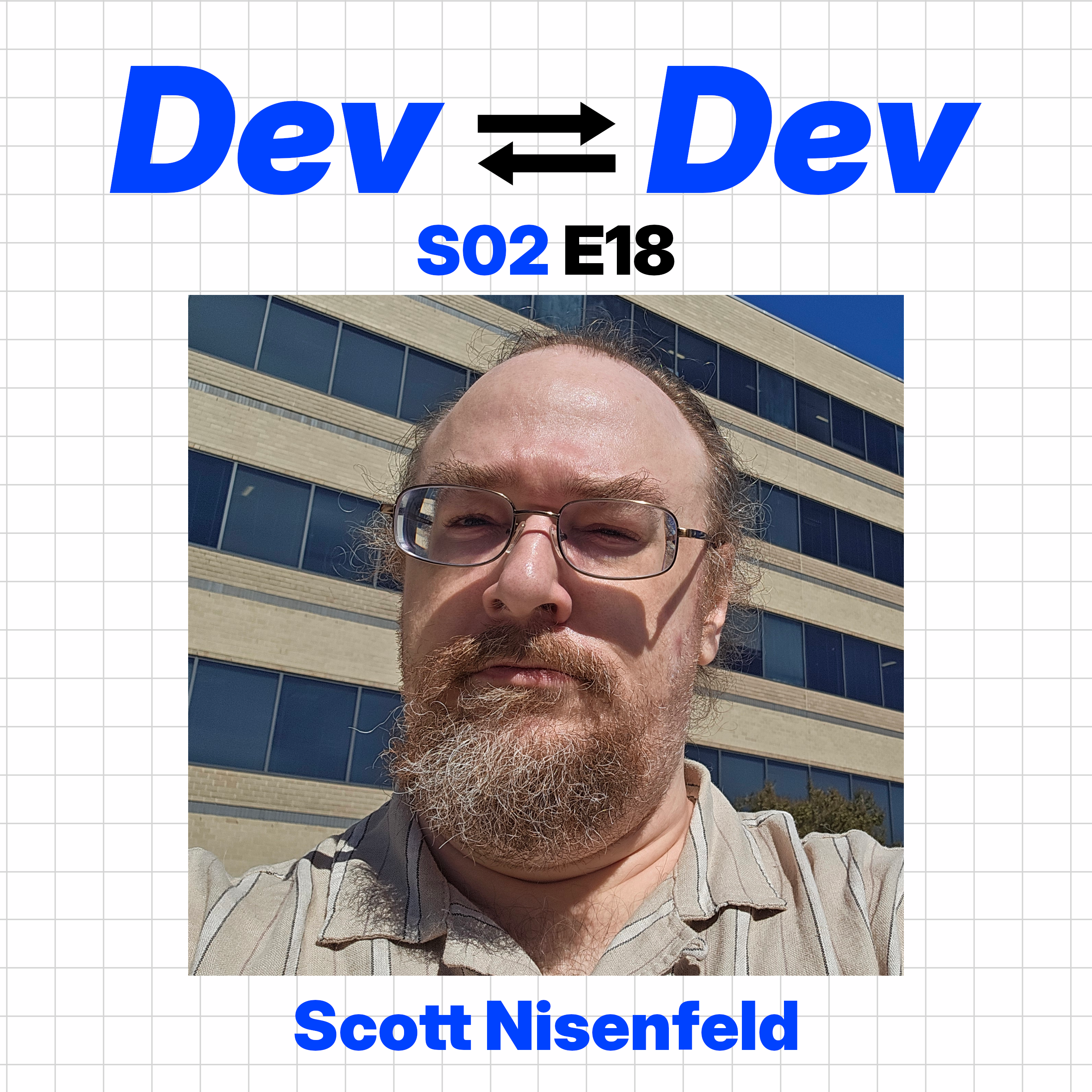
Dev to Dev S02 E18 - Scott Nisenfeld
Jun 2800:57:31Tap to summarizeThis one’s for anyone who’s ever wondered who actually makes the gears turn inside a game.Scott Nisenfeld has spent nearly twenty years as a gameplay engineer, and his story is one of my favourites precisely because it isn’t a highlight reel. He fell for games through King’s Quest, but it was the machinery under the hood that really got him — the kind of kid who’d read a board-game rulebook for fun just to figure out how it ticked.We talked about the side-door route into the industry (four years of applying the wrong way), the grad-school professor who nearly put him off for good, and the eight-month crunch on a Command & Conquer expansion that senior staff called the worst project of their lives. We also got into the harder stuff — cancelled projects, a layoff that took his whole team, and what it does to your sense of self when the thing you love is suddenly gone.Highlights:Why he believes the heart of a game is the part you can’t seeThe presence experiment that pulled him out of academiaBuilding tools so designers and players can do things he never couldThe multi-turret tank feature, and the designer who asked for “a turret on top of a turret”His honest, grounded take on AI in game developmentWhat “I had a hand in that” really means to himIt’s a thoughtful, generous conversation about doing the invisible work and being okay with it. Give it a listen — I think you’ll come away seeing the credits sequence a little differently.Find the Podcast at:SpotifyPatreonRSSInstagramBlueskyYouTubeBlogEmail: DevToDevPodcast@Gmail.comFind Scott At: https://www.linkedin.com/in/scottnisenfeld/
Transcribe →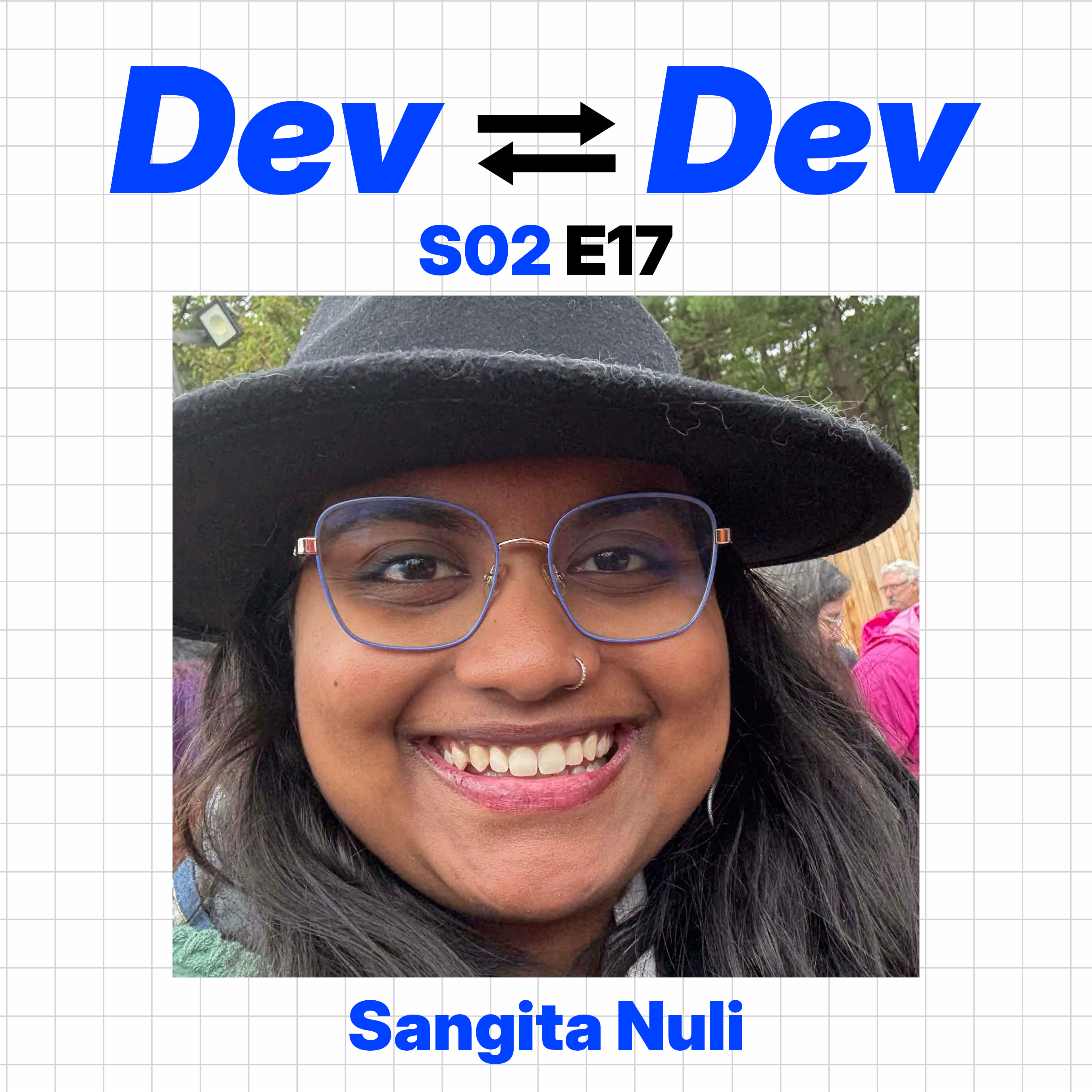
Dev to Dev S02 E17 - Sangita Nuli
Jun 2200:57:59Tap to summarizeThis one's a good reminder that there's no single road into games. Sangita Nuli came in through plays, film and TV scripts, and a talent agency video games desk — and for years Sangita was convinced making games was simply out of reach. The technology was scary. The interactivity was even scarier. Then Sangita stopped waiting and jumped.What I loved about this conversation is how clearly Sangita’s old life feeds the new one. Reading twenty scripts a week and learning to sell what's good in them turned into a knack for pitching ideas and shaping other people's. Writing plays — and watching audiences react in real time — turned into a genuine love of playtesting and feedback. And a cancelled MMO at ZeniMax taught what Sangita now builds everything around: every single person on a team is a storyteller.Highlights:Why a single choice in the game Infamous changed how Sangita saw the whole mediumThe "molecular level" story analysis learned via reading scripts at a talent agencyGoing from rule-bound film and TV to the no-rules world of narrative designThe cold application — a fantasy noir graphic novel — that landed a AAA gigWhat a cancellation AAA MMO taught about community, grief, and fearlessnessWhy a weapon or a level can tell more story than any line of dialogueSettle in for this one — it's a real masterclass in trusting your own voice and then handing the story to everyone around you.Find the Podcast at:SpotifyPatreonRSSInstagramBlueskyYouTubeBlogEmail: DevToDevPodcast@Gmail.comFind Sangita At: https://www.linkedin.com/in/sangitanuli
Transcribe →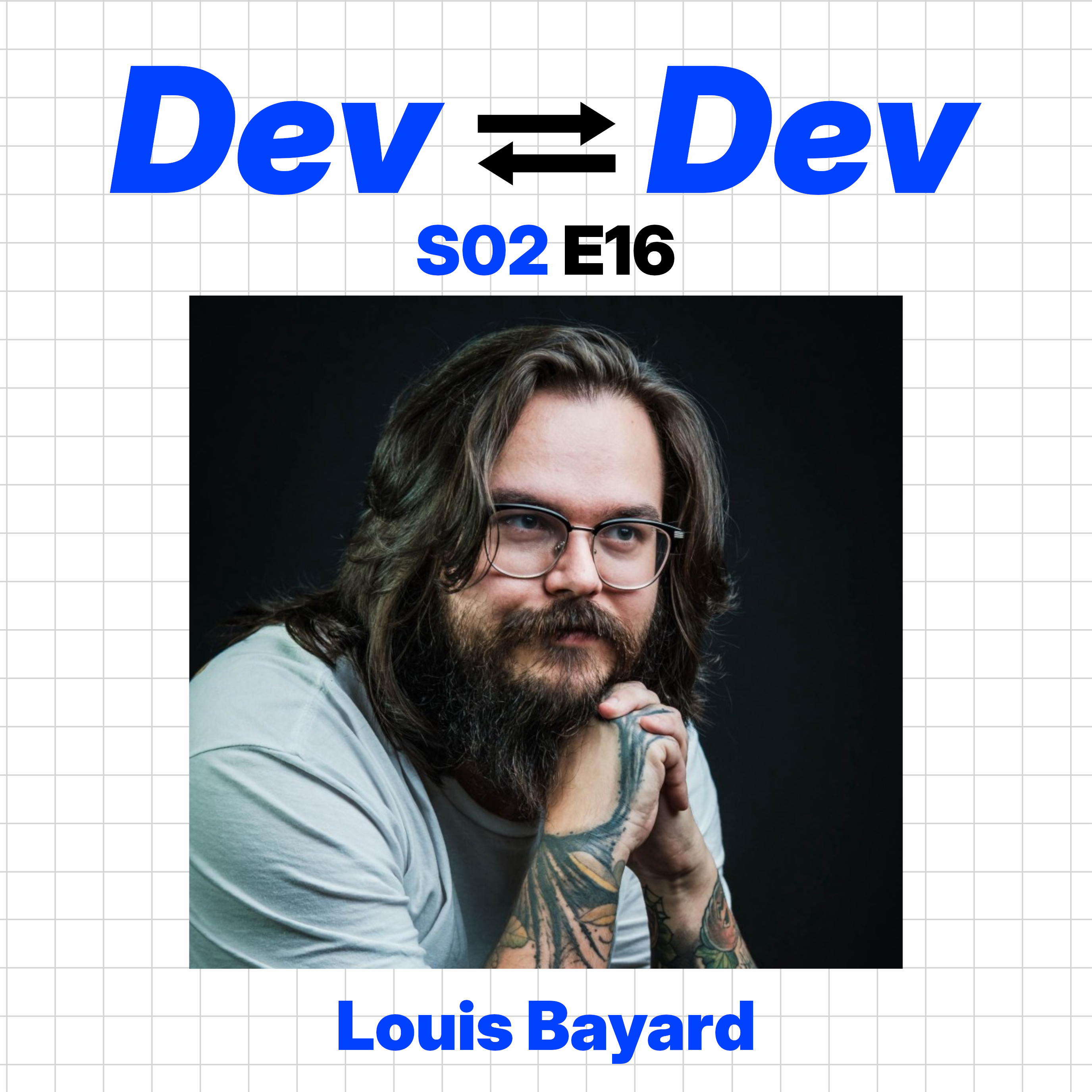
Dev to Dev S02 E16 - Louis Bayard
Jun 1400:57:11Tap to summarizeWE'RE BACK!!! Thank you for your patience over the last couple of weeks. I'm excited to get things rolling again and this week I sat down with Louis Bayard, and honestly it turned into one of those conversations that made me rethink how I approach my own career.Louis is a level designer — Codemasters first, on Grid Legends and WRC, and now at Third Kind Games on their open-world mountain bike game Maverix. But the thing that stuck with me wasn't the games. It was his complete refusal to overthink. He moved from France to England on a single yes, with no friends and no furniture, and just figured it out. He calls that instinct a flaw. I spent some of the episode trying to convince him it's a superpower!What I loved is how honest he is about the cost of it — the worry, the “have I done a good job?” — and how he's grown into a calmer version of the same thing: letting the path show itself instead of forcing it.Highlights:Why his design school banned game engines for the entire first yearBuilding real WRC rally stages by eye from Google Earth and GoPro footageGoing from a 15-person team to being the only level designer on a whole gameWhy he'd be a therapist if he wasn't making gamesThe horror racing game living rent-free in his headGo give it a listen — I think Louis's "jump first" philosophy might be exactly what some of you needed to hear this week.Find the Podcast at:SpotifyPatreonRSSInstagramBlueskyThreadsYouTubeBlogEmail: DevToDevPodcast@Gmail.comFind Louis At: https://www.linkedin.com/in/louis-bayard16/
Transcribe →
Dev to Dev S02 - Intermission (Again!)
Jun 700:00:46Tap to summarizeAhoy friends. Again apologies but no new episode of Dev to Dev this week due to work and travel commitments.Thank you for your patience and we'll be back next Monday 15th with Season 02 Episode 16!!Find the Podcast at:SpotifyPatreonRSSInstagramBlueskyThreadsYouTubeBlogEmail: DevToDevPodcast@Gmail.com
Transcribe →
Dev to Dev S02 - Intermission
May 3100:03:56Tap to summarizeHowdy folks, apologies but due to some work and travel commitments there's no new episode of Dev to Dev this week. We will be back on June 15th with Season 02 Episode 16 but in the meantime thank you for your patience!Find the Podcast at:SpotifyPatreonRSSInstagramBlueskyThreadsYouTubeBlogEmail: DevToDevPodcast@Gmail.com
Transcribe →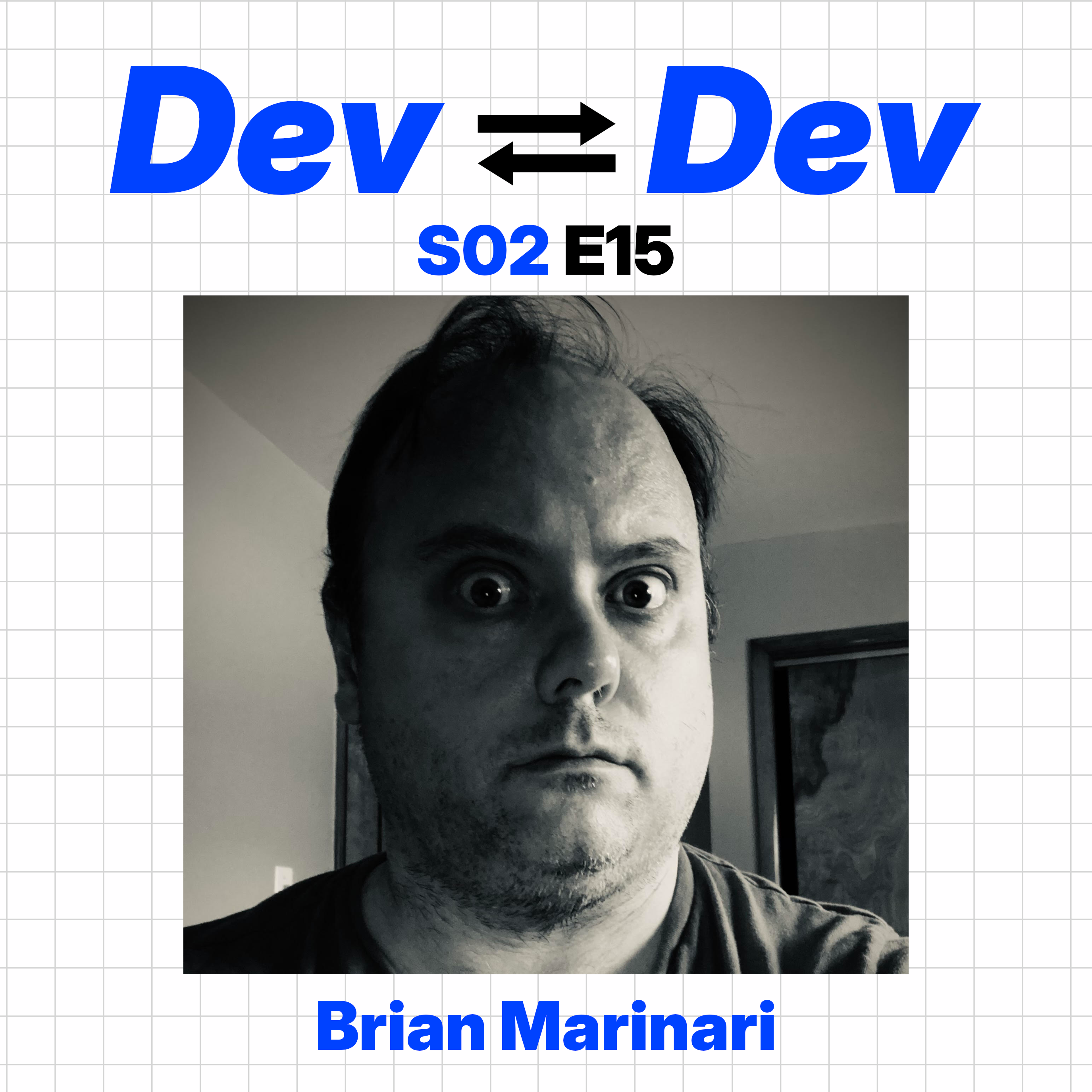
Dev to Dev S02 E15 - Brian Marinari
May 2401:05:22Tap to summarizeHey everyone — this week's episode is one I really enjoyed. Brian Marinari is a real-time rendering engineer at ILM, and his path into games — and then into film — is a genuinely winding one. He's the kind of person who had to be dragged toward what he was great at, mostly by his own curiosity refusing to stay quiet.We talked about the Atari 2600 game Adventure and how it sparked something in him that never went out. We got into electrical engineering, a near-PhD, a horrible commute, two studio closures, and what it actually means to process hard times in a passion industry — including therapy and medication, which Brian talks about with real openness. I appreciated that.Highlights:Why graphics programming felt like the "two halves finally meshing together" — making the computer do something meaningful, not just making the computer do somethingThe sprint review at Big Huge Games where he brought his wife in during crunch — one of the warmest moments in the episodeWhat it looked like to step away from games entirely, grieve it, and eventually find the door back inHow ILM's real-time rendering work for the LED volume is a lateral move from games tech — and why that surprised himHis honest take on imposter syndrome, mental health, and what it feels like to finally own your curiosity without apologising for itGo give it a listen. Brian's a thoughtful, honest guest and I think you'll find a lot in it.Find the Podcast at:SpotifyPatreonRSSInstagramBlueskyThreadsYouTubeBlogEmail: DevToDevPodcast@Gmail.comFind Brian At: https://graphics.social/@bmarinarihttps://bsky.app/profile/bmarinari.bsky.socialhttps://www.linkedin.com/in/brian-marinari-b228a21
Transcribe →