
Podcast
Devex Podcasts
Hosted by Devex · EN
We're the world’s leading independent news organization covering global development.
68episodes
Episodes
Newest firstAll episodes
This Week in Global Dev: #132: What is the impact of aid cuts in Africa?
Feb 1200:26:54Tap to summarizeThis week we take a look at a new report from the Center for Global Development, which found that aid cuts have largely failed to spark reform in sub-Saharan Africa. The caveat, though, is that the authors analyzed national budget data from June 2025 — shortly after the U.S. announced its drastic cuts, meaning the analysis doesn’t reflect efforts that have been taken since then. But still, it challenges the viability of current financing models and highlights growing risks to essential social spending in recipient countries. On the topic of sub-Saharan Africa, we examine the situation in Malawi, which is struggling to sustain critical health, education, and development programs after abrupt cuts to U.S. foreign aid exposed the country’s heavy reliance on donor funding. Foreign aid cuts by the United States and the United Kingdom have also impacted the fight against female genital mutilation, hindering progress toward its elimination. To dig into these stories, and others, Senior Editor Rumbi Chakamba sits down with reporters Sara Jerving and Ayenat Mersie to discuss the top global development stories of the week. Sign up to the Devex Newswire and our other newsletters: https://www.devex.com/account/newsletters
Transcribe →
#131: The new power players
Feb 500:31:28Tap to summarize#131: The new power players by Devex
Transcribe →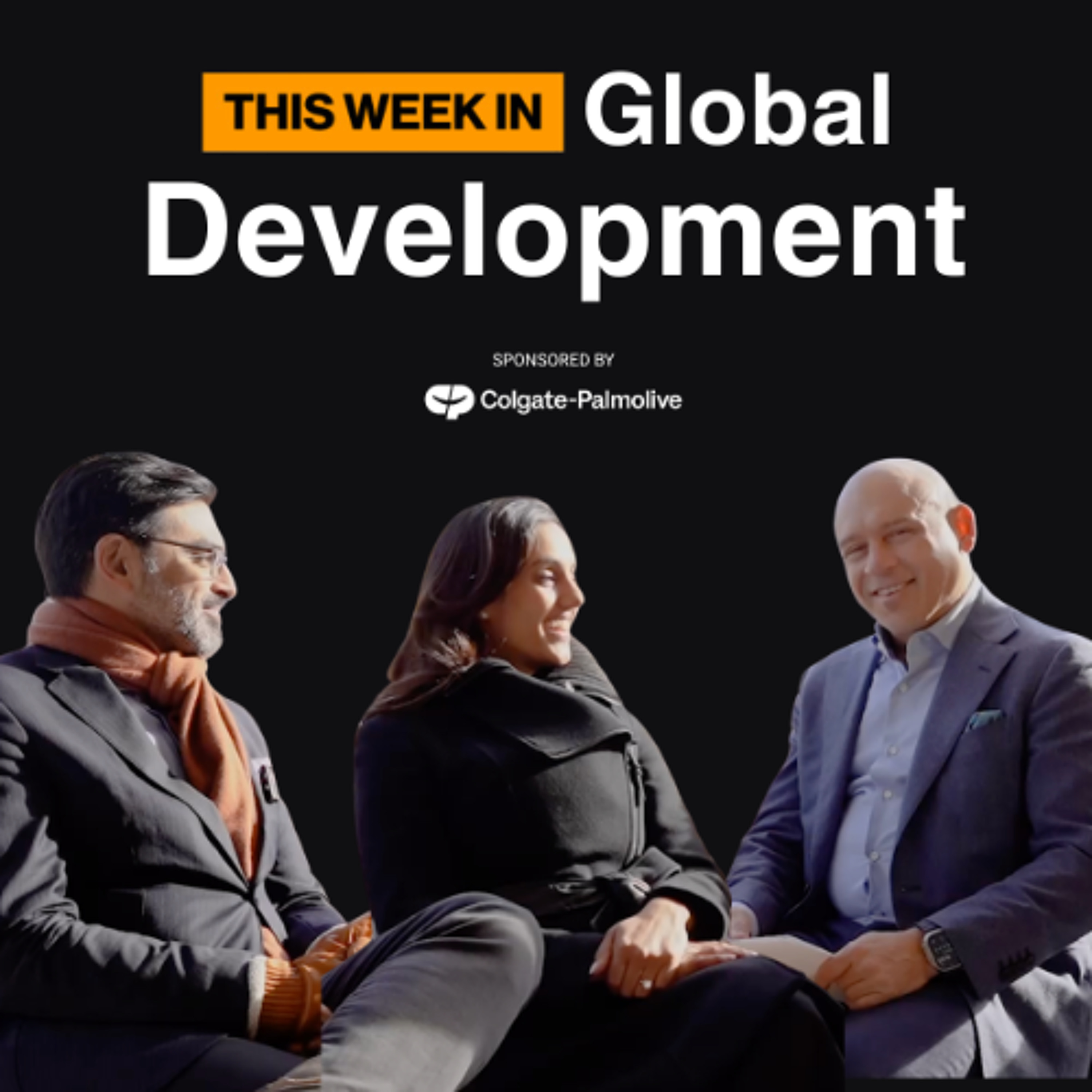
Special Edition: Elevating oral health on the global agenda
Feb 400:21:16Tap to summarizeIn this special edition of our podcast, This week in global development, we explore the critical yet often overlooked issue of oral health with guests Anil Soni, CEO of the WHO Foundation, and Esha Gupta, head of public health and social impact at Colgate-Palmolive. Despite oral diseases affecting 3.7 billion people and being among the most common noncommunicable diseases, oral health has historically been siloed from systemic health discussions. This conversation highlights how oral health serves as a vital gateway to overall wellness — and makes the case for oral health as a key starting point for early health interventions. Recorded during the World Economic Forum in Davos, the episode focuses on a landmark multiyear partnership between the WHO Foundation and Colgate-Palmolive to scale oral health education and policy globally. This collaboration aims to integrate oral care into primary health systems, particularly in countries with high disease burdens, by building on the legacy of the Colgate Bright Smiles, Bright Futures children’s oral health education program alongside the WHO’s normative guidance. By moving from a traditional aid model to a strategic investment approach, the partnership seeks to elevate oral health on the global public health agenda and advance healthier futures for all. To hear more about this initiative and the case for investing in oral health, listen to this conversation with Anil Soni and Esha Gupta on the Devex podcast.
Transcribe →This Week in Global Dev: #130: US aid restrictions, & those left behind in era of self-interest
Jan 2900:27:29Tap to summarizeThis week we report on the U.S. State Department’s radical expansion of the Mexico City Policy, also known as the global gag rule, which blocks U.S. federal funding to international nongovernmental organizations that provide or inform about abortion. Beyond the traditional reproductive health restrictions, three sweeping new rules now tether all U.S. foreign assistance to strict prohibitions on “gender ideology” as well as diversity, equity, and inclusion, or DEI, initiatives. During the conversation we also dig into the key findings of a report published by the European Network on Debt and Development, or Eurodad, which warns that modernized aid rules are focusing on the political and commercial priorities of wealthy donors while leaving the world's poorest countries buried in debt. We also touch on the Asian Infrastructure Investment Bank’s updated accountability and grievance mechanism, and our exclusive story which reveals through a set of leaked emails that the Beijing-based lender is sidestepping on-the-ground meetings with Indigenous communities over alleged human rights abuses at a tourism development project in Indonesia. To explore these stories, Senior Reporter Adva Saldinger sits down with Managing Editor Anna Gawel and Global Development Reporter Jesse Chase-Lubitz for the latest episode of our weekly podcast series. Sign up to the Devex Newswire and our other newsletters: https://www.devex.com/account/newsletters
Transcribe →Special Episode: BCG on scaling global impact in an era of constraints
Jan 2700:34:16Tap to summarizeIn this special edition of This Week in Global Development, recorded at Davos, we explore a fundamental shift in the development landscape: the move from funding gaps to impact-driven results. As global economic constraints and fragmented cooperation redefine the sector, the conversation is no longer just about how much money can be mobilized, but how leadership and innovation can scale impact in a complex world. Devex President and Editor-in-Chief Raj Kumar sits down with Jim Larson, managing director and senior partner at BCG, to discuss the “impact pivot” of 2026. Larson outlines how successful players are moving beyond traditional aid by integrating generative artificial intelligence as core infrastructure and restructuring their "capital stacks" through blended finance and private sector partnerships. From the necessity of market-driven efficiency to the rise of inclusive, localized coalitions, Larson shares case studies on how technology and innovative finance are moving the needle on global health. They also examine the specific characteristics defining successful development leaders in this new era of market imperatives. To hear more about the evolution of the development toolkit, listen to this conversation with Jim Larson on This Week in Global Development. Sign up to the Devex Newswire and our other newsletters: https://www.devex.com/account/newsletters
Transcribe →
This Week in Global Dev: #84: Fighting back: Can lawsuits save US foreign aid?
Feb 14, 202500:31:21Tap to summarizeThis week we were closely tracking the legal battles surrounding USAID's closure, with lawsuits filed by both former contractors and NGO partners as the fallout from the agency's shutdown continues to reverberate across the global development community. USAID is not the only institution in the sector being affected by the new U.S. administration. We also reported that the U.N.’s International Organization for Migration has edited out any references to sexual reproductive rights and diversity, equity, and inclusion in an apparent effort to prevent the Trump administration from making severe budget cuts to their programs. What will be the outcome of the lawsuits? How will other U.N. agencies react to Trump’s presidency? For the latest episode of our podcast series, Rumbi Chakamba sits down with Anna Gawel and Colum Lynch to break down these stories, and others. Sign up to the Devex Newswire and our other newsletters: https://www.devex.com/account/newsletters
Transcribe →This Week in Global Dev: #83: US foreign aid goes dark: USAID’s final hours
Feb 7, 202500:25:23Tap to summarizeThis week our entire newsroom has been on the story of how the Trump administration has dismantled the U.S. Agency for International Development. The administrative leave of much of USAID's workforce, including senior executives and almost all international staff, coupled with the layoff of thousands of contractors, has cast a long shadow over the future of U.S. foreign aid as we know it and raised concerns across the development sector about the continuity of critical programs. On Feb. 5, our team was on the ground as thousands rallied outside the U.S. Capitol, protesting the gutting of USAID. What will happen next? To make sense of the situation, Devex Senior Reporter Adva Saldinger sits down with Devex Reporters Sara Jerving and Elissa Miolene for the latest edition of our weekly podcast series. Sign up to the Devex Newswire and our other newsletters: https://www.devex.com/account/newsletters
Transcribe →
Davos Dispatch: Finland’s development minister on the impact of far-right parties on aid
Feb 6, 202500:21:00Tap to summarizeVille Tavio, Finland’s minister for foreign trade and development and a member of the right-wing Finns Party, which he described as "somewhat like a Finland First party,” addressed misconceptions about conservative hostility toward international development during a special episode of This Week in Global Development from Davos, Switzerland.
Transcribe →
This Week in Global Dev: #82: The fallout from the US foreign aid freeze
Jan 31, 202500:34:34Tap to summarizeWidespread confusion and uncertainty continue to ripple through the development sector following the U.S. government’s stop-work order on foreign aid programs. The directive has already resulted in mass layoffs this week, particularly among contractors and implementing partners reliant on USAID funding, while nearly 60 senior USAID officials have been placed on administrative leave. The U.S. State Department issued a waiver Wednesday for “life-saving humanitarian assistance,” but ambiguity remains over which programs qualify. It is still unclear what this specifically applies to and whether it includes initiatives such as PEPFAR, which provides lifesaving antiretrovirals for millions of people living with HIV/AIDS. In this episode of the This week in global development podcast, Devex Business Editor David Ainsworth is joined by Devex Senior Reporters Adva Saldinger and Sara Jerving for the latest updates on this rapidly evolving situation and to discuss what the long-term implications for U.S. foreign aid infrastructure could be.
Transcribe →Davos Dispatch: Gavi CEO outlines 'leap Into 6.0' strategy, putting countries first
Jan 27, 202500:26:15Tap to summarizeSania Nishtar, the CEO of Gavi, the Vaccine Alliance, sees the organization’s new five-year strategy, dubbed “Gavi 6.0,” as an opportunity for a reset. She provided Devex with an exclusive preview. Sign up to the Devex Newswire and our other newsletters: https://www.devex.com/account/newsletters
Transcribe →