← Diabetes Connections | Type 1 Diabetes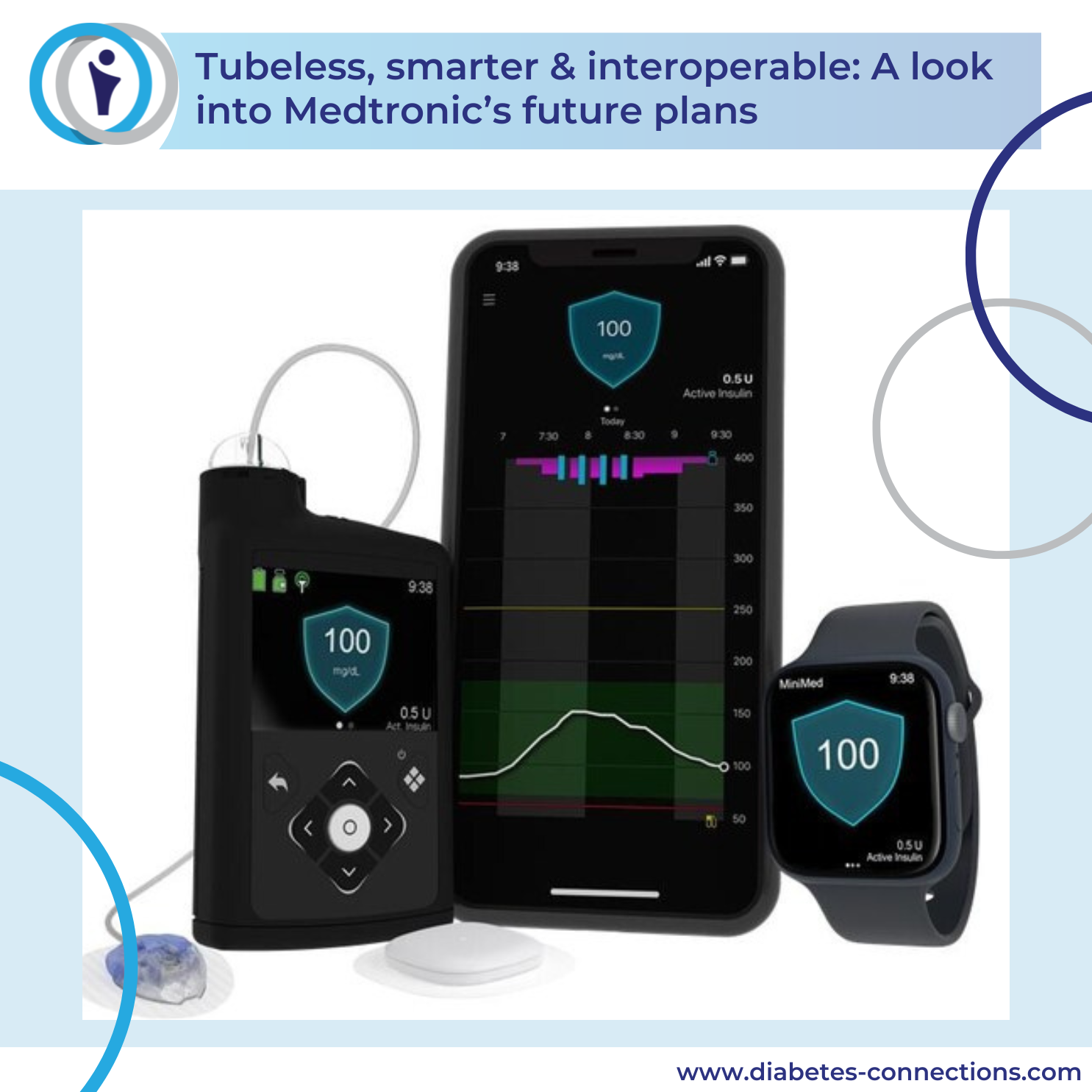
Diabetes Connections | Type 1 Diabetes
Tubeless, smarter & interoperable: A look into Medtronic’s future plans
00:46:15
A conversation with a Medtronic engineer who’s been with the company since the beginning of the Artificial Pancreas project. Lou Lintereur is now Chief Engineer for AID systems at Medtronic.. we talk about the recently approved Simplera Sync Sensor,...
Loading summary
Transcript57 lines
- [00:00]
A
Hey everyone, jumping in here right off the bat because I have two quick programming notes. First, due to some travel, next week's show is going to air a couple of days later than usual. Instead of dropping on Tuesday early in the morning like we always do, look for it closer to Thursday and I will be largely offline until then. Second, on May 21st, that's last week. If you're listening to this episode as it goes live, Medtronic announced that it was spent spinning off the diabetes business into a new standalone company called New Diabetes Company. For right now at least, we recorded this episode and interview well before that announcement, so there will be no mention of it here after this brief intro. Of course I will follow up and have a lot more in the weeks and months to come. Now, on with the episode. This week on Diabetes Connections, a conversation with a Medtronic engineer who's been with the company since the beginnings of the artificial pancreas project. Lou Linterer is now chief engineer for automated insulin delivery systems at Medtronic. We talk about the recently approved Simplera sync sensor changes coming to Medtronic's pumps. He answers your questions about AI use patch pumps and the idea of a pump that needs zero user interaction. This podcast is not intended as medical advice. If you have those kinds of questions, please contact your healthcare provider. Welcome to another week of the show. I'm your host, Stacey Sims. I am always so glad to have you here. Grateful to be doing this show for 10 years and happy unofficial start to summer. I hope you had a safe and happy Memorial Day weekend. And that also means that for many of you, this is the beginning of the summer diabetes conference season. For us, it means there's probably gonna be a lot of information, new studies, new releases, new some interesting stuff that'll come out this summer. So stay tuned. We're going to jump right in here. You know, usually I talk to these technology companies when they have something new to announce or they want to clarify something that's making the rounds. It's rare to just have a conversation, but that's what we've got this week and I love it. I love the space to just talk. I really enjoy being able to ask some off the wall questions and I think you're really going to enjoy this interview. I I was connected with Lou Linterer when a good friend of mine, Ernie Spivak, mentioned that he knew somebody at Medtronic and did I want him to try to arrange an interview. This happens sometimes and I said yes, but I didn't really think anything would come of it. There are a lot of people who work at Medtronic and you know, not everybody is going to want to do a podcast interview and not everybody can answer the questions that you have. But come to find out, my friend Ernie's friend is the chief engineer for Aid Systems the So I think there's some interest there. Thank you so much for sending me your questions. I do ask for those in the Facebook group Diabetes Connections, the group. When we have somebody on from these technology companies, if you're new to that group and you scroll through it, you'll see I do that a lot. I really want to bring your questions to these folks and if you're not in the Facebook group yet and you want to join, please go right ahead. Like I said, it's Diabetes Connections the group. It is easy to find and you can always email me. Stacyiabetes-connections.com My conversation with Lou Linterer right after this. At one of our recent Mom's Night out events, the Omnipod team was on site asking moms about their experience with the OmniPod 5 automated insulin delivery system. It was so much fun and it was great to hear what the moms have to say. Here's what Angela, mom to Dominic, told us. My son is 10 years old and he uses an Omnipod 5. It's the only pump he has used since he was diagnosed. It's been a life changing piece of equipment for him to have and he's a competitive swimmer. He is able to keep it on in the pool and we don't have to worry about disconnecting. So we absolutely love Omnipod and it has really just made a big difference in his life. Want to try Omnipod 5 for yourself? Request a free Omnipod 5 starter kit today by visiting omnipod.com diabetesconnections Terms and conditions apply. Eligibility may vary. Lou welcome to Diabetes Connections. It's always fun to have a personal connection. We both know Ernie. He was your roommate and he's my friend. He was your roommate at mit, right?
- [04:27]
B
Yeah. Yeah. We were kind of thrown randomly together. That was the first time I met him, was first day at MIT and we were in a freshman dorm or I should say first year graduate student dorm. Yeah. And we're both studying aerospace engineering. My specialty was in control theory and his specialty was in aerodynamics. And they just kind of put us together and we've just kind of been friends from that day on to through today and, and then I actually had. I was in North Carolina, where Ernie lives. Not too long ago, we had dinner together and he says, hey, you know, I have this friend, Stacy Sims, and you know, her son has diabetes. And she's just, you know, the way he described it, you know, she. She just jumped in and like, really dove into this world. And, you know, I thought it'd be great, you know, if you'd like to meet her sometime. And I didn't know you had this, this popular podcast, so I said, yeah, absolutely. Make an introduction. And. And so he did, and next thing I know, I'm being invited to this podcast. So I'm quite honored.
- [05:26]
A
Well, I'm thrilled to have you here. Because he's like, yeah, I know someone at Medtronic. I'm like, that's nice. And then I was like, oh, you know someone at Medtronic? So before we jump in, why don't you tell me a little bit about what you do. You have been at Medtronic for a long time, right? Since 20. 2010. 2011.
- [05:42]
B
2011, yeah. It's coming up on 14 years. Yeah.
- [05:45]
A
What were you doing in 2011 at Medtronic? What was Medtronic doing? Because this is before. I don't know how long these things take, but I would imagine the artificial pancreas project was about to get underway.
- [05:59]
B
Yeah. So back in 2011, we were talking about this artificial pancreas program and Medtronic, and frankly, you know, a lot of academic type institutions had these research projects for artificial pancreas that had been going on for many years, I mean, sometimes even decades. Yeah. And so, but they were just like real science project type technologies. They developed maybe a very simple algorithm, put it on to, you know, like in those days, like a BlackBerry or, you know, a smartphone, and then Somehow get the BlackBerry to communicate with an insulin pump and, you know, do some commands and they'd put it on, do very small scale, what we call feasibility studies on people with diabetes and, you know, and then look at the results and make refinements and, and then just keep kind of iterating on these, you know, looking back, fairly basic designs, learning about how to automate insulin delivery. And this was going on, like I said, for years before even 2011. And there was quite a bit of research in that space. And then right around that 2011 timeframe, Medtronic started getting more serious about, okay, we've been doing a lot of science, small scale studies. I think it's time we need to really start thinking about making a product out of this. So they hired some, some engineers with more formal backgrounds in feedback control systems, because that's the type of algorithm that you, you would turn into an artificial pancreas. Like the, the smart guard algorithm in the 780G is a island, a feedback control algorithm. And so they hired engineers like myself who had backgrounds in control theory and to try to take these kind of science project algorithms and actually turn them into a real product that you could put on, you know, hundreds of thousands of people as a commercial system. So before 2011, it was real kind of science project. After 2011, we started getting very serious about more product development, commercial development.
- [07:59]
A
I have a lot of questions about what's out now, and my listeners have a lot of questions. But I'm curious to stay in 2011 for just a minute because I remember when my son was diagnosed in 2007. Wait, I got the year wrong. When my son was diagnosed in 2006, we were already hearing rumblings like you said, this had been around for a while and the endocrinologist said probably five years they'll have this automated system. It'll be amazing. You won't have to dose the same way you're doing. And you know, we heard about it way back then, but it didn't really seem to get serious until much later when you started working on that. And I know it's hard to remember now with all the success and with every system being automated, did you think it could be done? Were you skeptical at all or is this a stupid question to ask an engineer?
- [08:45]
B
You know, I, to, to be honest, I was very new still to medical technology. So I, I came from an aerospace world and you know, feedback control systems in aerospace, I mean, that's just like a standard part of any kind of aircraft or spacecraft design. I mean, you have a flight control system and use these theories and, and so it's a very kind of mature field of engineering. And so you come into medical technology. And now I was again new to the space and so I probably naively thought, well, of course it's possible. You know, this is, we, we use this technology in other domains all the time and people have whole careers out of this. And so of course it's possible. Now, of course, working in medical technology, there are some fundamental differences than in, say aerospace or chemical engineering or you know, other domain areas that use feedback control systems, one of which is the, the regulatory climate that's, it's very different. And so the way you, you get devices, approved medical technology type devices is different than you would for an aircraft, spacecraft or some other Type of, of system. Also, the nature of the thing you're trying to control is very different. You know, I like to say, you know, aerospace systems are very complex systems, but they're all modeled using basic physics, like the types of physics you could learn in high school in AP physics class. And of course, you, you know, the, the, the Newton's laws of, of motion. You can apply these to the design of an airplane and model very accurately how exactly that airplane will fly, even when it's hit by gusts of wind, even when the pilot puts in very strong commands into, you know, make a turn or make it climb or dive. It's very predictable. Human body, human physiology, not so much. There's, there are no Newton laws for human physiology and diabetes. And so everything we know about diabetes, it's, you know, from medical texts. There's a lot of uncertainty about how the body actually responds to certain inputs like carbohydrates coming in or other stresses on the body and, you know, illness, exercise, you know, all these types of disturbances can affect the patients or the person with diabetes or blood glucose in sometimes very unpredictable ways. And so that was a real challenge. Like, how do you design a feedback control system around something that has a lot of uncertainty to it and a lot of unpredictability to it? And so that was new. And this, these are the types of problems that made what. What appeared to be a fairly straightforward problem into something that takes 10, 20 years to solve. But we did eventually get there, as you know.
- [11:23]
A
Yeah. Okay, so let's fast forward, and I will. We've done lots of episodes with Medtronic over the years since the, the first, what really everybody used to call the artificial pancreas was approved. And now we, we have different names for automated insulin delivery and other terms. Let's talk about the recent approval of the Simplera Sync sensor for use with the Minimed. Tell me about this sensor. What makes this different?
- [11:49]
B
So the Simplera sync sensor, it's based on the. The same technology as our Simplera sensor. So the Simplera sensor has been approved for several months now. Simplera Sync was approved only just a few weeks ago. And so it seems like a new sensor. It's actually the same technology as the Simplera sensor. The difference in Simplera sync is it's designed to connect directly with the 780G insulin pump, whereas the Simplera without the sync is as a standalone sensor designed to work with, to connect directly to an app and our smart pen solution, like our Inpen system. So the sensor is the same as simplera. It's a considerably smaller Sensor than the Guardian 4. It's about 50% smaller than the Guardian 4 sensor. It's a single piece design. So the Guardian 4, the current sensor that we use with the 780G for example, is a two piece design. It has a durable transmitter and a disposable sensor part. And you recharge the transmitter and have to connect them when you want to put the sensor on. Now it's a single piece design, fully disposable, very easy to insert. We spent a lot of time and effort trying to make the user experience of insertion and the taping is as easy as possible. So the insertion is a one click, it's preloaded in the asserter, one click, it's inserted and the taping is easy because there basically is no taping required. The adhesive is integrated into the device itself. A very simple insertion experience. A much smaller device on the body to wear. And of course, as I think all sensors are now going forward, no finger sticks required to calibrate the sensor.
- [13:29]
A
Yeah, I'd love to ask you about that because, you know, no finger sticks required is something that Dexcom and Libre, you know, have of course had as well. How significant of a change is that? Not from a consumer standpoint, because I'm not sure my son did the finger sticks when they were supposed to be done. When we used the Dexcom for that, he got away with as few finger sticks as possible, which I think is fairly typical. But from an engineering standpoint, is it really that different? What had to change?
- [13:57]
B
Well, before we came up with sensors that did not require what we call calibration. So calibration is trying, is, is basically a process where you have a known source of truth and you try to match the measurement to that known source of truth as closely as possible. That's what we call calibration. And in the case of blood glucose sensors, the calibrate, the known source of truth, of course, is a drop of blood from a finger stick and you know, measured through a blood glucose meter. And so now that calibration was needed because in early, earlier sensor technologies there was a lot more variability and like they say, the sensor chemistry, so there's manufacturing variability and how they lay down the chemical layers in the sensors. And we did not have as sophisticated of signal processing. There's. I'm kind of glossing over some.
- [14:48]
A
No, please, it's okay.
- [14:50]
B
We didn't have some of the sophistication in signal processing that we have now as our manufacturing processes. Improved so we could get more reliable and consistent manufacturing of the sensor chemistry itself. And as signal processing technology also improved so we could take better advantage of some of the other signals that we could get from the sensor, other than just the current measurement coming off the chemical reaction of the sensor itself. Were able to now come up with technologies that did not require calibration. We could just use the measurement themselves as kind of its own source of truth. And so that was really the big innovation. And of course, you know, certain companies were able to reach that, that level of innovation sooner than others, but at this point, basically all the organizations that make sensors are at that same level of sophistication.
- [15:40]
A
Yeah, no, it's wonderful. It's really great to be there. I mean, I don't even have to say anything. You know, that from going to pricking your finger, you know, 10 times a day, my son's fingers looked like Frankenstein fingers after.
- [15:51]
B
Yeah, no, that was a, that was such a huge thing. I mean, it's just not just a technological leap. I mean, engineers, we like to talk about the technology, but you can't, you can never lose sight of who's on the other end of that technology. There's a, there's a human being on the other end of that technology. And some things that, from an engineering office, you know, you're thinking, well, you know, what's, what's a couple finger sticks a day? You know, that's, that doesn't seem like a lot, you know, until you're the person having to do your, you know, the two finger sticks a day. And you realize that that experience for an adult is very different than an experience for a child. And when you take all that into consideration, you really realize, like, okay, this is a very important technology that we absolutely need to adopt because it, it, it has just real advantages, improving the quality of people's lives. You know, something as simple as that. So that's, yeah, I'm, I'm very happy that, that everyone is, is on board with this. And, and, and we all, we are, too.
- [16:42]
A
That's great. All right, so let's talk a little bit more about the MiniMed 780G system. And I want to ask you about what they're calling this meal detection technology. Can you talk a little bit about what that means, how it works? Right back to our conversation. But first, Diabetes Connections is brought to you by Dexcom. Benny has been using the Dexcom CGM for more than 10 years now. The first insertion was in 2013, just before he turned nine. It was great then. I mean, if you have done finger sticks for a while, you know how amazing it is to go from that to continuous glucose monitoring. But it's even better now. The Dexcom CGM systems just keep improving. They continue to get more and more accurate with no finger sticks or scanning required. The easy push button insertion has made it easy for Benny to do it himself. He has done every one since we switched to the G6 in 2018, which was great for his independence back then as a younger teen. And of course, we still love the alerts and alarms and that we can set them how we want. Find out more. Go to diabetes-connections.com and click on the Dexcom logo. If your glucose alerts and readings from the G6 do not match symptoms or expectations, use a blood glucose meter to make diabetes treatment decisions.
- [18:02]
B
Yeah, so actually this is good. We kind of created our own segue just even talking with about finger sticks because, you know, like in the, in the old days, people were supposed to do at least two finger sticks a day to calibrate their sensor. And as you even said, it's like, you know, my son was pretty spotty with that, you know, because finger sticks are hard. Even if they were easy, you'd still forget to do them periodically. You know, it's just maybe you got busy. Okay, well, now we've got finger sticks solved. But now all the systems out there, all the automated insulin delivery systems you notice, are called hybrid closed loop systems. The hybrid aspect is because the user is still required to help manage the therapy if they're not fully, fully automated. And the part of the therapy that the person with diabetes is supposed to still manage manually are the meal announcements.
- [18:49]
A
Right.
- [18:49]
B
How do you bolus for your meals? And here again is an area where it's. That can be difficult. Now, it doesn't cause physical pain, but, you know, now you have to look at a plate of food and estimate how many carbohydrates is in this meal. And not just that, but I have to remember to actually bolus for my meals. You know, it's. I can imagine how tempting it is, you know, to have a plate of food in front of you. You're really hungry and just start digging in and, you know, you want to eat and completely forget that to take care of your diabetes. Okay. And so this is the type of situation we were targeting when we decided to design this meal detection. So now I, I don't want to overstate, you know, what the capabilities of 7AG. You're still supposed to bullish your meals on 7, 80G. But we fully realize that bolusing meals is difficult and sometimes people forget to bolus your meals. And so we wanted to design a technology that could help offer what we sometimes describe as forgiveness for those situations. If you don't count your carbs just right or eat more than you anticipated, or completely forget to bolus a meal, we want to provide a technology that can kind of not perfectly compensate for that and give you all the insulin you need, but give you extra insulin to get your blood sugar back into range, back to target as quickly as faster than ever before. Right. And with meal detection technology, what we do is we're, we're monitoring the, the sensor glucose trends, how high the sensor glucose is, its rate of change, how, how fast it's rising, how long it's been rising. And we look for different markers in those, those sensor glucose trends that indicate that a meal has been eaten. And we have some proprietary technology that can identify those patterns. And once we've identified a pattern of glucose indicating a meal, we help the algorithm dose more insulin during that, that period of time while the meal is detected than it would have otherwise give more insulin for that meal so that if they do completely forget Ebolas, they can get the insulin they need to get their blood sugar trending back to target faster than without meal detection technology. And again, you know, trying to give some forgiveness for those types of situations to set them up for the next meal, then hopefully they'll remember that meal. But yeah, that, that, that was the idea.
- [21:02]
A
I am not sure that you can answer this question, but real world, how is it working? Do you all have data on that?
- [21:08]
B
So it's difficult to collect real world data specifically on meal detection. But in our clinical study, our, our pivotal study for the 780G, we deliberately tested, we wanted to test not so much the efficacy of this feature, like how effective this feature was, but the safety of it. We wanted to make sure that hey, if we're going to be giving a little extra insulin, we detect this meal and maybe there are false positives. We need to at least show that it's safe. And so in our pivotal study, we actually did have everybody eat a meal, actually a couple meals, even a large meal, and deliberately not bolus for it. And we had them do it as, you know, first when, what we call manual mode. So on their, their just a program basal rate, not any kind of automated delivery. So just on a program basal rate, eat a meal and not bolus for it. And then later they went into they turned on smartguard, ate the same meal, and also not bolus for it. And we saw how much improvement we got. And I can't quote the numbers off the top of my head, but there was a very significant improvement in outcomes between both situations. You know, not bolusing on a basal, just a fixed basal rate versus not bolusing with Smart Guard, including meal detection and of course, and it was very safe. So. So we do have some qualitative data on that. I don't think we've ever really looked at, you know, really quantitatively like real world, how is it actually performing. But we do see in real world data the 780G is, I'd say, best in class in terms of its overall therapy outcomes. When we first launched the first ever hybrid closed loop technology, the 670G, we were doing backflips for the average patient. We were able to get 70% time and range. We're getting about 72, you know, maybe 73% time and range. But that was like, that was revolutionary at that time. Back in 2017, 780G in the real world is now getting up close to 80% time and range. And so it's pretty amazing. A 10 percentage point lift in time and range is very significant. 10 percentage points in time and range. Just to put it in perspective, one percentage point in time and range is 15 minutes a day. 10 percentage points is 150 minutes a day. That's two and a half hours a day extra time and range you could potentially get on this, this advanced system. And so that is a, you know, again, you know, not all of it, of course, is, is due to meal detection. You know, there's, there's other features in 780G, but you know, just to give you a ballpark of, of how much improvement in the therapy outcomes that we do see in real world. 7ag, it's, you know, 8, 10%. Yeah.
- [23:36]
A
When you're designing things like this, and you already kind of alluded to this when you talked about how difficult it is to predict the human body, right. And the laws of physics and things like that, how difficult is it to create devices like this that, you know, people, and I'm one of them that are going to mess up when we use, right. We're not perfect. We forget to bolus, we forget to change infusion sets or things fall out or we hit the wrong button. You've got to take all that into account. I'll leave it there. You've got to take all that into account.
- [24:05]
B
Absolutely. Yeah. You know, a big part of designing medical technology in general is what we call risk management. Okay, so in risk management, you're trying to determine, like, well, what is the worst thing that could happen? And in any kind of situation, it could be a failure of a mechanical part of the system or an electrical component failure, or it could be misuse of the system itself. And one of the categories of risk we have to deal with is risks related to what's. What's known as reasonably foreseeable misuse. We not only have to account for as, like, this physiological variation, we have to account for behavioral variation, like, how could somebody foreseeably misuse this system? And can we mitigate against that case? And so, you know, coming back, actually to this meal detection technology, with meal detection, it's like, oh, this is great. Somebody forgets to bolus, we're going to give them the extra insulin they need. We'll detect the meal, give them some extra insulin, try to give them some missed bol. Some of that forgiveness, you know, so that, you know, they get back into range faster. But what about the user who says, misses a bolus? They start eating, they forget to bolus, and then 15 minutes later, remember to bolus. Okay, well, we have to think through that.
- [25:16]
A
Done that. When it was little, it was like, oh, I think I did that every week, Louis.
- [25:21]
B
Yeah, exactly. And so we had to design mitigations for that, too. And we actually have features in the algorithm. We actually have a feature we call a safe meal bolus feature. We don't really advertise it, but it's part of the algorithm that is designed to help compensate for that case, to find when. Okay, we've already given quite a bit of insulin. Now the user wants to bolus. We might need to adjust the size of that meal bolus, actually reduce it to make sure that they're not stacking too much insulin on top of maybe some of the automated delivery that we've already given them. And so we've got to think through all those scenarios, including misuse and design mitigations to keep the user safe. So that. That's great question.
- [25:58]
A
Oh, well, listen, I. I love questions about making mistakes and messing things up, because that's how we roll over here, and it's just life. Nope, Nothing perfect is happening over here. I have a bunch of questions from my listeners. I'll be honest with you. I'm not sure that all of these are for an engineering person. We'll take some of these to public relations or marketing as well, but I Do have some questions for my listeners. The first one was about whether Medtronic is working on or could be working on a patch pump. Can you speak to that at all? Is that something that you would like to see happen?
- [26:28]
B
Oh, yeah, we. We would definitely like to see that happen. We are actually committed to developing a, A what we call a tubeless pump or a patch pump. In fact, we're actually working on two different new pumps. You know, not just a, a tubeless pump, but also a new tube pump. And part of the reason for that is if you want to kind of distill down, like our technology progression going forward, we're developing lots of different technologies. We're really trying to provide maximum choice for the user because we just know that some people have varied preferences over what kind of sensor they want to wear or what kind of pump they want to use. Tube or tubeless, you know, or we want to make sure we have a system that, where you could make those types of choices but not sacrifice on the therapy. Because oftentimes people say, well, I really like this pump because it doesn't have a tube, but I know. Or my doctor says I might get a better therapy on this other system that has a tube. And so now you're stuck with this kind of an awkward choice. And so we say, you know, enough with that. Let's. We're going to make a tubed pump and a tubeless pump. And the patients or the people, diabetes can choose which one fits their lifestyle preferences. But no matter which one they choose, they will not have to sacrifice the quality of the therapy because both systems will have access to the latest and greatest therapy algorithms with the meal detection technology and all these other features that give you these, these amazing outcomes. So we're trying to maximize choice without sacrificing the therapy outcomes. And providing a not just a tubeless patch pump, but also a tube pump option, I think, is a good move in that direction for us.
- [28:03]
A
What's the second pump that you're talking about? Is that the next iteration of the 780G?
- [28:08]
B
It's a tubed pump. It's a screenless pump as well. So both pumps, the tubeless pump and the tube pump, you'd operate them using an app on your smartphone or a controller that we could supply for you. Nevertheless, both pumps would have kind of that same experience in terms of, like, what the user interface looks like, because it would be coming from an app. But the on body experience would be very different. You know, a tubeless on body experience versus a tubed on body experience.
- [28:36]
A
Let's ask a theoretical question as a follow up to that because I know better to ask about timelines or what Medtronic proprietarily is working on, but with a screenless pump, you know, you think about the DIY systems and people that I know of that are, that are using totally closed loops, you know, they're not putting meal announcements. These are not commercially available pumps. These are very, very few and far between, but they're out there. Is that something that Medtronic is working on as well?
- [29:03]
B
We're innovating in all three phases of the artificial pancreas system. The three phases of the artificial pancreas system are the sensors. We kind of talked about sensors a little bit. We're innovating in the pumps. Talked about the pumps. We're also innovating in the algorithms. So we, we've talked about the Smart guard algorithm with 7, 80G with meal detection. We are also continuing that innovation in our next generation algorithms. And here again we're coming returning to that theme of trying to maximize choice for the user. It's interesting that all the automated systems out there, like I mentioned, you have to bullish your meals, right? You're not supposed to choose not to bullish your meals. Now we know some people do choose that, but you're not supposed to make that choice without really maybe a detrimental impact to your therapy. Our next generation systems, we're trying to create ways where a pathway for people to choose not to bullish your meals. If, if they don't want to bolus their meals, they don't need to bullish their meals and they can still get a level of therapy that is considered acceptable by the American Diabetes Association. And so trying to find that level of choice where it's like, okay, I choose to not bolus my meals, have that very easy user experience and I'm willing to accept like the minimum guidelines established by the ADA for therapy. Or I could make the opp, I could make the other choice. I could choose like, you know what, I don't mind bolusing my meals. It's not that hard for me. I choose to have even a higher level of therapy to exceed substantially the level of therapy established by the American Diabetes. Now if that's my choice, fine, bolus your meals just like you you were before and exceed significantly the, the level of therapy. But and, or, or make some choice in between those two. You know, maybe I choose to just bolus that one big meal a day and let that, let it go for the you know, by itself, the rest of the time. And so that's really the space we're trying to navigate with our next generation algorithms and providing choice in terms of how much effort people want to put into their therapy.
- [30:59]
A
Okay, so I'll ask you the pie in the sky question. As an engineer, not as a Medtronic statement, just as a question. Do you think we'll get to the point where we don't have to bolus and you'll get more than 70% time in range? I mean, that's really what people want, right? I mean, to choose to not bullets and get the minimum time and range is okay, but I think the dream is slap it on and go.
- [31:22]
B
Yeah. Any possibility. Yeah. You know, coming back, you know, maybe recirculating back to your, your very first question. When I walked into the door, you know, Medtronic, you know, did I think that a system like this is even possible? And naively, it's like, of course, you know, it's possible, you know, and I'll kind of answer this question in the same way. If I didn't think it was possible, I would not be working at Medtronic. Yeah, I mean, that's, that's what we're going for. Great. This is, this is our goal. This is what would be like what I would consider a true artificial pancreas. We are working on the technologies to make that happen. Now, it depends if we're able to get there in our very next iteration or not. That's obviously technology that's still in development, but that's our goal and we believe we can get there.
- [32:06]
A
That's great. I know it's not coming out next year or the year after Lou, but I needed to hear you say it. Yeah, right. Let's go to some more basic down to earth questions. I got one from a listener who says, what happened to remote bolusing? Will we be able to remote bolus again? And I'm not familiar with the system, so I'm not exactly sure which system they're talking about.
- [32:24]
B
Our much older Systems, early, before 780G, and some of our older systems had the ability to remote bolus. We no longer have that ability with 780G, primarily for security reasons. But I will say I talked about our new pumps coming out, both of them being controlled by a smartphone app. So by definition, both of those pumps, remote bolus will just be. That's just part of the overall experience. Yeah. Great.
- [32:47]
A
Okay, again, we are getting down to the nitty gritty in some of these Questions, but I will ask them anyway. Will Android users have the opportunity to use Guardian Connect apps?
- [32:56]
B
So we had a Guardian Connect app that worked with our Guardian Sensor three. Oh, this goes back years now and actually that system actually did support Android. So I'm not sure if this user is talking about that old system. It did support iOS and Android, but nevertheless, our Simplera sensor system that was approved recently when we launched that, it will also have both iOS and Android support.
- [33:23]
A
Got it. You know, we talked about sensors very briefly, as you said. I did get a question from a couple of listeners and I was going to ask this myself. There was a lot of talk about interoperability a couple of years ago, you know, and now some of the pump systems can be used with different sensors, different branded sensors. We just saw the new Twist pump that's coming out in the next couple of months. We'll work with Libre and with everSense, the implantable CGM. Does Medtronic have any plans to extend that kind of interoperability or is Medtronic planning to stay with their own ecosystem?
- [33:56]
B
Well, as it turns out, we recently made our first submission to the FDA that would start opening the door for us to be interoperable. And more than that, a few months ago we actually signed an agreement with Abbott Diabetes Care, where Abbott is going to create a sensor for us that's based on their most advanced platform. And we are going to then take that sensor and also integrate it into our, our ecosystem so that we would also, again, returning to that choice, offer two different sensor options, our own Simplera Sync sensor or the CGM that's based on Abbott technology.
- [34:34]
A
I have to ask though, Lou, why reinvent the wheel like Libre is there? Why not just do as other pump companies have done and say, okay, we're just going to use the Libre 2 or Libre 3 rather than create a new version of it?
- [34:50]
B
Well, so we are, we're, we're going to use the same technology as, as say what's in, in the Libre, you know, the, the, the Abbott cgm. We're not reinventing that technology. We do have to make some changes in our pump itself in order to communicate with that sensor. And so that's one piece of it, but I think another piece of it is we want to take ownership of the whole system. So we don't want to be a system where it's like, okay, we make the pump, somebody else makes the algorithm, somebody else makes a sensor, and then when something goes wrong, who do you call? We don't want to be that type of company. We want to be the company that stands behind our overall system. If something goes wrong with the system, you call us and we'll take care of it. Okay. We're not going to point you. It's like, oh, that seems like that's a sensor problem or that's a pump problem or that's an algorithm problem. Now call the out and they're just going to point you right back. We don't think that's a good customer experience. And by basically creating a sensor that's in our ecosystem but based on the Abbott technology, we can create that also that customer experience environment that I think is also sets us apart from, from other systems out there.
- [35:57]
A
This may sound like a softball question, but to that point, if I'm hearing you correctly, it just sounds like so maybe there are tweaks or maybe there are things within that same sensor, again based on existing technology, but that would be unique to the Medtronic world. Is there an advantage there that the customer may not see and experience beyond.
- [36:17]
B
You know, customer service with the Abbott technology?
- [36:19]
A
Yeah, yeah. Well, like taking it in house, making it yours. Are there things that you can do with, you know, to make it work better with your pump or am I not thinking about this the right way?
- [36:28]
B
Well, I think you actually are kind of thinking about it the right way. And that's like for example, our own Simplera Sync sensor. That's Medtronic technology all around. It's, it's sensor technology, pump technology, algorithm technology, all Medtronic. And so if there is some optimization we would like to make to the sensor itself that's specific for our algorithm, well, we can just talk to our own sensor engineers and make that happen. With the technology that's based from a different company, we don't really have that freedom and flexibility to call up the other company and say, hey, we need you to make these, these changes to your sensor because it'll make our life easier.
- [37:01]
A
Right.
- [37:01]
B
Or our system perform better. I mean there is obviously a cooperative agreement there, but it does limit the ability for us to really fine tune the technology to the way we might be able to do with our own sensor technology in Simplara Sync.
- [37:17]
A
So another listener wanted to know. I'm going to read this because I think you'll like this one. I'm going to read this. Curious when we might see AI enter the chat. I could see learning algorithms changing the game for us, but it's not clear how FDA would evaluate. Is Medtronic working with the FDA to better understand this Landscape.
- [37:35]
B
So AI, it's obviously very new, I won't say new technology, but it's kind of new in like the public consciousness. And it is also very poorly understood. Even AI researchers will have a hard time really defining what AI actually is. And so I'll say we have to be very careful with how we incorporate some of these types of AI technologies into our, into our products. Especially when you're talking about medical technology. A couple things we have to be concerned about. It's very well known that some of these AI technologies will actually the, the term they use is hallucinate like make up answers that aren't actually real, but very confidently give you an, a false answer and you know, as if it were, that were the right answer. And you know, that can lead to kind of humorous results. And like a chat bot, you know, when you're talking to this thing is give you clearly like, you know, false information confidently. But if it's making decisions about your therapy and is confidently giving you guidance on your therapy, okay, that, that's a completely different, you know, world. So that's a problem that we have to grapple with and make sure that, you know, we have a hallucination free AI. Another aspect is these AI models are sometimes what we call black box models. I talked about my background in feedback control systems and you know, we use like the laws of Newtonian physics and, and so feedback control systems like that, types of algorithms we have now are what we call white box, meaning if something goes wrong, we can point to the line of code in the pump software that was responsible for that bad behavior and we can fix that line of code. Okay. And we can, we have a whole change log listing how, showing how that line of code even got in there. And so we can pull the thread and trace it back to what led us to even put that line of code in. We have the ability to do that now with, with more classical techniques. AI models are what you call black box models. You don't know what's going on inside of that box. You just see the inputs go in and the outputs come out. And it could be hallucinations, you know, could be, it could, it could be. Hopefully most of the time is really good. But if something does go wrong, you can't just open the box and say, oh, it's, it was this piece right there that was the part that did it. And I just need to tweak that one piece. It's much more complicated than that. And then you can imagine what, how the regulators might feel about that, you know, they say, hey, somebody had a bad experience with this system. Can you explain why that happened? And we just say, I have no idea. That's just what the AI engine said. That was the answer they gave. Okay, so that would not fly very well in a regulated environment. So AI has a lot of promise, to be sure, but whether it's ready to be tightly in that therapy loop of actually making therapy decisions in an unsupervised way, in my estimation as an engineer, I don't think we're there yet. Now, it could offer some promise in more supervised settings. Like, you can imagine a case where, you know, there's somebody's using one of our systems, and they upload their data to our, say, or Care Link system, and then there's some AI bot, you know, analyzing the data and then making suggestions to a physician about things that they might want to talk to the patient about or things that they might. Settings they might want to change in what direction they might want to change the settings. But ultimately, it's the physician, you know, who is filtering out maybe some bad advice and then, you know, maybe giving the physician some ideas about some things that, you know, they want to try next. But there's that physician supervising the whole operation. So those are some applications where I might see maybe some first areas of application for. For AI. Eventually, we'll get to the therapy loop, but we're not. Not. Not yet. Got it.
- [41:16]
A
You know, we're getting a little long. Before I let you go, I have a friend that I've known since college. He's had type one since, I think, middle school. He might have been younger. I know in middle school, he was one of the people that tested one of the first portable insulin pumps. Not the backpack that people see, but the giant shoebox. And he said, I will never wear an insulin pump because of that. Like, it was a horrible experience. And as a grownup, I know he tried. He did try a couple of different pumps, but he wound up on the Medtronic system. And he said, it is a gift from God. I'm reading a text from him. He's so happy with it. Obviously, you know, the work you're doing makes a big difference. But my question to you, having said that, is what frustrates you about this. I mean, it really is a great piece of technology, all these automated systems are. But what frustrates you? What are you like? Oh, you. You either want to get done, you haven't gotten done, or it was a real pain to get done.
- [42:12]
B
Well, nothing's really surprising. I mean, I. I think some of the things that. That surprised me is how quickly people can find workarounds to different situations. And honestly, when we design these systems, you know, we know it's like, okay, some people are probably going to experience this, I don't know, some very rare condition or something with the system, how it operates. And then a very small subset of those people might figure out that, oh, there's some back door, that you can do these. These simple maneuvers and then get around it. Not that we recommend that, but you can do this. And we think it's like. But it's going to be, like, two or three years before we hear about the first one of these things. Okay. And then the day we launch the system, it's like the first call that comes to the helpline is somebody pointing this out. It's like, you've got to be kidding me. You know, it's one thing that surprises me, delights me, and frustrates me at the same time is the sophistication of the people who have diabetes who use these systems. It's remarkable at how inventive and creative they can be with these systems. And, you know, and it kind of comes back to that, you know, that the risk management we were talking about earlier and that, you know, reasonably foreseeable misuse, it's like, it kind of opens up that whole search space for what can we reasonably foresee? It's like, man, people can. They can think of all kinds of crazy things that we didn't, you know, we didn't consider. Yeah, I. I don't. I don't want, like, really want to put it in the. The frustration column. It's more of a. A challenge. You know, it. It's a. It's a challenge.
- [43:44]
A
That's a perfect answer, you know, because people with type 1 especially, they are hacking their bodies on a daily basis. You know, even my son, who has not touched anything DIY ever in the diabetes community space, they're figuring workarounds. They're making it happen. They're smart, they're clever. They have to be. So I'm. I love that answer. That's amazing. And then my last question really is, like, what? You've been doing this a long time. What gets you out of bed in the morning? Are you still excited to be doing this?
- [44:11]
B
Oh, yeah. It's. It's all the. It's all the technology. I'm a technologist at heart. I just love getting up. I. Well, I love seeing the future in R and D. I live in, like a five year time warp. I am seeing technologies today that the people with diabetes won't see for five years. It is so exciting. I cannot even begin to tell you how exciting it is. Knowing what is just around the corner, the moves that we're going to make, the technology that we're going to come out with, that's really going to solve this problem. And, you know, that gets me out of bed just knowing what's coming and that. Knowing that I get to. I'm in a very privileged position to play a part in that. In that development. And. Yeah. So I just love the journey.
- [44:54]
A
I love it. Well, Lou, thank you so much for joining me. I would love you to come back, you know, anytime, over those next five years, maybe we can get in the time machine with you and you can pull the curtain back. I know that's tough to ask, but I have to ask. You're welcome back anytime. Thanks for joining me.
- [45:08]
B
You're very welcome. Thanks for having me, Stacy.
- [45:15]
A
As always, we've got more information about Medtronic and about lou over at diabetes-connections. Com. Every episode has its own homepage. If you like what you heard, please share the show with somebody in the diabetes community. Word of mouth is the best way to get the word out about Diabetes Connections. Even after all this time, we still have lots and lots of new listeners. I really appreciate those of you who've been here for a very long time. You do a great job of championing the show, bringing in new people, contributing to great conversations in the Facebook group. Thank you so much for being here. Thanks to my editor, John Buchanis from Audio Editing Solutions. And as always, thank you for listening. I'm Stacey Sims. I'll see you back here soon. Until then, be kind to yourself. Diabetes Connections is a production of Stacy Sims Media. All rights reserved. All wrongs avenged.