← Diabetes Connections | Type 1 Diabetes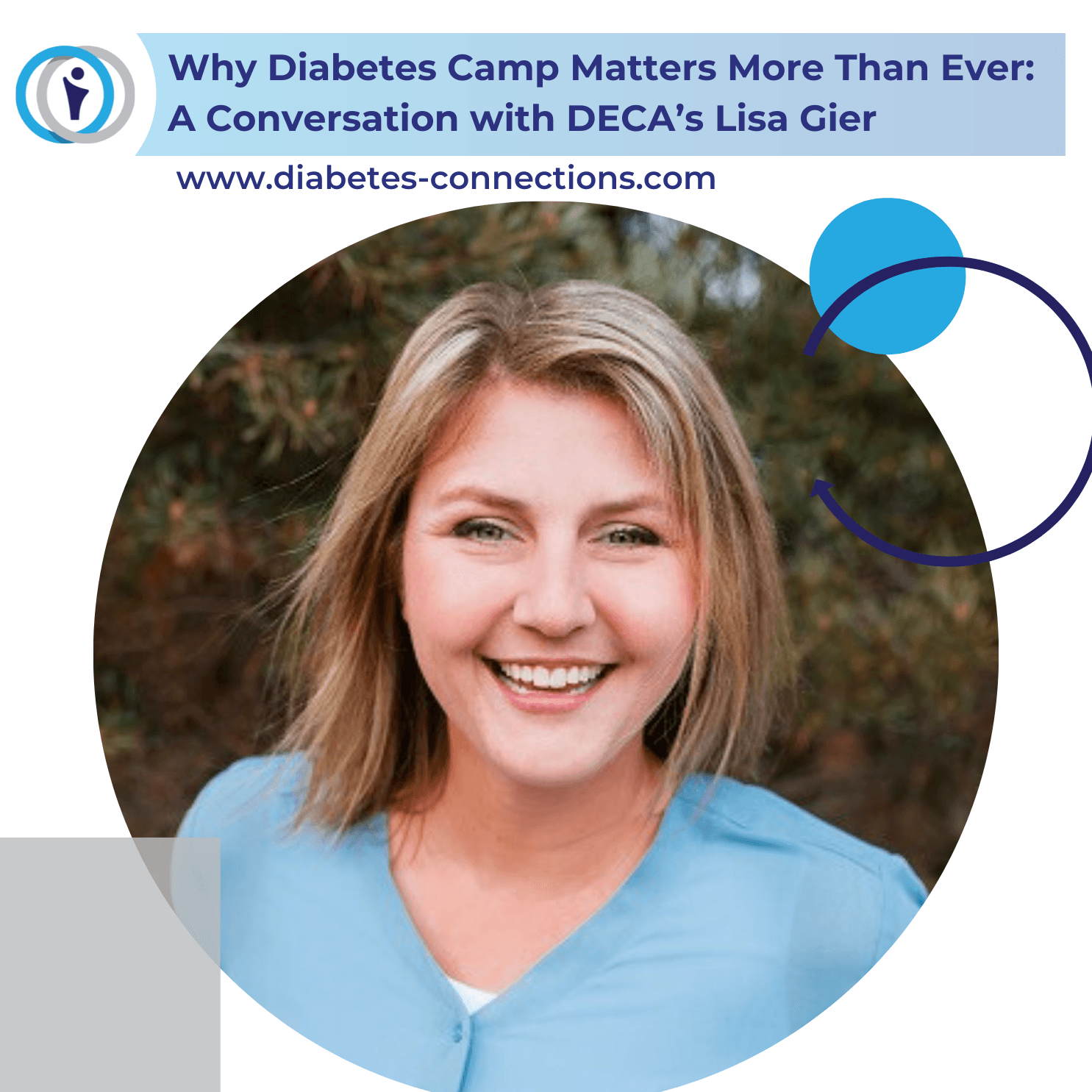
Diabetes Connections | Type 1 Diabetes
Why Diabetes Camp Matters More Than Ever: A Conversation with DECA’s Lisa Gier
00:27:49
It’s time to talk about summer camp! Kids may be getting ready to go, already there, or maybe you’re an adult with type 1 who has fond memories or is working at camp. We’re talking to the which serves the diabetes camp community. Lisa...
Loading summary
Transcript44 lines
- [00:05]
A
This week on Diabetes Connections, it's time to talk about summer camp. Kids may be getting ready to go already there. Or maybe you're an adult with Type one who has fond memories or is working at camp. We're talking to the Diabetes Education and Camping association, which serves the diabetes camp community. Lisa Geer, who lives with Type one, is the executive director of and her son, who also has T1D, now goes to the camp she attended as a child. This podcast is not intended as medical advice. If you have those kinds of questions, please contact your healthcare provider. Welcome to another week of Diabetes Connections. I'm your host, Stacey Sims, and we aim to educate and inspire about diabetes with a focus on people who use insulin. As I mentioned last week, this episode is out a little later than usual. That is because we have been traveling. I will share more soon. You know, podcasts are like little time traveling experiences. I'm recording this before I leave, before I even pack, so hopefully all is well. But I had to think that coming home, being jet lagged and trying to get an episode out would not be a fun experience for you as you listen, or for me because I would sound like garbage and feel even worse. But I did want to make sure to get this episode out in a time way at the beginning of June because it's camp time, right? And I am a huge fan of summer camp. You know that Diabetes camp, day camp, regular sleepaway camp. I went to camp at the age of six, I kid you not, for two weeks and then for at least four weeks, sometimes six weeks, sometimes eight weeks, until I was 15 and decided to get a job. My husband went to camp, my dad went to camp, and both of my kids went to camp. I've told these stories many times before. I was very worried that Benny would miss out on a summer camp experience. And of course he did not. He went to regular day camp, Diabetes sleepaway camp, regular sleepaway camp. These were experiences that really shaped his life and his diabetes management and really helped in his independence. And we have done many, many episodes about camp and I will link all those up in the show notes. But this one is a little different because I'm talking to the folks from DECA and they are not an individual camp, but, but rather an organization that serves diabetes camp. Lisa Geer is the executive director of the Diabetes Education and Camping association. And as I said, she has a son with Type one who is attending the same camp she went to as a child. Lisa and I are going to talk about the changes that have come to camp I mean, it's not just technology, but we could do a whole show on that. What to do if you have any issues or questions about your camp and what DECA hopes to accomplish now and in the future. Our conversation right after this. When I think about our family's use of CGM and Dexcom, it's getting harder and harder to remember how we did things before. I mean, how did we manage when Benny needed something like ten finger sticks a day when he was a toddler? We thought it was amazing to switch to Dexcom CGM when it needed to be calibrated twice a day. Remember that now Dexcom G6 eliminates finger sticks for calibration and diabetes treatment decisions. We love the alerts and alarms and that we can change them both for him and for us. A lot has changed as Benny has grown from a toddler with type one to a college student. Dexcom share and Follow has let us help give him more and more independence. If your glucose alerts and readings from the G6 do not match symptoms or expectations, use a blood glucose meter to make diabetes treatment decisions. Learn more. Go to diabetes-connections.com and click on the Dexcom logo. Lisa Geer. Welcome to Diabetes Connections Camp is one of my favorite subjects. I'm so happy you. How are you doing today?
- [03:47]
B
Thank you so much. I'm doing wonderful. How are you?
- [03:50]
A
I'm great. Great. Thank you. Even though my kids have aged out of camp, it was such a big part of both of their lives. So I'm thrilled to talk about it today. Let's start by. Just give me an overview of what DECA is and what you do.
- [04:04]
B
Sure. So DECA is Diabetes Education and Camping association, and we are an umbrella network that supports diabetes camps. So the camps each operate on their own, run independently, and we work with the camps to identify needs that they're all facing and try to find creative solutions and partnerships and support to address those needs. And that way, camps can focus their resources on their unique community needs. Instead.
- [04:29]
A
You live with type one. Did you go to diabetes camp?
- [04:33]
B
Yes, I did. I grew up with diabetes. I. Well, I grew up going to camp. I have diabetes. Grew up with diabetes. That's a pretty good slip, right? We all wish we could say this as a past tense. I started attending the diabetes camp in Idaho when I was about 10 years old, and my son actually has diabetes as well, and he was diagnosed at the age of six and also now attends diabetes camp.
- [04:53]
A
Is it the same camp that you went to?
- [04:54]
B
It is, yes.
- [04:56]
A
Wow. I'm going to jump into DECA and overall stuff. But I have to ask, what do you remember for you, what made the difference for you in terms of diabetes camp? Did you want to go? Do you remember it?
- [05:08]
B
I do. I remember pieces of it, certainly some of the highlights. I remember being very afraid to go. I remember being nervous. I hadn't been away from my family for an overnight besides going to grandma's house, so driving up to camp with my mom and my grandma and my sister, I was. I was nervous to get dropped off and go. I also remember by the end of the week, I did not want to go home. I just loved it so dearly while I was there. The hardest part was the drive up and the unknown, which I think is true for a lot of our lives. I also remember my cabin nurse. Her name is Barb, and she's still a dear friend of mine. I remember where she taught me to give my first insulin injection, actually, which was right out in front of Patterson cabin. There's this ginormous boulder rock there. And we actually sat out front at that rock and did it. And that hugely changed my life and was kind of my first step in diabetes self reliance at that time in, you know, in the early 90s. And so I remember just feeling incredible and then having a ton of fun and meeting lifelong friends.
- [06:13]
A
Wow. It's hard to overstate for some kids the impact of diabetes camp. And I'll put my family in that category. You know, the independence that those. Those small steps toward independence that a lot of kids take really are invaluable. But now you work with a lot of diabetes camps. What does DECA do? How do they help?
- [06:34]
B
Absolutely. So right now, we have nearly 100 member organizations as part of our network. The biggest kind of project areas that we have right now is professional development. So we do conferences for the camp leadership on both program leadership, executive leadership and medical leadership, healthcare leadership, to be sure that camps have the most current updated information and that there's continuity in what these programs are doing in kind of the bigger diabetes voice and sphere. So that's one part of what we do. We also make these connections for camps possible, both inside of themselves. If a camp runs into a question, there's no need to recreate the wheel. So we'll connect them with other camps who have already been through a process like that, as well as connect camps to funders to supply resources, just different other organizations, other nonprofits and things. That way they get to really harness in and use their time on things that needs, you know, camp Professionals should get to spend the most time calling their camp families, engaging with their own community and working with their local communities to get things done. So we try to support them with that kind of behind the scenes backbone, infrastructure pieces so they have more free time to do those important tasks.
- [07:47]
A
Yeah, there's so much organization that goes along with it and so many tasks that are not helping the families and helping the kids just to get it all done. It's gotta be incredible when you look back. I mean, it's funny to think about when you started camp in the 90s to now. I have my own questions and thoughts, but before I dig in on that, what are some of the biggest changes you've seen?
- [08:07]
B
Yeah, no, and I'm excited to dig with you on those as well. So. Biggest changes. The word camp in how we're talking about it here used to truly just mean a place. And I don't mean just as a place of less importance, but it was really about, let's send our kids to camp. It was in the backcountry, it was a week, it was overnight, it was always remote. All of these things disconnecting, unplugging. All of these things that were. Camp today is kind of more of the phrase community. It's trying to meet people with diabetes where they are and encourage them to push their comfort zones a little bit and get out and explore the world. It's trying to help people incorporate all of these life norms and connections that we have with their diabetes life and the life that they want to live. So to me, that's one big change, is you still have camps in the backcountry, certainly, and they're incredible experiences. But that's not the only shape and size anymore. Also camps these days, there's a lot of camps for grownups. A lot of people diagnosed with diabetes are adults. So there are adult camps and there's a lot of family programs. A lot of camps too are day camps. They might take place one day, one evening, or a series of days. So those are some of the big program pieces inside. If you were to dive into it and kind of cruise around in like a magic school bus sort of a situation, you would see more of the internal, you know, components that are different. Looking at this wide variety of technology that our kids have, the wide variety of learning, understanding, training resources, what foods are healthy, nutritious, what is, what do I maybe want to try to consider a treat or a Swede and maybe modify a little bit or do a little less understanding and technology and access is so different for everyone. And so when you dive in farther, you have these healthcare professionals these days who we've always known diabetes is unique for everyone, it's unique. But especially today, with so many different variations in tech and different things like that, you're seeing an experience where everyone could be on utilizing different tools and different resources. And that wasn't necessarily the case at camp in, you know, the 50s, 60s, 70s, 80s, 90s. It was, you know, very similar things during those earlier times. So now you'll see a lot more just, you know, many more individual components to help each child learn how to, you know, support them in thriving with where they are in their diabetes care.
- [10:33]
A
I want to talk more about technology because a lot of parents have a lot of concerns and questions, but let's stop there for just a quick moment to say the technology may be different for a lot of different kids, but the mental load and the burden of diabetes really hasn't changed that much. And camp, I think, helps with that in a way that almost no other environment measures up to. And that's my editorial statement. But I'm. I'm guessing you don't disagree.
- [11:00]
B
I don't disagree. And that, yeah, you're entirely right. And the mental health outcomes from people who attend diabetes camp, I mean, there are studies that prove these outcomes. This is very important. It's important for the kids who attend. It's important for the family unit. And so, yes, that's one of the things that hasn't necessarily changed. I think that these days, we actually just do a much better job of articulating how important that it is when, you know, we talk about camp as a place that is fun and that you feel normal and you feel comfortable, those are things that none of us should take for granted. And when you get an opportunity to do that holistically at diabetes camp, it's really special. But you're right. We've been doing it forever at diabetes camp. And also. And I found myself saying this a handful of times over the last few years, but no matter what resources someone has, no matter what supplies that they have, if their heart and their mind don't want to engage in their care, there's nothing else that really matters. And so you're right. Mental health outcomes are incredible, and they're so important to everything that we do.
- [12:04]
A
I was surprised to find that because I thought my. My son started going to diabetes camp when he was seven years old, right to sleep boy camp for a week. And I knew he'd have fun. I knew that he'd learn. I was surprised that he was able to. I'm not sure I'm going to articulate this correctly, but I was surprised that he was able to maintain relationships kind of almost in his head, because at seven and eight years old, he didn't have a cell phone. You know, it was not that time, but he knew that his friend, he would say, like, oh, I hate doing my infusion set, or I hate doing this, but so and so from camp is probably doing the same thing. Or she showed me that she did her infusion set in her leg, and I want to try that. This is a month later. Just knowing that the kids and the camp and the counselors were doing these similar tasks was a comfort to him that I could never have predicted and I could never have supplied myself. That, to me, was a benefit that I really didn't see coming.
- [12:59]
B
It's beautiful. And you're right. I think watching especially younger kids develop their kind of the inner voice idea, which is hugely influenced by the external world and environment. And as parents and guardians and people who love children, we could do the best job that we can to take care of our kids. And it also. Not one person can fill all of those different voids and fill all those cracks. And so I think you're right. Adding it's more tools for their tool belt in their brain. That's a terrible way. That's not the right way to say.
- [13:27]
A
No, I know what you mean.
- [13:29]
B
But it is. I think you're exactly right. And sometimes, too, it's interesting because I think people don't. We get the phrase a lot of. I don't know if my child needs camp. And me, to me, is fascinating because like you just pointed out right here, maybe nothing is catastrophically broken. Maybe you don't actually. Maybe you see your child engaging in all of the things at home, just rolling and doing very well. And at the same time, sometimes just having an opportunity to do something incredible and meet a few extra people to fill in those little gaps or give you a little extra nudge or subconscious support is really powerful. I totally agree with you.
- [14:08]
A
So how do you deal with all the different technology? I know we're not talking specific camps. You know, you are an umbrella organization. But this is certainly something that has changed in a time now, too, where parents are also used to very tight remote monitoring. Tell me a little bit more about how you handle all that. Right back to our conversation. But first, Diabetes Connections is brought to you by Omnipod.
- [14:34]
B
Did you hear the pod drop?
- [14:43]
A
Did you know all the sounds used to make that song come from a site change with the Omnipod 5 automated insulin delivery system. Pretty cool, huh? With Omnipod 5 pump, site changes are simple. The pod lasts up to three days, 72 hours. And to change it, you just fill up the pod with insulin, place it on your body, tap a few buttons in the Omnipod 5 app, and you're ready to go. There's no tubing to prime like with traditional insulin pumps, and it's virtually pain free, so you never have to see or handle the insertion needle. Want to try Omnipod 5 for yourself? Request a free Omnipod 5 starter kit today by visiting omnipod.com diabetesconnections Terms and conditions apply. Eligibility may vary.
- [15:34]
B
Certainly. And you're right, every camp does it differently. We do, I guess from DECA's perspective directly. We have a healthcare provider conference where our DECA member camps, all of their healthcare team can come and attend, where we're able to share, you know, with some of our friends in industry, share the updates of some of the products that are coming out that way. Camps are always at least prepared to know and get excited about what kids are going to be showing up with when they come to camp. So that's one thing that we do is just be sure that camps have the information to be confident and comfortable using all the technology that the kids are coming on. Also, I think it's trying to kind of do this technology, do diabetes in the wild. So we're getting to take these devices and getting to apply them in really fun, active environments. And so it's helping the kids learn how to not only just bolus on their device and you know, do temporary settings, make adjustments, but also things like if they're going to be going on a canoe ride for the day, what to do with that insulin pump, or if they're going to spend a day at the beach, what to do with their insulin so it doesn't overheat. So technology is really for us, experiential. We incorporate it into everything. And you will see kids too come home. Like you mentioned, like a site change, you know, hey, I want to do it in my leg. I saw someone do it in their leg. We also have kids come home and say, can we learn more about XYZ device? Because I saw someone use this and it's not even to say, it's always, you know, the device changes. Those are very important discussions with parents, healthcare providers and insurance and the kids. But also just the awareness of understanding is something that Kids. Kids also get at camp. The tight control you mentioned is also fabulous. You know, time and range is coming in and replacing what we used to consider. A1C was the most important metric like that. And so time and range is still something that camps talk about. We do talk about control and also trying to find a way to help support people with diabetes to be comfortable, confident, to live the life they want to live first and take the numbers as data. And sometimes that might mean being a little bit out of range for a smidgee of time. And also getting to live in the moment and have the experiences is. It's a balance that I think camps are always working on. And families with diabetes understand that. You know, you don't want to always be micromanaging our kid blood sugar. As much as I would love for my son to be in range 100% of the time, if I were to chirp at him 24 hours a day with that demand, that might be a heart harm to him to feel that. So diabetes camp, we do that too. We really love control. We want our kids with diabetes in good control. Good control is not the right word either, but in range and at the same time, we do want them to be able to be kids. And. And so we have a lot of those conversations at camp, too. Parent expectations for that I also think is really exciting. And I hope. I'm hoping that a parent's listening to this who maybe has even thought, you know, my child's going to go to camp, and their. Their control, their range isn't going to be upheld to the way that we do it at home. I would love to encourage that parent to reach out to the camp that's local to them and just share those concerns. Because as camps, we are always updating practices and expectations of diabetes management today are different than they were even yesterday. So camps need to know what parents are hoping for in order to be able to support those kiddos and to make it possible for kids to come to camp. Yeah, Parent. Parent. Remote monitoring of blood sugars at diabetes camp is also interesting.
- [19:05]
A
That's a good word for is. I'm sorry, continue.
- [19:09]
B
No, you're good. And we have. We have some camps who embrace this in the way of. They give the cell phone number of the person watching those kiddos blood sugars to be in touch with them if there's questions. And also, when you're at camp, if I'm a camp counselor or camp medical staff member, my first priority is taking care of your child. I am working with your child. Supporting your child. So to be getting phone calls from you with no understanding of what's going on or the concept. Maybe the sensor actually fell out 40 minutes ago. And that's why we're not getting data. And we've been doing finger sticks and checks. And so it's hard because all of those kind of pings can sometimes it's how we're programmed as parents is to take care of our kids and also to take care of your child. I can't engage with you right now, and that might cause you more stress if you're not hearing back from the camp when you're reaching out about blood sugars. So it is an interesting balance because at camp, we're taking care of your kids, not really responding to your messages unless there's an emergency, certainly.
- [20:11]
A
And it's difficult because there's so many concerns, especially I think, the first time you send your child to camp, diabetes camp, any camp, you know, you're not just worried, are the blood sugars okay? Are they safe? You're worried. Are they making friends? Are they happy? Are they homesick? Are they taking a shower? Have they changed their clothes? Did they brush their teeth? Like, you're just worried about so many things that it can be overwhelming. And I use humor a lot, but at the same time, I get it. I've been there, and I. I worried about both of my kids. Like I said, diabetes camp and regular camp. And I think that second year is so much easier. You know, the joke is always like, the first year, you don't want to leave, you want to stay. You're, you know, the second year, you're pushing them out of the car. The third year, you're going on vacation. But it is very difficult. And I'm so glad to hear you say that.
- [20:57]
B
You're.
- [20:58]
A
As a parent, the course of action that's very helpful is communicate with the camp. You know, don't. I mean, sure, ask your community for help. Be careful about asking on social media where people don't know your particular camp. But just writing an email, picking up the phone, and calling the camp director can really ease a lot of those fears. I'm imagining that at your conferences, these camp directors talk about this a lot, right?
- [21:21]
B
We absolutely do. And, you know, you and I sharing this as parents and those listening, of course, who are also parents and guardians of these kids, our worries just mean that we care. These jitters, these nerves, all of this is important. And camps are not trying to downplay any of that. We want. We're leaning into that because we know that that is how people and families are going to be comfortable at camp, but. Exactly. Yeah. Talk. Reach out to the camp directly. We have a find a camp tab on our website. If you're not even sure who your camp is, you can check that out. Social media also is. Is a fascinating place to post things like this because when you do post something like, we all know you're kind of like the reviews. You leave a review somewhere when you're angry about it, you know, and then you try to do it when you feel good about it. But it's kind of the same. I think when you post a question generically like this on social media, you are going to get all different sorts of answers. And camps are updating every single day. So to hear even a situation that happened at a camp a year ago. Yeah. Our policies and practices are updating as diabetes and our family expectations update. So nothing wrong with asking questions socially. It takes, you know, we all do this together. But certainly, if you really want to, the real good, true information about what camps are doing to address the questions that you have, I would just reach out and ask them, what are some.
- [22:36]
A
Of the trends or changes that are coming to diabetes camps that.
- [22:40]
B
Ooh, this is great.
- [22:42]
A
I mean.
- [22:42]
B
Yeah.
- [22:42]
A
Can you share anything like that?
- [22:44]
B
Yeah, well, yeah, I. So and again, different for all of them. But we're a lot of camps are centralizing diabetes. Blood sugar monitoring, CGM monitoring being centralized. Night shifts are watching blood sugars overnight, live time all night long. So the cabin counselors and staff are sleeping and the kids are sleeping so that they're recharged for the next day. Someone is sitting in a lodge looking at a screen with 100 blood sugars and, you know, deploying people with. With juice and with other things to go and provide care. So that's one of the really, I think, really neat and exciting ones. I think the other thing is also helping our kids understand the idea of, you know, independence is really important. And I mentioned, like, even at the start of this interview we talked about, I gave my first insulin injection. And that's. There's these milestones in diabetes that are important. Good. You need to be independent. You need to be able to be independent in. In the areas that you can. And also it is a superpower and a super strength to be comfortable asking for help, because none of us have to do this on our own. And it feels oftentimes like we do at different points in our life. And so let's build you up to be independent. And also, if you're a 16 year old child who's getting ready to start looking at, you know, leaving the home. The dynamic will change with your family. And instead of just looking at this and saying, I'm independent, I'm going to turn 18 and move out, and my parents and my. My guardians are no longer in charge of me. I'm air quoting in charge. Take that independence and talk with your family and say, I'm excited to be able to leave the nest. I'm excited to get to do this, but how can we do this so that we're both still comfortable? How can I get the support overnight to feel confident going to sleep and not having a severe low blood sugar? How can you have the confidence to let me go do this and explore the world not at your side? So these are the things where independence is so important. We infuse that, but also this idea of better working with our communities and our families throughout our diabetes journey. So that way we're not alone.
- [24:47]
A
Yeah. What is it like to have your son going to the diabetes camp where you went?
- [24:51]
B
Oh, it's. It's absolutely incredible. And he loves it. Absolutely loves everything about it. Yeah. The people there, of course, you know, people change over the years. There are some people there who were there when I was there as a child, and actually I, before working for deca, I actually was executive director of that organization for a while. And so, so I've had a role in that space. But it's incredible that he has the community that I know is so powerful. For sure. Yeah.
- [25:20]
A
That's awesome. Good for him.
- [25:21]
B
Diabetes camps only know what we're asked and what we know that we know. Right? You only, you only know things if they're put in front of you. And so if there is a question that someone's considering, I mean, kids are headed off to camp now, if they're not already up there, or maybe there's a session happening, you know, later this summer. Diabetes camps also take place throughout the year, and they do community events. So even if you're not sure if it's the right thing, reach out to your camp. If you have a question about it. I'd love if they could share that with you, if you'd share it with me and we can circle up. We're all in this world together, so would love to be there.
- [25:52]
A
That's great. Lisa, thank you so much for joining me. We will hook up all the resources so people can find their camps. They can find out more about deca. Thank you for spending so much time with me. I really appreciate it.
- [26:02]
B
Thank you too. I appreciate it. Everybody. Take care. Foreign.
- [26:09]
A
Of course, I have more information, as Always, over at diabetes-connections.com click on this episode's homepage. And also we have a search box on the upper right hand side of the website. You can just type in camp and see the dozens of episodes that we have done on that in the past. You can even hear from Benny. I think we did an episode when he was much younger about his experience at diabetes camp and I've written a ton about it. Please reach out if you have any questions. If you have any questions about regular camp. And this can be tricky and probably not for this summer, I would say, because it does take some planning. But I am more than happy to talk to you about that and I'm more than happy to do a presentation for your organization or your local group. We can just jump on zoom. I'm happy to talk about what worked for us because it really is doable. You have to have the right camp and you have to have the right kid. And I don't mean that like my son was an amazing kid with diabetes. I mean, you know, a lot of mistakes were made. I mean, you have to have a kid that will speak up for themselves, isn't afraid to raise their hand, is the right age, has the right experience with diabetes. You know, there's a lot to it. Again, happy to share. We will be back to our regular episode release schedule starting next week and we'll get back to the in the News episodes as well. Thanks for your patience on that. Thank you to my editor, John Buchenis from Audio Editing Solutions. And thank you so much for listening. I'm Stacey Sims. I'll see you back here soon. Until then, be kind to yourself.
- [27:35]
B
Diabetes Connections is a production of Stacy Sims Media. All rights reserved. All wrongs avenged.