← Fame Under Fire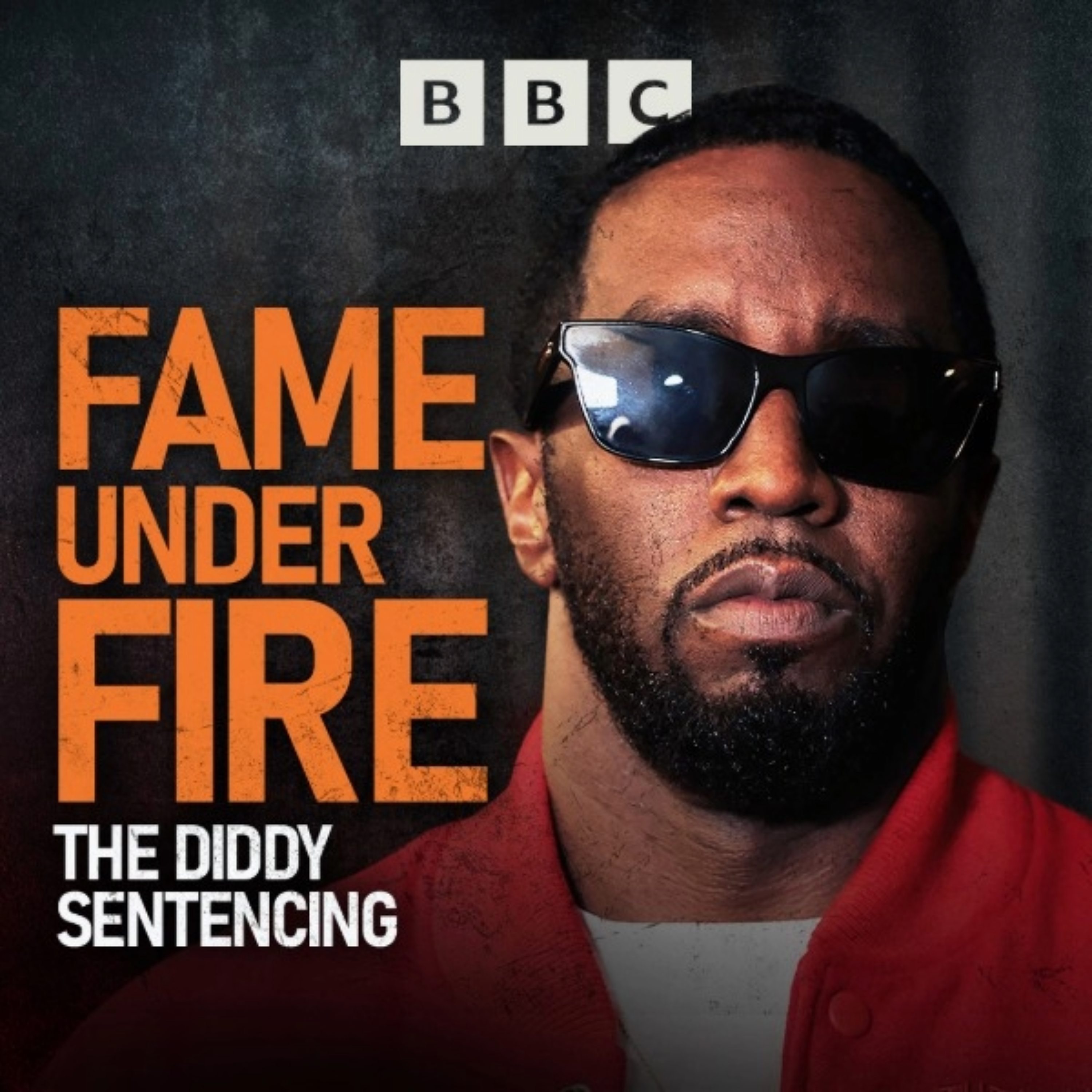
Fame Under Fire
Cassie Ventura: I still have Diddy nightmares
00:28:21
Star witness in Sean 'Diddy' Combs trial fears retribution if he’s freed
Loading summary
Transcript72 lines
- [00:00]
BBC Announcer
This BBC podcast is supported by ads outside the uk.
- [00:06]
Sean Kent
This is the story of the One. As a maintenance supervisor at a manufacturing facility, he knows keeping the line up and running is a top priority. That's why he chooses Grainger. Because when a drive belt gets damaged, Grainger makes it easy to find the exact specs for the replacement product he needs. And next day delivery helps ensure he'll have everything in place and running like clockwork. Call 1-800-GRAINGER Click grainger.com or just stop by for the ones who get it done. This is the story of the 1. As head of maintenance at a concert hall, he knows the show must always go on. That's why he works behind the scenes, ensuring every light is working, the H Vac is humming, and his facility shines with Grainger's supplies and solutions for every challenge he faces. Plus 24. 7 customer support. His venue never misses a beat. Call quickgranger.com or or just stop by Granger for the ones who get it done.
- [01:09]
Anushka Mutandadhy
Diddy's ex girlfriend and recording artist Cassie Ventura Fine says, I still have nightmares and flashbacks on a regular everyday basis. Hello and welcome back to Fame Under Fire from BBC Sounds with me. Anoushka Mutandadawati. Hip hop mogul Sean Diddy Combs is being sentenced tomorrow. The prosecution have filed a 164 page sentencing submission report with victim impact letters. As always, if you've got questions, send them to me on social media or WhatsApp at 03306-78114. That's 03306-78-TRIPLY14. Don't forget to subscribe and turn on your push notifications so you never miss a thing. Just a warning before we begin. This program contains sexual content and references to suicide. Now if you're a regular listener, you'll probably know that tomorrow sentencing starts for Sean Diddy Combs in New York on prostitution related charges. Federal prosecutors want the judge to sentence him to more than 11 years in PR $500,000 fine. Last week his defense team called for a 14 month jail term which with time already served would mean he could walk free almost immediately. Joining me now from our New York office is the digital reporter Sakshi Venkatraman. Hi Sakshi.
- [02:18]
Sakshi Venkatraman
Hi Anushka. Thanks for having me back.
- [02:20]
Anushka Mutandadhy
So we've got this sentencing memorandum written by the prosecution. We covered on the pod last week what the defense had to say and they attached 65 character support letters to talk about Diddy being a good guy. We have letters from the children we have letters from his mother. We have letters from people he's worked with. My name is Caresha Brownlee. I can only speak from my personal experience and the man I've come to know over the past four years. She then goes on to say, I've also witnessed him doing real inner work. He made the choice to check himself into anger management, start therapy and commit to physical healing through therapy. That takes strength, humility and self awareness. He didn't do it for show. He did it because he wanted to grow and to become a better person. In my personal experience, Sean is not a danger or a threat to the community. Okay. We have here from the prosecution some victim impact letters. As one of them is from Cassie. Now we haven't really heard from her since she was actually on the stand. So actually what does she have to say in this letter?
- [03:12]
Sakshi Venkatraman
Yeah, so Cassie basically expresses that she is scared for her life, for her safety and her family's safety. The main takeaway that I got from it is that she thinks that if Diddy is promptly released, one of his first acts is going to be to then people after Cassie and the other victims that spoke about their allegations against him. She says that for this reason she's moved her family out of New York entirely. She also paints a picture of a very different man than in the support letters we saw from the defense. She says that he's unrepentant, he hasn't changed and she doesn't believe anything the defense says about him changing. She also gave some reflections about the trial as a whole and how the jury failed to see her truth and acquitting him on sex trafficking charges and racketeering charges. You can get more into that, I'm sure.
- [03:59]
Anushka Mutandadhy
Yeah, I thought that was really interesting. We have a reflection from her what it was like. I mean she was extremely pregnant, she says for four days in May, while nine months pregnant with my son. I testified in front of a packed courtroom about the most traumatic and horrifying chapter in my life. I testified from the age of 19. Sean Combs used violence, threats, substances and control over my career to trap me in over a decade or of abuse. Now the jury did not convict Diddy of sex trafficking. They did not convict him of rico. It's that transportation for prostitution and the sexual acts are these freak offs. Can you just remind everybody what the freak offs were?
- [04:37]
Sakshi Venkatraman
The main part of her testimony concerned these freak offs were these drug fueled days long sex parties where Cassie says that she was essentially coerced by Sean Combs to perform with a male escort to have sex with escorts that she didn't know was meeting for the first time. On some occasions, he would coerce her into taking drugs so that she could stay awake or that she would be more docile and compliant and she would have to wear high heels, cover herself in baby oils, and stay in certain positions for hours on end. She says these were traumatic instances, some of the most horrifying encounters of her life. And she talks about them again in depth in this letter.
- [05:19]
Anushka Mutandadhy
One of the things that the defense are saying and we've heard from the defense is that we heard this throughout the trial. Really, it was a mutually toxic relationship. And certainly in closing statements, one of the most impactful things I know we spoke about this a lot from Mark Agniflo's closing statement was that the sexual appetite for these freak offs came not just from Diddy, but also from Cassie. Cassie was a, quote, woman who enjoyed sex. And that's a large part of what we know. They're going to argue she was organizing them. She was reaching out to these guys. She was buying the outfits. She was putting herself through those beauty regimes to look how he wanted her to look for the freak offs. But in the letter, she says, I, I testified that I learned to read Sean Combs's signals, knowing that when he spoke of free coughs, he was demanding them. Just talk to me a little bit more about what she says about his control over her in this letter.
- [06:10]
Sakshi Venkatraman
Right. I mean, I think that what she's saying is that his control over her went so far that he, he didn't even need to verbally force her. She was at the point where she was preempting his needs in order to avoid abuse and doing what she thought that he wanted to do and saying what she thought he wanted to hear and that there was no consent in this cycle of abuse, just her trying to make sure that she wasn't going to be the victim of another violent incident.
- [06:37]
Anushka Mutandadhy
And he says, during my time with Combs, I was in a constant state of hypervigilance, as I was always anticipating demands for sex acts or otherwise, fearing retribution for any perceived light. So she's chipping away there at what the defense is going to present is that she was an active participant in this. She talks about that 2016 footage that we watched her get assaulted in the hallway of a Hotel in 2016. She says people watched this footage dozens of times, seeing my body thrown to the ground, my hands over my head curled in a fetal position to shield me from the worst blows. This physical violence caused bruises that makeup artists paid for by Sean Combs would cover up, as well as permanent scars all over my body. So in many ways, this is a rehashing of a lot of her testimony. But one of the main things that the defense have said is, yes, he was violent. There was domestic violence in this relationship. They admitted that throughout trial. It was a heavy, heavy feature of the closing arguments. If we were here for domestic violence, he would have said he's guilty and put his hands up. They present it as something that happened in the past and something that he has worked on himself to move through. But Cassie, in this letter, talks about the very real world impacts that she still having to go through. Tell me a little bit about what she says this is doing to her day to day life. Now.
- [07:52]
Sakshi Venkatraman
She talked on the stand about suicide attempts that she had had in the past because of the trauma that she says she had been through. She describes still experiencing the psychological impacts of going through this alleged abuse has on a person. So she says she's still reeling from testifying in the trial and just reeling from the cycle of alleged abuse in general.
- [08:15]
Anushka Mutandadhy
Yeah, I think this particular line is quite impactful. I'm slowly learning how to live my life free of the fear and horrors I endured. And in doing so, I'm fully devoted to my husband and my children. So it makes it a very much. This is something that's still going on rather than what we heard in, for instance, Gina's letter, which the defense included. Gina, who never took the stand but was included as a victim in the indictments from the prosecution, she said, I believe Diddy is a good man. And this is stuff that happened in the past. We had a toxic relationship. We work through it. You know, he's a father, he's a loving person. He's devoted to his family. In Cassie's letter, she says, I still have nightmares and flashbacks on a regular, everyday basis and continue to require psychological care to cope with my past. You mentioned there one of the most impactful moments of Cassie's testimony was when she spoke about having these flashbacks and what it drove her to do.
- [09:07]
Sakshi Venkatraman
Yeah, one of the points when the overflow room was completely silent was when Cassie was talking about being mentally tormented by, you know, flashbacks, nightmares, reminders of what she says happened to her. And she says it wasn't for her loved ones stopping her and getting her into rehab. Then she doesn't know where she would be.
- [09:25]
Anushka Mutandadhy
And that was. I mean, I mean, people were crying in the room, people were crying in the Elevators. She talks about coming back from a music video shoot that she wasn't at with Sean Combs. Had nothing to do with Diddy having those flashbacks. Her husband, Alex Fine, has put the children to bed, and she's saying, you can do this without me, and then makes an attempt on her own life. So this reflection of that in the letter, the reference to nightmares and flashbacks, for those who followed the trial closely, you would have heard something similar before. But it brings it up right up to what she's dealing with now. We also have a letter from her parents as well. What do they have to say?
- [09:59]
Sakshi Venkatraman
Her parents echo the concerns that I think a lot of concerned parents in this physician would probably say, given the allegations that their daughter has made. They said that Sean Combs actions were depraved and he should get a sentence, you know, tantamount to how depraved his actions were. Their letter was much shorter than Cassie's, but very to the point. They said that, you know, their daughter was in a relationship with this man for over a decade, and he tormented her. They also were very clear to say there's no consent in a domestic abuse relationship, meaning that unlike what the defense is saying, it wasn't consensual. In their perspective, none of the acts were consensual. So they're also advocating for. For Sean Combs to receive as high a sentence as possible.
- [10:42]
Anushka Mutandadhy
One of the last things that Cassie says that I'm trying, with all that I am, to move on. I hope your sentencing decision reflects the strength it took for victims of Sean Combs to come forwards. Now we have statements from Cassie, who we would know as victim number one. Some people refer to her as the star witness who a lot of the case was built around. We have a statement from Mia, using a pseudonym, who worked for Diddy for many years and who alle a pattern of abuse, sexual abuse, coercion, coercive control, and at times, violence. We have Capricorn Clark, Deontay Nash. These are some of the other letters that we have. We don't have Jane. Just remind everyone who Jane is.
- [11:20]
Sakshi Venkatraman
So Jane was one of the victims who took the stand talking about Sean Calm's violence. She actually dated him up until he was arrested in September of 2024. Jane's testimony was very interesting, most notably because Diddy is still paying for her house. She says that she receives a $10,000 allowance from him every month to fund the house that she lives in with her son. And she's still tied to him in a lot of ways. That Cassie and the other victims are not tied to him anymore. But she alleges a lot of the same abuse. She says that she was coerced into performing freak offs with male escorts. If she didn't know, ultimately she just wanted to spend time with Diddy and wanted to be with her lover, as she put it. But she says that anytime he wanted to see her, it was in the context of having a freak off which lasted days in various cities.
- [12:12]
Anushka Mutandadhy
Yeah. We don't have a letter from Jane, but she's heavily referenced in the rest of the sentencing memorandum. Talks about her being violated, some of her notes that she kept about not wanting to do the freak off. So her testimony is still in there. Now we are going to be doing an update when we get a result on how long he's going to be sentenced for. Reminder, the defense want essentially time served, 14 months and the prosecution are asking for 11 years. Sakshi, thank you so much for joining me today.
- [12:39]
Sakshi Venkatraman
Thank you so much for having me. It's great to see you again.
- [12:41]
Anushka Mutandadhy
That was the BBC's New York digital reporter, Sakshi Venkatraman. Joining me now is our resident trial attorney, Sean Kent. Hi, Sean.
- [12:48]
Sean Kent
Hey, Anushka. How's everybody doing?
- [12:50]
Anushka Mutandadhy
So if you guys remember back when we gave you the verdict of the Diddy trial, two months in New York, convicted of two counts of transportation for prostitution by the federal government, not rico, not sex trafficking, which were the two big ones. Now prosecution came straight out, we're looking for 20 years. We know we told you last time what the defense are asking for. Essentially time served, 14 months. He would have been in there over a year by the time we get to that October 3rd sentencing date. Now the prosecution are saying 11 years. Sean, what's your reaction to that?
- [13:19]
Sean Kent
The prosecution, just because they're asking for a certain number doesn't mean they're going to get it. The defense asking for a certain number doesn't mean they're going to get it. As I've talked to you about, there's something called a PSR that's been happening this entire time. That's the pre sentence report that's being done by probation. And supposedly that pre sentence report I would assume has already been sent to the prosecution and the defense. Usually the prosecution's number is in line with what the probation department is asking for. So the question is, did the probation department also agree that these enhancements are necessary? And the prosecution is pretending they're bringing something out of the air, but they might know that that's the number on the precedent's report, when we spoke about.
- [13:59]
Anushka Mutandadhy
The PSR before, you talked about certain things that they take into account. So no previous criminal record, for instance, which automatically lowers the amount of time which he doesn't have a previous criminal record lowers the amount of time he could spend behind bars. Now, you just mentioned there something called enhancements. Can you explain what that is?
- [14:15]
Sean Kent
Anybody who has ever gone to a nail salon and just get your nails done and all of a sudden they're just like, do you want gel coat? Do you want this? Do you want the. You know, you go in there for your base price on your nails, but if you get gel coat, everything cost a little bit more money. It's the same thing in the federal system. You go in there with your base charge and the federal government, the probation department has decided to sprinkle some enhancements on it based upon other things that they think he has done. And every enhancement adds more time to your potential sentence. What we do in the federal system is it's not just the crime that you have committed, it is your conduct and the way that you have behaved that should determine how much time you're actually getting. And so an enhancement can be your role. Meaning you're the type of individual who beat somebody up, but you're also the leader of the organization that caused someone to be beaten up. Maybe beating up somebody carries four years, but because you're the leader of this organization, you get an additional two years. We're trying to get you more. And that's enhancement. Because you're not just somebody who's a mere participant, you're a leader. Maybe there's other victims. Based upon the awful, abhorrent stuff that you have done, we're going to add two more levels. So you see, what's happening is every time the government or the probation department can look at your case and say, judge, we understand that his base is only carrying this amount of time, but because of all of the awful stuff he has done, the statute, the sentencing guidelines allows us to enhance his sentence. And that's how we get to the 11 years.
- [15:53]
Anushka Mutandadhy
If we remember what the defense was saying, he's a user of prostitutes, not a pimp, not an organizer. He's what's called a john. And it's unprecedented to go after a user of prostitutes like this. Typically, there's an unwritten rule that you go after the person running the show, not the person buying the goods, for lack of a better phrase. But if you want to understand succinctly what the prosecution are basically Saying it says the defendant is not a, quote, John who casually consumed commercial sex. Rather, as discussed above, his conduct including exploiting and controlling women through tactics including manipulation, threats, fear, controlled substances and physical violence more closely resembles that of a pimp. So that I think down to a T is their argument. And it's very, very long. And the, the word violent and violence comes up 274 times. So there is a heavy focus on the violence relationship with Cassie and Jane and Mia, which they owned up to consistently throughout the trial. And people saying that at the end it's kind of bitten them in the backside when it came round.
- [16:55]
Sean Kent
Absolutely. Like the same way that I said. I thought the defense's motion was very good. I think the prosecution is good because they basically took the language from the defense and are using it against Diddy now. And just saying all the stuff you admitted to to get acquitted, we are now using against you as relevant conduct to show the character of who you are. You are a violent person. You have admitted to abusing people. You have admitted to all of these situations. And for that reason we're gonna try to get you much more time.
- [17:21]
Anushka Mutandadhy
And guys, we are gonna have a bonus episode when we find out how long he is gonna be spending behind bars or if indeed he's gonna walk straight out that courtroom. We will be here with it first and let you know. Just as we were throughout the entire trial.
- [17:35]
BBC Announcer
At the BBC, we go further so you see clearer. Through frontline reporting, global stories and local insights, we bring you closer to the world's news as it happens. And it starts with a subscription to BBC.com giving you unlimited articles and videos, ad free podcasts and the BBC News Channel streaming live 24. 7. Subscribe to trusted independent journalism from the BBC. Find out more@BBC.com join.
- [18:09]
Anushka Mutandadhy
Now. It's an episode of Last Minute Updates because next we're bringing you news about a letter we've just received from Candice Owens, husband. But before I get into the letter, here's a little mini outline of where we're at so far with the Macron vs. Candace Owens case. The French President Emmanuel Macron and his wife Brigitte are suing right wing influencer and podcaster Candace Owens for defamation. Candace Owens has been posting videos claiming Brigitte Macron was born a man and is actually her brother. The Macrons categorically deny the claims, calling them outlandish, defamatory and far fetched fictions. And on this podcast we exclusively broke the news that the French president and his wife will and are resolved to prove in court that Brigitte is female. Since. Since then, Candace Owens responded. And in our latest episode, we fact checked some of those claims. Go and check it out if you haven't. Now, today we have received a letter. It's addressed to the U.S. national Security Division for the attention of the FARA unit chief. And it's from Candace's husband, the British American businessman George Farmer. The letter claims the Macrons are breaking federal law by hiring investigators, publicists and others to work on his behalf in the United States without registering under. Farah. Farah. Farah. I'll go with Farah. I think that's what it is. Farah is the Foreign Agents Registration Act. Sean, Ken, our resident trial attorney, is back with me to quickly run through this allegation. Okay, so my understanding of that then is if you are a foreign agent, say Keir Starmer wanted to pitch up in the US and do some stuff that involved his reputation, business, anything like that, he would have to register who was working for him there and helping him do so inside the territory of the United States of America.
- [19:43]
Sean Kent
This thing passed in 1938. So you know what's going on in the world. People are suspicious on what's going on in other countries. And if we're trying to get some political divisiveness, if people are trying to come over to the United States to try to influence politics, influence what's going on. So that's why it was created. It's basically a knowledge requirement. We want to make sure you're not trying to come over here and influence what's going on in America without telling us your purpose. Let us know. Show yourself. Show us what you're doing in America. Don't just come over here and pretend you're doing something without telling us who you're actually working for.
- [20:21]
Anushka Mutandadhy
Okay, so look, let's go to what it says in the letter. It says, President Macron is indeed entitled to challenge his critics. He is even entitled to file defamation lawsuits against American journalists for asking uncomfortable questions pertaining to the person identifying as his wife. But Mr. Macron may not violate federal law in the process. Now, it goes on to say that since at leave January of 2025, the sitting President of France has waged an influence campaign against Ms. Owens in the United States aimed at damaging Ms. Owens reputation and deterring her reporting. And it goes on to say this bit, but in bold. It is readily understood by everyone that sitting presidents of foreign nations are foreign principles. Sean, what does that mean? And how does that impact what the FARA law applies to.
- [21:04]
Sean Kent
Well, and that's what they're saying, that the French president is trying to influence what the people of the United States think of him. He is a foreign principal, so he would be covered under fara, F A, R A. Now, why does he have investigators doing anything the United States? And why aren't these investigators registered? And why aren't these investigators telling the United States people why they're here investigating? That's what they're saying. So they have a point, but I don't understand where we're going with this.
- [21:32]
Anushka Mutandadhy
But the letter highlights. It goes on to say, like, quote, it is a felony to willfully violate FARA. Civil fines can be as high as $250,000, and failure to register when required to do so is punishable by up to five years imprisonment and hefty fines. Is this accurate? Could the investigators working for Macron's face punishments like that?
- [21:50]
Sean Kent
Yeah, I mean, the law is what the law is. This is absolutely true. But make sure you understand this is not the situation that would cause for the five year, $250,000 penalty. If you go through our history and look at what's talking about in 1938, we're talking about Soviet spies coming over and spying on the United States type stuff. We're talking about espionage. We are not talking about an investigator looking into a defamation lawsuit because somebody said that his wife has a penis. Okay? We are not getting into that level of what's going on. And don't forget, even if everything they say in this letter is correct, the lawsuit doesn't go away. It has nothing to do with the lawsuit.
- [22:32]
Anushka Mutandadhy
But the investigators, they're already there. They're America. It's an American firm. They've got offices in the US as.
- [22:38]
Sean Kent
We read this far, provides the United States government and the public with the. With public disclosures from foreign agents. And so what they're saying is they're acting on behalf of the French president, so he is a foreign agent, allowing them to make informed evaluation of foreign influence. And so remember, the whole point of FARA and what they're missing and what they're trying to say is somehow the French president is trying to influence the American people. And when you bring it down to it, it's a lawsuit. It has nothing to do with the American people. He's saying this is about you, Candace. This has nothing to do with the American people. This is about stuff you have said about me, and I'm bringing my lawsuit.
- [23:16]
Anushka Mutandadhy
But does it apply if she's saying it's about Influencing or removing my First Amendment rights. First Amendment is, if we need a refresher, part of the United States Constitution Bill of Rights that prevents the government from restricting certain freedoms. Freedom of religion, freedom of speech, freedom of the press, the right to peacefully assemble and the right to petition the government for a redress of grievances. She's saying that those rights are being attacked, suppressed by the Macrons. Is that enough to trigger this?
- [23:42]
Sean Kent
I want to read this directly to you about far. The law helps identify threats to national security. Okay? Not Candace. National security by revealing who is attempting to influence American policy perceptions or laws on behalf of foreign interest. This is not about a personal individual. Candace Owens. Now, now, Candace can make an argument that you trying to silence me because I have millions of followers is trying to silence what the American people are getting to hear about the people of France. And that's what you're trying to do. That's the stretch and the connection they have to make.
- [24:20]
Anushka Mutandadhy
Yes, but that's, that's the connection that the Macron's made. They said she's so influential. This message is getting out there so widely, so many people are believing this, that it does impact the American perception of the French president and his wife.
- [24:35]
Sean Kent
And that's what I'm saying. It's interesting. Like really this far argument is interesting, but it doesn't affect the lawsuit.
- [24:41]
Anushka Mutandadhy
But if so, if they went, my bad, let's register. Do we just carry on? My bad guys, we'll just register under far and crack on.
- [24:48]
Sean Kent
And that's what I'm telling you. If it comes down in your worst case scenario, let's go, let's go. Our worst case scenario, which I don't see happening. Let's see, the DOJ Department of Justice looks at this, reads this letter, investigates it. They say, France president, you have been sending people in here, you have violated our statute. We're upset with you. Here is a five year felony charging as every investigator who has come over here, and here's a $250,000 fine by the way, discovery starts on your lawsuit tomorrow. It doesn't stop the lawsuit.
- [25:15]
Anushka Mutandadhy
Does it negate the investigations they've already done?
- [25:19]
Sean Kent
That is a phenomenally great question. We have something in the law called fruit of the poisonous tree. And what that means is if you got something and you got it in a way that you weren't allowed to get it, all of the fruit that comes from the tree is also illegal. And so if an argument can be made that you shouldn't have been over here to get this Stuff to begin with from this illegal tree. Everything you've gotten as a result of it can be thrown out. So that would be an argument that they could make that potentially, because they violated far. Shouldn't be doing an investigation, shouldn't have gotten anything, it should be thrown out. That's an argument. That's a great question. Do I think it's going to happen? No, but it's a great question and a great argument.
- [26:02]
Anushka Mutandadhy
Okay, one last thing. We're using the term investigation, and of course, they are a corporate investigations firm, Nadello, Dan Nardello being the CEO. But what he was using was publicly available information. I mean, a large chunk of what he was doing was going through the podcast, detailing what she said when she said it, how it's defamatory, etc, when she changed her line. She said this on Piers Morgan. She said this on the podcast. She had this connection with this person in France. And we know this because there's this tweet, there's this video. So if it's all publicly available stuff and they haven't conducted an investigation, as in, I'm searching through your trash and I'm looking at your email search history, then is it really an investigation or is it a browsing of readily available stuff?
- [26:47]
Sean Kent
You hit the nail on the head. That's why I don't see this going anywhere. As I mentioned, it's a bit of a stretch. It might be their salvo back to fight back to make the Macron spend more money on cost. But you're exactly right. Everything that they have done, they could have done over in France. They don't have to come to America to do these things.
- [27:06]
Anushka Mutandadhy
So what? What's the point of this? I mean, what's the strategy?
- [27:10]
Sean Kent
You want my assumption? Look who signed the letter.
- [27:13]
Anushka Mutandadhy
Mr. Candace Owens.
- [27:15]
Sean Kent
And so think about it. At some point in time, hubby, Just like, I got you, girl. I'll handle this. I knows people.
- [27:21]
Anushka Mutandadhy
Let me tell you something. First of all, he's English, so try that again.
- [27:24]
Sean Kent
All right, well, maybe he's a tip tipper. Mind the gap. I said mind the gap.
- [27:31]
Anushka Mutandadhy
Yeah. Guys, all those years of empire, and the only cultural remnants we have in Sean's mind is Paddington Bear. Mind the gap.
- [27:37]
Sean Kent
Paddington Bear is.
- [27:38]
Anushka Mutandadhy
And Benny Hill.
- [27:39]
Sean Kent
Benny Hill. And Doctor who. You forgot Doctor who.
- [27:42]
Anushka Mutandadhy
Well, that I'm happy about.
- [27:43]
Sean Kent
Okay.
- [27:44]
Anushka Mutandadhy
I mean, interesting. We'll see where this goes. Why wasn't this in the motion to dismiss? Can you file this kind of stuff in the motion to dismiss?
- [27:50]
Sean Kent
I mean, I've said it three times. But think about it. The reason it's not in the motion to dismiss is it doesn't have anything to do with the lawsuit suit.
- [27:55]
Anushka Mutandadhy
Okay, well, we'll see. We'll see. There might be more letters.
- [27:58]
Sean Kent
We'll see. I mean, we could be wrong, but, I mean, it's interesting, but, you know, that's what we do. We find obscure laws and we fight based upon them. And we do a little bit of challenges. And this is also a potential letter where they actually, if you read the first couple of paragraphs, it might also be this simple. We want the world to know that we ask them to come and do blank and they refused. It might just be a way that we can get our story out. It might be like, like, look, let us tell you again my side of the story.
- [28:25]
Anushka Mutandadhy
Sean, thank you so much for doing this in person. Live. Live research, live lawyering, period. That's why we pay you the big bucks.
- [28:34]
Sean Kent
I'm gonna buy some. What? Bangers and mash. Isn't that a thing? I'm gonna buy that.
- [28:38]
Anushka Mutandadhy
Yes. Bangers and mash is the thing. I'm not going to engage you on English food because you're so insulting and it hurts. But thank you so much for joining us today.
- [28:47]
Sean Kent
Thank you so much for having me. Much appreciated.
- [28:50]
Anushka Mutandadhy
That was our resident trial attorney, Sean Kent, joining us from South Carolina. And that's it for this episode of Fame Under Fire from BBC Sounds with me, Anushka Mutandadhy. Keep sending in your questions or ideas for stories you'd like us to cover. You can get us on WhatsApp at 03306-78114. That's 03306-78114. Make sure you subscribe and turn on your push notifications so you never miss a thing.
- [29:15]
BBC Announcer
The figure's face was featureless and its entire body was jet black. I'm Danny Robbins, and throughout October, I will be sharing uncanny listeners real life ghost stories.
- [29:27]
Anushka Mutandadhy
That's one.
- [29:28]
BBC Announcer
Every single day, as we count down to the spookiest time of the year, suddenly all hell lets loose. The sound of glass smashing, heavy objects being thrown, doors being ripped off hinges. It was coming from the cellar. I looked up and was staggered to see a humongous black triangle floating silently over the rooftop. Join me as Uncanny counts down to Halloween. Every day in October on BBC Sound. At the BBC, we go further so you see clearer. With a subscription to BBC.com, you get unlimited articles and videos, hundreds of ad free podcasts and the BBC News Channel streaming live 24. 7 from less than a dollar a week for your first year. Read, watch and listen to trusted independent journalism and storytelling. It all starts with a subscription to BBC.com find out more@BBC.com unlimited.