← Digital Disruption with Geoff Nielson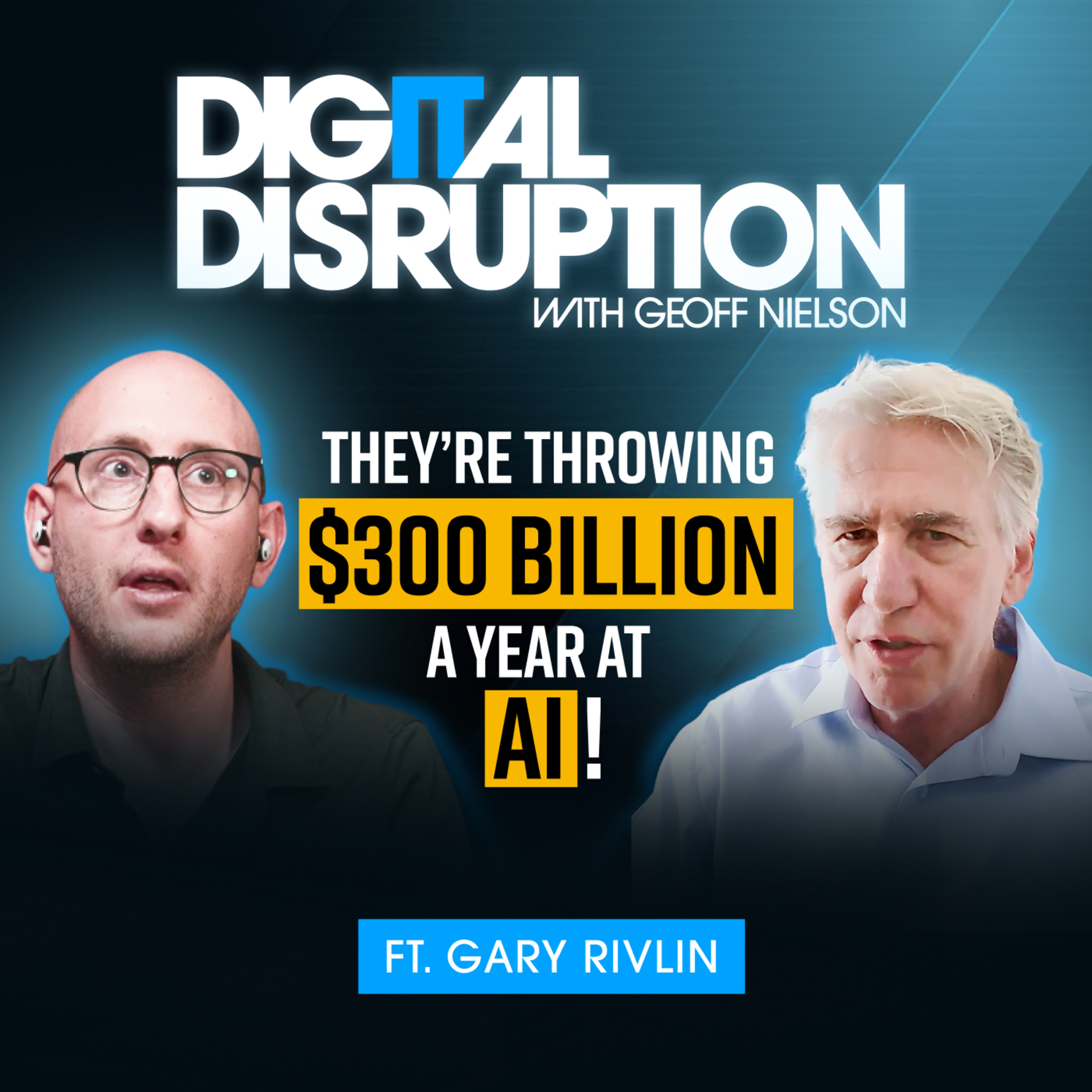
Digital Disruption with Geoff Nielson
Pulitzer-Winning Journalist: This is Why Big Tech is Betting $300 Billion on AI
01:11:34
Loading summary
Transcript62 lines
- [00:01]
Interviewer
Hey, everyone. I'm super excited to be sitting down with Pulitzer Prize winning investigative journalist Gary Rivlin. He's been reporting on the personalities and power structures behind Silicon valley for nearly 30 years. What's cool about Gary is he has the inside scoop on the who and what of the AI boom. I want to ask him about the technology risks and promises he sees on the horizon, as well as the players driving it, and if we can trust them. Let's find out. The first thing I wanted to ask you, I realize, is like a very loaded question for a technology podcast, but maybe I'll ask it anyway and see where it goes. Gary, I read that you have, or used to have basically a plaque on your desk that your North Star is to state complex social issues in human terms, impossible to ignore, which I love, by the way. But I wanted to ask you, you know, as you kind of look from your vantage point in 2025, you know, what are the complex issues of the day or, you know, the things that you think are worth crafting these narratives around that you want to be a part of, or at least want somebody, you know, telling stories of.
- [01:11]
Gary Rivlin
And by the way, it's still right there above my desk a little bit faded. I should probably redo it, but so, you know, my whole approach is to, to tell stories through the people. We're talking about AI. Is it a good thing? Is it a bad thing? Why did it arrive when it did? That set of questions. What's it going to mean? The impact on society, jobs, et cetera. Rather than writing a book exploring each one of those issues chapter by chapter, I really try to stay true to, to that motto. And just like I think it would be dull for people, but if I can kind of introduce you to a set of characters who are almost emblematic, right? I mean, here's someone trying to cash in on AI. Here's somebody who had the opposite view. By telling their stories, I think people could understand these complex social issues in a very relatable human way.
- [02:11]
Interviewer
Right, so let's talk about that a little bit. And you've been, you know, the, the questions of AI, and the story of AI, obviously is kind of intrinsically linked to Silicon Valley today. And you've been following the Silicon Valley beat, if I can call it that, for, you know, quite a long time, as you went back there and looked at some of these characters, you know, what's, what's changed in the past 20 some odd years there, and, you know, what's fundamentally the same, Right.
- [02:38]
Gary Rivlin
So, you know, I Started writing about tech in the mid-1990s. In fact, I'd moved from writing about politics to tech. I have an engineering background I had programmed earlier in my life and just boom, the dot com, the Internet was with us. And so, you know, some things don't change, right? You know, just like when Netscape went public, the Internet was starting to spread. You know, you saw a lot of excitement, a lot of over enthusiasm, enthusiasm, you know, and so, you know, kind of the, the, the hype, the overhype, the promise, the over promises. You know, the Internet was going to bring about world peace, you know, essentially, you know, now AI is going to equalize between the developing world and the developed world, is going to cure cancer. You know, there's I, I think AI is an incredible technology. Obviously the Internet, you know, has changed society in profound ways. But you know, some of the over promise on almost feeds the other side's skepticism. And like AI is not, it might help some scientists help cure cancer. But you know, AI isn't, not in quotes, going to cure cancer, at least anytime, anytime soon. You know, one big difference is the money. So when I first started writing about tech, I was always interested in the venture capitalists and the startups and that whole ecosystem, like this idea, like, you know, our idea for a company is either going to work, be worth back then tens of millions, hundreds of millions, now billions, if not trillions, or it's going to be worth nothing. And the venture capitalists who are staking, you know, back then, millions, now tens of millions, hundreds of millions, billions. But you know, in 1995, venture capital was under $10 billion a year. By 2021, it was over 300 billion a year. Roughly 130, 150 billion went into AI startups last year. I mean, a lot of it went into a few, you know, like anthropic OpenAI Xai, that's Elon Musk. You know, they raised collectively tens of billions of dollars, you know, almost $100 billion just between those three. But there's still a lot more money going to AI startups. So the money has really changed. I guess the final difference is, you know, when the Internet came out, like maybe the biggest criticism was around the attention span, you know, oh, there's, if you're always online, you know, this instant gratification. What was it going to do for consumerism in our society? With AI there was much more of a worry, much more of a backlash. People didn't greet open AI with, excuse me, AI with open arms the way they did The Internet people are fearful of it. You know, we could talk about that. You know, I think it's kind of Hollywood induced fear. I don't think the media has done such a great job with AI. So you know, AI kind of has a double battle. Like there's the usual battle of creating a startup and trying to cash in, but you know, the second battle of trying to convince people that this is a good thing and the laser eyed robots aren't going to beat us into submission.
- [05:53]
Interviewer
So let's talk about those laser eyed robots for a minute. I'm curious Gary, because you've painted, I think pretty accurately the picture of how people talk about AI. Everything from this utopia of abundance, which by the way, I get people who I talk to, I'd say routinely, who use words like that to describe where AI is going to take us, curing cancer and laser robots who are going to destroy the world in the blink of an eye. From your vantage point, how transformational is this? What's your outlook for what this technology can and cannot do in the next few years?
- [06:31]
Gary Rivlin
Reid Hoffman, who's the main character in my book, he has a set of terms. There's the doomers, the laser eyed robots. We're fearful of this thing. Let's bomb the data centers before they take over to give the extreme of that. The zoomers who say nothing. There should be no speed bumps, no regulation. The only role of government is to speed this thing up. In part because we're in a race with China, in part because tech is what's kept the US economy going and strong and it's one of our competitive advantages as a country. I'm more of what Reid Hoffman calls a bloomer. I definitely am an optimist. I think AI is going to do extraordinary things around science, medicine, education, a whole wide range of things. But I do think we have to be deliberate about it, in part because AI is way ahead of the public. Pew did a study last year, a poll last year, and the majority of Americans are fearful of AI. Less than a third are optimistic or excited about AI being here. And AI didn't have the best timing. Innovation happens when innovation happens. But kind of hitting at the end of 2022, the distrust for big tech, the distrust for tech generally is pretty much at an all time high. And of course AI, ultimately humans will lose their apex status, is the smartest entity on earth. But we're asking for a lot of trust. The big thing this year, of course, I'm sure you've been talking about this is personal Agents, well, a personal agent, they really have to get to know me, they have to know my private details. They're going to have a lot of agency in my life. And if these companies get ahead, either the Googles and Microsofts of the world or the startups that hope people are using their agents, they get too far ahead of people. I'm not sure people are going to trust these things. And one last point on that is there is going to be something bad that happens because AI, just to make one up like a trillion dollars is siphoned off from the global economic system before a human could even notice it. And you know, at that point, of course we all know the way these things play out. You know, people are going to be fearful. And so I, I'm a bloomer who thinks there should be some regulation. But I also think that AI is going to be central to our lives within a decade, maybe 15 years. It has vast potential.
- [09:10]
Interviewer
Right. So with that in mind and thinking about the trust part, we're in a space now where. Well, let me ask it as a question. In your book, and I'm sure a little bit beyond your book, there's a handful of top dogs, I'll call them, who it seems like, have a really outsized influence over this technology. How it's developed, how it's played out, how it collects data, what it does. Is that fair? Is there really kind of a small cabal that has an oversized amount of control and do we trust them and should we trust them?
- [09:48]
Gary Rivlin
Right, so you're getting at one of my fears around AI. It's nothing to do with laser eyed robots or anything like that. It's the consolidation in the hands of the same few tech companies that have been dominant for the last decade or two. You know, it's funny, so I started this book right at the end of 2022, started 2023 and I went in search of the next Google, the next meta. And you know, I ended up concluding like I fear that the next Google is Google and AI and the next meta is Meta, you know, that big. This stuff is really expensive. When I first started, you know, people were talking about, you know, millions, tens of millions to train, fine tune and operate these chat bots, large language models, whatever you want to call them. And the same with text to video, audio to text to audio. By the time I was done reporting at the end of 2024, mid 2024, it was hundreds of millions, if not billions. Andario mode from anthropic they do Claude the chatbot. Claude he's estimating that they're going to need $100 billion by 2027 to things. And so who has that kind of money? You know, Google, Microsoft, they have 100 billion or so laying around in cash. But if you have to raise $100 billion, or even if it's only, you know, 3, 5, $10 billion, well, a large venture capital outfit in Silicon Valley has a billion dollars, all told in a fund. And so we're talking about billions. And so that's one way this is weighted to big tech, and the other is data. In fact, this is really central to the. The remedies the government is now talking to. Remedies for the Google antitrust trial. You know, a court, a federal judge, found that, you know, Google was a monopolist that abused its power. So now what should we do? And a lot of the discussion, I think, rightfully is around the Data. You know, OpenAI approached Google and said, hey, can we lease? We can we kind of buy access to your data? And they said no. And that's a huge advantage. In fact, anyone reads the book, every time Google steps on stage in 2023, 2024, they fall flat on their face. Google was so far ahead of every other big tech company around machine learning and, you know, give them credit, they were using it in the 2000s, and they went on a hiring binge in the early 2000 and tens, long before anyone else. They came up with the transformer paper in 2017, that T&GPT. And so it's foundational research, and yet it's a big company that was scared. So OpenAI puts out ChatGPT. They try to catch up to a race they were already winning, but they were scared, so they weren't winning it. And they kept on falling in their face. Despite that. Gemini, their chatbot, is one of the two or three most popular chatbots on the planet because they're Google. You know, we have, many of us, Google's the front door to the Internet. They have all this data and they can, you know, train better and cheaper than others.
- [12:59]
Interviewer
So, yeah, it's interesting and, you know, your position is very similar to mine, I think, which is it really feels like there's. I don't know if I want to call it an arms race or a space race, but there's this race of some kind between these tech giants to try and just own the platform of the future, own the data, use it as a way to continue to monetize the public here, I guess. So with that in mind, who are going to be the winners and the losers of this shift to AI. And is it necessary? When you look out over it, do you really see it's winner take all with one or a few technology giants that probably are the OpenAI's, the Googles, the Microsofts, the Anthropics, or is it going to be more democratic than that?
- [13:55]
Gary Rivlin
Yeah, I mean, we're talking about predicting the future. So take anything coming out of my mouth right now with a grain of salt. I would kind of distinguish between OpenAI and Anthropic. They're, you know, relatively new startups. They have a lot of cash. They've raised billions, tens of billions of dollars in the case of OpenAI versus a Google, Microsoft meta, Amazon and Apple are, they're, they're not quite doing it yet, but they're, they're in the race to, you know, I, I want to be optimist. I, I guess I'm built. I root for startups, you know, I root for the underdog. You know, to me. But one thing that was exciting about AI is the possibility that there would be kind of a new set of major players. But I even Wonder if an OpenAI, despite all its successes, right? It just raised $40 billion earlier this year. That's the largest raise in the history of venture capital is worth, you know, it's got a paper worth of $300 billion right now, which if you put in the Fortune 500 would make it top 50. I think it's top 50 for the globe. And so, you know, it's, it's a, it's a, you know, it's 10 years old, but it's, it seems on paper, just kind of a global giant. It's been around forever, but I'm still not sure they can make it because they, they're bringing in revenue, but they're still losing a ton of money. I mean, give them credit, they're making virtually nothing. In 2022 and 2024, they brought in almost $4 billion. They'll have a much bigger number than that this year, 10 billion or more. But they're still losing money because this stuff is so expensive to operate. You can use ChatGPT or their other products for free, you can pay a premium, but you get a very good service for free. And so, you know, it's like kind of that consumer thing and you could just go to, you know, Cloud or you.com or Gemini or XA. What it was Grok you could use. You know, that's, that's, that's muss and so though that one costs and so I, I, I do fear that what's going to happen is it's inevitable that one of the giants on Microsoft or Google are going to buy an anthropic or an open AI. You know, right now Microsoft's put around 15 billion or so into OpenAI, you know, anthropic. Their two biggest funders are Amazon and Google. And so let's take Dario Amode at his word in two years, where's he getting that $100 billion? I mean I suppose he could raise that money but I'm not even sure they're profitable at that point. So I do wonder if it's inevitable that these popular chatbots get bought by one of the tech giants.
- [16:57]
Interviewer
Well and I have to imagine the tech giants are chomping at the bit at the opportunity to buy you know, an OpenAI or an Anthropic 2 and add them to their, you know, to their stack.
- [17:06]
Gary Rivlin
Well and they have been doing that, you know, kind of this idea of an aqua hire or inflection which happens to be the company of the center of my book. It was started by Reid Hoffman, this guy Mustafa Suleiman, you know, kind of a co founder of DeepMind which you know, know it's kind of the first great machine learning startup. It started in 2010 in London and Google bought it for $650 million. You know, they had everything going for them. You know it's like Reid Hoffman, best connected guy arguably in Silicon Valley. You know, kind of the, the, the, the, the pedigree of a Mustafa Suleman, a great CEO. You know, Bill Gates funded it Will, I am, you know, kind of had that, you know, kind of Hollywood thing. Ashton Kutcher was, was a investor. They hoarded all this talent. Some of the top researchers in the world raised a billion and a half dollars in like 15 months. But it wasn't enough. And so basically everyone at the company jumped to Microsoft. Microsoft paid the investors $650 million to make everyone happy. And, and you know, essentially this company inflection, really cutting edge chatbot. What I loved about it is it's great at EQ emotional intelligence, not just iq, but now the talent, virtually the whole company is inside Microsoft. Google did the same thing with character AI. Spent billions of dollars essentially to hire the two creators of character AI. Really popular, another popular chatbot. These two founders who are ex Googleites got frustrated at Google because they couldn't do what they wanted to do. Went and did it in a startup and then Google had To pay billions of dollars just to bring them back.
- [18:51]
Interviewer
Yeah. So, you know, when I think about AI and the impact it's going to have, there's clearly this kind of. I don't know if I'm supposed to call it this, but I'll call it a boys club of, like, the big, you know, incumbent or emerging organizations and the tens of billions of dollars and the kind of, you know, political infighting you see there. And it's. You know, it's funny, Gary, and I. I don't know if this is a result of your background or just kind of a parallel I picked up on, but I can. I can certainly see through lines to what's going on here, to what you probably saw, you know, covering city hall and those kind of political beats all those years ago, where it's jockeying for. For power and influence. Is that. I mean, is that fair? Is. Are there. Is that just coming through, do you think? Sorry, is there merit to that?
- [19:39]
Gary Rivlin
Yeah, there is, like, you know, in. In political sense, we call backroom deals kind of going on. You know, that politics is happening in front of us, but the real deals are being cut behind closed doors. And it is true of Silicon Valley, it is true of tech. Like, it's one of my big, you know, Chris, is let's just get five smart guys, and they are invariably guys in a room, and we'll figure it out. And, you know, I mean, that works for your app. That has worked very well for tech. But I think AI is different. You know, AI requires a much broader group of people. I mean, some of it is, what discipline are you from? Like, it's not just computer scientists. It's not just, you know, tech folks, you know, AI. I mean, first off, it's. It's linguists. You know, you need linguists. It's math. It's math and stuff. But I really want a much broader group. Given the power and potential of AI and what AI is, I want a broader group in terms of discipline. I want a broader group in terms of who we're talking about. I mean, tech is heavily skewed male, of course, and these days it's very white and Asian. Our world is much broader than that. It's a global thing. And so bringing. Bringing in people from different backgrounds from, you know, around the globe. You know, to figure this out. I. Again, I. Coming back to a point I made before about the strategy, I think it's going to be very dangerous for tech if this is the same old, same old, where it's, you know, Sam, Altman negotiating with Satya Nadella at Microsoft with a few other people in the room. I really think for kind of trust and safety reasons, there needs to be a much broader group than the same old, same old that Silicon Valley does.
- [21:35]
Interviewer
It makes sense. And as I think about, like, what that impact could be and what this technology could do, I mean, we talked about why, you know, the hope, the, the hype is kind of, you know, inflated potentially on both sides. What impact do you see this having, I guess, across, across the population. And is this a leap board in some ways for, you know, the poor or the traditionally marginalized or underserved? Or is it. Do you foresee it just going to end up being like a rich get richer platform?
- [22:08]
Gary Rivlin
Yeah. So again, I'm about to predict the future, so take anything I say with.
- [22:12]
Interviewer
That's what we do here, Gary, with.
- [22:14]
Gary Rivlin
A grain of salt. But, you know, I, So I do think AI can be a great equalizer. You know, kind of just, I give a couple examples. So in the sense of making art, you know, if you wanted to make, you, you're a movie maker, you want to make a movie, you need a lot of money to do that. You have to hire people and stuff. But with AI, you can make a movie. You know, it's, it's kind of the great equalizer in, in terms of the art. It gives you these superpowers to do things. We could talk about the ramifications that, you know, all those actors and production people, et cetera, who aren't getting a job. And, you know, to add a caveat, it's not just like, make me a Martin Scorsese movie. You know, the human is still the driver. The human has to bring the storylines and the plots and the plot twists and all that. And, you know, another example is, again, it could be an equalizer that anyone can code. Right. I mean, I don't think we're quite at that point yet, but we're not that far away for a point where you don't have to have a computer science degree, you don't have to have much experience of all, if any at all, and you could code, and that will really help. So someone in the developing world could see a problem that's not a first world problem, but a problem in their world and do code and have this magic power of coding to come up with a solution tailored to their world. You know, just to use the example of education, I, I think AI has amazing potential for, for education. They did a study in Nigeria where they had teachers use AI tutors. And of course an AI tutor could figure out exactly what a student doesn't understand and then feed them examples of information that helps them learn that aspect and so stuff. And what they found is just in a six week period, they had like two years of advancement in the students they worked with. And I really do think, you know, this, this idea that, you know, a tutor, you know, $100 an hour, $200 an hour, I don't know what a tutor cost, but it's a lot of money. It's beyond the means for, you know, most people on the planet. But what if this tutor was in your pocket and it was, if not free, virtually free or healthcare, there's, there's a great stat that basically a billion or so people have access to ready health care, but there's 5 billion or so who have a smartphone. And should you go to a doctor, is a doctor better or a nurse practitioner, whatever, a healthcare professional better than a phone? Yes, yes, yes, yes, yes. But what about all those people who have zero access and you know, you could take a picture, my child has this rash, you know, should I be worried and move heaven and earth to get to a hospital or is it nothing? And so that could be a life and death thing. So, you know, I do think, you know, kind of this idea of a AI doctor in your pocket, you know, it's certainly better than not having any access to healthcare. So that's another way I see, you know, education, medicine, that I could be an equalizer. But the flip of that is that, you know, winner takes all, if not winner takes most. And you know, I am nervous that as we've been talking, power over AI in the hands of just a few people will mean that that small group in Silicon Valley or technology generally is going to grow super wealthy and only a little bit will spill over to the rest of us.
- [26:11]
Interviewer
Yeah, prediction, there is a tough game and there's like so many moving pieces to this. And I don't know if this is something you heard about or you're concerned about as well, but when I think about that AI doctor which, whether we choose to acknowledge it or not, I feel like that's already starting to happen. Right? People are talking to ChatGPT about their symptoms and frankly, I think for the most part that's probably a good thing. But what I don't know if is happening right now, but I have to imagine we're on the cusp of is chatgpt or whatever generative AI saying, oh, and you should take an advil for your symptoms. And there's quietly money changing hands between the tech giant and Advil so that you take an Advil and not a Tylenol and suddenly the difference to me between the web and some of these generative AI things is just, and even, even Google, frankly is it, it gives you an answer that it acts like is definitive. Right. And what kind of influence does that have over people? Is that something that came up at all or something that you have a perspective on?
- [27:18]
Gary Rivlin
Yeah, these, these chat bots speak with an authority, I joke. Well, they were, they were trained on a disproportionately male data set and so they're know it alls. In fact they've had to be teached to say like it's okay to say, I don't know if you don't know. But what you're getting at is one of the things again before we were talking about like what the fear out there is with laser eyed robots. There are very real fears that are, that we could see right now. And one of them is the power of AI to manipulate or the power of AI to make suggestions that you think, well this is just based on its knowledge reading, you know, what it's been trained on and you don't know like oh no, the maker of Advil has paid for this by the way. Right now I don't think there's any chatbots that are giving recommendations. You, you know, I think people are using and probably sometimes abusing as if like people who do have access to medicine, like oh, I, I, I, I'm going to learn about this here. And like, you know, sometimes that works, sometimes it doesn't. You know, there's, there's stories where you know, someone has struggled for months, years to figure out what's wrong with them. They give it their symptoms to chat CPT or whatever and they figure out the solution. I mean, you know, AI can be incredible. There's a study where they are training a chatbot to have early detection of diabetes, type 2, type 2 diabetes, just by hearing your voice. And so you know, that's the positive where there's amazing things that can happen. You know, they're really accurate at reading mammograms and you know, X rays and all that. Far more accurate than human doctors. Me, I want doctors to use AI as a backup, as a check. I don't want AI reading my, you know, another thing that worries me is autonomous AI, you know, for the foreseeable future, if not forever, we need humans in the loop. These things they Know a lot about everything, but they don't understand a thing. They have no common sense. They have no, you know, it's a parrot, it's repeating words, but it doesn't really understand. You know, there's an expression I learned doing the research here, that it tends to know everything. These chat bots, these large language models, tend to know everything that humans over 20 years old know, but they don't know a lot that a kid under 5 year old, 5 years old would know. You know, just kind of, just the common sense stuff, like, just stupid stuff like you chew this, but you don't chew this, you swallow. You know, that kind of like they have to be taught everything. And so, you know, it's, I, I do fear that we're going to invest too much power prematurely in these things. I really don't want autonomous AI anytime soon.
- [30:26]
Interviewer
That's, that, that, that's fair. What, when you look at what we have or where we're going with AI, is there anything that came across to you as being underreported right now, either in capabilities or in risks that, you know, you think we need to have a little bit more of a light on?
- [30:42]
Gary Rivlin
Yeah. So, I mean, broadly speaking, I don't think the media, I mean, I used to work for the New York Times, so I am big media, I guess you can say, at least in my past. But you know, that the New York Times, Washington Post of the world, I don't think they've done a great job covering AI, generative AI in particular, since the release of ChatGPT. That was November of 2022, you know, there was a little bit about, you know, its potential, but right away it was, it's all the negatives. It's going to destroy education, you know that it's going to write essays for kids and you know, kids are going to use it for cheating. And you know that that's a problem. But you know, what about, in fact, I have an eighth grader and, you know, he writes a composition and he gives it to ChatGPT and it gives him feedback. You know, the teacher's busy, but like, you know, how can I improve this? Well, you can make a better topic sentence and it's just repetitive kind of thing and, you know, gets good feedback. And so it's an amazing tool for a teacher. You could devise lesson plans. You can, you know, use it to help with grading and all. And, you know, I think that, I think that has been largely missing from the coverage. Occasionally you see an article about, oh, it could do this around healthcare and all. So I really don't think the broader public has a sense of what the true promise of this is. And the flip side of that is I think people, in part because of the media coverage, are scared of the wrong things. I mentioned autonomous AI, but the use of AI in warfare, the use of AI for surveillance, you know, a AI that can come up with a. A new vaccine or a new treatment or tailored treatments for this specific cancer or whatever someone is suffering through, can also create a deadly pathogen that could kill a lot of people. You know, kind of the potential for AI to write your wedding toast or for your friend's 50th birthday, you know, is a powerful tool in the hands of scammers. And so I wish that's where the coverage was. You know, around here are the potential pitfalls. And this is the stuff we need to navigate. I mean, every technique, every technology ever is both pro and con. It goes both ways. You know, the car is extraordinary, changed our society. But, you know, a global warming, 35,000, 40,000 people in the US die in car accidents. Every technology cuts both ways. And the same will be true with AI. And I think, I wish we were being smarter, more deliberate about making sure AI was a net positive rather than a net negative. Right now, I don't know. I'll give you an example of regulation. So the Biden administration impose, I thought light regulation. Like, okay, if you're working on one of these powerful models, before you release it, we're going to require you to red team it, to hire an outside group to test for vulnerabilities and then share the results with the US Government. It didn't seem a very heavy lift, but as soon as Trump took over, he counteracted that executive order. And J.D. vance, in January, May, February, was in Paris for the third of these worldwide AI summits. The first two were totally focused on trust and safety. This one was not. And it was J.D. vance who stood up there and said, stop with the hand wringing. We need to win this, right, this race because of China, China, China thing. And, you know, that worries me. Government does have a role again. I don't want them micromanaging this. That's not the way. We have great innovation. But I, I do think they need. I do think we need guardrails, and I do think we need kind of this mindset. So we're really looking at the stuff around the corner that's negative and the stuff around the corner that's positive. So we can, you know, work it out. So it's more positive than negative.
- [35:02]
Interviewer
Right?
- [35:02]
Gary Rivlin
So.
- [35:02]
Interviewer
So, you know, I'm. I'm thinking about that kind of Doomer versus Zoomer mentality. And it feels like, you know, as we look at the regulatory bodies broadly, we've gone from Doomer to Zoomer and just started like, ripping off, you know, red tape, if you can call it that. But it sounds like your perspective, Gary, is we do need the focus on some sort of responsible AI. Guardrails are important, and that now is the right time to get some of that right. Is that fair?
- [35:33]
Gary Rivlin
Right. So, you know, it's funny, I was so. If you. If we had spoken in 2023, I would have been really optimistic about this. Right. I think most of us can agree that the government blew it as far as social media, right? It was just like it took 20 years before their first hearing about social media. And by that time, social media had, you know, caused the problems caused. But AI, like, you know, remember Sam Altman in The spring of 2023, know, stood before the Senate and said, I have fears around this too. We need to be regulated. He was talking about a AI body like, you know, a nuclear regulatory agency like thing for AI. People have talked about a global version of that. And, you know, the senators were talking about it. You know, Chuck Schumer been the majority leader. He had a series of talks in 2023 where they had leaders in AI come in and talk to the centers about, here's the way it works, here's our fears, here's where we think the potential is. But then, you know, two things. One, the tech companies themselves, because of the arms race, as you called it before, they really dropped the trust and safety aspect, or at least that took a back seat to winning this race. And, you know, kind of out our model will outdo your model. And, you know, the other thing just kind of the wider politics meant there really hasn't been much room lately for kind of debates about AI when we're talking about a whole different set of issues in politics. So, you know, now I am worried, you know, where I was at the school, that I thought it was a good thing that OpenAI put out ChatGPT when they did, it wasn't that powerful yet. It really couldn't do much harm at that point. But it sparked a discussion, you know, long before this thing was super powerful, you know, to, you know, instead of we figured out how to make jet engines, jet airplanes, safe or relatively safe. There's very few accidents because, you know, it started off with prop Planes and we came up with rules and then they got better and stronger. You know cars, we've know cars, we've anti lock brakes and you know, kind of all those, kind of all the airbags, all those kind of safety things. You know it's, it's good that we're kind of struggling with the technology before it's super powerful, but I think in 2023 we were really jumping on that opportunity. But now it just, I don't hear it at all. It doesn't seem an issue.
- [38:12]
Interviewer
Yeah, no, it's fair. It feels like it has been like, like almost like a pendulum swing in, in the complete opposite direction.
- [38:21]
Gary Rivlin
And of course pendulums never swing to the middle where they more or less should be. They swing to the other side.
- [38:26]
Interviewer
Yeah, yeah, yeah. No that's, that's well said. Moving away from, from you know, the government and the regulators here. If we think about the role that, that organizations play and, and you know, call it, call it companies here.
- [38:41]
Gary Rivlin
What.
- [38:41]
Interviewer
Would be your best advice for if you were brought into a boardroom of a non, whatever you want to call them? Magnificent Seven tech company, but just a company that sits in the middle of the economy, is looking at AI, is looking at future tech, wants to know if it can help them or hurt them, what they need to know, what's your best advice for what they should be thinking about.
- [39:06]
Gary Rivlin
Funny, my, my second interview ever as a tech reporter in mid-1990s with this guy Paul Safo. He's a prognosticator, a futurist is kind of the more, more common word for it. And he said we, it wasn't his idea but he's the one who shared it with me. We tend to overestimate the short term impact of a new technology and underestimate the long term aspect. And you know, the Internet was a perfect example of that. Like all these startups thought we're going to get rich overnight. And you know, every company had to embrace the Internet or they were going to die. Well, you know, most of those companies that thought they were going to get rich overnight went out of business. But slowly but surely the Internet seeped into more or less everything. And so you know, probably took I'm going to say 15 years before it was central to everything. And I think the same thing is going to happen with AI. So back to the boardroom. You know, I'd be saying this stuff is real, it's coming. Obviously there are tools that individual employees can use, large language models, you know, a marketing team, you know, kind of its Graphics ability and all, and you should be using that. In fact, I would encourage everyone in an organization to use it because our construct is a little bit, has been a little bit wrong is in the short and medium term, it's not going to be AI who replaces humans. There'll be some exceptions to that, but it's going to be humans who use AI who are going to best humans who don't. This is a powerful tool. I use it as an editor, I use as a research assistant. I'm faster, I think I'm better because of it. So I'd be encouraged. They're individual employees, but as far as the organization changing its processes and stuff, I would encourage them to experiment, to be thinking about it, to maybe put a pilot project here. But it's not there yet. I mean, 2025 is supposed to be the year of the agents. And just like, well, first off, they don't have much of a memory. So if it's a personal agent, that's going to be as if we're all wealthy people with a personal assistant that knows all our preferences and stuff, like it's having a hard time remembering us from session to session. So they're not a good personal assistant in that sense. And you know, there's interesting things I see companies doing with, with these, these AI agents. But it's a work in progress. They're not quite there yet. So, you know, bottom line, like, anticipate it, play with it, figure out how it might help. But you know, right now, like, there's also the exponential factor. Like these things have been getting like 10 times better more or less every year and stuff. So what we have today, we could presume that what we have in 10 years will be more powerful, different and stuff. And at the same time, there's this whole thrust ever since deep think, like, wait, maybe we're going to have smaller models and stuff. So, you know, this stuff is moving so fast and there's still like big changes and all. I think a corporation's job, a business leader, or for that matter, an educator, anyone running a big organization, is to be paying attention to stuff, find ways you can use it to help individual employees. But I'm not sure I would turn the company upside down yet.
- [42:29]
Interviewer
And I like, I like that. And it's, you know, it's clear advice. And if I can, like, if I can hone in on a part of it. Going back to what you said about the startups and kind of the web bubble that we had 25 years ago, it sounds like You've got kind of a healthy skepticism of companies that are thinking, oh well, I'm just going to uproot everything I'm doing and we're an AI company now, that's not the advice you're giving.
- [43:01]
Gary Rivlin
Right. So I'm going to contradict myself, but then I'm going to defend it. I think AI is underhyped and overhyped and I think it's overhyped because these startups have taken hundreds of millions, billions of dollars and they have to overhype it. They have to tell you that artificial general intelligence is just around the corner to justify the huge amount of money they have. Microsoft, Google, know, Amazon, etc, they're putting Facebook Meta, you know, they're putting, you know, tens of million, tens of billions of dollars, you know, into AI. So of course they want to see a, they want to recoup their investment. So they're overhyping this like, hey, you know, use co pilot and it's going to change your life tomorrow, you know, kind of thing. And so I think the individual companies, startups and big tech alike, the venture capitals who funded them know they're overhyping it. But I do think it's underhyped in that sense. I said before that we tend to underestimate the long term impact. You know, I, I, I think everything, business, education, healthcare, consumers and their personal relationships, I think everything is going to be profoundly impacted but by AI. And again, I don't know if that's five years from now, 10 years from now, 15 years from now, but at some point in the next decade or so, you know, the world will look very different. The same way the world looked different after the Internet, the same way the world looked different after mobile. You know, I think we're going to see the same impact, if not a greater impact. I mean there's this sense that, you know, kind of the semiconductor plus personal computer plus the Internet plus the cloud plus the phone, you know, all of that is undergirding, all of that is going to be used in AI. And so it's almost the culmination of, you know, kind of the computer revolution or whatever you want to call it since, you know, over the last 50, 70 years, AI is the culmination. In fact, you know, AI had been. And Bill Gates has a fun quote about this. You know, that's been the holy grail for him since he first touched a computer. Right. Like again, the power of Hollywood, that power of science fiction and media, this idea that, you know, like Star Trek, we could Talk to the computer. For me, it was like, what was it called? Lost in Space, that we'd all have a robot helper who had all the information in the world that was super powerful and could protect us. And I do think that's been the dream, and I do think, like, we're getting pretty close to that dream.
- [45:51]
Interviewer
Yeah, well, and I think that's well said. And it is. You know, it makes me reflect on the fact that this is a, this is the continuation or the extension of a thread that's been running for a long time, right? People say AI and sometimes, sometimes we talk about AI abstractly in a way where it's like, okay, what are you actually talking about when you say AI? Because, you know, beyond like the narrow scope of gen AI, and maybe even with it, you know, AI, it's an algorithm, right? Like, it's just, it's taking input, transforming it into output, and in some way, you know, creating something new or doing something new. And it's like, well, that's what we've been doing all along, right? Like, that's what computers were meant to do. We've just gotten to a point at it now where, like, something has tipped over and what it's capable of doing and whether it's agentic or whether it's generative, you know, but it's still the same, the same thread.
- [46:43]
Gary Rivlin
You asked me for surprises. Another surprise is AI has been with us for a long, long, long time. The term artificial intelligence was first coined in the 1950s. And you know, there, there have been people who thought like a, you know, useful AI is just around the corner. It's, you know, it's been a decade, decade away for like 70 years, years. And we're finally around that corner. We're now finally where, you know, people can use it. But the truth is Google's been using AI in search, you know, to, to help translate a garbled search, you know, spelling mistakes and such. They've been using AI since the 2000s to more efficiently deliver up ads, you know, in the 2010s. I'll stick with Google. Google Translate, that's AI. And you know, that's, I think 2015 is when Google Translate came out. So, you know, billions of people have been using AI without knowing they're using AI. You know, suggestion engines, you go to Netflix, you, you know, you, you get a recommendation of movies you might like. You know, that's AI. So we've been using AI for a long time. I think the difference with generative AI, the difference with ChatGPT is, we could talk to it. It wasn't this thing behind the scenes but that you had to kind of know how it works to know that was artificial intelligence. Now you could speak with it and you know, it's funny, I, I kind of was a skeptic in the second half of the 90s where okay, this stuff is really interesting. I was, you know, I used email. I love, you know, browsing things on the Internet, but you know, these.com seem kind of preposterous to me and some of the claims that are being made so, you know, the end of 2022 I started using ChatGPT. I'm a journalist, I was a reporter who covered this stuff. I'm used to tech companies overstating the potential of something. But first off, OpenAI, there was no press release, there was no press event. We just released this thing on November 30, 2022 with a research report and kind of word spread rather quickly and stuff. But the first time I used this I was ready to be unimpressed. And you know, it was magical, it was cool, it was fun, it was like extraordinary. Like first thing I did, like write me a 5,000 word book proposal justifying a book about AI. This is the end of 2022 and stuff. And you know, two things, it's far better read than I am, has a far better memory that I do. But the other thing, it's, it was flat. I mean I couldn't like hit, you know, print and turn it in, you know, kind of thing, but it was like, it took like what ended up taking me a week, you know, it produced a serviceable proposal within a minute and you know, it's just like its ability to write poems. One of my favorite early uses was, and this kind of underscores that it's original, it's generative AI, it's creating something original. Explain Marxist Marx's economic theory in the form of a Taylor Swift song. And it was really good, it was really clever at doing and obviously that was original. I, I don't think they went out and found that somebody had done this before and produced it. So you know, I, I, I, I kind of did start with the, this stuff being magical. You know, I could be talking to you right now. I don't understand Italian, but we could translate my words with my voice and I could do this interview in Italian or Chinese or you know, just, just, you know, any of a dozen, two dozen languages, probably by this point, 100 plus languages. And so, you know, I do Think it's an extraordinary technology. That was kind of fun for me because again, you know, as a journalist, you kind of have ideas in your head. I think as a good journalist, you should be willing to say, oh, what I had in my head was wrong. And, and not just like pursue examples that show like, oh, this thing is, you know, lousy. So it was fun for me to like, kind of have my world turned upside down from the start as I was going out and introducing myself to founders, venture capitalists, you know, those trying to cash in on this AI moment.
- [51:00]
Interviewer
Yeah, no, it's, it's, it's super, super neat. And yeah, I, it's fair. I think it's, it came as a surprise to all of us. I do, Gary, want to slightly switch gears and talk about Back to the Human in the loop and 2025 and maybe we can talk about AI or maybe not. But what I wanted to ask you about is, I think about six years ago, you wrote a book series called Masters of Work on a few different, what you considered really interesting, important roles at the time. You did venture capitalists, you did cybersecurity, you did sports agent.
- [51:36]
Gary Rivlin
Right.
- [51:36]
Interviewer
If, if you were to do that again in 2025 or, you know, 2026, has that changed for you? Are there, are there new roles that you've found in kind of your research and what you've been pressing up against that you think are going to be really, really interesting in the next few years?
- [51:50]
Gary Rivlin
So that was part of a bigger series and Those are the three I chose. There were like 20 or so professions. You know, I'll answer it differently. Like, I think something that's so interesting is, you know, what's going to be the impact of AI on jobs. Already we're seeing AI being very productive in customer service centers. You know, this idea that, you know, the AI could do a perfectly good job of answering basic questions, I need to reset my password kind of thing. So, you know, a lot. There's millions of people who work in customer service. It's going to take a big chunk, chunk out of that. One of the more. There's 8 to 10 million people who make a living in this country as drivers, long haul drivers, Uber drivers, taxi drivers, local delivery. You know, how far away is autonomous vehicles? I mean, I was just out in San Francisco and you know, there's, you know, robo taxis everywhere and it's, you know, it's working. They're in a few different cities. So I can't predict if we're 2, 5, 10 years out. But at some point in the foreseeable future, you know, all those jobs as drivers or most of those jobs, you still need delivery people that carry it. Unless we have a robot in the car, you know, bringing in the, the stuff they're delivering. And so, you know, there'll be job categories that are decimated by AI but there'll be these new categories that we can't understand. One of the obvious ones. Right. Right now, as Prompt Engineer, you know, it's, it's, it's not as you have to. Something I think people who don't use AI don't understand is that you're still the creative. You're still the one who's needs to find the use in this thing. You know, you just can't, like, tell me something interesting. You know, you, you know, I, when I use it, I use my knowledge and you know, I've done a little bit of research and I can guide it and stuff. And so Prompt Engineer is going to be or is a job. But there's all these job categories that we can't imagine. The example I use, it's, you know, Gutenberg comes up with the printing press and you know, we could worry about like, oh, what are all these monks going to do? How are they going to earn a living kind of thing. It gave rise to the publishing industry. It gave rise to newspapers and magazines. Like, there's millions of people, you know, who have jobs based on essentially this technology, the printing press. And so I can't help but think that AI is going to create job categories that our brains can't quite understand because we need to see how it plays out. I do fear that AI is going to be, is going to lead to the destruction of more jobs than the creation of new jobs. But I could be wrong. I think I said the same thing in the mid-1990s and the Internet, right? I mean, you need less people at the Amazon bookstore than you would at the local bookstore. So in my head, like, oh my goodness, the Internet is going to destroy all these jobs. But you know, we have 4% unemployment right now, so somehow we figured that out. But you know, I am scared of that and it actually happens to be something I'm writing about and researching now because I don't know the answer in my head again, I fear it's going to be largely a big net negative. But I've had that fear before that have been wrong.
- [55:23]
Interviewer
Well, so can you tell me a little bit more about that, your next project and what you're looking into?
- [55:29]
Gary Rivlin
I Mean, this is just an article I'm working on for the New York Times. But, you know, if you look at my career, I've written about tech or I've written about politics, urban issues. And of course, what's been happening the last year or so is, you know, tech has eaten politics. Tech is at the center of politics. I would argue that tech is the largest special interest, corporate interest, but whatever you want to call it, like in the history of politics, like in the old days, you know, the rich moguls would write big checks and, you know, kind of have their politicians they treated as puppets. But this is different. I, first off, you know, look at a lot Musk, 250 million or so crypto put like $200 million into the 2024 election. They're writing much, much, much, much, much bigger checks. And so somehow I wonder if there's a book there, the Billionaire Boys Club.
- [56:35]
Interviewer
I did. Gary, want to talk to you about something else outside of tech and politics that you kind of touched on earlier, both in your career and with, like, the Gutenberg Press example, which is journalism and how journalism fits into all this and what AI means for journalism. Journalism. I mean, I don't think I'm being controversial by saying it's in a pretty precarious place right now and has seen in my eyes, like a rapid and depressing decline in the past decade or more. What does all of this mean for journalism? And if you had, like, let me maybe just leave it there.
- [57:16]
Gary Rivlin
Yeah. This is been going on long before AI grew front and center. In fact, you can make the argument that it was the Internet. You know, the Internet, Craigslist wiped away classified advertising. That was a big piece of, of the revenue for any newspaper. You know, a whole set of things, you know, AI, I fear, accelerates that. I mean, again, I think AI could be a, a good tool for a journalist to help him or her do her job. But, you know, I, I, I do fear, in fact, we're already seeing it, that AI is good enough right now where it could write a basic news story. You know, kind of the, one of the coins of the realm these days is like the hot take. Well, AI could just digest what's being said about, you know, this, this event or that, and you train it, it could come up with a hot take much faster and many, many, many, many more than any human. Sports Illustrated, they got in trouble for it, but they created these bots, even gave them names and backstories as if they were real humans. They were deceptive about it. But they were using them to write stories seen at the same thing. They, they did it, but they, they stopped because they found that half the stories or more had errors, some of them serious errors. So again, I come back to this idea, like, okay, we could use AI bots. I think it's dangerous to create a rough draft of a story, but there has to be humans in the loop who are skeptical, who are like, wait, what's the source for that? So when I use a chatbot to do research, you know, I use one of them, like Perplexity as an example that footnotes because I, you know, I'm not going to trust anything it says. I mean, most of what it says is right, but most of what it says is right is not good enough. And so I always want to go, oh, okay, that quote, here's a CNBC article that had that quote in it. And so, you know, it can be a tool. But, you know, I'm scared that, you know, with all the pressure on.
- [59:34]
Interviewer
News.
- [59:35]
Gary Rivlin
Outlets to cut costs because we're getting, you know, they're getting less revenue from subscriptions, less revenue from classified ads, less revenue for advertising, that their solution is going to be, you know, kind of reporter bots and all. But, you know, who's going to go to the meeting, the city council meeting, and get the quotes? I mean, I, I still have to think there needs to be journalists out there doing this shoe leather reporting and all. But, you know, big companies are always looking for ways to save money. You know, maybe we'll have reporters, but the editors and copy editors, they'll be bots. So I think there'll be a profound impact of AI. In fact, one more data point. And again, this isn't AI. This is before AI. You know, newspapers and magazines in the US brought in like $50 billion in advertising collectively in 2000. But Google and Facebook now meta, you know, they have eaten huge portions of that to the point where it's now closer to 10 billion rather than 50 billion. That's a lot of money that they're no longer getting. And so how do you make it work? How do you, as a newspaper, magazine, a publication, make it work? You know, AI is a way you can save money, right?
- [60:53]
Interviewer
And it makes sense. And I really like, you know, your take on it and what you covered. There's one, like, specific piece that I want to dig in a little bit deeper, which is specifically investigative journalism, which is something that you've focused on in your career and to me is, I don't know, maybe the piece that's least replicable by AI, either because they can't do it or because, you know, the news outlets of the future don't necessarily want them to do it. Is that, like, what is the future of investigative journalism and is it in trouble in your eyes?
- [61:27]
Gary Rivlin
Well, investigative journalism is in trouble generally because it's very expensive. Right. I could write two news stories a day if I'm just going to a city council meeting, or I get a press release, make a couple of calls and crank it out. I've spent months on investigative pieces. So investigative reporting is expensive generally. There's been kind of a nonprofit mod, you know, model where like, oh, ProPublica, you know, we'll have an outlet that does investigative journalists. That's their thing. And they're, you know, funded by foundations and such and, you know, user users who appreciate their, their work. You know, I. So I don't think that's reversing anytime soon. In fact, I fear that it's going to be, you know, less and less what media outlets are able to invest in. But, you know, to kind of express an optimistic note for a moment, like, AI could be an amazing tool, but one thing that AI is so good at is going through vast sets of data and finding connections that no human could see. And so, you know, the sec, you know, there's a gazillion filings from publicly traded companies. You could train AI to look for patterns, like, look for times where there was big news announced by a company who sold stock inside the company ahead of that, just to use a quick example off the top of my head. But, so AI could be an extraordinary tool again, as long as there's a writer or a set of writers who are using that tool. Because it's the human instinct that's going to understand, like, where the story is, you know, these, these things that, you know, we're at GPT 4.5, you know, right now, so I don't know what GPT 8 or 9 or 10 or 12 is going to be like. But these things cannot write a good investigative story. These things could not write a good magazine story. These things can't write a book. And they seem a long, long, long way. They're too flat, they're boring. They're, you know, as you pointed out before, they're just mathematical models looking for patterns. And so it's derivative by definition. What makes a book good is it's original. I would argue that the human toil and sweat is what makes it good. It's the sense, the approach of the writer. But I don't know. I mean, I do wonder if these things are getting 10 times better, more or less every year. Will there ever be a point where it could write a beautiful novel, will ever get a point where it could, like write a really engaging page turning work of nonfiction that's told through characters like replacing me? I, you know, I joke I'm writing as fast as I can because I don't know if that's going to happen, but I definitely think it's possible it's going to happen. What do you think?
- [64:28]
Interviewer
No, it's, it's.
- [64:29]
Gary Rivlin
What do you think of that?
- [64:30]
Interviewer
I mean, first of all, I was going to say I really appreciate the note of optimism there about what it can do. And you know, as I was just, you know, as the wheels were turning, as you were talking, I don't know, I think it wouldn't shock me if at some point AI could get to writing articles, if not books, maybe books. The things. You've probably seen this too in your research. One of the limitations right now is that the longer you let generative AI generate, the more likely it is to go off the rails and go in some wacky direction. And the analogy, by the way, that I kind of thought of for this is I feel like that's true of the human body, right. Once a human turns 100, things start going wrong with the body because it's been running for too long and all those little things start to add up. Generative AI, I guess, is the same way. So long form, I think is probably safe for a little bit, but I've certainly found in experimenting with it, Gary, that you can ask it like, be compelling and in a short way it can be more compelling and less flat. But the piece that is interesting and gives me hope, there is more on the investigative journalism piece and the tool for it to be able to make those connections. And you said it. But it's really only as good as the prompter is, right? Like, it needs a human to ask the good questions and give you the answer to that good question. And I mean, I tell you anecdotally.
- [65:59]
Gary Rivlin
It needs a human to digest it.
- [66:01]
Interviewer
I mean, that's right.
- [66:02]
Gary Rivlin
It'll give you a vast amount of data and it's your job as the writer, the journalist, the human to kind of figure out like, oh, here's my story again. I'm always playing with it. I'm always like, you know, here's, here's my notes. Give me a good opening. I'm like, basically, oh, for every Time doing that. But you know, it's like, oh, but that's an interesting word to use and oh, that's a good place to start. I hadn't really thought of that. So again, it's just, you know, you know, Microsoft calls their Chatbot Copilot. And I think that's the perfect. What I like about that is the name tells you what it is. You know, you're flying the plane, you're the one who knows this. But you got this really good assistant right there that could do some work. You know, I have to go to the bathroom. So okay, you fly for a minute, but just for a little bit. I'm landing this thing, I'm taking it off and so you know, it is your co pilot. And again, whether it's, we're talking about investigative journalists or you know, more or less any creative professional job, it really is this amazing tool like reports. Like it could write a really good efficient 20 page report that reflects more or less every 20 page report that's written on a white paper like thing on a basic subject. So if I was in that, if that's the kind of writer I was, two things, one I'd be using and again, you're steering it. You're the prompt engineer. You're the one who is going to have to figure out how this is useful. You need to edit it, you need to rewrite it and digest it. But you know, instead of it taking two weeks to write that report, maybe you could do it in three or four days. But the other thing I'd be thinking is like I might want to find a different career because if my big company has 20 of us who writes reports, it's not too hard to imagine in the not so distant future that instead of 20 they might have two or four of us.
- [67:56]
Interviewer
Yeah, yeah, no, that's well said. But I do love the. I just wanted to kind of close that out with the notion that, you know, to me and I don't think you'll find this controversial at all. Like journalism and especially investigative journalism are a public good, right? Like they do something of benefit to society and I worry about a future where they're not there. And you've given me hope that whether it's that or some of the other kind of creatures, creative tools for it, they're not going away and it can actually be a force for good as we look at what it can do.
- [68:31]
Gary Rivlin
Yeah, I hope so. But you know, there is that other trend line that, you know, we don't have enough investigative journalists there's, you know, most local newspapers, you know, have few if any investigative journalists. But, you know, investigative journalists have uncovered extraordinary things. Watergate, Jeffrey Epstein, you know, kind of the list is long. And I, I think at this moment, getting back to a point you made before, like, you know, Elon Musk could say what he wants to say and stuff, but investigative journalists are the ones who figure out. The New York Times has done a great job of this saying, like, wait, but there's all these investigations that the federal government say, how does that work out? Like, wait, you get contracts, in fact, with, you know, rural broadband. Like, there's, I don't know where it is. It's not my topic. But there's talk of Starlink that's, you know, a must, you know, Musk product, you know, of, of Starlink being brought in to give us rural brand broadband, bring broadband to rural areas. Well, not broadband bringing us, you know, wireless. Bringing Starlink instead. Like, that could be worth billions and billions of dollars. So, you know, is that what's happening? I don't know, but I think it's an investigative journalist role to unearth that and say, like, okay, I don't mean to be a cynic here, but there is this other set of motivations that the public should know about when they listen to what Elon Musk says about X or Y.
- [70:03]
Interviewer
Well, and if the biggest barrier to that right now is while it's just, it's cost prohibitive to have too many investigative journalists for a local paper or for any paper, and we say, well, wait, AI can decrease the cost of an investigative journalism piece by 10x. Suddenly, in my utopian world, that's back on the table. And that could be really interesting.
- [70:25]
Gary Rivlin
10X might be a little bit too utopian for my days.
- [70:28]
Interviewer
Fair enough. A guy can dream.
- [70:33]
Gary Rivlin
But I keep on coming back to this term. I, I stole it from Reid Hoffman, you know, kind of superpower that, you know, you, it does amplify your intelligence, it does amplify your ability to do things. And, you know, I'll just kind of restate something I said earlier. Like, investigative journalists using AI are more powerful than investigative journalists who don't use AI. So I do think this could kind of, if not an equalizer, I do think it could help, you know, what's, what's a dim. Help preserve what's a diminishing resource in our, in our country.
- [71:14]
Interviewer
Well said, Gary. I wanted to say a big thank you for today. This has been really, really fascinating. A lot of really interesting insights. I'll be taking away. So really appreciate you coming on and the time you spent here today.
- [71:25]
Gary Rivlin
Oh, my pleasure. Thanks for having me. This is fun. It.