← Digital Disruption with Geoff Nielson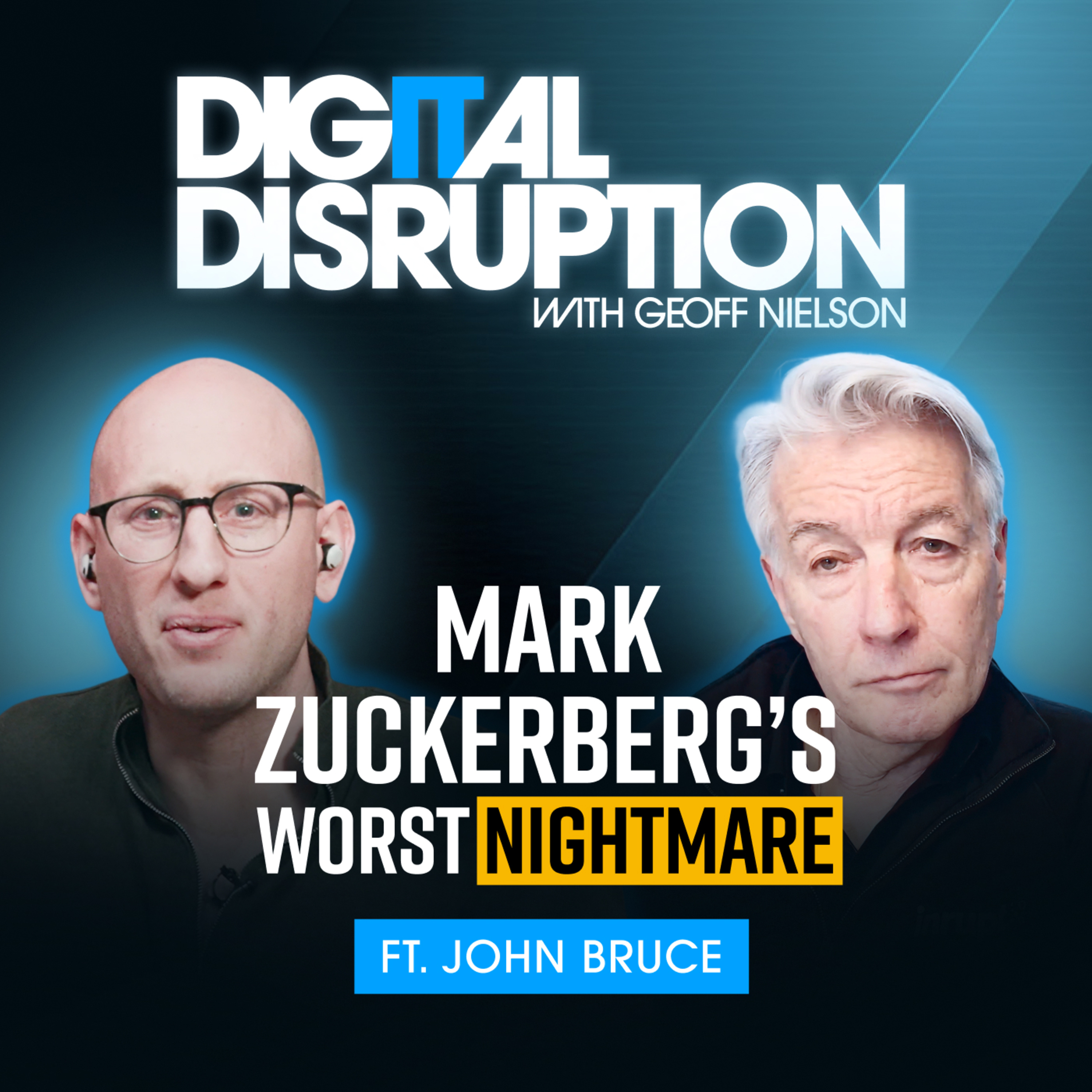
Digital Disruption with Geoff Nielson
Taking Back Your Data: Why the Next Web MUST Protect Digital Freedom
00:45:11
Loading summary
Transcript56 lines
- [00:00]
Interviewer
Hey, everyone. I'm super excited to be sitting down today with John Bruce, together with Sir Tim Berners Lee, who's the inventor of the web. John is looking at how we can actually build the next web. What's so cool about this vision is if it pans out, it means we'll finally be in control of our own data and can wrestle it back from big tech. Now, I'll be honest, I don't know if I totally understand what he's got cooking for us. And so what I want to talk to him about is how this actually works, what it looks like in practice, and if we can separate the real from the hype, let's find out. So, John, thanks so much. Maybe just to start, for those who don't know you, can you tell us a little bit about your story, your journey and what you've been up to in your career?
- [00:50]
John Bruce
Yeah. Well, I'm John Bruce. I've had three decades. Whoa, it's flown. Three decades of experience in software. And the majority of that I've worked for high technology businesses focused on software to be used by big organizations. And along the way I was at a huge tech company as a vice president and since then I've founded and run for startups. I guess this is number five, actually. Thinking out loud.
- [01:20]
Interviewer
Wow.
- [01:21]
John Bruce
So, yeah, I've been fortunate along the way to work with some fabulous people and that's made the businesses in turn very successful. My last company I founded in 2011 was acquired by IBM where I spent some nice years. It's good business. And now founded this company with Sir Tim Berners Lee in 2018.
- [01:48]
Interviewer
Amazing. So you've been around the block a few times when it comes to.
- [01:52]
John Bruce
Yeah, for myself, enterprise technology. I've seen a lot of changes in tech, that's a fact. So.
- [01:59]
Interviewer
Well, so let's maybe talk about that. And as you look at, if I can call it, the intersection of technology and society today, what excites you the most and what worries you the most?
- [02:12]
John Bruce
I think the one itself, same thing, actually. I mean, you'd have to have been living on a desert island for the last couple of years and not seeing the massive impact that AI is having on us all. And I think it's only just started. And while that's hugely exciting, it's also a big worry, actually. I think that the, the challenges of AI are probably more fraught than we imagined. And so the way that we've looked at it and Tim imagined, you know, Tim is a brilliant man. Of course he is. One doesn't invent the web, you know, because you wake up one day and I've had this idea. So. So he. He has a pedigree of. Of being hugely innovative and visionary. And so when we met some years ago and he described to me how he could anticipate the web evolving and what one might do to make it a much more useful place for us all in that we talked about AI, but we imagined it was about 20 years ahead. Fast forward six years and here we are, we've got it. And yeah, the world is moving at quite the clip. So, answer to your question. I think the most exciting thing I'm experiencing right now is AI and the impact of AI like most of us are. But then what really worries me is AI and the impact most of us are beginning to experience of that too. So one and the self, same thing.
- [03:38]
Interviewer
So on the worry side, when you think about that worry, is it AGI, is it AI being used by bad actors? What specifically kind of keeps you out of control?
- [03:49]
John Bruce
Certainly that. I mean, bad actors and their ability to. Some of my companies along the way were software companies. And the thought of AI in the hands of malignant intended actors is pretty dire, right? I mean, just the nature of the attacks that they could create and exploit and the exploits they could run at a huge scale and a huge sophistication that would have taken months of work and preparation in the past. Now you can do them in the blink of an eye. I mean, it's quite staggering to think about the implications of that. But I think more fundamentally, though, what I see ahead of us if we're not careful, is a redo of the problems we already have on the web. You know, where one ends up with huge silos of data, and the folks who sit astride that data command immense influence over us all. And I think that pales by comparison to what we have ahead of us with LLMs. I mean, you know, the thought of us giving our all to an LLM in order to appreciate their counsel and guidance in all walks of our life, you know, the trade there is huge. We give up everything to get back that which we think is utility. But in so doing, we bind ourselves to these things in ways that, you know, we're already bound somewhat by the big silos of data. Of course we are, but nowhere near the way it would be if we're not careful. That's quite worrying, actually.
- [05:22]
Interviewer
You know, I. I think we're probably of the same mind that it feels very much like that's already the path that we're on. Right. We've already stepped, started down this road where, you know, the players in big tech have created these, these walled gardens of, you know, of our own data that they're kind of extracting from us. So, you know, in your mind, how far down this road are we and you know, what, what kind of path do we have to take if we're going to, you know, actually change course and get off this road?
- [05:52]
John Bruce
Well, not to, you know, not to stretch the meta metaphor too far, but I think we can step off it as soon as we watch. We don't have to go work. It's in where others would have us go, you know, where the, the intentful would have us go. I think we can, we can vector away from it. And, and so when I reflect on that conversation I originally had with Tim and he imagines the web, it was a foundational conversation for me. I will confess. It took two or three dinners for me to really grok it, you know, such as the mind of the man. But, but then when the penny dropped, I really got it. I mean, I got it in a fundamental way. And the premise he, he described to me was a world where the data didn't exist in big silos. He inverted the model. He put the data in the hands of the individual and granted the individual consent over who or what could access it. So when 1. Fast forward to today, fast forward to today and you think about the implications of AI, you can imagine a world where, where you can still get the benefit of the LLMs with their counsel and guidance, but the data stays with you. That is the way I believe in and, and way smarter people than me around me really insist that that's the way that we all should go. And that offers utility not just for the individual who can now get hugely personalized recommendations and support from the LLMs in a very personal way, but it's also hugely beneficial for the LLMs too. I mean, they can evidence the fact that done in the right way, they can give you utility that you'd never experience otherwise. And we could imagine a world where you won't exist in one LLM, you'll, you'll have a number of agents interacting with you. And what's going to be really important is that you have your agent acting on your behalf. And so, you know, we imagined this thing we've called the agentic wallet, where the data is contained in a wallet and your agent, which, which we've dubbed Charlie because Tim wrote a paper back those years ago when we first met. Tim Wrote a paper about a personal agent called Charlie and it was going to be way better than, than the agents that, that then existed like Siri and Alexa and so on. And this agent would work for you. And, and as I say, we imagine 20 years from then we would see it but, but we've actually built it. We built it, we call it Charlie. And you know, with respect to the fact that back then he called this thing Charlie and it actually does work. You can have data in your wallet, your agent, which we call Energetic Wallet, but your agent Charlie in our case works for you. It's the way forward actually.
- [08:43]
Interviewer
So is the notion with that then? It's super interesting is the notion that it, when you're interacting with, with LLMs, that when you're interacting with different kind of, you know, data suckers, if I can call them that, you know, across your, you know, wherever you are digitally, that you've got an agent who's looking out for making sure there's consent anytime, you know, data is leaving your hands. Is that kind of the, the vision of it?
- [09:09]
John Bruce
Yeah, that's the, that's the, that's the first step of it. Yeah, that's a fact. You know, you get to consent what data can be accessed by whom. That's the principle of the underpinning. Technology is called Solid. It's open source. It was created some years ago out of MIT and Gantt and Oxford. It's had thousands of developers working on it. And what we've basically done, Tim and I and those who've come to join us, is we built an enterprise grade version, if you will, of Solid. And upon that foundation we built what we call agentic wallets. We built a construct that says, look, all your data is going to live in your wallet. And we're all familiar with wallets, of course we are. You know, you probably use it to buy your coffee this morning. I mean it's a, you know, Apple and similar have done a fabulous job of promoting the notion that the utility you can have in having a wallet on your phone to pay for things, huge, hugely beneficial. I mean it's great utility but it's very limited, it's very transactional and it exists in the moment of time you need to, to do that transaction for the coffee. What we've done is we've extended that. So in our wallets you can add not just transactional data, but personal data. And that can be everything from health records and bank statements to pictures of your cat. It's stuff that's private to you. Unless you deem it appropriate to share it. And then, of course, this wallet can also access the immense amount of data on the web. We've had these wallets for two or three years now, and they're being adopted by certain organizations around the world for the benefit of them and their consumers or their citizens, because we also provision it for governments, for countries. But now with the advent of AI, one can put AI on top of that wallet and it becomes agentic. Now it really does work for you. Now it can sit astride interactions with agents, external agents, be they LLMs, chatbots, applications, and it can intermediate between that world out there and your private world in a way that you consent. And so in that world, as I say, you get to decide who and what and why can access your data. And most of the organizations that want to service you are happier with that than a world where they have to take your data away and become responsible for it. I mean, generally they want to know you in the broadest sense possible in order to provision better products, better services and so on. They want to understand you. And the way they're forced to do it today is they have a limited amount of data about you because you filled in a form and you gave me your name and address, or you made a purchase on their website or some such, and then they go and acquire supplementary data about you. They merge it and now they try to figure out your propensity to purchase whatever it happens to be. But in this world, they can approach you directly and they can ask for visibility of a broad array of data that you have in your wallet. And as a consequence of that visibility, now they can recommend much more personalized services. But if you are needing to do this throughout the course of the day, you'd be clicking and consent buttons all through the day. So what you're. What Charlie does is it works for you on that. It will actually act as your intermediary with all these, all these external agencies. So it really is the way the world's going to go. It's the safest way to do it all. Of course it is.
- [12:37]
Interviewer
It's really interesting. That's exactly where I was going to go, the word safe there, right? Because I love the vision behind this. I think it's super fascinating and, you know, sold on the vision. If the first thing I think about when you say you've got this wallet and it has your health records and it's got, you know, your bank records and everything you care about is, you know, damn, I hope it's secure. Because suddenly you've centralized the risk in one place. So what does that look like from an encryption perspective, from a security perspective? And how do you. How do you sell people that this is something I can really trust?
- [13:10]
John Bruce
Yeah, that's a great question. We get a lot asked a lot. Of course we do. So, so, so three parts of the answer for you. One is so. So, so not only is Tim here, but there's also a chap called Bruce Schneier. And Bruce Schneier, for those of you who have not heard of him, is one of the world's leading cryptographers. Well, leading security guys, I better say. You know, he. He wrote a. A hugely important book called Apply Cryptography some years ago, and it set the world into a totally different direction when it comes to crypto. Anyway, Bruce is our chief of security, so he's infused our architecture with all of the stuff that he knows. And, and he's had a great deal of support around him. I mean, he attracts a lot of expertise, friends and so on to help us with the architecture. So. So having said, okay, architecturally, we know how to do it, then the used a metaphor earlier about the road. I use one similarly about the risk associated with you assembling your data. I mean, you make a hugely important point, which is all the states is going to exist in one place. That's risky, right? Well, not so much. You get the benefit of all of the security stuff that exists on the web anyway, so it's no less risky in that regard. And then I think about it simplistically as the difference in a bank robber and a mugger. You know, if you think about your data today, it exists in big silos and they're hugely valuable. I mean, your credit cards lives in a database of, I don't know, 10 million other credit cards. So any attacker who wants to take it down can afford, because they're in an ROI business, can afford to just put a lot of resources into taking that database down. Once, once they get access to it, they know what they can, you know, get out of it and, you know, dark web and so on, I mean, in order to liquidate it, if you will get the liquidity off it, it's a plain and simple roi. But when it comes to your data, and I guess if you're, you know, President Trump or Kim Kardashian, then, you know, getting access to your data is probably really, really valuable, so somebody's going to come after you. But, but, but, but, you know, in little old me, not so Much. I mean, so, so I, I think it's a difference in as I say, you know, credit cards exist in a bank vault. They're going to be subject to a lot of resource attacks. Me, my wallet, walking on the street. Yeah. As long as I stay on a dark alleyways and, and so on, then I feel okay about that. You know, I'll take the risk of the mugger. It's a very different attack vector, you know, very different risk profile. But then we've added some supplementary tech to it too. So, so we've architected on the Bruce's tutelage, we've architected it in such a way where it avails itself of all the, you know, classic web security technologies. But because of us being quite an agile business, you know, we're quite small and agile. We can, we can adopt new security tech as it comes. We're not bound by, you know, the big corporate machinery that needs to operate which can slow you down. So net, net, it's a, it's a point well made. You know, now it's all my data and well, I need to be worried about it. Sure, be worried about it, be concerned about it, but rest easy. And, and we've had a lot of people evaluate the tech. I mean from governments around the, around the world, big corporations around the world. And they've done all the usual, you know, due diligence on the architecture, the protocols, spac, the, the, the operational execution we, we've deployed and so on and they, they stand easy on it, which was very gratify. It's very gratifying.
- [16:52]
Interviewer
No, I, I, I, I do really like the, the metaphor of the mugger and the bank. Like to me that, that really clarifies, you know, why, you know, you can feel at ease and you know, with Bruce, with the technology there, you know, that whole crypto approach, that's really interesting. But yeah. To say it's decentralized, you know, in ways we've never seen before, you're right. It completely changes the, you know, the profile of what's required to go after someone with this.
- [17:18]
John Bruce
Yeah. And the utility of your data too. Yeah, it's just immensely more valuable.
- [17:22]
Interviewer
So let's talk about what you're trying to do there because, so I love the vision and I'm curious about, you know, the execution and you know, if I can call it the ecosystem because you know, one of the things I thought about as you were talking is it sort of sounds like you're trying to take money out of the banks and put it back in people's wallets. And I know this is an imperfect metaphor, but you know, is there resistance from the quote banks, you know, from the owners of these data silos with a model like this? And then you know, on the flip side of that, which types of organizations are you working with and you know, where are you seeing some of the use cases where, you know, this is starting to gain traction?
- [18:01]
John Bruce
Yeah, great questions. I mean, and you know, to your metaphor, I don't think it's an inappropriate one actually. Yeah, we're looking at decentralizing the web. I mean we're looking to do with the web. I'm reminded of, you know, the big mainframe days and along came this distributed piece of tech called a laptop and personal computer. And well, never stick, it'll never last. But look what it did, you know, I mean the decentralization versus centralized. I mean it's massively, much more as massively, much more utility. But then you know, in the context of where we see the tech being adopted, it's very broad scale. It's as broad as the web itself. It really is. So we've worked with a number of folks and I'm trying to remember all the verticals but finance, healthcare, retail, telecommunications, media, the marketing people will tell me off, I'm not remending at all. But you know, there's a bunch of them and then governments too. The most public one of which is in Belgium, the government of Flanders. That's most of the Belgian citizens live in Flanders and they're now getting this technology. It's the way that the government's going to service them, social services and the way that they're going to make government issued data available to corporations in a very managed way. And if one stops just for a second to think about the implications of that, it says look, if you as an organization could rely on the name and address issued by the government in that wallet as the appropriate dispatch address for any product or service you want to ship. Saves you having to keep a record of the user. Saves you having to keep these massive databases that you got to keep safe and secure and answer to, you know, GDPR and everything else for it's, it's a way more efficient way to go. It's quite actually visionary for the then minister, President Yambon who saw that this was a way to free up data in Flanders because if you could free it up then it would have direct impact on gdp. But there are those who don't want it to happen. Sure. I mean they have immensely profitable businesses out of the inverse of this. But, but then one thinks, yeah, but I mean I, I, I, I like to say my, my previous company was acquired by IBM and I enjoyed two years working there. And I'm reminded that they've been a high tech business for over a hundred years. Just think of that. Over a hundred years they've been a high technology company and the way they prevailed is they've adapted. They're smart, they adapt, they're agile and they use their resources to, to adapt to societal change. I'm sure they might stimulate some of it too. But, but, but the, the big ones today will be the same. They're smart people, they got massive amounts of resource and, and they, they got to be saying that this is the way it should go. And if they're not that, perhaps I give them too much credit. But now they got to realize that, yeah, if you sit continuing to sell your buggy whips, then maybe, just maybe you're going to have a problem. Better yet, you adapt, you change. And we have some of them are friends as well as potential foes. But.
- [21:09]
Interviewer
Well, and the faux piece is interesting and I want to come back, I really want to dive into some of these use cases and how we're seeing this in action. But just before we do, provocatively right now, are you an inrupt Mark Zuckerberg's worst nightmare?
- [21:24]
John Bruce
I'm sure he's got a lot more on his plate to worry about, but he knows of us and he said interesting things about us along the way and almost particularly solid. And yeah, like I said, I think he's got his hands full anyway. But I think we should give him food for thought. I mean, in a very positive way too because while we're a nightmare for him, potentially we're also his biggest opportunity. Massively resourced business, smart people, if they get ahead of this, they can do things in a much more beneficent way. I mean, I think part of the challenge that a lot of these businesses face is they're perceived to be them, not us. And that's a company in particular that started as an U.S. i mean it was all about a platform for us to interact and along the way it maybe changed quite significantly, but it could be on US platform again and this technology would absolutely provide an opportunity to do that. So I don't know if Mark listens to your podcast, but if he does, my number's on the website.
- [22:31]
Interviewer
There you go, There you go. So as I said, I love that and I don't want to Spend most of our time talking about mark or meta. But what I do want to talk about is these agentic wallets. And you know, we talked. When we think about wallets, we think about an individual with a wallet. You mentioned enterprises, you mentioned government. Is this, when we think about actually deploying these wallets, is it at an individual level? Is it at more of a government or company level? How do you see this actually being implemented?
- [23:01]
John Bruce
I think it'll be at all level. I mean it's like the web was. I remember in the early days of the web somebody said to me we need to think all the websites. I said, what's a website? They said well you know, there's this thing, you get a browser and you, you know, you can come and look at. What are you talking about? I mean it was very early days but, but lo and behold, you know, then we, I was running marketing for a tech company and, and we built a website and we put our products on it and we told the world about our products and it, and it really was, it stimulated our business in a massive way. And, and, and then you know, of course the web evolved and it continues to evolve in similar way. I think this is a hugely opportunistic time for us to invert a lot of the problems that the web has got that stifle innovation and we can release that and we can get back to a time when the innovation was rife and people were creating new businesses, new business models and so on. And I think it sits ahead of us actually. It sits at the time when all those things are possible again. But, but it's as broad as the web is itself. So sure, I see businesses that will offer individuals wallets. We're currently our focus generally given limited resources to work with large scale organizations. So you know, our mo, our strategy is let's engage with these huge organizations. They've got millions, if not tens of millions of users. Let's show them that there's value in doing this by distributing wallets to the constituents. And as a consequence of them seeing a clear roi, they'll engage the tech, they'll start to deploy it and it will, it will go the way that enterprise technology goes. I mean if they see benefit, they'll deploy it. But having deployed it, then we, then the individuals get, utility organizations get you. It's a virtuous circle and, and, but alongside us I see others offering, I mean we're not alone in promoting the technology. So you'll see others who are advocating the tech for individuals. So you Know your fitness apps and your healthcare apps and so on.
- [25:04]
Interviewer
And just so I understand it correctly, and I'm trying to get my head around this sort of new technology, this new sort of almost kind of infrastructure or platform layer here. It sounds to me, John, like this isn't, you know, this isn't something that you really buy, right? You more implement it or deploy it. Is that fair?
- [25:25]
John Bruce
Yes, it is. I mean, I don't, I certainly personally don't see yet a business model that says, look, pay you $9 a month as a consumer, get your wallet and all things will change for you. I mean, we're not at that point because of course there need to be applications that can access the wallet. There needs to be organizations that appreciate you've got a wallet and want to approach you and access, ask for access to the data in the wallet. And we're. That all lies ahead of us. Just like the early days of those first websites and the first browsers. I mean, it's, it caught fast. But, and incidentally, I think one of the things that excites me about our current stage is the biggest distribution vehicle, bar none, is the web itself. So, so to make the changes we want, the infrastructure already exists. It's just a question of inducing folks, folks to use it. So it's certainly the case that when we work with organizations, they need to see an roi. They appreciate the vision, they appreciate the end state. They say, I want one of these, I want my kids to have one of these now, then talk to me about how I sell more tomatoes. I mean, it's, how can I service my customers better? That's the essence of what we do.
- [26:37]
Interviewer
So let's talk about ROI for a second because to me, it can often be the elephant in the room here. So, you know, for an organization that's looking at implementing or deploying this, you know, technology leaders these days aren't exactly twiddling their thumbs. They've got all sorts of things on their plate. And so if they were going to go into a boardroom and say, you know, we want solid, we want Charlie, you know, what's the conversation they're having to, you know, communicate the ROI or make the case for making this an enterprise priority.
- [27:08]
John Bruce
Well, you know, to some extent, I think they're having it already. They just don't know it's called solid. And Charlie, I mean, if, if they are truly leading their company, they're not just attending to day in, day out, blocking and tackling. They do put their head above the parapet and they do Try and imagine where are we going next? You know, it's, they take a breath and they, and they imagine where they need to go, not where they're actually at. And in that regard, we represent a hugely attractive tech because once they appreciate what we're really doing, then I think they go, oh, wow, this makes all the sense in the world. I mean, yeah, that's not to say they immediately, you know, call us up and demand that we get over there and help them deploy it, but it gives them a sense of consideration. They appreciate what we're doing. Now it's a question of can it fit into my strategic roadmaps? You know, what I do for a living. I travel the world talking to CEOs and government ministers and, and generally they totally appreciate it. They will take it to their boardroom, and there are many examples where that's true. But then the boss is, okay, I get it, I get where we want to go. And it will take us five years to get there or three years or whatever it is to get there. What are we going to do today? How's it going to make a difference the next quarter's KPIs? How are we going to make sure our shareholders are happy in a year that we performed in a, you know, you get the more prosaic, you know, constructs of that. So generally what we do is we'll look at the first steps. And so our teams work with corporations who have a general appreciation. They sort of kind of get it and sort of kind of don't, but they realize there's enough here to, to merit putting in work. And so we'll go and spend a day with them. And we work with some of their principal product strategists, we put our architects with them, and we, we, we say, okay, what is it you're really grappling with? What's the four fundamentals of your business? What's the core fundamentals of your business? Now let's see how we can help you do those better. And I'm not saying in all cases we come out with the, with the right kind of roadmap of use cases, but generally we do, actually. I mean, it's a, it's an interesting exercise in helping people appreciate that, look, the technology exists, it's a given. The data exists, that's a given. What we're looking at doing is recomposing it in a way that gives you more utility. And often a time it comes down to a simple question, which is, what is it? What's one piece of Data if you could have it, and you can't have it today, but if you could, it would help you be way better informed about your customer. And usually they'll say, oh well, you know, it's a silly question because the one thing we'd really like to know is this. And then when you say to them, well, why don't you ask them then? But ask them in a way where they get to keep it, they don't. You don't get to take it away, maybe then maybe they'll give you it, right? And if you treat them with respect and you give mutuality and then you build a relationship with them which is way better, way more productive. You know, there's a, there's a sort of over simplistic view I have of it, which is how many customers have you got? I've got 6 million customers. Great. How many of them actually help you build your business apart from spending money with you? How many of them actually give you their thoughts and their encouragement when you're thinking about your next product? And they'll say, well, we do focus groups. Yeah, but that's not what I'm talking about. Bring them with you on the, on this, right? I mean, give them utility, give them a way to work with you, but show them the evidence that you treat them with respect, you're sincere about your intention and you give them back things that they've described to you. I mean it's that virtuous circle. I would love it as a, I run a company and I'd love my customers to tell me precisely what they will buy if I can build it and assume that I can, I will.
- [30:51]
Interviewer
So with all of that in mind and just how broadly the application is here, it sounds like this is not necessarily a question of sector. It's not, okay, well it's healthcare or finance that's taking this up right now. It's not even necessarily commercial sector versus you know, government. It's more, I mean, let me, let me, you know, throw this out at you and let me know what you think. Like it's more organizations that have that kind of customer orientation and that like forward looking posture.
- [31:22]
John Bruce
I think that's absolutely true. I think that's definitely true. I mean, you know, we find ourselves in any vertical you pick, you know, banking, whatever. I'll find myself talking to 3, 4, 5 CEOs in that sector. One of them will absolutely get it 100%. One of them will absolutely not get it 100%. And then everybody else is in the middle and you're right. It's the sense of orientation and sense of innovation and the receptivity to be ready to change, to ready to advance. Some people resist it, other people have run towards it. But what's, what's hugely fascinating at the moment is what AI is doing. I mean it's almost like. Remember that thing called blockchain? I mean, you know, it was a. Of course I'm, I'm being, I do.
- [32:10]
Interviewer
And I was actually going to ask you about that because this has blockchain, right?
- [32:13]
John Bruce
Yeah. There was one time you couldn't breathe without talking to somebody about blockchain. Blockchain was going to change the world. Blockchain. There's blockchain, that blockchain. And I thought the, I thought back then the promise of blockchain was just. Anyway, there's some good use cases granted, but lot not so much. But people were wedging it into, into projects just because they thought they needed to. I think AI is very much different actually. I think it's, you know, it's, it's, it offers way more promise than blockchain ever did. But still. Yet we find ourselves at a time when everybody wants to talk about AI. And so our reference to AI with Charlie is giving us opportunity to talk to folks about okay, well what you're trying to really do and, and, and I would characterize the conversation as one of two types. There's the linear use of AI and that's the majority of project projects at the moment. You know, how do I improve my customer support? How do I do more efficient job of sales? I don't. I mean, you know, you look at a, a functional area, you look at applying AI to it in order to increase speed or improve efficiency, save costs. Very linear, progressive things to you know, to put AI to give it two years that level, found its level I think. But then there's the nonlinear use of AI and that's where people think hang on a minute, we can do things we never could do before. Wow, why don't we try and do that? And that's where we come in. That's where this technology really represents a way to change the game fundamentally for the benefit of you. Your constituents are and those constituents might be citizens or consumers matters not each equally relevant and sometimes the self same person of course. But then you can think non linearly about your business. You can say wow, we can leapfrog where we thought we were going to be at by applying this technology. And that's not to say broad scale folks adapt it but they Start to push on it, they start to evaluate it, they start to appreciate it. And, you know, it's a. 12 months ago I wouldn't have said that, but now I do. Most of the conversations were always about AI.
- [34:19]
Interviewer
No, I've, I've found exactly the same thing. And I wanted to come back. You hit on something that I did want to ask you about, John, which is, you know, AI versus blockchain is two, you know, different examples of technologies, two very different trajectories. And, you know, it's amazing, you know, the way you're using kind of agentic technology with AI and what you're doing. When I think about. I'm very curious on your thoughts. When I think about what you're doing with Solid with Charlie, there's, as I mentioned, sort of echoes of blockchain in some way. Right. It's more of a decentralized model. I think about blockchain when I initially heard it as, okay, well, we're taking the power away from these big silos and these big players, and it's going to democratize. How do you in your mind view this approach versus a blockchain? Kind of agnostic of the technology itself. Is it as similar as I'm making it out to be? Is it not? And what are the implications for your trajectory?
- [35:16]
John Bruce
Well, so I think there's some fundamental differences in as much you look at blockchain. It's evidence public in our world, evidence private. That's where you start. So two massively different. It has to be cheap. The web is the cheapest technology there is. Blockchain, not cheap at all. It has to be fast. We know the web's fast. Blockchain, not fast. So, you know, we're looking at polar opposites in terms of the fundamentals of the tech. And then after that, it's, you know, you look at the use cases, I think, you know, blockchain is a really. And we do have projects which involve a relationship with blockchain to store keys and credentials and then solid to store your data. And there's a measure of, There's a lot of sense in that. Right? There's a measure of sense in it. Anyway, so, so, you know, it just. I, I guess the reason I cite blockchain is the waves of tech. I, I guess along the way, I could have mentioned, you mentioned Mark, you know, the metaverse. Remember the metaverse, that was going to be a huge thing. Right. But that's just, we're in the tech business, so we're all receptive to the next big thing and the next big wave. Because we want to believe and we want to advance the world, and it's our job, right? We're going to change the world with our tech. And so I think there's receptivity to it, that if you don't watch it, you can have a rotate on it like I think the world over people did on Blockchain and some people did on the Metaverse and. But, But I think AI's got a lot more promise than either of those two days. And with Solid, it's hugely different in a very, very positive way.
- [36:51]
Interviewer
So when you think about, you know, when you think about scaling solid and how it becomes, you know, which I imagine is, is, you know, your ultimate goal as kind of ubiquitous as, you know, the web itself, does it matter how we get there? I mean, do you have a vision for what it takes to get from here to there? Or is it like literally just pound the pavement, get the word out and, you know, word of mouth, experientially, this.
- [37:15]
John Bruce
You know, that's, you know, people say to me, what do I lay awake at nights worrying about? And that's it right there. So, you know, when Tim and I first got together, you know, one of the thoughts was, okay, let's build a killer app. An app that we just. None of us could deliver that now we want solid. But when we reflected on, we thought, no, it just doesn't make sense. You know, you need, you need this, you know, balance. Until you mentioned the word platform early. You know, you need two sides to that. First it. To be successful, and that's building an app didn't make for success because there was no existing wallets. I mean, it's a. There were some fundamental challenges in that. But when we thought about working with big organizations to distribute solid to bootstrap ecosystems of solids, that's where it made most sense. Is that the way it's going to go? I wish I could tell you. I mean, I know that's what we're doing, but around us there are others. You know, around us there are people creating apps. Around us, there are people coming up with their own views of, of what they could use the technology to do. And I, I'd be cheering them on. I mean, I, I hope candidly that some of those big ones we talked about earlier, yeah, maybe they should use Solid. You know, the right one company could be a fabulous hosting company for solid Wallets. They do a fabulous job of hosting today. Another company could do a fabulous job of providing social interaction And a way they do today. You know, another one does a fabulous job with. I mean, you know, we can go. You know, there's this. They just have to appreciate what, what's available to them.
- [38:46]
Interviewer
Well, and I'm, I'm, I'm glad you brought that up because my first thought was, you know, a platform that. Or, you know, a large tech organization that, you know, is a leader in, you know, getting a, you know, a smartphone in everybody's hand and, you know, is very interested in, you know, privacy and security. But there's, as you said, like, all of these big players each bring something different to the table. And so, yeah, it's very interesting to hear that, you know, that is, you know, something you're, you know, kind of on your radar as you think about.
- [39:14]
John Bruce
More than sincerely. More than that. I mean, we have a. I don't know that all the names we've cited together, we have a fabulous relationship with, but some of them, sure. I mean, some of them we do. And there was a. There was an effort undertaken three or four years ago called DTP Data Transfer Protocol. And that was an agreement between, let me see if I can remember some of the big names. Google, Apple, Facebook, Microsoft. And what they agreed to do was to make the data available in such a way that you could take your data out of any one of them and put it into the other.
- [39:48]
Interviewer
Right.
- [39:48]
John Bruce
Well, one of them came to us and said, we've done it with solid.
- [39:52]
Interviewer
Wow.
- [39:52]
John Bruce
Do you want to come see it? And so Tim and I went to California and they showed us it and it worked. And we said, this is cool. Thank you. It really is good. And so, so know that there's, I mean, more than just an inkling of an interest in some of them about what we might represent.
- [40:10]
Interviewer
That's extremely exciting. And it is. I mean, the tech, the technology is, you know, it sounds amazing. And so, yeah, to have a distribution partner like that could be, you know, an absolute game changer. I mean, a game changer for your team, but a game changer for all of us.
- [40:23]
John Bruce
For all of us. Right. But they're not alone. I mean, you know, you. Yeah, the tech space is one, obviously, the immense reach. But then there are others, too. You know, if you look at, I mean, literally look at your wallet, there are things in that wallet that a lot of. A lot of us all carry. And wouldn't it be fabulous of one of them? In full disclosure, one of our investors is a company called MasterCard.
- [40:51]
Interviewer
And yes.
- [40:52]
John Bruce
And while I wouldn't make any representations of what mastercard and we are doing. I promise you I'm not. Just think about the implications of a MasterCard giving every MasterCard carrier one of our wallets. Yeah, that'd be an interesting way to get a lot of adopters really quick. And then once you have them, application developers the world over would want to be able to interact with them. And so it would fire up in very short order huge amounts of adoption and the web sits there to distribute it and it would happen at winding speed. And there are other examples. But when one sits to think about, well, how else might this be distributed? It isn't just limited to the tech lenders. There's a bunch of other ways for it to become adopted. The challenge is, candidly, if I talk to everybody who expresses an interest, I'll be busy all day and probably not very productive. So, so it's, it's a question of saying, okay, well, of all the opportunities we have to engage with folks, which are the ones that make most sense. And I'm not saying we get it right all the time, maybe even half the time, but, but the, the interest is growing. It really, really is in a fascinating way.
- [42:09]
Interviewer
It's fantastic. And as I said, yeah, my excitement is not just for you, it's for.
- [42:14]
John Bruce
Me, for all of us.
- [42:15]
Interviewer
For all of us, which is so exciting. I did quickly want to come back, John, to. We talked briefly about enterprise leaders, enterprise technology leaders. What keeps them up at night and is it the next quarter or is it eight years down the road? What. Right now, as we look at the state of technology and frankly the state of the world, what's your best advice for enterprise technology leaders? What needs to be on their radar?
- [42:39]
John Bruce
Oh, that's a. I think it's above my pay grade, actually. I mean, I see the world through, through my optics. You know, my big, I think the biggest and most urgent priority we have is as quickly as we can attending to this, the potential potentially really dystopian view I might have of what LLMs can do. And, and, and the quicker we attend to that, the better. I don't think we can do with regulations. I don't expect they will, independently of, of any external forces, just change their minds. So, so then what one can potentially do is introduce a technology that will shift the game on them. And so I see the world that way, but you'd expect me to, because that's what keeps you awake at nights. But.
- [43:25]
Interviewer
Right.
- [43:28]
John Bruce
So I think what corporates should think about, though, in this array of AI opportunity that exists is sure there's the linear stuff. Of course there is. You improve your customer support, improve your sales, and so on. But then just take a breath and think about a nonlinear view of all of this, which means that with a modest amount of efforts on your part, you can create something that in very short order, the world has changed our corporations and enterprises. Right. Their ability to move at speed now is changing around them fast. And. And you could strategically do something in two years that would have taken you 20 before. And so the question is, can I undertake this nonlinear thing then? Should I undertake this nonlinear thing and encourage you to then guess the both of them? But then how will I. And that's where we come in. So, yeah, it's. And I'd be happy to talk to them. Not all of them don't have the time, but some of them are worth.
- [44:30]
Interviewer
I. I appreciate your candor there, John. Really exciting conversation. I'm so interested to see where all of this goes.
- [44:38]
John Bruce
Thank you.
- [44:39]
Interviewer
And yeah, I wish you the best on. On your journey as well, because I think, yeah. Based on this vision, you know, your success is my success and all of our success. I think that about covers most of the things I was going to ask you. Anything else, you know, you wanted to talk about today while we're.
- [44:55]
John Bruce
No, it's been fun, actually. I enjoyed it. I enjoyed talking to you. You asked great questions. Thank you.