← Digital Social Hour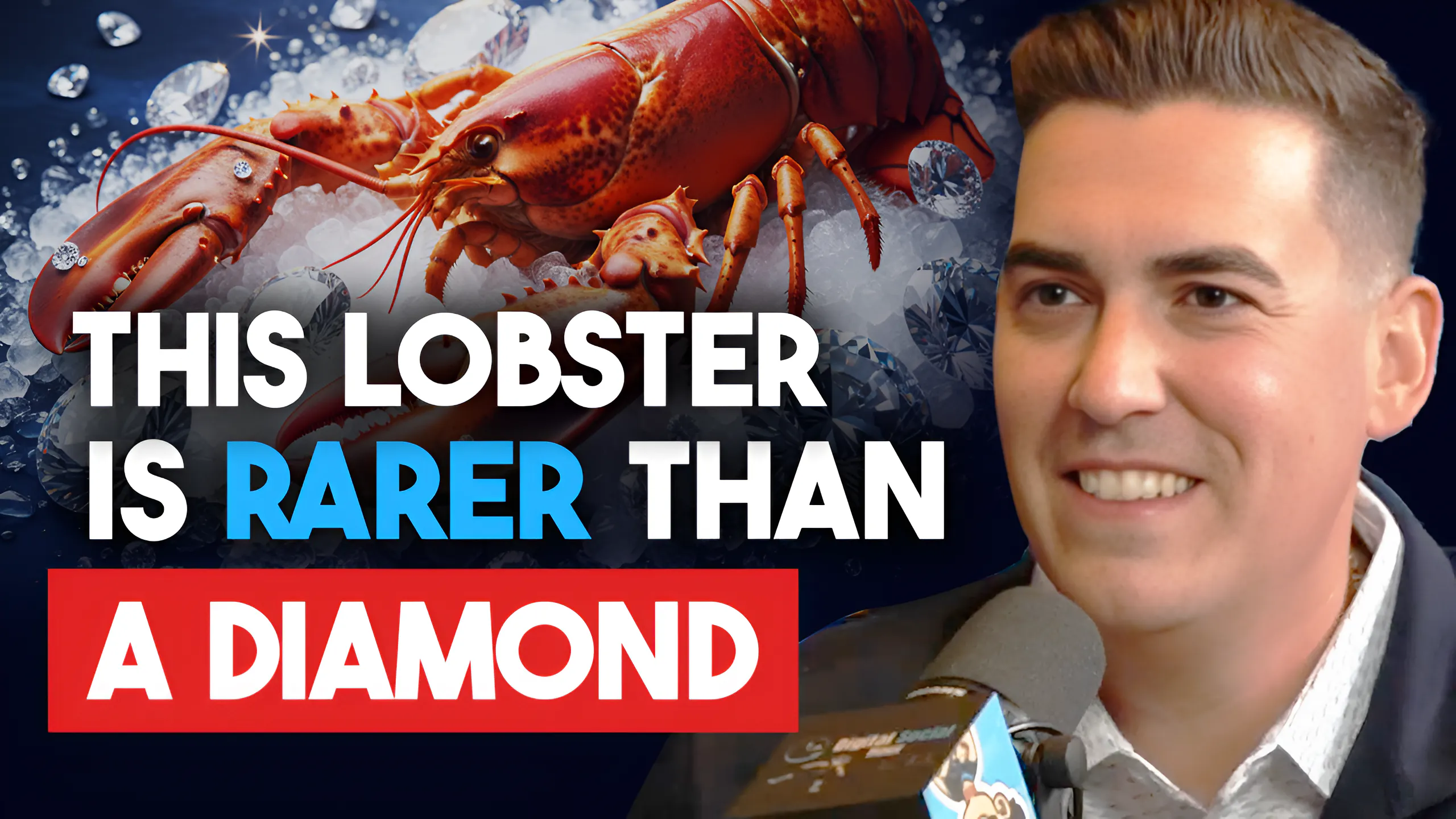
Digital Social Hour
He Accidentally Started America’s Biggest Seafood Business | Jonathan Stramaglia | DSH #1600
00:43:11
Loading summary
Transcript397 lines
- [00:00]
A
It was always written in your story.
- [00:01]
B
That you were going to do this unofficially. Yeah, I mean, I'd be really foolish not to want to do, help run an empire. Everyone needs seafood in a good way, fast way to get it right. And being Chicago, we're right next to o'. Hare. It was a wham bam, real fast. One thing led to another. Now, 51 years later, one of the biggest seafood operations in the country.
- [00:18]
A
Shout out to your grandfather for, oh.
- [00:20]
B
There'S no one better in the business world on business, you know, other businesses as well that he says, I don't care if we're gonna make it work. He's one of those people that it's failing is not an option.
- [00:33]
A
Okay, guys, special episode today. We got a lot going on here. We got Jonathan from Supreme Lobster. Thanks for hopping on, man. You brought quite a lot here.
- [00:41]
B
I didn't want to come empty handed, that's for sure.
- [00:43]
A
Yeah, we got a 50 pound lobster here, right?
- [00:46]
B
Seven pound lobster.
- [00:47]
A
Sorry, I keep getting that mixed up.
- [00:49]
B
50 year old, 50 year old live lobster. Yep.
- [00:52]
A
We got a, this one, this is.
- [00:54]
B
A 1 in 30 million orange lobster from Nova Scotia.
- [00:58]
A
Damn. Came a long way.
- [01:00]
B
Yep. And then this is somewhere between 1 and 30 million. Half orange, half albino. This is 1 in 30 million to 100 million. Somewhere in that range, they don't know because they're so rare.
- [01:09]
A
Dang. Which one sells the best for you guys?
- [01:12]
B
The bright orange are used at China Club in Fontainebleau. So they're big fans of that at their restaurant. Yeah.
- [01:19]
A
And you've been selling these for a while. It's a third generation business in the family, right?
- [01:22]
B
Correct. So 51 years in business this year, 1974 started out, my grandfather's still there. He only works half days, 12 hours he cut down. And my dad, of course, is there, uncle, cousins, family, and then myself as well.
- [01:37]
A
Well done, man. It was always written in your, in your story that you were going to do this unofficially.
- [01:41]
B
Yeah, I mean, I'd be really foolish not to want to do, you know, help run an empire eventually.
- [01:47]
A
And being in Vegas, being in the desert, you know, having good access to seafood is needed, correct?
- [01:50]
B
Yes. And starting out in the 90s, at the time it wasn't a law that you had to have a refrigerated truck so people would just throw ice on top of the fish and send it out. But like a day like this in the middle of July where it's 110 in the shade, so we had refrigerated trucks from day one. Wow. So that was a nice little, like, selling point as well, you know, and especially as, like, corporate got bigger and bigger in Vegas.
- [02:14]
A
Yeah.
- [02:14]
B
There's like another checkpoint, you know, it was better.
- [02:17]
A
Nice. You came into Uber with all this.
- [02:19]
B
Yeah. So the guy is probably gonna be happy afterwards. And the women outside, Ocean prime. So Ocean prime, this is their grand seafood tower. Shout out Chef Gino that set it up for us. They were looking at us like, what are you doing? I'm like, it's Vegas. We're just having a seafood tower. It's the afternoon, man.
- [02:38]
A
So you supply all this stuff here too? Yeah.
- [02:40]
B
So this is their exclusive oysters of rose and garnet, which we do nationally for the whole country. And then, you know, the shrimp, your classic lobster cocktail. King crab, some jumbo lump crab meat on top.
- [02:52]
A
You sell it all, man.
- [02:53]
B
We do it all A to Z, fresh frozen caviar, shellfish live.
- [02:59]
A
Yeah. You brought the big caviar here.
- [03:00]
B
Yeah. So you want to. Have you done a bump on air yet?
- [03:03]
A
I'll try one. No, I haven't done one on air.
- [03:05]
B
So this is a half pound of derinky kaluga caviar from Petrosian. If you've seen, like Petrosian bar inside the Bellagio, right when you walk in, like the huge. Right by the piano bar. And then this is a mother of pearl spoon, which is what you should use.
- [03:23]
A
Wow.
- [03:24]
B
Okay, so you're gonna put it on your hand right here and then right here. Try that bad boy.
- [03:34]
A
Just eat the whole thing.
- [03:35]
B
Yep. Drove back.
- [03:38]
A
Mmm.
- [03:40]
B
And that's some of the. Yeah, that's some of the best caviar in the world. If not the best caviar in the world.
- [03:44]
A
That's the best I've ever had.
- [03:45]
B
Yeah. The creators of Petrosian, I'm gonna mess up the line, but have something great. Like the leather didn't make Hermes. The caviar didn't the caviar pearls didn't make the caviar itself. It was like the service and dedication time, which is great. It's a hundred year old company. They've been around forever. You go to all of Europe. This is like the primo of the primo. And that's why they're in Las Vegas and we service them in Chicago as well.
- [04:08]
A
Yeah. Because I've had caviar nowhere close to that quality. Yeah, that was phenomenal.
- [04:12]
B
Yeah. The way they. The way way they sourced, where they source all that is like, you know, the top of the top. They only grab the best.
- [04:20]
A
Yeah.
- [04:20]
B
Quality.
- [04:20]
A
I'M sure you guys have a similar philosophy too, right?
- [04:23]
B
Oh, of course. So like for us in what differentiates us in Chicago, Midwest in Vegas is like we only work direct, there's no middlemen. We work right with the boats. Prefer like family businesses as well, which there's a lot in the seafood industry, which is great, is that the dry ice is drying up. But yeah, so we'll only work and all of our buyers and some of our sales go out there everywhere. So whether if it's Asia, East Coast, West Coast, Europe, they'll go out there and actually see the plants, make sure everything's should be.
- [04:56]
A
That's respect because once you get the middlemen involved, I'm sure the seafood doesn't get as fresh, right?
- [05:01]
B
Correct. We want to get it as quick as possible, as best price as possible, as high as quality, less hands touching it, better quality.
- [05:09]
A
So how long does it take to get from ocean to plate in Vegas?
- [05:14]
B
Anywhere from pulling out of the water, depending on what you're talking about. What item? 12 to 24 hours.
- [05:20]
A
Damn, that's fast.
- [05:21]
B
So the perks of Vegas, you say it's in a desert, you're nowhere, you're near water, obviously. It's actually almost better because everything's flown instead of maybe possibly trucked, some stuff is, you know, trucked into Chicago or from la, things like that. You're actually just flying straight to the airport right here.
- [05:38]
A
Right.
- [05:39]
B
So there's no, you know, it's actually quicker east coast. Your five hour flight and you're on.
- [05:43]
A
I know some fancy sushi spots out here that fly from Japan every day.
- [05:46]
B
Correct? Yeah. So why, I mean you can't really get any fresher unless you're like on the spot in Japan or on the East Coast. But I mean it comes so fast. Everything's pretty much flown in daily, about six days a week. And we're picking it up either late at night, first thing in the morning and getting it out to you that same day.
- [06:04]
A
Yeah. You got a lot of big clients out here, right?
- [06:05]
B
Yeah, so we do MGM properties, Caesars stations, Boyd Pen Gaming.
- [06:11]
A
Crazy.
- [06:12]
B
Yeah.
- [06:12]
A
Those are the biggest people out here.
- [06:14]
B
Yeah, so. So it all started in the 90s. So we started in Chicago in 74 and my grandfather actually knew a guy in the east coast, knew two other guys. Hey, do you want to flip lobsters? Picked him up in the back of his Lincoln, drove around to his favorite restaurants. Hey, do you want to buy some lobsters? You want to buy some lobsters? Sold them. Sold out. Did it a couple Days it worked, had something going. On the third or fourth day, he had a bunch left over. He didn't know what to do. So we ran to Walmart. This is in the mid-70s, early-70s. Buys a kid's kiddie pool. Like the plastic, one foot high plastic tub we all had as infants, kind of. And put them all in there with just normal water. Not thinking you need salt water, you need air.
- [06:56]
A
I've done that before.
- [06:57]
B
Yeah. So all his profits from the last couple of days were gonzo. And the lobsters are doing the backstroke. So he learned hard real fast. But then after a couple more days, he realized, like, I think we got something here. You know, there's. Everyone needs seafood in a good way, fast way to get it right. And being Chicago, we're right next to o'. Hare. It was a wham, bam, real fast. One thing led to another. And now one of the biggest. 51 years later, one of the biggest seafood operations in the country.
- [07:25]
A
Third biggest in the country, right?
- [07:27]
B
Yeah. Second, third biggest. First biggest. It's always. Every year it kind of differs.
- [07:30]
A
That's super impressive. Shout out to your grandfather for, oh.
- [07:33]
B
There'S no one, no one better in the business world on business. Other, you know, other businesses as well that he. He says, I don't care if you make it work. He's one of those people that it's. It's failing is not an option.
- [07:44]
A
That's so dope. You got kids yet?
- [07:46]
B
I have three. Three under four.
- [07:48]
A
Fourth generation.
- [07:49]
B
Yeah. So I have my two oldest boys come every Friday. They bring donuts. And they know about half the staff already. They're pointing them out. And then we got a seafood cafe at home that they're already working.
- [07:59]
A
That's so dope.
- [08:00]
B
Yeah.
- [08:00]
A
How'd you get in touch with Vegas policy? Who is.
- [08:04]
B
I slid into his DMs, actually.
- [08:06]
A
Nice.
- [08:06]
B
And I was like, hey, you know, like, let's come by the shop, come check it out. Let's see, you know, show you what it's all about. And he was just floored. He loved it.
- [08:13]
A
He's so great at documenting businesses.
- [08:16]
B
Yeah, he's great. He's a great guy. True to himself, you know, just a good, humble guy that just wants to document really cool stuff.
- [08:23]
A
Yeah. Shout out to Paulie C. Man.
- [08:24]
B
Yeah. Vegas.
- [08:25]
A
Paulie C. One of my favorite guests of all time.
- [08:28]
B
Yes, absolutely.
- [08:30]
A
Let's talk crab legs, because I used to go to Hot and Juicy a lot when I first moved here, and a pound was 80 bucks when I started. Now it's I think 160 for one pound of crab. King crab meat. Why is it going up so much?
- [08:41]
B
So this all started with COVID Covid happens. Us shuts down their whole fishing season. Shuts it down for year two, year three, instead of some. Somewhere in the midst of £20 million, they say you can catch £2 million. So USA king crab is what everyone wants. First choice in the. In the litter. Second choice is Russia. Okay, so everyone will switch to Russia. Russia. Russia. Russia king crab. Russia starts a war with Ukraine. Embargo. No more Russia crab. So after that, well dried out of Russian crab. That was when an embargo happens. Whatever's in America, that's it. No more. Right. So the well runs dry. So now there's no Russian crab. There's king crab for USA. There's maybe 2 million pounds for the country, which is not even 10% of what you need on an annual year. So now you go. The only game left in town is Norway. Norwegian. There's some Japanese crab out there as well. But they know what they have, right. So they're going to hold it. Supply and demand shoots up like crazy. And Norway can only do so much. Right? They only. They're used to only doing more of like, Europe and just a little bit to America. Well, now you're asking. Everyone's asking for like 20 to 30 million pounds. They don't have it. So supply and demand kicks in. And now it's just every week, it's going up and up literally every week.
- [10:01]
A
Crazy, right?
- [10:01]
B
Yeah.
- [10:02]
A
160 a pound to eat it.
- [10:03]
B
Yeah. And if you're looking for, like, how Vegas policy told in the video of baseball bats, which was like the ones the size of your arm that you get at a mastros or ocean prime, things of that nature, berries. Those are, you know, their cost is well over 100 bucks.
- [10:18]
A
Geez.
- [10:18]
B
So, yeah. So when you see it on the market, you think that, oh, my God, they're charging an insane amount. They're really not. That's what the true cost of that is now.
- [10:26]
A
Yeah. Because they're making their 10, 20%.
- [10:27]
B
But, yeah, they're putting their normal margin on, and we're putting our small normal margin on. It's just astronomical.
- [10:33]
A
Yeah. It's crazy, though, because I'm sure when you first started selling it, it was how much a pound was it?
- [10:36]
B
Oh, I see pictures that it's $9.99 for the jumbo lump from back in the day. Holy 999 jumbo lump in our. In our retail store to the public. In Chicago. Retail store in Chicago. Vegas is just wholesale. In Chicago, we have a retail store open to the public.
- [10:52]
A
Got it.
- [10:52]
B
And it's for. You want to see something for, like, reality TV for Christmas and New Year's week. The line will be out the door. Hundreds and hundreds of people. And then you'll see the generations of like, two, three generations. Italians, Hispanics, European, other Europeans come in and they just, you know, the grandma, you see the mom, and now the kid. I need these clams, I need these shrimp, you know, especially all the Italians that do the seven fishes.
- [11:15]
A
What's up?
- [11:16]
B
So seven fishes and Christmas is. You have seven different fish. It's calamari, clam, squid, eel, whiting, a couple other items. And that's like, kind of like your. What they do, you know? So that is a big deal. You have your seven fish on Christmas. So tradition.
- [11:35]
A
I need to try that. That sounds delicious.
- [11:37]
B
Yeah. So the store will have security for two weeks. We'll have the black ropes out there. And it'll be snowing inches in Chicago. Six inches, Seven inches on the ground. And they'll be out there. And they know it's a tradition. People come in, you know, they see myself, they see my grandfather, they're shaking hands. Oh, my God. It's our family tradition tagging us on, you know, on Instagram and stuff like that. It's cool.
- [12:00]
A
That's dope.
- [12:00]
B
Yeah.
- [12:01]
A
Let me move this. I don't know if the mic's picking this up. I could move it on the floor for now. I don't think it's picking up, but I just want to be safe. Yeah, we'll edit this part out. I probably should have done that sooner. So you guys sell calamari too? Squid.
- [12:21]
B
Yeah. So your number one skew per se is going to be like your Atlantic salmon, which you're going to see on every menu in America, no matter what the cuisine is. And then you're also. Calamari is almost on every menu from a steakhouse to Italian to American to, you know, Asian restaurants. Everyone's got calamari. So that'll be on there. And of course, shrimp will be on there.
- [12:42]
A
Those are your big sellers.
- [12:43]
B
That's the top. Top three items.
- [12:45]
A
Yeah. What about sea bass?
- [12:47]
B
Chilean sea bass is a unique one. So, yeah, that's gonna be one of your top selling fish for sure. And that's on every fancy restaurant in America. One of your most expensive fin fish on it.
- [12:58]
A
So good, dude.
- [12:58]
B
And do you know why it became really famous?
- [13:00]
A
No.
- [13:01]
B
So it used to be Called Patagonian toothfish. No one bought it, no one sold it, no one caught it. It was. It's off Chile, like, way south, like closer to Antarctica. And it was just a bycatch when they were catching other fish, no one wanted. It's ugly. They said it was blubbery. Not good fish. They thought at the time. A guy in the west coast went down there, saw this fish when he was doing some research, and he's like, I think we got something here. He tried it. He's like, this is amazing. He started calling it Chilean sea bass. Unofficially. This is the 70s, 80s, when the regulations aren't what they are today. And it starts catching on, right? So it starts getting. Now the 80s now in the 90s. Now, if you remember Jurassic park, they're in the scene when T. Rex gets a lamb or a baby cow and then eats it. And they're like, oh, my God, right in front of him. The first time you see T. Rex on camera, then they're like, ooh, we're hungry. Chef is gonna prepare some chili and sea bass. And then he mentions it again when they played it after that happens in 94. Every restaurant wanted chili and sea bass. Cause Jurassic park at the time, right? There was no bigger movie in the early mid-90s.
- [14:03]
A
They're still big right now.
- [14:04]
B
Yeah, they're still huge. Right. But the very first one was, especially the first time anyone saw T. Rex on camera. That was like the first of its kind. So Chilean sea bass went nuts, Nuts to the point where it almost went extinct. Where they had a chef program and it said, like, take a pass on Chilean sea bass. And they tried to, like, slow it down because it was just out of control.
- [14:24]
A
They're running out of them.
- [14:25]
B
Yeah. And so now, now it's regulated now it's like a green listed, good, MSC certified fish. But what they do actually, and people don't know those, they go out in barges, like something you'd see that gets shipped overseas. And they go out for like three to six months. They go out overseas, they catch them, cut the, you know, the heads off, clean them all up, and they deep freeze them. So, yeah, so they'll be out months at a time. They'll catch £100,000, £200,000, bring it all back in. And those animals are the big. The smallest you get is like a 20 pounder, up to like a 200 pound fish.
- [14:58]
A
Jeez, they're that big.
- [14:59]
B
Yeah, yeah. They'll go, get up, Bill, and they'll live like up to like 50, 70 years. Old.
- [15:03]
A
Wow.
- [15:04]
B
Yeah, they're very, like, prehistoric type fish.
- [15:05]
A
That is interesting. Yeah, that's one of my favorite seafood dishes, man.
- [15:08]
B
Yeah. Oh, yeah. Oh, yeah. Miso. Miso, like marinated sea bass or like.
- [15:13]
A
One of those nice ones?
- [15:14]
B
Oh, yeah, absolutely.
- [15:15]
A
Yeah. That's a good dish for sure.
- [15:16]
B
Yeah.
- [15:17]
A
Scallops are pretty expensive now too, right?
- [15:19]
B
Scallops are another one. Now, you had three years ago the quota for the. For the world or for the country, for America was 69 million pounds. You can catch right now this year, Your quote is 19 million.
- [15:33]
A
Shout out to today's sponsor, Quince. As the weather cools, I'm swapping in the pieces that actually gets the job done. That are warm, durable, and built to last. Quince delivers every time with wardrobe staples. They'll carry you through the season. They have fall staples that you'll actually want to wear, like the 100% Mongolian cashmere for just $60. They also got classic fit denim and real leather and wool outerwear that, that looks sharp and holds up. By partnering directly with ethical factories and top artisans, Quince cuts out the middleman to deliver premium quality at half the cost of similar brands. They've really become a go to across the board. You guys know how I love linen and how I've talked about it on previous episodes. I picked up some linen pants and they feel incredible. The quality is definitely noticeable compared to other brands. Layer up this fall with pieces that feel as good as they look. Go to quince.comdsh for free. Free shipping on your order and 365 day returns. They're also available in Canada too. Whoa.
- [16:25]
B
So, you know, 70%, you know, 300% less, you could say. And that is scallops. They're selecting certain areas. They're not there. It's getting tighter and tighter and there's way less big scallops. So when you're at the steakhouse, you get three or four big scallops on your plate. Those are becoming crazy tight, tight, tight. Are they running out or are they not growing fast enough? You know, the government's lowering it way, you know, big time, obviously, to slow it down, to try to make them grow back. But yeah, so scallops, you know, they're triple the price that they were two years ago.
- [17:01]
A
Damn. I wonder if more people are just eating seafood these days.
- [17:03]
B
I think they are. You know, with all the trends of healthy, healthy, healthy, that's all you're seeing on social media, right? Instagram or all natural or don't eat this, don't do that. This will kill you. This will kill you. Everything will kill you. Nowadays, I think that's, you know, more people are going to Just a good seafood dish.
- [17:19]
A
Yeah, everyone's.
- [17:20]
B
It's a big health conscious nowadays, which.
- [17:22]
A
Is good for you. Right?
- [17:22]
B
Which is great for us.
- [17:24]
A
All natural animal.
- [17:25]
B
Yeah, it's just the natural, raw animal. So you can't get any healthier. Right? It's a wild animal.
- [17:30]
A
Yeah. Well, that's awesome, man. Are you guys in, like, a bunch of retail stores, too?
- [17:34]
B
Yeah. So we do in the Midwest, we do in Chicago, you know, all the Albertsons and Jewels and then all the independents, stuff like that. We do national deals. We have a national shrimp program that we do across the country. We'll also do restaurants nationwide, depending on, like, frozen and stuff like that. Or like I said with Ocean prime, who did this? We do their oysters, the whole country. So we partnered with Cape Cod shellfish, and we went out there. Myself, my partner Carl, we went out there from supreme with the head guys from Ocean Prime.
- [18:09]
A
Nice.
- [18:09]
B
And actually, like, went on the boats, selected certain areas. They picked out, like, exactly what they wanted, tasted 100 oysters. We were there for, like, three straight days. Like, no, I don't want this. Let's go. Okay, let's go to this area. Let's see. You know, Barnstable will work. Duxbury will work. And they're just raking them up the old fashioned way. And like, okay. Yep, this is it. This is it. Wow.
- [18:27]
A
Shout out to them for, like, doing all that.
- [18:29]
B
Yeah, it was. It was a lot of work on their end. And, like, they. They wanted the real McCoy and, like, the real. Which is awesome.
- [18:36]
A
Can you tell the difference with different oysters, 100%, taste wise? Yeah.
- [18:39]
B
Different regions. From Cape Cod is gonna be like, super salty salt bomb is what they say. Then if you go up to, like, Canada, like New Brunswick, pei, They're gonna be very. Just clean. And that's even colder waters. The colder the water, the less salinity or less anything you get. And then you go south, like Virginia, you'll get, like, a more earthy flavor. And then west coast is all minerals. Like, west coast, you get a lot of, like, coppery feel, things like that.
- [19:05]
A
Yeah, I know. There's always that debate with the east coast versus West Coast. Right.
- [19:08]
B
You're in. Vegas is a big west coast town.
- [19:10]
A
Yeah.
- [19:11]
B
Definitely more west coast than East Coast. They're both flown in at the same amount of time. So is one fresher than the other? No, they're all. They're Caught and flown right in six days a week. So if you're in now, if you live in the state of Washington or something, sure, yeah, you're eating west coast oysters, but in Vegas. But it's A lot of people from California, a lot of people from the west coast come here, so they want. That's what they're accustomed to.
- [19:34]
A
I went to Carlsbad and went oyster plucking. Oh, yeah, we caught it straight out of the water. Oh, my God. So fresh.
- [19:40]
B
The. The difference of eating an oyster out of the ground or out of the water is so different than even the freshest oyster you ever.
- [19:47]
A
I can't even eat them anymore. It kind of ruined it for me, honestly, because it was so fresh.
- [19:51]
B
Yeah. You know, and it's like just that. That good salt water taste you get.
- [19:54]
A
Yeah, yeah. Like, oysters are amazing. They're really healthy too, I think.
- [19:58]
B
Super. Yeah. A lot of protein. Natural aphrodisiac. You go out for, you know, with your lady friend and have a couple oysters. You have a good night.
- [20:06]
A
Yes, sir. How'd you get on barstool sports's radar?
- [20:09]
B
I actually did a hot dog review with them randomly probably, I don't know, five, six years ago, Shout Out Barstool Carl did a hot dog review. Them as a total joke. Hit it off and then started talking to the guys. And then they moved headquarters to Chicago, so just started talking with them. They're really, really good guys.
- [20:29]
A
Nice.
- [20:30]
B
So, yeah, so I have a great relationship with a lot of them. Hank and Jersey Jerry, who's one of a kind, a good friend of mine now, and Barstool Eddie and Chief.
- [20:40]
A
That's dope.
- [20:40]
B
Yeah, a bunch of those guys.
- [20:41]
A
I grew up watching Barstool Man.
- [20:42]
B
Oh, yeah. I was a huge, huge barstool huge.
- [20:45]
A
Yeah. KFC's been on the pod.
- [20:46]
B
Oh, really nice.
- [20:47]
A
Yeah, they got. They inspired me to get into content, really, because they're just so authentic and I like what they do.
- [20:52]
B
Yeah. And off camera, they're the same guys as on camera. They're not playing a role, they're not playing a part.
- [20:57]
A
They're great guys, which is a really good quality to have. Right. A lot of people put on our show on camera.
- [21:02]
B
Most do. Right. They have a Persona. They're stick or whatever. But no, they're great guys. And they're just normal. Just like us, just normal guys. They just got kind of a reality life about them with all their shows and barstool TV and stuff like that. And they have that huge Fox deal now.
- [21:17]
A
Oh, yeah, that's massive. Yeah, shout out to them. I love Dave's pizza reviews too. Oh, yeah, legendary. I don't know if he's done any in Vegas yet, but.
- [21:25]
B
Yeah, I don't know if he has, but he's done now because of the Chicago headquarters. He's doing all the local spots and not just like he's coming in the burbs. He's going like an hour south, two hours away. And he's hitting up like very local small town places that are like, you know, if you live local around there, you're like, oh, my God, this is awesome. So he's really doing his research now.
- [21:43]
A
Good for him.
- [21:44]
B
Yeah.
- [21:44]
A
You a deep dish guy?
- [21:46]
B
I will have. I enjoy it with when people are out of town, but I say it's like Thanksgiving dinner. You have like one or two pieces in your stuff for the next like two days. Yeah, I love it at the time. Lou Malnati's is my favorite.
- [21:57]
A
I like it in moderation.
- [21:59]
B
Yeah.
- [21:59]
A
Like I'll have one a week maybe.
- [22:01]
B
Okay.
- [22:01]
A
But not.
- [22:02]
B
That's often.
- [22:03]
A
Oh, is it?
- [22:04]
B
Yeah, one a week.
- [22:05]
A
That's a lot of. It's not like a daily, though.
- [22:06]
B
No, no, you can't have that daily.
- [22:07]
A
Like a regular thin slice. I could eat like every day. Maybe every other day. Sure. But not deep dish.
- [22:13]
B
What do you eat around here in.
- [22:14]
A
Vegas And Deep Dish Pizza Rock. I've tried. What's the one I order? I order one a lot on Postmates. I forget the name. But Vegas has a couple good spots, right?
- [22:24]
B
Yeah, yeah.
- [22:24]
A
What's your go to in Vegas?
- [22:27]
B
I don't know. I don't really have Evil Pie.
- [22:31]
A
Evil Pie, that's the one.
- [22:32]
B
I've had Evil Pie before. Yeah, yeah, yeah. I don't know. Chicago is more of my go to for all that.
- [22:39]
A
Yeah, I haven't had any good Chicago.
- [22:40]
B
Oh, when you come, I'll take you.
- [22:42]
A
Yeah.
- [22:43]
B
Quads and Lou Malnati's are the top two to me that are your 2T douche.
- [22:48]
A
Make sure my day's open.
- [22:49]
B
Yes.
- [22:51]
A
You were also on Bizarre Foods.
- [22:53]
B
Yeah. So that started with the guys from Millennia who's massive Michelin star restaurants. And he was going to do a Chicago episode and he started asking all the Michelin restaurants, where are you getting your best, your most unique, your bizarre, like, what are you sourcing? And two or three places kept saying us. So his team reached out to us and yeah, we had a huge segment on his episode of Bizarre Foods and we had a big display set up for him in the morning for breakfast. Cause we started filming at like 6am and we're waiting for him. Waiting for him. We're like, he's not coming in. His whole production team's in. He's like, we're thinking, like, why wouldn't he want to come in? He walks in, he's like, hey, my name's Andrew. Start rolling. And we're like, oh my God. Oh my God. And so he started and after the fact he told us. I didn't want to waste any good conversation or any good stories that wasn't going to be on camera. And then afterwards he stayed for like two hours and we just BS'd and stuff. But I thought that was really, really cool at the time. We were like, why isn't he coming in? But then afterwards you respect and understand. Like, you know, he didn't want to hear a really cool story. And then, oh, well, now it's ruined. He wanted everything like really true, really real.
- [23:55]
A
Wow. Yeah, that is interesting.
- [23:56]
B
Yeah, he's a really good guy.
- [23:58]
A
That is cool. What foods did you show on that show?
- [24:00]
B
We did some belt fish, ribbon fish, moonfish, all from Hawaii. We did phytoplankton, which is like a seaweed kelp kind of thing. But it's microscopic that they use the dust at. I think it was like L2O or next at the time. And then all our different oysters. We did live jade tiger abalone from New Zealand, I believe. I think we did Spanish persebes. Have you ever heard of those?
- [24:27]
A
No.
- [24:27]
B
So Spanish persebes are gooseneck barnacles. If you've ever heard of a barnacle that grows on a rock or a pillar in the ground that kind of looks like your pinky.
- [24:37]
A
Yeah, I've seen that.
- [24:38]
B
Okay, so this is done in Spain. Now think of the most rockiest cliff of your life. Kind of like Lord of the Rings kind of thing. When you'd see like they'd film a giant cliff in Ireland or Spain or wherever they film now those guys go out in like kind of like a canoe type or a single engine boat, go on this crazy rock cliff, like hook up and like collect all the barnacles.
- [24:59]
A
Holy crap.
- [25:00]
B
Yeah, you gotta YouTube it. It's one of the most insane things ever. In like the guys die all the time. The guy in the video is like, yeah, I lost my best friend last year. Because these waves on the coast of Spain are coming up massive waves and these guys are just like holding on, getting splashed and now like getting all the barnacles.
- [25:15]
A
Wow.
- [25:15]
B
But there's a huge delicacy. Huge. You either eat them raw or you just lightly steam them with like lemon. And that's. It is a huge, huge jealousy here. When we bring them in for special events or special restaurants, they're like well over $100 a pound.
- [25:29]
A
Holy crap.
- [25:30]
B
And they're, you know, each one weighs nothing because they're like, you know, this big.
- [25:33]
A
Have you tried it?
- [25:34]
B
Yeah, yeah. That's probably one of my most bizarre things I've had. Good. Very. Almost like a East coast oyster type feel like that. Just like a salty, earthy kind of saltwater item. Yeah, it was good.
- [25:50]
A
Interesting.
- [25:51]
B
Yeah, we tried them raw, just like the. In the jade tiger abalone too. They were all moving around. Have you ever seen like the shells are bright green and gold, kind of like beautiful. And took it out and that almost had the consistency of like an apple.
- [26:02]
A
Wow.
- [26:03]
B
Pretty cool. Yeah, we had those in for him.
- [26:05]
A
I was just going to ask what the weirdest thing you've eaten was, but it sounds like this.
- [26:08]
B
Yeah, yeah. The Spanish perseverance is probably just because it's so such a hard thing to get and such a unique thing.
- [26:14]
A
So was it moving around or was it the perceivers?
- [26:17]
B
No, once they, once they pluck them off, they're kind of like, you know, not alive anymore. So. Yeah, but they're, they were. They pluck them off and then they send them right there.
- [26:27]
A
Yeah, Some people eat live seafood, man. Oh, yeah, There's a spot in Vegas. Sea salt. Yeah, yeah, they eat them live over there.
- [26:32]
B
Yeah, they'll do like live squid and stuff like that.
- [26:36]
A
Live baby eel I've seen.
- [26:37]
B
Yeah, yeah, yeah, yeah. I'm not, I'm not ready for that.
- [26:40]
A
Yeah, I don't know if I could do that.
- [26:41]
B
I'll sell it. I don't know if I'm ready to eat it though.
- [26:45]
A
Do you sell mainly live or mainly.
- [26:48]
B
The only thing like day to day operation that's live is the lobsters. Everything else is going to be just fresh or, you know, frozen seafood. Lobsters is the main. Well, shellfish, all the oysters and stuff. And clams are technically still alive and they can actually. You don't realize that like oysters and clams, they can live outside of water for like weeks at a time.
- [27:09]
A
Holy crap. So this oyster is alive right now?
- [27:11]
B
Well, now we shucked them. So as soon as you pop it open and cut the little muscle underneath, now it's done.
- [27:17]
A
Oh, got it.
- [27:17]
B
So but when they're fully closed, that was still alive and if you keep it cool and damp, they'll stay alive forever. So like way back in the day of before refrigeration, they would go on the beach, dig a ginormous hole, like 10, 20ft deep, throw all the oysters in there for the winter, and then slowly, like, take out what they need. And it was a natural refrigerator, just kept them cold and damp.
- [27:38]
A
That's nuts. So they're immortal.
- [27:40]
B
Yeah, I know.
- [27:41]
A
Jellyfish are too. Some breeds of jellyfish.
- [27:43]
B
Really? No, I didn't know that.
- [27:44]
A
Yeah. Fascinating, right?
- [27:45]
B
Yeah, it's really bizarre when you think about it. Like, how does that work? Yeah. But, yeah, we have like in Las Vegas, in Chicago, we have huge fish tanks, lobster tanks, I should say. And it's almost like a rainfall system so that all the water blasts from the ground, from the ceiling, and then they'll be in big crates with holes, and all the water just keeps cycling. And that's a job in itself, creating. My uncle actually does it in Chicago. Does the water mimics salt. Salt water in the ocean.
- [28:15]
A
Wow.
- [28:15]
B
So you add a little good bacteria. You're adding, you know, sand, you're adding water. You're all. He's always checking, like, the levels of the salt, the salinity, you, you know, every day it's a, you know, crazy unofficial science degree that he has.
- [28:29]
A
Yeah, I love that. Does that because I go to some Asian grocery stores and they don't clean their tanks.
- [28:35]
B
Sure. Oh, yeah.
- [28:35]
A
Disgusting.
- [28:36]
B
Yeah, yeah, you get that moss and.
- [28:38]
A
Green and it's overcrowded. Sometimes the whole tank is filled.
- [28:41]
B
They can't even move. Yeah, sure. Especially probably when they just got an order in and something like that. They just dump them all.
- [28:46]
A
Yeah, they don't care.
- [28:47]
B
Yeah, we usually, we fly them in daily, but then we have the tanks for. Obviously we have some leftover, some for the overnight routes and stuff like that. We always got to have a little extra. So they're in there just a couple hours usually.
- [28:58]
A
That's nuts, man.
- [28:58]
B
Yeah.
- [28:59]
A
I'd imagine your lifestyle is pretty interesting.
- [29:01]
B
Yeah, it's a. It's a good lifestyle of, you know, working with the best chefs. And what's cool about us too is we work with grocery stores, mom and pop breakfast diners that order just salmon or smoked salmon.
- [29:11]
A
Yeah.
- [29:12]
B
And then we work with fancy steakhouses and then the Michelin starred, three star, you know, best restaurants in the world.
- [29:18]
A
Such a wide range.
- [29:19]
B
You know, we get to work with everyone. So that. That's what's kind of cool and differentiates us from the same quality as you're getting, you know, for all those facets, they're getting all the same fish.
- [29:29]
A
That's impressive that you have the supply chain in order to cater to all those.
- [29:32]
B
Yeah, we're. We're pulling from just under 40 spots in the world, like on a daily basis. Yeah, yeah. Like about 10 to 12 buyers between fresh and frozen. And then like I said before that we're working directly with all these boats. Our scallops, for instance, when we did our scallop program, this is maybe 10, 12 years ago, we spent a full week in New Bedford, Rhode island, and we went with every single scallop guy there was. And there's a lot of used car salesman techniques with scallops. And once the scallop's shucked, they could soak them in water. And then there's a wet packed scallop or a dry packed scallop, an all natural scallop. People don't realize. And a scallop is almost like a sponge that could soak. So when you want the best of the best or the real of the real, you gotta find that. I mean, we're going through, I don't know, 7 to 900 gallons of scallops a week. Probably somewhere in that range. 700 to 1,000 gallons a week. So we can't put out a bad product. Right. Or if you get known for a bad scallop, you're not gonna buy them again. So we gotta have the best of the best so we taste. I can eat scallops for like a couple months because, like, we just tasted so many scallops and tried to find out who was the real McCoy. And we have great partners with now. So they're called Hudson Canyon scallops. All natural, just. Just scallops. Only ingredient.
- [30:53]
A
So scallop scammers.
- [30:54]
B
Yeah, there is, there is crazy and, you know, seafood. Throughout the years, there's, you know, a lot of, you know, stories that come out of this guy's doing this, dude's doing this. But now there's so many regulations and things like that. You have, you know, the FDA nonstop or the local government in that's always checking stuff, checking species, things like that. So that really cut it down, which is great.
- [31:16]
A
Probably good.
- [31:17]
B
Yeah, you know, you know, there's things, people mislabeling things. So that, that cut all that down, which is really good.
- [31:23]
A
Yeah, yeah. I know some people are against regulation, but I think for something like this, it's good.
- [31:27]
B
Yeah, you have to. Yeah. Especially in today's day and age. You Got to.
- [31:30]
A
Yeah, yeah. What about lobster pricing? Because I remember when I was a kid, it was. It was much cheaper, right?
- [31:35]
B
Yeah. So lobsters are another one that are just tight and all the hard shell. A lot of them go to Asia, so they fly them. They want like the Canadian or main hard shells and they'll pay a way bigger premium in like Japan and China than they would in the us so of course those lobster men are going to take whoever they could sell them to for the most money. Obviously they're in business. But just like everything else, it's just getting tighter and tighter and like, I don't think a lot of people realize seafood's the last of the hunted species. There's nothing else that you really go out there on a daily basis. There's cow farms, chicken farms, pork farms. You can't just go get a swordfish farm or you can't farm raised lobsters because it takes seven years just to grow one pound.
- [32:19]
A
Damn.
- [32:19]
B
So, I mean, this bad boy, like we said, is. He's about £7. So that's. He's 50 years old.
- [32:25]
A
Yeah. Is this the biggest lobster you've ever seen?
- [32:29]
B
These are about the biggest. This, they're graded as a six to eight pounder. We can get like an eight to ten pounder. Yeah, that's eve. That's. You gotta have two hands for those boys.
- [32:38]
A
Damn. Yeah, this claws. His claws the size of my hand. I don't know if people can see this. It's actually nuts.
- [32:43]
B
Yeah, it's good eating.
- [32:45]
A
Yeah. I must. Apparently the older ones don't taste as good though, right? Is that true?
- [32:49]
B
People say that because if you're cooking them, it's harder to cook.
- [32:52]
A
Yeah.
- [32:52]
B
Right. Because it's just so large and to cook the middle the same as the outside. But if you give it to a good restaurant with a great chef, they're going to do these fine. I mean, one of the most famous is Chef Barry. We've had him on Barry Steakhouse. Shout out them. We've known them forever. Great customer and great relationship. They. They use that big lobster for the lobster flambe.
- [33:12]
A
Oh, really?
- [33:13]
B
Yeah, they use like a 4 or 5. I think I heard that. Yeah. That's like. That's the one where Barry comes out and he cooks in front of you and does the whole great show. And that is like one of the best things you'll ever put in your mouth. Right?
- [33:24]
A
Yeah, that shit was good.
- [33:25]
B
Yeah. And so it's just how you're cooking it. If me or you are cooking it, we're gonna destroy it.
- [33:29]
A
Yeah. I think. Is it the Australian lobster that doesn't have claws or there's one of them that doesn't have claws. It's just all tail.
- [33:37]
B
They might have, like a spiny. Lobsters and stuff. Have like, tiny ones or like lingoustines.
- [33:41]
A
Yeah. MOT 32.
- [33:44]
B
Oh, okay. Yeah. Or they'll have. Sometimes if it has one claw left, they'll call them culls and just like, one claw.
- [33:51]
A
Okay, okay.
- [33:51]
B
Kind of thing. Yeah. Or sometimes if they just fell off within the natural thing, they'll just sell them, like, a little cheaper and stuff like that. Still a good lobster. It just doesn't have a claw.
- [33:59]
A
They grow back, right?
- [34:01]
B
I don't know if they grow back. I know stone crab grows back, like, in Florida, stone crab season. And that's why it's like the most sustainable thing you can get. They pluck one claw off, they leave the other claw, throw it back, and they say in like, three months, it grows back its full claw, which I don't know how that works.
- [34:19]
A
That's nuts.
- [34:20]
B
I like to pluck one of our arms off. They ain't growing back.
- [34:22]
A
I love stone crowds, but it's so much work just for such little meat.
- [34:25]
B
Yeah.
- [34:25]
A
You know.
- [34:26]
B
Yeah.
- [34:26]
A
It tastes damn good.
- [34:27]
B
It's that and, like, a little honey mustard sauce or that Dijon that you get dipped in is probably one of the best flavors you could possibly have.
- [34:33]
A
Yeah. Joe's in Vegas.
- [34:34]
B
Oh, yeah.
- [34:35]
A
Hot Spot's Fire.
- [34:36]
B
Yeah. They do a great job.
- [34:38]
A
You've probably traveled the world trying the best seafood in the world. Which spot stands out to you the most?
- [34:43]
B
Chicago and Las Vegas.
- [34:44]
A
Really?
- [34:44]
B
Right. We get it. We get it direct. I mean, how much pressure can you get? I mean, I've. My favorite seafood town, not counting Chicago and Vegas, is going to be Boston. I love. You know, you can't go wrong. A lot of those big restaurants work directly with some of the people that we buy from. Right. They'll just say, hey, give me five pounds, give me ten pounds. So you can't go wrong with that, bro.
- [35:05]
A
I lived in Jersey. I used to fly to Boston just to eat a lobster roll and then fly home. It's that good.
- [35:09]
B
What's your favorite? Did you have anyone specific or.
- [35:11]
A
I don't remember the spot because I didn't know Boston that well.
- [35:13]
B
Yeah.
- [35:14]
A
But I like the warm one, not the cold one.
- [35:16]
B
Okay.
- [35:16]
A
Yeah. And then some clam chowder. Oh, yeah. That would make the whole trip worth it.
- [35:19]
B
Yeah. My two favorites in Boston were legal. Legal seafoods they have a bunch of locations now, but they have one on the harbor side that is like my go to spot for the chowder and the roll. Or Union Oyster House, which is like, that's the oldest restaurant in America, I think.
- [35:34]
A
Can you text me these later?
- [35:35]
B
Yeah, I will.
- [35:36]
A
Next time I'm there, I'm going there.
- [35:37]
B
That's where we always go there. Union Oyster House is cool, too. They got like, upstairs. I think you can go up. We're in like two or three people sign the Declaration of Independence.
- [35:44]
A
Really?
- [35:44]
B
After the fact, like, a couple people didn't make it and they signed it. Now it's like a room that's like a part of a history. Wow. You go up there and check it out.
- [35:51]
A
Yeah. Boston's got a lot of history, man.
- [35:52]
B
Oh, yeah.
- [35:53]
A
Love Boston.
- [35:54]
B
One of my favorite towns.
- [35:55]
A
It's one of my favorite towns for food and just for like, chilling.
- [35:58]
B
Yeah, yeah. It's one of the cleanest cities too.
- [36:00]
A
Yeah. It's damn cold, but if you go on the right time, it's beautiful.
- [36:04]
B
Yeah, we always go the national seafood shows there every year in March. They purposely, I think, planet for St. Patrick's Day week every year. So it's always a great time.
- [36:12]
A
I want to go to that.
- [36:13]
B
Yeah, it's a good time. It's a million fishmongers all in one place. So there's a couple of drinks to be had.
- [36:18]
A
Yeah, but you get a lot of business, something like that.
- [36:21]
B
Yeah, we'll get a lot of, you know, you'll get. The number one priority for us is trying to find new vendors to buy from, new sources and things like that. A lot of people, you know, we're trying to source what's new out there because there's always something, you know, new in the market or a new way of handling something. So we're always, like learning on those trips or making connections. Connections, that's all it's about there.
- [36:41]
A
Does it change that fast, the market?
- [36:43]
B
Sometimes. Or there'll be a new way of someone's bringing something in. Or one of the new ones is barramundi. They're doing barramundi in Arizona now, so you wouldn't think of that, but it's a, like a massive state of the art facility in Arizona and we found them in Boston and now we're doing it and, you know, it's hitting really great. And they're huge, like 8 to 10 pound fish. So you're getting a huge filet off of it. Really nice, you know, new, like, special type fish.
- [37:09]
A
Interesting.
- [37:10]
B
Yeah.
- [37:10]
A
Yeah. I'd imagine you got to be on top of what's selling well, what's trending and.
- [37:14]
B
Yeah, and that's what you learn from there. You talking to people, you're here. And also, like, big crab deals and stuff like that. And we're also an importer, so we have. It's called Supreme Choice, and we'll do anywhere from 500 to 700 containers, so. Containers, 32,000 pounds. Yeah.
- [37:31]
A
Holy crap.
- [37:31]
B
So, yeah, we'll do probably 500 is a good estimate, but 5 to 600, depending on the year.
- [37:37]
A
Oh, my gosh.
- [37:38]
B
Of overseas shrimp finfish. Breaded shrimp. We do a huge breaded shrimp with a lot of the buffets and stuff, especially here. They all have breaded shrimp or just regular. Your raw or cooked shrimp. Yeah, we'll do. So we have a whole importing team, logistics team. We actually, this year, every other year, they go out there and go see how everything's handled, make sure everything's the way it should be, and that's cool. Yeah. Make sure it's all done right.
- [38:02]
A
Since you brought up buffets, I'm a big buffet guy. What's your favorite buffet in Vegas?
- [38:06]
B
I'm gonna go with Wynn.
- [38:07]
A
That's mine too.
- [38:08]
B
Yeah. I think you can't go wrong with it. Right.
- [38:10]
A
Best seafood, for sure.
- [38:11]
B
Yeah. Best seafood. Best. The presentation. I think it's just, like, mind blowing how beautiful it is. It doesn't even feel like a buffet. It feels like you're at a nice restaurant that you could, like, walk up and go eat what you want. That's the vibe I get.
- [38:22]
A
Well said. Bacchanal. Second for me.
- [38:24]
B
Okay. Yeah.
- [38:25]
A
That's a pretty good one.
- [38:26]
B
Yeah. Very good one.
- [38:27]
A
The M has a decent one. Have you been?
- [38:28]
B
No, I've not.
- [38:29]
A
Yeah, it's not bad, but I love buffets.
- [38:32]
B
Yeah. Oh, yeah.
- [38:33]
A
Good buffet makes your day, is what I say.
- [38:35]
B
Yeah. The win as a whole to the. All the restaurants inside and everything. I don't think you can beat it. For the.
- [38:40]
A
I was just going to ask you, what hotel is the best restaurants, in your opinion?
- [38:43]
B
Yeah, I would vote when the win. Yeah.
- [38:46]
A
Okay.
- [38:46]
B
SW Steakhouse, that new place, Pisces, that opened up, I haven't tried there. It's right next sw down the stairs by that waterfall. And that's like all Mediterranean seafood restaurant. Yeah, I just tried it, like two weeks ago.
- [38:59]
A
My favorite Asian spot is there Wing Lei.
- [39:01]
B
Oh, yeah.
- [39:01]
A
Delilah is pretty good. Yeah, it's hard.
- [39:03]
B
Wing Lei is my wife's favorite.
- [39:05]
A
Oh, yeah? Yeah. It's so good, dude. It's hard to beat the win.
- [39:07]
B
Yeah, it is. You never have to leave.
- [39:09]
A
Yeah.
- [39:09]
B
Between the mall, the pools, and all the different food options, the Spanish restaurant in there, too, is really good. Sinatra is really good. Like, you never have to leave.
- [39:18]
A
Yeah, it's a good one. I hear people say Aria.
- [39:21]
B
Yeah, Aria is great. I mean, Carbone. And now the new Carbone. Did you hear about that opening up? So it's called Carbone Riviera, and it's gonna be in the Bellagio, I think, right by prime. So it's gonna be on the water, and they're actually gonna have a boat that goes in the water.
- [39:34]
A
No way.
- [39:34]
B
Yeah.
- [39:35]
A
You could eat on it.
- [39:36]
B
I don't know if you're gonna do, like, a little tour or you could have drink. I don't know. They just announced it, like, maybe a week or two ago.
- [39:42]
A
That's cool.
- [39:42]
B
Yeah. So I'm sure they're probably, like, at least a year out. Cause they're gonna build and everything. But that's gonna be, like a seafood carbone version.
- [39:48]
A
That's sick.
- [39:48]
B
That'll be really cool.
- [39:50]
A
I'm excited about Venetian getting that Korean steakhouse.
- [39:53]
B
Yeah, Yeah, I just heard about that.
- [39:54]
A
Yeah, that's Cote.
- [39:55]
B
Yeah, yeah, There in New York. No, no, no, I haven't.
- [39:57]
A
Yeah, check that out, man. Yeah, Korean. So good. Well, dude, this has been fun. Where can people watching this support you and.
- [40:04]
B
Yeah. So Supreme Lobster and Seafood Company in Villa Park, Illinois, which is right outside of Chicago. We're in Las Vegas. In Chicago, we're open to the public. We have a retail store in 220 East North Avenue. It's about a half hour from, like, the heart of downtown. So come check us out. Supreme Lobster Chicago. Supreme Lobster Las Vegas on Instagram. And we're active, you know, three generations. We're going for four generations now. And, you know, couldn't be prouder.
- [40:29]
A
I love it, man. Support this, man. Guys. Yeah. Check out the site. See you guys next time. Peace.
- [40:34]
B
Thank you.
- [40:34]
A
I hope you guys are enjoying the show. Please don't forget to like and subscribe. It helps the show a lot with the algorithm. Thank you.